



Bizelesin
Based on 1 publication(s) in Google Scholar
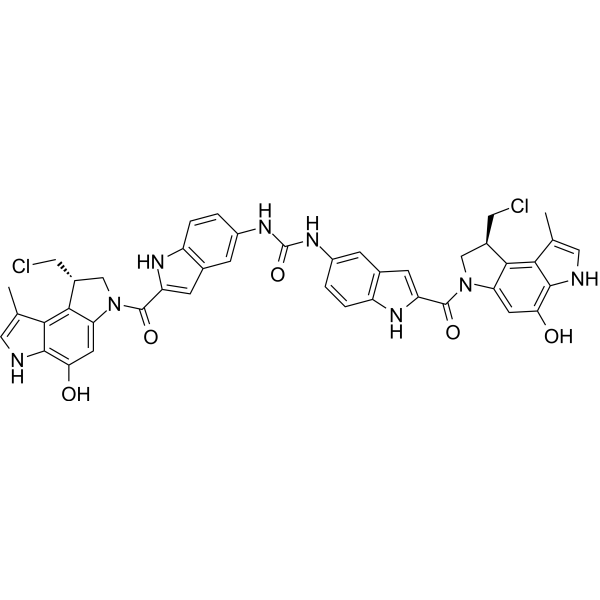
Bizelesin (NSC 615291; U-77779) is an AT-specific DNA alkylating agent that can generate DNA interstrand crosslinks, effectively inhibit DNA replication, and has potential anticancer activity.
Para uso exclusivo en investigación. No vendemos a pacientes.
- Pureza : 95.07%
- No. CAS: 129655-21-6
- Fòrmula: C43H36Cl2N8O5
- Peso molecular:815.70
-
Almacenamiento:
4°C, protect from light, stored under nitrogen
* In solvent : -80°C, 6 months; -20°C, 1 month (protect from light, stored under nitrogen)

To place orders, for customer services and technical support, please contact: MedChemExpress USA
Tel: 609-228-6898 E-mail: [email protected] [email protected]


-
 Actividad biológica
-
Chemical Information
-
Solvente y solubilidad
- Protocolo
- Pureza y Documentación
- Referencias
-
 Help & FAQs


-
HY-34477
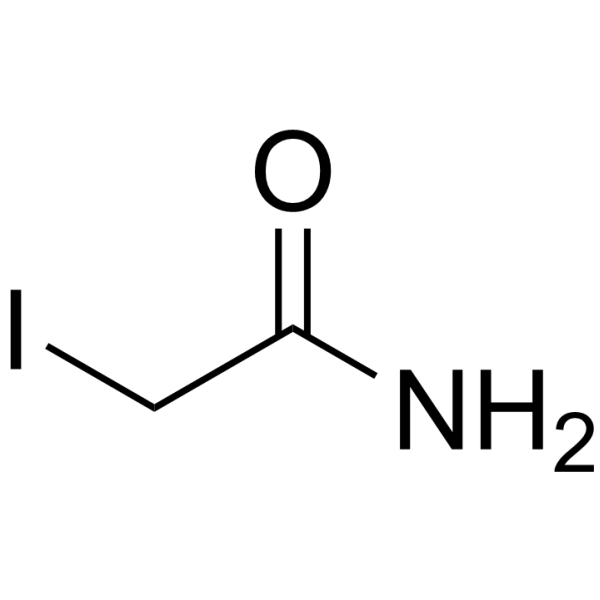
2-IodoacetamideAlkylating Agent -
HY-34758
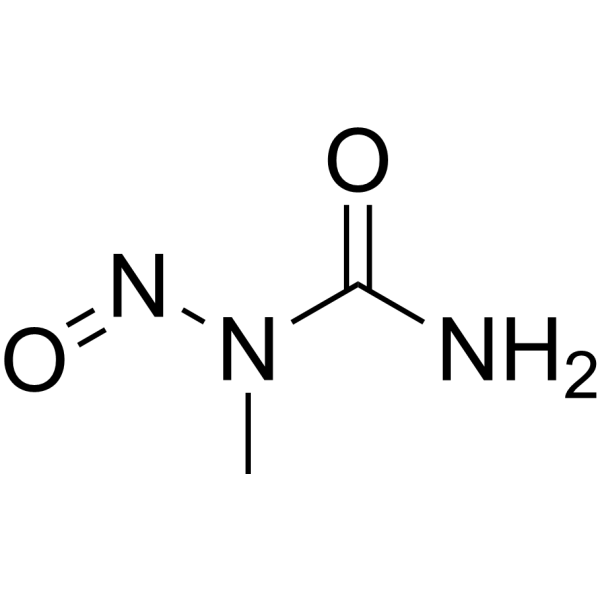
N-Nitroso-N-methylureaCarcinogen Agent -
HY-16293
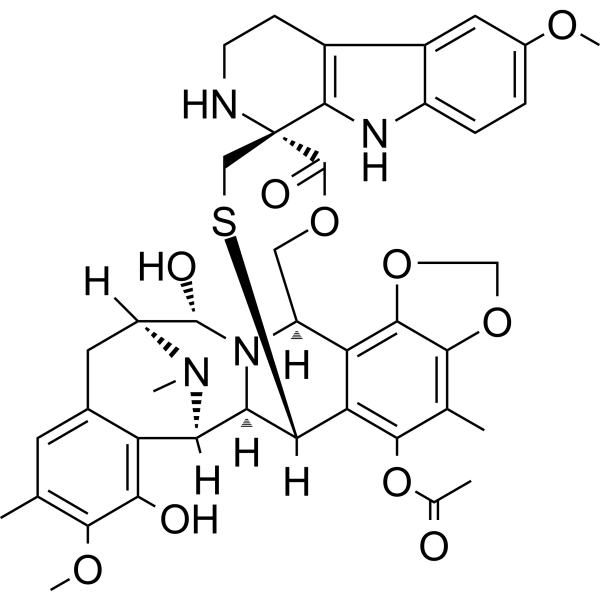
LurbinectedinDNA Minor Groove Binder -
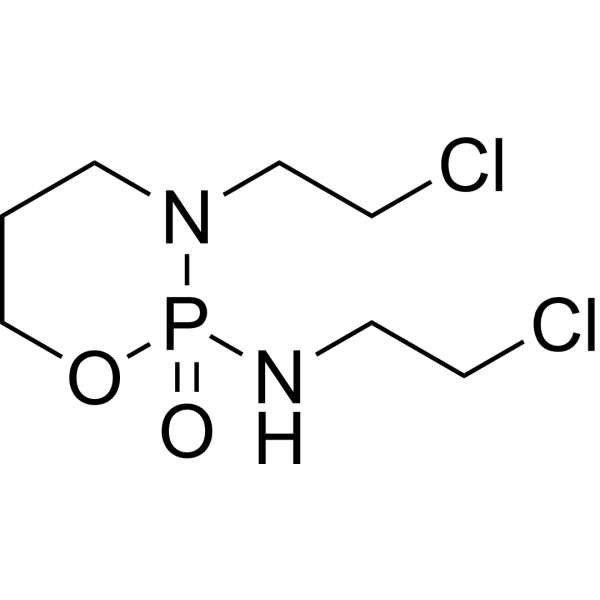
HY-17419
IfosfamideDNA Alkylator/Crosslinker -
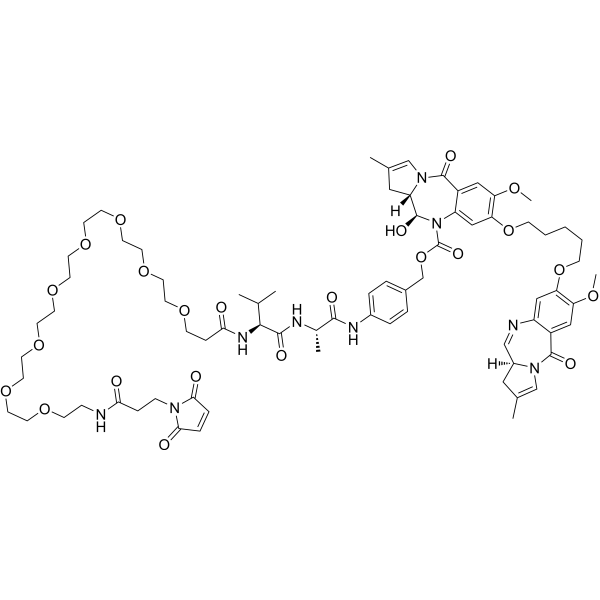
HY-128952
TesirineDrug-Linker Conjugates for ADC -

HY-34477R
2-Iodoacetamide (Standard)Alkylating Agent -
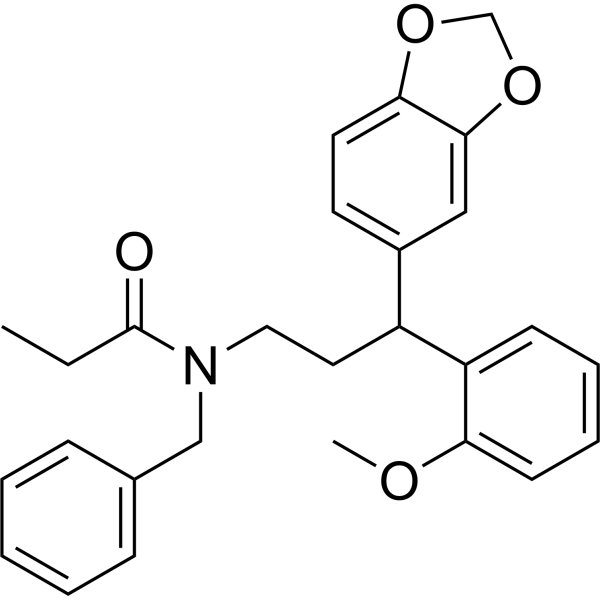
HY-129241
AGX51ID Protein Antagonist -
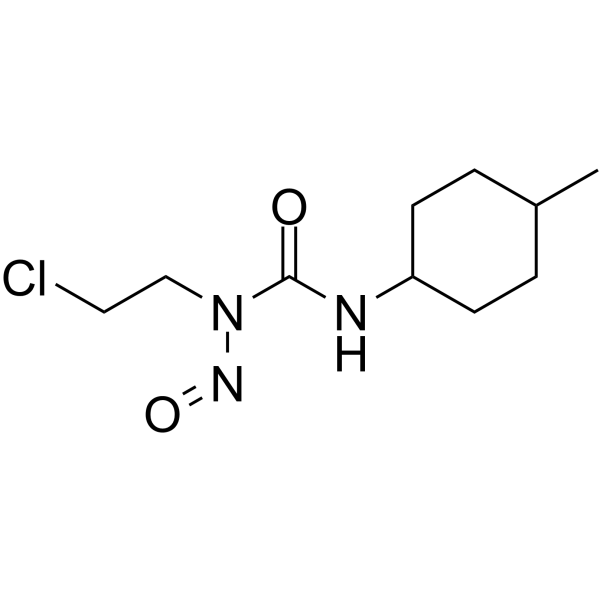
HY-13747
SemustineAntitumor Alkylating Agent -
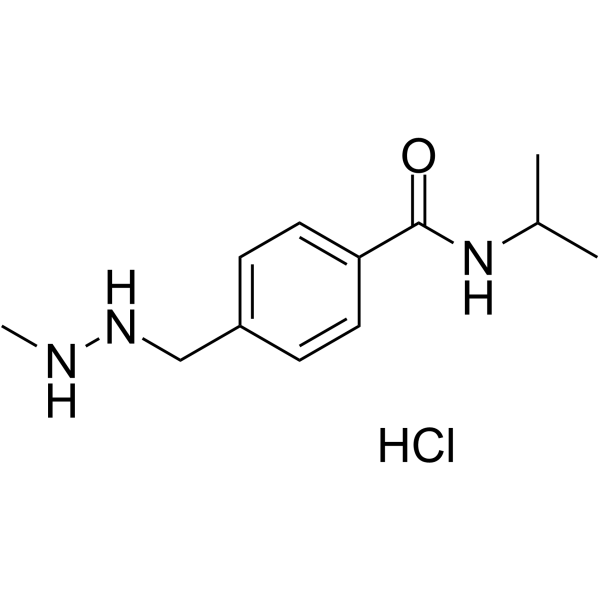
HY-13733
Procarbazine HydrochlorideAlkylating Agent -
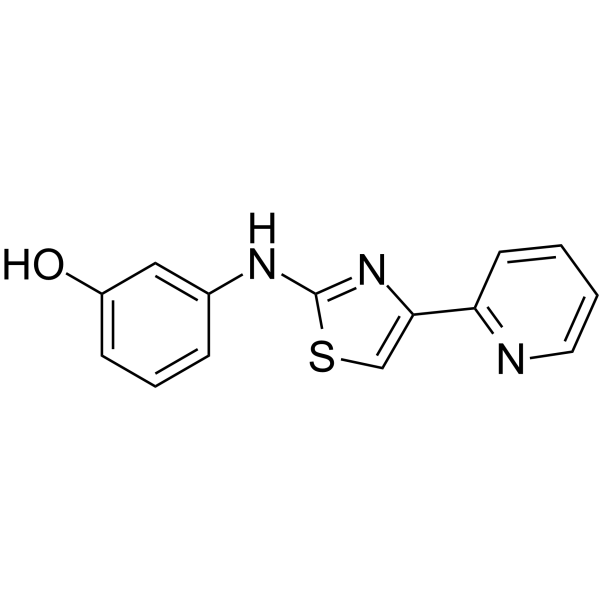
HY-131031
KCC-07MBD2 Inhibitor -
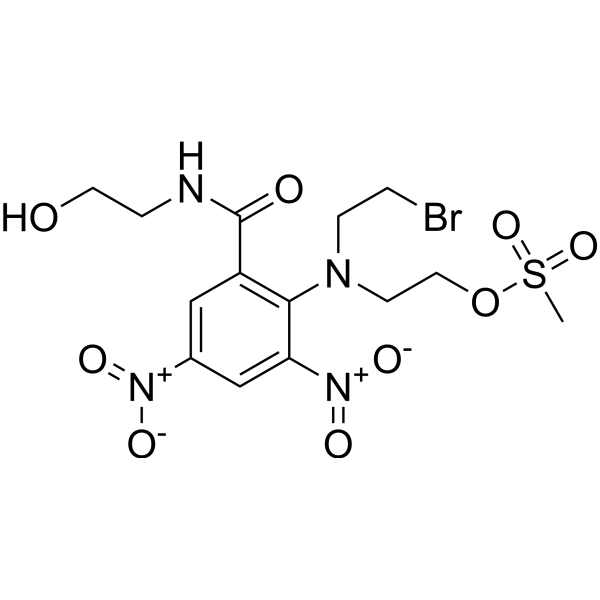
HY-14572
PR-104ADNA Cross-linking Agent -
![N-Succinimidyl 4-[4-maleimidophenyl]butyrate](https://file.medchemexpress.com/product_pic/hy-w011123.gif)
HY-W011123
N-Succinimidyl 4-[4-maleimidophenyl]butyrateCrosslinking Agent
Publications Citing Use of MedChemExpress (MCE) Bizelesin
More

Actividad biológica
Descripciòn
Cellular Effect
|
Cell Line

|
Type | Value | Description | References |
|---|---|---|---|---|
| HeLa | IC50 |
0.06 ng/mL
Compound: 1
|
In vitro cytotoxicity against HeLaS3 human uterine cervix carcinoma
In vitro cytotoxicity against HeLaS3 human uterine cervix carcinoma
|
[PMID: 9873475] |
| HeLa | IC50 |
0.06 ng/mL
Compound: 2
|
Concentration required to inhibit the growth of HeLaS3 cells
Concentration required to inhibit the growth of HeLaS3 cells
|
[PMID: 9871771] |
| HeLa | IC50 |
0.06 ng/mL
Compound: 8
|
Inhibitory activity against HeLaS3 human uterine cervix carcinoma cells
Inhibitory activity against HeLaS3 human uterine cervix carcinoma cells
|
[PMID: 11311062] |
In Vitro
Bizelesin (0-5 μM, 4 h) can cause DNA-specific damage by targeting the AT-rich DNA domain in human cancer cell CEM cells, thereby causing damage to cancer cells, and has potential cancer therapeutic potential[1].
Bizelesin (0-500 nM) causes a 50% inhibition of DNA synthesis at a concentration of 10 nM, compared to a 50% inhibition of RNA synthesis at a concentration of 160 nM, at concentrations as high as 200 nM no inhibition of protein synthesis is observed in BSC-1 cells[2].
MedChemExpress (MCE) has not independently confirmed the accuracy of these methods. They are for reference only. Further protocols information, click here.
Ensayo clínico
| NCT Number | Sponsor | Condition | Start Date |
Phase
|
|---|---|---|---|---|
| NCT01329991 | Plexxikon| | 2011-05 | PHASE1 |


Chemical Information
-
No. CAS 129655-21-6
-
Appearance Solid
-
Peso molecular 815.70
-
Fòrmula C43H36Cl2N8O5
-
Color Off-white to gray
-
SMILES
O=C(NC1=CC2=C(NC(C(N3C4=CC(O)=C5NC=C(C)C5=C4[C@H](CCl)C3)=O)=C2)C=C1)NC6=CC7=C(NC(C(N8C9=CC(O)=C%10NC=C(C)C%10=C9[C@H](CCl)C8)=O)=C7)C=C6
-
Synonyms
NSC 615291; U-77779
-
Envío
Room temperature in continental US; may vary elsewhere.
-
Almacenamiento
4°C, protect from light, stored under nitrogen
* In solvent : -80°C, 6 months; -20°C, 1 month (protect from light, stored under nitrogen)


Publications (1)
-
Journal Impact Factor
-
Most Recent
-
Comput Struct Biotechnol J
2024 Oct 13:23:3692-3701. PMID: 39507821


Solvente y solubilidad
In Vitro:
DMSO : 100 mg/mL (122.59 mM; Need ultrasonic; Hygroscopic DMSO has a significant impact on the solubility of product, please use newly opened DMSO)
Please refer to the solubility information to select the appropriate solvent. Once prepared, please aliquot and store the solution to prevent product inactivation from repeated freeze-thaw cycles.
Storage method and period of stock solution: -80°C, 6 months; -20°C, 1 month (protect from light, stored under nitrogen). When stored at -80°C, please use it within 6 months. When stored at -20°C, please use it within 1 month.
Please refer to the solubility information to select the appropriate solvent. Once prepared, please aliquot and store the solution to prevent product inactivation from repeated freeze-thaw cycles.
Storage method and period of stock solution: -80°C, 6 months; -20°C, 1 month (protect from light, stored under nitrogen). When stored at -80°C, please use it within 6 months. When stored at -20°C, please use it within 1 month.
Concentration (start) × Volume (start) = Concentration (final) × Volume (final)
In Vivo:
Select the appropriate dissolution method based on your experimental animal and administration route.
- For the following dissolution methods, please ensure to first prepare a clear stock solution using an In Vitro approach and then sequentially add co-solvents:
- To ensure reliable experimental results, the clarified stock solution can be appropriately stored based on storage conditions. As for the working solution for In Vivo experiments, it is recommended to prepare freshly and use it on the same day.
- The percentages shown for the solvents indicate their volumetric ratio in the final prepared solution. If precipitation or phase separation occurs during preparation, heat and/or sonication can be used to aid dissolution.
Add each solvent one by one: 10% DMSO 40% PEG300 5% Tween-80 45% Saline
Solubility: ≥ 2.5 mg/mL (3.06 mM); Clear solution
This protocol yields a clear solution of ≥ 2.5 mg/mL (saturation unknown).
Taking 1 mL working solution as an example, add 100 μL DMSO stock solution (25.0 mg/mL) to 400 μL PEG300, and mix evenly; then add 50 μL Tween-80 and mix evenly; then add 450 μL Saline to adjust the volume to 1 mL.
Preparation of Saline: Dissolve 0.9 g sodium chloride in ddH₂O and dilute to 100 mL to obtain a clear Saline solution.
In Vivo Dissolution Calculator
Please enter the basic information of animal experiments:
-
-
-
-
Recommended: Prepare an additional quantity of animals to account for potential losses during experiments.
Please enter your animal formula composition:
-
%DMSO +
Recommended: Keep the proportion of DMSO in working solution below 2% if your animal is weak.
-
%+
-
+%Tween-80 + +
-
%Saline +
The co-solvents required include: DMSO, . All of co-solvents are available by MedChemExpress (MCE). , Tween 80. All of co-solvents are available by MedChemExpress (MCE).
Working solution concentration: 0.22 mg/mL
Method for preparing stock solution: mg drug dissolved in μL DMSO. Stock solution concentration: mg/mL. * In solvent : -80°C, 6 months; -20°C, 1 month (protect from light, stored under nitrogen)
1. Take μL DMSO stock solution;
2. Add μL .
μL , mix evenly;
3. Then add μL Tween 80, mix evenly;
4. Then add μL
Please ensure that the stock solution in the first step is dissolved to a clear state, and add co-solvents in sequence. You can use ultrasonic heating (ultrasonic cleaner, recommended frequency 20-40 kHz), vortexing, etc. to assist dissolution.

Protocolo
-
PCNA Immunodetection Proliferation Assay
PCNA immunodetection measures proliferative activity by detecting proliferating cell nuclear antigen, a nuclear protein associated with DNA polymerase δ function and DNA replication. The assay readout is the proportion of PCNA-positive nuclei among total counted cells, but PCNA labeling is not identical to BrdU labeling because PCNA can mark late G1/early S-associated replication competence and may persist beyond active DNA synthesis depending on fixation and extraction conditions.


Pureza y Documentación
-
Ficha de datos (273 KB)
-
SDS (252 KB)
- English - EN (252 KB)
- Français - FR (252 KB)
- Deutsch - DE (252 KB)
- Norwegian - NO (252 KB)
- Español - ES (252 KB)
- Swedish - SV (252 KB)
- Italian - IT (252 KB)
- Korean - KR (252 KB)
- Portuguese - PT (252 KB)
-
Instrucciones de manejo (2659 KB)
Referencias
[1]. J M Woynarowski, et al. AT-rich islands in genomic DNA as a novel target for AT-specific DNA-reactive antitumor drugs. J Biol Chem. 2001 Nov 2;276(44):40555-66. [Content Brief]
[2]. J M Woynarowski, et al. Effects of bizelesin (U-77,779), a bifunctional alkylating minor groove binder, on replication of genomic and simian virus 40 DNA in BSC-1 cells. Biochim Biophys Acta. 1997 Jul 17;1353(1):50-60. [Content Brief]


Complete Stock Solution Preparation Table
Please refer to the solubility information to select the appropriate solvent. Once prepared, please aliquot and store the solution to prevent product inactivation from repeated freeze-thaw cycles.
Storage method and period of stock solution: -80°C, 6 months; -20°C, 1 month (protect from light, stored under nitrogen). When stored at -80°C, please use it within 6 months. When stored at -20°C, please use it within 1 month.
| Optional Solvent | Concentration Solvent Mass | 1 mg | 5 mg | 10 mg | 25 mg |
|---|---|---|---|---|---|
| DMSO | 1 mM | 1.2259 mL | 6.1297 mL | 12.2594 mL | 30.6485 mL |
| 5 mM | 0.2452 mL | 1.2259 mL | 2.4519 mL | 6.1297 mL | |
| 10 mM | 0.1226 mL | 0.6130 mL | 1.2259 mL | 3.0649 mL | |
| 15 mM | 0.0817 mL | 0.4086 mL | 0.8173 mL | 2.0432 mL | |
| 20 mM | 0.0613 mL | 0.3065 mL | 0.6130 mL | 1.5324 mL | |
| 25 mM | 0.0490 mL | 0.2452 mL | 0.4904 mL | 1.2259 mL | |
| 30 mM | 0.0409 mL | 0.2043 mL | 0.4086 mL | 1.0216 mL | |
| 40 mM | 0.0306 mL | 0.1532 mL | 0.3065 mL | 0.7662 mL | |
| 50 mM | 0.0245 mL | 0.1226 mL | 0.2452 mL | 0.6130 mL | |
| 60 mM | 0.0204 mL | 0.1022 mL | 0.2043 mL | 0.5108 mL | |
| 80 mM | 0.0153 mL | 0.0766 mL | 0.1532 mL | 0.3831 mL | |
| 100 mM | 0.0123 mL | 0.0613 mL | 0.1226 mL | 0.3065 mL |


Bizelesin Related Classifications
HY-111397 Related Classifications
 Powered by Bioz