From 11:00 pm to 12:00 pm EST ( 8:00 pm to 9:00 pm PST ) on January 6th, the website will be under maintenance. We are sorry for the inconvenience. Please arrange your schedule properly.
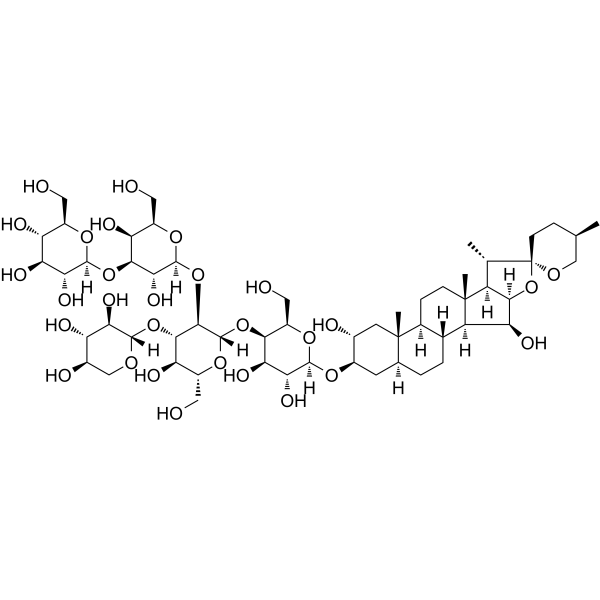
Digitonin, a glycoside obtained from Digitalis purpurea, could increase cell permeability by binding to cholesterol molecules and reduce tumor growth . Digitonin is an natural detergent .
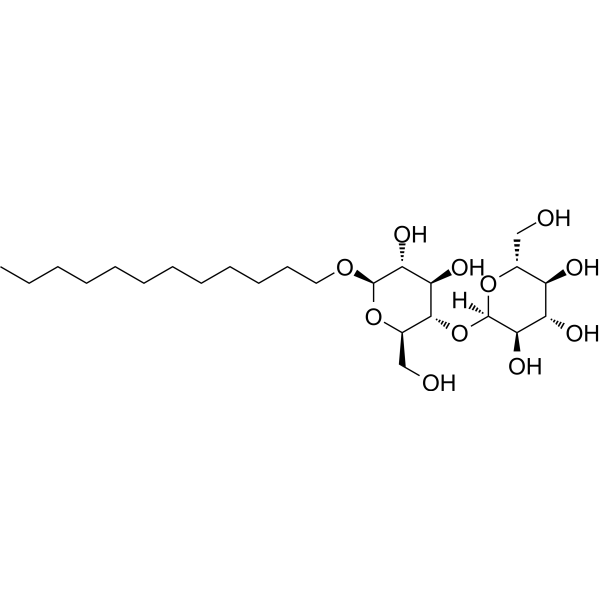
N-Dodecyl-β-D-maltoside (Lauryl Maltoside) is a non-ionic detergent. N-Dodecyl-β-D-maltoside has strong adsorption on alumina, titanium dioxide and hematite. N-Dodecyl-β-D-maltoside can promote the reactivation of various proteins. N-Dodecyl-β-D-maltoside can effectively stabilize photoactive reaction center complexes (RCs) and inhibit the degradation of Rhodopseudomonas spheroides R-26 reaction center in solution. N-Dodecyl-β-D-maltoside can be used for purification and stabilization of RNA polymerase and for detection of protein-lipid interactions .
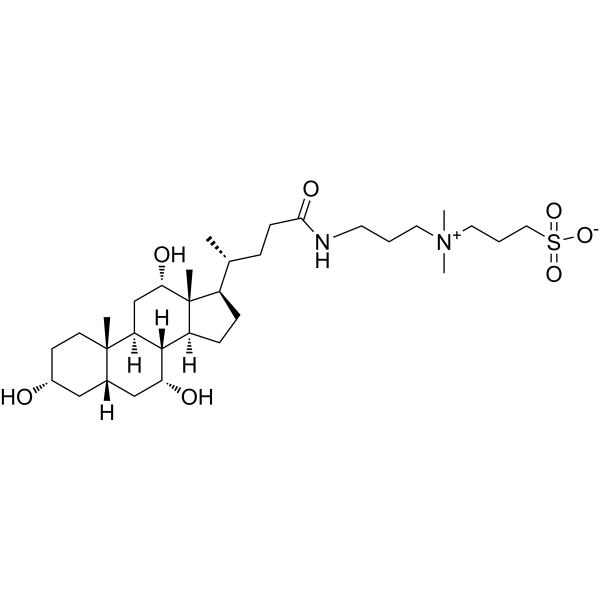
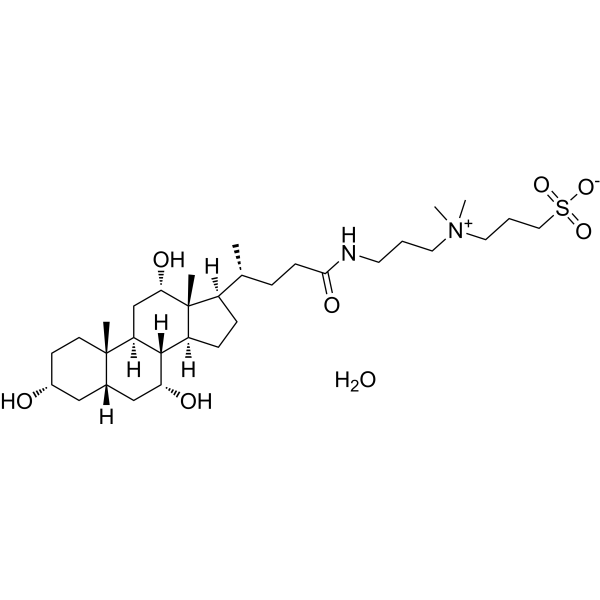
CHAPS is a cholic acid-derived, sulfobetaine-type zwitterionic detergent and micelle-forming agent. CHAPS exhibits properties of weak cationic or nonionic surfactants in different solution systems, undergoes micellization, and forms small, loose hydrophilic aggregates that are temperature-dependent. CHAPS stabilizes mononucleosomes under different ionic strengths, reduces nucleosome sequence specificity, promotes sliding of histone cores along DNA, solubilizes Tamm-Horsfall protein to reduce its interference with urinary exosome isolation, and maintains vesicle structure and the activity of related proteins at the same time. CHAPS is used to recover native folded fusion proteins, enhance the binding capacity of GST fusion proteins, and restore GST enzyme activity. However, CHAPS cannot refold proteins denatured by urea, guanidine hydrochloride or heat, nor can it construct the structure of intrinsically disordered proteins. CHAPS is commonly used in research on the separation and purification of membrane proteins .
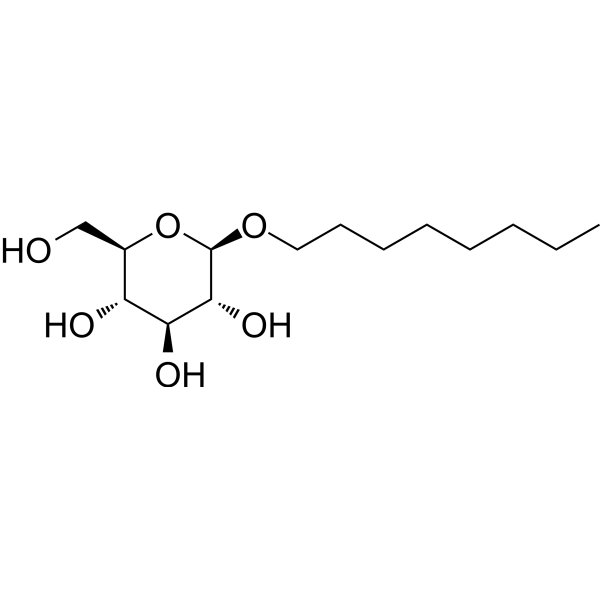
n-Octyl-β-d-glucopyranoside is a non-ionic detergent, it can be widely used in the research of biotechnical, biochemical applications, solubilization and crystallization of membrane proteins. n-Octyl-β-d-glucopyranoside can completely inhibit cavitation-induced cell lysis in vitro .
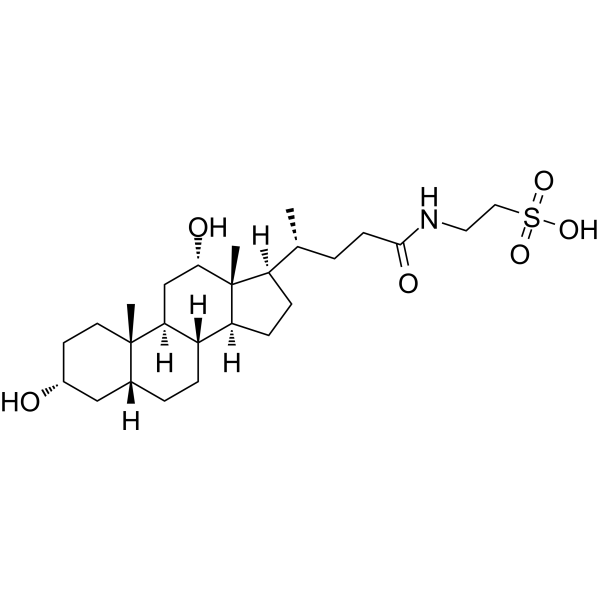
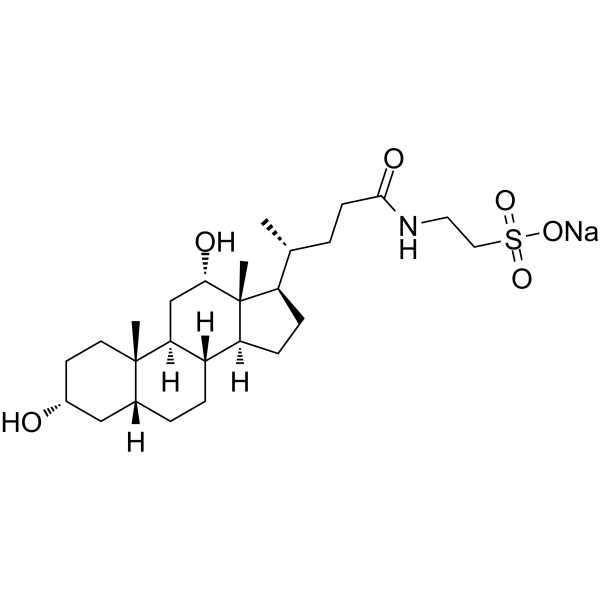
Taurodeoxycholate sodium salt is a bile salt-related anionic detergent. Taurodeoxycholate sodium salt is formed in the liver by conjugation of deoxycholate with Taurine (HY-B0351). Taurodeoxycholate sodium salt is used for isolation of membrane proteins including inner mitochondrial membrane proteins. Taurodeoxycholate (TDCA) exhibits anti-inflammatory and neuroprotective effects .
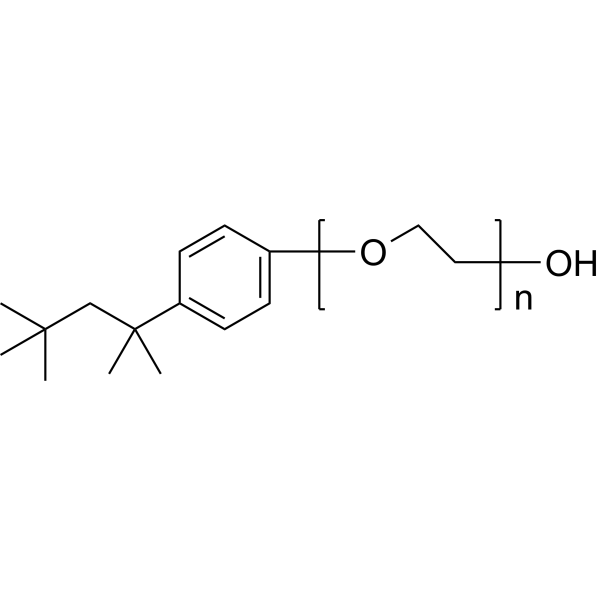
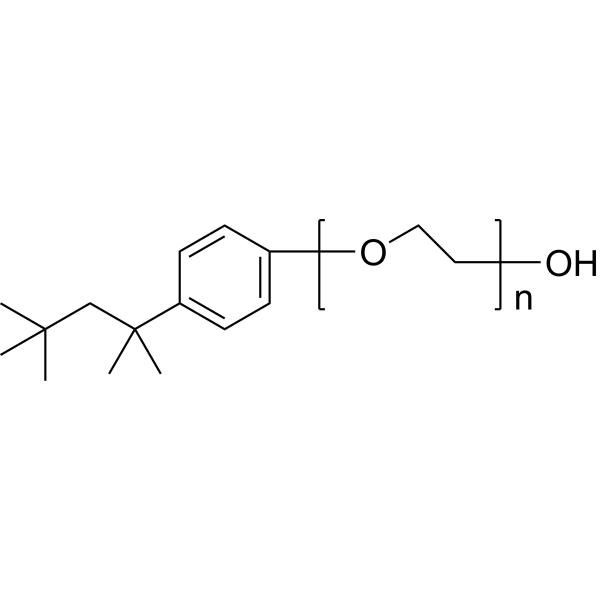
Polyethylene glycol mono(4-tert-octylphenyl) ether surfactant is a non-denaturing detergent that solubilizes lipid membranes. Polyethylene glycol mono(4-tert-octylphenyl) ether surfactant is commonly used in laboratories and is applied to vaccines at different stages of the manufacturing process. Polyethylene glycol mono(4-tert-octylphenyl) ether surfactant is listed as an excipient in certain vaccines including split virus influenza vaccines. Polyethylene glycol mono(4-tert-octylphenyl) ether surfactant is a nonionic surfactant. Polyethylene glycol mono(4-tert-octylphenyl) ether surfactant induces Apoptosis in prostate and colon cancer cell lines and reduces the infectivity of classic enveloped viruses such as WNV .
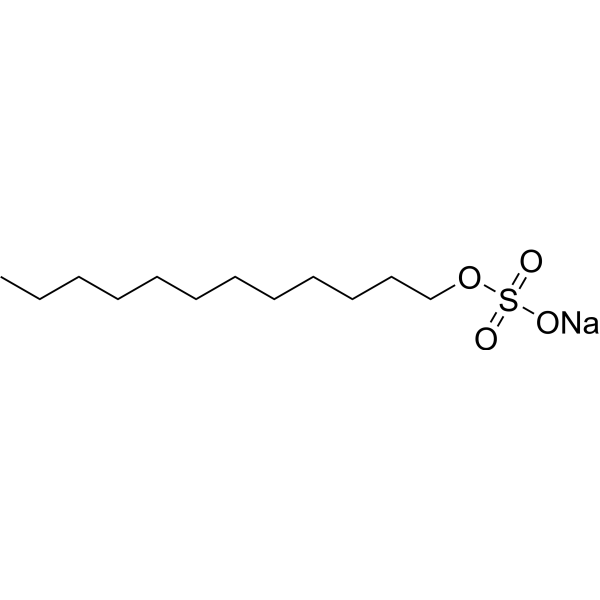
Sodium dodecyl sulfate is an anionic surfactant commonly used as a detergent, emulsifier, and protein denaturant in various industrial processes, especially in the production of personal care products, cleaners, and laboratory reagents. Sodium dodecyl sulfate has unique chemical properties that make it an effective ingredient in many applications, helping to reduce surface tension and enhance cleaning power.
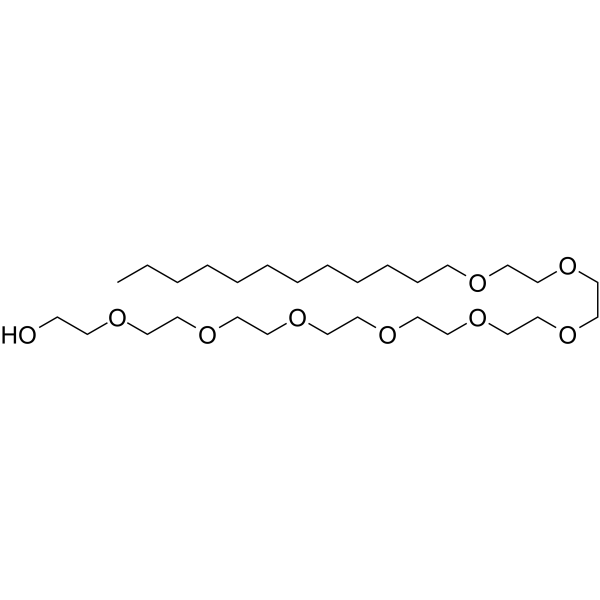
Octaethylene glycol monododecyl ether (C12E8) is an non-ionic detergent that can be used for membrane protein extraction. Octaethylene glycol monododecyl ether can solubilize the viral membrane of intact influenza virus .
Taurodeoxycholate sodium salt is a bile salt-related anionic detergent. Taurodeoxycholic acid is formed in the liver by conjugation of deoxycholate with Taurine (HY-B0351). Taurodeoxycholic acid is used for isolation of membrane proteins including inner mitochondrial membrane proteins. Taurodeoxycholic acid (TDCA) exhibits anti-inflammatory and neuroprotective effects .
Polyethylene glycol mono(4-tert-octylphenyl) ether is a non-denaturing detergent that solubilizes lipid membranes. Polyethylene glycol mono(4-tert-octylphenyl) ether is commonly used in laboratories and is applied to vaccines at different stages of the manufacturing process. Polyethylene glycol mono(4-tert-octylphenyl) ether is listed as an excipient in certain vaccines including split virus influenza vaccines. Polyethylene glycol mono(4-tert-octylphenyl) ether is a nonionic surfactant. Polyethylene glycol mono(4-tert-octylphenyl) ether induces Apoptosis in prostate and colon cancer cell lines and reduces the infectivity of classic enveloped viruses such as WNV .
Disodium phosphate is commonly used as a food additive, buffer and laboratory reagent. Disodium phosphate has unique chemical properties that make it an important ingredient in the manufacture of fertilizers, detergents and water treatment products. Additionally, it is used in various medical applications such as osmotic laxatives and electrolyte replacement solutions.
Isethionic acid is a calcium binder and anionic detergent that enhances mitochondrial calcium binding capacity by competitively binding to calcium binding sites on the outer mitochondrial membrane. Isethionic acid can inhibit calcium-activated mitochondrial respiration. Isethionic acid inhibits barnacle (Balanus amphitrite) larvae with LC50s of 23 μg/mL (24 h) and 17 μg/mL (48 h), respectively. Isethionic acid can inhibit the attachment of barnacle larvae (complete inhibition at 10 μg/mL) and regulate mitochondrial calcium transport, and can enhance ATP-dependent calcium uptake at high calcium concentrations. Isethionic acid can be used to study the mechanism of mitochondrial calcium metabolism.
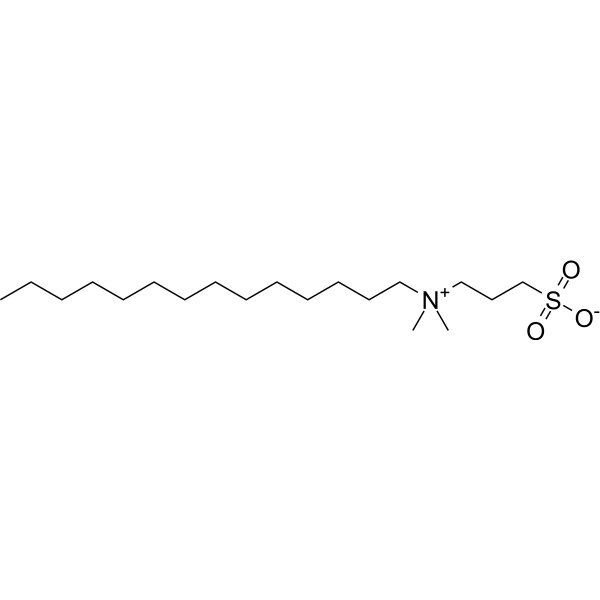
Zwittergent 3-14 (DMAPS) is a zwitterionic detergent commonly used in biochemistry and molecular biology for the solubilization and purification of membrane-bound proteins and other hydrophobic biomolecules, which have both hydrophilic and hydrophobic moieties , so that it has good detergency properties, making it suitable for stabilizing membrane proteins in aqueous solutions. In addition, DMAPS has been used in various techniques such as electrophoresis and chromatography for the separation and analysis of biomolecules. The long The hydrocarbon chains provide it with good membrane penetration and solubilization capabilities, while the sulfonate and quaternary ammonium groups ensure water solubility and charge neutrality.
Nonaethylene glycol monododecyl ether (Nonaoxyethylene monododecyl ether) is a nonionic surfactant and polyethylene glycol (PEG) detergent that can be used to form initial coalesced O/W emulsion droplets, as well as for protein separation and purification .
Polyoxyethylene(20) oleyl ether (Polyethylene glycol oleyl ether, with an average Mn of 1150) is a non-ionic surfactant. Polyoxyethylene(20) oleyl ether possesses emulsifying and detergent properties and can be used as a functional additive in drug delivery systems, helping to form stable nanoemulsions .
CHAPS hydrate is a cholic acid-derived, sulfobetaine-type zwitterionic detergent and micelle-forming agent. CHAPS hydrate exhibits properties of weak cationic or nonionic surfactants in different solution systems, undergoes micellization, and forms small, loose hydrophilic aggregates that are temperature-dependent. CHAPS hydrate stabilizes mononucleosomes under different ionic strengths, reduces nucleosome sequence specificity, promotes sliding of histone cores along DNA, solubilizes Tamm‑Horsfall protein to reduce its interference with urinary exosome isolation, and maintains vesicle structure and the activity of related proteins at the same time. CHAPS hydrate is used to recover native folded fusion proteins, enhance the binding capacity of GST fusion proteins, and restore GST enzyme activity. However, CHAPS hydrate cannot refold proteins denatured by urea, guanidine hydrochloride or heat, nor can it construct the structure of intrinsically disordered proteins. CHAPS hydrate is commonly used in research on the separation and purification of membrane proteins .
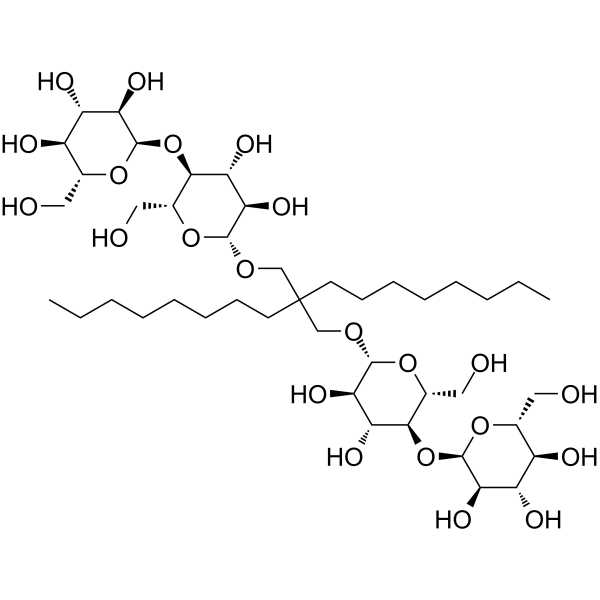
Decyl maltose neopentyl glycol (DMNG) is the neopentyl glycol detergent that does not disrupt the AlkB oligomeric state. AlkB is a nonheme di-iron alkane hydroxylase .
Triclosan-d3 is the deuterium labeled Triclosan. Triclosan is an antibacterial and antifungal agent found in consumer products, including soaps, detergents, toys, and surgical cleaning treatments .
CHAPSO is a bile derivative. CHAPSO reduces protein adsorption, improves the cryo-EM imaging quality. CHAPSO can be used as a detergent, or as the membrane protein solubilization and reconstruction reagent in membrane protein structural studies .
Sodium LaurateIt is an organic compound belonging to fatty acids. It is the sodium salt of lauric acid, a medium-chain saturated fatty acid found in various animal and vegetable fats. Sodium LaurateCommonly used as surfactants, emulsifiers and cleaning agents in various industries such as cosmetics, personal care and detergent industries. It's found in a variety of products, including soaps, shampoos, toothpaste, and laundry detergent. Furthermore, it also has applications in the food industry where it is used as a food additive to improve texture and stability.
Lauroylamide propylbetaine (35% in water) (Lauramidopropyl betaine) is an ampholytic surfactant for cosmetic and hair compositions to enhance viscosity and has good biodegradability. Lauroylamide propylbetaine (35% in water) promotes CH4 hydrate formation by reducing the induction time and increasing the CH4 consumption rate for hydrate growth .
Dodecylbenzenesulfonic acid (Dodecylbenzenesulphonic acid) is an anionic surfactant. Dodecylbenzenesulfonic acid serves as a raw material for various detergents. Dodecylbenzenesulfonic acid can be used as a cleaning agent in the daily chemical industry or a chemical oil-displacing agent in tertiary oil recovery .
Glycochenodeoxycholic acid-d4 is the deuterium labeled Glycochenodeoxycholic acid. Glycochenodeoxycholic acid (Chenodeoxycholylglycine) is a bile acid formed in the liver from chenodeoxycholate and glycine. It acts as a detergent to solubilize fats for absorption and is itself absorbed. Glycochenodeoxycholic acid (Chenodeoxycholylglycine) induces hepatocyte apoptosis .
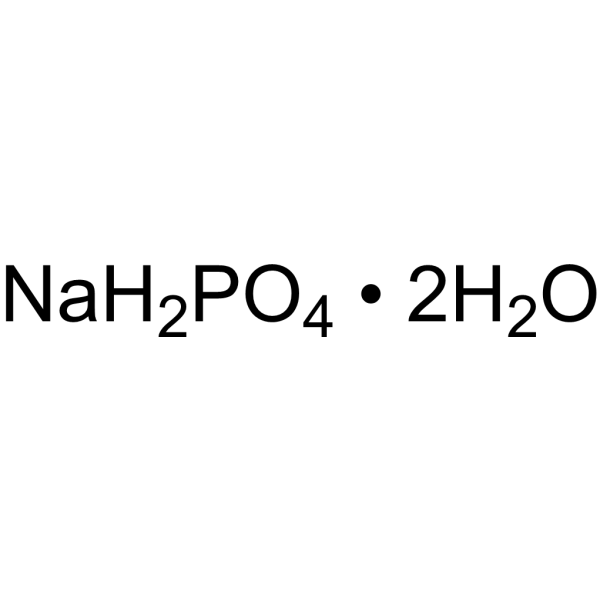
Sodium dihydrogen phosphate dihydrate,≥99.0% (Sodium phosphate dihydrate,≥99.0%) is used as a buffer capacity reagent in molecular biology, biochemistry, and chromatography. Sodium dihydrogen phosphate dihydrate,≥99.0% is also used as a laxative and pH buffer when combined with other sodium phosphates and also used as fuel and detergent additives .
CYMAL-5, 98% (TLC) is a cycloalkyl aliphatic saccharide. CYMAL-5, 98% (TLC) is a glycosidic surfactant (GS) with a chiral maltose polar head group and a cyclohexyl-pentyl hydrophobic tail. CYMAL-5, 98% (TLC) is a non-ionic detergent that has a tenfold lower critical micelle concentration (CMC) in comparison with OG, and has previously been used for membrane protein extraction or crystallization of membrane proteins for X-ray crystallographic studies .
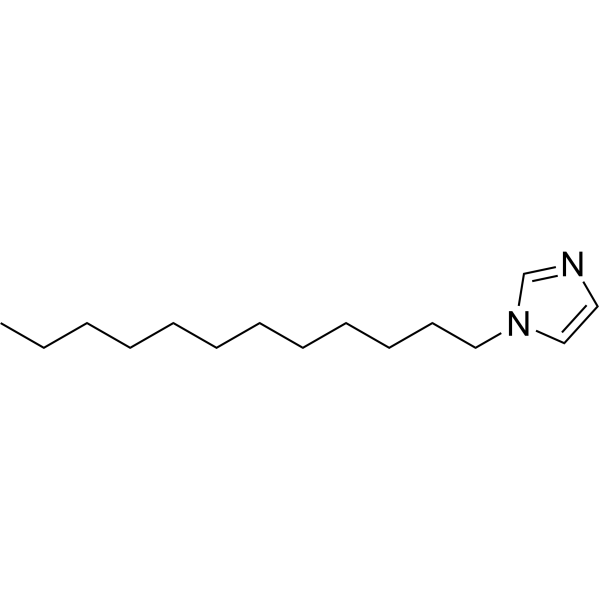
1-Dodecylimidazole (N-Dodecylimidazole) is a lysosomotropic detergent and a cytotoxic agent. 1-Dodecylimidazole causes cell death by its acid-dependent accumulation in lysosomes, disruption of the lysosomal membrane, and releaseof cysteine proteases into the cytoplasm. 1-Dodecylimidazole has hypocholesterolaemic activity and broad-spectrum antifungal activity .
4-Dodecylbenzenesulfonic acid is an organosulfur compound commonly used in various industrial applications. It is usually used as a surfactant, emulsifier and auxiliary agent, etc., and is widely used in lubricants, paints, resins and other fields. In addition, due to its good water solubility and cleaning ability, it can also be used in the preparation of products such as detergents and cleaners.
Stearate sodiumIt is an organic compound belonging to fatty acids. It is the sodium salt of stearic acid, a saturated fatty acid commonly found in various animal and vegetable fats. Stearate sodiumCommonly used as surfactants, emulsifiers and detergents, it is widely used in the cosmetics, personal care and detergent industries. It's found in a variety of products, including soaps, shampoos, toothpaste, and laundry detergent. Also, it has applications in the food industry where it is used as a food additive to improve texture and shelf life.
Dodecylphosphocholine-d388 is the deuterium labeled Dodecylphosphocholine. Dodecylphosphocholine is a detergent widely utilized in NMR studies of membrane proteins .
Isobornyl acetate is a compound with an aroma. Isobornyl acetate can be used as a food additive for food flavoring. Isobornyl acetate can also be used as a fragrance in products such as perfumes, cosmetics, and detergents .
Sodium phosphate dibasic dihydrate, for molecular biology is an inorganic salt compound. Sodium phosphate dibasic dihydrate, for molecular biology is commonly used in molecular biology experiments and can be used as a buffer, nutritional supplement, and detergent.
Polyoxyethylene monocetyl ether (n=approx. 23) is a nonionic surfactant and can be used to manufacture hand sanitizer, laundry detergent, body wash, laundry powder, dish soap, metal cleaning agents and other products .
Thermostable cellulase recombinant is a cellulose hydrolase present in hyperthermophiles, which catalyzes the hydrolysis of β-1,4 glycosidic bonds in cellulose. Thermostable cellulase recombinant targets carboxymethyl cellulose (CMC) as its primary substrate, and retains high residual activity even after incubation at high temperatures. The activity of Thermostable cellulase recombinant is inhibited by ionic and non-ionic detergents, and can be enhanced by cobalt ions. Thermostable cellulase recombinant can be applied in the paper industry .
(Rac)-Telmesteine is a protease inhibitor and is thus a suitable enzyme stabilizer extracted from patent WO 2017220302 A1, compound II-1. (Rac)-Telmesteine can be used as an enzyme stabilizer in protease-containing detergents and cleaning agents .
Sulfobetaine-14 (Standard) is the analytical standard of Sulfobetaine-14. This product is intended for research and analytical applications. Zwittergent 3-14 (DMAPS) is a zwitterionic detergent commonly used in biochemistry and molecular biology for the solubilization and purification of membrane-bound proteins and other hydrophobic biomolecules, which have both hydrophilic and hydrophobic moieties , so that it has good detergency properties, making it suitable for stabilizing membrane proteins in aqueous solutions. In addition, DMAPS has been used in various techniques such as electrophoresis and chromatography for the separation and analysis of biomolecules. The long The hydrocarbon chains provide it with good membrane penetration and solubilization capabilities, while the sulfonate and quaternary ammonium groups ensure water solubility and charge neutrality.
Tetrapentylammonium bromide is a quaternary ammonium salt consisting of a positively charged tetrapentylammonium cation and a negatively charged bromide anion. This compound is commonly used as a phase transfer catalyst in organic synthesis reactions to facilitate the transfer of reactants between immiscible phases. It is also used in the production of surfactants, detergents and the synthesis of pharmaceuticals.
4-Dodecylmorpholine (DMP) is a surfactant with antimalarial activity. It can be used as a hydrophilic enzyme detergent and is commonly used as an extraction collector in reverse foam preparation processes .
Octyl thiomaltoside (OTM) is a nonionic detergent commonly used in the purification and crystallization of membrane proteins. It belongs to the family of maltoside detergents and has a hydrophilic head group and a lipophilic tail group, enabling it to interact with water-soluble and membrane-bound proteins. OTMs are known for their ability to solubilize integral membrane proteins without disrupting their structure or function, making them an invaluable tool in biochemical and biophysical research. In addition to protein research, OTMs are used in a variety of other applications, including drug delivery systems, nanotechnology, and diagnostic analysis.
Octyl β-D-thioglucopyranoside is a non-ionic detergent that can be used in the field of membrane biochemistry. Octyl β-D-thioglucopyranoside has the ability to solubilize E. coli membrane proteins .
Recombinant endoglycoceramidase I assisted by activator II (rEGCase I assisted by Activator II) is a mixture-form of EGCase I and Activator II. EGCase I is a glycolipid-specific hydrolase that well-suited to a comprehensive analysis of glycosphingolipids (GSLs). Activator II is capable of inducing activity of EGCase without any detergent reagents .
DDTAC (H12-TAC) is a detergent that can extract and solubilize membrane proteins. DDTAC has a thio dodecanoyl chain linked to a polar group made of Tris polyalcoholic moieties and can be utilized in extracting yeast ATP synthase from mitochondrial membranes .
CHAPS (Standard) is the analytical standard of CHAPS. This product is intended for research and analytical applications. CHAPS, a derivative of Cholic acid, is a zwitterionic detergent for solubilizing membrane proteins. CHAPS is used for stabilization of various protein-DNA complexes and can retain biochemical activity of proteins in solution .
N-Decylphosphorylcholine, 98% is a short-chain lipid-like zwitterionic detergent, used as a decontaminant for dissolving and purifying membrane proteins.
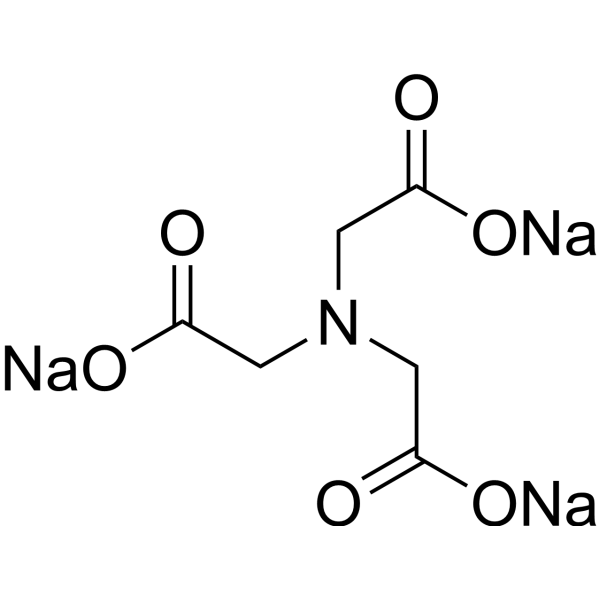
Nitrilotriacetic acid (Triglycollamic acid) trisodium salt is a chelating agent commonly used in various industrial processes, especially in the production of detergents, cleaners and metal plating solutions. Nitrilotriacetic acid trisodium salt has unique chemical properties that bind to metal ions, preventing them from reacting or precipitating out of solution.
Hexadecyltrimethylammonium hydroxide, a quaternary ammonium compound, is commonly used as an emulsifier, detergent, and surfactant in various industrial processes, especially in the production of cosmetics, pharmaceuticals, and textiles. Hexadecyltrimethylammonium hydroxide has unique chemical properties that make it an active ingredient in many applications requiring strong surface activity and solubility.
CCD-2 is a conventional detergent and is readily degraded. CCD-2 can efficiently solubilize and stabilize diverse G protein-coupled receptors (GPCRs). CCD-2 is amenable to the β-barrel protein research. The chemical cleavage of CCD-2 is rapid, complete and biorthogonal and should facilitate a chemical methodology for in situ detergent replacement in diverse membrane proteins (MPs) studies .
Alamethicin F 50 is an antibiotic. Alamethicin F 50 is composed of membrane-active peptide, containing 75% Alamethicin F 50/5 and 10% Alamethicin F 50/7. Alamethicin F 50 is exhibits antifungal and antibacterial activity by disrupting the integrity of microbial cell membranes, resulting in leakage of cell contents and death of the microorganisms. Alamethicin F 50 is able to reduce the surface tension of water, which can be used as a surfactant or detergent .
Octaethylene glycol monododecyl ether (Standard) is the analytical standard of Octaethylene glycol monododecyl ether. This product is intended for research and analytical applications. Octaethylene glycol monododecyl ether (C12E8) is an non-ionic detergent that can be used for membrane protein extraction. Octaethylene glycol monododecyl ether can solubilize the viral membrane of intact influenza virus .
IMCTA-C14 TFA, a trehalose analog, is a detergent. IMCTA-C14 TFA shows autophagy-inducing activity in OVK18 cells and can be effectively used in membrane protein research. IMCTA-C14 TFA is active against various bacteria (MICs = 8-128 µg/mL) and is cytotoxic against cancer cell lines (IC50s = 2.9-29.2 µg/mL) .
Dodecylphosphocholine-d25 is the deuterium labeled Dodecylphosphocholine . Dodecylphosphocholine is a detergent widely utilized in NMR studies of membrane proteins .
DDG is a type of detergent that can dissolve membrane proteins (MPs) in bacterial membranes, insect cells, and Madin Darby Canine Kidney (MDCK) cells .
3-(Dimethyl(octadecyl)ammonio)propane-1-sulfonate is a class of quaternary ammonium compounds. It is a surfactant and cationic detergent with amphiphilic properties and therefore useful in various industrial and biomedical applications. 3-(Dimethyl(octadecyl)ammonium)propane-1-sulfonate is commonly used as an emulsifier, solubilizer and antimicrobial agent in personal care products, detergents, textiles and pharmaceutical formulations. It is also used as a reagent in analytical chemistry, especially in the analysis of proteins and DNA.
Triclosan-methyl is a transformation product of triclosan. Triclosan is a bactericide in personal care products such as toothpaste, shampoos, and soaps. Triclosan is also a stabilizing agent in a multitude of detergents and cosmetics .
Dodecyl D-glucopyranoside is a nonionic detergent. Dodecyl D-glucopyranoside has a critical micelle concentration of 125 μM. Dodecyl D-glucopyranoside can be used in Vitamin E emulsification .
Polymethacrylate Copolymer N−C4−52−6.9 is a polymer that consists of hydrophobic butylmethacrylate and cationic methacroylcholine chloride monomers. Polymethacrylate Copolymer N−C4−52−6.9 is able to solubilise lipid bilayers into nanodiscs. Polymethacrylate Copolymer N−C4−52−6.9 can be utilized in structure and functional studies on membrane proteins .
Triclosan-methyl-d3 is the deuterium labeled Triclosan-methyl. Triclosan-methyl is a transformation product of triclosan. Triclosan is a bactericide in personal care products such as toothpaste, shampoos, and soaps. Triclosan is also a stabilizing agent in a multitude of detergents and cosmetics .
Glycochenodeoxycholic acid-d7 (sodium) is the deuterium labeled Glycochenodeoxycholic acid (sodium salt). Glycochenodeoxycholic acid sodium salt (Chenodeoxycholylglycine sodium salt) is a bile acid formed in the liver from chenodeoxycholate and glycine. It acts as a detergent to solubilize fats for absorption and is itself absorbed. Glycochenodeoxycholic acid sodium salt (Chenodeoxycholylglycine sodium salt) induces hepatocyte apoptosis .
C7BzO (Dimethyl-2-hydroxyethylampropanepropanesulfonate) is a potent solubilizing detergent that can be used for samples such as bacteria, mammals, and plants. C7BzO can be used for the extraction of proteins and the preparation of two-dimensional gel electrophoresis samples .
Taurodeoxycholate (sodium salt) (Standard) is the analytical standard of Taurodeoxycholate (sodium salt). This product is intended for research and analytical applications. Taurodeoxycholate sodium salt is a bile salt-related anionic detergent used for isolation of membrane proteins including inner mitochondrial membrane proteins. Taurodeoxycholate (TDCA) inhibits various inflammatory responses
.
Isobornyl acetate (Standard) is the analytical standard of Isobornyl acetate (HY-N2583). This product is intended for research and analytical applications. Isobornyl acetate is a compound with an aroma. Isobornyl acetate can be used as a food additive for food flavoring. Isobornyl acetate can also be used as a fragrance in products such as perfumes, cosmetics, and detergents .
1-Naphthenyl phosphate hydrate sodium is commonly used as a flame retardant for various materials such as plastics, textiles, and construction materials. In addition, its potential use as a corrosion inhibitor and as an ingredient in fertilizers and detergents has been investigated. Its hydrated form contains variable amounts of water molecules, which affects its physical properties and applications.
FLAC6 is a potent fluorinated detergent that can be used to solubilize membrane proteins (the native adenosine receptor A2AR, a G protein-coupled receptor, and two native transporters AcrB and BmrA). FLAC6 can maintain the structural and functional integrity of different membrane proteins .
1-Dodecylimidazole (Standard) is the analytical standard of 1-Dodecylimidazole. This product is intended for research and analytical applications. 1-Dodecylimidazole (N-Dodecylimidazole) is a lysosomotropic detergent and a cytotoxic agent. 1-Dodecylimidazole causes cell death by its acid-dependent accumulation in lysosomes, disruption of the lysosomal membrane, and releaseof cysteine proteases into the cytoplasm. 1-Dodecylimidazole has hypocholesterolaemic activity and broad-spectrum antifungal activity .
HEGA-10 is a mild detergent with a high critical micelle concentration (CMC), which can be used to dissolve and extract proteins (HIV-1 spike protein) from the membranes of virus-like particles (VLPs) .
FTAC6 (C6F-TAC) is a lipophobic surfactant. FTAC6 does not solubilize biological membranes as a non-detergent and can substitute for detergents to keep membrane proteins soluble and improves stability after conventional solubilization. FTAC6 can be utilized in in vitro synthesis of membrane proteins .
Octylβ-D-galactopyranoside, 98% is a non-ionic detergent commonly used in scientific research for its ability to dissolve and stabilize membrane proteins.
Thyme extract is one of the most preservative essential oils. It has antibacterial and antiviral properties. And it can be used in daily essentials such as detergents, hand sanitizers and soaps.
(R)-Specific secondary-alkylsulfatase (EC 3.1.6.19) from Rhodococcus ruber is involved in the biodegradation of alkyl sulfate esters used as detergents and released into the environment.
DLAC is a detergent synthesized from Lactobionic acid (HY-N7059). DLAC can be used to solubilize membrane proteins, with a critical micelle concentration (CMC) of 1.3 mM .
Soapnut extract is a natural nonionic surfactant that can be used as a skin conditioning agent. It possesses strong detergency, antibacterial, non-polluting, and skin-softening properties. Soapnut extract also exhibits anti-inflammatory, antioxidant, free radical scavenging, and anticoagulant effects.
Tetrabutylammonium (hydrogen difluoride) is a quaternary ammonium salt containing fluoride ions. It is a highly active and effective reagent, often used in organic synthesis reactions, especially for the modification of organic molecules with fluorine atoms. Tetrabutylammonium (hydrogen difluoride) is also used as a catalyst for various chemical reactions such as esterification and transesterification. Additionally, it is used in the production of specialty chemicals such as surfactants and detergents.
Taurodeoxycholate sodium salt (Standard) is a bile salt (Standard)-related anionic detergent. Taurodeoxycholate sodium salt (Standard) is formed in the liver by conjugation of deoxycholate with Taurine (HY-B0351). Taurodeoxycholate sodium salt (Standard) is used for isolation of membrane proteins including inner mitochondrial membrane proteins. Taurodeoxycholate (TDCA) exhibits anti-inflammatory and neuroprotective effects .
Sodium taurodeoxycholate hydrate is a bile salt-related anionic detergent. Sodium taurodeoxycholate hydrate is formed in the liver by conjugation of deoxycholate with Taurine (HY-B0351). Sodium taurodeoxycholate hydrate is used for isolation of membrane proteins including inner mitochondrial membrane proteins. Taurodeoxycholate-d6 (TDCA) exhibits anti-inflammatory and neuroprotective effects .
1-O-n-Octyl-β-D-glucopyranoside-d17 is the deuterium labeled n-Octyl β-D-glucopyranoside . n-Octyl-β-d-glucopyranoside is a non-ionic detergent, it can be widely used in the research of biotechnical, biochemical applications, solubilization and crystallization of membrane proteins .
Nonan-1-ol is an organic compound commonly used in the manufacture of surfactants and lubricants, among others. It can be used as a detergent, emulsifier and stabilizer, and is widely used in some cosmetics, personal care products and printing inks. In addition, the compound has important applications in certain industrial fields, for example in the production of plastics and rubber.
Sphingosine (C22-D-erythro-Sphingosine) is a metabolite of sphingolipid and a pro-Apoptotic signaling messenger. Sphingosine induces apoptosis via Caspase-dependent, mitochondria-dependent and lysosomal affinity detergent pathways, downregulates Bcl-2 and Bcl-xL, and truncates Bid and Bax. Sphingosine is used for cancer research .
Decanoyl chloride is an organic compound belonging to the class of acid chlorides. It is a colorless liquid with a pungent odor and is commonly used as a reagent in various organic chemical reactions, especially in the synthesis of esters, amides and fatty acids. Decanoyl chloride has numerous applications in synthetic organic chemistry, especially in the production of pharmaceuticals, agrochemicals and specialty chemicals. In addition, it can be used as a precursor for the synthesis of surfactants and detergents.
Dimethyldioctylammonium bromide is an organic compound containing ammonium and bromide ions. It is commonly used in the production of detergents, emulsifiers and surfactants for various industrial applications. Dimethyldioctylammonium bromide is highly surface active and reduces the surface tension of aqueous solutions, so it can be used to clean and wet surfaces. In addition, it can also be used as an intermediate in the synthesis of other quaternary ammonium compounds.
Tetrahexylammonium bromide is a compound that belongs to the class of quaternary ammonium compounds. It is a salt with cationic properties and thus useful in various industrial and biomedical applications. Tetrahexylammonium bromide is commonly used as a phase transfer catalyst to facilitate the movement of reactants between immiscible phases in various organic synthesis reactions. It is also used as a surfactant and emulsifier in the formulation of detergents, personal care products and pharmaceuticals.
Tridodexylmethylammonium chloride, also known as TDMAC, is a cationic surfactant commonly used in various industrial and research applications. It belongs to the family of quaternary ammonium compounds and has a positively charged head and a hydrophobic tail, which allows it to be used as a detergent, emulsifier and antimicrobial. Known for its ability to disrupt cell membranes, TDMAC is frequently used in microbiology for the selective isolation and identification of bacteria.
LAPAO (Laurylamidopropyldimethylamine oxide) is an amphoteric surfactant with good biocompatibility and surface activity. LAPAO can be used as a detergent and foam enhancer for personal care and household cleaning products. LAPAO is stable at different pH values and can effectively remove dirt and grease. LAPAO also has a conditioning effect and is suitable for use in skin care and hair care products .
Benzyldimethyltetradecylammonium chloride is a quaternary ammonium salt consisting of a positively charged N-benzyl-N,N-dimethyltetradecyl-1-amine cation and a negatively charged chloride anion. The compound is commonly used as a surfactant and emulsifier in a variety of applications including detergents, fabric softeners and personal care products. It also has antimicrobial properties and is used as a disinfectant or antiseptic in some products.
Tributylbenzylammonium bromide is a quaternary ammonium salt composed of a positively charged N-benzyl-N,N-dibutylbutan-1-amine cation and a negatively charged bromide anion composition. The compound is commonly used as a surfactant and emulsifier in a variety of applications including detergents, fabric softeners and personal care products. It also has antimicrobial properties and is used as a disinfectant or antiseptic in some products.
Dimethyldimyristylammonium bromide is a quaternary ammonium compound commonly used as a surfactant or emulsifier in a variety of industrial applications, including the production of detergents, fabric softeners and hair conditioners. In addition, it can also be used as an intermediate in the synthesis of various organic compounds. Its unique chemical properties make it an important ingredient in a variety of industrial processes, especially in the manufacture of personal care products and pharmaceuticals.
Sodium myristate is a salt-like compound commonly used as a surfactant or emulsifier in a variety of industrial applications, including the production of detergents, soaps, and personal care products. In addition, it can be used as an intermediate in the synthesis of various organic compounds, including fragrances and pharmaceuticals. Its unique chemical properties make it an important ingredient in a variety of industrial processes, especially in the manufacture of textiles and paper products.
Sodium nonanoate is a salt-like compound commonly used as a surfactant or emulsifier in a variety of industrial applications, including the production of detergents, soaps and personal care products. In addition, it can be used as an intermediate in the synthesis of various organic compounds, including pharmaceuticals and agrochemicals. Its unique chemical properties make it an important ingredient in a variety of industrial processes, especially in the manufacture of textiles and paper products.
Sodium dodecyl sulfate for electrophoresis is a high purity sodium dodecyl sulfate (SDS) with a minimum purity of 98.5%. It is an anionic detergent commonly used in electrophoretic procedures to denature and impart a negative charge to proteins, allowing separation based on size and charge. Sodium dodecyl sulfate for electrophoresis has unique chemical properties that make it an effective ingredient in many laboratory applications, helping to improve the resolution and sensitivity of protein analysis.
(Rac)-Telmesteine (Standard) is the analytical standard of (Rac)-Telmesteine (HY-108285). This product is intended for research and analytical applications. (Rac)-Telmesteine is a protease inhibitor and is thus a suitable enzyme stabilizer extracted from patent WO 2017220302 A1, compound II-1. (Rac)-Telmesteine can be used as an enzyme stabilizer in protease-containing detergents and cleaning agents .
N,N-Dimethyldodecylamine N-oxide is an amine oxide surfactant commonly used as a detergent, emulsifier and wetting agent in various industrial processes, especially in personal care products and household cleaning in the production of agents. N,N-Dimethyldodecylamine N-oxide has unique chemical properties that make it an effective ingredient in many product formulations to help reduce surface tension and enhance cleaning power.
3-Hydroxytetradecanoic acidis a saturated fatty acid. 3-Hydroxytetradecanoic acidOccurs naturally in various animal and plant sources such as butter and milk fat. 3-Hydroxytetradecanoic acidIt has various uses in industry, especially in the production of soaps, detergents and other surfactants. 3-Hydroxytetradecanoic acidIt is also used as a precursor for the synthesis of other bioactive compounds such as antibiotics and anticancer drugs.
Diethyl phthalate is an orally active plasticizer and detergent base. Diethyl phthalate increases the activities of ACP, ALP, SDH, and ALT in liver, muscle, or both tissues. Diethyl phthalate induces dose-dependent mortality and sluggish behavior in freshwater fish. Diethyl phthalate may induce male reproductive toxicity. Diethyl phthalate is added to plastic polymers to help maintain their flexibility .
Tetrapropylammonium chloride is a compound belonging to the class of quaternary ammonium compounds. It is a salt with cationic properties and is used in various industrial and biomedical applications. Tetrapropylammonium chloride is commonly used as a phase transfer catalyst to facilitate the movement of reactants between immiscible phases in organic synthesis reactions. It is also used as a surfactant in the formulation of personal care products, detergents, textiles and pharmaceuticals. Additionally, it is used in the production of certain types of polymers and resins.
Taurodeoxycholic acid (Standard) is the analytical standard of Taurodeoxycholic acid. This product is intended for research and analytical applications. Taurodeoxycholate sodium salt is a bile salt-related anionic detergent. Taurodeoxycholic acid is formed in the liver by conjugation of deoxycholate with Taurine (HY-B0351). Taurodeoxycholic acid is used for isolation of membrane proteins including inner mitochondrial membrane proteins. Taurodeoxycholic acid (TDCA) exhibits anti-inflammatory and neuroprotective effects[1][2][3][9][10].
Nonaethylene glycol monododecyl ether (Standard) is the analytical standard of Nonaethylene glycol monododecyl ether (HY-108294). This product is intended for research and analytical applications. Nonaethylene glycol monododecyl ether (Nonaoxyethylene monododecyl ether) is a nonionic surfactant and polyethylene glycol (PEG) detergent that can be used to form initial coalesced O/W emulsion droplets, as well as for protein separation and purification .
Tetraethylammonium (iodide) is a quaternary ammonium compound belonging to the class of alkylammonium salts. This compound is commonly used as a phase-transfer catalyst in organic synthesis because it facilitates the transfer of reactants between immiscible phases. It can also be used as an electrolyte in electrochemical devices and as a surfactant in detergent formulations. Its unique chemical properties make it an important ingredient in a variety of industrial applications, including pharmaceuticals, agrochemicals, and materials science.
Sodium 2-ethylhexyl sulfate (40% in water) is an anionic surfactant commonly used as a detergent, wetting agent, and emulsifier in various industrial processes, especially in the production of personal care products, cleaning agents, and textile auxiliaries. Sodium 2-ethylhexyl sulfate (40% in water) has unique chemical properties that make it an effective ingredient in many applications, helping to reduce surface tension and enhance cleaning power.
Sodium silicate is a water-soluble silicate. Sodium silicate is widely used as a binder, particularly in the production of detergents, soaps, and cleaners. Sodium silicate promotes the deposition of suberin polyphenols and lignin at wound sites of potato tubers, accelerates callus structure formation, enhances ROS production, and induces the synthesis of total phenols and flavonoids. Sodium silicate reduces the weight loss rate and disease index of wounded potato tubers during storage .
Melissic acid, which belongs to the category of long-chain saturated fatty acids. It is a 30-carbon straight-chain fatty acid found in a variety of natural sources, including beeswax and coconut oil. Due to its unique physical properties, such as high melting point and viscosity, Melissic acid has a variety of uses in industry. It can be used as a lubricant in the production of some plastics and rubber, and is also used in the manufacture of surfactants and detergents.
Taurodeoxycholat-d4 sodium is the deuterium labeled Taurodeoxycholate sodium (HY-128853). Taurodeoxycholate sodium salt is a bile salt-related anionic detergent. Taurodeoxycholate sodium salt is formed in the liver by conjugation of deoxycholate with Taurine (HY-B0351). Taurodeoxycholate sodium salt is used for isolation of membrane proteins including inner mitochondrial membrane proteins. Taurodeoxycholate (TDCA) exhibits anti-inflammatory and neuroprotective effects .
Taurodeoxycholate-d6 sodium salt is a bile salt-related anionic detergent. Taurodeoxycholate-d6 sodium salt is formed in the liver by conjugation of deoxycholate with Taurine (HY-B0351). Taurodeoxycholate-d6 sodium salt is used for isolation of membrane proteins including inner mitochondrial membrane proteins. Taurodeoxycholate-d6 (TDCA) exhibits anti-inflammatory and neuroprotective effects .
2-Phenylethyl propionate is an aromatic compound with sweet, fruity and floral notes, which acts as an insect attractant. 2-Phenylethyl propionate is widely used in cosmetics such as perfumes, shampoos and soaps, as well as non-cosmetic products including detergents and household cleaners. 2-Phenylethyl propionate has been granted GRAS (Generally Recognized As Safe) certification by the U.S. Food and Drug Administration .
N,N-Diethyl-N-methylethanaminium tetrafluoroborate is a quaternary ammonium compound belonging to the class of alkylammonium salts. This compound is commonly used as a phase transfer catalyst in organic synthesis, facilitating the transfer of reactants between immiscible phases. Additionally, it is used as an electrolyte in electrochemical devices and as a surfactant in detergent formulations. Its unique chemical properties make it an important ingredient in a variety of industrial applications, including pharmaceuticals, agrochemicals, and materials science.
N,N,N-Trimethyldecan-1-aminium chloride is a compound belonging to the class of quaternary ammonium compounds. It is a salt with cationic properties and thus useful in various industrial and biomedical applications. Decyltrimethylammonium chloride is commonly used as a surfactant, emulsifier and disinfectant in personal care products, detergents, textiles and pharmaceutical formulations. It is also used as a phase transfer catalyst in organic synthesis reactions, which involves facilitating the movement of reactants between immiscible phases.
2-Cyclohexylethyl-4-O-(α-D-glucopyranosyl)-β-D-glucopyranoside, 98% (2-Cyclohexylethyl-4-O-(alpha-D-glucopyranosyl)-beta-D-glucopyranoside, 98%) is a detergent that can be used for the purification and crystallization of membrane-bound proteins in their native structure. It can self-assemble into micelles and vesicles in aqueous solution and can be used for the study of biomembrane models.
Sulfobetaine-8is a zwitterionic surfactant, which means it has both positive and negative charges in its molecules. It is used as a detergent in various industries, including pharmaceuticals, cosmetics, and personal care products. Sulfobetaine-8Often used as a mild surfactant because of its non-irritating and ability to stabilize emulsions. Plus, it has antistatic properties that can be used to clean electronics and other static-prone surfaces.
Benzyldimethyltetradecylammonium (chloride) (Standard) is the analytical standard of Benzyldimethyltetradecylammonium (chloride). This product is intended for research and analytical applications. Benzyldimethyltetradecylammonium chloride is a quaternary ammonium salt consisting of a positively charged N-benzyl-N,N-dimethyltetradecyl-1-amine cation and a negatively charged chloride anion. The compound is commonly used as a surfactant and emulsifier in a variety of applications including detergents, fabric softeners and personal care products. It also has antimicrobial properties and is used as a disinfectant or antiseptic in some products.
3-(Hexadecyldimethylammonio)propane-1-sulfonate is an organic compound belonging to the class of sulfonates. It is a quaternary ammonium surfactant commonly used in various industrial and laboratory applications such as the production of detergents, personal care products and pharmaceuticals. 3-(Hexadecyldimethylammonio)propane-1-sulfonate is surface active and can be used as an emulsifier, foaming agent and wetting agent. In addition, it is used as a solubilizer in protein purification and as a surfactant in chromatography.
Sulfobetaine-12is a zwitterionic surfactant, which means it has both positive and negative charges in its molecules. It is used as a detergent in various industries, including pharmaceuticals, cosmetics, and personal care products. Sulfobetaine-12Often used as a mild surfactant due to its non-irritating properties and ability to stabilize emulsions. Plus, it has antistatic properties that can be used to clean electronics and other static-prone surfaces.
9-Decen-1-ol has a fatty odour. This compound is used in the flavor and fragrance industry for its pleasant smell, which is often described as sweet, floral and fruity. It can also be used as an intermediate in the synthesis of various organic compounds, including medicine, agricultural chemicals and polymer materials. Its unique chemical properties make it an important ingredient in many commercial products, including soaps, detergents and cosmetics.
Nonanol (Standard) is the analytical standard of Nonanol (HY-W008816). This product is intended for research and analytical applications. Nonan-1-ol is an organic compound commonly used in the manufacture of surfactants and lubricants, among others. It can be used as a detergent, emulsifier and stabilizer, and is widely used in some cosmetics, personal care products and printing inks. In addition, the compound has important applications in certain industrial fields, for example in the production of plastics and rubber.
Subtilisin (EC 3.4.21.14) is a bacterial serine protease. Subtilisin induces Apoptosis. Subtilisin stimulates the expression of pro-allergic cytokines (IL-1α, IL-33). Subtilisin induces prototypic allergic lung inflammation. Subtilisin exhibits anticancer activity against breast and colon cancer. Subtilisin shows antifouling activity. Subtilisin can be used as a detergent additive .
Sodium dodecyl sulfate (Standard) is the analytical standard of Sodium dodecyl sulfate. This product is intended for research and analytical applications. Sodium dodecyl sulfate is a high purity sodium dodecyl sulfate (SDS) with a minimum purity of 98.5%. It is an anionic detergent commonly used in electrophoretic procedures to denature and impart a negative charge to proteins, allowing separation based on size and charge. Sodium dodecyl sulfate has unique chemical properties that make it an effective ingredient in many laboratory applications, helping to improve the resolution and sensitivity of protein analysis.
Dodecyl β-D-glucopyranoside is a non-ionic detergent and surfactant commonly used to solubilize and purify membrane proteins in biochemical research. Dodecyl β-D-glucopyranoside also interacts with bovine serum albumin (BSA) to quench its intrinsic fluorescence. The critical micelle concentration (CMC) of Dodecyl β-D-glucopyranoside (DG) and DG/BSA complex is 2.0 mM and 2.34 mM, respectively. Micelles can be formed in aqueous solutions above this concentration .
Lauryl maltose neopentyl glycol-d42 (LMNG-d42) is the deuterium labeled Lauryl maltose neopentyl glycol (HY-138193). Lauryl maltose neopentyl glycol (LMNG) is a detergent that can solubilize and stabilize membrane proteins. Lauryl maltose neopentyl glycol extracts integral membrane proteins from membranes, and improves substantially the stability of various membrane proteins, including G protein-coupled receptors and respiratory complexes .
3-Methyl-2-buten-1-ol (MBO321) is an orally active endogenous metabolite found in pine trees and is used as a fragrance ingredient in cosmetics and detergents. 3-Methyl-2-buten-1-ol passes cell barrier. 3-Methyl-2-buten-1-ol reduces body weight in rats .
Tetrapropylammonium-d28 chloride is the deuterium labeled Tetrapropylammonium chloride (HY-W012412). Tetrapropylammonium chloride is a compound belonging to the class of quaternary ammonium compounds. It is a salt with cationic properties and is used in various industrial and biomedical applications. Tetrapropylammonium chloride is commonly used as a phase transfer catalyst to facilitate the movement of reactants between immiscible phases in organic synthesis reactions. It is also used as a surfactant in the formulation of personal care products, detergents, textiles and pharmaceuticals. Additionally, it is used in the production of certain types of polymers and resins.
N,N-Dimethyldecylamine N-oxide is an organic compound belonging to the family of amine oxides. It is commonly used as a surfactant and cleaning agent in a variety of industrial and household applications, including detergents, personal care products and paints. N,N-Dimethyldecylamine N-oxide has various properties suitable for these applications, including the ability to lower surface tension, increase solubility, and act as a blowing agent. In addition, it can be used as a corrosion inhibitor in metalworking fluids and a flotation agent in mineral processing.
N,N,N',N'-Tetraacetylethylenediamine (Tetraacetylethylenediamine; TAED) is a disinfectant and bleach activator. N,N,N',N'-Tetraacetylethylenediamine is a common bleach activator in phosphorus-free laundry detergent formulations, which acts to activate sodium perborate and improve bleaching efficiency at low temperatures. N,N,N',N'-Tetraacetylethylenediamine reacts with sodium percarbonate in water to produce peracetic acid with strong oxidative bactericidal activity. This reaction is environmentally friendly, and the final degradation products are sodium carbonate, acetic acid, ammonia, carbon dioxide, oxygen and water .
Proteinase, Aspergillus oryzae is a serine protease that hydrolyzes peptide bonds in protein substrates, preferring alkaline conditions (optimal pH 10.5). It efficiently degrades casein, poly-L-glutamic acid, and poly-L-lysine, with activity irreversibly inhibited by diisopropylfluorophosphate (DFP) and potato inhibitor. This enzyme catalyzes proteolysis via serine residues in its active site, finding applications in food processing (e.g., soy sauce fermentation), detergents, and leather industries due to its high yield in solid-state fermentation and cost-effective production.
N,N,N-Trimethyloctan-1-aminium chloride is a quaternary ammonium salt consisting of a positively charged N,N,N-trimethyloctan-1-aminium cation and a negatively charged chloride anion. The compound is commonly used as a surfactant and emulsifier in a variety of applications including detergents, fabric softeners and personal care products. It can also be used as a phase transfer catalyst in organic chemical reactions, facilitating the transfer of reactants between immiscible phases. Additionally, it has antimicrobial properties and is used as a disinfectant or antiseptic in some products.
n-Undecyl β-D-maltopyranoside is an n-alkyl β-D-maltopyranoside detergent that can be used for solubilization and structural determination of membrane proteins. n-Undecyl β-D-maltopyranoside effectively solubilizes CST from Golgi-enriched fractions of Pichia pastoris, but fails to maintain the functional activity of CST during subsequent partial purification and reconstitution into proteoliposomes. n-Undecyl β-D-maltopyranoside is more suitable for structural analysis studies of membrane proteins rather than functional reconstitution experiments .
Polyethylene glycol trimethylnonyl ether, is a nonionic surfactant commonly used in various industrial and research applications. It belongs to the family of polyethylene glycol (PEG) ethers with a hydrophilic head and lipophilic tail and is suitable for use in lotions, detergents and solubilizers. Polyethylene glycol trimethylnonyl ether is particularly useful in protein chemistry, where it is used to solubilize and stabilize proteins, such as membrane proteins, for structural analysis techniques. In addition, Polyethylene glycol trimethylnonyl ether has potential applications in drug delivery and other medical fields due to its ability to interact with and penetrate cell membranes.
Tetraheptylammonium bromide (>98%,BC) (THAB) is a quaternary ammonium compound commonly used as a phase transfer catalyst in organic synthesis reactions, especially those involving charged species or polar reagents. It can facilitate the transfer of reactants between two immiscible phases, such as water and organic solvents, by forming stable ion pairs. In addition, THAB is used as a surfactant, and as an additive in various products such as cosmetics, pharmaceuticals, and detergents. Due to THAB's ability to form complexes with these ions, its potential use in the removal of heavy metal ions from wastewater was also investigated.
1,2-Dimyristoyl-rac-glycerol (C14:0) is a carboxylic acid ester, glycerolipid and diglyceride with an additional myristoyl group that facilitates interactions between proteins and lipids. Can be used as detergent or reagent. It plays a role in cell biology experiments involving the metabolism and metabolic pathways of glycerolipids. As a diglyceride, this substance consists of two fatty acid chains covalently bonded in the 1,2-form to a glycerol molecule. The diglyceride (DAG) study investigated the process by which DAG is depleted to inhibit fat accumulation. Reagent grade, for research use only.
Hexaethylene glycol monotetradecyl ether is a kind of nonionic surfactant with hydrophilic head and lipophilic tail. It belongs to the class of polyethylene glycol (PEG) ethers and is widely used in different industrial and research applications. Due to its unique properties, Hexaethylene glycol monotetradecyl ether is commonly used in lotions, detergents and solubilizers. It is particularly useful in the study of membrane proteins and can be used to stabilize and solubilize proteins for use in structural analysis techniques. Due to its moisturizing and emulsifying properties, Hexaethylene glycol monotetradecyl ether is also used in personal care and cosmetics.
Octaethylene glycol monodecyl ether, is a nonionic surfactant commonly used in various industrial and research applications. It belongs to the family of polyethylene glycol (PEG) ethers with a hydrophilic head and lipophilic tail and is suitable for use in lotions, detergents and solubilizers. Octaethylene glycol monodecyl ether is particularly useful in the study of membrane proteins, where it is used to solubilize and stabilize proteins for structural analysis techniques. In addition, Octaethylene glycol monodecyl ether has the ability to interact with and penetrate cell membranes, so it has potential applications in drug delivery and other medical fields.
(-)-Pimobedan is an isomer of pimobedan. It has the property of stereoselective partitioning or distribution into erythrocytes. The clearance of (-)-pimobedan from erythrocytes is significantly lower than that of (+)-pimobedan, which is entirely due to its stereoselective distribution into erythrocytes. This stereoselective property of (-)-pimobedan may explain the phenomenon previously reported that it produces a 1.5-fold greater contractile force than the (+)-isomer in detergent-treated myocardial specimens of guinea pigs and dogs. These properties suggest that (-)-pimobedan may have unique advantages in terms of in vivo distribution and pharmacological action, which may have important implications for its clinical use.
DDMAB, or didodecyldimethylammonium bromide, is a cationic surfactant commonly used in a variety of industrial and research applications. It belongs to the family of quaternary ammonium compounds and has a positively charged head and a hydrophobic tail, which allows it to be used as a detergent, emulsifier and antimicrobial. Known for its ability to disrupt cell membranes, DDMAB is commonly used in microbiology to selectively isolate and identify bacteria. It is also used in nanotechnology to synthesize metal nanoparticles and other materials. In addition, DDMAB has the ability to interact with and penetrate cell membranes, which has potential applications in drug delivery, gene therapy, and other medical fields.
N,N-Dimethyldodecylamine N-oxide (Standard) is the analytical standard of N-ethyl-N-oxido-dodecan-1-amine. This product is intended for research and analytical applications. N,N-Dimethyldodecylamine N-oxide is an amine oxide surfactant commonly used as a detergent, emulsifier and wetting agent in various industrial processes, especially in personal care products and household cleaning in the production of agents. N,N-Dimethyldodecylamine N-oxide has unique chemical properties that make it an effective ingredient in many product formulations to help reduce surface tension and enhance cleaning power.
Sulfobetaine-12-d25 is the deuterium labeled Sulfobetaine-12 (HY-W127620). Sulfobetaine-12is a zwitterionic surfactant, which means it has both positive and negative charges in its molecules. It is used as a detergent in various industries, including pharmaceuticals, cosmetics, and personal care products. Sulfobetaine-12Often used as a mild surfactant due to its non-irritating properties and ability to stabilize emulsions. Plus, it has antistatic properties that can be used to clean electronics and other static-prone surfaces.
Octaethylene glycol monohexadecyl ether, is a nonionic surfactant commonly used in various industrial and research applications. Octaethylene glycol monohexadecyl ether belongs to the family of polyethylene glycol (PEG) ethers with a hydrophilic head and lipophilic tail, suitable for use in lotions, detergents and solubilizers. Octaethylene glycol monohexadecyl ether is particularly useful in the study of membrane proteins, where it is used to solubilize and stabilize proteins for structural analysis techniques. In addition, Octaethylene glycol monohexadecyl ether has the ability to interact with and penetrate cell membranes, so it has potential applications in drug delivery and other medical fields.
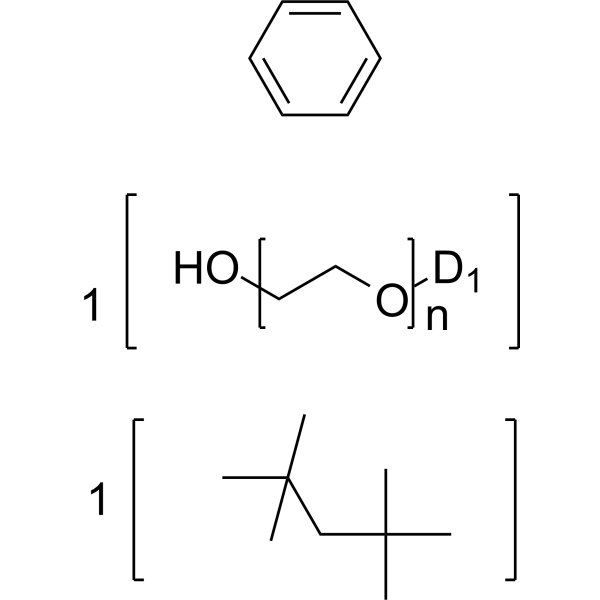
(1,1,3,3-Tetramethylbutyl)phenyl-polyethylene glycol X-114 is a surfactant. (1,1,3,3-Tetramethylbutyl)phenyl-polyethylene glycol X-114 is used to solubilize membranes and whole cells. A solution of (1,1,3,3-Tetramethylbutyl)phenyl-polyethylene glycol X-114 is homogeneous at 0 degrees C but separates in an aqueous phase and a detergent phase above 20 degrees C. (1,1,3,3-Tetramethylbutyl)phenyl-polyethylene glycol X-114 can be used in phase separation studies .
N-ethyl-N-oxido-dodecan-1-amine-d6 is the deuterium labeled N-ethyl-N-oxido-dodecan-1-amine (HY-W127785). N-ethyl-N-oxido-dodecan-1-amine is an amine oxide surfactant commonly used as a detergent, emulsifier and wetting agent in various industrial processes, especially in personal care products and household cleaning in the production of agents. N,N-Dimethyldodecylamine N-oxide has unique chemical properties that make it an effective ingredient in many product formulations to help reduce surface tension and enhance cleaning power.
N-Ethyl-N-oxido-dodecan-1-amine-d31 (N,N-Dimethyldodecylamine N-oxide-d31) is the deuterium labeled N-Ethyl-N-oxido-dodecan-1-amine. N-ethyl-N-oxido-dodecan-1-amine is an amine oxide surfactant commonly used as a detergent, emulsifier and wetting agent in various industrial processes, especially in personal care products and household cleaning in the production of agents. N,N-Dimethyldodecylamine N-oxide has unique chemical properties that make it an effective ingredient in many product formulations to help reduce surface tension and enhance cleaning power.
5-Methyl-1H-benzotriazole (5-Methylbenzotriazole) is a benzotriazole derivative, and serves as a key building block for ultraviolet absorbers and light stabilizers. 5-Methyl-1H-benzotriazole reduces the photosensitizing ability of nitrate and dissolved organic matter (DOM), enhances the persistence of microorganic pollutants, inhibits the photodegradation of DOM and drug residues, and quenches the triplet excited states of DOM and methotrexate substructures. 5-Methyl-1H-benzotriazole acts as a corrosion inhibitor for copper and copper alloys, and is present in formulations of anti-icing fluids, dishwasher detergents, aircraft deicing fluids and automotive antifreezes .
Berupipam hemifumarate is a selective antagonist of the dopamine D1 receptor (dopamine D1 receptor). Berupipam hemifumarate is a substrate of UDP-glucuronosyltransferase (UGT) and has a high affinity for UGT enzymes but a relatively low conversion rate. The glucuronidation rate of Berupipam hemifumarate varies among different species and genders. Berupipam hemifumarate can be used for the study of psychotic disorders .
3-Methyl-2-buten-1-ol-d6 is the deuterium labeled 3-Methyl-2-buten-1-ol (HY-W013035). 3-Methyl-2-buten-1-ol (MBO321) is an orally active endogenous metabolite found in pine trees and is used as a fragrance ingredient in cosmetics and detergents. 3-Methyl-2-buten-1-ol passes cell barrier. 3-Methyl-2-buten-1-ol reduces body weight in rats .
N-Dodecyl-β-D-maltoside-d25 (Lauryl Maltoside-d25) is deuterium labeled N-Dodecyl-β-D-maltoside (HY-128974). N-Dodecyl-β-D-maltoside is a non-ionic detergent. N-Dodecyl-β-D-maltoside has strong adsorption on alumina, titanium dioxide and hematite. N-Dodecyl-β-D-maltoside can promote the reactivation of various proteins. N-Dodecyl-β-D-maltoside can effectively stabilize photoactive reaction center complexes (RCs) and inhibit the degradation of Rhodopseudomonas spheroides R-26 reaction center in solution. N-Dodecyl-β-D-maltoside can be used for purification and stabilization of RNA polymerase and for detection of protein-lipid interactions .
3-Methyl-2-buten-1-ol (Standard) is the analytical standard of 3-Methyl-2-buten-1-ol. This product is intended for research and analytical applications. 3-Methyl-2-buten-1-ol (MBO321) is an orally active endogenous metabolite found in pine trees and is used as a fragrance ingredient in cosmetics and detergents. 3-Methyl-2-buten-1-ol passes cell barrier. 3-Methyl-2-buten-1-ol reduces body weight in rats[1][2][3].
1-NBD-Stearoyl-2-arachidonoyl-sn-glycerol (NBD-SAG) is a fluorescently labeled 1-Stearoyl-2-arachidonoyl-sn-glycerol (HY-131897). 1-NBD-Stearoyl-2-arachidonoyl-sn-glycerol acts as a fluorescent probe for the measurement of DGKε enzymatic activity .
Ethanolamine hydrochloride, is an organic compound used in various industrial applications. It is a white or colorless solid that is soluble in water and has a faint odor. One of the major uses of Ethanolamine hydrochloride is in the production of detergents and surfactants. Used as a raw material in the manufacture of compounds such as ethylenediaminetetraacetic acid (EDTA) and diethanolamine, which are commonly used in household and industrial cleaning products. Ethanolamine hydrochloride is also used in the synthesis of pharmaceuticals, agrochemicals and rubber processing agents. It acts as a buffer in certain chemical reactions, helping to adjust pH and maintain stability. Ethanolamine hydrochloride can be used for gas purification and metal corrosion inhibitor. Its ability to react with acid gases such as carbon dioxide and sulfur dioxide makes it useful for removing impurities from natural gas and other industrial gases. Overall, Ethanolamine hydrochloride is a multifunctional compound with many potential industrial applications. Its ability to act as a buffer, chelating agent, and corrosion inhibitor makes it an important tool in a variety of industries.
Polyethylene glycol tert-octylphenyl ether X-405 (70% in H2O) is a nonionic surfactant commonly used in a variety of industrial and research applications. Polyethylene glycol tert-octylphenyl ether X-405 (70% in H2O) belongs to the family of polyethylene glycol (PEG) ethers with a hydrophilic head and lipophilic tail and is suitable for use in emulsions, detergents and solubilizers. Polyethylene glycol tert-octylphenyl ether X-405 (70% in H2O) is particularly useful in the study of membrane proteins, where it is used to solubilize and stabilize proteins for structural analysis techniques. It is also used in a variety of other applications, including drug delivery systems, nanotechnology, and diagnostic analysis. Additionally, Polyethylene glycol tert-octylphenyl ether X-405 (70% in H2O) is used in the production of microemulsions, salves and lotions due to its emulsifying and solubilizing properties. However, it can be toxic if ingested or inhaled, so proper handling and safety precautions are required.
5-Dodecanoylaminofluorescein is an amphipathic (amphoteric) fluorescent probe (Ex/Em = 485 nm/515-535 nm), which consists of a hydrophilic fluorescein core and a hydrophobic dodecanoyl group (C12 fatty acid chain) linked by an amide bond. 5-Dodecanoylaminofluorescein is mainly used as an interface-localized radical trapping/indicator probe. Dodecanoylaminofluorescein can be used for the determination of the antioxidant properties of emulsions, or can serve as a lipophilic drug model for the study of passive skin penetration when encapsulated in tyrosine-derived nanospheres .
1-NBD-Stearoyl-2-arachidonoyl-sn-glycerol (NBD-SAG) is a fluorescently labeled 1-Stearoyl-2-arachidonoyl-sn-glycerol (HY-131897). 1-NBD-Stearoyl-2-arachidonoyl-sn-glycerol acts as a fluorescent probe for the measurement of DGKε enzymatic activity .
n-Octyl-β-d-glucopyranoside is a non-ionic detergent, it can be widely used in the research of biotechnical, biochemical applications, solubilization and crystallization of membrane proteins. n-Octyl-β-d-glucopyranoside can completely inhibit cavitation-induced cell lysis in vitro .
Polyethylene glycol mono(4-tert-octylphenyl) ether surfactant is a non-denaturing detergent that solubilizes lipid membranes. Polyethylene glycol mono(4-tert-octylphenyl) ether surfactant is commonly used in laboratories and is applied to vaccines at different stages of the manufacturing process. Polyethylene glycol mono(4-tert-octylphenyl) ether surfactant is listed as an excipient in certain vaccines including split virus influenza vaccines. Polyethylene glycol mono(4-tert-octylphenyl) ether surfactant is a nonionic surfactant. Polyethylene glycol mono(4-tert-octylphenyl) ether surfactant induces Apoptosis in prostate and colon cancer cell lines and reduces the infectivity of classic enveloped viruses such as WNV .
Sodium dodecyl sulfate for electrophoresis is a high purity sodium dodecyl sulfate (SDS) with a minimum purity of 98.5%. It is an anionic detergent commonly used in electrophoretic procedures to denature and impart a negative charge to proteins, allowing separation based on size and charge. Sodium dodecyl sulfate for electrophoresis has unique chemical properties that make it an effective ingredient in many laboratory applications, helping to improve the resolution and sensitivity of protein analysis.
(1,1,3,3-Tetramethylbutyl)phenyl-polyethylene glycol X-114 is a surfactant. (1,1,3,3-Tetramethylbutyl)phenyl-polyethylene glycol X-114 is used to solubilize membranes and whole cells. A solution of (1,1,3,3-Tetramethylbutyl)phenyl-polyethylene glycol X-114 is homogeneous at 0 degrees C but separates in an aqueous phase and a detergent phase above 20 degrees C. (1,1,3,3-Tetramethylbutyl)phenyl-polyethylene glycol X-114 can be used in phase separation studies .
Proteinase, Aspergillus oryzae is a serine protease that hydrolyzes peptide bonds in protein substrates, preferring alkaline conditions (optimal pH 10.5). It efficiently degrades casein, poly-L-glutamic acid, and poly-L-lysine, with activity irreversibly inhibited by diisopropylfluorophosphate (DFP) and potato inhibitor. This enzyme catalyzes proteolysis via serine residues in its active site, finding applications in food processing (e.g., soy sauce fermentation), detergents, and leather industries due to its high yield in solid-state fermentation and cost-effective production.
Zwittergent 3-14 (DMAPS) is a zwitterionic detergent commonly used in biochemistry and molecular biology for the solubilization and purification of membrane-bound proteins and other hydrophobic biomolecules, which have both hydrophilic and hydrophobic moieties , so that it has good detergency properties, making it suitable for stabilizing membrane proteins in aqueous solutions. In addition, DMAPS has been used in various techniques such as electrophoresis and chromatography for the separation and analysis of biomolecules. The long The hydrocarbon chains provide it with good membrane penetration and solubilization capabilities, while the sulfonate and quaternary ammonium groups ensure water solubility and charge neutrality.
Ethanolamine hydrochloride, is an organic compound used in various industrial applications. It is a white or colorless solid that is soluble in water and has a faint odor. One of the major uses of Ethanolamine hydrochloride is in the production of detergents and surfactants. Used as a raw material in the manufacture of compounds such as ethylenediaminetetraacetic acid (EDTA) and diethanolamine, which are commonly used in household and industrial cleaning products. Ethanolamine hydrochloride is also used in the synthesis of pharmaceuticals, agrochemicals and rubber processing agents. It acts as a buffer in certain chemical reactions, helping to adjust pH and maintain stability. Ethanolamine hydrochloride can be used for gas purification and metal corrosion inhibitor. Its ability to react with acid gases such as carbon dioxide and sulfur dioxide makes it useful for removing impurities from natural gas and other industrial gases. Overall, Ethanolamine hydrochloride is a multifunctional compound with many potential industrial applications. Its ability to act as a buffer, chelating agent, and corrosion inhibitor makes it an important tool in a variety of industries.
Polyoxyethylene(20) oleyl ether (Polyethylene glycol oleyl ether, with an average Mn of 1150) is a non-ionic surfactant. Polyoxyethylene(20) oleyl ether possesses emulsifying and detergent properties and can be used as a functional additive in drug delivery systems, helping to form stable nanoemulsions .
CHAPS hydrate is a cholic acid-derived, sulfobetaine-type zwitterionic detergent and micelle-forming agent. CHAPS hydrate exhibits properties of weak cationic or nonionic surfactants in different solution systems, undergoes micellization, and forms small, loose hydrophilic aggregates that are temperature-dependent. CHAPS hydrate stabilizes mononucleosomes under different ionic strengths, reduces nucleosome sequence specificity, promotes sliding of histone cores along DNA, solubilizes Tamm‑Horsfall protein to reduce its interference with urinary exosome isolation, and maintains vesicle structure and the activity of related proteins at the same time. CHAPS hydrate is used to recover native folded fusion proteins, enhance the binding capacity of GST fusion proteins, and restore GST enzyme activity. However, CHAPS hydrate cannot refold proteins denatured by urea, guanidine hydrochloride or heat, nor can it construct the structure of intrinsically disordered proteins. CHAPS hydrate is commonly used in research on the separation and purification of membrane proteins .
CHAPSO is a bile derivative. CHAPSO reduces protein adsorption, improves the cryo-EM imaging quality. CHAPSO can be used as a detergent, or as the membrane protein solubilization and reconstruction reagent in membrane protein structural studies .
Sodium myristate is a salt-like compound commonly used as a surfactant or emulsifier in a variety of industrial applications, including the production of detergents, soaps, and personal care products. In addition, it can be used as an intermediate in the synthesis of various organic compounds, including fragrances and pharmaceuticals. Its unique chemical properties make it an important ingredient in a variety of industrial processes, especially in the manufacture of textiles and paper products.
Hexaethylene glycol monotetradecyl ether is a kind of nonionic surfactant with hydrophilic head and lipophilic tail. It belongs to the class of polyethylene glycol (PEG) ethers and is widely used in different industrial and research applications. Due to its unique properties, Hexaethylene glycol monotetradecyl ether is commonly used in lotions, detergents and solubilizers. It is particularly useful in the study of membrane proteins and can be used to stabilize and solubilize proteins for use in structural analysis techniques. Due to its moisturizing and emulsifying properties, Hexaethylene glycol monotetradecyl ether is also used in personal care and cosmetics.
Sodium LaurateIt is an organic compound belonging to fatty acids. It is the sodium salt of lauric acid, a medium-chain saturated fatty acid found in various animal and vegetable fats. Sodium LaurateCommonly used as surfactants, emulsifiers and cleaning agents in various industries such as cosmetics, personal care and detergent industries. It's found in a variety of products, including soaps, shampoos, toothpaste, and laundry detergent. Furthermore, it also has applications in the food industry where it is used as a food additive to improve texture and stability.
Dodecylbenzenesulfonic acid (Dodecylbenzenesulphonic acid) is an anionic surfactant. Dodecylbenzenesulfonic acid serves as a raw material for various detergents. Dodecylbenzenesulfonic acid can be used as a cleaning agent in the daily chemical industry or a chemical oil-displacing agent in tertiary oil recovery .
Sodium dihydrogen phosphate dihydrate,≥99.0% (Sodium phosphate dihydrate,≥99.0%) is used as a buffer capacity reagent in molecular biology, biochemistry, and chromatography. Sodium dihydrogen phosphate dihydrate,≥99.0% is also used as a laxative and pH buffer when combined with other sodium phosphates and also used as fuel and detergent additives .
N,N-Dimethyldodecylamine N-oxide is an amine oxide surfactant commonly used as a detergent, emulsifier and wetting agent in various industrial processes, especially in personal care products and household cleaning in the production of agents. N,N-Dimethyldodecylamine N-oxide has unique chemical properties that make it an effective ingredient in many product formulations to help reduce surface tension and enhance cleaning power.
Sodium 2-ethylhexyl sulfate (40% in water) is an anionic surfactant commonly used as a detergent, wetting agent, and emulsifier in various industrial processes, especially in the production of personal care products, cleaning agents, and textile auxiliaries. Sodium 2-ethylhexyl sulfate (40% in water) has unique chemical properties that make it an effective ingredient in many applications, helping to reduce surface tension and enhance cleaning power.
Melissic acid, which belongs to the category of long-chain saturated fatty acids. It is a 30-carbon straight-chain fatty acid found in a variety of natural sources, including beeswax and coconut oil. Due to its unique physical properties, such as high melting point and viscosity, Melissic acid has a variety of uses in industry. It can be used as a lubricant in the production of some plastics and rubber, and is also used in the manufacture of surfactants and detergents.
Tetraheptylammonium bromide (>98%,BC) (THAB) is a quaternary ammonium compound commonly used as a phase transfer catalyst in organic synthesis reactions, especially those involving charged species or polar reagents. It can facilitate the transfer of reactants between two immiscible phases, such as water and organic solvents, by forming stable ion pairs. In addition, THAB is used as a surfactant, and as an additive in various products such as cosmetics, pharmaceuticals, and detergents. Due to THAB's ability to form complexes with these ions, its potential use in the removal of heavy metal ions from wastewater was also investigated.
CYMAL-5, 98% (TLC) is a cycloalkyl aliphatic saccharide. CYMAL-5, 98% (TLC) is a glycosidic surfactant (GS) with a chiral maltose polar head group and a cyclohexyl-pentyl hydrophobic tail. CYMAL-5, 98% (TLC) is a non-ionic detergent that has a tenfold lower critical micelle concentration (CMC) in comparison with OG, and has previously been used for membrane protein extraction or crystallization of membrane proteins for X-ray crystallographic studies .
1-Dodecylimidazole (N-Dodecylimidazole) is a lysosomotropic detergent and a cytotoxic agent. 1-Dodecylimidazole causes cell death by its acid-dependent accumulation in lysosomes, disruption of the lysosomal membrane, and releaseof cysteine proteases into the cytoplasm. 1-Dodecylimidazole has hypocholesterolaemic activity and broad-spectrum antifungal activity .
4-Dodecylbenzenesulfonic acid is an organosulfur compound commonly used in various industrial applications. It is usually used as a surfactant, emulsifier and auxiliary agent, etc., and is widely used in lubricants, paints, resins and other fields. In addition, due to its good water solubility and cleaning ability, it can also be used in the preparation of products such as detergents and cleaners.
Benzyldimethyltetradecylammonium chloride is a quaternary ammonium salt consisting of a positively charged N-benzyl-N,N-dimethyltetradecyl-1-amine cation and a negatively charged chloride anion. The compound is commonly used as a surfactant and emulsifier in a variety of applications including detergents, fabric softeners and personal care products. It also has antimicrobial properties and is used as a disinfectant or antiseptic in some products.
3-Hydroxytetradecanoic acidis a saturated fatty acid. 3-Hydroxytetradecanoic acidOccurs naturally in various animal and plant sources such as butter and milk fat. 3-Hydroxytetradecanoic acidIt has various uses in industry, especially in the production of soaps, detergents and other surfactants. 3-Hydroxytetradecanoic acidIt is also used as a precursor for the synthesis of other bioactive compounds such as antibiotics and anticancer drugs.
Sodium silicate is a water-soluble silicate. Sodium silicate is widely used as a binder, particularly in the production of detergents, soaps, and cleaners. Sodium silicate promotes the deposition of suberin polyphenols and lignin at wound sites of potato tubers, accelerates callus structure formation, enhances ROS production, and induces the synthesis of total phenols and flavonoids. Sodium silicate reduces the weight loss rate and disease index of wounded potato tubers during storage .
Sulfobetaine-12is a zwitterionic surfactant, which means it has both positive and negative charges in its molecules. It is used as a detergent in various industries, including pharmaceuticals, cosmetics, and personal care products. Sulfobetaine-12Often used as a mild surfactant due to its non-irritating properties and ability to stabilize emulsions. Plus, it has antistatic properties that can be used to clean electronics and other static-prone surfaces.
9-Decen-1-ol has a fatty odour. This compound is used in the flavor and fragrance industry for its pleasant smell, which is often described as sweet, floral and fruity. It can also be used as an intermediate in the synthesis of various organic compounds, including medicine, agricultural chemicals and polymer materials. Its unique chemical properties make it an important ingredient in many commercial products, including soaps, detergents and cosmetics.
Sodium phosphate dibasic dihydrate, for molecular biology is an inorganic salt compound. Sodium phosphate dibasic dihydrate, for molecular biology is commonly used in molecular biology experiments and can be used as a buffer, nutritional supplement, and detergent.
Polyoxyethylene monocetyl ether (n=approx. 23) is a nonionic surfactant and can be used to manufacture hand sanitizer, laundry detergent, body wash, laundry powder, dish soap, metal cleaning agents and other products .
Dimethyldimyristylammonium bromide is a quaternary ammonium compound commonly used as a surfactant or emulsifier in a variety of industrial applications, including the production of detergents, fabric softeners and hair conditioners. In addition, it can also be used as an intermediate in the synthesis of various organic compounds. Its unique chemical properties make it an important ingredient in a variety of industrial processes, especially in the manufacture of personal care products and pharmaceuticals.
N,N,N-Trimethyldecan-1-aminium chloride is a compound belonging to the class of quaternary ammonium compounds. It is a salt with cationic properties and thus useful in various industrial and biomedical applications. Decyltrimethylammonium chloride is commonly used as a surfactant, emulsifier and disinfectant in personal care products, detergents, textiles and pharmaceutical formulations. It is also used as a phase transfer catalyst in organic synthesis reactions, which involves facilitating the movement of reactants between immiscible phases.
3-(Hexadecyldimethylammonio)propane-1-sulfonate is an organic compound belonging to the class of sulfonates. It is a quaternary ammonium surfactant commonly used in various industrial and laboratory applications such as the production of detergents, personal care products and pharmaceuticals. 3-(Hexadecyldimethylammonio)propane-1-sulfonate is surface active and can be used as an emulsifier, foaming agent and wetting agent. In addition, it is used as a solubilizer in protein purification and as a surfactant in chromatography.
1,2-Dimyristoyl-rac-glycerol (C14:0) is a carboxylic acid ester, glycerolipid and diglyceride with an additional myristoyl group that facilitates interactions between proteins and lipids. Can be used as detergent or reagent. It plays a role in cell biology experiments involving the metabolism and metabolic pathways of glycerolipids. As a diglyceride, this substance consists of two fatty acid chains covalently bonded in the 1,2-form to a glycerol molecule. The diglyceride (DAG) study investigated the process by which DAG is depleted to inhibit fat accumulation. Reagent grade, for research use only.
Polyethylene glycol tert-octylphenyl ether X-405 (70% in H2O) is a nonionic surfactant commonly used in a variety of industrial and research applications. Polyethylene glycol tert-octylphenyl ether X-405 (70% in H2O) belongs to the family of polyethylene glycol (PEG) ethers with a hydrophilic head and lipophilic tail and is suitable for use in emulsions, detergents and solubilizers. Polyethylene glycol tert-octylphenyl ether X-405 (70% in H2O) is particularly useful in the study of membrane proteins, where it is used to solubilize and stabilize proteins for structural analysis techniques. It is also used in a variety of other applications, including drug delivery systems, nanotechnology, and diagnostic analysis. Additionally, Polyethylene glycol tert-octylphenyl ether X-405 (70% in H2O) is used in the production of microemulsions, salves and lotions due to its emulsifying and solubilizing properties. However, it can be toxic if ingested or inhaled, so proper handling and safety precautions are required.
Sulfobetaine-14 (Standard) is the analytical standard of Sulfobetaine-14. This product is intended for research and analytical applications. Zwittergent 3-14 (DMAPS) is a zwitterionic detergent commonly used in biochemistry and molecular biology for the solubilization and purification of membrane-bound proteins and other hydrophobic biomolecules, which have both hydrophilic and hydrophobic moieties , so that it has good detergency properties, making it suitable for stabilizing membrane proteins in aqueous solutions. In addition, DMAPS has been used in various techniques such as electrophoresis and chromatography for the separation and analysis of biomolecules. The long The hydrocarbon chains provide it with good membrane penetration and solubilization capabilities, while the sulfonate and quaternary ammonium groups ensure water solubility and charge neutrality.
Tetrapentylammonium bromide is a quaternary ammonium salt consisting of a positively charged tetrapentylammonium cation and a negatively charged bromide anion. This compound is commonly used as a phase transfer catalyst in organic synthesis reactions to facilitate the transfer of reactants between immiscible phases. It is also used in the production of surfactants, detergents and the synthesis of pharmaceuticals.
Nonan-1-ol is an organic compound commonly used in the manufacture of surfactants and lubricants, among others. It can be used as a detergent, emulsifier and stabilizer, and is widely used in some cosmetics, personal care products and printing inks. In addition, the compound has important applications in certain industrial fields, for example in the production of plastics and rubber.
Tetrapropylammonium chloride is a compound belonging to the class of quaternary ammonium compounds. It is a salt with cationic properties and is used in various industrial and biomedical applications. Tetrapropylammonium chloride is commonly used as a phase transfer catalyst to facilitate the movement of reactants between immiscible phases in organic synthesis reactions. It is also used as a surfactant in the formulation of personal care products, detergents, textiles and pharmaceuticals. Additionally, it is used in the production of certain types of polymers and resins.
Tetraethylammonium (iodide) is a quaternary ammonium compound belonging to the class of alkylammonium salts. This compound is commonly used as a phase-transfer catalyst in organic synthesis because it facilitates the transfer of reactants between immiscible phases. It can also be used as an electrolyte in electrochemical devices and as a surfactant in detergent formulations. Its unique chemical properties make it an important ingredient in a variety of industrial applications, including pharmaceuticals, agrochemicals, and materials science.
Sulfobetaine-8is a zwitterionic surfactant, which means it has both positive and negative charges in its molecules. It is used as a detergent in various industries, including pharmaceuticals, cosmetics, and personal care products. Sulfobetaine-8Often used as a mild surfactant because of its non-irritating and ability to stabilize emulsions. Plus, it has antistatic properties that can be used to clean electronics and other static-prone surfaces.
Dodecyl β-D-glucopyranoside is a non-ionic detergent and surfactant commonly used to solubilize and purify membrane proteins in biochemical research. Dodecyl β-D-glucopyranoside also interacts with bovine serum albumin (BSA) to quench its intrinsic fluorescence. The critical micelle concentration (CMC) of Dodecyl β-D-glucopyranoside (DG) and DG/BSA complex is 2.0 mM and 2.34 mM, respectively. Micelles can be formed in aqueous solutions above this concentration .
Polyethylene glycol trimethylnonyl ether, is a nonionic surfactant commonly used in various industrial and research applications. It belongs to the family of polyethylene glycol (PEG) ethers with a hydrophilic head and lipophilic tail and is suitable for use in lotions, detergents and solubilizers. Polyethylene glycol trimethylnonyl ether is particularly useful in protein chemistry, where it is used to solubilize and stabilize proteins, such as membrane proteins, for structural analysis techniques. In addition, Polyethylene glycol trimethylnonyl ether has potential applications in drug delivery and other medical fields due to its ability to interact with and penetrate cell membranes.
Octyl thiomaltoside (OTM) is a nonionic detergent commonly used in the purification and crystallization of membrane proteins. It belongs to the family of maltoside detergents and has a hydrophilic head group and a lipophilic tail group, enabling it to interact with water-soluble and membrane-bound proteins. OTMs are known for their ability to solubilize integral membrane proteins without disrupting their structure or function, making them an invaluable tool in biochemical and biophysical research. In addition to protein research, OTMs are used in a variety of other applications, including drug delivery systems, nanotechnology, and diagnostic analysis.
Octyl β-D-thioglucopyranoside is a non-ionic detergent that can be used in the field of membrane biochemistry. Octyl β-D-thioglucopyranoside has the ability to solubilize E. coli membrane proteins .
Sodium nonanoate is a salt-like compound commonly used as a surfactant or emulsifier in a variety of industrial applications, including the production of detergents, soaps and personal care products. In addition, it can be used as an intermediate in the synthesis of various organic compounds, including pharmaceuticals and agrochemicals. Its unique chemical properties make it an important ingredient in a variety of industrial processes, especially in the manufacture of textiles and paper products.
N,N-Dimethyldecylamine N-oxide is an organic compound belonging to the family of amine oxides. It is commonly used as a surfactant and cleaning agent in a variety of industrial and household applications, including detergents, personal care products and paints. N,N-Dimethyldecylamine N-oxide has various properties suitable for these applications, including the ability to lower surface tension, increase solubility, and act as a blowing agent. In addition, it can be used as a corrosion inhibitor in metalworking fluids and a flotation agent in mineral processing.
n-Undecyl β-D-maltopyranoside is an n-alkyl β-D-maltopyranoside detergent that can be used for solubilization and structural determination of membrane proteins. n-Undecyl β-D-maltopyranoside effectively solubilizes CST from Golgi-enriched fractions of Pichia pastoris, but fails to maintain the functional activity of CST during subsequent partial purification and reconstitution into proteoliposomes. n-Undecyl β-D-maltopyranoside is more suitable for structural analysis studies of membrane proteins rather than functional reconstitution experiments .
Octaethylene glycol monohexadecyl ether, is a nonionic surfactant commonly used in various industrial and research applications. Octaethylene glycol monohexadecyl ether belongs to the family of polyethylene glycol (PEG) ethers with a hydrophilic head and lipophilic tail, suitable for use in lotions, detergents and solubilizers. Octaethylene glycol monohexadecyl ether is particularly useful in the study of membrane proteins, where it is used to solubilize and stabilize proteins for structural analysis techniques. In addition, Octaethylene glycol monohexadecyl ether has the ability to interact with and penetrate cell membranes, so it has potential applications in drug delivery and other medical fields.
N-Decylphosphorylcholine, 98% is a short-chain lipid-like zwitterionic detergent, used as a decontaminant for dissolving and purifying membrane proteins.
Nitrilotriacetic acid (Triglycollamic acid) trisodium salt is a chelating agent commonly used in various industrial processes, especially in the production of detergents, cleaners and metal plating solutions. Nitrilotriacetic acid trisodium salt has unique chemical properties that bind to metal ions, preventing them from reacting or precipitating out of solution.
Hexadecyltrimethylammonium hydroxide, a quaternary ammonium compound, is commonly used as an emulsifier, detergent, and surfactant in various industrial processes, especially in the production of cosmetics, pharmaceuticals, and textiles. Hexadecyltrimethylammonium hydroxide has unique chemical properties that make it an active ingredient in many applications requiring strong surface activity and solubility.
Tetrahexylammonium bromide is a compound that belongs to the class of quaternary ammonium compounds. It is a salt with cationic properties and thus useful in various industrial and biomedical applications. Tetrahexylammonium bromide is commonly used as a phase transfer catalyst to facilitate the movement of reactants between immiscible phases in various organic synthesis reactions. It is also used as a surfactant and emulsifier in the formulation of detergents, personal care products and pharmaceuticals.
Tributylbenzylammonium bromide is a quaternary ammonium salt composed of a positively charged N-benzyl-N,N-dibutylbutan-1-amine cation and a negatively charged bromide anion composition. The compound is commonly used as a surfactant and emulsifier in a variety of applications including detergents, fabric softeners and personal care products. It also has antimicrobial properties and is used as a disinfectant or antiseptic in some products.
N,N-Diethyl-N-methylethanaminium tetrafluoroborate is a quaternary ammonium compound belonging to the class of alkylammonium salts. This compound is commonly used as a phase transfer catalyst in organic synthesis, facilitating the transfer of reactants between immiscible phases. Additionally, it is used as an electrolyte in electrochemical devices and as a surfactant in detergent formulations. Its unique chemical properties make it an important ingredient in a variety of industrial applications, including pharmaceuticals, agrochemicals, and materials science.
N,N,N-Trimethyloctan-1-aminium chloride is a quaternary ammonium salt consisting of a positively charged N,N,N-trimethyloctan-1-aminium cation and a negatively charged chloride anion. The compound is commonly used as a surfactant and emulsifier in a variety of applications including detergents, fabric softeners and personal care products. It can also be used as a phase transfer catalyst in organic chemical reactions, facilitating the transfer of reactants between immiscible phases. Additionally, it has antimicrobial properties and is used as a disinfectant or antiseptic in some products.
3-(Dimethyl(octadecyl)ammonio)propane-1-sulfonate is a class of quaternary ammonium compounds. It is a surfactant and cationic detergent with amphiphilic properties and therefore useful in various industrial and biomedical applications. 3-(Dimethyl(octadecyl)ammonium)propane-1-sulfonate is commonly used as an emulsifier, solubilizer and antimicrobial agent in personal care products, detergents, textiles and pharmaceutical formulations. It is also used as a reagent in analytical chemistry, especially in the analysis of proteins and DNA.
Polymethacrylate Copolymer N−C4−52−6.9 is a polymer that consists of hydrophobic butylmethacrylate and cationic methacroylcholine chloride monomers. Polymethacrylate Copolymer N−C4−52−6.9 is able to solubilise lipid bilayers into nanodiscs. Polymethacrylate Copolymer N−C4−52−6.9 can be utilized in structure and functional studies on membrane proteins .
C7BzO (Dimethyl-2-hydroxyethylampropanepropanesulfonate) is a potent solubilizing detergent that can be used for samples such as bacteria, mammals, and plants. C7BzO can be used for the extraction of proteins and the preparation of two-dimensional gel electrophoresis samples .
1-Naphthenyl phosphate hydrate sodium is commonly used as a flame retardant for various materials such as plastics, textiles, and construction materials. In addition, its potential use as a corrosion inhibitor and as an ingredient in fertilizers and detergents has been investigated. Its hydrated form contains variable amounts of water molecules, which affects its physical properties and applications.
Tetrabutylammonium (hydrogen difluoride) is a quaternary ammonium salt containing fluoride ions. It is a highly active and effective reagent, often used in organic synthesis reactions, especially for the modification of organic molecules with fluorine atoms. Tetrabutylammonium (hydrogen difluoride) is also used as a catalyst for various chemical reactions such as esterification and transesterification. Additionally, it is used in the production of specialty chemicals such as surfactants and detergents.
Tridodexylmethylammonium chloride, also known as TDMAC, is a cationic surfactant commonly used in various industrial and research applications. It belongs to the family of quaternary ammonium compounds and has a positively charged head and a hydrophobic tail, which allows it to be used as a detergent, emulsifier and antimicrobial. Known for its ability to disrupt cell membranes, TDMAC is frequently used in microbiology for the selective isolation and identification of bacteria.
Dimethyldioctylammonium bromide is an organic compound containing ammonium and bromide ions. It is commonly used in the production of detergents, emulsifiers and surfactants for various industrial applications. Dimethyldioctylammonium bromide is highly surface active and reduces the surface tension of aqueous solutions, so it can be used to clean and wet surfaces. In addition, it can also be used as an intermediate in the synthesis of other quaternary ammonium compounds.
Benzyldimethyltetradecylammonium (chloride) (Standard) is the analytical standard of Benzyldimethyltetradecylammonium (chloride). This product is intended for research and analytical applications. Benzyldimethyltetradecylammonium chloride is a quaternary ammonium salt consisting of a positively charged N-benzyl-N,N-dimethyltetradecyl-1-amine cation and a negatively charged chloride anion. The compound is commonly used as a surfactant and emulsifier in a variety of applications including detergents, fabric softeners and personal care products. It also has antimicrobial properties and is used as a disinfectant or antiseptic in some products.
Sodium dodecyl sulfate (Standard) is the analytical standard of Sodium dodecyl sulfate. This product is intended for research and analytical applications. Sodium dodecyl sulfate is a high purity sodium dodecyl sulfate (SDS) with a minimum purity of 98.5%. It is an anionic detergent commonly used in electrophoretic procedures to denature and impart a negative charge to proteins, allowing separation based on size and charge. Sodium dodecyl sulfate has unique chemical properties that make it an effective ingredient in many laboratory applications, helping to improve the resolution and sensitivity of protein analysis.
Octaethylene glycol monodecyl ether, is a nonionic surfactant commonly used in various industrial and research applications. It belongs to the family of polyethylene glycol (PEG) ethers with a hydrophilic head and lipophilic tail and is suitable for use in lotions, detergents and solubilizers. Octaethylene glycol monodecyl ether is particularly useful in the study of membrane proteins, where it is used to solubilize and stabilize proteins for structural analysis techniques. In addition, Octaethylene glycol monodecyl ether has the ability to interact with and penetrate cell membranes, so it has potential applications in drug delivery and other medical fields.
DDMAB, or didodecyldimethylammonium bromide, is a cationic surfactant commonly used in a variety of industrial and research applications. It belongs to the family of quaternary ammonium compounds and has a positively charged head and a hydrophobic tail, which allows it to be used as a detergent, emulsifier and antimicrobial. Known for its ability to disrupt cell membranes, DDMAB is commonly used in microbiology to selectively isolate and identify bacteria. It is also used in nanotechnology to synthesize metal nanoparticles and other materials. In addition, DDMAB has the ability to interact with and penetrate cell membranes, which has potential applications in drug delivery, gene therapy, and other medical fields.
N,N-Dimethyldodecylamine N-oxide (Standard) is the analytical standard of N-ethyl-N-oxido-dodecan-1-amine. This product is intended for research and analytical applications. N,N-Dimethyldodecylamine N-oxide is an amine oxide surfactant commonly used as a detergent, emulsifier and wetting agent in various industrial processes, especially in personal care products and household cleaning in the production of agents. N,N-Dimethyldodecylamine N-oxide has unique chemical properties that make it an effective ingredient in many product formulations to help reduce surface tension and enhance cleaning power.
1-Dodecylimidazole (Standard) is the analytical standard of 1-Dodecylimidazole. This product is intended for research and analytical applications. 1-Dodecylimidazole (N-Dodecylimidazole) is a lysosomotropic detergent and a cytotoxic agent. 1-Dodecylimidazole causes cell death by its acid-dependent accumulation in lysosomes, disruption of the lysosomal membrane, and releaseof cysteine proteases into the cytoplasm. 1-Dodecylimidazole has hypocholesterolaemic activity and broad-spectrum antifungal activity .
2-Cyclohexylethyl-4-O-(α-D-glucopyranosyl)-β-D-glucopyranoside, 98% (2-Cyclohexylethyl-4-O-(alpha-D-glucopyranosyl)-beta-D-glucopyranoside, 98%) is a detergent that can be used for the purification and crystallization of membrane-bound proteins in their native structure. It can self-assemble into micelles and vesicles in aqueous solution and can be used for the study of biomembrane models.
Nonanol (Standard) is the analytical standard of Nonanol (HY-W008816). This product is intended for research and analytical applications. Nonan-1-ol is an organic compound commonly used in the manufacture of surfactants and lubricants, among others. It can be used as a detergent, emulsifier and stabilizer, and is widely used in some cosmetics, personal care products and printing inks. In addition, the compound has important applications in certain industrial fields, for example in the production of plastics and rubber.
Nanodisc scaffold peptide (NSPr) is an amphipathic double-helical peptide that stabilizes membrane proteins by mimicking their natural environment, allowing them to remain stable and active in detergent-free aqueous solutions. Nanodisc scaffold peptide can be used to construct a universal tool for high-throughput stabilization of membrane proteins, facilitating modern biological research .
Alamethicin F 50 is an antibiotic. Alamethicin F 50 is composed of membrane-active peptide, containing 75% Alamethicin F 50/5 and 10% Alamethicin F 50/7. Alamethicin F 50 is exhibits antifungal and antibacterial activity by disrupting the integrity of microbial cell membranes, resulting in leakage of cell contents and death of the microorganisms. Alamethicin F 50 is able to reduce the surface tension of water, which can be used as a surfactant or detergent .
MCE Mammalian Active Protein Extraction Reagent are gentle, non-denaturing detergents designed for the rapid, high-quality, and high-activity
extraction of cytoplasmic, nuclear, and membrane proteins from mammalian cells or tissues. The 100 mL is defined as the base specification. All larger sizes correspond to incremental volumes of this base.
Digitonin, a glycoside obtained from Digitalis purpurea, could increase cell permeability by binding to cholesterol molecules and reduce tumor growth . Digitonin is an natural detergent .
Taurodeoxycholate sodium salt is a bile salt-related anionic detergent. Taurodeoxycholate sodium salt is formed in the liver by conjugation of deoxycholate with Taurine (HY-B0351). Taurodeoxycholate sodium salt is used for isolation of membrane proteins including inner mitochondrial membrane proteins. Taurodeoxycholate (TDCA) exhibits anti-inflammatory and neuroprotective effects .
Taurodeoxycholate sodium salt is a bile salt-related anionic detergent. Taurodeoxycholic acid is formed in the liver by conjugation of deoxycholate with Taurine (HY-B0351). Taurodeoxycholic acid is used for isolation of membrane proteins including inner mitochondrial membrane proteins. Taurodeoxycholic acid (TDCA) exhibits anti-inflammatory and neuroprotective effects .
Isethionic acid is a calcium binder and anionic detergent that enhances mitochondrial calcium binding capacity by competitively binding to calcium binding sites on the outer mitochondrial membrane. Isethionic acid can inhibit calcium-activated mitochondrial respiration. Isethionic acid inhibits barnacle (Balanus amphitrite) larvae with LC50s of 23 μg/mL (24 h) and 17 μg/mL (48 h), respectively. Isethionic acid can inhibit the attachment of barnacle larvae (complete inhibition at 10 μg/mL) and regulate mitochondrial calcium transport, and can enhance ATP-dependent calcium uptake at high calcium concentrations. Isethionic acid can be used to study the mechanism of mitochondrial calcium metabolism.
Sodium taurodeoxycholate hydrate is a bile salt-related anionic detergent. Sodium taurodeoxycholate hydrate is formed in the liver by conjugation of deoxycholate with Taurine (HY-B0351). Sodium taurodeoxycholate hydrate is used for isolation of membrane proteins including inner mitochondrial membrane proteins. Taurodeoxycholate-d6 (TDCA) exhibits anti-inflammatory and neuroprotective effects .
Isobornyl acetate is a compound with an aroma. Isobornyl acetate can be used as a food additive for food flavoring. Isobornyl acetate can also be used as a fragrance in products such as perfumes, cosmetics, and detergents .
3-Methyl-2-buten-1-ol (MBO321) is an orally active endogenous metabolite found in pine trees and is used as a fragrance ingredient in cosmetics and detergents. 3-Methyl-2-buten-1-ol passes cell barrier. 3-Methyl-2-buten-1-ol reduces body weight in rats .
Nonan-1-ol is an organic compound commonly used in the manufacture of surfactants and lubricants, among others. It can be used as a detergent, emulsifier and stabilizer, and is widely used in some cosmetics, personal care products and printing inks. In addition, the compound has important applications in certain industrial fields, for example in the production of plastics and rubber.
Taurodeoxycholic acid (Standard) is the analytical standard of Taurodeoxycholic acid. This product is intended for research and analytical applications. Taurodeoxycholate sodium salt is a bile salt-related anionic detergent. Taurodeoxycholic acid is formed in the liver by conjugation of deoxycholate with Taurine (HY-B0351). Taurodeoxycholic acid is used for isolation of membrane proteins including inner mitochondrial membrane proteins. Taurodeoxycholic acid (TDCA) exhibits anti-inflammatory and neuroprotective effects[1][2][3][9][10].
Taurodeoxycholate (sodium salt) (Standard) is the analytical standard of Taurodeoxycholate (sodium salt). This product is intended for research and analytical applications. Taurodeoxycholate sodium salt is a bile salt-related anionic detergent used for isolation of membrane proteins including inner mitochondrial membrane proteins. Taurodeoxycholate (TDCA) inhibits various inflammatory responses
.
Isobornyl acetate (Standard) is the analytical standard of Isobornyl acetate (HY-N2583). This product is intended for research and analytical applications. Isobornyl acetate is a compound with an aroma. Isobornyl acetate can be used as a food additive for food flavoring. Isobornyl acetate can also be used as a fragrance in products such as perfumes, cosmetics, and detergents .
Taurodeoxycholate sodium salt (Standard) is a bile salt (Standard)-related anionic detergent. Taurodeoxycholate sodium salt (Standard) is formed in the liver by conjugation of deoxycholate with Taurine (HY-B0351). Taurodeoxycholate sodium salt (Standard) is used for isolation of membrane proteins including inner mitochondrial membrane proteins. Taurodeoxycholate (TDCA) exhibits anti-inflammatory and neuroprotective effects .
3-Methyl-2-buten-1-ol (Standard) is the analytical standard of 3-Methyl-2-buten-1-ol. This product is intended for research and analytical applications. 3-Methyl-2-buten-1-ol (MBO321) is an orally active endogenous metabolite found in pine trees and is used as a fragrance ingredient in cosmetics and detergents. 3-Methyl-2-buten-1-ol passes cell barrier. 3-Methyl-2-buten-1-ol reduces body weight in rats[1][2][3].
Thyme extract is one of the most preservative essential oils. It has antibacterial and antiviral properties. And it can be used in daily essentials such as detergents, hand sanitizers and soaps.
Soapnut extract is a natural nonionic surfactant that can be used as a skin conditioning agent. It possesses strong detergency, antibacterial, non-polluting, and skin-softening properties. Soapnut extract also exhibits anti-inflammatory, antioxidant, free radical scavenging, and anticoagulant effects.
Nonanol (Standard) is the analytical standard of Nonanol (HY-W008816). This product is intended for research and analytical applications. Nonan-1-ol is an organic compound commonly used in the manufacture of surfactants and lubricants, among others. It can be used as a detergent, emulsifier and stabilizer, and is widely used in some cosmetics, personal care products and printing inks. In addition, the compound has important applications in certain industrial fields, for example in the production of plastics and rubber.
This 200x protein detergent buffer A is formulated with 10% (w/v) DDM and 2% (w/v) CHS. DDM (n-Dodecyl β-D-Maltoside, CAS: 69227-93-6): maltoside-based non-ionic detergent. CHS (Cholesteryl Hemisuccinate Tris Salt, CAS: 102601-49-0): ionizable anionic detergent for stabilizing large unilamellar vesicles. DDM/CHS micelles form a membrane-like environment to solubilize membrane proteins and maintain their structural and functional integrity. This 200x protein detergent buffer A is sterile-filtered, contains no other preservatives, and must be diluted to 1× working solution with assay buffer prior to use.
As a membrane protein, Claudin-18/CLDN18.2 requires a detergent system to maintain its solubility and biological activity. The designated system consists of 10% (w/v) DDM and 2% (w/v) CHS, both of which are essential components for preserving protein stability and function. Under no circumstances should these detergents be removed.
Triclosan-d3 is the deuterium labeled Triclosan. Triclosan is an antibacterial and antifungal agent found in consumer products, including soaps, detergents, toys, and surgical cleaning treatments .
Glycochenodeoxycholic acid-d4 is the deuterium labeled Glycochenodeoxycholic acid. Glycochenodeoxycholic acid (Chenodeoxycholylglycine) is a bile acid formed in the liver from chenodeoxycholate and glycine. It acts as a detergent to solubilize fats for absorption and is itself absorbed. Glycochenodeoxycholic acid (Chenodeoxycholylglycine) induces hepatocyte apoptosis .
Dodecylphosphocholine-d388 is the deuterium labeled Dodecylphosphocholine. Dodecylphosphocholine is a detergent widely utilized in NMR studies of membrane proteins .
N-Dodecyl-β-D-maltoside-d25 (Lauryl Maltoside-d25) is deuterium labeled N-Dodecyl-β-D-maltoside (HY-128974). N-Dodecyl-β-D-maltoside is a non-ionic detergent. N-Dodecyl-β-D-maltoside has strong adsorption on alumina, titanium dioxide and hematite. N-Dodecyl-β-D-maltoside can promote the reactivation of various proteins. N-Dodecyl-β-D-maltoside can effectively stabilize photoactive reaction center complexes (RCs) and inhibit the degradation of Rhodopseudomonas spheroides R-26 reaction center in solution. N-Dodecyl-β-D-maltoside can be used for purification and stabilization of RNA polymerase and for detection of protein-lipid interactions .
1-O-n-Octyl-β-D-glucopyranoside-d17 is the deuterium labeled n-Octyl β-D-glucopyranoside . n-Octyl-β-d-glucopyranoside is a non-ionic detergent, it can be widely used in the research of biotechnical, biochemical applications, solubilization and crystallization of membrane proteins .
Taurodeoxycholate-d6 sodium salt is a bile salt-related anionic detergent. Taurodeoxycholate-d6 sodium salt is formed in the liver by conjugation of deoxycholate with Taurine (HY-B0351). Taurodeoxycholate-d6 sodium salt is used for isolation of membrane proteins including inner mitochondrial membrane proteins. Taurodeoxycholate-d6 (TDCA) exhibits anti-inflammatory and neuroprotective effects .
Dodecylphosphocholine-d25 is the deuterium labeled Dodecylphosphocholine . Dodecylphosphocholine is a detergent widely utilized in NMR studies of membrane proteins .
Triclosan-methyl-d3 is the deuterium labeled Triclosan-methyl. Triclosan-methyl is a transformation product of triclosan. Triclosan is a bactericide in personal care products such as toothpaste, shampoos, and soaps. Triclosan is also a stabilizing agent in a multitude of detergents and cosmetics .
Glycochenodeoxycholic acid-d7 (sodium) is the deuterium labeled Glycochenodeoxycholic acid (sodium salt). Glycochenodeoxycholic acid sodium salt (Chenodeoxycholylglycine sodium salt) is a bile acid formed in the liver from chenodeoxycholate and glycine. It acts as a detergent to solubilize fats for absorption and is itself absorbed. Glycochenodeoxycholic acid sodium salt (Chenodeoxycholylglycine sodium salt) induces hepatocyte apoptosis .
N-ethyl-N-oxido-dodecan-1-amine-d6 is the deuterium labeled N-ethyl-N-oxido-dodecan-1-amine (HY-W127785). N-ethyl-N-oxido-dodecan-1-amine is an amine oxide surfactant commonly used as a detergent, emulsifier and wetting agent in various industrial processes, especially in personal care products and household cleaning in the production of agents. N,N-Dimethyldodecylamine N-oxide has unique chemical properties that make it an effective ingredient in many product formulations to help reduce surface tension and enhance cleaning power.
3-Methyl-2-buten-1-ol-d6 is the deuterium labeled 3-Methyl-2-buten-1-ol (HY-W013035). 3-Methyl-2-buten-1-ol (MBO321) is an orally active endogenous metabolite found in pine trees and is used as a fragrance ingredient in cosmetics and detergents. 3-Methyl-2-buten-1-ol passes cell barrier. 3-Methyl-2-buten-1-ol reduces body weight in rats .
Taurodeoxycholat-d4 sodium is the deuterium labeled Taurodeoxycholate sodium (HY-128853). Taurodeoxycholate sodium salt is a bile salt-related anionic detergent. Taurodeoxycholate sodium salt is formed in the liver by conjugation of deoxycholate with Taurine (HY-B0351). Taurodeoxycholate sodium salt is used for isolation of membrane proteins including inner mitochondrial membrane proteins. Taurodeoxycholate (TDCA) exhibits anti-inflammatory and neuroprotective effects .
Lauryl maltose neopentyl glycol-d42 (LMNG-d42) is the deuterium labeled Lauryl maltose neopentyl glycol (HY-138193). Lauryl maltose neopentyl glycol (LMNG) is a detergent that can solubilize and stabilize membrane proteins. Lauryl maltose neopentyl glycol extracts integral membrane proteins from membranes, and improves substantially the stability of various membrane proteins, including G protein-coupled receptors and respiratory complexes .
Tetrapropylammonium-d28 chloride is the deuterium labeled Tetrapropylammonium chloride (HY-W012412). Tetrapropylammonium chloride is a compound belonging to the class of quaternary ammonium compounds. It is a salt with cationic properties and is used in various industrial and biomedical applications. Tetrapropylammonium chloride is commonly used as a phase transfer catalyst to facilitate the movement of reactants between immiscible phases in organic synthesis reactions. It is also used as a surfactant in the formulation of personal care products, detergents, textiles and pharmaceuticals. Additionally, it is used in the production of certain types of polymers and resins.
Sulfobetaine-12-d25 is the deuterium labeled Sulfobetaine-12 (HY-W127620). Sulfobetaine-12is a zwitterionic surfactant, which means it has both positive and negative charges in its molecules. It is used as a detergent in various industries, including pharmaceuticals, cosmetics, and personal care products. Sulfobetaine-12Often used as a mild surfactant due to its non-irritating properties and ability to stabilize emulsions. Plus, it has antistatic properties that can be used to clean electronics and other static-prone surfaces.
N-Ethyl-N-oxido-dodecan-1-amine-d31 (N,N-Dimethyldodecylamine N-oxide-d31) is the deuterium labeled N-Ethyl-N-oxido-dodecan-1-amine. N-ethyl-N-oxido-dodecan-1-amine is an amine oxide surfactant commonly used as a detergent, emulsifier and wetting agent in various industrial processes, especially in personal care products and household cleaning in the production of agents. N,N-Dimethyldodecylamine N-oxide has unique chemical properties that make it an effective ingredient in many product formulations to help reduce surface tension and enhance cleaning power.
Sodium dodecyl sulfate is an anionic surfactant commonly used as a detergent, emulsifier, and protein denaturant in various industrial processes, especially in the production of personal care products, cleaners, and laboratory reagents. Sodium dodecyl sulfate has unique chemical properties that make it an effective ingredient in many applications, helping to reduce surface tension and enhance cleaning power.
Disodium phosphate is commonly used as a food additive, buffer and laboratory reagent. Disodium phosphate has unique chemical properties that make it an important ingredient in the manufacture of fertilizers, detergents and water treatment products. Additionally, it is used in various medical applications such as osmotic laxatives and electrolyte replacement solutions.
Nonaethylene glycol monododecyl ether (Nonaoxyethylene monododecyl ether) is a nonionic surfactant and polyethylene glycol (PEG) detergent that can be used to form initial coalesced O/W emulsion droplets, as well as for protein separation and purification .
Dimethyldimyristylammonium bromide is a quaternary ammonium compound commonly used as a surfactant or emulsifier in a variety of industrial applications, including the production of detergents, fabric softeners and hair conditioners. In addition, it can also be used as an intermediate in the synthesis of various organic compounds. Its unique chemical properties make it an important ingredient in a variety of industrial processes, especially in the manufacture of personal care products and pharmaceuticals.
Inquiry Online
Your information is safe with us. * Required Fields.
Western blot analysis of extracts from THP-1(lane 2(20μg), Jurkat (lane 3(20μg) and NIH3T3(lane 4(20μg) using FOXO1A (HY-P80132) Rabbit mAb. Proteins were transferred
to a PVDF membrane and blocked with 5% non-fat milk in TBST for 2 hour at room temperature. The primary antibody (1/1000) and Loading control antibody (Beta Actin, HY-P80438, 1/10000) was
used in 5% non-fat milk in TBST at 4°C overnight. Goat Anti-Mouse/Rabbit IgG-HRP Secondary Antibody (1/10000) was used for 1 hour at room temperature.
Western blot analysis of extracts from THP-1(lane 2(20μg), Jurkat (lane 3(20μg) and NIH3T3(lane 4(20μg) using FOXO1A (HY-P80132) Rabbit mAb. Proteins were transferred
to a PVDF membrane and blocked with 5% non-fat milk in TBST for 2 hour at room temperature. The primary antibody (1/1000) and Loading control antibody (Beta Actin, HY-P80438, 1/10000) was
used in 5% non-fat milk in TBST at 4°C overnight. Goat Anti-Mouse/Rabbit IgG-HRP Secondary Antibody (1/10000) was used for 1 hour at room temperature.
Western blot analysis of extracts from THP-1(lane 2(20μg), Jurkat (lane 3(20μg) and NIH3T3(lane 4(20μg) using FOXO1A (HY-P80132) Rabbit mAb. Proteins were transferred
to a PVDF membrane and blocked with 5% non-fat milk in TBST for 2 hour at room temperature. The primary antibody (1/1000) and Loading control antibody (Beta Actin, HY-P80438, 1/10000) was
used in 5% non-fat milk in TBST at 4°C overnight. Goat Anti-Mouse/Rabbit IgG-HRP Secondary Antibody (1/10000) was used for 1 hour at room temperature.
Western blot analysis of extracts from THP-1(lane 2(20μg), Jurkat (lane 3(20μg) and NIH3T3(lane 4(20μg) using FOXO1A (HY-P80132) Rabbit mAb. Proteins were transferred
to a PVDF membrane and blocked with 5% non-fat milk in TBST for 2 hour at room temperature. The primary antibody (1/1000) and Loading control antibody (Beta Actin, HY-P80438, 1/10000) was
MedchemExpress Validation 03
Western blot analysis of extracts from THP-1(lane 2(20μg), Jurkat (lane 3(20μg) and NIH3T3(lane 4(20μg) using FOXO1A (HY-P80132) Rabbit mAb. Proteins were transferred
MedchemExpress Validation 04
Western blot analysis of extracts from THP-1(lane 2(20μg), Jurkat (lane 3(20μg) and NIH3T3(lane 4(20μg) using FOXO1A (HY-P80132) Rabbit mAb. Proteins were transferred
to a PVDF membrane and blocked with 5% non-fat milk in TBST for 2 hour at room temperature. The primary antibody (1/1000) and Loading control antibody (Beta Actin, HY-P80438, 1/10000) was
used in 5% non-fat milk in TBST at 4°C overnight. Goat Anti-Mouse/Rabbit IgG-HRP Secondary Antibody (1/10000) was used for 1 hour at room temperature.
MedchemExpress Validation
Western blot analysis of extracts from THP-1(lane 2(20μg), Jurkat (lane 3(20μg) and NIH3T3(lane 4(20μg) using FOXO1A (HY-P80132) Rabbit mAb. Proteins were transferred
to a PVDF membrane and blocked with 5% non-fat milk in TBST for 2 hour at room temperature. The primary antibody (1/1000) and Loading control antibody (Beta Actin, HY-P80438, 1/10000) was
used in 5% non-fat milk in TBST at 4°C overnight. Goat Anti-Mouse/Rabbit IgG-HRP Secondary Antibody (1/10000) was used for 1 hour at room temperature.
Western blot analysis of extracts from THP-1(lane 2(20μg), Jurkat (lane 3(20μg) and NIH3T3(lane 4(20μg) using FOXO1A (HY-P80132) Rabbit mAb. Proteins were transferred
to a PVDF membrane and blocked with 5% non-fat milk in TBST for 2 hour at room temperature. The primary antibody (1/1000) and Loading control antibody (Beta Actin, HY-P80438, 1/10000) was
used in 5% non-fat milk in TBST at 4°C overnight. Goat Anti-Mouse/Rabbit IgG-HRP Secondary Antibody (1/10000) was used for 1 hour at room temperature.
MedchemExpress Validation
Western blot analysis of extracts from THP-1(lane 2(20μg), Jurkat (lane 3(20μg) and NIH3T3(lane 4(20μg) using FOXO1A (HY-P80132) Rabbit mAb. Proteins were transferred
to a PVDF membrane and blocked with 5% non-fat milk in TBST for 2 hour at room temperature. The primary antibody (1/1000) and Loading control antibody (Beta Actin, HY-P80438, 1/10000) was
used in 5% non-fat milk in TBST at 4°C overnight. Goat Anti-Mouse/Rabbit IgG-HRP Secondary Antibody (1/10000) was used for 1 hour at room temperature.
MedchemExpress Validation
Western blot analysis of extracts from THP-1(lane 2(20μg), Jurkat (lane 3(20μg) and NIH3T3(lane 4(20μg) using FOXO1A (HY-P80132) Rabbit mAb. Proteins were transferred
to a PVDF membrane and blocked with 5% non-fat milk in TBST for 2 hour at room temperature. The primary antibody (1/1000) and Loading control antibody (Beta Actin, HY-P80438, 1/10000) was
used in 5% non-fat milk in TBST at 4°C overnight. Goat Anti-Mouse/Rabbit IgG-HRP Secondary Antibody (1/10000) was used for 1 hour at room temperature.
MedchemExpress Validation
Western blot analysis of extracts from THP-1(lane 2(20μg), Jurkat (lane 3(20μg) and NIH3T3(lane 4(20μg) using FOXO1A (HY-P80132) Rabbit mAb. Proteins were transferred
to a PVDF membrane and blocked with 5% non-fat milk in TBST for 2 hour at room temperature. The primary antibody (1/1000) and Loading control antibody (Beta Actin, HY-P80438, 1/10000) was
used in 5% non-fat milk in TBST at 4°C overnight. Goat Anti-Mouse/Rabbit IgG-HRP Secondary Antibody (1/10000) was used for 1 hour at room temperature.
MedchemExpress Validation
Western blot analysis of extracts from THP-1(lane 2(20μg), Jurkat (lane 3(20μg) and NIH3T3(lane 4(20μg) using FOXO1A (HY-P80132) Rabbit mAb. Proteins were transferred
to a PVDF membrane and blocked with 5% non-fat milk in TBST for 2 hour at room temperature. The primary antibody (1/1000) and Loading control antibody (Beta Actin, HY-P80438, 1/10000) was
used in 5% non-fat milk in TBST at 4°C overnight. Goat Anti-Mouse/Rabbit IgG-HRP Secondary Antibody (1/10000) was used for 1 hour at room temperature.
MedchemExpress Validation
Western blot analysis of extracts from THP-1(lane 2(20μg), Jurkat (lane 3(20μg) and NIH3T3(lane 4(20μg) using FOXO1A (HY-P80132) Rabbit mAb. Proteins were transferred
to a PVDF membrane and blocked with 5% non-fat milk in TBST for 2 hour at room temperature. The primary antibody (1/1000) and Loading control antibody (Beta Actin, HY-P80438, 1/10000) was
used in 5% non-fat milk in TBST at 4°C overnight. Goat Anti-Mouse/Rabbit IgG-HRP Secondary Antibody (1/10000) was used for 1 hour at room temperature.
MedchemExpress Validation
Western blot analysis of extracts from THP-1(lane 2(20μg), Jurkat (lane 3(20μg) and NIH3T3(lane 4(20μg) using FOXO1A (HY-P80132) Rabbit mAb. Proteins were transferred
to a PVDF membrane and blocked with 5% non-fat milk in TBST for 2 hour at room temperature. The primary antibody (1/1000) and Loading control antibody (Beta Actin, HY-P80438, 1/10000) was
used in 5% non-fat milk in TBST at 4°C overnight. Goat Anti-Mouse/Rabbit IgG-HRP Secondary Antibody (1/10000) was used for 1 hour at room temperature.
MedChemExpress values your privacy and your trust is important to us. We use cookies to enhance your website experience. Some cookies are necessary to run the website.
Privacy and Cookie Policy

