



Octaethylene glycol monododecyl ether
Based on 2 publication(s) in Google Scholar
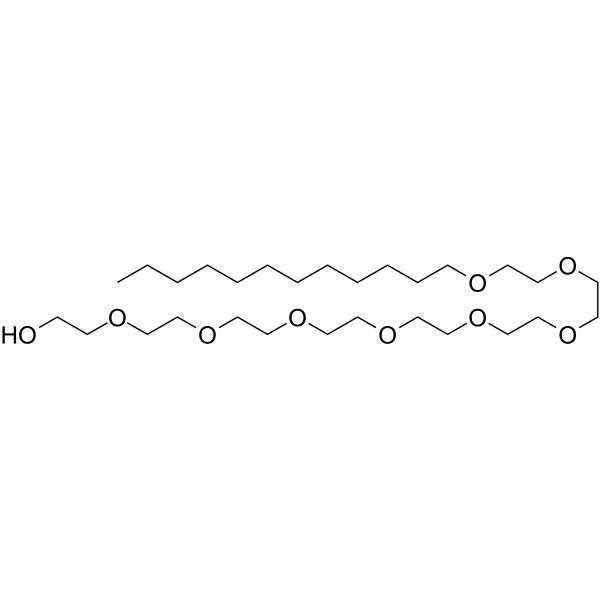
Octaethylene glycol monododecyl ether (C12E8) is an non-ionic detergent that can be used for membrane protein extraction. Octaethylene glycol monododecyl ether can solubilize the viral membrane of intact influenza virus.
For research use only. We do not sell to patients.
- Purity : 98.0%
- CAS No.: 3055-98-9
- Formula: C28H58O9
- Molecular Weight:538.75
-
Storage:Pure form -20°C, 3 years , 4°C, 2 years ; In solvent -80°C, 6 months , -20°C, 1 month

To place orders, for customer services and technical support, please contact: MedChemExpress USA
Tel: 609-228-6898 E-mail: [email protected] [email protected]


-
 Biological Activity
-
Chemical Information
-
Solvent & Solubility
- Purity & Documentation
- References
-
 Help & FAQs


-

HY-138941R
Octaethylene glycol monododecyl ether (Standard) -
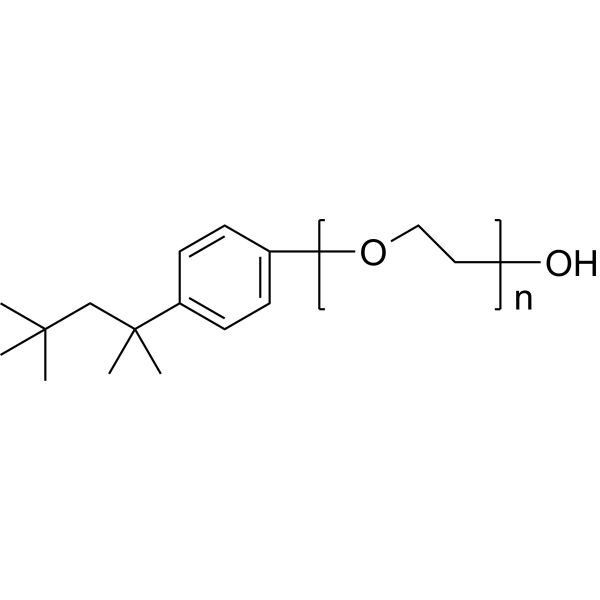
HY-Y1883
Polyethylene glycol mono(4-tert-octylphenyl) ether surfactant -
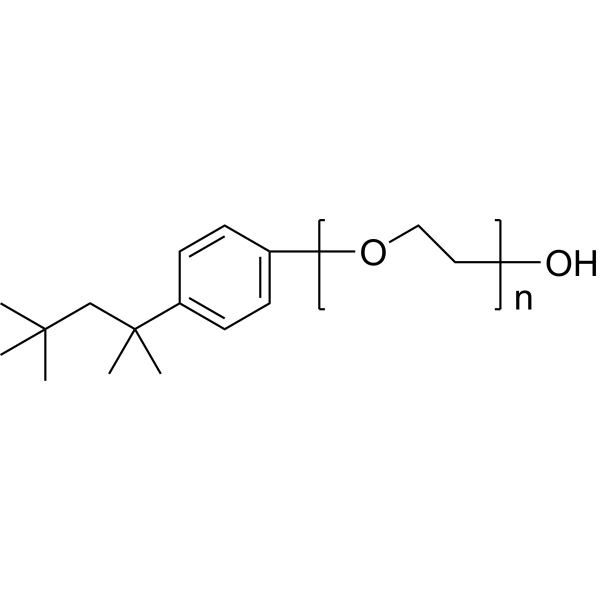
HY-Y1883A
Polyethylene glycol mono(4-tert-octylphenyl) ether -
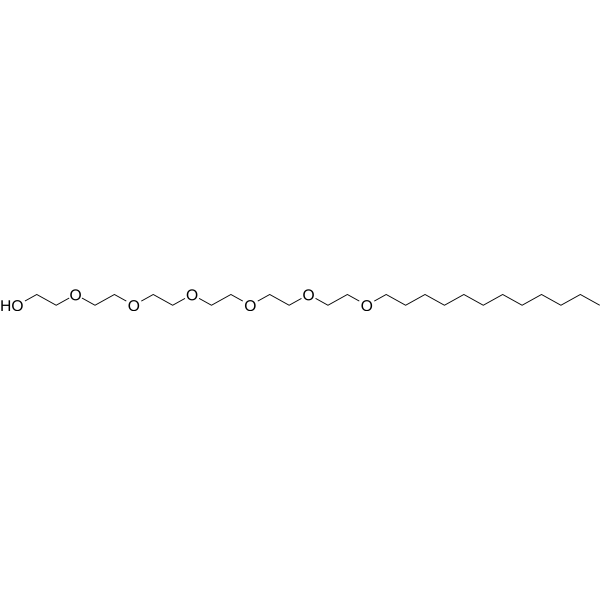
HY-W250198
Hexaethylene glycol monododecyl ether -
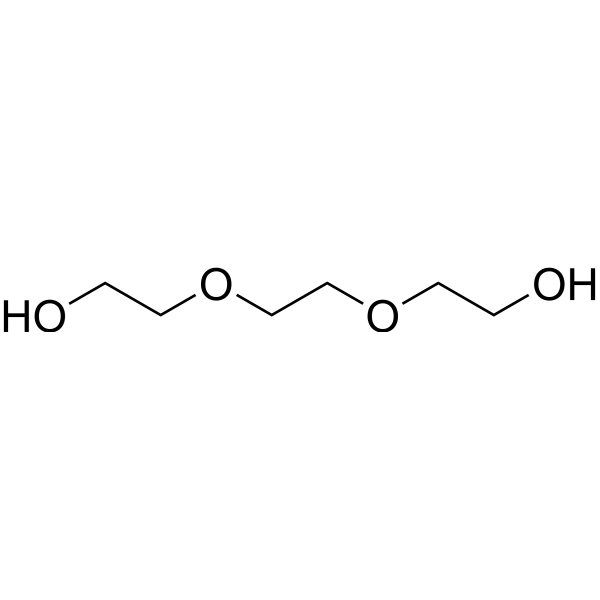
HY-W017440R
Triethylene glycol (Standard) -
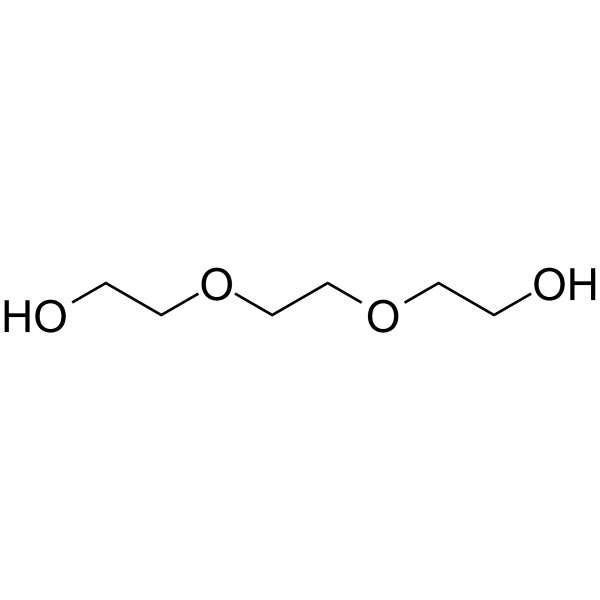
HY-W017440
Triethylene glycol -
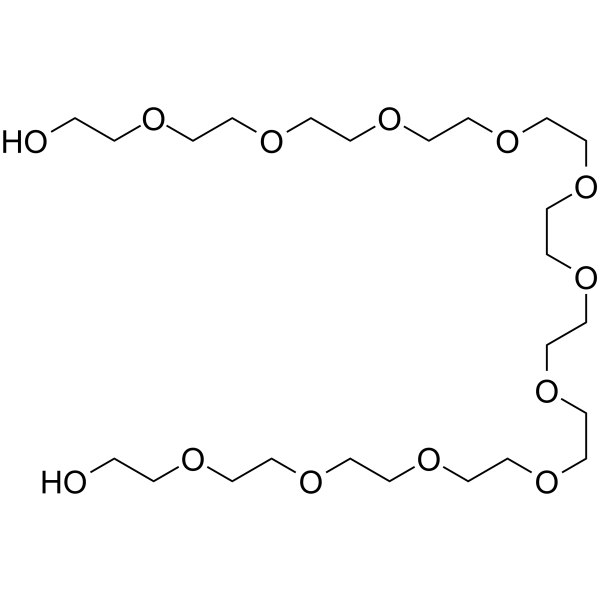
HY-141233
Dodecaethylene glycol -

HY-W133950
Diethylene glycol monohexyl ether -

HY-W130500A
Ethylene glycol monohexyl ether, 99%
Publications Citing Use of MedChemExpress (MCE) Octaethylene glycol monododecyl ether
More

Biological Activity
Description
Cellular Effect
|
Cell Line

|
Type | Value | Description | References |
|---|---|---|---|---|
| MOLT-4 | IC50 |
29 μM
Compound: HL-8
|
Growth inhibition of HIV1 3B infected human MOLT4 cells after 5 days by MTT assay
Growth inhibition of HIV1 3B infected human MOLT4 cells after 5 days by MTT assay
|
[PMID: 18672367] |
| MOLT-4 | IC50 |
59 μM
Compound: HL-8
|
Growth inhibition of human MOLT4 cells after 5 days by MTT assay
Growth inhibition of human MOLT4 cells after 5 days by MTT assay
|
[PMID: 18672367] |
In Vitro
Octaethylene glycol monododecyl ether (C12E8) has been shown to solubilize the viral membrane of intact influenza virus. The mechanism of solubilization of the viral membrane is based on the accumulation of C12E8 molecules outside the membrane until the formation of micelles leading to the extraction of membrane constituents[1].
MedChemExpress (MCE) has not independently confirmed the accuracy of these methods. They are for reference only.


Chemical Information
-
CAS No. 3055-98-9
-
Appearance Liquid (Density: 0.984~0.992 g/cm3)
-
Molecular Weight 538.75
-
Formula C28H58O9
-
Color Colorless to light yellow
-
SMILES
CCCCCCCCCCCCOCCOCCOCCOCCOCCOCCOCCOCCO
-
Synonyms
C12E8
-
Shipping
Room temperature in continental US; may vary elsewhere.
-
Storage
Pure form -20°C 3 years 4°C 2 years In solvent -80°C 6 months -20°C 1 month


Publications (2)
-
Journal Impact Factor
-
Most Recent
-
J Nanobiotechnology
Virosome-masked ratiometric nanoprobes for in vivo dynamic imaging of influenza a virus infection. [Abstract]2026 Jul 21. PMID: 42482242 -


Solvent & Solubility
In Vitro:
H2O : ≥ 100 mg/mL (185.61 mM)
DMSO : 100 mg/mL (185.61 mM; Need ultrasonic; Hygroscopic DMSO has a significant impact on the solubility of product, please use newly opened DMSO)
* "≥" means soluble, but saturation unknown.
Please refer to the solubility information to select the appropriate solvent. Once prepared, please aliquot and store the solution to prevent product inactivation from repeated freeze-thaw cycles.
Storage method and period of stock solution: -80°C, 6 months; -20°C, 1 month. When stored at -80°C, please use it within 6 months. When stored at -20°C, please use it within 1 month.
* Note: If you choose water as the stock solution, please dilute it to the working solution, then filter and sterilize it with a 0.22 μm filter before use.
Please refer to the solubility information to select the appropriate solvent. Once prepared, please aliquot and store the solution to prevent product inactivation from repeated freeze-thaw cycles.
Storage method and period of stock solution: -80°C, 6 months; -20°C, 1 month. When stored at -80°C, please use it within 6 months. When stored at -20°C, please use it within 1 month.
* Note: If you choose water as the stock solution, please dilute it to the working solution, then filter and sterilize it with a 0.22 μm filter before use.
Concentration (start) × Volume (start) = Concentration (final) × Volume (final)
In Vivo:
Select the appropriate dissolution method based on your experimental animal and administration route.
- For the following dissolution methods, please ensure to first prepare a clear stock solution using an In Vitro approach and then sequentially add co-solvents:
- To ensure reliable experimental results, the clarified stock solution can be appropriately stored based on storage conditions. As for the working solution for In Vivo experiments, it is recommended to prepare freshly and use it on the same day.
- The percentages shown for the solvents indicate their volumetric ratio in the final prepared solution. If precipitation or phase separation occurs during preparation, heat and/or sonication can be used to aid dissolution.
Add each solvent one by one: 10% DMSO 40% PEG300 5% Tween-80 45% Saline
Solubility: ≥ 2.5 mg/mL (4.64 mM); Clear solution
This protocol yields a clear solution of ≥ 2.5 mg/mL (saturation unknown).
Taking 1 mL working solution as an example, add 100 μL DMSO stock solution (25.0 mg/mL) to 400 μL PEG300, and mix evenly; then add 50 μL Tween-80 and mix evenly; then add 450 μL Saline to adjust the volume to 1 mL.
Preparation of Saline: Dissolve 0.9 g sodium chloride in ddH₂O and dilute to 100 mL to obtain a clear Saline solution.
Add each solvent one by one: 10% DMSO 90% (20% SBE-β-CD in Saline)
Solubility: ≥ 2.5 mg/mL (4.64 mM); Clear solution
This protocol yields a clear solution of ≥ 2.5 mg/mL (saturation unknown).
Taking 1 mL working solution as an example, add 100 μL DMSO stock solution (25.0 mg/mL) to 900 μL 20% SBE-β-CD in Saline, and mix evenly.
Preparation of 20% SBE-β-CD in Saline (4°C, storage for one week): 2 g SBE-β-CD powder is dissolved in 10 mL Saline, completely dissolve until clear.
In Vivo Dissolution Calculator
Please enter the basic information of animal experiments:
-
-
-
-
Recommended: Prepare an additional quantity of animals to account for potential losses during experiments.
Working solution concentration: 0.22 mg/mL
This product has good water solubility, please refer to the measured solubility data in water/PBS/Saline for details.


Purity & Documentation
-
Data Sheet (270 KB)
-
SDS (615 KB)
- English - EN (615 KB)
- Français - FR (615 KB)
- Deutsch - DE (615 KB)
- Norwegian - NO (615 KB)
- Español - ES (615 KB)
- Swedish - SV (615 KB)
- Italian - IT (615 KB)
- Korean - KR (615 KB)
- Portuguese - PT (615 KB)
-
Handling Instructions (2659 KB)
References
[1]. Véronique Nardello-Rataj, et al. Aqueous solutions of didecyldimethylammonium chloride and octaethylene glycol monododecyl ether: Toward synergistic formulations against enveloped viruses. Int J Pharm. 2016 Sep 10;511(1):550-559. [Content Brief]
[2]. C Carnero Ruiz, et al. Characterization of mixed non-ionic surfactants n-octyl-β-D-thioglucoside and octaethylene-glycol monododecyl ether: micellization and microstructure. J Colloid Interface Sci. 2011 Sep 1;361(1):178-85. [Content Brief]


Complete Stock Solution Preparation Table
Please refer to the solubility information to select the appropriate solvent. Once prepared, please aliquot and store the solution to prevent product inactivation from repeated freeze-thaw cycles.
Storage method and period of stock solution: -80°C, 6 months; -20°C, 1 month. When stored at -80°C, please use it within 6 months. When stored at -20°C, please use it within 1 month.
| Optional Solvent | Concentration Solvent Mass | 1 mg | 5 mg | 10 mg | 25 mg |
|---|---|---|---|---|---|
| H2O / DMSO | 1 mM | 1.8561 mL | 9.2807 mL | 18.5615 mL | 46.4037 mL |
| 5 mM | 0.3712 mL | 1.8561 mL | 3.7123 mL | 9.2807 mL | |
| 10 mM | 0.1856 mL | 0.9281 mL | 1.8561 mL | 4.6404 mL | |
| 15 mM | 0.1237 mL | 0.6187 mL | 1.2374 mL | 3.0936 mL | |
| 20 mM | 0.0928 mL | 0.4640 mL | 0.9281 mL | 2.3202 mL | |
| 25 mM | 0.0742 mL | 0.3712 mL | 0.7425 mL | 1.8561 mL | |
| 30 mM | 0.0619 mL | 0.3094 mL | 0.6187 mL | 1.5468 mL | |
| 40 mM | 0.0464 mL | 0.2320 mL | 0.4640 mL | 1.1601 mL | |
| 50 mM | 0.0371 mL | 0.1856 mL | 0.3712 mL | 0.9281 mL | |
| 60 mM | 0.0309 mL | 0.1547 mL | 0.3094 mL | 0.7734 mL | |
| 80 mM | 0.0232 mL | 0.1160 mL | 0.2320 mL | 0.5800 mL | |
| 100 mM | 0.0186 mL | 0.0928 mL | 0.1856 mL | 0.4640 mL |
* Note: If you choose water as the stock solution, please dilute it to the working solution, then filter and sterilize it with a 0.22 μm filter before use.


Octaethylene glycol monododecyl ether Related Classifications
HY-138941 Related Classifications
 Powered by Bioz