1. Search Result
Search Result
Results for "

dopamine (DA)

" in MedChemExpress (MCE) Product Catalog:

84

Inhibitors & Agonists

1

Screening Libraries

1

Fluorescent Dyes

5

Biochemical Assay Reagents

3

Peptides

7

Natural
Products

7

Isotope-Labeled Compounds

3

Antibodies

2

Click Chemistry

Cat. No. Product Name Target Research Areas Chemical Structure
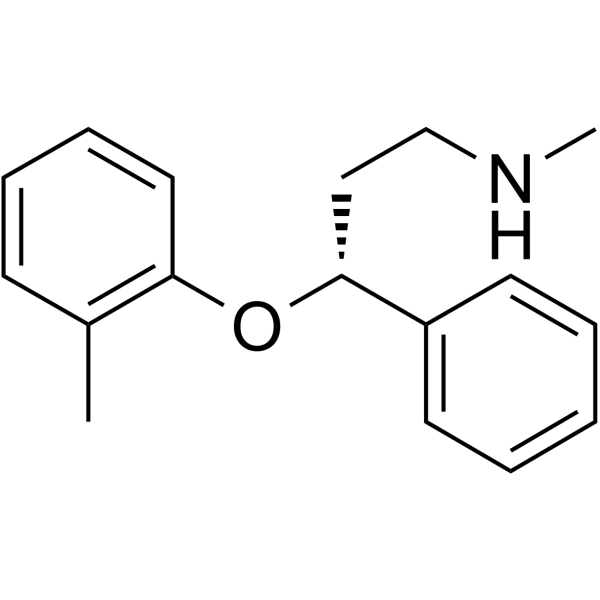
  • HY-17385
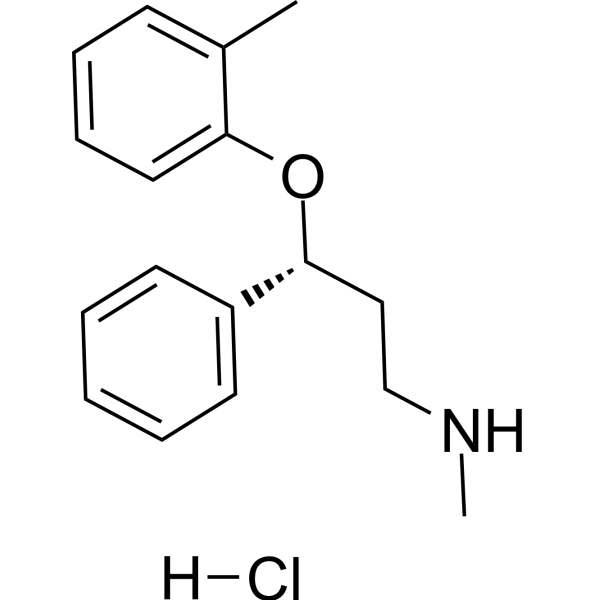
    Atomoxetine hydrochloride
    4 Publications Verification

    Tomoxetine hydrochloride; (R)-Tomoxetine hydrochloride; LY 139603

    Adrenergic Receptor Serotonin Transporter Sodium Channel Neurological Disease Cancer
    Atomoxetine (Tomoxetine) hydrochloride is a selective noradrenaline reuptake inhibitor with Ki values of 5 nM, 77 nM and 1451 nM for norepinephrine (NE), serotonin (5-HT) and dopamine (DA) transporters, respectively. Atomoxetine hydrochloride is a potent Na + channels (VGSCs) blocker. Atomoxetine hydrochloride can be used for attention-deficit hyperactivity disorder (ADHD) research .
    Atomoxetine hydrochloride
  • HY-B0979
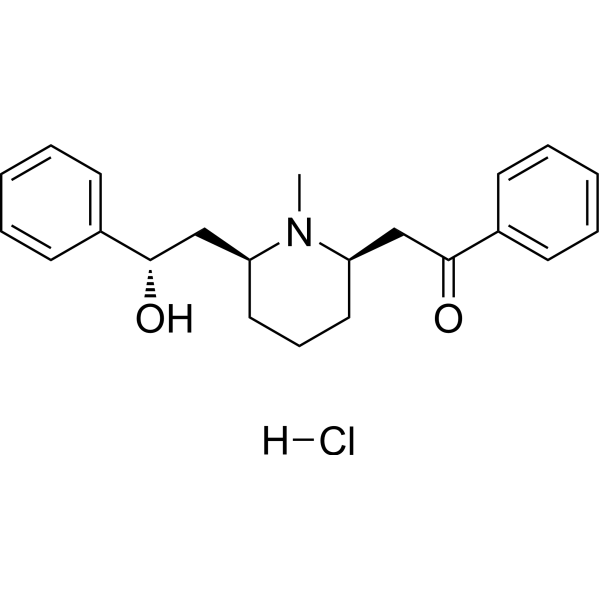
    Lobeline hydrochloride
    1 Publications Verification

    α-Lobeline hydrochloride; L-Lobeline hydrochloride

    nAChR Dopamine Transporter Neurological Disease
    Lobeline (α-Lobeline) hydrochloride is a brain-penetrant nicotinic receptor agonist. Lobeline hydrochloride increases dopamine (DA) release by inhibiting DA uptake into synaptic vesicles, and altering presynaptic DA storage. Lobeline hydrochloride is effective in smoking cessation .
    Lobeline hydrochloride
  • HY-B0602

    O-Desmethylvenlafaxine

    Environmental Pollutants Serotonin Transporter Neurological Disease
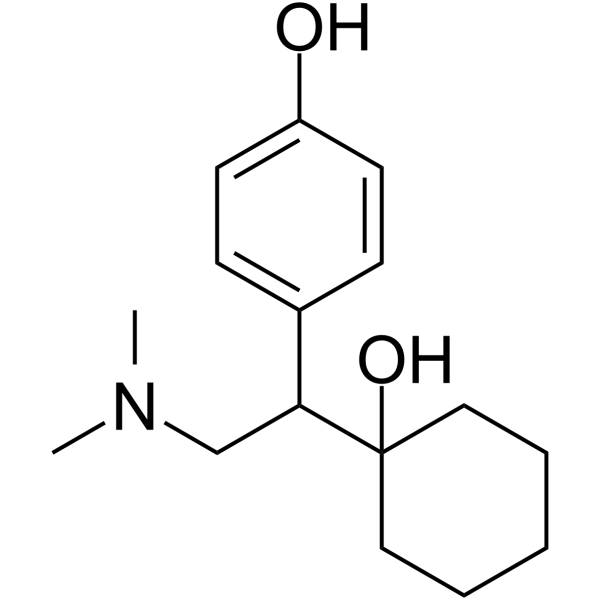
    Desvenlafaxine, the succinate salt form of the isolated major active metabolite of Venlafaxine (HY-B0196), is an orally active and BBB penetrated 5-HT and norepinephrine reuptake inhibitor, with IC50 values of 47.3 nM and 531.3 nM for hSERT and hNET, respectively. Desvenlafaxine shows weak binding affinity (62% inhibition at 100 μM) at the human dopamine (DA) transporter .
    Desvenlafaxine
  • HY-14472

    NS-2330

    Dopamine Transporter Serotonin Transporter Metabolic Disease
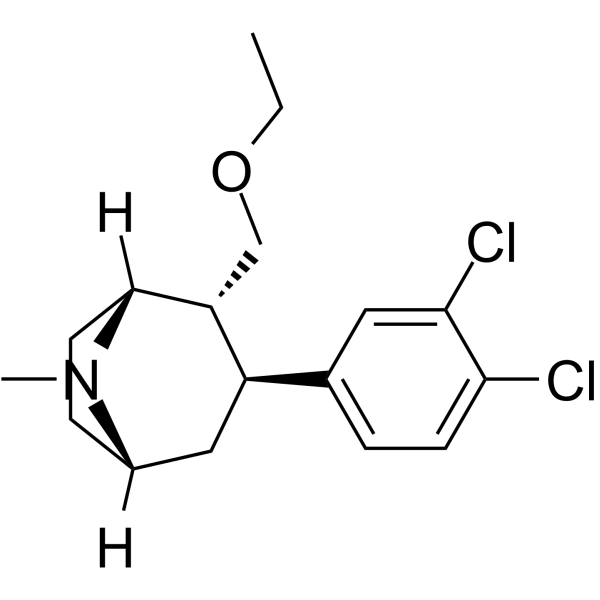
    Tesofensine (NS-2330) is a triple monoamine reuptake inhibitor inducing a potent inhibition of the re-uptake process in the synaptic cleft of the neurotransmitters dopamine (DA; IC50=6.5 nM), norepinephrine (NE;IC50=1.7 nM), and serotonin (5-HT;IC50=11 nM), and with potentials as an anti-obesity agent . Tesofensine is a CNS acting anti-obesity agent .
    Tesofensine
  • HY-14197A
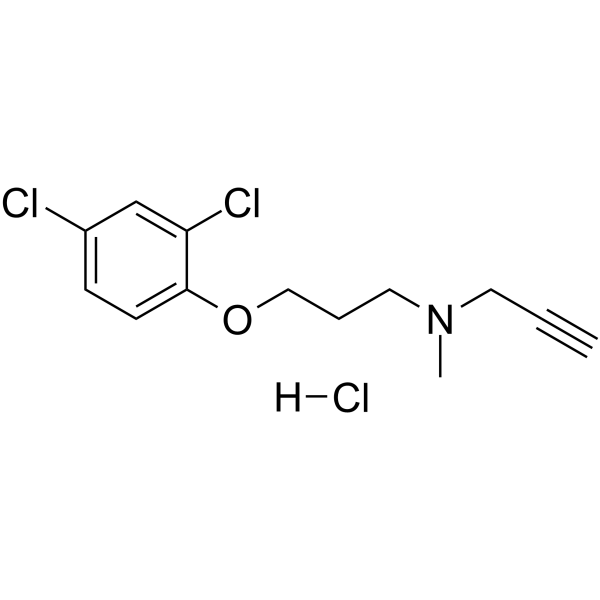
    Clorgyline hydrochloride
    5+ Cited Publications

    Monoamine Oxidase Metabolic Disease
    Clorgyline hydrochloride is an irreversible and selective inhibitor of monoamine oxidase A (MAO-A) that is used in scientific research, structurally related to Pargyline (HY-A0091A). Clorgyline hydrochloride has little effect on the amounts of conjugated dopamine (DA) present in superfusate of slices from rat striatum. Clorgyline hydrochloride contains an Alkyne group and can undergo copper-catalyzed azide-alkyne cycloaddition (CuAAc) with molecules containing Azide groups .
    Clorgyline hydrochloride
  • HY-10684

    ACR16; ASP2314; FR310826

    Dopamine Receptor Neurological Disease
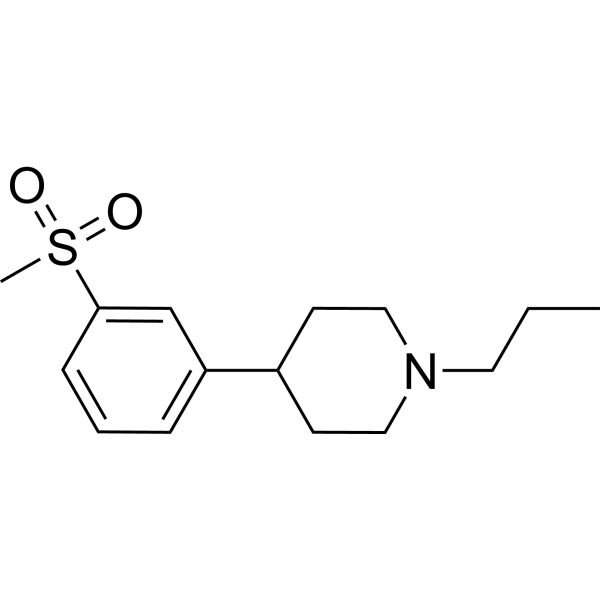
    Pridopidine, a dopamine (DA) stabilizer, acts as a low affinity dopamine D2 receptor (D2R) antagonist. Pridopidine exerts high affinity towards sigma 1 receptor (S1R) with Ki between 70 and 80 nM, which is ~100× higher than its affinity toward D2R.
    Pridopidine
  • HY-B1110
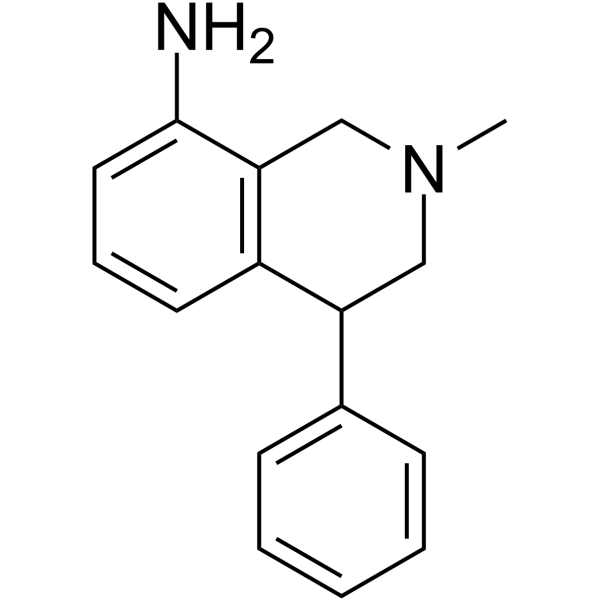
    Nomifensine
    5+ Cited Publications

    (±)-Nomifensine; Nomifensin

    Dopamine Receptor Adrenergic Receptor Neurological Disease
    Nomifensine ((±)-Nomifensine) is a potent norepinephrine (NE) and dopamine (DA) reuptake inhibitor. Nomifensine inhibits uptake of NE, DA and 5-HT in rat brain synaptosomes, with IC50 values of 6.6 nM, 48 nM and 830 nM, and Ki values of 4.7 nM, 26 nM and 4000 nM, respectively. Nomifensine has antidepressant and analgesic effects. Nomifensine is used in neurodegenerative diseases, compound addiction, and pain research .
    Nomifensine
  • HY-B1110A
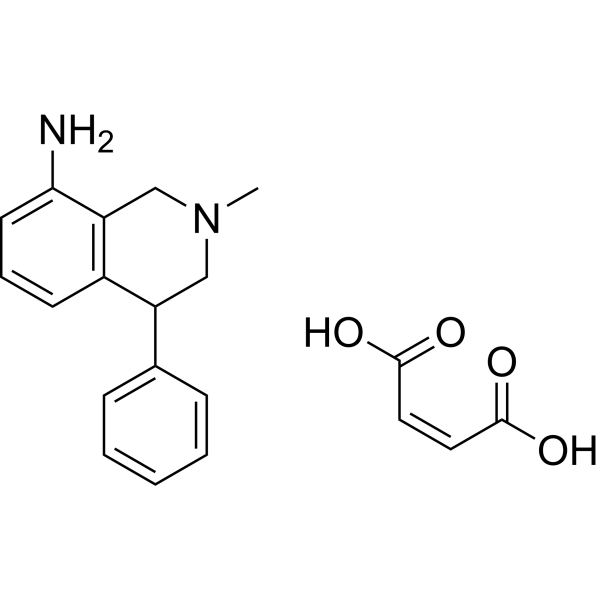
    Nomifensine maleate
    5+ Cited Publications

    (±)-Nomifensine maleate; Nomifensin maleate

    Dopamine Receptor Adrenergic Receptor Neurological Disease
    Nomifensine ((±)-Nomifensine) maleate is a potent norepinephrine (NE) and dopamine (DA) reuptake inhibitor. Nomifensine maleate inhibits uptake of NE, DA and 5-HT in rat brain synaptosomes, with IC50 values of 6.6 nM, 48 nM and 830 nM, and Ki values of 4.7 nM, 26 nM and 4000 nM, respectively. Nomifensine maleate has antidepressant and analgesic effects. Nomifensine maleate is used in neurodegenerative diseases, compound addiction, and pain research .
    Nomifensine maleate
  • HY-109112

    RP5063

    Dopamine Receptor 5-HT Receptor Neurological Disease Inflammation/Immunology
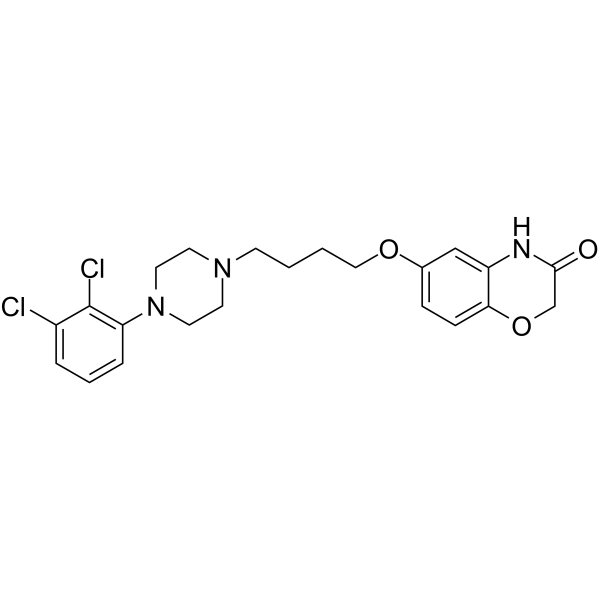
    Brilaroxazine (RP5603) is a potent and orally active multimodal dopamine (DA)/serotonin (5-HT) modulator. Brilaroxazine is a partial agonist of dopamine (DA) D2, D3, and D4 receptors, 5-HT1A (Ki=1.5 nM) and 5-HT2A (Ki=2.5 nM), and has antagonist activity at 5-HT2B (Ki=0.19 nM), and 5-HT7 (Ki=2.7 nM) receptors . Brilaroxazine is an atypical antipsychotic agent, and has the potential to improve cognitive impairments in neuropsychiatric and neurological diseases in vivo .
    Brilaroxazine
  • HY-B1382

    1,2,2,6,6-Pentamethylpiperidine

    nAChR Cardiovascular Disease Neurological Disease
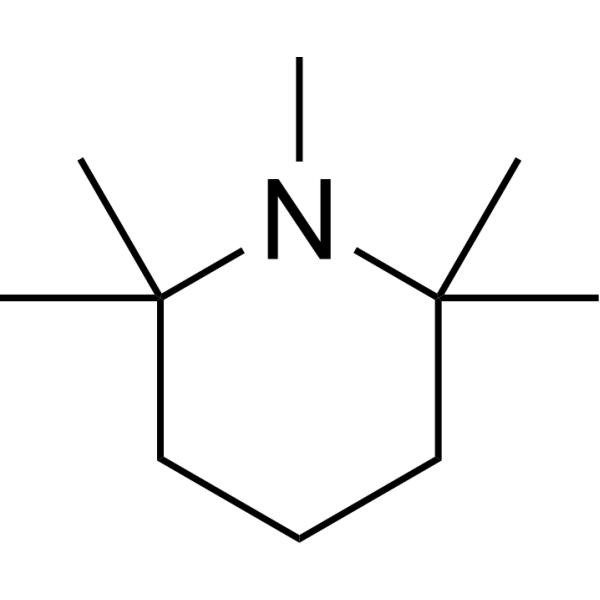
    Pempidine (1,2,2,6,6-Pentamethylpiperidine) is an orally active ganglionic blocking agent used in hypertension-related conditions. Pempidine is a nicotinic receptor blocker. Pempidine can antagonize the nicotine-induced increase of the striatal dopamine (DA) in vitro .
    Pempidine
  • HY-B0602A

    O-Desmethylvenlafaxine succinate hydrate

    Serotonin Transporter Neurological Disease
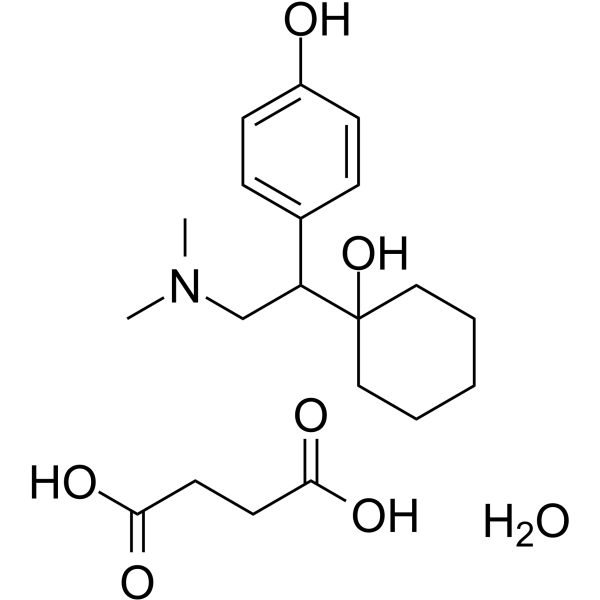
    Desvenlafaxine succinate hydrate, the succinate salt form of the isolated major active metabolite of Venlafaxine (HY-B0196), is an orally active and BBB penetrated 5-HT and norepinephrine reuptake inhibitor, with IC50 values of 47.3 nM and 531.3 nM for hSERT and hNET, respectively. Desvenlafaxine succinate hydrate shows weak binding affinity (62% inhibition at 100 μM) at the human dopamine (DA) transporter .
    Desvenlafaxine succinate hydrate
  • HY-113257

    DA-4S; dopamine 4-Sulfate

    Drug Metabolite Neurological Disease
    Dopamine 4-sulfate (DA-4S) is an inactive metabolite of the catecholamine dopamine. It is formed from dopamine by the sulfotransferase (SULT) isoform SULT1A3. Dopamine 4-O-sulfate is found at lower levels in the brain and circulation than dopamine 3-O-sulfate.
    Dopamine 4-sulfate
  • HY-W014728
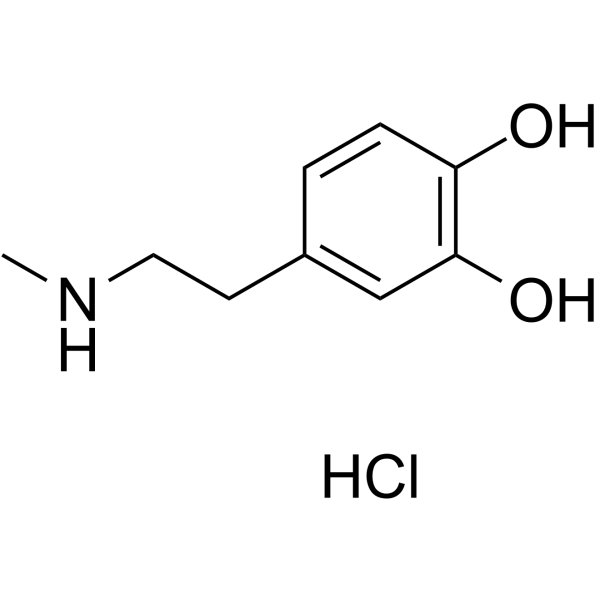
    N-Methyldopamine hydrochloride
    1 Publications Verification

    Dopamine Receptor Cardiovascular Disease Neurological Disease
    N-Methyldopamine hydrochloride is a precursor of adrenaline in the adrenal medulla. N-Methyldopamine hydrochloride is a modification of the dopamine (DA), and retains agonist activity at the DA1 receptor. N-Methyldopamine hydrochloride remains capable of universal surface coating and secondary reactions using the surface catechols. N-Methyldopamine hydrochloride can be used for heart failure research .
    N-Methyldopamine hydrochloride
  • HY-128121

    Dopamine Receptor Neurological Disease
    MLS1547 is a highly efficacious G protein-biased dopamine D2 receptor (D2R) agonist (Ki=1.2 μM). MLS1547 stimulates D2R G protein-mediated signaling (EC50=0.37 μM in a calcium mobilization assay). MLS1547 acts as an antagonist for dopamine (DA)-stimulated β-arrestin recruitment to the D2R (IC50=9.9 μM) .
    MLS1547
  • HY-16736A

    EB-1020 hydrochloride

    Adrenergic Receptor Dopamine Transporter Serotonin Transporter Neurological Disease Endocrinology
    Centanafadine (hydrochloride) is dual norepinephrine (NE)/dopamine (DA) transporter inhibitor, also inhibits serotonin transporter, with IC50s of 6 nM, 38 nM and 83 nM for human NE, DA and serotonin transporter , respectively.
    Centanafadine hydrochloride
  • HY-121685A
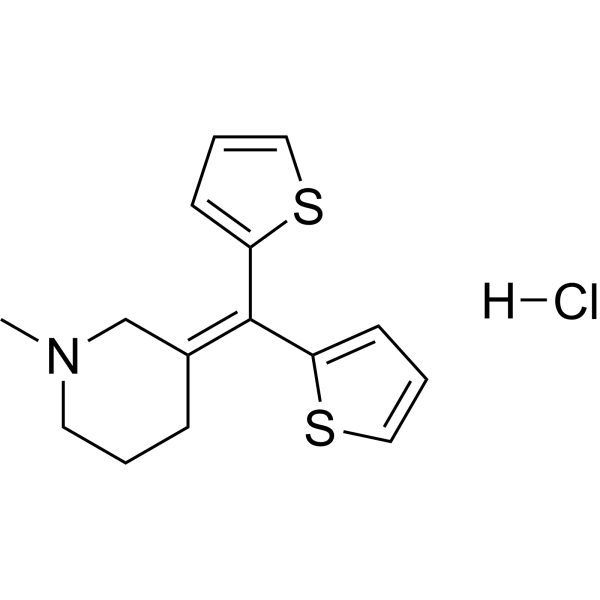
    Tipepidine hydrochloride
    1 Publications Verification

    Potassium Channel Neurological Disease
    Tipepidine hydrochloride reversibly inhibits dopamine (DA) D2 receptor-mediated GIRK currents (IDA(GIRK)) with an IC50 of 7.0 μM. Tipepidine hydrochloride subsequently activates VTA dopamine neuron . Tipepidine hydrochloride, a non-narcotic antitussive, exerts an antidepressant-like effect .
    Tipepidine hydrochloride
  • HY-123538

    Dopamine Receptor G Protein-coupled Receptor Kinase (GRK) Cardiovascular Disease
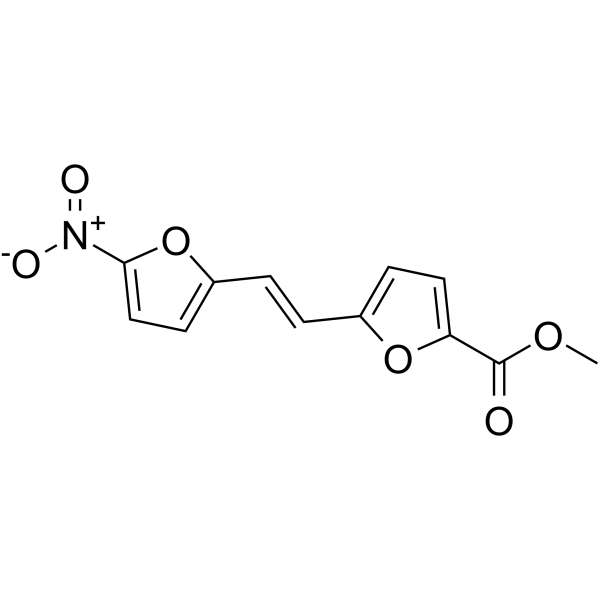
    GRK2 Inhibitor 1 (methyl 5-[2-(5-nitro-2-furyl)vinyl]-2-furoate) is a dual GRK2/β-ARK1 inhibitor that induces dopamine (DA) inhibition reversal (DIR). GRK2 Inhibitor 1 can also block serotonin-induced or neurotensin-induced DIR reversal. Note: DIR refers to the phenomenon in which neurons in addiction-related brain pathways become less sensitive to DA inhibition when exposed to moderate concentrations of DA for a long time .
    GRK2 Inhibitor 1
  • HY-W206168

    Norlaudanosoline hydrobromide

    Dopamine Receptor Neurological Disease
    Tetrahydropapaveroline (Norlaudanosoline) hydrobromide, an isoquinoline alkaloid, is a condensation product of dopamine and dopaldehyde. Tetrahydropapaveroline hydrobromide inhibits [ 3H]DA uptake with a Ki of 41 μM. Tetrahydropapaveroline hydrobromide can be used for the study of Parkinson's disease and/or alcohol addiction .
    Tetrahydropapaveroline hydrobromide
  • HY-N2003
    D-Tetrahydropalmatine
    1 Publications Verification

    Dopamine Receptor Metabolic Disease
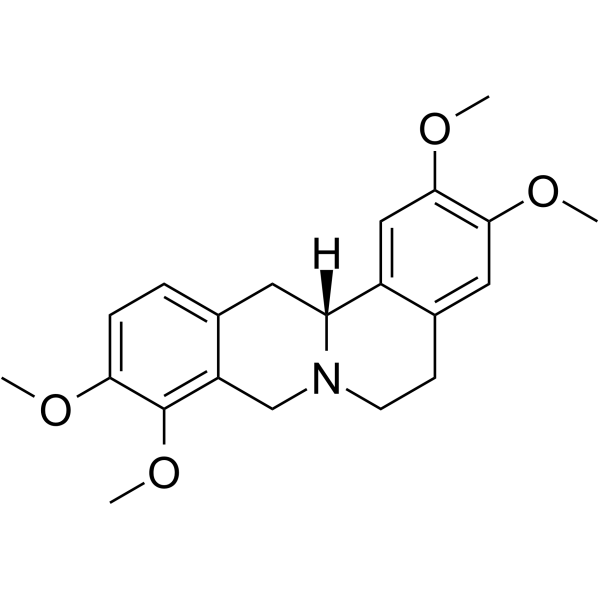
    D-Tetrahydropalmatine is an isoquinoline alkaloid, mainly in the genus Corydalis . D-Tetrahydropalmatine is a dopamine (DA) receptor antagonist with preferential affinity toward the D1 receptors . D-Tetrahydropalmatine is a potent organic cation transporter 1 (OCT1) inhibitor .
    D-Tetrahydropalmatine
  • HY-W010265

    1-Phenylbutan-1-one; 1-Phenyl-1-butanone

    Environmental Pollutants Dopamine Receptor Neurological Disease
    Butyrophenone (1-Phenylbutan-1-one) is a dopamine receptor (DA Receptor) antagonist and can be used in research on mental disorders .
    Butyrophenone
  • HY-148867

    Dopamine Receptor Neurological Disease
    UCM-1306 is a potent and orally active human dopamine D1 receptor allosteric modulator (PAM). UCM-1306 increases the endogenous dopamine (DA) maximal effect both in human and mouse D1 receptors. UCM-1306 is not only for improving motor symptoms but also for addressing the key comorbid cognitive impairment associated with long-term Parkinson’s disease (PD) .
    UCM-1306
  • HY-121650A

    Dopamine Receptor Neurological Disease
    ADTN hydrobromide is a long-acting dopamine agonist. ADTN hydrobromide significantly decreases the behavioral visual threshold of DA-IPC-depleted zebrafish .
    ADTN hydrobromide
  • HY-123837

    Dopamine Receptor Neurological Disease
    MLS1082 is a pyrimidone-based D1-like dopamine receptor positive allosteric modulator, with an EC50 of 123 nM for DA-stimulated G protein signaling .
    MLS1082
  • HY-113316A

    Endogenous Metabolite Opioid Receptor Neurological Disease
    (±)-Salsolinol hydrochloride is the hydrochloride form of (±)-Salsolinol (HY-113316). (±)-Salsolinol hydrochloride is a Dopamine (HY-B0451)-derived endogenous metabolite. (±)-Salsolinol hydrochloride activates μ-opioid receptors (MORs), reduces GABAergic transmission, increases the excitability of dopamine (DA) neurons, and thus accelerates the sustained firing of neurons in the posterior ventral tegmental area (pVTA) .
    (±)-Salsolinol hydrochloride
  • HY-W152604

    Cyclo(leu-gly)

    Dopamine Receptor Neurological Disease
    Cyclo(glycyl-L-leucyl) (Cyclo(leu-gly)), a neuropeptide, down-regulates dopamine (DA) receptors and attenuates dopaminergic supersensitivity. Cyclo(glycyl-L-leucyl) inhibits the development of Morphine induced pain relief as well as dopamine receptor supersensitivity in rats. Cyclo(glycyl-L-leucyl) has the potential for the prevention of tardive and/or L-DOPA (HY-N0304)-induced dyskinesias .
    Cyclo(glycyl-L-leucyl)
  • HY-156331

    mGluR Neurological Disease
    VU6004909 is a blood-brain barrier penetrated mGlu1 positive allosteric modulator (PAM), with the EC50s of 25.7 nM and 31 nM for human mGlu1 and rat mGlu1, respectively. VU6004909 reduces dorsolateral striatal dopamine (DA) release in vivo and displays antipsychotic efficacy .
    VU6004909
  • HY-107370
    Atomoxetine
    4 Publications Verification

    Tomoxetine; (R)-Tomoxetine

    Serotonin Transporter Sodium Channel Neurological Disease Cancer
    Atomoxetine (Tomoxetine) is a selective noradrenaline reuptake inhibitor with Ki values of 5, 77 and 1451 nM for norepinephrine (NE), serotonin (5-HT) and dopamine (DA) transporters, respectively. Atomoxetine (Tomoxetine) increases of DAEX and NEEX in the PFC and enhances catecholaminergic neurotransmission. Atomoxetine (Tomoxetine) is a potent Na + channels (VGSCs) blocker. Atomoxetine (Tomoxetine) can be used for attention-deficit hyperactivity disorder (ADHD) research .
    Atomoxetine
  • HY-106865

    Dopamine Receptor Adrenergic Receptor Cardiovascular Disease
    Mivazerol is a selective α2-adrenoceptor agonist. Mivazerol decreases the spontaneous release of serotonin (5-HT) and significantly inhibits the immobilization stress-induced enhancement of norepinephrine (NE), dopamine (DA) and dihydroxyphenylacetic acid (DOPAC). Mivazerol inhibits intrathecal release of glutamate evoked by halothane withdrawal in rats, and exerts neuroprotective effects in forebrain ischemia rats. Mivazerol can be used for myocardial ischemia research .
    Mivazerol
  • HY-B1423

    α-Lobeline; L-Lobeline

    nAChR Dopamine Transporter Neurological Disease
    Lobeline (α-Lobeline) is a brain-penetrant nicotinic receptor agonist. Lobeline increases dopamine (DA) release by inhibiting DA uptake into synaptic vesicles, and altering presynaptic DA storage. Lobeline is effective in smoking cessation .
    Lobeline
  • HY-16736

    EB-1020

    Adrenergic Receptor Dopamine Transporter Serotonin Transporter Neurological Disease Endocrinology
    Centanafadine is dual norepinephrine (NE)/dopamine (DA) transporter inhibitor, also inhibits serotonin transporter, with IC50s of 6 nM, 38 nM and 83 nM for human NE, DA and serotonin transporter , respectively.
    Centanafadine
  • HY-D2871

    Biochemical Assay Reagents Neurological Disease
    DAyne is a Dopamine (DA)-mimetic probe. DAyne covalently binds to proteins modified by dopamine oxidation products (e.g., dopaquinone, DQ) to form adducts. DAyne is promising for research of Parkinson’s disease (PD), particularly neurotoxicity, protein modification, and related pathways (e.g., endoplasmic reticulum stress, cytoskeletal instability) caused by dopamine dysregulation .
    DAyne
  • HY-152170
    bPiDI
    1 Publications Verification

    nAChR Neurological Disease
    bPiDI is a novel selective α6β2 nicotinic receptor antagonist. bPiDI inhibits nicotine-evoked striatal dopamine (DA) release through an interaction with α6β2-containing nAChRs .
    bPiDI
  • HY-W614656

    Drug Derivative Neurological Disease
    Pterostilbene glucoside, a stilbene derivative of Resveratrol (HY-16561), is a bioactive compound with potent protective effects against oxidative stress. Pterostilbene glucoside effectively protects M1 muscarinic receptor-transfected COS-7 cells from dopamine (DA)-induced deficits in calcium clearance. Pterostilbene glucoside can be used for the study of the reduction of age-related neuronal and behavioral deleterious effects .
    Pterostilbene glucoside
  • HY-W417914

    4-MA hydrochloride

    5-HT Receptor Monoamine Transporter Dopamine Receptor Neurological Disease
    4-Methylamphetamine hydrochloride is a 5-HT1A receptor agonist that induces hypothermia in rats by binding to the 5-HT1A receptor. Additionally, 4-Methylamphetamine hydrochloride acts on norepinephrine (NE), dopamine (DA), and serotonin (5-HT) transporters to increase the extracellular levels of these neurotransmitters. 4-Methylamphetamine hydrochloride can be used in the study of neurological disorders .
    4-Methylamphetamine hydrochloride
  • HY-145454

    (+)-3-PPP

    Dopamine Receptor Neurological Disease
    (R)-Preclamol is a dopamine (DA) agonist with autoreceptor as well as postsynaptic receptor stimulatory properties. (R)-Preclamol inhibits the locomotor activity of mice and rats in low doses .
    (R)-Preclamol
  • HY-P3294

    BIM-23A760; TBR-760

    Dopamine Receptor Somatostatin Receptor Neurological Disease Cancer
    Onzigolide (BIM-23A760), a chimeric dopamine-somatostatin compound, shows potent agonist activity at both DA type 2 (D2R) and SST type 2 (SSTR2) receptors .
    Onzigolide
  • HY-101377A

    (R)-8-Hydroxy-2-dipropylaminotetralin hydrobromide

    5-HT Receptor Neurological Disease
    R(+)-8-OH-DPAT ((R)-8-Hydroxy-2-dipropylaminotetralin) hydrobromide is a potent 5-HT1A agonist. R(+)-8-OH-DPAT potentiates SUL (HY-B1059)-induced dopamine (DA) release in the medial prefrontal cortex (mPFC) .
    R(+)-8-OH-DPAT hydrobromide
  • HY-14472R

    NS-2330 (Standard)

    Dopamine Transporter Serotonin Transporter Reference Standards Metabolic Disease
    Tesofensine (Standard) is the analytical standard of Tesofensine. This product is intended for research and analytical applications. Tesofensine (NS-2330) is a triple monoamine reuptake inhibitor inducing a potent inhibition of the re-uptake process in the synaptic cleft of the neurotransmitters dopamine (DA; IC50=6.5 nM), norepinephrine (NE;IC50=1.7 nM), and serotonin (5-HT;IC50=11 nM), and with potentials as an anti-obesity agent . Tesofensine is a CNS acting anti-obesity agent .
    Tesofensine (Standard)
  • HY-128420

    α-Lobeline sulfate; L-Lobeline sulfate

    nAChR Dopamine Transporter Neurological Disease
    Lobeline (α-Lobeline) sulfate is a brain-penetrant nicotinic receptor agonist. Lobeline sulfate increases dopamine (DA) release by inhibiting DA uptake into synaptic vesicles, and altering presynaptic DA storage. Lobeline sulfate is effective in smoking cessation .
    Lobeline sulfate
  • HY-B0979R

    α-Lobeline hydrochloride (Standard); L-Lobeline hydrochloride (Standard)

    Reference Standards nAChR Dopamine Transporter Neurological Disease
    Lobeline (hydrochloride) (Standard) is the analytical standard of Lobeline (hydrochloride). This product is intended for research and analytical applications. Lobeline (α-Lobeline) hydrochloride is a brain-penetrant nicotinic receptor agonist. Lobeline hydrochloride increases dopamine (DA) release by inhibiting DA uptake into synaptic vesicles, and altering presynaptic DA storage. Lobeline hydrochloride is effective in smoking cessation .
    Lobeline hydrochloride (Standard)
  • HY-121685

    Potassium Channel Neurological Disease
    Tipepidine reversibly inhibits dopamine (DA) D2 receptor-mediated GIRK currents (IDA(GIRK)) with an IC50 of 7.0 μM. Tipepidine subsequently activates VTA dopamine neuron . Tipepidine, a non-narcotic antitussive, exerts an antidepressant-like effect .
    Tipepidine
  • HY-103147

    CU32-085 hydrochloride

    5-HT Receptor Dopamine Receptor Neurological Disease
    Mesulergine (CU32-085) hydrochloride is a potent 5-HT2C antagonist and dopamine (DA) agonist. Mesulergine hydrochloride presentes hyperphagia. Mesulergine hydrochloride has the potential for the research of cognitive processes .
    Mesulergine hydrochloride
  • HY-107674

    nAChR Neurological Disease
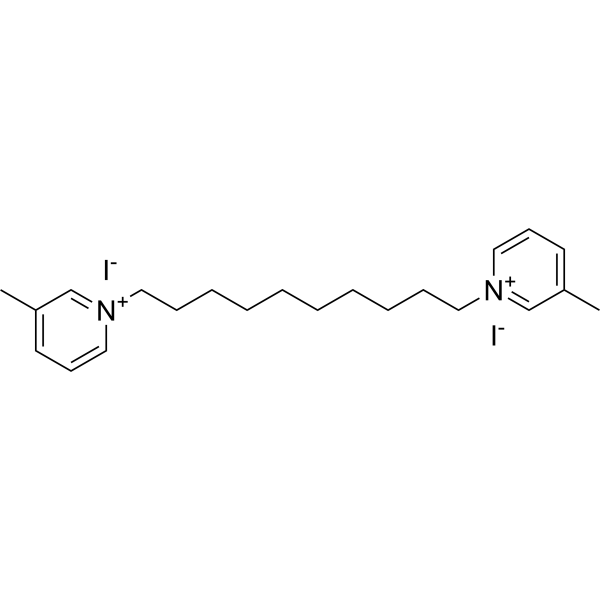
    bPiDDB is a potent nAChR antagonist. bPiDDB potently (IC50=2 nM) inhibits nicotine-evoked striatal dopamine (DA) release through an interaction with α6β2-containing nAChRs .
    bPiDDB
  • HY-W284026

    Drug Derivative 5-HT Receptor Dopamine Receptor Adrenergic Receptor Neurological Disease
    PIM-35 is a derivative of Indole (HY-W001132). PIM-35 significantly inhibits serotonin (5HT) and dopamine (DA) uptake with a weak inhibitory effect on noradrenaline (NA) uptake.PIM-35 has antidepressant activity and can be used for depression research .
    PIM-35
  • HY-B0602S2

    Isotope-Labeled Compounds Serotonin Transporter Neurological Disease
    Desvenlafaxine-d6 is deuterium labeled Desvenlafaxine. Desvenlafaxine, the succinate salt form of the isolated major active metabolite of Venlafaxine (HY-B0196), is an orally active and BBB penetrated 5-HT and norepinephrine reuptake inhibitor, with IC50 values of 47.3 nM and 531.3 nM for hSERT and hNET, respectively. Desvenlafaxine shows weak binding affinity (62% inhibition at 100 μM) at the human dopamine (DA) transporter .
    Desvenlafaxine-d6
  • HY-107370A

    (Rac)-Tomoxetine hydrochloride; (Rac)-LY 139603

    Serotonin Transporter Sodium Channel Metabolic Disease Cancer
    (Rac)-Atomoxetine hydrochloride ((Rac)-Tomoxetine (hydrochloride); (Rac)-LY 139603) is the racemic mixture of Atomoxetine hydrochloride (HY-17385). Atomoxetine hydrochloride is a selective noradrenaline reuptake inhibitor with Ki values of 5, 77 and 1451 nM for norepinephrine (NE), serotonin (5-HT) and dopamine (DA) transporters, respectively. Atomoxetine hydrochloride increases of DAEX and NEEX in the PFC and enhances catecholaminergic neurotransmission. Atomoxetine hydrochloride is a potent Na + channels (VGSCs) blocker. Atomoxetine hydrochloride can be used for attention-deficit hyperactivity disorder (ADHD) research .
    (Rac)-Atomoxetine hydrochloride
  • HY-160440A

    mAChR Neurological Disease
    VU6021625 is a selective antagonist muscarinic acetylcholine receptors (mAChRs), with the IC50 value of 0.44 nM, 57 nM for human M4 and rat M4, respectively .
    VU6021625
  • HY-118461

    Dopamine Receptor Neurological Disease
    PD 120697 is an orally active dopamine (DA) agonist. PD 120697 inhibits striatal DA synthesis, DA neuronal firing, spontaneous locomotor activity, and reverses Reserpine (HY-N0480)-induced depression .
    PD 120697
  • HY-118706

    Dopamine Receptor Neurological Disease
    PD 118440 is an orally active dopamine (DA) agonist. PD 118440 has significant central nervous system effects, including inhibition of striatal DA synthesis, suppression of DA neuron firing, and reversal of Reserpine (HY-N0480)-induced depression in rats .
    PD 118440
  • HY-167092

    Isotope-Labeled Compounds Neurological Disease
    SD-1077 is a selectively deuterated precursor of dopamine (DA). SD-1077 can be used for the study of Parkinson's disease .
    SD-1077

Inquiry Online

Your information is safe with us. * Required Fields.

Salutation


Country or Region *

Applicant Name *


Organization Name *

Department *


Email Address *


Product Name *

Cat. No.


Requested quantity *

Phone Number *


Remarks

Inquiry Online

Inquiry Information

Product Name:
Cat. No.:
Quantity:
MCE Japan Authorized Agent:

