

1. Search Result
Search Result
Results for "

emitting

" in MedChemExpress (MCE) Product Catalog:

132

Inhibitors & Agonists

73

Fluorescent Dye

7

Biochemical Assay Reagents

18

Peptides

3

Inhibitory Antibodies

4

Natural
Products

3

Isotope-Labeled Compounds

5

Click Chemistry

1

Oligonucleotides

Cat. No. Product Name Target Research Areas Chemical Structure
  • HY-D1301
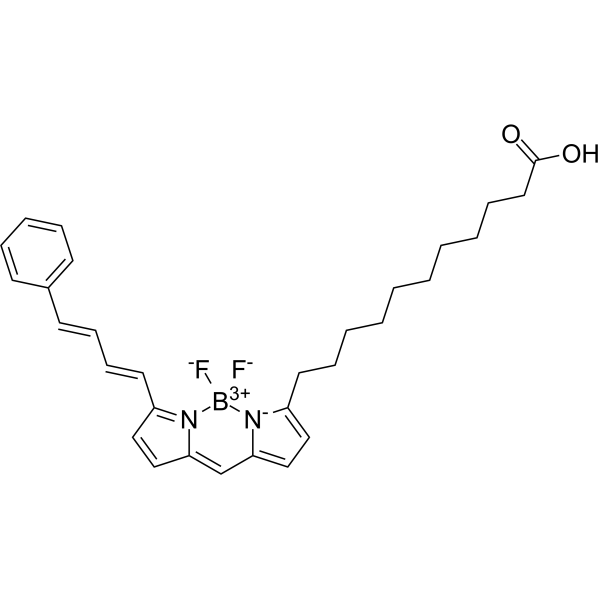
    BODIPY 581/591 C11
    130+ Cited Publications

    Fluorescent Dye Ferroptosis Metabolic Disease Inflammation/Immunology Cancer
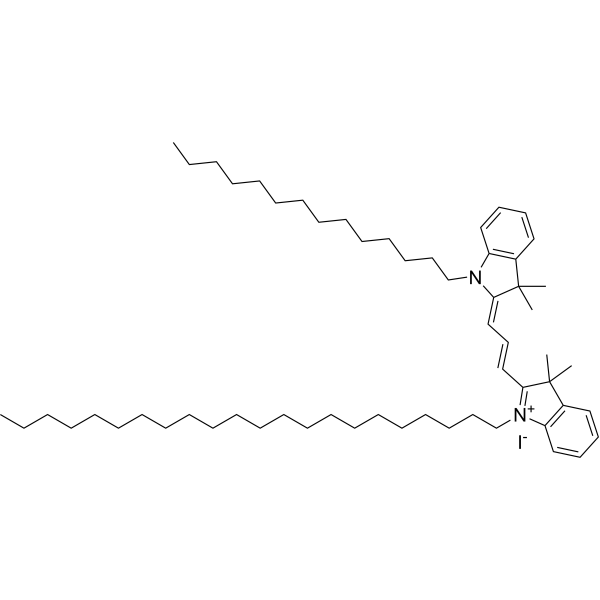
    BODIPY 581/591 C11 is a BODIPY borofluoroprene derivative with good light stability and low fluorescence artifacts. BODIPY 581/591 C11 can be used for study lipid peroxidation and antioxidant properties in living cells, or detect ferroptosis by reaction with hydroxyl radicals. BODIPY 581/591 C11 is emitted at 591 nm (reduced prototype), or redshifted to 510 nm (oxidized type). The excitation wavelengths were 581 nm (reduced prototype) and 500 nm (oxidized type) .
    BODIPY 581/591 C11
  • HY-112641A
    AkaLumine hydrochloride
    5 Publications Verification

    Fluorescent Dye Cancer
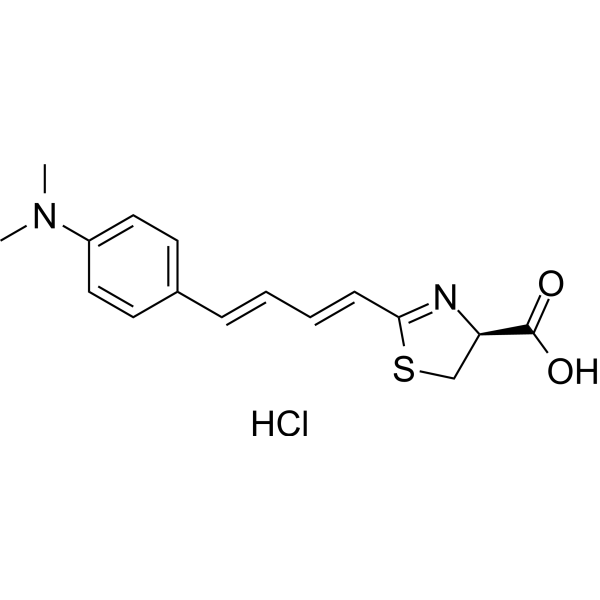
    AkaLumine hydrochloride is a D-luciferin (HY-12591A) analogue with a Km of 2.06 μM for recombinant firefly luciferase (Fluc) protein. AkaLumine hydrochloride emits near-infrared (NIR) light (λmax=677 nm) in reactions with native Fluc. AkaLumine hydrochloride has high tissue-penetration and increases detection sensitivity from deep-tissue targets .
    AkaLumine hydrochloride
  • HY-D0041
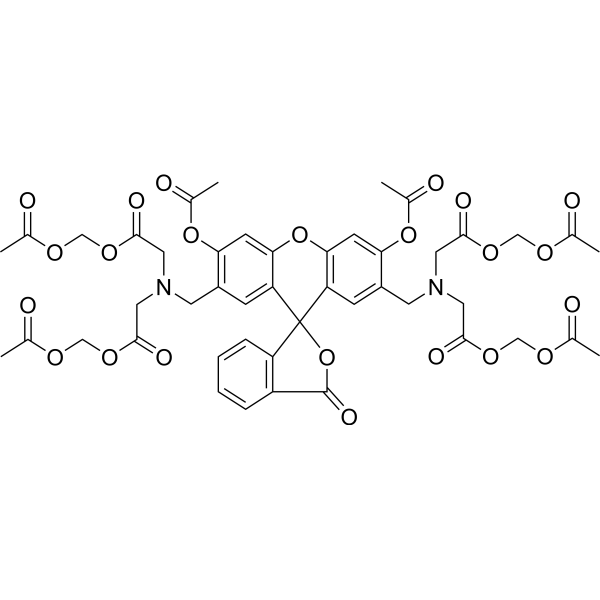
    Calcein-AM
    80+ Cited Publications

    Calcein acetoxymethyl ester

    Fluorescent Dye Cancer
    Calcein AM, has cell membrane permeability and can easily enter the cell. Calcein AM has no fluorescence and is hydrolyzed by endogenous esterase in the cell to produce polar molecule Calcein (Calcein), which has strong negative charge and cannot permeate the cell membrane. Calcein can emit strong green fluorescence, so it is often used with Propidium Iodide for cell viability/virulence detection, excitation/emission wavelength: 494/515 nm .
    Calcein-AM
  • HY-D1451
    PKH 26
    35+ Cited Publications

    Fluorescent Dye Others
    PKH 26 is a red fluorescent dye, PKH 26 can stably bind to the lipid region of cell membrane and emit red fluorescence (Ex/Em=551/567 nm), which is mainly used for in vitro cell labeling, in vitro cell proliferation studies and in vivo and in vitro cell tracing studies .
    PKH 26
  • HY-P99239

    HUJ-591; TLX591

    PSMA Radionuclide-Drug Conjugates (RDCs) Cancer
    Rosopatamab (HuJ591) is a humanized antiPSMA IgG1 monoclonal antibody that can be used in cancer research, especially prostate cancer. Rosopatamab can be linked to the low-energy beta-emitting radioisotope lutetium-177 ( 177Lu) through the bifunctional chelator DOTA-NHS ester to obtain a radioimmunoconjugate that targets malignant prostate cells with high efficiency .
    Rosopatamab
  • HY-D1913
    Fe2Orange
    20+ Cited Publications

    Fluorescent Dye Others
    Fe2Orange is a Fe 2+ selective probe with an excitation wavelength of 543 nm and an emission wavelength of 580 nm. Fe2Orange emits fluorescence after binding to intracellular Fe 2+, thereby achieving specific labeling of Fe 2+. Fe2Orange is used to detect the content and distribution of Fe 2+ in cells .
    Fe2Orange
  • HY-118462

    Coelenterazine 400a; Bisdeoxycoelenterazine

    Fluorescent Dye Others
    Coelenteramine 400a (Coelenterazine 400a), a derivative of Coelenterazine, is a Renilla luciferase (RLuc) substrate. In the presence of Coelenteramine 400a, RLuc can emit blue light at 395 nm . Coelenterazine 400a will causes color change in the bioluminescence reaction of Rluc by replacing the sulfur and oxygen heteroatoms of the methylene bridge. Coelenterazine 400a provides higher signal resolution and can be used in the research of bioluminescence resonance energy transfer (BRET) .
    Coelenteramine 400a
  • HY-D1373
    HBC
    3 Publications Verification

    HBC 530

    Fluorescent Dye Others
    HBC (HBC 530) is a GFP fluorophore-like synthetic dye, with a structurally rigid electron acceptor and a strong electron donor. HBC has a low fluorescence background, and when combined with Pepper (RNA aptamer), HBC forms a tight complex and activates and emits bright fluorescence (Kd of ~3.5 nM). HBC emission peaks vary in different complexes and covers the spectrum from cyan to red. HBC can be used in the live cell imaging of RNA (Em/Ex = 530/485 nm) .
    HBC
  • HY-D0367
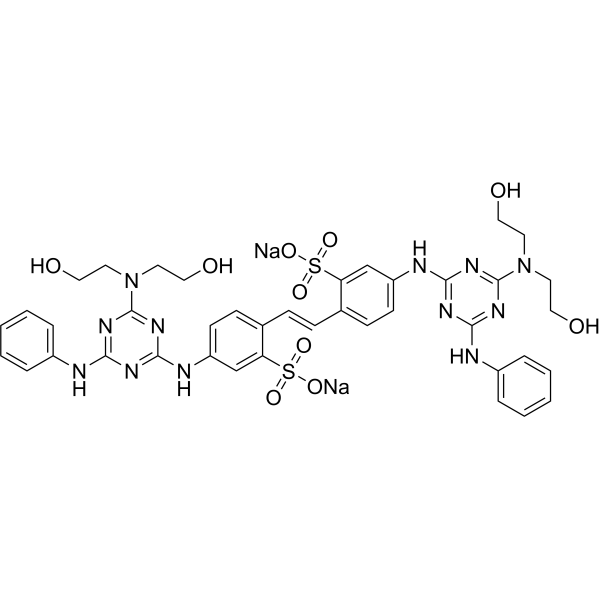
    Fluorescent Brightener 28
    1 Publications Verification

    Calcofluor White M2R

    Fluorescent Dye Others
    Fluorescent brightener 28 is a fluorescent whitening agent commonly used in the padding process of the textile industry. Fluorescent brightener 28 is capable of staining polysaccharides such as cellulose, and when the plasma membrane ruptures, it also weakly stains the cytoplasm and strongly stains the cell nucleus. Additionally, Fluorescent brightener 28 can be utilized to detect intracellular chitin in living cells. Fluorescent Brightener 28 also is a visible light emitting diode (LED)-light sensitive photoinitiator for free radical photopolymerizations .
    Fluorescent Brightener 28
  • HY-135414
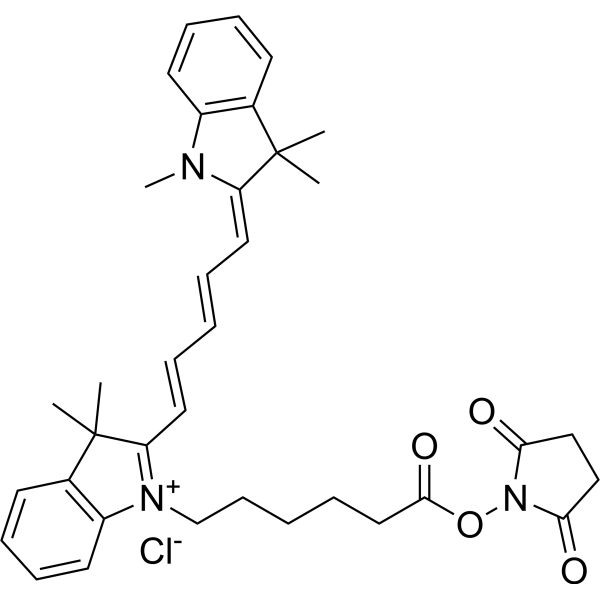
    Cyanine5 NHS ester chloride
    1 Publications Verification

    Fluorescent Dye Others
    Cyanine5 NHS ester chloride is a red emitting fluorescent dye for labeling of amino-groups in peptides, proteins, and oligonucleotides .
    Cyanine5 NHS ester chloride
  • HY-139579
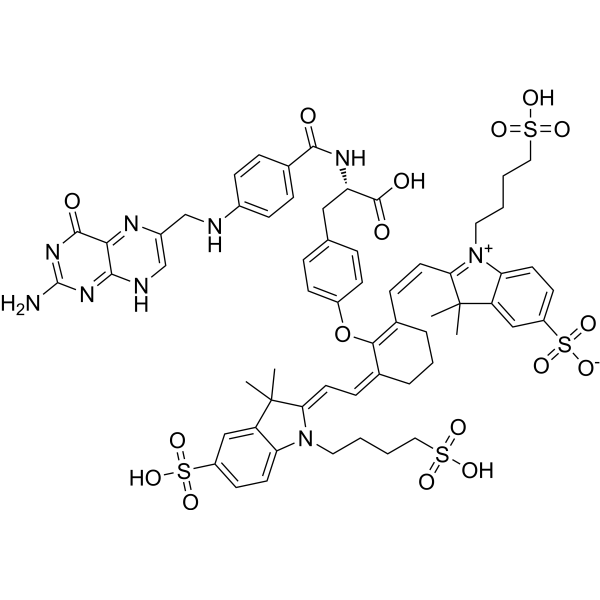
    Pafolacianine
    1 Publications Verification

    OTL 38

    Fluorescent Dye Cancer
    Pafolacianine (OTL 38) is a fluorescent imaging agent made of near-infrared dye used in detecting tumor lesions during surgical procedures. Pafolacianine excites at 774 to 775 nm and emits at 794 to 796 nm .
    Pafolacianine
  • HY-P1004A

    Fluorescent Dye Others
    Luciferase, firefly is the light-emitting enzyme responsible for the bioluminescence of fireflies and click beetles. Luciferase, firefly catalytic substrate is D-luciferin (HY-12591B) .
    Luciferase, firefly
  • HY-D1416
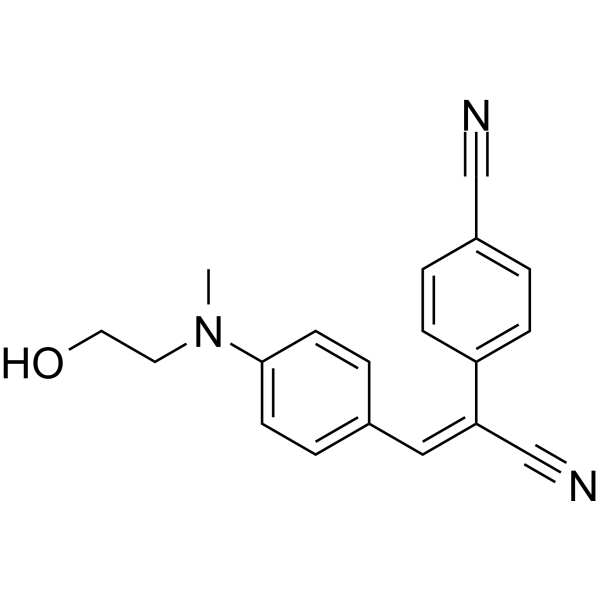
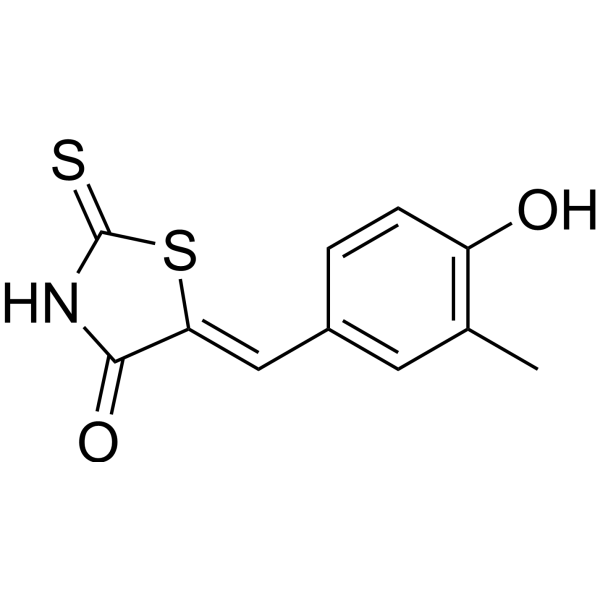
    HMBR
    1 Publications Verification

    Fluorescent Dye Others
    HMBR is an analogue with an additional methyl group on the aromatic ring and is non-fluorescent. HMBR conjugated with Y-FAST emits yellow fluorescence under blue light excitation (Ex= 419 nm; Em= 525–539 nm). HMBR is non-toxic to zebrafish embryos. HMBR has high cell permeability .
    HMBR
  • HY-130412
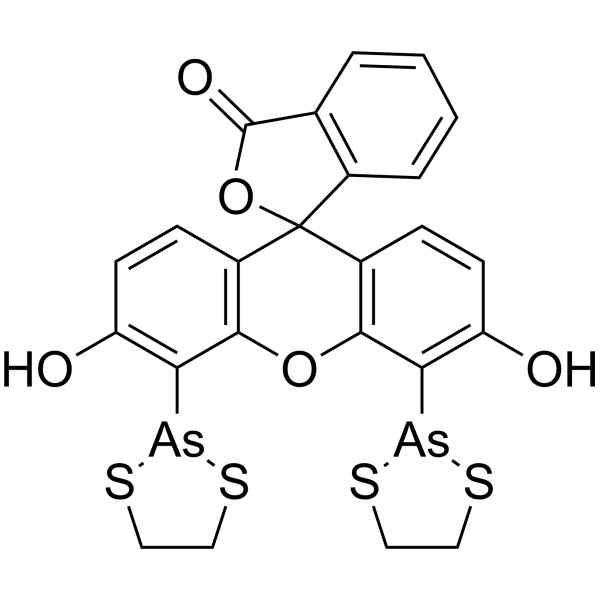
    FlAsH-EDT2
    2 Publications Verification

    Fluorescent Dye Others
    FlAsH-EDT2 is a protein labeling reagent. FlAsH-EDT2 binds to Cys4 with high affinity and emits fluorescence. FlAsH-EDT2 can cross the cell membrane and enter the interior of the cell. FlAsH-EDT2 can only be used for labeling proteins with high concentration .
    FlAsH-EDT2
  • HY-D2906

    Fluorescent Dye Others
    Alexa fluor 647 maleimide is a bright, far-red-emitting fluorescent dye for labeling of protein SH groups (Ex/Em = 656/670 nm). Alexa fluor 647 maleimide can be used to attach AF 647 fluorophore to proteins and peptides containing cysteine residues, as well as to other thiolated molecules (such as thiol-containing oligonucleotides). Alexa Fluor 647 maleimide is promising for research of cell biology, neuroscience, and disease diagnostics .
    Alexa fluor 647 maleimide
  • HY-DY1036

    Fluorescent Dye Cancer
    Calcein AM (solution) , has cell membrane permeability and can easily enter the cell. Calcein AM has no fluorescence and is hydrolyzed by endogenous esterase in the cell to produce polar molecule Calcein (Calcein) , which has strong negative charge and cannot permeate the cell membrane. Calcein can emit strong green fluorescence, so it is often used with Propidium Iodide for cell viability/virulence detection, excitation/emission wavelength: 494/515 nm .
    Solvent and concentration: DMSO: 2 mM
    Calcein-AM (solution)
  • HY-W007596

    Ir(ppy)3; Tris[2-(pyridin-2-yl)phenyl]iridium

    Biochemical Assay Reagents Others
    Tris(2-phenylpyridinato-C2,N)iridium(III) (Ir(ppy)3) is an iridium(III) containing organometallic complex, which is used as a phosphorescent light-emitting material. Tris(2-phenylpyridinato-C2,N)iridium(III) exhibits high luminous efficiency and good thermal stability, that can be used in organic optoelectronics, especially in improving the luminescence efficiency and stability of organic light-emitting diodes (OLEDs) .
    Tris(2-phenylpyridinato-C2,N)iridium(III)
  • HY-D0723
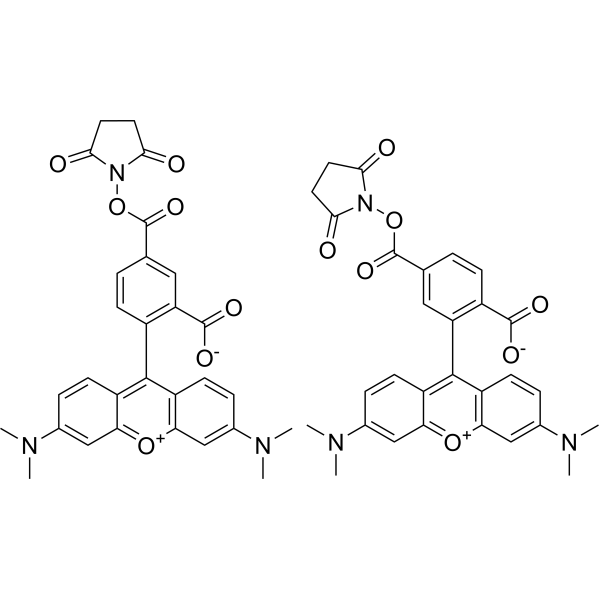
    5(6)-TAMRA SE
    3 Publications Verification

    5(6)-Carboxytetramethylrhodamine N-succinimidyl ester

    Fluorescent Dye Cancer
    5(6)-TAMRA SE is a fluorescent dye that emits red fluorescence. 5(6)-TAMRA SE binds to oligonucleotides and is used in DNA sequencing. 5(6)-TAMRA SE can be used in cancer research (Ex/Em = 565/580 nm) .
    5(6)-TAMRA SE
  • HY-DY1011

    Fluorescent Dye Others
    PKH 26 (solution) is a red fluorescent dye, PKH 26 can stably bind to the lipid region of cell membrane and emit red fluorescence (Ex/Em=551/567 nm) , which is mainly used for in vitro cell labeling, in vitro cell proliferation studies and in vivo and in vitro cell tracing studies .
    Solvent and concentration: DMSO: 5 mM
    PKH 26 (solution)
  • HY-D1040

    Cyanine 5.5 carboxylic acid

    Fluorescent Dye Others
    Cy5.5-COOH (Cyanine 5.5 carboxylic acid) is a fluorescent dye that emits fluorescence at 710 nm upon excitation at 650 nm. Cy5.5-COOH possesses excellent spectral properties, including a narrow absorption spectrum, high sensitivity, and stability. Cy5.5-COOH can be used for bioimaging and disease diagnosis .
    Cy5.5-COOH
  • HY-P11329

    Fluorescent Dye Others
    GFP11 is a protein fusion tag consisting of 16 amino acids. When GFP11 and GFP1-10 are sufficiently close in physical space, they undergo spontaneous, irreversible complementation to reassemble into an intact, functional GFP protein that emits green fluorescence. GFP11 can be used to form a split GFP system for high-throughput biotechnology and flow cytometry applications .
    GFP11
  • HY-W004305

    Palmitaldehyde

    Environmental Pollutants Endogenous Metabolite Metabolic Disease
    Hexadecanal (Palmitaldehyde) , a volatile long-chain aliphatic aldehyde, is emitted from human feces, skin, and breath. The receptor for hexadecanal(OR37B) is highly conserved across mammals. Hexadecanal may exert its effects by modulating functional connectivity between the brain substrates of social appraisal and the brain substrates of aggressive execution. Also, Hexadecanal is confirmed to be highly deterrent to the ant Lasius niger. Hexadecanal is promising for the research of startle responses and aggression
    Hexadecanal
  • HY-D1044

    Rhodamine 640 chloride

    Fluorescent Dye Cancer
    Rhodamine 101 chloride (Rhodamine 640 chloride) is a fluorescent dye with excitation and emission maxima at 565 nM and 595 nM, respectively. Rhodamine 101 chloride binds to intracellular proteins and emits specific fluorescence. Rhodamine 101 chloride can be used in colon cancer research .
    Rhodamine 101 chloride
  • HY-W540978

    Biochemical Assay Reagents Others
    3-Azido-7-hydroxycoumarin is a click chemistry reagent containing an azido group. Under Cu (II) catalysis, it undergoes azide-alkyne cycloaddition (CuAAC) click reaction with 3-butyn-1-ol and emits a fluorescent signal .
    3-Azido-7-hydroxycoumarin
  • HY-D0918

    Fluorescent Dye Others
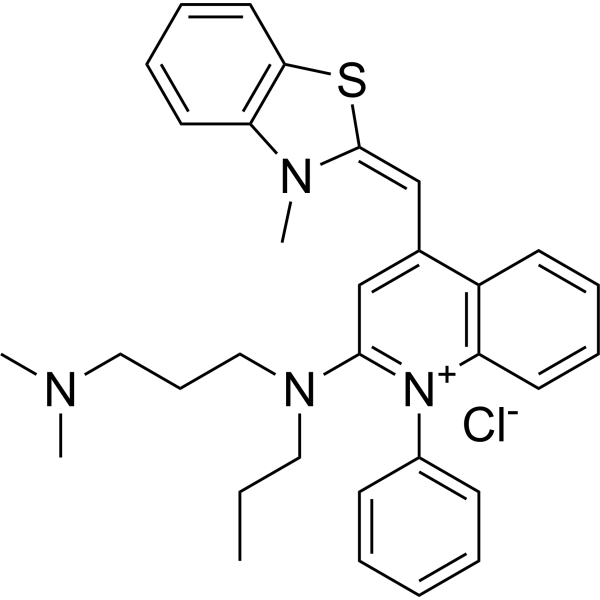
    YO-PRO-1 is a non-cell-membrane-penetrating green fluorescent dye. YO-PRO-1 cannot penetrate normal cell membranes but can penetrate the membranes of apoptotic and necrotic cells. YO-PRO-1 has a high affinity for DNA. When it is not bound to DNA, it emits almost no fluorescence, and when it binds to DNA, it can emit green fluorescence (Ex/Em: 488/530±30 nM). YO-PRO-1 is often used together with Propidium Iodide (HY-D0815) to analyze and identify apoptotic and necrotic cells .
    YO-PRO-1
  • HY-152073

    Fluorescent Dye Others
    BETA-1 is the first twisted intramolecular charge transfer (TICT)-aggregation-induced emission (AIE) integration molecule. BETA-1 emits cyan fluorescence in lipid droplets (LDs) and red fluorescence in mitochondria. BETA-1 can be used for the simultaneous and dual-color imaging of LDs and mitochondria in vivo and in vitro .
    BETA-1
  • HY-W750459

    Fluorescent Dye Others
    Fluorescent brightener 28 (Technical Grade) is a fluorescent whitening agent commonly used in the padding process of the textile industry. Fluorescent brightener 28 is capable of staining polysaccharides such as cellulose, and when the plasma membrane ruptures, it also weakly stains the cytoplasm and strongly stains the cell nucleus. Additionally, Fluorescent brightener 28 can be utilized to detect intracellular chitin in living cells. Fluorescent Brightener 28 also is a visible light emitting diode (LED)-light sensitive photoinitiator for free radical photopolymerizations .
    Fluorescent brightener 28 (Technical Grade)
  • HY-W008884

    Bacterial Others
    25-NBD Cholesterol is a fluorescently labeled form of cholesterol that facilitates the distinction between exogenous and endogenous cholesterol within bacterial cell membranes, emitting green fluorescence signals.
    25-NBD Cholesterol
  • HY-D1703

    Fluorescent Dye Others
    Oxazine 170 perchlorate is a laser dye with a wide excitation spectrum range (300−550 nm), which strongly absorbs light with a wavelength greater than 550 nm, and it emits fluorescence with a wavelength of about 645 nm .
    Oxazine 170 perchlorate
  • HY-174493

    mRNA Others
    Firefly luciferase (FLuc) mRNA (5moU) expresses a luciferase protein, originally isolated from the firefly, Photinus pyralis. FLuc is commonly used in mammalian cell culture to measure both gene expression and cell viability. It emits bioluminescence in the presence of the substrate, luciferin.
    Firefly luciferase mRNA (5moU)
  • HY-P4417

    Fluorescent Dye Others
    Ac-IEPD-AMC is a fluorogenic substrate for the determination of protease activity. Ac-IEPD-AMC undergoes hydrolysis and releases the fluorescent product 7-amino-4-methylcoumarin (AMC). AMC is fluorescent under UV light and can emit a fluorescent signal .
    Ac-IEPD-AMC
  • HY-P4419A

    Fluorescent Dye Others
    Boc-Asp(OBzl)-Pro-Arg-AMC acetate is a fluorogenic substrate for the determination of protease activity. Boc-Asp(OBzl)-Pro-Arg-AMC acetate undergoes hydrolysis and releases the fluorescent product 7-amino-4-methylcoumarin (AMC). AMC is fluorescent under UV light and can emit a fluorescent signal .
    Boc-Asp(OBzl)-Pro-Arg-AMC acetate
  • HY-111956B
    D-Ala-Lys-AMCA hydrochloride
    1 Publications Verification

    Fluorescent Dye Cancer
    D-Ala-Lys-AMCA hydrochloride is a known proton-coupled oligopeptide transporter 1 (PEPT1) substrate that emits blue fluorescence. D-Ala-Lys-AMCA hydrochloride may be transported into liver cancer cells and Caco-2 cells based on fluorescence analysis. D-Ala-Lys-AMCA hydrochloride can be used for characterizing PEPT1-specific substrates or inhibitors (Ex/Em = 390/480 nm) .
    D-Ala-Lys-AMCA hydrochloride
  • HY-42984

    Biochemical Assay Reagents Others
    BHQ-2 NHS is a dark quencher with no native emission due to the polyaromatic-azo backbone and a terminal NHS ester. UBHQ-2 NHS has a wide and intense quenching range from 560-670 nm, which makes it useful as an acceptor in fluorescence resonance energy transfer (FRET) applications in conjunction with orange to far-red emitting dyes. The NHS ester can be applied to label the primary amines (-NH2) of proteins, amine-modified oligonucleotides, and other amine-containing molecules.
    BHQ-2 NHS
  • HY-21170B

    Triflate lithium; Trifluoromethylsulfonate lithium; Trifluoromethanesulphonic acid lithium

    Biochemical Assay Reagents Herbicide Others
    Trifluoromethanesulfonate (Triflate;Trifluoromethylsulfonate) lithium is a stable lithium salt and dopant with four resonance states, which is commonly used as an electrolyte component in polymer light-emitting electrochemical cells and primary lithium batteries. Trifluoromethanesulfonate lithiumalso acts as a catalyst for the preparation of the herbicide Imazapyr. In MEH-PPV-based light-emitting electrochemical cells, Trifluoromethanesulfonate lithium promotes electrochemical p-type doping at the anode interface under applied bias, thereby facilitating the formation of p-i-n junctions, exciton generation, and light emission. Trifluoromethanesulfonate lithiumexhibits strong ion pairing in non-aqueous electrolytes, but its electrochemical stability window is narrower than that of lithium bistrifluoromethylsulfonyl imidee .
    Trifluoromethanesulfonate lithium
  • HY-P4406
    Abz-AGLA-Nba
    1 Publications Verification

    Fluorescent Dye Others
    Abz-AGLA-Nba is a fluorogenic substrate for the determination of protease activity. Abz-AGLA-Nba is hydrolyzed to release aminoacyl benzimide (Abz-AGLA) and 2-naphthylaminoacyl (Nba). The product Abz-AGLA produced by this hydrolysis reaction is fluorescent under ultraviolet light and can emit a fluorescent signal .
    Abz-AGLA-Nba
  • HY-160869

    Fluorescent Dye Others
    Firefly luciferase-IN-2 (compound 5j) is an inhibitor of ATP-dependent luciferase (Firefly luciferase), the major light-emitting enzyme in fireflies and kowtow bugs. Firefly luciferase-IN-2 inhibits P. pyralis luciferase with an IC50 of 0.15 μM, while the inhibitory potency against R. reniformis is not significant .
    Firefly luciferase-IN-2
  • HY-W854659
    Chlorin e6 trisodium
    15+ Cited Publications

    Ce6 trisodium

    Photosensitizer Cancer
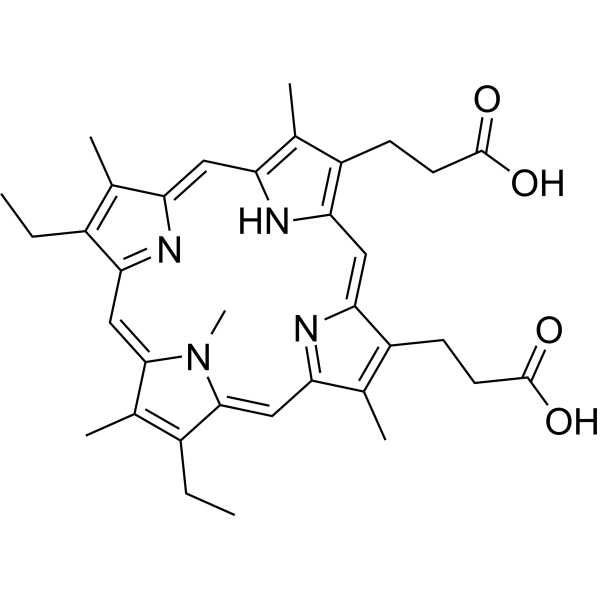
    Chlorin e6 Ce6 (trisodium) is a water-soluble derivative of chlorophyll, belonging to the chlorin class of photosensitizers with an absorption wavelength range of 600-670 nm. Chlorin e6 trisodium emits characteristic red fluorescence upon light excitation, enabling real-time identification of tumor boundaries and progression. Chlorin e6 trisodium can be used for the study of photodynamic therapy (PDT) of cancers (bladder cancer) and fluorescence diagnosis of neoplastic lesions .
    Chlorin e6 trisodium
  • HY-135414B
    Cyanine5 NHS ester iodide
    1 Publications Verification

    Fluorescent Dye Others
    Cyanine5 NHS ester iodide is a red emitting fluorescent dye for labeling of amino-groups in peptides, proteins, and oligonucleotides .
    Cyanine5 NHS ester iodide
  • HY-W001536

    Biochemical Assay Reagents Fluorescent Dye Others
    7-Methoxyindole, 98% is a Fluorescent emitter. 7-Methoxyindole, 98% exhibits a relatively blue excitation spectrum .\n


    7-Methoxyindole, 98%
  • HY-15726

    Adrenergic Receptor Metabolic Disease
    ICI 89406 is a selective β1 adrenergic receptor antagonist amenable to labelling with positron emitters, for PET .
    ICI 89406
  • HY-115684

    Undecan-2-ol

    Endogenous Metabolite Others
    2-Undecanol (Undecan-2-ol) is a male specific volatile identified from the sap beetle Lobiopa insularis. 2-undecanol is a flower emitted volatile, used by various species of Hymenoptera as a pheromone component .
    2-Undecanol
  • HY-139579A

    OTL 38 tetrasodium

    Fluorescent Dye Cancer
    Pafolacianine tetrasodium (OTL 38 tetrasodium) is a fluorescent imaging agent made of near-infrared dye used in detecting tumor lesions during surgical procedures. Pafolacianine tetrasodium excites at 774 to 775 nm and emits at 794 to 796 nm .
    Pafolacianine tetrasodium
  • HY-D1254

    NBL-SS perchlorate

    Fluorescent Dye Others
    Trx-red (NBL-SS perchlorate) is a red-emitting fluorescent probe derivatized from the nile blue fluorophore. Trx-red is used for selectively imaging thioredoxin (Trx) in live cells and in vivo (λex=615 nm, λem=661 nm) .
    Trx-red
  • HY-D1260

    PSH-red

    Fluorescent Dye Neurological Disease
    FM-red (PSH-red) is a red-emitting and environment-sensitive probe for selectively detecting and labeling protein thiols. FM-red can be used to image protein sulfhydryl groups in live cells and in vivo. FM-red also could be used to measure of the redox states of thioredoxin (Trx) .
    FM-red
  • HY-P4417A

    Fluorescent Dye Others
    Ac-IEPD-AMC TFA is a fluorescent substrate used to measure protease activity. Ac-IEPD-AMC undergoes hydrolysis and releases the fluorescent product 7-amino-4-methylcoumarin (AMC). AMC fluoresces under UV light irradiation and can emit fluorescent signals .
    Ac-IEPD-AMC TFA
  • HY-P4323A

    Fluorescent Dye Others
    Boc-Gln-Arg-Arg-AMC acetate is a fluorogenic substrate for the determination of protease activity. Boc-Gln-Arg-Arg-AMC undergoes hydrolysis and releases the fluorescent product 7-amino-4-methylcoumarin (AMC). AMC is fluorescent under UV light and can emit a fluorescent signal .
    Boc-Gln-Arg-Arg-AMC acetate
  • HY-W087988S

    Isotope-Labeled Compounds Bacterial Sex Pheromone Phytohormone Infection
    3-Pentanol-d5 is the deuterium labeled 3-Pentanol . 3-Pentanol is an active organic compound produced by plants and is a component of emitted insect sex pheromones. 3-pentanol elicits plant immunity against microbial pathogens and an insect pest in crop plants .
    3-Pentanol-d5
  • HY-111956

    Fluorescent Dye Cancer
    D-Ala-Lys-AMCA is a known proton-coupled oligopeptide transporter 1 (PEPT1) substrate that emits blue fluorescence. D-Ala-Lys-AMCA may be transported into liver cancer cells and Caco-2 cells based on fluorescence analysis. D-Ala-Lys-AMCA can be used for characterizing PEPT1-specific substrates or inhibitors (Ex/Em = 390/480 nm) .
    D-Ala-Lys-AMCA
  • HY-D2195

    Fluorescent Dye Others
    AgAuSe-PEG-NH2 (1000 nm) is a fluorescent quantum dot that emits fluorescence in the near-infrared II region, with an emission peak reaching 1000 nm that can be used in bioimaging.
    AgAuSe-PEG-NH2 (1000 nm)

Inquiry Online

Your information is safe with us. * Required Fields.

Salutation


Country or Region *

Applicant Name *


Organization Name *

Department *


Email Address *


Product Name *

Cat. No.


Requested quantity *

Phone Number *


Remarks

Inquiry Online

Inquiry Information

Product Name:
Cat. No.:
Quantity:
MCE Japan Authorized Agent:

