1. Search Result
Search Result
Results for "

emotional disorder

" in MedChemExpress (MCE) Product Catalog:
Cat. No. Product Name Target Research Areas Chemical Structure
  • HY-W341625

    Endogenous Metabolite Neurological Disease Metabolic Disease Cancer
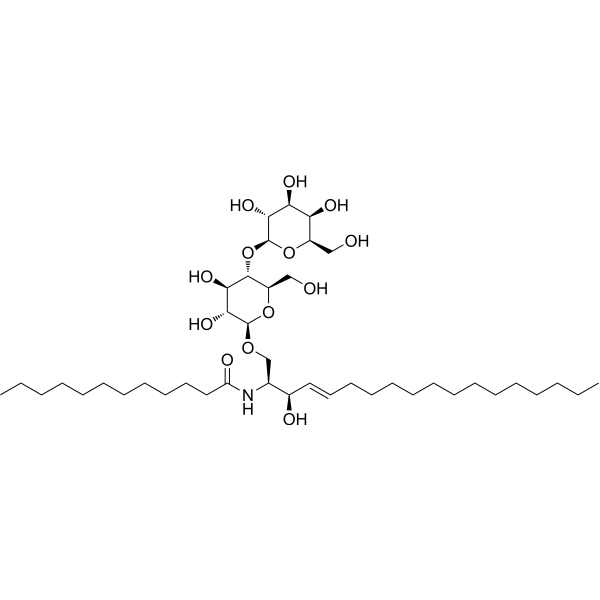
    Trihexosylceramide (d18:1/12:0) is a glycosphingolipid and mood-related compound. Trihexosylceramide (d18:1/12:0) is characterized by elevated serum levels in Mus musculus fed a high-fat diet, and its levels are positively correlated with mood Z-scores. Accumulation of Trihexosylceramide (d18:1/12:0) in tissues is considered the etiology of angiokeratoma corporis diffusum. Trihexosylceramide (d18:1/12:0) can be used in studies related to high-fat diet-induced mood disorders .\n


    Trihexosylceramide (d18:1/12:0)
  • HY-128174

    Beta-CCM; Ro 22-7497

    GABA Receptor Neurological Disease
    β-CCM is a benzodiazepine receptor inverse agonist with anxiogenic and proconvulsant effects. β-CCM enhances emotional reactivity and reduces vulnerability to interference in spatial working memory tasks. β-CCM can be used for research on anxiety-related disorders .
    β-CCM
  • HY-138693

    FAAH Neurological Disease
    ST4070 is a potent, orally active, and selective reversible fatty acid amide hydrolase (FAAH) inhibitor. ST4070 increases endocannabinoid (eCB) brain levels and counteracts neuropathic pain in animal models. ST4070 enhances the endogenous eCB tone in specific brain regions engaged in emotional control, and induces remarkable anxiolytic-like behaviours in rodents. ST4070 can be used for neuropathic pain and anxiety disorders research .
    ST4070
  • HY-106644

    FG4963 free acid

    5-HT Receptor Neurological Disease
    Femoxetine is a serotonin (5-HT) inhibitor with antidepressant properties. Femoxetine increases serotonin levels in the brain by preventing serotonin from being reabsorbed by nerve cells, resulting in increased concentrations of the neurotransmitter in the synaptic gap, which enhances serotonin signaling. Femoxetine can be used to study the role of serotonin in depression and other emotional disorders, and how 5-HT reuptake inhibitors affect mood and behavior .
    Femoxetine
  • HY-106644A

    FG4963

    5-HT Receptor Neurological Disease
    Femoxetine hydrochloride is a serotonin (5-HT) inhibitor with antidepressant properties. Femoxetine hydrochloride increases serotonin levels in the brain by preventing serotonin from being reabsorbed by nerve cells, resulting in increased concentrations of the neurotransmitter in the synaptic gap, which enhances serotonin signaling. Femoxetine hydrochloride can be used to study the role of serotonin in depression and other emotional disorders, and how 5-HT reuptake inhibitors affect mood and behavior .
    Femoxetine hydrochloride
  • HY-179725

    5-HT Receptor Dopamine Receptor Neurological Disease
    PZ-1129 is a selective 5-HT7 receptor ligand with a Ki of 7 nM. PZ-1129 shows Ki values of 159 and 24 nM for 5-HT1A receptor and D2 receptor. PZ-1129 can inhibit the constitutive cAMP production mediated by the Gs signaling pathway (EC50 = 13.7 nM). PZ-1129 can be used for the research of emotional disorders, such as depression and bipolar disorder .
    PZ-1129
  • HY-179724A

    5-HT Receptor Dopamine Receptor MMP Potassium Channel Neurological Disease
    PZ-1657 hydrochloride (Compound 57) is a potent, selective and orally active 5-HT7 receptor inverse agonist with a Ki of 5 nM. PZ-1657 hydrochloride can inhibit the constitutive cAMP production mediated by the Gs signaling pathway (EC50 = 2.93 nM). PZ-1657 hydrochloride can significantly reduce the MMP-9 activity mediated by 5-HT7 receptors in the hippocampus of mice, and the effect is comparable to that of SB-269970 (HY-15370). PZ-1657 hydrochloride can reverse the cognitive deficits observed in the rat novel object recognition test induced by Phencyclidine without affecting the animals' spontaneous activities. PZ-1657 hydrochloride can be used for the research of emotional disorders, such as depression and bipolar disorder .
    PZ-1657 hydrochloride
  • HY-181636

    Cannabinoid Receptor Neurological Disease
    VU6077967 is a selective cannabinoid receptor 2 (CB2) agonist with an EC50 of 8.6 nM for rCB2. VU6077967 can be used for the research of neurological disease, suah as Alzheimer’s disease .
    VU6077967

Inquiry Online

Your information is safe with us. * Required Fields.

Salutation


Country or Region *

Applicant Name *


Organization Name *

Department *


Email Address *


Product Name *

Cat. No.


Requested quantity *

Phone Number *


Remarks

Inquiry Online

Inquiry Information

Product Name:
Cat. No.:
Quantity:
MCE Japan Authorized Agent:

