1. Search Result
Search Result
Results for "

endothelial barrier disruption

" in MedChemExpress (MCE) Product Catalog:

4

Inhibitors & Agonists

2

Natural
Products

Targets Recommended:
Cat. No. Product Name Target Research Areas Chemical Structure
  • HY-N0419
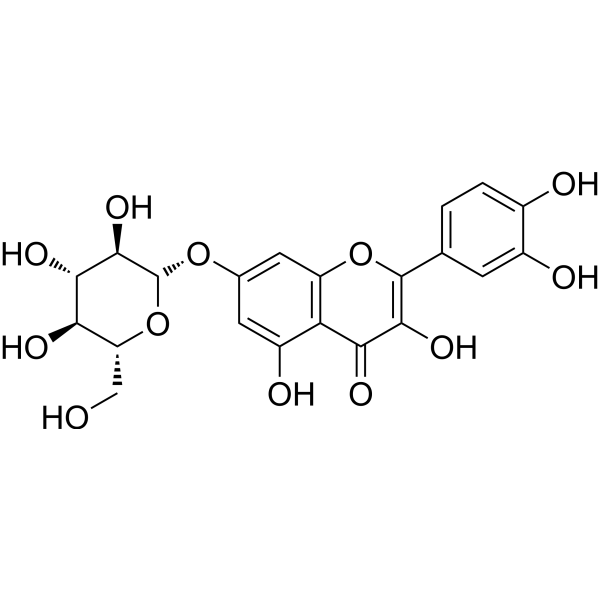
    Quercimeritrin
    2 Publications Verification

    Quercetin-7-O-β-D-glucopyranoside

    Glycosidase c-Kit MMP VEGFR Aurora Kinase Metabolic Disease Cancer
    Quercimeritrin (Quercetin-7-O-β-D-glucopyranoside) is an orally active α-glucosidase inhibitor (with an IC50 of 79.88 μM against the Saccharomyces cerevisiae enzyme) and a P-gp substrate, with anti-angiogenic and antioxidant activities. Quercimeritrin does not cross the blood-brain barrier and does not inhibit cytochrome P450 enzymes. Quercimeritrin precisely binds to and inhibits the active sites of c-Kit, MMP-2, Aurora-A kinases and α-glucosidase, thereby disrupting target functions. Quercimeritrin effectively regulates postprandial blood glucose and also exhibits significant anti-angiogenic activity, which inhibits endothelial cell proliferation and microvascular growth. Quercimeritrin can be used in the research of diabetes and breast cancer .
    Quercimeritrin
  • HY-W002199

    6:2 FTOH; 1H,1H,2H,2H-Perfluoro-1-octanol; 2-(Perfluorohexyl)ethanol

    Bacterial Apoptosis ERK TNF Receptor Infection Neurological Disease
    6:2 Fluorotelomer alcohol (6:2 FTOH) is an orally active, blood-brain barrier-permeable modulator of cyclin D1 and ETS1. 6:2 Fluorotelomer alcohol downregulates cyclin D1 expression, upregulates ETS1 via the TNF-α/ERK 1/2 pathway, impairs mitochondrial membrane potential and respiratory function, increases reactive oxygen species levels, disrupts calcium homeostasis and activates endoplasmic reticulum stress markers, and induces cell proliferation inhibition and endothelial-mesenchymal transition. Furthermore, 6:2 Fluorotelomer alcohol induces morphological abnormalities in zebrafish embryos and liver developmental damage, while disrupting the brain immune microenvironment in mice, causing systemic toxicity and delayed pup maturation in CD-1 mice. 6:2 Fluorotelomer alcohol also induces cortical neuron apoptosis, glial cell activation, synaptic abnormalities, colonic barrier damage, intestinal dysbiosis and autism spectrum disorder-like symptoms in mice. 6:2 Fluorotelomer alcohol shows no mutagenic, clastogenic, primary skin/eye irritation or skin sensitizing effects, exhibits no selective reproductive toxicity in CD-1 mice, and is classified as GHS Category 4 for acute oral toxicity. 6:2 Fluorotelomer alcohol can be used in studies of neurodevelopmental disorders and autism spectrum disorders .
    6:2 Fluorotelomer alcohol
  • HY-N2173
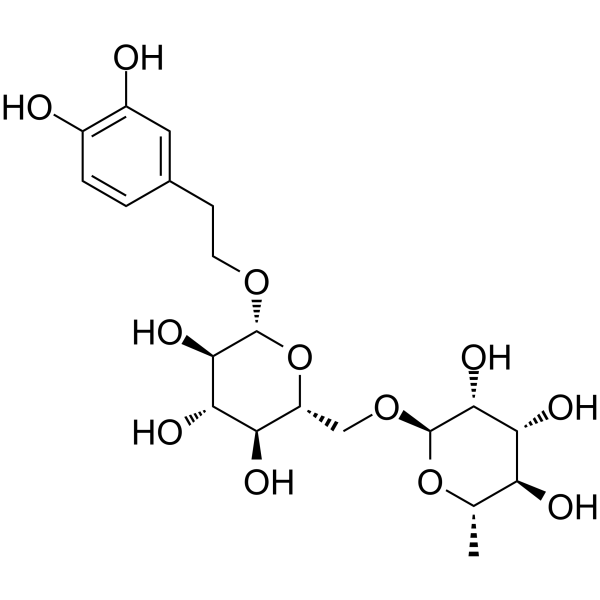
    Forsythoside E
    1 Publications Verification

    Others Cardiovascular Disease Inflammation/Immunology
    Forsythoside E is a phenylethanoid glycoside compound. Forsythoside E can be isolated from Shuanghuanglian. Forsythoside E does not induce vascular leakage or promote histamine release in mice. Forsythoside E does not cause pseudo-allergic reactions .
    Forsythoside E
  • HY-131688

    PARP Caspase Inflammation/Immunology
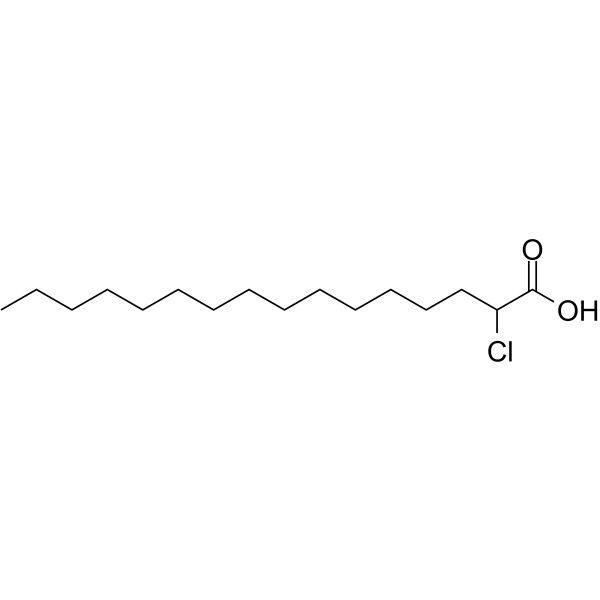
    2-Chlorohexadecanoic acid, an inflammatory lipid mediator, interferes with protein palmitoylation,induces ER-stress markers, reduced the ER ATP content, and activates transcription and secretion of IL-6 as well as IL-8.2-Chlorohexadecanoic acid disrupts the mitochondrial membrane potential and induces procaspase-3 and PARP cleavage.2-Chlorohexadecanoic acid can across blood-brain barrier (BBB) and compromises ER- and mitochondrial functions in the human brain endothelial cell line hCMEC/D3 .
    2-Chlorohexadecanoic acid

Inquiry Online

Your information is safe with us. * Required Fields.

Salutation


Country or Region *

Applicant Name *


Organization Name *

Department *


Email Address *


Product Name *

Cat. No.


Requested quantity *

Phone Number *


Remarks

Inquiry Online

Inquiry Information

Product Name:
Cat. No.:
Quantity:
MCE Japan Authorized Agent:

