42 Results for "

eukaryotes

" in MedChemExpress (MCE) Product Catalog:
Products (42)

42 Results for "eukaryotes" in MCE Product Catalog:

68
68 Publications Verification
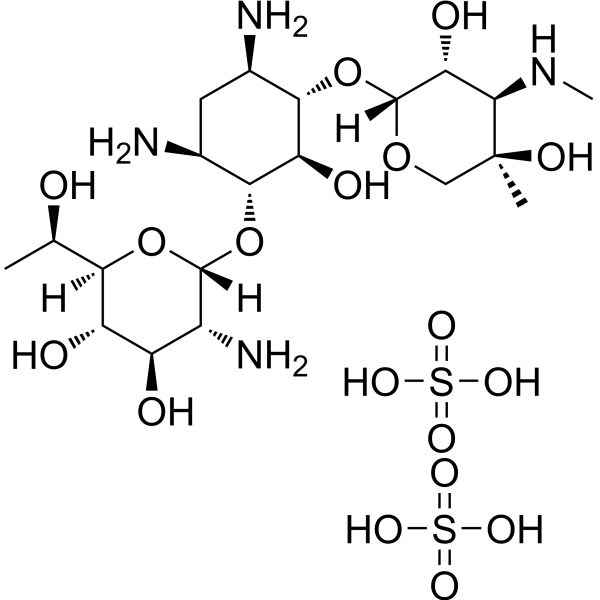
Cat. No.: HY-17561
CAS No.: 108321-42-2
Synonyms: Geneticin sulfate; Antibiotic G-418 sulfate
G-418 disulfate (Geneticin sulfate), is an aminoglycoside antibiotic, inhibits protein synthesis in eukaryotes and prokaryotes. G-418 disulfate is commonly used as a selective agent for eukaryotic cells .
loading...
    loading...
12
12 Cited Publications
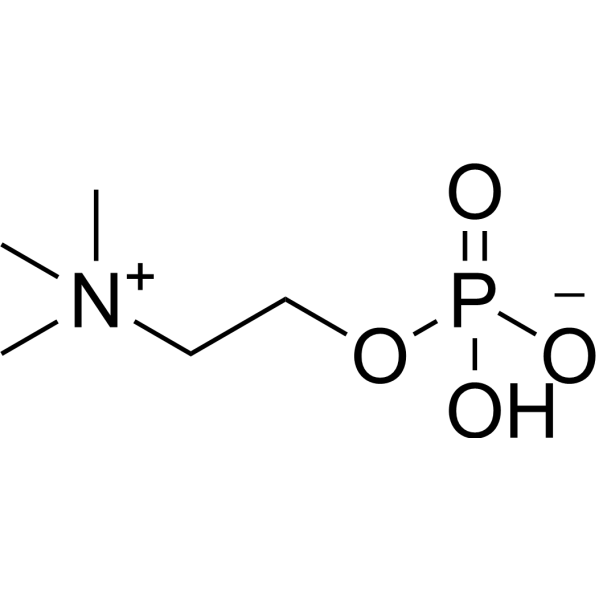
Cat. No.: HY-B2233B
CAS No.: 3616-04-4
Synonyms: Phosphocholine
Phosphatidylcholine is the main phospholipid component in eukaryotic biofilms. Phosphatidylcholine exists in commensal or pathogenic bacteria associated with eukaryotes in prokaryotes. Phosphorylcholine exhibits a surprising range of immunomodulatory properties .
loading...
    loading...
12
12 Cited Publications
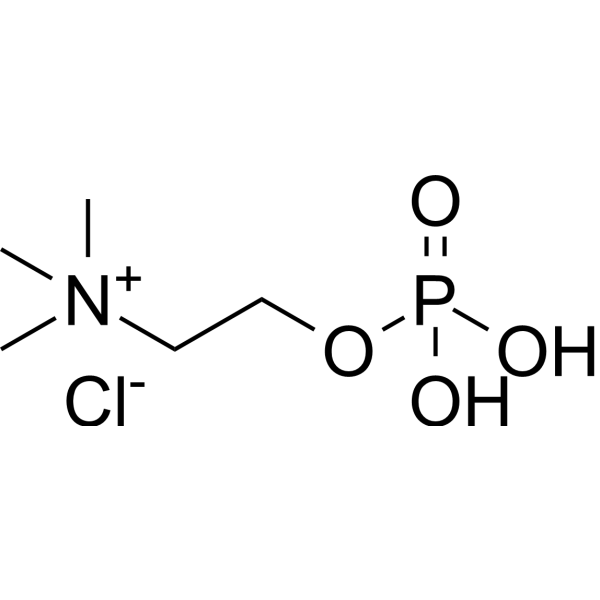
Cat. No.: HY-B2233
CAS No.: 107-73-3
Synonyms: Phosphocholine chloride
Phosphorylcholine chloride (Phosphocholine chloride) is the main phospholipid component in eukaryotic biofilms. Phosphorylcholine chloride exists in commensal or pathogenic bacteria associated with eukaryotes in prokaryotes. Phosphorylcholine chloride exhibits a surprising range of immunomodulatory properties .
loading...
    loading...
12
12 Cited Publications
Cat. No.: HY-B2233A
CAS No.: 4826-71-5
Calcium phosphorylcholine chloride, 98% is the main phospholipid component in eukaryotic biofilms. Calcium phosphorylcholine chloride, 98% exists in commensal or pathogenic bacteria associated with eukaryotes in prokaryotes. Calcium phosphorylcholine chloride, 98% exhibits a surprising range of immunomodulatory properties .
loading...
    loading...
8
8 Cited Publications
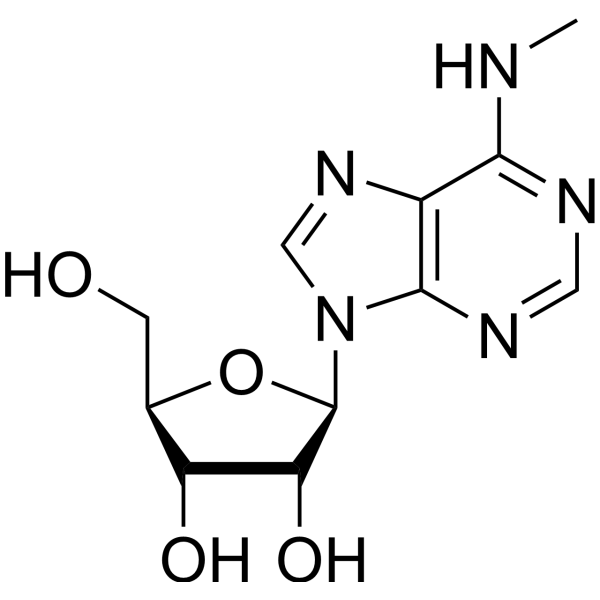
Cat. No.: HY-N0086
CAS No.: 1867-73-8
Synonyms: 6-Methyladenosine; N-Methyladenosine
N6-Methyladenosine is the most prevalent internal (non-cap) modification present in the messenger RNA (mRNA) of all higher eukaryotes. N6-Methyladenosine can modifies viral RNAs and has antiviral activities.
loading...
    loading...
2
2 Cited Publications
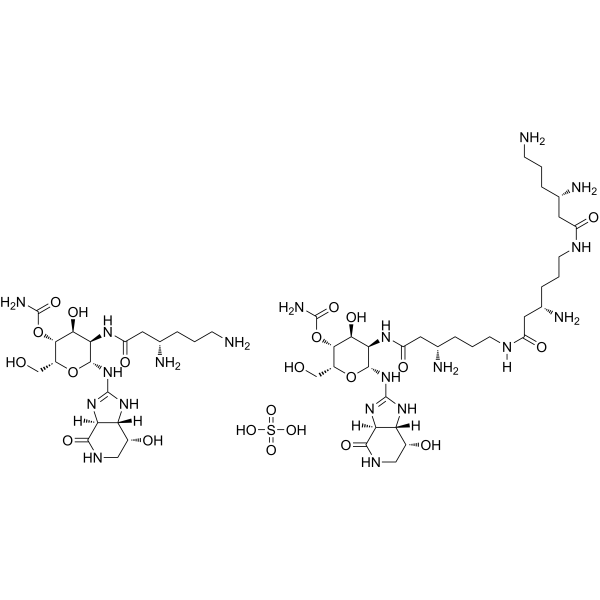
Cat. No.: HY-129065
CAS No.: 96736-11-7
Purity:  93.51%
Synonyms: Streptothricin sulfate
Research Areas:  

Infection

Nourseothricin sulfate (Streptothricin sulfate) is a broad-spectrum antibiotic that destroys the outer membrane of Gram-negative bacteria and is a dominant selective marker for Fonsecaea pedrosoi . Nourseothricin sulfate inhibits protein biosynthesis in prokaryotic cells and strongly inhibits the growth of eukaryotes like fungi and can also be used as a elective marker for a wide range of organisms including bacteria, yeast, filamentous fungi, and plant cells .
loading...
    loading...
2
2 Cited Publications
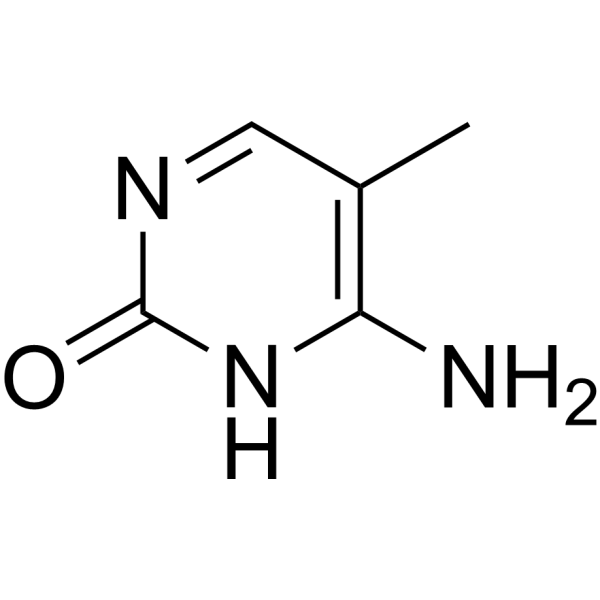
Cat. No.: HY-W008091
CAS No.: 554-01-8
5-Methylcytosine is a well-characterized DNA modification in prokaryotes and eukaryotes. 5-Methylcytosine forms symmetrical methylation on CpG dinucleotides in DNA, stabilizes tRNA/rRNA structure in RNA, and affects mRNA translation. 5-Methylcytosine can be oxidized to generate 5hmC, 5fC, and 5caC. 5-Methylcytosine can be used in epigenetics, developmental biology, and the study of diseases such as colorectal cancer and hepatocellular carcinoma .
loading...
    loading...
2
2 Cited Publications
Cat. No.: HY-N0086R
CAS No.: 1867-73-8
Synonyms: 6-Methyladenosine (Standard); N-Methyladenosine (Standard)
N6-Methyladenosine (Standard) is the analytical standard of N6-Methyladenosine. This product is intended for research and analytical applications. N6-Methyladenosine is the most prevalent internal (non-cap) modification present in the messenger RNA (mRNA) of all higher eukaryotes. N6-Methyladenosine can modifies viral RNAs and has antiviral activities. In Vitro: N6-methyladenosine (m6A) is selectively recognized by the human YTH domain family 2 (YTHDF2) protein to regulate mRNA degradation. N6-methyladenosine (m6A), a prevalent internal modification in the messenger RNA of all eukaryotes, is post-transcriptionally installed by m6A methyltransferase (e.g., MT-A70) within the consensus sequence of G(m6A)C (70%) or A(m6A)C (30%). N6-methyladenosine (m6A)-containing RNAs are greatly enriched in the YTHDF-bound portion and diminished in the flow-through portion . N6-methyladenosine (m6A), the most abundant internal RNA modification, functions in diverse biological processes, including regulation of embryonic stem cell self-renewal and differentiation. N6-methyladenosine (m6A) is a large protein complex, consisting in part of methyltransferase-like 3 (METTL3) and methyltransferase-like 14 (METTL14) catalytic subunits .
loading...
    loading...
2
2 Cited Publications
Cat. No.: HY-W008091R
CAS No.: 554-01-8
5-Methylcytosine (Standard) is the analytical standard of 5-Methylcytosine (HY-W008091). This product is intended for research and analytical applications. 5-Methylcytosine is a well-characterized DNA modification in prokaryotes and eukaryotes. 5-Methylcytosine forms symmetrical methylation on CpG dinucleotides in DNA, stabilizes tRNA/rRNA structure in RNA, and affects mRNA translation. 5-Methylcytosine can be oxidized to generate 5hmC, 5fC, and 5caC. 5-Methylcytosine can be used in epigenetics, developmental biology, and the study of diseases such as colorectal cancer and hepatocellular carcinoma .
loading...
    loading...
2
2 Cited Publications
Cat. No.: HY-W008091A
CAS No.: 58366-64-6
Research Areas:  

Cancer

5-Methylcytosine hydrochloride is a well-characterized DNA modification in prokaryotes and eukaryotes. 5-Methylcytosine hydrochloride forms symmetrical methylation on CpG dinucleotides in DNA, stabilizes tRNA/rRNA structure in RNA, and affects mRNA translation. 5-Methylcytosine hydrochloride can be oxidized to generate 5hmC, 5fC, and 5caC. 5-Methylcytosine hydrochloride can be used in epigenetics, developmental biology, and the study of diseases such as colorectal cancer and hepatocellular carcinoma .
loading...
    loading...
Cat. No.: HY-P1775
CAS No.: 9001-03-0
Synonyms: EC 4.2.1.1
Carbonic anhydrase, Bovine erythrocytes (EC 4.2.1.1) is ubiquitous zinc-containing metalloenzyme present in prokaryotes and eukaryotes. Carbonic anhydrase can catalyze reversible conversion of carbon dioxide to bicarbonate and protons. Carbonic anhydrase can be used for the research of cancer, glaucoma, obesity and epilepsy .

loading...
    loading...
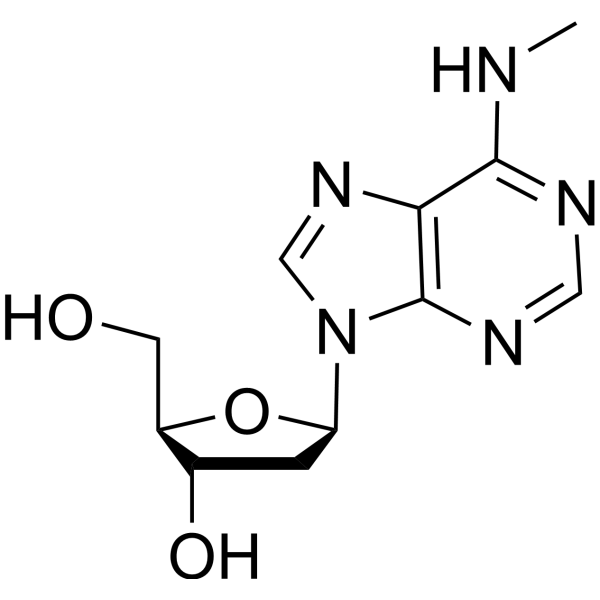
Cat. No.: HY-W011725
CAS No.: 2002-35-9
Synonyms: m6dA
N-6-Methyl-2-deoxyadenosine (m6dA) is an adenine nucleoside analogue. N-6-Methyl-2-deoxyadenosine targets nuclear processes and DNA replication machineries including WER, SATB1, TFAM, Jumu, SSBP1, DNA polymerase η and phage polymerase Gp90 exo . N-6-Methyl-2-deoxyadenosine acts as a multifunctional epigenetic regulator that modulates transcription, DNA damage response, cell cycle, transposon silencing, stress adaptation, epigenetic crosstalk, and nucleosome organization in both prokaryotes and eukaryotes. N-6-Methyl-2-deoxyadenosine regulates mitochondrial epigenetic inheritance and is required for fear extinction memory in mice. N-6-Methyl-2-deoxyadenosine exhibits dysregulated levels in cancers. N-6-Methyl-2-deoxyadenosine can be used for the research of glioblastoma, triple negative breast cancer, and conditioned fear (fear extinction impairment) .
loading...
    loading...
Cat. No.: HY-17561R
CAS No.: 108321-42-2
Synonyms: Geneticin sulfate (Standard); Antibiotic G-418 sulfate (Standard)
G-418 (disulfate) (Standard) is the analytical standard of G-418 (disulfate). This product is intended for research and analytical applications. G-418 disulfate (Geneticin sulfate), is an aminoglycoside antibiotic, inhibits protein synthesis in eukaryotes and prokaryotes. G-418 disulfate is commonly used as a selective agent for eukaryotic cells[1].
loading...
    loading...
Cat. No.: HY-P1775A
CAS No.: 9001-03-0
Carbonic anhydrase isoenzyme is the isoenzyme of Carbonic anhydrase (HY-P1775). Carbonic anhydrase isoenzyme is ubiquitous zinc-containing metalloenzyme present in prokaryotes and eukaryotes. Carbonic anhydrase isoenzyme catalyzes reversible conversion of carbon dioxide to bicarbonate and protons, and can be used for the research of cancer, glaucoma, obesity and epilepsy .
loading...
    loading...
Cat. No.: HY-153108
Purity:  99.62%
Synonyms: ARCA cap solution (100 mM)
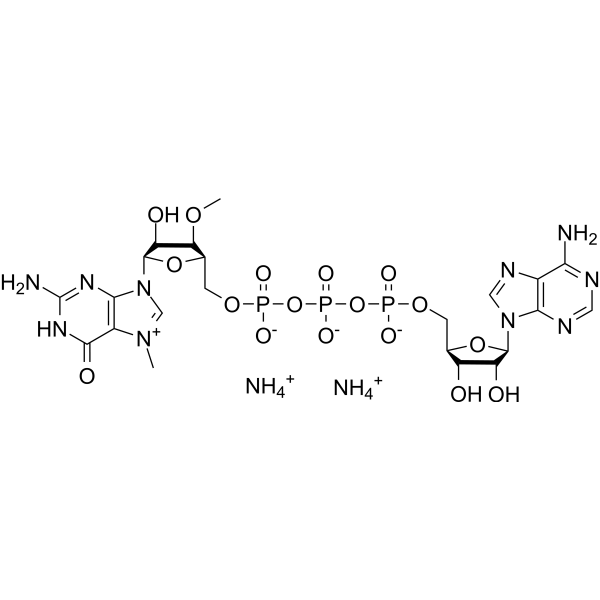
3'-O-Me-m7G(5')ppp(5')A (ARCA cap) solution (100 mM), anti-reverse cap analog, has a special RNA cap structure. 3'-O-Me-m7G(5')ppp(5')A solution (100 mM) improves mRNA translation efficiency and stability, reduces translational inhibition by proteins such as IFIT1, and enables stronger and longer-lasting expression of the target protein. The RNA cap structure is a common feature of mRNAs in some RNA viruses and eukaryotes, and it serves as a signal for translation initiation .
loading...
    loading...
Cat. No.: HY-N0086S
CAS No.: 139896-43-8
Synonyms: 6-Methyladenosine-d3; N-Methyladenosine-d3
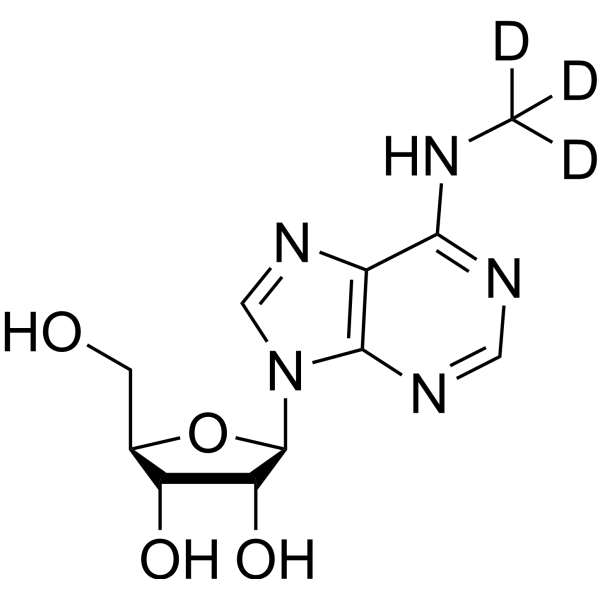
N6-Methyladenosine-d3 (6-Methyladenosine-d3; N-Methyladenosine-d3) is a deuterium labeled N6-Methyladenosine (HY-N0086). N6-Methyladenosine is the most prevalent internal (non-cap) modification present in the messenger RNA (mRNA) of all higher eukaryotes. N6-Methyladenosine can modifies viral RNAs and has antiviral activities.
loading...
    loading...
Cat. No.: HY-N9625
CAS No.: 126-29-4
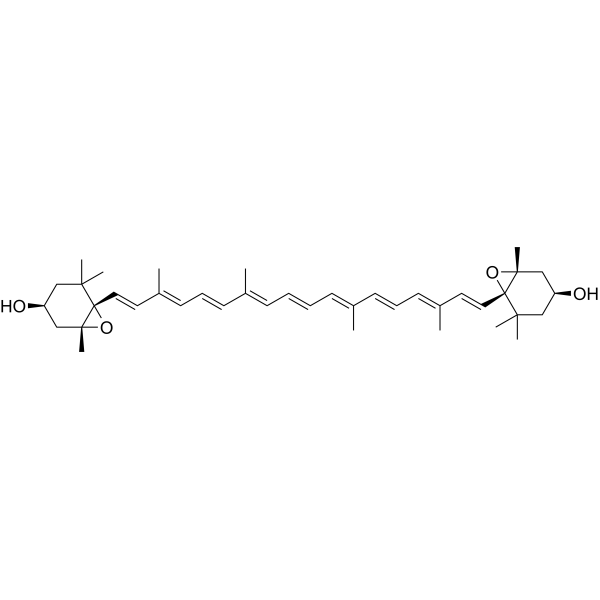
Violaxanthin is a lipophilic epoxy carotenoid and a light energy scavenger with biological activities such as antioxidation and anti-inflammation. Violaxanthin exists in photosynthetic eukaryotes including higher plants and participates in the xanthophyll cycle. As a component of the xanthophyll cycle, violaxanthin can be synthesized from zeaxanthin under the catalysis of epoxidase and scavenge excess light energy in photosynthetic eukaryotes .
loading...
    loading...
Cat. No.: HY-B2233AS
CAS No.: 344299-43-0
Synonyms: Phosphocholine-d9 chloride calcium
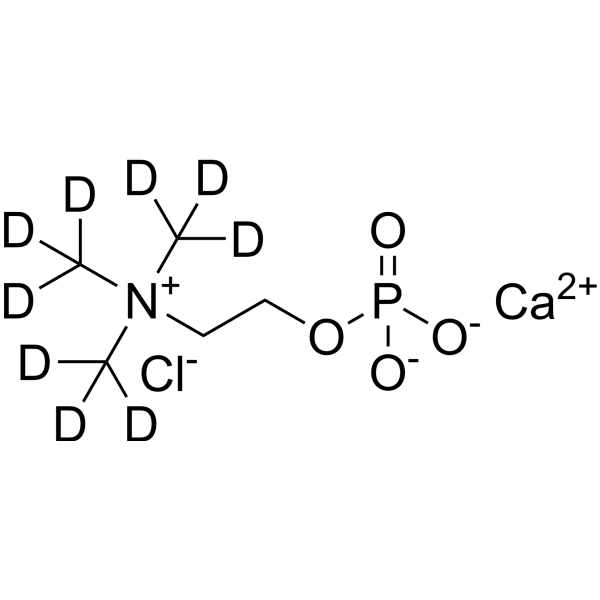
Calcium phosphorylcholine-d9 (chloride) is the deuterium labeled Calcium phosphorylcholine chloride. Calcium phosphorylcholine chloride is the main phospholipid component in eukaryotic biofilms. Calcium phosphorylcholine chloride exists in commensal or pathogenic bacteria associated with eukaryotes in prokaryotes. Calcium phosphorylcholine chloride exhibits a surprising range of immunomodulatory properties .
loading...
    loading...
Cat. No.: HY-N0086S2
Synonyms: 6-Methyladenosine-13C4; N-Methyladenosine-13C4
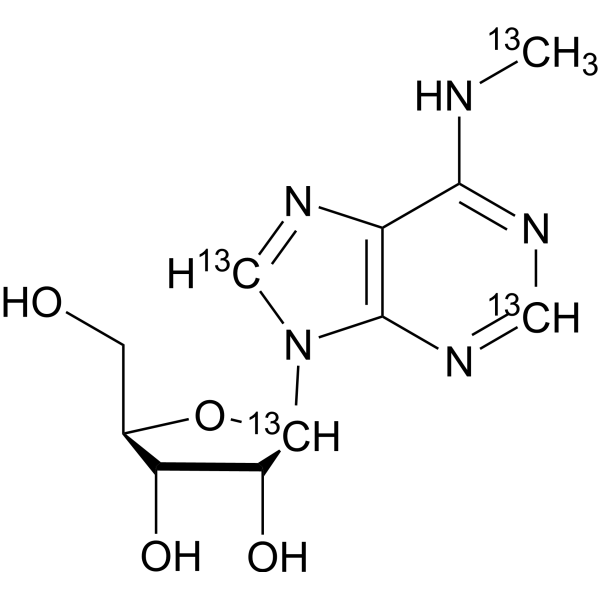
N6-Methyladenosine- 13C4 (6-Methyladenosine- 13C4; N-Methyladenosine- 13C4) is 13C-labeled N6-Methyladenosine (HY-N0086). N6-Methyladenosine is the most prevalent internal (non-cap) modification present in the messenger RNA (mRNA) of all higher eukaryotes. N6-Methyladenosine can modifies viral RNAs and has antiviral activities.
loading...
    loading...
Cat. No.: HY-W008091S
CAS No.: 1219795-15-9
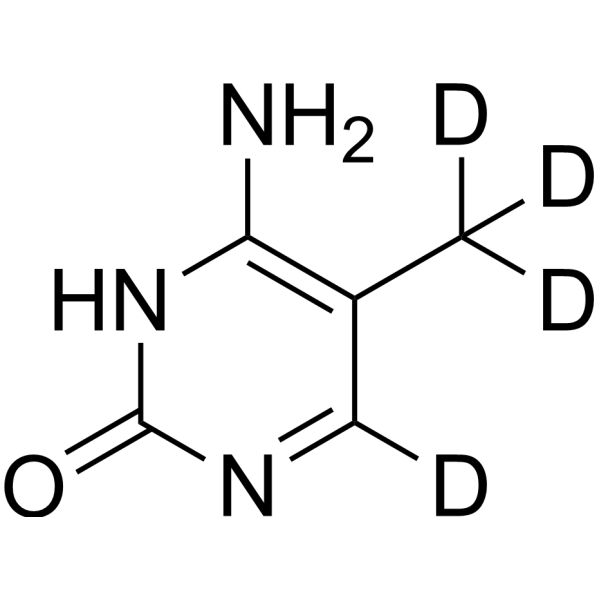
5-Methylcytosine-d4 is the deuterium labeled 5-Methylcytosine (HY-W008091). 5-Methylcytosine is a well-characterized DNA modification in prokaryotes and eukaryotes. 5-Methylcytosine forms symmetrical methylation on CpG dinucleotides in DNA, stabilizes tRNA/rRNA structure in RNA, and affects mRNA translation. 5-Methylcytosine can be oxidized to generate 5hmC, 5fC, and 5caC. 5-Methylcytosine can be used in epigenetics, developmental biology, and the study of diseases such as colorectal cancer and hepatocellular carcinoma .
loading...
    loading...

