

1. Search Result
Search Result
Results for "

exercise

" in MedChemExpress (MCE) Product Catalog:

39

Inhibitors & Agonists

1

Screening Libraries

1

Biochemical Assay Reagents

2

Peptides

12

Natural
Products

6

Isotope-Labeled Compounds

Cat. No. Product Name Target Research Areas Chemical Structure
  • HY-150012
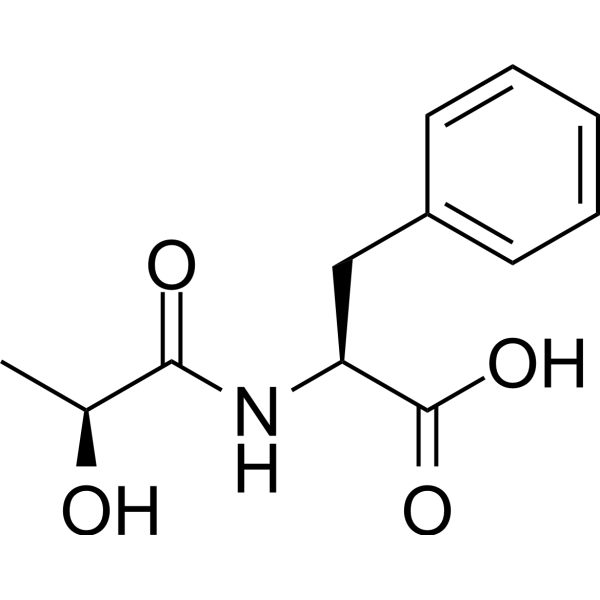
    N-Lactoyl-phenylalanine
    4 Publications Verification

    Lac-Phe

    Endogenous Metabolite Metabolic Disease Endocrinology
    N-Lactoyl-phenylalanine is a blood-derived signaling metabolite that can be induced by exercise. N-Lactoyl-phenylalanine can reduce obesity and improve glucose tolerance .
    N-Lactoyl-phenylalanine
  • HY-W012241

    Endogenous Metabolite PROTAC Linkers Metabolic Disease
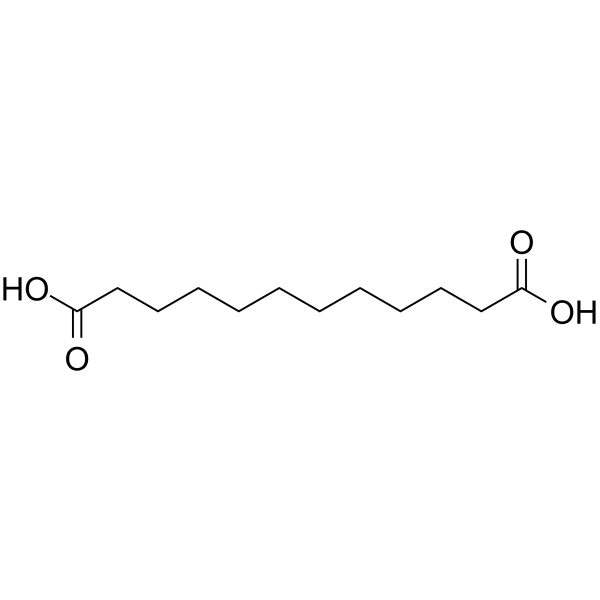
    Dodecanedioic acid is an orally active straight-chain dicarboxylic acid. As an alternative energy substrate between lipids and carbohydrates, Dodecanedioic acid can be rapidly oxidized during exercise, reducing muscle fatigue without stimulating insulin secretion. Dodecanedioic acid also exhibits blood glucose-lowering activity in non-insulin-dependent diabetes mellitus .
    Dodecanedioic acid
  • HY-113380
    (S)-β-Aminoisobutyric acid
    1 Publications Verification

    Endogenous Metabolite Drug Isomer Apoptosis AMPK Cardiovascular Disease Metabolic Disease Inflammation/Immunology
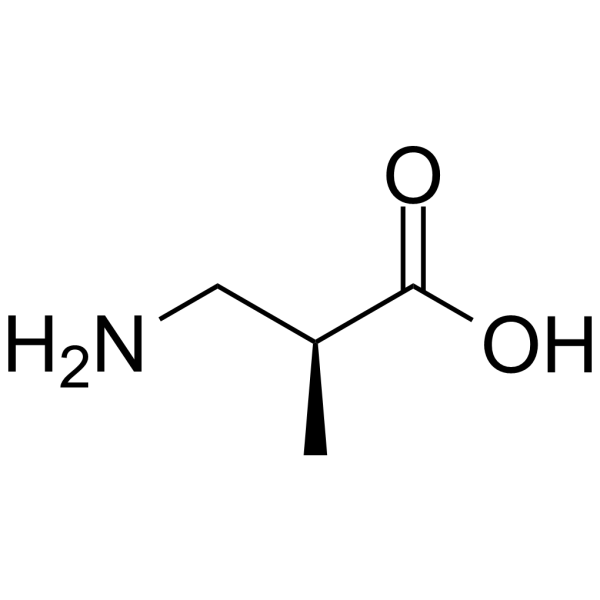
    (S)-β-Aminoisobutyric acid is an orally active S-isomer of β-Aminoisobutyric acid (HY-W012974). (S)-β-Aminoisobutyric acid can be produced through the catabolism of thymine and valine. (S)-β-Aminoisobutyric acid reduces apoptosis and increases the ratio of p-AMPK. (S)-β-Aminoisobutyric acid has cardioprotective effects. (S)-β-Aminoisobutyric acid is associated with acute aerobic exercise .
    (S)-β-Aminoisobutyric acid
  • HY-109121
    Reldesemtiv
    2 Publications Verification

    CK-2127107

    Calcium Channel Cardiovascular Disease
    Reldesemtiv (CK-2127107) is a selective, orally active and next-generation fast skeletal muscle troponin activator (FSTA). Reldesemtiv selectively activates fast skeletal myofibrils with an EC50 of 3.4 μM. Reldesemtiv increases exercise performance in a heart failure model .
    Reldesemtiv
  • HY-30216A

    α-Hydroxyisocaproic acid

    Drug Metabolite Hydroxycarboxylic Acid Receptor (HCAR) AMPK ERK Metabolic Disease Inflammation/Immunology
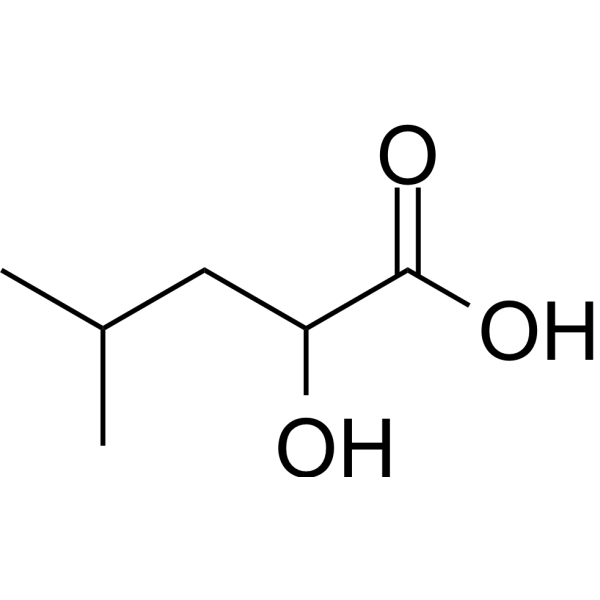
    Leucic acid (α-Hydroxyisocaproic acid) is an orally active end-product of the microbial metabolism of leucine. Leucic acid can bind to HCAR2, alters AMPK and ERK1/2 phosphorylation status, suppresses lipid synthesis, promotes catabolism, reduces adiposity, enhances lean mass and exercise capacity. Leucic acid suppresses pro-inflammatory cytokine secretion, inflammation-related gene mRNA expression. Leucic acid decreases basal protein synthesis, attenuates myotube atrophy. Leucic acid can be used for the research of obesity .
    Leucic acid
  • HY-15344
    Ketone monoester
    2 Publications Verification

    Biochemical Assay Reagents Neurological Disease Metabolic Disease
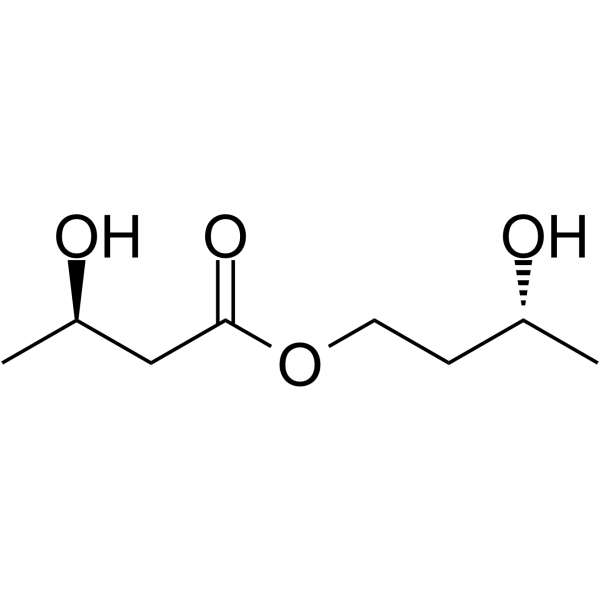
    Ketone monoester is an orally available ketone monoester that serves as a source of nutritional ketones. Ketone monoester increases plasma beta-hydroxybutyrate, acetoacetate, blood glucose, blood sodium, and blood creatinine levels in mouse models. Ketone monoester has the potential to improve athletic performance and endurance in animals. Ketone monoester partially prevents myasthenia in septic mice. Ketone monoester may also be used to study Parkinson's disease or diabetes .
    Ketone monoester
  • HY-P2048A
    MOTS-c(human) acetate
    1 Publications Verification

    AMPK GLUT Neurological Disease Metabolic Disease Inflammation/Immunology Endocrinology
    MOTS-c (human) acetate is a blood-brain barrier-penetrating, mitochondrial-derived peptide that modulates the AMPK/PGC-1α pathway to enhance insulin sensitivity. MOTS-c (human) acetate inhibits the folate cycle and de novo purine synthesis, increases AICAR levels to activate AMPK, and then regulates the Nrf2/Keap1 antioxidant pathway and inhibits the NF-κB inflammatory pathway, while promoting mitochondrial biogenesis and energy metabolism. MOTS-c (human) acetate has the effects of improving glucose and lipid metabolism, anti-oxidative stress, anti-inflammatory and neuroprotection, and can be used in the study of type 2 diabetes, traumatic brain injury, inflammatory diseases and aging-related metabolic disorders .
    MOTS-c(human) acetate
  • HY-17428

    Histamine Receptor Neurological Disease Inflammation/Immunology
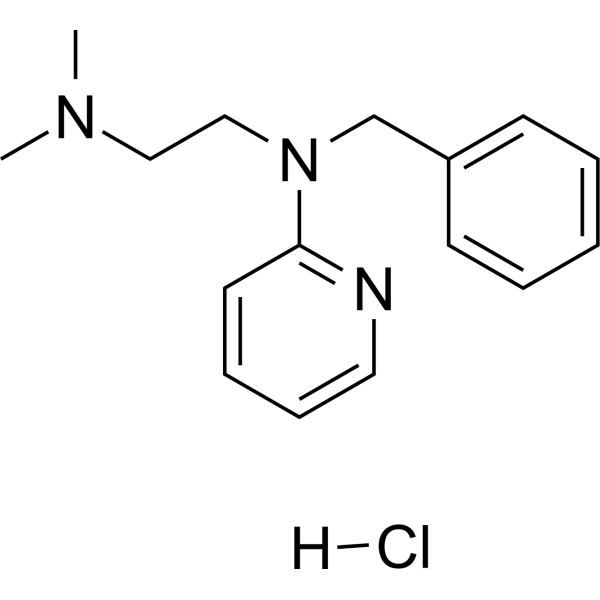
    Tripelennamine hydrochloride is a histamine H1-receptor antagonist. Tripelennamine hydrochloride effectively reverses histamine-induced bronchoconstriction, increased transpulmonary pressure, elevated pulmonary vascular resistance and reduced dynamic compliance. Tripelennamine hydrochloride does not significantly affect arterial hypoxemia, hemoglobin desaturation and hypercapnia in horses undergoing short-term high-intensity exercise. Tripelennamine hydrochloride exhibits local and central analgesic activity. Tripelennamine hydrochloride can be used in studies related to emphysema, urticaria and acute laminitis .
    Tripelennamine hydrochloride
  • HY-158110

    TRP Channel Inflammation/Immunology
    Phenylcapsaicin is an analogue of Capsaicin (HY-10448). Phenylcapsaicin is a TRPV1 receptor activator. Phenylcapsaicin enhances fat oxidation during aerobic exercise .
    Phenylcapsaicin
  • HY-150012S1

    Lac-Phe-13C6

    Isotope-Labeled Compounds Endogenous Metabolite Metabolic Disease Endocrinology
    N-Lactoyl-phenylalanine- 13C6 (Lac-Phe- 13C6) is 13C labeled N-Lactoyl-phenylalanine. N-Lactoyl-phenylalanine is a blood-derived signaling metabolite that can be induced by exercise. N-Lactoyl-phenylalanine can reduce obesity and improve glucose tolerance .
    N-Lactoyl-phenylalanine-13C6
  • HY-152006S

    Isotope-Labeled Compounds Endogenous Metabolite Inflammation/Immunology
    Propionyl-L-carnitine-d3 (hydrochloride) is deuterium labeled Propionyl-L-carnitine. Propionyl-L-carnitine is a carnitine derivative and has a high affinity for muscular carnitine transferase. Propionyl-L-carnitine increases cellular carnitine content, thereby allowing free fatty acid transport into the mitochondria. Propionyl-L-carnitine alleviates the symptoms of PAD through a metabolic pathway, thereby improving exercise performance .
    Propionyl-L-carnitine-d3 hydrochloride
  • HY-W023323

    Endogenous Metabolite Metabolic Disease
    (S)-β-Aminoisobutyric acid hydrochloride is a cytoprotective agent, which is a non-proteinogenic amino acid enantiomer derived from valine metabolism in skeletal muscle mitochondria. The plasma level of (S)-β-Aminoisobutyric acid hydrochloride increases significantly after acute aerobic exercise (and is not affected by the AGXT2 rs37369 genotype), and it is secreted by mouse extensor digitorum longus and soleus muscles in ex vivo contraction assays. (S)-β-Aminoisobutyric acid hydrochloride specifically protects osteocytes from oxidative stress-induced cell death .
    (S)-β-Aminoisobutyric acid hydrochloride
  • HY-107928A

    Biochemical Assay Reagents Others
    Iron-Dextran is an injectable complex of iron and dextran, a complex carbohydrate. It is often used to improve iron deficiency anemia, a condition characterized by low levels of iron in the blood due to insufficient dietary intake or malabsorption. Iron-glucan works by providing a source of supplemental iron that the body can use to produce hemoglobin, the protein responsible for carrying oxygen in the blood. However, caution should be exercised when taking iron dextran because it may cause hypersensitivity reactions, including anaphylaxis, and may also increase the risk of infection or other adverse reactions. Therefore, it should only be administered under the supervision of a qualified healthcare provider in a clinical setting.
    Iron–Dextran(Fe 25-35% w/w)
  • HY-W012241S1

    Isotope-Labeled Compounds Endogenous Metabolite Metabolic Disease
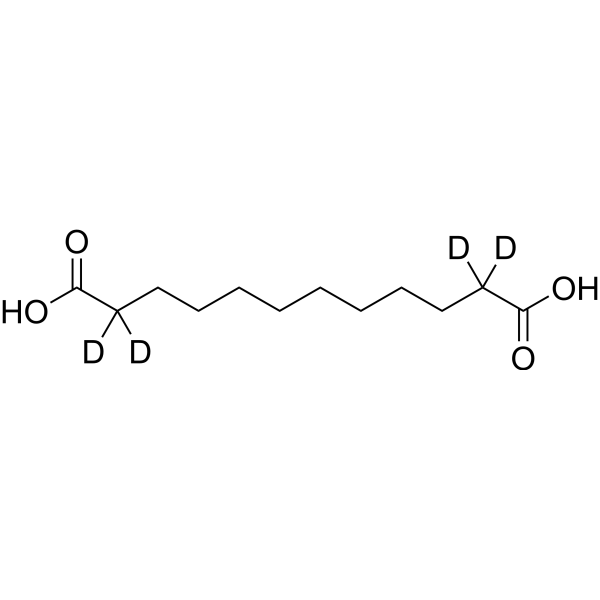
    Dodecanedioic acid-d4 is the deuterium labeled Dodecanedioic acid (HY-W012241). Dodecanedioic acid is an orally active straight-chain dicarboxylic acid. As an alternative energy substrate between lipids and carbohydrates, Dodecanedioic acid can be rapidly oxidized during exercise, reducing muscle fatigue without stimulating insulin secretion. Dodecanedioic acid also exhibits blood glucose-lowering activity in non-insulin-dependent diabetes mellitus .
    Dodecanedioic acid-d4
  • HY-W012241R

    Reference Standards Endogenous Metabolite Metabolic Disease
    Dodecanedioic acid (Standard) is the analytical standard of Dodecanedioic acid (HY-W012241). This product is intended for research and analytical applications. Dodecanedioic acid is an orally active straight-chain dicarboxylic acid. As an alternative energy substrate between lipids and carbohydrates, Dodecanedioic acid can be rapidly oxidized during exercise, reducing muscle fatigue without stimulating insulin secretion. Dodecanedioic acid also exhibits blood glucose-lowering activity in non-insulin-dependent diabetes mellitus .
    Dodecanedioic acid (Standard)
  • HY-N2361

    Others Neurological Disease
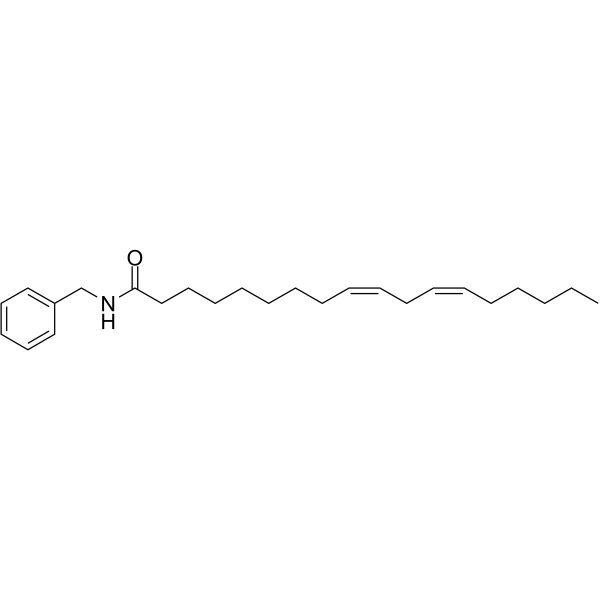
    N-Benzyllinoleamide can be isolated from Lepidium meyenii Walp., has pharmaceutical property against exercise-induced fatigue .
    N-Benzyllinoleamide
  • HY-Y1150

    Trimethylmethanecarboxylic acid; Versatic 5 acid; tert-Pentanoic acid

    Antibiotic Inflammation/Immunology
    Pivalic acid (Trimethylmethanecarboxylic acid) is a carboxylic acid. Pivalic acid induces Carnitine deficiency. Pivalic acid conjugated with Antibiotics, such as Pivmecillinam (HY-B0810) and Pivampicillin (HY-119011), are used in urinary tract infection. Pivalic acid can be used in physical exercise research .
    Pivalic acid
  • HY-B2202R

    Biochemical Assay Reagents Reference Standards Others
    Choline dihydrogen citrate (Standard) is the analytical standard of Choline dihydrogen citrate. This product is intended for research and analytical applications. Choline dihydrogen citrate is a choline-rich hydrochloride that can be absorbed by the body and converted into acetylcholine, which enhances the function of the nervous system and muscles and promotes good health. In addition, this compound is widely used in supplements such as certain energy drinks and protein powders to help improve the body's metabolism and exercise capacity.
    Choline dihydrogen citrate (Standard)
  • HY-19596

    Tryptophan Hydroxylase Inflammation/Immunology
    Fenprinast is a cromotyn-like bronchodilator used for the research of allergy and exercise-induced asthma. Fenprinast has oral bioactivity .
    Fenprinast
  • HY-159802

    Adrenergic Receptor Endocrinology
    Tolamolol is a selective beta-adrenergic antagonist with significant activity in reducing exercise-induced ST-segment depression. Tolamolol is clinically equivalent to propranolol in suppressing angina and exhibits greater cardiac selectivity. Tolamolol is effective in reducing the frequency of angina attacks and the amount of glyceryl trinitrate used. Tolamolol is effective in lowering blood pressure and has a positive effect on increasing the amount of exercise that can be performed before angina attacks. The use of Tolamolol also helps improve the suppression of arrhythmias .
    Tolamolol
  • HY-116790B

    (Rac)-Penbutolol; (±)-Isopenbutolol

    Adrenergic Receptor Cardiovascular Disease
    (±)-Penbutolol ((Rac)-Penbutolol) is the racemic mixture of Penbutolol. (±)-Penbutolol is an orally active β-adrenergic receptor antagonist. (±)-Penbutolol antagonizes exercise-induced tachycardia, reduces the increase in peak expiratory flow rate (PEFR) caused by exercise, and decreases resting plasma renin activity (PRA). (±)-Penbutolol reaches peak plasma concentration 1 hour after oral administration, with a half-life of 4.5 hours, and is converted into an active metabolite in the body. (±)-Penbutolol can be used in cardiovascular-related disease research .
    (±)-Penbutolol
  • HY-145528

    Endogenous Metabolite Metabolic Disease
    Heptanoyl-L-carnitine chloride (trans-3,4-methylene-heptanoylcarnitine) is an acylcarnitine. Heptanoyl-L-carnitine chloride causes exercise-induced alterations in the human metabolome in plasma and skeletal muscle tissue .
    Heptanoyl-L-carnitine chloride
  • HY-N11972

    Others Neurological Disease
    β-Maaliene can be isolated from the fresh leaves of Vitex densiflora (Maaliene) and is the main component in the isolate. β-Maaliene can significantly reduce the exercise capacity of mice at certain doses .
    β-Maaliene
  • HY-107010

    Adrenergic Receptor Cardiovascular Disease
    Esprolol is an orally active and potent β-adrenergic receptor antagonist. Esprolol is rapidly metabolized by blood and tissue esterases to form the active metabolite amoxolol. Esprolol holds potential for research in exercise-induced angina .
    Esprolol
  • HY-150012R

    Lac-Phe (Standard)

    Endogenous Metabolite Reference Standards Metabolic Disease Endocrinology
    N-Lactoyl-phenylalanine (Standard) is the analytical standard of N-Lactoyl-phenylalanine. This product is intended for research and analytical applications. N-Lactoyl-phenylalanine is a blood-derived signaling metabolite that can be induced by exercise. N-Lactoyl-phenylalanine can reduce obesity and improve glucose tolerance .
    N-Lactoyl-phenylalanine (Standard)
  • HY-106667

    Adrenergic Receptor Cardiovascular Disease Endocrinology
    DL 071IT is a potent non-selective beta-adrenergic receptor blocker. DL 071IT exhibits intrinsic sympathomimetic activity and weak membrane stabilizing activity. DL 071IT reduces exercise heart rate and systolic blood pressure, and even significantly lowers resting heart rate .
    DL 071IT
  • HY-117119

    5-HT Receptor Metabolic Disease
    VER-3323 is an oral active 5-HT2C agonist and belongs to the class of indoline analogs. VER-3323 reduces food intake in rats by inducing swallowing dysfunction, with no significant impact on energy expenditure generated through thermogenesis or exercise. VER-3323 can be utilized in obesity research .
    VER-3323
  • HY-159686

    Adrenergic Receptor Inflammation/Immunology Endocrinology
    Aclidinium is a long-acting muscarinic antagonist and long-acting β2-adrenoceptor2-AR) agonist with bronchodilator activity. Aclidinium can reduce hyperinflation of the lungs and increase lung function and exercise endurance time. Aclidinium is used in research on chronic obstructive pulmonary disease (COPD) .
    Aclidinium
  • HY-W012241S

    Isotope-Labeled Compounds Endogenous Metabolite Metabolic Disease
    Dodecanedioic acid-d20 is the deuterium labeled Dodecanedioic acid (HY-W012241). Dodecanedioic acid is an orally active straight-chain dicarboxylic acid. As an alternative energy substrate between lipids and carbohydrates, Dodecanedioic acid can be rapidly oxidized during exercise, reducing muscle fatigue without stimulating insulin secretion. Dodecanedioic acid also exhibits blood glucose-lowering activity in non-insulin-dependent diabetes mellitus .
    Dodecanedioic acid-d20
  • HY-W777762

    Isotope-Labeled Compounds Endogenous Metabolite Metabolic Disease
    Dodecanedioic Acid- 13C12 is the 13C-labeled Dodecanedioic acid (HY-W012241). Dodecanedioic acid is an orally active straight-chain dicarboxylic acid. As an alternative energy substrate between lipids and carbohydrates, Dodecanedioic acid can be rapidly oxidized during exercise, reducing muscle fatigue without stimulating insulin secretion. Dodecanedioic acid also exhibits blood glucose-lowering activity in non-insulin-dependent diabetes mellitus .
    Dodecanedioic Acid-13C12
  • HY-17428A

    Histamine Receptor Neurological Disease Inflammation/Immunology
    Tripelennamine is a histamine H1-receptor antagonist. Tripelennamine effectively reverses histamine-induced bronchoconstriction, increased transpulmonary pressure, elevated pulmonary vascular resistance and reduced dynamic compliance. Tripelennamine does not significantly affect arterial hypoxemia, hemoglobin desaturation and hypercapnia in horses undergoing short-term high-intensity exercise. Tripelennamine exhibits local and central analgesic activity. Tripelennamine can be used in studies related to emphysema, urticaria and acute laminitis .
    Tripelennamine
  • HY-W704968

    Na+/H+ Exchanger (NHE) Cardiovascular Disease
    2-Oxo-zoniporide hydrochloride is an oral active sodium-hydrogen exchanger type 1 (NHE-1) inhibitor and can be used for study of myocardial ischemic injury .
    2-Oxo-zoniporide hydrochloride
  • HY-17428B

    Histamine Receptor Neurological Disease Inflammation/Immunology
    Tripelennamine citrate is a histamine H1-receptor antagonist. Tripelennamine citrate effectively reverses histamine-induced bronchoconstriction, increased transpulmonary pressure, elevated pulmonary vascular resistance and reduced dynamic compliance. Tripelennamine citrate does not significantly affect arterial hypoxemia, hemoglobin desaturation and hypercapnia in horses undergoing short-term high-intensity exercise. Tripelennamine citrate exhibits local and central analgesic activity. Tripelennamine citrate can be used in studies related to emphysema, urticaria and acute laminitis .
    Tripelennamine citrate
  • HY-15344A

    Drug Isomer Neurological Disease
    (S,S)-Ketone monoester is a (S,S)-enantiomer of Ketone monoester (HY-15344). Ketone monoester elevates the AcAc and acetone levels, thereby produces sustained ketosis and significantly delays central nervous system oxygen toxicity (CNS-OT) seizures .
    (S,S)-Ketone monoester
  • HY-17428R

    Reference Standards Histamine Receptor Neurological Disease Inflammation/Immunology
    Tripelennamine hydrochloride (Standard) is the analytical standard of Tripelennamine hydrochloride (HY-17428). This product is intended for research and analytical applications. Tripelennamine hydrochloride is a histamine H1-receptor antagonist. Tripelennamine hydrochloride effectively reverses histamine-induced bronchoconstriction, increased transpulmonary pressure, elevated pulmonary vascular resistance and reduced dynamic compliance. Tripelennamine hydrochloride does not significantly affect arterial hypoxemia, hemoglobin desaturation and hypercapnia in horses undergoing short-term high-intensity exercise. Tripelennamine hydrochloride exhibits local and central analgesic activity. Tripelennamine hydrochloride can be used in studies related to emphysema, urticaria and acute laminitis .
    Tripelennamine hydrochloride (Standard)
  • HY-103164A

    CSC

    Endogenous Metabolite Neurological Disease
    8-(3-Chlorostyryl)caffeine (CSC) is an adenosine antagonist with selective activity at the A2a adenosine receptor. 8-(3-Chlorostyryl)caffeine showed 520-fold selectivity in radioligand binding experiments in rat brain. Antagonism of adenylylase by 8-(3-Chlorostyryl)caffeine shows 22-fold selectivity in rat chromaffin cells When 8-(3-Chlorostyryl)caffeine is co-administered with the A1-selective antagonist CPX, It can also further increase exercise activity. 8-(3-Chlorostyryl)caffeine exhibits good MAO-B inhibitory activity in primate mitochondria. 8-(3-Chlorostyryl)caffeine also has excellent A2A receptor affinity .
    8-(3-Chlorostyryl)caffeine
  • HY-150012S2

    Lac-Phe-d5

    Isotope-Labeled Compounds Endogenous Metabolite Metabolic Disease
    N-Lactoyl-phenylalanine-d5 (Lac-Phe-d5) is the deuterium labeled N-Lactoyl-phenylalanine (HY-150012). N-Lactoyl-phenylalanine is a blood-derived signaling metabolite that can be induced by exercise. N-Lactoyl-phenylalanine can reduce obesity and improve glucose tolerance.
    N-Lactoyl-phenylalanine-d5
  • HY-111259

    Endogenous Metabolite Cardiovascular Disease
    Ro 31-1118 Free base is a compound exhibiting weak antihypertensive activity in patients with mild hypertension. Ro 31-1118 Free base demonstrated a reduction in heart rates and blood pressure post-exercise at varying doses. Ro 31-1118 Free base exhibited linear pharmacokinetics within the 10-80 mg dose range. Ro 31-1118 Free base showed no significant impact on diastolic blood pressure or adverse effects during the study.
    Ro 31-1118 free base
  • HY-183148

    NAMPT ATP Synthase Neurological Disease
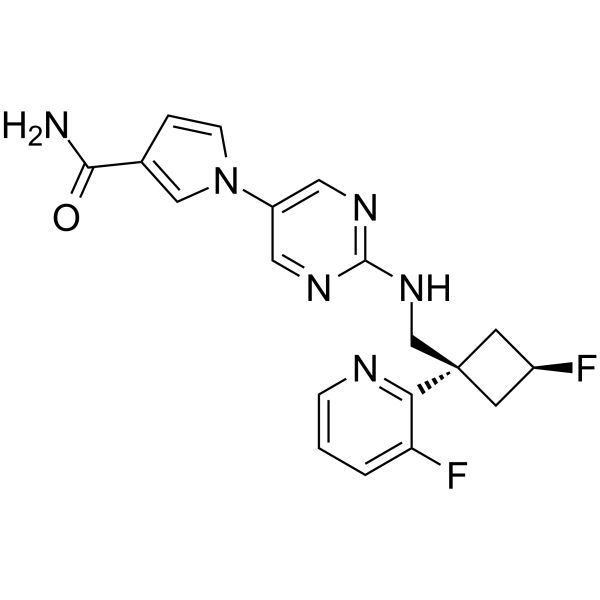
    NAMPT activator-10 (Compound B11) is an orally active NAMPT activator with a target Kd value of 0.64 μM. NAMPT activator-10 activates the rate-limiting enzyme in NAD + biosynthesis and promotes intracellular NAD + synthesis. NAMPT activator-10 reduces lactate accumulation, enhances glycogen storage in the liver and muscle, increases tissue ATP production, improves exercise endurance and muscle strength, and exerts a protective effect against fatigue-induced muscle damage in mouse fatigue models. NAMPT activator-10 can be used in studies related to muscle fatigue .
    NAMPT activator-10

Inquiry Online

Your information is safe with us. * Required Fields.

Salutation


Country or Region *

Applicant Name *


Organization Name *

Department *


Email Address *


Product Name *

Cat. No.


Requested quantity *

Phone Number *


Remarks

Inquiry Online

Inquiry Information

Product Name:
Cat. No.:
Quantity:
MCE Japan Authorized Agent:

