Search Result
Results for "
fatty acyls
" in MedChemExpress (MCE) Product Catalog:
12
Biochemical Assay Reagents
11
Isotope-Labeled Compounds
| Cat. No. |
Product Name |
Target |
Research Areas |
Chemical Structure |
-
- HY-128851
-
|
|
Endogenous Metabolite
Fatty Acid Synthase (FASN)
|
Metabolic Disease
Cancer
|
|
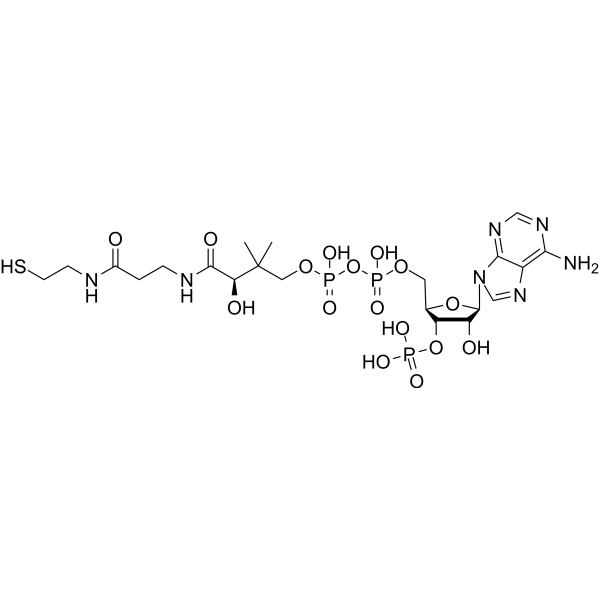
Coenzyme A (CoASH) is a ubiquitous and essential cofactor, which is an acyl group carrier and carbonyl-activating group for the citric acid cycle and fatty acid metabolism. Coenzyme A plays a central role in the oxidation of pyruvate in the citric acid cycle and the metabolism of carboxylic acids, including short- and long-chain fatty acids .
|
-
-
- HY-128851B
-
|
|
Endogenous Metabolite
Fatty Acid Synthase (FASN)
|
Metabolic Disease
Cancer
|
|
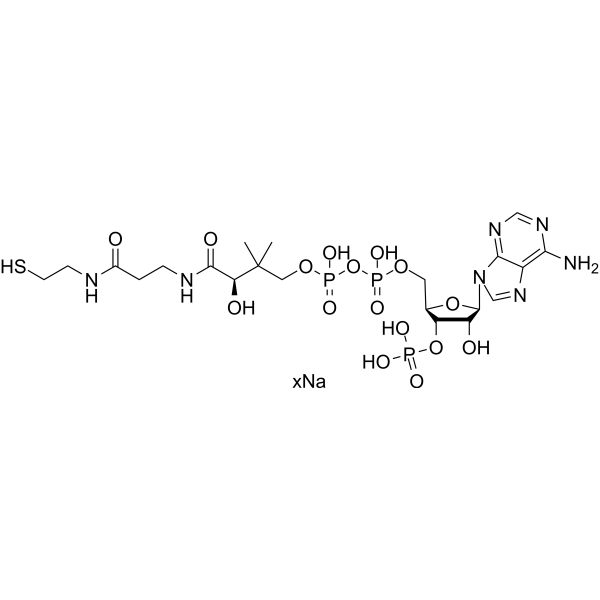
Coenzyme A (CoASH) sodium is a ubiquitous and essential cofactor, which is an acyl group carrier and carbonyl-activating group for the citric acid cycle and fatty acid metabolism. Coenzyme A plays a central role in the oxidation of pyruvate in the citric acid cycle and the metabolism of carboxylic acids, including short- and long-chain fatty acids .
|
-
-
- HY-E70009
-
|
ACO
|
Glutathione Peroxidase
|
Others
|
|
Acyl-CoA oxidase (ACO) is a peroxisomal catalyst. Acyl-CoA oxidase acts as a key rate-limiting enzyme in the process of peroxisomal fatty acid β-oxidation. Acyl-CoA oxidase participates in lipid catabolism and phytohormone biosynthesis pathways .
|
-
-
- HY-P2832
-
|
ACS
|
Endogenous Metabolite
|
Metabolic Disease
Cancer
|
|
Acyl coenzyme A synthetase (ACS), namely acetyl coenzyme A synthetase, is often used in biochemical research. Acyl coenzyme A synthetase can catalyze the activation of fatty acids by coenzyme A through a two-step thioesterification reaction to produce acyl coenzyme A, and then participate in a variety of anabolic and catabolic lipid metabolism pathways, and participate in the TCA cycle in aerobic respiration .
|
-
-
- HY-128851A
-
|
|
Endogenous Metabolite
Fatty Acid Synthase (FASN)
|
Metabolic Disease
Cancer
|
|
Coenzyme A (CoASH) is a ubiquitous and essential cofactor, which is an acyl group carrier and carbonyl-activating group for the citric acid cycle and fatty acid metabolism. Coenzyme A plays a central role in the oxidation of pyruvate in the citric acid cycle and the metabolism of carboxylic acids, including short- and long-chain fatty acids .
|
-
-
- HY-D1570
-
|
|
Fluorescent Dye
|
Others
|
|
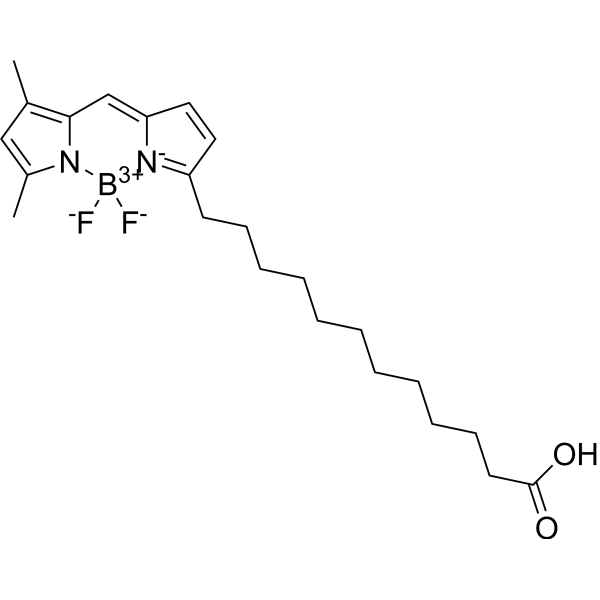
BODIPYFL C12 is a BODIPY dye. BODIPY dye is a small molecule dye with strong ultraviolet absorption ability, its fluorescence peak is relatively sharp, and the quantum yield is high. They are relatively insensitive to the polarity and pH of the environment and are relatively stable under different physiological conditions. Due to its structural asymmetry, BODIPY derives a variety of structural products. BODIPY lipid droplet dyes can well pass through the cell membrane into the cell, and localize the neutral lipids in the cell to specifically stain the lipid droplets, which can be used for labeling of live cells and fixed cells . Maximum excitation/emission wavelength: 480/508 nm .
|
-
-
- HY-113367
-
-
-
- HY-107396
-
|
|
Acyltransferase
|
Cardiovascular Disease
|
|
YM-750 is a potent acyl-CoA:cholesterol acyltransferase (ACAT) inhibitor (IC50=0.18 μM). ACAT catalyzes the formation of cholesteryl esters from cholesterol and long-chain fatty-acyl-coenzyme A .
|
-
-
- HY-128851R
-
|
|
Reference Standards
Fatty Acid Synthase (FASN)
Endogenous Metabolite
|
Metabolic Disease
Cancer
|
|
Coenzyme A (Standard) is the analytical standard of Coenzyme A. This product is intended for research and analytical applications. Coenzyme A (CoASH) is a ubiquitous and essential cofactor, which is an acyl group carrier and carbonyl-activating group for the citric acid cycle and fatty acid metabolism. Coenzyme A plays a central role in the oxidation of pyruvate in the citric acid cycle and the metabolism of carboxylic acids, including short- and long-chain fatty acids[1].
|
-
-
- HY-113873
-
-
-
- HY-134438
-
|
|
Endogenous Metabolite
|
Metabolic Disease
|
|
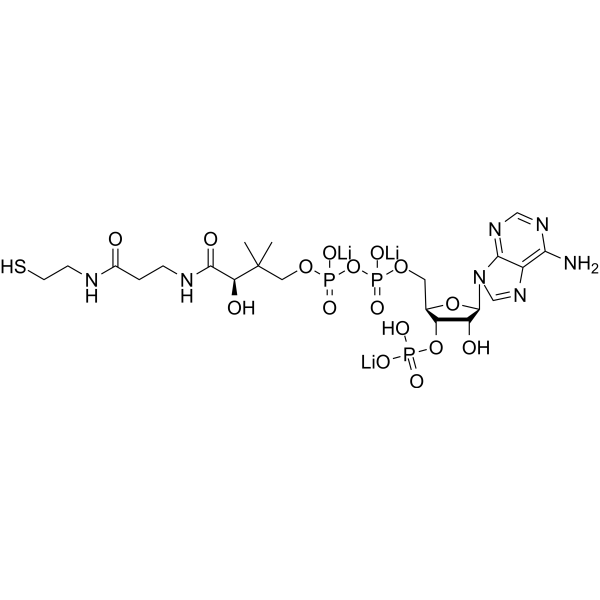
Hexanoyl coenzyme A trilithium is a hexanoyl-based medium-chain fatty acyl coenzyme A that is present in all organisms. Hexanoyl coenzyme A trilithium can be used as a precursor for cannabinoid biosynthesis and acts as a competitive inhibitor of medium-chain acyl coenzyme A dehydrogenase (MCAD) .
|
-
-
- HY-134428
-
|
|
Endogenous Metabolite
|
Metabolic Disease
|
|
Arachidonoyl coenzyme A lithium is an unsaturated fatty acyl coenzyme A, formed by the condensation of the thiol group of coenzyme A with the carboxyl group of arachidonic acid .
|
-
-
- HY-CE00556
-
-
-
- HY-E70271
-
|
6Z,9Z,12Z-Octadecatrienoyl-coenzyme A; γ-Linolenoylcoenzyme A; 6Z,9Z,12Z-Octadecatrienoyl-CoA
|
Endogenous Metabolite
|
Metabolic Disease
|
|
γ-Linolenoyl-CoA (C18:3(n6)-CoA) is a fatty acyl-CoA that can be used for lipidomics analysis of fatty acid-coenzyme A (FA-CoA) through LCMS/MS .
|
-
-
- HY-130405
-
|
|
Drug Derivative
|
Metabolic Disease
|
|
PtdIns-(1,2-dipalmitoyl) ammonium (DPPI) is a derivative of phosphatidylinositol (PtdIns) that contains C16:0 fatty acyl chains .
|
-
-
- HY-CE01051
-
-
-
- HY-CE00435
-
-
-
- HY-111199
-
|
|
FAAH
|
Neurological Disease
|
|
JP83 is an irreversible fatty acyl amide hydrolase (FAAH) inhibitor with an IC50 of 1.6 nM in competitive activity-based protein profiling (ABPP) experiments .
|
-
-
- HY-148869A
-
|
06:0 Coenzyme A triammonium
|
Biochemical Assay Reagents
|
Metabolic Disease
|
|
Hexanoyl-Coenzyme A triammonium (06:0 Coenzyme A) is a medium-chain fatty acyl CoA that is an acyl donor substrate for ghrelin O-acyltransferase (GOAT) .
|
-
-
- HY-CE00652
-
-
-
- HY-CE00601
-
-
-
- HY-CE00618
-
-
-
- HY-CE00915
-
-
-
- HY-CE00604
-
-
-
- HY-CE00613
-
-
-
- HY-162298
-
-
-
- HY-CE00729
-
-
-
- HY-CE01040
-
-
-
- HY-CE01041
-
-
-
- HY-CE00916
-
-
-
- HY-CE01037
-
-
-
- HY-CE01045
-
-
-
- HY-CE00561
-
-
-
- HY-CE00452
-
-
-
- HY-CE00120
-
-
-
- HY-CE01316
-
-
-
- HY-CE00361
-
-
-
- HY-CE00710
-
-
-
- HY-CE01047
-
-
-
- HY-CE00115
-
-
-
- HY-CE00390
-
-
-
- HY-E70246
-
|
Pelargonoyl-CoA; S-Nonanoate coenzyme A; Nonanoyl-coenzyme A
|
Biochemical Assay Reagents
|
Metabolic Disease
|
|
Nonanoyl-CoA (Pelargonoyl-CoA) is a medium-chain fatty acyl-CoA that can be used as substrate for the medium-chain hydrolase .
|
-
-
- HY-CE00657
-
-
-
- HY-CE00702
-
-
-
- HY-CE00273
-
-
-
- HY-CE00644
-
-
-
- HY-113367S
-
-
-
- HY-E70247
-
-
-
- HY-CE00457
-
-
-
- HY-CE00410
-
-
- HY-113367S1
-
-
- HY-W769723
-
-
- HY-E70268
-
-
- HY-CE00464
-
-
- HY-113367R
-
|
|
Endogenous Metabolite
Reference Standards
|
Metabolic Disease
|
|
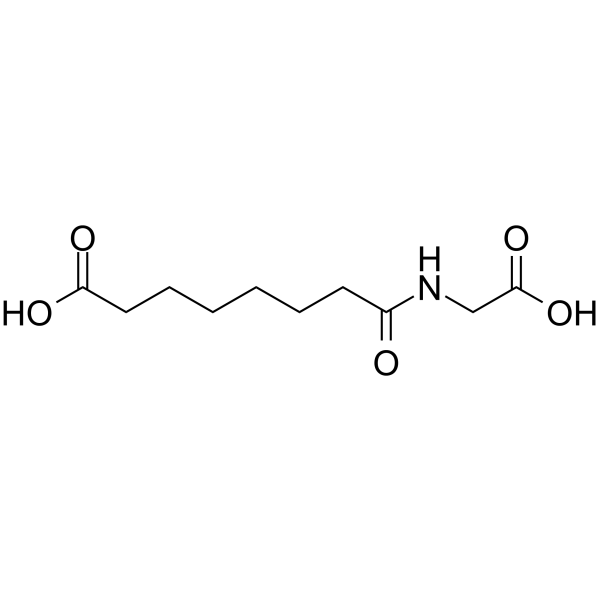
Suberylglycine (Standard) is the analytical standard of Suberylglycine. This product is intended for research and analytical applications. Suberylglycine is an acyl glycine, which is a normally minor metabolite of fatty acid.
|
-
- HY-CE00466
-
-
- HY-CE00760
-
-
- HY-CE00469
-
-
- HY-CE00470
-
-
- HY-CE00930
-
|
2E-Hexadecenoyl-coenzyme A; trans-2-Hexadecenoyl-CoA; trans-2-Hexadecenoyl-S-coenzyme A
|
Biochemical Assay Reagents
|
Metabolic Disease
|
|
2E-Hexadecenoyl-CoA (2E-Hexadecenoyl-coenzyme A) is a 2-enoyl-CoA and a long-chain fatty acyl-CoA.
|
-
- HY-CE00395
-
-
- HY-CE00353
-
-
- HY-CE00562
-
-
- HY-E70278
-
|
|
Biochemical Assay Reagents
|
Metabolic Disease
|
|
(9Z-Octadecenyl)-CoA triammonium is a coenzyme. (9Z-Octadecenyl)-CoA triammonium is a long-chain acyl-CoA esters. Long-chain acyl-CoA esters are involved in regulation of fatty acid synthesis, enzyme systems, vesicle trafficking, ion channels and ion pumps .
|
-
- HY-CE00070
-
-
- HY-CE00044
-
|
3-Oxo-(13Z)-eicosenoyl-CoA; (13Z)-3-Ketoicosenoyl-CoA
|
Biochemical Assay Reagents
|
Others
|
|
(13Z)-3-Oxoicosenoyl-CoA (3-Oxo-(13Z)-eicosenoyl-CoA) is an unsaturated fatty acyl-CoA.
|
-
- HY-CE00409
-
-
- HY-CE00197A
-
-
- HY-CE00679
-
-
- HY-176894
-
|
|
Carnitine Palmitoyltransferase (CPT)
Others
|
Metabolic Disease
|
|
Hemiacetylcarnitinium chloride is a inhibitor of fatty acid metabolism, specifically targeting carnitine palmitoyltransferase I (CPT I). Hemiacetylcarnitinium chloride disrupts the conversion of fatty acyl-CoA to fatty acyl carnitine, thereby blocking the subsequent oxidation of long-chain fatty acids and reducing the production of ATP required for energy-dependent cellular processes. Hemiacetylcarnitinium chloride can be used for the study of fatty acid metabolism .
|
-
- HY-P2832B
-
|
|
Endogenous Metabolite
|
Metabolic Disease
|
|
Acyl-coenzyme A Synthetase, Pseudomonas sp. (EC 6.2.1.3) belongs to the ligase family and can activate the breakdown of complex fatty acids. Acyl-coenzyme A Synthetase, Pseudomonas sp. (EC 6.2.1.3) catalyzes the production of fatty acyl-CoA in a two-step process via an adenylate intermediate. Acyl-coenzyme A Synthetase, Pseudomonas sp. (EC 6.2.1.3) catalyzes the pre-reaction of fatty acid β-oxidation and can also be incorporated into phospholipids. Acyl-coenzyme A Synthetase, Pseudomonas sp. (EC 6.2.1.3) protein is involved in regulating and promoting the transport of long-chain fatty acids in mammalian cells.
|
-
- HY-N15804
-
-
- HY-N16217
-
-
- HY-W346976
-
-
- HY-CE00602
-
-
- HY-CE00672
-
-
- HY-CE00003
-
-
- HY-CE00049
-
-
- HY-CE00671
-
-
- HY-E70009A
-
|
|
Biochemical Assay Reagents
|
Metabolic Disease
|
|
Acyl-CoA oxidase, Arthrobacter sp. (EC 1.3.3.6) is a redox enzyme that acts on the CH-CH group in donor molecules and uses oxygen as an acceptor. Acyl-CoA oxidase, Arthrobacter sp. (EC 1.3.3.6) is involved in three metabolic pathways: fatty acid metabolism, polyunsaturated fatty acid biosynthesis, and the PPAR signaling pathway.
|
-
- HY-E70274
-
-
- HY-E70956
-
-
- HY-CE00303
-
-
- HY-CE00180
-
|
(3E)-Octenoyl-coenzyme A; trans-3-Octenoyl-CoA; 3-trans-Octenoylcoenzyme A
|
Biochemical Assay Reagents
|
Others
|
|
(3E)-Octenoyl-CoA ((3E)-Octenoyl-coenzyme A) is an unsaturated fatty acyl-CoA.
|
-
- HY-CE00054
-
-
- HY-CE00451
-
-
- HY-CE00178
-
-
- HY-CE01044
-
-
- HY-CE01039
-
-
- HY-CE00125
-
-
- HY-CE00358
-
-
- HY-CE00072
-
-
- HY-CE00472
-
-
- HY-CE00468
-
-
- HY-CE00427
-
-
- HY-CE00474
-
-
- HY-CE00349
-
-
- HY-CE00307
-
-
- HY-CE00066A
-
-
- HY-CE00891
-
-
- HY-CE00103
-
|
(11Z,14Z)-Icosadienoyl-coenzyme A; (11Z,14Z)-Eicosadienoyl-coenzyme A
|
Biochemical Assay Reagents
|
Others
|
|
(11Z,14Z)-Icosadienoyl-CoA ((11Z,14Z)-Icosadienoyl-coenzyme A) is an unsaturated fatty acyl-CoA.
|
-
- HY-CE00255
-
-
- HY-CE00143C
-
|
(2E,5Z)-Tetradecadienoyl-coenzyme A
|
Biochemical Assay Reagents
|
Others
|
|
(2E,5Z)-Tetradecadienoyl-CoA ((2E,5Z)-Tetradecadienoyl-coenzyme A) is an unsaturated fatty acyl-CoA.
|
-
- HY-CE00242A
-
|
(2E,7Z)-Hexadecadienoyl-coenzyme A
|
Biochemical Assay Reagents
|
Others
|
|
(2E,7Z)-Hexadecadienoyl-CoA ((2E,7Z)-Hexadecadienoyl-coenzyme A) is an unsaturated fatty acyl-CoA.
|
-
- HY-CE00002
-
|
(15Z)-3-Oxotetracosenoyl-coenzyme A
|
Biochemical Assay Reagents
|
Others
|
|
(15Z)-3-Oxotetracosenoyl-CoA ((15Z)-3-Oxotetracosenoyl-coenzyme A) is a 3-oxo-fatty acyl-CoA.
|
-
- HY-CE00430
-
|
(8Z,11Z)-Icosadienoyl-coenzyme A; 8Z,11Z-Eicosadienoyl-CoA; 8Z,11Z-Eicosadienoyl-coenzyme A
|
Biochemical Assay Reagents
|
Metabolic Disease
|
|
(8Z,11Z)-Icosadienoyl-CoA ((8Z,11Z)-Icosadienoyl-coenzyme A) is an unsaturated fatty acyl-CoA.
|
-
- HY-CE00037
-
|
(13Z)-3-Ketodocosenoyl-CoA; (13Z)-3-Oxodocosenoyl-coenzyme A
|
Biochemical Assay Reagents
|
Others
|
|
(13Z)-3-Oxodocosenoyl-CoA ((13Z)-3-Ketodocosenoyl-CoA) is a 3-oxo-fatty acyl-CoA.
|
-
- HY-CE00203A
-
|
(2E,11Z)-Icosadienoyl-coenzyme A
|
Biochemical Assay Reagents
|
Others
|
|
(2E,11Z)-Icosadienoyl-CoA ((2E,11Z)-Icosadienoyl-coenzyme A) is an unsaturated fatty acyl-CoA.
|
-
- HY-153203
-
|
20:5 Coenzyme A triammonium
|
Others
|
Others
|
|
Eicosapentaenoyl-CoA triammonium (C20:5-CoA) is an unsaturated fatty acyl-CoA that can assist in the measurement of enzymatic activity of the TrWSD4 enzyme .
|
-
- HY-CE00265
-
-
- HY-CE00009B
-
|
(10E,12Z)-Hexadecadienoyl-coenzyme A
|
Biochemical Assay Reagents
|
Others
|
|
(10E,12Z)-Hexadecadienoyl-CoA ((10E,12Z)-Hexadecadienoyl-coenzyme A) is an unsaturated fatty acyl-CoA.
|
-
- HY-CE00271
-
-
- HY-CE00365
-
-
- HY-CE00277
-
-
- HY-CE00143A
-
|
(2E,5E)-Tetradecadienoyl-coenzyme A
|
Biochemical Assay Reagents
|
Others
|
|
(2E,5E)-Tetradecadienoyl-CoA ((2E,5E)-Tetradecadienoyl-coenzyme A) is an unsaturated fatty acyl-CoA.
|
-
- HY-CE00220A
-
-
- HY-CE00284
-
-
- HY-128603
-
-
- HY-CE00244
-
|
(2E,9Z)-Octadecadienoyl-coenzyme A
|
Biochemical Assay Reagents
|
Others
|
|
(2E,9Z)-Octadecadienoyl-CoA ((2E,9Z)-Octadecadienoyl-coenzyme A) is a polyunsaturated fatty acyl-CoA.
|
-
- HY-CE00240
-
|
(2E,9Z)-Hexadecadienoyl-coenzyme A
|
Biochemical Assay Reagents
|
Others
|
|
(2E,9Z)-Hexadecadienoyl-CoA ((2E,9Z)-Hexadecadienoyl-coenzyme A) is a polyunsaturated fatty acyl-CoA.
|
-
- HY-177705
-
|
|
ACSL Family
Drug Derivative
|
Metabolic Disease
Cancer
|
|
ACSL5-IN-2 (Compound B) is an Acyl CoA synthetase 5 (ACSL5) inhibitor. ACSL5-IN-2 can block the conversion of long-chain fatty acids (such as palmitic acid and oleic acid) into acyl-CoA, and intervene in the fatty acid metabolism pathway. ACSL5-IN-2 can inhibit cancer cells growth. ACSL5-IN-2 can be used for the research of cancer and metabolic disease, such as colon cancer and dysfunction-associated Steatohepatitis .
|
-
- HY-CE00191A
-
-
- HY-CE00416
-
-
- HY-146003
-
|
|
Bacterial
|
Infection
|
|
FAAL-IN-1 (compound 32) is a selective inhibitor of fatty acyl-AMP ligase (FAAL), with a Ki of 0.7 μM for FAAL28. FAAL-IN-1 shows antimycobacterial activity .
|
-
- HY-W769171
-
-
- HY-E70023
-
|
|
Endogenous Metabolite
|
Metabolic Disease
|
|
Sphingolipid ceramide N-deacylase (SCDase) cleaves the N-acyl linkage between fatty acids and sphingosine bases in various glycosphingolipids. Sphingolipid ceramide N-deacylase catalyzes glycosphingolipids to lysoglycosphingolipids .
|
-
- HY-N17702
-
|
|
Endogenous Metabolite
|
Others
|
|
CerPCho (d18:0/22:0) is a sphingomyelin with a d18:0-type sphingosine long-chain base and a 22:0-type N-acyl fatty acid .
|
-
- HY-CE00064A
-
|
(11Z)-18-Hydroxyoctadec-11-enoyl-CoA; (11Z)-18-Hydroxyoctadecenoyl-coenzyme A; (11Z)-18-Hydroxyoctadec-11-enoyl-coenzyme A
|
Biochemical Assay Reagents
|
Others
|
|
(11Z)-18-Hydroxyoctadecenoyl-CoA ((11Z)-18-Hydroxyoctadec-11-enoyl-CoA) is an omega-hydroxy fatty acyl-CoA.
|
-
- HY-107396R
-
|
|
Reference Standards
Acyltransferase
|
Cardiovascular Disease
|
|
YM-750 (Standard) is the analytical standard of YM-750 (HY-107396). This product is intended for research and analytical applications. YM-750 is a potent acyl-CoA:cholesterol acyltransferase (ACAT) inhibitor (IC50=0.18 μM). ACAT catalyzes the formation of cholesteryl esters from cholesterol and long-chain fatty-acyl-coenzyme A .
|
-
- HY-165081
-
|
N-(2-Hydroxyethyl)-13Z-docosenamide
|
Biochemical Assay Reagents
|
Others
|
|
Docosaenoyl ethanolamide (N-(2-Hydroxyethyl)-13Z-docosenamide) is one of a fatty N-acyl ethanolamines. Ethanolamines can be detected at relatively high levels in rat cerebrospinal fluid .
|
-
- HY-CE00116
-
|
C20:3(Omega-3)-CoA; Cis-(omega-3)-icosatrienoyl-CoA
|
Biochemical Assay Reagents
|
Others
|
|
(11Z,14Z,17Z)-Icosatrienoyl-CoA (C20:3(Omega-3)-CoA) is an unsaturated fatty acyl-CoA.
|
-
- HY-171908
-
|
GD3 Sphingosine (d18:1)
|
Biochemical Assay Reagents
|
Cancer
|
|
GD3βSph (GD3 Sphingosine (d18:1)) is a form of ganglioside GD3 without the fatty acyl group. GD3βSph can be studied in ganglioside cancer research .
|
-
- HY-CE00870
-
-
- HY-W339206
-
|
|
Endogenous Metabolite
|
Others
|
|
1,2-Dinonanoyl-sn-glycero-3-phosphocholine, a specific phosphatidylcholine, features fatty acyl configurations that can influence the physical properties of membranes, making it a key component for generating eicosanoids. As a phospholipid abundant in membranes, it has fatty acids attached to glycerol at the sn-1 and sn-2 positions via ester bonds.
|
-
- HY-CE00282
-
-
- HY-CE00136
-
|
(3R)-3-Isopropenyl-6-oxoheptanoyl-coenzyme A
|
Biochemical Assay Reagents
|
Others
|
|
(3R)-3-Isopropenyl-6-oxoheptanoyl-CoA ((3R)-3-Isopropenyl-6-oxoheptanoyl-coenzyme A) is an unsaturated fatty acyl-CoA.
|
-
- HY-CE00181
-
|
(3R,11Z)-3-hydroxyoctadecenoyl-coenzyme A
|
Biochemical Assay Reagents
|
Others
|
|
(3R,11Z)-3-hydroxyoctadecenoyl-CoA ((3R,11Z)-3-hydroxyoctadecenoyl-coenzyme A) is an unsaturated fatty acyl-CoA.
|
-
- HY-CE00215
-
|
(3R,13Z)-3-Hydroxyicosenoyl-coenzyme A
|
Biochemical Assay Reagents
|
Others
|
|
(3R,13Z)-3-Hydroxyicosenoyl-CoA ((3R,13Z)-3-Hydroxyicosenoyl-coenzyme A) is an unsaturated fatty acyl-CoA.
|
-
- HY-CE00433
-
-
- HY-CE00059
-
-
- HY-CE00663
-
-
- HY-134136
-
|
|
Endogenous Metabolite
|
Others
|
|
Octanoyl coenzyme A is an enoyl-CoA hydratase binder. Octanoyl coenzyme A binds to the active site of enoyl-CoA hydratase, occupies the binding pocket for the fatty acid tail of the enzyme's substrate, and induces a conformational shift in a flexible protein loop via its longer octanoyl chain, forming an open channel leading to the inter-trimer gap .
|
-
- HY-134136B
-
|
S-Octanoate-CoA triammonium; S-Octanoate-coenzyme A triammonium
|
Biochemical Assay Reagents
|
Others
|
|
Octanoyl coenzyme A triammonium is an enoyl-CoA hydratase binder. Octanoyl coenzyme A triammonium binds to the active site of enoyl-CoA hydratase, occupies the binding pocket for the fatty acid tail of the enzyme's substrate, and induces a conformational shift in a flexible protein loop via its longer octanoyl chain, forming an open channel leading to the inter-trimer gap .
|
-
- HY-CE00881
-
-
- HY-CE00676
-
-
- HY-CE00121A
-
-
- HY-171908A
-
|
GD3 Sphingosine (d18:1) ammonium
|
Biochemical Assay Reagents
|
Neurological Disease
Cancer
|
|
GD3βSph (ammonium) (GD3 Sphingosine (d18:1) (ammonium)) is a form of ganglioside GD3 without the fatty acyl group. GD3βSph (ammonium) can be studied in ganglioside cancer research .
|
-
- HY-CE00380
-
|
(S)-3-Hydroxyoctanoyl-Coenzyme A
|
Biochemical Assay Reagents
|
Metabolic Disease
|
|
(S)-3-Hydroxyoctanoyl-CoA ((S)-3-Hydroxyoctanoyl-Coenzyme A) is a hydroxy fatty acyl-CoA that results from the formal condensation of the thiol group of coenzyme A with the carboxy group of (S)-3-hydroxyoctanoic acid.
|
-
- HY-CE00312
-
-
- HY-CE00257
-
-
- HY-CE00198A
-
|
(2E,11Z,14Z)-Icosatrienoyl-coenzyme A
|
Biochemical Assay Reagents
|
Others
|
|
(2E,11Z,14Z)-Icosatrienoyl-CoA ((2E,11Z,14Z)-Icosatrienoyl-coenzyme A) is an unsaturated fatty acyl-CoA.
|
-
- HY-CE00461
-
-
- HY-CE01484
-
-
- HY-CE00025A
-
|
(10Z,13Z,16Z)-Docosatrienoyl-coenzyme A; C22:3(Omega-6)-coenzyme A
|
Biochemical Assay Reagents
|
Others
|
|
(10Z,13Z,16Z)-Docosatrienoyl-CoA ((10Z,13Z,16Z)-Docosatrienoyl-coenzyme A) is an unsaturated fatty acyl-CoA.
|
-
- HY-163033
-
|
|
Bacterial
|
Infection
|
|
Antitubercular agent-42(19) is a selective fatty acyl-AMP ligase (FAAL) inhibitor (MIC90 = 1.4 µg/mL for M. tuberculosis H37Rv). Antitubercular agent-42 shows antitubercular activity .
|
-
- HY-CE00179
-
|
(3R,11Z)-3-Hydroxyicosenoyl-coenzyme A
|
Biochemical Assay Reagents
|
Others
|
|
(3R,11Z)-3-Hydroxyicosenoyl-CoA ((3R,11Z)-3-Hydroxyicosenoyl-coenzyme A) is a 3-hydroxy fatty acyl-CoA.
|
-
- HY-CE00068A
-
|
(11Z)-3-Ketoicosa-11-enoyl-CoA; 3-Oxo-(11Z)-eicos-11-enoyl-CoA
|
Biochemical Assay Reagents
|
Others
|
|
(11Z)-3-Oxoicosa-11-enoyl-CoA ((11Z)-3-Ketoicosa-11-enoyl-CoA) is a 3-oxo-fatty acyl-CoA.
|
-
- HY-CE00460
-
-
- HY-CE00214
-
|
(3R,13Z)-3-Hydroxydocosenoyl-coenzyme A
|
Biochemical Assay Reagents
|
Others
|
|
(3R,13Z)-3-Hydroxydocosenoyl-CoA ((3R,13Z)-3-Hydroxydocosenoyl-coenzyme A) is a 3-hydroxy fatty acyl-CoA.
|
-
- HY-CE00399
-
|
(S)-3-Hydroxylauroyl-coenzyme A
|
Biochemical Assay Reagents
|
Metabolic Disease
|
|
(S)-3-Hydroxylauroyl-CoA ((S)-3-Hydroxylauroyl-coenzyme A) is a hydroxy fatty acyl-CoA that results from the formal condensation of the thiol group of coenzyme A with the carboxy group of (S)-3-hydroxydodecanoic acid.
|
-
- HY-CE00023
-
-
- HY-CE00186
-
|
(2S,6R,10R)-Trimethyl-hendecanoyl-coenzyme A
|
Biochemical Assay Reagents
|
Others
|
|
(2S,6R,10R)-Trimethyl-hendecanoyl-CoA ((2S,6R,10R)-Trimethyl-hendecanoyl-coenzyme A) is a fatty acyl-CoA.
|
-
- HY-CE00355
-
-
- HY-CE00069
-
-
- HY-175102
-
|
Lyso-globoside (d18:1)
|
Biochemical Assay Reagents
|
Others
|
|
Lyso-globotetraosylceramide (d18:1) is a form of globotetraosylceramide (Gb4) without the fatty acyl group. Lyso-globotetraosylceramide (d18:1) can bind to the Shiga-like toxin pig verotoxin of edema disease (VTE) .
|
-
- HY-CE00476
-
|
(3R)-Hydroxyvaleryl-coenzyme A
|
Biochemical Assay Reagents
|
Metabolic Disease
|
|
(R)-3-Hydroxyvaleryl-CoA ((3R)-Hydroxyvaleryl-coenzyme A) is a 3-hydroxy fatty acyl-CoA resulting from the formal condensation of the thiol group of coenzyme A with the carboxy group of (R)-3-hydroxypentanoic acid.
|
-
- HY-CE00012
-
-
- HY-126720
-
|
|
Endogenous Metabolite
|
Metabolic Disease
|
|
N-Lignoceroyl Taurine is an arachidonoyl amino acid and taurine conjugate with a fatty acid that can be isolated from bovine brain. N-Lignoceroyl Taurine is one of several novel taurine-conjugated fatty acids discovered during mass spectrometry lipidomic analysis of the brain and spinal cord of wild-type and fatty acid amide hydrolase (FAAH) knockout mice. N-Lignoceroyl Taurine levels were 23-26-fold higher in FAAH -/- mice compared to wild-type mice, suggesting that FAAH utilizes N-Lignoceroyl Taurine as a substrate. However, in vitro experiments with purified FAAH showed that N-Lignoceroyl Taurine was hydrolyzed 2,000-fold slower in FAAH compared to oleoylethanolamide. N-Acyl Taurines with polyunsaturated acyl chains can activate members of the transient receptor potential (TRP) calcium channel family, including TRPV1 and TRPV4.
|
-
- HY-115358
-
|
Tetracosanoic acid monoethanolamide
|
Endogenous Metabolite
|
Metabolic Disease
|
|
Lignoceroyl ethanolamide is a member of the family of fatty N-acyl ethanolamines collectively called endocannabinoids. Whereas lignoceric acid has been detected at relatively high levels in rat cerebrospinal fluid, the specific role and relative importance of its ethanolamine metabolite have not been determined.
|
-
- HY-CE00008
-
|
(2-Trans,6-cis)-dodeca-2,6-dienoyl-coenzyme A
|
Biochemical Assay Reagents
|
Others
|
|
(2-Trans,6-cis)-dodeca-2,6-dienoyl-CoA ((2-Trans,6-cis)-dodeca-2,6-dienoyl-coenzyme A) is an unsaturated fatty acyl-CoA.
|
-
- HY-CE00475
-
|
(R)-3-Hydroxytetradecanoyl-coenzyme A
|
Biochemical Assay Reagents
|
Metabolic Disease
|
|
(R)-3-Hydroxytetradecanoyl-CoA ((R)-3-Hydroxytetradecanoyl-coenzyme A) is a 3-hydroxy fatty acyl-CoA that results from the formal condensation of the thiol group of coenzyme A with the carboxy group of (R)-3-hydroxytetradecanoic acid.
|
-
- HY-W706234
-
|
Pelargonoyl-CoA-d17; S-Nonanoate coenzyme A-d17
|
Isotope-Labeled Compounds
Biochemical Assay Reagents
|
Others
|
|
Nonanoyl-CoA-d17 (Pelargonoyl-CoA-d17) is the deuterium labeled Nonanoyl-CoA (HY-E70246). Nonanoyl-CoA is a medium-chain fatty acyl-CoA that can be used as substrate for the medium-chain hydrolase .
|
-
- HY-CE00060
-
-
- HY-124081
-
|
|
Apoptosis
|
Metabolic Disease
|
|
N-Oleoyl-L-Serine is an endogenous amide of long-chain fatty acids with ethanolamine (N-acyl amides). N-Oleoyl-L-Serine is a lipid regulator of bone remodeling and stimulates osteoclast apoptosis. N-Oleoyl-L-Serine can be used for antiosteoporotic drug discovery development .
|
-
- HY-136821
-
|
|
Bacterial
Antibiotic
|
Infection
|
|
Polymyxin D2 is an antibiotic discovered from Bacillus polymyxa, exhibiting antibacterial activity. Its core structure consists of a cyclic heptapeptide moiety and a tripeptide side chain with a fatty acyl residue. Polymyxin D2 can be used in anti-infective research .
|
-
- HY-120965
-
|
|
Endogenous Metabolite
|
Metabolic Disease
|
|
Several different arachidonoyl amino acids, including N-arachidonoyl dopamine (NADA) and N-arachidonoyl serine (ARA-S), have been isolated and characterized from bovine brain.1 During mass spectral lipidomic analysis of rat brain, a series of fatty acyl amides of a third amino acid, taurine, is discovered. N-Palmitoyl taurine is a prominent amino-acyl endocannabinoid isolated from rat brain during lipidomics profiling. Its function is currently under investigation.
|
-
- HY-CE00261
-
-
- HY-137411
-
|
(E/Z)-Linoleoyl Coenzyme A; (E/Z)-9,12-Octadecadienoyl Coenzyme A
|
Endogenous Metabolite
|
Others
|
|
(E/Z)-Linoleoyl-CoA is a substrate used to study the specificity and kinetics of acyl-CoA. (E/Z)-Linoleoyl-CoA has the ability to replace substrates, and its specificity can be changed by amino acid substitution, thereby affecting the reaction with different desaturases. The study of (E/Z)-Linoleoyl-CoA helps to understand the substrate specificity of mammalian front-end fatty acid desaturases and provides support for the efficient production of value-added fatty acids .
|
-
- HY-CE00015
-
-
- HY-CE00062
-
|
C32:5(Omega-3)-coenzyme A
|
Biochemical Assay Reagents
|
Others
|
|
(17Z,20Z,23Z,26Z,29Z)-Dotriacontapentaenoyl-CoA (C32:5(Omega-3)-coenzyme A) is an unsaturated fatty acyl-CoA.
|
-
- HY-CE00093
-
-
- HY-CE00075
-
-
- HY-B0399S
-
|
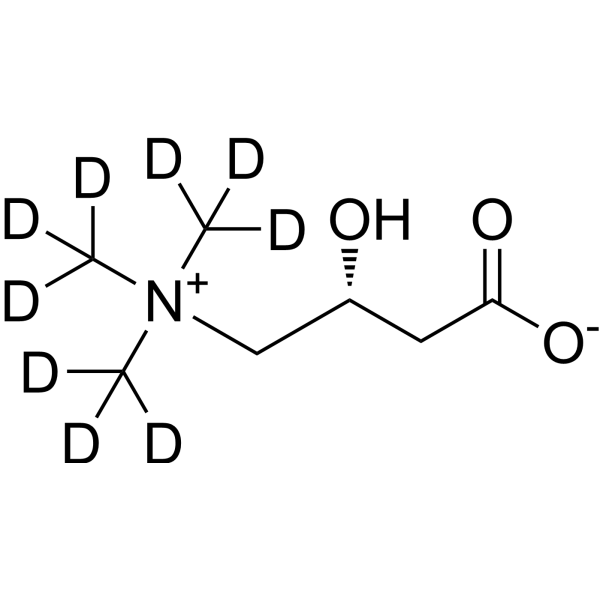
(R)-Carnitine-d9; Levocarnitine-d9
|
Isotope-Labeled Compounds
Endogenous Metabolite
|
Neurological Disease
Metabolic Disease
|
|
L-Carnitine-d9 is the deuterium labeled L-Carnitine. L-Carnitine (Levocarnitine) is an endogenous molecule involved in fatty acid metabolism, biosynthesized within the human body using amino acids: L-lysine and L-methionine, as substrates. L-Carnitine functions to transport long chain fatty acyl-CoAs into the mitochondria for degradation by β-oxidation. L-carnitine can ameliorate metabolic imbalances in many inborn errors of metabolism .
|
-
- HY-CE00021
-
|
(10Z,13Z,16Z)-3-Oxodocosatrienoyl-coenzyme A; 3-Oxo-C22:3(omega-6)-CoA; (10Z,13Z,16Z)-3-Ketodocosatrienoyl-CoA
|
Biochemical Assay Reagents
|
Others
|
|
(10Z,13Z,16Z)-3-Oxodocosatrienoyl-CoA ((10Z,13Z,16Z)-3-Oxodocosatrienoyl-coenzyme A) is an unsaturated fatty acyl-CoA.
|
-
- HY-CE00067
-
|
3-Oxo-C28:4(omega-6)-CoA
|
Biochemical Assay Reagents
|
Others
|
|
(13Z,16Z,19Z,22Z)-3-Oxooctacosatetraenoyl-CoA (3-Oxo-C28:4(omega-6)-CoA) is an unsaturated fatty acyl-CoA.
|
-
- HY-CE00018
-
|
3-Oxo-C24:4(omega-3)-CoA
|
Biochemical Assay Reagents
|
Others
|
|
(12Z,15Z,18Z,21Z)-3-Oxotetracosatetraenoyl-CoA (3-Oxo-C24:4(omega-3)-CoA) is an unsaturated fatty acyl-CoA.
|
-
- HY-160679
-
|
|
Bacterial
|
Infection
|
|
BaENR-IN-1 (Compound 5) is an inhibitor of Enoyl-Acyl Carrier Protein Reductase (ENR) (IC50= 7.7 μM). BaENR-IN-1 blocks the synthesis of fatty acids essential for bacterial growth by inhibiting the bacterial enzyme ENR. BaENR-IN-1 shows activity against bacteria .
|
-
- HY-CE00356
-
-
- HY-CE00206
-
|
(3R,11Z,14Z)-3-Hydroxyicosadienoyl-coenzyme A
|
Biochemical Assay Reagents
|
Others
|
|
(3R,11Z,14Z)-3-Hydroxyicosadienoyl-CoA ((3R,11Z,14Z)-3-Hydroxyicosadienoyl-coenzyme A) is a 3-hydroxy fatty acyl-CoA.
|
-
- HY-CE00319
-
-
- HY-CE00235
-
|
(2E,8Z,11Z,14Z)-Icosatetraenoyl-coenzyme A
|
Biochemical Assay Reagents
|
Others
|
|
(2E,8Z,11Z,14Z)-Icosatetraenoyl-CoA ((2E,8Z,11Z,14Z)-Icosatetraenoyl-coenzyme A) is an unsaturated fatty acyl-CoA.
|
-
- HY-CE00028
-
|
(15Z,18Z,21Z,24Z)-Triacontatetraenoyl-coenzyme A; C30:4(Omega-6)-coenzyme A
|
Biochemical Assay Reagents
|
Others
|
|
(15Z,18Z,21Z,24Z)-Triacontatetraenoyl-CoA ((15Z,18Z,21Z,24Z)-Triacontatetraenoyl-coenzyme A) is an unsaturated fatty acyl-CoA.
|
-
- HY-CE00112A
-
|
(11Z,14Z,17Z)-3-Oxoeicosatrienoyl-CoA; (11Z,14Z,17Z)-3-Ketoeicosatrienoyl-CoA
|
Biochemical Assay Reagents
|
Others
|
|
(11Z,14Z,17Z)-3-Oxoicosatrienoyl-CoA ((11Z,14Z,17Z)-3-Oxoeicosatrienoyl-CoA) is a 3-oxo-fatty acyl-CoA.
|
-
- HY-CE00032
-
|
(23Z,26Z,29Z,32Z)-Octatriacontatetraenoyl-coenzyme A
|
Biochemical Assay Reagents
|
Others
|
|
(23Z,26Z,29Z,32Z)-Octatriacontatetraenoyl-CoA ((23Z,26Z,29Z,32Z)-Octatriacontatetraenoyl-coenzyme A) is an unsaturated fatty acyl-CoA.
|
-
- HY-E70254
-
|
|
Others
|
Others
|
|
Tricosanoyl-CoA triammonium is a very long-chain fatty acyl-CoA that results from the formal condensation of the thiol group of coenzyme A (HY-128851) with the carboxy group of tricosanoic acid (HY-W009081). Tricosanoyl-CoA is functionally related to a tricosanoic acid. Tricosanoyl-CoA is a conjugate acid of a tricosanoyl-CoA(4-).
|
-
- HY-CE00055
-
|
(17Z,20Z,23Z,26Z)-Dotriacontatetraenoyl-coenzyme A; C32:4(Omega-6)-coenzyme A
|
Biochemical Assay Reagents
|
Others
|
|
(17Z,20Z,23Z,26Z)-Dotriacontatetraenoyl-CoA ((17Z,20Z,23Z,26Z)-Dotriacontatetraenoyl-coenzyme A) is an unsaturated fatty acyl-CoA.
|
-
- HY-CE00085
-
|
(19Z,22Z,25Z,28Z)-Tetratriacontatetraenoyl-coenzyme A; C34:4(omega-6)-coenzyme A
|
Biochemical Assay Reagents
|
Others
|
|
(19Z,22Z,25Z,28Z)-Tetratriacontatetraenoyl-CoA ((19Z,22Z,25Z,28Z)-Tetratriacontatetraenoyl-coenzyme A) is an unsaturated fatty acyl-CoA.
|
-
- HY-CE00036A
-
|
(10Z,13Z,16Z,19Z)-Docosatetraenoyl-coenzyme A; C22:4(omega-3)-coenzyme A
|
Biochemical Assay Reagents
|
Others
|
|
(10Z,13Z,16Z,19Z)-Docosatetraenoyl-CoA ((10Z,13Z,16Z,19Z)-Docosatetraenoyl-coenzyme A) is an unsaturated fatty acyl-CoA.
|
-
- HY-CE00016
-
|
(21Z,24Z,27Z,30Z)-Hexatriacontatetraenoyl-coenzyme A; C36:4(Omega-6)-coenzyme A
|
Biochemical Assay Reagents
|
Others
|
|
(21Z,24Z,27Z,30Z)-Hexatriacontatetraenoyl-CoA ((21Z,24Z,27Z,30Z)-Hexatriacontatetraenoyl-coenzyme A) is an unsaturated fatty acyl-CoA.
|
-
- HY-CE00296
-
|
(9Z,12Z,15Z,18Z)-Tetracosatetraenoyl-coenzyme A
|
Biochemical Assay Reagents
|
Metabolic Disease
|
|
(9Z,12Z,15Z,18Z)-Tetracosatetraenoyl-CoA ((9Z,12Z,15Z,18Z)-Tetracosatetraenoyl-coenzyme A) is an unsaturated fatty acyl-CoA.
|
-
- HY-CE00437
-
-
- HY-CE00413
-
|
(3S)-3-Hydroxyoleoyl-coenzyme A
|
Biochemical Assay Reagents
|
Metabolic Disease
|
|
(3S)-3-Hydroxyoleoyl-CoA ((3S)-3-Hydroxyoleoyl-coenzyme A) is a 3-hydroxy fatty acyl-CoA that results from the formal condensation of the thiol group of coenzyme A with the carboxy group of (3S)-3-hydroxyoleic acid.
|
-
- HY-CE00288
-
-
- HY-B1119
-
|
|
Environmental Pollutants
Antibiotic
Apoptosis
Bacterial
Fungal
|
Infection
Cancer
|
|
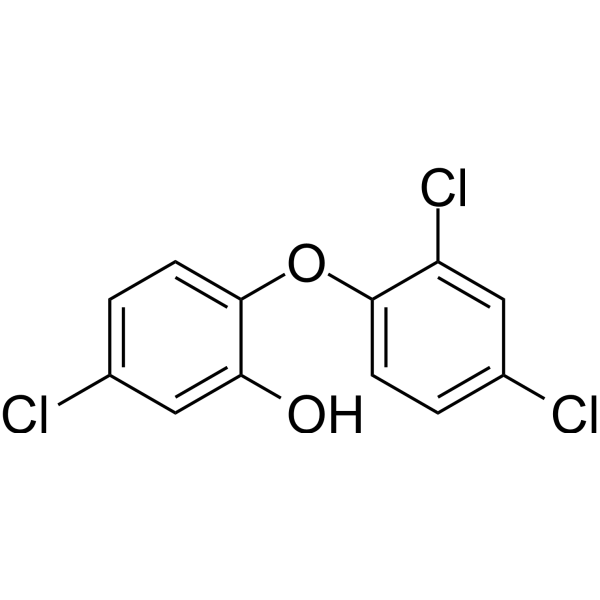
Triclosan is a broad-spectrum antibacterial agent that inhibits bacterial fatty acid synthesis at the enoyl-acyl carrier protein reductase (FabI) step. Triclosan inhibits E. coli enoyl-acyl carrier protein reductase (FabI) and FabI containing a glycine-to-valine substitution at position 93 (FabIG93V) with IC50s of 2 µM and 10 µM, respectively. Triclosan causes apoptotic effect in cultured rat neural stem cells (NSC). Triclosan exacerbates colitis and colitis-associated colorectal tumorigenesis in animal models .
|
-
- HY-CE00047
-
|
C34:6(Omega-3)-coenzyme A
|
Biochemical Assay Reagents
|
Others
|
|
(16Z,19Z,22Z,25Z,28Z,31Z)-Tetratriacontahexaenoyl-CoA (C34:6(Omega-3)-coenzyme A) is an unsaturated fatty acyl-CoA.
|
-
- HY-CE00033
-
-
- HY-CE00101
-
-
- HY-CE00045A
-
-
- HY-113201
-
|
|
Endogenous Metabolite
|
Neurological Disease
|
|
Tetradecanoylcarnitine is an acylcarnitine involved in mitochondrial β-oxidation of long-chain saturated fatty acids and fatty acid metabolism. Tetradecanoylcarnitine serves as a biomarker for very long-chain acyl-CoA dehydrogenase deficiency and MPTP (HY-15608)-induced Parkinson's disease. Tetradecanoylcarnitine exhibits a characteristic significant elevation in plasma levels in patients with sarcopenia, including those complicated with hypertension, and this elevation is closely associated with an increased risk of death. Tetradecanoylcarnitine is widely used in research on the pathological mechanisms of diseases such as Parkinson's disease and sarcopenia .
|
-
- HY-CE00094A
-
|
(11Z,14Z)-3-Ketoeicosa-11,14-dienoyl-CoA
|
Biochemical Assay Reagents
|
Others
|
|
(11Z,14Z)-3-Oxoicosa-11,14-dienoyl-CoA ((11Z,14Z)-3-Ketoeicosa-11,14-dienoyl-CoA) is a 3-oxo-fatty acyl-CoA.
|
-
- HY-CE00239A
-
|
Delta2-THA-coenzyme A
|
Biochemical Assay Reagents
|
Others
|
|
(2E,6Z,9Z,12Z,15Z,18Z,21Z)-Tetracosaheptaenoyl-CoA (Delta2-THA-coenzyme A) is an unsaturated fatty acyl-CoA.
|
-
- HY-CE00014
-
|
3-Oxo-C26:5(omega-3)-CoA
|
Biochemical Assay Reagents
|
Others
|
|
(11Z,14Z,17Z,20Z,23Z)-3-Oxohexacosapentaenoyl-CoA (3-Oxo-C26:5(omega-3)-CoA) is an unsaturated fatty acyl-CoA.
|
-
- HY-CE00071
-
|
3-Oxo-C28:5(omega-3)-CoA
|
Biochemical Assay Reagents
|
Others
|
|
(13Z,16Z,19Z,22Z,25Z)-3-Oxooctacosapentaenoyl-CoA (3-Oxo-C28:5(omega-3)-CoA) is an unsaturated fatty acyl-CoA.
|
-
- HY-141699
-
|
|
FATP
|
Metabolic Disease
|
|
FATP1-IN-1 (compound 5k) is a fatty acid transport protein 1 (FATP1) inhibitor. FATP1-IN-1 is an inhibition of recombinant human or mouse acyl-CoA synthetase activity of FATP1, with the IC50 values of 0.046 μM or 0.60 μM, respectively .
|
-
- HY-CE00333
-
|
(3S,5Z)-3-Hydroxytetradec-5-enoyl-coenzyme A
|
Biochemical Assay Reagents
|
Metabolic Disease
|
|
(3S,5Z)-3-Hydroxytetradec-5-enoyl-CoA ((3S,5Z)-3-Hydroxytetradec-5-enoyl-coenzyme A) is a long-chain (3S)-hydroxy fatty acyl-CoA.
|
-
- HY-120963
-
|
|
Endogenous Metabolite
|
Metabolic Disease
|
|
Several different arachidonoyl amino acids, including N-arachidonoyl dopamine and N-arachidonoyl serine, have been isolated and characterized from bovine brain.1 During mass spectral lipidomics analysis of rat brain, a series of fatty acyl amides of a third amino acid, taurine, were discovered.2 This novel class of compounds is present in kidney and activates members of the transient receptor potential (TRP) family of calcium channels.3 N-Oleoyl taurine is an amino-acyl endocannabinoid isolated from rat brain that may activate TRPV1 and TRPV4.
|
-
- HY-120964
-
|
|
Endogenous Metabolite
|
Metabolic Disease
|
|
Several different arachidonoyl amino acids, including N-arachidonoyl dopamine (NADA) and N-arachidonoyl serine (ARA-S), have been isolated and characterized from bovine brain.1 During mass spectral lipidomic analysis of rat brain, a series of fatty acyl amides of a third amino acid, taurine, is discovered.2 This novel class of compounds is present in kidney and activates members of the transient receptor potential (TRP) family of calcium channels.3 N-Stearoyl taurine is a prominent amino-acyl endocannabinoid isolated from rat brain during lipidomics profiling.
|
-
- HY-CE01152
-
|
|
Endogenous Metabolite
|
Others
|
|
3-Oxotetradecanoyl-CoA is a 3-oxo fatty acyl-CoA. 3-Oxotetradecanoyl-CoA can function as a metabolite in humans, Saccharomyces cerevisiae, Escherichia coli, and mice. 3-Oxotetradecanoyl-CoA is a preferred substrate for thiolytic cleavage by P-44 (type II 3-oxoacyl-CoA thiolase) .
|
-
- HY-P2954
-
|
Polymyxin acylase
|
Biochemical Assay Reagents
|
Cancer
|
|
Polymyxin deacylase (Polymyxin acylase) is an N-myristoyl lyase. Polymyxin deacylase can deacylate polymyxin antibiotics and long-chain fatty acyl groups of proteins and peptides. Polymyxin deacylase exhibits antitumor activity against oral epithelial cancer cells. Polymyxin deacylase can be used in research on oral epithelial cancer and other cancers .
|
-
- HY-CE00005
-
|
(15Z,18Z,21Z,24Z)-3-Oxotriacontatetraenoyl-coenzyme A; 3-Oxo-C30:4(omega-6)-coenzyme A
|
Biochemical Assay Reagents
|
Others
|
|
(15Z,18Z,21Z,24Z)-3-Oxotriacontatetraenoyl-CoA ((15Z,18Z,21Z,24Z)-3-Oxotriacontatetraenoyl-coenzyme A) is an unsaturated fatty acyl-CoA.
|
-
- HY-CE00030
-
|
3-Oxo-C30:6(omega-3)-CoA
|
Biochemical Assay Reagents
|
Others
|
|
(12Z,15Z,18Z,21Z,24Z,27Z)-3-Oxotriacontahexaenoyl-CoA (3-Oxo-C30:6(omega-3)-CoA) is an unsaturated fatty acyl-CoA.
|
-
- HY-CE00052
-
|
(17Z,20Z,23Z,26Z)-3-Oxodotriacontatetraenoyl-coenzyme A; 3-Oxo-C32:4(omega-6)-coenzyme A
|
Biochemical Assay Reagents
|
Others
|
|
(17Z,20Z,23Z,26Z)-3-Oxodotriacontatetraenoyl-CoA ((17Z,20Z,23Z,26Z)-3-Oxodotriacontatetraenoyl-coenzyme A) is an unsaturated fatty acyl-CoA.
|
-
- HY-CE00207
-
|
(3R,11Z,14Z,17Z)-3-Hydroxyicosatrienoyl-coenzyme A
|
Biochemical Assay Reagents
|
Others
|
|
(3R,11Z,14Z,17Z)-3-Hydroxyicosatrienoyl-CoA ((3R,11Z,14Z,17Z)-3-Hydroxyicosatrienoyl-coenzyme A) is an unsaturated fatty acyl-CoA.
|
-
- HY-CE00434
-
|
(8Z,11Z,14Z,17Z)-3-Oxoicosatetraenoyl-coenzyme A
|
Biochemical Assay Reagents
|
Metabolic Disease
|
|
(8Z,11Z,14Z,17Z)-3-Oxoicosatetraenoyl-CoA ((8Z,11Z,14Z,17Z)-3-Oxoicosatetraenoyl-coenzyme A) is an unsaturated fatty acyl-CoA.
|
-
- HY-CE00292
-
|
(9Z,12Z,15Z,18Z)-3-Oxotetracosatetraenoyl-coenzyme A
|
Biochemical Assay Reagents
|
Metabolic Disease
|
|
(9Z,12Z,15Z,18Z)-3-Oxotetracosatetraenoyl-CoA ((9Z,12Z,15Z,18Z)-3-Oxotetracosatetraenoyl-coenzyme A) is an unsaturated fatty acyl-CoA.
|
-
- HY-CE00078
-
|
3-Oxo-C36:6(Omega-3)-coenzyme A
|
Biochemical Assay Reagents
|
Others
|
|
(18Z,21Z,24Z,27Z,30Z,33Z)-3-Oxohexatriacontahexaenoyl-CoA (3-Oxo-C36:6(Omega-3)-coenzyme A) is an unsaturated fatty acyl-CoA.
|
-
- HY-CE00414
-
|
(7Z,10Z,13Z,16Z)-3-Oxodocosatetraenoyl-coenzyme A
|
Biochemical Assay Reagents
|
Metabolic Disease
|
|
(7Z,10Z,13Z,16Z)-3-Oxodocosatetraenoyl-CoA ((7Z,10Z,13Z,16Z)-3-Oxodocosatetraenoyl-coenzyme A) is an unsaturated fatty acyl-CoA.
|
-
- HY-CE00081
-
|
(19Z,22Z,25Z,28Z)-3-Oxotetratriacontatetraenoyl-coenzyme A; 3-Oxo-C34:4(omega-6)-coenzyme A
|
Biochemical Assay Reagents
|
Others
|
|
(19Z,22Z,25Z,28Z)-3-Oxotetratriacontatetraenoyl-CoA ((19Z,22Z,25Z,28Z)-3-Oxotetratriacontatetraenoyl-coenzyme A) is an unsaturated fatty acyl-CoA.
|
-
- HY-CE00011
-
|
3-Oxo-(11Z,14Z,17Z,20Z)-hexacosatetraenoyl-CoA
|
Biochemical Assay Reagents
|
Others
|
|
(11Z,14Z,17Z,20Z)-3-Oxohexacosatetraenoyl-CoA (3-Oxo-(11Z,14Z,17Z,20Z)-hexacosatetraenoyl-CoA) is an unsaturated fatty acyl-CoA.
|
-
- HY-CE00031
-
|
(10Z,13Z,16Z,19Z)-3-Oxodocosatetraenoyl-coenzyme A; 3-Oxo-C22:4(omega-3)-coenzyme A; 3-Oxo-all-cis-(omega-3)-docosatetraenoyl-coenzyme A
|
Biochemical Assay Reagents
|
Others
|
|
(10Z,13Z,16Z,19Z)-3-Oxodocosatetraenoyl-CoA ((10Z,13Z,16Z,19Z)-3-Oxodocosatetraenoyl-coenzyme A) is an unsaturated fatty acyl-CoA.
|
-
- HY-CE00029
-
|
(23Z,26Z,29Z,32Z)-3-Oxooctatriacontatetraenoyl-coenzyme A; 3-Oxo-C38:4(omega-6)-coenzyme A
|
Biochemical Assay Reagents
|
Others
|
|
(23Z,26Z,29Z,32Z)-3-Oxooctatriacontatetraenoyl-CoA ((23Z,26Z,29Z,32Z)-3-Oxooctatriacontatetraenoyl-coenzyme A) is an unsaturated fatty acyl-CoA.
|
-
- HY-CE00097
-
|
3-Oxo-C32:6(omega-3)-CoA
|
Biochemical Assay Reagents
|
Others
|
|
(14Z,17Z,20Z,23Z,26Z,29Z)-3-Oxodotriacontahexaenoyl-CoA (3-Oxo-C32:6(omega-3)-CoA) is an unsaturated fatty acyl-CoA.
|
-
- HY-CE00013A
-
|
(21Z,24Z,27Z,30Z)-3-Oxohexatriacontatetraenoyl-coenzyme A; 3-Oxo-C36:4(omega-6)-coenzyme A
|
Biochemical Assay Reagents
|
Others
|
|
(21Z,24Z,27Z,30Z)-3-Oxohexatriacontatetraenoyl-CoA ((21Z,24Z,27Z,30Z)-3-Oxohexatriacontatetraenoyl-coenzyme A) is an unsaturated fatty acyl-CoA.
|
-
- HY-CE00041A
-
|
3-Oxo-C28:6(omega-3)-CoA
|
Biochemical Assay Reagents
|
Others
|
|
(10Z,13Z,16Z,19Z,22Z,25Z)-3-Oxooctacosahexaenoyl-CoA (3-Oxo-C28:6(omega-3)-CoA) is an unsaturated fatty acyl-CoA.
|
-
- HY-W653962
-
|
|
Isotope-Labeled Compounds
Apoptosis
Antibiotic
Fungal
Bacterial
|
Infection
Cancer
|
|
Triclosan- 13C6 is 13C labeled Triclosan. Triclosan is a broad-spectrum antibacterial agent that inhibits bacterial fatty acid synthesis at the enoyl-acyl carrier protein reductase (FabI) step. Triclosan inhibits E. coli enoyl-acyl carrier protein reductase (FabI) and FabI containing a glycine-to-valine substitution at position 93 (FabIG93V) with IC50s of 2 μM and 10 μM, respectively. Triclosan causes apoptotic effect in cultured rat neural stem cells (NSC). Triclosan exacerbates colitis and colitis-associated colorectal tumorigenesis in animal models .
|
-
- HY-B1119R
-
|
|
Reference Standards
Bacterial
Fungal
Antibiotic
Apoptosis
|
Infection
Cancer
|
|
Triclosan (Standard) is the analytical standard of Triclosan. This product is intended for research and analytical applications. Triclosan is a broad-spectrum antibacterial agent that inhibits bacterial fatty acid synthesis at the enoyl-acyl carrier protein reductase (FabI) step. Triclosan inhibits E. coli enoyl-acyl carrier protein reductase (FabI) and FabI containing a glycine-to-valine substitution at position 93 (FabIG93V) with IC50s of 2 µM and 10 µM, respectively. Triclosan causes apoptotic effect in cultured rat neural stem cells (NSC). Triclosan exacerbates colitis and colitis-associated colorectal tumorigenesis in animal models .
|
-
- HY-173432
-
|
|
ACSL Family
Ferroptosis
|
Neurological Disease
Cancer
|
|
LIBX-A401 is a selective long-chain acyl-CoA synthetase 4 (ACSL4) inhibitor with a human IC50 values of 0.38 μM and a Kd of 0.72 μM. LIBX-A401 binds to ACSL4 in an ATP-dependent manner, stabilizes the C-terminal domain, alters the fatty acid gate region, and interacts with residues A329 and Q302 within the fatty acid binding site. LIBX-A401 exhibits anti-ferroptosis properties in cells. LIBX-A401 can be used for the researches of cancer and parkinson's disease .
|
-
- HY-CE00230
-
|
(2E,8Z,11Z,14Z,17Z)-Icosapentaenoyl-coenzyme A
|
Biochemical Assay Reagents
|
Others
|
|
(2E,8Z,11Z,14Z,17Z)-Icosapentaenoyl-CoA ((2E,8Z,11Z,14Z,17Z)-Icosapentaenoyl-coenzyme A) is an unsaturated fatty acyl-CoA.
|
-
- HY-CE00022
-
|
(15Z,18Z,21Z,24Z,27Z)-Triacontapentaenoyl-coenzyme A
|
Biochemical Assay Reagents
|
Others
|
|
(15Z,18Z,21Z,24Z,27Z)-Triacontapentaenoyl-CoA ((15Z,18Z,21Z,24Z,27Z)-Triacontapentaenoyl-coenzyme A) is an unsaturated fatty acyl-CoA.
|
-
- HY-CE00304
-
|
(9Z,12Z,15Z,18Z,21Z)-Tetracosapentaenoyl-coenzyme A
|
Biochemical Assay Reagents
|
Metabolic Disease
|
|
(9Z,12Z,15Z,18Z,21Z)-Tetracosapentaenoyl-CoA ((9Z,12Z,15Z,18Z,21Z)-Tetracosapentaenoyl-coenzyme A) is an unsaturated fatty acyl-CoA.
|
-
- HY-B0399
-
L-Carnitine
Maximum Cited Publications
20 Publications Verification
(R)-Carnitine; Levocarnitine
|
Endogenous Metabolite
|
Neurological Disease
Cancer
|
|
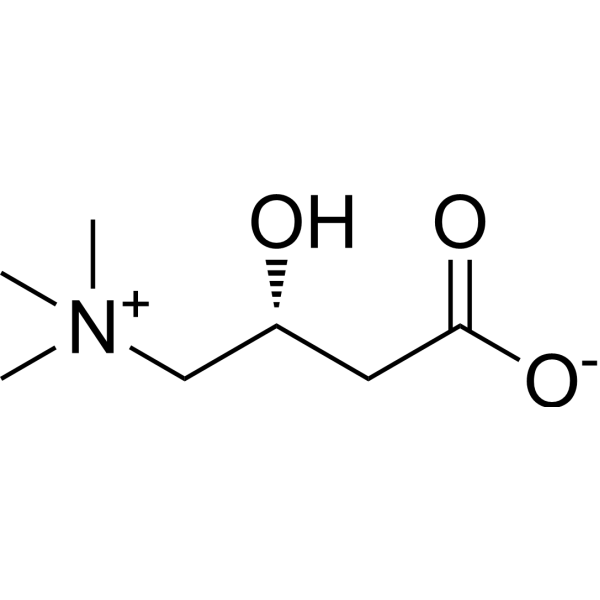
L-Carnitine ((R)-Carnitine), a highly polar, small zwitterion, is an essential co-factor for the mitochondrial β-oxidation pathway. L-Carnitine functions to transport long chain fatty acyl-CoAs into the mitochondria for degradation by β-oxidation. L-Carnitine is an antioxidant. L-Carnitine can ameliorate metabolic imbalances in many inborn errors of metabolism .
|
-
- HY-CE00010A
-
|
(20Z,23Z,26Z,29Z,32Z)-Octatriacontapentaenoyl-coenzyme A
|
Biochemical Assay Reagents
|
Others
|
|
(20Z,23Z,26Z,29Z,32Z)-Octatriacontapentaenoyl-CoA ((20Z,23Z,26Z,29Z,32Z)-Octatriacontapentaenoyl-coenzyme A) is an unsaturated fatty acyl-CoA.
|
-
- HY-CE00042
-
|
(16Z,19Z,22Z,25Z,28Z)-Tetratriacontapentaenoyl-coenzyme A
|
Biochemical Assay Reagents
|
Others
|
|
(16Z,19Z,22Z,25Z,28Z)-Tetratriacontapentaenoyl-CoA ((16Z,19Z,22Z,25Z,28Z)-Tetratriacontapentaenoyl-coenzyme A) is an unsaturated fatty acyl-CoA.
|
-
- HY-CE00038
-
|
(23Z,26Z,29Z,32Z,35Z)-Octatriacontapentaenoyl-coenzyme A
|
Biochemical Assay Reagents
|
Others
|
|
(23Z,26Z,29Z,32Z,35Z)-Octatriacontapentaenoyl-CoA ((23Z,26Z,29Z,32Z,35Z)-Octatriacontapentaenoyl-coenzyme A) is an unsaturated fatty acyl-CoA.
|
-
- HY-CE00089
-
|
(19Z,22Z,25Z,28Z,31Z)-Tetratriacontapentaenoyl-coenzyme A; C34:5(Omega-3)-coenzyme A
|
Biochemical Assay Reagents
|
Others
|
|
(19Z,22Z,25Z,28Z,31Z)-Tetratriacontapentaenoyl-CoA ((19Z,22Z,25Z,28Z,31Z)-Tetratriacontapentaenoyl-coenzyme A) is an unsaturated fatty acyl-CoA.
|
-
- HY-CE00205A
-
|
(2E,4E,8Z,11Z,14Z)-Icosapentaenoyl-coenzyme A
|
Biochemical Assay Reagents
|
Others
|
|
(2E,4E,8Z,11Z,14Z)-Icosapentaenoyl-CoA (2E,4E,8Z,11Z,14Z)-Icosapentaenoyl-coenzyme A) is an unsaturated fatty acyl-CoA.
|
-
- HY-CE00039A
-
|
(10Z,13Z,16Z,19Z,22Z)-Octacosapentaenoyl-coenzyme A
|
Biochemical Assay Reagents
|
Others
|
|
(10Z,13Z,16Z,19Z,22Z)-Octacosapentaenoyl-CoA ((10Z,13Z,16Z,19Z,22Z)-Octacosapentaenoyl-coenzyme A) is an unsaturated fatty acyl-CoA.
|
-
- HY-CE00027
-
|
(12Z,15Z,18Z,21Z,24Z)-Triacontapentaenoyl-coenzyme A
|
Biochemical Assay Reagents
|
Others
|
|
(12Z,15Z,18Z,21Z,24Z)-Triacontapentaenoyl-CoA ((12Z,15Z,18Z,21Z,24Z)-Triacontapentaenoyl-coenzyme A) is an unsaturated fatty acyl-CoA.
|
-
- HY-CE00076
-
|
(18Z,21Z,24Z,27Z,30Z)-Hexatriacontapentaenoyl-coenzyme A
|
Biochemical Assay Reagents
|
Others
|
|
(18Z,21Z,24Z,27Z,30Z)-Hexatriacontapentaenoyl-CoA ((18Z,21Z,24Z,27Z,30Z)-Hexatriacontapentaenoyl-coenzyme A) is an unsaturated fatty acyl-CoA.
|
-
- HY-CE00127
-
|
(3E,5Z,8Z,11Z,14Z)-Icosapentaenoyl-coenzyme A
|
Biochemical Assay Reagents
|
Others
|
|
(3E,5Z,8Z,11Z,14Z)-Icosapentaenoyl-CoA ((3E,5Z,8Z,11Z,14Z)-Icosapentaenoyl-coenzyme A) is an unsaturated fatty acyl-CoA.
|
-
- HY-CE00439
-
|
(8Z,11Z,14Z,17Z,20Z)-Hexacosapentaenoyl-coenzyme A
|
Biochemical Assay Reagents
|
Metabolic Disease
|
|
(8Z,11Z,14Z,17Z,20Z)-Hexacosapentaenoyl-CoA ((8Z,11Z,14Z,17Z,20Z)-Hexacosapentaenoyl-coenzyme A) is an unsaturated fatty acyl-CoA.
|
-
- HY-CE00394
-
|
(3R,8Z,11Z,14Z)-3-Hydroxyicosatrienoyl-coenzyme A
|
Biochemical Assay Reagents
|
Metabolic Disease
|
|
(3R,8Z,11Z,14Z)-3-Hydroxyicosatrienoyl-CoA ((3R,8Z,11Z,14Z)-3-Hydroxyicosatrienoyl-coenzyme A) is a 3-hydroxy fatty acyl-CoA.
|
-
- HY-CE00196A
-
|
(2E,11Z,14Z,17Z,20Z)-Hexacosapentaenoyl-coenzyme A
|
Biochemical Assay Reagents
|
Others
|
|
(2E,11Z,14Z,17Z,20Z)-Hexacosapentaenoyl-CoA ((2E,11Z,14Z,17Z,20Z)-Hexacosapentaenoyl-coenzyme A) is an unsaturated fatty acyl-CoA.
|
-
- HY-CE00243A
-
|
(2E,19Z,22Z,25Z,28Z)-Tetratriacontapentaenoyl-coenzyme A
|
Biochemical Assay Reagents
|
Others
|
|
(2E,19Z,22Z,25Z,28Z)-Tetratriacontapentaenoyl-CoA ((2E,19Z,22Z,25Z,28Z)-Tetratriacontapentaenoyl-coenzyme A) is an unsaturated fatty acyl-CoA.
|
-
- HY-B2246
-
|
(R)-Carnitine hydrochloride; Levocarnitine hydrochloride
|
Endogenous Metabolite
|
Metabolic Disease
Cancer
|
|
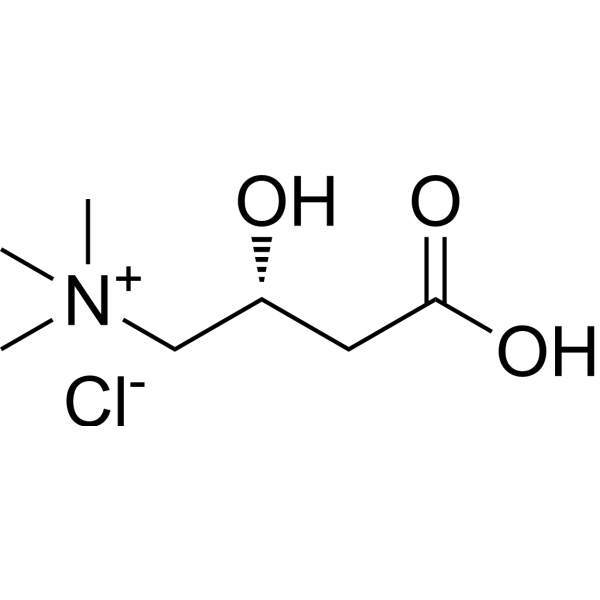
L-Carnitine hydrochloride ((R)-Carnitine hydrochloride), a highly polar, small zwitterion, is an essential co-factor for the mitochondrial β-oxidation pathway. L-Carnitine hydrochloride functions to transport long chain fatty acyl-CoAs into the mitochondria for degradation by β-oxidation. L-Carnitine hydrochloride is an antioxidant. L-Carnitine hydrochloride can ameliorate metabolic imbalances in many inborn errors of metabolism .
|
-
- HY-CE00352
-
|
(6Z,9Z,12Z,15Z,18Z)-Tetracosapentaenoyl-coenzyme A
|
Biochemical Assay Reagents
|
Metabolic Disease
|
|
(6Z,9Z,12Z,15Z,18Z)-Tetracosapentaenoyl-CoA ((6Z,9Z,12Z,15Z,18Z)-Tetracosapentaenoyl-coenzyme A) is an unsaturated fatty acyl-CoA.
|
-
- HY-CE00322
-
|
(5Z,8Z,11Z,14Z,17Z)-Icosapentaenoyl-coenzyme A; Timnodonyl-CoA; Timnodonyl coenzyme A
|
Biochemical Assay Reagents
|
Metabolic Disease
|
|
(5Z,8Z,11Z,14Z,17Z)-Icosapentaenoyl-CoA ((5Z,8Z,11Z,14Z,17Z)-Icosapentaenoyl-coenzyme A) is an unsaturated fatty acyl-CoA.
|
-
- HY-CE00219A
-
|
(2E,15Z,18Z,21Z,24Z)-Triacontapentaenoyl-coenzyme A
|
Biochemical Assay Reagents
|
Others
|
|
(2E,15Z,18Z,21Z,24Z)-Triacontapentaenoyl-CoA ((2E,15Z,18Z,21Z,24Z)-Triacontapentaenoyl-coenzyme A) is an unsaturated fatty acyl-CoA.
|
-
- HY-CE00228A
-
|
(2E,17Z,20Z,23Z,26Z)-Dotriacontapentaenoyl-coenzyme A
|
Biochemical Assay Reagents
|
Others
|
|
(2E,17Z,20Z,23Z,26Z)-Dotriacontapentaenoyl-CoA ((2E,17Z,20Z,23Z,26Z)-Dotriacontapentaenoyl-coenzyme A) is an unsaturated fatty acyl-CoA.
|
-
- HY-CE00024
-
|
(21Z,24Z,27Z,30Z,33Z)-Hexatriacontapentaenoyl-coenzyme A
|
Biochemical Assay Reagents
|
Others
|
|
(21Z,24Z,27Z,30Z,33Z)-Hexatriacontapentaenoyl-CoA ((21Z,24Z,27Z,30Z,33Z)-Hexatriacontapentaenoyl-coenzyme A) is an unsaturated fatty acyl-CoA.
|
-
- HY-CE00421
-
|
(7Z,10Z,13Z,16Z,19Z)-Docosapentaenoyl-Coenzyme A
|
Biochemical Assay Reagents
|
Metabolic Disease
|
|
(7Z,10Z,13Z,16Z,19Z)-Docosapentaenoyl-CoA ((7Z,10Z,13Z,16Z,19Z)-Docosapentaenoyl-Coenzyme A) is an unsaturated fatty acyl-CoA.
|
-
- HY-CE00249A
-
|
(2E,21Z,24Z,27Z,30Z)-Hexatriacontapentaenoyl-coenzyme A
|
Biochemical Assay Reagents
|
Others
|
|
(2E,21Z,24Z,27Z,30Z)-Hexatriacontapentaenoyl-CoA ((2E,21Z,24Z,27Z,30Z)-Hexatriacontapentaenoyl-coenzyme A) is an unsaturated fatty acyl-CoA.
|
-
- HY-CE00201A
-
|
(2E,23Z,26Z,29Z,32Z)-Octatriacontapentaenoyl-coenzyme A
|
Biochemical Assay Reagents
|
Others
|
|
(2E,23Z,26Z,29Z,32Z)-Octatriacontapentaenoyl-CoA ((2E,23Z,26Z,29Z,32Z)-Octatriacontapentaenoyl-coenzyme A) is an unsaturated fatty acyl-CoA.
|
-
- HY-W747491
-
|
|
Isotope-Labeled Compounds
Antibiotic
Apoptosis
Bacterial
Fungal
|
Infection
Cancer
|
|
Triclosan- 13C12 is 13C labeled Triclosan (HY-B1119). Triclosan is a broad-spectrum antibacterial agent that inhibits bacterial fatty acid synthesis at the enoyl-acyl carrier protein reductase (FabI) step. Triclosan inhibits E. coli enoyl-acyl carrier protein reductase (FabI) and FabI containing a glycine-to-valine substitution at position 93 (FabIG93V) with IC50s of 2 μM and 10 μM, respectively. Triclosan causes apoptotic effect in cultured rat neural stem cells (NSC). Triclosan exacerbates colitis and colitis-associated colorectal tumorigenesis in animal models .
|
-
- HY-169794
-
|
|
DNA/RNA Synthesis
|
Others
|
|
N-Palmitoyl-phenylalanine is an N-acyl amide that contains the long-chain saturated fatty acid Palmitic acid (HY-N0830) conjugated via an amide bond to the essential amino acid L-Phenylalanine (HY-N0215). N-Palmitoyl-phenylalanine inhibits pre-mRNA splicing in HeLa cell nuclear lysates (IC50 > 400 μM) but has no splicing activity in intact HeLa cells .
|
-
- HY-CE00431
-
|
(8Z,11Z,14Z)-3-Oxoicosa-8,11,14-trienoyl-coenzyme A
|
Biochemical Assay Reagents
|
Metabolic Disease
|
|
(8Z,11Z,14Z)-3-Oxoicosa-8,11,14-trienoyl-CoA ((8Z,11Z,14Z)-3-Oxoicosa-8,11,14-trienoyl-coenzyme A) is an unsaturated fatty acyl-CoA.
|
-
- HY-B1212
-
|
Dibromohydroxyquinoline; 5,7-Dibromo-8-hydroxyquinoline
|
Parasite
Influenza Virus
|
Infection
|
|
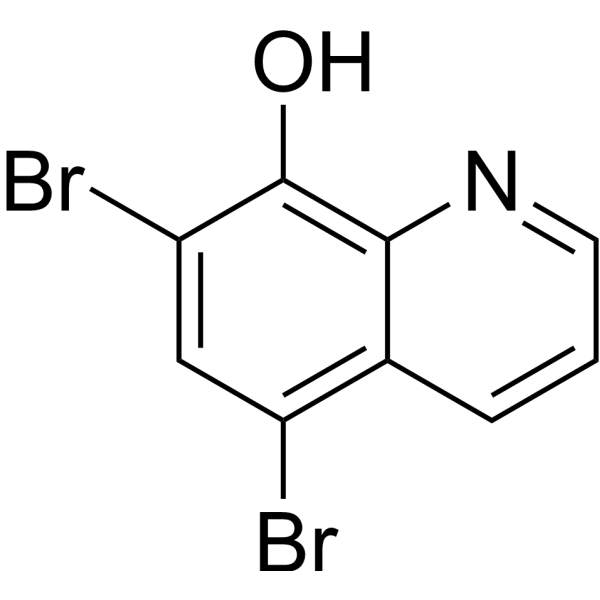
Broxyquinoline (Dibromohydroxyquinoline) is an effective inhibitor of severe fever with thrombocytopenia syndrome virus (SFTSV) with an IC50 of 5.8 µM. Additionally, Broxyquinoline is an inhibitor of CpACBP1 with an IC50 of 64.9 μM. CpACBP1 is a fatty acyl-CoA binding protein of Cryptosporidium parvum, thus Broxyquinoline has the potential to inhibit parasite growth. Broxyquinoline shows promise for research in the field of infectious diseases .
|
-
- HY-W683900A
-
|
|
Biochemical Assay Reagents
|
Others
|
|
(S)-3-Hydroxy-2-palmitamidopropanoic acid (sodium) (Compound C16Ser) is a serinate surfactants. (S)-3-Hydroxy-2-palmitamidopropanoic acid (sodium) can be used to study the effect of fatty acyl chain length on the foam properties. (S)-3-Hydroxy-2-palmitamidopropanoic acid (sodium) has the longer acyl chain, which enhances the intermolecular interaction, thereby facilitating a compact adsorption film at the interface. (S)-3-Hydroxy-2-palmitamidopropanoic acid (sodium) exhibits higher interfacial activity and forms more stable interfacial films under stronger intermolecular interaction .
|
-
- HY-W105518
-
|
|
Endogenous Metabolite
|
Neurological Disease
|
|
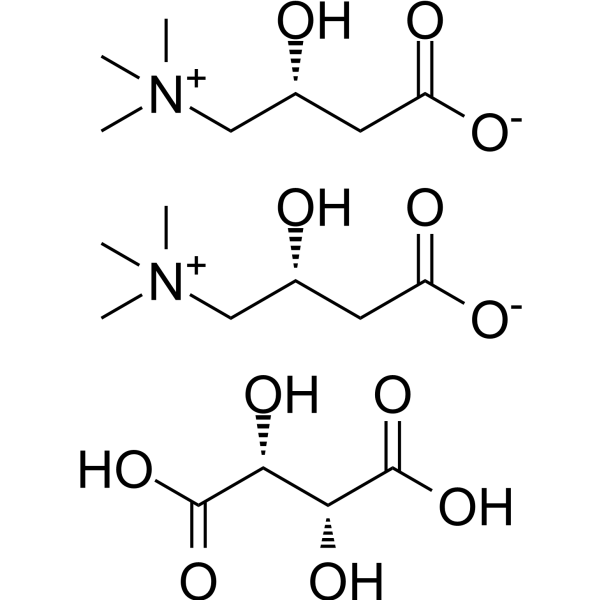
L-Carnitine tartrate is a highly polar, small zwitterion. L-Carnitine tartrate is an essential co-factor for the mitochondrial β-oxidation pathway. L-Carnitine tartrate functions to transport long chain fatty acyl-CoAs into the mitochondria for degradation by β-oxidation. L-Carnitine tartrate is an antioxidant. L-Carnitine tartrate can ameliorate metabolic imbalances in many inborn errors of metabolism [3] .
|
-
- HY-P11321A
-
|
acyl-GIP hydrochloride
|
Insulin Receptor
|
Metabolic Disease
|
|
IUB0271 (acyl-GIP) hydrochloride is a fatty acylated and long-acting glucose-dependent insulinotropic polypeptide (GIP). IUB0271 hydrochloride increases cFos neuronal activity in hypothalamic feeding centers and decreases body weight, food intake and glycemia in DIO mouse models, and these effects depend on CNS-GIPR signaling. IUB0271 hydrochloride can be used for type 2 diabetes mellitus (T2DM) and obesity research .
|
-
- HY-E70523A
-
|
Valeryl-CoA sodium; Valeryl-coenzyme A sodium
|
Endogenous Metabolite
|
Metabolic Disease
|
|
Pentanoyl coenzyme A (Valeryl-CoA) sodium is a short-chain fatty acyl-CoA that functions as an intermediate in mitochondrial β-oxidation and related metabolic pathways. Pentanoyl coenzyme A sodium results from the formal condensation of the thiol group of coenzyme A with the carboxy group of pentanoic acid. Pentanoyl coenzyme A sodium's levels can reflect changes in lipid metabolism under different physiological and pathological conditions. Pentanoyl coenzyme A sodium can be used for research on lipid metabolism .
|
-
- HY-E70523
-
|
Valeryl-CoA; Valeryl-coenzyme A; Pentanoyl coenzyme A free acid
|
Endogenous Metabolite
|
Metabolic Disease
|
|
Pentanoyl coenzyme A (Valeryl-CoA) is a short-chain fatty acyl-CoA that functions as an intermediate in mitochondrial β-oxidation and related metabolic pathways. Pentanoyl coenzyme A results from the formal condensation of the thiol group of coenzyme A with the carboxy group of pentanoic acid. Pentanoyl coenzyme A's levels can reflect changes in lipid metabolism under different physiological and pathological conditions. Pentanoyl coenzyme A can be used for research on lipid metabolism .
|
-
- HY-P11321
-
|
acyl-GIP
|
Insulin Receptor
|
Metabolic Disease
|
|
IUB0271 (acyl-GIP) is a fatty acylated and long-acting glucose-dependent insulinotropic polypeptide (GIP). IUB0271 increases cFos neuronal activity in hypothalamic feeding centers and decreases body weight, food intake and glycemia in DIO mouse models, and these effects depend on CNS-GIPR signaling. IUB0271 can be used for type 2 diabetes mellitus (T2DM) and obesity research .
|
-
- HY-176829
-
|
OAHFA 18:1(n-9, cis)/ω-O-32:1(n-7, cis)
|
Endogenous Metabolite
|
Metabolic Disease
|
|
FAHFA 18:1(9Z)/32-O-32:1(25Z) (OAHFA 18:1(n-9, cis)/ω-O-32:1(n-7, cis)) is an (O-acyl)-ω-hydroxy fatty acid (OAHFA) containing Oleic acid (HY-N1446) and 25(Z)-dotriacontenoic acid .
|
-
- HY-113166
-
|
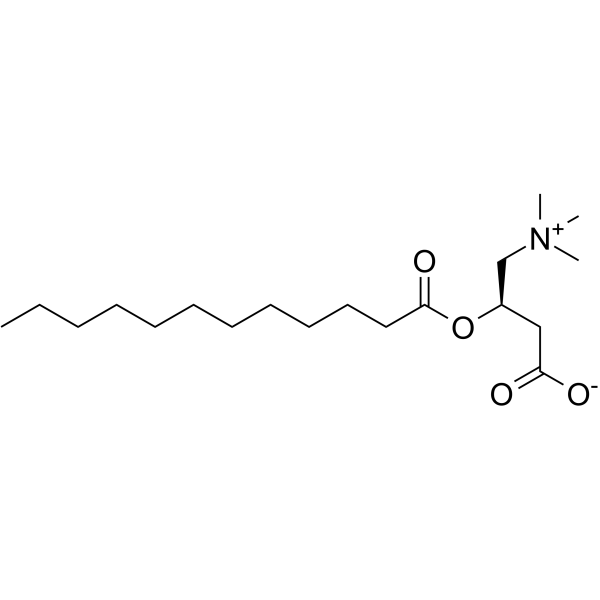
(-)-Lauroylcarnitine
|
Endogenous Metabolite
|
Metabolic Disease
Inflammation/Immunology
|
|
Dodecanoylcarnitine ((-)-Lauroylcarnitine) is a medium long-chain acylcarnitine, an intermediate product in key energy metabolic pathways of fatty acid β-oxidation and amino acids catabolism. The abnormal decrease in the Dodecanoylcarnitine levels indicats that mitochondrial fuel metabolism, including fatty acid oxidation is significantly disturbed. Changes in plasma concentrations of Dodecanoylcarnitine are not only associated with type II diabetes, but also with pre-diabetes status. Dodecanoylcarnitine is present in fatty acid oxidation disorders such as long-chain acyl CoA dehydrogenase deficiency, carnitine palmitoyltransferase I/II deficiency, and is also associated with celiac disease. Dodecanoylcarnitine deomonstrates high sensitivities and specificities in predicting asthma. Combined model of Decanoylcarnitine (HY-113069), Dodecanoylcarnitine, PC (16:0/0:0), and Asp Arg Pro can be used as a potential biomarker for the diagnosis of Yin-deficiency-heat syndrome .
|
-
- HY-CE00034
-
|
(15Z,18Z,21Z,24Z,27Z)-3-Oxotriacontapentaenoyl-coenzyme A; 3-Oxo-C30:5(omega-3)-coenzyme A
|
Biochemical Assay Reagents
|
Others
|
|
(15Z,18Z,21Z,24Z,27Z)-3-Oxotriacontapentaenoyl-CoA ((15Z,18Z,21Z,24Z,27Z)-3-Oxotriacontapentaenoyl-coenzyme A) is an unsaturated fatty acyl-CoA.
|
-
- HY-CE00438
-
|
(3S,8Z,11Z,14Z,17Z)-3-Hydroxyicosatetraenoyl-coenzyme A
|
Biochemical Assay Reagents
|
Metabolic Disease
|
|
(3S,8Z,11Z,14Z,17Z)-3-Hydroxyicosatetraenoyl-CoA ((3S,8Z,11Z,14Z,17Z)-3-Hydroxyicosatetraenoyl-coenzyme A) is a long-chain fatty acyl-CoA.
|
-
- HY-CE00364
-
|
(3R,21Z,24Z,27Z,30Z)-3-Hydroxyhexatriacontatetraenoyl-coenzyme A
|
Biochemical Assay Reagents
|
Metabolic Disease
|
|
(3R,21Z,24Z,27Z,30Z)-3-Hydroxyhexatriacontatetraenoyl-CoA ((3R,21Z,24Z,27Z,30Z)-3-Hydroxyhexatriacontatetraenoyl-coenzyme A) is an unsaturated fatty acyl-CoA.
|
-
- HY-CE00372
-
|
(3R,23Z,26Z,29Z,32Z)-3-Hydroxyoctatriacontatetraenoyl-coenzyme A
|
Biochemical Assay Reagents
|
Metabolic Disease
|
|
(3R,23Z,26Z,29Z,32Z)-3-Hydroxyoctatriacontatetraenoyl-CoA ((3R,23Z,26Z,29Z,32Z)-3-Hydroxyoctatriacontatetraenoyl-coenzyme A) is an unsaturated fatty acyl-CoA.
|
-
- HY-CE00350
-
|
(6Z,9Z,12Z,15Z,18Z)-3-Oxotetracosapentaenoyl-coenzyme A
|
Biochemical Assay Reagents
|
Metabolic Disease
|
|
(6Z,9Z,12Z,15Z,18Z)-3-Oxotetracosapentaenoyl-CoA ((6Z,9Z,12Z,15Z,18Z)-3-Oxotetracosapentaenoyl-coenzyme A) is an unsaturated fatty acyl-CoA.
|
-
- HY-CE00035
-
|
(23Z,26Z,29Z,32Z,35Z)-3-Oxooctatriacontapentaenoyl-coenzyme A; 3-Oxo-C38:5(omega-3)-coenzyme A
|
Biochemical Assay Reagents
|
Others
|
|
(23Z,26Z,29Z,32Z,35Z)-3-Oxooctatriacontapentaenoyl-CoA ((23Z,26Z,29Z,32Z,35Z)-3-Oxooctatriacontapentaenoyl-coenzyme A) is an unsaturated fatty acyl-CoA.
|
-
- HY-CE00419
-
|
(7Z,10Z,13Z,16Z,19Z)-3-Oxodocosapentaenoyl-coenzyme A
|
Biochemical Assay Reagents
|
Metabolic Disease
|
|
(7Z,10Z,13Z,16Z,19Z)-3-Oxodocosapentaenoyl-CoA ((7Z,10Z,13Z,16Z,19Z)-3-Oxodocosapentaenoyl-coenzyme A) is an unsaturated fatty acyl-CoA.
|
-
- HY-CE00020
-
|
(21Z,24Z,27Z,30Z,33Z)-3-Oxohexatriacontapentaenoyl-coenzyme A; 3-Oxo-C36:5(omega-3)-coenzyme A
|
Biochemical Assay Reagents
|
Others
|
|
(21Z,24Z,27Z,30Z,33Z)-3-Oxohexatriacontapentaenoyl-CoA ((21Z,24Z,27Z,30Z,33Z)-3-Oxohexatriacontapentaenoyl-coenzyme A) is an unsaturated fatty acyl-CoA.
|
-
- HY-CE00396
-
|
(3R,8Z,11Z,14Z,17Z)-3-Hydroxyicosatetraenoyl-coenzyme A
|
Biochemical Assay Reagents
|
Metabolic Disease
|
|
(3R,8Z,11Z,14Z,17Z)-3-Hydroxyicosatetraenoyl-CoA ((3R,8Z,11Z,14Z,17Z)-3-Hydroxyicosatetraenoyl-coenzyme A) is an unsaturated fatty acyl-CoA.
|
-
- HY-CE00087
-
|
(19Z,22Z,25Z,28Z,31Z)-3-Oxotetratriacontapentaenoyl-coenzyme A; 3-Oxo-C34:5(omega-3)-coenzyme A
|
Biochemical Assay Reagents
|
Others
|
|
(19Z,22Z,25Z,28Z,31Z)-3-Oxotetratriacontapentaenoyl-CoA ((19Z,22Z,25Z,28Z,31Z)-3-Oxotetratriacontapentaenoyl-coenzyme A) is an unsaturated fatty acyl-CoA.
|
-
- HY-CE00128A
-
|
(2E,23Z,26Z,29Z,32Z,35Z)-Octatriacontahexaenoyl-coenzyme A
|
Biochemical Assay Reagents
|
Others
|
|
(2E,23Z,26Z,29Z,32Z,35Z)-Octatriacontahexaenoyl-CoA ((2E,23Z,26Z,29Z,32Z,35Z)-Octatriacontahexaenoyl-coenzyme A) is an unsaturated fatty acyl-CoA.
|
-
- HY-CE00246A
-
|
(2E,19Z,22Z,25Z,28Z,31Z)-Tetratriacontahexaenoyl-coenzyme A
|
Biochemical Assay Reagents
|
Others
|
|
(2E,19Z,22Z,25Z,28Z,31Z)-Tetratriacontahexaenoyl-CoA ((2E,19Z,22Z,25Z,28Z,31Z)-Tetratriacontahexaenoyl-coenzyme A) is an unsaturated fatty acyl-CoA.
|
-
- HY-CE00258
-
|
(3R,15Z,18Z,21Z,24Z)-3-Hydroxytriacontatetraenoyl-coenzyme A
|
Biochemical Assay Reagents
|
Metabolic Disease
|
|
(3R,15Z,18Z,21Z,24Z)-3-Hydroxytriacontatetraenoyl-CoA ((3R,15Z,18Z,21Z,24Z)-3-Hydroxytriacontatetraenoyl-coenzyme A) is a 3-hydroxy fatty acyl-CoA.
|
-
- HY-B2246S
-
|
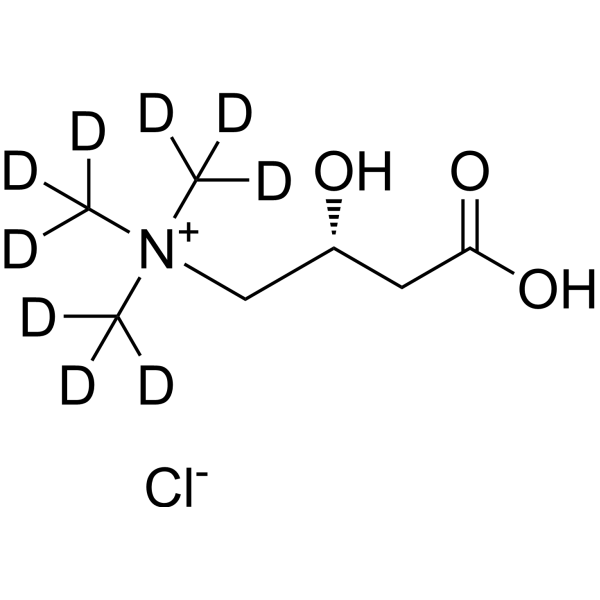
(R)-Carnitine-d9 chloride; Levocarnitine-d9 chloride
|
Isotope-Labeled Compounds
Endogenous Metabolite
|
Metabolic Disease
|
|
L-Carnitine-d9 (chloride)e is the deuterium labeled L-Carnitine chloride. L-Carnitine chloride, a highly polar, small zwitterion, is an essential co-factor for the mitochondrial β-oxidation pathway. L-Carnitine chloride functions to transport long chain fatty acyl-CoAs into the mitochondria for degradation by β-oxidation. L-Carnitine chloride is an antioxidant. L-Carnitine chloride can ameliorate metabolic imbalances in many inborn errors of metabolism .
|
-
- HY-CE00079
-
|
(18Z,21Z,24Z,27Z,30Z,33Z)-Hexatriacontahexaenoyl-coenzyme A
|
Biochemical Assay Reagents
|
Others
|
|
(18Z,21Z,24Z,27Z,30Z,33Z)-Hexatriacontahexaenoyl-CoA ((18Z,21Z,24Z,27Z,30Z,33Z)-Hexatriacontahexaenoyl-coenzyme A) is an unsaturated fatty acyl-CoA.
|
-
- HY-CE00443
-
|
(8Z,11Z,14Z,17Z,20Z,23Z)-Hexacosahexaenoyl-coenzyme A
|
Biochemical Assay Reagents
|
Metabolic Disease
|
|
(8Z,11Z,14Z,17Z,20Z,23Z)-Hexacosahexaenoyl-CoA ((8Z,11Z,14Z,17Z,20Z,23Z)-Hexacosahexaenoyl-coenzyme A) is an unsaturated fatty acyl-CoA.
|
-
- HY-CE00208
-
|
(3R,11Z,14Z,17Z,20Z)-3-Hydroxyhexacosatetraenoyl-coenzyme A
|
Biochemical Assay Reagents
|
Others
|
|
(3R,11Z,14Z,17Z,20Z)-3-Hydroxyhexacosatetraenoyl-CoA ((3R,11Z,14Z,17Z,20Z)-3-Hydroxyhexacosatetraenoyl-coenzyme A) is a 3-hydroxy fatty acyl-CoA.
|
-
- HY-CE00195A
-
|
(2E,11Z,14Z,17Z,20Z,23Z)-Hexacosahexaenoyl-coenzyme A
|
Biochemical Assay Reagents
|
Others
|
|
(2E,11Z,14Z,17Z,20Z,23Z)-Hexacosahexaenoyl-CoA ((2E,11Z,14Z,17Z,20Z,23Z)-Hexacosahexaenoyl-coenzyme A) is an unsaturated fatty acyl-CoA.
|
-
- HY-CE00217
-
|
(3R,13Z,16Z,19Z,22Z)-3-Hydroxyoctacosatetraenoyl-coenzyme A
|
Biochemical Assay Reagents
|
Others
|
|
(3R,13Z,16Z,19Z,22Z)-3-Hydroxyoctacosatetraenoyl-CoA ((3R,13Z,16Z,19Z,22Z)-3-Hydroxyoctacosatetraenoyl-coenzyme A) is a 3-hydroxy fatty acyl-CoA.
|
-
- HY-CE00388
-
|
(3R,7Z,10Z,13Z,16Z)-3-Hydroxydocosatetraenoyl-coenzyme A
|
Biochemical Assay Reagents
|
Metabolic Disease
|
|
(3R,7Z,10Z,13Z,16Z)-3-Hydroxydocosatetraenoyl-CoA ((3R,7Z,10Z,13Z,16Z)-3-Hydroxydocosatetraenoyl-coenzyme A) is a 3-hydroxy fatty acyl-CoA.
|
-
- HY-CE00221A
-
|
(2E,15Z,18Z,21Z,24Z,27Z)-Triacontahexaenoyl-coenzyme A
|
Biochemical Assay Reagents
|
Others
|
|
(2E,15Z,18Z,21Z,24Z,27Z)-Triacontahexaenoyl-CoA ((2E,15Z,18Z,21Z,24Z,27Z)-Triacontahexaenoyl-coenzyme A) is an unsaturated fatty acyl-CoA.
|
-
- HY-CE00189A
-
|
(2E,13Z,16Z,19Z,22Z,25Z)-Octacosahexaenoyl-coenzyme A
|
Biochemical Assay Reagents
|
Others
|
|
(2E,13Z,16Z,19Z,22Z,25Z)-Octacosahexaenoyl-CoA ((2E,13Z,16Z,19Z,22Z,25Z)-Octacosahexaenoyl-coenzyme A) is an unsaturated fatty acyl-CoA.
|
-
- HY-CE00234A
-
|
(2E,6Z,9Z,12Z,15Z,18Z)-Tetracosahexaenoyl-coenzyme A
|
Biochemical Assay Reagents
|
Others
|
|
(2E,6Z,9Z,12Z,15Z,18Z)-Tetracosahexaenoyl-CoA ((2E,6Z,9Z,12Z,15Z,18Z)-Tetracosahexaenoyl-coenzyme A) is an unsaturated fatty acyl-CoA.
|
-
- HY-CE00232A
-
|
(2E,17Z,20Z,23Z,26Z,29Z)-Dotriacontahexaenoyl-coenzyme A
|
Biochemical Assay Reagents
|
Others
|
|
(2E,17Z,20Z,23Z,26Z,29Z)-Dotriacontahexaenoyl-CoA ((2E,17Z,20Z,23Z,26Z,29Z)-Dotriacontahexaenoyl-coenzyme A) is an unsaturated fatty acyl-CoA.
|
-
- HY-CE00269
-
|
(3R,17Z,20Z,23Z,26Z)-3-Hydroxydotriacontatetraenoyl-coenzyme A
|
Biochemical Assay Reagents
|
Metabolic Disease
|
|
(3R,17Z,20Z,23Z,26Z)-3-Hydroxydotriacontatetraenoyl-CoA ((3R,17Z,20Z,23Z,26Z)-3-Hydroxydotriacontatetraenoyl-coenzyme A) is a 3-hydroxy fatty acyl-CoA.
|
-
- HY-CE00274
-
|
(3R,19Z,22Z,25Z,28Z)-3-Hydroxytetratriacontatetraenoyl-coenzyme A
|
Biochemical Assay Reagents
|
Metabolic Disease
|
|
(3R,19Z,22Z,25Z,28Z)-3-Hydroxytetratriacontatetraenoyl-CoA ((3R,19Z,22Z,25Z,28Z)-3-Hydroxytetratriacontatetraenoyl-coenzyme A) is a 3-hydroxy fatty acyl-CoA.
|
-
- HY-CE00401
-
|
(3R,9Z,12Z,15Z,18Z)-3-Hydroxytetracosatetraenoyl-coenzyme A
|
Biochemical Assay Reagents
|
Metabolic Disease
|
|
(3R,9Z,12Z,15Z,18Z)-3-Hydroxytetracosatetraenoyl-CoA ((3R,9Z,12Z,15Z,18Z)-3-Hydroxytetracosatetraenoyl-coenzyme A) is a 3-hydroxy fatty acyl-CoA.
|
-
- HY-W127461
-
|
Gangliotriosylceramide
|
Biochemical Assay Reagents
|
Others
|
|
Ganglioside GM2 asialo (asialo-GM2) is a glycosphingolipid containing three monosaccharide residues and one fatty acid of variable chain length, but lacks the sialic acid residue present on ganglioside M2. Asialo-GM2 is found at low or undetectable levels in normal human brains, but it accumulates in the brains of patients with Tay-Sachs disease and Sandhoff disease, which are expressed as lysosomal β- A neurodegenerative disorder characterized by hexosaminidase A and B deficiency. It also binds to various bacteria, including Pseudomonas isolated from cystic fibrosis patients. The Asialo-GM2 mixture contains ganglioside GM2 asialo molecular species with fatty acyl chains of variable length.
|
-
- HY-131701
-
|
C18 Lactosyl(β) Ceramide; Lactosyl Sphingosine; Lyso-Lactosylceramide (synthetic)
|
Endogenous Metabolite
|
Metabolic Disease
|
|
Lactosyl-C18-sphingosine (C18 Lactosyl(β) Ceramide; Lactosyl Sphingosine) is a bioactive sphingolipid that is a form of lactosylceramide but lacks the fatty acyl group. Lysolactosylceramide (1-50 μM) reduces the viability of human neutrophils in a concentration-dependent manner. Unlike lactosylceramide, Lactosyl-C18-sphingosine has no effect on protein synthesis and cell proliferation in cardiomyocytes. Lactosyl-C18-sphingosine is a lysoganglioside GM3.
|
-
- HY-B0399R
-
|
(R)-Carnitine (Standard); Levocarnitine (Standard)
|
Reference Standards
Endogenous Metabolite
|
Neurological Disease
Cancer
|
|
L-Carnitine (Standard) is the analytical standard of L-Carnitine. This product is intended for research and analytical applications. L-Carnitine ((R)-Carnitine), a highly polar, small zwitterion, is an essential co-factor for the mitochondrial β-oxidation pathway. L-Carnitine functions to transport long chain fatty acyl-CoAs into the mitochondria for degradation by β-oxidation. L-Carnitine is an antioxidant. L-Carnitine can ameliorate metabolic imbalances in many inborn errors of metabolism .
|
-
- HY-122643
-
|
|
Bacterial
|
Infection
|
|
NITD-916, a 4-hydroxy-2-pyridone derivative, is an orally active mycobacterial enoyl reductase InhA inhibitor with an IC50 of 570 nM. NITD-916 forms a ternary complex with InhA and NADH to block access to the fatty acyl substrate binding pocket. NITD-916 inhibition of InhA reduces the synthesis of mycolic acids and results in cell death. NITD-916 has potent anti-tuberculosis effects .
|
-
- HY-19227
-
|
|
PPAR
|
Cardiovascular Disease
|
|
BM 170249 is a peroxisome proliferator, particularly in the perivenous region of the central acini in the liver. BM 170249 significantly reduces serum triglyceride and cholesterol levels in rats. BM 170249 strongly induces the activity of key enzymes in the peroxisome fatty acid β-oxidation system (such as acyl-CoA oxidase AOX, multifunctional enzyme PH, and thiolase PT), but leads to decreased activity of catalase and uricase in peroxisome components. BM 170249 could be used in lipid-lowering studies .
|
-
- HY-B2246R
-
|
(R)-Carnitine hydrochloride (Standard); Levocarnitine hydrochloride (Standard)
|
Reference Standards
Endogenous Metabolite
|
Metabolic Disease
Cancer
|
|
L-Carnitine (hydrochloride) (Standard) is the analytical standard of L-Carnitine (hydrochloride). This product is intended for research and analytical applications. L-Carnitine hydrochloride ((R)-Carnitine hydrochloride), a highly polar, small zwitterion, is an essential co-factor for the mitochondrial β-oxidation pathway. L-Carnitine hydrochloride functions to transport long chain fatty acyl-CoAs into the mitochondria for degradation by β-oxidation. L-Carnitine hydrochloride is an antioxidant. L-Carnitine hydrochloride can ameliorate metabolic imbalances in many inborn errors of metabolism .
|
-
- HY-127146
-
|
|
Antibiotic
Bacterial
|
Infection
|
|
Platensimycin is an antibiotic produced by S. platensis that inhibits gram-positive bacteria by selectively inhibiting cellular lipid biosynthesis (IC50=0.1 μM). Platensimycin targets the β-ketoacyl-acyl-carrier-protein synthase I/II, FabF/B, an enzyme that participates in the biosynthesis of fatty acids (IC50s=48 nM and 160 nM for S.aureus and E.coli enzymes, respectively). Platensimycin is a promising agent for overcoming antibiotic resistance.
|
-
- HY-114773
-
|
|
Biochemical Assay Reagents
|
Others
|
|
Quorum sensing is a regulatory system used by bacteria to control gene expression in response to increased cell density. This regulatory process manifests itself in a variety of phenotypes, including biofilm formation and virulence factor production. Coordinated gene expression is achieved through the production, release and detection of small diffusible signaling molecules called autoinducers. N-acylated homoserine lactones (AHLs) comprise a class of such autoinducers, each of which generally consists of a fatty acid coupled to a homoserine lactone (HSL). Modulation of bacterial quorum-sensing signaling systems to suppress pathogenesis represents a new approach to antimicrobial research for infectious diseases. AHLs differ in acyl length (C4-C18), C3 substitution (hydrogen, hydroxyl, or oxo group), and the presence or absence of one or more carbon-carbon double bonds in the fatty acid chain. These differences confer signaling specificity through the affinity of the LuxR family of transcriptional regulators. C11-HSL has a rare odd-numbered acyl carbon chain and may be a minor quorum-sensing signaling molecule in Pseudomonas aeruginosa strains.
|
-
- HY-CE00253
-
|
(3R,13Z,16Z,19Z,22Z,25Z)-3-Hydroxyoctacosapentaenoyl-coenzyme A
|
Biochemical Assay Reagents
|
Metabolic Disease
|
|
(3R,13Z,16Z,19Z,22Z,25Z)-3-Hydroxyoctacosapentaenoyl-CoA ((3R,13Z,16Z,19Z,22Z,25Z)-3-Hydroxyoctacosapentaenoyl-coenzyme A) is an unsaturated fatty acyl-CoA.
|
-
- HY-CE00223A
-
|
(2E,16Z,19Z,22Z,25Z,28Z,31Z)-Tetratriacontaheptaenoyl-coenzyme A
|
Biochemical Assay Reagents
|
Others
|
|
(2E,16Z,19Z,22Z,25Z,28Z,31Z)-Tetratriacontaheptaenoyl-CoA ((2E,16Z,19Z,22Z,25Z,28Z,31Z)-Tetratriacontaheptaenoyl-coenzyme A) is an unsaturated fatty acyl-CoA.
|
-
- HY-CE00391
-
|
(3R,7Z,10Z,13Z,16Z,19Z)-3-Hydroxydocosapentaenoyl-coenzyme A
|
Biochemical Assay Reagents
|
Metabolic Disease
|
|
(3R,7Z,10Z,13Z,16Z,19Z)-3-Hydroxydocosapentaenoyl-CoA ((3R,7Z,10Z,13Z,16Z,19Z)-3-Hydroxydocosapentaenoyl-coenzyme A) is an unsaturated fatty acyl-CoA.
|
-
- HY-CE00278
-
|
(3R,19Z,22Z,25Z,28Z,31Z)-3-Hydroxytetratriacontapentaenoyl-coenzyme A
|
Biochemical Assay Reagents
|
Metabolic Disease
|
|
(3R,19Z,22Z,25Z,28Z,31Z)-3-Hydroxytetratriacontapentaenoyl-CoA ((3R,19Z,22Z,25Z,28Z,31Z)-3-Hydroxytetratriacontapentaenoyl-coenzyme A) is an unsaturated fatty acyl-CoA.
|
-
- HY-CE00260
-
|
(3R,15Z,18Z,21Z,24Z,27Z)-3-Hydroxytriacontapentaenoyl-coenzyme A
|
Biochemical Assay Reagents
|
Metabolic Disease
|
|
(3R,15Z,18Z,21Z,24Z,27Z)-3-Hydroxytriacontapentaenoyl-CoA ((3R,15Z,18Z,21Z,24Z,27Z)-3-Hydroxytriacontapentaenoyl-coenzyme A) is an unsaturated fatty acyl-CoA.
|
-
- HY-W754236
-
|
|
Isotope-Labeled Compounds
Endogenous Metabolite
|
Metabolic Disease
|
|
(R)-Carnitine Hydrochloride- 13C3 is the 13C-labeled L-Carnitine hydrochloride (HY-B2246). L-Carnitine hydrochloride ((R)-Carnitine hydrochloride), a highly polar, small zwitterion, is an essential co-factor for the mitochondrial β-oxidation pathway. L-Carnitine hydrochloride functions to transport long chain fatty acyl-CoAs into the mitochondria for degradation by β-oxidation. L-Carnitine hydrochloride is an antioxidant. L-Carnitine hydrochloride can ameliorate metabolic imbalances in many inborn errors of metabolism .
|
-
- HY-CE00270
-
|
(3R,17Z,20Z,23Z,26Z,29Z)-3-Hydroxydotriacontapentaenoyl-coenzyme A
|
Biochemical Assay Reagents
|
Metabolic Disease
|
|
(3R,17Z,20Z,23Z,26Z,29Z)-3-Hydroxydotriacontapentaenoyl-CoA ((3R,17Z,20Z,23Z,26Z,29Z)-3-Hydroxydotriacontapentaenoyl-coenzyme A) is an unsaturated fatty acyl-CoA.
|
-
- HY-CE00188A
-
|
(2E,14Z,17Z,20Z,23Z,26Z,29Z)-Dotriacontaheptaenoyl-coenzyme A
|
Biochemical Assay Reagents
|
Others
|
|
(2E,14Z,17Z,20Z,23Z,26Z,29Z)-Dotriacontaheptaenoyl-CoA ((2E,14Z,17Z,20Z,23Z,26Z,29Z)-Dotriacontaheptaenoyl-coenzyme A) is an unsaturated fatty acyl-CoA.
|
-
- HY-CE00193A
-
|
(2E,12Z,15Z,18Z,21Z,24Z,27Z)-Triacontaheptaenoyl-coenzyme A
|
Biochemical Assay Reagents
|
Others
|
|
(2E,12Z,15Z,18Z,21Z,24Z,27Z)-Triacontaheptaenoyl-CoA ((2E,12Z,15Z,18Z,21Z,24Z,27Z)-Triacontaheptaenoyl-coenzyme A) is an unsaturated fatty acyl-CoA.
|
-
- HY-CE00043
-
|
(16Z,19Z,22Z,25Z,28Z,31Z)-3-Oxotetratriacontahexaenoyl-coenzyme A; 3-Oxo-C34:6(omega-3)-coenzyme A
|
Biochemical Assay Reagents
|
Others
|
|
(16Z,19Z,22Z,25Z,28Z,31Z)-3-Oxotetratriacontahexaenoyl-CoA ((16Z,19Z,22Z,25Z,28Z,31Z)-3-Oxotetratriacontahexaenoyl-coenzyme A) is an unsaturated fatty acyl-CoA.
|
-
- HY-CE00225
-
|
(2E,8Z,11Z,14Z,17Z,20Z,23Z)-Hexacosaheptaenoyl-coenzyme A
|
Biochemical Assay Reagents
|
Others
|
|
(2E,8Z,11Z,14Z,17Z,20Z,23Z)-Hexacosaheptaenoyl-CoA ((2E,8Z,11Z,14Z,17Z,20Z,23Z)-Hexacosaheptaenoyl-coenzyme A) is an unsaturated fatty acyl-CoA.
|
-
- HY-CE00400
-
|
(3R,8Z,11Z,14Z,17Z,20Z,23Z)-Hydroxyhexacosahexaenoyl-coenzyme A
|
Biochemical Assay Reagents
|
Metabolic Disease
|
|
(3R,8Z,11Z,14Z,17Z,20Z,23Z)-Hydroxyhexacosahexaenoyl-CoA ((3R,8Z,11Z,14Z,17Z,20Z,23Z)-Hydroxyhexacosahexaenoyl-coenzyme A) is an unsaturated fatty acyl-CoA.
|
-
- HY-CE00423
-
|
(3S,6Z,9Z,12Z,15Z,18Z)-3-Hydroxytetracosapentaenoyl-coenzyme A
|
Biochemical Assay Reagents
|
Metabolic Disease
|
|
(3S,6Z,9Z,12Z,15Z,18Z)-3-Hydroxytetracosapentaenoyl-CoA ((3S,6Z,9Z,12Z,15Z,18Z)-3-Hydroxytetracosapentaenoyl-coenzyme A) is an unsaturated fatty acyl-CoA.
|
-
- HY-CE00238A
-
|
(2E,18Z,21Z,24Z,27Z,30Z,33Z)-Hexatriacontaheptaenoyl-coenzyme A
|
Biochemical Assay Reagents
|
Others
|
|
(2E,18Z,21Z,24Z,27Z,30Z,33Z)-Hexatriacontaheptaenoyl-CoA ((2E,18Z,21Z,24Z,27Z,30Z,33Z)-Hexatriacontaheptaenoyl-coenzyme A) is an unsaturated fatty acyl-CoA.
|
-
- HY-CE00402
-
|
(3R,9Z,12Z,15Z,18Z,21Z)-3-Hydroxytetracosapentaenoyl-coenzyme A
|
Biochemical Assay Reagents
|
Metabolic Disease
|
|
(3R,9Z,12Z,15Z,18Z,21Z)-3-Hydroxytetracosapentaenoyl-CoA ((3R,9Z,12Z,15Z,18Z,21Z)-3-Hydroxytetracosapentaenoyl-coenzyme A) is an unsaturated fatty acyl-CoA.
|
-
- HY-CE00209
-
|
(3R,11Z,14Z,17Z,20Z,23Z)-3-Hydroxyhexacosapentaenoyl-coenzyme A
|
Biochemical Assay Reagents
|
Others
|
|
(3R,11Z,14Z,17Z,20Z,23Z)-3-Hydroxyhexacosapentaenoyl-CoA ((3R,11Z,14Z,17Z,20Z,23Z)-3-Hydroxyhexacosapentaenoyl-coenzyme A) is an unsaturated fatty acyl-CoA.
|
-
- HY-CE00441
-
|
(8Z,11Z,14Z,17Z,20Z,23Z)-3-Oxohexacosahexaenoyl-coenzyme A
|
Biochemical Assay Reagents
|
Metabolic Disease
|
|
(8Z,11Z,14Z,17Z,20Z,23Z)-3-Oxohexacosahexaenoyl-CoA ((8Z,11Z,14Z,17Z,20Z,23Z)-3-Oxohexacosahexaenoyl-coenzyme A) is an unsaturated fatty acyl-CoA.
|
-
- HY-CE00200A
-
|
(2E,10Z,13Z,16Z,19Z,22Z,25Z)-Octacosaheptaenoyl-coenzyme A
|
Biochemical Assay Reagents
|
Others
|
|
(2E,10Z,13Z,16Z,19Z,22Z,25Z)-Octacosaheptaenoyl-CoA ((2E,10Z,13Z,16Z,19Z,22Z,25Z)-Octacosaheptaenoyl-coenzyme A) is an unsaturated fatty acyl-CoA.
|
-
- HY-CE00368
-
|
(3R,21Z,24Z,27Z,30Z,33Z)-3-Hydroxyhexatriacontapentaenoyl-coenzyme A
|
Biochemical Assay Reagents
|
Metabolic Disease
|
|
(3R,21Z,24Z,27Z,30Z,33Z)-3-Hydroxyhexatriacontapentaenoyl-CoA ((3R,21Z,24Z,27Z,30Z,33Z)-3-Hydroxyhexatriacontapentaenoyl-coenzyme A) is an unsaturated fatty acyl-CoA.
|
-
- HY-CE00374
-
|
(3R,23Z,26Z,29Z,32Z,35Z)-3-Hydroxyoctatriacontapentaenoyl-coenzyme A
|
Biochemical Assay Reagents
|
Metabolic Disease
|
|
(3R,23Z,26Z,29Z,32Z,35Z)-3-Hydroxyoctatriacontapentaenoyl-CoA ((3R,23Z,26Z,29Z,32Z,35Z)-3-Hydroxyoctatriacontapentaenoyl-coenzyme A) is an unsaturated fatty acyl-CoA.
|
-
- HY-113166R
-
|
(-)-Lauroylcarnitine (Standard)
|
Reference Standards
Endogenous Metabolite
|
Metabolic Disease
Inflammation/Immunology
|
|
Dodecanoylcarnitine (Standard) is the analytical standard of Dodecanoylcarnitine (HY-113166). This product is intended for research and analytical applications. Dodecanoylcarnitine ((-)-Lauroylcarnitine) is a medium long-chain acylcarnitine, an intermediate product in key energy metabolic pathways of fatty acid β-oxidation and amino acids catabolism. The abnormal decrease in the Dodecanoylcarnitine levels indicats that mitochondrial fuel metabolism, including fatty acid oxidation is significantly disturbed. Changes in plasma concentrations of Dodecanoylcarnitine are not only associated with type II diabetes, but also with pre-diabetes status. Dodecanoylcarnitine is present in fatty acid oxidation disorders such as long-chain acyl CoA dehydrogenase deficiency, carnitine palmitoyltransferase I/II deficiency, and is also associated with celiac disease. Dodecanoylcarnitine deomonstrates high sensitivities and specificities in predicting asthma. Combined model of Decanoylcarnitine (HY-113069), Dodecanoylcarnitine, PC (16:0/0:0), and Asp Arg Pro can be used as a potential biomarker for the diagnosis of Yin-deficiency-heat syndrome .
|
-
- HY-W127393
-
|
|
Biochemical Assay Reagents
|
Others
|
|
Quorum sensing is a regulatory system used by bacteria to control gene expression in response to increased cell density. This regulatory process manifests itself in a variety of phenotypes, including biofilm formation and virulence factor production. Coordinated gene expression is achieved through the production, release and detection of small diffusible signaling molecules called autoinducers. N-acylated homoserine lactones (AHLs) comprise a class of such autoinducers, each of which generally consists of a fatty acid coupled to a homoserine lactone (HSL). Modulation of bacterial quorum-sensing signaling systems to suppress pathogenesis represents a new approach to antimicrobial research for infectious diseases. AHLs differ in acyl length (C4-C18), C3 substitution (hydrogen, hydroxyl, or oxo group), and the presence or absence of one or more carbon-carbon double bonds in the fatty acid chain. These differences confer signaling specificity through the affinity of the LuxR family of transcriptional regulators. C9-HSL is a rare odd-numbered acyl carbon chain produced by wild-type Erwinia carotovora strain SCC 3193 grown in nutrient-rich Luria-Bertani broth (LB) medium.
|
-
- HY-B0399G
-
|
(R)-Carnitine; Levocarnitine
|
Endogenous Metabolite
|
Neurological Disease
Cancer
|
|
L-Carnitine (GMP) is L-Carnitine (HY-B0399) produced by using GMP guidelines. GMP small molecules work appropriately as an auxiliary reagent for cell therapy manufacture. L-Carnitine, a highly polar, small zwitterion, is an essential co-factor for the mitochondrial β-oxidation pathway. L-Carnitine functions to transport long chain fatty acyl-CoAs into the mitochondria for degradation by β-oxidation. L-Carnitine is an antioxidant. L-Carnitine can ameliorate metabolic imbalances in many inborn errors of metabolism .
|
-
- HY-B0399S2
-
|
(R)-Carnitine-13C3; Levocarnitine-13C3
|
Isotope-Labeled Compounds
Endogenous Metabolite
|
Neurological Disease
Cancer
|
|
L-Carnitine- 13C3 ((R)-Carnitine- 13C3) is the 13C--labeled L-Carnitine (HY-B0399). L-Carnitine ((R)-Carnitine), a highly polar, small zwitterion, is an essential co-factor for the mitochondrial β-oxidation pathway. L-Carnitine functions to transport long chain fatty acyl-CoAs into the mitochondria for degradation by β-oxidation. L-Carnitine is an antioxidant. L-Carnitine can ameliorate metabolic imbalances in many inborn errors of metabolism .
|
-
- HY-W105518R
-
|
|
Reference Standards
Endogenous Metabolite
|
Neurological Disease
|
|
L-Carnitine (tartrate) (Standard) is the analytical standard of L-Carnitine (tartrate). This product is intended for research and analytical applications. L-Carnitine tartrate is a highly polar, small zwitterion. L-Carnitine tartrate is an essential co-factor for the mitochondrial β-oxidation pathway. L-Carnitine tartrate functions to transport long chain fatty acyl-CoAs into the mitochondria for degradation by β-oxidation. L-Carnitine tartrate is an antioxidant. L-Carnitine tartrate can ameliorate metabolic imbalances in many inborn errors of metabolism [3] .
|
-
- HY-W127487
-
|
|
Biochemical Assay Reagents
|
Others
|
|
Quorum sensing is a regulatory system used by bacteria to control gene expression in response to increased cell density. This regulatory process manifests itself in a variety of phenotypes, including biofilm formation and virulence factor production. Coordinated gene expression is achieved through the production, release and detection of small diffusible signaling molecules called autoinducers. N-acylated homoserine lactones (AHLs) comprise a class of such autoinducers, each of which generally consists of a fatty acid coupled to a homoserine lactone (HSL). Modulation of bacterial quorum-sensing signaling systems to suppress pathogenesis represents a new approach to antimicrobial research for infectious diseases. AHLs differ in acyl length (C4-C18), C3 substitution (hydrogen, hydroxyl, or oxo group), and the presence or absence of one or more carbon-carbon double bonds in the fatty acid chain. These differences confer signaling specificity through the affinity of the LuxR family of transcriptional regulators. C18-HSL, one of four lipophilic long acyl side chain AHLs produced by the LuxI AHL synthase homolog SinI, is involved in quorum-sensing signaling in strains of Rhizobium meliloti (a nitrogen-fixing bacterial symbiont of the legume M. sativa) . C18-HSL and other hydrophobic AHLs tend to localize in the relatively lipophilic environment of bacterial cells and cannot diffuse freely across the cell membrane. Long-chain N-acyl homoserine lactones can be exported from cells by efflux pumps, or can be transported between communicating cells by extracellular outer membrane vesicles.
|
-
- HY-CE00256
-
|
(3R,14Z,17Z,20Z,23Z,26Z,29Z)-3-Hydroxydotriacontahexaenoyl-coenzyme A
|
Biochemical Assay Reagents
|
Metabolic Disease
|
|
(3R,14Z,17Z,20Z,23Z,26Z,29Z)-3-Hydroxydotriacontahexaenoyl-CoA ((3R,14Z,17Z,20Z,23Z,26Z,29Z)-3-Hydroxydotriacontahexaenoyl-coenzyme A) is an unsaturated fatty acyl-CoA.
|
-
- HY-CE00175
-
|
(3R,10Z,13Z,16Z,19Z,22Z,25Z)-3-Hydroxyoctacosahexaenoyl-coenzyme A
|
Biochemical Assay Reagents
|
Others
|
|
(3R,10Z,13Z,16Z,19Z,22Z,25Z)-3-Hydroxyoctacosahexaenoyl-CoA ((3R,10Z,13Z,16Z,19Z,22Z,25Z)-3-Hydroxyoctacosahexaenoyl-coenzyme A) is an unsaturated fatty acyl-CoA.
|
-
- HY-CE00429
-
|
(3S,6Z,9Z,12Z,15Z,18Z,21Z)-3-Hydroxytetracosahexaenoyl-coenzyme A
|
Biochemical Assay Reagents
|
Metabolic Disease
|
|
(3S,6Z,9Z,12Z,15Z,18Z,21Z)-3-Hydroxytetracosahexaenoyl-CoA ((3S,6Z,9Z,12Z,15Z,18Z,21Z)-3-Hydroxytetracosahexaenoyl-coenzyme A) is an unsaturated fatty acyl-CoA.
|
-
- HY-CE00272
-
|
(3R,18Z,21Z,24Z,27Z,30Z,33Z)-3-Hydroxyhexatriacontahexaenoyl-coenzyme A
|
Biochemical Assay Reagents
|
Metabolic Disease
|
|
(3R,18Z,21Z,24Z,27Z,30Z,33Z)-3-Hydroxyhexatriacontahexaenoyl-CoA ((3R,18Z,21Z,24Z,27Z,30Z,33Z)-3-Hydroxyhexatriacontahexaenoyl-coenzyme A) is an unsaturated fatty acyl-CoA.
|
-
- HY-CE00211
-
|
(3R,12Z,15Z,18Z,21Z,24Z,27Z)-3-Hydroxytriacontahexaenoyl-coenzyme A
|
Biochemical Assay Reagents
|
Others
|
|
(3R,12Z,15Z,18Z,21Z,24Z,27Z)-3-Hydroxytriacontahexaenoyl-CoA ((3R,12Z,15Z,18Z,21Z,24Z,27Z)-3-Hydroxytriacontahexaenoyl-coenzyme A) is an unsaturated fatty acyl-CoA.
|
-
- HY-CE00264
-
|
(3R,16Z,19Z,22Z,25Z,28Z,31Z)-3-Hydroxytetratriacontahexaenoyl-coenzyme A
|
Biochemical Assay Reagents
|
Metabolic Disease
|
|
(3R,16Z,19Z,22Z,25Z,28Z,31Z)-3-Hydroxytetratriacontahexaenoyl-CoA ((3R,16Z,19Z,22Z,25Z,28Z,31Z)-3-Hydroxytetratriacontahexaenoyl-coenzyme A) is an unsaturated fatty acyl-CoA.
|
-
- HY-Y1422E
-
|
|
Biochemical Assay Reagents
Lipase
|
Others
|
Lipase, Aspergillus niger (Immobilized) is an immobilized triacylglycerol acyl hydrolase and biocatalyst. Lipase, Aspergillus niger (Immobilized) broadly catalyzes the hydrolysis of glycerol-long-chain fatty acid esters, exhibits positional selectivity for the 1,3-positions of glycerol, but shows low hydrolysis efficiency for castor oil. Lipase, Aspergillus niger (Immobilized) displays optimal activity at 45°C and pH 7.0, and remains stable at temperatures up to 60°C and over a broad pH range of 2.0-9.0. Lipase, Aspergillus niger (Immobilized) is activated by Ca 2+ and Mg 2+, but inhibited by Mn 2+, Fe 2+ and Zn 2+ .
|
-
- HY-CE00300
-
|
(9Z,12Z,15Z,18Z,21Z)-3-Oxotetracosapentaenoyl-coenzyme A
|
Biochemical Assay Reagents
|
Metabolic Disease
|
|
(9Z,12Z,15Z,18Z,21Z)-3-Oxotetracosapentaenoyl-CoA ((9Z,12Z,15Z,18Z,21Z)-3-Oxotetracosapentaenoyl-coenzyme A) is an unsaturated fatty acyl-CoA that results from the formal condensation of the thiol group of coenzyme A with the carboxy group of (9Z,12Z,15Z,18Z,21Z)-3-oxotetracosapentaenoic acid.
|
-
- HY-156041
-
|
Lyso-PE (egg); LPE (egg); L-α-lysophosphatidylethanolamine
|
Endogenous Metabolite
|
Metabolic Disease
|
|
Lysophosphatidylethanolamine (LPE) is a naturally-occurring lysophospholipid that can be generated via deacylation of phosphatidylethanolamine by phospholipase A2 (PLA2). It increases the phosphorylation of ERK1/2 in PC12 cells, an effect that can be blocked by the MEK inhibitors U-0126 (HY-12031A) and PD 98059 (HY-12028) and the EGFR inhibitor AG-1478 (HY-13524).1 LPE also increases neurite outgrowth and expression of neurofilament M in PC12 cells. LPE inhibits the activity of phospholipase D (PLD) partially purified from cabbage.3 This product contains lysophosphatidylethanolamine molecular species with variable fatty acyl chain lengths at the sn-1 position and a hydroxy group at the sn-2 position.
|
-
- HY-112747
-
|
LPI; PE (soy)
|
Phospholipase
|
Infection
|
|
Soy PE (LPI) is the most abundant phospholipid in prokaryotes and the second most abundant found in the membrane of mammalian, plant, and yeast cells, comprising approximately 25% of total mammalian phospholipids. In the brain, phosphatidylethanolamine comprises almost half of the total phospholipids. It is synthesized mainly through the cytidine diphosphate-ethanolamine and phosphatidylserine decarboxylation pathways, which occur in the endoplasmic reticulum (ER) and mitochondrial membranes, respectively. It is a precursor in the synthesis of phosphatidylcholine and arachidonoyl ethanolamide and is a source of ethanolamine used in various cellular functions. In E.coli, phosphatidylethanolamine deficiency prevents proper assembly of lactose permease, suggesting a role as a lipid chaperone. It is a cofactor in the propagation of prions in vitro and can convert recombinant mammalian proteins into infectious molecules even in the absence of RNA. This product contains phosphatidylethanolamine molecular species with variable fatty acyl chain lengths at the sn-1 and sn-2 positions .
|
-
- HY-141466
-
|
|
Endogenous Metabolite
Histone Acetyltransferase
|
Infection
Metabolic Disease
Inflammation/Immunology
|
|
Crotonyl-CoA, a high-energy acyl donor, is an intermediate in the fermentation of butyric acid, and in the metabolism of lysine and tryptophan. Crotonyl-CoA is important in the metabolism of fatty acids and amino acids. Crotonyl-CoA acts as a substrate for p300’s histone crotonyltransferase activity, competing with acetyl-CoA for p300-mediated histone acylation reactions. Crotonyl-CoA regulates global and gene-specific histone crotonylation levels in cells, with cellular concentration changes altering histone crotonylation at regulatory elements of activated genes. Crotonyl-CoA serves as the substrate for crotonyl-CoA reductase/carboxylase (CCRC)-catalyzed NADPH-mediated reduction and carbon dioxide trapping to form unusual alkylmalonyl-CoA polyketide synthase extender units. Crotonyl-CoA can be used for the research of LPS-induced inflammatory response .
|
-
- HY-182438
-
|
|
Drug Intermediate
|
Metabolic Disease
|
|
SDZ 51641 is an orally active fatty acid oxidation inhibitor. By reducing fatty acid oxidation, SDZ 51641 deprives the gluconeogenesis process of required energy and cofactors, thereby lowering blood glucose levels in diabetic models. SDZ 51641 can be used in diabetes research .
|
-
- HY-141466A
-
|
|
Endogenous Metabolite
Histone Acetyltransferase
|
Infection
Metabolic Disease
Inflammation/Immunology
|
|
Crotonyl-CoA tetrasodium, a high-energy acyl donor, is an intermediate in the fermentation of butyric acid, and in the metabolism of lysine and tryptophan. Crotonyl-CoA tetrasodium is important in the metabolism of fatty acids and amino acids. Crotonyl-CoA tetrasodium acts as a substrate for p300’s histone crotonyltransferase activity, competing with acetyl-CoA for p300-mediated histone acylation reactions. Crotonyl-CoA tetrasodium regulates global and gene-specific histone crotonylation levels in cells, with cellular concentration changes altering histone crotonylation at regulatory elements of activated genes. Crotonyl-CoA tetrasodium serves as the substrate for crotonyl-CoA reductase/carboxylase (CCRC)-catalyzed NADPH-mediated reduction and carbon dioxide trapping to form unusual alkylmalonyl-CoA polyketide synthase extender units. Crotonyl-CoA tetrasodium can be used for the research of LPS-induced inflammatory response .
|
-
- HY-166309
-
|
|
Endogenous Metabolite
Histone Acetyltransferase
|
Infection
Metabolic Disease
Inflammation/Immunology
|
|
Crotonyl-CoA tetralithium, a high-energy acyl donor, is an intermediate in the fermentation of butyric acid, and in the metabolism of lysine and tryptophan. Crotonyl-CoA tetralithium is important in the metabolism of fatty acids and amino acids. Crotonyl-CoA tetralithium acts as a substrate for p300’s histone crotonyltransferase activity, competing with acetyl-CoA for p300-mediated histone acylation reactions. Crotonyl-CoA tetralithium regulates global and gene-specific histone crotonylation levels in cells, with cellular concentration changes altering histone crotonylation at regulatory elements of activated genes. Crotonyl-CoA tetralithium serves as the substrate for crotonyl-CoA reductase/carboxylase (CCRC)-catalyzed NADPH-mediated reduction and carbon dioxide trapping to form unusual alkylmalonyl-CoA polyketide synthase extender units. Crotonyl-CoA tetralithium can be used for the research of LPS-induced inflammatory response .
|
-
- HY-W015580
-
|
|
Bacterial
Fungal
|
Infection
|
|
(+)-Fenchone is an antibacterial agent. (+)-Fenchone interferes with bacterial fatty acid synthesis, disrupts fungal cell wall construction, and inhibits bacterial biofilm formation. (+)-Fenchone can be used in studies related to bacterial and fungal infections .
|
-
| Cat. No. |
Product Name |
Type |
-
- HY-D1570
-
|
|
Fluorescent Dyes
|
|
BODIPYFL C12 is a BODIPY dye. BODIPY dye is a small molecule dye with strong ultraviolet absorption ability, its fluorescence peak is relatively sharp, and the quantum yield is high. They are relatively insensitive to the polarity and pH of the environment and are relatively stable under different physiological conditions. Due to its structural asymmetry, BODIPY derives a variety of structural products. BODIPY lipid droplet dyes can well pass through the cell membrane into the cell, and localize the neutral lipids in the cell to specifically stain the lipid droplets, which can be used for labeling of live cells and fixed cells . Maximum excitation/emission wavelength: 480/508 nm .
|
-
- HY-B0399G
-
|
(R)-Carnitine; Levocarnitine
|
Fluorescent Dyes
|
|
L-Carnitine (GMP) is L-Carnitine (HY-B0399) produced by using GMP guidelines. GMP small molecules work appropriately as an auxiliary reagent for cell therapy manufacture. L-Carnitine, a highly polar, small zwitterion, is an essential co-factor for the mitochondrial β-oxidation pathway. L-Carnitine functions to transport long chain fatty acyl-CoAs into the mitochondria for degradation by β-oxidation. L-Carnitine is an antioxidant. L-Carnitine can ameliorate metabolic imbalances in many inborn errors of metabolism .
|
| Cat. No. |
Product Name |
Type |
-
- HY-128851B
-
|
|
Biochemical Assay Reagents
|
|
Coenzyme A (CoASH) sodium is a ubiquitous and essential cofactor, which is an acyl group carrier and carbonyl-activating group for the citric acid cycle and fatty acid metabolism. Coenzyme A plays a central role in the oxidation of pyruvate in the citric acid cycle and the metabolism of carboxylic acids, including short- and long-chain fatty acids .
|
-
- HY-128851A
-
|
|
Biochemical Assay Reagents
|
|
Coenzyme A (CoASH) is a ubiquitous and essential cofactor, which is an acyl group carrier and carbonyl-activating group for the citric acid cycle and fatty acid metabolism. Coenzyme A plays a central role in the oxidation of pyruvate in the citric acid cycle and the metabolism of carboxylic acids, including short- and long-chain fatty acids .
|
-
- HY-W105518
-
|
|
Biochemical Assay Reagents
|
|
L-Carnitine tartrate is a highly polar, small zwitterion. L-Carnitine tartrate is an essential co-factor for the mitochondrial β-oxidation pathway. L-Carnitine tartrate functions to transport long chain fatty acyl-CoAs into the mitochondria for degradation by β-oxidation. L-Carnitine tartrate is an antioxidant. L-Carnitine tartrate can ameliorate metabolic imbalances in many inborn errors of metabolism [3] .
|
-
- HY-134438
-
|
|
Biochemical Assay Reagents
|
|
Hexanoyl coenzyme A trilithium is a hexanoyl-based medium-chain fatty acyl coenzyme A that is present in all organisms. Hexanoyl coenzyme A trilithium can be used as a precursor for cannabinoid biosynthesis and acts as a competitive inhibitor of medium-chain acyl coenzyme A dehydrogenase (MCAD) .
|
-
- HY-134428
-
|
|
Biochemical Assay Reagents
|
|
Arachidonoyl coenzyme A lithium is an unsaturated fatty acyl coenzyme A, formed by the condensation of the thiol group of coenzyme A with the carboxyl group of arachidonic acid .
|
-
- HY-W127393
-
|
|
Biochemical Assay Reagents
|
|
Quorum sensing is a regulatory system used by bacteria to control gene expression in response to increased cell density. This regulatory process manifests itself in a variety of phenotypes, including biofilm formation and virulence factor production. Coordinated gene expression is achieved through the production, release and detection of small diffusible signaling molecules called autoinducers. N-acylated homoserine lactones (AHLs) comprise a class of such autoinducers, each of which generally consists of a fatty acid coupled to a homoserine lactone (HSL). Modulation of bacterial quorum-sensing signaling systems to suppress pathogenesis represents a new approach to antimicrobial research for infectious diseases. AHLs differ in acyl length (C4-C18), C3 substitution (hydrogen, hydroxyl, or oxo group), and the presence or absence of one or more carbon-carbon double bonds in the fatty acid chain. These differences confer signaling specificity through the affinity of the LuxR family of transcriptional regulators. C9-HSL is a rare odd-numbered acyl carbon chain produced by wild-type Erwinia carotovora strain SCC 3193 grown in nutrient-rich Luria-Bertani broth (LB) medium.
|
-
- HY-134136
-
|
|
Biochemical Assay Reagents
|
|
Octanoyl coenzyme A is an enoyl-CoA hydratase binder. Octanoyl coenzyme A binds to the active site of enoyl-CoA hydratase, occupies the binding pocket for the fatty acid tail of the enzyme's substrate, and induces a conformational shift in a flexible protein loop via its longer octanoyl chain, forming an open channel leading to the inter-trimer gap .
|
-
- HY-W127461
-
|
Gangliotriosylceramide
|
Biochemical Assay Reagents
|
|
Ganglioside GM2 asialo (asialo-GM2) is a glycosphingolipid containing three monosaccharide residues and one fatty acid of variable chain length, but lacks the sialic acid residue present on ganglioside M2. Asialo-GM2 is found at low or undetectable levels in normal human brains, but it accumulates in the brains of patients with Tay-Sachs disease and Sandhoff disease, which are expressed as lysosomal β- A neurodegenerative disorder characterized by hexosaminidase A and B deficiency. It also binds to various bacteria, including Pseudomonas isolated from cystic fibrosis patients. The Asialo-GM2 mixture contains ganglioside GM2 asialo molecular species with fatty acyl chains of variable length.
|
-
- HY-114773
-
|
|
Biochemical Assay Reagents
|
|
Quorum sensing is a regulatory system used by bacteria to control gene expression in response to increased cell density. This regulatory process manifests itself in a variety of phenotypes, including biofilm formation and virulence factor production. Coordinated gene expression is achieved through the production, release and detection of small diffusible signaling molecules called autoinducers. N-acylated homoserine lactones (AHLs) comprise a class of such autoinducers, each of which generally consists of a fatty acid coupled to a homoserine lactone (HSL). Modulation of bacterial quorum-sensing signaling systems to suppress pathogenesis represents a new approach to antimicrobial research for infectious diseases. AHLs differ in acyl length (C4-C18), C3 substitution (hydrogen, hydroxyl, or oxo group), and the presence or absence of one or more carbon-carbon double bonds in the fatty acid chain. These differences confer signaling specificity through the affinity of the LuxR family of transcriptional regulators. C11-HSL has a rare odd-numbered acyl carbon chain and may be a minor quorum-sensing signaling molecule in Pseudomonas aeruginosa strains.
|
-
- HY-B0399G
-
|
(R)-Carnitine; Levocarnitine
|
Biochemical Assay Reagents
|
|
L-Carnitine (GMP) is L-Carnitine (HY-B0399) produced by using GMP guidelines. GMP small molecules work appropriately as an auxiliary reagent for cell therapy manufacture. L-Carnitine, a highly polar, small zwitterion, is an essential co-factor for the mitochondrial β-oxidation pathway. L-Carnitine functions to transport long chain fatty acyl-CoAs into the mitochondria for degradation by β-oxidation. L-Carnitine is an antioxidant. L-Carnitine can ameliorate metabolic imbalances in many inborn errors of metabolism .
|
-
- HY-W105518R
-
|
|
Biochemical Assay Reagents
|
|
L-Carnitine (tartrate) (Standard) is the analytical standard of L-Carnitine (tartrate). This product is intended for research and analytical applications. L-Carnitine tartrate is a highly polar, small zwitterion. L-Carnitine tartrate is an essential co-factor for the mitochondrial β-oxidation pathway. L-Carnitine tartrate functions to transport long chain fatty acyl-CoAs into the mitochondria for degradation by β-oxidation. L-Carnitine tartrate is an antioxidant. L-Carnitine tartrate can ameliorate metabolic imbalances in many inborn errors of metabolism [3] .
|
-
- HY-W127487
-
|
|
Biochemical Assay Reagents
|
|
Quorum sensing is a regulatory system used by bacteria to control gene expression in response to increased cell density. This regulatory process manifests itself in a variety of phenotypes, including biofilm formation and virulence factor production. Coordinated gene expression is achieved through the production, release and detection of small diffusible signaling molecules called autoinducers. N-acylated homoserine lactones (AHLs) comprise a class of such autoinducers, each of which generally consists of a fatty acid coupled to a homoserine lactone (HSL). Modulation of bacterial quorum-sensing signaling systems to suppress pathogenesis represents a new approach to antimicrobial research for infectious diseases. AHLs differ in acyl length (C4-C18), C3 substitution (hydrogen, hydroxyl, or oxo group), and the presence or absence of one or more carbon-carbon double bonds in the fatty acid chain. These differences confer signaling specificity through the affinity of the LuxR family of transcriptional regulators. C18-HSL, one of four lipophilic long acyl side chain AHLs produced by the LuxI AHL synthase homolog SinI, is involved in quorum-sensing signaling in strains of Rhizobium meliloti (a nitrogen-fixing bacterial symbiont of the legume M. sativa) . C18-HSL and other hydrophobic AHLs tend to localize in the relatively lipophilic environment of bacterial cells and cannot diffuse freely across the cell membrane. Long-chain N-acyl homoserine lactones can be exported from cells by efflux pumps, or can be transported between communicating cells by extracellular outer membrane vesicles.
|
| Cat. No. |
Product Name |
Target |
Research Area |
-
- HY-P1743
-
|
|
Peptides
|
Infection
|
|
Acyl Carrier Protein (ACP) (65-74) is a key coenzyme fragment of fatty acid synthase (FAS) and participates in fatty acid synthesis as an acyl carrier. Acyl Carrier Protein (ACP) (65-74) mediates condensation, reduction and other cyclic reactions in fatty acid synthesis by covalently binding to acyl chains to form acyl-ACP intermediates, promoting acyl chain extension. Acyl Carrier Protein (ACP) (65-74) can regulate the synthesis ratio of saturated and unsaturated fatty acids. Acyl Carrier Protein (ACP) (65-74) can be used to study the mechanism of bacterial fatty acid synthesis and is a potential target for antibiotics (such as inhibiting the FAS system of pathogens) .
|
-
- HY-124081
-
|
|
Apoptosis
|
Metabolic Disease
|
|
N-Oleoyl-L-Serine is an endogenous amide of long-chain fatty acids with ethanolamine (N-acyl amides). N-Oleoyl-L-Serine is a lipid regulator of bone remodeling and stimulates osteoclast apoptosis. N-Oleoyl-L-Serine can be used for antiosteoporotic drug discovery development .
|
-
- HY-P11321A
-
|
acyl-GIP hydrochloride
|
Insulin Receptor
|
Metabolic Disease
|
|
IUB0271 (acyl-GIP) hydrochloride is a fatty acylated and long-acting glucose-dependent insulinotropic polypeptide (GIP). IUB0271 hydrochloride increases cFos neuronal activity in hypothalamic feeding centers and decreases body weight, food intake and glycemia in DIO mouse models, and these effects depend on CNS-GIPR signaling. IUB0271 hydrochloride can be used for type 2 diabetes mellitus (T2DM) and obesity research .
|
-
- HY-P11321
-
|
acyl-GIP
|
Insulin Receptor
|
Metabolic Disease
|
|
IUB0271 (acyl-GIP) is a fatty acylated and long-acting glucose-dependent insulinotropic polypeptide (GIP). IUB0271 increases cFos neuronal activity in hypothalamic feeding centers and decreases body weight, food intake and glycemia in DIO mouse models, and these effects depend on CNS-GIPR signaling. IUB0271 can be used for type 2 diabetes mellitus (T2DM) and obesity research .
|
| Cat. No. |
Product Name |
Category |
Target |
Chemical Structure |
-
- HY-B0399
-
-
-
- HY-128851
-
-
-
- HY-113166
-
|
(-)-Lauroylcarnitine
|
Structural Classification
Immune System Disorder
Classification of Application Fields
Ketones, Aldehydes, Acids
Disease markers
Endocrine diseases
Metabolic Disease
Endogenous metabolite
Disease Research Fields
Source Classification
|
Endogenous Metabolite
|
|
Dodecanoylcarnitine ((-)-Lauroylcarnitine) is a medium long-chain acylcarnitine, an intermediate product in key energy metabolic pathways of fatty acid β-oxidation and amino acids catabolism. The abnormal decrease in the Dodecanoylcarnitine levels indicats that mitochondrial fuel metabolism, including fatty acid oxidation is significantly disturbed. Changes in plasma concentrations of Dodecanoylcarnitine are not only associated with type II diabetes, but also with pre-diabetes status. Dodecanoylcarnitine is present in fatty acid oxidation disorders such as long-chain acyl CoA dehydrogenase deficiency, carnitine palmitoyltransferase I/II deficiency, and is also associated with celiac disease. Dodecanoylcarnitine deomonstrates high sensitivities and specificities in predicting asthma. Combined model of Decanoylcarnitine (HY-113069), Dodecanoylcarnitine, PC (16:0/0:0), and Asp Arg Pro can be used as a potential biomarker for the diagnosis of Yin-deficiency-heat syndrome .
|
-
-
- HY-B2246
-
-
-
- HY-113201
-
-
-
- HY-141466
-
|
|
Structural Classification
Natural Products
Classification of Application Fields
Metabolic Disease
Endogenous metabolite
Disease Research Fields
Source Classification
|
Endogenous Metabolite
Histone Acetyltransferase
|
|
Crotonyl-CoA, a high-energy acyl donor, is an intermediate in the fermentation of butyric acid, and in the metabolism of lysine and tryptophan. Crotonyl-CoA is important in the metabolism of fatty acids and amino acids. Crotonyl-CoA acts as a substrate for p300’s histone crotonyltransferase activity, competing with acetyl-CoA for p300-mediated histone acylation reactions. Crotonyl-CoA regulates global and gene-specific histone crotonylation levels in cells, with cellular concentration changes altering histone crotonylation at regulatory elements of activated genes. Crotonyl-CoA serves as the substrate for crotonyl-CoA reductase/carboxylase (CCRC)-catalyzed NADPH-mediated reduction and carbon dioxide trapping to form unusual alkylmalonyl-CoA polyketide synthase extender units. Crotonyl-CoA can be used for the research of LPS-induced inflammatory response .
|
-
-
- HY-W015580
-
-
-
- HY-113367
-
-
-
- HY-B0399R
-
-
-
- HY-128851R
-
-
-
- HY-113367R
-
-
-
- HY-136821
-
-
-
- HY-B2246R
-
|
(R)-Carnitine hydrochloride (Standard); Levocarnitine hydrochloride (Standard)
|
Structural Classification
Ketones, Aldehydes, Acids
Endogenous metabolite
Source Classification
|
Reference Standards
Endogenous Metabolite
|
|
L-Carnitine (hydrochloride) (Standard) is the analytical standard of L-Carnitine (hydrochloride). This product is intended for research and analytical applications. L-Carnitine hydrochloride ((R)-Carnitine hydrochloride), a highly polar, small zwitterion, is an essential co-factor for the mitochondrial β-oxidation pathway. L-Carnitine hydrochloride functions to transport long chain fatty acyl-CoAs into the mitochondria for degradation by β-oxidation. L-Carnitine hydrochloride is an antioxidant. L-Carnitine hydrochloride can ameliorate metabolic imbalances in many inborn errors of metabolism .
|
-
-
- HY-113166R
-
|
(-)-Lauroylcarnitine (Standard)
|
Structural Classification
Immune System Disorder
Microorganisms
Ketones, Aldehydes, Acids
Disease markers
Endocrine diseases
Endogenous metabolite
Source Classification
|
Reference Standards
Endogenous Metabolite
|
|
Dodecanoylcarnitine (Standard) is the analytical standard of Dodecanoylcarnitine (HY-113166). This product is intended for research and analytical applications. Dodecanoylcarnitine ((-)-Lauroylcarnitine) is a medium long-chain acylcarnitine, an intermediate product in key energy metabolic pathways of fatty acid β-oxidation and amino acids catabolism. The abnormal decrease in the Dodecanoylcarnitine levels indicats that mitochondrial fuel metabolism, including fatty acid oxidation is significantly disturbed. Changes in plasma concentrations of Dodecanoylcarnitine are not only associated with type II diabetes, but also with pre-diabetes status. Dodecanoylcarnitine is present in fatty acid oxidation disorders such as long-chain acyl CoA dehydrogenase deficiency, carnitine palmitoyltransferase I/II deficiency, and is also associated with celiac disease. Dodecanoylcarnitine deomonstrates high sensitivities and specificities in predicting asthma. Combined model of Decanoylcarnitine (HY-113069), Dodecanoylcarnitine, PC (16:0/0:0), and Asp Arg Pro can be used as a potential biomarker for the diagnosis of Yin-deficiency-heat syndrome .
|
-
-
- HY-N15804
-
-
-
- HY-N17702
-
-
| Cat. No. |
Product Name |
Chemical Structure |
-
- HY-B0399S
-
1 Publications Verification
|
|
L-Carnitine-d9 is the deuterium labeled L-Carnitine. L-Carnitine (Levocarnitine) is an endogenous molecule involved in fatty acid metabolism, biosynthesized within the human body using amino acids: L-lysine and L-methionine, as substrates. L-Carnitine functions to transport long chain fatty acyl-CoAs into the mitochondria for degradation by β-oxidation. L-carnitine can ameliorate metabolic imbalances in many inborn errors of metabolism .
|
-
-
- HY-B2246S
-
1 Publications Verification
|
|
L-Carnitine-d9 (chloride)e is the deuterium labeled L-Carnitine chloride. L-Carnitine chloride, a highly polar, small zwitterion, is an essential co-factor for the mitochondrial β-oxidation pathway. L-Carnitine chloride functions to transport long chain fatty acyl-CoAs into the mitochondria for degradation by β-oxidation. L-Carnitine chloride is an antioxidant. L-Carnitine chloride can ameliorate metabolic imbalances in many inborn errors of metabolism .
|
-
-
- HY-W747491
-
|
|
|
Triclosan- 13C12 is 13C labeled Triclosan (HY-B1119). Triclosan is a broad-spectrum antibacterial agent that inhibits bacterial fatty acid synthesis at the enoyl-acyl carrier protein reductase (FabI) step. Triclosan inhibits E. coli enoyl-acyl carrier protein reductase (FabI) and FabI containing a glycine-to-valine substitution at position 93 (FabIG93V) with IC50s of 2 μM and 10 μM, respectively. Triclosan causes apoptotic effect in cultured rat neural stem cells (NSC). Triclosan exacerbates colitis and colitis-associated colorectal tumorigenesis in animal models .
|
-
-
- HY-W653962
-
|
|
|
Triclosan- 13C6 is 13C labeled Triclosan. Triclosan is a broad-spectrum antibacterial agent that inhibits bacterial fatty acid synthesis at the enoyl-acyl carrier protein reductase (FabI) step. Triclosan inhibits E. coli enoyl-acyl carrier protein reductase (FabI) and FabI containing a glycine-to-valine substitution at position 93 (FabIG93V) with IC50s of 2 μM and 10 μM, respectively. Triclosan causes apoptotic effect in cultured rat neural stem cells (NSC). Triclosan exacerbates colitis and colitis-associated colorectal tumorigenesis in animal models .
|
-
-
- HY-B0399S2
-
|
|
|
L-Carnitine- 13C3 ((R)-Carnitine- 13C3) is the 13C--labeled L-Carnitine (HY-B0399). L-Carnitine ((R)-Carnitine), a highly polar, small zwitterion, is an essential co-factor for the mitochondrial β-oxidation pathway. L-Carnitine functions to transport long chain fatty acyl-CoAs into the mitochondria for degradation by β-oxidation. L-Carnitine is an antioxidant. L-Carnitine can ameliorate metabolic imbalances in many inborn errors of metabolism .
|
-
-
- HY-113367S
-
|
|
|
Suberylglycine-d4 is the deuterium labeled Suberylglycine. Suberylglycine is an acyl glycine, which is a normally minor metabolite of fatty acid .
|
-
-
- HY-113367S1
-
|
|
|
Suberylglycine-d2 is the deuterium labeled Suberylglycine. Suberylglycine is an acyl glycine, which is a normally minor metabolite of fatty acid .
|
-
-
- HY-W769723
-
|
|
|
3-Hydroxyhippuric acid- 13C2, 15N is the 13C- and 15N-labeled 3-Hydroxyhippuric acid (HY-113085). 3-Hydroxyhippuric acid is an acyl glycine. Acyl glycines are normally minor metabolites of fatty acids.
|
-
-
- HY-W769171
-
|
|
|
Suberylglycine- 13C2, 15N is the 13C- and 15N-labeled Suberylglycine (HY-113367). Suberylglycine is an acyl glycine, which is a normally minor metabolite of fatty acid.
|
-
-
- HY-W706234
-
|
|
|
Nonanoyl-CoA-d17 (Pelargonoyl-CoA-d17) is the deuterium labeled Nonanoyl-CoA (HY-E70246). Nonanoyl-CoA is a medium-chain fatty acyl-CoA that can be used as substrate for the medium-chain hydrolase .
|
-
-
- HY-W754236
-
|
|
|
(R)-Carnitine Hydrochloride- 13C3 is the 13C-labeled L-Carnitine hydrochloride (HY-B2246). L-Carnitine hydrochloride ((R)-Carnitine hydrochloride), a highly polar, small zwitterion, is an essential co-factor for the mitochondrial β-oxidation pathway. L-Carnitine hydrochloride functions to transport long chain fatty acyl-CoAs into the mitochondria for degradation by β-oxidation. L-Carnitine hydrochloride is an antioxidant. L-Carnitine hydrochloride can ameliorate metabolic imbalances in many inborn errors of metabolism .
|
-
| Cat. No. |
Product Name |
|
Classification |
-
- HY-113166
-
|
(-)-Lauroylcarnitine
|
|
Cationic Lipids
|
|
Dodecanoylcarnitine ((-)-Lauroylcarnitine) is a medium long-chain acylcarnitine, an intermediate product in key energy metabolic pathways of fatty acid β-oxidation and amino acids catabolism. The abnormal decrease in the Dodecanoylcarnitine levels indicats that mitochondrial fuel metabolism, including fatty acid oxidation is significantly disturbed. Changes in plasma concentrations of Dodecanoylcarnitine are not only associated with type II diabetes, but also with pre-diabetes status. Dodecanoylcarnitine is present in fatty acid oxidation disorders such as long-chain acyl CoA dehydrogenase deficiency, carnitine palmitoyltransferase I/II deficiency, and is also associated with celiac disease. Dodecanoylcarnitine deomonstrates high sensitivities and specificities in predicting asthma. Combined model of Decanoylcarnitine (HY-113069), Dodecanoylcarnitine, PC (16:0/0:0), and Asp Arg Pro can be used as a potential biomarker for the diagnosis of Yin-deficiency-heat syndrome .
|
-
- HY-169794
-
|
|
|
Cationic Lipids
|
|
N-Palmitoyl-phenylalanine is an N-acyl amide that contains the long-chain saturated fatty acid Palmitic acid (HY-N0830) conjugated via an amide bond to the essential amino acid L-Phenylalanine (HY-N0215). N-Palmitoyl-phenylalanine inhibits pre-mRNA splicing in HeLa cell nuclear lysates (IC50 > 400 μM) but has no splicing activity in intact HeLa cells .
|
| Cat. No. |
Product Name |
Target |
Research Areas |
Chemical Structure |
-
- HY-B0399G
-
|
(R)-Carnitine; Levocarnitine
|
Endogenous Metabolite
|
Neurological Disease
Cancer
|
|
L-Carnitine (GMP) is L-Carnitine (HY-B0399) produced by using GMP guidelines. GMP small molecules work appropriately as an auxiliary reagent for cell therapy manufacture. L-Carnitine, a highly polar, small zwitterion, is an essential co-factor for the mitochondrial β-oxidation pathway. L-Carnitine functions to transport long chain fatty acyl-CoAs into the mitochondria for degradation by β-oxidation. L-Carnitine is an antioxidant. L-Carnitine can ameliorate metabolic imbalances in many inborn errors of metabolism .
|
-
Your information is safe with us. * Required Fields.
Inquiry Information
- Product Name:
- Cat. No.:
- Quantity:
- MCE Japan Authorized Agent:

