
235 Results for "

fluorescence emission

" in MedChemExpress (MCE) Product Catalog:
Products (235)

235 Results for "fluorescence emission" in MCE Product Catalog:

312
312 Publications Verification
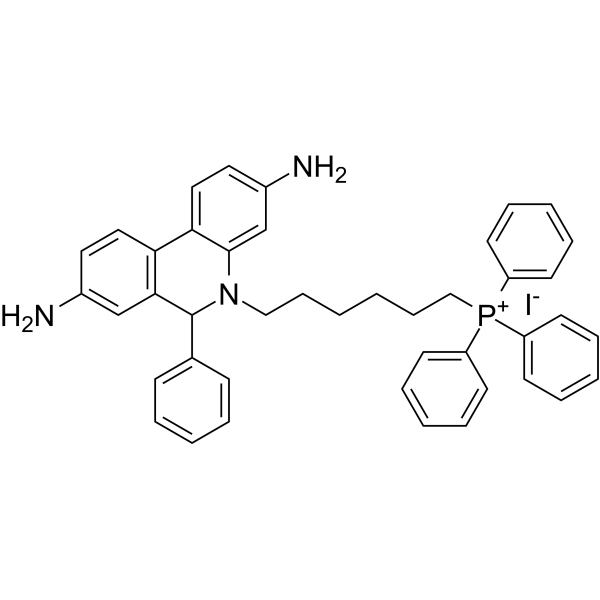
Cat. No.: HY-D1055
CAS No.: 1003197-00-9
MitoSOX Red is a live cell fluorescent probe that specifically targets mitochondria and is cell membrane permeable. MitoSOX Red enters mitochondria and is oxidized by superoxide but not by other ROS or RNS generating systems. The oxidized MitoSOX Red then binds to nucleic acids in mitochondria/nucleus, producing strong red fluorescence. MitoSOX Red can be used as a fluorescent indicator to specifically detect superoxide. In addition, superoxide dismutase (SOD) can prevent the oxidation of MitoSOX Red.
Excitation/emission wavelength: 510/580 nm.
loading...
    loading...
188
188 Cited Publications
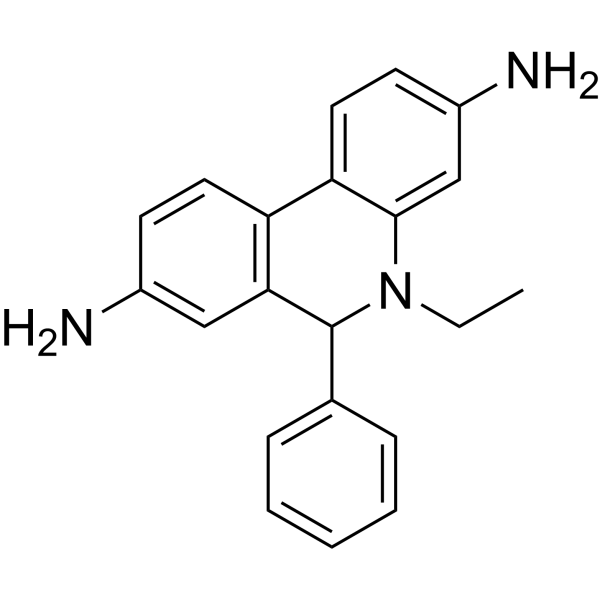
Cat. No.: HY-D0079
CAS No.: 104821-25-2
Synonyms: Hydroethidine; PD-MY 003
Dihydroethidium, also known as DHE, is a peroxide indicator. Dihydroethidium penetrates cell membranes to form a fluorescent protein complex with blue fluoresces. After entering the cells, Dihydroethidium is mainly localized in the cell membrane, cytoplasm and nucleus, and the staining effect is the strongest in the nucleus. Dihydroethidium produces inherent blue fluorescence with a maximum excitation wavelength of 370 nm and a maximum emission wavelength of 420 nm; after dehydrogenation, Dihydroethidium combines with RNA or DNA to produce red fluorescence with a maximum excitation wavelength of 300 nm and a maximum emission wavelength of 610 nm. 535 nm can also be used as the excitation wavelength for actual observation .
loading...
    loading...
126
126 Cited Publications
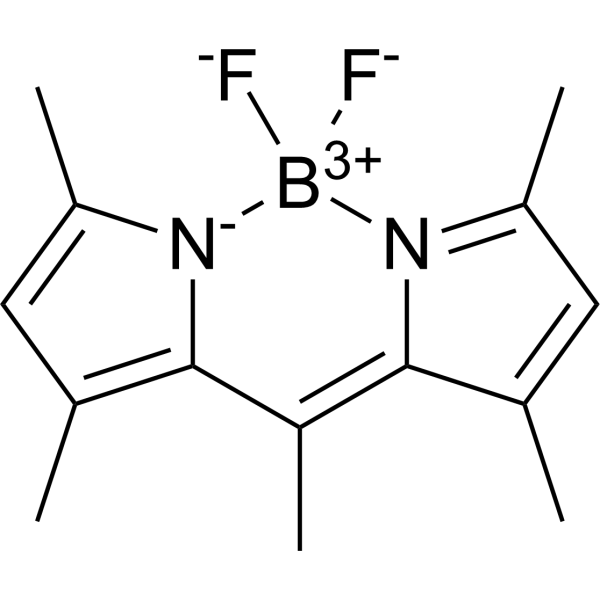
Cat. No.: HY-W090090
CAS No.: 121207-31-6
Synonyms: Pyrromethene 546
BODIPY493/503 is a BODIPY dye. BODIPY dye is a small molecule dye with strong ultraviolet absorption ability, its fluorescence peak is relatively sharp, and the quantum yield is high. They are relatively insensitive to the polarity and pH of the environment and are relatively stable under different physiological conditions. Due to its structural asymmetry, BODIPY derives a variety of structural products. BODIPY lipid droplet dyes can well pass through the cell membrane into the cell, and localize the neutral lipids in the cell to specifically stain the lipid droplets, which can be used for labeling of live cells and fixed cells . Maximum excitation/emission wavelength: 493/503 nm .
loading...
    loading...
102
102 Cited Publications
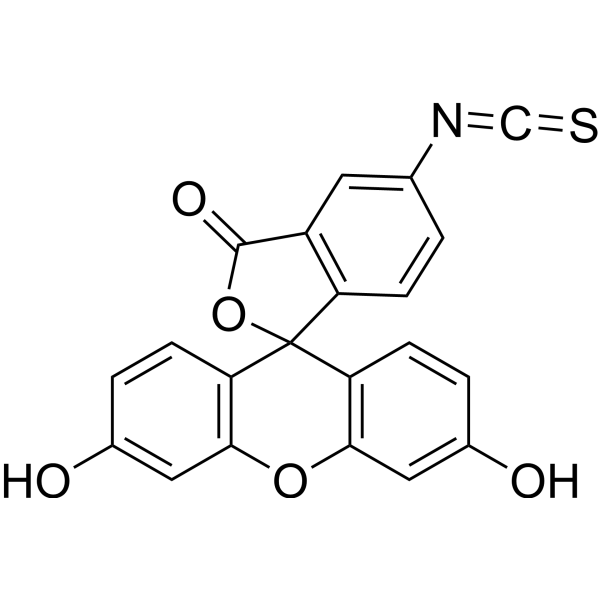
Cat. No.: HY-66019
CAS No.: 3326-32-7
Synonyms: Fluorescein 5-isothiocyanate
FITC (Fluorescein Isothiocyanate), is one of the green fluorescein derivatives widely used in biology. FITC has the characteristics of high absorptivity and excellent fluorescence quantum yield. The isothiocyanate group of FITC can be combined with amino, sulfhydryl, imidazole, tyrosyl, carbonyl and other groups on the protein, so as to achieve protein labeling including antibodies and lectins. In addition to its use as a protein marker, FITC can also be used as a fluorescent protein tracer to rapidly identify pathogens by labeling antibodies, or for microsequencing of proteins and peptides (HPLC). The maximum excitation wavelength of FITC is 494 nm. Once excited, it fluoresces yellow-green at a maximum emission wavelength of 520 nm. In addition, FITC is also a hapten that can induce contact hypersensitivity (CHS) and induce an atopic dermatitis model .
loading...
    loading...
88
88 Cited Publications
Cat. No.: HY-D0041
CAS No.: 148504-34-1
Synonyms: Calcein acetoxymethyl ester
Calcein AM, has cell membrane permeability and can easily enter the cell. Calcein AM has no fluorescence and is hydrolyzed by endogenous esterase in the cell to produce polar molecule Calcein (Calcein), which has strong negative charge and cannot permeate the cell membrane. Calcein can emit strong green fluorescence, so it is often used with Propidium Iodide for cell viability/virulence detection, excitation/emission wavelength: 494/515 nm .
loading...
    loading...
32
32 Cited Publications
Cat. No.: HY-D0218
CAS No.: 2390-54-7
Synonyms: Basic Yellow 1
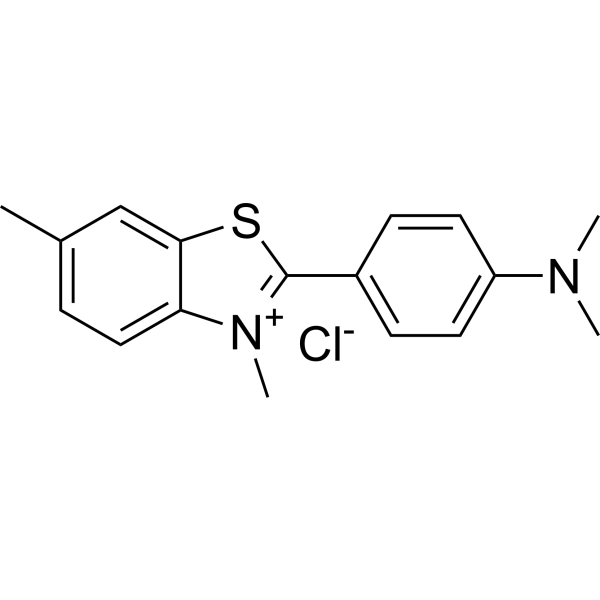
Thioflavin T is a cationic Benzothiazole dye that shows enhanced fluorescence upon binding to amyloid in tissue sections. Excitation max.: ~385 nm (free); ~450 nm (bound); Emission max.: ~445 nm (free); ~485 nm (bound) .
loading...
    loading...
31
31 Cited Publications
Cat. No.: HY-D1913
Fe2Orange is a Fe 2+ selective probe with an excitation wavelength of 543 nm and an emission wavelength of 580 nm. Fe2Orange emits fluorescence after binding to intracellular Fe 2+, thereby achieving specific labeling of Fe 2+. Fe2Orange is used to detect the content and distribution of Fe 2+ in cells .
loading...
    loading...
23
23 Cited Publications
Cat. No.: HY-15558
CAS No.: 23491-44-3
Purity:  99.11%
Synonyms: bisBenzimide H 33258; H 33258
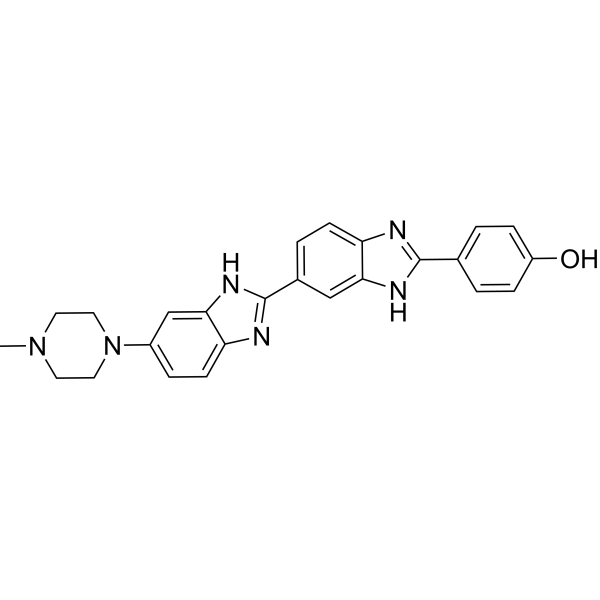
Hoechst 33258 is a blue to blue-green fluorescent live cell dye that can label DNA. Hoechst 33258 can specifically bind to the minor groove of DNA (and tends to bind to A/T-rich DNA), resulting in a significant increase in fluorescence intensity. Hoechst 33258 can cross the cell membrane and cause changes in DNA structure, such as G2/M phase arrest. Hoechst 33258 can bind to live or fixed cells, and the fluorescence intensity increases with increasing solution pH. As a DNA-specific probe, Hoechst 33258 can be used to detect DNA content, analyze cell cycle, etc. The excitation wavelength of Hoechst 33258 is 350-365 nm, and the emission wavelength is 460-490 nm .
loading...
    loading...
23
23 Cited Publications
Cat. No.: HY-D1614
CAS No.: 216434-81-0
Target:  

Fluorescent Dye

Research Areas:  

Others

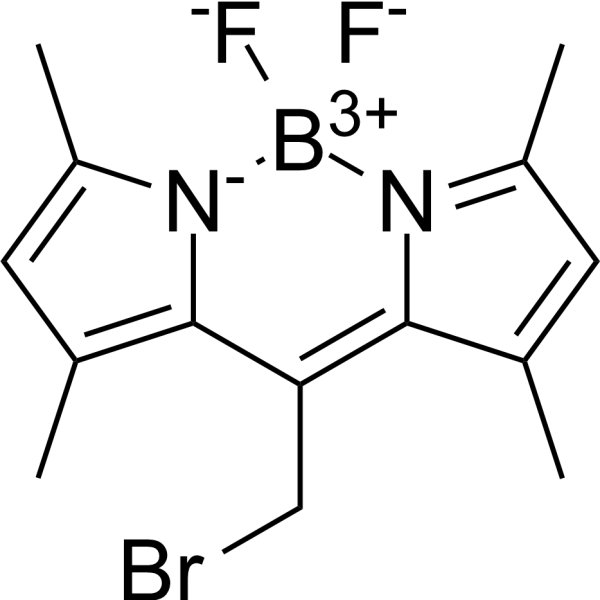
BODIPY493/503 methyl bromide is a BODIPY dye. BODIPY dye is a small molecule dye with strong ultraviolet absorption ability, its fluorescence peak is relatively sharp, and the quantum yield is high. They are relatively insensitive to the polarity and pH of the environment and are relatively stable under different physiological conditions. Due to its structural asymmetry, BODIPY derives a variety of structural products. BODIPY lipid droplet dyes can well pass through the cell membrane into the cell, and localize the neutral lipids in the cell to specifically stain the lipid droplets, which can be used for labeling of live cells and fixed cells . Maximum excitation/emission wavelength: 493/503 nm .
loading...
    loading...
17
17 Cited Publications
Cat. No.: HY-126823
CAS No.: 234075-45-7
Purity:  95.33%
Synonyms: PGSK diacetate (5/6-mixture)
Target:  

Fluorescent Dye

Research Areas:  

Others

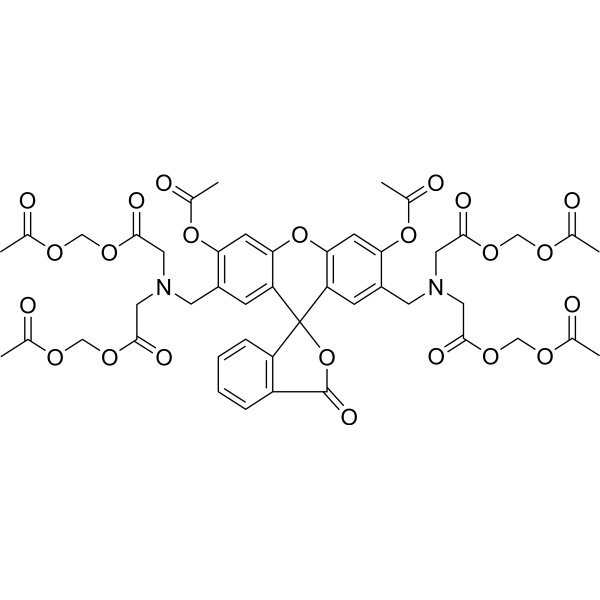
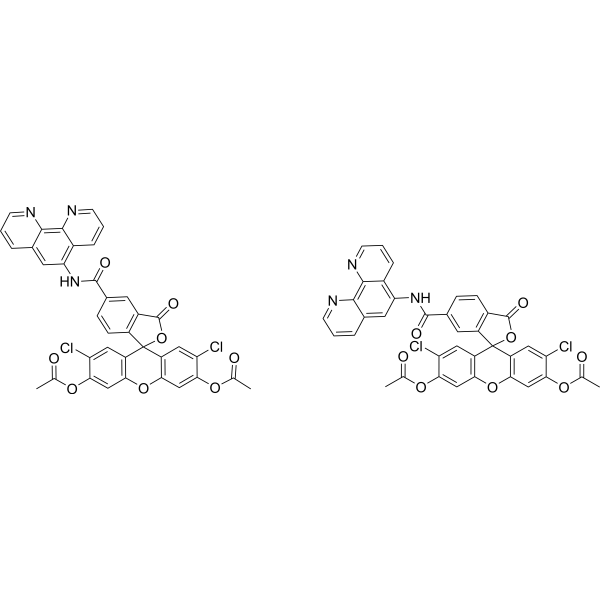
Phen green SK (PGSK) diacetate (PGSK diacetate (5/6-mixture)) is a metal ion-sensitive fluorescent probe that can penetrate cell membranes. Phen green SK (PGSK) diacetate can react with a variety of metal ions, including Fe 2+, Cd 2+, Co 2+, Ni 2+, Zn 2+, etc. Phen green SK (PGSK) diacetate chelates Fe 2+, resulting in fluorescence quenching, which can be restored when a membrane-permeable chelator is added, thereby reflecting the changes in the intracellular chelatable iron pool. The excitation/emission maxima of Phen green SK diacetate are 507/532 nm, respectively .
loading...
    loading...
10
10 Cited Publications
Cat. No.: HY-B1529A
CAS No.: 3458-72-8
Synonyms: Triammonium citrate
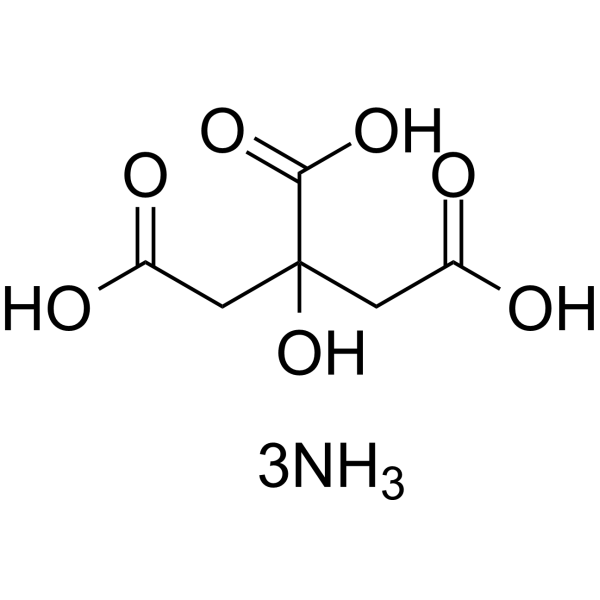
Citric acid triammonium (Triammonium citrate) is formed by Citric acid (HY-N1428) reacting with ammonia in a molar ratio of 1:3. Citric acid triammonium can be used as the carbon source to prepare carbon quantum dots (CDs). Citric acid triammonium with higher nitrogen components might promote the nitrogen-based functional groups in CDs, leading to a more efficient emission-color tunability .
loading...
    loading...
10
10 Cited Publications
Cat. No.: HY-120601
CAS No.: 130-22-3
Purity:  ≥95.0%
Synonyms: ARS sodium
Target:  

Fluorescent Dye

Research Areas:  

Others

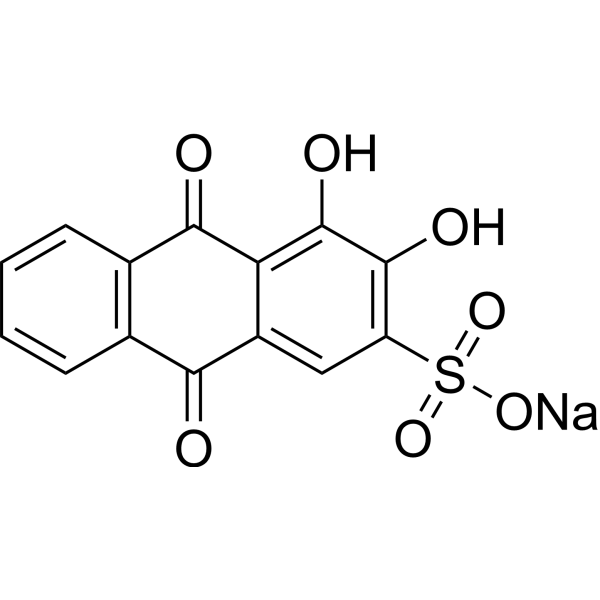
Alizarin Red S sodium is an anthraquinone derivative dye. When combined with cations such as calcium ions, the functional group of Alizarin Red S sodium can form a coordination bond with the cation through the oxygen atom to show orange-red fluorescence. Alizarin Red S sodium can be used for screening of calcium compounds in synovial fluid and detecting osteoblast differentiation, and can also be used for bone staining in mice. Excitation/emission wavelength: 500/570 nm .
loading...
    loading...
10
10 Cited Publications
Cat. No.: HY-120601A
CAS No.: 83-61-4
Synonyms: ARS
Target:  

Fluorescent Dye

Research Areas:  

Others

Alizarin Red S (ARS) is an anthraquinone derivative dye. When combined with cations such as calcium ions, the functional group of Alizarin Red S can form a coordination bond with the cation through the oxygen atom to show orange-red fluorescence. Alizarin Red S can be used for screening of calcium compounds in synovial fluid and detecting osteoblast differentiation, and can also be used for bone staining in mice. Excitation/emission wavelength: 500/570 nm .
loading...
    loading...
5
5 Cited Publications
Cat. No.: HY-P1003
CAS No.: 169332-61-0
Target:  

Fluorescent Dye

Research Areas:  

Others

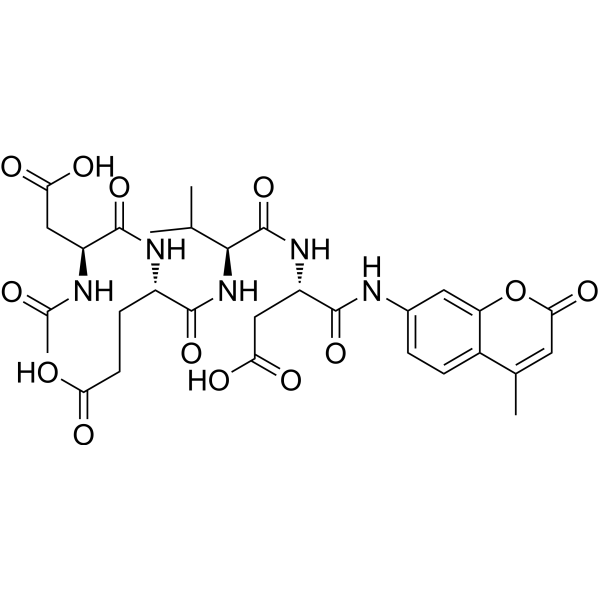
Ac-DEVD-AMC is a fluorescent substrate of caspase-3/caspase-7. When treating Ac-DEVD-AMC with cell lysate, Ac-DEVD-AMC releases amino-4-methylcoumarin (AMC) for fluorescence detection, with an excitation wavelength of 380 nm and an emission wavelength of 460 nm .
loading...
    loading...
5
5 Cited Publications
Cat. No.: HY-W009756
CAS No.: 90-30-2
N-Phenyl-1-naphthylamine is a dye that fluoresces strongly when bound to the inner phospholipid bilayer of Gram-negative bacteria. N-Phenyl-1-naphthylamine can be used to measure outer membrane permeability. N-Phenylnaphthalen-1-amine is a fluorescence probe for odorant-binding proteins (OBP) with a dissociation constant of 1.67 μM. N-Phenylnaphthalen-1-amine exhibits an excitation wavelength of 337 nM and an emission wavelength of 407 nM .
loading...
    loading...
5
5 Cited Publications
Cat. No.: HY-138226
CAS No.: 158757-84-7
Purity:  98.42%
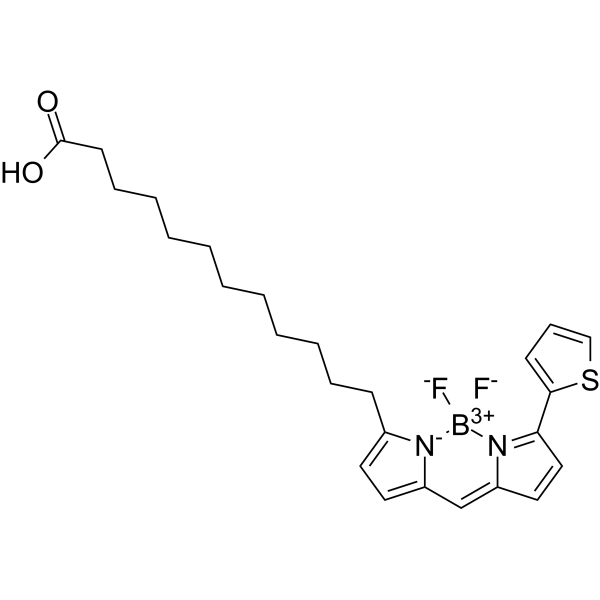
BODIPY 558/568 C12 is a BODIPY dye. BODIPY dye is a small molecule dye with strong ultraviolet absorption ability, its fluorescence peak is relatively sharp, and the quantum yield is high. They are relatively insensitive to the polarity and pH of the environment and are relatively stable under different physiological conditions. Due to its structural asymmetry, BODIPY derives a variety of structural products. BODIPY lipid droplet dyes can well pass through the cell membrane into the cell, and localize the neutral lipids in the cell to specifically stain the lipid droplets, which can be used for labeling of live cells and fixed cells . Maximum excitation/emission wavelength: 558/568 nm .
loading...
    loading...
4
4 Cited Publications
Cat. No.: HY-D1373
CAS No.: 156840-13-0
Synonyms: HBC 530
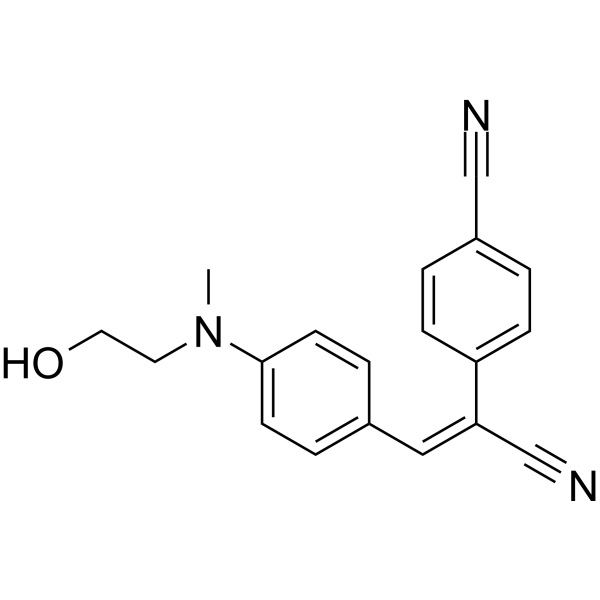
HBC (HBC 530) is a GFP fluorophore-like synthetic dye, with a structurally rigid electron acceptor and a strong electron donor. HBC has a low fluorescence background, and when combined with Pepper (RNA aptamer), HBC forms a tight complex and activates and emits bright fluorescence (Kd of ~3.5 nM). HBC emission peaks vary in different complexes and covers the spectrum from cyan to red. HBC can be used in the live cell imaging of RNA (Em/Ex = 530/485 nm) .
loading...
    loading...
4
4 Cited Publications
Cat. No.: HY-D2449
DQ-BSA-Red is a bovine serum albumin labeled with a red fluorescent dye that can be used to detect lysosomal activity. The excitation wavelength and emission wavelength of DQ-BSA-Red are 590 nm and 620 nm, respectively. The BSA molecule in DQ-BSA-Red is labeled with high concentration of red fluorescent dye in multiple sites, which shows high fluorescence self-inhibition. Once DQ-BSA-RED enters the lysosome, DQ-BSA is cleaved by lysosomal proteases, resulting in unquenched and released fluorescent fragments, emitting bright fluorescence. Inactivated lysosomes are unable to degrade the BSA protein and thus have a lower or even no fluorescent signal .
loading...
    loading...
4
4 Cited Publications
Cat. No.: HY-153006
CAS No.: 106070-31-9
Purity:  99.14%
Synonyms: DCFH2
Research Areas:  

Others

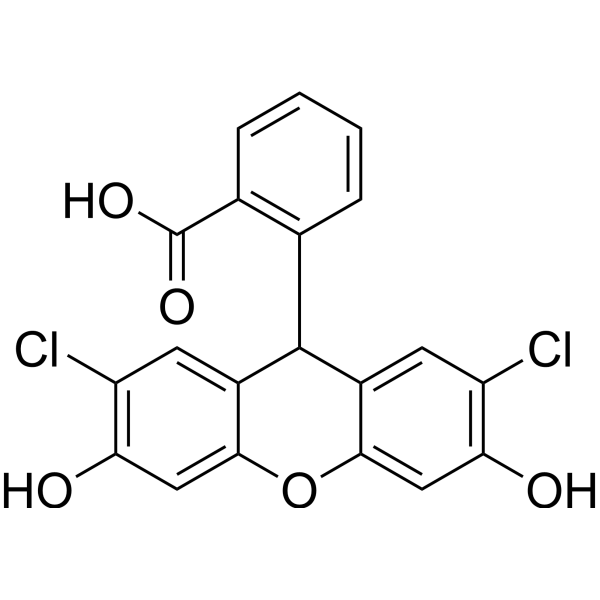
2,7-Dichlorodihydrofluorescein (DCFH2) is a non-fluorescent reactive oxygen species (ROS) probe with an excitation wavelength of 485-500 nm and an emission wavelength of 515-530 nm. 2,7-Dichlorodihydrofluorescein is first hydrolyzed by intracellular esterases and then oxidized by ROS to generate non-biomembrane-permeable, highly fluorescent 2,7-dichlorofluorescein (DCF). The fluorescence intensity of DCF is positively correlated with the ROS concentration. 2,7-Dichlorodihydrofluorescein can undergo oxidation reactions with a variety of ROS (such as ·OH, H2O2, ONOO -, etc.) and is used to quantitatively detect the level of oxidative stress inside and outside cells. It is suitable for oxidative stress analysis in in vitro cell models and in vivo targeted delivery (such as liver-targeted liposomes) .
loading...
    loading...
3
3 Cited Publications
Cat. No.: HY-15942
CAS No.: 91809-66-4
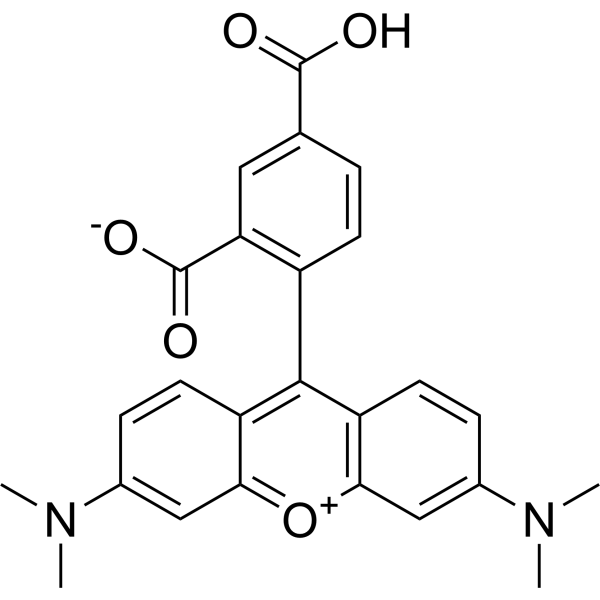
5-TAMRA can produce bright, pH-insensitive orange-red fluorescence (excitation and emission extremes of 546/579) and has good photostability. 5-TAMRA is mainly used as a fluorescent marker for the synthesis and study of specific oligonucleotide probes .
loading...
    loading...

