1. Search Result
Search Result
Results for "

fluorescence indicator

" in MedChemExpress (MCE) Product Catalog:

31

Inhibitors & Agonists

24

Fluorescent Dyes

3

Biochemical Assay Reagents

Cat. No. Product Name Target Research Areas Chemical Structure
  • HY-D1055
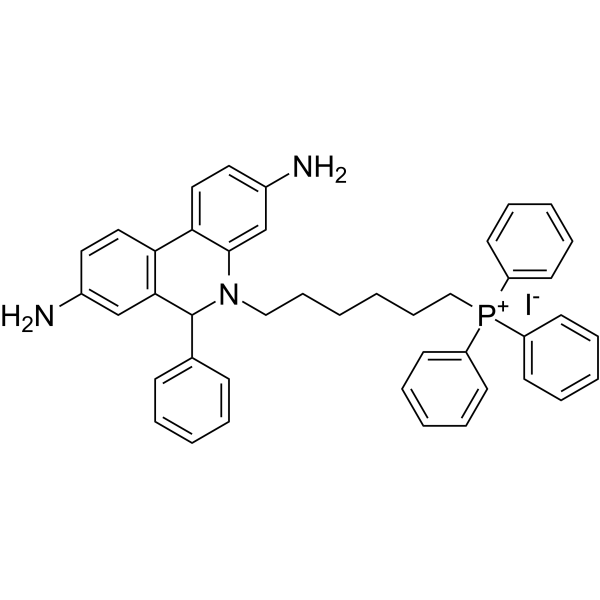
    MitoSOX Red
    Maximum Cited Publications
    263 Publications Verification

    Fluorescent Dye Reactive Oxygen Species (ROS) Mitochondrial Metabolism Cancer
    MitoSOX Red is a live cell fluorescent probe that specifically targets mitochondria and is cell membrane permeable. MitoSOX Red enters mitochondria and is oxidized by superoxide but not by other ROS or RNS generating systems. The oxidized MitoSOX Red then binds to nucleic acids in mitochondria/nucleus, producing strong red fluorescence. MitoSOX Red can be used as a fluorescent indicator to specifically detect superoxide. In addition, superoxide dismutase (SOD) can prevent the oxidation of MitoSOX Red.
    Excitation/emission wavelength: 510/580 nm.
    MitoSOX Red
  • HY-D0079
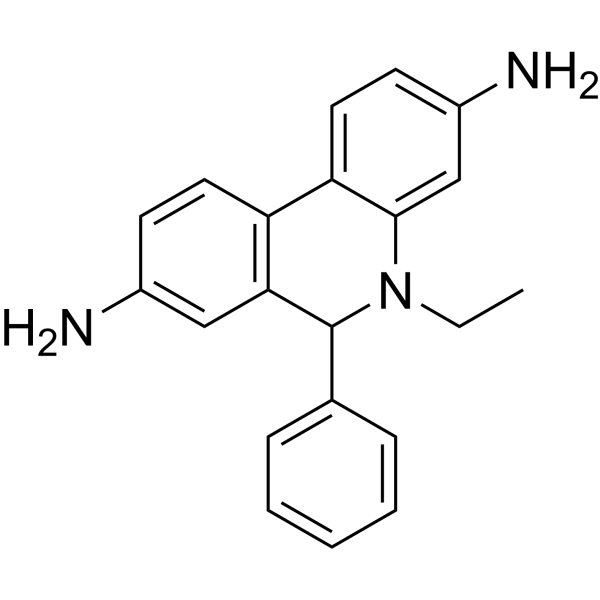
    Dihydroethidium
    170+ Cited Publications

    Hydroethidine; PD-MY 003

    Fluorescent Dye Others
    Dihydroethidium, also known as DHE, is a peroxide indicator. Dihydroethidium penetrates cell membranes to form a fluorescent protein complex with blue fluoresces. After entering the cells, Dihydroethidium is mainly localized in the cell membrane, cytoplasm and nucleus, and the staining effect is the strongest in the nucleus. Dihydroethidium produces inherent blue fluorescence with a maximum excitation wavelength of 370 nm and a maximum emission wavelength of 420 nm; after dehydrogenation, Dihydroethidium combines with RNA or DNA to produce red fluorescence with a maximum excitation wavelength of 300 nm and a maximum emission wavelength of 610 nm. 535 nm can also be used as the excitation wavelength for actual observation .
    Dihydroethidium
  • HY-D0720
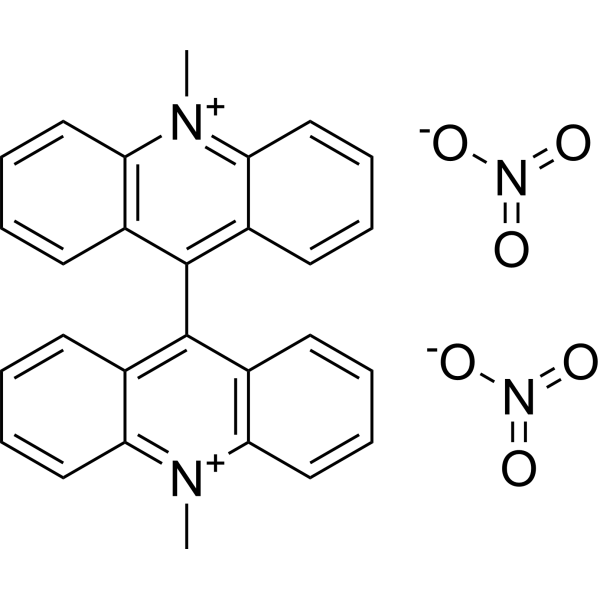
    Lucigenin
    5+ Cited Publications

    NSC-151912; L-6868

    Fluorescent Dye Reactive Oxygen Species (ROS) Others
    Lucigenin is a chemiluminescence probe. Lucigenin can be used to detect the production of endogenous superoxide anion radical (O 2-). Lucigenin is extremely sensitive to chloride ions, while it combined with chloride ions, the fluorescence will be quenched. Lucigenin also can be used as a chloride indicator. Ex/Em=455/505 nm .
    Lucigenin
  • HY-D0155
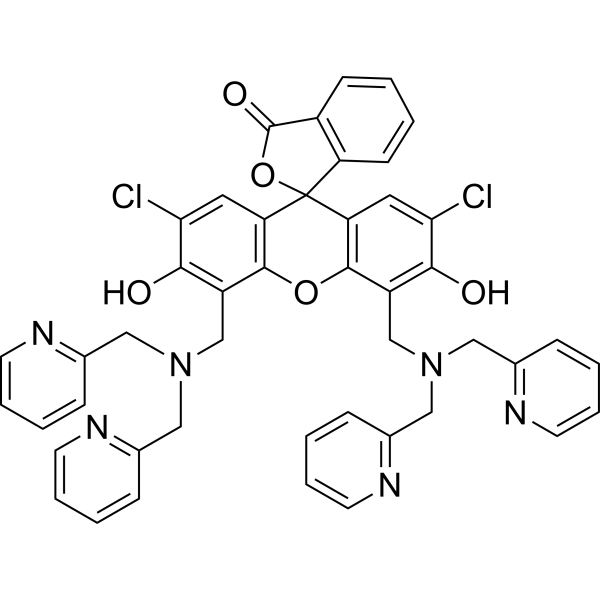
    Zinpyr-1
    4 Publications Verification

    Fluorescent Dye Others
    Zinpyr-1 is a zinc-responsive fluorescent indicator and a membrane-permeable metal-binding probe. Zinpyr-1 forms a complex with Mn 2+ ions and generates a fluorescence turn-on signal. Zinpyr-1 binds to free zinc ions in serum, enabling quantitative detection of free zinc concentration. Zinpyr-1 produces fluorescence signals reflecting the relative zinc concentration in plant root cells, localizes to specific layers of plant root cells, and can be used to support analyses related to plant zinc transporter mutations and homeostasis .
    Zinpyr-1
  • HY-D1247

    Biochemical Assay Reagents Others
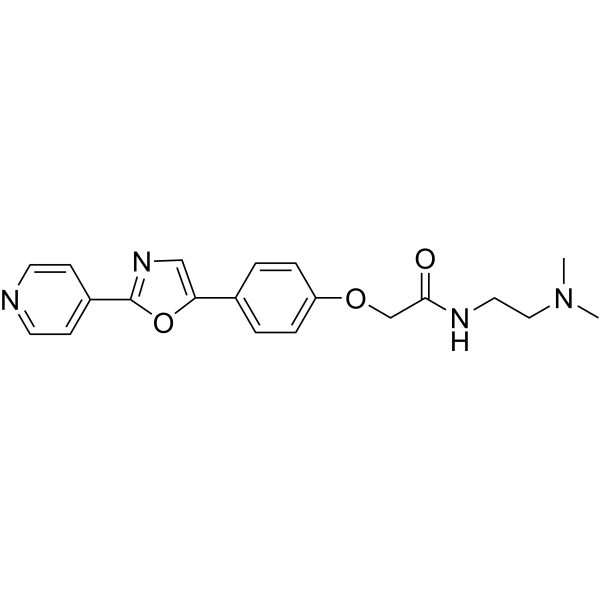
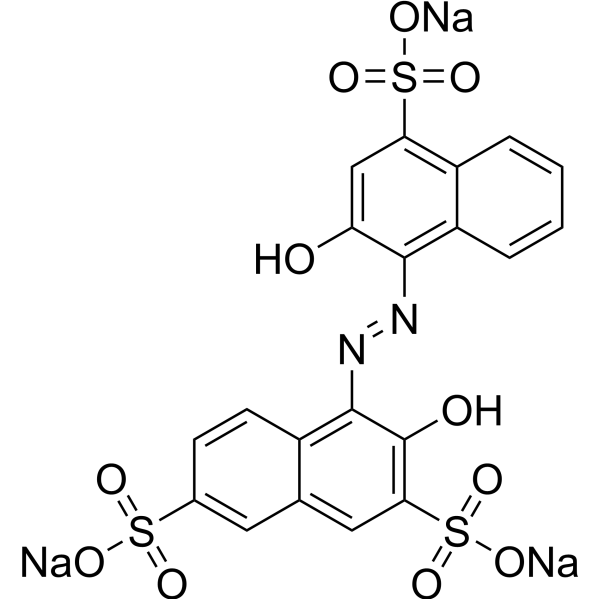
    Hydroxynaphthol Blue is an azo dye and serves as a metal indicator. Hydroxynaphthol Blue binds to specific metal ions to form stable complexes with distinct color and fluorescence properties. Hydroxynaphthol Blue is used for the visual monitoring of isothermal nucleic acid amplification results. A visible color difference appears between positive and negative nucleic acid amplification reactions, allowing result discrimination by the naked eye without opening the reaction tube .
    Hydroxynaphthol Blue
  • HY-D1445
    LysoSensor PDMPO
    1 Publications Verification

    Fluorescent Dye Metabolic Disease
    PDMPO, a lysosome pH indicator, is an excellent fluorescent acidotropic reagent for fluorescence imaging. PDMPO is a potent tool with which to study acidic organelles of live cells. PDMPO exhibits pH-dependent dual-excitation and dual-emission spectral peaks. PDMPO produces a blue fluorescence in weakly acidic organelles and shifts to yellow in more acidic lysosomes. (Abs=329 nm; Em=440/540 nm) .
    LysoSensor PDMPO
  • HY-D0077

    Oregon green 488

    Fluorescent Dye Others
    2',7'-Difluorofluorescein (Oregon green 488) is a fluorescein derivative and a pH-sensitive fluorescent probe (pKa ~4.7). Upon excitation at 488 nm, 2',7'-Difluorofluorescein exhibits pH-sensitive fluorescence intensity through the formation of dianions, while its pH sensitivity decreases under excitation at 450 nm, allowing its use in ratiometric pH analysis. 2',7'-Difluorofluorescein can be used for the quantitative analysis of pH values in the range of 2-7 in submicron aerosol particles. 2',7'-Difluorofluorescein undergoes buffer-mediated and buffer-free excited-state proton transfer between different protonated forms, and its cationic form undergoes rapid excited-state deprotonation. 2',7'-Difluorofluorescein is resistant to photodegradation, maintains stable absorption and fluorescence properties within the physiological pH range, and serves as a fluorescent protein label, a component of Ca 2+ indicators, a fluorescent imaging agent, and an anisotropy probe .
    2',7'-Difluorofluorescein
  • HY-D0916

    YOYO 1; YOYO1

    Fluorescent Dye Others
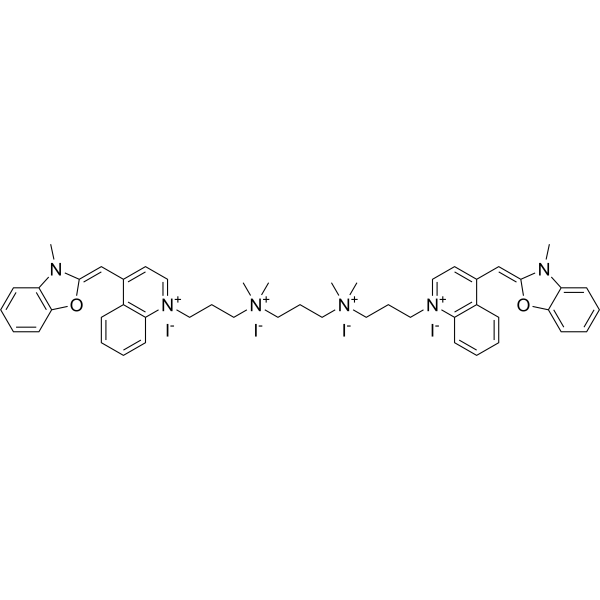
    Thiazole orange dimer YOYO 1 (YOYO 1) is a cell-impermeable cyanine dimer with no inherent fluorescence, and its fluorescence intensity increases significantly upon binding to double-stranded DNA (dsDNA) . Thiazole orange dimer YOYO 1 can serve as a nuclear counterstain or a dead cell indicator (Ex/Em = 505/512 nm).
    Thiazole orange dimer YOYO 1
  • HY-D0142

    Fluorescent Dye Others
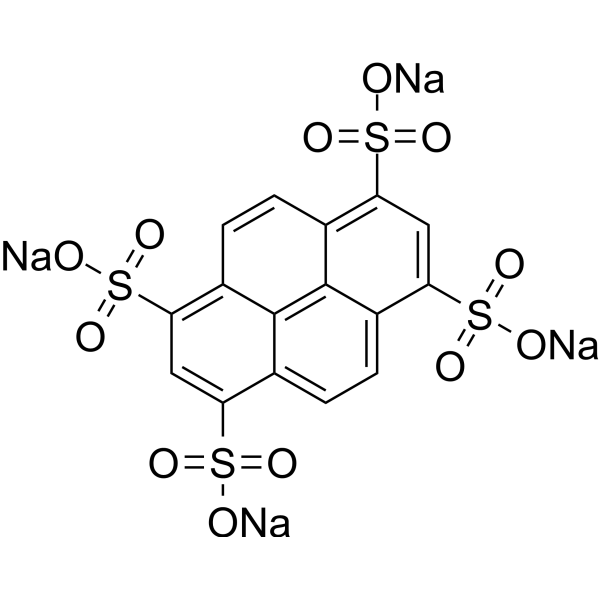
    Pyrene-1,3,6,8-tetrasulfonic acid tetrasodium is a fluorescent dye and pH indicator, also as a ligand of multifunctional metal-organic framework. Pyrene-1,3,6,8-tetrasulfonic acid tetrasodium has been used to detect CO2 release. Pyrene-1,3,6,8-tetrasulfonic acid tetrasodium acts as a water-soluble fluorescent dye for fluorescence quenching assays monitoring gramicidin ion-channel activity .
    Pyrene-1,3,6,8-tetrasulfonic acid tetrasodium
  • HY-DY1015

    Fluorescent Dye Others
    Dihydroethidium (solution) , also known as DHE, is a peroxide indicator. Dihydroethidium penetrates cell membranes to form a fluorescent protein complex with blue fluoresces. After entering the cells, Dihydroethidium is mainly localized in the cell membrane, cytoplasm and nucleus, and the staining effect is the strongest in the nucleus. Dihydroethidium produces inherent blue fluorescence with a maximum excitation wavelength of 370 nm and a maximum emission wavelength of 420 nm; after dehydrogenation, Dihydroethidium combines with RNA or DNA to produce red fluorescence with a maximum excitation wavelength of 300 nm and a maximum emission wavelength of 610 nm. 535 nm can also be used as the excitation wavelength for actual observation .
    Solvent and concentration: DMSO: 5 mM
    Dihydroethidium (solution)
  • HY-158741

    APG-2 Acetoxymethyl ester

    Fluorescent Dye Potassium Channel Others
    IPG-2 AM (APG-2 Acetoxymethyl ester) is a membrane-permeant acetoxymethyl ester derivative and selective fluorescent potassium ion indicator. IPG-2 AM exhibits fluorescence increases proportional to extracellular potassium ion concentrations. IPG-2 AM enables real-time monitoring of cytosolic free potassium ion fluxes in human platelets and macrophages. IPG-2 AM can be used for the research of intracellular potassium concentration dynamics .
    IPG-2 AM
  • HY-D1556

    1,2-dioleoyl-sn-glycero-3-phosphoethanolamine-N-(carboxyfluorescein) ammonium

    Fluorescent Dye Cancer
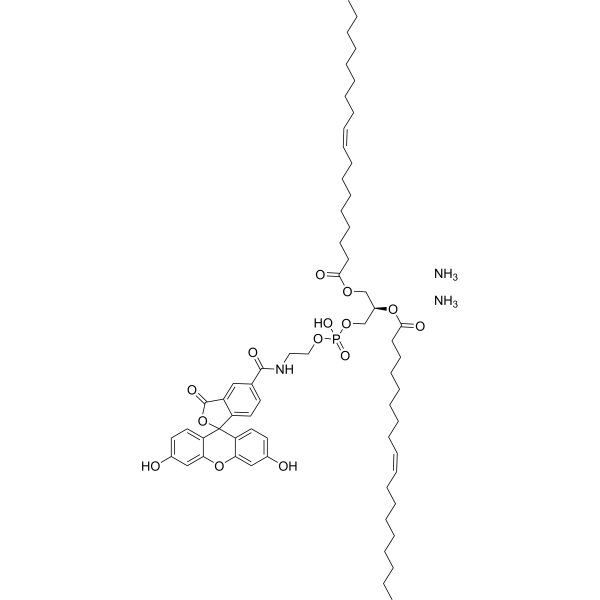
    18:1 PE CF (1,2-dioleoyl-sn-glycero-3-phosphoethanolamine-N-(carboxyfluorescein) (ammonium)) is a pH-sensitive fluorescent indicator. 18:1 PE CF exhibits changes in fluorescence intensity in response to pH variations and reflects the electrostatic states of cationic liposomes and lipoplexes. 18:1 PE CF supports real-time visualization of pH distribution and membrane deformation in giant unilamellar vesicles and is suitable for steady-state fluorescence testing in large unilamellar vesicle membranes. 18:1 PE CF is capable of monitoring the surface electrical potential of cationic liposomes and lipoplexes and can effectively label lipid bilayers and nanomicelles. 18:1 PE CF can be used for the research of the investigation of lung cancer (Ex = 495 nm; Em = 520 nm) .
    18:1 PE CF
  • HY-D1442

    Fluorescent Dye Others
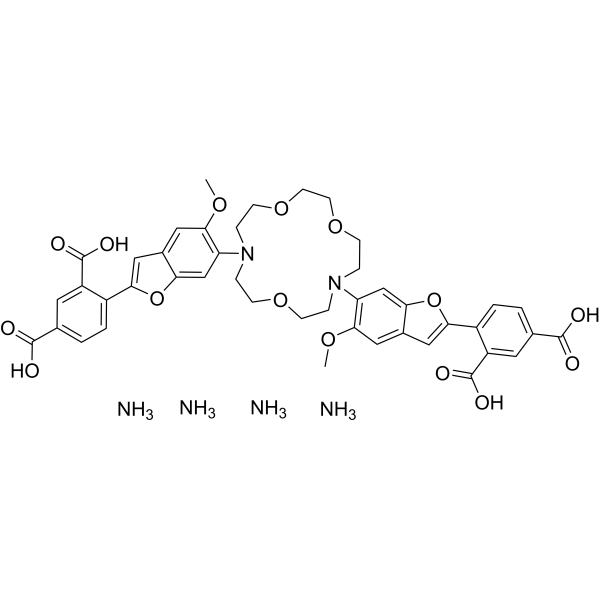
    SBFI (tetraammonium), the tetraammonium salt of SBFI, is a cell-impermeant sodium fluorescence indicator. SBFI (tetraammonium) is sodium-sensitive dye. The excitation wavelength is set 333 nm, and the emission wavelength is 539 nm for SBFI .
    SBFI tetraammonium
  • HY-D0121

    Fluorescent Dye Others
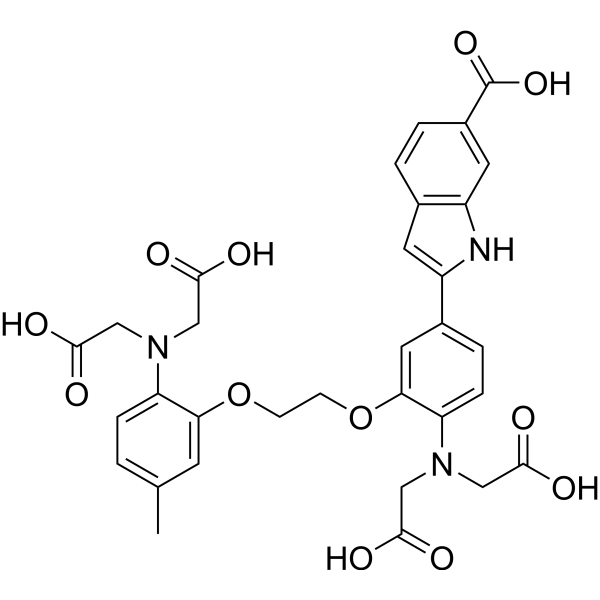
    INDO 1 is a cell-impermeant fluorescent Ca 2+ indicator, binds specifically to Ca 2+ while emitting fluorescence, the maximum emission wavelength shifts from 485 nm before binding to 410 nm .
    INDO 1
  • HY-W127781

    Fluorescent Dye Others
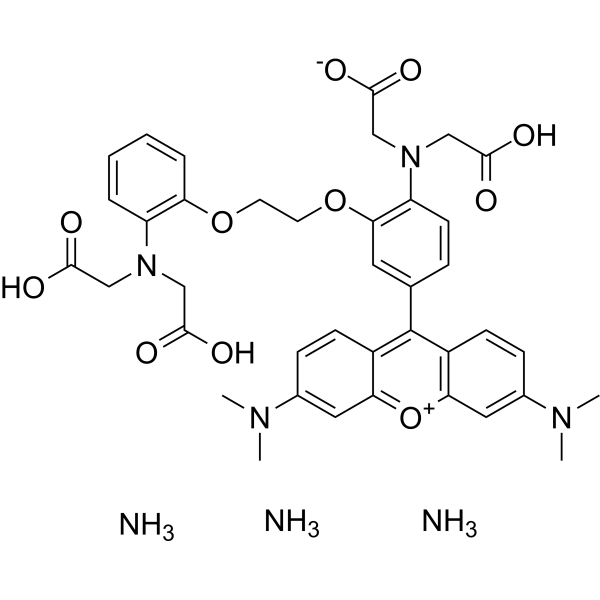
    Rhod-2 triammonium is a cell impermeant, red fluorescent calcium indicator. Rhod-2 triammonium exhibits a significant shift in fluorescence intensity upon calcium binding (ex max=549 nm; calcium-free v. ex/em max=552/581 nm; calcium-bound). Unlike the UV-excitable indicators Fura-2 and Indo-1 (HY-D0121), there is no accompanying spectral shift .
    Rhod-2 triammonium
  • HY-172627

    Fluorescent Dye Calcium Channel Others
    Rhod-FF tripotassium is a Rhod-2 derivative and cell-impermeant calcium indicator (Kd of 320 μM). Rhod-FF tripotassium indicates calcium concentration by fluorescence upon binding to calcium ions, with excitation at 552 nm and emission at 580 nm .
    Rhod-FF tripotassium
  • HY-137103

    Fluorescent Dye Others
    BTC-AM is a low affinity calcium indicator. BTC-AM has substantial calcium-independent fluorescence at all excitation wavelengths. BTC-AM is readily loaded into neurons and is rapidly hydrolysed .
    BTC-AM
  • HY-D2952

    Fluorescent Dye Others
    BOCA-1-BG is a BODIPY-labeled SNAP tag fluorescence probe. BOCA-1-BG can be used to detect Ca 2+ concentration and serves as a highly sensitive Ca 2+ fluorescent indicator .
    BOCA-1-BG
  • HY-126821A

    Fluorescent Dye Others
    Fluo-3 pentaammonium is a cell-impermeable calcium ion (Ca 2+) indicator. Fluo-3 pentaammonium itself is not fluorescent, but it becomes fluorescent after binding to calcium ions (Ex/Em = 488/525 nm) .
    Fluo-3 pentaammonium
  • HY-D1769

    Fluorescent Dye Others
    N-hydroxy Rhodamine B amide is a ClO - indicator, which is hydrolyzed to prduce fluorescence in the presence of ClO -. The fluorescence intensity of N-hydroxy Rhodamine B amide is proportional to the product, thus can be used to quantify ClO -.
    N-hydroxy Rhodamine B amide
  • HY-D1477

    Fluorescent Dye Others
    5(6)-Carboxyfluorescein diisobutyrate is a protected 5(6)-carboxyfluorescein. 5(6)-carboxyfluorescein is a fluorescence pH indicator .
    5(6)-Carboxyfluorescein diisobutyrate
  • HY-D0121A

    Fluorescent Dye Others
    INDO 1 pentapotassium is a cell-impermeant fluorescent Ca 2+ indicator, binds specifically to Ca 2+ while emitting fluorescence, the maximum emission wavelength shifts from 485 nm before binding to 410 nm .
    INDO 1 pentapotassium
  • HY-136784A

    Fluorescent Dye Others
    Rhod-2 sodium is a cell impermeant, red fluorescent calcium indicator. Rhod-2 sodium exhibits a significant shift in fluorescence intensity upon calcium binding (ex max=549 nm; calcium-free v. ex/em max=552/581 nm; calcium-bound). Unlike the UV-excitable indicators Fura-2 and Indo-1 (HY-D0121), there is no accompanying spectral shift .
    Rhod-2 sodium
  • HY-136784

    Fluorescent Dye Others
    Rhod-2 potassium is a cell impermeant, red fluorescent calcium indicator. Rhod-2 potassium exhibits a significant shift in fluorescence intensity upon calcium binding (ex max=549 nm; calcium-free v. ex/em max=552/581 nm; calcium-bound). Unlike the UV-excitable indicators Fura-2 and Indo-1 (HY-D0121), there is no accompanying spectral shift .
    Rhod-2 potassium
  • HY-147181

    Fluorescent Dye Others
    1,3-Di-(2-pyrenyl)propane is a fluorescent indicator. 1,3-Di-(2-pyrenyl)propane can be used in fluidity of bacterial membrane lipids monitored by intramolecular excimerization. 1,3-Di-(2-pyrenyl)propane shows temperature dependence of fluorescence lifetime distributions .
    1,3-Di-(2-pyrenyl)propane
  • HY-D1755

    Fluorescent Dye Others
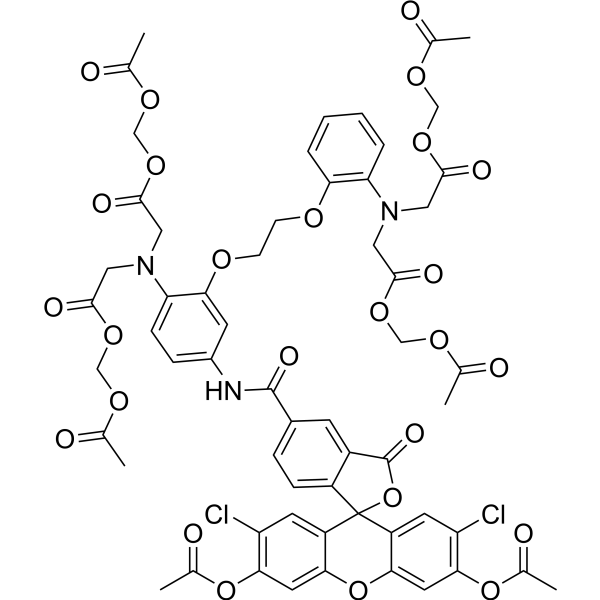
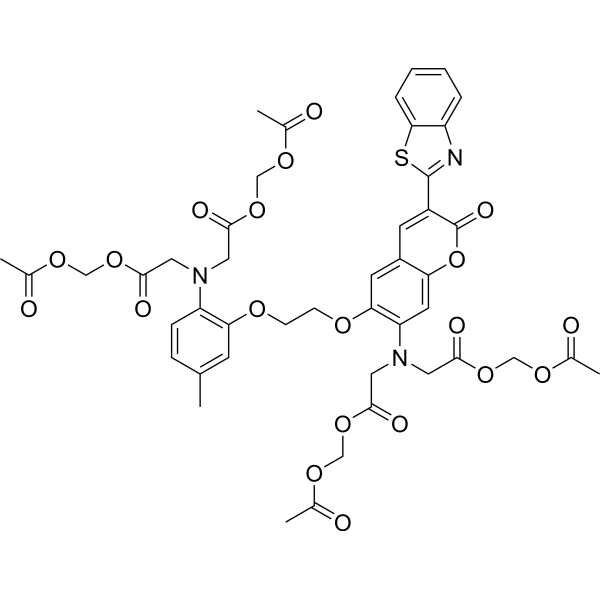
    Fluo-3FF AM is a low affinity (Kd = 42 μM) fluorescent Ca 2+ sensitive indicator (Abs/Em = 462 nm/526 nm). Fluo-3FF AM is Mg 2+ insensitive and relatively photostable. Fluo-3FF AM is an analog of Fluo-3FF AM. Fluo-3FF AM is essentially non-fluorescent, but exhibits a strong fluorescence enhancement upon entry into cells and binding to calcium.
    Fluo-3FF AM
  • HY-172577

    Ion potassium green-4 TMA

    Fluorescent Dye Potassium Channel Others
    IPG-4 (Ion potassium green-4) TMA is an extracellular potassium ion fluorescence indicator with an Ex/Em ratio of 525/545 nm. IPG-4 TMA can be used for real-time monitoring and quantitative analysis of the transport of the biological electrochemical ion pump K⁺ .
    IPG-4 TMA
  • HY-167255

    Fluorescent Dye Others
    JC-10 is a lipophilic mitochondrial membrane potential indicator and is a fluorescent dye. JC-10 accumulates and aggregates in healthy mitochondria to emit red fluorescence; exists as a monomer emitting green fluorescence in the cytosol or apoptotic cells with collapsed mitochondrial membrane potential, enabling measurement of mitochondrial depolarization via the green/red fluorescence ratio .
    JC-10
  • HY-D3447

    Fluorescent Dye Ferroptosis Others
    LPd peroxida probe-2 (Compound I-1) is a lipid peroxidation fluorescent indicator (Ex = 488 nm, Em = 535 nm). LPd peroxida probe-2 undergoes fluorescence spectral changes in response to lipid hydroperoxides and can be used for Ferroptosis detection and cell imaging.
    LPd peroxida probe-2
  • HY-D3152

    Fluorescent Dye Others
    NRh-Cu is a highly sensitive near-infrared fluorescence turn-on indicator and Cu 2+-selective probe (λex=680 nm, λem=740 nm). When NRh-Cu interacts with Cu 2+, it undergoes a structural transition from a non-fluorescent spirocyclic state to a fluorescent ring-opened state, which drives the enhancement of fluorescence emission. NRh-Cu can be used for Cu 2+ imaging in live cells and in vivo .
    NRh-Cu
  • HY-D3222

    Fluorescent Dye Neurological Disease
    NIR-PN1 is a blood-brain barrier-permeable near-infrared fluorescent indicator targeting peroxynitrite anion (ONOO ) (Ex/Em = 510 nm/670 nm). NIR-PN1 reacts with ONOO to trigger a strong near-infrared fluorescence enhancement, enabling the detection of ONOO flux. NIR-PN1 allows the imaging of ONOO flux in various Parkinson's disease models. NIR-PN1 is applicable to Parkinson's disease-related research .
    NIR-PN1

Inquiry Online

Your information is safe with us. * Required Fields.

Salutation


Country or Region *

Applicant Name *


Organization Name *

Department *


Email Address *


Product Name *

Cat. No.


Requested quantity *

Phone Number *


Remarks

Inquiry Online

Inquiry Information

Product Name:
Cat. No.:
Quantity:
MCE Japan Authorized Agent:

