
Search Result
Results for "
fluorescent peptide
" in MedChemExpress (MCE) Product Catalog:
2
Biochemical Assay Reagents
1
Isotope-Labeled Compounds
| Cat. No. |
Product Name |
Target |
Research Areas |
Chemical Structure |
-
- HY-D0017
-
|
DNSCl
|
Fluorescent Dye
|
Others
|
|
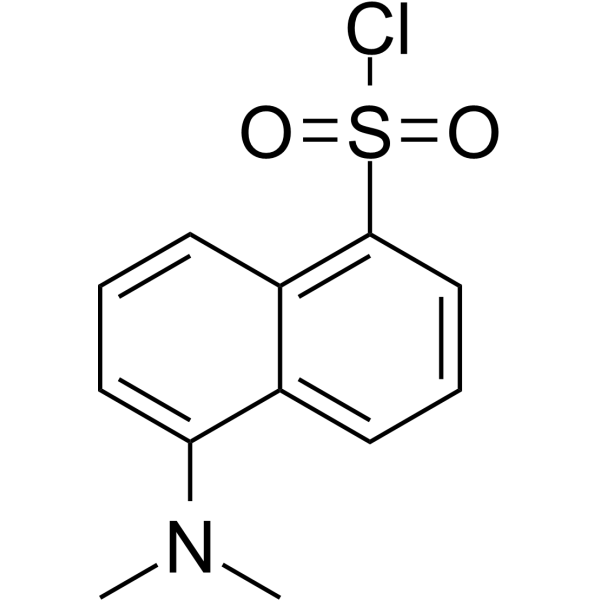
Dansyl chloride is a reagent that produces stable blue or blue-green fluorescent sulfonamide adducts in the reaction of aliphatic and aromatic amines with primary amino groups, and is widely used for modified amino acids, protein sequencing and amino acid analysis .
|
-
-
- HY-66022
-
5-FAM
4 Publications Verification
5-Carboxyfluorescein
|
Fluorescent Dye
|
Others
|
|
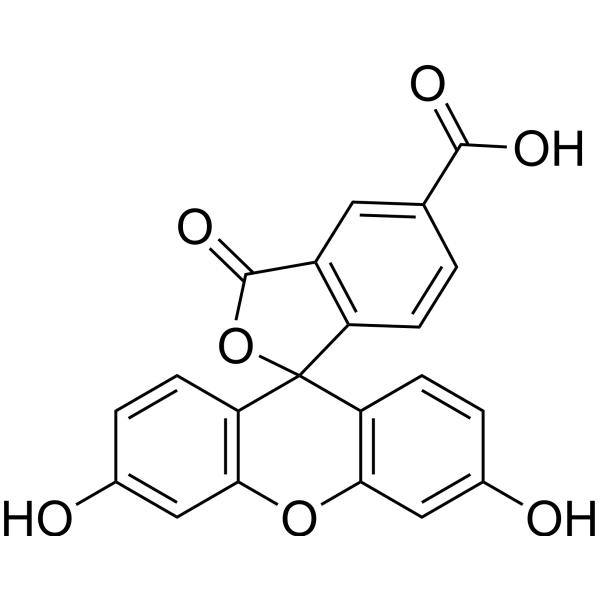
5-FAM (5-Carboxyfluorescein) is a green fluorescent reagent used for in situ labeling peptides, proteins and nucleotides. 5-FAM is a single isomer with Ex/Em of 490 nm/520 nm .
|
-
-
- HY-138200
-
|
Cyanine5 maleimide
|
DNA Stain
Fluorescent Dye
|
Others
|
|
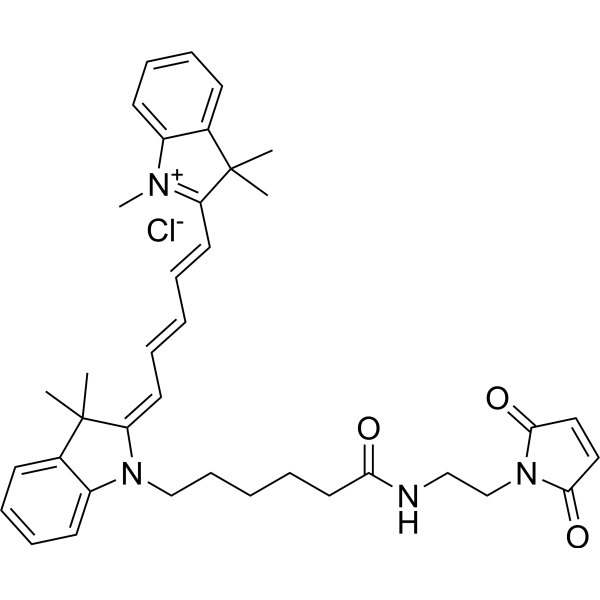
Cy5 maleimide (Cyanine5 maleimide) is a single-reactive dye containing a maleimide group and a CY5 fluorescent group, which can selectively couple with a thiol group. Cy5 maleimide can be used to label antibodies, peptides, or proteins (Ex/Em = 646/664 nm).
|
-
-
- HY-15944
-
|
5(6)-Carboxytetramethylrhodamine
|
Fluorescent Dye
|
Others
|
|
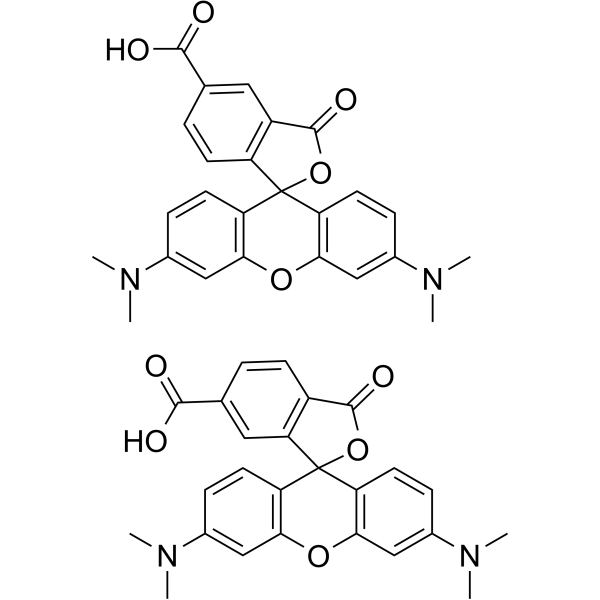
5(6)-TAMRA (5(6)-Carboxytetramethylrhodamine) is a fluorescent dye molecule widely used as a label for peptides and proteins (Ex/Em = 520/600 nm).
|
-
-
- HY-D0715
-
|
Ro 20-7234
|
Fluorescent Dye
|
Others
|
|
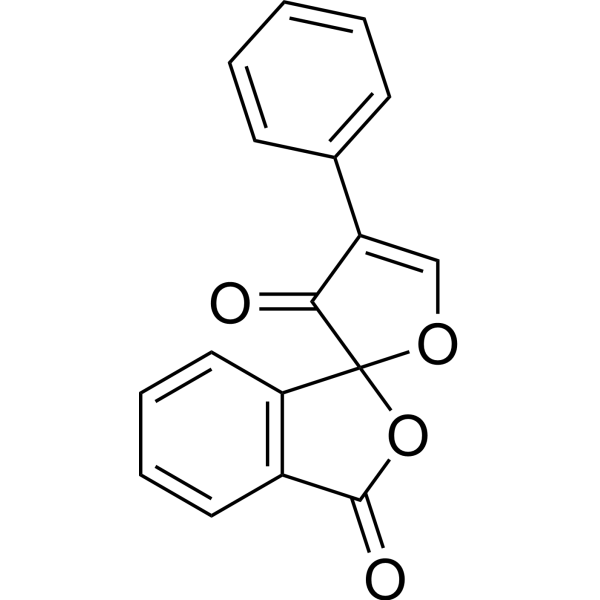
Fluorescamine is a spirocyclic compound that is non-fluorescent. Fluorescamine reacts rapidly with primary amine groups in proteins under alkaline conditions to generate products with strong fluorescence (Ex/Em: 390/475 nm). Fluorescamine can be used to detect amine-containing compounds, including amino acids, peptides, and proteins .
|
-
-
- HY-135414
-
|
|
Fluorescent Dye
|
Others
|
|
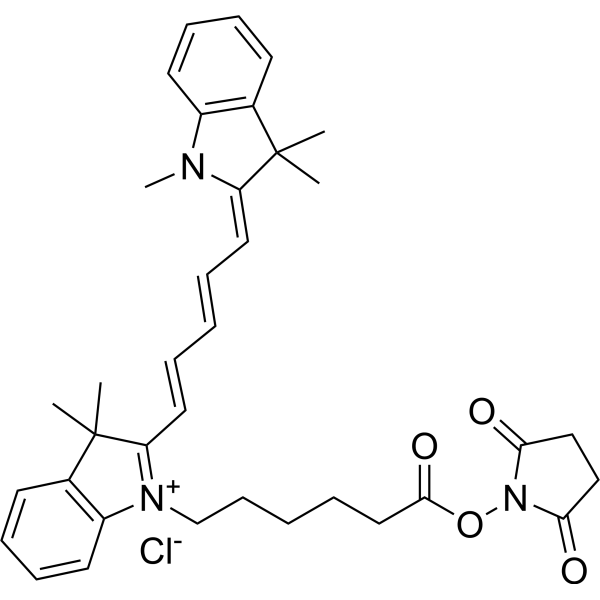
Cyanine5 NHS ester chloride is a red emitting fluorescent dye for labeling of amino-groups in peptides, proteins, and oligonucleotides .
|
-
-
- HY-15938
-
|
|
Fluorescent Dye
|
Others
|
|
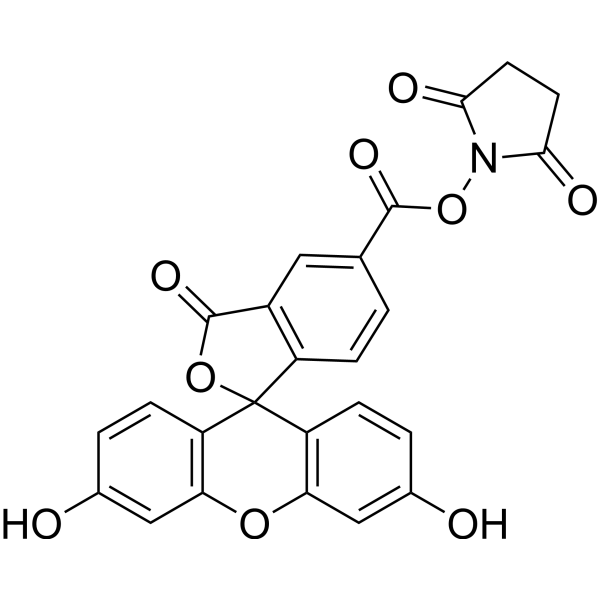
5-FAM SE is a single isomer, is a fluorescent labeling reagent used for labeling peptides, proteins and nucleotides. 5-FAM SE can react with amines and can yield stable amine conjugates .
|
-
-
- HY-79647
-
|
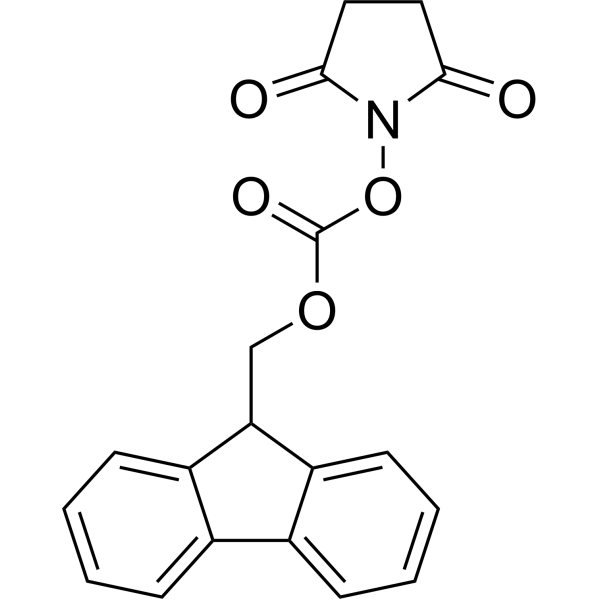
N-(Fmoc-oxy)succinimide
|
Biochemical Assay Reagents
|
Others
|
|
Fmoc-OSu (N-(Fmoc-oxy)succinimide) is an acylating agent that targets amino groups (-NH2). It can selectively protect the amino groups of amino acids by covalently binding with primary or secondary amines through nucleophilic substitution reactions. Fmoc-OSu forms a stable amide bond with the amino group to avoid side reactions of the amino group in peptide synthesis. It can also be used as a fluorescent labeling reagent to react with glycosylamines for efficient labeling of N-sugar chains. Fmoc-OSu can be used as an Fmoc protection strategy in peptide synthesis, and as a fluorescent labeling and analysis method for N-sugar chains .
|
-
-
- HY-P4931
-
|
|
MMP
|
Cancer
|
|
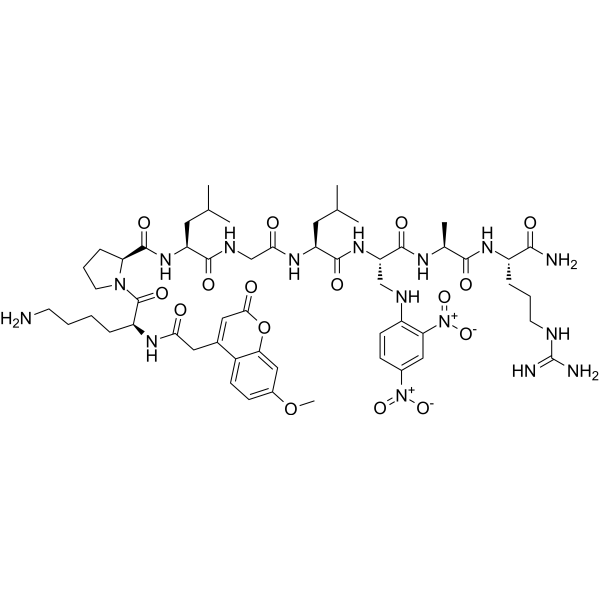
Mca-Lys-Pro-Leu-Gly-Leu-Dap(Dnp)-Ala-Arg-NH2 (FS-6) is a fluorescent peptide that is a quenched MMP peptide substrate. Mca-Lys-Pro-Leu-Gly-Leu-Dap(Dnp)-Ala-Arg-NH2 can be used for real-time quantification of MMP enzymatic activity. Mca-Lys-Pro-Leu-Gly-Leu-Dap(Dnp)-Ala-Arg-NH2 is an elongated peptide of MMP substrate (FS-1) and is active against collagenases (MMP-1, MMP-8, MMP-13 ) and MT1-MMP with higher specificity constants than FS-1 . (Ex/Em=325 nm/400 nm)
|
-
-
- HY-129420
-
|
|
Fluorescent Dye
|
Cancer
|
|
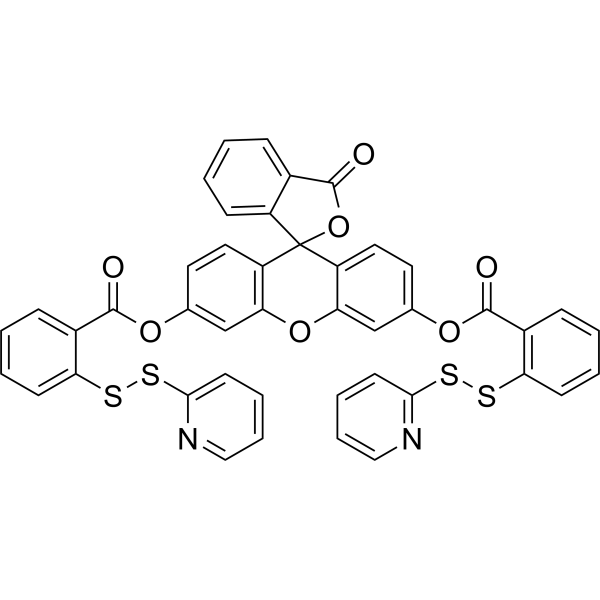
WSP-5 is a H2S-selective fluorescent probe (Ex/Em = 502/525 nm). WSP-5 enables visual monitoring of H2S released and accumulated from peptide-H2S donor conjugates in glioma cells. WSP-5 is applicable to glioma research .
|
-
-
- HY-P4154
-
|
ALM-488
|
Fluorescent Dye
|
Neurological Disease
Cancer
|
|
Bevonescein (ALM-488) is a fluorescein-conjugated peptide that facilitates the targeted delivery of a fluorescent moiety (5-FAM (HY-66022)) to nerves after intravenous (IV) administration. Bevonescein binds nerve-associated connective tissue, labels peripheral nerves under real-time fluorescence imaging (FL) in living mice and human ex vivo nerve tissue. Bevonescein is a peptide-linked tracer which fluorescently labeled both intact and degenerated nerves (Ex/Em = 480/530 nm) .
|
-
-
- HY-D1872
-
|
|
Fluorescent Dye
|
Others
|
|
800CW NHS ester is a near-infrared fluorescent dye active ester that can conjugate with amine-containing small molecules, antibodies, peptides, and other substances to form fluorescent conjugates. 800CW NHS ester exhibits high fluorescence quantum yield and low non-specific binding properties. 800CW NHS ester can be used in biomedical research such as microbial infection imaging, tumor imaging, and biochemical detection .
|
-
-
- HY-15940
-
|
5(6)-FAM; 5-(and-6)-Carboxyfluorescein mixed isomers
|
Fluorescent Dye
|
Cancer
|
|
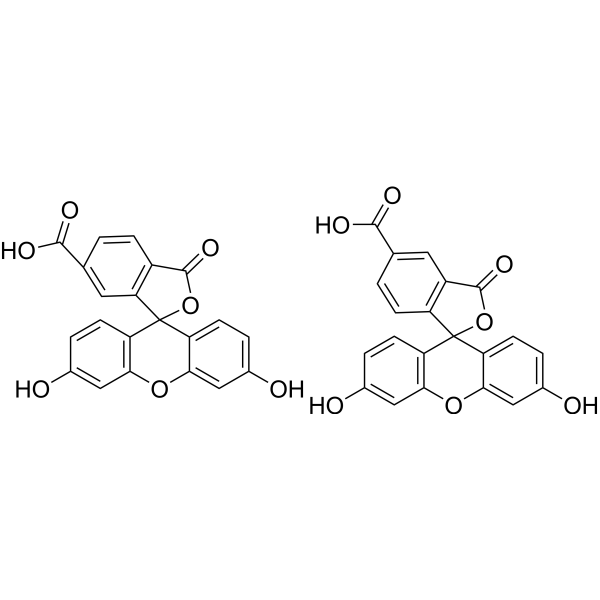
5(6)-Carboxyfluorescein (5(6)-FAM) is an amine-reactive pH-sensitive green fluorescent probe. 5(6)-Carboxyfluorescein (5(6)-FAM) can be used to label proteins, peptides and nucleotides. 5(6)-Carboxyfluorescein can be used for the detection of tumour areas in vivo .
|
-
-
- HY-D1849
-
|
|
Fluorescent Dye
|
Others
|
|
Cy3B NHS ester is a fluorescent dye compound that is commonly used in biomarking and fluorescent labeling experiments, especially for labeling biomolecules containing amino functional groups (amine groups), such as proteins, antibodies or peptides.
|
-
-
- HY-W027544
-
|
7-Methoxycoumarin-4-acetic acid
|
Fluorescent Dye
|
Others
|
|
MCA (7-Methoxycoumarin-4-acetic acid) is a Coumarin (HY-N0709) derivative. MCA quantitates platelet-activating factor (PAF) by high-performance liquid chromatography with fluorescent detection. MCA can modify FRET peptide substrates for analyzing protease activities .
|
-
-
- HY-D0154
-
|
Tetramethylrhodamine-6-isothiocyanate
|
Fluorescent Dye
|
Others
|
|
6-TRITC (Tetramethylrhodamine-6-isothiocyanate) is a potent fluorescent tracer. 6-TRITC can be used as an probe for haptenated proteins/peptides for the research of contact allergy. 6-TRITC can be used as a tracer for the confocal imaging in living cells .
|
-
-
- HY-P4344
-
|
|
MetAP
|
Others
|
|
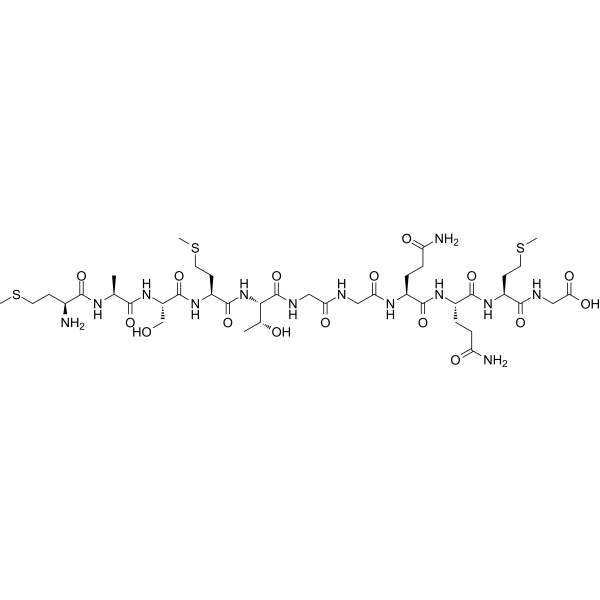
Met-Gly-Pro-AMC is a fluorescent peptide substrate of MetAP2 .
|
-
-
- HY-P5287
-
|
|
Integrin
|
Cancer
|
|
cRGDfK-thioacetyl ester is a bioactive polypeptide molecule. cRGDfK peptide has a selective affinity for integrins. cRGDfK peptide can modify NIR fluorescent probes for cancer targeting imaging .
|
-
-
- HY-D1800
-
|
VF 680 SE
|
Fluorescent Dye
|
Others
|
|
Vari Fluor 680 SE (VF 680 SE) is a dye marker of the Vari Fluor SE series (Ex/Em=680 nm/700 nm). The Vari Fluor SE series of dyes are a class of fluorescent dyes containing NHS ester groups used to label free amines (-NHX) on antibodies, proteins, peptides, amine-modified oligonucleotides and other biomolecules.
|
-
-
- HY-D1801
-
|
VF 488 SE
|
Fluorescent Dye
|
Others
|
|
Vari Fluor 488 SE (VF 488 SE) is a dye marker of the Vari Fluor SE series (Ex/Em=488 nm/513 nm). The Vari Fluor SE series of dyes are a class of fluorescent dyes containing NHS ester groups used to label free amines (-NHX) on antibodies, proteins, peptides, amine-modified oligonucleotides and other biomolecules.
|
-
-
- HY-P10202
-
|
|
STAT
|
Cancer
|
|
5-FAM-GpYLPQTV-NH2 is a fluorescently labeled peptide and has STAT3 inhibitory activity. 5-FAM-GpYLPQTV-NH2 can be used in cancer research .
|
-
-
- HY-171179
-
|
|
Fluorescent Dye
|
Neurological Disease
|
|
BD-Oligo is an oligomer-specific fluorescent chemical probe. BD-Oligo preferentially identifies Aβ oligomer assemblies over monomers or fibrils by using diversity-directed fluorescent library (DOFL) screening and computational techniques. BD-Oligo exhibits dynamic oligomer monitoring capabilities during Aβ peptide fibril formation as Aβ is induced to form oligomers and ultimately fibrils over time. BD-Oligo also exhibits blood-brain barrier permeability with the ability to stain Aβ oligomers in vivo .
|
-
-
- HY-125372
-
|
ABAO
|
Biochemical Assay Reagents
|
Others
|
|
2-Amino benzamidoxime (ABAO) acts as a bioconjugation reagent precursor and a fluorescent probe precursor. 2-Amino benzamidoxime contains an aniline group for imine activation of aldehydes, as well as a nucleophilic group (Nu:) located at the ortho position of the amine, which is responsible for intramolecular cyclization. 2-Amino benzamidoxime reacts with glyoxal at the N-terminus of phage-displayed peptide libraries. Derivatives of 2-Amino benzamidoxime can be used for protein bioconjugation. Derivatives of 2-Amino benzamidoxime serve as fluorescent probes .\n
|
-
-
- HY-P1188
-
|
|
Integrin
|
Cancer
|
|
LDV-FITC, a fluorescent peptide, is a FITC-conjugated LDV peptide (HY-P2267). LDV-FITC binds to the α4β1 integrin with high affinity (Kd: 0.3 nM and 12 nM for binding to U937 cells in the presence and absence of Mn 2+ respectively). LDV-FITC can be used to detect α4β1 integrin affinity .
|
-
-
- HY-P1362F
-
|
Cy5-Amyloid β peptide (42-1)(human) Tris
|
Amyloid-β
|
Neurological Disease
|
|
Cy5-β-Amyloid (42-1), human is a Cy5 fluorescently-labelled β-Amyloid (42-1, human) peptide (λex= 633 nm and λem= 670 nm) .
|
-
-
- HY-137367
-
|
|
Cathepsin
|
Infection
|
|
Z-Val-Val-Arg-AMC is a fluorescent peptide substrate that can be used to test the activity of cathepsins .
|
-
-
- HY-P2550A
-
|
|
Amyloid-β
|
Neurological Disease
|
|
β-Amyloid (1-40), FAM-labeled TFA is a FAM fluorescently-labelled β-Amyloid (1-40) peptide (λex= 492 nm and λem= 518 nm).
|
-
-
- HY-D2498
-
|
|
Fluorescent Dye
|
Others
|
|
Cy7 maleimide is a fluorescent dye containing a Maleimide (HY-W007324) functional group. Maleimide can be used to label thiol groups on antibodies, proteins and peptides .
|
-
-
- HY-P4349A
-
|
|
Biochemical Assay Reagents
Thrombin
|
Others
|
|
Pyr-Arg-Thr-Lys-Arg-AMC TFA is a AMC peptide, and a fluorescent substrate. Pyr-Arg-Thr-Lys-Arg-AMC TFA can be used to detect the activity of specific proteases, such as Furin, Trypsin, and Thrombin .
|
-
-
- HY-D2441
-
|
|
Fluorescent Dye
|
Cancer
|
|
TAT-PEG-Cy3 is a fluorescent labeling reagent that combines Cy3 fluorescent dye, Cell membrane penetrating peptide (TAT) and polyethylene glycol (PEG). The Cy3 fluorophore is commonly used in applications such as immunolabeling, nucleic acid labeling, fluorescence microscopy, and flow cytometry. Cy3 has an emission maximum around 562-570 nm. TAT-PEG-Cy3 can be used for cell targeted delivery and biological imaging .
|
-
-
- HY-D1802
-
|
VF 425 SE
|
Fluorescent Dye
|
Others
|
|
Vari Fluor 425 SE (VF 425 SE) is a dye marker of the Vari Fluor SE series (Ex/Em=430 nm/475 nm). The Vari Fluor SE series of dyes are a class of fluorescent dyes containing NHS ester groups used to label free amines (-NHX) on antibodies, proteins, peptides, amine-modified oligonucleotides and other biomolecules.
|
-
-
- HY-D1790
-
|
VF 640 SE
|
Fluorescent Dye
|
Others
|
|
Vari Fluor 640 SE (VF 640 SE) is a dye marker of the Vari Fluor SE series (Ex/Em=648 nm/664 nm). The Vari Fluor SE series of dyes are a class of fluorescent dyes containing NHS ester groups used to label free amines (-NHX) on antibodies, proteins, peptides, amine-modified oligonucleotides and other biomolecules.
|
-
-
- HY-P10172
-
-
-
- HY-D1423
-
|
|
Fluorescent Dye
|
Others
|
|
Dibromobimane is a thiol-selective fluorescent imaging agent. Dibromobimane is used to crosslink cysteine- and homocysteine-containing peptides .
|
-
-
- HY-135414B
-
|
|
Fluorescent Dye
|
Others
|
|
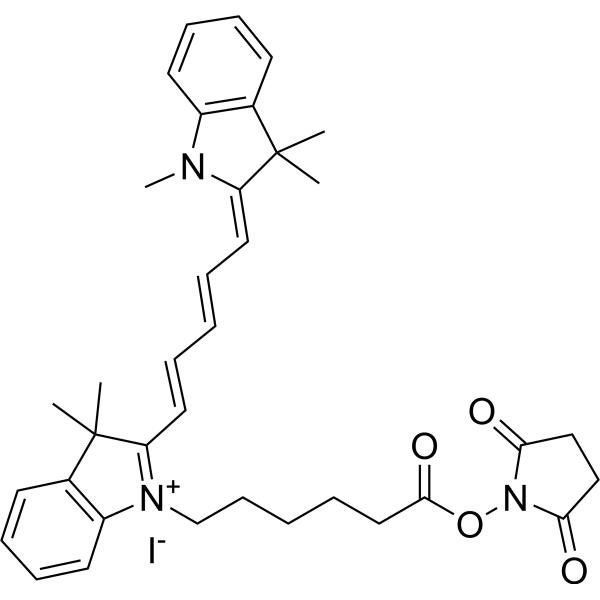
Cyanine5 NHS ester iodide is a red emitting fluorescent dye for labeling of amino-groups in peptides, proteins, and oligonucleotides .
|
-
-
- HY-P2550
-
|
|
Amyloid-β
|
Neurological Disease
|
|
β-Amyloid (1-40), FAM-labeled is a FAM fluorescently-labelled β-Amyloid (1-40) peptide (λex= 492 nm and λem= 518 nm) .
|
-
-
- HY-D2439
-
|
|
Fluorescent Dye
|
Cancer
|
|
RGD-PEG-Cy3 is a fluorescent labeling reagent that combines Cy3 fluorescent dye, peptide (RGD) and polyethylene glycol (PEG). The Cy3 fluorophore is commonly used in applications such as immunolabeling, nucleic acid labeling, fluorescence microscopy, and flow cytometry. Cy3 has an emission maximum around 562-570 nm. RGD is a peptide sequence (CRGDKGPDCiRGD) that binds to αvβ3 and αvβ5 integrin receptors on tumor neovasculogenesis to achieve specific tumor tissue targeting .
|
-
-
- HY-P5378A
-
|
Cathepsin S substrate TFA
|
Ser/Thr Protease
|
Others
|
|
Ac-KQKLR-AMC TFA is a substrate peptide of Cathepsin S fluorescently labeled with AMC (Ex/Em=354 nm/442 nm). Ac-KQKLR-AMC TFA can be used to measure Cathepsin S activity) .
|
-
-
- HY-P10772
-
|
|
Peptide-Drug Conjugates (PDCs)
EBV
|
Cancer
|
|
L2P4 is a peptide-based and EBNA1 targeting fluorescent probe, which inhibits the EBNA1 homodimer formation and selectively inhibits EBV+ tumor growth. L2P4 exhibits cytotoxicity in EBV-positive C666-1 cell with LC50 of 46.4 μM .
|
-
-
- HY-P10772A
-
|
|
Peptide-Drug Conjugates (PDCs)
EBV
|
Cancer
|
|
L2P4 TFA is a peptide-based and EBNA1 targeting fluorescent probe, which inhibits the EBNA1 homodimer formation and selectively inhibits EBV+ tumor growth. L2P4 TFA exhibits cytotoxicity in EBV-positive C666-1 cell with LC50 of 46.4 μM .
|
-
-
- HY-D1791
-
|
VF 750 SE
|
Fluorescent Dye
|
Others
|
|
Vari Fluor 750 SE (VF 750 SE) is a dye marker of the Vari Fluor SE series (Ex/Em=747 nm/770 nm). The Vari Fluor SE series of dyes are a class of fluorescent dyes containing NHS ester groups used to label free amines (-NHX) on antibodies, proteins, peptides, amine-modified oligonucleotides and other biomolecules.
|
-
-
- HY-P3791
-
|
|
Fluorescent Dye
|
Others
|
|
N-Succinyl-Ile-Ile-Trp-AMC is a peptide-based fluorescent substrate or probe for carboxypeptidase Y (CPY) .
|
-
-
- HY-W250725
-
|
|
Fluorescent Dye
|
Neurological Disease
|
|
H-GLU-AMC-OH is an amino acid derivative that can be used as A fluorescent peptide substrate for the determination of aminopeptidase A enzyme activity .
|
-
-
- HY-137834A
-
-
-
- HY-P5355
-
|
|
Fluorescent Dye
|
Others
|
|
Z-Gly-Gly-Arg-AFC is a biological active peptide. (Plasminogen Activator Acrosine Substrate, fluorescent Z-Gly-Gly-Arg-AFC)
|
-
-
- HY-P3364
-
|
|
Fluorescent Dye
Sirtuin
HDAC
|
Others
|
|
Ac-QPKK(Ac)-AMC is a p53-derived peptide conjugated with a fluorophore, which serves as a fluorescent peptide substrate for detecting the deacylase activity of zinc-dependent HDACs and sirtuins (Ex = 360 nm; Em = 460 nm) .
|
-
-
- HY-D2488
-
|
|
Fluorescent Dye
|
Others
|
|
Sulfo Cy5.5-maleimide is a fluorescent dye containing a Maleimide (HY-W007324) functional group. Maleimide can be used to label thiol groups on antibodies, proteins and peptides.
|
-
-
- HY-P5378
-
|
Cathepsin S substrate
|
Ser/Thr Protease
|
Others
|
|
Ac-KQKLR-AMC is a substrate peptide of Cathepsin S fluorescently labeled with AMC (Ex/Em=354 nm/442 nm). Ac-KQKLR-AMC can be used to measure Cathepsin S activity) .
|
-
-
- HY-P5367
-
|
PMDM6-F
|
Fluorescent Dye
|
Others
|
|
5-FAM-PMDM6 (PMDM6-F) is a biological active peptide. (PMDM6-F is a fluorescent-labeled probe for MDM2-binding assay.)
|
-
-
- HY-P10202A
-
|
|
STAT
|
Cancer
|
|
5-FAM-GpYLPQTV-NH2 (TFA) is a fluorescently labeled peptide and has STAT3 inhibitory activity. 5-FAM-GpYLPQTV-NH2 (TFA) can be used in cancer research .
|
-
- HY-D1596A
-
|
Cy3.5 NHS ester bromide; Cy 3.5 bromide
|
Fluorescent Dye
|
Others
|
|
Cyanine 3.5 bromide (Cy3.5 NHS ester bromide) is an analog of the Cy3.5 fluorophore. Cyanine 3.5 bromide is a red reactive fluorescent dye. Cyanine 3.5 bromide is used to label amino groups in peptides, proteins, and oligonucleotides. (λex=591 nm, λem=604 nm) .
|
-
- HY-D2891
-
|
|
Fluorescent Dye
|
Others
|
|
5-TAMRA-DBCO is a fluorescent dye that combines 5-TAMRA (HY-15942) with a dibenzocyclooctyne (DBCO) moiety. 5-TAMRA-DBCO is able to copper-free click chemistry reactions with azide-functionalized molecules. 5-TAMRA-DBCO can be used for labeling proteins, peptides, nucleic acids (Ex/Em = 541/567 nm) .
|
-
- HY-D1993
-
|
|
Fluorescent Dye
HIV
|
Infection
|
|
ATTO 647 NHS ester is a fluorescent label targeting free amino groups. ATTO 647 NHS ester can undergo a nucleophilic reaction with the free amino groups of EF-C peptide via its activated carboxylic acid group to form a stable covalent conjugate. ATTO 647 NHS ester-labeled nanofibers not only retain retroviral transduction-enhancing activity but also maintain stable fluorescent signals in both buffer and cell culture systems. ATTO 647 NHS ester is suitable for detection applications including fluorescence spectroscopy, microscopy and flow cytometry. ATTO 647 NHS ester has been used in studies related to HIV-1 infection .
|
-
- HY-W039519
-
|
|
Fluorescent Dye
|
Cancer
|
|
7-Methoxycoumarin-3-carboxylic acid is a fluorescent dye with an excitation peak at 355 nm and an emission peak at 405 nm. 7-Methoxycoumarin-3-carboxylic acid can be used to label peptide .
|
-
- HY-D1596
-
|
Cy3.5 NHS ester chloride; Cy 3.5 chloride
|
Fluorescent Dye
|
Others
|
|
Cyanine 3.5 (Cy3.5 NHS ester) chloride is an analog of Cy3.5 fluorophore. Cyanine 3.5 chloride is a reactive, red fluorescent dye. Cyanine 3.5 chloride is used for labeling of amino-groups in peptides, proteins, and oligonucleotides. (λex=591 nm, λem=604 nm) .
|
-
- HY-P5287A
-
|
|
Integrin
|
Cancer
|
|
cRGDfK-thioacetyl ester TFA is a bioactive polypeptide molecule. cRGDfK peptide has a selective affinity for integrins. cRGDfK peptide can modify NIR fluorescent probes for cancer targeting imaging .
|
-
- HY-D1611
-
|
|
Fluorescent Dye
|
Others
|
|
BODIPY FL-C5 NHS Ester is a green-fluorescent dye that is reactive with primary amines on biomolecules such as peptides, proteins, modified nucleotides and biopolymers .
|
-
- HY-P0248F
-
|
|
PKA
Fluorescent Dye
|
Metabolic Disease
|
|
Kemptide, 5-FAM labeled is a 5-FAM labeled Kemptide (HY-P0248). Kemptide is a phosphate acceptor peptide that serves as a synthetic substrate for PKA (Km = 16 μM). The corresponding fluorescent and biotinylated peptides are also proven to be good substrates for PKA.
|
-
- HY-D1592
-
|
|
Fluorescent Dye
|
Others
|
|
BODIPY TMR C5-maleimide is a fluorescent dye. BODIPY TMR C5-maleimide is a high quantum yield fluorophore which can be coupled with peptides .
|
-
- HY-P4349
-
|
|
Biochemical Assay Reagents
Thrombin
|
Others
|
|
Pyr-Arg-Thr-Lys-Arg-AMC is a AMC peptide, and a fluorescent substrate. Pyr-Arg-Thr-Lys-Arg-AMC can be used to detect the activity of specific proteases, such as Furin, Trypsin, and Thrombin .
|
-
- HY-137858
-
|
Gly-Arg-4-NA hydrochloride; GR-pNA hydrochloride; GR p-itoailide hydrochloride
|
Fluorescent Dye
|
Others
|
|
H-Gly-Arg-pNA hydrochloride (GR-pNA hydrochloride) is a colorimetric substrate for thrombin. H-Gly-Arg-pNA is preferentially bound by thrombin and cleaves the Gly-Arg (GR) peptide sequence, releasing p-nitroaniline (pNA) that can be detected colorimetrically at 405 nm. H-Gly-Arg-pNA hydrochloride is used as a fluorescent dye to measure thrombin activity .
|
-
- HY-D1798
-
|
VF 350 SE
|
Fluorescent Dye
|
Others
|
|
Vari Fluor 350 SE (VF 350 SE) is a dye marker of the Vari Fluor SE series (Ex/Em=350 nm/448 nm). The Vari Fluor SE series of dyes are a class of fluorescent dyes containing NHS ester groups used to label free amines (-NHX) on antibodies, proteins, peptides, amine-modified oligonucleotides and other biomolecules.
|
-
- HY-D1796
-
|
VF 594 SE
|
Fluorescent Dye
|
Others
|
|
Vari Fluor 594 SE (VF 594 SE) is a dye marker of the Vari Fluor SE series (Ex/Em=585 nm/609 nm). The Vari Fluor SE series of dyes are a class of fluorescent dyes containing NHS ester groups used to label free amines (-NHX) on antibodies, proteins, peptides, amine-modified oligonucleotides and other biomolecules.
|
-
- HY-P1188A
-
|
|
Integrin
|
Cancer
|
|
LDV-FITC TFA, a fluorescent peptide, is a FITC-conjugated LDV peptide (HY-P2267). LDV-FITC TFA binds to the α4β1 integrin with high affinity (Kd: 0.3 nM and 12 nM for binding to U937 cells in the presence and absence of Mn 2+ respectively). LDV-FITC TFA can be used to detect α4β1 integrin affinity .
|
-
- HY-W927376
-
|
|
Fluorescent Dye
|
Others
|
|
Boc-Val-Arg-AMC is a synthetic peptide compound. As a specific fluorescent substrate, Boc-Val-Arg-AMC can be specifically cleaved by specific enzymes, especially thrombin, to release a fluorescent molecule AMC (7-amino-4-methylcoumarin), which can be used to monitor thrombin activity. Boc-Val-Arg-AMC can be used to detect thrombin activity in plasma samples .
|
-
- HY-P2603
-
-
- HY-P1459
-
|
|
Bacterial
|
Infection
|
|
Sphistin Synthetic Peptide (12-38, Fitc in N-Terminal-Fluorescently Labeled Peptide) is a truncated fragments of Sphistin Synthetic Peptide that shows potent antimicrobial activity.
|
-
- HY-D2495
-
|
|
Fluorescent Dye
|
Others
|
|
Cy7 SE (nosulfo) is a fluorescent dye for the labeling of amino-groups in peptides, proteins, and oligonucleotides.
|
-
- HY-P4364
-
-
- HY-W009686F
-
|
|
Fluorescent Dye
|
Others
|
|
5-FAM-Pro-Leu-OH is a biological active peptide. (Used as MMP fluorescent reference standard)
|
-
- HY-W879234
-
|
Sulfo Cy5.5-DBCO
|
Fluorescent Dye
|
Others
|
|
TriSulfo-Cy5.5 DBCO is a near infrared (NIR) fluorescent anthocyanin fluorescent dye.TriSulfo-Cy5.5 DBCO can be used to label proteins, antibodies, peptides, nucleic acid molecules.
|
-
- HY-D2290
-
|
|
Fluorescent Dye
|
Others
|
|
Demethoxy-BODIPY TMR NHS ester is an amine-reactive fluorescent probe, and can be used for the labeling of proteins, peptides, and other molecules .
|
-
- HY-P10648
-
|
HER2-targeting peptide
|
EGFR
|
Cancer
|
|
Herceptide (HER2-targeting peptide) is a HER2-targeting peptide, and can be further conjugated to the near-infrared fluorescent dye indocyanine green (HY-D0711) (ICG) for developing theranostic agents .
|
-
- HY-P5295
-
|
|
Fluorescent Dye
|
Others
|
|
Cy3-Ova (323-339) is an Cy3 labled OVA Peptide (323-339) (HY-P0286). Cy3 is a fluorescent dye belonging to the Cyanine family and is a fluorescent light product of Cy5. Cyanine is commonly used in fluorescence microscopy, cell imaging, and molecular biology experiments. OVA Peptide (323-339) represents the T and B cell epitopes of ovalbumin (OVA). OVA Peptide (323-339) has limited immunogenic efficacy in activating OVA-sensitized and attacked mouse spleen cells .
|
-
- HY-D2773
-
|
|
Fluorescent Dye
|
Others
|
|
5-Carboxyrhodamine 110 NHS Ester is the nonsulfonated analog of the BP Fluor 488 dye. The amine-reactive 5(6)-Carboxyrhodamine 110 NHS Ester can be used to create bright and photostable green-fluorescent bioconjugates with excitation/emission maxima ~502/527 nm. For many applications, the dye is preferred over 5-(6)-carboxyfluorescein NHS ester or FITC because of its exceptional photostability and fluorescence insensitivity to pH (4-9).
Although the mixed isomers of Carboxyrhodamine 110 NHS Ester preferred, routinely used fluorescent dye for labeling proteins, peptides and nucleotides, purification of peptide and nucleotides labeled with 5(6) isomers might be troublesome due to significant signal broadening in HPLC purification. Peptides and nucleotides labeled with a single isomer usually give better resolution in HPLC purification that is often required in the conjugation processes.
|
-
- HY-D1756
-
|
|
Fluorescent Dye
|
Others
|
|
ROX NHS ester, 6-isomer is a highly fluorescent, and photostable rhodamine dye for various applications. ROX labeled oligonucleotide probes are often used in qPCR, and qPCR instruments have ROX channel. This is reactive dye for the labeling of amino-groups in peptides, proteins, and amino-oligonucleotides. Pure single isomer.
|
-
- HY-149117
-
|
|
Fluorescent Dye
|
Others
|
|
AF430 NHS ester is an AF 430 maleimide is a derivative of the yellow fluorescent dye AF 430. AF430 has an excitation wavelength of 425 nm and an emission wavelength of 542 nm. AF430 NHS ester can be uesd for the labeling of amino-groups in peptides, proteins, and oligonucleotides. To achieve specific coupling of dye labels and biomolecules .
|
-
- HY-D2858A
-
|
|
Fluorescent Dye
|
Others
|
|
8-arm-PEG20000-FITC is a fluorescent dye composed of FITC (HY-66019) and eight-arm polyethylene glycol (8-Arm PEG). 8-arm-PEG-FITC can be used to modify proteins, peptides and other materials with active groups (Ex/Em=488/525 nm) .
|
-
- HY-D1799
-
|
VF 568 SE
|
Fluorescent Dye
|
Others
|
|
Vari Fluor 568 SE (VF 568 SE) is a dye marker of the Vari Fluor SE series (Ex/Em=573 nm/595 nm). The Vari Fluor SE series of dyes are a class of fluorescent dyes containing NHS ester groups used to label free amines (-NHX) on antibodies, proteins, peptides, amine-modified oligonucleotides and other biomolecules.
|
-
- HY-D1794
-
|
VF 405 SE
|
Fluorescent Dye
|
Others
|
|
Vari Fluor 405 SE (VF 405 SE) is a dye marker of the Vari Fluor SE series (Ex/Em=399 nm/421 nm). The Vari Fluor SE series of dyes are a class of fluorescent dyes containing NHS ester groups used to label free amines (-NHX) on antibodies, proteins, peptides, amine-modified oligonucleotides and other biomolecules.
|
-
- HY-D1797
-
|
VF 660 SE
|
Fluorescent Dye
|
Others
|
|
Vari Fluor 660 SE (VF 660 SE) is a dye marker of the Vari Fluor SE series (Ex/Em=660 nm/679 nm). The Vari Fluor SE series of dyes are a class of fluorescent dyes containing NHS ester groups used to label free amines (-NHX) on antibodies, proteins, peptides, amine-modified oligonucleotides and other biomolecules.
|
-
- HY-D1792
-
|
VF 555 SE
|
Fluorescent Dye
|
Others
|
|
Vari Fluor 555 SE (VF 555 SE) is a dye marker of the Vari Fluor SE series (Ex/Em=550 nm/561 nm). The Vari Fluor SE series of dyes are a class of fluorescent dyes containing NHS ester groups used to label free amines (-NHX) on antibodies, proteins, peptides, amine-modified oligonucleotides and other biomolecules.
|
-
- HY-D1795
-
|
VF 532 SE
|
Fluorescent Dye
|
Others
|
|
Vari Fluor 532 SE (VF 532 SE) is a dye marker of the Vari Fluor SE series (Ex/Em=532 nm/545 nm). The Vari Fluor SE series of dyes are a class of fluorescent dyes containing NHS ester groups used to label free amines (-NHX) on antibodies, proteins, peptides, amine-modified oligonucleotides and other biomolecules.
|
-
- HY-D1803
-
|
VF 565 SE
|
Fluorescent Dye
|
Others
|
|
Vari Fluor 565 SE (VF 565 SE) is a dye marker of the Vari Fluor SE series (Ex/Em=563 nm/594 nm). The Vari Fluor SE series of dyes are a class of fluorescent dyes containing NHS ester groups used to label free amines (-NHX) on antibodies, proteins, peptides, amine-modified oligonucleotides and other biomolecules.
|
-
- HY-D2194
-
|
|
Fluorescent Dye
|
Others
|
|
AgAuSe-COOH (1000 nm) is a fluorescent quantum dot that emits fluorescence in the near-infrared II region, with an emission peak reaching 1000 nm. AgAuSe-COOH (1000 nm) has the advantages of narrow band gap, large Stokes shift, and good photostability. AgAuSe-COOH (1000 nm) can bind proteins, antibodies, peptides, PEG, etc., and can be widely used in the field of biological imaging.
|
-
- HY-D2845C
-
|
|
Fluorescent Dye
|
Others
|
|
4-arm-PEG20000-FITC is a fluorescent dye composed of FITC (HY-66019) and four-arm polyethylene glycol (4-Arm PEG). 4-arm-PEG20000-FITC can be used to modify proteins, peptides and other materials with active groups (Ex/Em=488/525 nm) .
|
-
- HY-D2858B
-
|
|
Fluorescent Dye
|
Others
|
|
8-arm-PEG40000-FITC is a fluorescent dye composed of FITC (HY-66019) and eight-arm polyethylene glycol (8-Arm PEG). 8-arm-PEG40000-FITC can be used to modify proteins, peptides and other materials with active groups (Ex/Em=488/525 nm) .
|
-
- HY-D2858
-
|
|
Fluorescent Dye
|
Others
|
|
8-Arm-PEG10000-FITC is a fluorescent dye composed of FITC (HY-66019) and eight-arm polyethylene glycol (8-Arm PEG). 8-Arm-PEG10000-FITC can be used to modify proteins, peptides and other materials with active groups (Ex/Em=488/525 nm) .
|
-
- HY-P4899
-
|
RE(EDANS)EVNLDAEFK(DABCYL)R
|
Beta-secretase
|
Neurological Disease
|
|
β-Secretase substrate VI, fluorogenic is an EDANS and DABCYL double-labeled peptide,serves as a fluorescent substrate for BACE1(Em=360nm,Ex=528nm). β-Secretase substrate VI, fluorogenic can be used for BACE1 activity measurement and the enzyme activity level is directly proportional to the fluorescence reaction .
|
-
- HY-P5356
-
|
Plasmin substrate
|
Fluorescent Dye
|
Others
|
|
H-D-Val-Leu-Lys-AFC (Plasmin substrate) is a biological active peptide. (This is a fluorescent plasmin substrate, Abs/Em=380/500 nm.Plasmin belongs to the family of serine proteases. It plays a key role in fibrinolysis by dissolving fibrin in blood clots. Besides fibrinolysis, plasmin is also involved in such physiological and pathological processes as wound healing, liver repair, and the maintenance of liver homeostasis.)
|
-
- HY-D0715R
-
|
Ro 20-7234 (Standard)
|
Fluorescent Dye
Reference Standards
|
Others
|
|
Fluorescamine (Standard) is the analytical standard of Fluorescamine (HY-D0715). This product is intended for research and analytical applications. Fluorescamine is a spirocyclic compound that is non-fluorescent. Fluorescamine reacts rapidly with primary amine groups in proteins under alkaline conditions to generate products with strong fluorescence (Ex/Em : 390/475 nm). Fluorescamine can be used to detect amine-containing compounds, including amino acids, peptides, and proteins .
|
-
- HY-DY1085
-
|
5(6)-Carboxytetramethylrhodamine (solution)
|
Fluorescent Dye
|
Others
|
5(6)-TAMRA (solution) (5(6)-Carboxytetramethylrhodamine (solution)) is a fluorescent dye molecule widely used as a label for peptides and proteins (Ex/Em = 520/600 nm). Solvent and concentration: DMSO: 10 mM The 1 mL volume is defined as the base specification. All larger sizes correspond to incremental volumes of this base.
|
-
- HY-130510
-
|
|
Fluorescent Dye
|
Others
|
|
6-HEX dipivaloate is an amino-bindable fluorescent probe that can be used to label peptides and oligonucleotides. 6-HEX dipivaloate is widely used in nucleic acid sequencing and related research .
|
-
- HY-P3364A
-
|
|
Fluorescent Dye
Sirtuin
HDAC
|
Others
|
|
Ac-QPKK(Ac)-AMC acetate is a p53-derived peptide conjugated with a fluorophore, which serves as a fluorescent peptide substrate for detecting the deacylase activity of zinc-dependent HDACs and sirtuins (Ex = 360 nm; Em = 460 nm) .
|
-
- HY-W998644
-
|
|
Fluorescent Dye
|
Others
|
|
PB LC acid is a blue-fluorescent dye that is reactive with primary amines on biomolecules such as peptides, proteins, modified nucleotides and biopolymers (Ex/Em = 410/455 nm) .
|
-
- HY-P11637
-
|
|
Fluorescent Dye
|
Neurological Disease
|
|
Mitochondrial-targeted peptide BP19 is a fluorescent probe for the selective measurement of labile iron in the mitochondriairon. Mitochondrial-targeted peptide BP19 exhibits iron-selective sensing activity with mitochondrial accumulation, reduced fluorescence in iron-loaded cells, and fluorescence reinstatement upon iron chelation. Mitochondrial-targeted peptide BP19 evaluates mitochondrial labile iron levels in cultured fibroblasts with Friedreich's ataxia .
|
-
- HY-D3049
-
|
|
Fluorescent Dye
|
Others
|
|
5(6)-carbonylated rhodamine 110 NHS ester is a reactive ester fluorescent reagent based on 5(6)-carbonylated rhodamine 110. NHS ester is a highly reactive ester capable of covalently coupling with primary amine groups in molecules such as proteins, peptides, amino sugars, and nucleic acids to form stable amide bonds (Ex/Em = 502/527 nm).
|
-
- HY-D3050
-
|
|
Fluorescent Dye
|
Others
|
|
5(6)-carbonylated rhodamine 110 X NHS ester is a reactive ester fluorescent reagent based on 5(6)-carbonylated rhodamine 110 X. NHS ester is a highly reactive ester capable of covalently coupling with primary amine groups in molecules such as proteins, peptides, amino sugars, and nucleic acids to form stable amide bonds (Ex/Em = 496/522 nm).
|
-
- HY-D3053
-
|
|
Fluorescent Dye
|
Others
|
|
5(6)-Rhodamine 6G NHS ester is a reactive ester fluorescent reagent based on Rhodamine 6G (HY-D0309). NHS ester is a highly reactive ester capable of covalently coupling with primary amine groups in molecules such as proteins, peptides, amino sugars, and nucleic acids to form stable amide bonds (Ex/Em = 526/547 nm).
|
-
- HY-172728
-
|
|
Fluorescent Dye
|
Others
|
|
Difluorocarboxyfluorescein NHS Ester, 6-isomer is an amine-reactive fluorinated analog of fluorescein that overcomes some of the key limitations of fluorescein, including greater photostability and a lower pKa (pKa ~ 4.7 versus 6.4 for fluorescein), making its fluorescence essentially pH insensitive in the physiological pH range. Although the mixed isomers of Difluorocarboxyfluorescein NHS Ester, is a preferred, routinely used fluorescent dye for labeling proteins, peptides and nucleotides, purification of peptide and nucleotides labeled with 5(6) isomers might be troublesome due to significant signal broadening in HPLC purification. Peptides and nucleotides labeled with a single isomer usually give better resolution in HPLC purification that is often required in the conjugation processes.
|
-
- HY-W027544S
-
|
7-Methoxycoumarin-4-acetic acid-d3
|
Isotope-Labeled Compounds
Fluorescent Dye
|
Others
|
|
MCA-d3 (7-Methoxycoumarin-4-acetic acid3) is the deuterium labeled MCA (HY-W027544) . MCA is a Coumarin (HY-N0709) derivative. MCA quantitates platelet-activating factor (PAF) by high-performance liquid chromatography with fluorescent detection. MCA can modify FRET peptide substrates for analyzing protease activities .
|
-
- HY-P3123
-
|
|
Fluorescent Dye
|
Others
|
|
Dnp-RPLALWRS is a fluorescent peptide substrate designed for human matrilysin (MMP-7). After enzymatic cleavage of Dnp-RPLALWRS at the alanine-leucine bond, the release of the Dnp group alleviates fluorescence quenching, thereby enabling real-time quantitative analysis of MMP-7 activity by increasing tryptophan emission. Dnp-RPLALWRS provides a sensitive and efficient detection method for kinetic studies and inhibitor screenin .
|
-
- HY-D2906
-
|
|
Fluorescent Dye
|
Others
|
|
Alexa fluor 647 maleimide is a bright, far-red-emitting fluorescent dye for labeling of protein SH groups (Ex/Em = 656/670 nm). Alexa fluor 647 maleimide can be used to attach AF 647 fluorophore to proteins and peptides containing cysteine residues, as well as to other thiolated molecules (such as thiol-containing oligonucleotides). Alexa Fluor 647 maleimide is promising for research of cell biology, neuroscience, and disease diagnostics .
|
-
- HY-P3123A
-
|
|
Fluorescent Dye
|
Others
|
|
Dnp-RPLALWRS TFA is a fluorescent peptide substrate designed for human matrilysin (MMP-7). After enzymatic cleavage of Dnp-RPLALWRS TFA at the alanine-leucine bond, the release of the Dnp group alleviates fluorescence quenching, thereby enabling real-time quantitative analysis of MMP-7 activity by increasing tryptophan emission. Dnp-RPLALWRS TFA provides a sensitive and efficient detection method for kinetic studies and inhibitor screenin .
|
-
- HY-D3319
-
|
|
Biochemical Assay Reagents
MMP
|
Inflammation/Immunology
Cancer
|
|
BHQ‑3 carboxylic acid is an azo‑containing dark fluorescence quencher. BHQ‑3 carboxylic acid is conjugated to an MMP‑cleavable peptide and paired with a fluorophore to form an activatable probe for MMP activity detection in vitro. BHQ‑3 carboxylic acid shows maximal absorption in the 620 to 730 nm range. BHQ‑3 carboxylic acid–based fluorescent probes can be used in the research of arthritis and tumor‑related pathological processes. .
|
-
- HY-D3390
-
|
|
Fluorescent Dye
Bacterial
|
Infection
|
|
sCy5DA is a is a fluorescent D-amino acid . sCy5DA incorporates into bacterial peptidoglycan layers and cross-links via transpeptidase action, replacing peptidoglycan stem peptide D-amino acids. sCy5DA labels live bacterial cell walls, nascent peptidoglycan biosynthesis sites, and diverse bacterial species including Gram-negative, Gram-positive, and mycobacteria (Ex/Em = 646/665 nm) .
|
-
- HY-D2772
-
|
|
Biochemical Assay Reagents
|
Others
|
|
5-TAMRA cadaverine can used to modify carboxylic acid group in the presence of activators (e.g. EDC, or DCC) or activated esters (e.g. NHS esters) through a stable amide bond. It also can be reversibly coupled to aldehydes and ketones to form a Schiff base – which can be reduced to a generate stable amine derivative by sodium borohydride (NaBH4) or sodium cyanoborohydride (NaCNH3).
Although the mixed isomers of 5(6)-TAMRA cadaverine is a preferred, routinely used orange-fluorescent dye for staining proteins, it is rearly used for labeling peptides and nucleotides. Purification of 5(6)-TAMRA labeled peptide and nucleotides might be troublesome due to significant signal broadening in HPLC purification. Peptides and nucleotides labeled with a single isomer TAMRA usually give better resolution in HPLC purification that is often required in the conjugation processes.
|
-
- HY-P1883
-
|
|
Fluorescent Dye
|
Infection
|
|
Bacterial Sortase Substrate III, Abz/DNP is a fluorescent peptide substrate. Bacterial Sortase Substrate III, Abz/DNP undergoes cleavage catalyzed by Staphylococcus aureus sortase A (SrtAΔN24) and Streptococcus pyogenes sortase A (SrtAΔN81), and catalyzes the formation of an amide bond between the carboxyl group of threonine and the amino group of the cell wall cross-bridge. Cleavage of this substrate can be detected at Ex/Em=320 nm/420 nm .
|
-
- HY-W800701
-
|
|
Biochemical Assay Reagents
|
Others
|
|
BP Fluor 546 DBCO is an azide-reactive probe that can be used for imaging azide-tagged biomolecules via a copper-free click reaction. The DBCO moiety reacts with azides to form a stable triazole and does not require a Cu-catalyst or elevated temperatures. In applications where the presence of copper is a concern, BP Fluor 546 DBCO is an ideal alternative to copper-requiring fluorescent alkynes.
BP Fluor 546 is a water-soluble, pH-insensitive (from pH 4-10), orange-fluorescent dye with absorption and emission maxima at 554 and 570 nm, respectively. It can be used with the 488 nm and 532 nm laser lines. BP Fluor 546 dye conjugates to a variety of antibodies, peptides, proteins, tracers, and amplification substrates, which are often used for generating stable signals in imaging and flow cytometry.
|
-
- HY-P1883A
-
|
|
Fluorescent Dye
|
Infection
|
|
Bacterial Sortase Substrate III, Abz/DNP TFA is a fluorescent peptide substrate. Bacterial Sortase Substrate III, Abz/DNP TFA undergoes cleavage catalyzed by Staphylococcus aureus sortase A (SrtAΔN24) and Streptococcus pyogenes sortase A (SrtAΔN81), and catalyzes the formation of an amide bond between the carboxyl group of threonine and the amino group of the cell wall cross-bridge. Cleavage of this substrate can be detected at Ex/Em=320 nm/420 nm .
|
-
- HY-P3722
-
|
|
Fluorescent Dye
MMP
|
Others
|
|
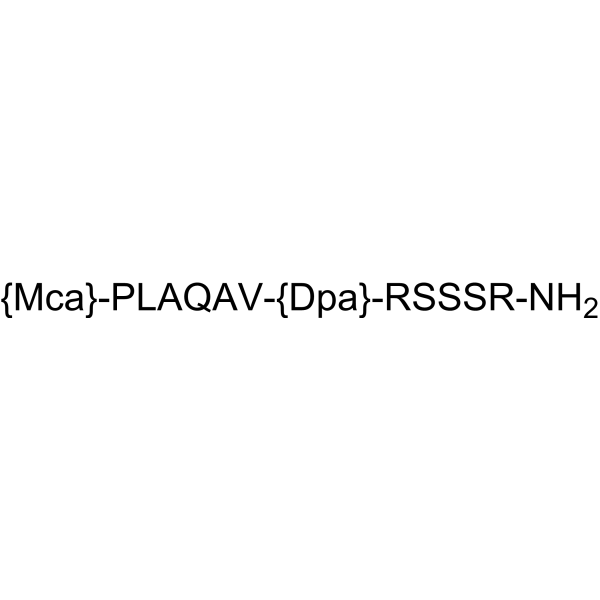
Mca-PLAQAV-Dpa-RSSSR-NH2 is a fluorescent substrate peptide that can be used to detect ADAM9, ADAM10, and tumor necrosis factor-α converting enzyme (TACE/ADAM17). Mca-PLAQAV-Dpa-RSSSR-NH2 is a fluorescence resonance energy transfer-based substrate, and its activity can be determined by changes in fluorescence intensity upon cleavage (Ex = 320 nm
; Em = 405 nm) .
|
-
- HY-P5485
-
|
|
Bacterial
|
Others
|
|
Dabcyl-QALPETGEE-Edans is a synthetic peptide substrate for fluorescence resonance energy transfer (FRET) detection of Sortase A (SrtA) enzymatic activity. Dabcyl-QALPETGEE-Edans is labeled at both ends with the fluorescent group Edans (donor) and the quencher Dabcyl (acceptor), respectively. Dabcyl-QALPETGEE-Edans's central sequence contains a conserved motif specifically recognized by SrtA. Dabcyl-QALPETGEE-Edans demonstrates high sensitivity in vitro assays, enabling precise determination of the half-maximal inhibitory concentration of SrtA .
|
-
- HY-122570
-
|
|
E1/E2/E3 Enzyme
|
Others
|
|
VHL Ligand 38 (Compound 1) is a competitive E3 ubiquitin-protein ligase VHL inhibitor with IC50s of 4.1 and 7.0 μM in 1% and 10% DMSO, respectively. VHL Ligand 38 contains a hydroxyproline residue and an isoxazolylacetamide fragment. VHL Ligand 38 significantly inhibits the binding of a fluorescent peptide derived from HIF1α (FAM-DEALA-Hyp-YIPD) (HY-P5908F) to VHL .
|
-
- HY-P3722A
-
|
|
Fluorescent Dye
MMP
|
Others
|
|
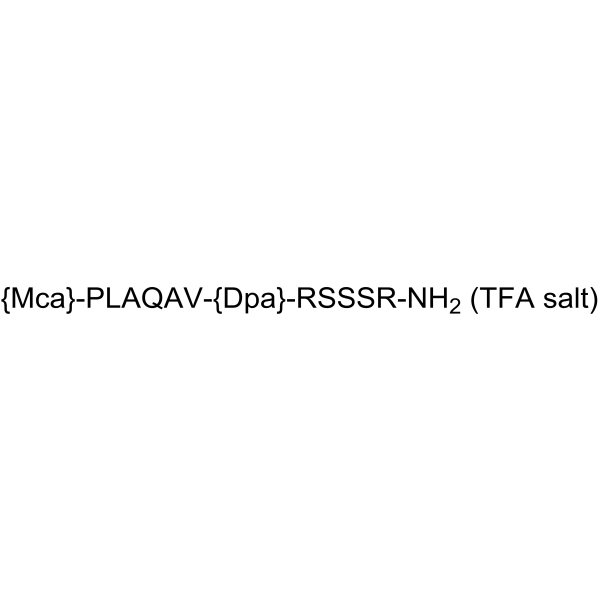
Mca-PLAQAV-Dpa-RSSSR-NH2 TFA is a fluorescent substrate peptide that can be used to detect ADAM9, ADAM10, and tumor necrosis factor-α converting enzyme (TACE/ADAM17). Mca-PLAQAV-Dpa-RSSSR-NH2 TFA is a fluorescence resonance energy transfer-based substrate, and its activity can be determined by changes in fluorescence intensity upon cleavage (Ex = 320 nm
; Em = 405 nm) .
|
-
- HY-P4919
-
|
|
Beta-secretase
|
Others
|
|
Mca-SEVNLDAEFK(Dnp) is a Beta-secretase 1 (BACE-1) peptide FRET substrate, containing the 'Swedish' Lys-Met/Asn-Leu mutation of the amyloid precursor protein (APP) β-secretase cleavage site. Cleavage at -Leu-Asp- of Mca-SEVNLDAEFK(Dnp) liberates the highly fluorescent 7-methoxycoumarin (Mca) fragment from the proximity quenching effect of the 2,4-dinitrophenyl (Dnp) internal quencher resulting in a large and easily detectable increase in fluorescence intensity.
|
-
- HY-P5520
-
|
|
Bombesin Receptor
Radionuclide-Drug Conjugates (RDCs)
|
Cancer
|
|
GB-6 is a short linear peptide that targets the gastrin releasing peptide receptor (GRPR). GRPR is overexpressed in pancreatic cancer. Based on the tumor selectivity and tumor-specific accumulation properties of GB-6, GB-6 labeled with near infrared (NIR) fluorescent dyes or radionuclide netium-99m (99mTc) can be used as a high-contrast imaging probe. GB-6 has excellent in vivo stability, with tumor to pancreatic and intestinal fluorescence signal ratios of 5.2 and 6.3, respectively, in SW199 0 subcutaneous xenograft models. GB-6 can rapidly target tumors and accurately delineate tumor boundaries, which has broad application prospects .
|
-
- HY-P11455
-
|
|
Liposome
|
Others
|
|
Lipopeptide CPE4 is a PEG-modified peptide E4 [(EIAALEK) 4]. Lipopeptide CPE4 is capable of coiled-coil formation when attached to liposomes. Lipopeptide CPE4 triggers membrane fusion between liposomes and living cells with concomitant efficient cytosolic delivery of a variety of compounds such as fluorescent dyes Propidium Iodide (PI) (HY-D0815) and TO-PRO-3 iodide (HY-117070), and Doxorubicin (DOX) (HY-15142A). Lipopeptide CPE4 can be used for drug delivery research .
|
-
- HY-P4742A
-
|
6-FAM-AEEAC-SHK TFA
|
Biochemical Assay Reagents
Potassium Channel
|
Neurological Disease
|
|
6-FAM-AEEAc-Stichodactyla helianthus Neurotoxin (ShK) TFA (6-FAM-AEEAC-SHK TFA) is a peptide neurotoxin conjugated with a fluorescent marker. 6-FAM-AEEAc-Stichodactyla helianthus Neurotoxin (ShK) TFA can block voltage-gated potassium channels (kv1.1 and kv1.2) to prolong the duration of action potentials, thereby affecting the conduction of neural signals. 6-FAM-AEEAc-Stichodactyla helianthus Neurotoxin (ShK) TFA can be used in neuroscience research .
|
-
- HY-D3228
-
-
- HY-P11455A
-
|
|
Liposome
|
Others
|
|
Lipopeptide CPE4 TFA is a PEG-modified peptide E4 [(EIAALEK) 4]. Lipopeptide CPE4 TFA is capable of coiled-coil formation when attached to liposomes. Lipopeptide CPE4 TFA triggers membrane fusion between liposomes and living cells with concomitant efficient cytosolic delivery of a variety of compounds such as fluorescent dyes Propidium Iodide (PI) (HY-D0815) and TO-PRO-3 iodide (HY-117070), and Doxorubicin (DOX) (HY-15142A). Lipopeptide CPE4 TFA can be used for drug delivery research .
|
-
- HY-D2062
-
|
|
Fluorescent Dye
Integrin
|
Cancer
|
|
ATTO 740 NHS ester is a near-infrared fluorescent dye and a multimodal fluorescence/photoacoustic contrast agent with excellent near-infrared emission properties and extremely high photostability. The photoacoustic signal of ATTO 740 NHS ester shows no significant decrease after continuous irradiation with a 750 nm laser for 30 min, making it suitable for in vivo fluorescence imaging and photoacoustic contrast imaging. When conjugated with the cystine knot peptide R01, ATTO 740 NHS ester enables precise detection of integrin αvβ6-positive cells and tumors in nude mouse xenograft models .
|
-
- HY-P11456
-
|
|
Liposome
|
Others
|
|
Lipopeptide CPK4 is a Cholesterol (HY-N0322)-modified peptide K4 [(KIAALKE) 3]. Lipopeptide CPK4 is capable of coiled-coil formation when attached to liposomes. Lipopeptide CPK4 triggers membrane fusion between liposomes and living cells with concomitant efficient cytosolic delivery of a variety of compounds such as fluorescent dyes Propidium Iodide (PI) (HY-D0815) and TO-PRO-3 iodide (HY-117070), and Doxorubicin (DOX) (HY-15142A). Lipopeptide CPK4 can be used for drug delivery research .
|
-
- HY-Y0623
-
|
HOSu; 1-Hydroxy-2,5-pyrrolidinedione
|
Biochemical Assay Reagents
|
Others
|
|
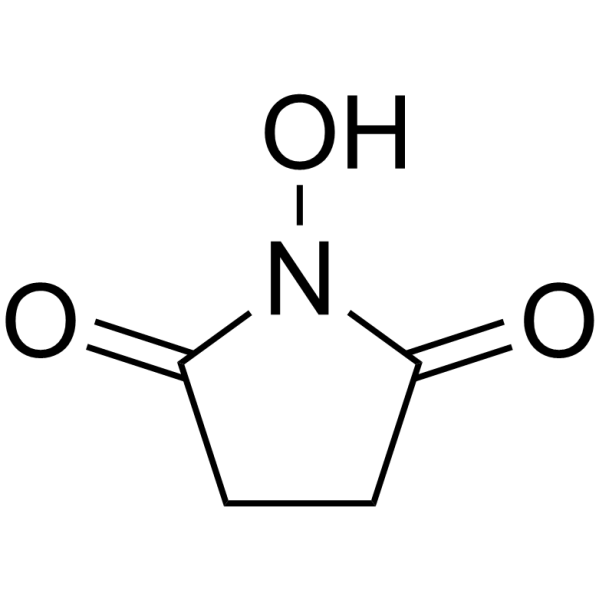
N-Hydroxysuccinimide (HOSu; 1-Hydroxy-2,5-pyrrolidinedione) is a covalent crosslinker commonly used in bioconjugation technology with a primary amine group. N-Hydroxysuccinimide reacts with amino groups (-NH2) to form a stable amide bond, which can modify amino-containing biomolecules. N-Hydroxysuccinimide can be used, for example, for protein labeling with fluorescent dyes and enzymes, surface activation of chromatography supports, microbeads, nanoparticles and microarray slides, and chemical synthesis of peptides. N-Hydroxysuccinimide has a wide range of applications in biomaterial synthesis (such as collagen, chitosan crosslinking), drug delivery systems (such as hydrogel preparation) and tissue engineering .
|
-
- HY-P11757
-
|
|
EGFR
|
Cancer
|
|
Cyclo[K(N3)larllt] is a seven-membered cyclic peptide targeting EGFR, with a Kd value of 5.09 μM, and exhibits binding selectivity toward homologous proteins HER2 and HER3. Cyclo[K(N3)larllt] has no cytotoxicity and shows no growth inhibitory effect on cancer cells overexpressing EGFR. Cyclo[K(N3)larllt] can serve as a ligand for EGFR-targeted fluorescent conjugates, which is applicable to the detection of cancers with EGFR overexpression. Cyclo[K(N3)larllt] can be used in the research of colorectal cancer .
|
-
- HY-P11456A
-
|
|
Liposome
|
Others
|
|
Lipopeptide CPK4 TFA is a Cholesterol (HY-N0322)-modified peptide K4 [(KIAALKE) 3]. Lipopeptide CPK4 TFA is capable of coiled-coil formation when attached to liposomes. Lipopeptide CPK4 TFA triggers membrane fusion between liposomes and living cells with concomitant efficient cytosolic delivery of a variety of compounds such as fluorescent dyes Propidium Iodide (PI) (HY-D0815) and TO-PRO-3 iodide (HY-117070), and Doxorubicin (DOX) (HY-15142A). Lipopeptide CPK4 TFA can be used for drug delivery research .
|
-
- HY-D2747
-
|
|
Fluorescent Dye
|
Others
|
|
BP Fluor 405 acid is a water-soluble, blue-fluorescent dye that is often used in multi-color applications, including flow cytometry and super-resolution microscopy using STORM. Its excitation is ideally suited for the 407 nm spectral line of the krypton laser or the 408 nm violet laser diode. BP Fluor 405 conjugates are pH-insensitive from pH 4 to pH 10.
The carboxylic acid of BP Fluor 405 is a reagent of choice for the preparation of custom activated esters that often are not commercially available. Examples of such activated esters include sulfo-NHS, TFP (2,3,5,6-Tetrafluorophenol), and STP (4-Sulfo-2,3,5,6-Tetrafluorophenol, Sodium Salt). Another common application for the non-activated carboxylic acid is peptide modification during solid phase synthesis, which usually requires in-situ activation with peptide coupling regents, e.g. HATU. BP Fluor 405 acid is also often used for control experiments, and for calibration.
|
-
- HY-D2738
-
|
|
Fluorescent Dye
|
Others
|
|
BP Fluor 532 NHS ester is an amine reactive, yellow-emitting dye routinely used to label proteins or antibodies through primary amines (Lys), amine-modified oligonucleotides, and other amine-containing biomolecules. The labeling occurs most efficiently at pH 7-9 and forms a stable, covalent amide bond.
BP Fluor 532 is a bright yellow-fluorescent dye with pH insensitive emission from pH 4 to pH 10. The excitation of BP Fluor 532 is ideally suited for the frequency-doubled Nd:YAG laser line. BP Fluor 532 can be conjugated to a variety of antibodies, peptides, proteins, tracers, and amplification substrates, and is often used for the generation of stable signals in imaging and flow cytometry.
|
-
- HY-D0098
-
|
N-(5-Fluoresceinyl)maleimide
|
Fluorescent Dye
|
Others
|
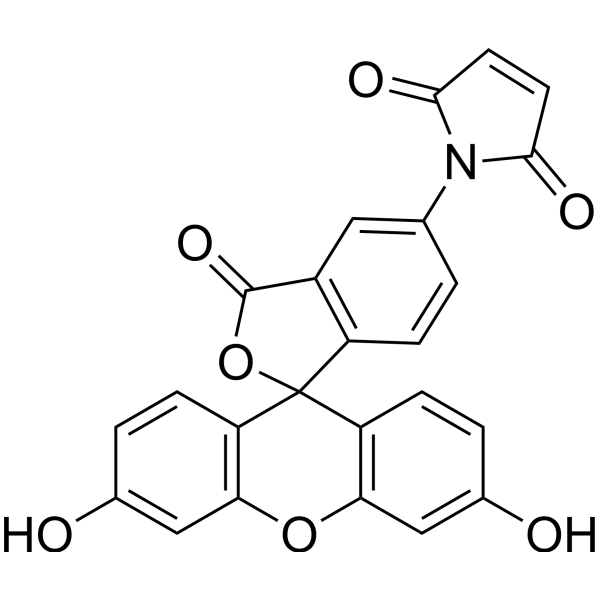
Fluorescein-5-maleimide (N-(5-Fluoresceinyl)maleimide) is a fluorescent dye. Fluorescein-5-maleimide can be used to detect the redox state of thiols in eukaryotic cells. Fluorescein-5-maleimide can label peptides and is used to detect negatively charged nanoparticles. Fluorescein-5-maleimide can also label actin to explore its interaction with cardiac myosin-binding protein C (cMyBP-C), which helps in developing small molecule modulators for heart failure. Fluorescein-5-maleimide can screen mutant proteins that contain cysteine residues. The excitation wavelength of Fluorescein-5-maleimide is 494 nm, and the emission wavelength is 519 nm .
|
-
- HY-W800702
-
|
|
Fluorescent Dye
|
Others
|
|
BP Fluor 555 Azide is a water-soluble, bright orange-fluorescent dye with excitation ideally suited for the 532 nm or 555 nm laser lines and visualized with TRITC (tetramethylrhodamine) filter sets. BP Fluor 555 conjugates of antibodies, peptides, and proteins are pH insensitive from pH 4 to pH 10. AF 555 conjugates ideally suited for detection of low abundance targets.
BP Fluor 555 Azide can be reacted with terminal alkynes via a copper-catalyzed click reaction (CuAAC). It also reacts with strained cyclooctyne via a copper-free “click chemistry” reaction to form a stable triazole and does not require Cu-catalyst or elevated temperatures. The brightness and photostability of this dye are best suited to direct imaging of low-abundance targets.
|
-
- HY-D3389
-
|
|
Fluorescent Dye
Bacterial
|
Infection
|
|
sCy5DL-amide is an amidated fluorescent D-amino acid conjugated to Sulfo-Cyanine 5, and a peptidoglycan labeling agent. sCy5DL-amide incorporates into bacterial peptidoglycan cell wall via transpeptidase-mediated reactions, replacing the fourth or fifth D-amino acid of the peptidoglycan stem peptide for visualization of nascent peptidoglycan biosynthesis. sCy5DL-amide produces clear cell outline, septum labeling, and high localization density in Bacillus subtilis, including a 'V-shape' pattern at cell-cell contact areas. sCy5DL-amide exhibits robust incorporation into Gram-positive bacteria and mycobacteria, with reduced incorporation into Gram-negative bacteria (Ex/Em = 646/666 nm) .
|
-
- HY-D3181
-
|
|
Fluorescent Dye
Caspase
|
Cancer
|
|
CyGbPF is a granzyme B-specific near-infrared fluorescent probe. CyGbPF can be cleaved by granzyme B to remove the peptide cage group, restoring near-infrared fluorescence. CyGbPF passively accumulates in mouse tumors, and its activated fluorescence correlates with granzyme B expression, CD8 + cytotoxic T lymphocyte populations, and CD4 + helper T lymphocyte populations in tumor tissues. CyGbPF is efficiently cleared by the kidneys, enabling the assessment of immune activation via optical urine analysis. CyGbPF allows real-time non-invasive evaluation of cancer immunotherapeutic efficacy in living animals. CyGbPF can be used in research on cancers such as breast cancer. Excitation wavelength/emission wavelength: approximately 658 nm/approximately 717 nm .
|
-
- HY-66019
-
FITC
Maximum Cited Publications
92 Publications Verification
Fluorescein 5-isothiocyanate
|
Fluorescent Dye
|
Inflammation/Immunology
|
|
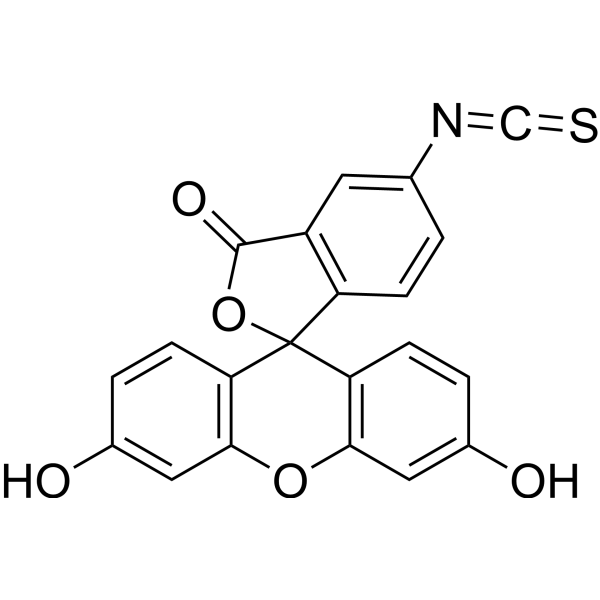
FITC (Fluorescein Isothiocyanate), is one of the green fluorescein derivatives widely used in biology. FITC has the characteristics of high absorptivity and excellent fluorescence quantum yield. The isothiocyanate group of FITC can be combined with amino, sulfhydryl, imidazole, tyrosyl, carbonyl and other groups on the protein, so as to achieve protein labeling including antibodies and lectins. In addition to its use as a protein marker, FITC can also be used as a fluorescent protein tracer to rapidly identify pathogens by labeling antibodies, or for microsequencing of proteins and peptides (HPLC). The maximum excitation wavelength of FITC is 494 nm. Once excited, it fluoresces yellow-green at a maximum emission wavelength of 520 nm. In addition, FITC is also a hapten that can induce contact hypersensitivity (CHS) and induce an atopic dermatitis model .
|
-
- HY-DY1088
-
|
N-(5-Fluoresceinyl)maleimide (solution)
|
Fluorescent Dye
|
Others
|
Fluorescein-5-maleimide (solution) (N-(5-Fluoresceinyl)maleimide (solution)) is a fluorescent dye. Fluorescein-5-maleimide can be used to detect the redox state of thiols in eukaryotic cells. Fluorescein-5-maleimide can label peptides and is used to detect negatively charged nanoparticles. Fluorescein-5-maleimide can also label actin to explore its interaction with cardiac myosin-binding protein C (cMyBP-C), which helps in developing small molecule modulators for heart failure. Fluorescein-5-maleimide can screen mutant proteins that contain cysteine residues. The excitation wavelength of Fluorescein-5-maleimide is 494 nm, and the emission wavelength is 519 nm .
Solvent and concentration: DMSO: 10 mM
|
-
- HY-D2763
-
|
|
Fluorescent Dye
|
Others
|
|
BP Fluor 532 maleimide is a photostable, bright yellow-fluorescent dye with pH insensitive emission from pH 4 to pH 10. The excitation of BP Fluor 532 is ideally suited for the frequency-doubled Nd:YAG laser line. BP Fluor 532 dye can be conjugated to a variety of antibodies, peptides, proteins, tracers, and amplification substrates, and is often used for the generation of stable signals in imaging and flow cytometry.
Maleimide is the most popular sulfhydryl-reactive group for conjugating the dye to a thiol group on a protein, oligonucleotide thiophosphate, or low molecular weight ligand. The maleimide group specifically and efficiently reacts with reduced thiols (sulfhydryl groups, –SH) at pH 6.5 to 7.5 to form a stable thioether bond. The resulting conjugates exhibit brighter fluorescence and greater photostability than the conjugates of many other spectrally similar fluorophores.
|
-
- HY-131498
-
|
Mca-Pro-Leu-Gly-Leu-Dpa-Ala-Arg-NH2
|
Fluorescent Dye
MMP
|
Cancer
|
MOCAc-PLGL (Dpa) AR (Mca-Pro-Leu-Gly-Leu-Dpa-Ala-Arg-NH2) is a synthetic fluorescent substrate mainly used for in vitro enzymatic activity assays of MMP-7 (detection at 393 nm after excitation at 328 nm). MOCAc-PLGL (Dpa) AR is specifically cleaved and hydrolyzed by MMP-7 at the Gly-Leu peptide bond, allowing enzymatic activity to be monitored via fluorometry or HPLC (DMSO is usually added to ensure sufficient dissolution when determining kinetic parameters). MOCAc-PLGL (Dpa) AR is used to accurately evaluate the catalytic activity and pH dependence of recombinant mature human MMP-7 in vitro. MOCAc-PLGL (Dpa) AR is suitable for research on the mechanisms of tumor metastasis and invasion, particularly in fields such as prostate cancer, colon cancer, lung cancer and breast cancer .\n
|
-
- HY-D2745
-
|
|
Fluorescent Dye
|
Others
|
|
BP Fluor 594 NHS ester is the most popular tool for modifying proteins or antibodies through the primary amines (Lys), amine-modified oligonucleotides, and other amine-containing biomolecules with BP Fluor 594 label. The labeling occurs most efficiently at pH 7-9 and forms a stable, covalent amide bond. BP Fluor 594 dye can be used for proteins labeling at high molar ratios without significant self-quenching, enabling brighter conjugates and more sensitive detection.
BP Fluor 594 is bright, water-soluble, and pH-insensitive from pH 4 to pH 10 red-fluorescent dye with absorption and emission maxima at 590 and 617 nm, respectively. It can be used with the 561 nm and 594 nm laser lines. BP Fluor 594 dye conjugated to a variety of antibodies, peptides, proteins, tracers, and amplification substrates often used for generation of stable signal in imaging and flow cytometry.
|
-
- HY-DY1007
-
|
|
Fluorescent Dye
|
Inflammation/Immunology
|
FITC (Fluorescein Isothiocyanate) (solution) , is one of the green fluorescein derivatives widely used in biology. FITC has the characteristics of high absorptivity and excellent fluorescence quantum yield. The isothiocyanate group of FITC can be combined with amino, sulfhydryl, imidazole, tyrosyl, carbonyl and other groups on the protein, so as to achieve protein labeling including antibodies and lectins. In addition to its use as a protein marker, FITC can also be used as a fluorescent protein tracer to rapidly identify pathogens by labeling antibodies, or for microsequencing of proteins and peptides (HPLC). The maximum excitation wavelength of FITC is 494 nm. Once excited, it fluoresces yellow-green at a maximum emission wavelength of 520 nm. In addition, FITC is also a hapten that can induce contact hypersensitivity (CHS) and induce an atopic dermatitis model . Solvent and concentration: DMSO: 20 mM The 1 mL volume is defined as the base specification. All larger sizes correspond to incremental volumes of this base.
|
-
- HY-P10147
-
|
|
Caspase
|
Cancer
|
|
Ac-LDESD-AMC is a caspase-2 inhibitor. Ac-LDESD-AMC has a peptide sequence of Leu-Asp-Glu-Ser-Asp .
|
-
- HY-P11306
-
|
|
Proteasome
NF-κB
|
Inflammation/Immunology
|
|
Biotin-(Oaa)3-epoxomicin is a biotin-labeled form of Epoxomicin (HY-13821), prepared by conjugating Epoxomicin with biotin via three hydrophilic oxaacetyl amino acid (Oaa) linkers. Biotin-(Oaa)3-epoxomicin is primarily used in proteomic studies for the capture, identification and target validation of proteasome complexes, to determine the intracellular targets of epoxomicin. Epoxomicin acts as a proteasome inhibitor and NF-κB inhibitor, which effectively blocks inflammatory responses in mouse ear edema assays. It inhibits proteasome activity via covalent binding to catalytic subunits including LMP7, X, MECL1 and Z, with the strongest inhibitory effect on chymotrypsin-like activity, and does not interfere with non-proteasomal proteases such as trypsin and papain .
|
-
- HY-114118F4
-
|
Semaglutide-Lys(FITC)
|
Fluorescent Dye
GLP Receptor
|
Metabolic Disease
|
|
Semaglutide-FITC (Semaglutide-Lys(FITC)) is a FITC-labeled Semaglutide (a GLP-1R agonist) (HY-114118). Semaglutide-FITC can be used to directly track the distribution, cellular uptake, and transmembrane transport process of vesicles through techniques such as fluorescence imaging and flow cytometry. Semaglutide-FITC can be employed to study the movement and penetration ability of mixed vesicles in porcine intestinal mucus in vitro .
|
-
- HY-P10144
-
|
|
Biochemical Assay Reagents
|
Others
|
|
Ac-Orn-Phe-Arg-AMC is a potent fluorescent substrate of cd-Tryptase and β 1-Tryptase. Ac-Orn-Phe-Arg-AMC releases amino-4-methylcoumarin (AMC) for fluorescence detection .
|
-
- HY-P0281F
-
|
Cy5-TAT(47-57) acetate; Cy5-HIV-1 TAT protein (47-57) acetate
|
Fluorescent Dye
|
Others
|
|
Cy5-TAT acetate is a TAT peptide labeled with CY5 (HY-D0821) (Ex= 600-620 nm, Em= 670 nm). Cy5-TAT acetate can be used for fluorescence microscopy especially single-molecule fluorescence imaging .
|
-
- HY-P11307
-
|
|
Proteasome
|
Cancer
|
|
Biotin-epoxomicin is a Proteasome subunit binder. Biotin-epoxomicin serves as an affinity reagent for identifying proteasomal catalytic subunits, and facilitates affinity purification of active proteasomal subunits for LC-MS identification. Biotin-epoxomicin can be used to study solid tumors derived from B16 melanoma .
|
-
- HY-P10142
-
|
|
Fluorescent Dye
|
Others
|
|
Ac-YEVD-AMC is a fluorescent substrate of caspase-1/11. Ac-YEVD-AMC releases amino-4-methylcoumarin (AMC) for fluorescence detection when treating with cell lysate .
|
-
- HY-P10162
-
|
|
Caspase
|
Cancer
|
|
Ac-DMQD-AMC is an inhibitor of caspase-3. Ac-DMQD-AMC is an aromatic amine using aminium-based coupling reagent HATU in the presence of 2,4,6-trimethylpyridine (TMP) .
|
-
- HY-P10943
-
|
|
Fluorescent Dye
|
Inflammation/Immunology
Cancer
|
|
APO-15 is a phosphatidylserine-binding fluorescent probe and apoptosis imaging reagent. APO-15 exhibits high chemical stability under proteolytic and oxidative conditions, enables quantification and imaging of drug-induced apoptosis in preclinical mouse models, and is applicable to fixed tissue samples and multiple in vivo administration routes (Ex = 488 nm; Em = 525 nm). APO-15 can be used in studies related to acute lung injury and breast cancer .
|
-
- HY-P10450
-
|
D2R; (D)2-Rhodamine 110
|
Caspase
|
Others
|
|
(Asp)2-Rhodamine 110 (D2R) is a fluorescent caspase substrate .
|
-
- HY-P10189
-
-
- HY-114118F5
-
-
- HY-P10144A
-
|
|
Biochemical Assay Reagents
|
Others
|
|
Ac-Orn-Phe-Arg-AMC acetate is a potent fluorescent substrate of cd-Tryptase and β 1-Tryptase. Ac-Orn-Phe-Arg-AMC acetate releases amino-4-methylcoumarin (AMC) for fluorescence detection .
|
-
- HY-P4125A
-
|
|
HIV
Fluorescent Dye
|
Others
|
|
FITC-LC-TAT (47-57) acetate is a FITC-labeled TAT peptide (HY-P0281) (λex: 493 nm, λem: 522 nm). Derived from the trans-activator of transcription (TAT) of immunodeficiency virus (HIV-1), TAT enhances the yield of heterologous proteins .
|
-
- HY-P10139
-
|
|
MMP
|
Others
|
|
Dnp-PLGLWAr-NH2 is a synthetic collagenase/gelatinase substrate. Dnp-PLGLWAR-NH2 can be used to quantify total MMP activity in APMA-activated conditioned medium samples .
|
-
- HY-P10454
-
|
(Z-Ile-Glu-Thr-Asp)2-R110
|
Caspase
|
Others
|
|
(Z-IETD)2-Rh 110 is a fluorescent substrate of caspase-8 (λex= 488 nm, λem= 523 nm), which can be used to detect the activity of caspase-8 and the process of apoptosis .
|
-
- HY-P10173
-
|
|
Angiotensin-converting Enzyme (ACE)
|
Others
|
|
Abz-LFK(Dnp)-OH is an angiotensin I-converting enzyme (ACE) peptide substrate. Abz-LFK(Dnp)-OH is selective for the C domain of ACE. Abz-LFK(Dnp)-OH can be used to assess ACE activity .
|
-
- HY-P2179
-
|
|
Fluorescent Dye
MMP
|
Others
|
|
MMP-1/MMP-9 Substrate, Fluorogenic is a fluorogenic substrate for MMP-1 and MMP-9 .Ex/Em = 340/440 nm
|
-
- HY-P11236
-
-
| Cat. No. |
Product Name |
Type |
-
- HY-66019
-
FITC
Maximum Cited Publications
92 Publications Verification
Fluorescein 5-isothiocyanate
|
Fluorescent Dyes
|
|
FITC (Fluorescein Isothiocyanate), is one of the green fluorescein derivatives widely used in biology. FITC has the characteristics of high absorptivity and excellent fluorescence quantum yield. The isothiocyanate group of FITC can be combined with amino, sulfhydryl, imidazole, tyrosyl, carbonyl and other groups on the protein, so as to achieve protein labeling including antibodies and lectins. In addition to its use as a protein marker, FITC can also be used as a fluorescent protein tracer to rapidly identify pathogens by labeling antibodies, or for microsequencing of proteins and peptides (HPLC). The maximum excitation wavelength of FITC is 494 nm. Once excited, it fluoresces yellow-green at a maximum emission wavelength of 520 nm. In addition, FITC is also a hapten that can induce contact hypersensitivity (CHS) and induce an atopic dermatitis model .
|
-
- HY-D0017
-
|
DNSCl
|
Fluorescent Dyes
|
|
Dansyl chloride is a reagent that produces stable blue or blue-green fluorescent sulfonamide adducts in the reaction of aliphatic and aromatic amines with primary amino groups, and is widely used for modified amino acids, protein sequencing and amino acid analysis .
|
-
- HY-66022
-
5-FAM
4 Publications Verification
5-Carboxyfluorescein
|
Fluorescent Dyes
|
|
5-FAM (5-Carboxyfluorescein) is a green fluorescent reagent used for in situ labeling peptides, proteins and nucleotides. 5-FAM is a single isomer with Ex/Em of 490 nm/520 nm .
|
-
- HY-138200
-
|
Cyanine5 maleimide
|
Fluorescent Dyes
|
|
Cy5 maleimide (Cyanine5 maleimide) is a single-reactive dye containing a maleimide group and a CY5 fluorescent group, which can selectively couple with a thiol group. Cy5 maleimide can be used to label antibodies, peptides, or proteins (Ex/Em = 646/664 nm).
|
-
- HY-15944
-
|
5(6)-Carboxytetramethylrhodamine
|
Fluorescent Dyes
|
|
5(6)-TAMRA (5(6)-Carboxytetramethylrhodamine) is a fluorescent dye molecule widely used as a label for peptides and proteins (Ex/Em = 520/600 nm).
|
-
- HY-D0715
-
|
Ro 20-7234
|
Fluorescent Dyes
|
|
Fluorescamine is a spirocyclic compound that is non-fluorescent. Fluorescamine reacts rapidly with primary amine groups in proteins under alkaline conditions to generate products with strong fluorescence (Ex/Em: 390/475 nm). Fluorescamine can be used to detect amine-containing compounds, including amino acids, peptides, and proteins .
|
-
- HY-D0098
-
|
N-(5-Fluoresceinyl)maleimide
|
Fluorescent Dyes
|
Fluorescein-5-maleimide (N-(5-Fluoresceinyl)maleimide) is a fluorescent dye. Fluorescein-5-maleimide can be used to detect the redox state of thiols in eukaryotic cells. Fluorescein-5-maleimide can label peptides and is used to detect negatively charged nanoparticles. Fluorescein-5-maleimide can also label actin to explore its interaction with cardiac myosin-binding protein C (cMyBP-C), which helps in developing small molecule modulators for heart failure. Fluorescein-5-maleimide can screen mutant proteins that contain cysteine residues. The excitation wavelength of Fluorescein-5-maleimide is 494 nm, and the emission wavelength is 519 nm .
|
-
- HY-135414
-
|
|
Fluorescent Dyes
|
|
Cyanine5 NHS ester chloride is a red emitting fluorescent dye for labeling of amino-groups in peptides, proteins, and oligonucleotides .
|
-
- HY-15938
-
|
|
Fluorescent Dyes
|
|
5-FAM SE is a single isomer, is a fluorescent labeling reagent used for labeling peptides, proteins and nucleotides. 5-FAM SE can react with amines and can yield stable amine conjugates .
|
-
- HY-129420
-
|
|
Fluorescent Dyes
|
|
WSP-5 is a H2S-selective fluorescent probe (Ex/Em = 502/525 nm). WSP-5 enables visual monitoring of H2S released and accumulated from peptide-H2S donor conjugates in glioma cells. WSP-5 is applicable to glioma research .
|
-
- HY-131498
-
|
Mca-Pro-Leu-Gly-Leu-Dpa-Ala-Arg-NH2
|
Fluorescent Dyes
|
MOCAc-PLGL (Dpa) AR (Mca-Pro-Leu-Gly-Leu-Dpa-Ala-Arg-NH2) is a synthetic fluorescent substrate mainly used for in vitro enzymatic activity assays of MMP-7 (detection at 393 nm after excitation at 328 nm). MOCAc-PLGL (Dpa) AR is specifically cleaved and hydrolyzed by MMP-7 at the Gly-Leu peptide bond, allowing enzymatic activity to be monitored via fluorometry or HPLC (DMSO is usually added to ensure sufficient dissolution when determining kinetic parameters). MOCAc-PLGL (Dpa) AR is used to accurately evaluate the catalytic activity and pH dependence of recombinant mature human MMP-7 in vitro. MOCAc-PLGL (Dpa) AR is suitable for research on the mechanisms of tumor metastasis and invasion, particularly in fields such as prostate cancer, colon cancer, lung cancer and breast cancer .\n
|
-
- HY-D1872
-
|
|
Fluorescent Dyes
|
|
800CW NHS ester is a near-infrared fluorescent dye active ester that can conjugate with amine-containing small molecules, antibodies, peptides, and other substances to form fluorescent conjugates. 800CW NHS ester exhibits high fluorescence quantum yield and low non-specific binding properties. 800CW NHS ester can be used in biomedical research such as microbial infection imaging, tumor imaging, and biochemical detection .
|
-
- HY-15940
-
|
5(6)-FAM; 5-(and-6)-Carboxyfluorescein mixed isomers
|
Fluorescent Dyes
|
|
5(6)-Carboxyfluorescein (5(6)-FAM) is an amine-reactive pH-sensitive green fluorescent probe. 5(6)-Carboxyfluorescein (5(6)-FAM) can be used to label proteins, peptides and nucleotides. 5(6)-Carboxyfluorescein can be used for the detection of tumour areas in vivo .
|
-
- HY-D2906
-
|
|
Fluorescent Dyes
|
|
Alexa fluor 647 maleimide is a bright, far-red-emitting fluorescent dye for labeling of protein SH groups (Ex/Em = 656/670 nm). Alexa fluor 647 maleimide can be used to attach AF 647 fluorophore to proteins and peptides containing cysteine residues, as well as to other thiolated molecules (such as thiol-containing oligonucleotides). Alexa Fluor 647 maleimide is promising for research of cell biology, neuroscience, and disease diagnostics .
|
-
- HY-D1849
-
|
|
Fluorescent Dyes
|
|
Cy3B NHS ester is a fluorescent dye compound that is commonly used in biomarking and fluorescent labeling experiments, especially for labeling biomolecules containing amino functional groups (amine groups), such as proteins, antibodies or peptides.
|
-
- HY-W027544
-
|
7-Methoxycoumarin-4-acetic acid
|
Fluorescent Dyes
|
|
MCA (7-Methoxycoumarin-4-acetic acid) is a Coumarin (HY-N0709) derivative. MCA quantitates platelet-activating factor (PAF) by high-performance liquid chromatography with fluorescent detection. MCA can modify FRET peptide substrates for analyzing protease activities .
|
-
- HY-DY1007
-
|
|
Fluorescent Dyes
|
FITC (Fluorescein Isothiocyanate) (solution) , is one of the green fluorescein derivatives widely used in biology. FITC has the characteristics of high absorptivity and excellent fluorescence quantum yield. The isothiocyanate group of FITC can be combined with amino, sulfhydryl, imidazole, tyrosyl, carbonyl and other groups on the protein, so as to achieve protein labeling including antibodies and lectins. In addition to its use as a protein marker, FITC can also be used as a fluorescent protein tracer to rapidly identify pathogens by labeling antibodies, or for microsequencing of proteins and peptides (HPLC). The maximum excitation wavelength of FITC is 494 nm. Once excited, it fluoresces yellow-green at a maximum emission wavelength of 520 nm. In addition, FITC is also a hapten that can induce contact hypersensitivity (CHS) and induce an atopic dermatitis model . Solvent and concentration: DMSO: 20 mM The 1 mL volume is defined as the base specification. All larger sizes correspond to incremental volumes of this base.
|
-
- HY-D0154
-
|
Tetramethylrhodamine-6-isothiocyanate
|
Fluorescent Dyes
|
|
6-TRITC (Tetramethylrhodamine-6-isothiocyanate) is a potent fluorescent tracer. 6-TRITC can be used as an probe for haptenated proteins/peptides for the research of contact allergy. 6-TRITC can be used as a tracer for the confocal imaging in living cells .
|
-
- HY-D1800
-
|
VF 680 SE
|
Fluorescent Dyes
|
|
Vari Fluor 680 SE (VF 680 SE) is a dye marker of the Vari Fluor SE series (Ex/Em=680 nm/700 nm). The Vari Fluor SE series of dyes are a class of fluorescent dyes containing NHS ester groups used to label free amines (-NHX) on antibodies, proteins, peptides, amine-modified oligonucleotides and other biomolecules.
|
-
- HY-D1801
-
|
VF 488 SE
|
Fluorescent Dyes
|
|
Vari Fluor 488 SE (VF 488 SE) is a dye marker of the Vari Fluor SE series (Ex/Em=488 nm/513 nm). The Vari Fluor SE series of dyes are a class of fluorescent dyes containing NHS ester groups used to label free amines (-NHX) on antibodies, proteins, peptides, amine-modified oligonucleotides and other biomolecules.
|
-
- HY-171179
-
|
|
Fluorescent Dyes
|
|
BD-Oligo is an oligomer-specific fluorescent chemical probe. BD-Oligo preferentially identifies Aβ oligomer assemblies over monomers or fibrils by using diversity-directed fluorescent library (DOFL) screening and computational techniques. BD-Oligo exhibits dynamic oligomer monitoring capabilities during Aβ peptide fibril formation as Aβ is induced to form oligomers and ultimately fibrils over time. BD-Oligo also exhibits blood-brain barrier permeability with the ability to stain Aβ oligomers in vivo .
|
-
- HY-P1362F
-
|
Cy5-Amyloid β peptide (42-1)(human) Tris
|
Fluorescent Dyes
|
|
Cy5-β-Amyloid (42-1), human is a Cy5 fluorescently-labelled β-Amyloid (42-1, human) peptide (λex= 633 nm and λem= 670 nm) .
|
-
- HY-D2498
-
|
|
Fluorescent Dyes
|
|
Cy7 maleimide is a fluorescent dye containing a Maleimide (HY-W007324) functional group. Maleimide can be used to label thiol groups on antibodies, proteins and peptides .
|
-
- HY-D2441
-
|
|
Fluorescent Dyes
|
|
TAT-PEG-Cy3 is a fluorescent labeling reagent that combines Cy3 fluorescent dye, Cell membrane penetrating peptide (TAT) and polyethylene glycol (PEG). The Cy3 fluorophore is commonly used in applications such as immunolabeling, nucleic acid labeling, fluorescence microscopy, and flow cytometry. Cy3 has an emission maximum around 562-570 nm. TAT-PEG-Cy3 can be used for cell targeted delivery and biological imaging .
|
-
- HY-D1802
-
|
VF 425 SE
|
Fluorescent Dyes
|
|
Vari Fluor 425 SE (VF 425 SE) is a dye marker of the Vari Fluor SE series (Ex/Em=430 nm/475 nm). The Vari Fluor SE series of dyes are a class of fluorescent dyes containing NHS ester groups used to label free amines (-NHX) on antibodies, proteins, peptides, amine-modified oligonucleotides and other biomolecules.
|
-
- HY-D1790
-
|
VF 640 SE
|
Fluorescent Dyes
|
|
Vari Fluor 640 SE (VF 640 SE) is a dye marker of the Vari Fluor SE series (Ex/Em=648 nm/664 nm). The Vari Fluor SE series of dyes are a class of fluorescent dyes containing NHS ester groups used to label free amines (-NHX) on antibodies, proteins, peptides, amine-modified oligonucleotides and other biomolecules.
|
-
- HY-D2062
-
|
|
Fluorescent Dyes
|
|
ATTO 740 NHS ester is a near-infrared fluorescent dye and a multimodal fluorescence/photoacoustic contrast agent with excellent near-infrared emission properties and extremely high photostability. The photoacoustic signal of ATTO 740 NHS ester shows no significant decrease after continuous irradiation with a 750 nm laser for 30 min, making it suitable for in vivo fluorescence imaging and photoacoustic contrast imaging. When conjugated with the cystine knot peptide R01, ATTO 740 NHS ester enables precise detection of integrin αvβ6-positive cells and tumors in nude mouse xenograft models .
|
-
- HY-D1423
-
|
|
Fluorescent Dyes
|
|
Dibromobimane is a thiol-selective fluorescent imaging agent. Dibromobimane is used to crosslink cysteine- and homocysteine-containing peptides .
|
-
- HY-135414B
-
|
|
Fluorescent Dyes
|
|
Cyanine5 NHS ester iodide is a red emitting fluorescent dye for labeling of amino-groups in peptides, proteins, and oligonucleotides .
|
-
- HY-D2439
-
|
|
Fluorescent Dyes
|
|
RGD-PEG-Cy3 is a fluorescent labeling reagent that combines Cy3 fluorescent dye, peptide (RGD) and polyethylene glycol (PEG). The Cy3 fluorophore is commonly used in applications such as immunolabeling, nucleic acid labeling, fluorescence microscopy, and flow cytometry. Cy3 has an emission maximum around 562-570 nm. RGD is a peptide sequence (CRGDKGPDCiRGD) that binds to αvβ3 and αvβ5 integrin receptors on tumor neovasculogenesis to achieve specific tumor tissue targeting .
|
-
- HY-D1791
-
|
VF 750 SE
|
Fluorescent Dyes
|
|
Vari Fluor 750 SE (VF 750 SE) is a dye marker of the Vari Fluor SE series (Ex/Em=747 nm/770 nm). The Vari Fluor SE series of dyes are a class of fluorescent dyes containing NHS ester groups used to label free amines (-NHX) on antibodies, proteins, peptides, amine-modified oligonucleotides and other biomolecules.
|
-
- HY-P3791
-
|
|
Fluorescent Dyes
|
|
N-Succinyl-Ile-Ile-Trp-AMC is a peptide-based fluorescent substrate or probe for carboxypeptidase Y (CPY) .
|
-
- HY-137834A
-
|
|
Fluorescent Dyes
|
|
Gly-Pro-AMC is a biological active peptide. (This is a fluorescent dipeptidylaminopeptidase IV substrate, Abs/Em=353/442 nm.)
|
-
- HY-D2488
-
|
|
Fluorescent Dyes
|
|
Sulfo Cy5.5-maleimide is a fluorescent dye containing a Maleimide (HY-W007324) functional group. Maleimide can be used to label thiol groups on antibodies, proteins and peptides.
|
-
- HY-D1596A
-
|
Cy3.5 NHS ester bromide; Cy 3.5 bromide
|
Fluorescent Dyes
|
|
Cyanine 3.5 bromide (Cy3.5 NHS ester bromide) is an analog of the Cy3.5 fluorophore. Cyanine 3.5 bromide is a red reactive fluorescent dye. Cyanine 3.5 bromide is used to label amino groups in peptides, proteins, and oligonucleotides. (λex=591 nm, λem=604 nm) .
|
-
- HY-D2891
-
|
|
Fluorescent Dyes
|
|
5-TAMRA-DBCO is a fluorescent dye that combines 5-TAMRA (HY-15942) with a dibenzocyclooctyne (DBCO) moiety. 5-TAMRA-DBCO is able to copper-free click chemistry reactions with azide-functionalized molecules. 5-TAMRA-DBCO can be used for labeling proteins, peptides, nucleic acids (Ex/Em = 541/567 nm) .
|
-
- HY-D1993
-
|
|
Fluorescent Dyes
|
|
ATTO 647 NHS ester is a fluorescent label targeting free amino groups. ATTO 647 NHS ester can undergo a nucleophilic reaction with the free amino groups of EF-C peptide via its activated carboxylic acid group to form a stable covalent conjugate. ATTO 647 NHS ester-labeled nanofibers not only retain retroviral transduction-enhancing activity but also maintain stable fluorescent signals in both buffer and cell culture systems. ATTO 647 NHS ester is suitable for detection applications including fluorescence spectroscopy, microscopy and flow cytometry. ATTO 647 NHS ester has been used in studies related to HIV-1 infection .
|
-
- HY-W800701
-
|
|
Fluorescent Dyes
|
|
BP Fluor 546 DBCO is an azide-reactive probe that can be used for imaging azide-tagged biomolecules via a copper-free click reaction. The DBCO moiety reacts with azides to form a stable triazole and does not require a Cu-catalyst or elevated temperatures. In applications where the presence of copper is a concern, BP Fluor 546 DBCO is an ideal alternative to copper-requiring fluorescent alkynes.
BP Fluor 546 is a water-soluble, pH-insensitive (from pH 4-10), orange-fluorescent dye with absorption and emission maxima at 554 and 570 nm, respectively. It can be used with the 488 nm and 532 nm laser lines. BP Fluor 546 dye conjugates to a variety of antibodies, peptides, proteins, tracers, and amplification substrates, which are often used for generating stable signals in imaging and flow cytometry.
|
-
- HY-W039519
-
|
|
Fluorescent Dyes
|
|
7-Methoxycoumarin-3-carboxylic acid is a fluorescent dye with an excitation peak at 355 nm and an emission peak at 405 nm. 7-Methoxycoumarin-3-carboxylic acid can be used to label peptide .
|
-
- HY-D1596
-
|
Cy3.5 NHS ester chloride; Cy 3.5 chloride
|
Fluorescent Dyes
|
|
Cyanine 3.5 (Cy3.5 NHS ester) chloride is an analog of Cy3.5 fluorophore. Cyanine 3.5 chloride is a reactive, red fluorescent dye. Cyanine 3.5 chloride is used for labeling of amino-groups in peptides, proteins, and oligonucleotides. (λex=591 nm, λem=604 nm) .
|
-
- HY-D1611
-
|
|
Fluorescent Dyes
|
|
BODIPY FL-C5 NHS Ester is a green-fluorescent dye that is reactive with primary amines on biomolecules such as peptides, proteins, modified nucleotides and biopolymers .
|
-
- HY-D1592
-
|
|
Fluorescent Dyes
|
|
BODIPY TMR C5-maleimide is a fluorescent dye. BODIPY TMR C5-maleimide is a high quantum yield fluorophore which can be coupled with peptides .
|
-
- HY-137858
-
|
Gly-Arg-4-NA hydrochloride; GR-pNA hydrochloride; GR p-itoailide hydrochloride
|
Fluorescent Dyes
|
|
H-Gly-Arg-pNA hydrochloride (GR-pNA hydrochloride) is a colorimetric substrate for thrombin. H-Gly-Arg-pNA is preferentially bound by thrombin and cleaves the Gly-Arg (GR) peptide sequence, releasing p-nitroaniline (pNA) that can be detected colorimetrically at 405 nm. H-Gly-Arg-pNA hydrochloride is used as a fluorescent dye to measure thrombin activity .
|
-
- HY-D1798
-
|
VF 350 SE
|
Fluorescent Dyes
|
|
Vari Fluor 350 SE (VF 350 SE) is a dye marker of the Vari Fluor SE series (Ex/Em=350 nm/448 nm). The Vari Fluor SE series of dyes are a class of fluorescent dyes containing NHS ester groups used to label free amines (-NHX) on antibodies, proteins, peptides, amine-modified oligonucleotides and other biomolecules.
|
-
- HY-D1796
-
|
VF 594 SE
|
Fluorescent Dyes
|
|
Vari Fluor 594 SE (VF 594 SE) is a dye marker of the Vari Fluor SE series (Ex/Em=585 nm/609 nm). The Vari Fluor SE series of dyes are a class of fluorescent dyes containing NHS ester groups used to label free amines (-NHX) on antibodies, proteins, peptides, amine-modified oligonucleotides and other biomolecules.
|
-
- HY-D2772
-
|
|
Fluorescent Dyes
|
|
5-TAMRA cadaverine can used to modify carboxylic acid group in the presence of activators (e.g. EDC, or DCC) or activated esters (e.g. NHS esters) through a stable amide bond. It also can be reversibly coupled to aldehydes and ketones to form a Schiff base – which can be reduced to a generate stable amine derivative by sodium borohydride (NaBH4) or sodium cyanoborohydride (NaCNH3).
Although the mixed isomers of 5(6)-TAMRA cadaverine is a preferred, routinely used orange-fluorescent dye for staining proteins, it is rearly used for labeling peptides and nucleotides. Purification of 5(6)-TAMRA labeled peptide and nucleotides might be troublesome due to significant signal broadening in HPLC purification. Peptides and nucleotides labeled with a single isomer TAMRA usually give better resolution in HPLC purification that is often required in the conjugation processes.
|
-
- HY-D2745
-
|
|
Fluorescent Dyes
|
|
BP Fluor 594 NHS ester is the most popular tool for modifying proteins or antibodies through the primary amines (Lys), amine-modified oligonucleotides, and other amine-containing biomolecules with BP Fluor 594 label. The labeling occurs most efficiently at pH 7-9 and forms a stable, covalent amide bond. BP Fluor 594 dye can be used for proteins labeling at high molar ratios without significant self-quenching, enabling brighter conjugates and more sensitive detection.
BP Fluor 594 is bright, water-soluble, and pH-insensitive from pH 4 to pH 10 red-fluorescent dye with absorption and emission maxima at 590 and 617 nm, respectively. It can be used with the 561 nm and 594 nm laser lines. BP Fluor 594 dye conjugated to a variety of antibodies, peptides, proteins, tracers, and amplification substrates often used for generation of stable signal in imaging and flow cytometry.
|
-
- HY-D2495
-
|
|
Fluorescent Dyes
|
|
Cy7 SE (nosulfo) is a fluorescent dye for the labeling of amino-groups in peptides, proteins, and oligonucleotides.
|
-
- HY-W879234
-
|
Sulfo Cy5.5-DBCO
|
Fluorescent Dyes
|
|
TriSulfo-Cy5.5 DBCO is a near infrared (NIR) fluorescent anthocyanin fluorescent dye.TriSulfo-Cy5.5 DBCO can be used to label proteins, antibodies, peptides, nucleic acid molecules.
|
-
- HY-D2290
-
|
|
Fluorescent Dyes
|
|
Demethoxy-BODIPY TMR NHS ester is an amine-reactive fluorescent probe, and can be used for the labeling of proteins, peptides, and other molecules .
|
- HY-D2773
-
|
|
Fluorescent Dyes
|
|
5-Carboxyrhodamine 110 NHS Ester is the nonsulfonated analog of the BP Fluor 488 dye. The amine-reactive 5(6)-Carboxyrhodamine 110 NHS Ester can be used to create bright and photostable green-fluorescent bioconjugates with excitation/emission maxima ~502/527 nm. For many applications, the dye is preferred over 5-(6)-carboxyfluorescein NHS ester or FITC because of its exceptional photostability and fluorescence insensitivity to pH (4-9).
Although the mixed isomers of Carboxyrhodamine 110 NHS Ester preferred, routinely used fluorescent dye for labeling proteins, peptides and nucleotides, purification of peptide and nucleotides labeled with 5(6) isomers might be troublesome due to significant signal broadening in HPLC purification. Peptides and nucleotides labeled with a single isomer usually give better resolution in HPLC purification that is often required in the conjugation processes.
|
- HY-D1756
-
|
|
Fluorescent Dyes
|
|
ROX NHS ester, 6-isomer is a highly fluorescent, and photostable rhodamine dye for various applications. ROX labeled oligonucleotide probes are often used in qPCR, and qPCR instruments have ROX channel. This is reactive dye for the labeling of amino-groups in peptides, proteins, and amino-oligonucleotides. Pure single isomer.
|
- HY-149117
-
|
|
Fluorescent Dyes
|
|
AF430 NHS ester is an AF 430 maleimide is a derivative of the yellow fluorescent dye AF 430. AF430 has an excitation wavelength of 425 nm and an emission wavelength of 542 nm. AF430 NHS ester can be uesd for the labeling of amino-groups in peptides, proteins, and oligonucleotides. To achieve specific coupling of dye labels and biomolecules .
|
- HY-D2858A
-
|
|
Fluorescent Dyes
|
|
8-arm-PEG20000-FITC is a fluorescent dye composed of FITC (HY-66019) and eight-arm polyethylene glycol (8-Arm PEG). 8-arm-PEG-FITC can be used to modify proteins, peptides and other materials with active groups (Ex/Em=488/525 nm) .
|
- HY-D1799
-
|
VF 568 SE
|
Fluorescent Dyes
|
|
Vari Fluor 568 SE (VF 568 SE) is a dye marker of the Vari Fluor SE series (Ex/Em=573 nm/595 nm). The Vari Fluor SE series of dyes are a class of fluorescent dyes containing NHS ester groups used to label free amines (-NHX) on antibodies, proteins, peptides, amine-modified oligonucleotides and other biomolecules.
|
- HY-D1794
-
|
VF 405 SE
|
Fluorescent Dyes
|
|
Vari Fluor 405 SE (VF 405 SE) is a dye marker of the Vari Fluor SE series (Ex/Em=399 nm/421 nm). The Vari Fluor SE series of dyes are a class of fluorescent dyes containing NHS ester groups used to label free amines (-NHX) on antibodies, proteins, peptides, amine-modified oligonucleotides and other biomolecules.
|
- HY-D1797
-
|
VF 660 SE
|
Fluorescent Dyes
|
|
Vari Fluor 660 SE (VF 660 SE) is a dye marker of the Vari Fluor SE series (Ex/Em=660 nm/679 nm). The Vari Fluor SE series of dyes are a class of fluorescent dyes containing NHS ester groups used to label free amines (-NHX) on antibodies, proteins, peptides, amine-modified oligonucleotides and other biomolecules.
|
- HY-D1792
-
|
VF 555 SE
|
Fluorescent Dyes
|
|
Vari Fluor 555 SE (VF 555 SE) is a dye marker of the Vari Fluor SE series (Ex/Em=550 nm/561 nm). The Vari Fluor SE series of dyes are a class of fluorescent dyes containing NHS ester groups used to label free amines (-NHX) on antibodies, proteins, peptides, amine-modified oligonucleotides and other biomolecules.
|
- HY-D1795
-
|
VF 532 SE
|
Fluorescent Dyes
|
|
Vari Fluor 532 SE (VF 532 SE) is a dye marker of the Vari Fluor SE series (Ex/Em=532 nm/545 nm). The Vari Fluor SE series of dyes are a class of fluorescent dyes containing NHS ester groups used to label free amines (-NHX) on antibodies, proteins, peptides, amine-modified oligonucleotides and other biomolecules.
|
- HY-D1803
-
|
VF 565 SE
|
Fluorescent Dyes
|
|
Vari Fluor 565 SE (VF 565 SE) is a dye marker of the Vari Fluor SE series (Ex/Em=563 nm/594 nm). The Vari Fluor SE series of dyes are a class of fluorescent dyes containing NHS ester groups used to label free amines (-NHX) on antibodies, proteins, peptides, amine-modified oligonucleotides and other biomolecules.
|
- HY-D2194
-
|
|
Fluorescent Dyes
|
|
AgAuSe-COOH (1000 nm) is a fluorescent quantum dot that emits fluorescence in the near-infrared II region, with an emission peak reaching 1000 nm. AgAuSe-COOH (1000 nm) has the advantages of narrow band gap, large Stokes shift, and good photostability. AgAuSe-COOH (1000 nm) can bind proteins, antibodies, peptides, PEG, etc., and can be widely used in the field of biological imaging.
|
- HY-D2845C
-
|
|
Fluorescent Dyes
|
|
4-arm-PEG20000-FITC is a fluorescent dye composed of FITC (HY-66019) and four-arm polyethylene glycol (4-Arm PEG). 4-arm-PEG20000-FITC can be used to modify proteins, peptides and other materials with active groups (Ex/Em=488/525 nm) .
|
- HY-D2858B
-
|
|
Fluorescent Dyes
|
|
8-arm-PEG40000-FITC is a fluorescent dye composed of FITC (HY-66019) and eight-arm polyethylene glycol (8-Arm PEG). 8-arm-PEG40000-FITC can be used to modify proteins, peptides and other materials with active groups (Ex/Em=488/525 nm) .
|
- HY-D2858
-
|
|
Fluorescent Dyes
|
|
8-Arm-PEG10000-FITC is a fluorescent dye composed of FITC (HY-66019) and eight-arm polyethylene glycol (8-Arm PEG). 8-Arm-PEG10000-FITC can be used to modify proteins, peptides and other materials with active groups (Ex/Em=488/525 nm) .
|
- HY-D0715R
-
|
Ro 20-7234 (Standard)
|
Fluorescent Dyes
|
|
Fluorescamine (Standard) is the analytical standard of Fluorescamine (HY-D0715). This product is intended for research and analytical applications. Fluorescamine is a spirocyclic compound that is non-fluorescent. Fluorescamine reacts rapidly with primary amine groups in proteins under alkaline conditions to generate products with strong fluorescence (Ex/Em : 390/475 nm). Fluorescamine can be used to detect amine-containing compounds, including amino acids, peptides, and proteins .
|
- HY-D2747
-
|
|
Fluorescent Dyes
|
|
BP Fluor 405 acid is a water-soluble, blue-fluorescent dye that is often used in multi-color applications, including flow cytometry and super-resolution microscopy using STORM. Its excitation is ideally suited for the 407 nm spectral line of the krypton laser or the 408 nm violet laser diode. BP Fluor 405 conjugates are pH-insensitive from pH 4 to pH 10.
The carboxylic acid of BP Fluor 405 is a reagent of choice for the preparation of custom activated esters that often are not commercially available. Examples of such activated esters include sulfo-NHS, TFP (2,3,5,6-Tetrafluorophenol), and STP (4-Sulfo-2,3,5,6-Tetrafluorophenol, Sodium Salt). Another common application for the non-activated carboxylic acid is peptide modification during solid phase synthesis, which usually requires in-situ activation with peptide coupling regents, e.g. HATU. BP Fluor 405 acid is also often used for control experiments, and for calibration.
|
- HY-D2738
-
|
|
Fluorescent Dyes
|
|
BP Fluor 532 NHS ester is an amine reactive, yellow-emitting dye routinely used to label proteins or antibodies through primary amines (Lys), amine-modified oligonucleotides, and other amine-containing biomolecules. The labeling occurs most efficiently at pH 7-9 and forms a stable, covalent amide bond.
BP Fluor 532 is a bright yellow-fluorescent dye with pH insensitive emission from pH 4 to pH 10. The excitation of BP Fluor 532 is ideally suited for the frequency-doubled Nd:YAG laser line. BP Fluor 532 can be conjugated to a variety of antibodies, peptides, proteins, tracers, and amplification substrates, and is often used for the generation of stable signals in imaging and flow cytometry.
|
- HY-W800702
-
|
|
Fluorescent Dyes
|
|
BP Fluor 555 Azide is a water-soluble, bright orange-fluorescent dye with excitation ideally suited for the 532 nm or 555 nm laser lines and visualized with TRITC (tetramethylrhodamine) filter sets. BP Fluor 555 conjugates of antibodies, peptides, and proteins are pH insensitive from pH 4 to pH 10. AF 555 conjugates ideally suited for detection of low abundance targets.
BP Fluor 555 Azide can be reacted with terminal alkynes via a copper-catalyzed click reaction (CuAAC). It also reacts with strained cyclooctyne via a copper-free “click chemistry” reaction to form a stable triazole and does not require Cu-catalyst or elevated temperatures. The brightness and photostability of this dye are best suited to direct imaging of low-abundance targets.
|
- HY-DY1085
-
|
5(6)-Carboxytetramethylrhodamine (solution)
|
Fluorescent Dyes
|
5(6)-TAMRA (solution) (5(6)-Carboxytetramethylrhodamine (solution)) is a fluorescent dye molecule widely used as a label for peptides and proteins (Ex/Em = 520/600 nm). Solvent and concentration: DMSO: 10 mM The 1 mL volume is defined as the base specification. All larger sizes correspond to incremental volumes of this base.
|
- HY-130510
-
|
|
Fluorescent Dyes
|
|
6-HEX dipivaloate is an amino-bindable fluorescent probe that can be used to label peptides and oligonucleotides. 6-HEX dipivaloate is widely used in nucleic acid sequencing and related research .
|
- HY-W998644
-
|
|
Fluorescent Dyes
|
|
PB LC acid is a blue-fluorescent dye that is reactive with primary amines on biomolecules such as peptides, proteins, modified nucleotides and biopolymers (Ex/Em = 410/455 nm) .
|
- HY-D3049
-
|
|
Fluorescent Dyes
|
|
5(6)-carbonylated rhodamine 110 NHS ester is a reactive ester fluorescent reagent based on 5(6)-carbonylated rhodamine 110. NHS ester is a highly reactive ester capable of covalently coupling with primary amine groups in molecules such as proteins, peptides, amino sugars, and nucleic acids to form stable amide bonds (Ex/Em = 502/527 nm).
|
- HY-D3050
-
|
|
Fluorescent Dyes
|
|
5(6)-carbonylated rhodamine 110 X NHS ester is a reactive ester fluorescent reagent based on 5(6)-carbonylated rhodamine 110 X. NHS ester is a highly reactive ester capable of covalently coupling with primary amine groups in molecules such as proteins, peptides, amino sugars, and nucleic acids to form stable amide bonds (Ex/Em = 496/522 nm).
|
- HY-D3053
-
|
|
Fluorescent Dyes
|
|
5(6)-Rhodamine 6G NHS ester is a reactive ester fluorescent reagent based on Rhodamine 6G (HY-D0309). NHS ester is a highly reactive ester capable of covalently coupling with primary amine groups in molecules such as proteins, peptides, amino sugars, and nucleic acids to form stable amide bonds (Ex/Em = 526/547 nm).
|
- HY-D3319
-
|
|
Fluorescent Dyes
|
|
BHQ‑3 carboxylic acid is an azo‑containing dark fluorescence quencher. BHQ‑3 carboxylic acid is conjugated to an MMP‑cleavable peptide and paired with a fluorophore to form an activatable probe for MMP activity detection in vitro. BHQ‑3 carboxylic acid shows maximal absorption in the 620 to 730 nm range. BHQ‑3 carboxylic acid–based fluorescent probes can be used in the research of arthritis and tumor‑related pathological processes. .
|
- HY-D3390
-
|
|
Fluorescent Dyes
|
|
sCy5DA is a is a fluorescent D-amino acid . sCy5DA incorporates into bacterial peptidoglycan layers and cross-links via transpeptidase action, replacing peptidoglycan stem peptide D-amino acids. sCy5DA labels live bacterial cell walls, nascent peptidoglycan biosynthesis sites, and diverse bacterial species including Gram-negative, Gram-positive, and mycobacteria (Ex/Em = 646/665 nm) .
|
- HY-D3228
-
|
|
Fluorescent Dyes
|
|
IR-820 NHS ester is a near-infrared Fluorescent dye. IR-820 NHS ester can be used for the preparation of IR820-E[c (RGDfK)]2 .
|
- HY-D3389
-
|
|
Fluorescent Dyes
|
|
sCy5DL-amide is an amidated fluorescent D-amino acid conjugated to Sulfo-Cyanine 5, and a peptidoglycan labeling agent. sCy5DL-amide incorporates into bacterial peptidoglycan cell wall via transpeptidase-mediated reactions, replacing the fourth or fifth D-amino acid of the peptidoglycan stem peptide for visualization of nascent peptidoglycan biosynthesis. sCy5DL-amide produces clear cell outline, septum labeling, and high localization density in Bacillus subtilis, including a 'V-shape' pattern at cell-cell contact areas. sCy5DL-amide exhibits robust incorporation into Gram-positive bacteria and mycobacteria, with reduced incorporation into Gram-negative bacteria (Ex/Em = 646/666 nm) .
|
- HY-D3181
-
|
|
Fluorescent Dyes
|
|
CyGbPF is a granzyme B-specific near-infrared fluorescent probe. CyGbPF can be cleaved by granzyme B to remove the peptide cage group, restoring near-infrared fluorescence. CyGbPF passively accumulates in mouse tumors, and its activated fluorescence correlates with granzyme B expression, CD8 + cytotoxic T lymphocyte populations, and CD4 + helper T lymphocyte populations in tumor tissues. CyGbPF is efficiently cleared by the kidneys, enabling the assessment of immune activation via optical urine analysis. CyGbPF allows real-time non-invasive evaluation of cancer immunotherapeutic efficacy in living animals. CyGbPF can be used in research on cancers such as breast cancer. Excitation wavelength/emission wavelength: approximately 658 nm/approximately 717 nm .
|
- HY-DY1088
-
|
N-(5-Fluoresceinyl)maleimide (solution)
|
Fluorescent Dyes
|
Fluorescein-5-maleimide (solution) (N-(5-Fluoresceinyl)maleimide (solution)) is a fluorescent dye. Fluorescein-5-maleimide can be used to detect the redox state of thiols in eukaryotic cells. Fluorescein-5-maleimide can label peptides and is used to detect negatively charged nanoparticles. Fluorescein-5-maleimide can also label actin to explore its interaction with cardiac myosin-binding protein C (cMyBP-C), which helps in developing small molecule modulators for heart failure. Fluorescein-5-maleimide can screen mutant proteins that contain cysteine residues. The excitation wavelength of Fluorescein-5-maleimide is 494 nm, and the emission wavelength is 519 nm .
Solvent and concentration: DMSO: 10 mM
|
- HY-D2763
-
|
|
Fluorescent Dyes
|
|
BP Fluor 532 maleimide is a photostable, bright yellow-fluorescent dye with pH insensitive emission from pH 4 to pH 10. The excitation of BP Fluor 532 is ideally suited for the frequency-doubled Nd:YAG laser line. BP Fluor 532 dye can be conjugated to a variety of antibodies, peptides, proteins, tracers, and amplification substrates, and is often used for the generation of stable signals in imaging and flow cytometry.
Maleimide is the most popular sulfhydryl-reactive group for conjugating the dye to a thiol group on a protein, oligonucleotide thiophosphate, or low molecular weight ligand. The maleimide group specifically and efficiently reacts with reduced thiols (sulfhydryl groups, –SH) at pH 6.5 to 7.5 to form a stable thioether bond. The resulting conjugates exhibit brighter fluorescence and greater photostability than the conjugates of many other spectrally similar fluorophores.
|
| Cat. No. |
Product Name |
Type |
-
- HY-Y0623
-
|
HOSu; 1-Hydroxy-2,5-pyrrolidinedione
|
Biochemical Assay Reagents
|
|
N-Hydroxysuccinimide (HOSu; 1-Hydroxy-2,5-pyrrolidinedione) is a covalent crosslinker commonly used in bioconjugation technology with a primary amine group. N-Hydroxysuccinimide reacts with amino groups (-NH2) to form a stable amide bond, which can modify amino-containing biomolecules. N-Hydroxysuccinimide can be used, for example, for protein labeling with fluorescent dyes and enzymes, surface activation of chromatography supports, microbeads, nanoparticles and microarray slides, and chemical synthesis of peptides. N-Hydroxysuccinimide has a wide range of applications in biomaterial synthesis (such as collagen, chitosan crosslinking), drug delivery systems (such as hydrogel preparation) and tissue engineering .
|
-
- HY-79647
-
|
N-(Fmoc-oxy)succinimide
|
Biochemical Assay Reagents
|
|
Fmoc-OSu (N-(Fmoc-oxy)succinimide) is an acylating agent that targets amino groups (-NH2). It can selectively protect the amino groups of amino acids by covalently binding with primary or secondary amines through nucleophilic substitution reactions. Fmoc-OSu forms a stable amide bond with the amino group to avoid side reactions of the amino group in peptide synthesis. It can also be used as a fluorescent labeling reagent to react with glycosylamines for efficient labeling of N-sugar chains. Fmoc-OSu can be used as an Fmoc protection strategy in peptide synthesis, and as a fluorescent labeling and analysis method for N-sugar chains .
|
| Cat. No. |
Product Name |
Target |
Research Area |
-
- HY-P4931
-
|
|
MMP
|
Cancer
|
|
Mca-Lys-Pro-Leu-Gly-Leu-Dap(Dnp)-Ala-Arg-NH2 (FS-6) is a fluorescent peptide that is a quenched MMP peptide substrate. Mca-Lys-Pro-Leu-Gly-Leu-Dap(Dnp)-Ala-Arg-NH2 can be used for real-time quantification of MMP enzymatic activity. Mca-Lys-Pro-Leu-Gly-Leu-Dap(Dnp)-Ala-Arg-NH2 is an elongated peptide of MMP substrate (FS-1) and is active against collagenases (MMP-1, MMP-8, MMP-13 ) and MT1-MMP with higher specificity constants than FS-1 . (Ex/Em=325 nm/400 nm)
|
-
- HY-P4154
-
|
ALM-488
|
Fluorescent Dye
|
Neurological Disease
Cancer
|
|
Bevonescein (ALM-488) is a fluorescein-conjugated peptide that facilitates the targeted delivery of a fluorescent moiety (5-FAM (HY-66022)) to nerves after intravenous (IV) administration. Bevonescein binds nerve-associated connective tissue, labels peripheral nerves under real-time fluorescence imaging (FL) in living mice and human ex vivo nerve tissue. Bevonescein is a peptide-linked tracer which fluorescently labeled both intact and degenerated nerves (Ex/Em = 480/530 nm) .
|
-
- HY-P11307
-
|
|
Proteasome
|
Cancer
|
|
Biotin-epoxomicin is a Proteasome subunit binder. Biotin-epoxomicin serves as an affinity reagent for identifying proteasomal catalytic subunits, and facilitates affinity purification of active proteasomal subunits for LC-MS identification. Biotin-epoxomicin can be used to study solid tumors derived from B16 melanoma .
|
-
- HY-P1883A
-
|
|
Fluorescent Dye
|
Infection
|
|
Bacterial Sortase Substrate III, Abz/DNP TFA is a fluorescent peptide substrate. Bacterial Sortase Substrate III, Abz/DNP TFA undergoes cleavage catalyzed by Staphylococcus aureus sortase A (SrtAΔN24) and Streptococcus pyogenes sortase A (SrtAΔN81), and catalyzes the formation of an amide bond between the carboxyl group of threonine and the amino group of the cell wall cross-bridge. Cleavage of this substrate can be detected at Ex/Em=320 nm/420 nm .
|
-
- HY-P0327
-
|
|
Peptides
|
Others
|
|
T7 Tag Peptide is a protein tag peptide composed of 11 residues from the N-terminus of gp10, the capsid protein of T7 bacteriophage. T7 Tag Peptide can be fused to the N-terminus or C-terminus of proteins such as enhanced green fluorescent protein (EGFP). T7 Tag Peptide is applicable for various immunoassays and affinity purification .
|
-
- HY-P5908F
-
|
|
Peptides
|
Others
|
|
FAM-DEALA-Hyp-YIPD is a fluorescent HIF-1α peptide, with the Kd of 180-560 nM. FAM-DEALA-Hyp-YIPD can be used to assess VHL binding in Fluorescence Polarization (FP) displacement assay, and evaluate the effect of VHL binding on degradation activity .
|
-
- HY-P11306
-
|
|
Proteasome
NF-κB
|
Inflammation/Immunology
|
|
Biotin-(Oaa)3-epoxomicin is a biotin-labeled form of Epoxomicin (HY-13821), prepared by conjugating Epoxomicin with biotin via three hydrophilic oxaacetyl amino acid (Oaa) linkers. Biotin-(Oaa)3-epoxomicin is primarily used in proteomic studies for the capture, identification and target validation of proteasome complexes, to determine the intracellular targets of epoxomicin. Epoxomicin acts as a proteasome inhibitor and NF-κB inhibitor, which effectively blocks inflammatory responses in mouse ear edema assays. It inhibits proteasome activity via covalent binding to catalytic subunits including LMP7, X, MECL1 and Z, with the strongest inhibitory effect on chymotrypsin-like activity, and does not interfere with non-proteasomal proteases such as trypsin and papain .
|
-
- HY-P4344
-
|
|
MetAP
|
Others
|
|
Met-Gly-Pro-AMC is a fluorescent peptide substrate of MetAP2 .
|
-
- HY-P5287
-
|
|
Integrin
|
Cancer
|
|
cRGDfK-thioacetyl ester is a bioactive polypeptide molecule. cRGDfK peptide has a selective affinity for integrins. cRGDfK peptide can modify NIR fluorescent probes for cancer targeting imaging .
|
-
- HY-P3722
-
|
|
Fluorescent Dye
MMP
|
Others
|
|
Mca-PLAQAV-Dpa-RSSSR-NH2 is a fluorescent substrate peptide that can be used to detect ADAM9, ADAM10, and tumor necrosis factor-α converting enzyme (TACE/ADAM17). Mca-PLAQAV-Dpa-RSSSR-NH2 is a fluorescence resonance energy transfer-based substrate, and its activity can be determined by changes in fluorescence intensity upon cleavage (Ex = 320 nm
; Em = 405 nm) .
|
-
- HY-P10943
-
|
|
Fluorescent Dye
|
Inflammation/Immunology
Cancer
|
|
APO-15 is a phosphatidylserine-binding fluorescent probe and apoptosis imaging reagent. APO-15 exhibits high chemical stability under proteolytic and oxidative conditions, enables quantification and imaging of drug-induced apoptosis in preclinical mouse models, and is applicable to fixed tissue samples and multiple in vivo administration routes (Ex = 488 nm; Em = 525 nm). APO-15 can be used in studies related to acute lung injury and breast cancer .
|
-
- HY-P2179
-
|
|
Fluorescent Dye
MMP
|
Others
|
|
MMP-1/MMP-9 Substrate, Fluorogenic is a fluorogenic substrate for MMP-1 and MMP-9 .Ex/Em = 340/440 nm
|
-
- HY-P10202
-
|
|
STAT
|
Cancer
|
|
5-FAM-GpYLPQTV-NH2 is a fluorescently labeled peptide and has STAT3 inhibitory activity. 5-FAM-GpYLPQTV-NH2 can be used in cancer research .
|
-
- HY-P5481
-
|
|
Peptides
|
Others
|
|
DABCYL-LPETG-EDANS is a biological active peptide. (This 5-amino acid peptide is a sortase substrate, C-terminal sorting signal. Sortase cleaves surface proteins at the LPXTG motif and catalyzes the formation of an amide bond between the carboxyl group of threonine and the amino group of cell-wall crossbridges. Sortases are a family of Gram-positive transpeptidases responsible for anchoring surface protein virulence factors to the peptidoglycan cell wall layer. Cleavage of this FRET substrate by sortase reveals the fluorescent signal, Abs/Em = 340/490 nm.)
|
-
- HY-P3722A
-
|
|
Fluorescent Dye
MMP
|
Others
|
|
Mca-PLAQAV-Dpa-RSSSR-NH2 TFA is a fluorescent substrate peptide that can be used to detect ADAM9, ADAM10, and tumor necrosis factor-α converting enzyme (TACE/ADAM17). Mca-PLAQAV-Dpa-RSSSR-NH2 TFA is a fluorescence resonance energy transfer-based substrate, and its activity can be determined by changes in fluorescence intensity upon cleavage (Ex = 320 nm
; Em = 405 nm) .
|
-
- HY-P4125A
-
|
|
HIV
Fluorescent Dye
|
Others
|
|
FITC-LC-TAT (47-57) acetate is a FITC-labeled TAT peptide (HY-P0281) (λex: 493 nm, λem: 522 nm). Derived from the trans-activator of transcription (TAT) of immunodeficiency virus (HIV-1), TAT enhances the yield of heterologous proteins .
|
-
- HY-P1188
-
|
|
Integrin
|
Cancer
|
|
LDV-FITC, a fluorescent peptide, is a FITC-conjugated LDV peptide (HY-P2267). LDV-FITC binds to the α4β1 integrin with high affinity (Kd: 0.3 nM and 12 nM for binding to U937 cells in the presence and absence of Mn 2+ respectively). LDV-FITC can be used to detect α4β1 integrin affinity .
|
-
- HY-P1362F
-
|
Cy5-Amyloid β peptide (42-1)(human) Tris
|
Amyloid-β
|
Neurological Disease
|
|
Cy5-β-Amyloid (42-1), human is a Cy5 fluorescently-labelled β-Amyloid (42-1, human) peptide (λex= 633 nm and λem= 670 nm) .
|
-
- HY-137367
-
|
|
Cathepsin
|
Infection
|
|
Z-Val-Val-Arg-AMC is a fluorescent peptide substrate that can be used to test the activity of cathepsins .
|
-
- HY-P2550A
-
|
|
Amyloid-β
|
Neurological Disease
|
|
β-Amyloid (1-40), FAM-labeled TFA is a FAM fluorescently-labelled β-Amyloid (1-40) peptide (λex= 492 nm and λem= 518 nm).
|
-
- HY-P4349A
-
|
|
Biochemical Assay Reagents
Thrombin
|
Others
|
|
Pyr-Arg-Thr-Lys-Arg-AMC TFA is a AMC peptide, and a fluorescent substrate. Pyr-Arg-Thr-Lys-Arg-AMC TFA can be used to detect the activity of specific proteases, such as Furin, Trypsin, and Thrombin .
|
-
- HY-P5485
-
|
|
Bacterial
|
Others
|
|
Dabcyl-QALPETGEE-Edans is a synthetic peptide substrate for fluorescence resonance energy transfer (FRET) detection of Sortase A (SrtA) enzymatic activity. Dabcyl-QALPETGEE-Edans is labeled at both ends with the fluorescent group Edans (donor) and the quencher Dabcyl (acceptor), respectively. Dabcyl-QALPETGEE-Edans's central sequence contains a conserved motif specifically recognized by SrtA. Dabcyl-QALPETGEE-Edans demonstrates high sensitivity in vitro assays, enabling precise determination of the half-maximal inhibitory concentration of SrtA .
|
-
- HY-P10144
-
|
|
Biochemical Assay Reagents
|
Others
|
|
Ac-Orn-Phe-Arg-AMC is a potent fluorescent substrate of cd-Tryptase and β 1-Tryptase. Ac-Orn-Phe-Arg-AMC releases amino-4-methylcoumarin (AMC) for fluorescence detection .
|
-
- HY-P10172
-
-
- HY-P4343
-
|
|
Peptides
|
Others
|
|
Lys(Abz)-Pro-Pro-pNA is a fluorescent peptide substrate of PepP .
|
-
- HY-W436471
-
|
|
Peptides
|
Others
|
|
H-Ala-Pro-AFC is a biological active peptide. (This is a fluorescent peptide, Abs/Em=380/500nm. It is a substrate for dipeptidyl peptidase IV (DPP IV) and Xaa-Pro dipeptidase.)
|
-
- HY-P2550
-
|
|
Amyloid-β
|
Neurological Disease
|
|
β-Amyloid (1-40), FAM-labeled is a FAM fluorescently-labelled β-Amyloid (1-40) peptide (λex= 492 nm and λem= 518 nm) .
|
-
- HY-P5378A
-
|
Cathepsin S substrate TFA
|
Ser/Thr Protease
|
Others
|
|
Ac-KQKLR-AMC TFA is a substrate peptide of Cathepsin S fluorescently labeled with AMC (Ex/Em=354 nm/442 nm). Ac-KQKLR-AMC TFA can be used to measure Cathepsin S activity) .
|
-
- HY-P10772
-
|
|
Peptide-Drug Conjugates (PDCs)
EBV
|
Cancer
|
|
L2P4 is a peptide-based and EBNA1 targeting fluorescent probe, which inhibits the EBNA1 homodimer formation and selectively inhibits EBV+ tumor growth. L2P4 exhibits cytotoxicity in EBV-positive C666-1 cell with LC50 of 46.4 μM .
|
-
- HY-P10772A
-
|
|
Peptide-Drug Conjugates (PDCs)
EBV
|
Cancer
|
|
L2P4 TFA is a peptide-based and EBNA1 targeting fluorescent probe, which inhibits the EBNA1 homodimer formation and selectively inhibits EBV+ tumor growth. L2P4 TFA exhibits cytotoxicity in EBV-positive C666-1 cell with LC50 of 46.4 μM .
|
-
- HY-P11455A
-
|
|
Liposome
|
Others
|
|
Lipopeptide CPE4 TFA is a PEG-modified peptide E4 [(EIAALEK) 4]. Lipopeptide CPE4 TFA is capable of coiled-coil formation when attached to liposomes. Lipopeptide CPE4 TFA triggers membrane fusion between liposomes and living cells with concomitant efficient cytosolic delivery of a variety of compounds such as fluorescent dyes Propidium Iodide (PI) (HY-D0815) and TO-PRO-3 iodide (HY-117070), and Doxorubicin (DOX) (HY-15142A). Lipopeptide CPE4 TFA can be used for drug delivery research .
|
-
- HY-P10461
-
|
|
Peptides
|
Others
|
|
Abz-Val-Ala-Asp-Nva-Arg-Asp-Arg-Gln-EDDnp is a fluorescence-quenched peptide substrate for human proteinase 3 (kcat/Km = 1,570 mM -1s -1), and can be used for detection of proteinase 3 (PR3) activity .
|
-
- HY-P10173
-
|
|
Angiotensin-converting Enzyme (ACE)
|
Others
|
|
Abz-LFK(Dnp)-OH is an angiotensin I-converting enzyme (ACE) peptide substrate. Abz-LFK(Dnp)-OH is selective for the C domain of ACE. Abz-LFK(Dnp)-OH can be used to assess ACE activity .
|
-
- HY-P3791
-
|
|
Fluorescent Dye
|
Others
|
|
N-Succinyl-Ile-Ile-Trp-AMC is a peptide-based fluorescent substrate or probe for carboxypeptidase Y (CPY) .
|
-
- HY-137834A
-
-
- HY-P5355
-
|
|
Fluorescent Dye
|
Others
|
|
Z-Gly-Gly-Arg-AFC is a biological active peptide. (Plasminogen Activator Acrosine Substrate, fluorescent Z-Gly-Gly-Arg-AFC)
|
-
- HY-P3364
-
|
|
Fluorescent Dye
Sirtuin
HDAC
|
Others
|
|
Ac-QPKK(Ac)-AMC is a p53-derived peptide conjugated with a fluorophore, which serves as a fluorescent peptide substrate for detecting the deacylase activity of zinc-dependent HDACs and sirtuins (Ex = 360 nm; Em = 460 nm) .
|
-
- HY-P5378
-
|
Cathepsin S substrate
|
Ser/Thr Protease
|
Others
|
|
Ac-KQKLR-AMC is a substrate peptide of Cathepsin S fluorescently labeled with AMC (Ex/Em=354 nm/442 nm). Ac-KQKLR-AMC can be used to measure Cathepsin S activity) .
|
-
- HY-P5367
-
|
PMDM6-F
|
Fluorescent Dye
|
Others
|
|
5-FAM-PMDM6 (PMDM6-F) is a biological active peptide. (PMDM6-F is a fluorescent-labeled probe for MDM2-binding assay.)
|
-
- HY-P10202A
-
|
|
STAT
|
Cancer
|
|
5-FAM-GpYLPQTV-NH2 (TFA) is a fluorescently labeled peptide and has STAT3 inhibitory activity. 5-FAM-GpYLPQTV-NH2 (TFA) can be used in cancer research .
|
-
- HY-P3123A
-
|
|
Fluorescent Dye
|
Others
|
|
Dnp-RPLALWRS TFA is a fluorescent peptide substrate designed for human matrilysin (MMP-7). After enzymatic cleavage of Dnp-RPLALWRS TFA at the alanine-leucine bond, the release of the Dnp group alleviates fluorescence quenching, thereby enabling real-time quantitative analysis of MMP-7 activity by increasing tryptophan emission. Dnp-RPLALWRS TFA provides a sensitive and efficient detection method for kinetic studies and inhibitor screenin .
|
-
- HY-P1883
-
|
|
Fluorescent Dye
|
Infection
|
|
Bacterial Sortase Substrate III, Abz/DNP is a fluorescent peptide substrate. Bacterial Sortase Substrate III, Abz/DNP undergoes cleavage catalyzed by Staphylococcus aureus sortase A (SrtAΔN24) and Streptococcus pyogenes sortase A (SrtAΔN81), and catalyzes the formation of an amide bond between the carboxyl group of threonine and the amino group of the cell wall cross-bridge. Cleavage of this substrate can be detected at Ex/Em=320 nm/420 nm .
|
-
- HY-P11236
-
-
- HY-P5287A
-
|
|
Integrin
|
Cancer
|
|
cRGDfK-thioacetyl ester TFA is a bioactive polypeptide molecule. cRGDfK peptide has a selective affinity for integrins. cRGDfK peptide can modify NIR fluorescent probes for cancer targeting imaging .
|
-
- HY-P0248F
-
|
|
PKA
Fluorescent Dye
|
Metabolic Disease
|
|
Kemptide, 5-FAM labeled is a 5-FAM labeled Kemptide (HY-P0248). Kemptide is a phosphate acceptor peptide that serves as a synthetic substrate for PKA (Km = 16 μM). The corresponding fluorescent and biotinylated peptides are also proven to be good substrates for PKA.
|
-
- HY-P4349
-
|
|
Biochemical Assay Reagents
Thrombin
|
Others
|
|
Pyr-Arg-Thr-Lys-Arg-AMC is a AMC peptide, and a fluorescent substrate. Pyr-Arg-Thr-Lys-Arg-AMC can be used to detect the activity of specific proteases, such as Furin, Trypsin, and Thrombin .
|
-
- HY-P5520
-
|
|
Bombesin Receptor
Radionuclide-Drug Conjugates (RDCs)
|
Cancer
|
|
GB-6 is a short linear peptide that targets the gastrin releasing peptide receptor (GRPR). GRPR is overexpressed in pancreatic cancer. Based on the tumor selectivity and tumor-specific accumulation properties of GB-6, GB-6 labeled with near infrared (NIR) fluorescent dyes or radionuclide netium-99m (99mTc) can be used as a high-contrast imaging probe. GB-6 has excellent in vivo stability, with tumor to pancreatic and intestinal fluorescence signal ratios of 5.2 and 6.3, respectively, in SW199 0 subcutaneous xenograft models. GB-6 can rapidly target tumors and accurately delineate tumor boundaries, which has broad application prospects .
|
-
- HY-P11456A
-
|
|
Liposome
|
Others
|
|
Lipopeptide CPK4 TFA is a Cholesterol (HY-N0322)-modified peptide K4 [(KIAALKE) 3]. Lipopeptide CPK4 TFA is capable of coiled-coil formation when attached to liposomes. Lipopeptide CPK4 TFA triggers membrane fusion between liposomes and living cells with concomitant efficient cytosolic delivery of a variety of compounds such as fluorescent dyes Propidium Iodide (PI) (HY-D0815) and TO-PRO-3 iodide (HY-117070), and Doxorubicin (DOX) (HY-15142A). Lipopeptide CPK4 TFA can be used for drug delivery research .
|
-
- HY-P2435
-
|
|
Peptides
|
Others
|
|
Bz-Nle-Lys-Arg-Arg-AMC can be used for protease activity assay. In 0.1mL Tris-HCl buffer (50 mM, pH 7.8), Bz-Nle-Lys-Arg-Arg-AMC was hydrolyzed, and the release rate of AMC was observed .
|
-
- HY-P10144A
-
|
|
Biochemical Assay Reagents
|
Others
|
|
Ac-Orn-Phe-Arg-AMC acetate is a potent fluorescent substrate of cd-Tryptase and β 1-Tryptase. Ac-Orn-Phe-Arg-AMC acetate releases amino-4-methylcoumarin (AMC) for fluorescence detection .
|
- HY-P1188A
-
|
|
Integrin
|
Cancer
|
|
LDV-FITC TFA, a fluorescent peptide, is a FITC-conjugated LDV peptide (HY-P2267). LDV-FITC TFA binds to the α4β1 integrin with high affinity (Kd: 0.3 nM and 12 nM for binding to U937 cells in the presence and absence of Mn 2+ respectively). LDV-FITC TFA can be used to detect α4β1 integrin affinity .
|
- HY-P2603
-
- HY-P1459
-
|
|
Bacterial
|
Infection
|
|
Sphistin Synthetic Peptide (12-38, Fitc in N-Terminal-Fluorescently Labeled Peptide) is a truncated fragments of Sphistin Synthetic Peptide that shows potent antimicrobial activity.
|
- HY-P4364
-
- HY-W009686F
-
|
|
Fluorescent Dye
|
Others
|
|
5-FAM-Pro-Leu-OH is a biological active peptide. (Used as MMP fluorescent reference standard)
|
- HY-P10648
-
|
HER2-targeting peptide
|
EGFR
|
Cancer
|
|
Herceptide (HER2-targeting peptide) is a HER2-targeting peptide, and can be further conjugated to the near-infrared fluorescent dye indocyanine green (HY-D0711) (ICG) for developing theranostic agents .
|
- HY-P5295
-
|
|
Fluorescent Dye
|
Others
|
|
Cy3-Ova (323-339) is an Cy3 labled OVA Peptide (323-339) (HY-P0286). Cy3 is a fluorescent dye belonging to the Cyanine family and is a fluorescent light product of Cy5. Cyanine is commonly used in fluorescence microscopy, cell imaging, and molecular biology experiments. OVA Peptide (323-339) represents the T and B cell epitopes of ovalbumin (OVA). OVA Peptide (323-339) has limited immunogenic efficacy in activating OVA-sensitized and attacked mouse spleen cells .
|
- HY-P0327A
-
|
|
Peptides
|
Others
|
|
T7 Tag Peptide TFA is a protein tag consisting of 11 residues from the N-terminus of the T7 bacteriophage capsid protein gp10. T7 Tag Peptide TFA can be fused to the N-terminus or C-terminus of proteins such as enhanced green fluorescent protein (EGFP). T7 Tag Peptide TFA can be used in various immunoassays and affinity purification .
|
- HY-P4899
-
|
RE(EDANS)EVNLDAEFK(DABCYL)R
|
Beta-secretase
|
Neurological Disease
|
|
β-Secretase substrate VI, fluorogenic is an EDANS and DABCYL double-labeled peptide,serves as a fluorescent substrate for BACE1(Em=360nm,Ex=528nm). β-Secretase substrate VI, fluorogenic can be used for BACE1 activity measurement and the enzyme activity level is directly proportional to the fluorescence reaction .
|
- HY-P5356
-
|
Plasmin substrate
|
Fluorescent Dye
|
Others
|
|
H-D-Val-Leu-Lys-AFC (Plasmin substrate) is a biological active peptide. (This is a fluorescent plasmin substrate, Abs/Em=380/500 nm.Plasmin belongs to the family of serine proteases. It plays a key role in fibrinolysis by dissolving fibrin in blood clots. Besides fibrinolysis, plasmin is also involved in such physiological and pathological processes as wound healing, liver repair, and the maintenance of liver homeostasis.)
|
- HY-P3123
-
|
|
Fluorescent Dye
|
Others
|
|
Dnp-RPLALWRS is a fluorescent peptide substrate designed for human matrilysin (MMP-7). After enzymatic cleavage of Dnp-RPLALWRS at the alanine-leucine bond, the release of the Dnp group alleviates fluorescence quenching, thereby enabling real-time quantitative analysis of MMP-7 activity by increasing tryptophan emission. Dnp-RPLALWRS provides a sensitive and efficient detection method for kinetic studies and inhibitor screenin .
|
- HY-P4919
-
|
|
Beta-secretase
|
Others
|
|
Mca-SEVNLDAEFK(Dnp) is a Beta-secretase 1 (BACE-1) peptide FRET substrate, containing the 'Swedish' Lys-Met/Asn-Leu mutation of the amyloid precursor protein (APP) β-secretase cleavage site. Cleavage at -Leu-Asp- of Mca-SEVNLDAEFK(Dnp) liberates the highly fluorescent 7-methoxycoumarin (Mca) fragment from the proximity quenching effect of the 2,4-dinitrophenyl (Dnp) internal quencher resulting in a large and easily detectable increase in fluorescence intensity.
|
- HY-P4742A
-
|
6-FAM-AEEAC-SHK TFA
|
Biochemical Assay Reagents
Potassium Channel
|
Neurological Disease
|
|
6-FAM-AEEAc-Stichodactyla helianthus Neurotoxin (ShK) TFA (6-FAM-AEEAC-SHK TFA) is a peptide neurotoxin conjugated with a fluorescent marker. 6-FAM-AEEAc-Stichodactyla helianthus Neurotoxin (ShK) TFA can block voltage-gated potassium channels (kv1.1 and kv1.2) to prolong the duration of action potentials, thereby affecting the conduction of neural signals. 6-FAM-AEEAc-Stichodactyla helianthus Neurotoxin (ShK) TFA can be used in neuroscience research .
|
- HY-P11455
-
|
|
Liposome
|
Others
|
|
Lipopeptide CPE4 is a PEG-modified peptide E4 [(EIAALEK) 4]. Lipopeptide CPE4 is capable of coiled-coil formation when attached to liposomes. Lipopeptide CPE4 triggers membrane fusion between liposomes and living cells with concomitant efficient cytosolic delivery of a variety of compounds such as fluorescent dyes Propidium Iodide (PI) (HY-D0815) and TO-PRO-3 iodide (HY-117070), and Doxorubicin (DOX) (HY-15142A). Lipopeptide CPE4 can be used for drug delivery research .
|
- HY-P11456
-
|
|
Liposome
|
Others
|
|
Lipopeptide CPK4 is a Cholesterol (HY-N0322)-modified peptide K4 [(KIAALKE) 3]. Lipopeptide CPK4 is capable of coiled-coil formation when attached to liposomes. Lipopeptide CPK4 triggers membrane fusion between liposomes and living cells with concomitant efficient cytosolic delivery of a variety of compounds such as fluorescent dyes Propidium Iodide (PI) (HY-D0815) and TO-PRO-3 iodide (HY-117070), and Doxorubicin (DOX) (HY-15142A). Lipopeptide CPK4 can be used for drug delivery research .
|
- HY-P10142
-
|
|
Fluorescent Dye
|
Others
|
|
Ac-YEVD-AMC is a fluorescent substrate of caspase-1/11. Ac-YEVD-AMC releases amino-4-methylcoumarin (AMC) for fluorescence detection when treating with cell lysate .
|
- HY-P10147
-
|
|
Caspase
|
Cancer
|
|
Ac-LDESD-AMC is a caspase-2 inhibitor. Ac-LDESD-AMC has a peptide sequence of Leu-Asp-Glu-Ser-Asp .
|
- HY-P10162
-
|
|
Caspase
|
Cancer
|
|
Ac-DMQD-AMC is an inhibitor of caspase-3. Ac-DMQD-AMC is an aromatic amine using aminium-based coupling reagent HATU in the presence of 2,4,6-trimethylpyridine (TMP) .
|
- HY-P10196
-
|
|
Peptides
|
Others
|
|
DABCYL-SEVNLDAEF-EDANS is a substrate of FRET. DABCYL-SEVNLDAEF-EDANS can be used in the BACE activity assay .
|
- HY-P10450
-
|
D2R; (D)2-Rhodamine 110
|
Caspase
|
Others
|
|
(Asp)2-Rhodamine 110 (D2R) is a fluorescent caspase substrate .
|
- HY-P10189
-
- HY-P10139
-
|
|
MMP
|
Others
|
|
Dnp-PLGLWAr-NH2 is a synthetic collagenase/gelatinase substrate. Dnp-PLGLWAR-NH2 can be used to quantify total MMP activity in APMA-activated conditioned medium samples .
|
- HY-P10454
-
|
(Z-Ile-Glu-Thr-Asp)2-R110
|
Caspase
|
Others
|
|
(Z-IETD)2-Rh 110 is a fluorescent substrate of caspase-8 (λex= 488 nm, λem= 523 nm), which can be used to detect the activity of caspase-8 and the process of apoptosis .
|
- HY-P10191
-
|
|
Peptides
|
Others
|
|
β-Secretase Substrate-1, Fluorogenic is a fluorogenic substrate of β-Secretase that can be used to test β-Secretase activity .
|
- HY-P3364A
-
|
|
Fluorescent Dye
Sirtuin
HDAC
|
Others
|
|
Ac-QPKK(Ac)-AMC acetate is a p53-derived peptide conjugated with a fluorophore, which serves as a fluorescent peptide substrate for detecting the deacylase activity of zinc-dependent HDACs and sirtuins (Ex = 360 nm; Em = 460 nm) .
|
- HY-P11637
-
|
|
Fluorescent Dye
|
Neurological Disease
|
|
Mitochondrial-targeted peptide BP19 is a fluorescent probe for the selective measurement of labile iron in the mitochondriairon. Mitochondrial-targeted peptide BP19 exhibits iron-selective sensing activity with mitochondrial accumulation, reduced fluorescence in iron-loaded cells, and fluorescence reinstatement upon iron chelation. Mitochondrial-targeted peptide BP19 evaluates mitochondrial labile iron levels in cultured fibroblasts with Friedreich's ataxia .
|
- HY-P11757
-
|
|
EGFR
|
Cancer
|
|
Cyclo[K(N3)larllt] is a seven-membered cyclic peptide targeting EGFR, with a Kd value of 5.09 μM, and exhibits binding selectivity toward homologous proteins HER2 and HER3. Cyclo[K(N3)larllt] has no cytotoxicity and shows no growth inhibitory effect on cancer cells overexpressing EGFR. Cyclo[K(N3)larllt] can serve as a ligand for EGFR-targeted fluorescent conjugates, which is applicable to the detection of cancers with EGFR overexpression. Cyclo[K(N3)larllt] can be used in the research of colorectal cancer .
|
- HY-114118F4
-
|
Semaglutide-Lys(FITC)
|
Fluorescent Dye
GLP Receptor
|
Metabolic Disease
|
|
Semaglutide-FITC (Semaglutide-Lys(FITC)) is a FITC-labeled Semaglutide (a GLP-1R agonist) (HY-114118). Semaglutide-FITC can be used to directly track the distribution, cellular uptake, and transmembrane transport process of vesicles through techniques such as fluorescence imaging and flow cytometry. Semaglutide-FITC can be employed to study the movement and penetration ability of mixed vesicles in porcine intestinal mucus in vitro .
|
- HY-P0281F
-
|
Cy5-TAT(47-57) acetate; Cy5-HIV-1 TAT protein (47-57) acetate
|
Fluorescent Dye
|
Others
|
|
Cy5-TAT acetate is a TAT peptide labeled with CY5 (HY-D0821) (Ex= 600-620 nm, Em= 670 nm). Cy5-TAT acetate can be used for fluorescence microscopy especially single-molecule fluorescence imaging .
|
- HY-P10197
-
|
|
Peptides
|
Others
|
|
DABCYL-VNLDAE-EDANS is a substrate of b-secretase. DABCYL-VNLDAE-EDANS can be used in BACE enzyme assays .
|
- HY-114118F5
-
| Cat. No. |
Product Name |
Chemical Structure |
-
- HY-W027544S
-
|
|
|
MCA-d3 (7-Methoxycoumarin-4-acetic acid3) is the deuterium labeled MCA (HY-W027544) . MCA is a Coumarin (HY-N0709) derivative. MCA quantitates platelet-activating factor (PAF) by high-performance liquid chromatography with fluorescent detection. MCA can modify FRET peptide substrates for analyzing protease activities .
|
-
| Cat. No. |
Product Name |
|
Classification |
-
- HY-D2891
-
|
|
|
DBCO
|
|
5-TAMRA-DBCO is a fluorescent dye that combines 5-TAMRA (HY-15942) with a dibenzocyclooctyne (DBCO) moiety. 5-TAMRA-DBCO is able to copper-free click chemistry reactions with azide-functionalized molecules. 5-TAMRA-DBCO can be used for labeling proteins, peptides, nucleic acids (Ex/Em = 541/567 nm) .
|
-
- HY-W879234
-
|
Sulfo Cy5.5-DBCO
|
|
DBCO
|
|
TriSulfo-Cy5.5 DBCO is a near infrared (NIR) fluorescent anthocyanin fluorescent dye.TriSulfo-Cy5.5 DBCO can be used to label proteins, antibodies, peptides, nucleic acid molecules.
|
-
- HY-P11757
-
|
|
|
Azide
|
|
Cyclo[K(N3)larllt] is a seven-membered cyclic peptide targeting EGFR, with a Kd value of 5.09 μM, and exhibits binding selectivity toward homologous proteins HER2 and HER3. Cyclo[K(N3)larllt] has no cytotoxicity and shows no growth inhibitory effect on cancer cells overexpressing EGFR. Cyclo[K(N3)larllt] can serve as a ligand for EGFR-targeted fluorescent conjugates, which is applicable to the detection of cancers with EGFR overexpression. Cyclo[K(N3)larllt] can be used in the research of colorectal cancer .
|
Your information is safe with us. * Required Fields.
Inquiry Information
- Product Name:
- Cat. No.:
- Quantity:
- MCE Japan Authorized Agent:

