18 Results for "

gram-negative sepsis

" in MedChemExpress (MCE) Product Catalog:
Products (18)

18 Results for "gram-negative sepsis" in MCE Product Catalog:

Cat. No.: HY-164036
CAS No.: 2930690-12-1
Target:  

Antibiotic Bacterial

Research Areas:  

Infection

Lolamicin is an orally effective inhibitor that specifically targets the Gram-negative bacteria lipoprotein transport system LolCDE complex. It selectively inhibits the transmembrane transport of outer membrane lipoproteins by competitively binding to lipoprotein binding sites. Lolamicin destroys the integrity of the bacterial outer membrane, leading to cell death, and has both bactericidal and antibacterial activity. It has significant effects on multidrug-resistant Enterobacteriaceae pathogens (such as Escherichia coli and Klebsiella pneumoniae). Lolamicin can be used to inhibit the study of acute pneumonia, sepsis and other infections caused by Gram-negative bacteria .
loading...
    loading...
Cat. No.: HY-B0396
CAS No.: 161715-24-8
Synonyms: L084
Target:  

Antibiotic Bacterial OAT

Research Areas:  

Infection

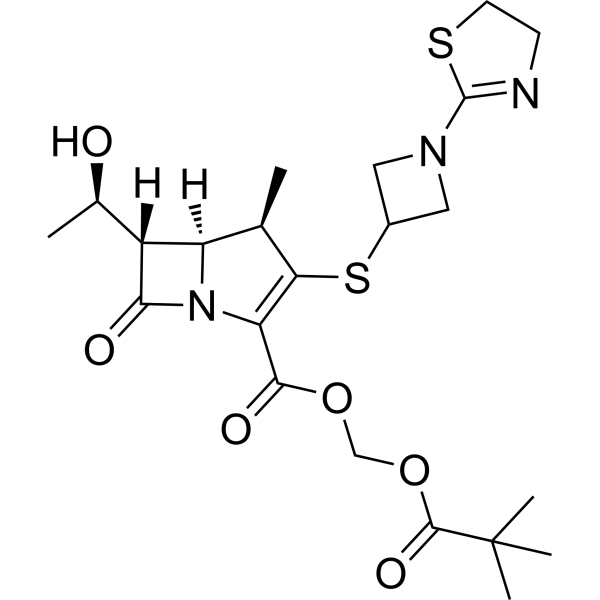
Tebipenem pivoxil (L084 hydrobromide) is an orally active carbapenem Antibiotic. Tebipenem pivoxil acts as a substrate of OATP1A2 with high affinity for this transporter (Km = 41.1 μM) . Tebipenem pivoxil achieves intestinal absorption via carrier-mediated uptake and simple diffusion. Tebipenem pivoxil inhibits the growth of Gram-positive bacteria, Gram-negative bacteria, multidrug-resistant bacteria, and pathogens producing extended-spectrum β-lactamases. Tebipenem pivoxil eliminates intestinal infection pathogens and reduces mortality in septic mice. Tebipenem pivoxil can be used in research related to bacterial pneumonia, severe gastrointestinal infections, bacterial sepsis, complicated urinary tract infections, and acute pyelonephritis .
loading...
    loading...
Cat. No.: HY-130581
CAS No.: 86559-73-1
Target:  

Bacterial

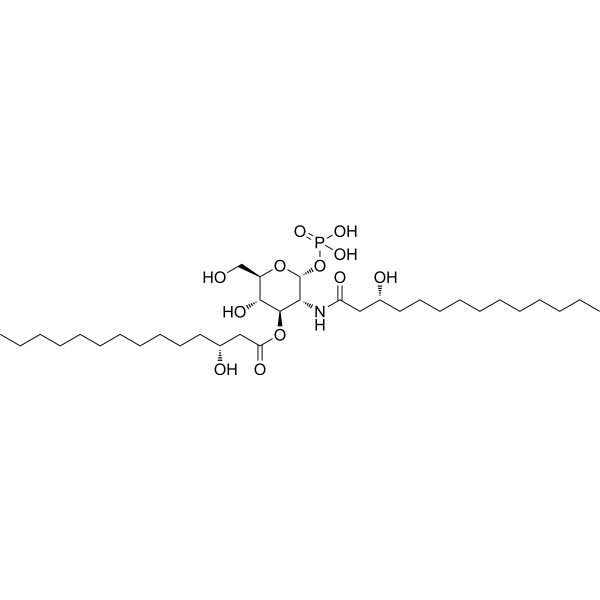
Lipid X is a 2,3-diacylglucosamine-1-phosphate that serves as the monosaccharide precursor of lipid A, possessing both LPS antagonist and weak agonist activities. Lipid X exerts protective effects by inhibiting tumor necrosis factor production, monocyte procoagulant activity, and neutrophil priming. Lipid X may induce transient pulmonary hypertension, neutropenia, and mild pyrogenic effects in laboratory animals. Lipid X has low toxicity and no in vitro antibacterial activity, but it significantly reduces mortality following Gram-negative bacterial infection and endotoxin exposure. Lipid X tends to accumulate in liver tissue, binds to circulating cellular components, and can be converted to lipid Y through transesterification. Lipid X can be used in research on Gram-negative bacterial sepsis, endotoxemia, and associated pulmonary hypertension .
loading...
    loading...
Cat. No.: HY-P11100
Target:  

Bacterial

Research Areas:  

Infection

PepW is a potent antimicrobial peptide targeting the capsule of multidrug-resistant Klebsiella pneumoniae (MIC=2-8 μM). PepW achieves bactericidal activity via capsule polysaccharide aggregation and structural disruption. PepW is promising for research of infectious diseases caused by Gram-negative bacteria (e.g., pneumonia, sepsis) .
loading...
    loading...
Cat. No.: HY-P11093
Papiliocin is a potent peptide antibiotic with both anti-inflammatory and antibacterial activities. Papiliocin is primarily active against Gram-negative bacteria. Papiliocin exhibits strong anti-inflammatory activity against cell, exerting its anti-inflammatory activity by inhibiting the production of NO and the secretion of TNF-α and MIP-2. Papiliocin participates in the innate defense response mechanism by inhibiting the Toll-like receptor pathway and NF-κB. Papiliocin induces apoptosis in fungal cells and increases the total level of intracellular ROS. Papiliocin acts as an effective antiseptic peptide in sepsis models. Papiliocin is useful in anti-inflammatory and antibacterial research .
loading...
    loading...
Cat. No.: HY-B0396A
CAS No.: 211558-19-9
Synonyms: L084 hydrochloride
Target:  

Antibiotic Bacterial OAT

Research Areas:  

Infection

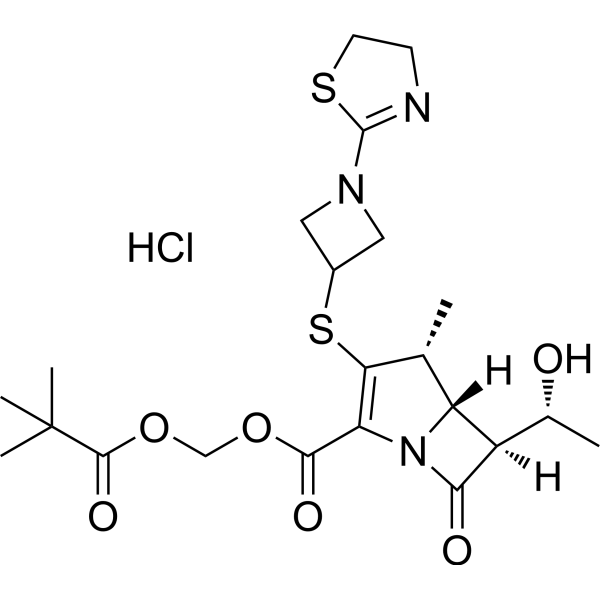
Tebipenem pivoxil hydrochloride (L084 hydrochloride) is an orally active carbapenem Antibiotic. Tebipenem pivoxil hydrochloride acts as a substrate of OATP1A2 with high affinity for this transporter (Km = 41.1 μM) . Tebipenem pivoxil hydrochloride achieves intestinal absorption via carrier-mediated uptake and simple diffusion. Tebipenem pivoxil hydrochloride inhibits the growth of Gram-positive bacteria, Gram-negative bacteria, multidrug-resistant bacteria, and pathogens producing extended-spectrum β-lactamases. Tebipenem pivoxil hydrochloride eliminates intestinal infection pathogens and reduces mortality in septic mice. Tebipenem pivoxil hydrochloride can be used in research related to bacterial pneumonia, severe gastrointestinal infections, bacterial sepsis, complicated urinary tract infections, and acute pyelonephritis .
loading...
    loading...
Cat. No.: HY-P2458
CAS No.: 152742-15-9
Target:  

Bacterial

Research Areas:  

Infection

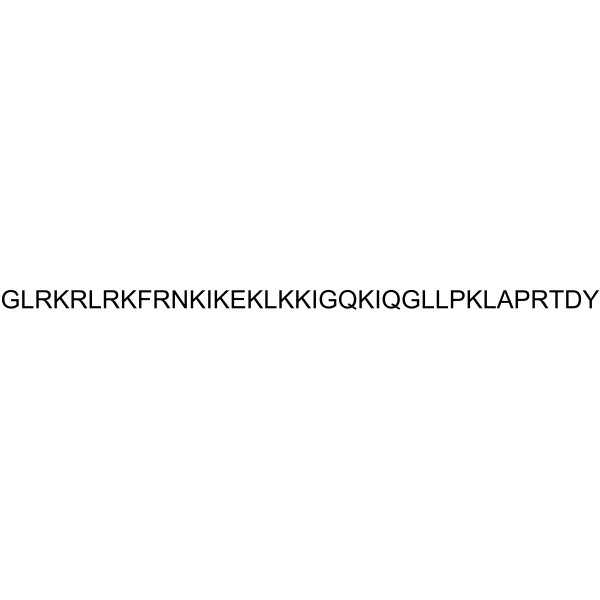
CAP18 (rabbit) is a 37 amino acids antimicrobial peptide originally isolated from rabbit granulocytes. CAP18 (rabbit) has broad antimicrobial activity against both Gram-positive (IC50, 130-200 nM) and Gram-negative (IC50, 20-100 nM) bacteria. CAP18 (rabbit) has the potential for bacterial sepsis research .
loading...
    loading...
Cat. No.: HY-155250
CAS No.: 2163048-45-9
Target:  

Bacterial

Research Areas:  

Infection

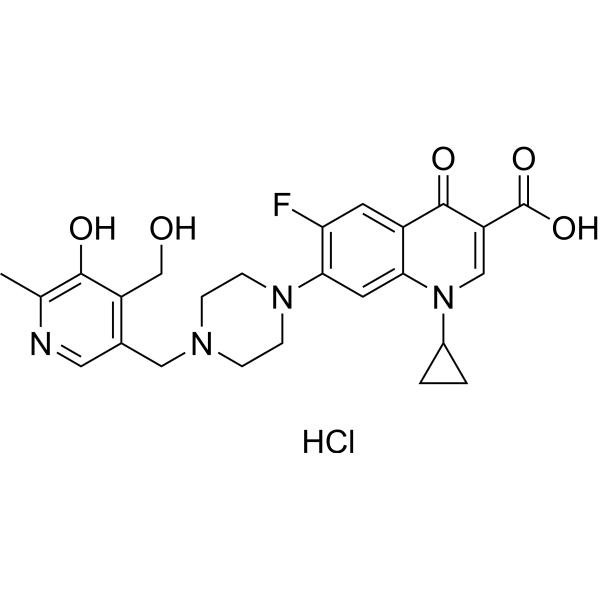
Antibacterial agent 154 (compound 7) is a derivative of Fluoroqinolones and is an orally effective antibacterial agent. Antibacterial agent 154 inhibits Gram-positive and Gram-negative bacteria. Antibacterial agent 154 demonstrated in vivo efficacy in a mouse model of staphylococcal sepsis .
loading...
    loading...
Cat. No.: HY-19126
CAS No.: 140466-18-8
CL-184005 is an antagonist for platelet-activating factor (PAF), that inhibits the PAF-induced platelet aggregation with IC50 of 600 nM and 510 nM, in human and rabbit platelet-rich plasma. CL-184005 protects the rats from endotoxin-induced gastrointestinal damage and hypotension. CL-184005 exhibits potential attenuating Gram-negative bacterial sepsis .
loading...
    loading...
Cat. No.: HY-164036R
CAS No.: 2930690-12-1
Research Areas:  

Infection

Flurbiprofen (sodium) (Standard) is the analytical standard of Flurbiprofen (sodium). This product is intended for research and analytical applications. Flurbiprofen sodium (dl-Flurbiprofen sodium) is a nonsteroidal anti-inflammatory agent (NSAID) with anti-inflammatory and analgesic activities. Flurbiprofen sodium is used to reduce bone resorption in periodontal disease, and it works by inhibiting carbonic anhydrase. Flurbiprofen sodium is formulated as biodegradable microspheres for use as a compound delivery system, particularly within the periodontal pocket. The release rate of flurbiprofen sodium is related to the concentration of polymer and polyvinyl alcohol used in its preparation .
loading...
    loading...
Cat. No.: HY-B0396R
CAS No.: 161715-24-8
Synonyms: L084 (Standard)
Research Areas:  

Infection

Tebipenem pivoxil (Standard) (L084 (Standard)) is the analytical standard of Tebipenem pivoxil (HY-B0396). This product is intended for research and analytical applications. Tebipenem pivoxil (L084 hydrobromide) is an orally active carbapenem Antibiotic. Tebipenem pivoxil acts as a substrate of OATP1A2 with high affinity for this transporter (Km = 41.1 μM) . Tebipenem pivoxil achieves intestinal absorption via carrier-mediated uptake and simple diffusion. Tebipenem pivoxil inhibits the growth of Gram-positive bacteria, Gram-negative bacteria, multidrug-resistant bacteria, and pathogens producing extended-spectrum β-lactamases. Tebipenem pivoxil eliminates intestinal infection pathogens and reduces mortality in septic mice. Tebipenem pivoxil can be used in research related to bacterial pneumonia, severe gastrointestinal infections, bacterial sepsis, complicated urinary tract infections, and acute pyelonephritis .
loading...
    loading...
Cat. No.: HY-P11772A
Target:  

Bacterial

Research Areas:  

Infection

LBP-14-NH2 (TFA) is a lipopolysaccharide (LPS)-binding protein (LBP) inhibitor. LBP-14-NH2 TFA interacts with LPS (HY-D1056) to form a complex and blocks the interaction between LBP and LPS. LBP-14-NH2 TFA can be used in studies related to Gram-negative bacterial sepsis .
loading...
    loading...
Cat. No.: HY-P11580
Research Areas:  

Infection

Pap12-6-10 is an MD-2 ligand that binds to the hydrophobic pocket of MD-2 to inhibit the dimerization of the TLR4/MD-2 complex and downstream inflammatory signal transduction. Pap12-6-10 also binds to LPS to permeabilize bacterial cell membranes and induce oxidative stress, leading to bacterial death. Pap12-6-10 regulates LPS-induced inflammatory responses through the TLR4 signaling pathway and exhibits antibacterial activity against multidrug-resistant Gram-negative bacteria. Pap12-6-10 shows low tendency to induce drug resistance and low preclinical cytotoxicity, and it prevents organ damage in a mouse model of sepsis. Pap12-6-10 can be used for research related to Gram-negative sepsis and carbapenem-resistant Acinetobacter baumannii infections .
loading...
    loading...
Cat. No.: HY-P11772
CAS No.: 324030-22-0
Target:  

Bacterial

Research Areas:  

Infection

LBP-14, a peptide, is a synthetic fragment of the LPS (HY-D1056) binding protein (LBP) and is a LPS antagonist. LBP-14 interacts with LPS via electrostatic contacts between arginine/lysine residues and LPS phosphate groups, and hydrophobic contacts between aromatic/aliphatic residues and LPS acyl chains, blocking LPS binding to LBP. LBP-14 moderately inhibits LPS-induced TNF-α formation. LBP-14 can be used for the research of gram-negative sepsis .
loading...
    loading...
Cat. No.: HY-182417
CAS No.: 351372-19-5
Target:  

Bacterial Topoisomerase

Research Areas:  

Infection

PD 0305970 is an orally active bacterial gyrase and topoisomerase inhibitor. PD 0305970 shows exceptional activity against gram-positive and fastidious organisms and more modest activity against gram-negative species. PD 0305970 shows low spontaneous resistance frequencies. PD 0305970 shows antibacterial efficacy in murine streptococcal sepsis and pneumococcal pneumonia models. PD 0305970 can be used for the research of bacterial infection .
loading...
    loading...
Cat. No.: HY-107044
CAS No.: 364069-14-7
Target:  

Bacterial Topoisomerase

Research Areas:  

Infection

DK 507k is an orally active 8-methoxyquinolone Antibacterial agent. DK 507k targets DNA gyrase subunit A (GyrA) and modulates the function of GyrA. DK 507k inhibits the growth of various Gram-positive and Gram-negative bacteria, including Pseudomonas aeruginosa and Methicillin (HY-121544)-resistant Staphylococcus aureus. DK 507k eliminates Penicillin-tolerant Streptococcus pneumoniae from the lungs of mice. DK 507k can be used in research related to sepsis and *Streptococcus pneumoniae* pneumonia .
loading...
    loading...
Cat. No.: HY-B0396B
CAS No.: 1381788-20-0
Synonyms: L084 hydrobromide
Target:  

Antibiotic Bacterial OAT

Research Areas:  

Infection

Tebipenem pivoxil hydrobromide (L084 hydrobromide) is an orally active carbapenem Antibiotic. Tebipenem pivoxil hydrobromide acts as a substrate of OATP1A2 with high affinity for this transporter (Km = 41.1 μM) . Tebipenem pivoxil hydrobromide achieves intestinal absorption via carrier-mediated uptake and simple diffusion. Tebipenem pivoxil hydrobromide inhibits the growth of Gram-positive bacteria, Gram-negative bacteria, multidrug-resistant bacteria, and pathogens producing extended-spectrum β-lactamases. Tebipenem pivoxil hydrobromide eliminates intestinal infection pathogens and reduces mortality in septic mice. Tebipenem pivoxil hydrobromide can be used in research related to bacterial pneumonia, severe gastrointestinal infections, bacterial sepsis, complicated urinary tract infections, and acute pyelonephritis .
loading...
    loading...
Cat. No.: HY-181671
Target:  

Bacterial

Research Areas:  

Infection

Antibacterial agent 324 is an amphipathic antibacterial agent. Antibacterial agent 324 exhibits selective activity against Gram-positive bacteria, with limited activity against enterococci and weak activity against Gram-negative bacteria .
loading...
    loading...
  • 1

