15 Results for "

hepatoprotection

" in MedChemExpress (MCE) Product Catalog:
Products (15)

15 Results for "hepatoprotection" in MCE Product Catalog:

1
1 Cited Publications
Cat. No.: HY-N0468
CAS No.: 63279-13-0
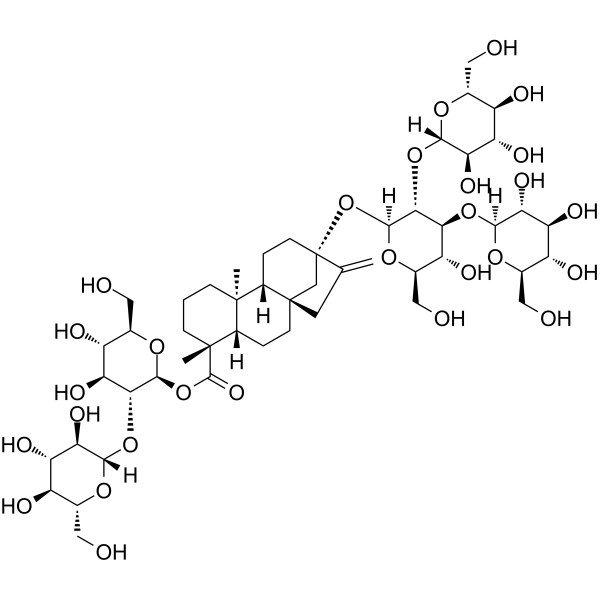
Rebaudioside D is an orally active sweetener that targets and activates FXR, modulates Acetyl-CoA Carboxylase, and inhibits 3-hydroxy-3-methylglutaryl-CoA reductase. Rebaudioside D regulates bile acid homeostasis and lipid metabolism, reduces the synthesis rates of fatty acids and cholesterol, and exerts multiple effects including anti-adipogenesis, hepatoprotection, anti-steatosis, gut microbiota modulation, enhancement of secondary bile acid metabolism, anti-endotoxin activity, regulation of bile acid transport, and inhibition of bile acid efflux. Rebaudioside D also reduces body weight gain, visceral fat accumulation, hepatic triglyceride and cholesterol accumulation, hepatic lipid peroxidation, and decreases the circulating level of lipopolysaccharide-binding protein. Rebaudioside D additionally enhances the secondary bile acid metabolic pathway of intestinal bacteria, upregulates the gene expression of ileal organic solute transporter α, and downregulates the gene expression of hepatic bile salt export pump. Rebaudioside D does not affect glucose homeostasis, alter total caloric intake or fecal energy excretion, induce weight gain, exacerbate obesity, promote hepatic steatosis, impair brown adipose tissue function, nor change skeletal muscle metabolism-related proteins. Rebaudioside D can be used in diet-induced obesity and obesity-related research .
loading...
    loading...
1
1 Cited Publications
Cat. No.: HY-N7617
CAS No.: 41743-74-2
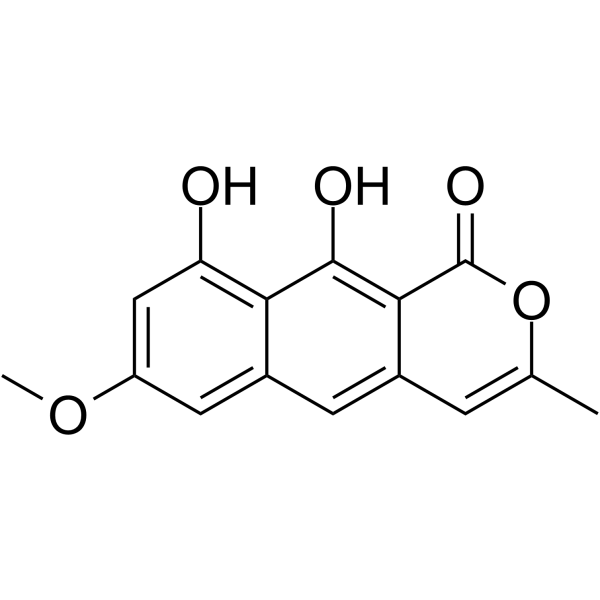
Toralactone, isolated from Cassia obtusifolia, mediates hepatoprotection via an Nrf2-dependent anti-oxidative mechanism .
loading...
    loading...
Cat. No.: HY-N6073
CAS No.: 508-01-0
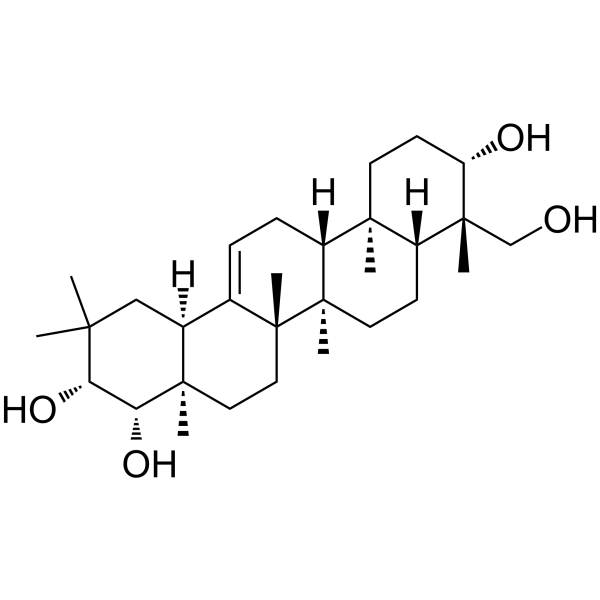
Soyasapogenol A is a triterpenoid aglycone of soyasaponins. Soyasapogenol A has activities such as anti-inflammation, anti-cancer, hepatoprotection and anti-HSV-1. Soyasapogenol A can be used in the research of tumors and immune inflammatory diseases .
loading...
    loading...
Cat. No.: HY-121944
CAS No.: 524-40-3
Purity:  99.81%
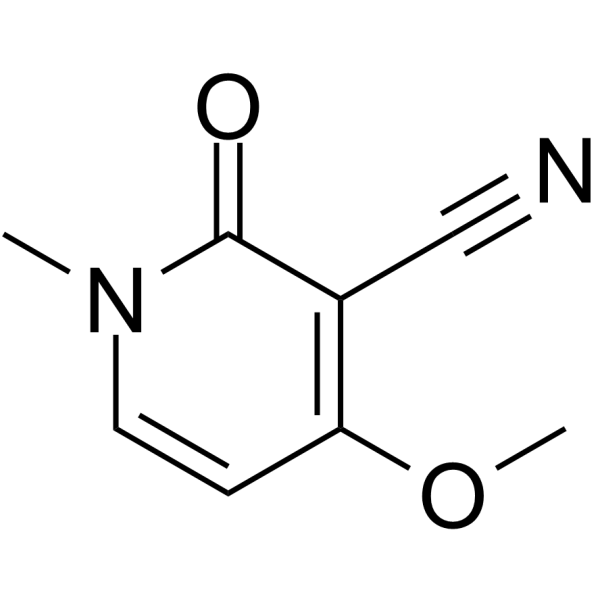
Ricinine exhibits hepatoprotection in CCl4-induced liver damage. Ricinine is also a CK1α inhibitor, and may activate Wnt pathway .
loading...
    loading...
Cat. No.: HY-N9880
CAS No.: 27542-39-8
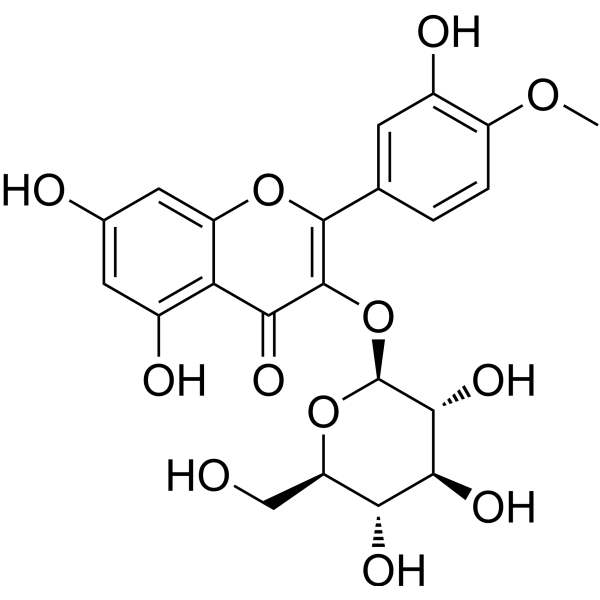
Tamarixin is flavonoid that isolated from Astragalus tanae Sosn that has hepatoprotective, antioxidant, anticancer, and antimicrobial activities .
loading...
    loading...
Cat. No.: HY-175005
CF-Carvacrol is an orally active lipid-lowering agent synthesized by merging the pharmacophores of Carvacrol (HY-N0711) and Clofibric acid (HY-B1415). CF-Carvacrol has a good affinity for PPAR-α. CF-Carvacrol has significant hypolipidemic activity and may exert antioxidant and anti-inflammatory activity by activating the Nrf2/HO-1 signaling pathway to reduce liver injury. CF-Carvacrol can be used for the study of CF-induced liver damage .
loading...
    loading...
Cat. No.: HY-N0468R
CAS No.: 63279-13-0
Rebaudioside D (Standard) is the analytical standard of Rebaudioside D. This product is intended for research and analytical applications. Rebaudioside D is an orally active sweetener that targets and activates FXR, modulates Acetyl-CoA Carboxylase, and inhibits 3-hydroxy-3-methylglutaryl-CoA reductase. Rebaudioside D regulates bile acid homeostasis and lipid metabolism, reduces the synthesis rates of fatty acids and cholesterol, and exerts multiple effects including anti-adipogenesis, hepatoprotection, anti-steatosis, gut microbiota modulation, enhancement of secondary bile acid metabolism, anti-endotoxin activity, regulation of bile acid transport, and inhibition of bile acid efflux. Rebaudioside D also reduces body weight gain, visceral fat accumulation, hepatic triglyceride and cholesterol accumulation, hepatic lipid peroxidation, and decreases the circulating level of lipopolysaccharide-binding protein. Rebaudioside D additionally enhances the secondary bile acid metabolic pathway of intestinal bacteria, upregulates the gene expression of ileal organic solute transporter α, and downregulates the gene expression of hepatic bile salt export pump. Rebaudioside D does not affect glucose homeostasis, alter total caloric intake or fecal energy excretion, induce weight gain, exacerbate obesity, promote hepatic steatosis, impair brown adipose tissue function, nor change skeletal muscle metabolism-related proteins. Rebaudioside D can be used in diet-induced obesity and obesity-related research .
loading...
    loading...
Cat. No.: HY-121944S
CAS No.: 1313734-77-8
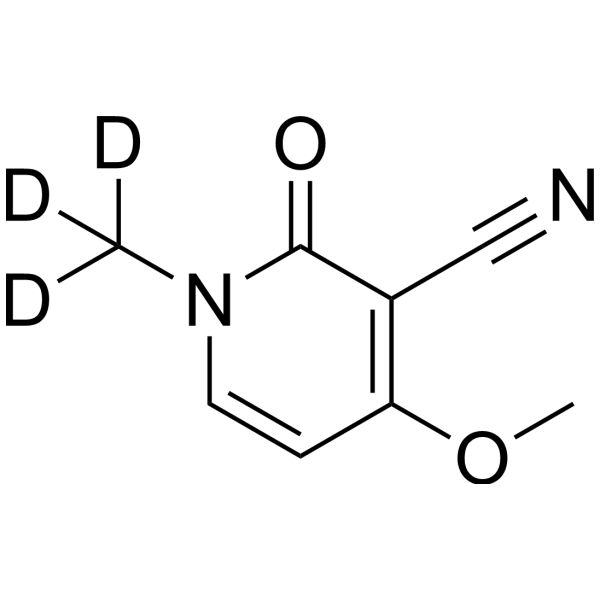
Ricinine-d3 is the deuterium labeled Ricinine. Ricinine exhibits hepatoprotection in CCl4 -induced liver damage .
loading...
    loading...
Cat. No.: HY-121944R
CAS No.: 524-40-3
Ricinine (Standard) is the analytical standard of Ricinine. This product is intended for research and analytical applications. Ricinine exhibits hepatoprotection in CCl4 -induced liver damage .
loading...
    loading...
Cat. No.: HY-W017140R
CAS No.: 24168-70-5
Synonyms: SBMP (Standard)
Ricinine (Standard) is the analytical standard of Ricinine. This product is intended for research and analytical applications. Ricinine exhibits hepatoprotection in CCl4 -induced liver damage .
loading...
    loading...
Cat. No.: HY-N6073R
CAS No.: 508-01-0
Soyasapogenol A (Standard) is the analytical standard of Soyasapogenol A (HY-N6073). This product is intended for research and analytical applications. Soyasapogenol A is a triterpenoid aglycone of soyasaponins. Soyasapogenol A has activities such as anti-inflammation, anti-cancer, hepatoprotection and anti-HSV-1. Soyasapogenol A can be used in the research of tumors and immune inflammatory diseases .
loading...
    loading...
Cat. No.: HY-N17770
CAS No.: 2584414-13-9
Obtusinaphthalenside B is a novel naphthyl glycoside compound that can be isolated from Cassia obtusifolia seeds. Cassia obtusifolia has physiological functions related to neuroprotection, anti-inflammation, and hepatoprotection.
loading...
    loading...
Cat. No.: HY-N17768
CAS No.: 2414481-39-1
Obtusichromoneside B is a novel naphthyl glycoside compound that can be isolated from Cassia obtusifolia seeds. Cassia obtusifolia possesses various physiological functions, including neuroprotection, anti-inflammatory effects, and hepatoprotection.
loading...
    loading...
Cat. No.: HY-119348
CAS No.: 326850-30-0
Synonyms: NCX-701
Nitroparacetamol (NCX-701) is a nitric oxide (NO) donor-non-steroidal anti-inflammatory agent (NO-NSAID). Nitroparacetamol is formed by the ester linkage of Acetaminophen (HY-66005) and Nitrooxybutyroyl, aiming to combine the analgesic advantage of Acetaminophen with the organ-protective effect of nitric oxide, while expanding its anti-inflammatory activity. The analgesic spectrum of Nitroparacetamol is broader, and it is effective for painful pathological pain, and significantly reduces hepatotoxicity. Nitroparacetamol can reduce the expressions of IL-1β, TNF-α, COX-2, and iNOS.
loading...
    loading...
Cat. No.: HY-N19083
Category:  

Extract

Target:  

Bacterial

Tecomella undulata Extract, also known as Rohida extract, is a valuable botanical extract derived from the bark and leaves of the Tecomella undulata plant native to the Indian Thar Desert and is rich in bioactive compounds such as flavonoids, quinones, triterpenoids, and other phytochemicals that contribute to its diverse therapeutic properties. This extract is widely recognized for its hepatoprotective effects demonstrated through its ability to protect against liver damage induced by toxins such as paracetamol and carbon tetrachloride by normalizing elevated liver enzyme levels reducing oxidative stress and improving liver function. Additionally, it exhibits significant anti-inflammatory activity comparable to standard drugs like indomethacin and has been used to treat conditions like ascites and hepatosplenomegaly while also showing immunomodulatory effects by enhancing both humoral and cell-mediated immune responses and possessing antimicrobial properties that make it effective against various pathogens. Recent research suggests that Tecomella undulata may have potential in managing nonalcoholic steatohepatitis (NASH) by reducing body weight insulin resistance and improving liver function markers making it a versatile natural remedy with significant applications in hepatoprotection anti-inflammation and immune support.
loading...
    loading...
  • 1

