




1. Search Result
Search Result
Results for "

human EGFR

" in MedChemExpress (MCE) Product Catalog:

124

Inhibitors & Agonists

3

Screening Libraries

1

Fluorescent Dye

1

Biochemical Assay Reagents

2

Peptides

26

Inhibitory Antibodies

9

Natural
Products

39

Recombinant Proteins

6

Isotope-Labeled Compounds

4

Antibodies

7

Click Chemistry

4

Oligonucleotides

Targets Recommended:
Cat. No. Product Name Target Research Areas Chemical Structure
  • HY-P9905
    Cetuximab
    Maximum Cited Publications
    53 Publications Verification

    C225; IMC-C225

    Radionuclide-Drug Conjugates (RDCs) EGFR Cancer
    Cetuximab (C225) is a human IgG1 monoclonal antibody that inhibits epidermal growth factor receptor (EGFR), with a Kd of 0.201 nM for EGFR by SPR. Cetuximab has potent antitumor activity .
    Cetuximab
  • HY-50896
    Erlotinib
    130+ Cited Publications

    CP-358774; NSC 718781; OSI-774

    EGFR Autophagy Cancer
    Erlotinib (CP-358774) is a directly acting EGFR tyrosine kinase inhibitor, with an IC50 of 2 nM for human EGFR. Erlotinib reduces EGFR autophosphorylation in intact tumor cells with an IC50 of 20 nM. Erlotinib is used for the treatment of non-small cell lung cancer . Erlotinib is a click chemistry reagent, itcontains an Alkyne group and can undergo copper-catalyzed azide-alkyne cycloaddition (CuAAc) with molecules containing Azide groups.
    Erlotinib
  • HY-P9977
    Amivantamab
    3 Publications Verification

    JNJ-61186372

    EGFR Inflammation/Immunology Cancer
    Amivantamab (JNJ-61186372) is a human EGFR-MET bispecific antibody with immune anticancer activity. Amivantamab inhibits ligand binding, promotes endocytosis and degradation of receptor-antibody complexes, and induces Fc-dependent cytokinesis in macrophages and antibody-dependent cytotoxicity in natural killer cells .
    Amivantamab
  • HY-P99041
    Panitumumab
    2 Publications Verification

    ABX-EGF

    EGFR Cancer
    Panitumumab (ABX-EGF) is a fully human IgG2 anti-EGFR monoclonal antibody with anti-tumor activity. Panitumumab inhibits tumor cell proliferation, survival and angiogenesis. Panitumumab can be used in the research of cancers, such as colon cancer .
    Panitumumab
  • HY-109061
    Lazertinib
    3 Publications Verification

    YH25448; GNS-1480

    Apoptosis Akt TRP Channel EGFR ERK Infection Neurological Disease Metabolic Disease Cancer
    Lazertinib (YH25448; GNS-1480) is an orally active, blood-brain barrier permeable third-generation EGFR tyrosine kinase inhibitor, as well as an ABCB1/ABCG2 inhibitor and a TRPA1 activator. Lazertinib exhibits IC50 values of 0.4 mM and 0.2 mM against human ABCB1 and ABCG2, respectively. By inhibiting mutant EGFR signaling, EGFR phosphorylation and the downstream ERK/AKT pathway, as well as upregulating surface expression of EGFR/MET, Lazertinib induces cell cycle arrest, apoptosis, spontaneous calcium responses, hyperexcitability of dorsal root ganglion (DRG) neurons, and TRPA1-dependent pain-like behaviors. Lazertinib competitively binds to the substrate-binding sites of ABCB1/ABCG2, stimulates their ATPase activity without altering their expression or plasma membrane localization, thereby enhancing ADCC activity, acting as a chemosensitizer, and reversing ABCB1-mediated multidrug resistance. It exerts antitumor activity as a single agent or in combination with other drugs. Lazertinib is applicable to research related to non-small cell lung cancer, multidrug-resistant cancers, and paresthesia .
    Lazertinib
  • HY-P0221
    PACAP (1-38), human, ovine, rat
    5 Publications Verification

    Pituitary Adenylate Cyclase Activating Polypeptide 38

    PACAP Receptor ERK EGFR Reactive Oxygen Species (ROS) Calcium Channel Infection Neurological Disease
    PACAP (1-38), human, ovine, rat is a PAC1 receptor agonist. PACAP (1-38), human, ovine, rat binds to PACAP type I receptor, PACAP type II receptor VIP1, and PACAP type II receptor VIP2 with IC50s of 4 nM, 2 nM, and 1 nM, respectively. PACAP (1-38), human, ovine, rat increases the α-secretase activity. PACAP (1-38), human, ovine, rat elevates cytosolic Ca 2+, increases proliferation and increases phosphorylation of extracellular regulates kinase (ERK) and the epidermal growth factor receptor (EGFR). PACAP (1-38), human, ovine, rat demonstrates potent, efficacious, and sustained stimulatory effects on sympathetic neuronal NPY and catecholamine production. PACAP (1-38), human, ovine, rat can be used for neurotrophic and neuroprotective research .
    PACAP (1-38), human, ovine, rat
  • HY-P99275
    Patritumab
    1 Publications Verification

    AMG-888; U3-1287

    EGFR Akt ERK PARP Survivin Cancer
    Patritumab (Human Anti-ERBB3 Recombinant Antibody) is a neutralizing monoclonal antibody to ERBB3. Patritumab shows a synergy with Cetuximab (HY-P9905), potently inhibits the phosphorylation of EGFR, HER2, HER3, ERK, and AKT. Patritumab also induces cell apoptosis and suppresses the growth of pancreatic, non-small cell lung cancer, and colorectal cancer xenograft tumors .
    Patritumab
  • HY-147164

    ADC Linker Cancer
    MC-Gly-Gly-Phe-Gly-PAB-PNP is a linker for synthesis anti-human EGFR antibody agent conjugate .
    MC-Gly-Gly-Phe-Gly-PAB-PNP
  • HY-P9964

    11F8; IMC-11F8; LY3012211

    EGFR Cancer
    Necitumumab (11F8; IMC-11F8; LY3012211) is a human IgG monoclonal antibody directed against EGFR. Necitumumab binds to the EGF binding site of EGFR, blocks ligand binding, neutralizes ligand-induced EGFR phosphorylation and downstream signaling, induces EGFR internalization and degradation, and mediates antibody-dependent cellular cytotoxicity (ADCC) in EGFR-expressing cells. Necitumumab enhances antitumour activity in combination with Gemcitabine (HY-17026) and Cisplatin (HY-17394) in murine non-small-cell lung cancer xenograft models. Necitumumab can be used in research on cancers such as non-small cell lung cancer and colorectal cancer .
    Necitumumab
  • HY-P9S0008

    Radionuclide-Drug Conjugates (RDCs) EGFR Cancer
    Cetuximab (PBS) is a human IgG1 monoclonal antibody that can inhibit EGFR. The SPR method measured the Kd value of Cetuximab for EGFR to be 0.201 nM; Cetuximab has a highly effective anti-tumor effect .
    Cetuximab (PBS)
  • HY-N1988
    Cucurbitacin IIa
    1 Publications Verification

    Hemslecin A

    Survivin Apoptosis EGFR Caspase p38 MAPK Autophagy MEK Raf ERK STAT CaMK Inflammation/Immunology Cancer
    Cucurbitacin IIa (Hemslecin A) is an orally active, blood-brain barrier-permeable EGFR inhibitor with an IC50 of 1.455 nM against human EGFR. Cucurbitacin IIa induces caspase-3-dependent apoptosis, downregulates survivin expression, enhances autophagy levels, disrupts the actin cytoskeleton via actin aggregation, arrests the cell cycle at the G2/M phase, and exerts anti-inflammatory activity by inhibiting the EGFR-MAPK signaling pathway. Cucurbitacin IIa can be used in the research of inflammation-related diseases, depression, and cancers such as non-small cell lung cancer .
    Cucurbitacin IIa
  • HY-50896R

    CP-358774 (Standard); NSC 718781 (Standard); OSI-774 (Standard)

    Reference Standards EGFR Autophagy Cancer
    Erlotinib (Standard) is the analytical standard of Erlotinib. This product is intended for research and analytical applications. Erlotinib (CP-358774) is a directly acting EGFR tyrosine kinase inhibitor, with an IC50 of 2 nM for human EGFR. Erlotinib reduces EGFR autophosphorylation in intact tumor cells with an IC50 of 20 nM. Erlotinib is used for the treatment of non-small cell lung cancer . Erlotinib is a click chemistry reagent, itcontains an Alkyne group and can undergo copper-catalyzed azide-alkyne cycloaddition (CuAAc) with molecules containing Azide groups.
    Erlotinib (Standard)
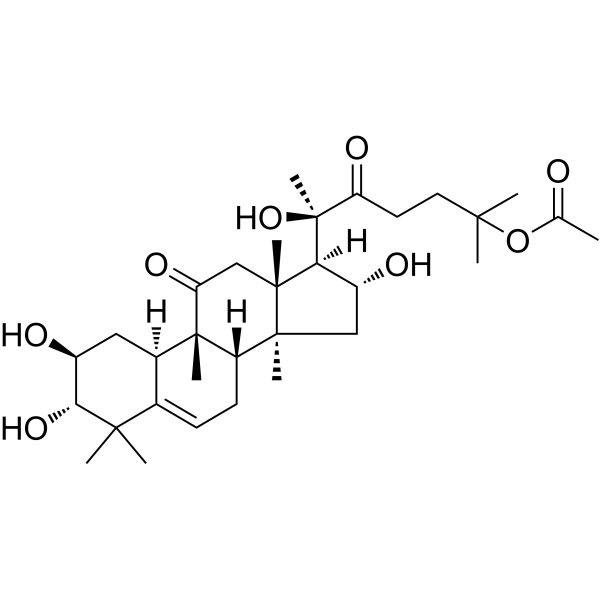
  • HY-N0211
    Cyasterone
    2 Publications Verification

    EGFR Apoptosis Cancer
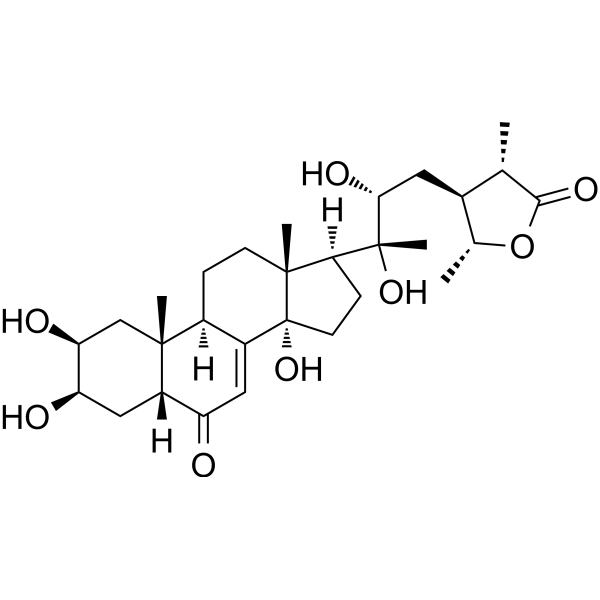
    Cyasterone, a natural EGFR inhibitor, mainly isolated from Ajuga decumbens Thunb (Labiatae). Cyasterone manifests anti-proliferation effect by induced apoptosis and cell cycle arrests. Cyasterone may serves as a therapeutic anti-tumor agent against human tumors .
    Cyasterone
  • HY-109061B
    Lazertinib mesylate
    3 Publications Verification

    YH25448 mesylate; GNS-1480 mesylate

    TRP Channel EGFR Akt ERK Apoptosis Cancer
    Lazertinib (YH25448; GNS-1480) mesylate is an orally active, blood-brain barrier permeable third-generation EGFR tyrosine kinase inhibitor, as well as an ABCB1/ABCG2 inhibitor and a TRPA1 activator. Lazertinib mesylate exhibits IC50 values of 0.4 mM and 0.2 mM against human ABCB1 and ABCG2, respectively. By inhibiting mutant EGFR signaling, EGFR phosphorylation and the downstream ERK/AKT pathway, as well as upregulating surface expression of EGFR/MET, Lazertinib mesylate induces cell cycle arrest, apoptosis, spontaneous calcium responses, hyperexcitability of dorsal root ganglion (DRG) neurons, and TRPA1-dependent pain-like behaviors. Lazertinib mesylate competitively binds to the substrate-binding sites of ABCB1/ABCG2, stimulates their ATPase activity without altering their expression or plasma membrane localization, thereby enhancing ADCC activity, acting as a chemosensitizer, and reversing ABCB1-mediated multidrug resistance. It exerts antitumor activity as a single agent or in combination with other drugs. Lazertinib mesylate is applicable to research related to non-small cell lung cancer, multidrug-resistant cancers, and paresthesia .
    Lazertinib mesylate
  • HY-P99041A

    EGFR Cancer
    Panitumumab (anti-EGFR) is a fully human IgG2 anti-EGFR monoclonal antibody with anti-tumor activity. Panitumumab (anti-EGFR) inhibits tumor cell proliferation, survival and angiogenesis. Panitumumab (anti-EGFR) can be used in the research of cancers, such as colon cancer .
    Panitumumab (anti-EGFR)
  • HY-157229
    STX-721
    1 Publications Verification

    EGFR ERK Cancer
    STX-721 is an orally active, irreversible, covalent EGFR exon 20 insertion (ex20ins) inhibitor that selectively targets ex20ins-mutant dynamic protein states. STX-721 potently inhibits the kinase activity of EGFR ex20ins mutants (NPG, ASV, SVD). STX-721 inhibits phosphorylation of EGFR (pEGFR Y1068) and downstream ERK (pERK Thr202/Tyr204), and suppresses proliferation of ex20ins-mutant Ba/F3 cells and human NSCLC cell lines (NCI-H2073 ASV KI, CUTO-14 ASV). STX-721 induces tumor regression in EGFR ex20ins-mutant PDX/CDX models. STX-721 can be used for the study of non-small cell lung cancer (NSCLC) harboring EGFR or HER2 ex20ins mutations .
    STX-721
  • HY-P99155

    2F8; HUMAX-EGFR

    EGFR Cancer
    Zalutumumab is a high affinity, completely human IgG1 monoclonal antibody targeting EGFR. Zalutumumab binds to domain III of the EGF receptor and acts by blocking the binding of EGF and by sterically interfering with the active conformation of the receptor. Zalutumumab binds with IgG and its Fab fragment with EC50s of 7 and 19 nM, respectively. Zalutumumab can be used for the research of cancer .
    Zalutumumab
  • HY-125035
    LCH-7749944
    5 Publications Verification

    GNF-PF-2356

    PAK Apoptosis Cancer
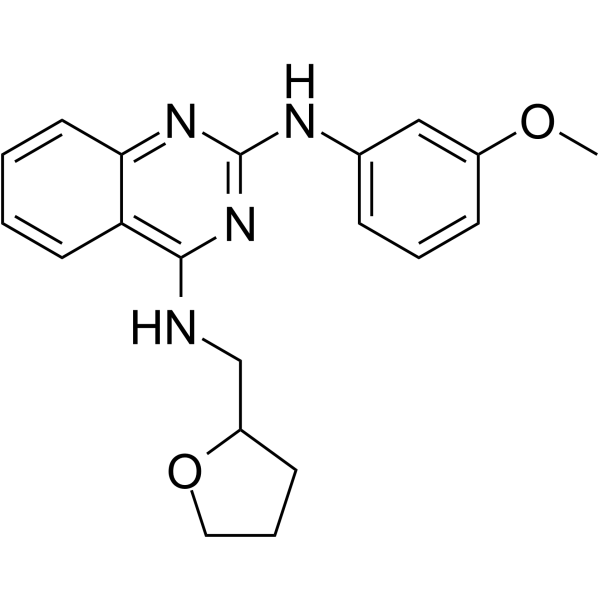
    LCH-7749944 (GNF-PF-2356) is a potent PAK4 inhibitor with an IC50 of 14.93 μM. LCH-7749944 effectively suppresses the proliferation of human gastric cancer cells through downregulation of PAK4/c-Src/EGFR/cyclin D1 pathway and induces apoptosis .
    LCH-7749944
  • HY-112411

    EGFR ERK PDGFR FGFR Neurological Disease Inflammation/Immunology
    PD 174265 is a highly selective, reversible EGFR/ErbB2 tyrosine kinase inhibitor (IC50=0.45 nM) and cell differentiation inducer. By blocking receptor autophosphorylation and the downstream ERK signaling pathway (with an IC50 of 0.45 μM for full-length ERK), PD 174265 effectively inhibits tumor growth and exhibits antitumor activity without obvious toxicity in in vivo models. PD 174265 drives oligodendrocyte precursor cells to switch from a proliferative state to a differentiated state, significantly upregulates the expression of myelin proteins such as CNP, PLP and MBP, and induces neurite branching. PD 174265 shows no inhibitory effect on other kinases including insulin, PDGF and basic FGF receptors, and serves as a crucial tool molecule for investigating the treatment of human epidermoid carcinoma and the mechanism of myelin repair in multiple sclerosis .
    PD 174265
  • HY-120590

    SKLB1028

    EGFR FLT3 Bcr-Abl Cancer
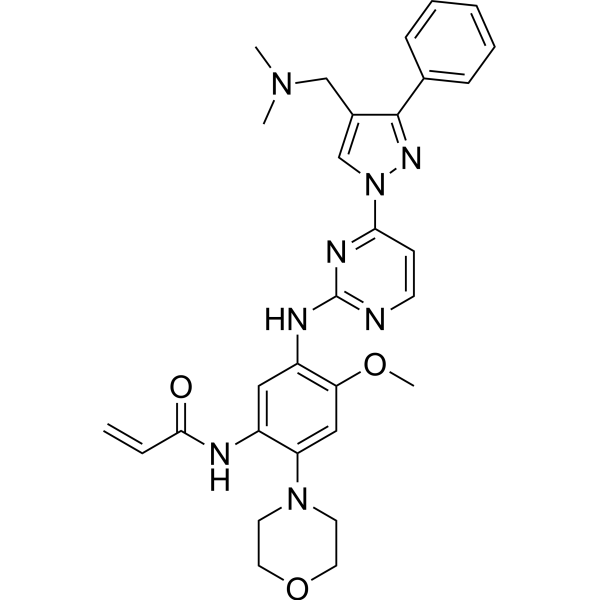
    Ruserontinib (SKLB1028) is an orally active multikinase inhibitor of EGFR, FLT3 and Abl, with an IC50 value of 55 nM for human FLT3, and has antitumor activity .
    Ruserontinib
  • HY-100064

    EGFR Cancer
    O-Desmethyl gefitinib is an active metabolite of Gefitinib in human plasma. The formation of O-desmethyl gefitinib is dependent on CYP2D6 activity. O-desmethyl gefitinib inhibits EGFR with an IC50 of 36 nM in subcellular assays .
    O-Desmethyl gefitinib
  • HY-P990314

    EGFR Inflammation/Immunology
    AFM24 is a bispecific antibody with a TandAb structure expressed in CHO, targeting EGFR&Fc-gamma-RIIIA. AFM24 contains a huIgG1-SCFV heavy chain and a λ light chain, with a predicted molecular weight (MW) of 196.34 kDa. The isotype control for AFM24 can refer to Human IgG1 kappa, Isotype Control (HY-P99001).
    AFM24
  • HY-RS04209

    Small Interfering RNA (siRNA) EGFR Others

    EGFR Human Pre-designed siRNA Set A contains three designed siRNAs for EGFR gene (Human), as well as a negative control, a positive control, and a FAM-labeled negative control.

    EGFR Human Pre-designed siRNA Set A
    EGFR Human Pre-designed siRNA Set A
  • HY-P990947

    AZD9592 Antibody

    ADC Antibody EGFR Cancer
    Tilatamig (AZD9592 Antibody) is a human antibody of the Ig (G1-κ_G1-λ2) subtype that targets EGFR/MET. Tilatamig conjugates with the Top1 inhibitor AZ14170133 (HY-145399) to form the antibody-drug conjugate (ADC) Tilatamig samrotecan (HY-171124) (AZD9592). Tilatamig accurately targets NSCLC models including EGFR-mutant, EGFR-wildtype, and EGFR tyrosine kinase inhibitor-treated ones, and its activity correlates with high expression of EGFR, c-MET and SLFN11. Tilatamig is available for in vivo anti-tumor studies in patient-derived xenograft models of non-small cell lung cancer (NSCLC) and head and neck squamous cell carcinoma (HNSCC) .
    Tilatamig
  • HY-50896S

    CP-358774-d6; NSC 718781-d6; OSI-774-d6

    EGFR Cancer
    Erlotinib-d6 (CP-358774 D6) is a deuterium labeled Erlotinib (CP-358774). Erlotinib is a directly acting inhibitor EGFR tyrosine kinase inhibitor with an IC50 of 2 nM for human EGFR . Erlotinib-d6 is a click chemistry reagent, it contains an Alkyne group and can undergo copper-catalyzed azide-alkyne cycloaddition (CuAAc) with molecules containing Azide groups.
    Erlotinib-d6
  • HY-P990755

    EGFR Inflammation/Immunology
    Pamvatamig is an anti-EGFR/MET human IgG1 κ monoclonal antibody . Recommend Isotype Controls: Human IgG1 kappa, Isotype Control (HY-P99001).
    Pamvatamig
  • HY-P990913

    bsAb7075; REGN-7075; Marlotamig

    EGFR Inflammation/Immunology
    HY-P990913 is an EGFR/CD28-targeting IgG4κ type human antibody, the recommed isotype control is Human IgG4 (S228P) kappa, Isotype Control (HY-P99003) .
    Dalmitamig
  • HY-P991571

    GC-1118A

    EGFR PERK Akt Cancer
    GC1118 (GC-1118A) is a fully human anti-EGFR monoclonal antibody with binding affinity of 0.16 nM (KD) to EGFR. GC1118 displays potent inhibitory effects on high- and low-affinity EGFR ligand-induced signaling. GC1118 shows potent anti proliferative activity in KRAS wild-type and KRAS mutant cells. GC1118 can reach the tumor by crossing both BBB (blood-brain barrier) and BTB (brain-tumor barrier) and shows superior anti-tumor effects in various mice xenograft models. GC1118 can be used for the researches of cancer, such as colorectal cancer .
    GC1118
  • HY-103441

    EGFR Cancer
    JNJ28871063 hydrochloride is an orally active, highly selective and ATP competitive pan-ErbB kinase inhibitor with IC50 values of 22 nM, 38 nM, and 21 nM for ErbB1, ErbB2, and ErbB4, respectively. JNJ28871063 hydrochloride inhibits phosphorylation of functionally important tyrosine residues in both EGFR and ErbB2. JNJ28871063 hydrochloride crosses the blood-brain barrier and has antitumor activity in human tumor xenograft models that overexpress EGFR and ErbB2 .
    JNJ28871063 hydrochloride
  • HY-129510

    EGFR Mitosis Cancer
    4-Methyl erlotinib, is a potent and selective epidermal growth factor receptor (EGFR) tyrosine kinase inhibitor. 4-Methyl erlotinib potently inhibits EGF-mediated tumor cell mitosis by reducing EGFr-specific tyrosine phosphorylation. Using a mouse model of human tumor transplantation, 4-Methyl erlotinib demonstrated significant and sustained suppression of EGFr phosphotyrosine levels, resulting in significant growth inhibition of EGFr-dependent human cancers .
    4-Methyl erlotinib
  • HY-P99041B

    ABX-EGF (powder)

    EGFR Cancer
    Panitumumab (ABX-EGF) (powder) is a fully human IgG2 anti-EGFR monoclonal antibody with anti-tumor activity. Panitumumab (powder) inhibits tumor cell proliferation, survival and angiogenesis. Panitumumab (powder) can be used in the research of cancers, such as colon cancer .
    Panitumumab (powder)
  • HY-P99155A

    EGFR Cancer
    Zalutumumab (powder) is a high affinity, completely human IgG1 monoclonal antibody targeting EGFR. Zalutumumab (powder) binds to domain III of the EGF receptor and acts by blocking the binding of EGF and by sterically interfering with the active conformation of the receptor. Zalutumumab (powder) binds with IgG and its Fab fragment with EC50s of 7 and 19 nM, respectively. Zalutumumab (powder) can be used for the research of cancer .
    Zalutumumab (powder)
  • HY-P99324

    Anti-human EGFR Recombinant Antibody; CetuxiMab-GEX, GEXMab52201

    EGFR Apoptosis Cancer
    Tomuzotuximab (Anti-Human EGFR Recombinant Antibody) is a fully human glycoengineered IgG1 monoclonal antibody against EGFR. Tomuzotuximab has anticancer effects .
    Tomuzotuximab
  • HY-E70696

    EGFR Cancer
    EGFR is a driver of tumorigenesis. EGFR is mainly found in an auto-inhibited, dimerization-incompetent, state at the plasma membrane (PM). Ligand binding promotes receptor dimerization, which determines a series of structural rearrangements that are conveyed to the cytoplasmic domain allowing the formation of asymmetric dimers between the two juxtaposed catalytic domains. EGFR has multiple mutants. EGFR C797S/L858R Recombinant Human Active Protein Kinase is a recombinant EGFR C797S/L858R protein that can be used to study EGFR C797S/L858R-related functions .
    EGFR C797S/L858R Recombinant Human Active Protein Kinase
  • HY-122079

    Ras Cancer
    NSC1011 is a potent Ras converting enzyme 1 endoprotease (Rce1) inhibitor with an IC50 value of 6.9 µM for HsRce1 (crystal structure of the human Rce1). NSC1011 induces mislocalizing EGFR-H-Ras, EGFR-N-Ras, and EGFR-K-Ras .
    NSC1011
  • HY-155983

    Nucleoside Antimetabolite/Analog Cancer
    E07 aptamer is an aptamer that targets human EGFR. E07 aptamer can compete with EGF for binding, binds to a novel epitope on EGFR. E07 aptamer binds to cells expressing EGFR, blocks receptor autophosphorylation, and prevents proliferation of tumor cells in three-dimensional matrices. E07 aptamer can be used for tomor disease research .
    E07 aptamer
  • HY-P99306

    DS 1024; Zatuximab

    EGFR Cancer
    Modotuximab (DS 1024) is an IgG1κ-type chimeric antibody targeting human EGFR protein. Modotuximab binds non-overlapping epitopes on domain III of EGFR, a domain that is intact in EGFRvIII. Modotuximab has antitumor activity in vivo .
    Modotuximab
  • HY-P991508

    EGFR Cancer
    Sym004 is a 1:1 mixture of two recombinant, human-mouse chimeric mAbs directed against nonoverlapping EGFR epitopes (mAb992 and mAb1024). Sym004 is ability to mediate rapid EGFR internalization and subsequent degradation of internalized receptors via EGFR cross-linking. Sym004 can be used for the study of metastatic colorectal cancer, head and neck (H&N) and lung cancer .
    Sym004
  • HY-164527

    Src FAK EGFR Cancer
    Si306 is a Src inhibitor with antitumor activity. Si306 reduces the phosphorylation of focal adhesion kinase (FAK) and the expression of epidermal growth factor receptor (EGFR), and inhibits the invasion of human glioblastoma (GBM) .
    Si306
  • HY-118184

    PGE synthase Cancer
    AF3485 is a human mPGES-1 inhibitor that exhibits antitumor activity in vitro and in vivo. AF3485 inhibits tumor-associated angiogenesis by reducing PGE2 production, inhibiting EGFR signaling, and decreasing VEGF and FGF-2 expression. AF3485 reduced tumor growth in mice bearing human A431 xenograft tumors by subchronic administration.
    AF3485
  • HY-E70678

    CDK Cancer
    CDK3 is a major player driving retinoblastoma (Rb) phosphorylation during the G0/G1 transition and in the early G1 phase of the cell cycle. CDK3 interacts with various transcription factors involved in cell proliferation, differentiation, and transformation driven by the EGFR/Ras signaling pathway. CDK3/CycE1 Recombinant Human Active Protein Kinase is an ortholog of CDK3 .
    CDK3/CycE1 Recombinant Human Active Protein Kinase
  • HY-175171

    Topoisomerase VEGFR c-Met/HGFR EGFR Estrogen Receptor/ERR Cancer
    Anticancer agent 276 (Compound 5) is a multi-target anticancer agent. Anticancer agent 276 has a potent anticancer activity against human tumor cells with IC50s of 6.90 and 4.48 μM for HEPG2 and MCF7 cells, respectively. Anticancer agent 276 shows strong and stable interactions across multiple targets, including Topoisomerase II, VEGFR2, c-Met, EGFR and ERα .
    Anticancer agent 276
  • HY-E70704

    EGFR Cancer
    EGFR is a driver of tumorigenesis. EGFR is mainly found in an auto-inhibited, dimerization-incompetent, state at the plasma membrane (PM). Ligand binding promotes receptor dimerization, which determines a series of structural rearrangements that are conveyed to the cytoplasmic domain allowing the formation of asymmetric dimers between the two juxtaposed catalytic domains. EGFR has multiple mutants. EGFR G719C Recombinant Human Active Protein Kinase is a recombinant EGFR G719C protein that can be used to study EGFR G719C-related functions .
    EGFR G719C Recombinant Human Active Protein Kinase
  • HY-E70706

    EGFR Cancer
    EGFR is a driver of tumorigenesis. EGFR is mainly found in an auto-inhibited, dimerization-incompetent, state at the plasma membrane (PM). Ligand binding promotes receptor dimerization, which determines a series of structural rearrangements that are conveyed to the cytoplasmic domain allowing the formation of asymmetric dimers between the two juxtaposed catalytic domains. EGFR has multiple mutants. EGFR L718Q Recombinant Human Active Protein Kinase is a recombinant EGFR L718Q protein that can be used to study EGFR L718Q-related functions .
    EGFR L718Q Recombinant Human Active Protein Kinase
  • HY-E70695

    EGFR Cancer
    EGFR is a driver of tumorigenesis. EGFR is mainly found in an auto-inhibited, dimerization-incompetent, state at the plasma membrane (PM). Ligand binding promotes receptor dimerization, which determines a series of structural rearrangements that are conveyed to the cytoplasmic domain allowing the formation of asymmetric dimers between the two juxtaposed catalytic domains. EGFR has multiple mutants. EGFR C797S Recombinant Human Active Protein Kinase is a recombinant EGFR C797S protein that can be used to study EGFR C797S-related functions .
    EGFR C797S Recombinant Human Active Protein Kinase
  • HY-E70707

    EGFR Cancer
    EGFR is a driver of tumorigenesis. EGFR is mainly found in an auto-inhibited, dimerization-incompetent, state at the plasma membrane (PM). Ligand binding promotes receptor dimerization, which determines a series of structural rearrangements that are conveyed to the cytoplasmic domain allowing the formation of asymmetric dimers between the two juxtaposed catalytic domains. EGFR has multiple mutants. EGFR L858R Recombinant Human Active Protein Kinase is a recombinant EGFR L858R protein that can be used to study EGFR L858R-related functions .
    EGFR L858R Recombinant Human Active Protein Kinase
  • HY-E70708

    EGFR Cancer
    EGFR is a driver of tumorigenesis. EGFR is mainly found in an auto-inhibited, dimerization-incompetent, state at the plasma membrane (PM). Ligand binding promotes receptor dimerization, which determines a series of structural rearrangements that are conveyed to the cytoplasmic domain allowing the formation of asymmetric dimers between the two juxtaposed catalytic domains. EGFR has multiple mutants. EGFR L861Q Recombinant Human Active Protein Kinase is a recombinant EGFR L861Q protein that can be used to study EGFR L861Q-related functions .
    EGFR L861Q Recombinant Human Active Protein Kinase
  • HY-E70705

    EGFR Cancer
    EGFR is a driver of tumorigenesis. EGFR is mainly found in an auto-inhibited, dimerization-incompetent, state at the plasma membrane (PM). Ligand binding promotes receptor dimerization, which determines a series of structural rearrangements that are conveyed to the cytoplasmic domain allowing the formation of asymmetric dimers between the two juxtaposed catalytic domains. EGFR has multiple mutants. EGFR G719S Recombinant Human Active Protein Kinase is a recombinant EGFR G719S protein that can be used to study EGFR G719S-related functions .
    EGFR G719S Recombinant Human Active Protein Kinase
  • HY-E70703

    EGFR Cancer
    EGFR is a driver of tumorigenesis. EGFR is mainly found in an auto-inhibited, dimerization-incompetent, state at the plasma membrane (PM). Ligand binding promotes receptor dimerization, which determines a series of structural rearrangements that are conveyed to the cytoplasmic domain allowing the formation of asymmetric dimers between the two juxtaposed catalytic domains. EGFR has multiple mutants. EGFR d752-759 Recombinant Human Active Protein Kinase is a recombinant EGFR d752-759 protein that can be used to study EGFR d752-759-related functions .
    EGFR d752-759 Recombinant Human Active Protein Kinase
  • HY-E70697

    EGFR Cancer
    EGFR is a driver of tumorigenesis. EGFR is mainly found in an auto-inhibited, dimerization-incompetent, state at the plasma membrane (PM). Ligand binding promotes receptor dimerization, which determines a series of structural rearrangements that are conveyed to the cytoplasmic domain allowing the formation of asymmetric dimers between the two juxtaposed catalytic domains. EGFR has multiple mutants. EGFR d746-750 Recombinant Human Active Protein Kinase is a recombinant EGFR d746-750 protein that can be used to study EGFR d746-750-related functions .
    EGFR d746-750 Recombinant Human Active Protein Kinase

Inquiry Online

Your information is safe with us. * Required Fields.

Salutation


Country or Region *

Applicant Name *


Organization Name *

Department *


Email Address *


Product Name *

Cat. No.


Requested quantity *

Phone Number *


Remarks

Inquiry Online

Inquiry Information

Product Name:
Cat. No.:
Quantity:
MCE Japan Authorized Agent:

