

1. Search Result
Search Result
Results for "

hydrogen atom

" in MedChemExpress (MCE) Product Catalog:

22

Inhibitors & Agonists

8

Biochemical Assay Reagents

7

Natural
Products

Targets Recommended:
Cat. No. Product Name Target Research Areas Chemical Structure
  • HY-112053
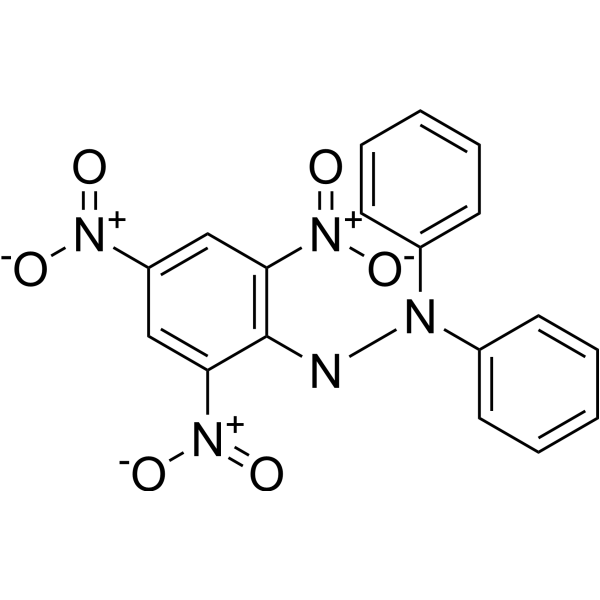
    DPPH
    45+ Cited Publications

    2,2-Diphenyl-1-picrylhydrazyl

    Reactive Oxygen Species (ROS) Metabolic Disease
    DPPH (2,2-Diphenyl-1-picrylhydrazyl) is a stable free radical that can be used to measure the radical scavenging activity of antioxidants. The odd electron of nitrogen atom in DPPH is reduced by receiving a hydrogen atom from antioxidants to the corresponding hydrazine. DPPH method may be utilized in aqueous and nonpolar organic solvents and can be used to examine both hydrophilic and lipophilic antioxidants .
    DPPH
  • HY-N4168A

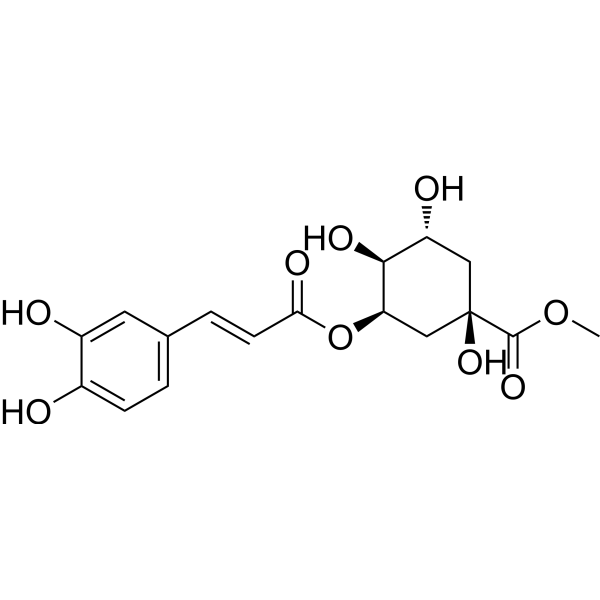
    5-O-Caffeoylquinic acid methyl ester

    Quinone Reductase HBV Infection Cancer
    Neochlorogenic acid (5-O-Caffeoylquinic) methyl ester is a selective quinone reductase inducer (EC50 = 6.7 μM) and also exhibits hydroxyl radical scavenging activity (EC50 = 0.81 μM). Neochlorogenic acid methyl ester scavenges hydroxyl radicals by donating electrons or hydrogen atoms, while simultaneously inducing quinone reductase expression to enhance carcinogen detoxification, thus exerting antioxidant and cancer chemopreventive activities. Neochlorogenic acid methyl ester is used in research on antioxidant damage and promoting detoxification metabolism, primarily in the fields of cancer chemotherapy and antioxidant-related diseases. Neochlorogenic acid methyl ester is also an HBV inhibitor and can be isolated from the flower buds of *L. japonica* .
    Neochlorogenic acid methyl ester
  • HY-76440

    Oxetan-3-one

    Biochemical Assay Reagents Others
    3-Oxetanone (Oxetan-3-one) is a four-membered cyclic ketone and strained cyclic ether derivative with measurable molecular g-value, magnetic susceptibility anisotropy and molecular quadrupole moment. 3-Oxetanone acts not only as a hydrogen bond acceptor, a tetrel donor and a weak hydrogen bond acceptor, but also forms a classic O-H···O hydrogen bond with H2O via the ether oxygen atom. Alternatively, it forms a C···O tetrel bond with formaldehyde using its carbonyl group as a tetrel donor, while acting as a proton acceptor to form a C-H···O weak hydrogen bond with formaldehyde. 3-Oxetanone can be used to prepare various oxetanes .
    3-Oxetanone
  • HY-W012725

    Biochemical Assay Reagents Drug Intermediate Others
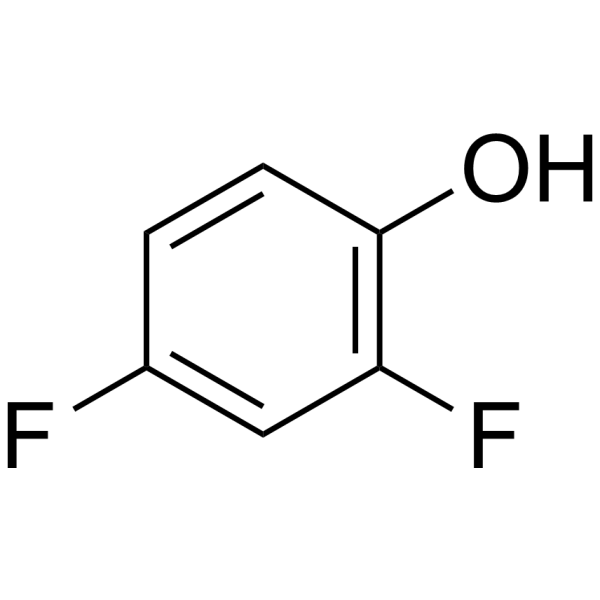
    2,4-Difluorophenol is a difluoro-substituted phenol that serves as a starting material for the synthesis of 4,6-difluoro-5,7-dihydroxytryptamine .
    2,4-Difluorophenol
  • HY-112053R

    2,2-Diphenyl-1-picrylhydrazyl (Standard)

    Reactive Oxygen Species (ROS) Reference Standards Metabolic Disease
    DPPH (Standard) is the analytical standard of DPPH. This product is intended for research and analytical applications. DPPH (2,2-Diphenyl-1-picrylhydrazyl) is a stable free radical that can be used to measure the radical scavenging activity of antioxidants. The odd electron of nitrogen atom in DPPH is reduced by receiving a hydrogen atom from antioxidants to the corresponding hydrazine. DPPH method may be utilized in aqueous and nonpolar organic solvents and can be used to examine both hydrophilic and lipophilic antioxidants .
    DPPH (Standard)
  • HY-75070

    Biochemical Assay Reagents Others
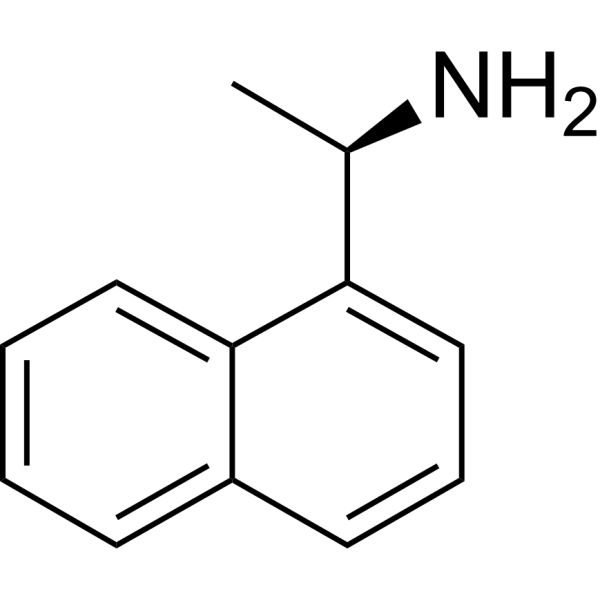
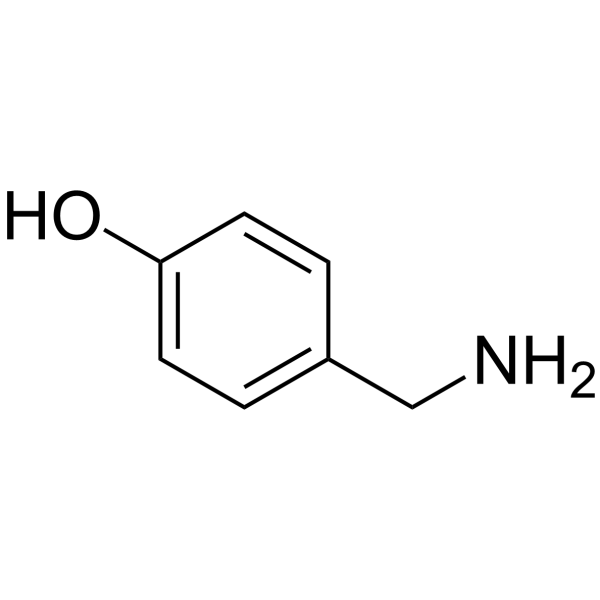
    (+)-1-(1-Naphthyl)ethylamine ((+)-1-(1-NEA)) is a chiral modifier used to introduce enantioselectivity in catalytic hydrogenation reactions. 1-NEA can undergo H-D exchange with D2 in solution to form N?D bonds. That is, 1-NEA can complete Pt surface adsorption and protonation through amine N atoms, indicating that NEA molecules have the potential to impart enantioselectivity to Pt hydrogenation catalysts .
    (+)-1-(1-Naphthyl)ethylamine
  • HY-W196368

    COX SARS-CoV Infection Inflammation/Immunology Cancer
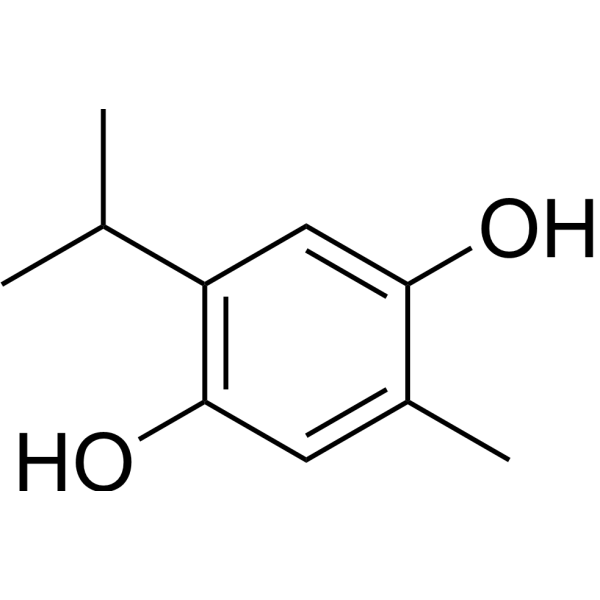
    Thymohydroquinone is a COX-2 inhibitor and anti-SARS-CoV-2 agent that induces cytotoxicity, antiproliferative effects and inhibits tumor growth. Thymohydroquinone cannot scavenge superoxide radicals via σ (hydrogen atom transfer) and π-π attacks with superoxide anions. Thymohydroquinone can be used in research related to squamous cell carcinoma, fibrosarcoma and coronavirus disease 2019 (SARS-CoV-2 infection) .
    Thymohydroquinone
  • HY-24312

    Biochemical Assay Reagents Others
    AD-mix-α is a mixture of organic compounds, commonly used to distinguish and identify asymmetric carbon atoms in chiral compounds. It consists of compounds containing catalytically active metals and chiral ligands. AD-mix-α is widely used in various organic synthesis reactions, such as hydrogenation, addition, and carbonylation reactions, to increase yield and reduce the formation of side reaction products. Although it has no direct application in the medical field, it plays an important role in the pharmaceutical industry and chemical research.
    AD-mix-α
  • HY-Y0396

    Biochemical Assay Reagents Survivin Bcl-2 Family Caspase Apoptosis mTOR Akt Cancer
    N-Hydroxyphthalimide is a blocking agent and catalyst. N-Hydroxyphthalimide promotes oxidation reactions by generating PINO free radicals and activating hydrogen atom transfer processes. N-Hydroxyphthalimide reduces the expression of anti-apoptotic proteins Survivin and Bcl-xL and activates caspase 9 and caspase 3. N-Hydroxyphthalimide induces Apoptosis. N-Hydroxyphthalimide inhibits the phosphorylation of mTOR (Ser2448, Ser2481) and Akt (Ser473). N-Hydroxyphthalimide has anticancer effects against breast and colon cancer .
    N-Hydroxyphthalimide
  • HY-W129155

    Drug Intermediate Others
    9,10-Dihydroacridine is a chain-terminating antioxidant that can inhibit lipid peroxidation by capturing peroxide free radicals (LOO•) .
    9,10-Dihydroacridine
  • HY-W787537

    LBB

    Biochemical Assay Reagents Others
    Leucoberbelin blue I (LBB) is a leuco base that is oxidized by manganese through a hydrogen atom transfer reaction forming a colored complex. Leucoberbelin blue I can be used to quantify or confirm the Mn (II) oxides formation .
    Leucoberbelin blue I
  • HY-N10516

    Bacterial Others
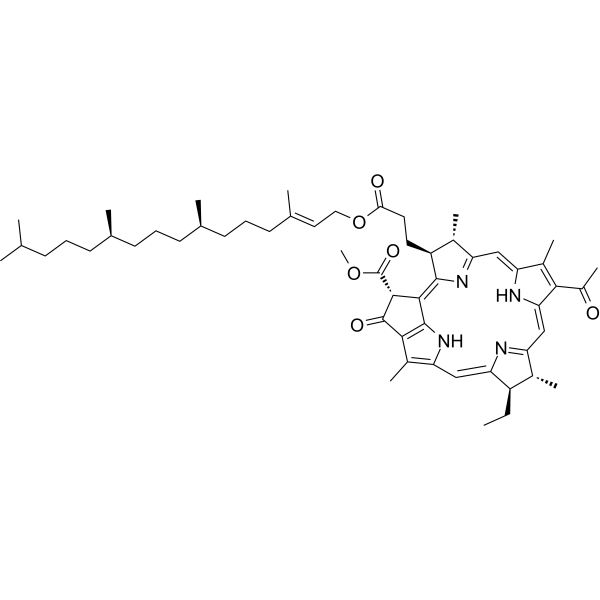
    Bacteriopheophytin, a photosynthetic pigment, is a bacterial demagnetised chlorophyll composed of bacterial chlorophyll in which two hydrogen atoms replace the magnesium center. Bacteriopheophytin acts as an electron acceptor in the purple bacterial reaction center (RC) and is involved in electron transfer .
    Bacteriopheophytin
  • HY-W036734

    Biochemical Assay Reagents Others
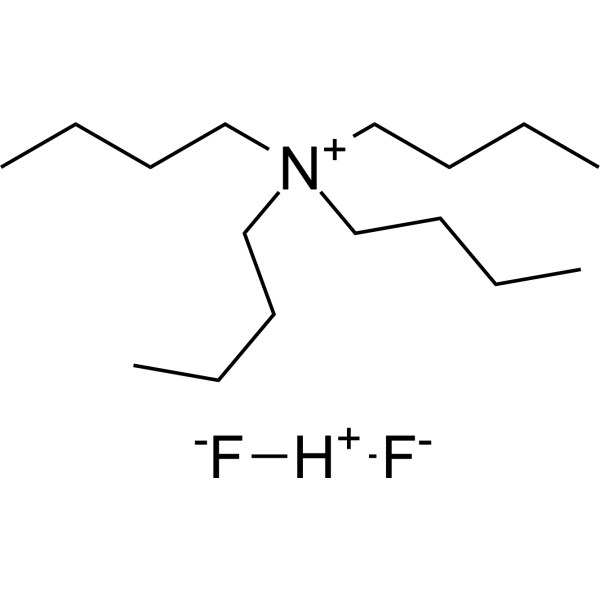
    Tetrabutylammonium (hydrogen difluoride) is a quaternary ammonium salt containing fluoride ions. It is a highly active and effective reagent, often used in organic synthesis reactions, especially for the modification of organic molecules with fluorine atoms. Tetrabutylammonium (hydrogen difluoride) is also used as a catalyst for various chemical reactions such as esterification and transesterification. Additionally, it is used in the production of specialty chemicals such as surfactants and detergents.
    Tetrabutylammonium hydrogen difluoride
  • HY-W021079

    2,4-Dimethylpenta-2,3-diene; 2,4-Dimethyl-2,3-pentadiene; 1,1,3,3-Tetramethylallene

    Biochemical Assay Reagents Others
    Tetramethylallene (2,4-Dimethylpenta-2,3-diene) is a methylated analogue of allen that can be used as a hydrogen-atom acceptor in reactions with HMn(CO)5 and HCo(CO)4 .
    Tetramethylallene
  • HY-Y0396R

    Biochemical Assay Reagents Reference Standards Survivin Bcl-2 Family Caspase Apoptosis mTOR Akt Others
    N-Hydroxyphthalimide (Standard) is the analytical standard of N-Hydroxyphthalimide (HY-Y0396). This product is intended for research and analytical applications. N-Hydroxyphthalimide is a blocking agent and catalyst. N-Hydroxyphthalimide promotes oxidation reactions by generating PINO free radicals and activating hydrogen atom transfer processes. N-Hydroxyphthalimide reduces the expression of anti-apoptotic proteins Survivin and Bcl-xL and activates caspase 9 and caspase 3. N-Hydroxyphthalimide induces Apoptosis. N-Hydroxyphthalimide inhibits the phosphorylation of mTOR (Ser2448, Ser2481) and Akt (Ser473). N-Hydroxyphthalimide has anticancer effects against breast and colon cancer .
    N-Hydroxyphthalimide (Standard)
  • HY-N15727

    Others Inflammation/Immunology
    2,5-Dimethylchromone-7-O-β-D-glucopyranoside is an orally active chromone glycoside found in the underground parts of Rheum australe. 2,5-Dimethylchromone-7-O-β-D-glucopyranoside shows a DPPH radical scavenging activity with an IC50 value of 66.9 μM. 2,5-Dimethylchromone-7-O-β-D-glucopyranoside scavenges free radicals by providing hydrogen atoms through phenolic hydroxyl groups, inhibiting lipid peroxidation. 2,5-Dimethylchromone-7-O-β-D-glucopyranoside is promising for research of oxidative stress-related diseases such as inflammation and skin diseases .
    2,5-Dimethylchromone-7-O-β-D-glucopyranoside
  • HY-124533

    Biochemical Assay Reagents Others
    Trimethylolmelamine is a bioactive chemical. The hydroxymethyl of Trimethylolmelamine plays an important role in atomically dispersing Cu atoms in carbon nitride in which the melem ring not only stabilizes Cu sites by quaternary coordination way but also provides high reactivity and selectivity for the hydrogenation reaction .
    Trimethylolmelamine
  • HY-117925

    HBV Others
    Personalised postprandial-targeting is a way to modulate water-heme interactions with activity against low-spin P450 complexes. Personalised postprandial-targeting is able to maintain the axial water ligands of CYP2C9 even in the presence of inhibitors. Personalised postprandial-targeting also allows the hydrogen atoms of the axial water ligands to be observed by EPR spectroscopy, providing insights into the enzyme active site .
    Personalised postprandial-targeting
  • HY-N17779

    TNF Receptor Reactive Oxygen Species (ROS) Inflammation/Immunology
    3-O-Caffeoyl-5-O-feruloylquinic acid is a quinic acid-based phenolic compound that can be isolated from Eryngium bourgatii. 3-O-Caffeoyl-5-O-feruloylquinic acid regulates free radical scavenging and inflammatory pathways, exerting antioxidant activity through electron transfer and hydrogen atom transfer mechanisms. It also inhibits TNF-α-induced reactive oxygen species (ROS) production and the production of monocyte chemoattractant protein-1 (MCP-1) and its transcripts in human umbilical vein endothelial cells (HUVECs).
    3-O-Caffeoyl-5-O-feruloylquinic acid
  • HY-W450115

    Reactive Oxygen Species (ROS) Inflammation/Immunology
    USF 2550A is a class of fungus-derived 2-pyran compound with DPPH free radical scavenging activity. USF 2550A binds to DPPH free radicals in organic solvents to form adducts, thereby achieving free radical scavenging; in acetate buffer, the formed adducts undergo degradation, and the degradation products can continuously scavenge free radicals. USF 2550A can be used in antioxidant-related research .
    USF 2550A
  • HY-N19720

    Drug Derivative Parasite Infection
    Bractein is a natural aurone flavonoid with potential antioxidant activity. Bractein shows in vitro antileishmanial activity and inhibits promastigotes and intracellular amastigotes of Leishmania donovani. Bractein exhibits no obvious cytotoxicity against mammalian macrophages with an EC50 value > 25.0 μg/mL. Bractein can be used for the research of Leishmania .
    Bractein
  • HY-181980

    Glyoxalase (GLO) Cancer
    SPB07393SC is a glyoxalase-I (Glo-I) inhibitor with an IC50 of 11.1 μM. SPB07393SC is applicable for cancer research .
    SPB07393SC

Inquiry Online

Your information is safe with us. * Required Fields.

Salutation


Country or Region *

Applicant Name *


Organization Name *

Department *


Email Address *


Product Name *

Cat. No.


Requested quantity *

Phone Number *


Remarks

Inquiry Online

Inquiry Information

Product Name:
Cat. No.:
Quantity:
MCE Japan Authorized Agent:

