


1. Search Result
Search Result
Results for "

identification of enterobacteriacea,

" in MedChemExpress (MCE) Product Catalog:

82

Inhibitors & Agonists

32

Screening Libraries

6

Fluorescent Dyes

11

Biochemical Assay Reagents

5

Peptides

4

MCE Kits

1

Inhibitory Antibodies

10

Natural
Products

4

Isotope-Labeled Compounds

7

Click Chemistry

1

Oligonucleotides

Cat. No. Product Name Target Research Areas Chemical Structure
  • HY-W012926
    Dihydrouracil
    1 Publications Verification

    5,6-Dihydrouracil

    Endogenous Metabolite Metabolic Disease
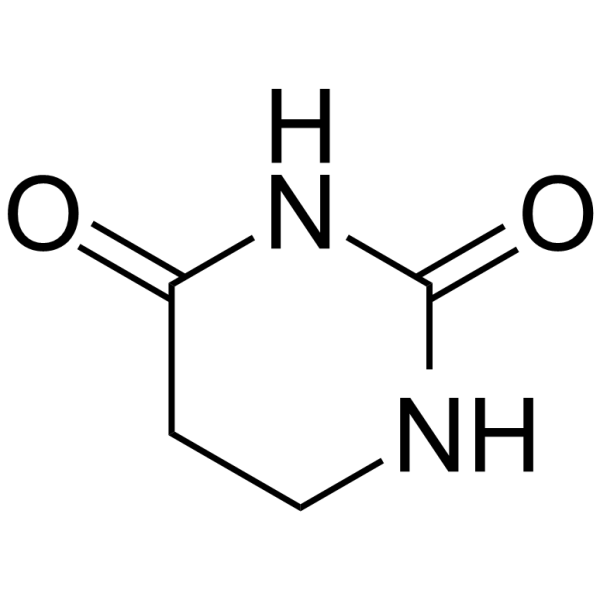
    Dihydrouracil (5,6-Dihydrouracil), a metabolite of Uracil, can be used as a marker for identification of dihydropyrimidine dehydrogenase (DPD)-deficient .
    Dihydrouracil
  • HY-D0970
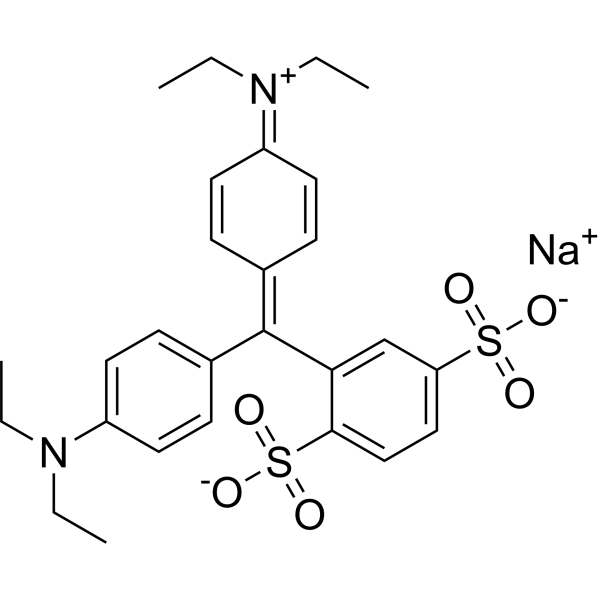
    Diphenyl Blue
    2 Publications Verification

    Direct Blue 14; Trypan Blue

    Fluorescent Dye Others
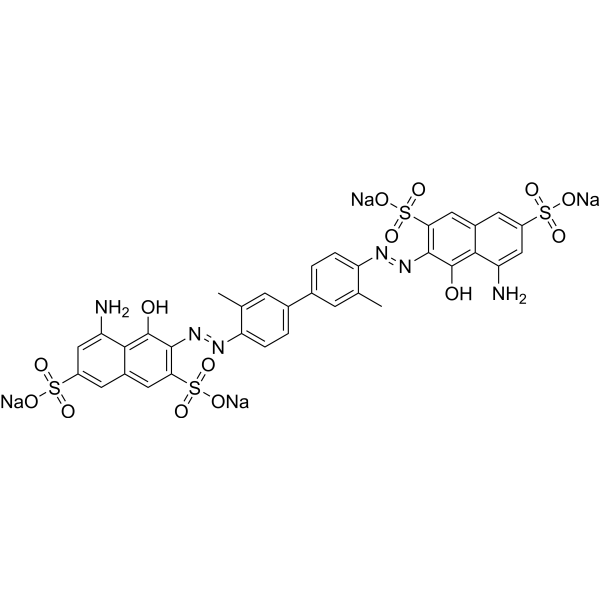
    Diphenyl Blue (Trypan Blue) is a cell active dye, the most commonly used dye for the identification of dead cells, of en used to test cell membrane integrity and cell viability. Diphenyl Blue staining is one of the methods for tissue and cell culture. When cells are deactivated or have incomplete cell membranes, Diphenyl Blue can stain them Blue. Normal living cells with intact cell membranes reject Diphenyl blue and do not stain them blue. However, macrophages are capable of phagocytosis of Diphenyl Blue, so it can be used as a living stain for macrophages .
    Diphenyl Blue
  • HY-131442
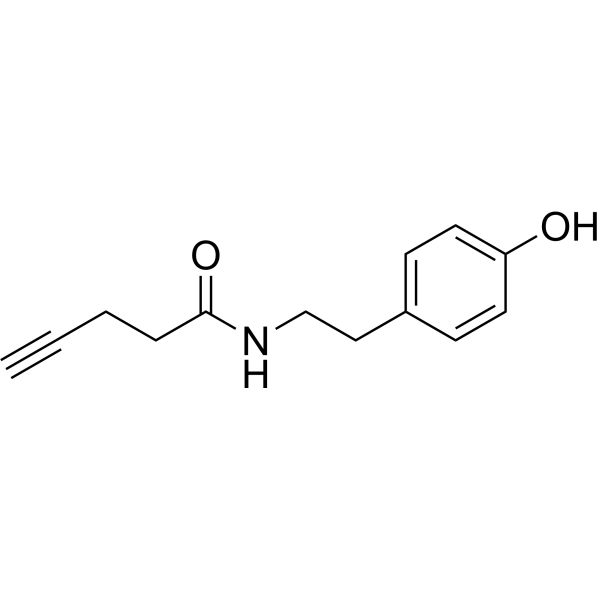
    Alkyne-phenol
    3 Publications Verification

    Alkyne tyramide; Alk-Ph

    Biochemical Assay Reagents Others
    Alkyne-phenol (Alk-Ph) is a clickable ascorbate peroxidase 2 (APEX2) probe. Alkyne-phenol substantially improves APEX-labeling efficiency in intact yeast cells, as it is more cell wall-permeant than APEX2 substrate biotin-phenol (BP). Alkyne-phenol also facilitates the identification of APEX-labeling sites, allowing the unambiguous assignment of membrane topology of mitochondrial proteins . Alkyne-phenol is a click chemistry reagent, it contains an Alkyne group and can undergo copper-catalyzed azide-alkyne cycloaddition (CuAAc) with molecules containing Azide groups.
    Alkyne-phenol
  • HY-P11307

    Proteasome Cancer
    Biotin-epoxomicin is a Proteasome subunit binder. Biotin-epoxomicin serves as an affinity reagent for identifying proteasomal catalytic subunits, and facilitates affinity purification of active proteasomal subunits for LC-MS identification. Biotin-epoxomicin can be used to study solid tumors derived from B16 melanoma .
    Biotin-epoxomicin
  • HY-N8332

    Ox bile extract

    Bacterial DNA/RNA Synthesis Infection
    Bile extract (Ox bile extract) is a complex mixture of substances, containing bile acids, cholesterol, and bilirubin. Bile extract has antimicrobial activity and can induce DNA damage and degrade viral and bacterial membranes. Bile extract can be used in bacterial culture media as a selective inhibitor for the isolation and identification of pathogens .
    Bile extract
  • HY-123740

    DSSO

    Biochemical Assay Reagents Others
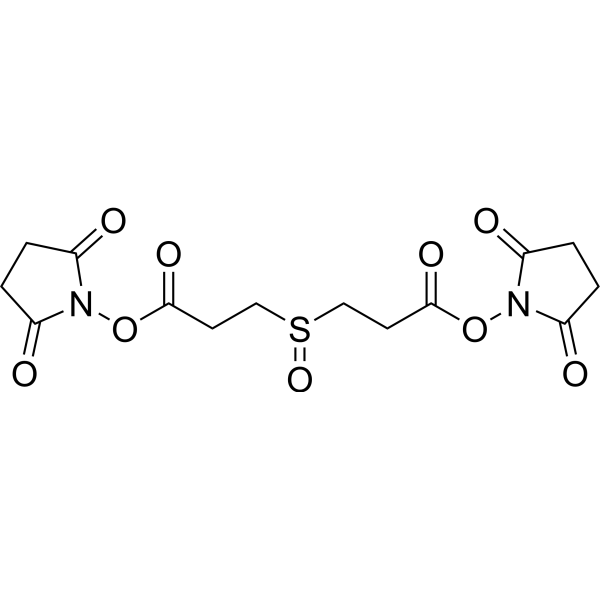
    Disuccinimidyl sulfoxide (DSSO) is a sulfoxide-containing crosslinker targeting amino groups that can be cleaved by MS, and it is suitable for model peptides, proteins, and multisubunit protein complexes. Disuccinimidyl sulfoxide contains two symmetric collision-induced dissociation (CID)-cleavable sites, enabling the identification of DSSO-crosslinked peptides based on different fragmentation patterns .
    Disuccinimidyl sulfoxide
  • HY-153093

    MK-8189

    Phosphodiesterase (PDE) Neurological Disease
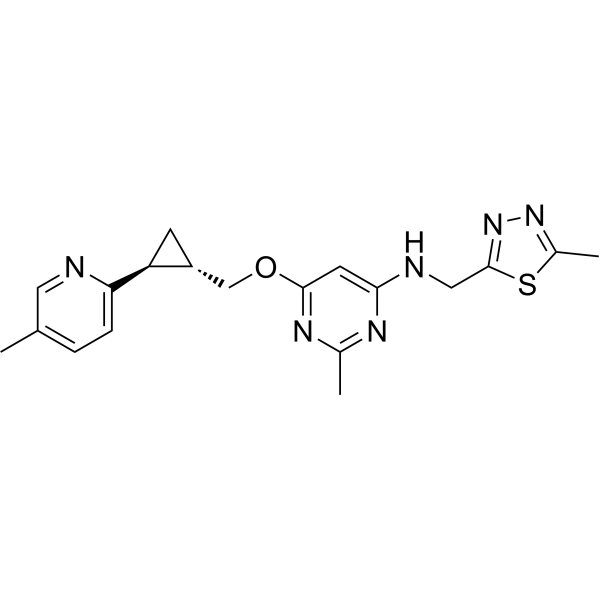
    Elpipodect (MK-8189) is an orally active and selective PDE10A inhibitor with a Ki value of 29 pM. Elpipodect can be used in research of schizophrenia .
    Elpipodect
  • HY-107967

    Fluorescent Dye Cancer
    Isosulfan blue is a blue dye for the identification of lymph vessels during lymphangiography. Isosulfan blueis is used during sentinel lymph node biopsies in breast cancer. Isosulfan blue is possible to have an allergic reaction during breast cancer operations .
    Isosulfan blue
  • HY-156562A
    5-PT formic
    1 Publications Verification

    5-Propargyltryptamide formic

    Drug Derivative Inflammation/Immunology
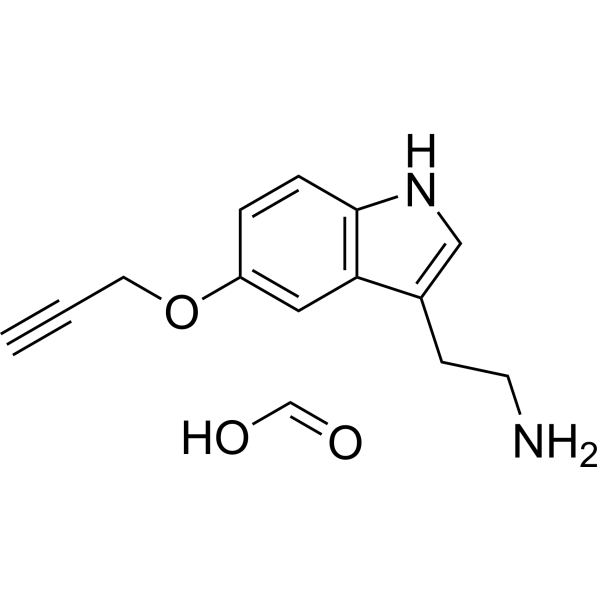
    5-PT (5-Propargyltryptamide) formic is an alkyne-functionalized 5-HT (HY-B1473A) derivative and serotonylation substrate, taken up by living cells. 5-PT formic conjugated to a biotin enables identification of serotonylated proteins via copper-click chemistry and mass spectrometry. 5-PT formic labels and isolates serotonylated cells in alveolar epithelial cells for proteomic analysis. 5-PT formic can be used for the research of bronchopulmonary dysplasia .
    5-PT formic
  • HY-W089845
    Heneicosane
    1 Publications Verification

    Environmental Pollutants Fungal Sex Pheromone Infection Endocrinology
    Heneicosane is a royal-specific pheromone of insects (such as subterranean termites) and is an identification signal for queens and kings in termites. Heneicosane mediates royal recognition and the maintenance of social division of labor by being sensed by worker ants and triggering vibrations and antennal behaviors. Heneicosane can exert anti-inflammatory, analgesic and antipyretic activities by inhibiting the release of inflammatory mediators (such as prostaglandins and cytokines). At the same time, Heneicosane can also inhibit the mycelial growth of aflatoxin-producing fungi and inhibit the production of aflatoxin. Heneicosane can be used in insect chemical ecology research to analyze the regulatory mechanism of termite social behavior, and is also a potential target for new anti-inflammatory drugs .
    Heneicosane
  • HY-P11306

    Proteasome NF-κB Inflammation/Immunology
    Biotin-(Oaa)3-epoxomicin is a biotin-labeled form of Epoxomicin (HY-13821), prepared by conjugating Epoxomicin with biotin via three hydrophilic oxaacetyl amino acid (Oaa) linkers. Biotin-(Oaa)3-epoxomicin is primarily used in proteomic studies for the capture, identification and target validation of proteasome complexes, to determine the intracellular targets of epoxomicin. Epoxomicin acts as a proteasome inhibitor and NF-κB inhibitor, which effectively blocks inflammatory responses in mouse ear edema assays. It inhibits proteasome activity via covalent binding to catalytic subunits including LMP7, X, MECL1 and Z, with the strongest inhibitory effect on chymotrypsin-like activity, and does not interfere with non-proteasomal proteases such as trypsin and papain .
    Biotin-(Oaa)3-epoxomicin
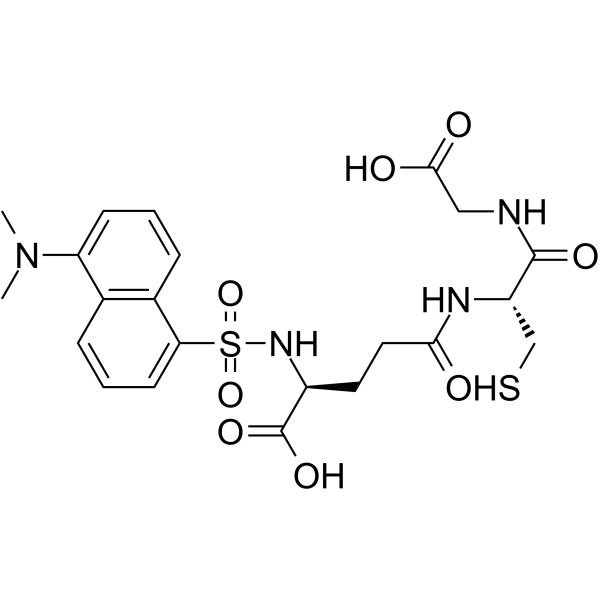
  • HY-101131

    DNS-glutathione

    Biochemical Assay Reagents Others
    Dansyl glutathione is a trapping agent for the quantitative estimation and identification of reactive metabolites.
    Dansyl glutathione
  • HY-147149

    DNA/RNA Synthesis Neurological Disease
    BPN-15477 is a potent SMC (splicing modulator compound) that restores correct splicing of ELP1 (Elongator complex protein 1) exon 20. BPN-15477 corrects splicing of the ELP1 transcript, significantly increases the level of functional protein in vivo in all tissues, including brain. BPN-15477 can be used for frontotemporal dementia research .
    BPN-15477
  • HY-D0220A
    Toluidine Blue (purity 36%)
    3 Publications Verification

    Toluidine Blue O (purity 36%)

    Fluorescent Dye Others Cancer
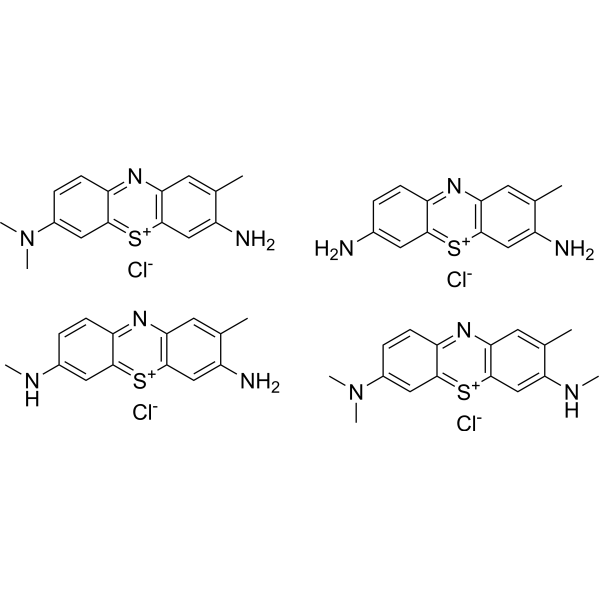
    Toluidine Blue (Toluidine Blue O) purity 36% is an alkaline quinonimine dye (vivo dye) with high affinity for acidic tissue components, staining nuclei blue and polysaccharides purple. Toluidine Blue purity 36% shows heterostaining properties for mast cells, mucins and chondrocytes. Toluidine Blue purity 36% can stain different components of plant tissues and cells in different colours. Toluidine Blue purity 36% is also used as a diagnostic aid to identify malignant lesions, such as cancer .
    Toluidine Blue (purity 36%)
  • HY-175636

    Integrin Orthopoxvirus Potassium Channel Infection
    ITGB3-IN-1 is an orally active integrin subunit beta 3 ITGB3 inhibitor with a Kd of 7.26 μM. ITGB3-IN-1 exhibits potent anti-orthopoxvirus effects with an EC50 for vaccinia virus (VACV) of 1.82 μM. ITGB3-IN-1 inhibits hERG with an IC50 of 1.13 μM. ITGB3-IN-1 can be used for the study of orthopoxvirus .
    ITGB3-IN-1
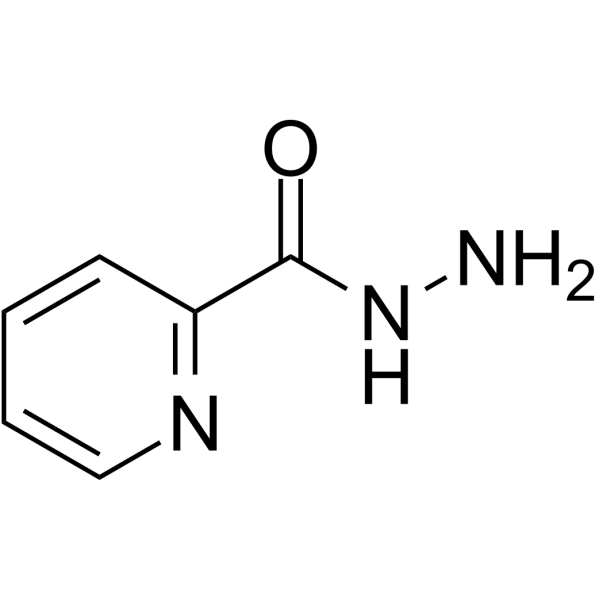
  • HY-W010341

    Biochemical Assay Reagents Others
    2-Pyridinecarbohydrazide is a versatile heterocyclic building block widely used in medicinal chemistry and coordination chemistry, and it finds extensive applications in various synthetic fields. 2-Pyridinecarbohydrazide reacts with the reducing end of carbohydrates to enhance mass spectrometry ionization efficiency, enabling isomer-specific identification of monosaccharides, disaccharides, ketoses/aldoses, and quantitative mass spectrometry imaging of biological tissues .
    2-Pyridinecarbohydrazide
  • HY-112552

    DSG; 1,2-Dioctadecanoyl-sn-glycerol

    Endogenous Metabolite Biochemical Assay Reagents Others
    1,2-Distearoyl-sn-glycerol (DSG) is a glyceride compound. 1,2-Distearoyl-sn-glycerol can be used as an internal standard for the analysis of molecular species of diacylglycerol (DAG) and other phospholipids in rat brain .
    1,2-Distearoyl-sn-glycerol
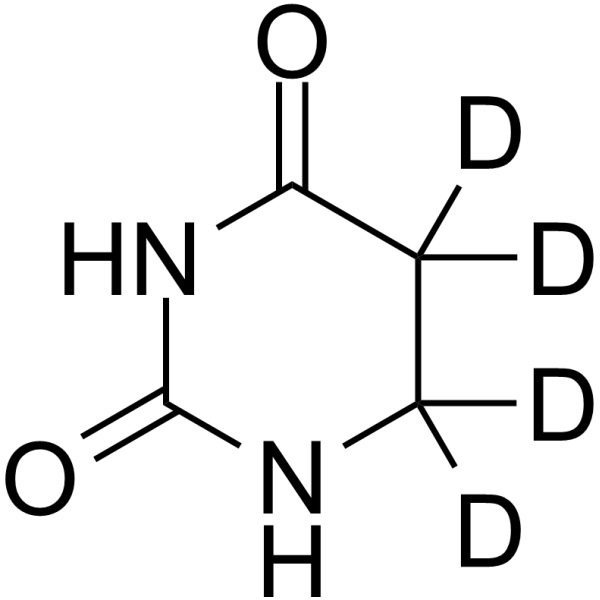
  • HY-W012926S1

    5,6-Dihydrouracil-d4

    Isotope-Labeled Compounds Endogenous Metabolite Metabolic Disease
    Dihydrouracil-d4 is the deuterium labeled Dihydrouracil . Dihydrouracil (HY-W012926), a metabolite of Uracil, can be used as a marker for identification of dihydropyrimidine dehydrogenase (DPD)-deficient .
    Dihydrouracil-d4
  • HY-W016510

    Biochemical Assay Reagents Drug Intermediate Others
    Benzenesulfonate sodium is the sodium salt of Benzenesulfonic acid. Benzenesulfonate sodium facilitates the identification of -SO3H and -SO3 - vibrational bands in compounds in Raman spectroscopy. Benzenesulfonate sodium was used in the synthesis of 1-Butyl-3-propanenitrile imidazolium benzenesulfonate [C2CN Bim]BS .
    Benzenesulfonate sodium
  • HY-135036

    Fluorescent Dye Others
    4-Methylumbelliferyl butyrate (4-MUB) is a coumarin-based fluorogenic substrate used for the identification of M. catarrhalis C4- esterase. 4-Methylumbelliferyl butyrate can converse to the blue-emissive 4-methylumbelliferone (4-MU; HY-N0187) .
    4-Methylumbelliferyl butyrate
  • HY-W423080

    Biochemical Assay Reagents Fluorescent Dye Others
    TAMRA alkyne, 5-isomer (Compound 3) is an alkyne derivative of TAMRA and can be used for the enrichment, in-gel fluorescence detection, and identification of O-GlcNAc-modified proteins. TAMRA alkyne, 5-isomer contains an Alkyne group and can undergo copper-catalyzed azide-alkyne cycloaddition reaction (CuAAc) with molecules containing Azide groups. It can also undergo strain-promoted alkyne-azide cycloaddition (SPAAC) reactions with molecules containing DBCO or BCN groups .
    TAMRA alkyne,5-isomer
  • HY-156562

    5-Propargyltryptamide

    Drug Derivative Inflammation/Immunology
    5-PT (5-Propargyltryptamide) is an alkyne-functionalized 5-HT (HY-B1473A) derivative and serotonylation substrate, taken up by living cells. 5-PT conjugated to a biotin enables identification of serotonylated proteins via copper-click chemistry and mass spectrometry. 5-PT labels and isolates serotonylated cells in alveolar epithelial cells for proteomic analysis. 5-PT can be used for the research of bronchopulmonary dysplasia .
    5-PT
  • HY-W014780

    2-Benzylideneheptanal; α-Pentylcinnamaldehyde

    Environmental Pollutants CETP Others
    α-Amylcinnamaldehyde is a ligand for the Niemann-Pick type C2 (NPC2) protein of arthropod moths and may play a key role in the identification of moth volatiles. NPC2 is a key enzyme for cholesterol transport in the body .
    α-Amylcinnamaldehyde
  • HY-W854659
    Chlorin e6 trisodium
    15+ Cited Publications

    Ce6 trisodium

    Photosensitizer Cancer
    Chlorin e6 Ce6 (trisodium) is a water-soluble derivative of chlorophyll, belonging to the chlorin class of photosensitizers with an absorption wavelength range of 600-670 nm. Chlorin e6 trisodium emits characteristic red fluorescence upon light excitation, enabling real-time identification of tumor boundaries and progression. Chlorin e6 trisodium can be used for the study of photodynamic therapy (PDT) of cancers (bladder cancer) and fluorescence diagnosis of neoplastic lesions .
    Chlorin e6 trisodium
  • HY-100978

    DL-Hexanoylcarnitine chloride

    Endogenous Metabolite Metabolic Disease
    (±)-Hexanoylcarnitine chloride is a fatty acid metabolite that breaks down fatty acids into energy that can be used by the body. (±)-Hexanoylcarnitine chloride also serves as a specific and easily detectable biomarker for rat skeletal muscle toxicity. Cerivastatin (HY-129458) and TMPD (HY-W012145) induce an increase in Hexanoylcarnitine in rats in a metabolomic analysis of the rectus femoris muscle. In type 2 diabetes, Hexanoylcarnitine is also significantly associated with and improves prediction of all-cause mortality. Hexanoylcarnitine is a biomarker for the identification of novel pathogenic pathways .
    (±)-Hexanoylcarnitine chloride
  • HY-D2413

    BODIPY FL PEG4-VH032

    Fluorescent Dye Others
    BODIPY FL VH032 is a high-affinity VHL fluorescent probe with a Kd value of 3.01 nM. BODIPY FL VH032 consists of von Hippel-Lindau (VHL) ligand VH032 (HY-120217) and BODIPY FL (HY-43520). BODIPY FL VH032 can be used for time-resolved fluorescence resonance energy transfer (TR-FRET) detection for high-throughput identification and characterization of VHL ligands with maximum excitation emission wavelength: 504/520 nm .
    BODIPY FL VH032
  • HY-134320B

    8-Azidoadenosine 5'-triphosphate trisodium; 8-N3-ATP trisodium

    Potassium Channel Metabolic Disease
    8-Azido-ATP (8-N3-ATP) trisodium, a photoreactable nucleotide analog, is useful for the identification of proteins, such as DNA-dependent RNA polymerase. 8-Azido-ATP trisodium is a click chemistry reagent that contains an Azide group and can undergo copper-catalyzed azide-alkyne cycloaddition reaction (CuAAc) with molecules containing Alkyne groups. 8-Azido-ATP trisodium can also undergo strain-promoted alkyne-azide cycloaddition (SPAAC) with molecules containing DBCO or BCN groups .
    8-Azido-ATP trisodium solution (100 mM)
  • HY-131933

    Fluorescent Dye Others
    DCP-Bio3 is a biotinylated probe that can detect labeled proteins in polyacrylamide gels. DCP-Bio3 can be used in research for the identification of oxidized and modified proteins .
    DCP-Bio3
  • HY-W111436

    N,N,N-tributylbutan-1-aminium tetraphenylborate(1-)

    Biochemical Assay Reagents Others
    Tetrabutylammonium tetraphenylborate is a quaternary ammonium salt belonging to the class of alkylammonium salts. This compound is commonly used as an ion-pairing reagent in chromatography and analytical chemistry, facilitating the separation and identification of various organic compounds. Its unique chemical properties make it an important ingredient in a variety of scientific applications, including pharmaceuticals, agrochemicals, and materials science products.
    Tetrabutylammonium tetraphenylborate
  • HY-134320

    8-Azidoadenosine 5'-triphosphate; 8-N3-ATP

    Potassium Channel Metabolic Disease
    8-Azido-ATP, a photoreactable nucleotide analog, is useful for the identification of proteins, such as DNA-dependent RNA polymerase . 8-Azido-ATP is a click chemistry reagent, it contains an Azide group and can undergo copper-catalyzed azide-alkyne cycloaddition reaction (CuAAc) with molecules containing Alkyne groups. It can also undergo strain-promoted alkyne-azide cycloaddition (SPAAC) reactions with molecules containing DBCO or BCN groups.
    8-Azido-ATP
  • HY-176745

    VDAC Metabolic Disease Endocrinology
    SW016789 is a hypersecretion-inducer targeting VDAC1. SW016789 can induce insulin hypersecretion and Ca 2+ influx in β-cells directly. SW016789 induces a transient endoplasmic reticulum stress response (ER stress), but does not cause beta cell death. SW016789 has reversible and non-apoptotic characteristics. SW016789 can be used for the study of Diabetes mellitus type 2 (T2DM) β-cell dysfunction .
    SW016789
  • HY-125826

    Biochemical Assay Reagents Metabolic Disease
    Heptasaccharide Glc4Xyl3, a covalent inhibitor of endo-xyloglucanases, is used for the identification and analysis of diverse xyloglucan-active enzymes in nature[1].
    Heptasaccharide Glc4Xyl3
  • HY-W012926S

    5,6-Dihydrouracil-13C4,15N2

    Endogenous Metabolite Metabolic Disease
    Dihydrouracil- 13C4, 15N2 is the 13C and 15N labeled Dihydrouracil . Dihydrouracil (5,6-Dihydrouracil), a metabolite of Uracil, can be used as a marker for identification of dihydropyrimidine dehydrogenase (DPD)-deficient .
    Dihydrouracil-13C4,15N2
  • HY-113086

    16:1(9Z) CE; 16:1(9Z) Cholesterol ester; Cholesterol Palmitoleate

    Endogenous Metabolite Cardiovascular Disease
    CE(16:1(9Z)) (16:1(9Z) CE) is a cholesterol ester. Plasma levels of cholesteryl palmitoleate are increased in ApoE -/- mice exposed to cigarette smoke and in pediatric patients with biliary atresia. Cholesteryl palmitoleate has been used as a standard for the identification of cholesterol esters in human meibomian gland secretions.
    CE(16:1(9Z))
  • HY-178989

    Phosphoglycerate Kinase (PGK) Cuproptosis Cancer
    PGK1-IN-2 (Compound 60) is a PGK1 inhibitor with an IC50 of 8.24 μM. PGK1-IN-2 demonstrates a significant ability to inhibit the proliferation of osteosarcoma cells. PGK1-IN-2 interferes with the glycolytic pathway of tumor cells by inhibiting PGK1. PGK1-IN-2 inhibits cell migration and invasion, and induces cell S phase and G2-M phase cycle arrest. PGK1-IN-2 may kill cells by inducing cuproptosis. PGK1-IN-2 shows a significant anti-tumor effect in the MNNG-HOS osteosarcoma xenograft mouse model. PGK1-IN-2 can be used for the study of osteosarcoma .
    PGK1-IN-2
  • HY-P11345

    Biochemical Assay Reagents Others
    VPS35 c-terminal peptide is a peptide that can bind to VPS35. VPS35 c-terminal peptide can be used in immunoprecipitation experiments to specifically elute VPS35 and its interacting proteins, facilitating the identification of VPS35-interacting molecules .
    VPS35 c-terminal peptide
  • HY-E70634

    Bcr-Abl Cancer
    The emergence of mutations in the BCR::ABL1 kinase domain (KD) impairs Imatinib Mesylate (HY-50946) binding capacity, thus contributing to Imatinib Mesylate resistance. Identification of these mutations is important for treatment decisions and precision medicine in chronic myeloid leukaemia (CML). ABL1 E255K Recombinant Human Active Protein Kinase is a recombinant ABL1 E255K protein that can be used to study ABL1 E255K-related functions .
    ABL1 E255K Recombinant Human Active Protein Kinase
  • HY-P990274

    Transmembrane Glycoprotein Others
    Anti-Canine CD34 Antibody (1H6) is a mouse-derived IgG1 κ type antibody inhibitor, targeting to canine CD34. Anti-Canine CD34 Antibody (1H6) reacts with canine CD34. Anti-Canine CD34 Antibody (1H6) can be used for the separation and identification of CD34 + cells. Anti-Canine CD34 Antibody (1H6) can be used for detections of western blot, immunohistochemistry and flow cytometry .
    Anti-Canine CD34 Antibody (1H6)
  • HY-157356

    Bacterial Others
    Violet Red Bile Glucose Agar can be used for counting intestinal bacteria and identification of enterobacteriaceae. The composition of 1 liter of Violet Red Bile Glucose Agar contains: 7.0 g gelatin pancreatic enzyme hydrolysate, 3.0 g yeast extract powder, 1.5 g sodium deoxycholate, 10.0 g glucose, 5.0 g sodium chloride, 0.03 g neutral red, 0.002 g crystal violet, and 15.0 g agar in per liter .
    Violet Red Bile Glucose Agar
  • HY-P3207A
    DLPLTFGGGTK TFA
    1 Publications Verification

    Biochemical Assay Reagents Others
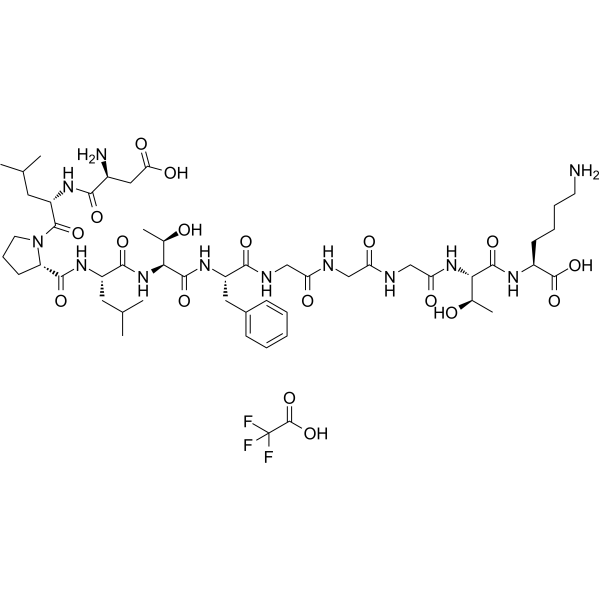
    DLPLTFGGGTK (TFA) is a surrogate peptide for pembrolizumab identification .
    DLPLTFGGGTK TFA
  • HY-164207

    Biochemical Assay Reagents Infection
    VLPA-GlcNAc is a chromogenic glucosaminide substrate. VLPA-GlcNAc can be used to prepare agar media for the identification of Candida spp .
    VLPA-GlcNAc
  • HY-130893A

    Biochemical Assay Reagents Others
    Biotin-EDA TFA is a nucleophilic biotinylation reagent used for the conjugation of various substrates and identification and quantification using biotin-conjugated fluorescent labels .
    Biotin-EDA TFA
  • HY-129927

    GABA Receptor Others
    Thiomuscimol is a GABAA receptor agonist (IC50=19 nM). It has been used as a photoaffinity label for the purification and identification of GABA binding sites within the GABAA receptor complex.
    Thiomuscimol
  • HY-148066

    Biochemical Assay Reagents Others
    DB0662 is a compound for kinase-targeted protein degradation and can be used in studies of diseases mediated by abnormal kinase activity, as well as for the identification of degradable kinases and optimal kinases .
    DB0662
  • HY-147732

    Epoxide Hydrolase Inflammation/Immunology
    Intensive structural modification resulted in the identification of compound B15 as an effective sEH inhibitor with a value of 0.03 ± 0.01 nm, and the presence of soluble epoxide hydrolase (SEH) can reduce inflammation and pain.
    sEH inhibitor-4
  • HY-N9922

    Carinol

    Others Others
    Alashinol G (Carinol) (compound 1) is a compound with antioxidant and anti-tyrosinase activities. Through affinity ultrafiltration and related experimental screening and identification, it can effectively dock with tyrosinase molecules and inhibit its activity.
    Alashinol G
  • HY-W012926R

    5,6-Dihydrouracil (Standard)

    Reference Standards Endogenous Metabolite Metabolic Disease
    Dihydrouracil (Standard) is the analytical standard of Dihydrouracil. This product is intended for research and analytical applications. Dihydrouracil (5,6-Dihydrouracil), a metabolite of Uracil, can be used as a marker for identification of dihydropyrimidine dehydrogenase (DPD)-deficient[1][2].
    Dihydrouracil (Standard)
  • HY-W039920

    β-D-Galactosylamine, 98%

    Biochemical Assay Reagents Others
    1-Amino-1-deoxy-β-D-galactose, 98% is a galactose analog used as a competitive inhibitor to aid in the separation, purification, identification, differentiation, and characterization of β-D-galactosidase and galactose oxidase.
    1-Amino-1-deoxy-β-D-galactose, 98%
  • HY-17011

    Fungal Metabolic Disease
    Croconazole is an antifungal agent containing imidazole rings. Croconazole has a unique structural feature of aryl vinyl at the imidazole ring N-1. Croconazole can be used for the identification and quantitative study of major metabolites in rat urine and bile .
    Croconazole
  • HY-131127

    AMQI

    Cholinesterase (ChE) Others
    7-Acetoxy-1-methylquinolinium iodide (AMQI) is a fluorogenic substrate for cholinesterase (Ex = 320 nm, Em = 410 nm). Hydrolysis of 7-acetoxy-1-methylquinolinium iodide is used at the fluorometric flow system for the detection and identification of inhibitors. .
    7-Acetoxy-1-methylquinolinium iodide

Inquiry Online

Your information is safe with us. * Required Fields.

Salutation


Country or Region *

Applicant Name *


Organization Name *

Department *


Email Address *


Product Name *

Cat. No.


Requested quantity *

Phone Number *


Remarks

Inquiry Online

Inquiry Information

Product Name:
Cat. No.:
Quantity:
MCE Japan Authorized Agent:

