
1. Search Result
Search Result
Results for "

instar larvae

" in MedChemExpress (MCE) Product Catalog:

17

Inhibitors & Agonists

2

Biochemical Assay Reagents

12

Natural
Products

Cat. No. Product Name Target Research Areas Chemical Structure
  • HY-Y1110I

    Magnogene, for insect cell culture, 97%

    Environmental Pollutants Biochemical Assay Reagents Infection
    Magnesium chloride, for insect cell culture, 97% is an orally active inorganic mineral salt. Magnesium chloride combined with Potassium chloride (HY-Y0537E) increases the fat body glycogen, protein, total lipids and haemolymph protein and trehalose in the silkworm, Bombyx mori L .
    Magnesium chloride, for insect cell culture, 97%
  • HY-157355

    BHI

    Biochemical Assay Reagents Bacterial Infection
    Brain Heart Infusion Broth (BHI) is a bacterial culture medium that can be used for microbial culture .
    Brain Heart Infusion Broth
  • HY-111664A

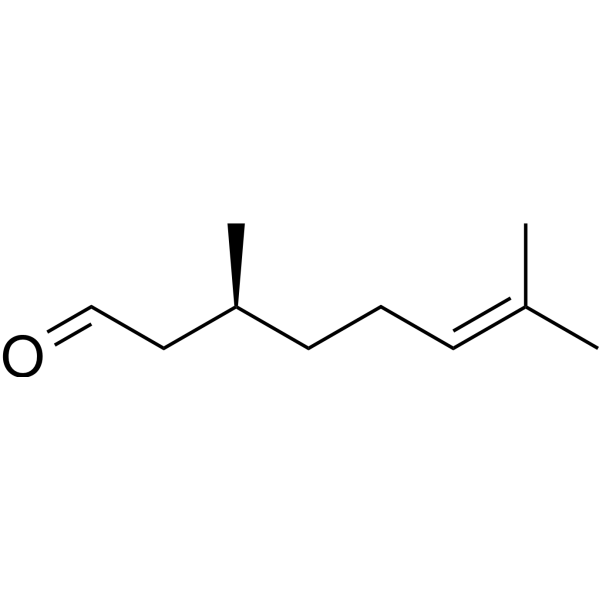
    (-​)​-​Citronellal

    Drug Isomer Cancer
    (S)-(-)-Citronellal ((-​)​-​Citronellal) is an oxygenated monoterpenoid found in Citrus limon (L.) Burm. F. essential oils. (S)-(-)-Citronellal is a chiral isomers of (R)-(+)-Citronellal (HY-111664) and does not possess microtubule-disrupting activity. (S)-(-)-Citronellal can be used for cancer research .
    (S)​-​(-​)​-​Citronellal
  • HY-124058

    Insecticide Others
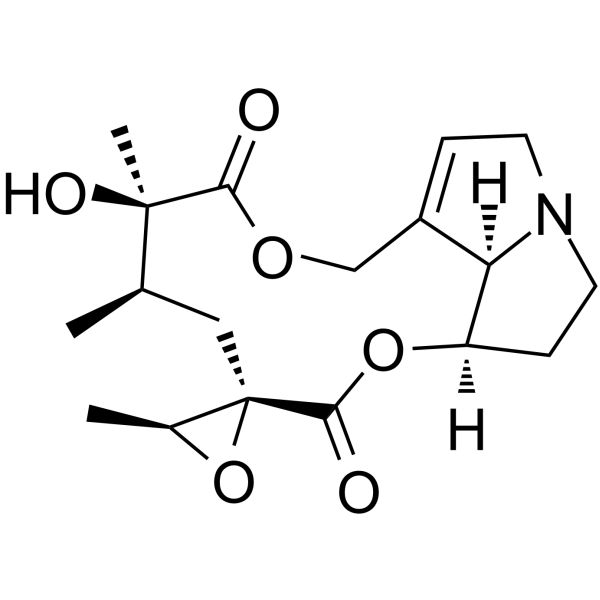
    Jacobine?is a pyrrolizidine alkaloid (PA) from Senecio jacobaea . Jacobine is active against second instar larvae of thrips .
    Jacobine
  • HY-N8914

    Others Others
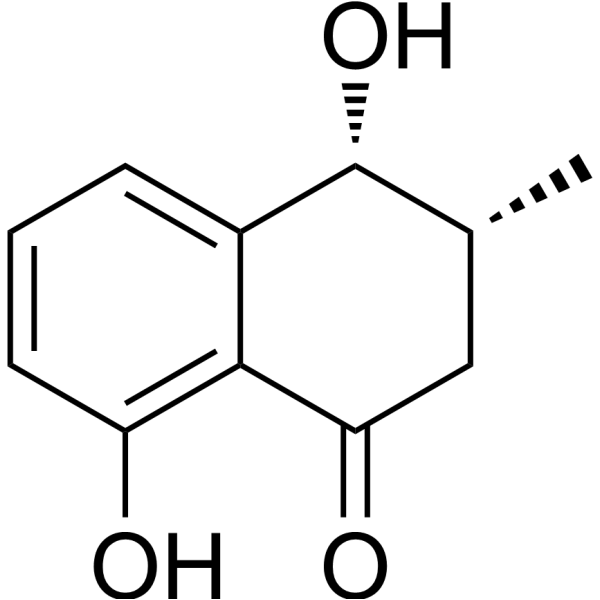
    Isoshinanolone is a natural product that can be extracted from Plumbago capensis. Isoshinanolone has mosquito larvicidal activity against fourth instar larvae of A. aegypti, with an IC50 value of 1.26 μg/mL .
    Isoshinanolone
  • HY-N2976

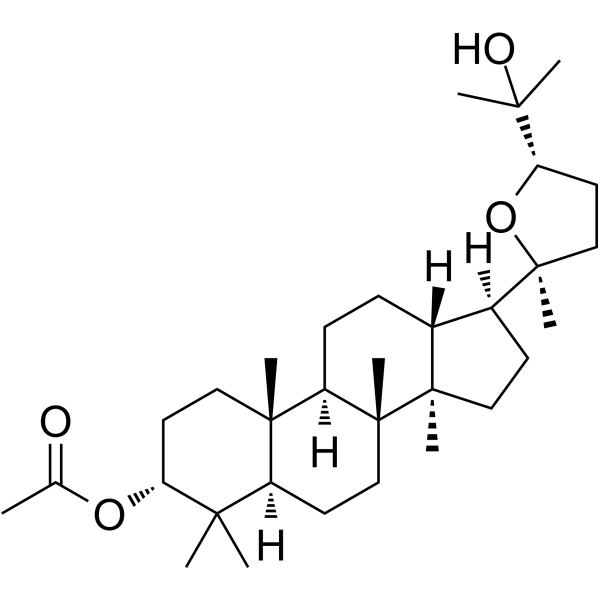
    Betulafolianediol 3-acetate; Cabraleadiol 3-acetate

    Others Infection
    Cabraleadiol monoacetate is a compound isolated from the lichen Pyxine consocians Vainio. Cabraleadiol monoacetate shows mosquito larvicidal activity against the second instar larvae of Aedes aegypti .
    Cabraleadiol monoacetate
  • HY-127131

    Bacterial Infection
    Leucanicidin is a macrolide bacterial metabolite originally isolated from S. halstedii. It is toxic to L. separata fourth instar larvae when used at a concentration of 20 ppm and to H. contortus, T. colubriformis, and O. circumcincta larvae (LD50s=0.23-0.42 μg/mL).
    Leucanicidin
  • HY-N18873

    Insecticide Infection
    Inulasalsolin is a insecticide with antifeedant activity, which is isolated from the plant Inula salsoloides. Inulasalsolin reduces the feeding behavior of third-instar Plutella xylostella larvae. Inulasalsolin induces the death of third-instar Plutella xylostella larvae and vegetable aphids. Inulasalsolin is applicable to pest control research .
    Inulasalsolin
  • HY-N7869

    Insecticide Infection
    Celangulin VII is a β-dihydroagarofuran sesquiterpene polyol ester present in the root bark of Celastrus angulatus. Celangulin VII exhibits insecticidal and narcotic activities against the 4th-instar larvae of Mythimna separata. Celangulin VII can be used in insecticide-related research .
    Celangulin VII
  • HY-N18061

    Insecticide Infection
    Neoazedarachin B is an insect antifeedant present in the root bark of Melia toosendan. Neoazedarachin B reduces the feeding behavior of third-instar larvae of Spodoptera littoralis .
    Neoazedarachin B
  • HY-N18060

    Insecticide Infection
    Nimbolinin C is an insect antifeedant present in the unripe fruits of Melia toosendan. Nimbolinin C exhibits weak activity against the feeding behavior of third-instar larvae of Spodoptera exigua at a concentration of 1000 ppm .
    Nimbolinin C
  • HY-N13754

    Parasite Infection
    Leptostachyol acetate is a lignan compound that can be isolated from the roots of Phryma leptostachya var. asiatica. Leptostachyol acetate exhibits larvicidal activity against mosquito larvae, with LC50 values of 0.41, 2.1, and 2.3 ppm against third instar larvae of Culex pipiens pallens, Aedes aegypti, and Ocheratatos togoi, respectively. Leptostachyol acetate can be used for research on mosquito larval control .
    Leptostachyol acetate
  • HY-N18080

    Parasite DNA Alkylator/Crosslinker Bacterial Infection Inflammation/Immunology Cancer
    Parthenin is a pseudoguaianolide-type sesquiterpene lactone present in Parthenium hysterophorus L. Parthenin induces chromosomal aberrations, mainly chromatid breaks, in human peripheral blood lymphocytes. Parthenin exhibits toxicity against Salmonella typhimurium and Escherichia coli strains, with reduced toxicity in the presence of a metabolic activation system (S9). Parthenin acts as an antifeedant against the 6th instar larvae of the tobacco cutworm (Spodoptera litura). Parthenin shows insecticidal activity against adult cowpea weevils (Callosobruchus maculatus). Parthenin inhibits seed germination and seedling growth of sicklepod (Cassia tora). Parthenin possesses nematicidal activity against the 2nd instar larvae of the southern root-knot nematode (Meloidogyne incognita). Parthenin serves as a research agent for studies related to cancer, malaria, amoebiasis, inflammatory diseases, and bacterial infections .
    Parthenin
  • HY-N18148

    Others Infection
    Trichilin K is a insect antifeeding iimonoid found in the stem bark of Melia toosendan. Trichilin K displays antifeedant activity against Spodoptera eridania larvae .
    Trichilin K
  • HY-118989

    Insecticide Endogenous Metabolite Infection
    Ajugalactone is a phytoecdysteroid found in plants of the Ajuga genus. Ajugalactone shows both ecdysone (HY-N0179) agonist activity and anti‑ponasterone A (HY-N1534) antagonist activity. Ajugalactone significantly disrupts insect molting and developmental processes. Ajugalactone acts as an insect growth regulator that interferes with insect molting. Ajugalactone induces complete mortality in first‑instar larvae of the greenhouse whitefly. Ajugalactone can be used for research on insect‑plant interactions and insect growth regulation .
    Ajugalactone
  • HY-171722

    Asc-C9

    Insecticide PGC-1α Infection Cancer
    Ascr#10 (Asc-C9) is an orally active thermogenesis inducer and insecticide that can be obtained from Monochamus alternatus. Ascr#10 binds to the insect adipokinetic hormone (AKH) receptor (Ka=272 µM) and stimulates mitochondrial biogenesis via the PGC1α-UCP4 axis. Consequently, Ascr#10 induces UCP4-mediated uncoupled respiration, reduces the ATP/ADP ratio and accelerates lipid mobilization, thereby driving the thermogenesis process. Ascr#10 delays pupation and exerts specific chemotaxis toward dispersive fourth-stage pinewood nematode LIV larvae. Ascr#10 promotes cold acclimation of Monochamus alternatus larvae through metabolic inhibition and cryoprotectant accumulation, enhancing their survival rate under cold stress. Ascr#10 also induces browning of white adipose tissue and activates brown adipose tissue in mice, thereby helping the body resist cold and tumor growth. Ascr#10 can be widely applied to research related to pine wilt disease, lung tumors and cold stress .
    Ascr#10
  • HY-183066

    Insecticide Cholinesterase (ChE) Infection
    AChE-IN-115 is an acetylcholinesterase (AChE) inhibitor. AChE-IN-115 forms stable complexes with AChE from Spodoptera litura (tobacco cutworm) and Tribolium castaneum (red flour beetle). AChE-IN-115 exhibits insecticidal activity .
    AChE-IN-115

Inquiry Online

Your information is safe with us. * Required Fields.

Salutation


Country or Region *

Applicant Name *


Organization Name *

Department *


Email Address *


Product Name *

Cat. No.


Requested quantity *

Phone Number *


Remarks

Inquiry Online

Inquiry Information

Product Name:
Cat. No.:
Quantity:
MCE Japan Authorized Agent:

