

1. Search Result
Search Result
Results for "

kanamycin

" in MedChemExpress (MCE) Product Catalog:

29

Inhibitors & Agonists

3

Biochemical Assay Reagents

2

Peptides

1

MCE Kits

8

Natural
Products

1

Recombinant Proteins

1

Antibodies

Cat. No. Product Name Target Research Areas Chemical Structure
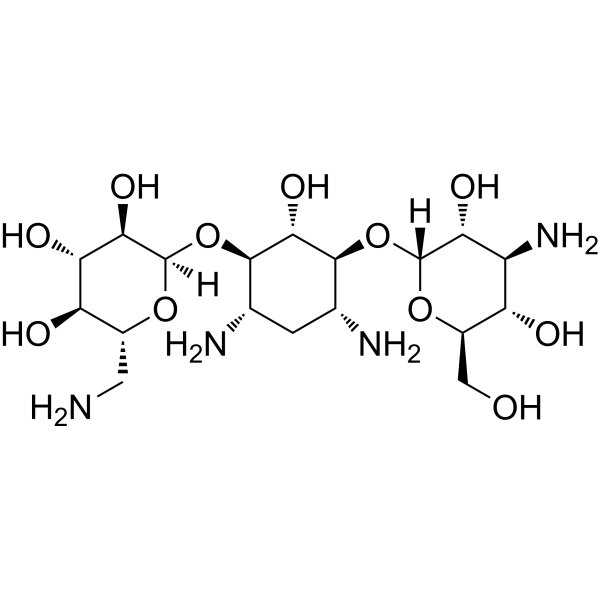
  • HY-16566A
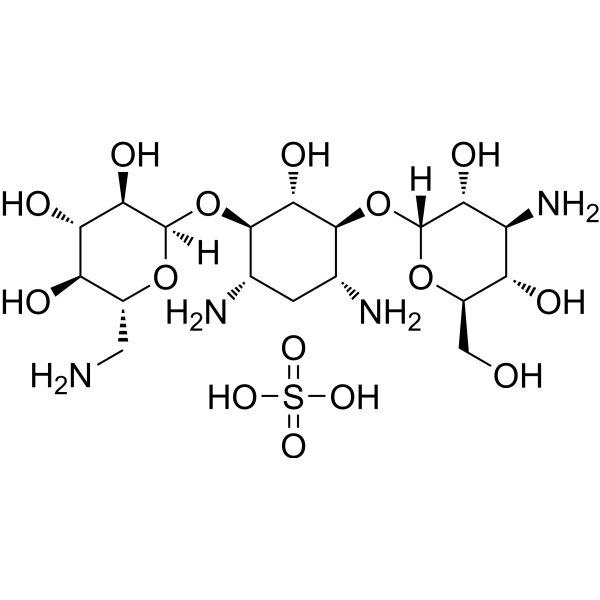
    Kanamycin sulfate
    25+ Cited Publications

    kanamycin A sulfate

    Bacterial Antibiotic Infection
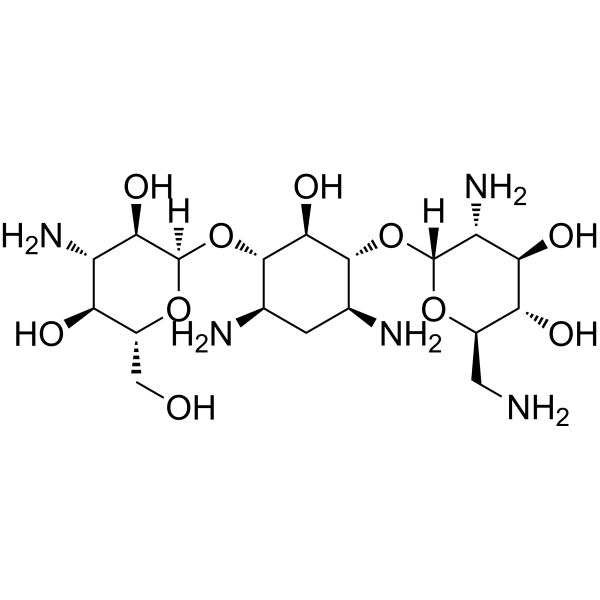
    Kanamycin (Kanamycin A) sulfate is an orally active antibacterial (gram-negative/positive bacteria) agent, inhibits translocation and causes misencoding by binding to the 70 S ribosomal subunit. Kanamycin sulfate shows good inhibitory activity to both M. tuberculosis (sensitive and drug-resistant ) and K. pneumonia, which can be used in studies of tuberculosis and pneumonia .
    Kanamycin sulfate
  • HY-B0509A
    Amikacin
    25+ Cited Publications

    BAY 41-6551

    Bacterial Antibiotic Infection Cancer
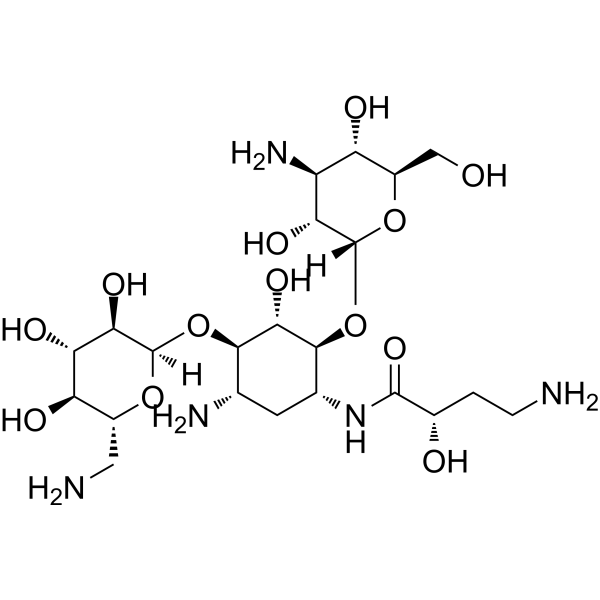
    Amikacin (BAY 41-6551) is a semisynthetic kanamycin analog that is active against most Gram-negative bacteria, including gentamicin- and tobramycin-resistant strains. Significant inhibitory effect. Amikacin is ototoxic and nephrotoxic. Amikacin can be used in bacteriostatic, anti-cancer and analgesic studies .
    Amikacin
  • HY-16566
    Kanamycin
    25+ Cited Publications

    kanamycin A

    Antibiotic Bacterial Infection Inflammation/Immunology
    Kanamycin (Kanamycin A) is an orally active antibacterial (gram-negative/positive bacteria) agent, inhibits translocation and causes misencoding by binding to the 70 S ribosomal subunit. Kanamycin shows good inhibitory activity to both M. tuberculosis (sensitive and drug-resistant ) and K. pneumonia, which can be used in studies of tuberculosis and pneumonia .
    Kanamycin
  • HY-B1174

    kanamycin B

    Antibiotic Bacterial Infection
    Bekanamycin (Kanamycin B) is an aminoglycoside antibiotic produced by Streptomyces kanamyceticus, against an array of Gram-positive and Gram-negative bacterial strain .
    Bekanamycin
  • HY-B0509B
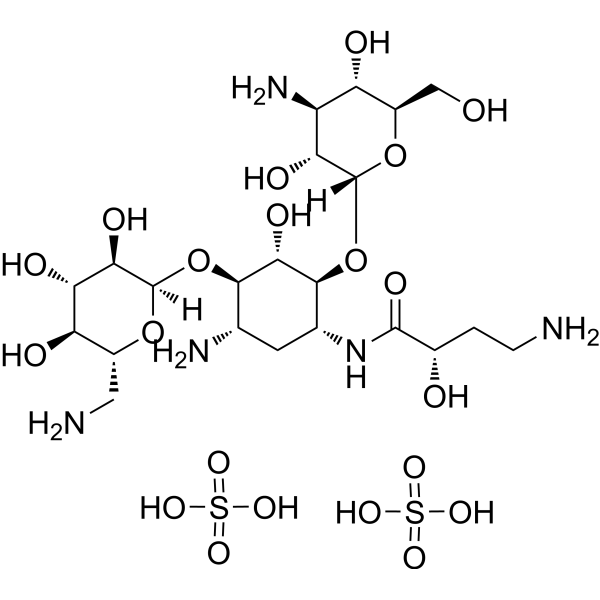
    Amikacin disulfate
    25+ Cited Publications

    BAY 41-6551 disulfate

    Bacterial Antibiotic Infection Cancer
    Amikacin disulfate (BAY 41-6551 dissulfate) is an aminoglycoside antibiotic and a semisynthetic analog of kanamycin. Amikacin disulfate is bactericidal, acting directly on the 30S and 50S bacerial ribosomal subunits to inhibit protein synthesis. Amikacin disulfate is very active against most Gram-negative bacteria including gentamicin- and tobramycin-resistant strains. Amikacin disulfate also inhibits the infections caused by susceptible Nocardia and nontuberculous mycobacteria .
    Amikacin disulfate
  • HY-107813
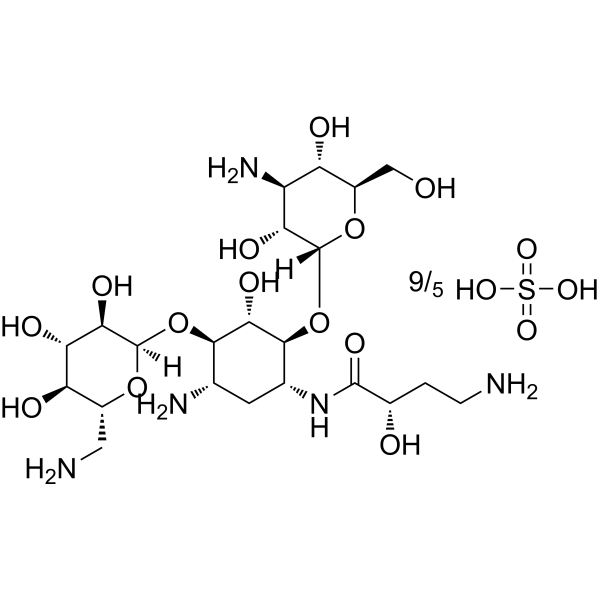
    Amikacin sulfate
    25+ Cited Publications

    BAY 41-6551 sulfate

    Bacterial Antibiotic Infection Cancer
    Amikacin sulfate (BAY 41-6551 sulfate) is an aminoglycoside antibiotic and a semisynthetic analog of kanamycin. Amikacin sulfate is bactericidal, acting directly on the 30S and 50S bacerial ribosomal subunits to inhibit protein synthesis. Amikacin sulfate is very active against most Gram-negative bacteria including gentamicin- and tobramycin-resistant strains. Amikacin sulfate also inhibits the infections caused by susceptible Nocardia and nontuberculous mycobacteria .
    Amikacin sulfate
  • HY-107202A
    Poly (I:C):Kanamycin (1:1)
    5+ Cited Publications

    Toll-like Receptor (TLR) RIG-I-like receptor (RLR) PKD HSP Bcl-2 Family Interleukin Related Apoptosis Infection Inflammation/Immunology Cancer
    Poly(I:C):Kanamycin (1:1) is a mixture of Poly(I:C) (HY-107202) and Kanamycin (HY-16566). Poly(I:C) is a synthetic analog of double-stranded RNA and an agonist of toll-like receptor 3 (TLR3) and retinoic acid inducible gene I (RIG-I)-like receptors (RIG-I and MDA5). Poly(I:C) can be used as a vaccine adjuvant to enhance innate and adaptive immune responses, and to alter the tumor microenvironment. Poly(I:C) can directly trigger cancer cells to undergo apoptosis. Kanamycin stabilizes Poly(I:C) .
    Poly (I:C):Kanamycin (1:1)
  • HY-B0509
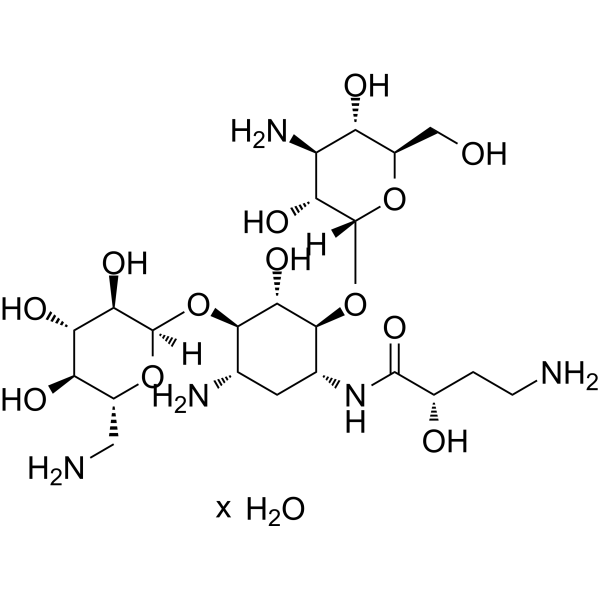
    Amikacin hydrate
    25+ Cited Publications

    BAY 41-6551 hydrate

    Bacterial Antibiotic Infection Cancer
    Amikacin hydrate (BAY 41-6551 hydrate) is an aminoglycoside antibiotic and a semisynthetic analog of kanamycin. Amikacin hydrate is bactericidal, acting directly on the 30S and 50S bacerial ribosomal subunits to inhibit protein synthesis. Amikacin hydrate is very active against most Gram-negative bacteria including gentamicin- and tobramycin-resistant strains. Amikacin hydrate also inhibits the infections caused by susceptible Nocardia and nontuberculous mycobacteria .
    Amikacin hydrate
  • HY-W040128

    Antibiotic Autophagy JNK Bcl-2 Family Infection
    Kanamycins sulfate is a blood-brain barrier-permeable JNK1 and Bcl-2 modulator as well as an antibiotic, with broad-spectrum antibacterial, and biofilm-inhibiting activities, and it induces autophagy. Kanamycins sulfate promotes Bcl-2 phosphorylation to upregulate autophagy levels, triggering changes such as mitochondrial swelling and endoplasmic reticulum expansion. Consequently, it causes reversible neuronal damage in the dorsal cochlear nucleus without inducing significant neuronal apoptosis. In the presence of exogenous alanine or glucose, Kanamycins sulfate effectively kills drug-resistant bacteria, restores drug sensitivity of multidrug-resistant bacteria, and alleviates urinary tract and kidney infections in mice. Kanamycins sulfate can be applied to scientific research related to Mycobacterium tuberculosis, salmonellosis, brucellosis, shigellosis, urinary tract infections, and reversible neurotoxicity .
    Kanamycins sulfate
  • HY-Y1718
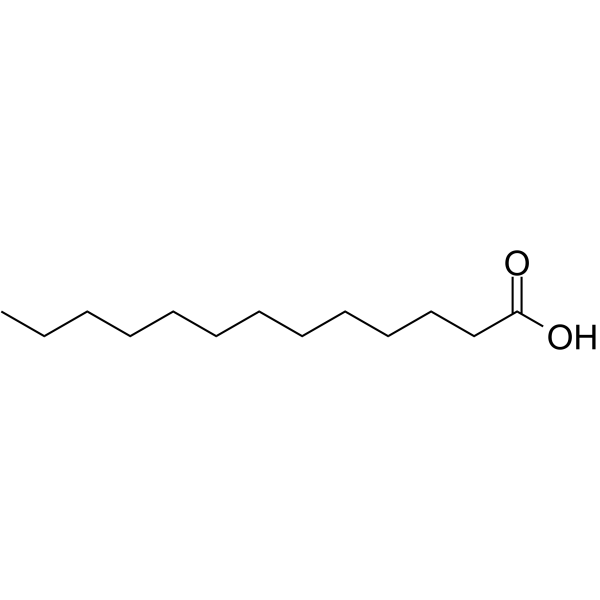
    Tridecanoic acid
    1 Publications Verification

    N-Tridecanoic acid

    Endogenous Metabolite Bacterial Infection
    Tridecanoic acid (N-Tridecanoic acid) is a medium-chain saturated fatty acid and inhibitor with no antibacterial activity against enterohemorrhagic E. coli (EHEC). When used in combination with Ciprofloxacin (HY-B0356) or Ampicillin (HY-B0522), Tridecanoic acid suppresses persister formation in exponentially growing E. coli and EHEC, but exerts no inhibitory effect on persister formation induced by Kanamycin (HY-16566) or in stationary-phase cells. Tridecanoic acid inhibits biofilm formation in EHEC. It can be used in the research of bacterial infections .
    Tridecanoic acid
  • HY-135748A
    Poly (I:C):Kanamycin (1:1) sodium
    Maximum Cited Publications
    56 Publications Verification

    RIG-I-like receptor (RLR) Toll-like Receptor (TLR) Apoptosis Infection Cancer
    Poly (I:C):Kanamycin (1:1) sodium is an isometric complex of Poly (I:C) (HY-135748) and Kanamycin (HY-16566). Poly(I:C) sodium, a synthetic analog of double-stranded RNA, is a TLR3 and retinoic acid-inducible gene I receptor (RIG-I and b>MDA5) agonist. Poly(I:C) sodium can be used as a vaccine adjuvant to enhance innate and adaptive immune responses and induce apoptosis in cancer cells . Kanamycin is an orally active antibacterial agent (Gram-negative/positive bacteria) that inhibits translocation and causes miscoding by binding to the 70S ribosomal subunit. Kanamycin shows good inhibitory activity against Mycobacterium tuberculosis (susceptible and drug-resistant) and Klebsiella pneumoniae, and can be used in the research of tuberculosis and pneumonia .
    Poly (I:C):Kanamycin (1:1) sodium
  • HY-B0509AR

    BAY 41-6551 (Standard)

    Reference Standards Bacterial Antibiotic Infection Cancer
    Amikacin (Standard) is the analytical standard of Amikacin. This product is intended for research and analytical applications. Amikacin (BAY 41-6551), a semisynthetic analog of kanamycin, is very active against most gram-negative bacteria including gentamicin- and tobramycin-resistant strains. Amikacin (BAY 41-6551) is ototoxic and nephrotoxic .
    Amikacin (Standard)
  • HY-W718156
    Kanamycin disulfate
    15+ Cited Publications

    kanamycin A disulfate

    Biochemical Assay Reagents Others
    n-Nonyl β-D-maltopyranoside is a biochemical assay reagent.
    Kanamycin disulfate
  • HY-16566R

    kanamycin A (Standard)

    Reference Standards Antibiotic Bacterial Infection Inflammation/Immunology
    Kanamycin (Standard) is the analytical standard of Kanamycin. This product is intended for research and analytical applications. Kanamycin (Kanamycin A) is an orally active antibacterial (gram-negative/positive bacteria) agent, inhibits translocation and causes misencoding by binding to the 70 S ribosomal subunit. Kanamycin shows good inhibitory activity to both M. tuberculosis (sensitive and drug-resistant ) and K. pneumonia, which can be used in studies of tuberculosis and pneumonia[1][2][3][4].
    Kanamycin (Standard)
  • HY-116863

    Bacterial Infection
    KKL-40 is a small molecule inhibitor that targets the trans-transcription process and is effective against methicillin-sensitive and -resistant Staphylococcus aureus (S. aureus) as well as other Gram-positive pathogens including vancomycin-resistant Enterococcus faecium, Bacillus subtilis, and Streptococcus pyogenes. KKL-40 synergizes with the human antimicrobial peptide LL-37 to inhibit S. aureus, but does not synergize with other antibiotics such as daptomycin, kanamycin, or erythromycin. Trans-transcription is an extreme form of recoding, and KKL-40 inhibits trans-transcription but is nontoxic to HeLa cells .
    KKL-40
  • HY-148596

    UDP-N-Acetyl-D-glucosamine; Uridine diphospho-N-acetylglucosamine; UDP-N-acetylglucosamine

    Endogenous Metabolite P2Y Receptor Drug Intermediate Glycosyltransferase Infection
    UDP-GlcNAc (UDP-N-Acetyl-D-glucosamine) is an important component and precursor of bacterial peptidoglycan. UDP-GlcNAc is a nucleotide sugar used by Glycosyltransferases to synthesize glycoproteins, glycosaminoglycans, glycolipids, and glycoRNA. UDP-GlcNAc also serves as the donor substrate for forming O-GlcNAc, a dynamic intracellular protein modification involved in diverse signaling and disease processes. UDP-GlcNAc is the sugar nucleotide donor for the synthesis of O-GlcNAc modified proteins. UDP-GlcNAc also acts as a full agonist of the P2Y14 receptor and inhibits the formation of cAMP. UDP-GlcNAc can be used in studies related to bacterial infections .
    UDP-GlcNAc
  • HY-16566AR

    kanamycin A sulfate (Standard)

    Reference Standards Bacterial Antibiotic Infection
    Kanamycin (sulfate) (Standard) is the analytical standard of Kanamycin (sulfate). This product is intended for research and analytical applications. Kanamycin (Kanamycin A) sulfate is an orally active antibacterial (gram-negative/positive bacteria) agent, inhibits translocation and causes misencoding by binding to the 70 S ribosomal subunit. Kanamycin sulfate shows good inhibitory activity to both M. tuberculosis (sensitive and drug-resistant ) and K. pneumonia, which can be used in studies of tuberculosis and pneumonia .
    Kanamycin sulfate (Standard)
  • HY-B1174A

    kanamycin B sulfate

    Bacterial Antibiotic Infection
    Bekanamycin (Kanamycin B) sulfate is a minor component of the kanamycin complex, an aminoglycoside antibiotic isolated from Streptomyces kanamyceticus, with antibacterial activity .
    Bekanamycin sulfate
  • HY-NP0250

    Biochemical Assay Reagents Inflammation/Immunology
    Kanamycin-BSA is a conjugate of Kanamycin (HY-16566) and BSA. By conjugating the antigen with protein adjuvants, the production of antigen-specific antibodies in vaccine models can be enhanced. The conjugate does not affect protein folding or disrupt the primary epitopes, and it can enhance cross-presentation and the generation of antigen-specific T cells .
    Kanamycin-BSA
  • HY-B1174R

    kanamycin B (Standard)

    Reference Standards Antibiotic Bacterial Infection
    Bekanamycin (Standard) is the analytical standard of Bekanamycin. This product is intended for research and analytical applications. Bekanamycin (Kanamycin B) is an aminoglycoside antibiotic produced by Streptomyces kanamyceticus, against an array of Gram-positive and Gram-negative bacterial strain .
    Bekanamycin (Standard)
  • HY-B0509BR

    BAY 41-6551 disulfate (Standard)

    Reference Standards Bacterial Antibiotic Infection Cancer
    Amikacin (disulfate) (Standard) is the analytical standard of Amikacin (disulfate). This product is intended for research and analytical applications. Amikacin disulfate (BAY 41-6551 dissulfate) is an aminoglycoside antibiotic and a semisynthetic analog of kanamycin. Amikacin disulfate is bactericidal, acting directly on the 30S and 50S bacerial ribosomal subunits to inhibit protein synthesis. Amikacin disulfate is very active against most Gram-negative bacteria including gentamicin-and tobramycin-resistant strains. Amikacin disulfate also inhibits the infections caused by susceptible Nocardia and nontuberculous mycobacteria .
    Amikacin disulfate (Standard)
  • HY-P0263R

    Reference Standards Bacterial Fungal Antibiotic Infection
    Kanamycin (sulfate) (Standard) is the analytical standard of Kanamycin (sulfate). This product is intended for research and analytical applications. Kanamycin (Kanamycin A) sulfate is an orally active antibacterial (gram-negative/positive bacteria) agent, inhibits translocation and causes misencoding by binding to the 70 S ribosomal subunit. Kanamycin sulfate shows good inhibitory activity to both M. tuberculosis (sensitive and drug-resistant ) and K. pneumonia, which can be used in studies of tuberculosis and pneumonia .
    Dermaseptin (Standard)
  • HY-149762

    Bacterial Infection
    IMBI (compound 32) is an antibacterial agent that inhibits quorum sensing (QS) against drug-resistant pathogens. IMBI inhibits biofilm formation of Salmonella marcescens and restores or increases its susceptibility to antimicrobial drugs .
    IMBI
  • HY-107813R

    BAY 41-6551 sulfate (Standard)

    Reference Standards Bacterial Antibiotic Infection Cancer
    Streptomycin (Standard) is the analytical standard of Streptomycin. This product is intended for research and analytical applications. Streptomycin (Agrept) is an effective antibiotic against M. tuberculosis, is used for the research of tuberculosis (TB). Streptomycin also is a bacteriocidal agent that can be used for the research of a number of bacterial infections. Streptomycin can bind strongly to nucleic acids, interferes and blocks protein synthesis while permitting continued RNA and DNA synthesis. Streptomycin, as a common antibiotic used in culture media, also is a blocker of stretch-activated and mechanosensitive ion channels in neurons and cardiac myocytes .
    Amikacin sulfate (Standard)
  • HY-129262

    Antibiotic Bacterial Infection
    Deoxypheganomycin D is a specific antimycobacterial inhibitor with no cross-resistance to other antibiotics such as Paromomycin (HY-B0956), Capreomycin (HY-P3270), Viomycin (HY-A0155), Streptothricin (HY-129065), Kanamycin (HY-16566), and Streptomycin (HY-B1906). Deoxypheganomycin D (28 μM) partially inhibits the growth of Mycobacterium 607, with no significant inhibitory effects on DNA, RNA, or protein synthesis. Deoxypheganomycin D (7 μM) affects leucine influx, not thymidine, and has the opposite effect on efflux. The effects of Deoxypheganomycin D may be related to cell membrane and specific mycobacterial lipid components.
    Deoxypheganomycin D
  • HY-NP0250A

    Biochemical Assay Reagents Inflammation/Immunology
    Kanamycin-OVA is a conjugate of Kanamycin (HY-16566) and Ovalbumin (OVA). By conjugating the antigen with protein adjuvants, the production of antigen-specific antibodies in vaccine models can be enhanced. The conjugate does not affect protein folding or disrupt the primary epitopes, and it can enhance cross-presentation and the generation of antigen-specific T cells .
    Kanamycin-OVA
  • HY-E71200J

    Biochemical Assay Reagents Others
    16S rRNA (guanine1405-N7)-Methyltransferase (EC 2.1.1.179) specifically methylates guanine1405 at N7 in 16S rRNA, thereby rendering the ribosome resistant to 4,6-disubstituted deoxystreptamine aminoglycosides, which include gentamicins and kanamycins.
    16S rRNA (guanine1405-N7)-Methyltransferase
  • HY-180328

    NK-1012-1

    Antibiotic Bacterial Endogenous Metabolite Infection
    3''-Deamino-3''-hydroxykanamycin B (NK-1012-1) is a kanamycin antibiotic. 3''-Deamino-3''-hydroxykanamycin B can be produced by S. tenebrarius. 3''-Deamino-3''-hydroxykanamycin B is effective against E. coli ATCC 25922 and E. coli CCARM 1A020, with MIC values of 128 μg/mL .
    3''-Deamino-3''-hydroxykanamycin B
  • HY-P11825

    Bacterial Infection
    APH-IN-1 is an Aminoglycoside phosphotransferase (APH) inhibitor with a Kd values of 63 nM against Escherichia coli APH(3′)-Ia. APH-IN-1 binds primarily to the ATP-binding pocket of APH in an ATP-competitive manner, with binding affinity enhanced by divalent metal ions (Mg 2+ and Ca 2+). APH-IN-1 can be used for the research of aminoglycoside-resistant bacterial infections .
    APH-IN-1

Inquiry Online

Your information is safe with us. * Required Fields.

Salutation


Country or Region *

Applicant Name *


Organization Name *

Department *


Email Address *


Product Name *

Cat. No.


Requested quantity *

Phone Number *


Remarks

Inquiry Online

Inquiry Information

Product Name:
Cat. No.:
Quantity:
MCE Japan Authorized Agent:

