Search Result
Results for "
lichens
" in MedChemExpress (MCE) Product Catalog:
2
Isotope-Labeled Compounds
| Cat. No. |
Product Name |
Target |
Research Areas |
Chemical Structure |
-
- HY-145588
-
|
INCB54707
|
JAK
|
Inflammation/Immunology
|
|
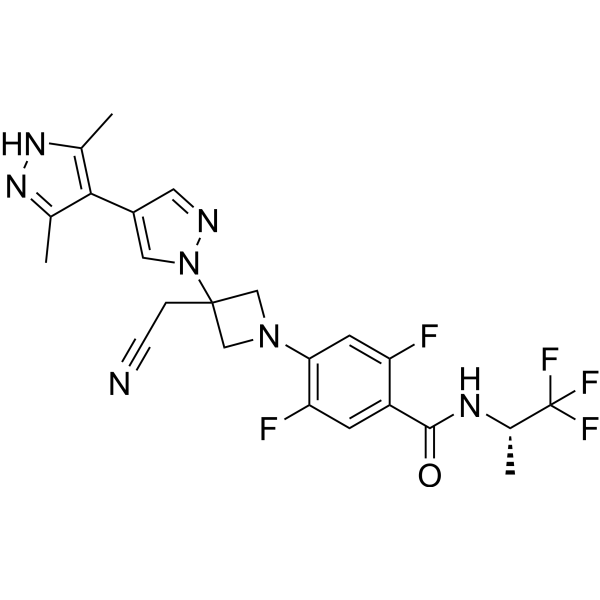
Povorcitinib (INCB54707) is a potent and selective JAK1 inhibitor that effectively reduces abscesses and inflammatory nodules. Povorcitinib is used to study cutaneous lupus erythematosus (CLE) and lichen planus (LP) .
|
-
-
- HY-13723
-
|
SDZ-ASM 981
|
Phosphatase
|
Inflammation/Immunology
|
|
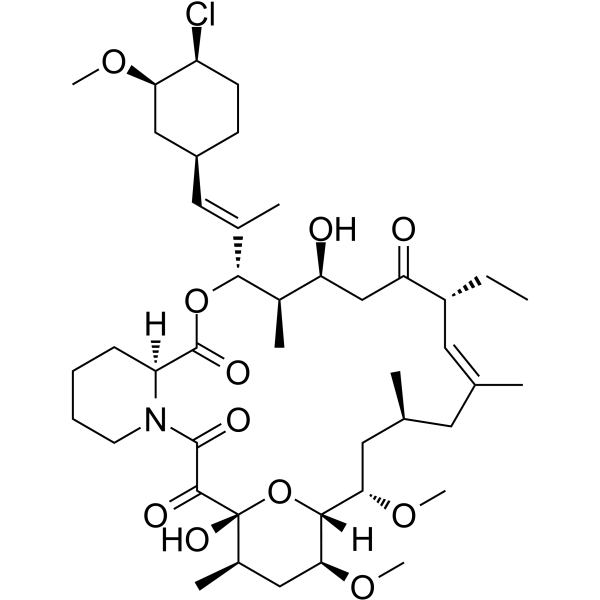
Pimecrolimus (SDZ-ASM 981) is a potent, nonsteroid and orally active calcineurin inhibitor with a Ki of 117 nM. Pimecrolimus shows anti-inflammatory activity .
|
-
-
- HY-W008364
-
|
|
Cytochrome P450
Cannabinoid Receptor
|
Neurological Disease
|
|
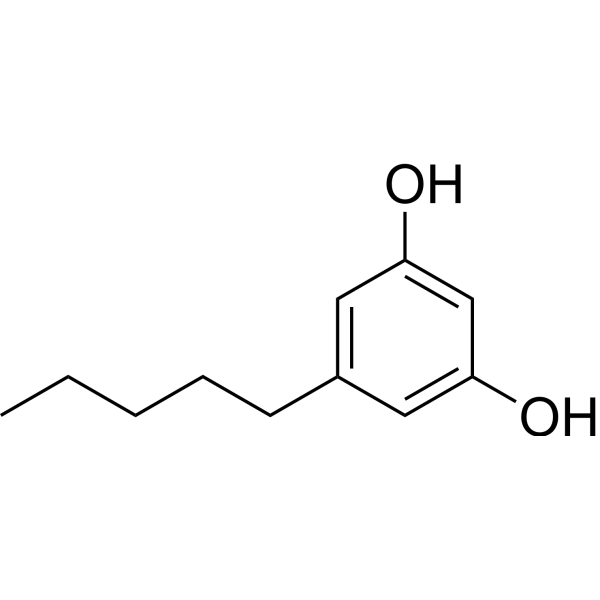
Olivetol is a naturally phenol found in lichens and produced by certain insects, acting as a competitive inhibitor of the cannabinoid receptors CB1 and CB2 . Olivetol also inhibits CYP2C19 and CYP2D6 activity, with IC50s of 15.3 μM, 7.21 μM and Kis of 2.71 μM, 2.87 μM, respectively .
|
-
-
- HY-N0656A
-
|
|
mTOR
Bacterial
Autophagy
|
Infection
Inflammation/Immunology
Cancer
|
|
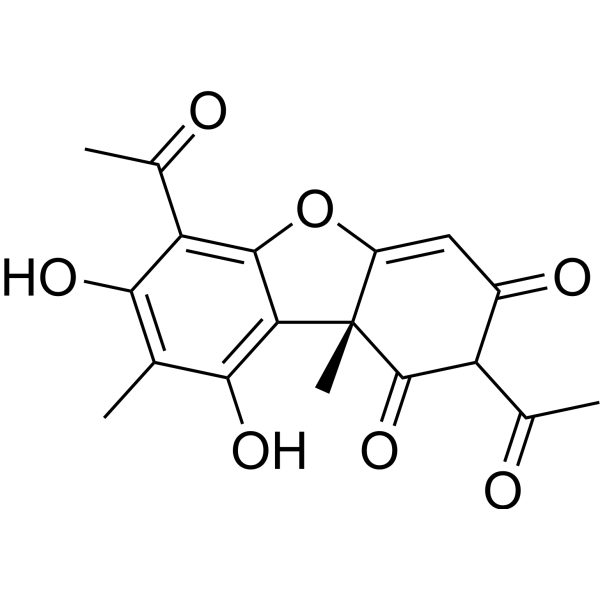
(+)-Usnic acid is isolated from isolated from lichens, binds at the ATP-binding pocket of mTOR, and inhibits mTORC1/2 activity. (+)-Usnic acid inhibits the phosphorylation of mTOR downstream effectors: Akt (Ser473), 4EBP1, S6K, induces autophay, with anti-cancer and anti-inflammatory activity. (+)-Usnic acid possesses antimicrobial activity against a number of planktonic gram-positive bacteria, including Staphylococcus aureus, Enterococcus faecalis, and Enterococcus faecium .
|
-
-
- HY-N3845
-
|
|
Bacterial
|
Inflammation/Immunology
Cancer
|
|
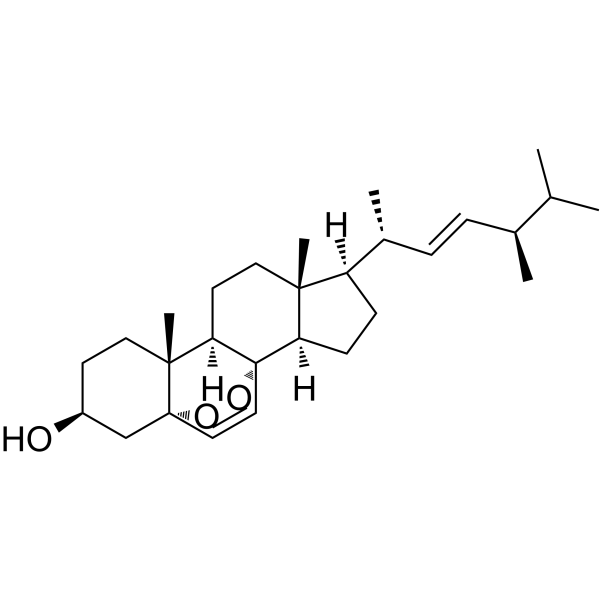
Ergosterol peroxide is a steroid derivative and can be isolated from a variety of fungi, yeast, lichens or sponges. Ergosterol peroxide has anti-tumour, proapoptotic, anti-inflammatory, anti-mycobacterial, and anti-proliferative activities .
|
-
-
- HY-N3126
-
|
|
Drug Derivative
Fungal
Apoptosis
Caspase
PARP
|
Neurological Disease
Cancer
|
|
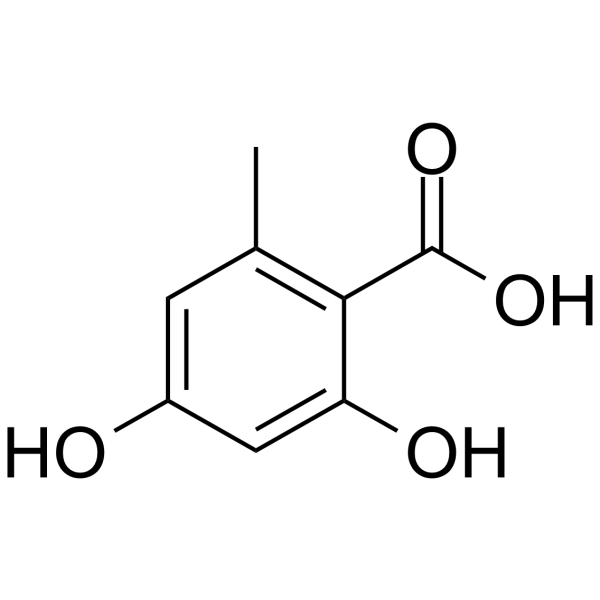
Orsellinic acid is a Benzoic acid (HY-N0216) derivative. Orsellinic acid can be isolated from Chaetomium globosum endophytic on Ephedra fasciculata (Mormon tea). Orsellinic acid blocks PAF-mediated Apoptosis, inhibits caspase-3/7 activation, and PARP cleavage. Orsellinic acid can be used in research of neurons and various tumors (non-small cell lung cancer, breast cancer, neuroblastoma, pancreatic cancer) .
|
-
-
- HY-N0656
-
|
|
Bacterial
DNA/RNA Synthesis
Nuclear Factor of activated T Cells (NFAT)
Apoptosis
|
Infection
Inflammation/Immunology
Cancer
|
|
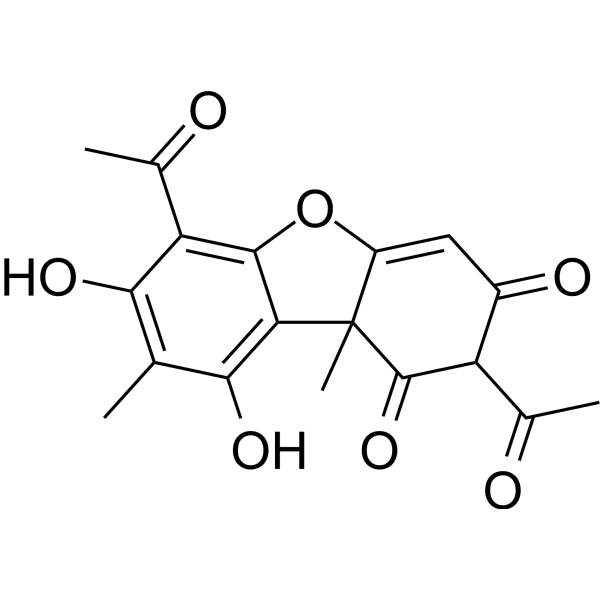
Usnic acid is a secondary metabolite of lichens with a unique dibenzofuran skeleton. Usnic acid inhibits DNA/RNA synthesis and has antibacterial activity. Usnic acid induces cell cycle arrest and apoptosis and has anticancer activity. Usnic acid inhibits RANKL-mediated osteoclast formation and function by reducing the transcriptional and translational expression of NFATc1. Usnic acid has antioxidant and anti-inflammatory activities by inhibiting lipid peroxidation and myeloperoxidase .
|
-
-
- HY-N2907
-
|
|
Wnt
Ras
Endogenous Metabolite
Bacterial
Fungal
PD-1/PD-L1
Tim3
Akt
AP-1
STAT
|
Infection
Neurological Disease
Inflammation/Immunology
Cancer
|
|
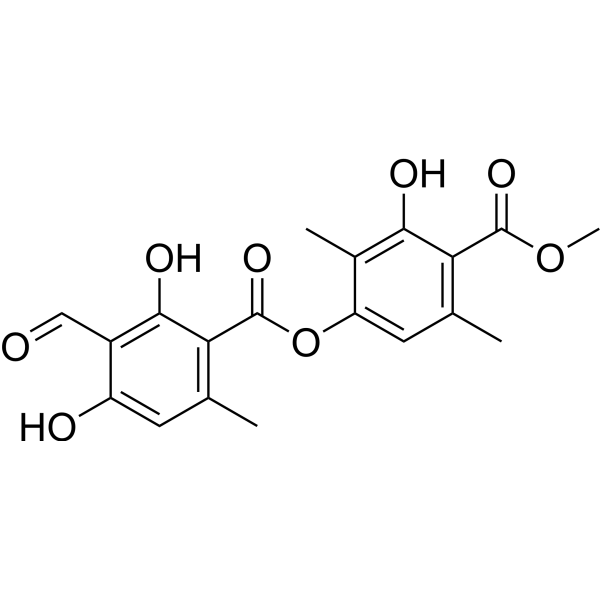
Atranorin is a secondary metabolite of lichens and AKT inhibitor. Atranorin possesses multiple activities such as antibacterial, anti-inflammatory, antioxidant, anti-glycation, analgesic, and anti-tumor effects. Atranorin has IC50 values for scavenging DPPH and ABTS free radicals of 117 μM and less than 10 μM, respectively. Additionally, Atranorin also exhibits effects in promoting wound healing. Atranorin can be used in the research of various diseases, including myelodysplastic syndromes, tumors, and inflammatory conditions .
|
-
-
- HY-126779
-
|
|
Fungal
|
Cancer
|
|
Stictic acid is a secondary metabolite that can be isolated from the lichen Lobaria pulmonaria (L.) Hoffm. Stictic acid inhibits growth of human colon adenocarcinoma HT-29 cells (IC50: 29.29 μg/mL) .
|
-
-
- HY-136642
-
|
|
Glucocorticoid Receptor
|
Inflammation/Immunology
|
|
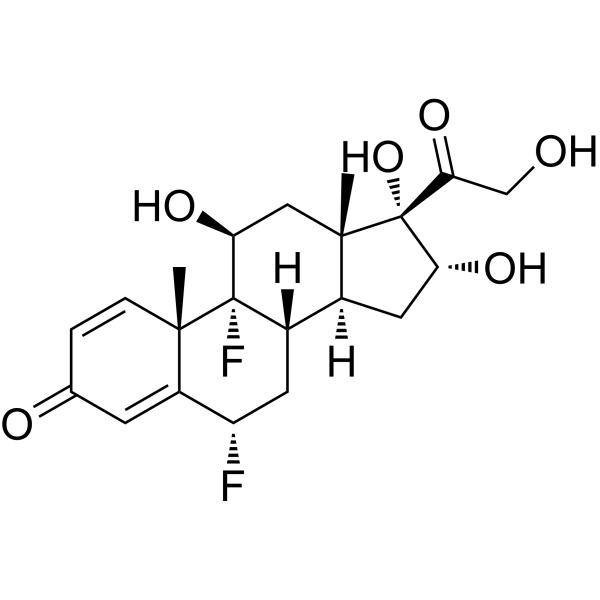
Fluocinolone is a potent steroid with highly selective glucocorticoid receptor agonist activity. Fluocinolone stabilizes the blood-retinal barrier by enhancing endothelial tight junctions, inhibiting the VEGF pathway and inflammatory factors. Fluocinolone has high lipophilicity, enabling long-term sustained release in the vitreous. Fluocinolone is used in research related to dermatological diseases, diabetic macular edema, uveitis and oral lichen planus .
|
-
-
- HY-125919
-
-
-
- HY-N3985
-
|
|
Others
|
Cancer
|
|
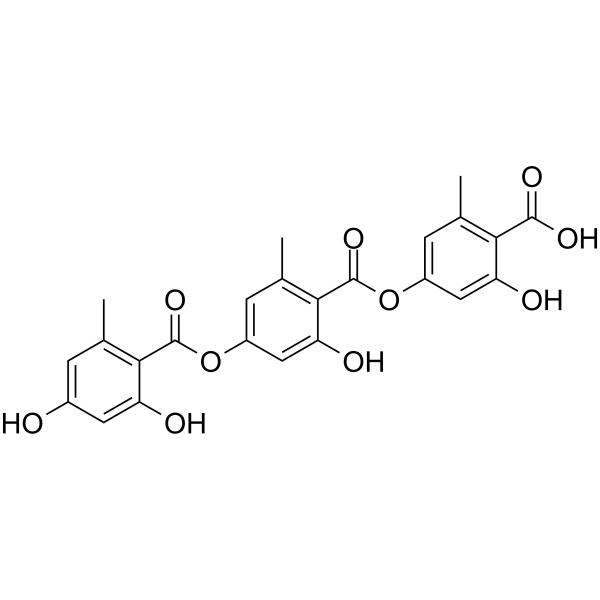
Gyrophoric acid is a good ultraviolet filter in lichen populations. Gyrophoric acid shows DPPH radical scavenging activity with an IC50 value of 105.75 μg/ml .
|
-
-
- HY-W000427
-
|
|
Bacterial
|
Infection
Cancer
|
|
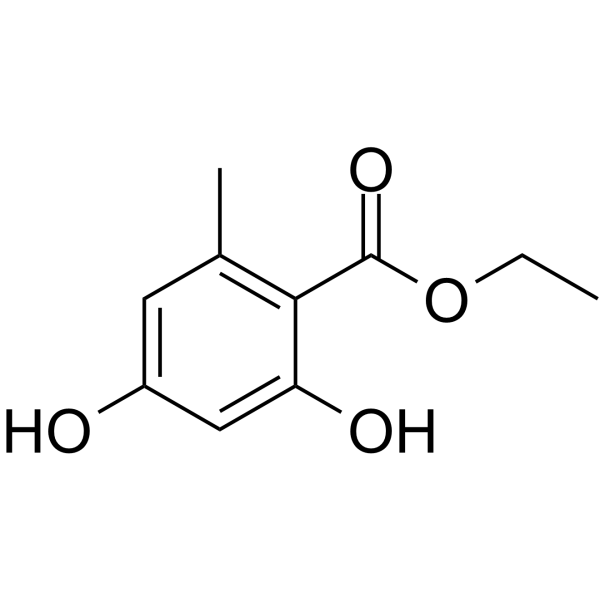
Ethyl orsellinate is a lichen metabolite and a derivative of lecanoric acid with antiproliferative and antitumour activities . Ethyl Orsellinate is against A. salina for the cytotoxic activity with an LC50 of 495 μM .
|
-
-
- HY-145588A
-
|
INCB54707 phosphate
|
JAK
|
Inflammation/Immunology
|
|
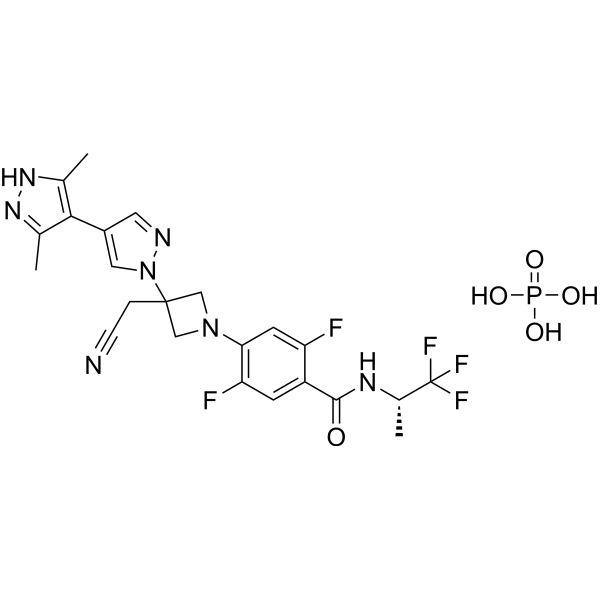
Povorcitinib (INCB54707) phosphate is a potent and selective JAK1 inhibitor that effectively reduces abscesses and inflammatory nodules. Povorcitinib phosphate can be used to study cutaneous lupus erythematosus (CLE) and lichen planus (LP) (information extracted from patent WO2021076124A1) .
|
-
-
- HY-107949
-
|
Flumethasone 21-pivalate
|
Glucocorticoid Receptor
|
Cardiovascular Disease
Inflammation/Immunology
|
|
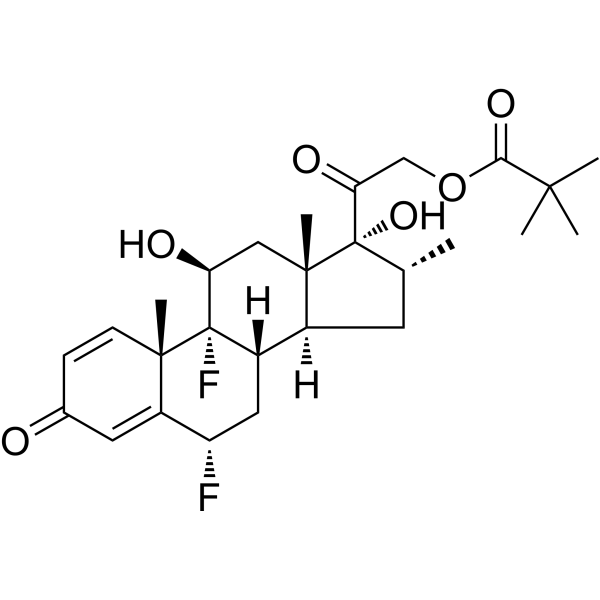
Flumethasone pivalate (Flumethasone 21-pivalate) is a glucocorticoid and a topical corticosteroid with anti-inflammatory, antipruritic, and vasoconstrictive actions. Flumethasone pivalate inhibits foreign body granuloma formation. Flumethasone pivalate can be used for the researches of dermatitis, eczema, and psoriasis .
|
-
-
- HY-117085
-
|
|
Phosphatase
TMV
Lipoxygenase
|
Cancer
|
|
Lobaric acid is a depsipeptide metabolite isolated from Stereocaulon lichen with antioxidant, antiproliferative, antiviral and enzyme inhibitory activities. Lobaric acid scavenges superoxide free radicals (IC50=97.9 μM) and inhibits cancer cell proliferation (EC50 of 15.2-63.9 μg/mL against leukemia, colorectal, gastric, breast, ovarian, prostate, pancreatic and lung cancer cell lines). Lobaric acid inhibits protein tyrosine phosphatase 1B (PTP1B; IC50=0.87 μM for human recombinant enzyme) and 12(S)-HETE produced by 12(S)-lipoxygenase (IC50=28.5 μM). Lobaric acid (250 μM) also reduced pathological changes in tobacco leaves infected with tobacco mosaic virus (TMV).
|
-
-
- HY-N16418
-
|
|
Bacterial
Reactive Oxygen Species (ROS)
|
Infection
Cancer
|
|
Epanorin is a secondary metabolite of the Acarospora lichenic species Epanorin can inhibit cancer cells proliferation, ROS production and induce G0/G1 phase arrest. Epanorin shows antibacterial activity. Epanorin can be used for the researches of cancer and infection, such as breast cancer and S. pneumonia infection .
|
-
-
- HY-N11020
-
|
|
EBV
|
Infection
Inflammation/Immunology
|
|
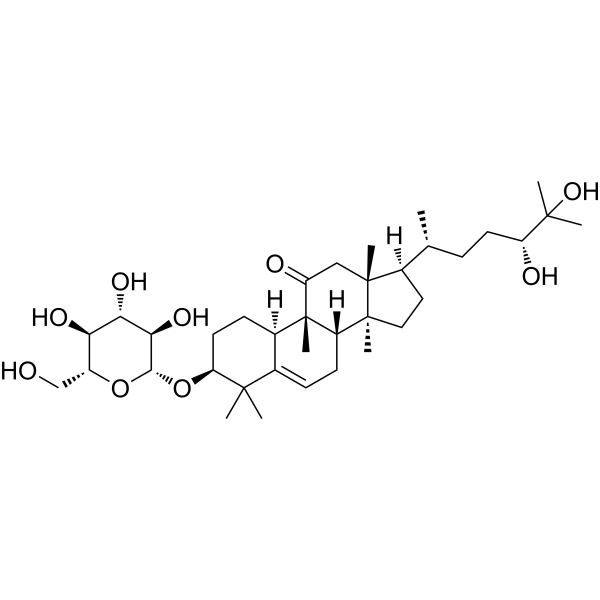
Cabenoside D (compound 8) is a triterpenoid glycoside, which can be isolated from the methanol extract of lichen root. Cabenoside D shows anti-inflammatory activity and inhibits inflammation induced by 12-O-tetracylacyl hormone-13-acetate (TPA) in mice. Cabenoside D also inhibits TPA-induced Epstein-Barr virus (EBV) early antigen (EBV-EA) activation .
|
-
-
- HY-N0656R
-
-
-
- HY-118565
-
|
|
Endogenous Metabolite
Bacterial
|
Infection
|
|
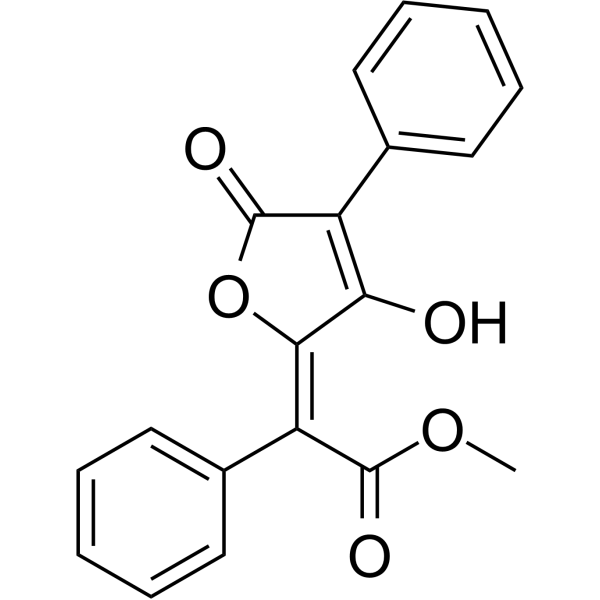
Rhizocarpic acid (Compound 2) is a secondary metabolite of lichen. Rhizocarpic acid effectively inhibits the growth of bacteria, such as Bacillus subtilis and Staphylococcus aureus, as well as murine myeloma NS-1 cells. Rhizocarpic acid is an antioxidant and an insect antifeedant with an ED50 of 71 μmol/g dry weight against neonate larvae of the Egyptian cotton leaf worm Spodoptera littoralis .
|
-
-
- HY-N2907R
-
|
|
Wnt
Reference Standards
Ras
Endogenous Metabolite
Bacterial
Fungal
PD-1/PD-L1
Tim3
Akt
AP-1
STAT
|
Infection
Neurological Disease
Inflammation/Immunology
Cancer
|
|
Atranorin (Standard) is the analytical standard of Atranorin (HY-N2907). This product is intended for research and analytical applications. Atranorin is a secondary metabolite of lichens and AKT inhibitor. Atranorin possesses multiple activities such as antibacterial, anti-inflammatory, antioxidant, anti-glycation, analgesic, and anti-tumor effects. Atranorin has IC50 values for scavenging DPPH and ABTS free radicals of 117 μM and less than 10 μM, respectively. Additionally, Atranorin also exhibits effects in promoting wound healing. Atranorin can be used in the research of various diseases, including myelodysplastic syndromes, tumors, and inflammatory conditions .
|
-
-
- HY-N15449
-
|
|
HSP
Caspase
Apoptosis
Reactive Oxygen Species (ROS)
Bcl-2 Family
|
Cancer
|
|
Vicanicin is a depsidone compound found in lichens. Vicanicin inhibits the expression of Hsp70, regulates the redox-sensitive mechanisms within cells, promotes the increase of reactive oxygen species (ROS) in cancer cells, changes the Bax/Bcl-2 ratio, activates caspase-3, and triggers apoptosis. Vicanicin inhibits cell growth and induces apoptosis in androgen-sensitive (LNCaP) and androgen-insensitive (DU-145) human prostate cancer cells. Vicanicin is promising for research of prostate cancer .
|
-
-
- HY-136817
-
|
OM173-αA; Nanaomycin A methyl ester
|
Antibiotic
|
Infection
|
|
Nanaomycin αA (OM173-αA) is an antibiotic with antimicrobial activity. Nanaomycin αA can be isolated from a fermentation broth of Streptomyces hebeiensis derived from lichen .
|
-
-
- HY-13723A
-
|
SDZ-ASM 981 hydrate
|
Phosphatase
|
Inflammation/Immunology
|
|
Pimecrolimus hydrate (SDZ-ASM 981 hydrate) is a potent, nonsteroid and orally active calcineurin inhibitor. Pimecrolimus hydrate shows anti-inflammatory activity. Pimecrolimus hydrate has the potential for the research of atopic dermatitis and oral erosive lichen planus .
|
-
-
- HY-N1049
-
|
α-Zeorin
|
Bacterial
Fungal
|
Others
|
|
Zeorin is a compound isolated from the lichen Parmotrema sancti-angelii .
|
-
-
- HY-W704321
-
|
|
Bacterial
|
Infection
|
|
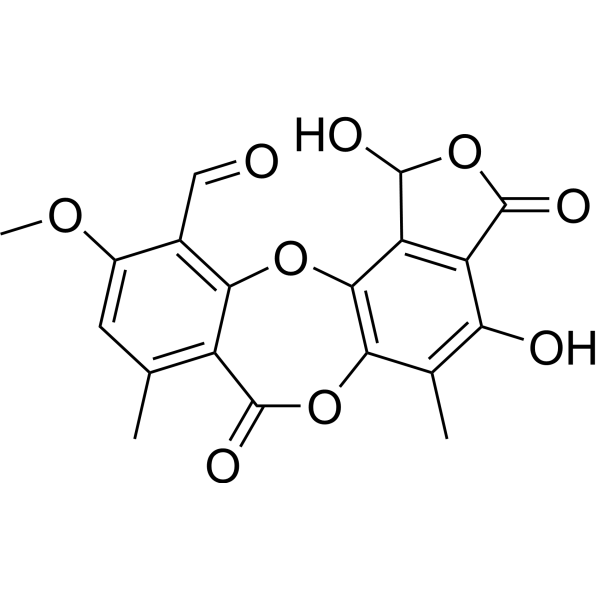
Diploicin is a diphenyl ether lactone compound with anti-gram-positive bacteria activity, which is found in lichens .
|
-
-
- HY-157533
-
|
|
Bacterial
|
Others
|
|
AcrB-IN-5 (compound 8) inhibits AcrB and blocks the efflux pump in a dose-dependent manner .
|
-
-
- HY-N2976
-
|
Betulafolianediol 3-acetate; Cabraleadiol 3-acetate
|
Others
|
Infection
|
|
Cabraleadiol monoacetate is a compound isolated from the lichen Pyxine consocians Vainio. Cabraleadiol monoacetate shows mosquito larvicidal activity against the second instar larvae of Aedes aegypti .
|
-
-
- HY-N2528
-
|
|
Bacterial
|
Infection
Cancer
|
|
Usnic acid sodium, a lichen-derived secondary metabolite, has a unique dibenzofuran skeleton. Usnic acid sodium has excellent anticancer and antimicrobial properties. Usnic acid sodium significantly inhibits RANKL-mediated osteoclast formation and function by reducing the transcriptional and translational expression of NFATc1 .
|
-
-
- HY-W795031
-
|
|
Bacterial
|
Infection
|
|
Arsenobetaine is an organoarsenical and a compatible solute that has been found in various marine animals, such as lobsters and crabs, as well as terrestrial organisms, including earthworms and lichens. Arsenobetaine is protective against B. subtilis cell death induced by high osmolarity or extreme temperatures when used at a concentration of 1 mM .
|
-
-
- HY-W008364S1
-
-
-
- HY-N12096
-
|
α-Acetylsalazinic acid
|
Bacterial
|
Infection
|
|
Galbinic acid (α-Acetylsalazinic acid), a lichen acid, shows antibacterial activities against the Gram-positive bacteria B. cereus, B. subtilis, and S. aureus (MICs=62.5, 62.5, 250 μg/ml, respectively). Galbinic acid inhibits the Gram-negative bacterium E. coli (MIC=125 μg/ml) .
|
-
-
- HY-145588S
-
|
INCB54707-d6
|
Isotope-Labeled Compounds
JAK
|
Inflammation/Immunology
|
|
Povorcitinib-d6 (INCB54707-d6) is the deuterium labeled Povorcitinib (HY-145588). Povorcitinib (INCB54707) is a potent and selective JAK1 inhibitor that effectively reduces abscesses and inflammatory nodules. Povorcitinib is used to study cutaneous lupus erythematosus (CLE) and lichen planus (LP) .
|
-
-
- HY-N3126R
-
|
|
Reference Standards
Drug Derivative
Fungal
Apoptosis
Caspase
PARP
|
Neurological Disease
Cancer
|
|
Orsellinic acid (Standard) is an analytical standard of Orsellinic acid (HY-N3126). This product is intended for research and analytical applications. Orsellinic acid is a Benzoic acid (HY-N0216) derivative. Orsellinic acid can be isolated from Chaetomium globosum endophytic on Ephedra fasciculata (Mormon tea). Orsellinic acid blocks PAF-mediated Apoptosis, inhibits caspase-3/7 activation, and PARP cleavage. Orsellinic acid can be used in research of neurons and various tumors (non-small cell lung cancer, breast cancer, neuroblastoma, pancreatic cancer) .
|
-
-
- HY-W008364R
-
|
|
Reference Standards
Cytochrome P450
Cannabinoid Receptor
|
Neurological Disease
|
|
Olivetol (Standard) is the analytical standard of Olivetol. This product is intended for research and analytical applications. Olivetol is a naturally phenol found in lichens and produced by certain insects, acting as a competitive inhibitor of the cannabinoid receptors CB1 and CB2 . Olivetol also inhibits CYP2C19 and CYP2D6 activity, with IC50s of 15.3 μM, 7.21 μM and Kis of 2.71 μM, 2.87 μM, respectively .
|
-
-
- HY-136642R
-
|
|
Reference Standards
Glucocorticoid Receptor
|
Inflammation/Immunology
|
|
Fluocinolone (Standard) is the analytical standard of Fluocinolone (HY-136642). This product is intended for research and analytical applications. Fluocinolone is a potent steroid with highly selective glucocorticoid receptor agonist activity. Fluocinolone stabilizes the blood-retinal barrier by enhancing endothelial tight junctions, inhibiting the VEGF pathway and inflammatory factors. Fluocinolone has high lipophilicity, enabling long-term sustained release in the vitreous. Fluocinolone is used in research related to dermatological diseases, diabetic macular edema, uveitis and oral lichen planus .
|
-
-
- HY-N0656AR
-
|
|
Reference Standards
mTOR
Bacterial
Autophagy
|
Cancer
|
|
(+)-Usnic acid (Standard) is the analytical standard of (+)-Usnic acid. This product is intended for research and analytical applications. (+)-Usnic acid is isolated from isolated from lichens, binds at the ATP-binding pocket of mTOR, and inhibits mTORC1/2 activity. (+)-Usnic acid inhibits the phosphorylation of mTOR downstream effectors: Akt (Ser473), 4EBP1, S6K, induces autophay, with anti-cancer activity . (+)-Usnic acid possesses antimicrobial activity against a number of planktonic gram-positive bacteria, including Staphylococcus aureus, Enterococcus faecalis, and Enterococcus faecium .
|
-
-
- HY-13723R
-
|
SDZ-ASM 981 (Standard)
|
Reference Standards
Phosphatase
|
Inflammation/Immunology
|
|
Pimecrolimus (Standard) is the analytical standard of Pimecrolimus. This product is intended for research and analytical applications. Pimecrolimus (SDZ-ASM 981) is a potent, nonsteroid and orally active calcineurin inhibitor with a Ki of 117 nM. Pimecrolimus shows anti-inflammatory activity .
|
-
-
- HY-N7660
-
|
|
Endogenous Metabolite
|
Others
|
|
Mutatoxanthin is a xanthophyll carotenoid. Mutatoxanthin forms a photoprotective barrier for chloroplasts in the thalli of Xanthoria lichens by shielding chloroplasts from excessive light irradiation, while also contributing to the golden to brownish-orange coloration of the thalli. Mutatoxanthin can serve as a taxonomic characteristic for lichen species .
|
-
-
- HY-N7923
-
-
-
- HY-N11740
-
|
|
Drug Derivative
|
Others
|
|
4-O-Methylolivetolcarboxylic acid is an olivetolcarboxylic acid derivative that can be found in the lichen Cladonia stellaris, belonging to the category of secondary metabolites .
|
-
-
- HY-N18662
-
|
|
Bacterial
|
Inflammation/Immunology
|
|
Evernia prunastri extract proffers its origin in the versatile Evernia prunastri lichen species. Acclaimed for its extraordinary antimicrobial efficacy along with its potent anti-inflammatory attributes.
|
-
-
- HY-N19224
-
|
|
Drug Derivative
Bacterial
|
Infection
Neurological Disease
Cancer
|
|
Pulvinic acid dilactone (Compound 1) is a pulvinic acid derivative and Antibacterial agent. Pulvinic acid dilactone can be isolated from the lichen Candelaria concolor. Pulvinic acid dilactone moderately inhibits the growth of Bacillus subtilis. Pulvinic acid dilactone exerts positive inotropic effects. Pulvinic acid dilactone can be used in studies related to Bacillus subtilis infections and leukemia .
|
-
-
- HY-182488
-
|
|
Bacterial
Fungal
Drug Derivative
|
Infection
|
|
Pulvinamide is a tetronic acid pigment, a pulvinic acid derivative, an Antibacterial agent and Antifungal agent. Pulvinamide can be isolated from lichens. Pulvinamide weakly inhibits the growth of Bacillus subtilis (ATCC 6633) with an MIC of 50 μg/mL. Pulvinamide weakly inhibits the growth of Candida albicans (ATCC 10231) and Saccharomyces cerevisiae (ATCC 9763), with MIC values of 200 μg/mL and 100 μg/mL, respectively .
|
-
| Cat. No. |
Product Name |
Category |
Target |
Chemical Structure |
-
- HY-W008364
-
-
-
- HY-N0656A
-
|
|
other families
Classification of Application Fields
Ketones, Aldehydes, Acids
Plants
Lichen
Disease Research Fields
Cancer
|
mTOR
Bacterial
Autophagy
|
|
(+)-Usnic acid is isolated from isolated from lichens, binds at the ATP-binding pocket of mTOR, and inhibits mTORC1/2 activity. (+)-Usnic acid inhibits the phosphorylation of mTOR downstream effectors: Akt (Ser473), 4EBP1, S6K, induces autophay, with anti-cancer and anti-inflammatory activity. (+)-Usnic acid possesses antimicrobial activity against a number of planktonic gram-positive bacteria, including Staphylococcus aureus, Enterococcus faecalis, and Enterococcus faecium .
|
-
-
- HY-N3845
-
-
-
- HY-N3126
-
-
-
- HY-N0656
-
-
-
- HY-N2907
-
|
|
other families
Classification of Application Fields
Phenols
Polyphenols
Plants
Endogenous metabolite
Disease Research Fields
Source Classification
Cancer
|
Wnt
Ras
Endogenous Metabolite
Bacterial
Fungal
PD-1/PD-L1
Tim3
Akt
AP-1
STAT
|
|
Atranorin is a secondary metabolite of lichens and AKT inhibitor. Atranorin possesses multiple activities such as antibacterial, anti-inflammatory, antioxidant, anti-glycation, analgesic, and anti-tumor effects. Atranorin has IC50 values for scavenging DPPH and ABTS free radicals of 117 μM and less than 10 μM, respectively. Additionally, Atranorin also exhibits effects in promoting wound healing. Atranorin can be used in the research of various diseases, including myelodysplastic syndromes, tumors, and inflammatory conditions .
|
-
-
- HY-126779
-
-
-
- HY-125919
-
-
-
- HY-N3985
-
-
-
- HY-W000427
-
-
-
- HY-N16418
-
-
-
- HY-N11020
-
-
-
- HY-N0656R
-
-
-
- HY-118565
-
-
-
- HY-N2907R
-
|
|
Structural Classification
other families
Phenols
Polyphenols
Plants
Endogenous metabolite
Source Classification
|
Wnt
Reference Standards
Ras
Endogenous Metabolite
Bacterial
Fungal
PD-1/PD-L1
Tim3
Akt
AP-1
STAT
|
|
Atranorin (Standard) is the analytical standard of Atranorin (HY-N2907). This product is intended for research and analytical applications. Atranorin is a secondary metabolite of lichens and AKT inhibitor. Atranorin possesses multiple activities such as antibacterial, anti-inflammatory, antioxidant, anti-glycation, analgesic, and anti-tumor effects. Atranorin has IC50 values for scavenging DPPH and ABTS free radicals of 117 μM and less than 10 μM, respectively. Additionally, Atranorin also exhibits effects in promoting wound healing. Atranorin can be used in the research of various diseases, including myelodysplastic syndromes, tumors, and inflammatory conditions .
|
-
-
- HY-N15449
-
|
|
Natural Products
Microorganisms
Source Classification
|
HSP
Caspase
Apoptosis
Reactive Oxygen Species (ROS)
Bcl-2 Family
|
|
Vicanicin is a depsidone compound found in lichens. Vicanicin inhibits the expression of Hsp70, regulates the redox-sensitive mechanisms within cells, promotes the increase of reactive oxygen species (ROS) in cancer cells, changes the Bax/Bcl-2 ratio, activates caspase-3, and triggers apoptosis. Vicanicin inhibits cell growth and induces apoptosis in androgen-sensitive (LNCaP) and androgen-insensitive (DU-145) human prostate cancer cells. Vicanicin is promising for research of prostate cancer .
|
-
-
- HY-136817
-
-
-
- HY-N2976
-
-
-
- HY-N12096
-
-
-
- HY-N3126R
-
-
-
- HY-W008364R
-
-
-
- HY-N0656AR
-
|
|
Structural Classification
other families
Ketones, Aldehydes, Acids
Plants
Lichen
|
Reference Standards
mTOR
Bacterial
Autophagy
|
|
(+)-Usnic acid (Standard) is the analytical standard of (+)-Usnic acid. This product is intended for research and analytical applications. (+)-Usnic acid is isolated from isolated from lichens, binds at the ATP-binding pocket of mTOR, and inhibits mTORC1/2 activity. (+)-Usnic acid inhibits the phosphorylation of mTOR downstream effectors: Akt (Ser473), 4EBP1, S6K, induces autophay, with anti-cancer activity . (+)-Usnic acid possesses antimicrobial activity against a number of planktonic gram-positive bacteria, including Staphylococcus aureus, Enterococcus faecalis, and Enterococcus faecium .
|
-
-
- HY-N7660
-
-
-
- HY-N7923
-
-
-
- HY-N11740
-
-
-
- HY-N18662
-
|
|
Structural Classification
Extract
|
Bacterial
|
|
Evernia prunastri extract proffers its origin in the versatile Evernia prunastri lichen species. Acclaimed for its extraordinary antimicrobial efficacy along with its potent anti-inflammatory attributes.
|
-
-
- HY-N19224
-
|
|
Structural Classification
Natural Products
Microorganisms
Source Classification
|
Drug Derivative
Bacterial
|
|
Pulvinic acid dilactone (Compound 1) is a pulvinic acid derivative and Antibacterial agent. Pulvinic acid dilactone can be isolated from the lichen Candelaria concolor. Pulvinic acid dilactone moderately inhibits the growth of Bacillus subtilis. Pulvinic acid dilactone exerts positive inotropic effects. Pulvinic acid dilactone can be used in studies related to Bacillus subtilis infections and leukemia .
|
-
| Cat. No. |
Product Name |
Chemical Structure |
-
- HY-W008364S1
-
|
|
|
Olivetol-d9 is the deuterium labeled Olivetol. Olivetol is a naturally phenol found in lichens and produced by certain insects, acting as a competitive inhibitor of the cannabinoid receptors CB1 and CB2[3]. Olivetol also inhibits CYP2C19 and CYP2D6 activities.
|
-
-
- HY-145588S
-
|
|
|
Povorcitinib-d6 (INCB54707-d6) is the deuterium labeled Povorcitinib (HY-145588). Povorcitinib (INCB54707) is a potent and selective JAK1 inhibitor that effectively reduces abscesses and inflammatory nodules. Povorcitinib is used to study cutaneous lupus erythematosus (CLE) and lichen planus (LP) .
|
-
Your information is safe with us. * Required Fields.
Inquiry Information
- Product Name:
- Cat. No.:
- Quantity:
- MCE Japan Authorized Agent:

