



Flumethasone pivalate

Based on 1 Customer Validation
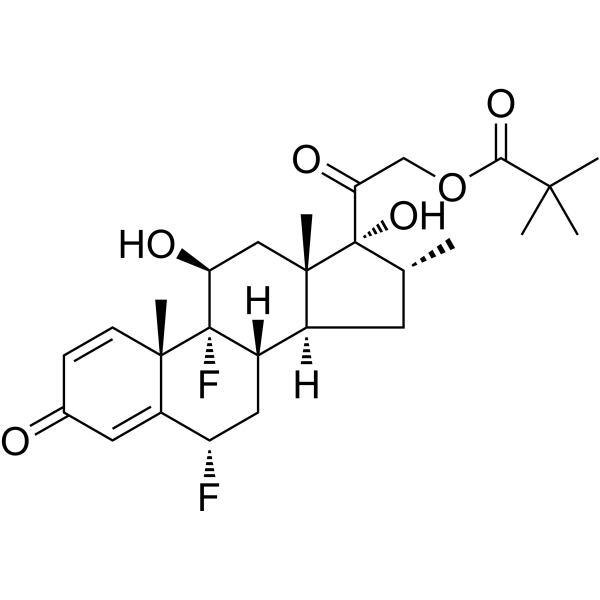
Flumethasone pivalate (Flumethasone 21-pivalate) is a glucocorticoid and a topical corticosteroid with anti-inflammatory, antipruritic, and vasoconstrictive actions. Flumethasone pivalate inhibits foreign body granuloma formation. Flumethasone pivalate can be used for the researches of dermatitis, eczema, and psoriasis.
Nur für Forschungszwecke. Wir verkaufen nicht an Patienten.
- Reinheit : 98.17%
- CAS. Nr.: 2002-29-1
- Formel: C27H36F2O6
- Molecular Weight:494.57
-
Speicherung:Powder -20°C, 3 years , 4°C, 2 years ; In solvent -80°C, 6 months , -20°C, 1 month

To place orders, for customer services and technical support, please contact: MedChemExpress USA
Tel: 609-228-6898 E-mail: [email protected] [email protected]


-
 Biologische Aktivität
-
Chemical Information
-
Lösungsmittel & Löslichkeit
- Protokoll
- Reinheit & Dokumentation
- Verweise
-
 Help & FAQs


-
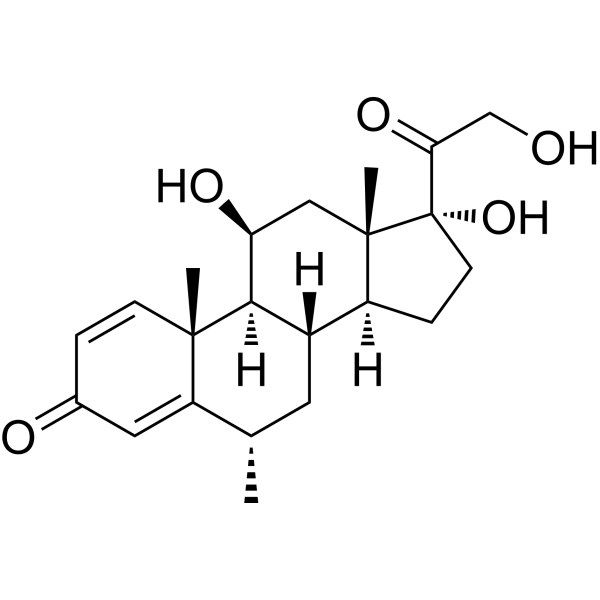
HY-B0260
MethylprednisoloneGlucocorticoid -
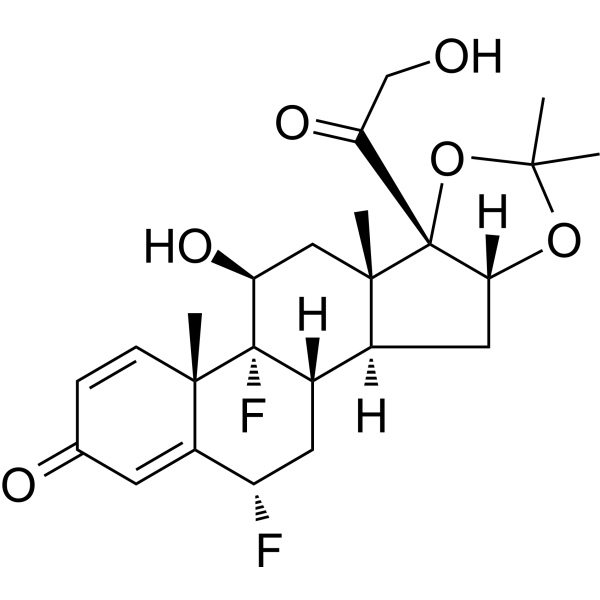
HY-B0415
Fluocinolone (Acetonide)Glucocorticoid Receptor Agonist -
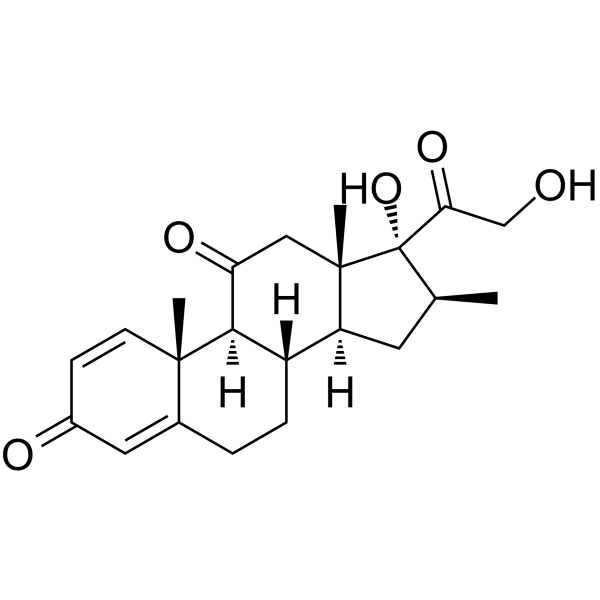
HY-B0243
MeprednisoneGlucocorticoid -
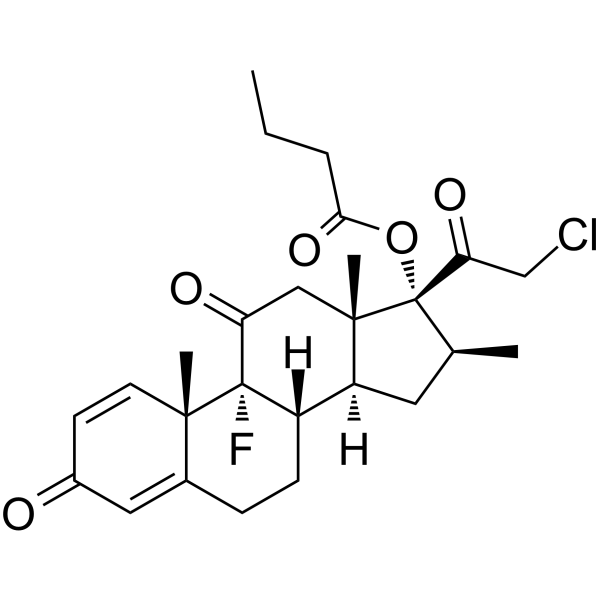
HY-B1616
Clobetasone butyrateGlucocorticoid -
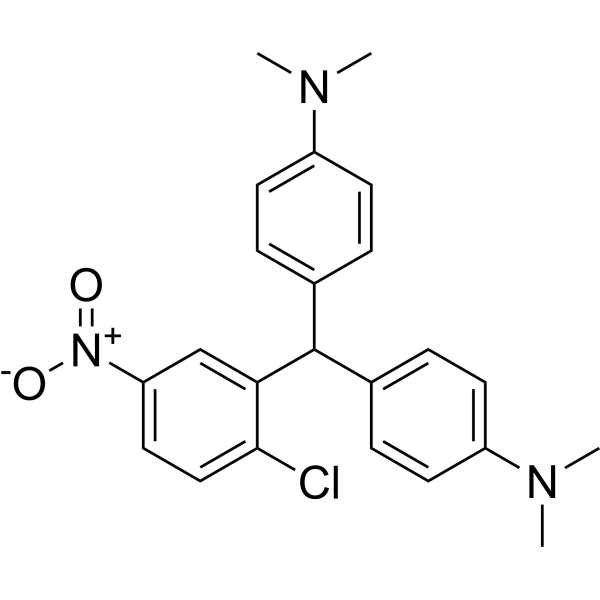
HY-15709
AL 082D06Glucocorticoid Receptor Antagonist -
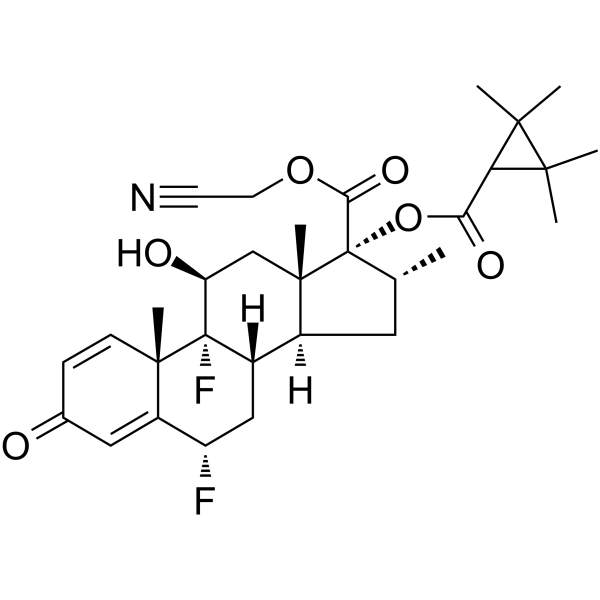
HY-103662
GW-870086Glucocorticoid Receptor Agonist -

HY-B0243R
Meprednisone (Standard)Glucocorticoid -
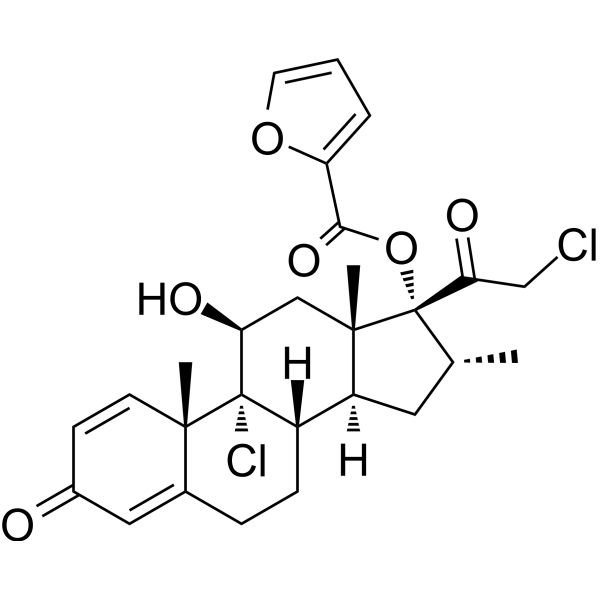
HY-13693
Mometasone furoateGlucocorticoid Receptor Agonist -
HY-B0645
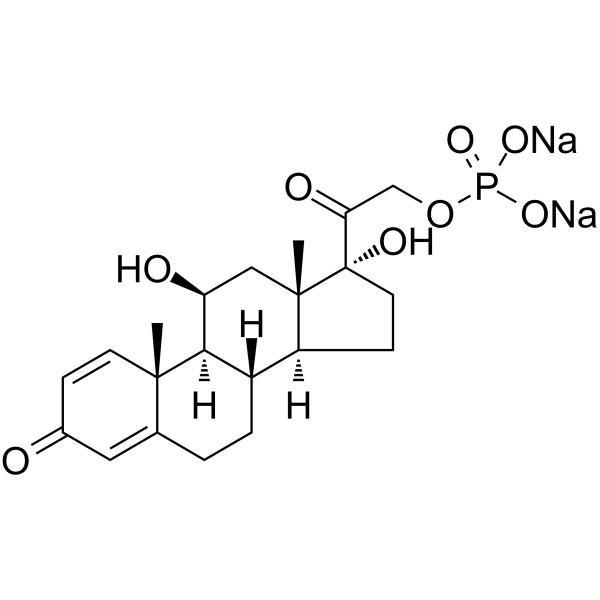
Prednisolone disodium phosphateSynthetic Glucocorticoid -
HY-B1402
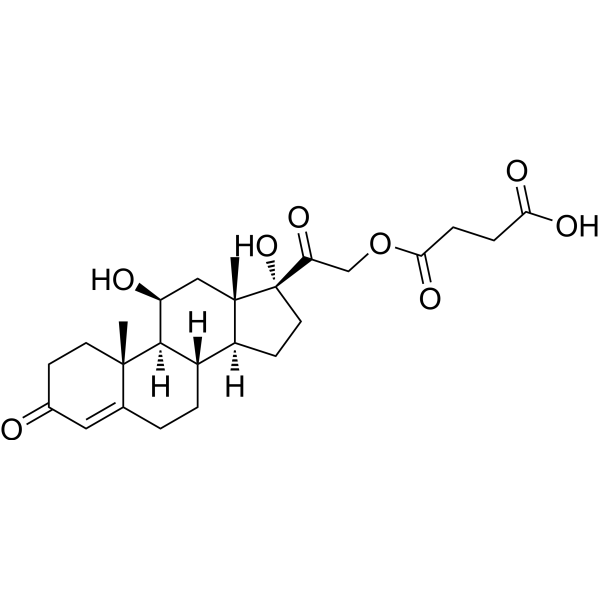
Hydrocortisone hemisuccinateAnti-inflammatory Agent -

HY-B1616R
Clobetasone butyrate (Standard)Glucocorticoid -
HY-77839
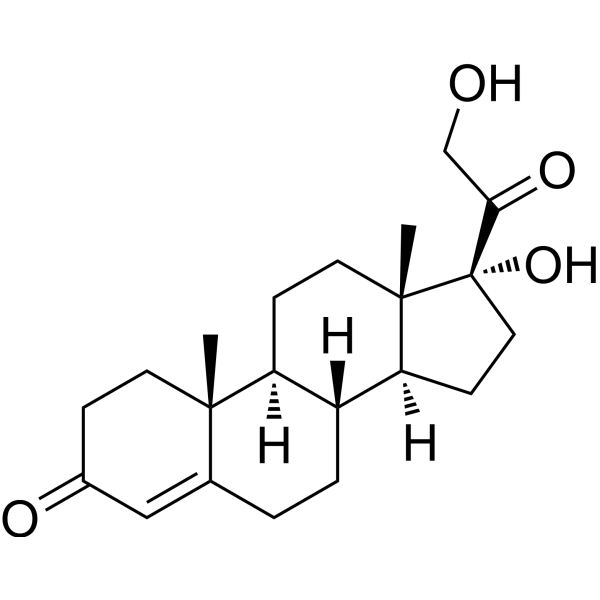
CortodoxoneGlucocorticoid Steroid Hormone


Biologische Aktivität
Beschreibung
In Vivo
Flumethasone pivalate (30 μg/kg; p.o.; daily; gestational days 1-14) administered to pregnant rats during early gestation causes reduced newborn pup weight and and death within 24 hours after birth[2].
MedChemExpress (MCE) has not independently confirmed the accuracy of these methods. They are for reference only.
-
Animal Model:Pregnant rats[2]
-
Dosage:30 μg/kg
-
Administration:p.o.; daily; gestational days 1-14
-
Result:Resulted in newborn pups that were lighter than normal and died within 24 hours postpartum.


Chemical Information
-
CAS. Nr. 2002-29-1
-
Appearance Solid
-
Molecular Weight 494.57
-
Formel C27H36F2O6
-
Color White to light yellow
-
SMILES
C[C@@]12[C@](C[C@@H](C)[C@]2(O)C(COC(C(C)(C)C)=O)=O)([H])[C@@]3([H])[C@@](F)([C@@]4(C([C@@H](F)C3)=CC(C=C4)=O)C)[C@@H](O)C1
-
Synonyms
Flumethasone 21-pivalate
-
Versand
Room temperature in continental US; may vary elsewhere.
-
Speicherung
Powder -20°C 3 years 4°C 2 years In solvent -80°C 6 months -20°C 1 month


Lösungsmittel & Löslichkeit
In Vitro:
DMSO : 50 mg/mL (101.10 mM; ultrasonic and warming and heat to 60°C; Hygroscopic DMSO has a significant impact on the solubility of product, please use newly opened DMSO)
Please refer to the solubility information to select the appropriate solvent. Once prepared, please aliquot and store the solution to prevent product inactivation from repeated freeze-thaw cycles.
Storage method and period of stock solution: -80°C, 6 months; -20°C, 1 month. When stored at -80°C, please use it within 6 months. When stored at -20°C, please use it within 1 month.
Please refer to the solubility information to select the appropriate solvent. Once prepared, please aliquot and store the solution to prevent product inactivation from repeated freeze-thaw cycles.
Storage method and period of stock solution: -80°C, 6 months; -20°C, 1 month. When stored at -80°C, please use it within 6 months. When stored at -20°C, please use it within 1 month.
Konzentration (Stammlösung) × Volumen (Stammlösung) = Konzentration (Ziellösung) × Volumen (Ziellösung)


Reinheit & Dokumentation
-
Data Sheet (276 KB)
-
SDS (393 KB)
- English - EN (393 KB)
- Français - FR (393 KB)
- Deutsch - DE (393 KB)
- Norwegian - NO (393 KB)
- Español - ES (393 KB)
- Swedish - SV (393 KB)
- Italian - IT (393 KB)
- Korean - KR (393 KB)
- Portuguese - PT (393 KB)
-
Handling Instructions (2659 KB)
Verweise


Complete Stock Solution Preparation Table
Please refer to the solubility information to select the appropriate solvent. Once prepared, please aliquot and store the solution to prevent product inactivation from repeated freeze-thaw cycles.
Storage method and period of stock solution: -80°C, 6 months; -20°C, 1 month. When stored at -80°C, please use it within 6 months. When stored at -20°C, please use it within 1 month.
| Optional Solvent | Concentration Solvent Mass | 1 mg | 5 mg | 10 mg | 25 mg |
|---|---|---|---|---|---|
| DMSO | 1 mM | 2.0220 mL | 10.1098 mL | 20.2196 mL | 50.5490 mL |
| 5 mM | 0.4044 mL | 2.0220 mL | 4.0439 mL | 10.1098 mL | |
| 10 mM | 0.2022 mL | 1.0110 mL | 2.0220 mL | 5.0549 mL | |
| 15 mM | 0.1348 mL | 0.6740 mL | 1.3480 mL | 3.3699 mL | |
| 20 mM | 0.1011 mL | 0.5055 mL | 1.0110 mL | 2.5274 mL | |
| 25 mM | 0.0809 mL | 0.4044 mL | 0.8088 mL | 2.0220 mL | |
| 30 mM | 0.0674 mL | 0.3370 mL | 0.6740 mL | 1.6850 mL | |
| 40 mM | 0.0505 mL | 0.2527 mL | 0.5055 mL | 1.2637 mL | |
| 50 mM | 0.0404 mL | 0.2022 mL | 0.4044 mL | 1.0110 mL | |
| 60 mM | 0.0337 mL | 0.1685 mL | 0.3370 mL | 0.8425 mL | |
| 80 mM | 0.0253 mL | 0.1264 mL | 0.2527 mL | 0.6319 mL | |
| 100 mM | 0.0202 mL | 0.1011 mL | 0.2022 mL | 0.5055 mL |


Flumethasone pivalate Related Classifications
HY-107949 Related Classifications
 Powered by Bioz