
1. Search Result
Search Result
Results for "

linoleic acids

" in MedChemExpress (MCE) Product Catalog:

38

Inhibitors & Agonists

6

Biochemical Assay Reagents

11

Natural
Products

2

Oligonucleotides

Cat. No. Product Name Target Research Areas Chemical Structure
  • HY-19996
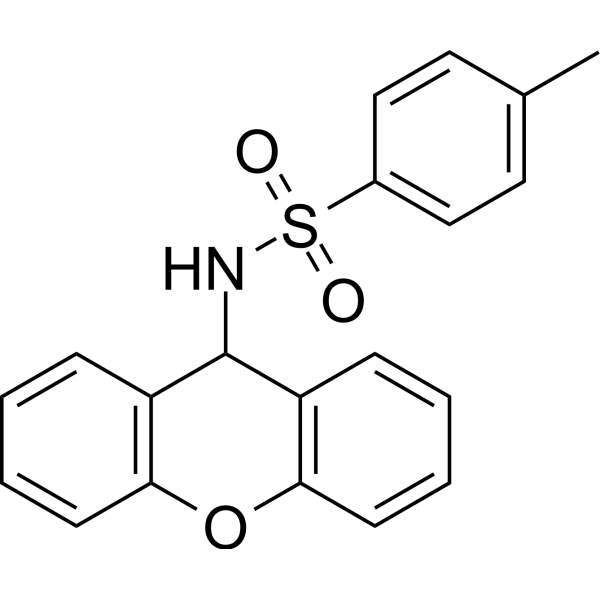
    AH-7614
    5+ Cited Publications

    Free Fatty Acid Receptor Metabolic Disease
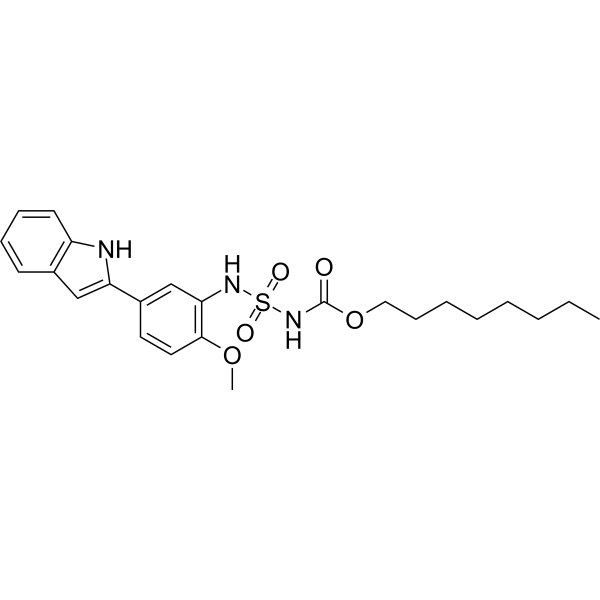
    AH-7614 is a potent and selective FFA4 (GPR120) antagonist, with pIC50s of 7.1, 8.1, and 8.1 for human, mouse, and rat FFA4, respectively. AH-7614 has selectivity for FFA4 over FFA1 (pIC50<4.6). AH-7614 is able to block effects of both the polyunsaturated ω-6 fatty acid linoleic acid and the synthetic FFA4 agonist .
    AH-7614
  • HY-108599
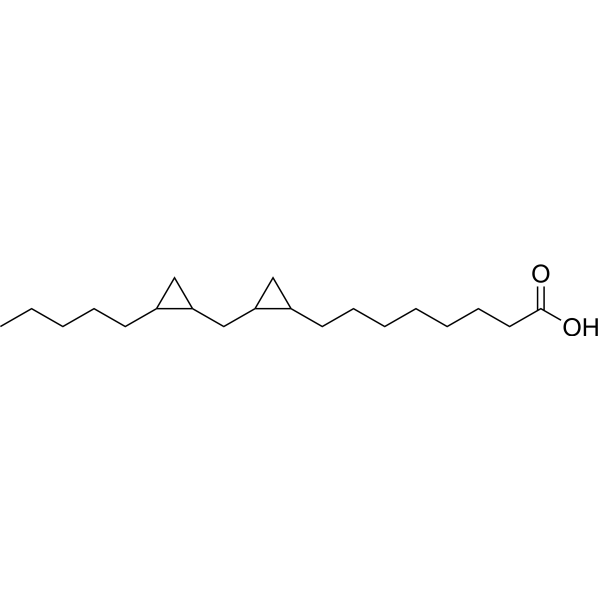
    DCP-LA
    Maximum Cited Publications
    8 Publications Verification

    FR236924

    PKC CaMK Phosphatase Apoptosis Neurological Disease
    DCP-LA (FR236924), a linoleic acid derivative, selectively and directly activates PKCε. DCP-LA activates Ca( 2+)/calmodulin-dependent protein kinase II (CaMKII) and inhibits protein phosphatase-1 (PP-1) to stimulate AMPA receptor exocytosis. DCP-LA inhibits activation of caspase-3/-9 and protects neurons at least in part from oxidative stress-induced apoptosis .
    DCP-LA
  • HY-131670

    Drug Isomer Inflammation/Immunology
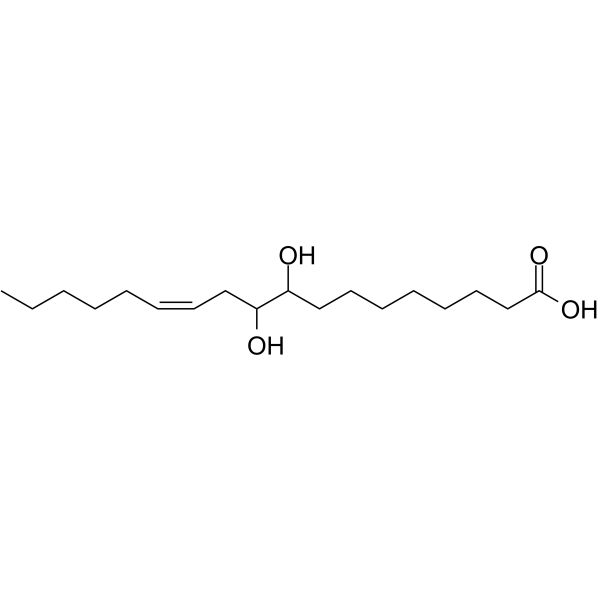
    (±)9,10-DiHOME is the racemate of 9,10-DiHOME .
    (±)9,10-DiHOME
  • HY-108750
    Soybean oil
    1 Publications Verification

    VT 18 (oil); Vegetoil; Wesson

    Environmental Pollutants Cardiovascular Disease
    Soybean oil (VT 18 (oil); Vegetoil; Wesson) is an edible vegetable oil. Soybean oil reduces circulating blood cholesterol levels when it replaces dietary saturated fats. Soybean oil does not affect inflammatory biomarkers or increase oxidative stress. Soybean oil contains γ-tocopherol and δ-tocopherol, which possess antioxidant properties. Soybean oil can be used in research related to coronary heart disease .
    Soybean oil
  • HY-N0729D

    Glutathione Peroxidase SOD Cardiovascular Disease
    Linoleic acid is a critical component of polyunsaturated fatty acids. Linoleic acid reduces GSH-PX and T-SOD activities. Linoleic acid functions as a structural component to maintain a certain level of membrane fluidity of the transdermal water barrier of the epidermis. Linoleic acid can cause acute oxidative damage to red blood cells, ultimately leading to partial acute anemia. Linoleic acid can be used in the research of skin diseases associated with linoleic acid deficiency .
    Linoleic acid,suitable for cell culture
  • HY-110406A
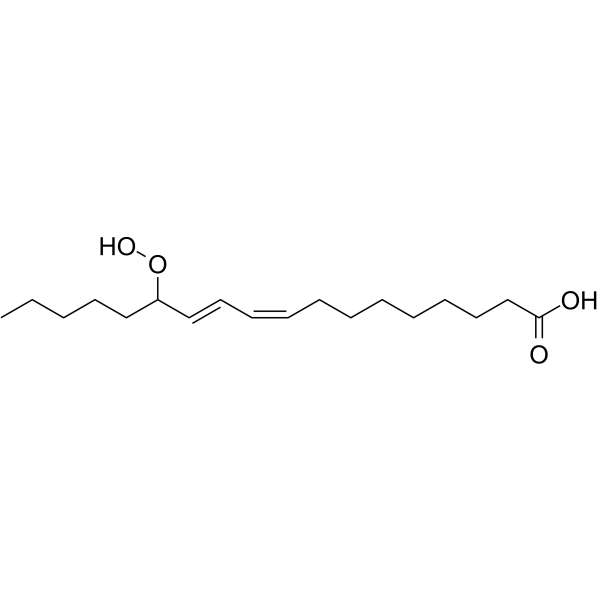
    (±)13-HpODE
    1 Publications Verification

    13-Hydroperoxylinoleic acid; linoleic acid 13-hydroperoxide

    Endogenous Metabolite Others
    (±)13-HpODE (13-hydroperoxylinoleic acid) is a racemic mixture of hydroperoxides, which is produced by the oxidation of linoleic acid by lipoxygenase .
    (±)13-HpODE
  • HY-113884B

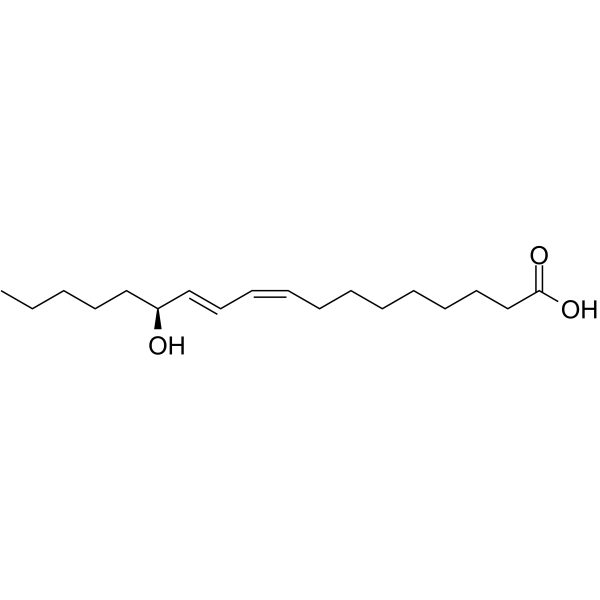
    13(S)-HODE

    PPAR Mitochondrial Metabolism Inflammation/Immunology Cancer
    (S)-Coriolic acid (13(S)-HODE), the product of 15-lipoxygenase (15-LOX) metabolism of linoleic acid, functions as the endogenous ligand to activate PPARγ. (S)-Coriolic acid is an important intracellular signal agent and is involved in cell proliferation and differentiation in various biological systems. (S)-Coriolic acid induces mitochondrial dysfunction and airway epithelial injury .
    (S)-Coriolic acid
  • HY-124370

    9Z,11E-CLA; Methyl 9(Z),11(E)-octadecadienoate; (9Z,11E)-SFE 19:2

    Endogenous Metabolite Cardiovascular Disease Cancer
    9 (Z),11 (E)-Conjugated linoleic acid methyl ester (9Z,11E-CLA; Methyl 9 (Z),11 (E)-octadecadienoate; (9Z,11E)-SFE 19:2) is an isomer of Linoleic acid (HY-N0729), and is a conjugated linoleic acid mainly found in meat and dairy products. Conjugated linoleic acid is a bioactive fatty acid that improves body composition, enhances immune system function, and exhibits anti-cancer and anti-atherosclerotic effects .
    9(Z),11(E)-Conjugated linoleic acid methyl ester
  • HY-113102A

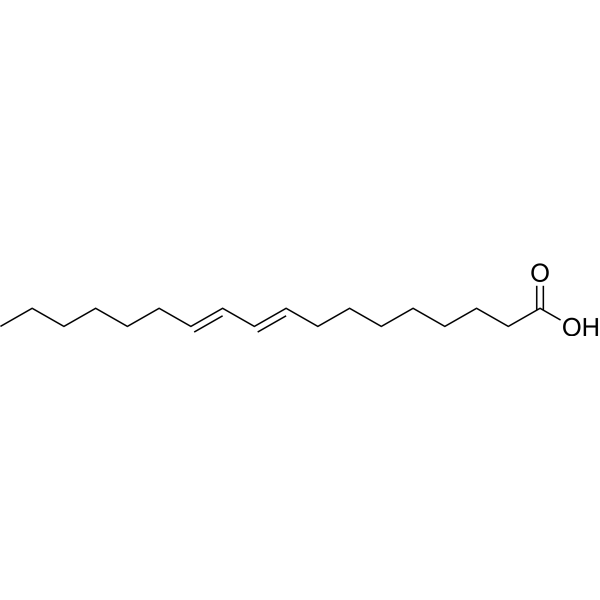
    t9,t11-CLA

    Endogenous Metabolite Cancer
    9(E),11(E)-Octadecadienoic acid is an isomer of conjugated linoleic acid (CLA). Conjugated linoleic acid is a fatty acid with potentially beneficial physiological and anticarcinogenic effects .
    9(E),11(E)-Octadecadienoic acid
  • HY-W399297
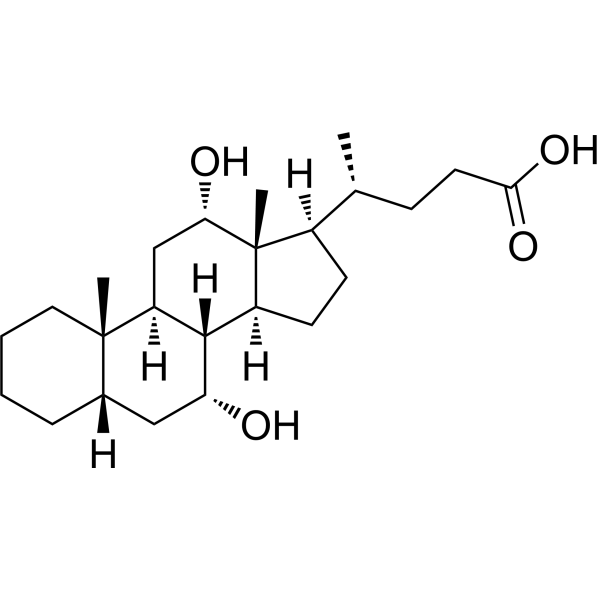
    Isodeoxycholic acid
    1 Publications Verification

    7α,12α-Dihydroxycholanoic acid

    Endogenous Metabolite Metabolic Disease
    Isodeoxycholic acid (7α,12α-Dihydroxycholanoic acid) is a 3β-hydroxylated secondary bile acid. Isodeoxycholic acid is produced by epimerization of deoxycholic acid by intestinal bacteria. Isodeoxycholic acid is detectable in feces, mainly existing as saponifiable conjugates with long-chain fatty acids. Isodeoxycholic acid participates in the regulation of intestinal physiology .
    Isodeoxycholic acid
  • HY-143787

    Lipoxygenase Inflammation/Immunology
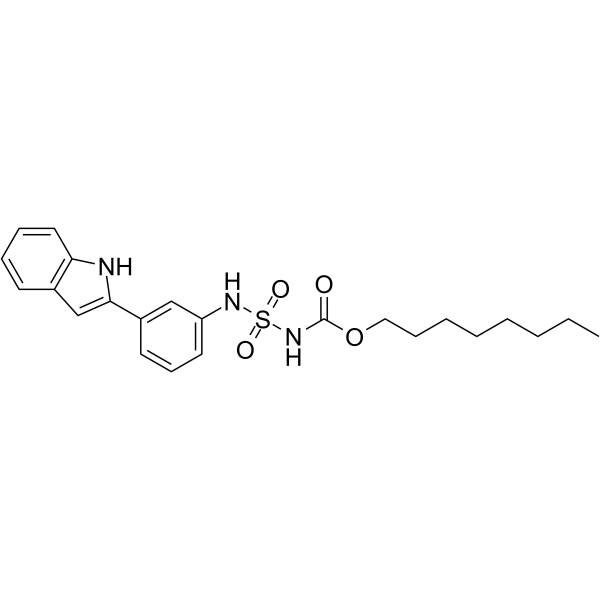
    ALOX15-IN-1 (compound 8b) is a potent inhibitor of the linoleate oxygenase activity of rabbit and human ALOX15 with IC50s of 0.04 and 2.06 μM for ALOX15 0rthologs linoleic acid (LA) and arachidonic acid (AA), respectively .
    ALOX15-IN-1
  • HY-113884A

    (±)-13-HODE

    Endogenous Metabolite Metabolic Disease
    (±)13-HODE is one of the two racemic monohydroxy fatty acids resulting from the non-enzymatic oxidation of linoleic acid. It is the principle hydroxylated fatty acid in human psoriatic skin scales, with a mean concentration of 17 ng/mg.
    (±)-Coriolic acid
  • HY-118149A

    Bacterial Fungal Parasite Infection
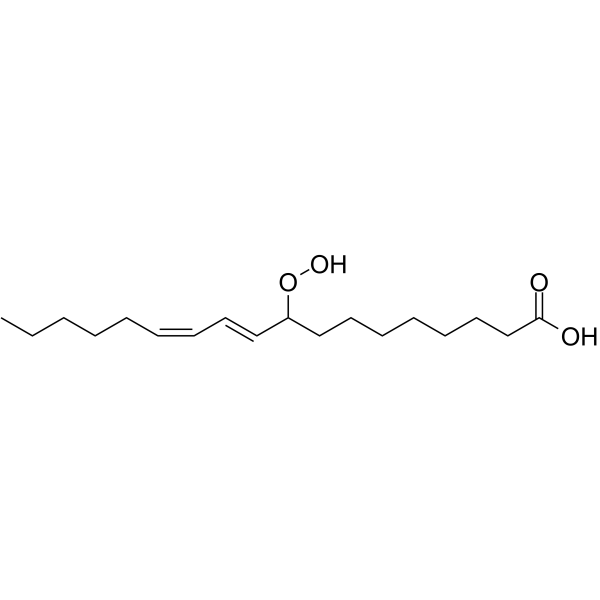
    (±)9-HpODE is a long chain lipid hydroperoxide, is a product of linoleic acid peroxidation. (±)9-HpODE can induce oxidation of intracellular glutathione (GSH). (±)9-HpODE also exhibits antimicrobial activity against various fungal and bacterial pathogens .
    (±)9-HpODE
  • HY-W612338

    9-ONA

    Acetyl-CoA Carboxylase Inflammation/Immunology
    9-Oxononanoic acid (9-ONA) is an orally active acetyl-CoA carboxylase inhibitor. 9-Oxononanoic acid inhibits acetyl-CoA carboxylase via accumulation of long-chain acyl-CoA. 9-Oxononanoic acid increases carnitine palmitoyltransferase, isocitrate dehydrogenase and glucose 6-phosphate dehydrogenase activity to elevate β-oxidation and support NADPH (HY-113324) supplyactivity. 9-Oxononanoic acid stimulates phospholipase A2 activity via post-translational, non-transcriptional mechanisms. 9-Oxononanoic acid can be used for the research of atherothrombosis .
    9-Oxononanoic acid
  • HY-P2976

    LOX

    Endogenous Metabolite Others
    Lipoxygenase, general (LOX) is a dioxygenase, is often used in biochemical studies. Lipoxygenase, general catalyzes the formation of corresponding hydroperoxides from polyunsaturated fatty acids such as linoleic acid and arachidonic acid .
    Lipoxygenase, general
  • HY-143791

    Lipoxygenase Inflammation/Immunology
    ALOX15-IN-2 (compound 8a) is a potent inhibitor of the linoleate oxygenase activity of rabbit and human ALOX15 with IC50s of 1.55 and 2.79 μM for ALOX15 0rthologs linoleic acid (LA) and arachidonic acid (AA), respectively .
    ALOX15-IN-2
  • HY-N7833

    Biochemical Assay Reagents Others
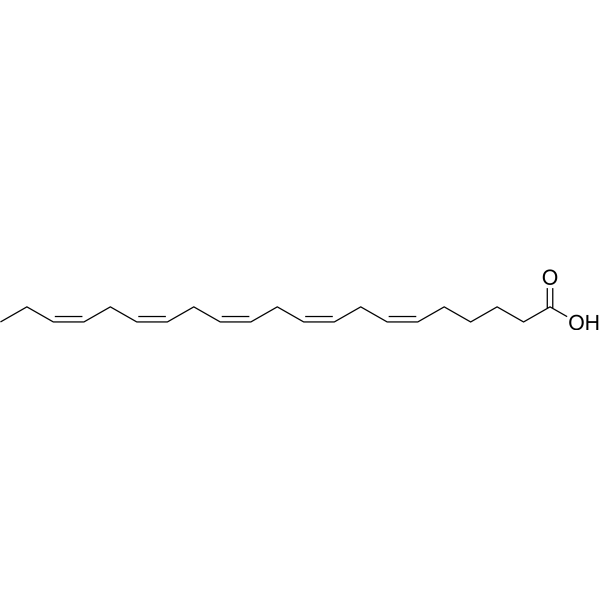
    Heneicosapentaenoic Acid (HPA) is a 21:5 omega-3 fatty acid found in trace amounts in the green alga B. pennata and in fish oils. Its chemical composition is similar to eicosapentaenoic acid (EPA), except that a carbon is extended at the carboxy terminus, placing the first double bond at the δ6 position. HPA can be used to study the importance of double bond position in omega-3 fatty acids. It incorporates phospholipids and triacylglycerols in vivo with the same efficiency as EPA and docosahexaenoic acid, and exhibits a strong inhibitory effect on the synthesis of arachidonic acid from linoleic acid. HPA is a poor substrate for prostaglandin H synthase (PGHS) (cyclooxygenase) and 5-lipoxygenase, but retains the ability to rapidly inactivate PGHS.
    Heneicosapentaenoic acid
  • HY-107965

    Safflower seed oil (from Carthamus tinctorius seed)

    Biochemical Assay Reagents Inflammation/Immunology
    Safflower oil (from Carthamus tinctorius seed) is rich in unsaturated fatty acids such as linoleic acid and oleic acid, as well as tocopherols and phenolic compounds, and exhibits antioxidant, anti-aging and blood lipid-regulating effects. Safflower oil (from Carthamus tinctorius seed) inhibits the activities of collagenase and elastase, and exerts antioxidant activity by scavenging free radicals. Linoleic acid in safflower oil (from Carthamus tinctorius seed) reduces blood cholesterol levels. Safflower oil (from Carthamus tinctorius seed) can be applied to research in fields such as skin aging, atherosclerosis, edible oil processing and industrial raw material development .
    Safflower oil (from Carthamus tinctorius seed)
  • HY-167917

    Drug Isomer Metabolic Disease Inflammation/Immunology Endocrinology Cancer
    Conjugated linoleic acid is a group of isomers of Linoleic acid (HY-N0729) containing conjugated double bonds. Conjugated linoleic acid is mainly derived from dairy products and ruminant meats. Conjugated linoleic acid exhibits various activities such as anti-carcinogenicity, immunomodulation, weight loss promotion, reduction of muscle damage, and alleviation of inflammatory responses. Conjugated linoleic acid can be used as a food additive .
    Conjugated linoleic acid
  • HY-N8276

    9a,12a-Octadecadiynoic acid

    Lipoxygenase Metabolic Disease Inflammation/Immunology
    Ro 3-1314 (9a,12a-Octadecadiynoic acid) is a plant lipoxygenase inhibitor. Ro 3-1314 is a linoleic acid metabolism inhibitor. Ro 3-1314 stimulates the antigen-induced contraction of guinea-pig tracheal spirals and the immunological release of slow reacting substance of anaphylaxis (SRS-A) from actively sensitized guinea-pig lung fragments .
    Ro 3-1314
  • HY-120978

    ω-3 Arachidonic acid methyl ester; (all-Z)-8,11,14,17-Eicosatetraenoic acid methyl ester

    Biochemical Assay Reagents Others
    omega-3 Arachidonic Acid methyl ester, mainly docosahexaenoic acid, eicosapentaenoic acid and α-Linoleic acid, represented by linoleic acid, is an essential dietary nutrient required for normal growth and development.Omega-3Methyl arachidonic acid is a rare fatty acid Omega-3Neutral fat-soluble form of arachidonic acid. Omega-3Fatty acids, as a group, were associated with reduced inflammation and autoimmune activity, as well as reduced thrombosis and platelet activation.
    Omega-3 arachidonic acid methyl ester
  • HY-W643167

    Glycerol Tritridecanoyl; 13:0 TAG; 13:0/13:0/13:0-TG

    Biochemical Assay Reagents Infection
    1,2,3-Tritridecanoyl glycerol is a synthetic triacylglycerol that contains tridecanoic acid in the sn-1, sn-2, and sn-3 positions. It has been used as a standard for the relative quantification of triacylglycerols in C. elegans fat stores. It has also been used as an internal standard for the quantification of triacylglycerols in the serum and liver of adult rat offspring receiving dietary conjugated linoleic acids during and after gestation.
    1,2,3-Tritridecanoylglycerol
  • HY-120891

    Endogenous Metabolite Metabolic Disease
    trans-EKODE-(E)-Ib is a biologically active peroxidation product of linoleic acid .
    trans-EKODE-(E)-Ib
  • HY-W739652

    Biochemical Assay Reagents Others
    1-Linoleoyl-2-oleoyl-rac-glycerol is a diglyceride contains Oleic acid (HY-N1446) and Linoleic acid (HY-N0729) .
    1-Linoleoyl-2-oleoyl-rac-glycerol
  • HY-168372

    Phospholipase Metabolic Disease
    1-Myristoyl-2-Linoleoyl-sn-glycero-3-PC is a phospholipid that contains Myristic acid (HY-N2041) and Linoleic acid (HY-N0729) at the sn-1 and sn-2 positions, respectively, which is found in human plasma .
    1-Myristoyl-2-Linoleoyl-sn-glycero-3-PC
  • HY-138896

    9E,11E-9-Nitro CLA

    Endogenous Metabolite Others
    (9E,11E)-9-Nitro-9,11-octadecadienoic acid (9E,11E-9-Nitro CLA) is a nitro-fatty acid, It is formed by exposure of 9Z, 11E-CLA to acidified nitrite, peroxynitrite, gaseous nitrogen dioxide, or a combination of myeloperoxidase, hydrogen peroxide, and nitrite .
    (9E,11E)-9-Nitro-9,11-octadecadienoic acid
  • HY-113102B

    Endogenous Metabolite Cancer
    9(Z),11(Z)-octadecadienoic acid is an isomer of linoleic acid and has antitumor activity (EC 50 = 446.1 µM) .
    9(Z),11(Z)-Octadecadienoic acid
  • HY-120109

    Endogenous Metabolite Cancer
    13-HODE methyl ester, a racemic mixture of 13(R)-HODE methyl ester and 13(S)-HODE methyl ester, is a 15-lipoxygenase metabolite of Linoleic acid .
    13-HODE methyl ester
  • HY-N7539

    Others Metabolic Disease
    Cognac oil, mainly found in wine lees, has unique fatty acid profiles, including Palmitic acid (59.26%), Linoleic acid (11.92%), Myristic acid (8.97%), Oleic acid (8.3%) and other fatty acids. Cognac oil leads to a general increase in the permeation of R6G (Rhodamine 6G) across all the membranes .
    Cognac oil
  • HY-108599R

    FR236924 (Standard)

    Reference Standards PKC CaMK Phosphatase Apoptosis Neurological Disease
    DCP-LA (Standard) is the analytical standard of DCP-LA. This product is intended for research and analytical applications. DCP-LA (FR236924), a linoleic acid derivative, selectively and directly activates PKCε. DCP-LA activates Ca(2+)/calmodulin-dependent protein kinase II (CaMKII) and inhibits protein phosphatase-1 (PP-1) to stimulate AMPA receptor exocytosis. DCP-LA inhibits activation of caspase-3/-9 and protects neurons at least in part from oxidative stress-induced apoptosis[1][2][3].
    DCP-LA (Standard)
  • HY-N19627

    3′-M-ECG

    Drug Derivative Inflammation/Immunology
    3'-O-Methyl-(-)-epicatechin gallate (3′-M-ECG) is a methylated Catechin (HY-N0898) derivative and is an antioxidant agent. 3'-O-Methyl-(-)-epicatechin gallate reduces oxygen consumption and prevents decreases in linoleic and α-linolenic acids to protect canola oil from lipid oxidation when heated .
    3'-O-Methyl-(-)-epicatechin gallate
  • HY-W800728

    Biochemical Assay Reagents Others
    1,1'-[2-(Hydroxymethyl)-1,3-propanediyl] dilinoleate is a lipid molecule featuring two linoleic acids and a primary alcohol. Compounds such as this may be used as intermediates in building lipids for use in lipid nanoparticles.
    1,1'-[2-(Hydroxymethyl)-1,3-propanediyl] dilinoleate
  • HY-181462

    Drug Derivative Others
    Desmosteryl linoleate is an ester formed by Desmosterol (HY-113224) and Linoleic acid (HY-N0729) .
    Desmosteryl linoleate
  • HY-N17745

    Others
    (-)-EGCG-3'-O-Me is a catechin derivative (HY-N0898). (-)-EGCG-3'-O-Me inhibits lipid oxidation in rapeseed oil by reducing oxygen consumption and protecting linoleic acid and α-linolenic acid from degradation during heating. The antioxidant activity of (-)-EGCG-3'-O-Me in heated rapeseed oil is lower than that of its non-methylated precursor, (-)-epigallocatechin (EGCG) (HY-N0225) .
    (-)-EGCG-3'-O-Me
  • HY-N16867

    8-HPODE; PsiBα

    Fungal Others
    8(R)-Hydroxylinoleic acid (8-HPODE; PsiBα) is an oxygenated unsaturated C18 fatty acid that regulates fungal sporulation. 8(R)-Hydroxylinoleic acid increases the level of ascospores and decreases the level of conidia in fungi. 8(R)-Hydroxylinoleic acid can be used in studies related to fungi .
    8(R)-Hydroxylinoleic acid
  • HY-182603

    Drug Derivative Reactive Oxygen Species (ROS) HCV Infection Inflammation/Immunology
    BO-653 is an orally active anti-atherosclerotic antioxidant that exhibits high binding affinity for LDL. BO-653 scavenges linoleic acid peroxyl radicals, inhibits lipid peroxidation during the auto-oxidation of linoleic acid, and potently suppresses LDL oxidation. BO-653 inhibits Hepatitis C Virus (HCV) replication in a concentration-dependent manner, with an IC50 of 36.0 μM against the HCV subgenomic replicon in FLR3-1 cells. BO-653 demonstrates significant anti-atherosclerotic effects in various animal models, including the Watanabe heritable hyperlipidemic rabbit. BO-653 is suitable for use in research related to atherosclerosis and Hepatitis C Virus infection .
    BO-653
  • HY-N17673

    Biochemical Assay Reagents Others
    Avenanthramide 1c is a free radical scavenger and antioxidant. Avenanthramide 1c scavenges DPPH free radicals. Avenanthramide 1c inhibits azo-initiated linoleic acid peroxidation. Avenanthramide 1c exerts antioxidant effects. Avenanthramide 1c exhibits an antagonistic interaction with Avenanthramide 2f in the DPPH free radical scavenging system .
    Avenanthramide 1c
  • HY-N17982

    HIV Integrase Infection
    Vanillic acid 4-O-β-D-glucopyranoside is a vanillic acid glycoside with moderate antioxidant activity. Vanillic acid 4-O-β-D-glucopyranoside scavenges DPPH free radicals and superoxide anion radicals, and inhibits AAPH-induced lipid peroxidation in the linoleic acid system. The IC50 value of Vanillic acid 4-O-β-D-glucopyranoside against HIV-1 integrase is >100 μg/mL, indicating that it is not an effective HIV-1 integrase inhibitor. Vanillic acid 4-O-β-D-glucopyranoside is isolable from the ethyl acetate extract of Gardeniae Fructus.
    Vanillic acid 4-O-β-D-glucopyranoside

Inquiry Online

Your information is safe with us. * Required Fields.

Salutation


Country or Region *

Applicant Name *


Organization Name *

Department *


Email Address *


Product Name *

Cat. No.


Requested quantity *

Phone Number *


Remarks

Inquiry Online

Inquiry Information

Product Name:
Cat. No.:
Quantity:
MCE Japan Authorized Agent:

