



Linoleic acid,suitable for cell culture

Based on 1 Customer Validation
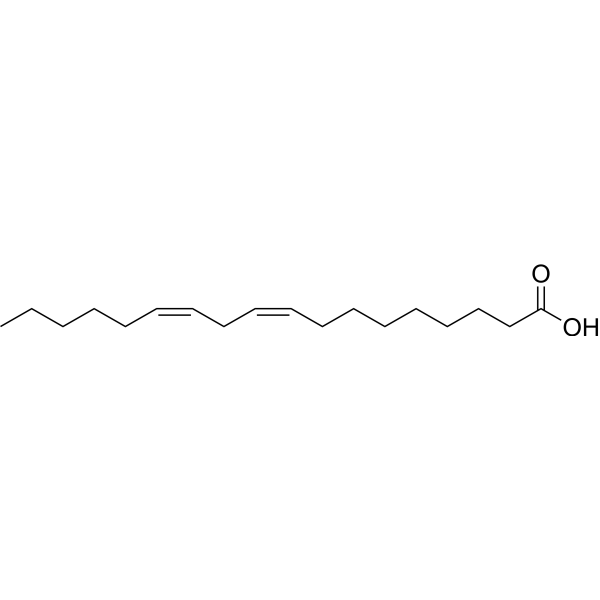
Linoleic acid is a critical component of polyunsaturated fatty acids. Linoleic acid reduces GSH-PX and T-SOD activities. Linoleic acid functions as a structural component to maintain a certain level of membrane fluidity of the transdermal water barrier of the epidermis. Linoleic acid can cause acute oxidative damage to red blood cells, ultimately leading to partial acute anemia. Linoleic acid can be used in the research of skin diseases associated with linoleic acid deficiency.
For research use only. We do not sell to patients.
- Purity : 99.08%
- CAS No.: 60-33-3
- Formula: C18H32O2
- Molecular Weight:280.45
-
Storage:Pure form -20°C, 3 years ; In solvent -80°C, 6 months , -20°C, 1 month


To place orders, for customer services and technical support, please contact: MedChemExpress USA
Tel: 609-228-6898 E-mail: [email protected] [email protected]


-
 Biological Activity
-
Chemical Information
-
Solvent & Solubility
- Purity & Documentation
- References
-
 Help & FAQs


-
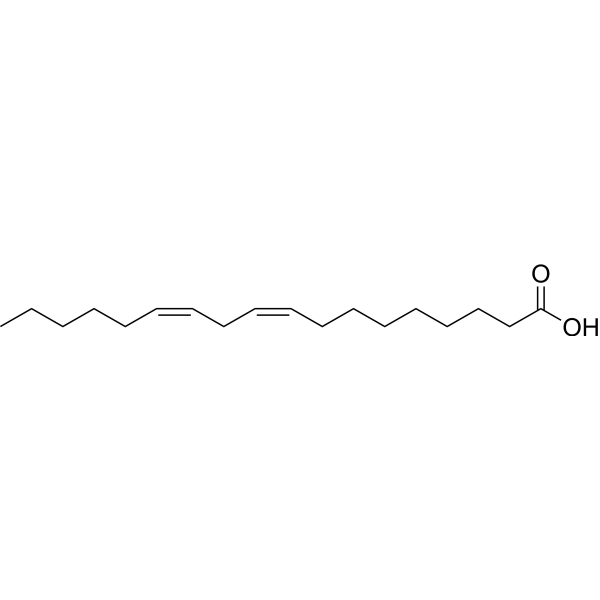
HY-N0729
Linoleic acid -
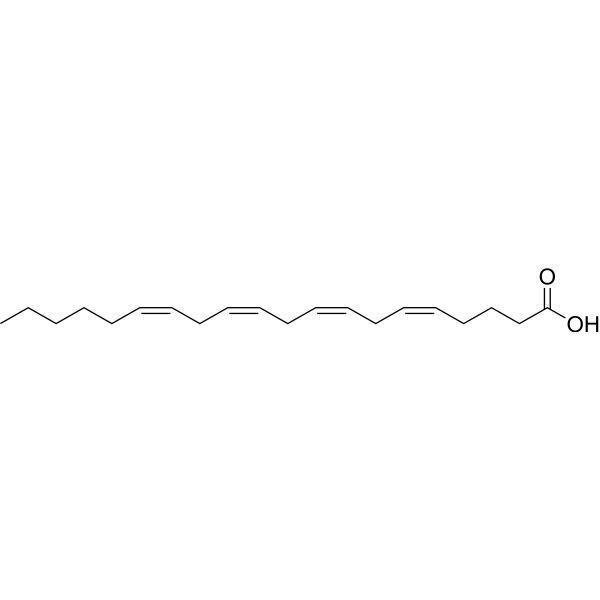
HY-109590
Arachidonic acid -
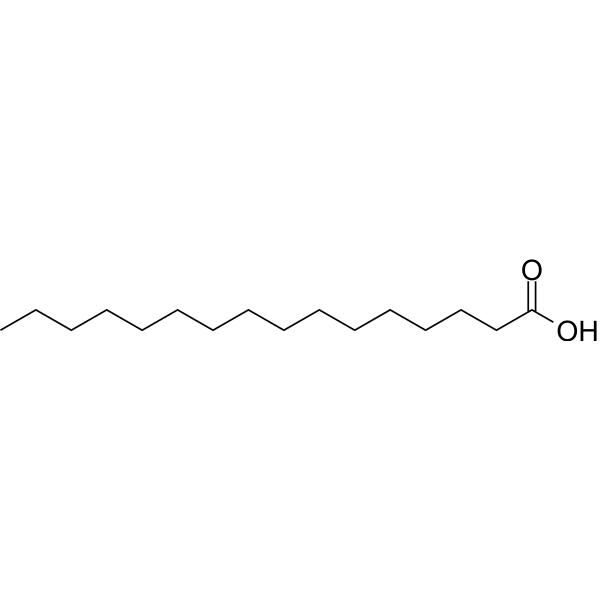
HY-N0830
Palmitic acid -
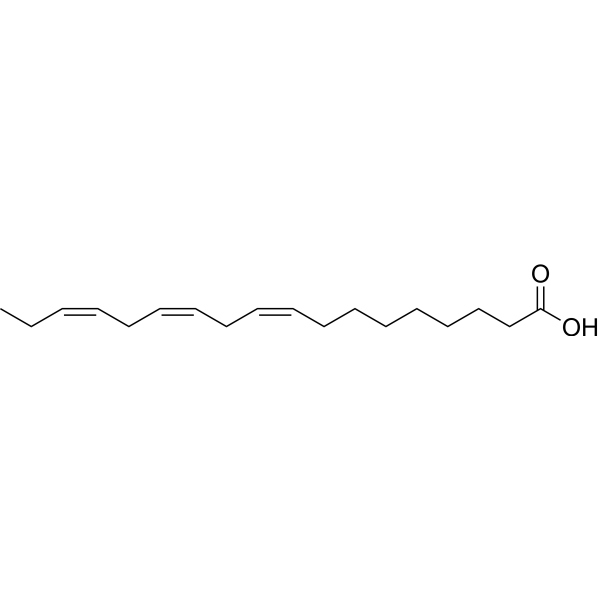
HY-N0728
α-Linolenic acid -
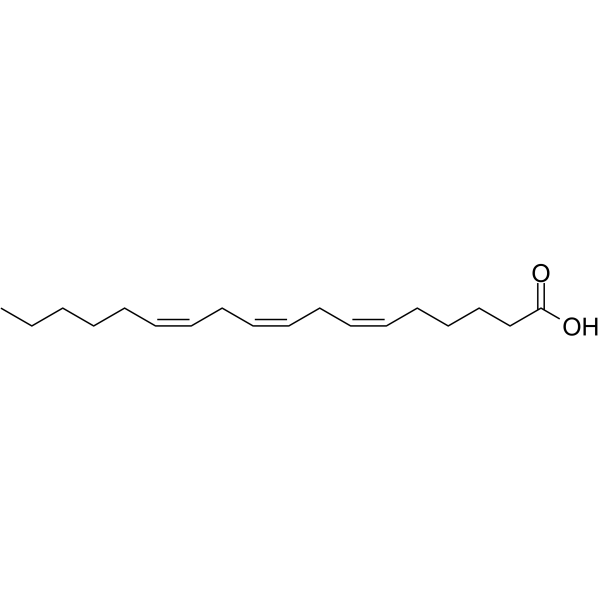
HY-N7140
Gamma-Linolenic acid -
HY-N0729R
Linoleic acid (Standard) -
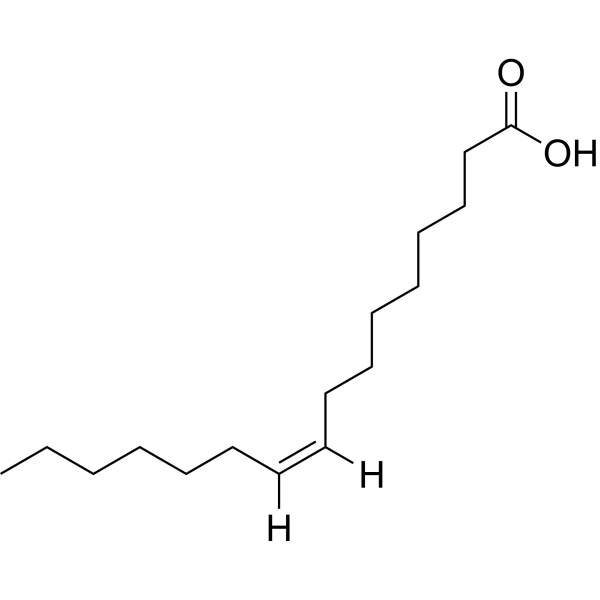
HY-W011873
Palmitoleic acid -
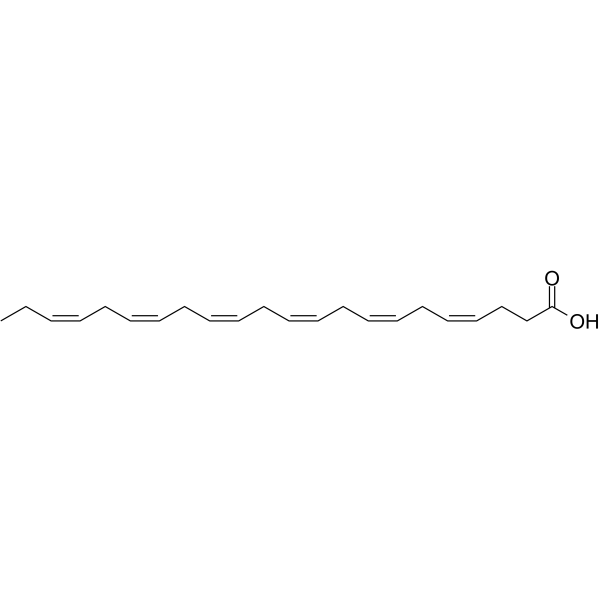
HY-B2167
Docosahexaenoic acid -
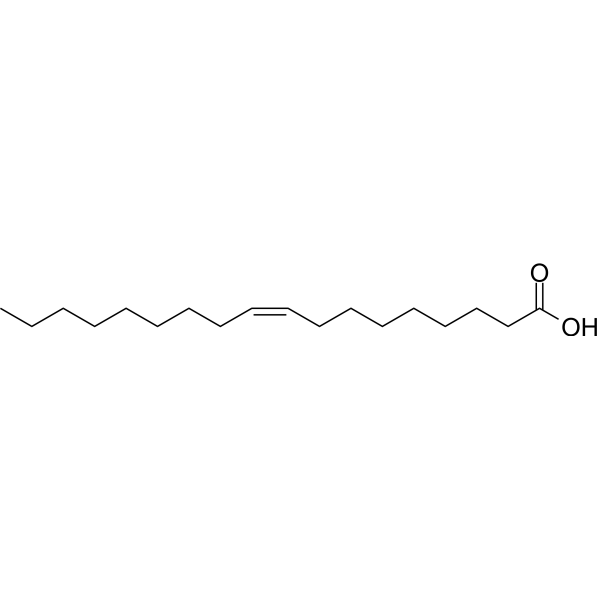
HY-N1446
Oleic acid -

HY-B2167R
Docosahexaenoic acid (Standard) -
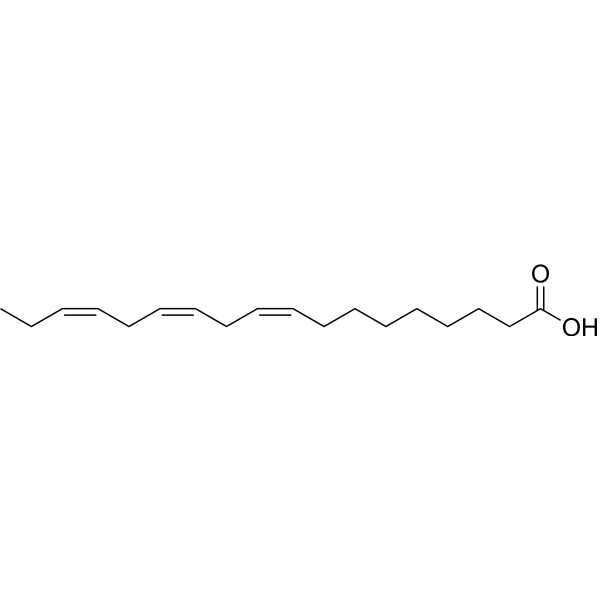
HY-N0728R
α-Linolenic acid (Standard) -
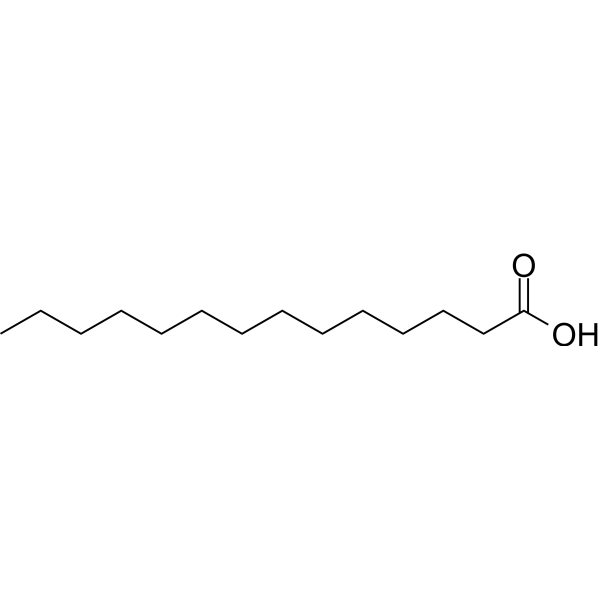
HY-N2041
Myristic acid


Biological Activity
Description
Cellular Effect
|
Cell Line

|
Type | Value | Description | References |
|---|---|---|---|---|
| CHO | EC50 |
1.8 μM
Compound: Linoleic acid
|
Agonist activity at human GPR40 expressed in CHO cells assessed as calcium flux by FLIPR assay
Agonist activity at human GPR40 expressed in CHO cells assessed as calcium flux by FLIPR assay
|
[PMID: 18993064] |
| CHO-K1 | EC50 |
0.54 μM
Compound: Linoleic acid
|
Agonist activity at human GPR40 expressed in CHOK1 cells by fluorescence assay
Agonist activity at human GPR40 expressed in CHOK1 cells by fluorescence assay
|
[PMID: 18993064] |
| HEK293 | EC50 |
4.8 μM
Compound: linoleic acid
|
Agonist activity at human FFA1 receptor expressed in HEK293 cells assessed as increase in intracellular Ca2+ flux by Fluo-4 dye based assay
Agonist activity at human FFA1 receptor expressed in HEK293 cells assessed as increase in intracellular Ca2+ flux by Fluo-4 dye based assay
|
[PMID: 30685095] |
| RBL-2H3 | IC50 |
>50 μM
Compound: 2
|
Antiallergic activity in rat RBL2H3 cells assessed as inhibition of DNP-HSA-mediated degranulation by measuring decrease in beta-hexosaminidase activity preincubated for 30 mins followed by DNP-HSA stimulation and measured after 30 mins by 4-nitrophenyl 2
Antiallergic activity in rat RBL2H3 cells assessed as inhibition of DNP-HSA-mediated degranulation by measuring decrease in beta-hexosaminidase activity preincubated for 30 mins followed by DNP-HSA stimulation and measured after 30 mins by 4-nitrophenyl 2
|
[PMID: 31618024] |
| Vero C1008 | IC50 |
>2.0 × 10⁵M
Compound: COVC-2288641696
|
Antiviral activity determined as inhibition of SARS-CoV-2 induced cytotoxicity of VERO-6 cells at 10 uM after 48 hours exposure to 0.01 MOI SARS CoV-2 virus by high content imaging
Antiviral activity determined as inhibition of SARS-CoV-2 induced cytotoxicity of VERO-6 cells at 10 uM after 48 hours exposure to 0.01 MOI SARS CoV-2 virus by high content imaging
|
10.6019/CHEMBL4651402 |
In Vivo
MedChemExpress (MCE) has not independently confirmed the accuracy of these methods. They are for reference only.
-
Animal Model:Sprague-Dawley (male, 200±20 g)[1]
-
Dosage:0.5 mL, 15 mmol/L; 0.5 mL, 30 mmol/L; 0.5 mL, 60 mmol/L; 0.5 mL, 90 mmol/L
-
Administration:i.v.; single tail vein injection
-
Result:Reduced Hb by 13.5±2.0 g/L and RBC by 0.45±0.15×10¹²/L at 24 h post-injection (30 mmol/L dose).
Decreased GSH-PX, T-SOD, and H2O2 levels significantly compared to controls (P < 0.05) at 24 h and 48 h post-injection (30 mmol/L dose).
Induced red blood cell morphological changes (spindle shapes, pleomorphism, shrinkage, deformation, rupture), most distinct at 24 h post-injection (30 mmol/L dose).
Reduced Hb by 16.8±1.5 g/L and RBC by 0.71±0.18×10¹²/L at 24 h post-injection (60 mmol/L dose).
Decreased GSH-PX, T-SOD, and H2O2 levels significantly compared to controls (P < 0.05 at 24 h, P < 0.01 at 48 h) post-injection (60 mmol/L dose).
Detected a significant absorbance peak at 425 nm (ferryl Hb Soret peak) at 24 h post-injection, with peak intensity declining at 48 h and 72 h (60 mmol/L dose).
Caused 50% of rats to die within 5 minutes of injection, presenting with dyspnea, cyanosis, labial haemoptysis, and convulsions (90 mmol/L dose).
Reduced Hb and RBC levels at 24 h post-injection, with changes less severe than 30 mmol/L and 60 mmol/L doses (15 mmol/L dose).


Chemical Information
-
CAS No. 60-33-3
-
Appearance Liquid (Density: 0.9022 g/cm3)
-
Molecular Weight 280.45
-
Formula C18H32O2
-
Color Colorless to light yellow
-
SMILES
CCCCC/C=C\C/C=C\CCCCCCCC(O)=O
-
Shipping
Room temperature in continental US; may vary elsewhere.
-
Storage
Pure form -20°C 3 years In solvent -80°C 6 months -20°C 1 month


Solvent & Solubility
In Vitro:
DMSO : 200 mg/mL (713.14 mM; Need ultrasonic; Hygroscopic DMSO has a significant impact on the solubility of product, please use newly opened DMSO)
Please refer to the solubility information to select the appropriate solvent. Once prepared, please aliquot and store the solution to prevent product inactivation from repeated freeze-thaw cycles.
Storage method and period of stock solution: -80°C, 6 months; -20°C, 1 month. When stored at -80°C, please use it within 6 months. When stored at -20°C, please use it within 1 month.
Please refer to the solubility information to select the appropriate solvent. Once prepared, please aliquot and store the solution to prevent product inactivation from repeated freeze-thaw cycles.
Storage method and period of stock solution: -80°C, 6 months; -20°C, 1 month. When stored at -80°C, please use it within 6 months. When stored at -20°C, please use it within 1 month.
Concentration (start) × Volume (start) = Concentration (final) × Volume (final)


Purity & Documentation
-
Data Sheet (267 KB)
-
SDS (254 KB)
- English - EN (254 KB)
- Français - FR (254 KB)
- Deutsch - DE (254 KB)
- Norwegian - NO (254 KB)
- Español - ES (254 KB)
- Swedish - SV (254 KB)
- Italian - IT (254 KB)
- Korean - KR (254 KB)
- Portuguese - PT (254 KB)
-
Handling Instructions (2659 KB)
References


Complete Stock Solution Preparation Table
Please refer to the solubility information to select the appropriate solvent. Once prepared, please aliquot and store the solution to prevent product inactivation from repeated freeze-thaw cycles.
Storage method and period of stock solution: -80°C, 6 months; -20°C, 1 month. When stored at -80°C, please use it within 6 months. When stored at -20°C, please use it within 1 month.
| Optional Solvent | Concentration Solvent Mass | 1 mg | 5 mg | 10 mg | 25 mg |
|---|---|---|---|---|---|
| DMSO | 1 mM | 3.5657 mL | 17.8285 mL | 35.6570 mL | 89.1424 mL |
| 5 mM | 0.7131 mL | 3.5657 mL | 7.1314 mL | 17.8285 mL | |
| 10 mM | 0.3566 mL | 1.7828 mL | 3.5657 mL | 8.9142 mL | |
| 15 mM | 0.2377 mL | 1.1886 mL | 2.3771 mL | 5.9428 mL | |
| 20 mM | 0.1783 mL | 0.8914 mL | 1.7828 mL | 4.4571 mL | |
| 25 mM | 0.1426 mL | 0.7131 mL | 1.4263 mL | 3.5657 mL | |
| 30 mM | 0.1189 mL | 0.5943 mL | 1.1886 mL | 2.9714 mL | |
| 40 mM | 0.0891 mL | 0.4457 mL | 0.8914 mL | 2.2286 mL | |
| 50 mM | 0.0713 mL | 0.3566 mL | 0.7131 mL | 1.7828 mL | |
| 60 mM | 0.0594 mL | 0.2971 mL | 0.5943 mL | 1.4857 mL | |
| 80 mM | 0.0446 mL | 0.2229 mL | 0.4457 mL | 1.1143 mL | |
| 100 mM | 0.0357 mL | 0.1783 mL | 0.3566 mL | 0.8914 mL |


Linoleic acid,suitable for cell culture Related Classifications
HY-N0729D Related Classifications
 Powered by Bioz