1. Search Result
Search Result
Isoforms Recommended: mTORC1
Results for "

mTORC1

" in MedChemExpress (MCE) Product Catalog:

148

Inhibitors & Agonists

2

Fluorescent Dye

3

Biochemical Assay Reagents

4

Peptides

14

Natural
Products

7

Isotope-Labeled Compounds

1

Click Chemistry

2

Oligonucleotides

1

GMP Molecules

Cat. No. Product Name Target Research Areas Chemical Structure
  • HY-10219
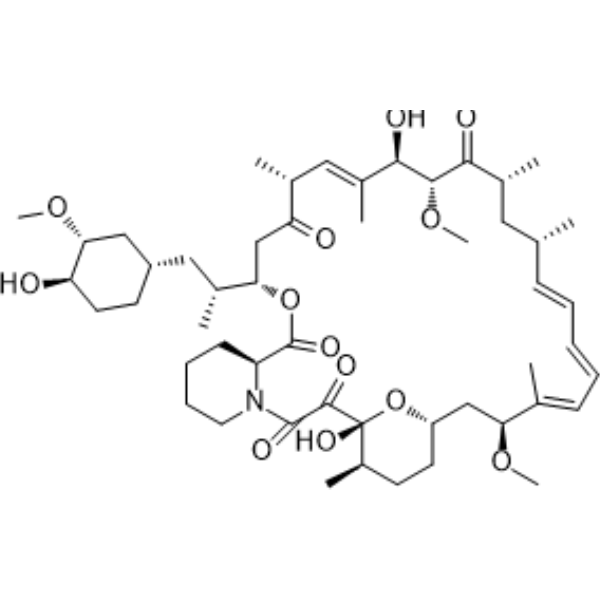
    Rapamycin
    Maximum Cited Publications
    1338 Publications Verification

    Sirolimus; AY-22989; NSC 226080

    mTOR FKBP Fungal Autophagy Endogenous Metabolite Antibiotic Bacterial Infection Neurological Disease Metabolic Disease Inflammation/Immunology Cancer
    Rapamycin (Sirolimus; AY 22989) is a potent and specific blood-brain barrier-transmissible mTOR inhibitor with an IC50 of 0.1 nM in HEK293 cells. Rapamycin binds to FKBP12 and specifically acts as an allosteric inhibitor of mTORC1 [1]. Rapamycin is an autophagy activator, an immunosuppressant .
    Rapamycin
  • HY-13003
    Torin 1
    120+ Cited Publications

    mTOR Autophagy Cancer
    Torin 1 is a potent inhibitor of mTOR with an IC50 of 3 nM. Torin 1 inhibits both mTORC1/2 complexes with IC50 values between 2 and 10 nM. Torin 1 is an effective inducer of autophagy.
    Torin 1
  • HY-10422
    AZD-8055
    65+ Cited Publications

    mTOR Autophagy Apoptosis Cancer
    AZD-8055 is a potent, selective, and orally bioavailable ATP-competitive mTOR kinase inhibitor with an IC50 of 0.8 nM. AZD-8055 inhibits both mTORC1 and mTORC2 [1].
    AZD-8055
  • HY-N0112
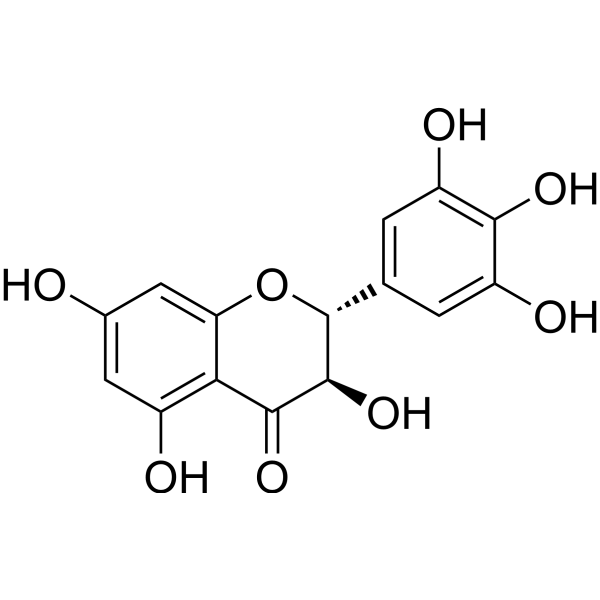
    Dihydromyricetin
    20+ Cited Publications

    Ampelopsin; Ampeloptin

    mTOR Influenza Virus DNA/RNA Synthesis Autophagy Infection Cancer
    Dihydromyricetin is a potent inhibitor with an IC50 of 48 μM on dihydropyrimidinase. Dihydromyricetin can activate autophagy through inhibiting mTOR signaling. Dihydromyricetin suppresses the formation of mTOR complexes (mTORC1/2). Dihydromyricetin is also a potent influenza RNA-dependent RNA polymerase inhibitor with an IC50 of 22 μM.
    Dihydromyricetin
  • HY-10681
    Gedatolisib
    5 Publications Verification

    PKI-587; PF-05212384

    PI3K mTOR Cancer
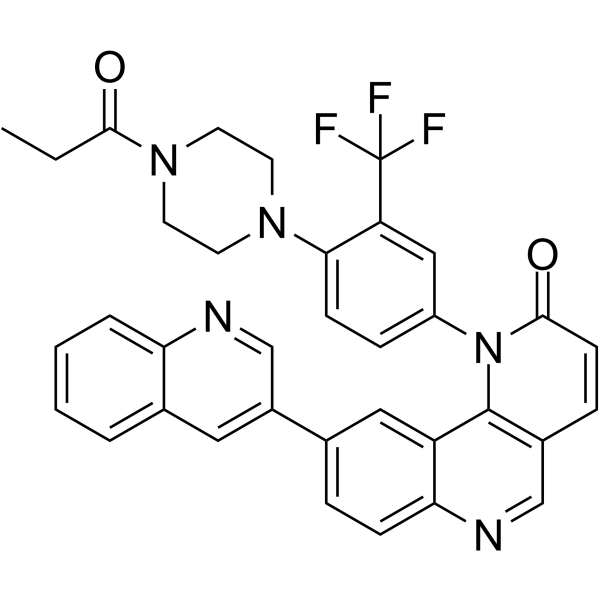
    Gedatolisib (PKI-587) is a highly potent dual inhibitor of PI3Kα, PI3Kγ, and mTOR with IC50s of 0.4 nM, 5.4 nM and 1.6 nM, respectively [1]. Gedatolisib is equally effective in both complexes of mTOR, mTORC1 and mTORC2 .
    Gedatolisib
  • HY-13002
    Torin 2
    15+ Cited Publications

    mTOR DNA-PK Autophagy Apoptosis Cancer
    Torin 2 is an mTOR inhibitor with EC50 of 0.25 nM for inhibiting cellular mTOR activity, and exhibits 800-fold selectivity over PI3K (EC50: 200 nM). Torin 2 also inhibits DNA-PK with an IC50 of 0.5 nM in the cell free assay. Torin 2 can suppress both mTORC1 and mTORC2.
    Torin 2
  • HY-15247
    Vistusertib
    30+ Cited Publications

    AZD2014

    mTOR Autophagy Apoptosis Cancer
    Vistusertib (AZD2014) is an ATP competitive mTOR inhibitor with an IC50 of 2.81 nM. AZD2014 inhibits both mTORC1 and mTORC2 complexes.
    Vistusertib
  • HY-W015309
    Decanoic acid
    4 Publications Verification

    Environmental Pollutants Endogenous Metabolite iGluR Glutaminase c-Met/HGFR Tyrosinase Neurological Disease Metabolic Disease Cancer
    Decanoic acid is a key component of the medium-chain triglyceride (MCT) found in coconut oil. Decanoic acid is a brain-penetrant and non-competitive inhibitor of AMPA receptor showing antiseizure activity in rats. Decanoic acid reduces tyrosinase activity and inhibits melanosome maturation. Decanoic acid suppresses the phosphorylation of c-Met and induced apoptosis in hepatocellular carcinoma (HCC) cells by inhibiting the expression of various oncogenic proteins, which is promising for research in the field of mTORC1 signaling, HCC and epilepsy [1] .
    Decanoic acid
  • HY-114384
    Mefluleucine
    5+ Cited Publications

    NV-5138

    mTOR Neurological Disease
    Mefluleucine (NV-5138), a leucine analog, is the first selective and orally active brain mTORC1 activator, binding to Sestrin2. Mefluleucine is used for antidepressant studies [1] .
    Mefluleucine
  • HY-10474
    Torkinib
    25+ Cited Publications

    PP 242

    mTOR Autophagy Mitophagy Apoptosis Cancer
    Torkinib (PP 242) is a selective and ATP-competitive mTOR inhibitor with an IC50 of 8 nM [1]. PP242 inhibits both mTORC1 and mTORC2 with IC50s of 30 nM and 58 nM, respectively .
    Torkinib
  • HY-128892
    EN6
    5 Publications Verification

    Autophagy Neurological Disease
    EN6 is a small-molecule in vivo autophagy activator that covalently targets cysteine 277 in the ATP6V1A subunit of the lysosomal v-ATPase. EN6-mediated modification of ATP6V1A uncouples v-ATPase from Rag, leading to inhibition of mTORC1 signalling, increased lysosomal acidification, and activation of autophagy. EN6 also scavenges TDP-43 aggregates (causative agents of frontotemporal dementia) in a lysosome-dependent manner [1].
    EN6
  • HY-16962
    CC-115
    2 Publications Verification

    DNA-PK mTOR Cancer
    CC-115 is a potent and dual DNA-PK and mTOR kinase inhibitor with IC50s of 13 nM and 21 nM, respectively. CC-115 blocks both mTORC1 and mTORC2 signaling.
    CC-115
  • HY-14668
    Lomitapide mesylate
    5+ Cited Publications

    AEGR-733 mesylate; BMS-201038 mesylate

    Microsomal Triglyceride Transfer Protein (MTP) mTOR LDLR Autophagy Apoptosis Cardiovascular Disease Neurological Disease Metabolic Disease Cancer
    Lomitapide (AEGR-733; BMS-201038) mesylate is an orally active microsomal triglyceride transfer protein (MTP) inhibitor and a selective mTORC1 inhibitor with lipid-lowering activity and BBB permeability. Lomitapide mesylate significantly reduces plasma LDL levels by blocking the assembly and secretion of very-low-density lipoprotein (VLDL). Lomitapide mesylate inhibits mTORC1 in an ATP-dependent manner, thereby inducing AMPK-independent autophagic cell death and suppressing cancer cell growth and apoptosis. Lomitapide mesylate also enhances tumor infiltration of CD8 + T cells. In addition, Lomitapide mesylate inhibits HDAC, improves endothelial function, effectively alleviates vascular inflammation and oxidative stress, and exerts neuroprotective effects in a cerebral ischemia/reperfusion injury model. Lomitapide mesylate can be used in research on related diseases such as colorectal cancer, breast cancer, melanoma, ischemic stroke, and familial hypercholesterolemia [1] .
    Lomitapide mesylate
  • HY-10423
    OSI-027
    10+ Cited Publications

    ASP7486

    mTOR Autophagy Cancer
    OSI-027 (ASP7486) is a potent, selective, orally active and ATP-competitive mTOR kinase activity inhibitor with an IC50 of 4 nM. OSI-027 targets both mTORC1 and mTORC2 with IC50s of 22 nM and 65 nM, respectively [1] .
    OSI-027
  • HY-124798
    Rheb inhibitor NR1
    3 Publications Verification

    mTOR Neurological Disease Inflammation/Immunology Cancer
    Rheb inhibitor NR1 is a Rheb inhibitor with an IC50 of 2.1 µM in the Rheb-IVK assay. Rheb inhibitor NR1 can directly bind Rheb in the switch II domain and selectively inhibit the activation of mechanistic target of rapamycin complex 1 (mTORC1). Rheb inhibitor NR1 inhibits the phosphorylation of mTORC1 driven T389pS6K1 and increases the phosphorylation of S473pAKT in a dose-dependent manner. Rheb inhibitor NR1 does not influence mTORC2 activity [1].
    (Rheb-IVK: Rheb-dependent mTORC1 kinase activity)
    Rheb inhibitor NR1
  • HY-16956
    Onatasertib
    3 Publications Verification

    CC-223; ATG-008

    mTOR Apoptosis Cancer
    Onatasertib (CC-223) is a potent, selective, and orally bioavailable inhibitor of mTOR kinase, with an IC50 value for mTOR kinase of 16 nM. Onatasertib inhibits both mTORC1 and mTORC2.
    Onatasertib
  • HY-12513
    Samotolisib
    5+ Cited Publications

    LY3023414

    PI3K DNA-PK mTOR Autophagy Cancer
    Samotolisib (LY3023414) potently and selectively inhibits class I PI3K isoforms, DNA-PK, and mTORC1/2 with IC50s of 6.07 nM, 77.6 nM, 38 nM, 23.8 nM, 4.24 nM and 165 nM for PI3Kα, PI3Kβ, PI3Kδ, PI3Kγ, DNA-PK and mTOR, respectively. Samotolisib potently inhibits mTORC1/2 at low nanomolar concentrations [1] .
    Samotolisib
  • HY-134904
    RMC-6272
    3 Publications Verification

    RM-006

    mTOR Cancer
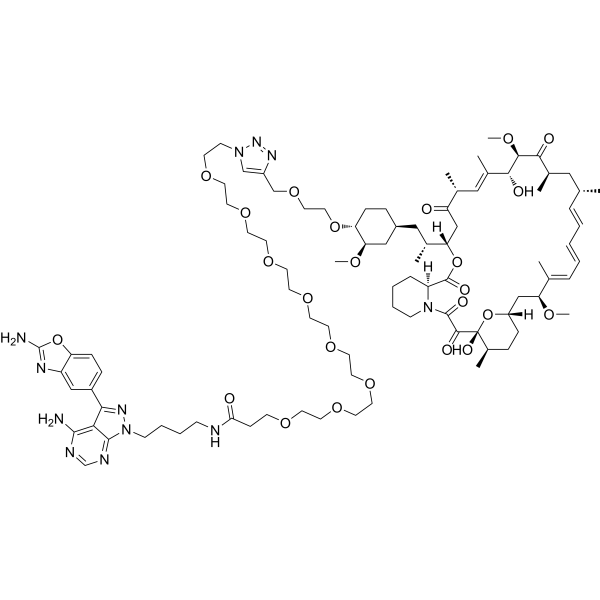
    RMC-6272 (RM-006) is a bi-steric mTORC1-selective inhibitor. RMC-6272 exhibits potent and selective (> 10-fold) inhibition of mTORC1 over mTORC2. RMC-6272 shows improved inhibition of mTORC1 in comparison to Rapamycin, and induces more cell death in TSC2 null tumors [1].
    RMC-6272
  • HY-132168
    RMC-5552
    5 Publications Verification

    mTOR Cancer
    RMC-5552 is a potent and selective mTORC1 inhibitor. RMC-5552 inhibits phosphorylation of mTORC1 pS6K and p4EBP1 with IC50s of 0.14 nM and 0.48 nM, respectively. RMC-5552 shows much lower pAKT inhibition (IC50 of 19 nM), resulting in mTORC1/mTORC2 selectivity approaching 40-fold. RMC-5552 has anti-cancer activity [1].
    RMC-5552
  • HY-50710
    KU-0063794
    10+ Cited Publications

    mTOR Cancer
    KU-0063794 is a potent and specific mTOR inhibitor, inhibiting both the mTORC1 and mTORC2 complexes with IC50s of 10 nM.
    KU-0063794
  • HY-15174
    Dactolisib Tosylate
    65+ Cited Publications

    BEZ235 Tosylate; NVP-BEZ 235 Tosylate

    PI3K mTOR Autophagy Cancer
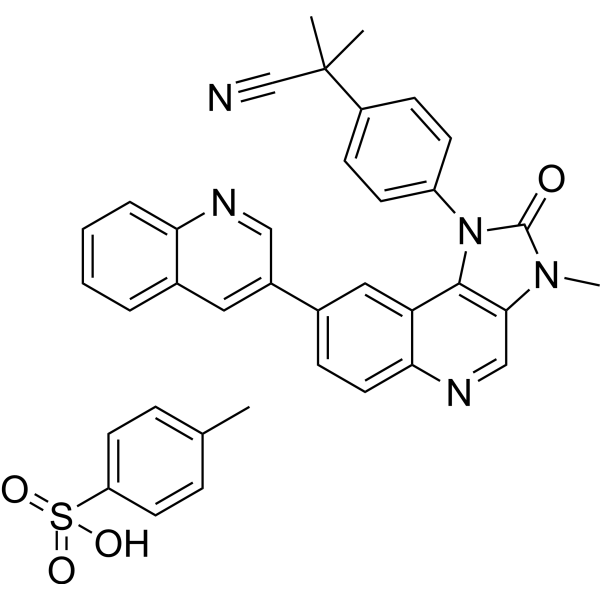
    Dactolisib Tosylate (BEZ235 Tosylate) is a dual PI3K and mTOR kinase inhibitor with IC50 values of 4, 75, 7, 5 nM for PI3Kα, β, γ, δ, respectively. Dactolisib Tosylate (BEZ235 Tosylate) inhibits mTORC1 and mTORC2.
    Dactolisib Tosylate
  • HY-126077
    MTI-31
    1 Publications Verification

    LXI-15029

    mTOR Inflammation/Immunology Cancer
    MTI-31 (LXI-15029) is a potent, orally active and highly selective inhibitor of mTORC1 and mTORC2. MTI-31 is selective for mTOR (Kd: 0.20 nM) versus PIK3CA, PIK3CB and PIK3G with >5,000 fold selectivity in mTOR binding assays. MTI-31 shows an IC50 of 39 nM for mTOR in LANCE assay of mTOR substrate phosphorylation with 100 μM ATP. MTI-31 can be used for the research of breast cancer [1].
    MTI-31
  • HY-14530
    Pelitrexol
    2 Publications Verification

    AG 2037

    Antifolate Cancer
    Pelitrexol (AG 2037) is an inhibitor of glycinamide ribonucleotide formyltransferase (GARFT), a purine biosynthetic enzyme. Pelitrexol also inhibits mTORC1 by reducing GTP-bound Rheb level, a mTORC1 obligate activator. Pelitrexol shows robust tumor growth suppression in mice [1].
    Pelitrexol
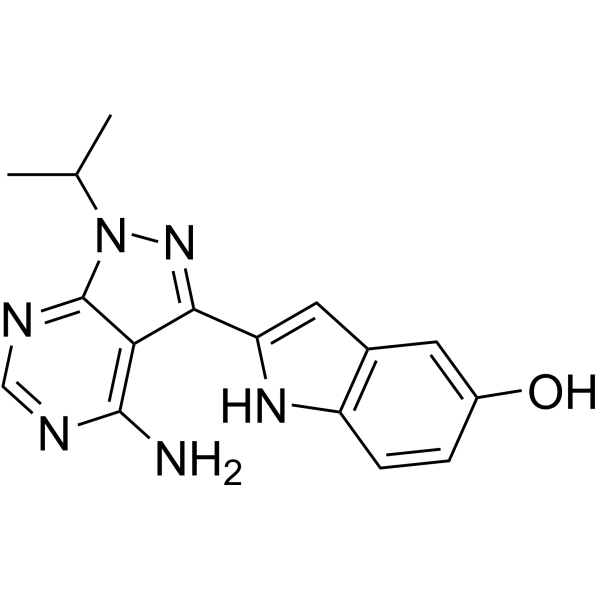
  • HY-100026
    PQR620
    4 Publications Verification

    mTOR Cancer
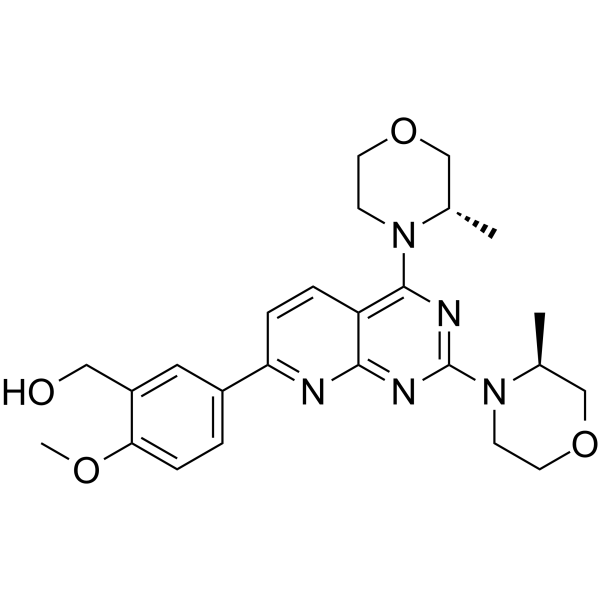
    PQR620 is an orally bioavailable and selective brain penetrant inhibitor of mTORC1/2 [1].
    PQR620
  • HY-13806
    XL388
    4 Publications Verification

    mTOR Autophagy Cancer
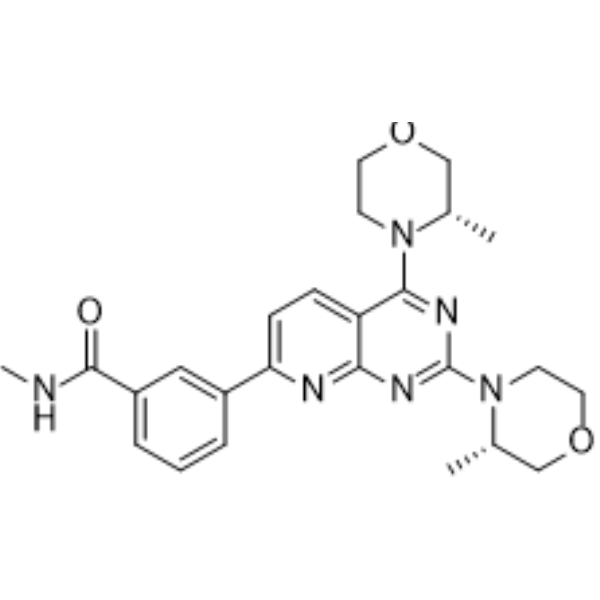
    XL388 is a highly potent and ATP-competitive mTOR inhibitor with an IC50 of 9.9 nM. XL388 simultaneously inhibits both mTORC1 and mTORC2.
    XL388
  • HY-10044
    WYE-132
    4 Publications Verification

    WYE-125132

    mTOR Apoptosis Cancer
    WYE-132 (WYE-125132) is a highly potent, ATP-competitive, and specific mTOR kinase inhibitor (IC50: 0.19±0.07 nM; >5,000-fold selective versus PI3Ks). WYE-132 (WYE-125132) inhibits mTORC1 and mTORC2.
    WYE-132
  • HY-10219S
    Rapamycin-d3
    1 Publications Verification

    Sirolimus-d3; AY-22989-d3; NSC 226080-d3

    Isotope-Labeled Compounds mTOR FKBP Autophagy Cancer
    Rapamycin-d3 is the deuterium labeled Rapamycin. Rapamycin is a potent and specific mTOR inhibitor with an IC50 of 0.1 nM in HEK293 cells. Rapamycin binds to FKBP12 and specifically acts as an allosteric inhibitor of mTORC1. Rapamycin is an autophagy activator, an immunosuppressant [1] .
    Rapamycin-d3
  • HY-10219R

    Sirolimus (Standard); AY-22989 (Standard); NSC 226080 (Standard)

    Reference Standards mTOR FKBP Fungal Autophagy Endogenous Metabolite Antibiotic Bacterial Cancer
    Rapamycin (Standard) is the analytical standard of Rapamycin (HY-10219). This product is intended for research and analytical applications. Rapamycin (Sirolimus; AY 22989) is a potent and specific mTOR inhibitor with an IC50 of 0.1 nM in HEK293 cells. Rapamycin binds to FKBP12 and specifically acts as an allosteric inhibitor of mTORC1 [1]. Rapamycin is an autophagy activator, an immunosuppressant .
    Rapamycin (Standard)
  • HY-100222
    CZ415
    4 Publications Verification

    mTOR Cancer
    CZ415 is a potent and highly selective mTOR inhibitor with a pIC50 of 8.07. CZ415 inhibits mTORC1 and mTORC2 protein complex.
    CZ415
  • HY-15248
    GDC-0349
    2 Publications Verification

    mTOR Autophagy Cancer
    GDC-0349 is a potent and selective ATP-competitive mTOR inhibitor with a Ki of 3.8 nM. GDC-0349 inhibits of both mTORC1 and mTORC2 complexes.
    GDC-0349
  • HY-114384B
    Mefluleucine hydrochloride
    5+ Cited Publications

    NV-5138 hydrochloride

    mTOR Neurological Disease
    Mefluleucine (NV-513) hydrochloride, a leucine analog, is the first selective and orally active brain mTORC1 activator, binding to Sestrin2. Mefluleucine hydrochloride is used for antidepressant studies [1] .
    Mefluleucine hydrochloride
  • HY-16962A
    CC-115 hydrochloride
    2 Publications Verification

    DNA-PK mTOR Cancer
    CC-115 hydrochloride is a potent and dual DNA-PK and mTOR kinase inhibitor with IC50s of 13 nM and 21 nM, respectively. CC-115 blocks both mTORC1 and mTORC2 signaling.
    CC-115 hydrochloride
  • HY-15880
    CCT007093
    2 Publications Verification

    Phosphatase Apoptosis Autophagy Cancer
    CCT007093 is an effective protein phosphatase 1D (PPM1D Wip1) inhibitor. Wip1 inhibition can activate the mTORC1 pathway and enhance hepatocyte proliferation after hepatectomy [1] .
    CCT007093
  • HY-12034
    WYE-354
    5+ Cited Publications

    mTOR Autophagy Apoptosis Cancer
    WYE-354 is an ATP-competitive mTOR inhibitor with an IC50 of 5 nM. WYE-354 also inhibits PI3Kα and PI3Kγ with IC50s of 1.89 μM and 7.37 μM, respectively. WYE-354 inhibits both mTORC1 and mTORC2. WYE-354 induces autophagy activation in vitro .
    WYE-354
  • HY-14581
    Palomid 529
    4 Publications Verification

    P529

    mTOR Apoptosis Cancer
    Palomid 529 is a potent inhibitor of mTORC1 and mTORC2 complexes.
    Palomid 529
  • HY-143510

    mTOR Cancer
    RMC-4627 is a selective mTORC1 inhibitor that activates 4EBP1 and inhibits tumor growth.
    RMC-4627
  • HY-B1787

    mTOR Drug Metabolite Cancer
    Sulindac sulfone is an mTORC1 pathway inhibitor and a metabolite of Sulindac. Sulindac sulfone inhibits colon cancer cell growth and induces cell cycle arrest. Sulindac sulfone is used in cancer research [1].
    Sulindac sulfone
  • HY-18353
    mTOR inhibitor-3
    3 Publications Verification

    mTOR Cancer
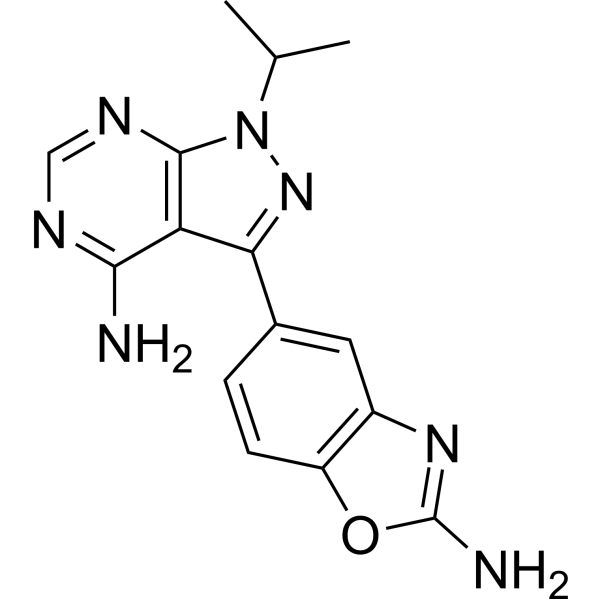
    mTOR inhibitor-3 is a remarkably selective mTOR inhibitor with a Ki of 1.5 nM. mTOR inhibitor-3 suppresses mTORC1 and mTORC2 in cellular and in vivo pharmacokinetic (PK)/pharmacodynamic (PD) experiments.
    mTOR inhibitor-3
  • HY-15272
    WAY-600
    5+ Cited Publications

    mTOR Inflammation/Immunology Cancer
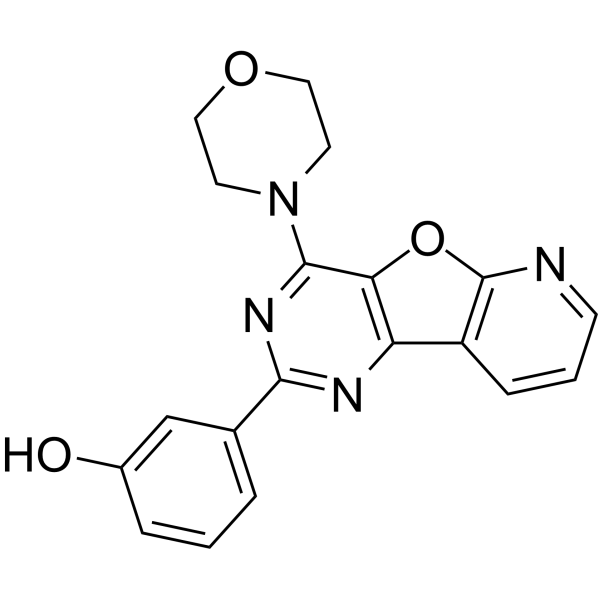
    WAY-600 is a potent, ATP-competitive, and selective mTOR inhibitor with an IC50 of 9 nM for recombinant mTOR enzyme. WAY-600 blocks mTOR complex 1/2 (mTORC1/2) assemble and activation.
    WAY-600
  • HY-108900

    Aminoacyl-tRNA Synthetase Bacterial Infection Cancer
    Leu-AMS (compound 6), a leucine analogue, is a potent inhibitor of leucyl-tRNA synthetase (LRS) with an IC50 of 22.34 nM, which inhibits the catalytic activity of LRS but did not affect the leucine-induced mTORC1 activation. Leu-AMS shows cytotoxicity in cancer cells and normal cells, and inhibits the growth of bacteria [1].
    Leu-AMS
  • HY-107365

    PI3K mTOR Cancer
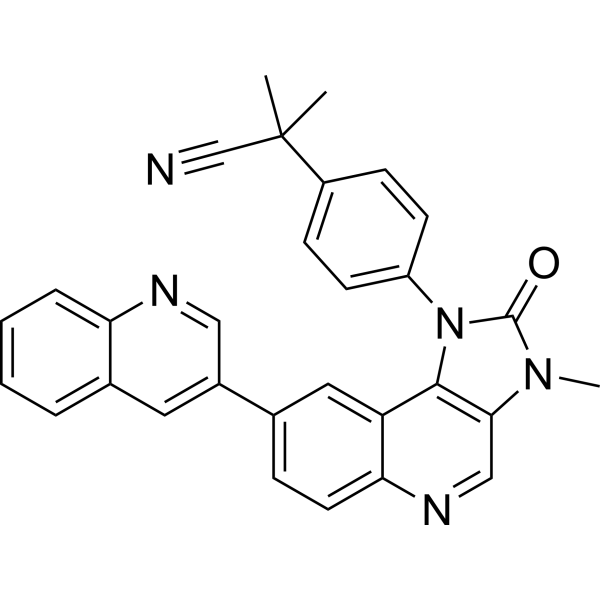
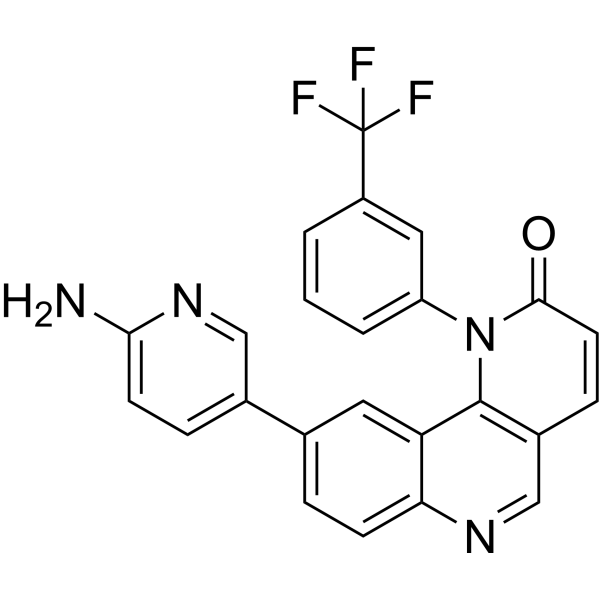
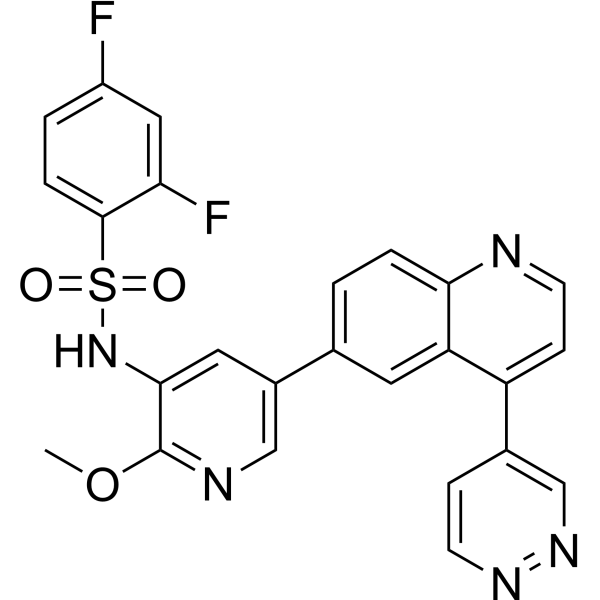
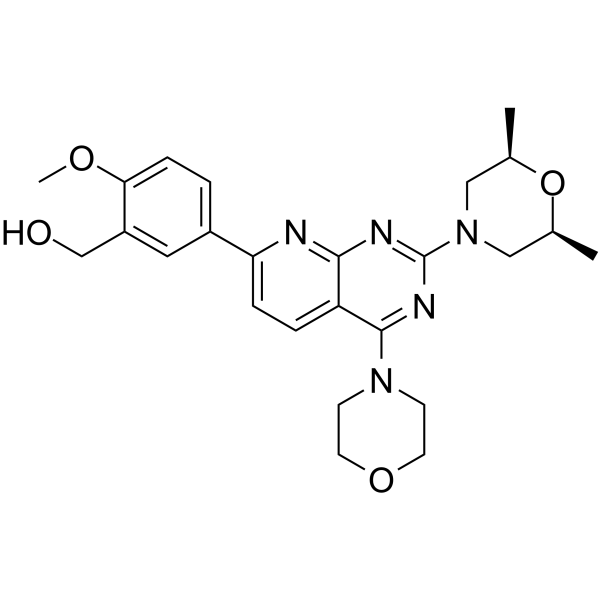
    PQR530 is a potent, ATP-competitive, orally bioavailable and brain-penetrant dual pan-PI3K/mTORC1/2 inhibitor, with a subnanomolar Kd toward PI3Kα and mTOR (0.84 and 0.33 nM, respectively). Antitumor activity [1] .
    PQR530
  • HY-153789

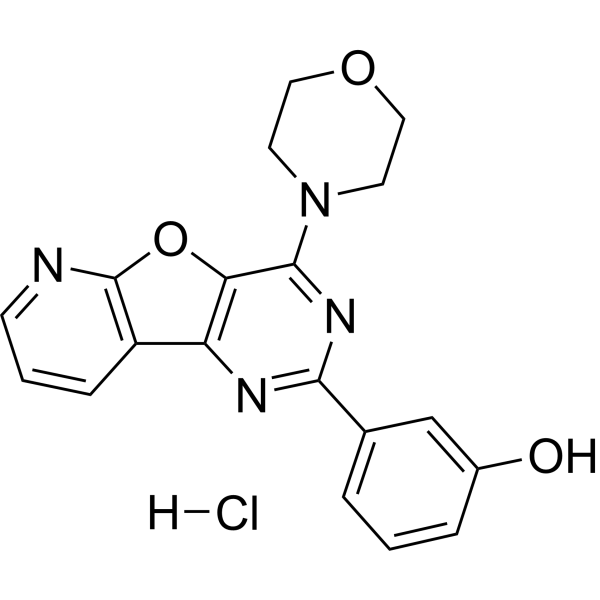
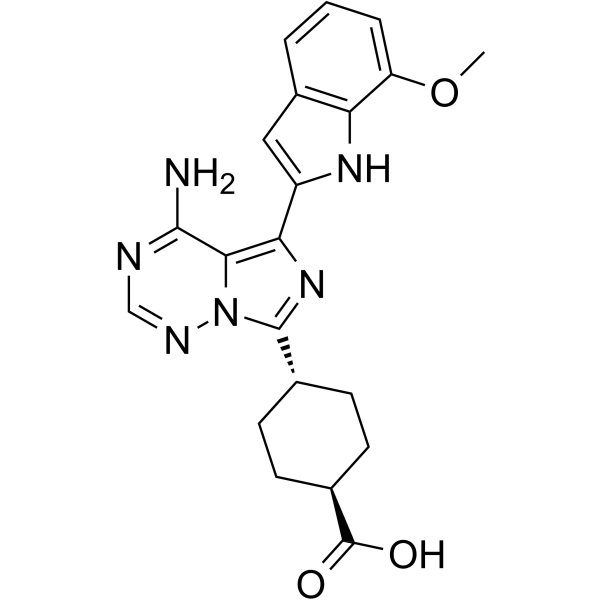
    PI5P4K mTOR Cancer
    PI5P4Kγ-IN-1 is an ATP-competitive, highly selective chemical probe for PI5P4Kγ, with a Kd of 19 nM and an IC50 of 67 nM. PI5P4Kγ-IN-1 effectively inhibits PI5P4Kγ function and activates the mTORC1 signaling pathway in cells. PI5P4Kγ-IN-1 can be used in studies related to diseases such as breast cancer [1].
    PI5P4Kγ-IN-1
  • HY-15271
    WYE-687
    3 Publications Verification

    mTOR PI3K Cancer
    WYE-687 is an ATP-competitive mTOR inhibitor with an IC50 of 7 nM. WYE-687 concurrently inhibits activation of mTORC1 and mTORC2. WYE-687 also inhibits PI3Kα and PI3Kγ with IC50s of 81 nM and 3.11 μM, respectively.
    WYE-687
  • HY-10219S1

    Sirolimus-13C,d3; AY-22989-13C,d3 NSC 226080-13C,d3

    Isotope-Labeled Compounds mTOR FKBP Fungal Autophagy Endogenous Metabolite Antibiotic Bacterial Cancer
    Rapamycin- 13C,d3 (Sirolimus- 13C,d3) is the 13C and deuterium labeled Rapamycin (HY-10219) [1]. Rapamycin is a potent and specific mTOR inhibitor with an IC50 of 0.1 nM in HEK293 cells. Rapamycin binds to FKBP12 and specifically acts as an allosteric inhibitor of mTORC1. Rapamycin is an autophagy activator, an immunosuppressant [1] .
    Rapamycin-13C,d3
  • HY-10219G

    Sirolimus; AY-22989; NSC 226080

    mTOR FKBP Fungal Autophagy Endogenous Metabolite Antibiotic Bacterial Infection Cancer
    Rapamycin (Sirolimus) (GMP) is Rapamycin (HY-10219) produced by using GMP guidelines. GMP small molecules works appropriately as an auxiliary reagent for cell therapy manufacture. Rapamycin (Sirolimus; AY 22989) is a potent and specific mTOR inhibitor with an IC50 of 0.1 nM in HEK293 cells. Rapamycin binds to FKBP12 and specifically acts as an allosteric inhibitor of mTORC1 [1]. Rapamycin is an autophagy activator, an immunosuppressant .
    Rapamycin
  • HY-N2517

    mTOR Cancer
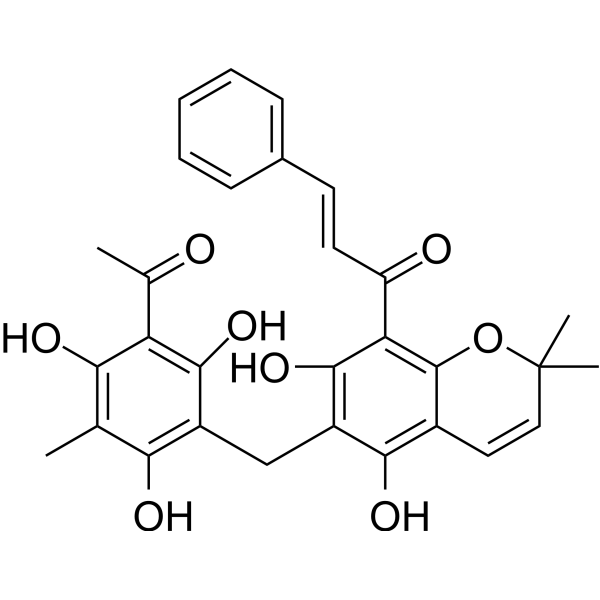
    Dihydroevocarpine induces cytotoxicity in acute myeloid leukemia via suppressing the mTORC1/2 activity [1].
    Dihydroevocarpine
  • HY-W058849

    AMPK mTOR Apoptosis Cancer
    MT 63-78 is a specific and potent direct AMPK activator with an EC50 of 25 μM. MT 63–78 also induces cell mitotic arrest and apoptosis. MT 63-78 blocks prostate cancer growth by inhibiting the lipogenesis and mTORC1 pathways. MT 63-78 has antitumor effects [1].
    MT 63-78
  • HY-128340

    Autophagy Cancer
    Autogramin-2 potently inhibits autophagy induced by either starvation (IC50=0.27 μM) or mTORC1 inhibition (Rapamycin; IC50=0.14 μM) [1].
    Autogramin-2
  • HY-128339

    Autophagy Cancer
    Autogramin-1 potently inhibits autophagy induced by either starvation (IC50=0.17 μM) or mTORC1 inhibition (Rapamycin; IC50=0.44 μM) [1].
    Autogramin-1
  • HY-125355
    SEC
    1 Publications Verification

    Apoptosis Annexin A Cancer
    SEC induces activation of ANXA7 GTPase via the AMPK/mTORC1/STAT3 signaling pathway. SEC selectively promotes apoptosis in cancer cells, expressing a high level of ITGB4 by inducing ITGB4 nuclear translocation [1] .
    SEC

Inquiry Online

Your information is safe with us. * Required Fields.

Salutation


Country or Region *

Applicant Name *


Organization Name *

Department *


Email Address *


Product Name *

Cat. No.


Requested quantity *

Phone Number *


Remarks

Inquiry Online

Inquiry Information

Product Name:
Cat. No.:
Quantity:
MCE Japan Authorized Agent:

