

280 Results for "

methyl-3

" in MedChemExpress (MCE) Product Catalog:
Products (280)

280 Results for "methyl-3" in MCE Product Catalog:

5
5 Cited Publications
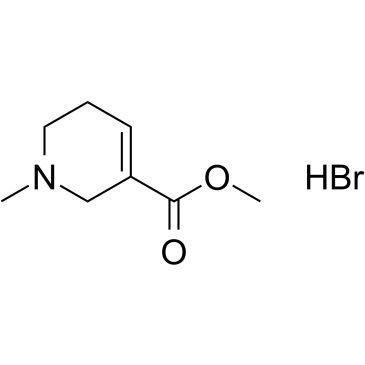
Cat. No.: HY-B0489
CAS No.: 300-08-3
Synonyms: methyl 1,2,5,6-tetrahydro-1-methyl-3-pyridinecarboxylate hydrobromide
Arecoline hydrobromide, a naturally brain-penetrant and orally active occurring psychoactive alkaloid, is a partial agonist of nicotinic and muscarinic acetylcholine receptor. Arecoline hydrobromide exhibits stimulation, alertness, anxiolysis and anti-parasitic effects. Arecoline hydrobromide also can induce oxidative stress [3] .
loading...
    loading...
2
2 Cited Publications
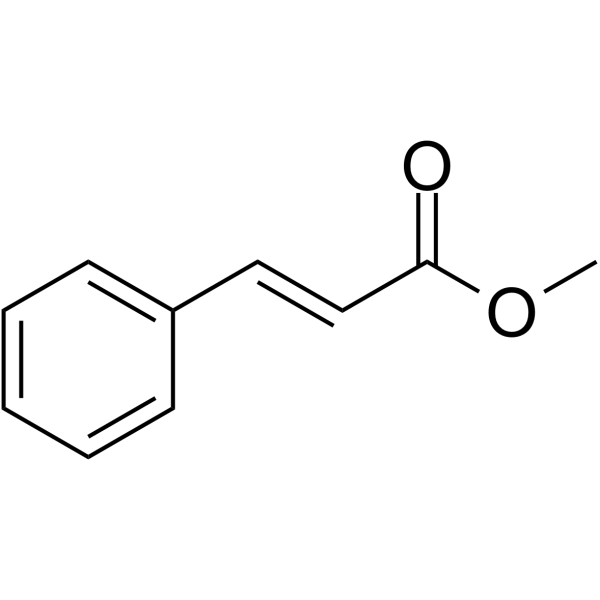
Cat. No.: HY-W017212
CAS No.: 103-26-4
Synonyms: methyl 3-phenylpropenoate
Methyl cinnamate (Methyl 3-phenylpropenoate), an active component of Zanthoxylum armatum, is a widely used natural flavor compound. Methyl cinnamate (Methyl 3-phenylpropenoate) possesses antimicrobial activity and is a tyrosinase inhibitor that can prevent food browning. Methyl cinnamate (Methyl 3-phenylpropenoate) has antiadipogenic activity through mechanisms mediated, in part, by the CaMKK2-AMPK signaling pathway .
loading...
    loading...
2
2 Cited Publications
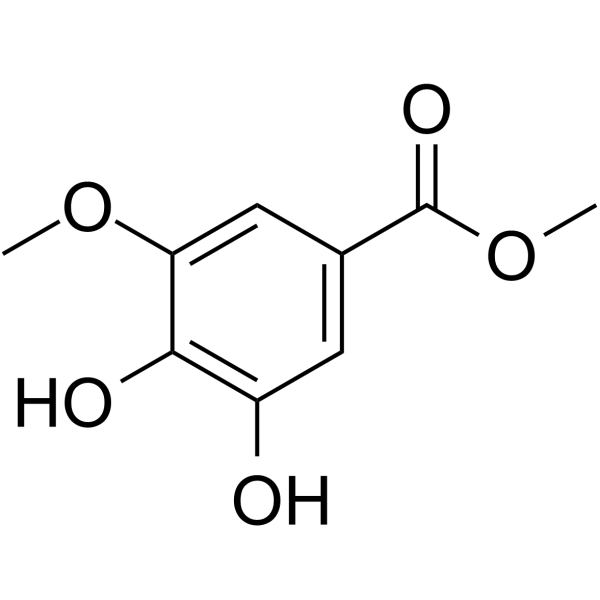
Cat. No.: HY-N6669
CAS No.: 3934-86-9
Synonyms: M3OMG
Methyl 3-O-methylgallate (M3OMG) possesses antioxidant effect and can protect neuronal cells from oxidative damage .
loading...
    loading...
1
1 Cited Publications
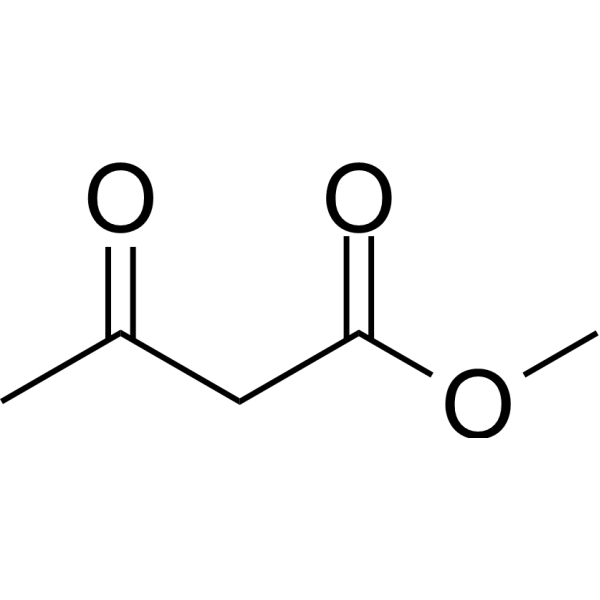
Cat. No.: HY-Y1298
CAS No.: 105-45-3
Synonyms: Acetoacetate methyl ester; methyl 3-oxobutanoate; methyl acetoacetate
Methyl acetylacetate is a chemical reagent used in the synthesis of pharmaceuticals for the synthesis of α-substituted acetoacetate and cyclic compounds such as pyrazole, pyrimidine, and coumarin derivatives. Methyl acetoacetate can be used in the study of inflammatory diseases [3].
loading...
    loading...
1
1 Cited Publications
Cat. No.: HY-W081067
CAS No.: 13252-13-6
Synonyms: HFPO-DA
Target:  

PPAR

Research Areas:  

Infection

Perfluoro (2-methyl-3-oxahexanoic) acid (HFPO-DA) is an orally active PPARα agonist with an EC50 of 2.1 μM for human PPARα. Perfluoro (2-methyl-3-oxahexanoic) acid induces peroxisome proliferation and increases the levels of proinflammatory mediators. It impairs intestinal barrier function and disrupts cecal flora balance. Perfluoro (2-methyl-3-oxahexanoic) acid is applicable to research related to developmental toxicity, hepatotoxicity and intestinal toxicity [3].
loading...
    loading...
1
1 Cited Publications
Cat. No.: HY-P1108
CAS No.: 681260-70-8
Target:  

CRFR

Astressin 2B is a blood-brain barrier-impermeable, highly selective CRFR2 antagonist (rCRFR2, IC50=0.57 nM). Astressin 2B blocks the protective effects mediated by CRFR2, thereby exacerbating indomethacin (HY-14397)-induced hemorrhagic intestinal injury in rats. Astressin 2B reverses the protective effects of Urocortin 1 against intestinal hypermotility, bacterial invasion and upregulation of inflammatory mediators. Astressin 2B also blocks the anxiogenic effect of Urocortin 2 and attenuates stress-induced anxiety-related behaviors. In the Clostridioides difficile toxin A (C. difficile toxin A)-mediated enteritis model, Astressin 2B mimics the phenotype of CRFR2-deficient mice, significantly exacerbating intestinal epithelial damage, edema, neutrophil migration and the expression of multiple proinflammatory cytokines. Astressin 2B is an important tool molecule for investigating the intestinal protective mechanisms of CRFR2 [3] .
loading...
    loading...
1
1 Cited Publications
Cat. No.: HY-P1108A
Target:  

CRFR

Astressin 2B TFA is a blood-brain barrier-impermeable, highly selective CRFR2 antagonist (rCRFR2, IC50=0.57 nM). Astressin 2B TFA blocks the protective effects mediated by CRFR2, thereby exacerbating indomethacin (HY-14397)-induced hemorrhagic intestinal injury in rats. Astressin 2B TFA reverses the protective effects of Urocortin 1 against intestinal hypermotility, bacterial invasion and upregulation of inflammatory mediators. Astressin 2B TFA also blocks the anxiogenic effect of Urocortin 2 and attenuates stress-induced anxiety-related behaviors. In the Clostridioides difficile toxin A (C. difficile toxin A)-mediated enteritis model, Astressin 2B TFA mimics the phenotype of CRFR2-deficient mice, significantly exacerbating intestinal epithelial damage, edema, neutrophil migration and the expression of multiple proinflammatory cytokines. Astressin 2B TFA is an important tool molecule for investigating the intestinal protective mechanisms of CRFR2 [3] .
loading...
    loading...
1
1 Cited Publications
Cat. No.: HY-A0248A
CAS No.: 4135-11-9
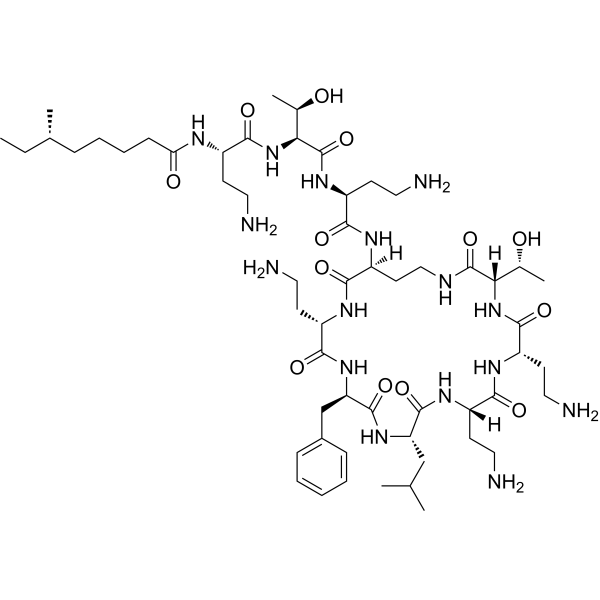
Polymyxin B1 is a potent antimicrobial lipopeptide first derived from Bacilus polymyxa. Polymyxin B1 is the major component in Polymyxin B (HY-A0248). Polymyxin B1 can induce lysis of bacterial cells through interaction with their membranes. Polymyxin B1 has the potential for multidrug-resistant Gram-negative bacterial infections treatment .
loading...
    loading...
Cat. No.: HY-42569
CAS No.: 6149-41-3
Target:  

PROTAC Linkers

Research Areas:  

Cancer

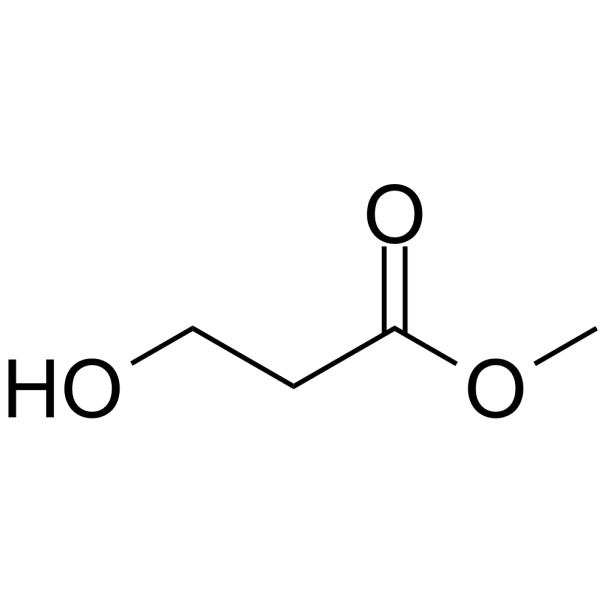
Methyl 3-hydroxypropanoate is an alkyl/ether-based PROTAC linker that can be used in the synthesis of PROTACs .
loading...
    loading...
Cat. No.: HY-W004091
CAS No.: 99769-19-4
Synonyms: 3-(Methoxycarbonyl)phenylboronic acid
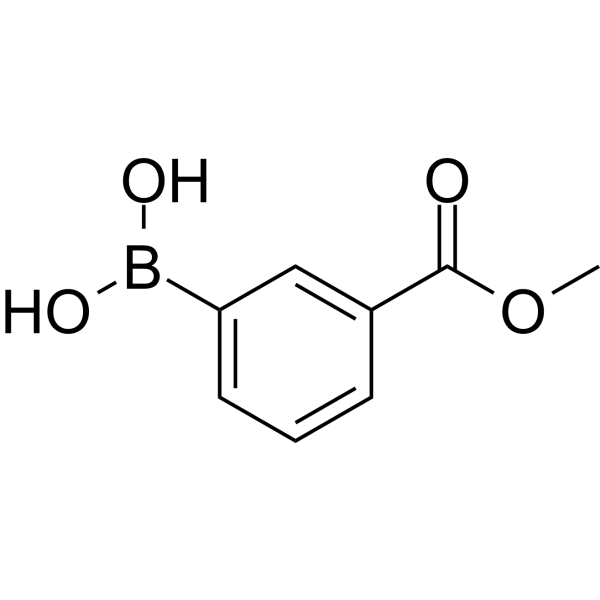
3-(Methoxycarbonyl)phenylboronic acid is a biochemical reagent that can be used as a biological material or organic compound for life science related research.
loading...
    loading...
Cat. No.: HY-W342499
CAS No.: 55682-83-2
Synonyms: methyl 3-hydroxytetradecanoate; 3-OH PAME; methyl 3-hydroxymyristate
Target:  

Fungal

Research Areas:  

Metabolic Disease

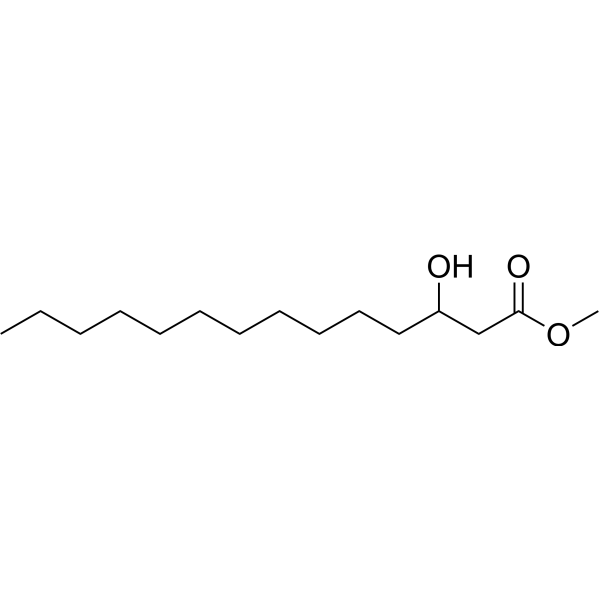
3-Hydroxy myristic acid methyl ester (Methyl 3-hydroxytetradecanoate) is the quorum-sensing signal molecule (quormone), which regulates the virulence of Ralstonia solanacearum .
loading...
    loading...
Cat. No.: HY-W000158
CAS No.: 676371-65-6
Target:  

PROTAC Linkers

Research Areas:  

Cancer

Methyl 3-aminobicyclo[1.1.1]pentane-1-carboxylate hydrochloride is a PROTAC linker that can be used in the synthesis of PROTACs.
loading...
    loading...
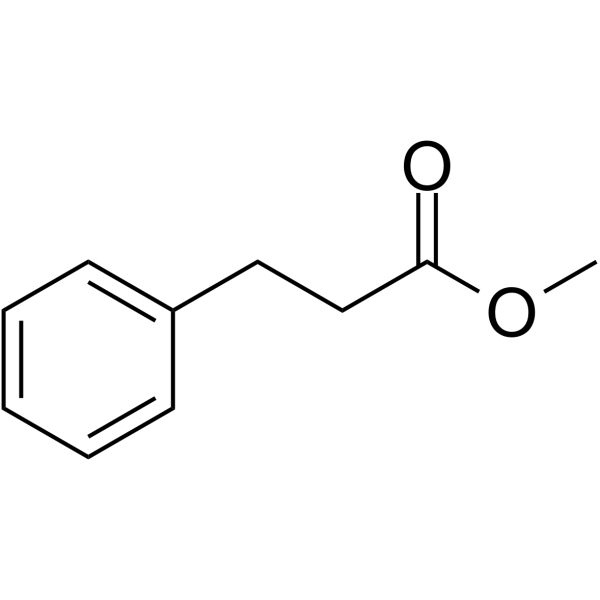
Cat. No.: HY-W007828
CAS No.: 103-25-3
Methyl 3-phenylpropanoate is a phenylpropionate compound. Methyl 3-phenylpropanoate derivatives interfere with insect feeding behavior. Methyl 3-phenylpropanoate can be used to study insect feeding behavior [3] .
loading...
    loading...
Cat. No.: HY-116632
CAS No.: 21188-58-9
Research Areas:  

Metabolic Disease

Methyl 3-hydroxyhexanoate is an ester product.
loading...
    loading...
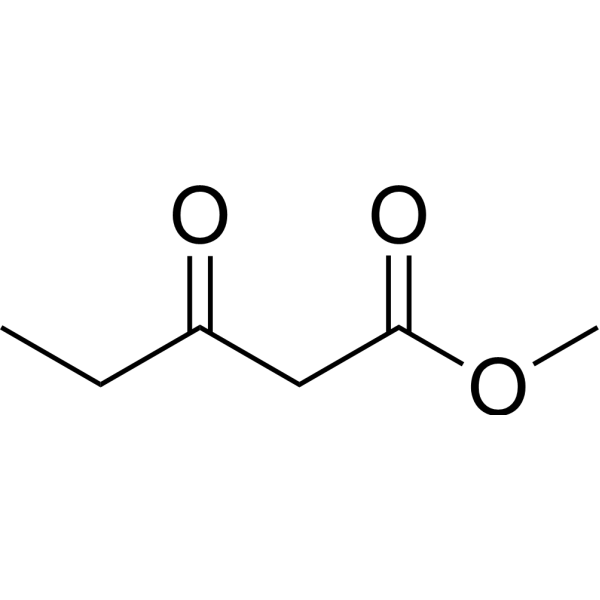
Cat. No.: HY-W010394
CAS No.: 30414-53-0
Methyl 3-oxopentanoate, which is also known as diethyl acetylmalonate or MEAM, Methyl 3-oxopentanoate is commonly used as a building block for the synthesis of various organic compounds, including pharmaceuticals, agrochemicals, and flavorings, and it can also Used as a reagent in organic chemical reactions, especially the formation of carbon-carbon bonds through malonate synthesis, the researchers also investigated the potential use of Methyl 3-oxopentanoate in the development of chiral auxiliaries that can aid in the selection of Controlling the stereochemistry of chemical reactions.
loading...
    loading...
Cat. No.: HY-117201
CAS No.: 7367-87-5
Synonyms: 3-Hydroxy octanoic acid methyl ester
Research Areas:  

Others

Methyl 3-hydroxyoctanoate (3-Hydroxy octanoic acid methyl ester) is an ester. Methyl 3-hydroxyoctanoate can be isolated from Pineapple .
loading...
    loading...
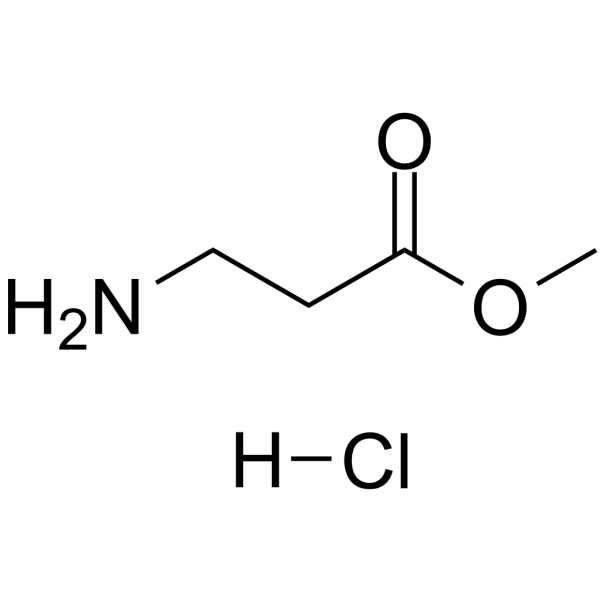
Cat. No.: HY-W007648
CAS No.: 3196-73-4
Synonyms: β-Alanine methyl ester hydrochloride
Methyl 3-aminopropanoate hydrochloride (β-Alanine methyl ester hydrochloride) is a β-alanine derivative with antioxidant activity. Methyl 3-aminopropanoate hydrochloride reduces oxidation-related changes in Glycine max soybean oil and degummed Glycine max soybean oil at frying temperatures, including the loss of olefinic protons and bis-allylic protons as well as the formation of polymerized triglycerides. Methyl 3-aminopropanoate hydrochloride contributes to the synthesis of the Bcl-2 inhibitor probe Nap-4 .
loading...
    loading...
Cat. No.: HY-W054211
CAS No.: 180464-87-3
Target:  

PROTAC Linkers

Research Areas:  

Cancer

Methyl 3-(hydroxymethyl)bicyclo[1.1.1]pentane-1-carboxylate is a PROTAC linker that can be used in the synthesis of PROTACs.
loading...
    loading...
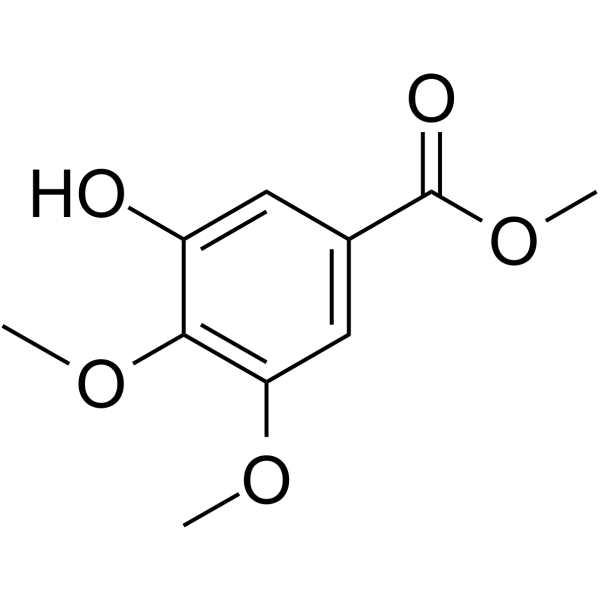
Cat. No.: HY-N3287
CAS No.: 83011-43-2
Methyl 3-hydroxy-4,5-dimethoxybenzoate is a gallic acid derivant that can be isolated from myricaria Laxiflora. Methyl 3-hydroxy-4,5-dimethoxybenzoate shows obvious antimicrobial activities. Methyl 3-hydroxy-4,5-dimethoxybenzoate shows fairly active for oxidation resistance in the presence of H2O2 .
loading...
    loading...
Cat. No.: HY-W003888
CAS No.: 1354940-69-4
Target:  

PROTAC Linkers

Research Areas:  

Cancer

Methyl 3-aminocyclobutane-1-carboxylate hydrochloride is a PROTAC linker that can be used in the synthesis of PROTACs.
loading...
    loading...