1. Search Result
Search Result
Results for "

microglial proliferation

" in MedChemExpress (MCE) Product Catalog:

9

Inhibitors & Agonists

4

Natural
Products

Cat. No. Product Name Target Research Areas Chemical Structure
  • HY-W040045
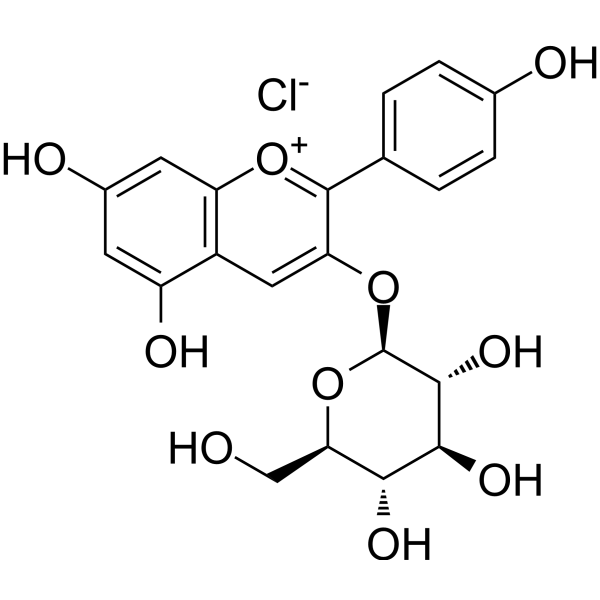
    Callistephin chloride
    1 Publications Verification

    Pelargonidin-3-O-glucoside chloride

    Reactive Oxygen Species (ROS) COX NO Synthase p38 MAPK TNF Receptor Apoptosis Neurological Disease Metabolic Disease Inflammation/Immunology Cancer
    Callistephin (Pelargonidin 3-O-glucoside) chloride is an anthocyanin. Callistephin chloride regulates the expression of inflammatory (reducing iNOS/TNF-α/COX-2) and apoptosis-related proteins by inhibiting p38 phosphorylation, and enhances the protective effect of Isoflurane (HY-A0134) on microglial cell damage. Callistephin chloride significantly reduces ROS levels, eliminates DPPH free radicals, protects retinal pigment epithelial cells, and inhibits lipid peroxidation. Callistephin chloride can alleviate glutamate excitotoxicity, reduce neuronal apoptosis, and protect cerebellar granule neurons. Callistephin chloride can inhibit the proliferation and metastasis of breast cancer cells by inducing apoptosis .
    Callistephin chloride
  • HY-109086
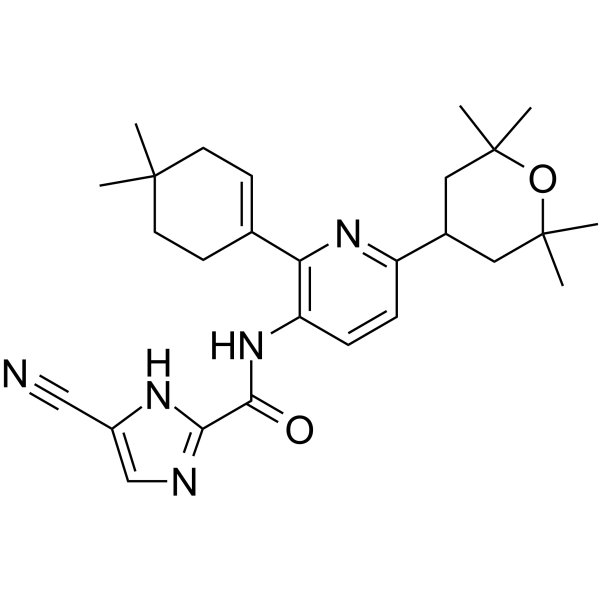
    Edicotinib
    3 Publications Verification

    JNJ-40346527; JNJ-527

    c-Fms Neurological Disease Inflammation/Immunology Cancer
    Edicotinib (JNJ-40346527) is a potent, selective, brain penetrant and orally active colony-stimulating factor-1 receptor (CSF-1R) inhibitor with an IC50 of 3.2 nM. Edicotinib exhibits less inhibitory effects on KIT and FLT3 with IC50 values of 20 nM and 190 nM, respectively . Edicotinib limits microglial expansion and attenuates microglial proliferation and neurodegeneration in mice. Edicotinib has the potential for Alzheimer’s disease and rheumatoid arthritis research .
    Edicotinib
  • HY-N0381
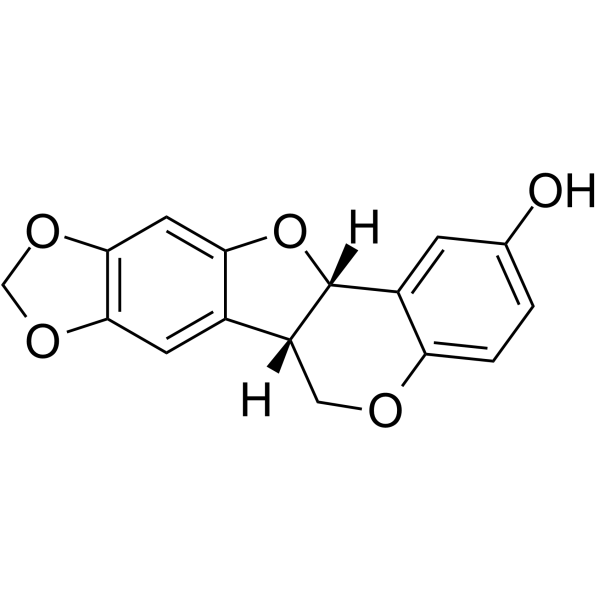
    Maackiain
    1 Publications Verification

    DL-​Maackiain

    Keap1-Nrf2 p38 MAPK NOD-like Receptor (NLR) NF-κB mTOR Monoamine Oxidase Nuclear Factor of activated T Cells (NFAT) PKC Apoptosis Pyroptosis Autophagy Dengue Virus Infection Neurological Disease Metabolic Disease
    Maackiain (DL-Maackiain) is an orally active multi-target inhibitor with anti-tumor activity and neuroprotective effects. Maackiain activates the AMPK, NLRP3 and Nrf2/HO-1 pathways, and inhibits key targets such as NF-κB, mTOR, MAO-B, NFATc1 and PKCδ, thereby precisely regulating processes including apoptosis, autophagy and pyroptosis. Maackiain also effectively inhibits microglial activation, osteoclast formation, and proliferation and invasion of tumor cells, and protects dopaminergic neurons from damage. Maackiain is applicable to the research of various diseases such as Alzheimer's disease, osteoporosis, sepsis and dengue fever 。
    Maackiain
  • HY-126066

    Drug Isomer NO Synthase NF-κB TNF Receptor Interleukin Related IFNAR COX CD20 CDK Bcl-2 Family Apoptosis Akt p38 MAPK GSK-3 Neurological Disease Inflammation/Immunology Cancer
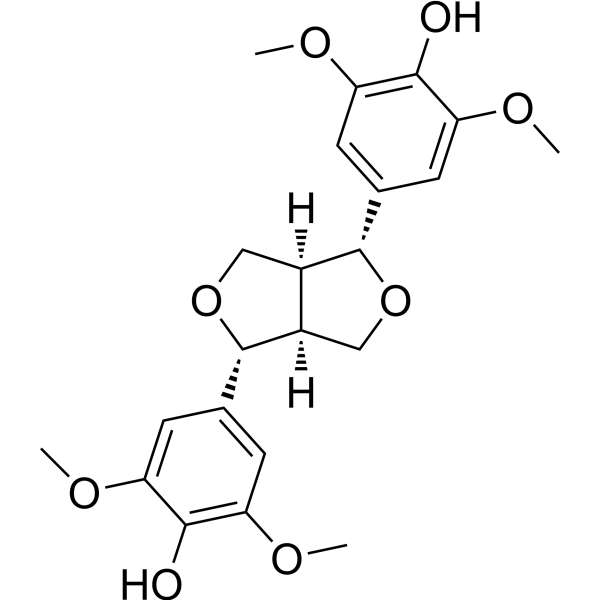
    (-)-Syringaresinol is an orally active isomer of syringaresinol (HY-N8307) found in Annona Montana. (-)-Syringaresinol exhibits antioxidant, anti-inflammatory, and anticancer activities. (-)-Syringaresinol can alleviate ulcerative colitis via the PI3K-Akt/MAPK/Wnt signaling pathway. (-)-Syringaresinol inhibits HL-60 cell proliferation by arresting the G1 phase and inducing apoptosis. (-)-Syringaresinol inhibits LPS (HY-D1056)-induced microglial activation by downregulating the NF-κB p65 signaling pathway and its interaction with ERβ, exerting anti-neuroinflammatory effects .
    (-)-Syringaresinol
  • HY-W049881

    Dopamine Receptor PI3K Monoamine Oxidase Neurological Disease
    9-Methyl-β-carboline is a monoamine oxidase inhibitor and dopaminergic modulator, with an IC50 of 1 μM against human MAO-A and an IC50 of 15.5 μM against human MAO-B. 9-Methyl-β-carboline possesses cognitive enhancement potential and can cross the blood-brain barrier. 9-Methyl-β-carboline increases dopamine levels by inhibiting monoamine oxidase activity and microglial proliferation. 9-Methyl-β-carboline activates PKA/PKC and mitochondrial respiratory chain complex I, promotes neurotrophic factor expression and reduces α-synuclein (α-synuclein) levels, thereby reversing neurotoxin-induced dopaminergic neuron damage. 9-Methyl-β-carboline also regulates the PI3K pathway and exerts an anti-proliferative effect on astrocytes. 9-Methyl-β-carboline is widely used in Parkinson's disease-related studies .
    9-Methyl-β-carboline
  • HY-150038

    NBS-1120

    NF-κB Apoptosis Neurological Disease Cancer
    NOSH-aspirin (NBS-1120) is an orally active hybrid molecule that releases nitric oxide and hydrogen sulfide. NOSH-aspirin inhibits pancreatic cancer cell proliferation and induces apoptosis. NOSH-aspirin inhibits cancer cell growth and suppresses NF-κB and FoxM1 in a mouse model of pancreatic cancer. NOSH-aspirin also alleviates motor deficits and dopaminergic neuron degeneration in a rat model of Parkinson's disease. NOSH-aspirin reduces neuroinflammation caused by microglial and astrocytic activation. NOSH-aspirin can be used in research on cancers such as pancreatic cancer and neurological diseases such as Parkinson's disease .
    NOSH-aspirin
  • HY-W040045R

    Pelargonidin-3-O-glucoside chloride (Standard)

    Reference Standards Reactive Oxygen Species (ROS) COX NO Synthase p38 MAPK Apoptosis TNF Receptor Neurological Disease Inflammation/Immunology Cancer
    Callistephin (Pelargonidin 3-O-glucoside) chloride (Standard) is the analytical standard of Callistephin chloride (HY-W040045). This product is intended for research and analytical applications. Callistephin chloride is an anthocyanin. Callistephin chloride regulates the expression of inflammatory (reducing iNOS/TNF-α/COX-2) and apoptosis-related proteins by inhibiting p38 phosphorylation, and enhances the protective effect of Isoflurane (HY-A0134) on microglial cell damage. Callistephin chloride significantly reduces ROS levels, eliminates DPPH free radicals, protects retinal pigment epithelial cells, and inhibits lipid peroxidation. Callistephin chloride can alleviate glutamate excitotoxicity, reduce neuronal apoptosis, and protect cerebellar granule neurons. Callistephin chloride can inhibit the proliferation and metastasis of breast cancer cells by inducing apoptosis.
    Callistephin chloride (Standard)
  • HY-109086A

    JNJ-40346527 hydrochloride; JNJ-527 hydrochloride

    c-Fms Neurological Disease Inflammation/Immunology Cancer
    Edicotinib hydrochloride is a potent, selective, brain penetrant and orally active?colony-stimulating factor-1 receptor (CSF-1R)?inhibitor with an IC50 of 3.2 nM. Edicotinib hydrochloride exhibits less inhibitory effects on KIT and FLT3 with IC50 values of 20 nM and 190 nM, respectively . Edicotinib hydrochloride limits microglial expansion and attenuates microglial proliferation and neurodegeneration?in mice. Edicotinib hydrochloride has the potential for Alzheimer’s disease and rheumatoid arthritis research .
    Edicotinib hydrochloride
  • HY-182943

    Btk Fc Receptor (FcR) Neurological Disease Inflammation/Immunology
    BTK-IN-49 is a selective, orally active and brain-penetrant BTK inhibitor with an IC50 of 0.14 nM. BTK-IN-49 binds to BTK and blocks B-cell receptor and Fcγ receptor signaling. BTK-IN-49 inhibits the proliferation of CNS-compartmentalized B-cells and FcγR-induced microglial proliferation in a BTK-dependent manner. BTK-IN-49 can be used for the study of multiple sclerosis .
    BTK-IN-49

Inquiry Online

Your information is safe with us. * Required Fields.

Salutation


Country or Region *

Applicant Name *


Organization Name *

Department *


Email Address *


Product Name *

Cat. No.


Requested quantity *

Phone Number *


Remarks

Inquiry Online

Inquiry Information

Product Name:
Cat. No.:
Quantity:
MCE Japan Authorized Agent:

