
85 Results for "

molecular imaging

" in MedChemExpress (MCE) Product Catalog:
Products (85)

85 Results for "molecular imaging" in MCE Product Catalog:

2
2 Cited Publications
Cat. No.: HY-130022
CAS No.: 2240163-05-5
Purity:  99.35%
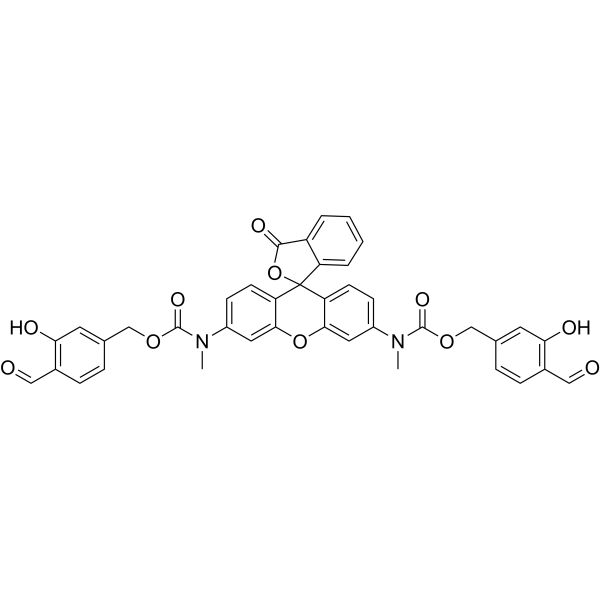
HKPerox-1 is a highly sensitive green fluorescent probe for the specific detection of H2O2 in living cells with a maximum excitation wavelength and emission wavelength of 520 nm and 543 nm, respectively .
loading...
    loading...
1
1 Cited Publications
Cat. No.: HY-D1719A
Target:  

Fluorescent Dye

Research Areas:  

Cancer

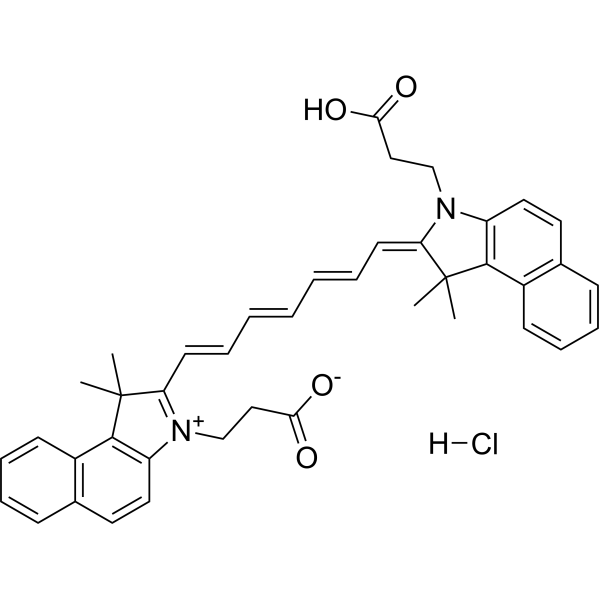
Cypate is a near-infrared fluorescent dye that belongs to the family of photosensitizers. Cypate has high photostability and optical properties, and is often used in near-infrared optical imaging, as well as optical imaging, tumor marking, and drug delivery. In addition, Cypate is also used as a molecular probe and combined with targeting molecules (such as CBT or small interfering RNA) to achieve efficient detection and imaging of specific cells or tissues .
loading...
    loading...
1
1 Cited Publications
Cat. No.: HY-W089353
CAS No.: 194235-40-0
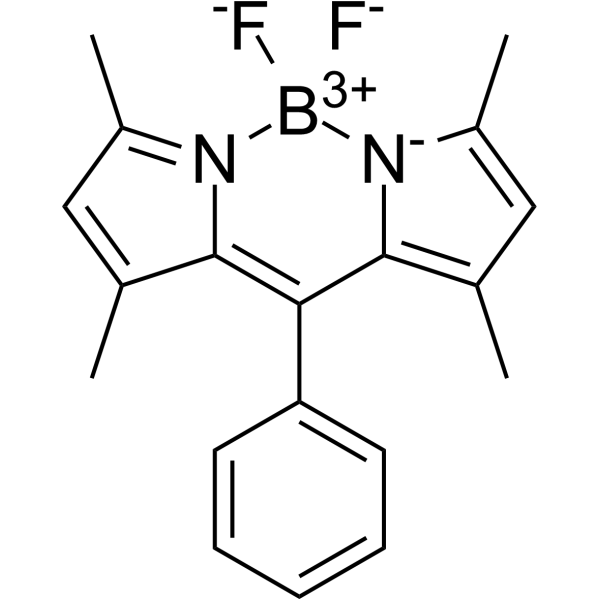
8-Phenyl-BODIPY 505/515 is a molecular rotor based on the BODIPY scaffold, specifically used as a microviscosity probe. The working principle of 8-Phenyl-BODIPY 505/515 is based on the restriction of molecular motion by viscosity: in a high-viscosity environment, the rotational freedom of its chemical bonds is inhibited, which leads to a significant extension of fluorescence lifetime. This property makes 8-Phenyl-BODIPY 505/515 an effective tool for monitoring changes in the viscosity of intracellular microenvironments via fluorescence lifetime imaging (FLIM) technology .
loading...
    loading...
Cat. No.: HY-112624L
CAS No.: 9004-54-0
Synonyms: Dextran 10; Dextran D10; Dextran T10(MW 8000-12000)
Dextran T10 (MW 10,000) (Dextran 10) is a dehydrated glucose polymer with an average molecular weight of 10,000. Dextran T10 (MW 10,000) is composed of repeated glucose units, and it has abundant hydroxyl (-OH) groups, which can be used as a natural "magnetic marker" for chemical exchange saturation transfer (CEST) MRI imaging .
loading...
    loading...
Cat. No.: HY-131326
CAS No.: 819869-77-7
Purity:  ≥98.0%
Research Areas:  

Cancer

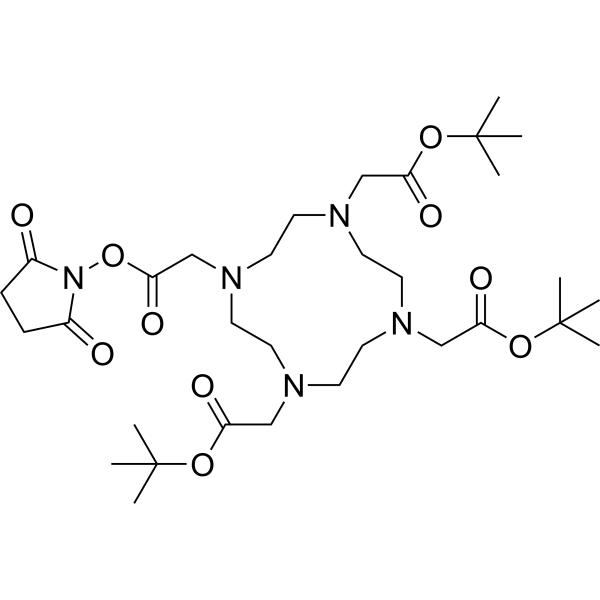
DOTA-tris(tBu)ester NHS ester is a bifunctional precursor to a DOTA-based chelating agent. DOTA-tris(tBu)ester NHS ester can be used to label primary amines (R-NH2) of proteins, amine-modified oligonucleotides, and other amine-containing molecules, and upon deprotection forms stable complexes with metal ions for applications in molecular imaging .
loading...
    loading...
Cat. No.: HY-D0166
CAS No.: 553-24-2
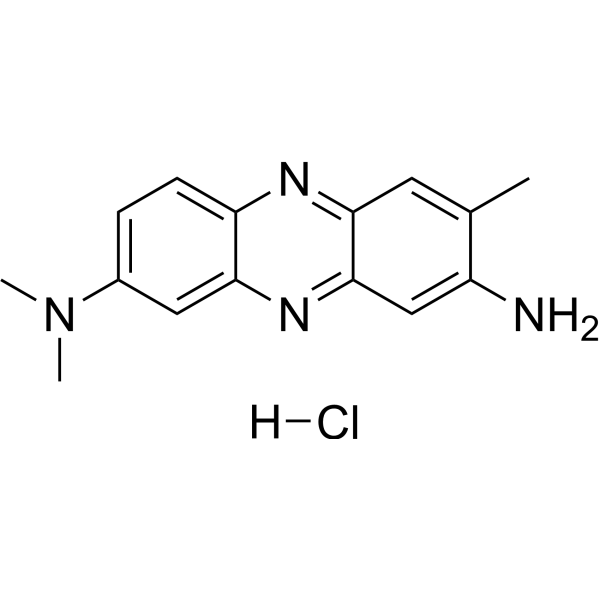
Neutral Red is an organic dye commonly used in biology and cytology laboratories. It can be used to stain living cells, secreted proteins and other molecular structures, etc., and has a wide range of applications in cell imaging and staining. In addition, Neutral Red is widely used in industrial fields such as water treatment, food processing and paper manufacturing, for example as an indicator or colorant.
loading...
    loading...
Cat. No.: HY-159181
CAS No.: 2194580-71-5
p-NCS-Bz-DOTA-GA is a bifunctional chelator. p-NCS-Bz-DOTA-GA can be used as a versatile linker in targeted molecular imaging for both PET/SPECT and MRI applications .
loading...
    loading...
Cat. No.: HY-D0166A
CAS No.: 553-24-2
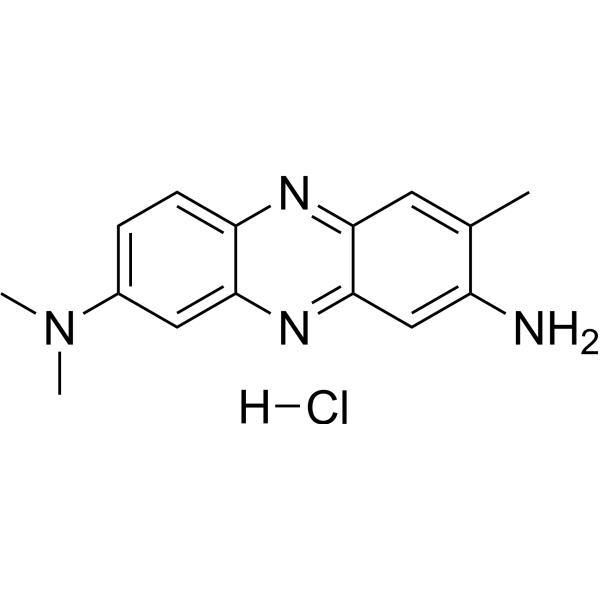
Neutral Red (IND) is an organic dye commonly used in biology and cytology laboratories. It can be used to stain living cells, secreted proteins and other molecular structures, etc., and has a wide range of applications in cell imaging and staining. In addition, Neutral Red (IND) is widely used in industrial fields such as water treatment, food processing and paper manufacturing, for example as an indicator or colorant.
loading...
    loading...
Cat. No.: HY-P10152
CAS No.: 185462-59-3
Research Areas:  

Infection

INF7 is a derivative of the N-terminal domain of the HA2 protein and is sensitive to pH. INF7 disrupts the stability of endosomal membranes through a mechanism independent of membrane fusion. INF7 can be used to enhance the endosome escape of complex or liposome-encapsulated proteins. Co-encapsulation of INF7 and molecular imaging probes in liposomes can enhance intracellular signaling and probe retention .
loading...
    loading...
Cat. No.: HY-P991577
Synonyms: DS-8895A

Target:  

Ephrin Receptor

Research Areas:  

Cancer

DS-8895(DS-8895A) is an anti-EphA2 monoclonal antibody with specific binding to EphA2 receptors and EphA2-expressing cells. DS-8895, when conjugated with 89Zr, 111In, or 125I, supports molecular imaging of EphA2 expression in xenograft models. DS-8895 allows noninvasive measurement of EphA2 expresssion in tumors in vivo. .
loading...
    loading...
Cat. No.: HY-153552A
CAS No.: 2990021-73-1
Purity:  99.89%
Target:  

FAP

Research Areas:  

Cancer

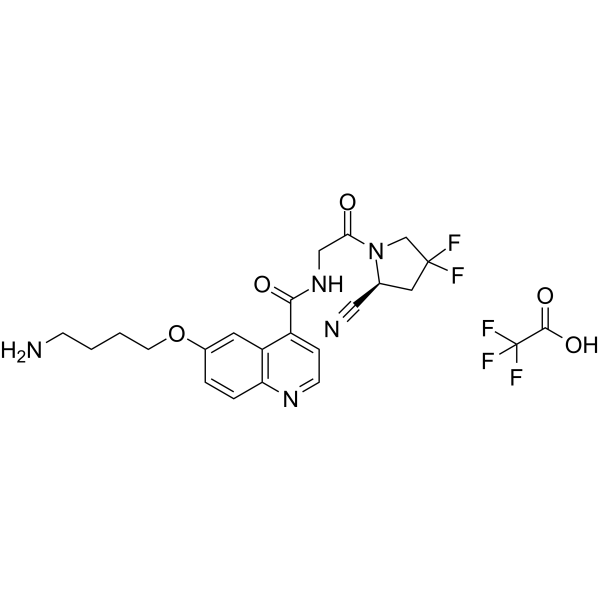
NH2-UAMC1110 TFA is an aminobutoxy derivative of the fibroblast activation protein (FAP) inhibitor UAMC1110 (HY-100684), and is a precursor compound for the synthesis of FAP inhibitor probes, not directly used in bioactivity experiments. For example, NH2-UAMC1110 TFA is involved in the synthesis of the radiotracer FAPI-QS, which exhibits high tumor selectivity and high dose effect, and has been used in tumor diagnosis. NH2-UAMC1110 TFA structurally incorporates an active amino group, allowing it to form covalent bonds with various molecules (such as DOTA, DATA5m, radionuclide chelators, etc.) to synthesize molecular imaging probes or targeted compounds with the ability to target FAP. NH2-UAMC1110 TFA specifically binds to the FAP active site, inhibiting its proline-selective serine protease activity (including dipeptidyl peptidase and endopeptidase activity), blocking FAP-mediated tissue remodeling-related processes. Its key activity is high targeting and high affinity, and its core function is to act as a targeting module coupled with bifunctional chelators (such as DOTA, DATA5m). NH2-UAMC1110 TFA can be applied to diagnostic imaging studies of tumors expressing FAP (such as colorectal cancer, pancreatic cancer, etc.), and also provides molecular tools for targeted research of FAP-related diseases with high FAP expression, such as fibrosis and arthritis .
loading...
    loading...
Cat. No.: HY-D1390A
CAS No.: 2130955-10-9
Synonyms: Sulfo-cyanine5 maleimide
Sulfo-Cy5-Mal is a fluorescent dye derivative composed of a CY5 dye and a maleimide functional group. Sulfo-Cy5-Mal specifically covalently binds to thiol-containing (-SH) biomolecules. Sulfo-Cy5-Mal can be used for protein labeling, antibody conjugation, molecular imaging, and drug delivery studies (Ex/Em = 633 nm/670 nm) .
loading...
    loading...
Cat. No.: HY-153552
CAS No.: 2758337-19-6
Target:  

FAP

Research Areas:  

Cancer

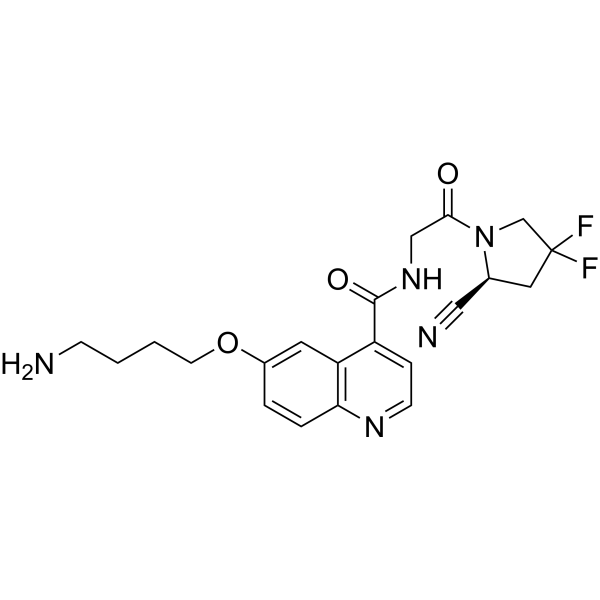
NH2-UAMC1110 is an aminobutoxy derivative of the fibroblast activation protein (FAP) inhibitor UAMC1110 (HY-100684), and is a precursor compound for the synthesis of FAP inhibitor probes, not directly used in bioactivity experiments. For example, NH2-UAMC1110 is involved in the synthesis of the radiotracer FAPI-QS, which exhibits high tumor selectivity and high dose-response, and has been used for tumor diagnosis. NH2-UAMC1110 introduces an active amino group into its structure, enabling it to form covalent bonds with various molecules (such as DOTA, DATA5m, radionuclide chelators, etc.), thereby synthesizing molecular imaging probes or targeted compounds with the ability to target FAP. NH2-UAMC1110 specifically binds to the FAP active site, inhibiting its proline-selective serine protease activity (including dipeptidyl peptidase and endopeptidase activity), blocking FAP-mediated tissue remodeling processes. Its key activity is high targeting and high affinity, and its core function is to be coupled with bifunctional chelators (such as DOTA, DATA5m) as a targeting module. NH2-UAMC1110 can be applied to diagnostic imaging studies of tumors expressing FAP (such as colorectal cancer, pancreatic cancer, etc.), and also provides molecular tools for targeted research of FAP-related diseases with high FAP expression, such as fibrosis and arthritis .
loading...
    loading...
Cat. No.: HY-W923198
CAS No.: 480439-15-4
Synonyms: Methacryloyloxy fluorescein
Fluorescein O-methacrylate (Methacryloyloxy fluorescein) is a pH-responsive fluorescent monomeric dye. Fluorescein O-methacrylate exhibits pH-responsive fluorescence properties: its fluorescence is activated under alkaline conditions and quenched under neutral or acidic conditions; reversible switching of fluorescence is achievable by adjusting the pH of the solution. Fluorescein O-methacrylate can be used as a monomer for the synthesis of amphiphilic fluorescein polymers. These polymers can self-assemble into stable polymer nanoparticles with enhanced aqueous-phase fluorescence, and also enable the conjugation of nanoparticles with amine-containing biomolecules to support sensitive optical detection of biomarkers (Ex/Em = 490/520 nm) .
loading...
    loading...
Cat. No.: HY-D1724
CAS No.: 757960-10-4
Target:  

Fluorescent Dye

Research Areas:  

Cancer

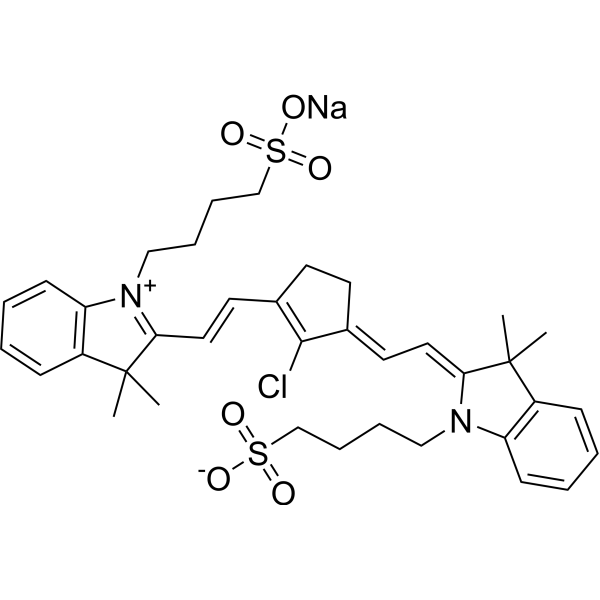
IR-806 is a near-infrared cyanine liquid crystal dye. IR-806 can be used as a molecular antenna to synthesized nanoprobes (NPs). IR-806 can be used for in vivo imaging studies .
loading...
    loading...
Cat. No.: HY-D2335
SERTlight is a fluorescent agent that can specifically label serotonergic neuronal cell bodies, dendrites, and axonal projections as fluorescent substrates of the serotonin transporter (SERT). SERTlight is orthogonal to various genetically encoded sensors in terms of optics, pharmacology, and operation, enabling multiple imaging. SERTlight allows the use of GRAB5HT sensors to label distal 5HT axonal projections and simultaneously image the release of endogenous 5HT, providing a new multifunctional molecular tool for studying serotonergic systems .
loading...
    loading...
Cat. No.: HY-160062
Target:  

Mucin

Research Areas:  

Cancer

S2.2 aptamer sodium is a nucleic acid-based MUC1-binding aptamer with high affinity and low toxicity. Upon binding to its target, S2.2 aptamer sodium undergoes a conformational switch and restores fluorescence signal, serving as a targeted imaging agent for MUC1-positive cancer cells. S2.2 aptamer sodium enables targeted delivery to breast cancer cells with overexpressed MUC1. When formulated as the S2.2-PEG-MZF molecular probe, S2.2 aptamer sodium possesses the functions of T2 signal inhibition, magnetic field-induced hyperthermia and targeted magnetic resonance molecular imaging. In the S2.2-PEG-MZF/DOX nanoliposome, S2.2 aptamer sodium supports targeted thermochemotherapy, effectively inhibiting cancer cell proliferation and invasion as well as inducing apoptosis, and is widely used in studies related to breast cancer .
loading...
    loading...
Cat. No.: HY-P5290
CAS No.: 2213408-17-2
Research Areas:  

Cancer

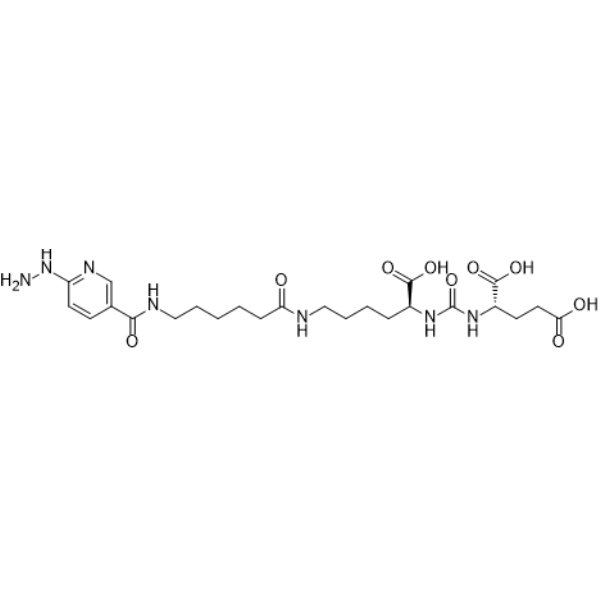
HYNIC-PSMA is a ligand for molecular imaging of tumors. Hynic-psma consists of two components: HYNIC (6-hydrazinonicotinamide) and PSMA (Prostate-Specific Membrane Antigen). HYNIC is a compound used to attach radioactive isotopes to targeted molecules, such as 188Re-HYNIC-PSMA. PSMA is a membrane antigen that is specifically expressed on the surface of prostate cancer cells. HYNIC-PSMA can be used in prostate cancer research . HYNIC-PSMA can be used for the synthesis/research of Radionuclide-Drug Conjugates (RDCs).
loading...
    loading...
Cat. No.: HY-400882
CAS No.: 958233-17-5
Tosylate-DPA-714 is a GMP-grade precursor for the radiosynthesis of DPA-714 (HY-122607). It crosses the blood-brain barrier and exhibits steroidogenic activity. DPA-714 is a specific ligand for the 18 kDa translocator protein (TSPO) with a Ki of 7.0 nM. Tosylate-DPA-714 is safe and does not bind to central benzodiazepine receptors (benzodiazepine receptor). As a radiolabeling precursor, Tosylate-DPA-714 reacts with 18F via nucleophilic aliphatic substitution to form 18F-DPA-714, enabling specific targeted binding to TSPO. 18F-DPA-714 accurately reflects the level of neuroinflammation mediated by microglial activation, and is used for PET molecular imaging of neurological diseases such as Alzheimer's disease and multiple sclerosis .
loading...
    loading...
Cat. No.: HY-164071
CAS No.: 9044-05-7
Synonyms: CM-Dextran
Target:  

Drug Derivative

Research Areas:  

Others

Carboxymethyl Dextran (CM-Dextran) is a dextran derivative and a biocompatible coating for superparamagnetic iron oxide nanoparticles. When coated on the surface of superparamagnetic nanoparticles, Carboxymethyl Dextran forms stable particles across all pH values and NaCl concentrations. Carboxymethyl Dextran can be used to prepare materials for magnetic resonance molecular imaging .
loading...
    loading...

