
1. Search Result
Search Result
Results for "

muscle fiber

" in MedChemExpress (MCE) Product Catalog:

16

Inhibitors & Agonists

1

Peptides

5

MCE Kits

1

Inhibitory Antibodies

4

Natural
Products

Cat. No. Product Name Target Research Areas Chemical Structure
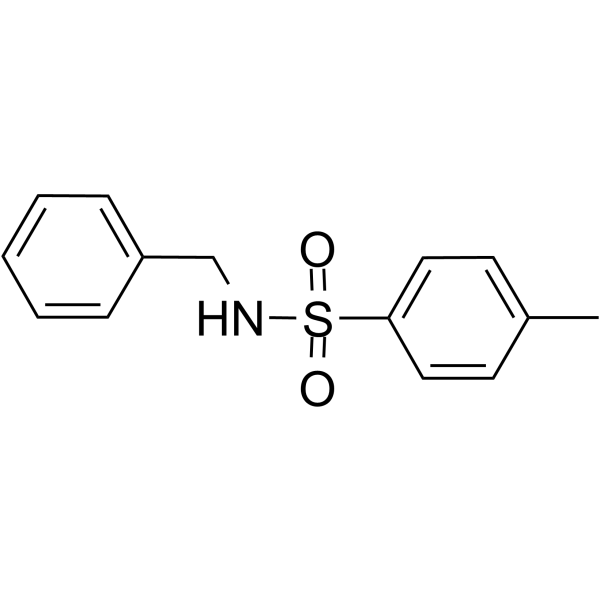
  • HY-16690
    BTS
    3 Publications Verification

    N-Benzyl-p-toluenesulfonamide; N-Tosylbenzylamine

    Myosin Others
    BTS (N-Benzyl-p-toluenesulfonamide) is a potent and selective inhibitor of skeletal muscle myosin II subfragment 1 (S1) ATPase activity, with an IC50s of ~5 µM for actin- and Ca 2+-stimulated myosin S1 ATPase. BTS specifically inhibits the contraction of fast skeletal muscle fibers .
    BTS
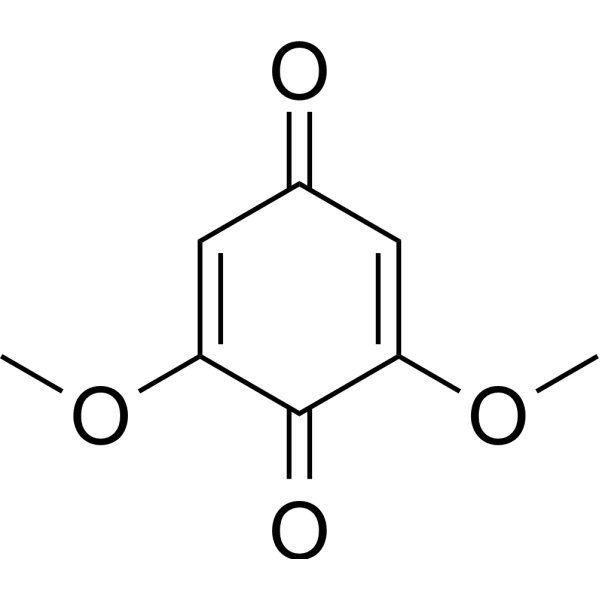
  • HY-N1677

    Akt mTOR Bacterial Fungal AMPK Infection Metabolic Disease Inflammation/Immunology Cancer
    2,6-Dimethoxy-1,4-benzoquinone is a 1,4-benzoquinone derivative. 2,6-Dimethoxy-1,4-benzoquinone promotes phosphorylation of AKT, S6K, mTOR, 4E-BP1, and AMPK, and attenuates mTORC1 activity as part of the AKT/mTOR pathway. 2,6-Dimethoxy-1,4-benzoquinone stimulates myoblast differentiation, increases myotube size, elevates MHC protein expression, enhances mitochondrial biogenesis, respiration, and DNA content, and increases skeletal muscle weights, fiber size, grip strength, and treadmill performance. 2,6-Dimethoxy-1,4-benzoquinone exerts anti-cancer, anti-inflammatory, anti-adipogenic, antibacterial, and antimutagenic effects, inhibits adipogenic transcription factors, nitric oxide production, skin tumor development, Magnaporthe oryzae growth, spore germination, appressorium formation, and growth of select bacterial species, induces H2O2 generation and rice defense gene expression, and reduces rice blast lesion formation. 2,6-Dimethoxy-1,4-benzoquinone can be used for the research of obesity, skin tumorigenesis, rice blast disease, and food-borne illness .
    2,6-Dimethoxy-1,4-benzoquinone
  • HY-P99588
    Stamulumab
    1 Publications Verification

    MYO-029

    TGF-β Receptor Metabolic Disease
    Stamulumab (MYO-029) is a recombinant human IgG1λ antibody that binds to myostatin and neutralizes its activity by preventing binding to its endogenous high-affinity receptor ActRIIB. Stamulumab leads to muscle fiber hypertrophy and not hyperplasia in SCID mice. Stamulumab has the potential for Becker muscular dystrophy (BMD), facioscapulohumeral dystrophy (FSHD), and limb-girdle muscular dystrophy (LGMD) research .
    Stamulumab
  • HY-158183

    Chloride Channel Neurological Disease
    NMD670 is an orally active inhibitor of skeletal muscle specific chloride channel ClC-1 with an EC50 of 1.6 μM. NMD670 enhances neuromuscular transmission and improves muscle contraction and strength. NMD670 can be used in the study of muscle weakness and muscle fatigue .
    NMD670
  • HY-130687A

    DL-Psicose

    PI3K mTOR Akt IGF-1R Inflammation/Immunology
    Psicose is a natural and low-calorie sweetener. Psicose can activate the PI3K/Akt/mTOR pathway to promote muscle synthesis. Psicose can upregulate IGF-1 and downregulate Myostatin. Psicose regulates mitochondrial function by increasing G6P activity. Psicose enhances antioxidant enzyme activity and reduces oxidative stress markers. Psicose reduces plasma triglycerides and total cholesterol. Psicose can improve muscle fiber size and reduce fibrosis. Psicose can be used for research on sarcopenia .
    Psicose
  • HY-N15841

    Ceramidase Others
    C25 Ceramide (d18:1/25:0) is an endogenous ultra-long-chain ceramide that antagonizes the detrimental effects of long-chain ceramides on insulin sensitivity. C25 Ceramide (d18:1/25:0) is specifically enriched in oxidative skeletal muscle fibers, where it serves dual roles in providing structural support to cell membranes and regulating cellular signaling. By participating in the regulation of lipid homeostasis within muscle fibers, C25 Ceramide (d18:1/25:0) helps maintain normal insulin signaling. C25 Ceramide (d18:1/25:0) is primarily utilized in research concerning metabolic diseases—particularly in mechanistic studies investigating the muscle fiber type-specific aspects of insulin resistance .
    C25 Ceramide (d18:1/25:0)
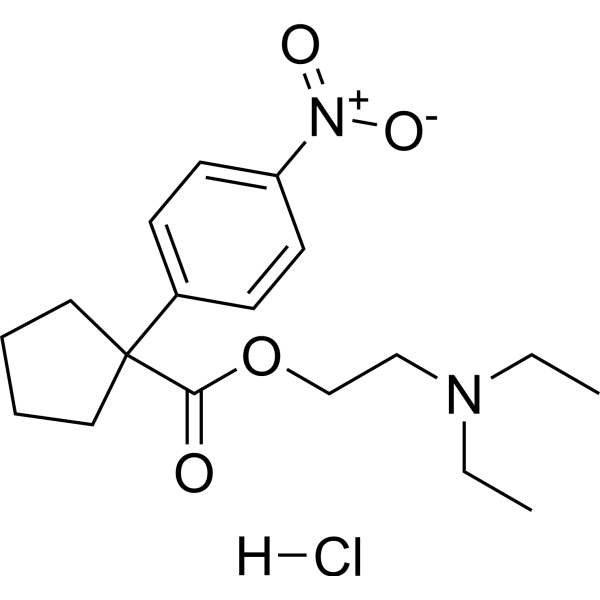
  • HY-100945

    mAChR Neurological Disease
    Nitrocaramiphen hydrochloride is a selective M1 receptor antagonist (Ki: 5.5 nM). Nitrocaramiphen Hydrochloride inhibits the hyperpolarizing effect of muscarine in the muscle fibers .
    Nitrocaramiphen hydrochloride
  • HY-106718

    Sodium Channel Cardiovascular Disease
    Barucainide is an Ib-class anti-arrhythmic agent (moderately blocking sodium channel). Barucainide exhibits concentration-dependent inhibitory effects on the maximum upstroke velocity (Vmax) of Purkinje fibers and ventricular muscle in dogs. Barucainide significantly shortens the action potential duration (APD). Barucainide significantly inhibits the pacemaker activity frequency of atrial tissue in rabbits and the enhanced automaticity of Purkinje fibers under normal resting potential in response to isoproterenol. Barucainide cannot inhibit the abnormal automaticity emission frequency of canine Purkinje fibers induced by barium. Barucainide can be used for research on arrhythmias .
    Barucainide
  • HY-115839A

    Detajmium bitartrate; Tachmalcor

    Sodium Channel Cardiovascular Disease
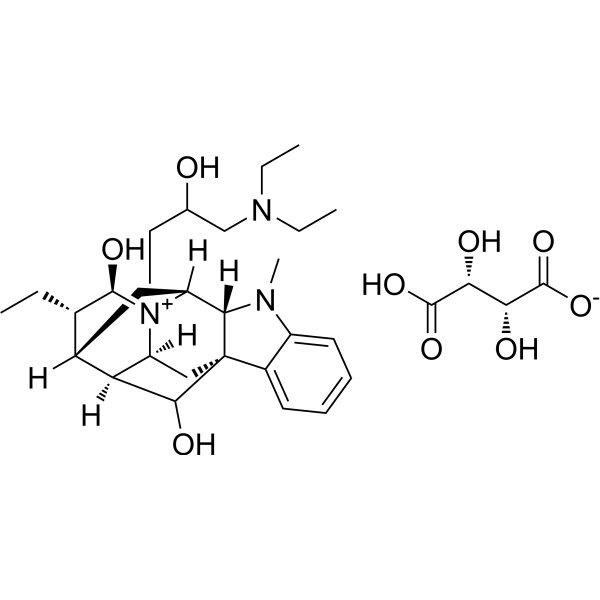
    Detajmium (L-tartrate) is an antiarrhythmic compound. Detajmium has effect on V max in both dog ventricular muscle and Purkinje fibers was frequency dependent .
    Detajmium L-tartrate
  • HY-100718

    Calcium Channel Cardiovascular Disease
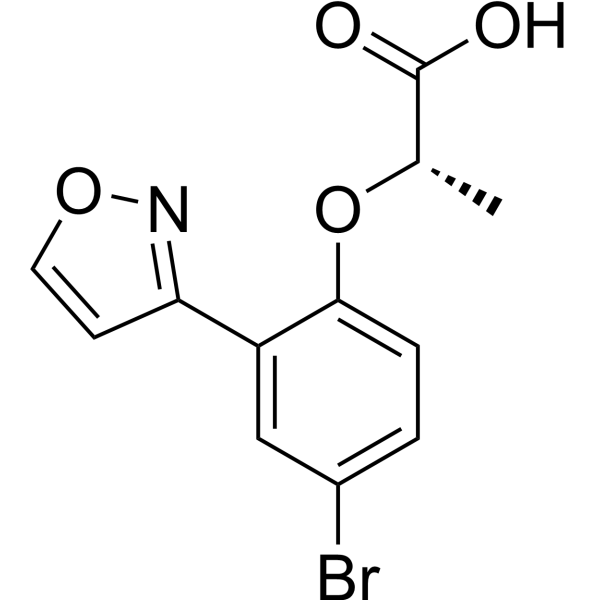
    SCH00013 is a cardiotonic that primarily increases the sensitivity of muscle fibers to Ca++.
    SCH00013
  • HY-108381

    LCB29

    Others Others
    Idrocilamide (LCB29) exhibits a muscle relaxing effect, that inhibits muscle twitch, tetanic tension, K +-induced as well as voltage clamp-induced contraction of rat soleus muscle fibers. Idrocilamide is also a caffeine antagonist, inhibiting the breakdown and biotransformation of caffeine .
    Idrocilamide
  • HY-137968

    Parasite Infection
    Avermectin B1a aglycon is an aglycone derivative of Avermectin B1a (HY-15308), an antiparasitic agent that paralyzes nematodes. Avermectin B1a aglycon hyperpolarizes P. crassipes muscle fibers, with a minimum effective concentration of 0.1 μM .
    Avermectin B1a aglycon
  • HY-N16431

    AMPK Nuclear Factor of activated T Cells (NFAT) Interleukin Related Endogenous Metabolite Metabolic Disease Inflammation/Immunology
    NFAT-133 is an aromatic polyketide with immunosuppressive and antidiabetic activity. NFAT-133 activates the AMPK pathway, promoting glucose uptake in L6 muscle fibers, thereby resisting diabetes. NFAT-133 inhibits the transcriptional activity of activated T-cell nuclear factor (NFAT), thereby suppressing the expression of IL-2 and the proliferation of T cells, demonstrating an immunosuppressive effect. NFAT-133 does not exhibit antibacterial activity or cytotoxicity, but it can weaken the production of NO in RAW264.7 cells induced by Lipopolysaccharide (LPS) (HY-D1056) .
    NFAT-133
  • HY-121143

    Cholinesterase (ChE) Neurological Disease
    Bis-Q is an acetylcholine (ACh) agonist that targets voltage-clamped muscle fibers of the fish Xenomystus nigris. Bis-Q exists in two forms: cis-Bis-Q (non-agonist) and trans-Bis-Q (agonist). Photoisomerization converts cis-Bis-Q to trans-Bis-Q, which induces agonist-induced currents. Channels activated by trans-Bis-Q and ACh have similar conductances and open times. Flashes increase the ratio of trans-Bis-Q to cis-Bis-Q until light equilibrium is reached. Further flashes transiently increase agonist-induced currents, indicating binding of trans-Bis-Q to desensitized receptors. Higher concentrations of cis-Bis-Q produce larger agonist-induced currents that decay exponentially. .
    Bis-Q
  • HY-N1677R

    Reference Standards Akt mTOR Bacterial Fungal AMPK Infection Metabolic Disease Inflammation/Immunology Cancer
    2,6-Dimethoxy-1,4-benzoquinone (Standard) is the analytical standard of 2,6-Dimethoxy-1,4-benzoquinone (HY-N1677). This product is intended for research and analytical applications. 2,6-Dimethoxy-1,4-benzoquinone is a 1,4-benzoquinone derivative. 2,6-Dimethoxy-1,4-benzoquinone promotes phosphorylation of AKT, S6K, mTOR, 4E-BP1, and AMPK, and attenuates mTORC1 activity as part of the AKT/mTOR pathway. 2,6-Dimethoxy-1,4-benzoquinone stimulates myoblast differentiation, increases myotube size, elevates MHC protein expression, enhances mitochondrial biogenesis, respiration, and DNA content, and increases skeletal muscle weights, fiber size, grip strength, and treadmill performance. 2,6-Dimethoxy-1,4-benzoquinone exerts anti-cancer, anti-inflammatory, anti-adipogenic, antibacterial, and antimutagenic effects, inhibits adipogenic transcription factors, nitric oxide production, skin tumor development, Magnaporthe oryzae growth, spore germination, appressorium formation, and growth of select bacterial species, induces H2O2 generation and rice defense gene expression, and reduces rice blast lesion formation. 2,6-Dimethoxy-1,4-benzoquinone can be used for the research of obesity, skin tumorigenesis, rice blast disease, and food-borne illness.
    2,6-Dimethoxy-1,4-benzoquinone (Standard)
  • HY-167983

    Gap Junction Protein Neurological Disease
    Cx43 HC-IN-1 (Compound D4) is a selective and orally active inhibitor of connexin hemichannels (Cx43 HC). Cx43 HC-IN-1 effectively inhibits the hemichannel activity mediated by Cx43/Cx45 in denervated skeletal muscle fibers, significantly increasing the reinnervation rate of muscle fibers by neurons. Cx43 HC-IN-1 reduces neuroinflammation and neuronal overexcitation by inhibiting hemichannels in glial cells in the brain, and alleviates epilepsy in mice. Cx43 HC-IN-1 can be used for research on epilepsy and muscle diseases .
    Cx43 HC-IN-1

Inquiry Online

Your information is safe with us. * Required Fields.

Salutation


Country or Region *

Applicant Name *


Organization Name *

Department *


Email Address *


Product Name *

Cat. No.


Requested quantity *

Phone Number *


Remarks

Inquiry Online

Inquiry Information

Product Name:
Cat. No.:
Quantity:
MCE Japan Authorized Agent:

