



Myoglobin

Based on 1 Customer Validation
Myoglobin is an oxygen-binding heme protein. Myoglobin scavenges ROS via its peroxidase activity, and binds to and inactivates NO in the heart and oxidative skeletal muscle. Myoglobin stores, buffers and facilitates intracellular oxygen diffusion, maintains aerobic metabolism under hypoxic/anoxic conditions, and provides oxygen supply support for mitochondria. Myoglobin alleviates oxidative stress, protects cardiac function and affects cardiac redox pathways. Myoglobin can be used in studies related to ischemia-reperfusion injury, oxidative stress-induced cardiac dysfunction and acute myocardial infarction.
Nur für Forschungszwecke. Wir verkaufen nicht an Patienten.
- Reinheit : 99.00%
- CAS. Nr.: 100684-32-0
-
Speicherung:
Please store the product under the recommended conditions in the Certificate of Analysis.


To place orders, for customer services and technical support, please contact: MedChemExpress USA
Tel: 609-228-6898 E-mail: [email protected] [email protected]


-
 Biologische Aktivität
-
Chemical Information
- Protokoll
- Reinheit & Dokumentation
- Verweise
-
 Help & FAQs


-

HY-W250978
OvalbuminsAllergen -

HY-P2995
HemoglobinIron-containing Protein -

HY-W250978A
Ovalbumin, low endotoxinAllergen -

HY-D0842
BSA ProteinGlobular Protein -

HY-125857
Cytochrome CMulti-functional Enzyme -
HY-14648
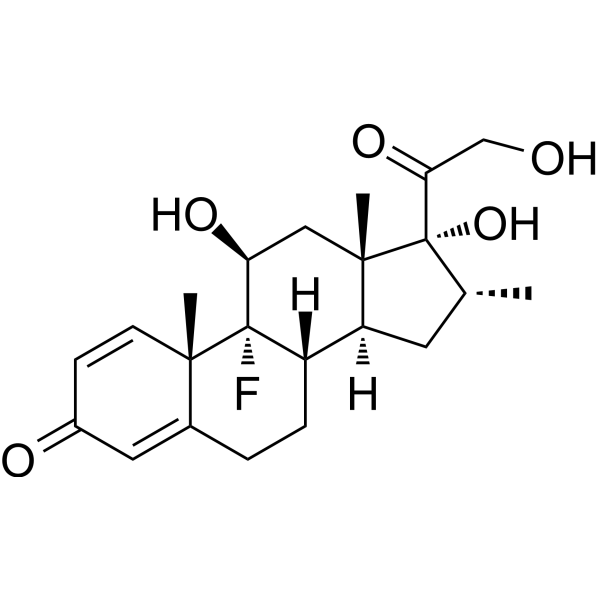
DexamethasoneGR Agonist -
HY-NP008
β-LactoglobulinGlobular Protein -
HY-13966
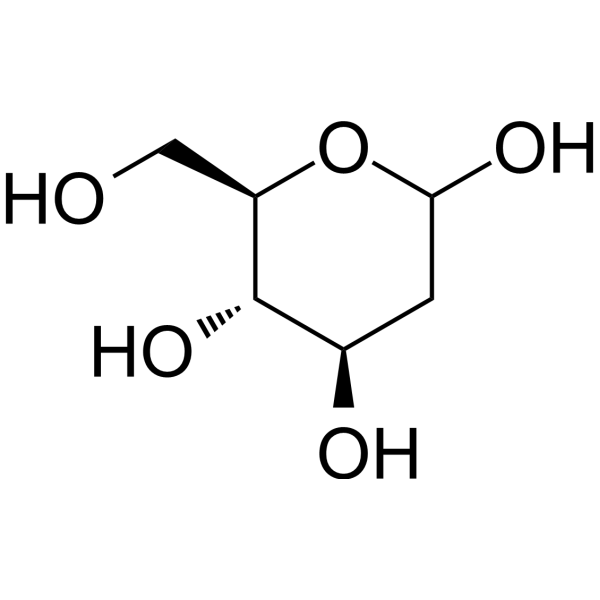
2-Deoxy-D-glucoseGlycolysis Inhibitor -
HY-15142
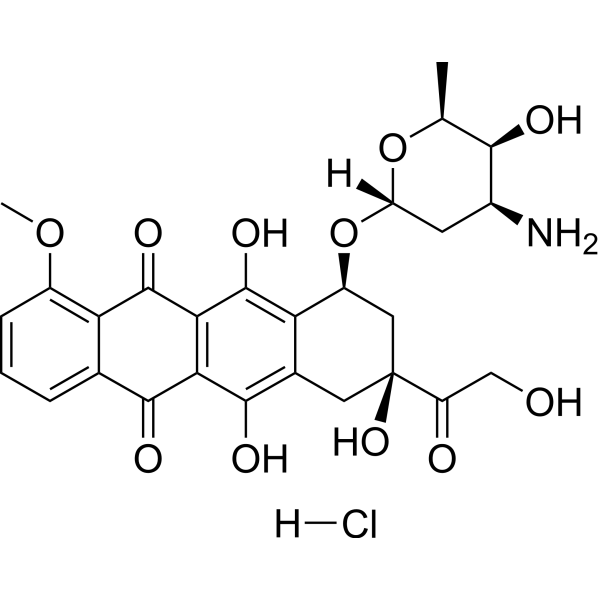
Doxorubicin hydrochlorideTopoisomerase Inhibitor -

HY-P1222
LL-37, humanAntimicrobial Peptide -

HY-P3267
Holo-Bovine TransferrinIron Transportor -
HY-P3160
FibronectinTissue Injury Biomarker


Biologische Aktivität
Beschreibung
In Vitro
MedChemExpress (MCE) has not independently confirmed the accuracy of these methods. They are for reference only.
Clinical Trial
| NCT Number | Sponsor | Condition | Start Date |
Phase

|
|---|---|---|---|---|
| NCT01329991 | 2011-05 | PHASE1 |


Chemical Information
-
CAS. Nr. 100684-32-0
-
Appearance Solid
-
Color Brown to reddish brown
-
SMILES
[Myoglobin]
-
Versand
Room temperature in continental US; may vary elsewhere.
-
Speicherung
Please store the product under the recommended conditions in the Certificate of Analysis.


Reinheit & Dokumentation
-
Data Sheet (269 KB)
-
SDS (251 KB)
- English - EN (251 KB)
- Français - FR (251 KB)
- Deutsch - DE (251 KB)
- Norwegian - NO (251 KB)
- Español - ES (251 KB)
- Swedish - SV (251 KB)
- Italian - IT (251 KB)
- Korean - KR (251 KB)
- Portuguese - PT (251 KB)
-
Handling Instructions (2659 KB)
Verweise
[1]. Ordway GA, et al. Myoglobin: an essential hemoprotein in striated muscle. The Journal of experimental biology. 2004 Sep;207(Pt 20):3441-6. [Content Brief]
[2]. Baron CP, et al. Myoglobin-induced lipid oxidation. A review. Journal of agricultural and food chemistry. 2002 Jul 03;50(14):3887-97. [Content Brief]
[3]. Flögel U, et al. Role of myoglobin in the antioxidant defense of the heart. FASEB journal : official publication of the Federation of American Societies for Experimental Biology. 2004 Jul;18(10):1156-8. [Content Brief]
[4]. Flögel U, et al. Myoglobin: A scavenger of bioactive NO. Proceedings of the National Academy of Sciences of the United States of America. 2001 Jan 16;98(2):735-40. [Content Brief]
[5]. Gibler WB, et al. Myoglobin as an early indicator of acute myocardial infarction. Annals of emergency medicine. 1987 Aug;16(8):851-6. [Content Brief]

Calculators
Konzentration (Stammlösung) × Volumen (Stammlösung) = Konzentration (Ziellösung) × Volumen (Ziellösung)


Myoglobin Related Classifications
HY-NP007 Related Classifications
 Powered by Bioz