Search Result
Results for "
naphthalene
" in MedChemExpress (MCE) Product Catalog:
9
Biochemical Assay Reagents
21
Isotope-Labeled Compounds
| Cat. No. |
Product Name |
Target |
Research Areas |
Chemical Structure |
-
- HY-15417
-
|
|
Myosin
YAP
|
Cancer
|
|
ML-7 hydrochloride is a naphthalene sulphonamide derivative, potently inhibits MLCK (IC50=300 nM). ML-7 hydrochloride also inhibits YAP/TAZ.
|
-
-
- HY-P0009A
-
-
-
- HY-W016288
-
|
2,3-naphthalenedicarboxaldehyde; naphthalene-2,3-dialdehyde
|
Fungal
|
Infection
|
|
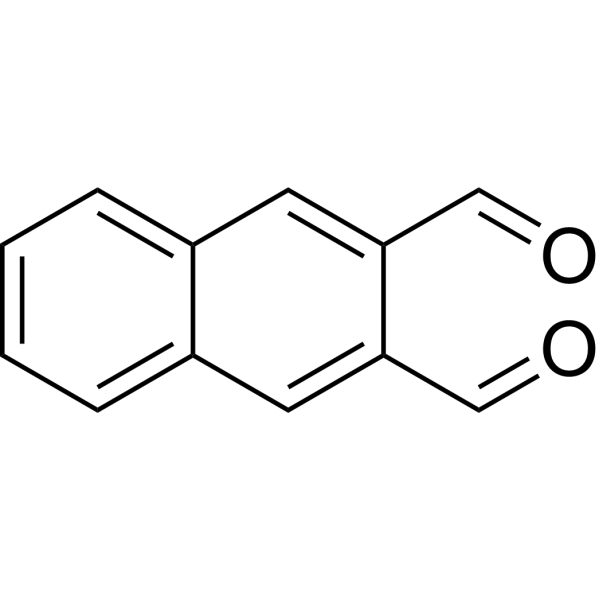
Naphthalene-2,3-dicarboxaldehyde (NDA) is an effective inhibitor of Candida albicans aspartate semialdehyde dehydrogenase (ASADH), with a Ki value of 45 μM. Naphthalene-2,3-dicarboxaldehyde targets ASADH in the aspartate biosynthetic pathway of Candida albicans. Naphthalene-2,3-dicarboxaldehyde reacts with primary amines to generate highly fluorescent and stable derivatives. Naphthalene-2,3-dicarboxaldehyde serves as a fungistatic agent and a fluorogenic derivatization reagent. Naphthalene-2,3-Dicarboxaldehyde can be used for the research of candidiasis .
|
-
-
- HY-Y0110
-
-
-
- HY-W250727
-
|
6-(p-Tolylamino)naphthalene-2-sulfonate sodium
|
Fluorescent Dye
|
Others
|
|
TNS (6-(p-Tolylamino) naphthalene-2-sulfonate) sodium is a fluorescent probe used to detect the conformational state of proteins. TNS sodium binds to the central hydrophobic calyx of β-lactoglobulin (β-LG) to form a 1:1 complex, which stabilizes the folded conformation of β-LG. TNS sodium shows weak fluorescent signals in aqueous solution, but its fluorescence intensity increases significantly upon binding to the hydrophobic domains of proteins, with the maximum excitation wavelength and maximum emission wavelength located at 321 nm and 446 nm, respectively .
|
-
-
- HY-103689
-
|
|
Biochemical Assay Reagents
|
Others
|
|
Cucurbit[8]uril is a potent, low toxicity and orally active supramolecular inducer of protein heterodimerization. Cucurbit[8]uril induces heterodimerization of methylviologen and naphthalene functionalized proteins. Cucurbit[8]uril can induce energy transfer .
|
-
-
- HY-P3815
-
|
|
Casein Kinase
|
Others
|
|
Casein Kinase 2 Substrate Peptide is a common CK2 substrate peptide. Casein Kinase 2 Substrate Peptide is synthesized with its C-terminus conjugated to 5-[(2-aminoethyl)amino]naphthalene-1-sulfonic acid (EDANS). Casein Kinase 2 Substrate Peptide can be used for protein kinase CK2 activity determination .
|
-
-
- HY-Y0236
-
|
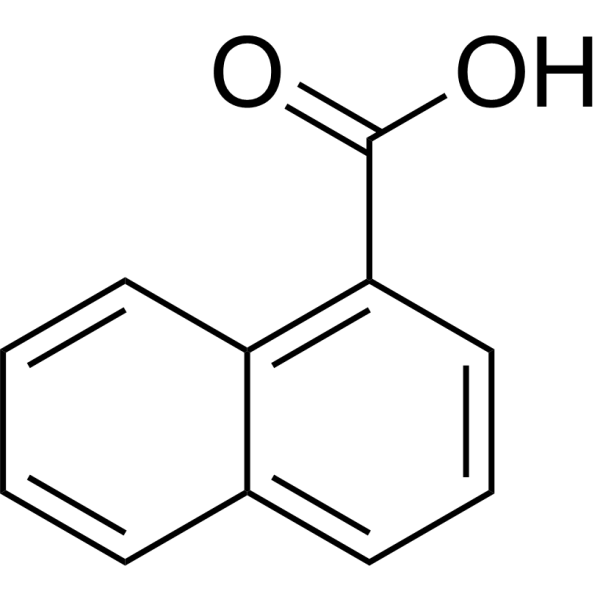
naphthalene-1-carboxylic acid
|
Biochemical Assay Reagents
|
Others
|
|
Naphthalene-1-carboxylic acid is a biochemical reagent that can be used as a biological material or organic compound for life science related research.
|
-
-
- HY-32126
-
|
|
Drug Intermediate
|
Others
|
|
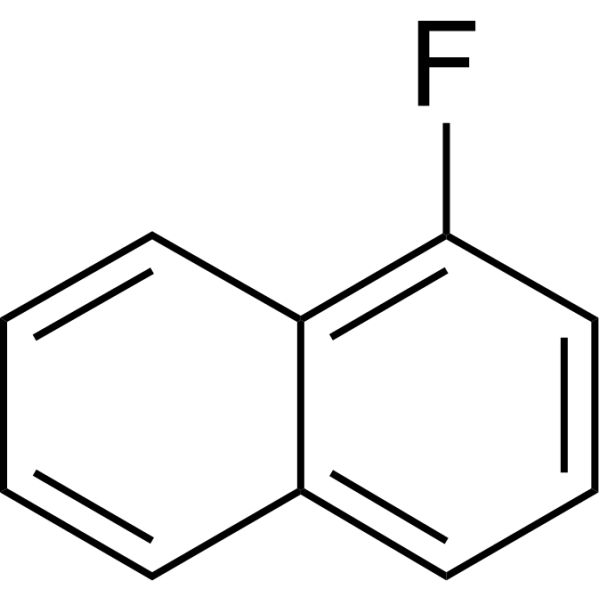
1-Fluoronaphthalene is an organofluorine compound derived from naphthalene derivatives and fluorinated aromatics. 1-Fluoronaphthalene can be used to synthesize LY248686, a potent inhibitor of serotonin and noradrenaline uptake .
|
-
-
- HY-W015451
-
|
2,7-DHN; naphthalene-2,7-diol
|
Fungal
|
Others
|
|
2,7-Dihydroxynaphthalene (2,7-DHN) is a substrate of a new group of aromatic prenyltransferases in fungi and can be catalyzed to undergo a regiospecific prenylation reaction. 2,7-Dihydroxynaphthalene can undergo reactions such as oxidation and substitution .
|
-
-
- HY-N7626
-
|
|
Fungal
Glycosidase
|
Infection
|
|
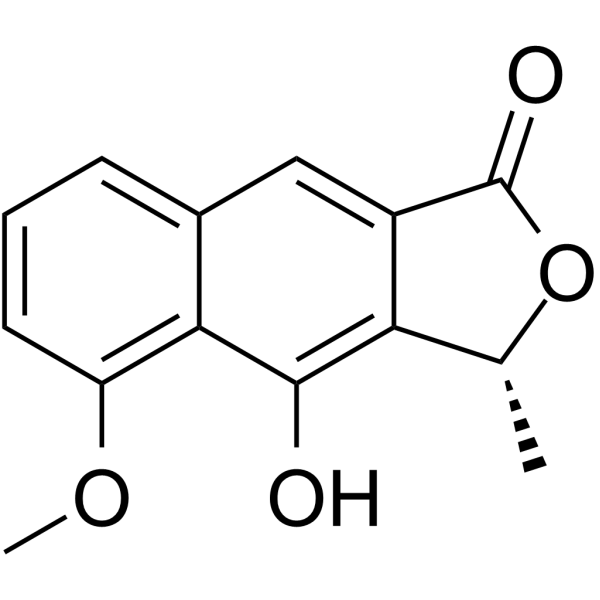
Eleutherol is a naphthalene isolated from E. americana with antifungal activities . Eleutherol is against yeasts Candida albicans, C. tropicalis, Saccharomyces cerevisiae and Cryptococcus neoformans with MIC values between 7.8 µg/mL and 250 µg/mL . Eleutherol inhibits α-glucosidase function with an IC50>1.00 mM .
|
-
-
- HY-Y0110S1
-
|
|
Endogenous Metabolite
|
Others
|
|
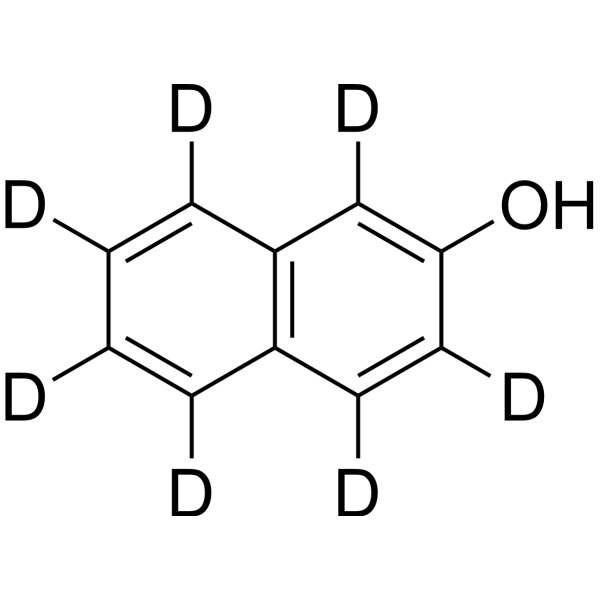
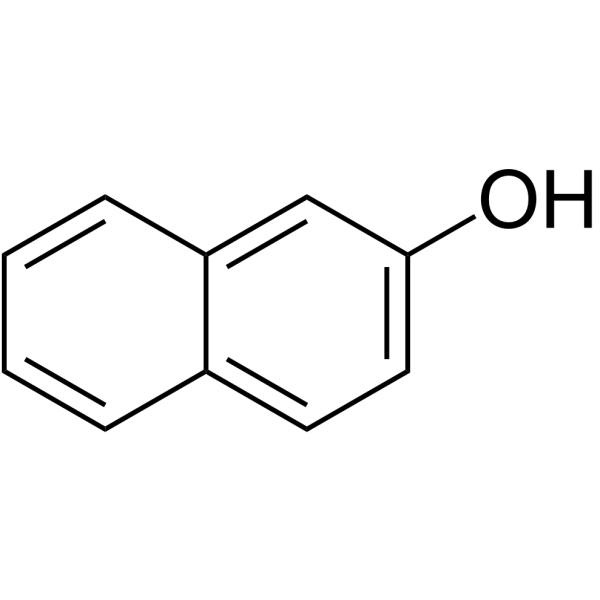
2-Naphthol-d7 is the deuterium labeled 2-Naphthol . 2-Naphthol is a metabolite of naphthalene, catalyzed by cytochrome P450 (CYP) isozymes (CYP 1A1, CYP 1A2, CYP 2A1, CYP 2E1 and CYP 2F2) .
|
-
-
- HY-W005148
-
|
|
Biochemical Assay Reagents
|
Others
|
|
3-Amino-2-naphthoic acid is a derivative of naphthalene and can be used to synthesize other compounds. 3-Amino-2-naphthoic acid is commonly used as the base material for synthesizing various dyes and pigments. 3-Amino-2-naphthoic acid has been developed as a "turn-on" fluorescence probe for the specific detection of the cyanate anion (CNO -) .
|
-
-
- HY-W778240
-
|
naphthalene-2-carboxylic acid-13C6
|
Isotope-Labeled Compounds
Biochemical Assay Reagents
|
Others
|
|
2-Naphthoic acid- 13C6 (Naphthalene-2-carboxylic acid- 13C6) is the 13C-labeled 2-Naphthoic acid (HY-W007437). 2-Naphthoic acid is an organic compound commonly used as a raw material for dyes and the production of other chemicals. It can form dyes with other organic substances and is widely used in textile, printing and manufacturing fields. In addition, the compound is also used as a photosensitive material and a lubricant.
|
-
-
- HY-W012558
-
|
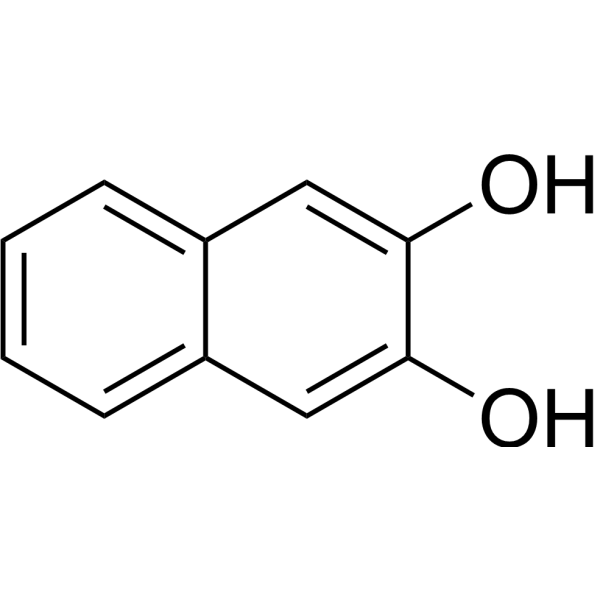
2,3-naphthalenediol
|
Biochemical Assay Reagents
|
Others
|
|
Naphthalene-2,3-diol is a biochemical reagent that can be used as a biological material or organic compound for life science related research.
|
-
-
- HY-W016103
-
|
|
Bacterial
Drug Intermediate
|
Infection
|
|
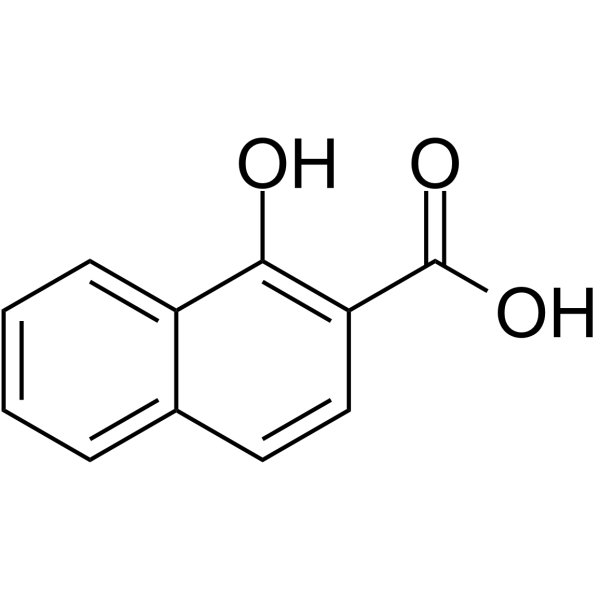
1-Hydroxy-2-naphthoic acid is a ubiquitous bicyclic intermediate metabolite in the microbial degradation process of polycyclic aromatic hydrocarbons (PAHs). 1-Hydroxy-2-naphthoic acid can be converted into 1,2-naphthalenediol, which enters the naphthalene degradation pathway and participates in the tricarboxylic acid (TCA) cycle to achieve complete mineralization .
|
-
-
- HY-B0055
-
Azulene
1 Publications Verification
Cyclopentacycloheptene
|
HIV
|
Infection
|
|
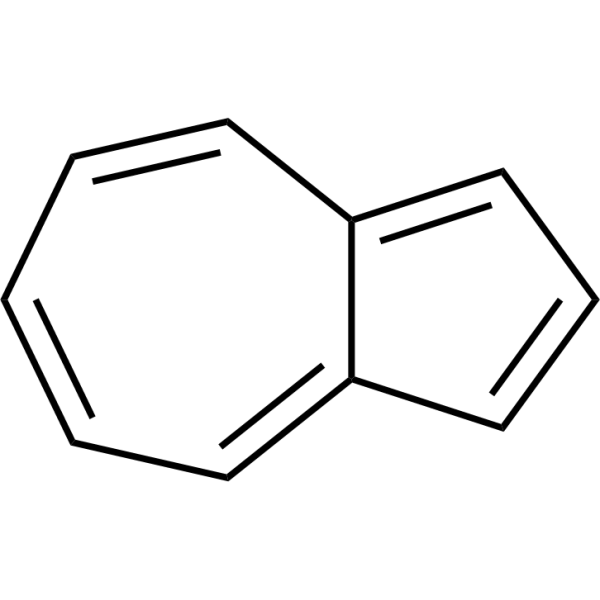
Azulene (Cyclopentacycloheptene) is as an isomer of naphthalene with high anti-HIV activity. Azulene, isolated from the distillation of chamomile oil, is a scaffold in medicinal chemistry .
|
-
-
- HY-W007437
-
|
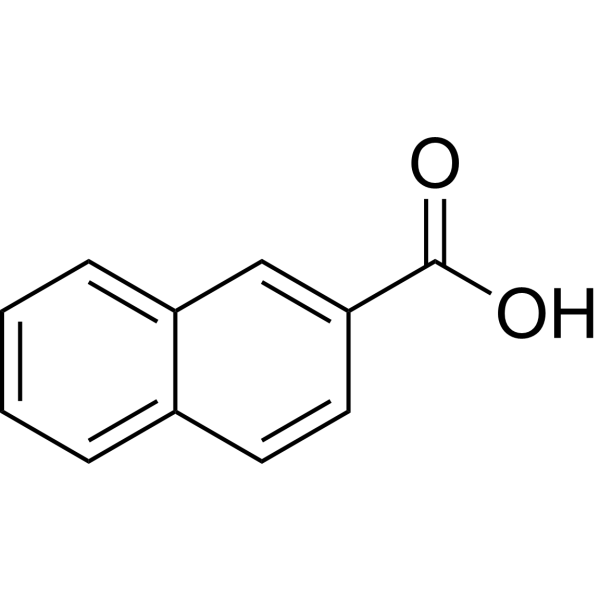
naphthalene-2-carboxylic acid
|
Biochemical Assay Reagents
|
Others
|
|
2-Naphthoic acid is an organic compound commonly used as a raw material for dyes and the production of other chemicals. It can form dyes with other organic substances and is widely used in textile, printing and manufacturing fields. In addition, the compound is also used as a photosensitive material and a lubricant.
|
-
-
- HY-W016288R
-
|
2,3-naphthalenedicarboxaldehyde (Standard); naphthalene-2,3-dialdehyde (Standard)
|
Fungal
Reference Standards
|
Infection
|
|
Naphthalene-2,3-dicarboxaldehyde (Standard) is the analytical standard for Naphthalene-2,3-dicarboxaldehyde (HY-W016288). This product is for research and analytical applications. Naphthalene-2,3-dicarboxaldehyde (NDA) is an effective inhibitor of Candida albicans aspartate semialdehyde dehydrogenase (ASADH), with a Ki value of 45 μM. Naphthalene-2,3-dicarboxaldehyde targets ASADH in the aspartate biosynthetic pathway of Candida albicans. Naphthalene-2,3-dicarboxaldehyde reacts with primary amines to generate highly fluorescent and stable derivatives. Naphthalene-2,3-dicarboxaldehyde serves as a fungistatic agent and a fluorogenic derivatization reagent. Naphthalene-2,3-Dicarboxaldehyde can be used for the research of candidiasis .
|
-
-
- HY-128105
-
|
|
Bacterial
|
Others
|
|
1,2-Dihydroxynaphthalene is an intermediate isolated from the metabolism of naphthalene and has been shown to be a precursor to the formation of naphthoquinones. 1,2-Dihydroxynaphthalene can be further metabolized by some bacteria (such as Pseudomonas) to compounds such as coumarins and salicylic acid .
|
-
-
- HY-P0009B
-
-
-
- HY-W777535S
-
-
-
- HY-W010054
-
|
|
Environmental Pollutants
Biochemical Assay Reagents
|
Others
|
|
2-Ethoxynaphthalene is a naphthalene compound. 2-Ethoxynaphthalene can be converted into products such as 1,4-diethoxy-2,3-benzodioxane and ethyl glyoxalate through ozonolysis. 2-Ethoxynaphthalene is promising for research of ozonolysis reaction .
|
-
-
- HY-77304
-
|
6-Nitro-(1R,4S)-1,2,3,4-tetrahydro-1,4-epiazano-naphthalene-9-carboxylic acid tert-butyl ester-10
|
Drug Intermediate
|
Others
|
|
2-Methyl-2-propanyl(1S,8R)-4-nitro-11-azatricyclo[6.2.1.02,7]undeca-2,4,6-triene-11-carboxylate (6-Nitro-(1R,4S)-1,2,3,4-tetrahydro-1,4-epiazano-naphthalene-9-carboxylic acid tert-butyl ester-10) is a drug intermediate for synthesis of various active compounds.
|
-
-
- HY-178365
-
-
-
- HY-W777535
-
-
-
- HY-D1519
-
-
-
- HY-W012566S
-
-
-
- HY-N1142
-
|
Nakahalene; Trachrysone; Torachryson
|
Others
|
Others
|
|
Torachrysone (Nakahalene; Trachrysone), a naphthalene, can be isolated from Cassia tora L .
|
-
-
- HY-W702995
-
|
1,5-Naphthylene-diamine-d6
|
Isotope-Labeled Compounds
|
Others
|
|
Naphthalene-1,5-diamine-d6 (1,5-Naphthylene-diamine-d6) is the deuterium labeled Naphthalene-1,5-diamine (HY-W012566).
|
-
-
- HY-139382
-
|
|
Cytochrome P450
|
Neurological Disease
|
|
2-(Isopentylamino)naphthalene-1,4-dione (compound 3d), a Vitamin K (HY-B2172) analogue, shows protection in Pentylenetetrazole (PTZ)-induced seizure model. 2-(Isopentylamino)naphthalene-1,4-dione significantly increases ATP levels in zebrafish as well as HT-22 cells. 2-(Isopentylamino)naphthalene-1,4-dione shows excellent permeability into the brain .
|
-
-
- HY-W699416
-
|
naphthalene-1-carboxylic acid-d7
|
Isotope-Labeled Compounds
Biochemical Assay Reagents
|
Others
|
|
1-Naphthoic acid-d7 (Naphthalene-1-carboxylic acid-d7) is the deuterium labeled 1-Naphthoic acid (HY-Y0236). Naphthalene-1-carboxylic acid is a biochemical reagent that can be used as a biological material or organic compound for life science related research.
|
-
-
- HY-166933S
-
-
-
- HY-166957S
-
-
-
- HY-W327865S
-
-
-
- HY-W725429
-
|
naphthalene-1,5-diol-d6
|
Isotope-Labeled Compounds
|
Others
|
|
1,5-Dihydroxynaphthalene-d6 (Naphthalene-1,5-diol-d6) is the deuterium labeled 1,5-Dihydroxynaphthalene (HY-Y0825).
|
-
-
- HY-W703429S
-
-
-
- HY-W710384S
-
|
|
Isotope-Labeled Compounds
|
Others
|
|
1,2,3,4,5,6,7-Heptachloro naphthalene- 13C10 is 13C labeled 1,2,3,4,5,6,7-Heptachloronaphthalene .
|
-
-
- HY-B0055R
-
|
Cyclopentacycloheptene (Standard)
|
Reference Standards
HIV
|
Infection
|
|
Azulene (Standard) is the analytical standard of Azulene. This product is intended for research and analytical applications. Azulene (Cyclopentacycloheptene) is as an isomer of naphthalene with high anti-HIV activity. Azulene, isolated from the distillation of chamomile oil, is a scaffold in medicinal chemistry .
|
-
-
- HY-W027544S1
-
|
5-(Dimethylamino)-N-(prop-2-yn-1-yl)naphthalene-1-sulfonamide-d6
|
Isotope-Labeled Compounds
|
Others
|
|
Dansyl propargylamine-d6 (5-(Dimethylamino)-N-(prop-2-yn-1-yl)naphthalene-1-sulfonamide-d6) is the deuterium labeled Dansyl propargylamine .
|
-
-
- HY-32126R
-
|
|
Adrenergic Receptor
Serotonin Transporter
Reference Standards
|
Others
|
|
1-Fluoronaphthalene (Standard) is the analytical standard of 1-Fluoronaphthalene. This product is intended for research and analytical applications. 1-Fluoronaphthalene is an organofluorine compound derived from naphthalene derivatives and fluorinated aromatics. 1-Fluoronaphthalene can be used to synthesize LY248686, a potent inhibitor of serotonin and noradrenaline uptake .
|
-
-
- HY-N14989
-
|
|
Dipeptidyl Peptidase
|
Infection
|
|
Fluostatin A inhibits the ability of DPP-III, and with arginyl-arginine-2-naphthalene formamide as the substrate, the IC50 is 0.44 μg/mL .
|
-
-
- HY-N4091
-
|
|
Others
|
Others
|
|
Tinnevellin glucoside, a naphthalene glycoside, isolated from Cassia senna leaves and pods .
|
-
-
- HY-W128203
-
-
-
- HY-105460
-
|
|
Histamine Receptor
|
Inflammation/Immunology
|
|
TEI-6472, a naphthalene derivative, can suppress IgE responses both in vitro and in vivo. TEI-6472 causes significant inhibition of FceRI-mediated histamine release .
|
-
-
- HY-W015451R
-
|
2,7-DHN (Standard); naphthalene-2,7-diol (Standard)
|
Reference Standards
Fungal
|
Others
|
|
2,7-Dihydroxynaphthalene (Standard) (2,7-DHN (Standard)) is the analytical standard of 2,7-Dihydroxynaphthalene (HY-W015451). This product is intended for research and analytical applications. 2,7-Dihydroxynaphthalene (2,7-DHN) is a substrate of a new group of aromatic prenyltransferases in fungi and can be catalyzed to undergo a regiospecific prenylation reaction. 2,7-Dihydroxynaphthalene can undergo reactions such as oxidation and substitution .
|
-
-
- HY-E70520
-
|
|
Biochemical Assay Reagents
|
Inflammation/Immunology
Cancer
|
|
Salicylate hydroxylase, Microorganism (EC 1.14.13.1) is a flavin-dependent monooxygenase. Salicylate hydroxylase, Microorganism catalyzes the decarboxylative hydroxylation of salicylate into catechol in the naphthalene degradation pathway in Pseudomonas putida G7. Salicylate hydroxylase, Microorganism has potential biocatalytic applications .
|
-
-
- HY-Y0110S
-
|
|
Endogenous Metabolite
|
Others
|
|
2-Naphthol-d8 is the deuterium labeled 2-Naphthol . 2-Naphthol is a metabolite of naphthalene, catalyzed by cytochrome P450 (CYP) isozymes (CYP 1A1, CYP 1A2, CYP 2A1, CYP 2E1 and CYP 2F2) .
|
-
-
- HY-Y0110R
-
|
|
Reference Standards
Endogenous Metabolite
|
Others
|
|
2-Naphthol (Standard) is the analytical standard of 2-Naphthol. This product is intended for research and analytical applications. 2-Naphthol is a metabolite of naphthalene, catalyzed by cytochrome P450 (CYP) isozymes (CYP 1A1, CYP 1A2, CYP 2A1, CYP 2E1 and CYP 2F2).
|
-
-
- HY-W014139
-
|
naphthalene-2,3-dicarboxylate
|
MOFs
|
Others
|
|
Naphthalene-2,3-dicarboxylic acid (Naphthalene-2,3-dicarboxylate) is a metal-organic framework (MOF).
|
-
- HY-W056964
-
|
naphthalene-2,6-dicarboxylate
|
MOFs
|
Others
|
|
Naphthalene-2,6-dicarboxylic acid (Naphthalene-2,6-dicarboxylate) is a metal-organic framework (MOF).
|
-
- HY-W056964S
-
|
naphthalene-2,6-dicarboxylate-d6
|
Isotope-Labeled Compounds
|
Others
|
|
Naphthalene-2,6-dicarboxylic acid-d6 is the deuterium labeled Naphthalene-2,6-dicarboxylic acid .
|
-
- HY-W586976
-
|
|
MOFs
|
Others
|
|
Naphthalene-1,3-dicarboxylic acid is a metal-organic framework (MOF).
|
-
- HY-W586975
-
|
|
MOFs
|
Others
|
|
Naphthalene-1,6-dicarboxylic acid is a metal-organic framework (MOF).
|
-
- HY-W112255
-
|
5,5’-(naphthalene-2,7-diyl)di(isophthalic acid)
|
MOFs
|
Others
|
|
5,5'-(Naphthalene-2,7-diyl)di(isophthalic acid) (5,5’-(Naphthalene-2,7-diyl)di(isophthalic acid)) is a metal-organic framework (MOF).
|
-
- HY-W075535
-
|
|
MOFs
|
Others
|
|
Naphthalene-2,6-dicarbonyl dichloride is a metal-organic framework (MOF).
|
-
- HY-W586993
-
|
|
MOFs
|
Others
|
|
Naphthalene-1,4,6-tricarboxylic acid is a metal-organic framework (MOF).
|
-
- HY-W1049925
-
|
|
MOFs
|
Others
|
|
Naphthalene-1,3,6-tricarboxylic acid is a metal-organic framework (MOF).
|
-
- HY-W124419
-
|
|
MOFs
|
Others
|
|
Naphthalene-2,6-diylbis(phosphonic acid) is a metal-organic framework (MOF).
|
-
- HY-W1049949
-
|
|
MOFs
|
Others
|
|
Naphthalene-1,2,5,6-tetracarboxylic acid is a metal-organic framework (MOF).
|
-
- HY-W075536
-
|
2,7-naphthalenedicarboxylic acid
|
MOFs
|
Others
|
|
Naphthalene-2,7-dicarboxylic acid (2,7-Naphthalenedicarboxylic acid) is a metal-organic framework (MOF).
|
-
- HY-W001013
-
|
naphthalene-2,6-disulfonyl chloride
|
MOFs
|
Others
|
|
2,6-Naphthalenedisulfonyl chloride (Naphthalene-2,6-disulfonyl chloride) is a metal-organic framework (MOF).
|
-
- HY-W124418
-
|
1,4-naphthalenedimethanol
|
MOFs
|
Others
|
|
Naphthalene-1,4-diyldimethanol (1,4-Naphthalenedimethanol) is a metal-organic framework (MOF).
|
-
- HY-W112256
-
|
|
MOFs
|
Others
|
|
5,5'-(Naphthalene-2,6-diyl)diisophthalic acid is a metal-organic framework (MOF).
|
-
- HY-W112257
-
|
|
MOFs
|
Others
|
|
5,5'-(Naphthalene-1,4-diyl)diisophthalic acid is a metal-organic framework (MOF).
|
-
- HY-W112548
-
|
|
MOFs
|
Others
|
|
3,3'-(Naphthalene-2,7-diyl)dibenzoic acid is a metal-organic framework (MOF).
|
-
- HY-W456350
-
|
|
MOFs
|
Others
|
|
4,4'-(Naphthalene-1,4-diyl)dibenzoic acid is a metal-organic framework (MOF).
|
-
- HY-W112782
-
|
|
MOFs
|
Others
|
|
5,5'-(Naphthalene-1,5-diyl)diisophthalicacid is a metal-organic framework (MOF).
|
-
- HY-W543301
-
|
|
MOFs
|
Others
|
|
2,2'-(Naphthalene-1,5-diylbis(oxy))diaceticacid is a metal-organic framework (MOF).
|
-
- HY-W706784
-
-
- HY-166915S
-
-
- HY-W011232
-
|
Sodium 1,5-naphthalenedisulfonate dibasic technical
|
Environmental Pollutants
MOFs
|
Others
|
|
Sodium naphthalene-1,5-disulfonate(Sodium 1,5-naphthalenedisulfonate dibasic technical) is a metal-organic framework (MOF).
|
-
- HY-W112421
-
|
|
MOFs
|
Others
|
|
4,4'-(Naphthalene-1,4-diyl)bis(2-hydroxybenzoic acid) is a metal-organic framework (MOF).
|
-
- HY-W124376
-
|
1,4,5,8-naphthalenetetracarboxylic acid hydrate
|
MOFs
|
Others
|
|
Naphthalene-1,4,5,8-tetracarboxylic acid (1,4,5,8-Naphthalenetetracarboxylic acid hydrate) is a metal-organic framework (MOF).
|
-
- HY-W543700
-
|
|
MOFs
|
Others
|
|
4,4'-(Naphthalene-1,4-diylbis(ethyne-2,1-diyl))dibenzoicacid is a metal-organic framework (MOF).
|
-
- HY-W1049811
-
|
|
MOFs
|
Others
|
|
(2E,2'E)-3,3'-(Naphthalene-1,4-diyl)diacrylic acid is a metal-organic framework (MOF).
|
-
- HY-W112134
-
|
|
MOFs
|
Others
|
|
N,N'-(Naphthalene-1,5-diyl)diisonicotinamide is a metal-organic framework (MOF).
|
-
- HY-166912S
-
|
|
Isotope-Labeled Compounds
|
Others
|
|
1,2,3,5,6,7-Hexachloro-naphthalene- 13C10 is 13C labeled 1,2,3,5,6,7-Hexachloro-naphthalene .
|
-
- HY-W124401
-
|
Tetramethyl 1,4,5,8-naphthalenetetracarboxylate
|
MOFs
|
Others
|
|
Tetramethyl naphthalene-1,4,5,8-tetracarboxylate (Tetramethyl 1,4,5,8-naphthalenetetracarboxylate) is a metal-organic framework (MOF).
|
-
- HY-W075215
-
|
|
MOFs
|
Others
|
|
2,6-Di(pyridin-4-yl)naphthalene is a metal-organic framework (MOF).
|
-
- HY-W112740
-
|
|
MOFs
|
Others
|
|
1,4-Di(pyridin-4-yl)naphthalene is a metal-organic framework (MOF).
|
-
- HY-W112593
-
|
|
MOFs
|
Others
|
|
2,7-Di(pyridin-4-yl)naphthalene is a metal-organic framework (MOF).
|
-
- HY-W087908
-
|
|
Drug Derivative
|
Others
|
|
1,3-Dimethylnaphthalene is a Naphthalene (HY-Y0602) derivative. 1,3-Dimethylnaphthalene induces hatching of cod larvae .
|
-
- HY-W543648
-
|
|
MOFs
|
Others
|
|
4,4'-(Naphthalene-1,4-diyl)bis(1-(4-isopropylphenyl)pyridin-1-ium)chloride is a metal-organic framework (MOF).
|
-
- HY-W144262
-
|
Sodium 2,7-dihydroxyl naphthalene-3,6-disulfonate
|
MOFs
|
Others
|
|
2,7-Dihydroxynaphthalene-3,6-disulfonic acid (disodium)(Sodium 2,7-dihydroxyl naphthalene-3,6-disulfonate) is a metal-organic framework (MOF).
|
-
- HY-W243995
-
|
2,7-Distyrylnaphthalene
|
MOFs
|
Others
|
|
2,7-Di((E)-styryl)naphthalene (2,7-Distyrylnaphthalene) is a metal-organic framework (MOF).
|
-
- HY-W112978
-
|
|
MOFs
|
Others
|
|
2,6-Di(1H-pyrazol-4-yl)naphthalene is a metal-organic framework (MOF).
|
-
- HY-W075442
-
|
|
MOFs
|
Others
|
|
5',5''''-(Naphthalene-1,4-diyl)bis(([1,1':3',1''-terphenyl]-4,4''-dicarboxylic acid)) is a metal-organic framework (MOF).
|
-
- HY-W1049893
-
|
|
MOFs
|
Others
|
|
4',4''',4''''',4'''''''-(Naphthalene-2,3,6,7-tetrayl)tetrakis(([1,1'-biphenyl]-3,5-dicarboxylic acid)) is a metal-organic framework (MOF).
|
-
- HY-W715351S
-
|
|
Isotope-Labeled Compounds
|
Others
|
|
1,2,4,5,7,8-Hexachloro naphthalene- 13C10 is 13C labeled 1,2,4,5,7,8-Hexachloronaphthalene .
|
-
- HY-W112117
-
|
|
MOFs
|
Others
|
|
N1,N5-Bis(pyridin-4-ylmethylene)naphthalene-1,5-diamine is a metal-organic framework (MOF).
|
-
- HY-103689R
-
|
|
Biochemical Assay Reagents
Reference Standards
|
Others
|
|
Cucurbit uril (Standard) is the analytical standard of Cucurbit uril (HY-103689). This product is intended for research and analytical applications. Cucurbit uril is a potent, low toxicity and orally active supramolecular inducer of protein heterodimerization. Cucurbit uril induces heterodimerization of methylviologen and naphthalene functionalized proteins. Cucurbit uril can induce energy transfer .
|
-
- HY-N17439
-
|
|
Glycosidase
|
Metabolic Disease
|
|
4-Ethoxy-5,8-dihydroxy-3,4-dihydronaphthalen-1(2H)-one is a naphthalene derivative and a weak α-glucosidase inhibitor. 4-Ethoxy-5,8-dihydroxy-3,4-dihydronaphthalen-1(2H)-one can be found in the leaves of Cyclocarya paliurus. 4-Ethoxy-5,8-dihydroxy-3,4-dihydronaphthalen-1(2H)-one can be used for the research of diabetes .
|
-
- HY-W035165A
-
|
3-Iodo-1-[3-iodo-2-(methoxymethoxy)naphthalen-1-yl]-2-(methoxymethoxy)naphthalene
|
MOFs
|
Others
|
|
3,3'-Diiodo-2,2'-bis(methoxymethoxy)-1,1'-binaphthalene (3-Iodo-1-[3-iodo-2-(methoxymethoxy)naphthalen-1-yl]-2-(methoxymethoxy)naphthalene) is a metal-organic framework (MOF).
|
-
- HY-W014277
-
|
|
Environmental Pollutants
Drug Metabolite
|
Others
|
|
2,6-Diisopropylnaphthalene is a substituted naphthalene compound and metabolite precursor. 2,6-Diisopropylnaphthalene undergoes metabolism exclusively via oxidation of its isopropyl chain in Rattus norvegicus (rats), producing five major unconjugated urinary metabolites. 2,6-Diisopropylnaphthalene forms glucuronide conjugates of these metabolites, and a small amount of unchanged compound is excreted in urine .
|
-
- HY-W014140
-
|
1,4-naphthalenedicarboxylic acid; naphthalene-1,4-dicarboxylic acid
|
MOFs
|
Others
|
|
|
-
- HY-W013566S
-
-
- HY-E71143
-
-
- HY-W131305
-
|
|
Drug Intermediate
|
Cancer
|
|
Naphthohydroquinone is a compound featuring a naphthalene ring structure with two hydroxyl groups. Naphthohydroquinone exhibits significant cytotoxicity and antitumor activity in some of its derivatives .
|
-
- HY-N19811
-
|
|
Glycosidase
|
Metabolic Disease
|
|
Eleuthoside B is a naphthyl gentiobioside identified from the bulbs of Eleutherine americana. Eleuthoside B has an IC50 >1.00 mM against α-glucosidase, and it is not the main contributor to the antidiabetic (hypoglycemic) activity exhibited by the plant extract .
|
-
- HY-131374
-
|
|
CXCR
|
Cancer
|
|
TN14003 is a CXCR4 inhibitor. TN14003 has antitumor activity .
|
-
- HY-148012
-
|
QN-302
|
G-quadruplex
|
Cancer
|
|
SOP1812 (QN-302) is a naphthalene diimide (ND) derivative with anti-tumor activity. SOP1812 binds to quadruplex arrangements (G4s), and down-regulates several cancer gene pathways. SOP1812 shows great affinity to hTERT G4 and HuTel21 G4 with KD values of 4.9 and 28.4 nM, respectively. SOP1812 can be used for the research of cancer .
|
-
- HY-W017241
-
|
1-Hydroxymethylnaphthalene
|
Bacterial
Biochemical Assay Reagents
|
Infection
|
|
1-Naphthalenemethanol is a hydroxyl-substituted naphthalene derivative. 1-Naphthalenemethanol can be extracted from the root of Annona senegalensis. 1-Naphthalenemethanol is a photolysis product of 1-napthaleneacetic acid. 1-Naphthalenemethanol, together with PAPS, provides some protection against the irreversible inactivation of AST IV caused by N-OH-2AF. 1-Naphthalenemethanol can be used in antibacterial research .
|
-
- HY-155239
-
|
|
VEGFR
|
Cancer
|
|
VEGFR-2-IN-35 (compound 7) is a potent VEGFR-2 inhibitor with IC50=37 nM. VEGFR-2-IN-35 inhibits MCF-7 and HCT 116 cancer cells with IC50 values of 10.56 and 7.07 μM, respectively .
|
-
- HY-179593
-
|
|
Bacterial
|
Inflammation/Immunology
|
|
GM47-1, a naphthalene scaffold derivative, is a potent mycolic acid transporter MmpL3 inhibitor exhibiting potent bactericidal activity against Mycobacterium abscessus (Mabs) with an MIC50 of 2.1 µM. GM47-1 targets MmpL3, disrupts cell wall integrity, and induces ATP leakage and uncouples respiration. GM47-1 can be used for Mycobacterium abscessus pulmonary disease (Mabs-PD) research .
|
-
- HY-P0171
-
|
BKT140 (4-fluorobenzoyl); BL-8040; TF14016
|
CXCR
|
Endocrinology
Cancer
|
|
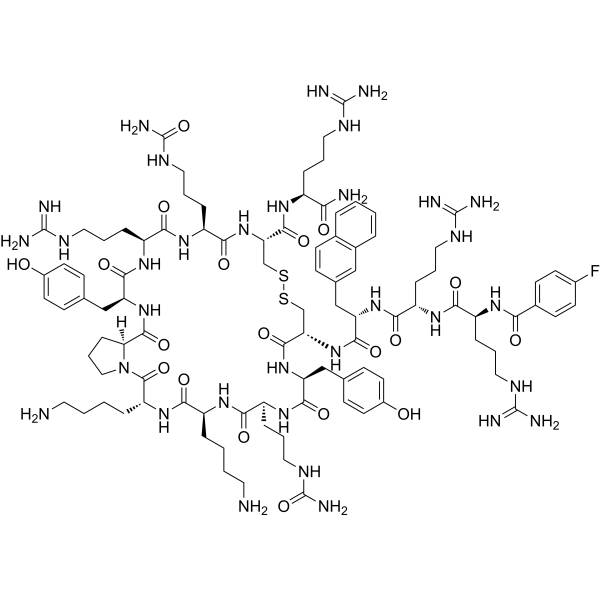
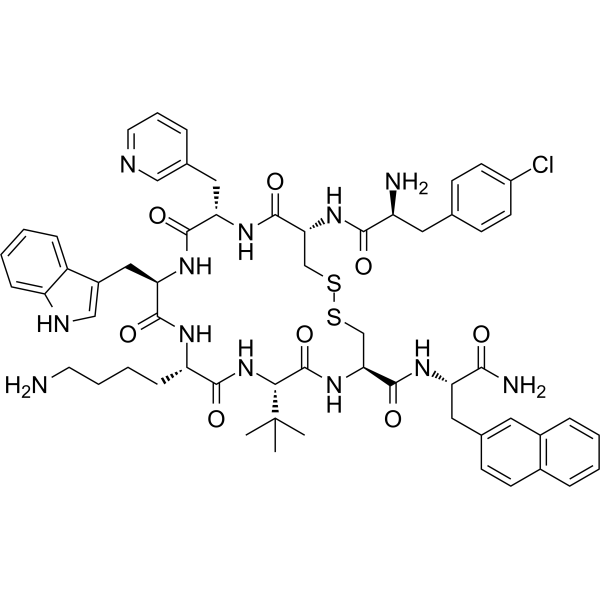
Motixafortide (BKT140 4-fluorobenzoyl) is a novel CXCR4 antagonist with an IC50 vakue of ~1 nM.
|
-
- HY-W016103R
-
|
|
Reference Standards
Drug Intermediate
Bacterial
|
Infection
|
|
1-Hydroxy-2-naphthoic acid (Standard) is an analytical standard for 1-Hydroxy-2-naphthoic acid (HY-W016103). This product is intended for research and analytical applications. 1-Hydroxy-2-naphthoic acid is a ubiquitous bicyclic intermediate metabolite in the microbial degradation process of polycyclic aromatic hydrocarbons (PAHs). 1-Hydroxy-2-naphthoic acid can be converted into 1,2-naphthalenediol, which enters the naphthalene degradation pathway and participates in the tricarboxylic acid (TCA) cycle to achieve complete mineralization.
|
-
- HY-W017241R
-
|
1-Hydroxymethylnaphthalene (Standard)
|
Reference Standards
Bacterial
Biochemical Assay Reagents
|
Infection
|
|
1-Naphthalenemethanol (Standard) is the analytical standard of 1-Naphthalenemethanol (HY-W017241). This product is intended for research and analytical applications. 1-Naphthalenemethanol is a hydroxyl-substituted naphthalene derivative. 1-Naphthalenemethanol can be extracted from the root of Annona senegalensis. 1-Naphthalenemethanol is a photolysis product of 1-napthaleneacetic acid. 1-Naphthalenemethanol, together with PAPS, provides some protection against the irreversible inactivation of AST IV caused by N-OH-2AF. 1-Naphthalenemethanol can be used in antibacterial research .
|
-
- HY-P4452
-
-
- HY-N19628
-
|
|
Parasite
|
Infection
|
|
Dianellin is an orally active anti-malarial agent found in Kniphofia foliosa. Dianellin binds to Plasmodium falciparum plasmepsin II and shows anti-malarial activity in mice. Dianellin can be used for the research of malaria .
|
-
- HY-174301
-
|
|
Deubiquitinase
DNA Methyltransferase
MDM-2/p53
|
Cancer
|
|
USP7-IN-18 is a naphthalene derivative. USP7-IN-18 is a selective USP7 inhibitor (IC50 : 130.9 nM), with no or very weak inhibition of the other 8 DUBs including USP47. USP7-IN-18 specifically binds to the catalytic domain of USP7, blocking its deubiquitinase activity. USP7-IN-18 causes degradation of the oncogenic proteins MDM2 and DNMT1, and also degrades the novel target PCLAF. USP7-IN-18 activates the p53-p21 pathway. USP7-IN-18 exerts anti-tumor effects in colon cancer animal models and reshapes the tumor immune microenvironment. USP7-IN-18 achieves both direct cytotoxic and immune-synergistic anti-tumor actions.
|
-
- HY-182354
-
|
|
VEGFR
FGFR
FLT3
PDGFR
RET
Akt
ERK
c-Kit
|
Cancer
|
|
VEGFR2-IN-84 is an orally active, multi-targeted tyrosine kinase inhibitor based on a naphthalene ring scaffold. VEGFR2-IN-84 inhibits VEGFR2 with sub-nanomolar affinity and broadly targets kinases including Kit, FGFR, PDGFR, and Ret. By competitively binding to the ATP-binding pocket, VEGFR2-IN-84 blocks the phosphorylation of VEGFR2 and its downstream AKT/ERK signaling pathway, thereby significantly inhibiting endothelial cell proliferation, migration, and tumor angiogenesis. VEGFR2-IN-84 exhibits broad-spectrum antiproliferative activity against various solid tumors such as liver cancer, lung cancer, and renal cancer, shows weak toxicity to normal cells, and has superior potency to Lenvatinib (HY-10981). VEGFR2-IN-84 possesses favorable pharmacokinetic properties and high safety (LD50>2000 mg/kg), and can be used in related studies of various malignant tumors .
|
-
| Cat. No. |
Product Name |
Type |
| Cat. No. |
Product Name |
Type |
-
- HY-W250727
-
|
6-(p-Tolylamino)naphthalene-2-sulfonate sodium
|
Biochemical Assay Reagents
|
|
TNS (6-(p-Tolylamino) naphthalene-2-sulfonate) sodium is a fluorescent probe used to detect the conformational state of proteins. TNS sodium binds to the central hydrophobic calyx of β-lactoglobulin (β-LG) to form a 1:1 complex, which stabilizes the folded conformation of β-LG. TNS sodium shows weak fluorescent signals in aqueous solution, but its fluorescence intensity increases significantly upon binding to the hydrophobic domains of proteins, with the maximum excitation wavelength and maximum emission wavelength located at 321 nm and 446 nm, respectively .
|
-
- HY-Y0236
-
|
naphthalene-1-carboxylic acid
|
Biochemical Assay Reagents
|
|
Naphthalene-1-carboxylic acid is a biochemical reagent that can be used as a biological material or organic compound for life science related research.
|
-
- HY-W015451
-
|
2,7-DHN; naphthalene-2,7-diol
|
Biochemical Assay Reagents
|
|
2,7-Dihydroxynaphthalene (2,7-DHN) is a substrate of a new group of aromatic prenyltransferases in fungi and can be catalyzed to undergo a regiospecific prenylation reaction. 2,7-Dihydroxynaphthalene can undergo reactions such as oxidation and substitution .
|
-
- HY-W005148
-
|
|
Biochemical Assay Reagents
|
|
3-Amino-2-naphthoic acid is a derivative of naphthalene and can be used to synthesize other compounds. 3-Amino-2-naphthoic acid is commonly used as the base material for synthesizing various dyes and pigments. 3-Amino-2-naphthoic acid has been developed as a "turn-on" fluorescence probe for the specific detection of the cyanate anion (CNO -) .
|
-
- HY-W012558
-
|
2,3-naphthalenediol
|
Biochemical Assay Reagents
|
|
Naphthalene-2,3-diol is a biochemical reagent that can be used as a biological material or organic compound for life science related research.
|
-
- HY-W007437
-
|
naphthalene-2-carboxylic acid
|
Biochemical Assay Reagents
|
|
2-Naphthoic acid is an organic compound commonly used as a raw material for dyes and the production of other chemicals. It can form dyes with other organic substances and is widely used in textile, printing and manufacturing fields. In addition, the compound is also used as a photosensitive material and a lubricant.
|
-
- HY-W128203
-
|
|
Biochemical Assay Reagents
|
|
1-Naphthyl β-D-glucopyranoside is a naphthalene sugar derivative that can be used in glycobiology research.
|
-
- HY-W015451R
-
|
2,7-DHN (Standard); naphthalene-2,7-diol (Standard)
|
Biochemical Assay Reagents
|
|
2,7-Dihydroxynaphthalene (Standard) (2,7-DHN (Standard)) is the analytical standard of 2,7-Dihydroxynaphthalene (HY-W015451). This product is intended for research and analytical applications. 2,7-Dihydroxynaphthalene (2,7-DHN) is a substrate of a new group of aromatic prenyltransferases in fungi and can be catalyzed to undergo a regiospecific prenylation reaction. 2,7-Dihydroxynaphthalene can undergo reactions such as oxidation and substitution .
|
-
- HY-W011232
-
|
Sodium 1,5-naphthalenedisulfonate dibasic technical
|
Biochemical Assay Reagents
|
|
Sodium naphthalene-1,5-disulfonate(Sodium 1,5-naphthalenedisulfonate dibasic technical) is a metal-organic framework (MOF).
|
| Cat. No. |
Product Name |
Target |
Research Area |
-
- HY-P0009A
-
-
- HY-P0171
-
|
BKT140 (4-fluorobenzoyl); BL-8040; TF14016
|
CXCR
|
Endocrinology
Cancer
|
|
Motixafortide (BKT140 4-fluorobenzoyl) is a novel CXCR4 antagonist with an IC50 vakue of ~1 nM.
|
-
- HY-P3815
-
|
|
Casein Kinase
|
Others
|
|
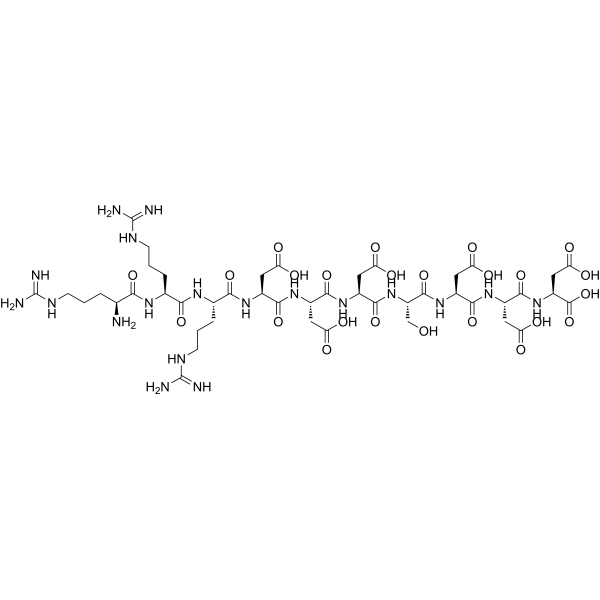
Casein Kinase 2 Substrate Peptide is a common CK2 substrate peptide. Casein Kinase 2 Substrate Peptide is synthesized with its C-terminus conjugated to 5-[(2-aminoethyl)amino]naphthalene-1-sulfonic acid (EDANS). Casein Kinase 2 Substrate Peptide can be used for protein kinase CK2 activity determination .
|
-
- HY-P4452
-
-
- HY-P0009B
-
-
- HY-131374
-
|
|
CXCR
|
Cancer
|
|
TN14003 is a CXCR4 inhibitor. TN14003 has antitumor activity .
|
| Cat. No. |
Product Name |
Category |
Target |
Chemical Structure |
| Cat. No. |
Product Name |
Chemical Structure |
-
- HY-Y0110S1
-
|
|
|
2-Naphthol-d7 is the deuterium labeled 2-Naphthol . 2-Naphthol is a metabolite of naphthalene, catalyzed by cytochrome P450 (CYP) isozymes (CYP 1A1, CYP 1A2, CYP 2A1, CYP 2E1 and CYP 2F2) .
|
-
-
- HY-W778240
-
|
|
|
2-Naphthoic acid- 13C6 (Naphthalene-2-carboxylic acid- 13C6) is the 13C-labeled 2-Naphthoic acid (HY-W007437). 2-Naphthoic acid is an organic compound commonly used as a raw material for dyes and the production of other chemicals. It can form dyes with other organic substances and is widely used in textile, printing and manufacturing fields. In addition, the compound is also used as a photosensitive material and a lubricant.
|
-
-
- HY-W777535S
-
|
|
|
Naphthalene- 13C6 is 13C labeled Naphthalene-13C10 (HY-W777535).
|
-
-
- HY-W777535
-
|
|
|
Naphthalene- 13C10 is 13C labeled Naphthalene-13C10 (HY-W777535).
|
-
-
- HY-W012566S
-
|
|
|
Naphthalene-1,5-diamine- 15N2 is the 15N labeled Naphthalene-1,5-diamine .
|
-
-
- HY-W702995
-
|
|
|
Naphthalene-1,5-diamine-d6 (1,5-Naphthylene-diamine-d6) is the deuterium labeled Naphthalene-1,5-diamine (HY-W012566).
|
-
-
- HY-W699416
-
|
|
|
1-Naphthoic acid-d7 (Naphthalene-1-carboxylic acid-d7) is the deuterium labeled 1-Naphthoic acid (HY-Y0236). Naphthalene-1-carboxylic acid is a biochemical reagent that can be used as a biological material or organic compound for life science related research.
|
-
-
- HY-166933S
-
|
|
|
1,2,3,6,7-Pentachloro-naphthalene- 13C10 is 13C labeled 1,2,3,6,7-Pentachloro-naphthalene .
|
-
-
- HY-166957S
-
|
|
|
1,2,3,7,8-Pentachloro naphthalene- 13C10 is 13C labeled 1,2,3,7,8-Pentachloro naphthalene .
|
-
-
- HY-W327865S
-
|
|
|
2-(Methylthio)naphthalene-d3 is the deuterium labeled Methyl(naphthalen-2-yl)sulfane (HY-W630479) .
|
-
-
- HY-W725429
-
|
|
|
1,5-Dihydroxynaphthalene-d6 (Naphthalene-1,5-diol-d6) is the deuterium labeled 1,5-Dihydroxynaphthalene (HY-Y0825).
|
-
-
- HY-W703429S
-
|
|
|
2,3,6,7-Tetrachloro-naphthalene- 13C10 is 13C labeled 2,3,6,7-Tetrachloronaphthalene .
|
-
-
- HY-W710384S
-
|
|
|
1,2,3,4,5,6,7-Heptachloro naphthalene- 13C10 is 13C labeled 1,2,3,4,5,6,7-Heptachloronaphthalene .
|
-
-
- HY-W027544S1
-
|
|
|
Dansyl propargylamine-d6 (5-(Dimethylamino)-N-(prop-2-yn-1-yl)naphthalene-1-sulfonamide-d6) is the deuterium labeled Dansyl propargylamine .
|
-
-
- HY-Y0110S
-
|
|
|
2-Naphthol-d8 is the deuterium labeled 2-Naphthol . 2-Naphthol is a metabolite of naphthalene, catalyzed by cytochrome P450 (CYP) isozymes (CYP 1A1, CYP 1A2, CYP 2A1, CYP 2E1 and CYP 2F2) .
|
-
-
- HY-W056964S
-
|
|
|
Naphthalene-2,6-dicarboxylic acid-d6 is the deuterium labeled Naphthalene-2,6-dicarboxylic acid .
|
-
-
- HY-W706784
-
|
|
|
1,4-Bis(methyl-d3)naphthalene is the deuterium labeled 1,4-Dimethylnaphthalene (HY-W142437).
|
-
-
- HY-166915S
-
|
|
|
1,4,6-Trichloro naphthalene- 13C10 is 13C labeled 1,4,6-Trichloro naphthalene .
|
-
-
- HY-166912S
-
|
|
|
1,2,3,5,6,7-Hexachloro-naphthalene- 13C10 is 13C labeled 1,2,3,5,6,7-Hexachloro-naphthalene .
|
-
-
- HY-W715351S
-
|
|
|
1,2,4,5,7,8-Hexachloro naphthalene- 13C10 is 13C labeled 1,2,4,5,7,8-Hexachloronaphthalene .
|
-
-
- HY-W013566S
-
-
| Cat. No. |
Product Name |
|
Classification |
-
- HY-W027544S1
-
|
5-(Dimethylamino)-N-(prop-2-yn-1-yl)naphthalene-1-sulfonamide-d6
|
|
Labeling and Fluorescence Imaging
Alkynes
|
|
Dansyl propargylamine-d6 (5-(Dimethylamino)-N-(prop-2-yn-1-yl)naphthalene-1-sulfonamide-d6) is the deuterium labeled Dansyl propargylamine .
|
Your information is safe with us. * Required Fields.
Inquiry Information
- Product Name:
- Cat. No.:
- Quantity:
- MCE Japan Authorized Agent: