
1. Search Result
Search Result
Results for "

nucleophile

" in MedChemExpress (MCE) Product Catalog:

48

Inhibitors & Agonists

1

Screening Libraries

3

Fluorescent Dye

5

Biochemical Assay Reagents

1

Peptides

4

Natural
Products

3

Isotope-Labeled Compounds

1

Click Chemistry

Cat. No. Product Name Target Research Areas Chemical Structure
  • HY-137383

    Biochemical Assay Reagents Reactive Oxygen Species (ROS) Others
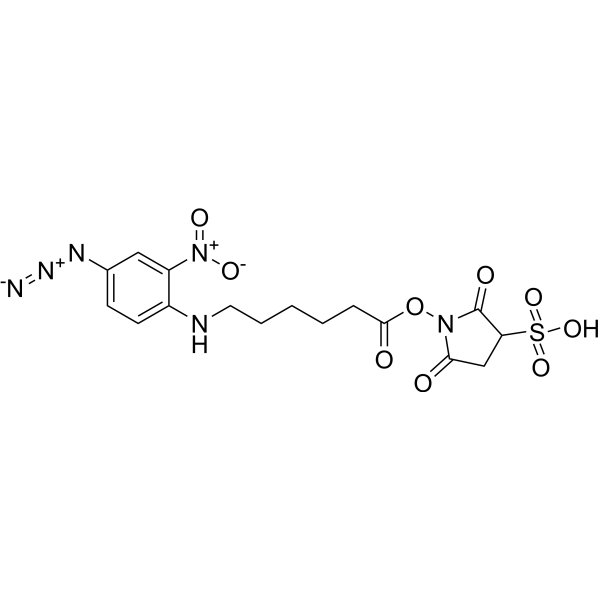
    Sulfo-SANPAH is a primary amine-nitrobenzene azide cross-linker. Sulfo-SANPAH improves the functionalization process of PDMS surfaces, is covalently bound to the PAAm gel surface. Sulfo-SANPAH is widely used to crosslink ECM proteins to various substrates, including acrylic-based hydrogels, such as polyacrylamide hydrogels. Sulfo-SANPAH facilitates covalent binding through its negatively charged sulfonate group on its N-hydroxysuccinimide ester ring and a photoactivated phenyl azide group that is highly reactive with nucleophiles and free radicals .
    Sulfo-SANPAH
  • HY-79444

    Biochemical Assay Reagents Others
    Bis(pinacolato)diborane is an organoboron reagent. Bis(pinacolato)diborane serves as a source of the [Bpin] moiety with pronounced nucleophilic character and is used in the synthesis of various organoboranes, including organoboron compounds and arylboronates .Bis(pinacolato)diborane reacts with p-benzyne to produce tetraborylated products through a series of steps involving addition and 1,2-migration of the boryl group .
    Bis(pinacolato)diborane
  • HY-N0548
    α-Angelica lactone
    2 Publications Verification

    Glutathione S-transferase Cancer
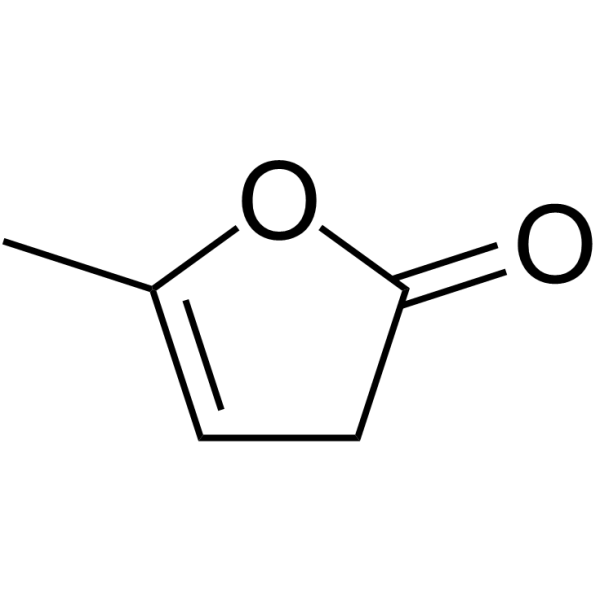
    α-Angelica lactone is a naturally occurring anticarcinogen and an vinylogous nucleophile. α-Angelica lactone can give the chiral δ-amino γ,γ-disubstituted butenolide carbonyl derivatives and exhibitselectrophilic trapping at the γ-carbon. α-Angelica lactone exerts strong chemoprotective effects by selective enhancement of glutathione-S-thansferase (GST) and UDP-glucononosyltransferase (UGT) detoxification enzymes .
    α-Angelica lactone
  • HY-14380
    PF-3845
    2 Publications Verification

    FAAH Autophagy Inflammation/Immunology Cancer
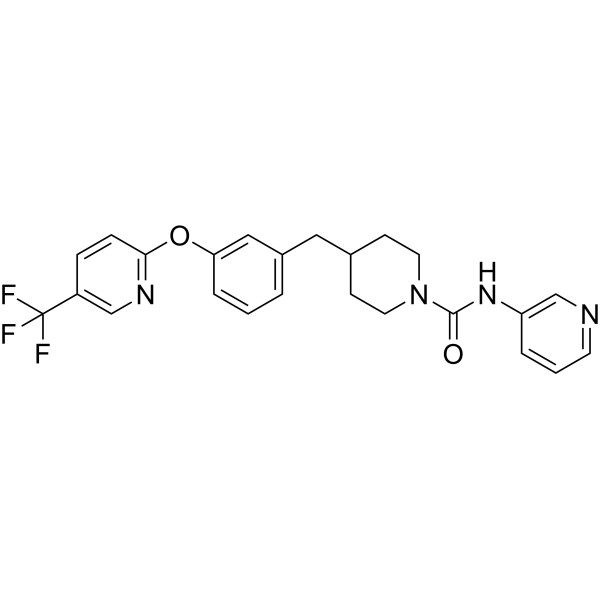
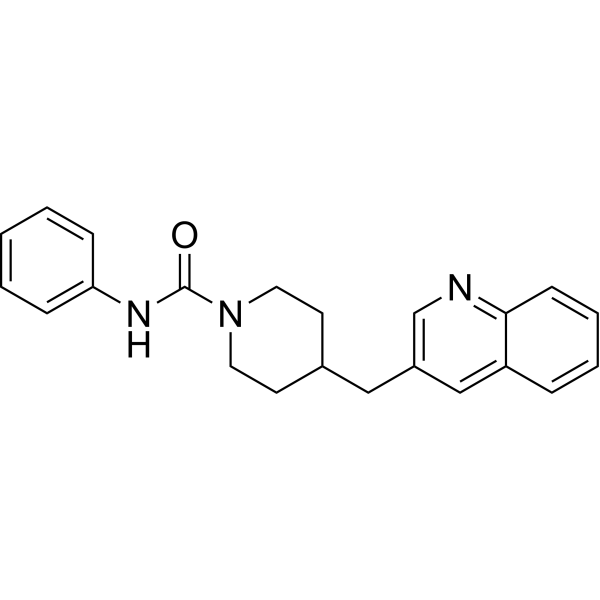
    PF-3845 is a potent, selective, irreversible and orally active inhibitor of fatty acid amide hydrolase (FAAH), with a Ki of 0.23 μM. PF-3845 is a covalent inhibitor that carbamylates FAAH's serine nucleophile. PF-3845 can reduce pain sensation, inflammation, and anxiety/depression without substantial effects on motility or cognition .
    PF-3845
  • HY-128429

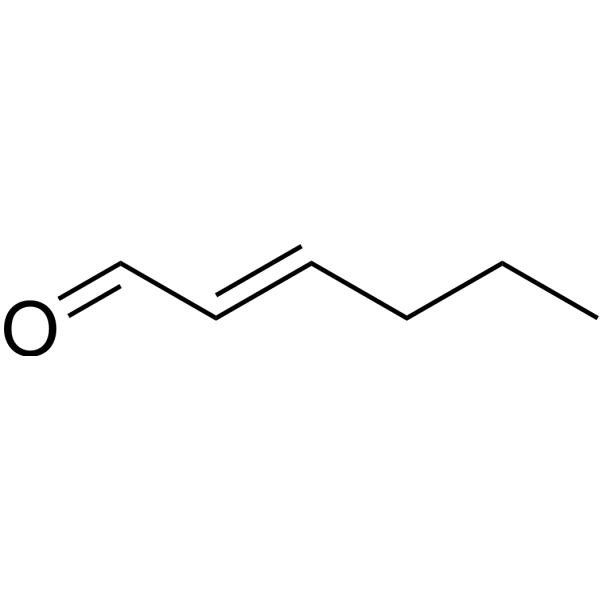
    (E)-2-Hexenal

    Environmental Pollutants Biochemical Assay Reagents Fungal Infection
    trans-2-Hexenal ((E)-2-Hexenal) is a volatile compound widely present in fresh plants, vegetables, and fruits, with a unique leafy aroma. trans-2-Hexenal has antifungal activity and can also inhibit the germination of soybean seeds and the growth of seedlings. In addition, trans-2-Hexenal can be used to determine low-molecular-weight carbonyl compounds that are reactive with biological nucleophiles in biological samples .
    trans-​2-​Hexenal
  • HY-W002004

    4-Amino-2,2,6,6-tetramethylpiperidine-1-oxyl

    Biochemical Assay Reagents Inflammation/Immunology
    4-Amino-TEMPO (4-Amino-2,2,6,6-tetramethylpiperidine-1-oxyl) is a stable nitroxide radical and N-nucleophile based on TEMPO. 4-Amino-TEMPO has superoxide dismutase-mimetic activity, can protect cells from oxidative damage, and has radioprotective effects. 4-Amino-TEMPO is widely used in fields such as biomedicine, materials science, and industrial production. 4-Amino-TEMPO can be used as a spin label to detect free radicals, an oxidation catalyst in industrial production, and an antioxidant stabilizer for polymers, among others .
    4-Amino-TEMPO
  • HY-W009177

    Glyoxalase (GLO) Others
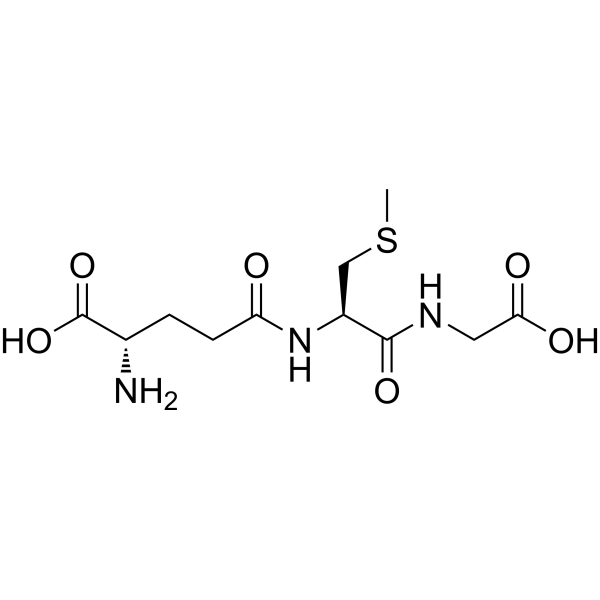
    S-Methylglutathione is an S-substitued glutathione and a stronger nucleophile than GSH . S-Methylglutathione has inhibitory effect on glyoxalase 1 .
    S-Methylglutathione
  • HY-P2869A

    Glycosidase Metabolic Disease
    β1-3 Galactosidase is a GH42 exoglycosidase that specifically hydrolyzes terminal β1-3-linked galactose. β1-3 Galactosidase uses Glu164 as the acid/base catalyst and Glu324 as the catalytic nucleophile to hydrolyze β1-3 galactosidic linkages. β1-3 Galactosidase can be used for research on galactoside metabolism .
    β1-3 Galactosidase
  • HY-10865
    LY2183240
    3 Publications Verification

    FAAH Autophagy Neurological Disease
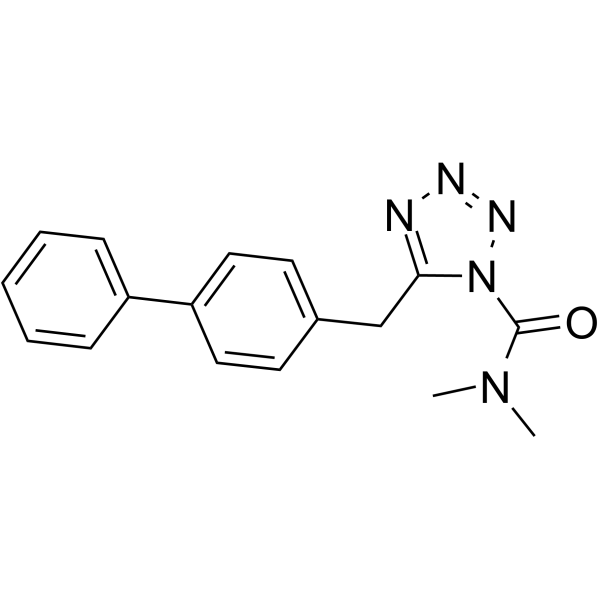
    LY2183240 is a highly potent blocker of anandamide uptake (IC50= 270 pM; Ki=540 nM). LY2183240 is a potent, covalent inhibitor of the endocannabinoid-degrading enzyme fatty acid amide hydrolase (FAAH) with an IC50 of 12.4 nM. LY2183240 inactivates FAAH by carbamylation of the enzyme's serine nucleophile. LY2183240 also inhibits several other brain serine hydrolases with IC50s of 5.3, 0.09, 8.2 nM for MAG lipase, bh6 and KIAA1363, respectively .
    LY2183240
  • HY-18081

    FAAH Autophagy Neurological Disease Metabolic Disease
    PF 750 is a selective, covalent and brain-penetrant fatty acid amide hydrolase (FAAH) inhibitor. PF 750 covalently carbamylates FAAH's catalytic serine nucleophile to inactivate the enzyme .
    PF 750
  • HY-106991A

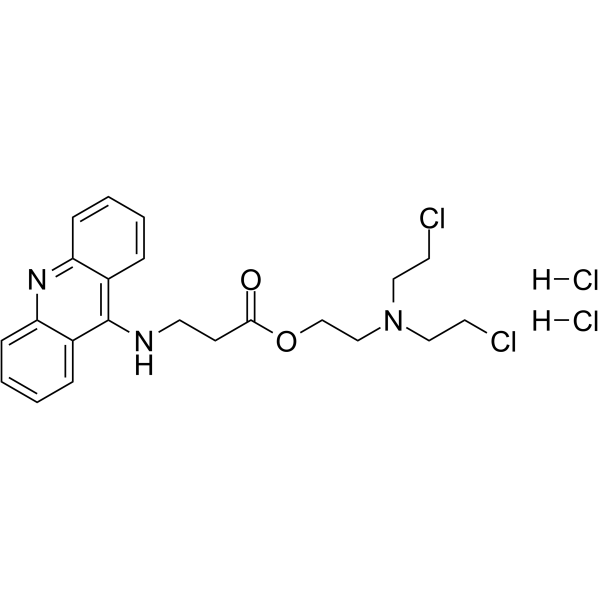
    S-303 dihydrochloride

    HIV Bacterial CHIKV Infection
    Amustaline (S-303) dihydrochloride, a nucleic acid-targeted alkylator, is an efficient pathogen inactivation agent for blood components containing red blood cells. Amustaline dihydrochloride has three components: an acridine anchor (an intercalator that targets nucleic acids non-covalently), an effector (a bis-alkylator group that reacts with nucleophiles), and a linker (a small flexible carbon chain containing a labile ester bond that hydrolyzes at neutral pH to yield non-reactive breakdown products) .
    Amustaline dihydrochloride
  • HY-W007690

    Drug Intermediate Others
    Pyridin-4-ol is a pyridinol and can be used as synthetic intermediate .
    Pyridin-4-ol
  • HY-150226

    Proteasome Inflammation/Immunology
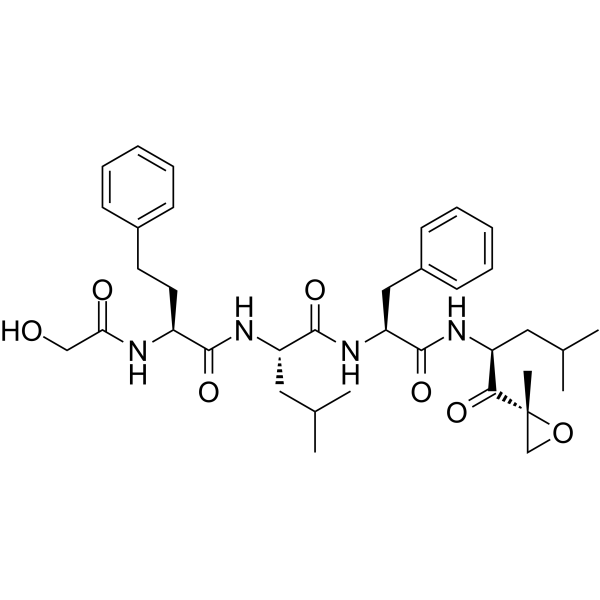
    Enzyme-IN-1 (compound 1) is a peptide-based inhibitor of N-terminal nucleophile (Ntn) hydrolases. Specifically, Enzyme-IN-1 inhibits the chymotrypsin-like activity (CT-L) of the 20S proteasome. Enzyme-IN-1 may has potential antiinflammatory properties .
    Enzyme-IN-1
  • HY-128429R

    (E)-2-Hexenal (Standard)

    Fungal Biochemical Assay Reagents Reference Standards Infection
    Trans-​2-​Hexenal (Standard) is the analytical standard of Trans-​2-​Hexenal. This product is intended for research and analytical applications. Trans-​2-​Hexenal can be used for the determination of low-molecular-weight carbonyl compounds which are reactive with biological nucleophiles in biological samples .
    Trans-​2-​Hexenal (Standard)
  • HY-101974

    Biochemical Assay Reagents Others
    Biotin-PEG3-Bromide is a short PEG linker featuring a biotin group and a bromide. The bromide is a halogen which is easily displaced by nucleophiles such as alcohols or amines. Alternatively, bromide can be applied in a number of cross-coupling reactions such as in a Suzuki reaction. Biotin is useful for affinity-based applications such as pull-down assays or for ligating with streptavidin proteins.
    Biotin-PEG3-Bromide
  • HY-N0548R

    Glutathione S-transferase Reference Standards Cancer
    α-Angelica lactone (Standard) is the analytical standard of α-Angelica lactone. This product is intended for research and analytical applications. α-Angelica lactone is a naturally occurring anticarcinogen and an vinylogous nucleophile. α-Angelica lactone can give the chiral δ-amino γ,γ-disubstituted butenolide carbonyl derivatives and exhibitselectrophilic trapping at the γ-carbon. α-Angelica lactone exerts strong chemoprotective effects by selective enhancement of glutathione-S-thansferase (GST) and UDP-glucononosyltransferase (UGT) detoxification enzymes .
    α-Angelica lactone (Standard)
  • HY-122426

    n-Undecyl bromide

    Biochemical Assay Reagents Others
    1-Bromoundecane (n-Undecyl bromide) is a chemical reagent featuring a bromide along a saturated C11 chain. Bromide is easily displaced by nucleophiles such as alcohols or amines. Compounds such as this may be used as intermediates in building lipids for use in lipid nanoparticles.
    1-Bromoundecane
  • HY-112526

    Fluorescent Dye Others
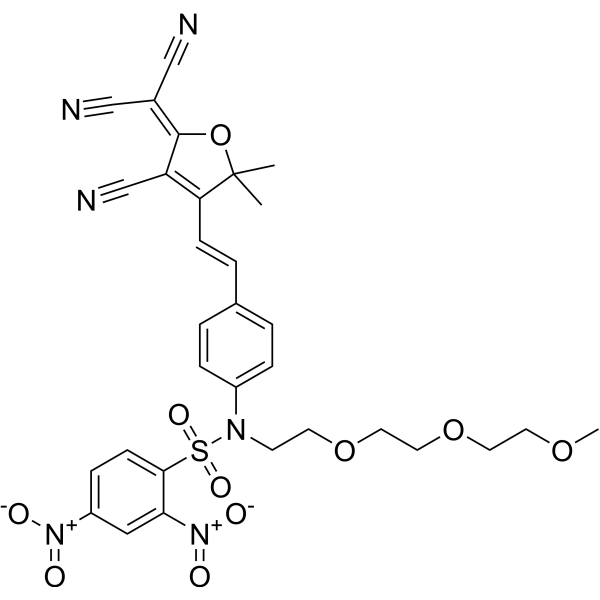
    Thiofluor 623 (Compound 3) is a fluorescent turn-on probe that can be used for the selective sensing and bioimaging of thiols. Thiofluor 623 displays excellent immunity to interference from nitrogen and oxygen nucleophiles. Thiofluor 623 is essentially nonfluorescent in the absence of thiols, which cleave the probe and release the red-emissive donor-acceptor fluorophore (Ex=563 nm, Em=623 nm) .
    Thiofluor 623
  • HY-W250129

    Biochemical Assay Reagents Others
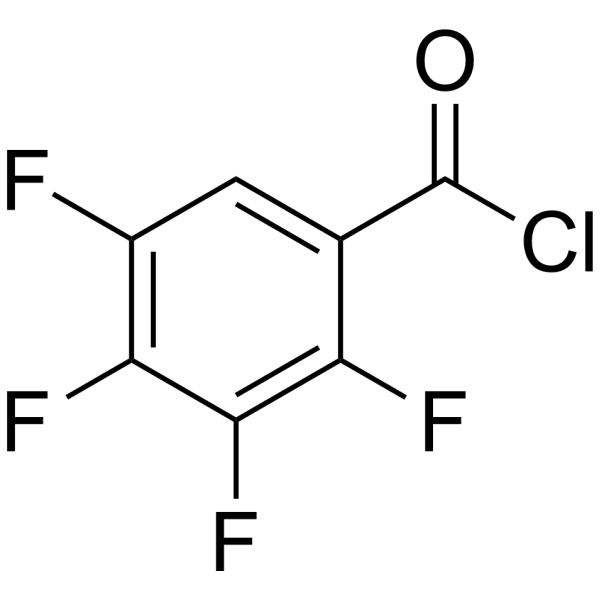
    2,3,4,5-Tetrafluorobenzoyl chloride is a fluorinated organic compound that belongs to the class of benzoyl chlorides. It is a colorless liquid with a pungent smell and is mainly used as an intermediate in the synthesis of various pharmaceutical and pesticide compounds. 2,3,4,5-Tetrafluorobenzoyl chloride is an acylating agent that can react with a variety of nucleophiles, including amines, alcohols, and thiols, to form amides, esters, or thioesters, respectively. Its unique fluorine-containing structure can impart desired properties to target molecules, such as increased lipophilicity or increased stability against metabolic degradation. However, due to its high reactivity and potential health hazards, proper safety measures and handling procedures must be followed when using this compound.
    2,3,4,5-Tetrafluorobenzoyl chloride
  • HY-W002004S1

    4-Amino-2,2,6,6-tetramethylpiperidine-1-oxyl-d17

    Isotope-Labeled Compounds Biochemical Assay Reagents Inflammation/Immunology
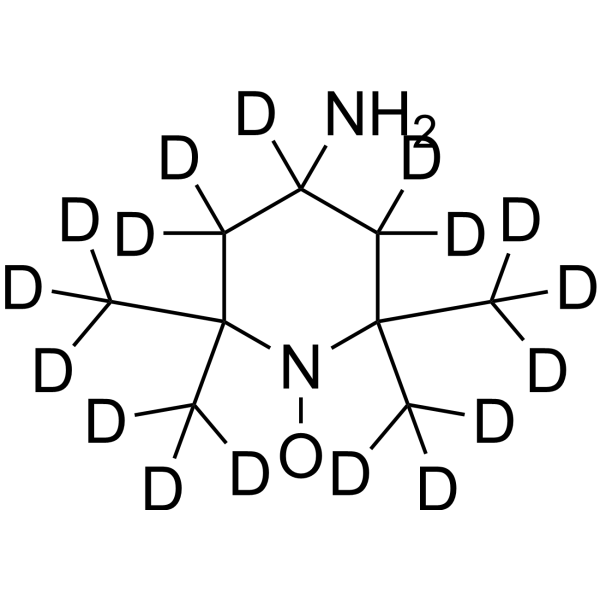
    4-Amino-TEMPO-d17 (4-Amino-2,2,6,6-tetramethylpiperidine-1-oxyl-d17) is the deuterium labeled 4-Amino-TEMPO (HY-W002004). 4-Amino-TEMPO (4-Amino-2,2,6,6-tetramethylpiperidine-1-oxyl) is a stable nitroxide radical and N-nucleophile based on TEMPO. 4-Amino-TEMPO has superoxide dismutase-mimetic activity, can protect cells from oxidative damage, and has radioprotective effects. 4-Amino-TEMPO is widely used in fields such as biomedicine, materials science, and industrial production. 4-Amino-TEMPO can be used as a spin label to detect free radicals, an oxidation catalyst in industrial production, and an antioxidant stabilizer for polymers, among others .
    4-Amino-TEMPO-d17
  • HY-131846

    6-Chloropurine 5'-ribonucleotide

    Nucleoside Antimetabolite/Analog Others
    6-Cl-5'-PuMP is a reactive analogue of adenosine 5’-O-monophosphate (5’-AMP), and is suitable for modifying position 6 using various nucleophiles .
    6-Cl-5'-PuMP
  • HY-W586329

    Ligands for E3 Ligase Others
    Thalidomide-4-carbaldehyde is a Thalidomide analogue with an aldehyde. Thalidomide recruiits E3 ligase for the ubiquitinylation and subsequent proteolysis of target proteins. The aldehyde is highly reactive towards amine nucleophiles through reductive amination among other reactions.
    Thalidomide-4-carbaldehyde
  • HY-W451211

    Ligands for E3 Ligase Cancer
    Thalidomide-5-carbaldehyde is a Thalidomide analogue with an aldehyde. Thalidomide recruiits E3 ligase for the ubiquitinylation and subsequent proteolysis of target proteins. The aldehyde is highly reactive towards amine nucleophiles through reductive amination among other reactions.
    Thalidomide-5-carbaldehyde
  • HY-W393115

    Biochemical Assay Reagents Others
    Diethyl 6-bromohexylphosphonate is a short linker featuring a bromide and a diethyl phosphonate. The bromide is a good leaving group which can be easily displaced by nucleophiles like alcohols, amines or thiols, while the diethyl phosphonate may be hydrolyzed to allow for esterification.
    Diethyl (6-bromohexyl)phosphonate
  • HY-W190836

    Biochemical Assay Reagents Others
    Azide-PEG2-Tos is a small PEG linker featuring an azide and a tosylate. Tosylates are good leaving groups which are easily displaced by nucleophiles while azide is a click chemistry handle which is used to react with terminal alkynes or strained cyclooctynes.
    N3-PEG2-Tos
  • HY-W440809

    Biochemical Assay Reagents Others
    Nonyl 8-bromooctanoate is a chemical reagent featuring a bromide linked to a larger ester chain consisting of a C8 ester coupled to a C9 chain. Bromide is easily displaced by nucleophiles in substitution reactions.Nonyl 8-bromooctanoate can be used as an intermediate in building lipids for use in lipid nanoparticles.
    Nonyl 8-bromooctanoate
  • HY-W800652

    PROTAC Linkers Cancer
    (S, R, S)-AHPC-PEG4-tosyl is a PROTAC linker that incorporatess an E3 ligase ligand with a PEG4 linker to empower PROTAC drug research & discovery. PEG4 spacer increases the compound's hydrophility. Tosyl group is reactive with amine or other nucleophiles.
    (S,R,S)-AHPC-PEG4-tosyl
  • HY-126944

    2-Amino-N-phenylbenzamide

    Biochemical Assay Reagents Cancer
    2-Aminobenzamide is a neutral and stable compound used as fluorescent tag, numerously in Glycan analysis. 2-aminobenzamide acts as the starting material for several important reactions like Bargellini reaction as an competent ambident nucleophile. Specifically 2-aminobenzamide and its derivatives are used in the blood coagulation cascade .
    2-Aminobenzanilide
  • HY-W728451

    FAAH Cardiovascular Disease Neurological Disease
    URB694 is a carbamate FAAH inhibitor that irreversibly carbamoylate the nucleophile catalytic serine in FAAH active site. URB694 exhibits antidepressant-like activity and cardioprotective effects. URB694 can be used to prepare 11C-Carbonyl-URB694 for in vivo positron emission tomography (PET) imaging studies of the brain FAAH .
    URB694
  • HY-106991AR

    S-303 dihydrochloride (Standard)

    HIV Bacterial Reference Standards CHIKV Infection
    Amustaline (dihydrochloride) (Standard) is the analytical standard of Amustaline (dihydrochloride). This product is intended for research and analytical applications. Amustaline (S-303) dihydrochloride, a nucleic acid-targeted alkylator, is an efficient pathogen inactivation agent for blood components containing red blood cells. Amustaline dihydrochloride has three components: an acridine anchor (an intercalator that targets nucleic acids non-covalently), an effector (a bis-alkylator group that reacts with nucleophiles), and a linker (a small flexible carbon chain containing a labile ester bond that hydrolyzes at neutral pH to yield non-reactive breakdown products) .
    Amustaline dihydrochloride (Standard)
  • HY-128429S

    (E)-2-Hexenal-d2-1

    Isotope-Labeled Compounds Fungal Biochemical Assay Reagents Infection
    trans-2-Hexenal-d2-1 is the deuterium labeled trans-2-Hexenal (HY-128429). trans-2-Hexenal ((E)-2-Hexenal) is a volatile compound widely present in fresh plants, vegetables, and fruits, with a unique leafy aroma. trans-2-Hexenal has antifungal activity and can also inhibit the germination of soybean seeds and the growth of seedlings. In addition, trans-2-Hexenal can be used to determine low-molecular-weight carbonyl compounds that are reactive with biological nucleophiles in biological samples .
    trans-2-Hexenal-d2-1
  • HY-W002004S

    4-Amino-2,2,6,6-tetramethylpiperidine-1-oxyl-d17,15N

    Isotope-Labeled Compounds Biochemical Assay Reagents Inflammation/Immunology
    4-Amino-TEMPO-d17, 15N (4-Amino-2,2,6,6-tetramethylpiperidine-1-oxyl-d17, 15N) is the deuterium labeled 4-Amino-TEMPO-d17 (HY-W002004S1). 4-Amino-TEMPO (4-Amino-2,2,6,6-tetramethylpiperidine-1-oxyl) is a stable nitroxide radical and N-nucleophile based on TEMPO. 4-Amino-TEMPO has superoxide dismutase-mimetic activity, can protect cells from oxidative damage, and has radioprotective effects. 4-Amino-TEMPO is widely used in fields such as biomedicine, materials science, and industrial production. 4-Amino-TEMPO can be used as a spin label to detect free radicals, an oxidation catalyst in industrial production, and an antioxidant stabilizer for polymers, among others .
    4-Amino-TEMPO-d17,15N
  • HY-E71217

    Biochemical Assay Reagents Others
    α-Amino-acid esterase (EC 3.1.1.43) catalyses α-Aminoacyl transfer to a number of amine nucleophiles.
    α-Amino-acid esterase
  • HY-W800830

    Biochemical Assay Reagents Others
    DMG-Nitrophenyl Carbonate is a short reagent featuring a DMG lipid headgroup and a nitrophenyl carbonate, which is readily displaced by amine nucleophiles to form carbamate bonds under mild conditions.
    DMG-Nitrophenyl carbonate
  • HY-W591314

    Biochemical Assay Reagents Others
    m-PEG11-Ms is a PEG linker featuring a methoxy cap and a mesylate group. The methoxy cap is inert while the mesylate is a good leaving group which is easily displaced by nucleophiles such as alcohols and amines.
    M-PEG11-Ms
  • HY-W190738

    Biochemical Assay Reagents Others
    Azide-PEG8-Tos is a small PEG linker featuring an azide and a tosylate. Tosylates are good leaving groups which are easily displaced by nucleophiles while azide is a click chemistry motif which is used to react with terminal alkynes or strained cyclooctynes.
    Azide-PEG8-Tos
  • HY-172511

    Biochemical Assay Reagents Others
    m-PEG9-4-nitrophenyl carbonate serves as a PEG linker containing a nitrophenyl carbonate, which is readily displaced by amine nucleophiles to form carbamate bonds under mild conditions. The PEG9 chain bolsters the water solublity of the compound.
    m-PEG9-4-Nitrophenyl carbonate
  • HY-W800743

    Biochemical Assay Reagents Others
    Heptyl 6-bromohexanoate is a chemical reagent featuring a bromide linked to a larger ester chain consisting of a C6 ester coupled to a C7 alcohol. Bromide is easily displaced by nucleophiles in substitution reactions. Compounds such as this may be used as intermediates in building lipids for use in lipid nanoparticles.
    Heptyl 6-bromohexanoate
  • HY-W190936

    E3 Ligase Ligand-Linker Conjugates Cancer
    Thalidomide-O-PEG5-Tosyl is a molecule that incorporatess the Thalidomide based cereblon ligand and 4-unit PEG linker used in PROTAC technology. Thalidomide-O-PEG5-tosyl is reactive with nucleophiles such as amine, hydroxy containing molecules.
    Thalidomide-O-PEG5-tosyl
  • HY-W401062

    1,2-Epoxytridecane

    Biochemical Assay Reagents Others
    2-Undecyloxirane (1,2-Epoxytridecane) is a chemical reagent featuring an epoxy group on a C11 chain. The epoxy group undergoes ring opening in the presence of nucleophiles to form a branched structure containing a secondary alcohol. Compounds such as this may be used as intermediates in building lipids for use in lipid nanoparticles.
    2-Undecyloxirane
  • HY-W800742

    Biochemical Assay Reagents Others
    Heptadecan-9-yl 6-bromohexanoate is a chemical reagent featuring a bromide linked to a larger ester chain consisting of a C6 ester coupled to the central position of a C17 chain. Bromide is easily displaced by nucleophiles in substitution reactions. Compounds such as this may be used as intermediates in building lipids for use in lipid nanoparticles.
    Heptadecan-9-yl 6-bromohexanoate
  • HY-172294

    Biochemical Assay Reagents Others
    Mes-PEG2-CH2-t-butyl ester is a PEG linker consisting of a PEG2 linker for improved water-solubility of the compound and a t-butyl ester group which can be deprotected under acidic conditions. The mesylate serves as an excellent leaving group, offering all the advantages without the limitation of having an acidic proton that could react with nucleophiles.
    Mes-PEG2-CH2-t-butyl ester
  • HY-W800844

    Biochemical Assay Reagents Others
    NH-bis(PEG8-OH) is a homobifunctional reagent containing two alcohols joined together by a secondary amine. The alcohols can be used in a variety of ways such as in forming esters with carboxylic acids, while the secondary amine can be used as a nucleophile in linking with ketones, aldehydes, and carboxylic acids. The PEG spacers make this molecule water-soluble, potentially altering its DMPK properties.
    NH-bis(PEG8-OH)
  • HY-28009

    Biochemical Assay Reagents Others
    2-(7Z,10Z)-7,10-Hexadecadien-1-yloxirane is an intermediate for the preparation of lipid molecules. 2-((7Z,10Z)-Hexadeca-7,10-dien-1-yl)oxirane features a polyunsaturated chain with an epoxy ring that can be opened by nucleophiles.
    2-((7Z,10Z)-Hexadeca-7,10-dien-1-yl)oxirane
  • HY-D3446

    Fluorescent Dye Others
    PA-SiR-Halo is a photoactivatable fluorophore targeting HaloTag. When bound to HaloTag, PA-SiR-Halo stabilizes its fluorescent form under physiological pH. After conjugation and photoactivation, it exhibits enhanced resistance to nucleophiles, and enables live-cell confocal imaging, fixed-cell single-molecule localization microscopy imaging, live-cell single-particle tracking, as well as live-cell single-molecule localization microscopy imaging of dynamic mitochondrial structures without the need for washing .
    PA-SiR-Halo
  • HY-10865R

    Reference Standards FAAH Autophagy Neurological Disease
    LY2183240 (Standard) is the analytical standard of LY2183240 (HY-10865). This product is intended for research and analytical applications. LY2183240 is a highly potent blocker of anandamide uptake (IC50= 270 pM; Ki=540 nM). LY2183240 is a potent, covalent inhibitor of the endocannabinoid-degrading enzyme fatty acid amide hydrolase (FAAH) with an IC50 of 12.4 nM. LY2183240 inactivates FAAH by carbamylation of the enzyme's serine nucleophile. LY2183240 also inhibits several other brain serine hydrolases with IC50s of 5.3, 0.09, 8.2 nM for MAG lipase, bh6 and KiAA1363, respectively .
    LY2183240 (Standard)
  • HY-W121887

    Zomepirac glucuronide

    Dipeptidyl Peptidase Transmembrane Glycoprotein Inflammation/Immunology
    Zomepirac acyl-O-β-D-glucuronide (Zomepirac glucuronide) is a dipeptidyl peptidase IV Inhibitor. Zomepirac acyl-O-β-D-glucuronide is an unstable and chemically reactive metabolite of Zomepirac (HY-B0890A). Zomepirac acyl-O-β-D-glucuronide forms covalent adducts with cell membrane glycoproteins. Zomepirac acyl-O-β-D-glucuronide can be used for research on immunotoxicity .
    Zomepirac acyl-O-β-D-glucuronide
  • HY-183009

    Proteasome Parasite Infection
    Pf20S-IN-1 is a selective inhibitor of the 20S proteasome β5 subunit of Plasmodium falciparum. Pf20S-IN-1 exhibits antiparasitic activity against Plasmodium falciparum, with an EC50 of 20.1 nM against the Plasmodium falciparum W2 strain. Pf20S-IN-1 shows weak inhibitory effect on human 20S proteasome, has no obvious toxicity to human foreskin fibroblasts (HFF), and has a selectivity index > 25000. Pf20S-IN-1 can be used in malaria research .
    Pf20S-IN-1

Inquiry Online

Your information is safe with us. * Required Fields.

Salutation


Country or Region *

Applicant Name *


Organization Name *

Department *


Email Address *


Product Name *

Cat. No.


Requested quantity *

Phone Number *


Remarks

Inquiry Online

Inquiry Information

Product Name:
Cat. No.:
Quantity:
MCE Japan Authorized Agent:

