
From 11:00 pm to 12:00 pm EST ( 8:00 pm to 9:00 pm PST ) on January 6th, the website will be under maintenance. We are sorry for the inconvenience. Please arrange your schedule properly.
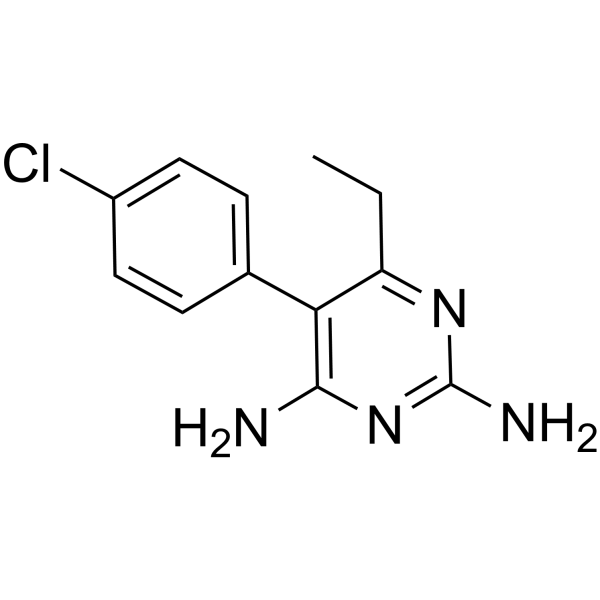
Pyrimethamine (Pirimecidan) is a potent, orally active dihydrofolate reductase (DHFR) inhibitor. Pyrimethamine is an antimalarial agent. Pyrimethamine affects the nucleoprotein metabolism of malarial parasites by interference in the folic–folinic acid systems and affects cell division by inhibiting the conversion of dihydrofolate to tetrahydrofolate .
AS 1411 (AGRO-100) is an oligonucleotide aptamer targeting nucleoproteins. AS 1411 inhibits tumor cell proliferation by affecting the activity of nucleoprotein-containing complexes and can be used as a carrier to precisely deliver nanoparticles, oligonucleotides and small molecules to cancer cells. AS 1411 reduces PRMT5 expression to inhibit tumor growth in DU145 prostate cancer cells. AS 1411 works by blocking the binding of nucleoproteins to bcl-2 mRNA in MCF-7 breast cancer cells. AS 1411-coupled Jin nanospheres can inhibit breast cancer cell proliferation in vitro and in mouse models, has the ability to cross the blood-brain barrier with low tissue toxicity .
DNase I is an enzyme that degrades DNA. DNase I is mainly produced by digestive system organs, such as the pancreas and parotid gland. Three types of DNase I are known in mammals: pancreatic type, parotid type, and pancreatico-parotid type. DNase I plays a key role in the cleavage of extracellular DNA, and is critical for limiting inflammatory responses and maintaining homeostasis. DNase I is responsible for digesting extracellular nucleoproteins, which may be essential for preventing autoimmune reactions. Decreased DNase I activity may be associated with the occurrence and development of systemic lupus erythematosus (SLE). DNase I (filtered) is filtered through a 0.22 μM membrane and is not tested for pyrogenicity .
DNase I is an enzyme that degrades DNA. DNase I is mainly produced by digestive system organs, such as the pancreas and parotid gland. Three types of DNase I are known in mammals: pancreatic type, parotid type, and pancreatico-parotid type. DNase I plays a key role in the cleavage of extracellular DNA, and is critical for limiting inflammatory responses and maintaining homeostasis. DNase I is responsible for digesting extracellular nucleoproteins, which may be essential for preventing autoimmune responses. Decreased DNase I activity may be associated with the onset and progression of systemic lupus erythematosus (SLE). DNase I (RNase & Protease free) is a molecular biology-grade DNase I purified by chromatography to remove RNase and protease .
Nucleozin, a potent inhibitor of influenza A virus infection, induces the formation of nucleoprotein (NP) aggregates and antagonizes its nuclear accumulation, leading to cessation of viral replication. Nucleozin impedes influenza A virus replication in vitro with a nanomolar EC50 .
Aminomethyltrioxsalen hydrochloride is a psoralen derivative and nucleic acid intercalator. Aminomethyltrioxsalen hydrochloride can penetrate intact cells and react with nucleic acid secondary structures in vivo without disrupting the tissue structure of natural nucleoproteins. Aminomethyltrioxsalen hydrochloride inactivates viruses by crosslinking nucleic acid pyrimidine residues after exposure to UV-A radiation. Aminomethyltrioxsalen hydrochloride can be used in research related to dengue virus infection .
MBD (7-(p-Methoxybenzylamino)-4-nitrobenz-2,1,3-oxadiazole), a new fluorescent probe for protein and nucleoprotein conformation, is applied to bacterial ribosomes and to bovine trypsinogen and trypsin. MBD is strongly fluorescent upon binding to a hydrophobic area of a macromolecule .
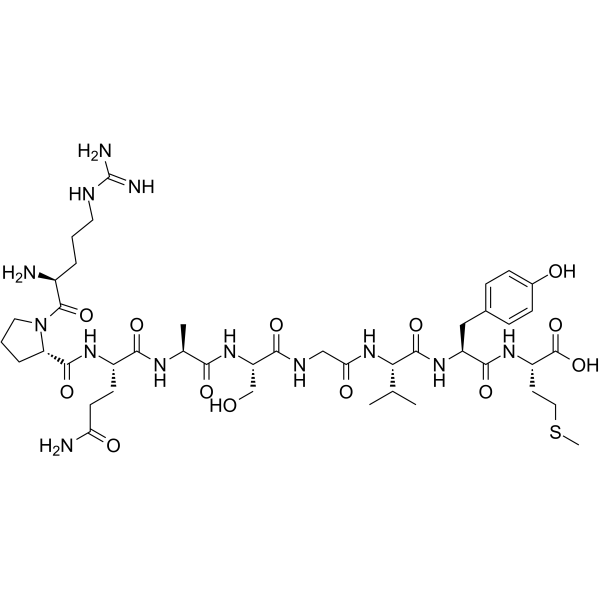
Nucleoprotein (396-404) is the 396 to 404 fragment of lymphocytic choriomeningitis virus (LCMV). Nucleoprotein (396-404) is the H-2D(b)-restricted immunodominant epitope and can be used as a molecular model of viral antigen .
AS 1411 (AGRO-100) sodium is an oligonucleotide aptamer targeting nucleoproteins. AS 1411 sodium inhibits tumor cell proliferation by affecting the activity of nucleoprotein-containing complexes and can be used as a carrier to precisely deliver nanoparticles, oligonucleotides and small molecules to cancer cells. AS 1411 sodium reduces PRMT5 expression to inhibit tumor growth in DU145 prostate cancer cells. S 1411 sodium works by blocking the binding of nucleoproteins to bcl-2 mRNA in MCF-7 breast cancer cells. S 1411 sodium-coupled Jin nanospheres can inhibit breast cancer cell proliferation in vitro and in mouse models, has the ability to cross the blood-brain barrier with low tissue toxicity
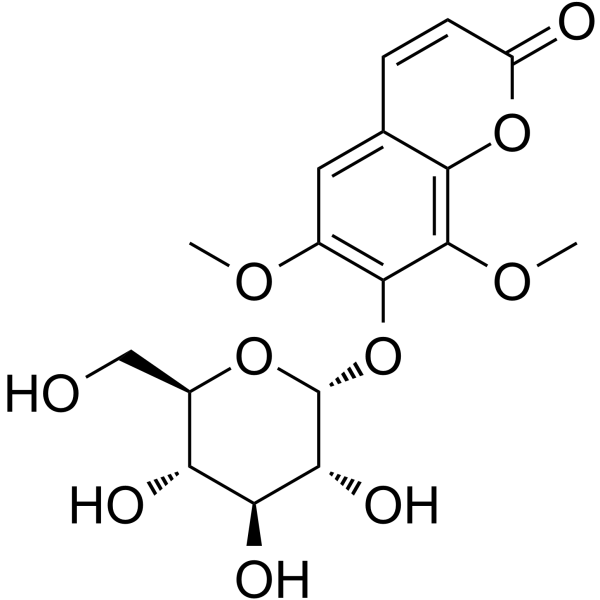
Eleutheroside B1, a coumarin compound, has a wide spectrum of anti-human influenza virus efficacy, with an IC50 value of 64-125 µg/ml. Eleutheroside B1 mediates its anti-influenza activity through POLR2A and N-glycosylation. Eleutheroside B1 inhibits the mRNA expression of several chemokine genes and the influenza nucleoprotein (NP) gene, and exhibits low cytotoxicity. Antiviral and anti-inflammatory activities .
Anti-Influenza A virus NP Antibody (H16-L10-4R5 (HB-65)) is mouse-derived IgG2a κ type antibody inhibitor, targeting to influenza virus nucleoprotein. Anti-Influenza A virus NP Antibody (H16-L10-4R5 (HB-65)) reacts with influenza virus nucleoprotein (NP). Anti-Influenza A virus NP Antibody (H16-L10-4R5 (HB-65)) can induce passive immunity to influenza A virus. Anti-Influenza A virus NP Antibody (H16-L10-4R5 (HB-65)) can be used for the detections of western blot, flow cytometry and immunohistochemistry in Influenza A virus infection .
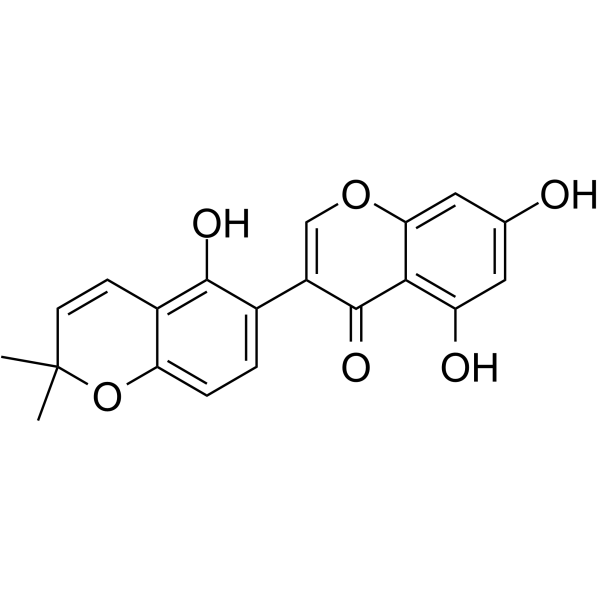
Licoisoflavone B is an orally active flavonoid found in licorice. Licoisoflavone B alleviates psoriasis via SCD1-targeted lipid metabolism reprogramming and suppression of Th17/IL-17-mediated inflammation. Licoisoflavone B inhiibits superoxide anion generation and superoxide anion-induced lipid peroxidation. Licoisoflavone B binds tightly to Lassa virus nucleoprotein and can be used as a nucleoprotein antagonist of Lassa virus. Licoisoflavone B exhibits anti-mutagenic activity against carcinogenic mutagen, by preventing DNA damage. Licoisoflavone B can be used for the research of psoriasis, Lassa fever, inflammation and cancer .
Aklavin is a structural analog of Aclacinomycin A (HY-N2306) produced by Streptomyces strain A 1165. Aklavin possesses Z-DNA-inducing and stabilizing activities, along with antibiotic, anti-phage and broad-spectrum antimicrobial activities. Aklavin inhibits the proliferation of various viruses (such as influenza virus and poliovirus) and interferes with their nucleoprotein synthesis, while also exhibiting inhibitory effects on staphylococci, mycobacteria and specific fungi. Aklavin blocks phage-induced bacterial lysis by regulating host-parasite interactions. Aklavin shows specific toxicity to fertilized eggs and mice, and does not alter the splicing of the SMN2 gene .
Pyrimethamine (Standard) is the analytical standard of Pyrimethamine. This product is intended for research and analytical applications. Pyrimethamine (Pirimecidan) is a potent, orally active dihydrofolate reductase (DHFR) inhibitor. Pyrimethamine is an antimalarial agent. Pyrimethamine affects the nucleoprotein metabolism of malarial parasites by interference in the folic–folinic acid systems and affects cell division by inhibiting the conversion of dihydrofolate to tetrahydrofolate .
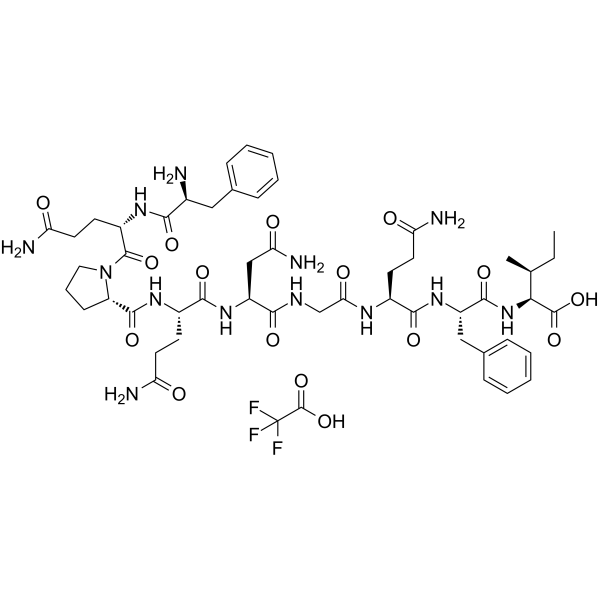
Influenza NP (311-325) TFA is an Influenza Anucleoprotein peptide. Influenza NP (311-325) TFA is a class II restricted epitope. Influenza NP (311-325) Influenza NP (311-325) TFA fused to OVA protein can be used for immunological response studies .
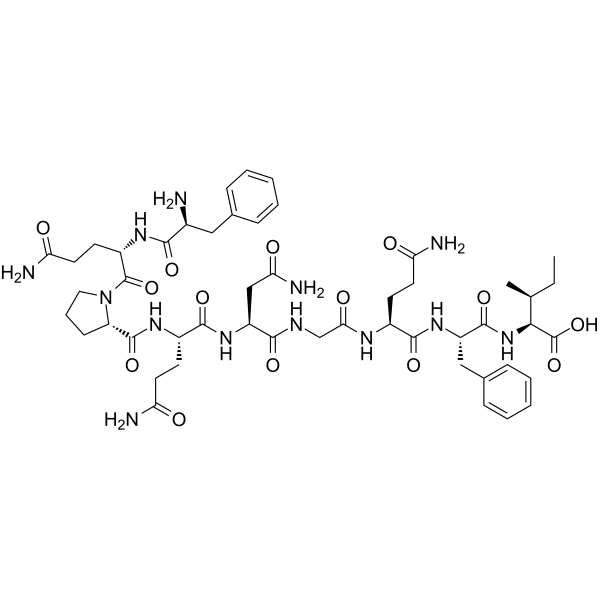
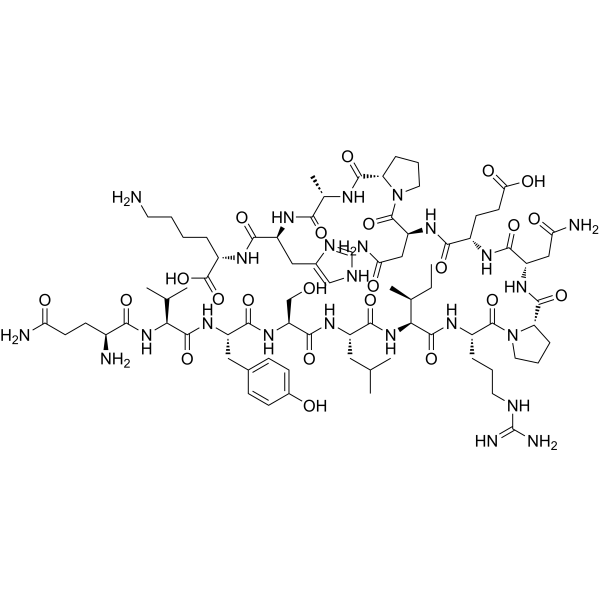
Influenza NP (311-325) is a biologically active peptide derived from the influenza virus nucleoprotein (NP). The NP protein is an MHC class II restricted epitope that elicits host immune responses during viral infection. Influenza NP (311-325) elicits the most potent interferon gamma (IFN-γ) production without stimulating CD8 T cells in mice.
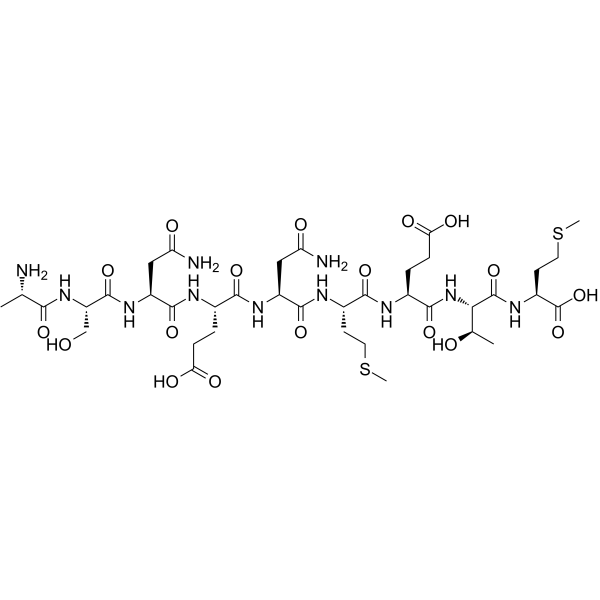
Nucleoprotein (396-404) TFA is the 396 to 404 fragment of lymphocytic choriomeningitis virus (LCMV). Nucleoprotein (396-404) TFA is the H-2D(b)-restricted immunodominant epitope and can be used as a molecular model of viral antigen .
Anti-LCMV Nucleoprotein Antibody (VL-4) is rat-derived IgG2a κ type antibody inhibitor, targeting to LCMV nucleoprotein. Anti-LCMV Nucleoprotein Antibody (VL-4) reacts with lymphocytic choriomeningitis virus (LCMV) nucleoprotein. Anti-LCMV Nucleoprotein Antibody (VL-4) stain LCMV-infected cell internally with no surface staining. Anti-LCMV Nucleoprotein Antibody (VL-4) can be used for the detections of immunohistochemistry and flow cytometry in LCMV infection .
H2-D b restricted epitopes VSV Nucleoprotein (52-59) is a 9-mer peptide derived from the nucleoprotein of Vesicular Stomatitis Virus (VSV). H2-D b restricted epitopes VSV Nucleoprotein (52-59) binds to MHC class I molecules and presents itself to CD8+ T cells, thereby activating cytotoxic T lymphocytes (CTLs), which can recognize and kill cells expressing the corresponding antigen. H2-D b restricted epitopes VSV Nucleoprotein (52-59) can be used in the development of CTL vaccines against Ebola virus .
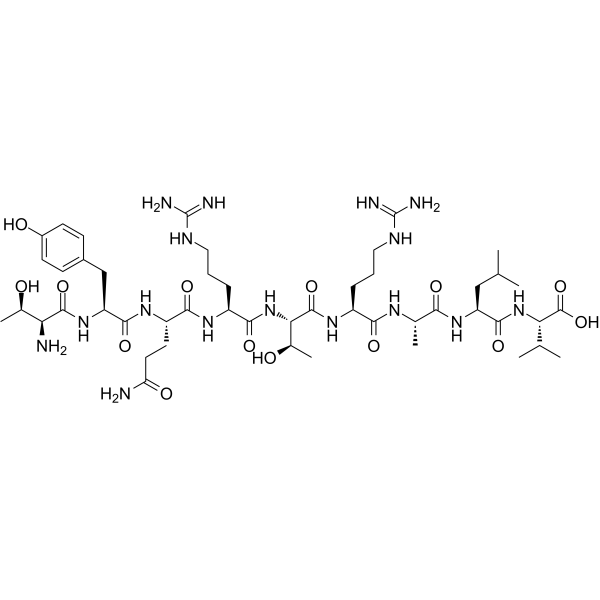
CEF8, Influenza Virus NP (383-391), an influenza A virus nucleoprotein containing residues 383 to 391, is the most important HLA-B *2705-restricted epitope in the nucleoprotein of influenza A viruses and is associated with escape from cytotoxic T lymphocytes-mediated immunity .
RdRP-IN-4 (compound 11q), an aryl benzoyl hydrazide analog, is an orally active influenza A virus RNA-dependent RNA polymerase (RdRp) inhibitor by interacting with the PB1 subunit. RdRP-IN-4 exhibits potent inhibitory activity against the avian H5N1 flu strain with an EC50 of 18 nM in MDCK cells. RdRP-IN-4 displays excellent potency against the the H1N1 (A/PR/8/34) Flu A strain and Flu B strain (B/Lee/1940) with EC50 values of 53 nM and 20 nM, respectively. RdRP-IN-4 significantly inhibits the expression level of viral nucleoprotein (NP) in a dose-dependent manner. RdRP-IN-4 exhibits significant antiviral activity in infected mice .
Ostamycin A is a cyclic diterpene with antiviral activity. Ostamycin A inhibits the replication of influenza A virus by targeting the nucleoprotein, with an IC50 of 4.72 μM .
CEF7, Influenza Virus NP (380-388) is a HLA-B *08 restricted influenza virus nucleoprotein epitope. Influenza virus NP functions as a key adapter molecule between virus and host cell processes .
Anti-Influenza agent 5 (Compound IIB-2), chalcone-like derivative, is an influenza nuclear export inhibitor. Anti-Influenza agent 5 has inhibitory effects on oseltamivir-resistant strains. Anti-Influenza agent 5 can impede virus proliferation by blocking the export of influenza virus nucleoprotein .
TTHP 512 is an influenza A virus (IAV) inhibitor. TTHP 512 demonstrates significant antiviral activity with an IC50 value of 1.46 μM. TTHP 512 inhibits the expression of viral nucleoprotein (NP) and PB2 protein, thereby disrupting the viral replication process. TTHP 512 is promising for research of influenza A virus .
PAC/NP-IN-1 (Compound 30) is a dual-target anti-influenza agent that specifically binds to nucleoprotein (NP) and the C-terminal domain of PA protein (PAc). PAC/NP-IN-1 inhibits influenza A virus A/WSN/33 (H1N1) (EC50 = 3.63 μM, IC50 = 3.08 μM). PAC/NP-IN-1 can be used for the study of influenza infection .
Influenza virus-IN-8 (compound A4) is an inhibitor of influenza virus (Influenza Virus) that induces viral nucleoprotein (NP) aggregation and prevents its nuclear accumulation. Influenza virus-IN-8 has broad-spectrum anti-influenza activity and can inhibit the replication and transcription of influenza A virus. Influenza virus-IN-8 also inhibits Oseltamivir (HY-13317)-resistant H1N1/pdm09 strains .
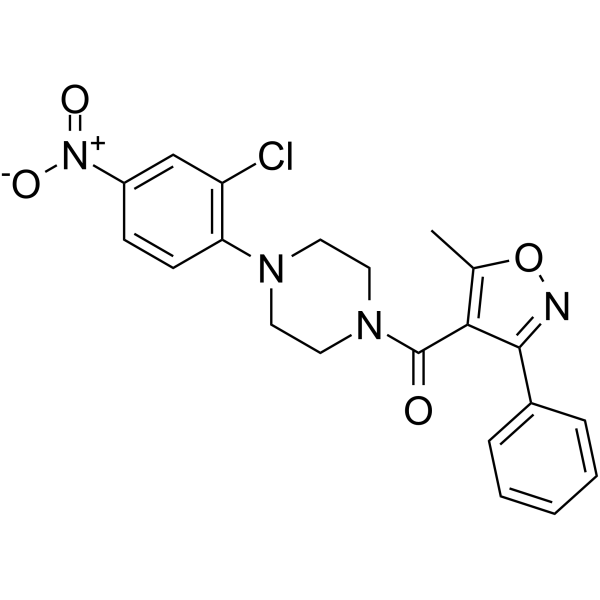
MDI-403 is a retinoic acid receptor (RAR) agonist with an EC50 value of less than 1 μM. MDI-403 exhibits significant antiviral activity against SARS-CoV-2, and can dose-dependently inhibit the expression of viral nucleoprotein (NP) and reduce the proportion of infected cells. MDI-403 mainly acts during the virus invasion stage. MDI-403 can be used in research on anti-SARS-CoV-2 .
Nucleoprotein (396-404) is the 396 to 404 fragment of lymphocytic choriomeningitis virus (LCMV). Nucleoprotein (396-404) is the H-2D(b)-restricted immunodominant epitope and can be used as a molecular model of viral antigen .
Influenza NP (311-325) TFA is an Influenza Anucleoprotein peptide. Influenza NP (311-325) TFA is a class II restricted epitope. Influenza NP (311-325) Influenza NP (311-325) TFA fused to OVA protein can be used for immunological response studies .
Influenza NP (311-325) is a biologically active peptide derived from the influenza virus nucleoprotein (NP). The NP protein is an MHC class II restricted epitope that elicits host immune responses during viral infection. Influenza NP (311-325) elicits the most potent interferon gamma (IFN-γ) production without stimulating CD8 T cells in mice.
Nucleoprotein (396-404) TFA is the 396 to 404 fragment of lymphocytic choriomeningitis virus (LCMV). Nucleoprotein (396-404) TFA is the H-2D(b)-restricted immunodominant epitope and can be used as a molecular model of viral antigen .
H2-D b restricted epitopes VSV Nucleoprotein (52-59) is a 9-mer peptide derived from the nucleoprotein of Vesicular Stomatitis Virus (VSV). H2-D b restricted epitopes VSV Nucleoprotein (52-59) binds to MHC class I molecules and presents itself to CD8+ T cells, thereby activating cytotoxic T lymphocytes (CTLs), which can recognize and kill cells expressing the corresponding antigen. H2-D b restricted epitopes VSV Nucleoprotein (52-59) can be used in the development of CTL vaccines against Ebola virus .
CEF8, Influenza Virus NP (383-391), an influenza A virus nucleoprotein containing residues 383 to 391, is the most important HLA-B *2705-restricted epitope in the nucleoprotein of influenza A viruses and is associated with escape from cytotoxic T lymphocytes-mediated immunity .
CEF7, Influenza Virus NP (380-388) is a HLA-B *08 restricted influenza virus nucleoprotein epitope. Influenza virus NP functions as a key adapter molecule between virus and host cell processes .
Anti-Influenza A virus NP Antibody (H16-L10-4R5 (HB-65)) is mouse-derived IgG2a κ type antibody inhibitor, targeting to influenza virus nucleoprotein. Anti-Influenza A virus NP Antibody (H16-L10-4R5 (HB-65)) reacts with influenza virus nucleoprotein (NP). Anti-Influenza A virus NP Antibody (H16-L10-4R5 (HB-65)) can induce passive immunity to influenza A virus. Anti-Influenza A virus NP Antibody (H16-L10-4R5 (HB-65)) can be used for the detections of western blot, flow cytometry and immunohistochemistry in Influenza A virus infection .
Anti-LCMV Nucleoprotein Antibody (VL-4) is rat-derived IgG2a κ type antibody inhibitor, targeting to LCMV nucleoprotein. Anti-LCMV Nucleoprotein Antibody (VL-4) reacts with lymphocytic choriomeningitis virus (LCMV) nucleoprotein. Anti-LCMV Nucleoprotein Antibody (VL-4) stain LCMV-infected cell internally with no surface staining. Anti-LCMV Nucleoprotein Antibody (VL-4) can be used for the detections of immunohistochemistry and flow cytometry in LCMV infection .
Eleutheroside B1, a coumarin compound, has a wide spectrum of anti-human influenza virus efficacy, with an IC50 value of 64-125 µg/ml. Eleutheroside B1 mediates its anti-influenza activity through POLR2A and N-glycosylation. Eleutheroside B1 inhibits the mRNA expression of several chemokine genes and the influenza nucleoprotein (NP) gene, and exhibits low cytotoxicity. Antiviral and anti-inflammatory activities .
Licoisoflavone B is an orally active flavonoid found in licorice. Licoisoflavone B alleviates psoriasis via SCD1-targeted lipid metabolism reprogramming and suppression of Th17/IL-17-mediated inflammation. Licoisoflavone B inhiibits superoxide anion generation and superoxide anion-induced lipid peroxidation. Licoisoflavone B binds tightly to Lassa virus nucleoprotein and can be used as a nucleoprotein antagonist of Lassa virus. Licoisoflavone B exhibits anti-mutagenic activity against carcinogenic mutagen, by preventing DNA damage. Licoisoflavone B can be used for the research of psoriasis, Lassa fever, inflammation and cancer .
Ostamycin A is a cyclic diterpene with antiviral activity. Ostamycin A inhibits the replication of influenza A virus by targeting the nucleoprotein, with an IC50 of 4.72 μM .
The Nucleoprotein/NP Protein in the influenza virus is crucial for viral replication and transcription. It binds to viral RNA, forming a ribonucleoprotein complex necessary for genome replication. NP Protein also interacts with host proteins, facilitating viral pathogenesis and immune evasion. Understanding NP Protein's functions can aid in developing antiviral strategies against influenza infections. Nucleoprotein/NP Protein, Influenza A virus H3N2 (His-SUMO) is the recombinant Virus-derived Nucleoprotein/NP protein, expressed by E. coli , with N-SUMO, N-6*His labeled tag.
SARS-CoV Nucleoprotein (NP, N) is a homodimer with nonspecific binding activity toward nucleic acids. NP packages the positive strand viral genome RNA into a helical ribonucleocapsid (RNP) and plays a fundamental role during virion assembly, enhancing the efficiency of subgenomic viral RNA transcription as well as viral replication through its interactions with the viral genome and membrane protein M. SARS-CoV Nucleoprotein/NP Protein (sf9, His) is the recombinant Virus-derived SARS-CoV Nucleoprotein/NP protein, expressed by Sf9 insect cells , with C-His labeled tag.
Nucleoprotein/NP Protein, a key component of the influenza virus, plays a vital role in viral replication and transcription. It binds to viral RNA, forming a ribonucleoprotein complex essential for viral genome replication. NP Protein also interacts with host proteins, contributing to viral pathogenesis and immune evasion. Understanding the functions of NP Protein can aid in the development of antiviral strategies against influenza infections. Nucleoprotein/NP Protein, Influenza A virus H1N1 (His-SUMO) is the recombinant Virus-derived Nucleoprotein/NP protein, expressed by E. coli , with N-SUMO, N-6*His labeled tag.
The SARS-CoV-2 nucleocapsid protein plays a crucial role in assembling the virion, forming the helical ribonucleocapsid (RNP), and interacting with the viral genome and membrane protein M. In addition to its structural function, it also enhances subgenomic viral RNA transcription and overall replication. NCP N Protein, SARS-CoV-2 (N269-K369) is the recombinant virus-derived NCP N, expressed by E. coli, with tag-free.
The SARS-CoV-2 nucleocapsid protein plays a crucial role in assembling the virion, forming the helical ribonucleocapsid (RNP), and interacting with the viral genome and membrane protein M. In addition to its structural function, it also enhances subgenomic viral RNA transcription and overall replication. NCP N Protein, SARS-CoV-2 (N48-A173) is the recombinant virus-derived NCP N, expressed by E. coli, with tag-free.
The SARS-CoV-2 nucleocapsid protein plays a crucial role in assembling the virion, forming the helical ribonucleocapsid (RNP), and interacting with the viral genome and membrane protein M. In addition to its structural function, it also enhances subgenomic viral RNA transcription and overall replication. NCP N Protein, SARS-CoV-2 (Sf9, His, Flag) is the recombinant virus-derived NCP N, expressed by Sf9 insect cells, with His, Flag labeled tag.
HCoV-HKU1 Nucleoprotein (NP, N) is a homodimer with nonspecific binding activity toward nucleic acids. NP packages the positive strand viral genome RNA into a helical ribonucleocapsid (RNP) and plays a fundamental role during virion assembly, enhancing the efficiency of subgenomic viral RNA transcription as well as viral replication through its interactions with the viral genome and membrane protein M. Nucleoprotein/NP Protein, HCoV (YP_173242, His) is the recombinant Virus-derived Nucleoprotein/NP protein, expressed by E. coli , with N-His labeled tag.
H-CoV Nucleoprotein (NP, N) is a homodimer with nonspecific binding activity toward nucleic acids. NP packages the positive strand viral genome RNA into a helical ribonucleocapsid (RNP) and plays a fundamental role during virion assembly, enhancing the efficiency of subgenomic viral RNA transcription as well as viral replication through its interactions with the viral genome and membrane protein M. HCoV-229E Nucleoprotein/NP Protein (NP_073556, His) is the recombinant Virus-derived HCoV-229E Nucleoprotein/NP protein, expressed by E. coli , with N-His labeled tag.
Dc-CoV Nucleoprotein (NP, N) is a homodimer with nonspecific binding activity toward nucleic acids. NP packages the positive strand viral genome RNA into a helical ribonucleocapsid (RNP) and plays a fundamental role during virion assembly, enhancing the efficiency of subgenomic viral RNA transcription as well as viral replication through its interactions with the viral genome and membrane protein M. Nucleoprotein/NP Protein, DcCoV (sf9, His) is the recombinant Virus-derived Nucleoprotein/NP protein, expressed by Sf9 insect cells , with C-His labeled tag.
Influenza virus nucleoprotein (NP) is a structural protein that coats viral negative-strand RNA. NP proteins protect viral RNA from degradation by cellular enzymes during the viral life cycle, fit the helical structure of RNP, regulate transcription and replication of viral RNA templates in a histone-like manner, and induce immunosuppression during infection. Nucleoprotein/NP Protein, Influenza B (EPI1649065, sf9, His) is the recombinant Virus-derived Nucleoprotein/NP protein, expressed by Sf9 insect cells , with C-His labeled tag.
Influenza virus nucleoprotein (NP) is a structural protein that coats viral negative-strand RNA. NP proteins protect viral RNA from degradation by cellular enzymes during the viral life cycle, fit the helical structure of RNP, regulate transcription and replication of viral RNA templates in a histone-like manner, and induce immunosuppression during infection. Nucleoprotein/NP Protein, Influenza B (EPI1368865, sf9, His) is the recombinant Virus-derived Nucleoprotein/NP protein, expressed by Sf9 insect cells , with C-His labeled tag.
Influenza virus nucleoprotein (NP) is a structural protein that coats viral negative-strand RNA.NP proteins protect viral RNA from degradation by cellular enzymes during the viral life cycle, fit the helical structure of RNP, regulate transcription and replication of viral RNA templates in a histone-like manner, and induce immunosuppression during infection.Nucleoprotein/NP Protein, Influenza B (ACF54251, sf9, His) is the recombinant Virus-derived Nucleoprotein/NP protein, expressed by Sf9 insect cells , with C-His labeled tag.
The Ebola virus NP/nucleoprotein is critical for viral genome protection and replication, forming a helical capsid to protect the genome. The VP35 interaction stabilizes the monomeric NP, maintaining solubility until replication triggers cooperative binding to viral RNA. Ebola virus NP/Nucleoprotein Protein (109a.a, Q5XX08, His) is the recombinant Virus-derived Ebola virus NP/Nucleoprotein protein, expressed by E. coli , with N-His labeled tag.
The Ebola virus NP/nucleoprotein is critical for viral genome protection and replication, forming a helical capsid to protect the genome.The VP35 interaction stabilizes the monomeric NP, maintaining solubility until replication triggers cooperative binding to viral RNA.Ebola virus NP/Nucleoprotein Protein (His) is the recombinant Virus-derived Ebola virus NP/Nucleoprotein protein, expressed by E.coli , with N-His labeled tag.
Influenza virus nucleoprotein (NP) is a structural protein that coats viral negative-strand RNA. NP proteins protect viral RNA from degradation by cellular enzymes during the viral life cycle, fit the helical structure of RNP, regulate transcription and replication of viral RNA templates in a histone-like manner, and induce immunosuppression during infection. Nucleoprotein/NP Protein, H3N2 (EPI541652, sf9, His) is the recombinant Virus-derived Nucleoprotein/NP protein, expressed by Sf9 insect cells , with C-His labeled tag.
Influenza virus nucleoprotein (NP) is a structural protein that coats viral negative-strand RNA.NP proteins protect viral RNA from degradation by cellular enzymes during the viral life cycle, fit the helical structure of RNP, regulate transcription and replication of viral RNA templates in a histone-like manner, and induce immunosuppression during infection.Nucleoprotein/NP Protein, H3N2 (AFM71861, sf9, His) is the recombinant Virus-derived Nucleoprotein/NP protein, expressed by Sf9 insect cells , with C-His labeled tag.
Influenza virus nucleoprotein (NP) is a structural protein that coats viral negative-strand RNA. NP proteins protect viral RNA from degradation by cellular enzymes during the viral life cycle, fit the helical structure of RNP, regulate transcription and replication of viral RNA templates in a histone-like manner, and induce immunosuppression during infection. Nucleoprotein/NP Protein, H1N1 (EPI1617976, sf9, His) is the recombinant Virus-derived Nucleoprotein/NP protein, expressed by Sf9 insect cells , with C-His labeled tag.
Influenza virus nucleoprotein (NP) is a structural protein that coats viral negative-strand RNA.NP proteins protect viral RNA from degradation by cellular enzymes during the viral life cycle, fit the helical structure of RNP, regulate transcription and replication of viral RNA templates in a histone-like manner, and induce immunosuppression during infection.Nucleoprotein/NP Protein, H1N1 (ACS94534, sf9, His) is the recombinant Virus-derived Nucleoprotein/NP protein, expressed by Sf9 insect cells , with C-His labeled tag.
Nucleoprotein/NP proteins play a crucial role in assembling viral particles and facilitating the packaging of positive-strand viral genomic RNA into helical ribonucleocapsids (RNPs). Its interaction with the viral genome and membrane protein M is critical for virion assembly. Nucleoprotein/NP Protein, HCoV-NL63 (sf9, His, myc) is the recombinant Virus-derived Nucleoprotein/NP protein, expressed by sf9 insect cells , with C-Myc, N-10*His labeled tag.
Nucleoprotein/NP Protein is essential for influenza virus replication and transcription.It binds viral RNA, forming a complex for genome replication.NP Protein interacts with host proteins, aiding viral pathogenesis and immune evasion.Understanding NP Protein's functions is crucial for developing influenza antiviral strategies.Nucleoprotein/NP Protein, H2N2 (P21433, sf9, His) is the recombinant Virus-derived Nucleoprotein/NP protein, expressed by Sf9 insect cells , with C-His labeled tag.
Nucleoprotein/NP Protein is vital for influenza virus replication and transcription.It binds to viral RNA, forming a ribonucleoprotein complex for genome replication.NP Protein interacts with host proteins, aiding viral pathogenesis and immune evasion.Understanding NP Protein's functions helps develop antiviral strategies against influenza.Nucleoprotein/NP Protein, H3N2 (P22435, sf9, His) is the recombinant Virus-derived Nucleoprotein/NP protein, expressed by Sf9 insect cells , with C-His labeled tag.
Influenza virus nucleoprotein (NP) is a structural protein that coats viral negative-strand RNA. NP proteins protect viral RNA from degradation by cellular enzymes during the viral life cycle, fit the helical structure of RNP, regulate transcription and replication of viral RNA templates in a histone-like manner, and induce immunosuppression during infection. Nucleoprotein/NP Protein, H3N2 (EPI1698482, sf9, His) is the recombinant Virus-derived Nucleoprotein/NP protein, expressed by Sf9 insect cells , with C-His labeled tag.
Influenza virus nucleoprotein (NP) is a structural protein that coats viral negative-strand RNA. NP proteins protect viral RNA from degradation by cellular enzymes during the viral life cycle, fit the helical structure of RNP, regulate transcription and replication of viral RNA templates in a histone-like manner, and induce immunosuppression during infection. Nucleoprotein/NP Protein, H3N2 (EPI1395762, sf9, His) is the recombinant Virus-derived Nucleoprotein/NP protein, expressed by Sf9 insect cells , with C-His labeled tag.
Influenza virus nucleoprotein (NP) is a structural protein that coats viral negative-strand RNA. NP proteins protect viral RNA from degradation by cellular enzymes during the viral life cycle, fit the helical structure of RNP, regulate transcription and replication of viral RNA templates in a histone-like manner, and induce immunosuppression during infection. Nucleoprotein/NP Protein, H1N1 (EPI1716625, sf9, His) is the recombinant Virus-derived Nucleoprotein/NP protein, expressed by Sf9 insect cells , with C-His labeled tag.
Nucleoprotein (NP) protects viral RNA and serves as a replication template. Nucleoprotein/NP Protein, Influenza B virus (His-SUMO) is the recombinant Virus-derived Nucleoprotein/NP protein, expressed by E. coli , with N-SUMO, N-6*His labeled tag.
Nucleoprotein/NP coordinates critical steps in the influenza virus life cycle.It encapsulates negative-strand viral RNA, forming a protective ribonucleoprotein (RNP) template for transcription and replication.Nucleoprotein/NP Protein, H1N1 (Q5UEW0, sf9, His) is the recombinant Virus-derived Nucleoprotein/NP protein, expressed by Sf9 insect cells , with C-His labeled tag.
HCoV-OC43 Nucleoprotein (NP, N) is a homodimer with nonspecific binding activity toward nucleic acids. NP packages the positive strand viral genome RNA into a helical ribonucleocapsid (RNP) and plays a fundamental role during virion assembly, enhancing the efficiency of subgenomic viral RNA transcription as well as viral replication through its interactions with the viral genome and membrane protein M. HCoV-OC43 Nucleoprotein/NP Protein (His) is the recombinant Virus-derived HCoV-OC43 Nucleoprotein/NP protein, expressed by E. coli , with N-His labeled tag.
HCoV-NL63 Nucleoprotein (NP, N) is a homodimer with nonspecific binding activity toward nucleic acids. NP packages the positive strand viral genome RNA into a helical ribonucleocapsid (RNP) and plays a fundamental role during virion assembly, enhancing the efficiency of subgenomic viral RNA transcription as well as viral replication through its interactions with the viral genome and membrane protein M. Nucleoprotein/NP Protein, HCoV-NL63 (His) is the recombinant Virus-derived Nucleoprotein/NP protein, expressed by E. coli , with N-His labeled tag.
Influenza virus nucleoprotein (NP) is a structural protein that coats viral negative-strand RNA.NP proteins protect viral RNA from degradation by cellular enzymes during the viral life cycle, fit the helical structure of RNP, regulate transcription and replication of viral RNA templates in a histone-like manner, and induce immunosuppression during infection.Nucleoprotein/NP Protein, H1N1 (I116M, AAM75159, sf9, His) is the recombinant Virus-derived Nucleoprotein/NP protein, expressed by Sf9 insect cells , with C-His labeled tag.
MERS-CoV Nucleoprotein/NP Protein is a phosphorylated basic protein and the second largest structural protein of MERS-CoV, containing 413 amino acid residues. The Nucleoprotein combines with the RNA genome to form a nucleocapsid, which is important in viral replication and assembly. In addition, Nucleoprotein plays an important role in enhancing the efficiency of subgenomic viral RNA transcription as well as viral replication. MERS-CoV Nucleoprotein/NP Protein (sf9, His) is the recombinant Virus-derived MERS-CoV Nucleoprotein/NP protein, expressed by Sf9 insect cells , with C-His labeled tag.
The SARS-CoV-2 nucleocapsid protein plays a crucial role in assembling the virion, forming the helical ribonucleocapsid (RNP), and interacting with the viral genome and membrane protein M.In addition to its structural function, it also enhances subgenomic viral RNA transcription and overall replication.Nucleocapsid Protein, Virus (His) is the recombinant Virus-derived Nucleocapsid protein, expressed by E.coli , with N-6*His labeled tag.
Nucleocapsid Protein, Virus (His, solution) expressed by E. coli systems. Nucleocapsid Protein is required for coronavirus RNA synthesis and has RNA chaperone activity.
Nucleocapsid Protein NTD domain, Virus (His) is the N-terminal RNA-binding domain (NTD) of nucleocapsid protein in coronaviruses. Nucleocapsid Protein NTD domain has highly conserved residues in the centre, which is identified as the RNA-binding site.
Nucleocapsid Protein CTD domain, Virus (His) is the C-terminal dimerisation domain (CTD) of nucleocapsid protein in coronaviruses. Nucleocapsid Protein CTD domain has a stronger nucleic acid-binding activity than the NTD, which could be a nucleic acid-binding site .
POLG proteins play multiple roles in the viral life cycle, contributing to viral RNA packaging, budding, and particle production. It exhibits RNA-binding and RNA chaperone activities, affecting translation initiation through interactions with viral IRES and ribosomal subunits. HCVNS5B Protein, HCV is the recombinant HCVNS5B, expressed by E. coli, with tag-free.
Influenza A virus Nucleoprotein Antibody (YA4919) is a Mouse-derived and non-conjugated monoclonal antibody, targeting to Influenza A virus Nucleoprotein.
Influenza B virus Nucleoprotein Antibody (YA4920) is a Mouse-derived and non-conjugated monoclonal antibody, targeting to Influenza B virus Nucleoprotein.
AS 1411 (AGRO-100) is an oligonucleotide aptamer targeting nucleoproteins. AS 1411 inhibits tumor cell proliferation by affecting the activity of nucleoprotein-containing complexes and can be used as a carrier to precisely deliver nanoparticles, oligonucleotides and small molecules to cancer cells. AS 1411 reduces PRMT5 expression to inhibit tumor growth in DU145 prostate cancer cells. AS 1411 works by blocking the binding of nucleoproteins to bcl-2 mRNA in MCF-7 breast cancer cells. AS 1411-coupled Jin nanospheres can inhibit breast cancer cell proliferation in vitro and in mouse models, has the ability to cross the blood-brain barrier with low tissue toxicity .
AS 1411 (AGRO-100) sodium is an oligonucleotide aptamer targeting nucleoproteins. AS 1411 sodium inhibits tumor cell proliferation by affecting the activity of nucleoprotein-containing complexes and can be used as a carrier to precisely deliver nanoparticles, oligonucleotides and small molecules to cancer cells. AS 1411 sodium reduces PRMT5 expression to inhibit tumor growth in DU145 prostate cancer cells. S 1411 sodium works by blocking the binding of nucleoproteins to bcl-2 mRNA in MCF-7 breast cancer cells. S 1411 sodium-coupled Jin nanospheres can inhibit breast cancer cell proliferation in vitro and in mouse models, has the ability to cross the blood-brain barrier with low tissue toxicity
Inquiry Online
Your information is safe with us. * Required Fields.
Western blot analysis of extracts from THP-1(lane 2(20μg), Jurkat (lane 3(20μg) and NIH3T3(lane 4(20μg) using FOXO1A (HY-P80132) Rabbit mAb. Proteins were transferred
to a PVDF membrane and blocked with 5% non-fat milk in TBST for 2 hour at room temperature. The primary antibody (1/1000) and Loading control antibody (Beta Actin, HY-P80438, 1/10000) was
used in 5% non-fat milk in TBST at 4°C overnight. Goat Anti-Mouse/Rabbit IgG-HRP Secondary Antibody (1/10000) was used for 1 hour at room temperature.
Western blot analysis of extracts from THP-1(lane 2(20μg), Jurkat (lane 3(20μg) and NIH3T3(lane 4(20μg) using FOXO1A (HY-P80132) Rabbit mAb. Proteins were transferred
to a PVDF membrane and blocked with 5% non-fat milk in TBST for 2 hour at room temperature. The primary antibody (1/1000) and Loading control antibody (Beta Actin, HY-P80438, 1/10000) was
used in 5% non-fat milk in TBST at 4°C overnight. Goat Anti-Mouse/Rabbit IgG-HRP Secondary Antibody (1/10000) was used for 1 hour at room temperature.
Western blot analysis of extracts from THP-1(lane 2(20μg), Jurkat (lane 3(20μg) and NIH3T3(lane 4(20μg) using FOXO1A (HY-P80132) Rabbit mAb. Proteins were transferred
to a PVDF membrane and blocked with 5% non-fat milk in TBST for 2 hour at room temperature. The primary antibody (1/1000) and Loading control antibody (Beta Actin, HY-P80438, 1/10000) was
used in 5% non-fat milk in TBST at 4°C overnight. Goat Anti-Mouse/Rabbit IgG-HRP Secondary Antibody (1/10000) was used for 1 hour at room temperature.
Western blot analysis of extracts from THP-1(lane 2(20μg), Jurkat (lane 3(20μg) and NIH3T3(lane 4(20μg) using FOXO1A (HY-P80132) Rabbit mAb. Proteins were transferred
to a PVDF membrane and blocked with 5% non-fat milk in TBST for 2 hour at room temperature. The primary antibody (1/1000) and Loading control antibody (Beta Actin, HY-P80438, 1/10000) was
MedchemExpress Validation 03
Western blot analysis of extracts from THP-1(lane 2(20μg), Jurkat (lane 3(20μg) and NIH3T3(lane 4(20μg) using FOXO1A (HY-P80132) Rabbit mAb. Proteins were transferred
MedchemExpress Validation 04
Western blot analysis of extracts from THP-1(lane 2(20μg), Jurkat (lane 3(20μg) and NIH3T3(lane 4(20μg) using FOXO1A (HY-P80132) Rabbit mAb. Proteins were transferred
to a PVDF membrane and blocked with 5% non-fat milk in TBST for 2 hour at room temperature. The primary antibody (1/1000) and Loading control antibody (Beta Actin, HY-P80438, 1/10000) was
used in 5% non-fat milk in TBST at 4°C overnight. Goat Anti-Mouse/Rabbit IgG-HRP Secondary Antibody (1/10000) was used for 1 hour at room temperature.
MedchemExpress Validation
Western blot analysis of extracts from THP-1(lane 2(20μg), Jurkat (lane 3(20μg) and NIH3T3(lane 4(20μg) using FOXO1A (HY-P80132) Rabbit mAb. Proteins were transferred
to a PVDF membrane and blocked with 5% non-fat milk in TBST for 2 hour at room temperature. The primary antibody (1/1000) and Loading control antibody (Beta Actin, HY-P80438, 1/10000) was
used in 5% non-fat milk in TBST at 4°C overnight. Goat Anti-Mouse/Rabbit IgG-HRP Secondary Antibody (1/10000) was used for 1 hour at room temperature.
Western blot analysis of extracts from THP-1(lane 2(20μg), Jurkat (lane 3(20μg) and NIH3T3(lane 4(20μg) using FOXO1A (HY-P80132) Rabbit mAb. Proteins were transferred
to a PVDF membrane and blocked with 5% non-fat milk in TBST for 2 hour at room temperature. The primary antibody (1/1000) and Loading control antibody (Beta Actin, HY-P80438, 1/10000) was
used in 5% non-fat milk in TBST at 4°C overnight. Goat Anti-Mouse/Rabbit IgG-HRP Secondary Antibody (1/10000) was used for 1 hour at room temperature.
MedchemExpress Validation
Western blot analysis of extracts from THP-1(lane 2(20μg), Jurkat (lane 3(20μg) and NIH3T3(lane 4(20μg) using FOXO1A (HY-P80132) Rabbit mAb. Proteins were transferred
to a PVDF membrane and blocked with 5% non-fat milk in TBST for 2 hour at room temperature. The primary antibody (1/1000) and Loading control antibody (Beta Actin, HY-P80438, 1/10000) was
used in 5% non-fat milk in TBST at 4°C overnight. Goat Anti-Mouse/Rabbit IgG-HRP Secondary Antibody (1/10000) was used for 1 hour at room temperature.
MedchemExpress Validation
Western blot analysis of extracts from THP-1(lane 2(20μg), Jurkat (lane 3(20μg) and NIH3T3(lane 4(20μg) using FOXO1A (HY-P80132) Rabbit mAb. Proteins were transferred
to a PVDF membrane and blocked with 5% non-fat milk in TBST for 2 hour at room temperature. The primary antibody (1/1000) and Loading control antibody (Beta Actin, HY-P80438, 1/10000) was
used in 5% non-fat milk in TBST at 4°C overnight. Goat Anti-Mouse/Rabbit IgG-HRP Secondary Antibody (1/10000) was used for 1 hour at room temperature.
MedchemExpress Validation
Western blot analysis of extracts from THP-1(lane 2(20μg), Jurkat (lane 3(20μg) and NIH3T3(lane 4(20μg) using FOXO1A (HY-P80132) Rabbit mAb. Proteins were transferred
to a PVDF membrane and blocked with 5% non-fat milk in TBST for 2 hour at room temperature. The primary antibody (1/1000) and Loading control antibody (Beta Actin, HY-P80438, 1/10000) was
used in 5% non-fat milk in TBST at 4°C overnight. Goat Anti-Mouse/Rabbit IgG-HRP Secondary Antibody (1/10000) was used for 1 hour at room temperature.
MedchemExpress Validation
Western blot analysis of extracts from THP-1(lane 2(20μg), Jurkat (lane 3(20μg) and NIH3T3(lane 4(20μg) using FOXO1A (HY-P80132) Rabbit mAb. Proteins were transferred
to a PVDF membrane and blocked with 5% non-fat milk in TBST for 2 hour at room temperature. The primary antibody (1/1000) and Loading control antibody (Beta Actin, HY-P80438, 1/10000) was
used in 5% non-fat milk in TBST at 4°C overnight. Goat Anti-Mouse/Rabbit IgG-HRP Secondary Antibody (1/10000) was used for 1 hour at room temperature.
MedchemExpress Validation
Western blot analysis of extracts from THP-1(lane 2(20μg), Jurkat (lane 3(20μg) and NIH3T3(lane 4(20μg) using FOXO1A (HY-P80132) Rabbit mAb. Proteins were transferred
to a PVDF membrane and blocked with 5% non-fat milk in TBST for 2 hour at room temperature. The primary antibody (1/1000) and Loading control antibody (Beta Actin, HY-P80438, 1/10000) was
used in 5% non-fat milk in TBST at 4°C overnight. Goat Anti-Mouse/Rabbit IgG-HRP Secondary Antibody (1/10000) was used for 1 hour at room temperature.
MedchemExpress Validation
Western blot analysis of extracts from THP-1(lane 2(20μg), Jurkat (lane 3(20μg) and NIH3T3(lane 4(20μg) using FOXO1A (HY-P80132) Rabbit mAb. Proteins were transferred
to a PVDF membrane and blocked with 5% non-fat milk in TBST for 2 hour at room temperature. The primary antibody (1/1000) and Loading control antibody (Beta Actin, HY-P80438, 1/10000) was
used in 5% non-fat milk in TBST at 4°C overnight. Goat Anti-Mouse/Rabbit IgG-HRP Secondary Antibody (1/10000) was used for 1 hour at room temperature.
MedChemExpress values your privacy and your trust is important to us. We use cookies to enhance your website experience. Some cookies are necessary to run the website.
Privacy and Cookie Policy

