1. Search Result
Search Result
Results for "

ochratoxin A

" in MedChemExpress (MCE) Product Catalog:

12

Inhibitors & Agonists

1

Biochemical Assay Reagents

4

Natural
Products

3

Isotope-Labeled Compounds

Cat. No. Product Name Target Research Areas Chemical Structure
  • HY-N6786

    Endogenous Metabolite Metabolic Disease
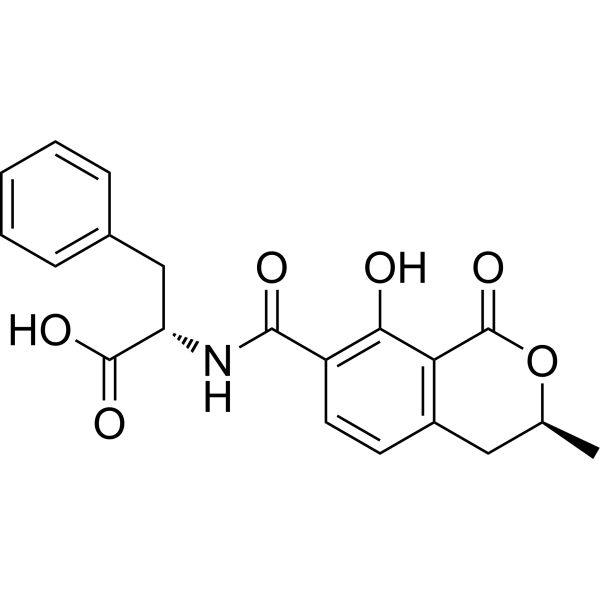
    Ochratoxin B is an orally active secondary metabolite of Aspergillus ochraceus and non-chlorinated analog of the mycotoxin Ochratoxin A. Ochratoxin B reduces the toxic effects of Ochratoxin A (HY-N6788). Ochratoxin B inhibits cell division. Ochratoxin B causes craniofacial malformations in Xenopus laevis embryos .
    Ochratoxin B
  • HY-125699

    Fungal Infection
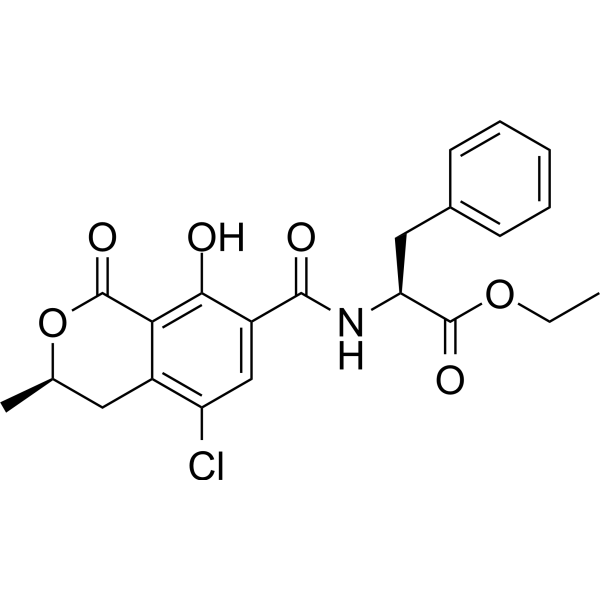
    Ochratoxin C is the ethyl ester analog of ochratoxin A, a mycotoxin produced by A. ochraceus, A. carbonarius, and P. verrucosum that is commonly found as a food contaminant.
    Ochratoxin C
  • HY-W018582

    Fungal Infection
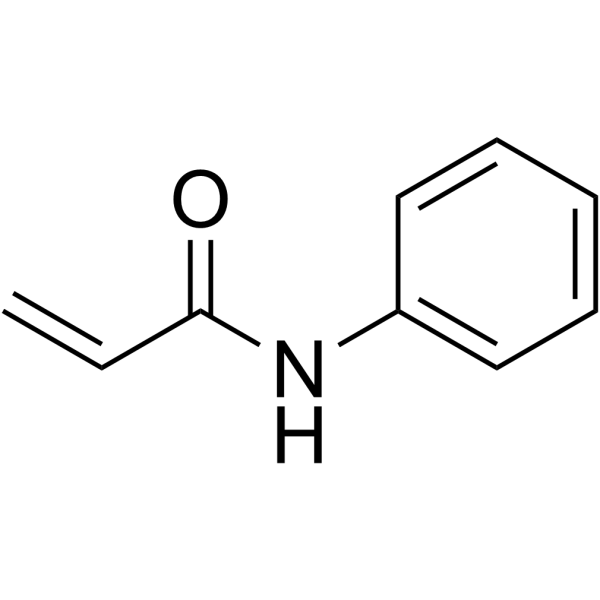
    N-Phenylacrylamide is a special polymer showing high affinity with Ochratoxin A, a colorless and crystalline mycotoxin compound. N-Phenylacrylamide can be applied in the field of mycotoxin extraction, and be used for the security research of agricultural commodities and foods made from cereals and grapes .
    N-Phenylacrylamide
  • HY-108385

    Isotope-Labeled Compounds Endogenous Metabolite DNA/RNA Synthesis PPAR Reactive Oxygen Species (ROS) Apoptosis Fungal Inflammation/Immunology Cancer
    Ochratoxin A-D4 (Phe-​OTA-D4) is the deuterium labeled Ochratoxin A. Ochratoxin A is an orally active food-borne mycotoxin that can cross the blood-brain barrier. Ochratoxin A is a secondary metabolite of fungi belonging to the genera Aspergillus and Penicillium, and is classified as a Group 2B carcinogen. Ochratoxin A exerts its effects through multiple pathways, including inducing oxidative stress, inhibiting mitochondrial respiration, causing oxidative DNA damage, disrupting the PPAR-γ-CD36 axis, inducing immunosuppression, generating ROS, mediating mitochondria-dependent apoptosis, inhibiting glutamate uptake, triggering demyelination and neuroinflammation, inducing DNA hypomethylation, and inhibiting cell proliferation. Ochratoxin A can induce nephrotoxicity, hepatotoxicity, immunotoxicity, and neurotoxicity, and also exhibits mutagenicity, teratogenicity, and carcinogenicity.
    Ochratoxin A-D4
  • HY-122785

    Fungal Infection
    Fusapyrone is a broad-spectrum antifungal metabolite first isolated from Fusarium species. It has been investigated for use in the control of postharvest crop diseases such as inhibiting the growth of ochratoxin-producing strains of Aspergillus section Nigri in wine grapes.
    Fusapyrone
  • HY-N6786R

    Endogenous Metabolite Reference Standards Metabolic Disease
    Ochratoxin B (Standard) is the analytical standard of Ochratoxin B (HY-N6786). This product is intended for research and analytical applications. Ochratoxin B is an orally active secondary metabolite of Aspergillus ochraceus and non-chlorinated analog of the mycotoxin Ochratoxin A. Ochratoxin B reduces the toxic effects of Ochratoxin A (HY-N6788). Ochratoxin B inhibits cell division. Ochratoxin B causes craniofacial malformations in Xenopus laevis embryos .
    Ochratoxin B (Standard)
  • HY-N6786S

    Isotope-Labeled Compounds Endogenous Metabolite Metabolic Disease
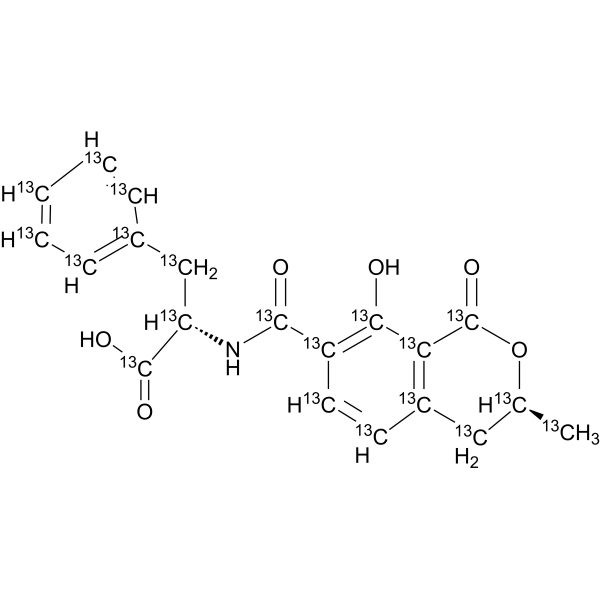
    Ochratoxin B- 13C20 is 13C-labeled Ochratoxin B (HY-N6786). Ochratoxin B is an orally active secondary metabolite of Aspergillus ochraceus and non-chlorinated analog of the mycotoxin Ochratoxin A. Ochratoxin B reduces the toxic effects of Ochratoxin A (HY-N6788). Ochratoxin B inhibits cell division. Ochratoxin B causes craniofacial malformations in Xenopus laevis embryos .
    Ochratoxin B-13C20
  • HY-132380S

    Isotope-Labeled Compounds Others
    3-epi-Ochratoxin A-d5 is the deuterium labeled 3-epi-Ochratoxin A .
    3-epi-Ochratoxin A-d5
  • HY-183210

    Biochemical Assay Reagents Others
    Ochratoxin A/BSA is an antigen-adjuvant conjugate conjugate of Ochratoxin A (HY-N6788) and BSA. By conjugating the antigen with a protein adjuvant, the production of antigen-specific antibodies in vaccine models can be enhanced. The conjugate does not affect protein folding or disrupt major epitopes, and can enhance cross-presentation and the production of antigen-specific T cells.
    Ochratoxin A/BSA
  • HY-N19229

    Endogenous Metabolite Others
    Dihydrocitrinone is a polyketide secondary metabolite and the major urinary metabolite of citrinin, which can be isolated from Aspergillus strains derived from the rhizosphere soil of date palms. Dihydrocitrinone exerts independent toxic effects in renal cell cultures and zebrafish embryo models, enhances the toxic effects of Ochratoxin A through additive or synergistic actions, and increases the level of miR-731 in zebrafish embryos when acting in combination with Ochratoxin A .
    Dihydrocitrinone
  • HY-W765059

    Isotope-Labeled Compounds Others
    3-Epi-Ochratoxin C-d5 is the deuterium labeled 3-Epi-Ochratoxin C.
    3-Epi-Ochratoxin C-d5
  • HY-167770

    Drug Metabolite Metabolic Disease
    Chrysin 7-sulfate is a conjugated metabolite of Chrysin (HY-14589). Chrysin 7-sulfate can strongly displace the Site I marker warfarin from human serum albumin. Chrysin 7-sulfate can effectively displace Ochratoxin A (OTA) (HY-N6788) from albumin both in vitro and in vivo .
    Chrysin 7-sulfate

Inquiry Online

Your information is safe with us. * Required Fields.

Salutation


Country or Region *

Applicant Name *


Organization Name *

Department *


Email Address *


Product Name *

Cat. No.


Requested quantity *

Phone Number *


Remarks

Inquiry Online

Inquiry Information

Product Name:
Cat. No.:
Quantity:
MCE Japan Authorized Agent:

