
117 Results for "

oxalate

" in MedChemExpress (MCE) Product Catalog:
Products (117)

117 Results for "oxalate" in MCE Product Catalog:

12
12 Cited Publications
Cat. No.: HY-14258A
CAS No.: 219861-08-2
Purity:  99.88%
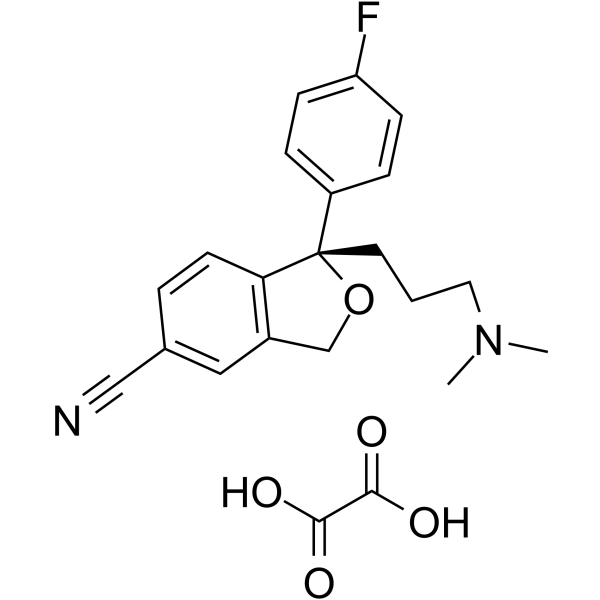
Synonyms: (S)-Citalopram oxalate; (S)-(+)-Citalopram oxalate
Target:  

Serotonin Transporter

Research Areas:  

Neurological Disease Cancer

Escitalopram ((S)-Citalopram) oxalate, the S-enantiomer of racemic Citalopram, is a selective serotonin reuptake inhibitor (SSRI) with a Ki of 0.89 nM. Escitalopram oxalate has ∼30 fold higher binding affinity than its R(-)-enantiomer and shows selectivity over both dopamine transporter (DAT) and norepinephrine transporter (NET). Escitalopram oxalate is an antidepressant for the research of major depression .
loading...
    loading...
11
11 Cited Publications
Cat. No.: HY-W074143
CAS No.: 36309-88-3
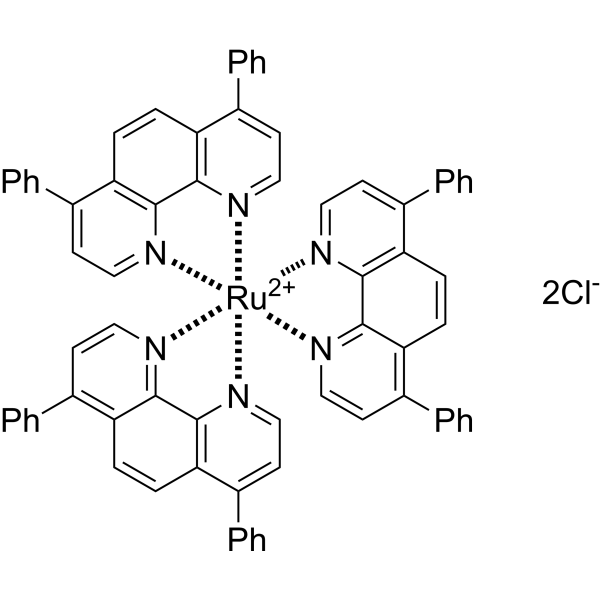
Synonyms: [Ru(DPP)3]Cl2
Tris(4,7-diphenyl-1,10-phenanthroline)ruthenium(II) dichloride ([Ru(dpp)3] 2+) is an electrochemiluminescent (ECL) probe and oxygen-sensitive sensor. Tris(4,7-diphenyl-1,10-phenanthroline)ruthenium(II) dichloride can be used to modify electrode surfaces for the detection of sulfates (S2O8 2-) and oxalates, based on electrochemical reactions that generate excited-state species, releasing photons through irreversible redox reactions. Tris(4,7-diphenyl-1,10-phenanthroline)ruthenium(II) dichloride utilizes the oxygen quenching of fluorescence mechanism, where fluorescence intensity reflects the metabolic rate of living microorganisms or oxygen levels within cells/tumors, allowing for real-time detection. Tris(4,7-diphenyl-1,10-phenanthroline)ruthenium(II) dichloride's main applications include microbial detection, antibacterial activity studies, and tumor microenvironment research .
loading...
    loading...
7
7 Cited Publications
Cat. No.: HY-13410
CAS No.: 141064-23-5
Purity:  99.93%
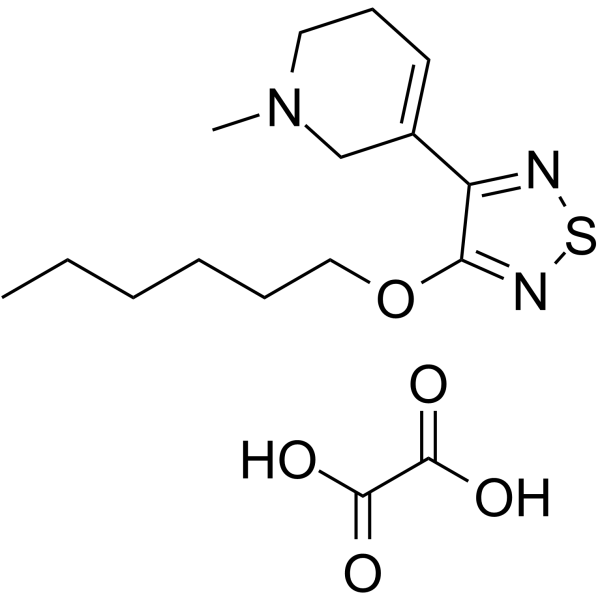
Synonyms: LY246708 oxalate
Target:  

mAChR

Research Areas:  

Neurological Disease

Xanomeline oxalate (LY246708 oxalate) is a potent and selective muscarinic receptor agonist (SMRA) and stimulates phosphoinositide hydrolysis in vivo. Xanomeline oxalate can be used for the research of Alzheimer’s disease .
loading...
    loading...
2
2 Cited Publications
Cat. No.: HY-148669A
CAS No.: 2866179-95-3
Purity:  ≥98.0%
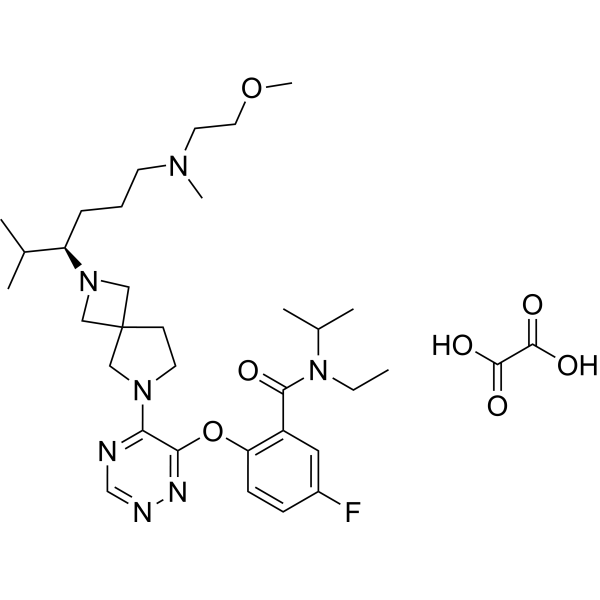
Synonyms: JNJ-75276617 oxalate; Menin-MLL inhibitor 24 oxalate
Research Areas:  

Cancer

Bleximenib (JNJ-75276617) oxalate is an orally active and selective menin-KMT2A inhibitor, with IC50 values of 0.1 nM, 0.045 nM, and ≤0.066 nM for humans, mice, and dogs, respectively. Bleximenib oxalate can inhibit the proliferation and induce apoptosis and differentiation of tumor cells. Bleximenib oxalate can be used in the research of tumors such as leukemia .
loading...
    loading...
2
2 Cited Publications
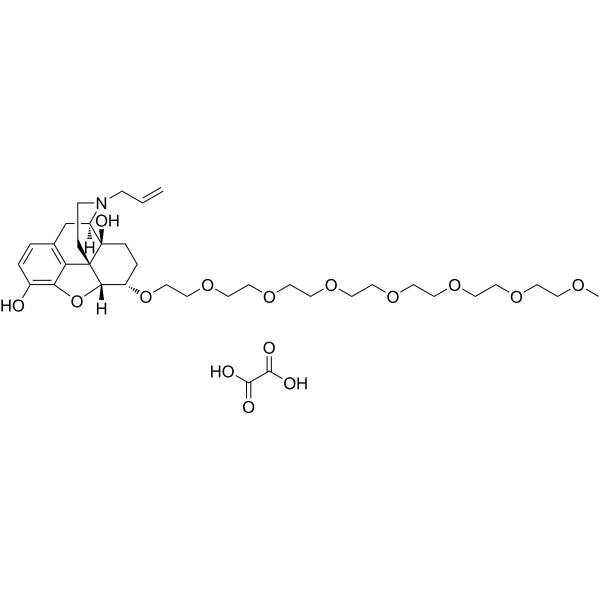
Cat. No.: HY-A0118A
CAS No.: 1354744-91-4
Synonyms: NKTR-118 oxalate; AZ-13337019 oxalate
Target:  

Opioid Receptor

Research Areas:  

Metabolic Disease

Naloxegol oxalate (NKTR-118 oxalate; AZ-13337019 oxalate) is an orally active peripherally acting μ-opioid receptor antagonist with a target Ki of 7.42 nM. Naloxegol oxalate inhibits the binding of opioids to μ-opioid receptors in the gastrointestinal tract, and alleviates opioid-induced gastrointestinal hypomotility, delayed transit, hypertonicity, and increased fluid reabsorption. Naloxegol oxalate is applicable to research related to opioid-induced constipation .
loading...
    loading...
2
2 Cited Publications
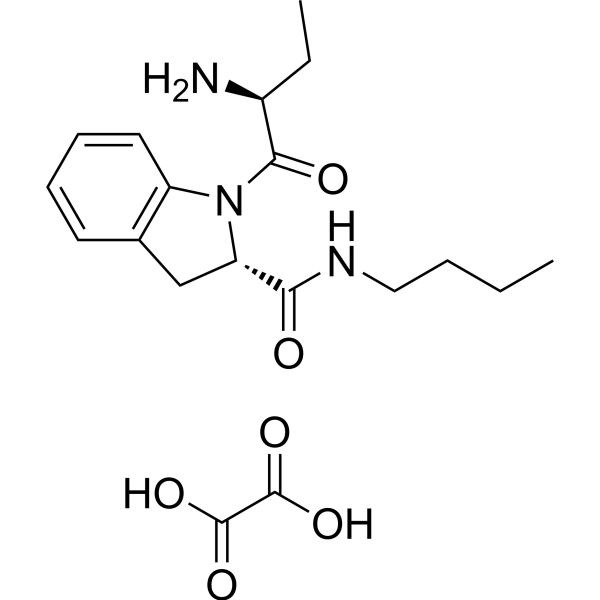
Cat. No.: HY-107759
CAS No.: 185213-03-0
Purity:  98.98%
Synonyms: UCL-1397 oxalate
Target:  

Ser/Thr Protease

Research Areas:  

Neurological Disease

Butabindide (UCL-1397) oxalate is a potent, selective tripeptidvl peptidase II (TPP II) inhibitor with Ki values of 7 nM and 10 μM for TPP II and TPP I, respectively. Butabindide oxalate inhibits TPP II to protect CCK-8 against inactivation .
loading...
    loading...
2
2 Cited Publications
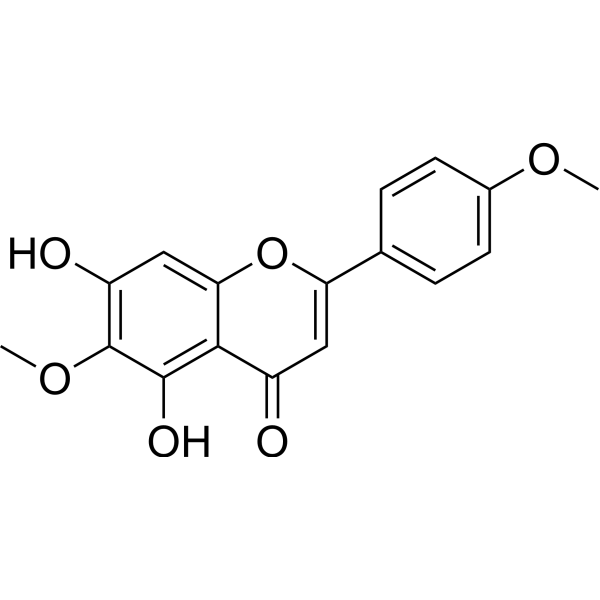
Cat. No.: HY-N0493
CAS No.: 520-12-7
Pectolinarigenin is an orally active dual inhibitor of COX-2/5-LOX with anti-inflammatory, antioxidant, antitumor and neuroprotective activities. Pectolinarigenin exerts neuroprotective and anti-inflammatory effects on astrocyte inflammation via the NFκB and MAPK pathways. Pectolinarigenin inhibits LPS-induced phosphorylation of ERK1/2, N-FκB and p38MAPK, directly inhibits the enzymatic activity or binding of COX-2, 5-LOX and HIF-1α, and reduces the level of XIAP. Pectolinarigenin modifies Keap1 to promote nuclear accumulation of Nrf2, induces ARE-mediated antioxidant enzyme expression, and possesses direct free radical scavenging activity. Pectolinarigenin reduces the release of NO, proinflammatory mediators and leukotrienes, and increases the level of IL-10. Pectolinarigenin induces G2/M cell cycle arrest, apoptosis (Apoptosis) and autophagy (Autophagy) via the PI3K/AKT/mTOR signaling pathway. Pectolinarigenin reduces renal crystal deposition and inhibits melanin synthesis. Pectolinarigenin inhibits inflammation and alleviates allergy in mouse models of inflammation. Pectolinarigenin alleviates renal injury, inflammation and oxidative stress in mice by inhibiting HIF-1α activity. Pectolinarigenin can be used for the research of neurodegenerative diseases, inflammatory/allergic diseases, calcium oxalate nephrocalcinosis, gastric cancer, melasma, post-inflammatory diseases and chloasma .
loading...
    loading...
1
1 Cited Publications
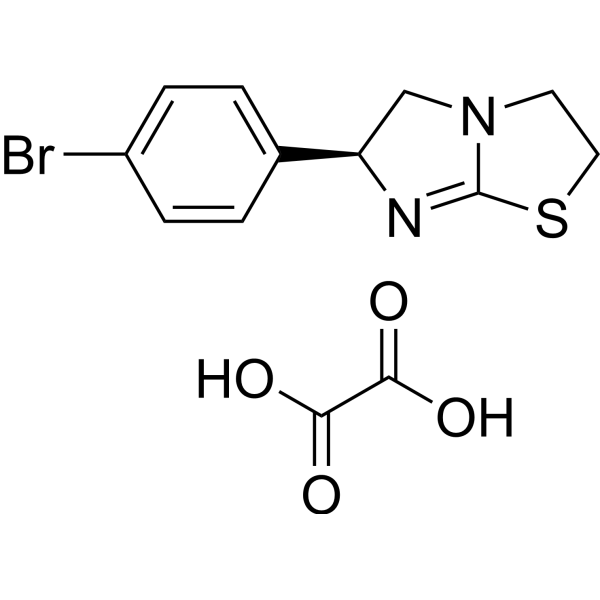
Cat. No.: HY-19695
CAS No.: 62284-79-1
Synonyms: L-p-Bromotetramisole oxalate; 6-Bromolevamisole oxalate
(-)-p-Bromotetramisole oxalate (L-p-Bromotetramisole oxalate) is an alkaline phosphatase inhibitor. (-)-p-Bromotetramisole (oxalate) is applicable to research related to erythroleukemia .
loading...
    loading...
1
1 Cited Publications
Cat. No.: HY-132613
CAS No.: 1834612-06-4
Purity:  99.21%
Lumasiran sodium, an investigational RNA interference (RNAi) therapeutic agent, reduces hepatic oxalate production by targeting glycolate oxidase. Lumasiran sodium reduces urinary oxalate excretion, the cause of progressive kidney failure in primary hyperoxaluria type 1 (PH1) .
loading...
    loading...
1
1 Cited Publications
Cat. No.: HY-107460
CAS No.: 1198408-78-4
Purity:  ≥99.0%
Target:  

Ephrin Receptor

Research Areas:  

Cancer

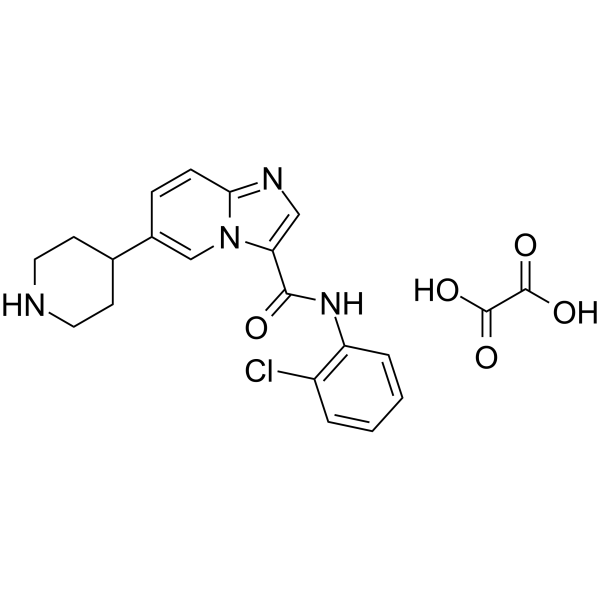
LDN-211904 oxalate is a potent and reversible EphB3 inhibitor with an IC50 of 79 nM. LDN-211904 oxalate shows good metabolic stability in mouse liver microsomes. LDN-211904 oxalate with Cetuximab (HY-P9905) could be effective in inhibiting STAT3-activated colorectal cancer (CRC) stemness and Cetuximab resistance in CRC .
loading...
    loading...
1
1 Cited Publications
Cat. No.: HY-108512A
CAS No.: 1794760-28-3
Purity:  98.65%
Target:  

Sigma Receptor

Research Areas:  

Neurological Disease

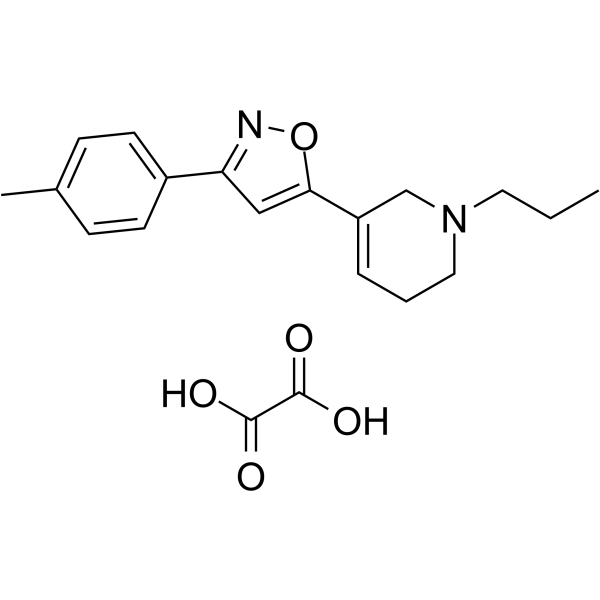
PD 144418 oxalate is a highly affinity, potent and selective sigma 1 (σ1) receptor ligand (Ki values of 0.08 nM and 1377 nM for σ1 and σ2 respectively). PD 144418 oxalate devoids of any significant affinity for other receptors, ion channels and enzymes. PD 144418 oxalate shows potential antipsychotic activity .
loading...
    loading...
1
1 Cited Publications
Cat. No.: HY-Y0262D
CAS No.: 5794-28-5
Synonyms: Calcium oxalate dihydrate
Oxalic acid (calcium monohydrate),99% (Calcium oxalate dihydrate) is a kind of biological materials or organic compounds that are widely used in life science research .
loading...
    loading...
1
1 Cited Publications
Cat. No.: HY-136835
CAS No.: 1216676-34-4
Purity:  99.74%
Target:  

ATM/ATR

Research Areas:  

Neurological Disease

GJ071 oxalate induces ATM kinase activity in ataxia telangiectasia (A-T) cells carrying homozygous TGA or TAG stop codons .
loading...
    loading...
1
1 Cited Publications
Cat. No.: HY-103113
CAS No.: 275363-58-1
Target:  

5-HT Receptor

Research Areas:  

Neurological Disease

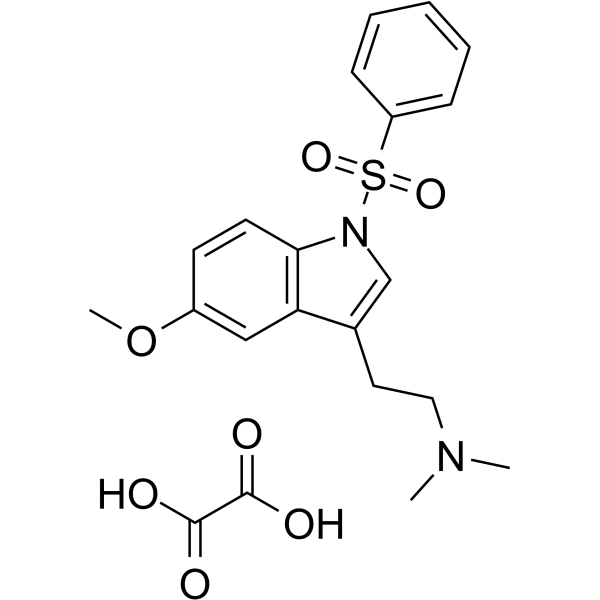
MS 245 oxalate is a potent antagonist of 5-HT6 receptor with a Ki of 2 nM .
loading...
    loading...
1
1 Cited Publications
Cat. No.: HY-132588
CAS No.: 1834610-13-7
Synonyms: ALN-G01
Lumasiran (ALN-G01), a siRNA product, reduces hepatic oxalate production by targeting glycolate oxidase. By silencing the gene encoding glycolate oxidase, Lumasiran depletes glycolate oxidase and thereby inhibits the synthesis of oxalate, which is the toxic metabolite that is directly associated with the clinical manifestations of Primary hyperoxaluria type 1 (PH1) .
loading...
    loading...
1
1 Cited Publications
Cat. No.: HY-149276
CAS No.: 950348-60-4
Purity:  99.88%
Target:  

GLUT

Research Areas:  

Metabolic Disease

SLC26A3-IN-2 is an orally active inhibitor of anion exchanger protein SLC26A3 (IC50=360 nM). SLC26A3 belongs to solute carrier (SLC) proteins, and the SLC26 family. SLC26 family has broad anion specificity for chloride, bicarbonate, sulfate and oxalate. SLC26A3 down-regulates in adenoma, DRA, involves in in intestinal absorption of chloride and oxalate. The loss of SLC26A3 function mutations is associated with chloride-losing diarrhea .
loading...
    loading...
1
1 Cited Publications
Cat. No.: HY-142035
CAS No.: 58160-95-5
Purity:  99.70%
N-Propargylglycine is a brain-penetrant and orally active PRODH inhibitor. N-Propargylglycine covalently modifies enzyme-bound FAD and active site lysine, causing enzyme structural distortion, protein decay, and irreversible inhibition of proline and 4-hydroxyproline catabolism. N-Propargylglycine induces UPRmt, upregulates mitochondrial chaperones and YME1L1, enhances mitochondrial proteostasis, blocks astrocytic L-proline consumption, and abolishes L-proline’s ATP-maintaining and viability-protective effects. N-Propargylglycine stimulates neural processes, increases brain proline, hydroxyproline, and sarcosine levels, partially normalizes Huntington’s disease whole brain transcriptomes. N-Propargylglycine reduces hyperoxaluria, prevents calcium oxalate stone formation, reduces kidney tubular damage, and restores weight and survival in Grhpr knockout mice. N-Propargylglycine can be used for the research of breast cancer, neurodegenerative disorders, Huntington’s disease, and primary hyperoxaluria type 2 .
loading...
    loading...
Cat. No.: HY-B1107
CAS No.: 3200-06-4
Synonyms: Nafronyl oxalate salt
Target:  

5-HT Receptor

Research Areas:  

Cardiovascular Disease

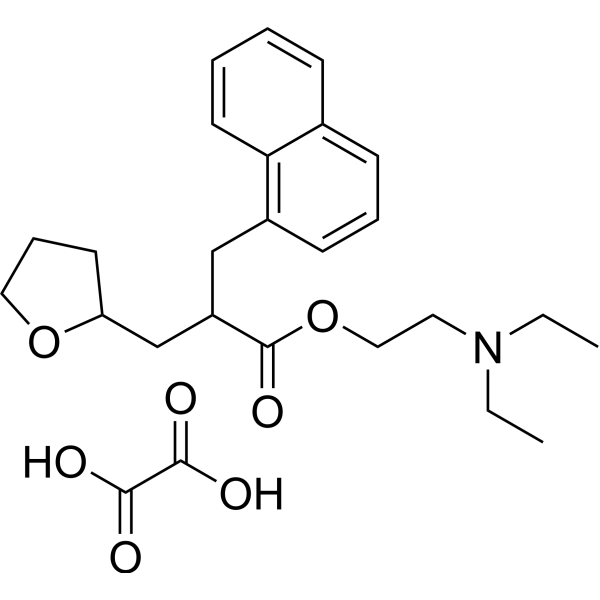
Naftidrofuryl oxalate (Nafronyl oxalate salt) is an orally active 5-HT2 receptor antagonist. Naftidrofuryl oxalate selectively blocks vascular and platelet 5-HT2 receptors, inhibiting Serotonin (HY-B1473A)-induced vasoconstriction, platelet aggregation, and vascular smooth muscle cell proliferation. Naftidrofuryl oxalate can be used for the research of intermittent claudication, peripheral occlusive arterial disease, and critical limb ischaemia .
loading...
    loading...
Cat. No.: HY-Y0262B
CAS No.: 62-76-0
Synonyms: Ethanedioic acid sodium,ACS, 99.5%
Sodium oxalate is an orally active dispersant and coordination agent. Sodium oxalate causes mitochondrial dysfunction. Sodium oxalate has catalytic enhancing activity. Sodium oxalate induces stable chronic kidney disease. Sodium oxalate induces highly malignant and undifferentiated breast tumors .
loading...
    loading...
Cat. No.: HY-E70385
CAS No.: 9031-79-2
Target:  

Endogenous Metabolite

Research Areas:  

Others

Oxalate Oxidase, or oxalate oxidase, catalyzes the oxidation of oxalic acid to hydrogen peroxide and carbon dioxide in the presence of oxygen. Oxalate Oxidase can be found in a variety of plants (such as barley) and microorganisms and can be used to treat wastewater and filtrates containing oxalic acid .
loading...
    loading...

