

1. Search Result
Search Result
Results for "

pH sensitivity

" in MedChemExpress (MCE) Product Catalog:

18

Inhibitors & Agonists

7

Fluorescent Dye

2

Biochemical Assay Reagents

2

Peptides

1

Natural
Products

1

Oligonucleotides

Targets Recommended:
Cat. No. Product Name Target Research Areas Chemical Structure
  • HY-N7075
    Inulin
    4 Publications Verification

    Endogenous Metabolite Infection Neurological Disease Metabolic Disease Cancer
    Inulin is an orally active prebiotic targeting the intestinal microbiota, selectively promoting the proliferation and activity of beneficial bacteria such as bifidobacteria and lactic acid bacteria, and playing a role in regulating the intestinal microecology. The functions of Inulin include: Fermentation by probiotics in the colon to produce short-chain fatty acids (such as butyrate and propionate), lowering the intestinal pH and inhibiting the overgrowth of harmful bacteria; Enhancing the intestinal barrier function and reducing endotoxin translocation; Directly scavenging free radicals (such as superoxide free radicals, hydroxyl free radicals) and activating antioxidant enzymes (SOD, CAT) to reduce oxidative stress. Inulin can also be used in the study of intestinal diseases (constipation, IBD), metabolic syndrome (diabetes, obesity) and liver damage by regulating glucose and lipid metabolism (such as reducing triglycerides, improving insulin sensitivity) and immune response (enhancing NK cell activity, inhibiting inflammatory factors)[1][2][3][4].
    Inulin
  • HY-Y1310A

    Environmental Pollutants Biochemical Assay Reagents Others
    Sodium alginate is an anionic straight chain polysaccharide. Sodium alginate can be obtained from different species of algae. Sodium alginate has different properties, such as pH-sensitivity, nontoxicity, nonimmunogenicity. Sodium alginate has weak gelation, viscosity, and film-forming properties. Sodium alginate can be utilized to prepare gels and film materials for food preservation. Sodium alginate is a versatile functional biomaterial for viscosity enhancement, stabilizer, matrixing agent, encapsulation polymer, bioadhesive and film former .
    Sodium alginate (Viscosity 200±20mpa.s)
  • HY-128945

    ADC Linker Inflammation/Immunology Cancer
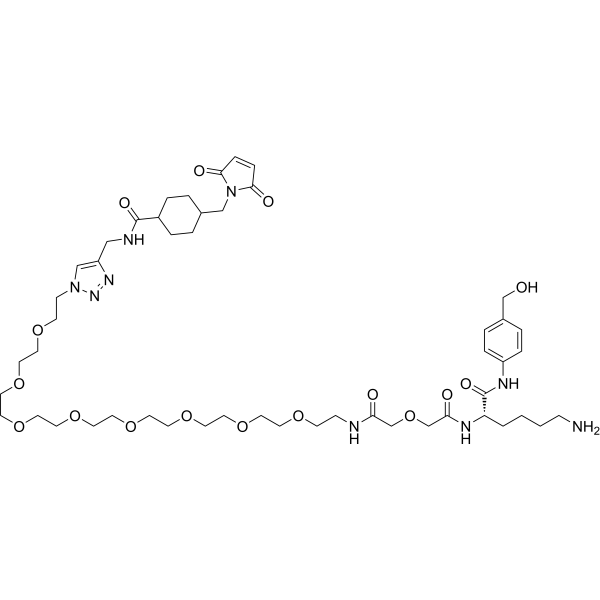
    CL2A is a claevable complicated PEG8- and triazole-containing PABC-peptide-mc linker. CL2A is cleavable through pH sensitivity, giving rise to bystander effect, and binds the antibody at a cysteine residue via a disulfide bond. Labetuzumab govitecan used this linker .
    CL2A
  • HY-D0077

    Oregon green 488

    Fluorescent Dye Others
    2',7'-Difluorofluorescein (Oregon green 488) is a fluorescein derivative and a pH-sensitive fluorescent probe (pKa ~4.7). Upon excitation at 488 nm, 2',7'-Difluorofluorescein exhibits pH-sensitive fluorescence intensity through the formation of dianions, while its pH sensitivity decreases under excitation at 450 nm, allowing its use in ratiometric pH analysis. 2',7'-Difluorofluorescein can be used for the quantitative analysis of pH values in the range of 2-7 in submicron aerosol particles. 2',7'-Difluorofluorescein undergoes buffer-mediated and buffer-free excited-state proton transfer between different protonated forms, and its cationic form undergoes rapid excited-state deprotonation. 2',7'-Difluorofluorescein is resistant to photodegradation, maintains stable absorption and fluorescence properties within the physiological pH range, and serves as a fluorescent protein label, a component of Ca 2+ indicators, a fluorescent imaging agent, and an anisotropy probe .
    2',7'-Difluorofluorescein
  • HY-D1422

    BDNCA-346

    Fluorescent Dye Others
    ER Tracker Yellow is an endoplasmic reticulum-targeted temperature-visible fluorescent probe. ER Tracker Yellow has high temperature sensitivity (3.9%/°C) and is not affected by pH and Ca 2+ interference. ER Tracker Yellow can be used for real-time monitoring of local temperature changes in the ER area. ER Tracker Yellow maintains its function in fixed cells. ER Tracker Yellow is suitable for various cell lines and primary cells, such as HeLa cells, MEF cells, and other cells .
    ER Tracker Yellow
  • HY-W440988

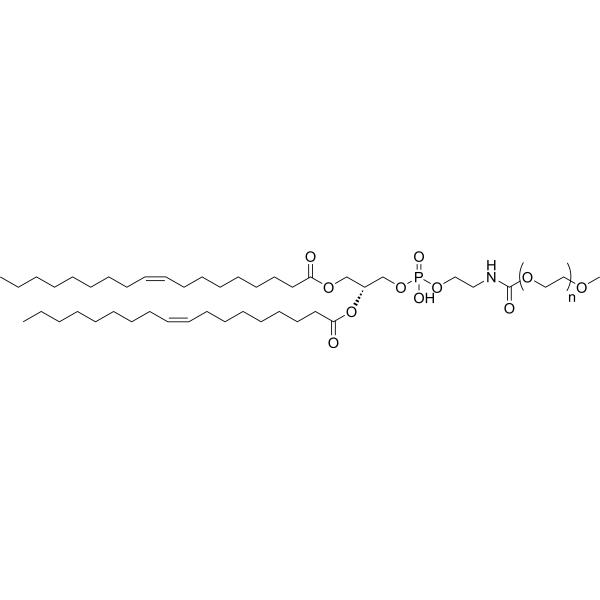
    Liposome Others
    DOPE-mPEG2000 is a phospholipid polydisperse PEG (or DOPE liposome), can be used for preparation of targeted delivery of liposomal drug and giant unilamellar vesicles (GUVs). DOPE-mPEG2000 significantly reduces the pH-sensitivity of the liposome in a concentration dependent manner .
    DOPE-mPEG2000
  • HY-P2757

    pHK

    Others Others
    Phosphorylase kinase relies on Ca 2+ to exert its activity. Phosphorylase kinase’s sensitivity to Ca 2+ is influenced by its activation state and pH. Phosphorylase kinase can be activated by adrenaline .
    Phosphorylase kinase
  • HY-P11085

    Bacterial Infection
    WLBU2 is a engineered cationic antimicrobial peptide (eCAP) that overcomes the environmental sensitivity of natural antimicrobial peptides (AMPs). WLBU2 exhibits rapid bactericidal effect, with the MIC values of ≤ 10 μM against both Gram-negative and Gram-positive bacteria including MRSA, vancomycin-resistant enterococci, K. pneumoniae, E.aerogenes, E. cloacae, Escherichia coli, et, al. WLBU2 prevents P. aeruginosa biofilm growth and retains its activity in an environment rich in mucus, low pH and high salt concentrations without negative effects on human airway epithelial cells. WLBU2 can be used for the studies of cystic fibrosis (CF) and Pseudomonas aeruginosa infections .
    WLBU2
  • HY-D1677

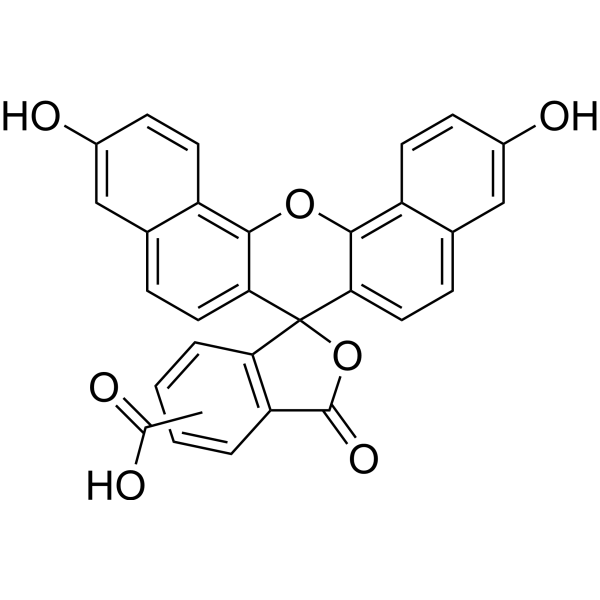
    Fluorescent Dye Others
    5(6)-Carboxynaphthofluorescein is a pH-dependent fluorophore. 5(6)-Carboxynaphthofluorescein shows good sensitivity in an alkaline pH range and it can be exploited in the construction of fiber-optic pH sensors. 5(6)-Carboxynaphthofluorescein can be used as a fluorescent pH indicator (Ex/Em=593/668 nm) .
    5(6)-Carboxynaphthofluorescein
  • HY-D1156A
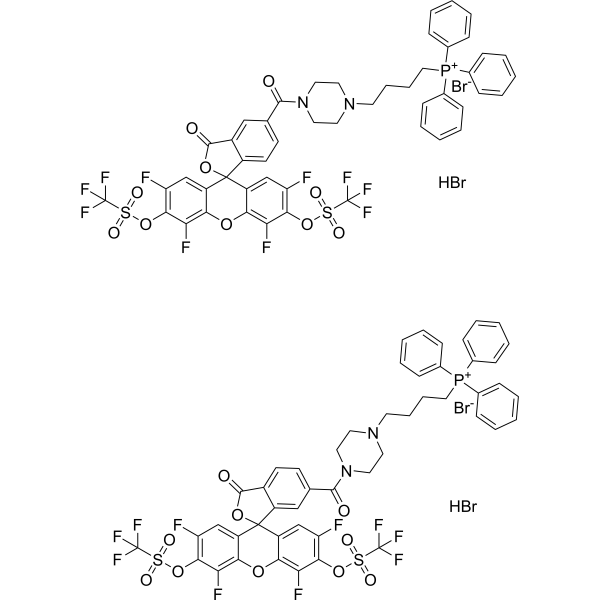
    HKSOX-1m (5/6-mixture) hydrobromide
    2 Publications Verification

    Reactive Oxygen Species (ROS) Fluorescent Dye Others
    HKSOX-1m (5/6-mixture) hydrobromide is a O2 fluorescent probe for mitochondria-targeting (Ex/Em=509/534nm; green), exhibiting excellent selectivity and sensitivity toward O2 over a broad range of pH, strong oxidants, and abundant reductants found in cells .
    HKSOX-1m (5/6-mixture) hydrobromide
  • HY-130027
    HKOCl-4
    1 Publications Verification

    BXY2142

    Fluorescent Dye Others
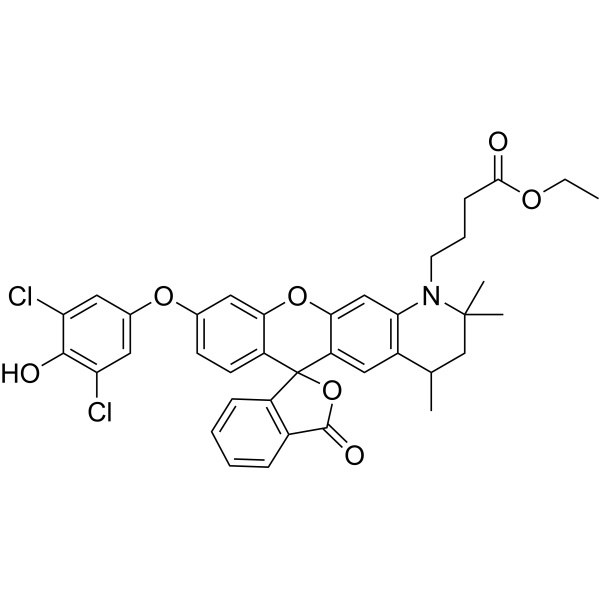
    HKOCl-4 (BXY2142) is a rhodol-based yellow fluorescent probe for the detection of hypochlorous acid with excellent sensitivity and selectivity . HKOCl-4 has longer absorption wavelength and better pH stability compared with fluorescein-based probes. Ex: 530 nm; Em 557 nm.
    HKOCl-4
  • HY-150175

    Fluorescent Dye Inflammation/Immunology
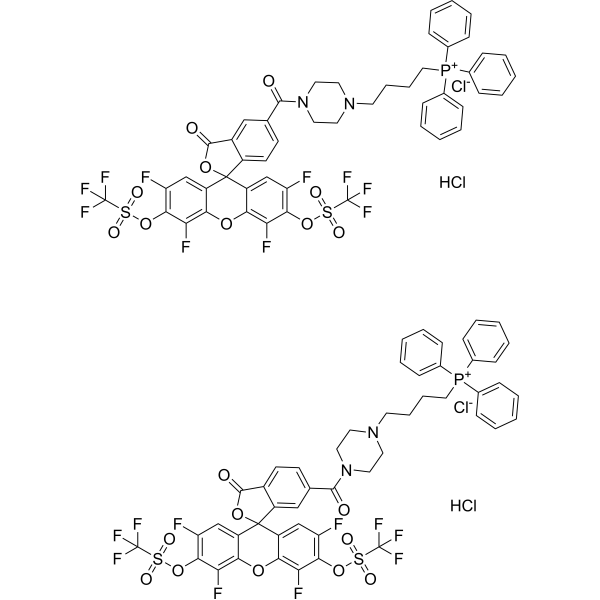
    HKSOX-1 and its derivatives (HKSOX-1r and HKSOX-1m) are novel fluorescent probes designed for highly sensitive and selective detection of the superoxide anion radical (O2 •−) in cellular environments. These probes utilize an aryl trifluoromethanesulfonate group that undergoes O2 •−-mediated cleavage, releasing a free phenol and emitting fluorescence. They demonstrate excellent specificity and sensitivity across various pH ranges, withstand interference from strong oxidants and reductants typical in cellular contexts. HKSOX-1r, optimized for cellular retention, has been effectively employed in diverse assays including confocal imaging, flow cytometry, and zebrafish embryo studies, highlighting its utility in investigating O2 •− roles in inflammation, mitochondrial stress, and other physiological processes .
    HKSOX-1
  • HY-D1591

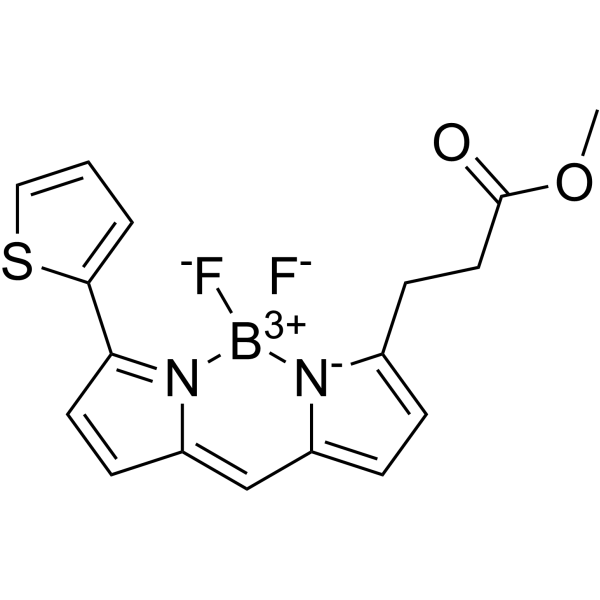
    Fluorescent Dye Others
    BODIPY R6G methyl ester (compound 5′-1) is a BODIPY-like fluorescent dye with good light stability and insensitive to pH value. BODIPY R6G methyl ester shows good photostability, high sensitivity and insensitive to pH value. BODIPY R6G methyl ester can be used in research areas such as photodynamic research, PH probes, ion recognition, photocatalysis, protein labeling, cell imaging, and proteomic analysis .
    BODIPY R6G methyl ester
  • HY-128945A

    ADC Linker Inflammation/Immunology Cancer
    CL2A TFA is a claevable complicated PEG8- and triazole-containing PABC-peptide-mc linker. CL2A TFA is cleavable through pH sensitivity, giving rise to bystander effect, and binds the antibody at a cysteine residue via a disulfide bond. Labetuzumab govitecan used this linker .
    CL2A TFA
  • HY-D1156

    Reactive Oxygen Species (ROS) Fluorescent Dye Others
    HKSOX-1m (5/6-mixture) is a O2 fluorescent probe for mitochondria-targeting (Ex/Em=509/534nm; green), exhibiting excellent selectivity and sensitivity toward O2 over a broad range of pH, strong oxidants, and abundant reductants found in cells .
    HKSOX-1m (5/6-mixture)
  • HY-143285

    Fluorescent Dye Infection
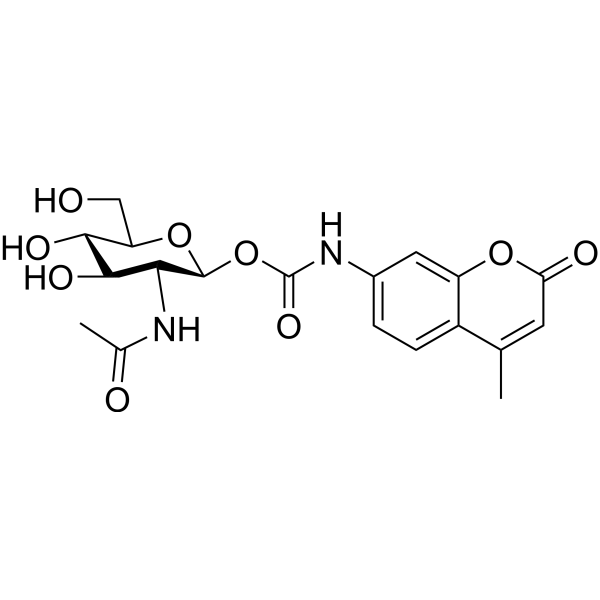
    AMC-GlcNAc (compound 1) is a potent fluorogenic probe for detection and characterization of β-hexosaminidase enzyme activity. AMC-GlcNAc enables continuous monitoring by turn-on fluorescence and fluorescence signal is constant over a wide pH range (Ex=325 nm, Em=390 nm). AMC-GlcNAc enables ratiometric fluorescence detection with high sensitivity and low background, which can be used to screen for recombinant dispersin B activity in E. coli cell lysate .
    AMC-GlcNAc
  • HY-D2977

    Fluorescent Dye Autophagy Fungal Infection
    AF-1 is a azole-based near-infrared fluorescence diagnostic probe with an emission wavelength of 632 nm. AF-1 selectively accumulates in fungal cell membranes at physiological pH. AF-1 targets and induces Autophagy. AF-1 exhibits antifungal activity and sensitivity to autophagy-related pH .
    AF-1
  • HY-P11085A

    Bacterial Infection
    WLBU2 acetate is a engineered cationic antimicrobial peptide (eCAP) that overcomes the environmental sensitivity of natural antimicrobial peptides (AMPs). WLBU2 acetate exhibits rapid bactericidal effect, with the MIC values of ≤ 10 μM against both Gram-negative and Gram-positive bacteria including MRSA, vancomycin-resistant enterococci, K. pneumoniae, E.aerogenes, E. cloacae, Escherichia coli, et, al. WLBU2 acetate prevents P. aeruginosa biofilm growth and retains its activity in an environment rich in mucus, low pH and high salt concentrations without negative effects on human airway epithelial cells. WLBU2 acetate can be used for the studies of cystic fibrosis (CF) and Pseudomonas aeruginosa infections .
    WLBU2 acetate

Inquiry Online

Your information is safe with us. * Required Fields.

Salutation


Country or Region *

Applicant Name *


Organization Name *

Department *


Email Address *


Product Name *

Cat. No.


Requested quantity *

Phone Number *


Remarks

Inquiry Online

Inquiry Information

Product Name:
Cat. No.:
Quantity:
MCE Japan Authorized Agent:

