23 Results for "

polyethylene glycol base

" in MedChemExpress (MCE) Product Catalog:
Products (23)

23 Results for "polyethylene glycol base" in MCE Product Catalog:

1
1 Cited Publications
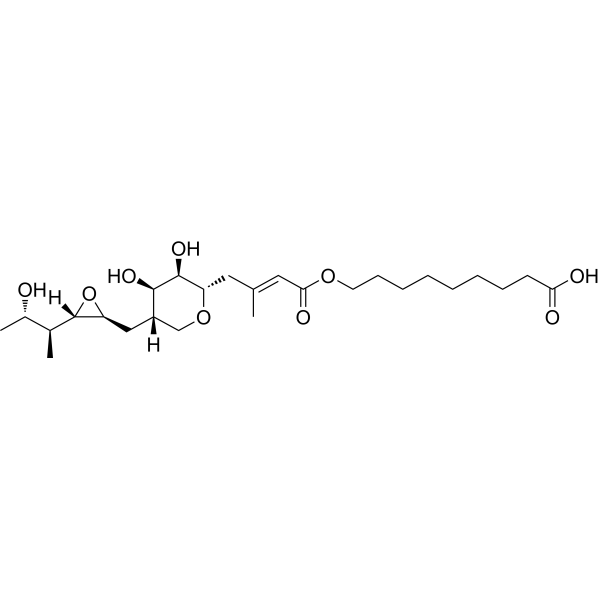
Cat. No.: HY-B0958
CAS No.: 12650-69-0
Synonyms: BRL-4910A; Pseudomonic acid
Mupirocin is an antibiotic. Mupirocin inhibits bacterial isoleucyl-tRNA synthetase, blocking protein synthesis. Mupirocin has high activity against Gram-positive bacteria such as Staphylococcus and Streptococcus, as well as some Gram-negative bacteria (such as Haemophilus influenzae). Mupirocin can be used in the research of diseases such as skin infections (such as MRSA infections) and chronic sinusitis .
loading...
    loading...
1
1 Cited Publications
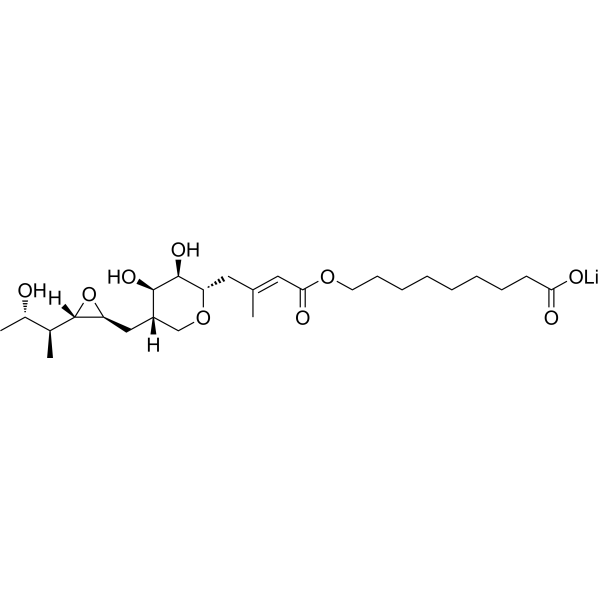
Cat. No.: HY-W108875
CAS No.: 73346-79-9
Synonyms: BRL-4910A lithium; Pseudomonic acid lithium
Mupirocin lithium is an antibiotic. Mupirocin lithium inhibits bacterial isoleucyl-tRNA synthetase, blocking protein synthesis. Mupirocin lithium has high activity against Gram-positive bacteria such as Staphylococcus and Streptococcus, as well as some Gram-negative bacteria (such as Haemophilus influenzae). Mupirocin lithium can be used in the research of diseases such as skin infections (such as MRSA infections) and chronic sinusitis .
loading...
    loading...
1
1 Cited Publications
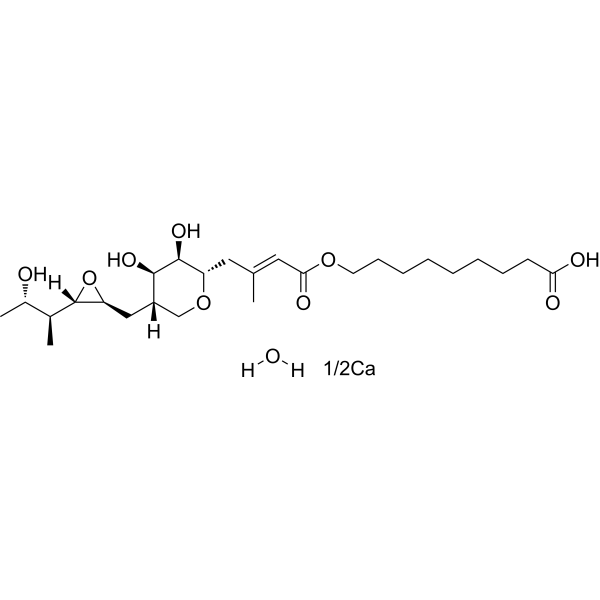
Cat. No.: HY-N7068
CAS No.: 115074-43-6
Synonyms: BRL-4910A calcium hydrate; Pseudomonic acid calcium hydrate
Mupirocin (BRL-4910A, Pseudomonic acid) calcium hydrate is an orally active antibiotic isolated from Pseudomonas fluorescens. Mupirocin calcium hydrate apparently exerts its antimicrobial activity by reversibly inhibiting isoleucyl-transfer RNA, thereby inhibiting bacterial protein and RNA synthesis .
loading...
    loading...
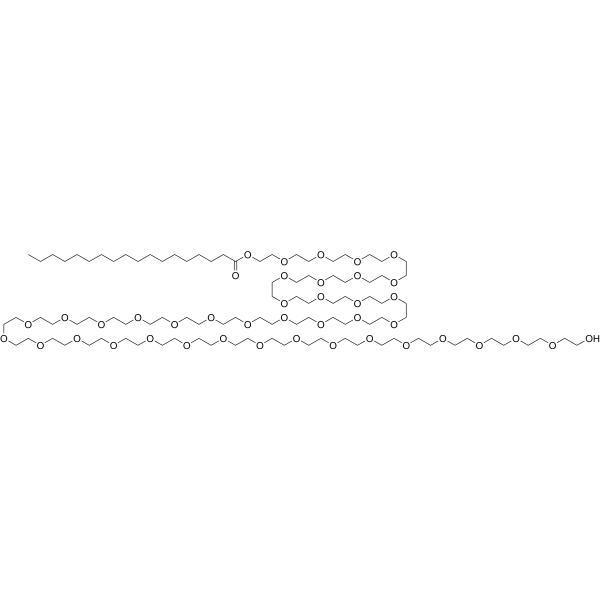
Cat. No.: HY-101530B
CAS No.: 171286-89-8
Synonyms: PEG 40 stearate
Research Areas:  

Others

Polyoxyl 40 stearate (PEG 40 stearate) is a nonionic surfactant formed by the esterification of stearic acid with polyethylene glycol (PEG) containing approximately 40 ethoxy units, it is widely used in pharmaceutical preparations, nanodrug carriers, emulsification systems and biomedical materials. Polyoxyl 40 stearate can serve as a matrix component of solid lipid nanoparticles to achieve controlled release of encapsulated antifungal drugs; it can also act as a base material for solid lipid nanoparticles for vaginal administration, and polymerizable groups can be introduced via modification with acryloyl chloride .
loading...
    loading...
Cat. No.: HY-140696D
CAS No.: 9004-74-4
Purity:  99.61%
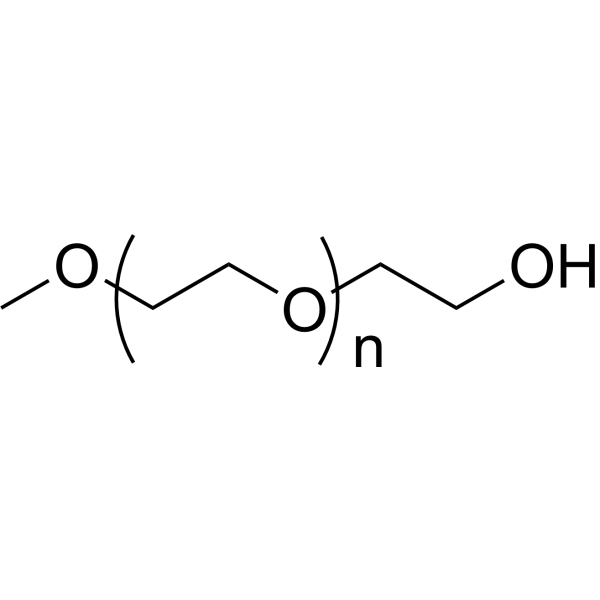
Synonyms: mPEG10000-Hydroxy; polyethylene glycol monomethyl ether 10000
m-PEG10000-OH (mPEG10000-Hydroxy; Polyethylene glycol monomethyl ether 10000) is a hydroxyl-terminated methoxylated polyethylene glycol (PEG-based) compound that serves as a linker for PROTACs. m-PEG10000-OH is applicable to research on healthcare-associated infections .
loading...
    loading...
Cat. No.: HY-W110540D
CAS No.: 25852-47-5
Poly(ethylene glycol) dimethacrylate (MW 2000) is a photopolymerizable poly(ethylene glycol)-based macromer and biocompatible crosslinking agent with a molecular weight of approximately 2000. Poly(ethylene glycol) dimethacrylate (MW 2000) can form photopolymerized hydrogels. Poly(ethylene glycol) dimethacrylate (MW 2000) can be used for research on tissue engineering and drug delivery .
loading...
    loading...
Cat. No.: HY-W110542K
CAS No.: 26570-48-9
Synonyms: PEGDA (MW 1500)
Poly (ethylene glycol) diacrylate (MW 1500) (PEGDA (MW 1500)) is a polyethylene glycol-based diacrylate macromonomer and permselective reagent. Poly (ethylene glycol) diacrylate (MW 1500) enables rapid fabrication of artificial hydrogels via photopolymerization or free radical-induced crosslinking. Poly (ethylene glycol) diacrylate (MW 1500) is used in research related to drug delivery, tissue engineering, and antifouling coatings .
loading...
    loading...
Cat. No.: HY-W110540
CAS No.: 25852-47-5
Poly(ethylene glycol) dimethacrylate (MW 550) is a photopolymerizable poly(ethylene glycol)-based macromer and biocompatible crosslinking agent with a molecular weight of approximately 550. Poly(ethylene glycol) dimethacrylate (MW 550) can form photopolymerized hydrogels. Poly(ethylene glycol) dimethacrylate (MW 550) can be used for research on tissue engineering and drug delivery .
loading...
    loading...
Cat. No.: HY-W110540A
CAS No.: 25852-47-5
Poly(ethylene glycol) dimethacrylate (MW 750) is a photopolymerizable poly(ethylene glycol)-based macromer and biocompatible crosslinking agent with a molecular weight of approximately 750. Poly(ethylene glycol) dimethacrylate (MW 750) can form photopolymerized hydrogels. Poly(ethylene glycol) dimethacrylate (MW 750) can be used for research on tissue engineering and drug delivery .
loading...
    loading...
Cat. No.: HY-W110540C
CAS No.: 25852-47-5
Poly(ethylene glycol) dimethacrylate (MW 1000) is a photopolymerizable poly(ethylene glycol)-based macromer and biocompatible crosslinking agent with a molecular weight of approximately 1000. Poly(ethylene glycol) dimethacrylate (MW 1000) can form photopolymerized hydrogels. Poly(ethylene glycol) dimethacrylate (MW 1000) can be used for research on tissue engineering and drug delivery .
loading...
    loading...
Cat. No.: HY-W110540H
CAS No.: 25852-47-5
Poly(ethylene glycol) dimethacrylate (MW 3400) is a photopolymerizable poly(ethylene glycol)-based macromer and biocompatible crosslinking agent with a molecular weight of approximately 3400. Poly(ethylene glycol) dimethacrylate (MW 3400) can form photopolymerized hydrogels. Poly(ethylene glycol) dimethacrylate (MW 3400) can be used for research on tissue engineering and drug delivery .
loading...
    loading...
Cat. No.: HY-W110540K
CAS No.: 25852-47-5
Poly(ethylene glycol) dimethacrylate (MW 10000) is a photopolymerizable poly(ethylene glycol)-based macromer and biocompatible crosslinking agent with a molecular weight of approximately 10000. Poly(ethylene glycol) dimethacrylate (MW 10000) can form photopolymerized hydrogels. Poly(ethylene glycol) dimethacrylate (MW 10000) can be used for research on tissue engineering and drug delivery .
loading...
    loading...
Cat. No.: HY-W110540L
CAS No.: 25852-47-5
Poly(ethylene glycol) dimethacrylate (MW 20000) is a photopolymerizable poly(ethylene glycol)-based macromer and biocompatible crosslinking agent with a molecular weight of approximately 20000. Poly(ethylene glycol) dimethacrylate (MW 20000) can form photopolymerized hydrogels. Poly(ethylene glycol) dimethacrylate (MW 20000) can be used for research on tissue engineering and drug delivery .
loading...
    loading...
Cat. No.: HY-W591632
CAS No.: 24991-53-5
Synonyms: Poly(ethylene glycol)-bis-amine 1000
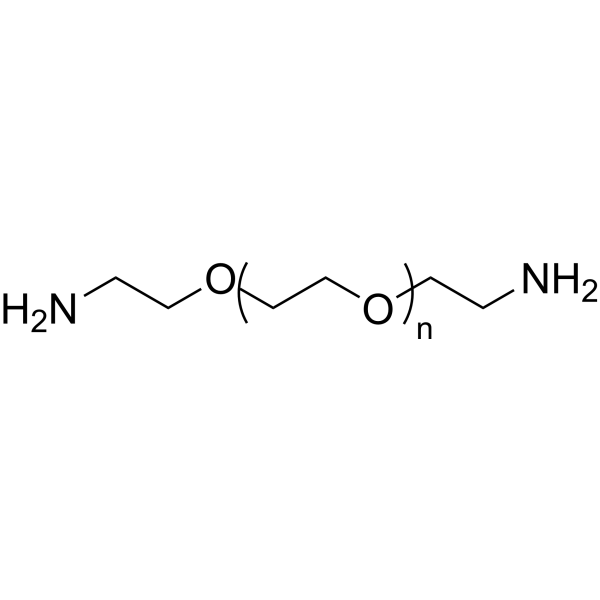
PEG1000-bis-amine (Poly (ethylene glycol)-bis-amine 1000) is a polyethylene glycol-based diamine linker/spacer. PEG-bis-amine can be used to synthesize CS-PEG-PLGA copolymers, which are further employed to prepare 5-fluorouracil (HY-90006)-loaded nanoparticles. PEG-bis-amine facilitates the formation of amino-terminated PLGA-PEG-NH2 for conjugation with Chondroitin sulfate (HY-B2162) .
loading...
    loading...
Cat. No.: HY-W115607
CAS No.: 24991-53-5
Synonyms: Poly(ethylene glycol)-bis-amine 4000
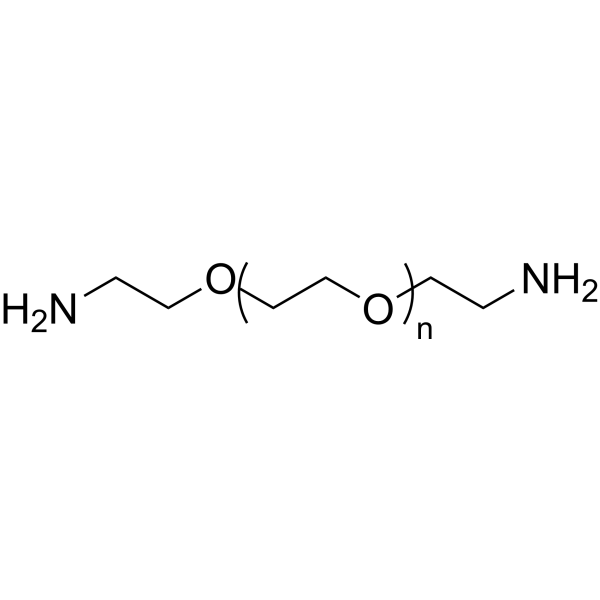
PEG4000-bis-amine (Poly(ethylene glycol)-bis-amine 4000) is a diamine-terminated polyethylene glycol that acts as a linker for conjugate synthesis. PEG4000-bis-amine facilitates the development of MUC1 aptamer-based near-infrared fluorescent probes, and also conjugates folic acid with the near-infrared dye ICG-Der-01 to form a tumor-targeting probe. PEG4000-bis-amine supports the synthesis of folic acid-PEG-DSPE conjugates for the preparation of folic acid-targeted biliposomes. PEG4000-bis-amine is widely used in studies related to breast cancer, non-small cell lung cancer, hepatocellular carcinoma, rheumatoid arthritis, and tumors with high folate receptor expression .
loading...
    loading...
Cat. No.: HY-W110540I
CAS No.: 25852-47-5
Poly(ethylene glycol) dimethacrylate (MW 4000) is a photopolymerizable poly(ethylene glycol)-based macromer and biocompatible crosslinking agent with a molecular weight of approximately 4000. Poly(ethylene glycol) dimethacrylate (MW 4000) can form photopolymerized hydrogels. Poly(ethylene glycol) dimethacrylate (MW 4000) can be used for research on tissue engineering and drug delivery .
loading...
    loading...
Cat. No.: HY-W110540J
CAS No.: 25852-47-5
Poly(ethylene glycol) dimethacrylate (MW 6000) is a photopolymerizable poly(ethylene glycol)-based macromer and biocompatible crosslinking agent with a molecular weight of approximately 6000. Poly(ethylene glycol) dimethacrylate (MW 6000) can form photopolymerized hydrogels. Poly(ethylene glycol) dimethacrylate (MW 6000) can be used for research on tissue engineering and drug delivery .
loading...
    loading...
Cat. No.: HY-130620
CAS No.: 2381196-79-6
Purity:  99.29%
Target:  

PROTAC Linkers

Research Areas:  

Cancer

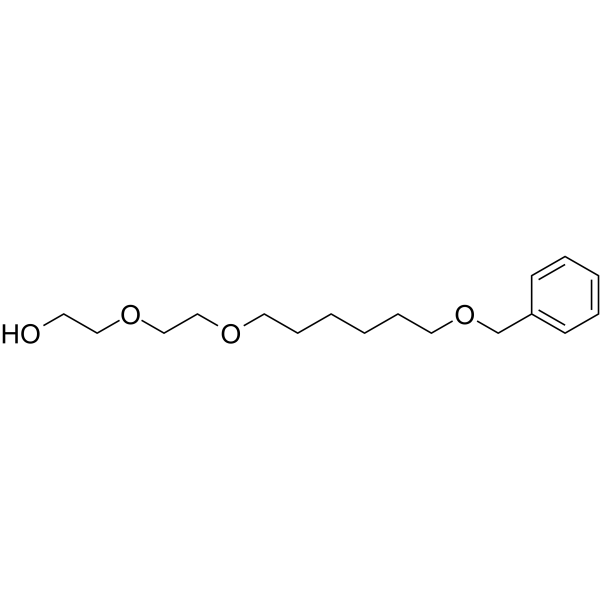
PEG3-C4-OBn is a polyethylene glycol (PEG)-based PROTAC linker. PEG3-C4-OBn can be used in the synthesis of the PROTAC SGK3 degrader-1 (HY-125878). PROTAC SGK3 degrader-1 is a potent SKG3 degrader based on PROTAC .
loading...
    loading...
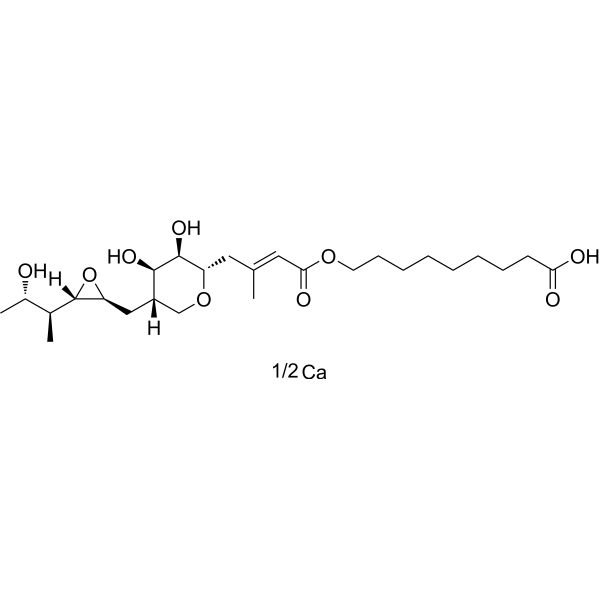
Cat. No.: HY-B0958A
CAS No.: 104486-81-9
Synonyms: BRL-4910A calcium; Pseudomonic acid calcium
Target:  

Antibiotic Bacterial

Research Areas:  

Infection

Mupirocin (BRL-4910A, Pseudomonic acid) calcium is an orally active antibiotic isolated from Pseudomonas fluorescens. Mupirocin calcium apparently exerts its antimicrobial activity by reversibly inhibiting isoleucyl-transfer RNA, thereby inhibiting bacterial protein and RNA synthesis .
loading...
    loading...
Cat. No.: HY-B0958R
CAS No.: 12650-69-0
Synonyms: BRL-4910A (Standard); Pseudomonic acid (Standard)
Mupirocin (Standard) is the analytical standard of Mupirocin (HY-B0958). This product is intended for research and analytical applications. Mupirocin is an antibiotic. Mupirocin inhibits bacterial isoleucyl-tRNA synthetase, blocking protein synthesis. Mupirocin has high activity against Gram-positive bacteria such as Staphylococcus and Streptococcus, as well as some Gram-negative bacteria (such as Haemophilus influenzae). Mupirocin can be used in the research of diseases such as skin infections (such as MRSA infections) and chronic sinusitis .
loading...
    loading...

