



1. Search Result
Search Result
Results for "

polypeptide synthesis

" in MedChemExpress (MCE) Product Catalog:

41

Inhibitors & Agonists

2

Biochemical Assay Reagents

26

Peptides

1

Inhibitory Antibodies

4

Natural
Products

Cat. No. Product Name Target Research Areas Chemical Structure
  • HY-107193
    Bacitracin
    3 Publications Verification

    Environmental Pollutants Antibiotic Bacterial PDI Infection Cancer
    Bacitracin is a polypeptide antibiotic against staphylococcal and pathogenic protozoa infections. Bacitracin inhibits cell wall biosynthesis and permeability through binding to the undecaprenyl pyrophosphate. Bacitracin inhibits macromolecular synthesis. Bacitracin is also a protein disulfide isomerase (PDI) inhibitor .
    Bacitracin
  • HY-A0162
    Quinupristin
    1 Publications Verification

    Bacterial Infection
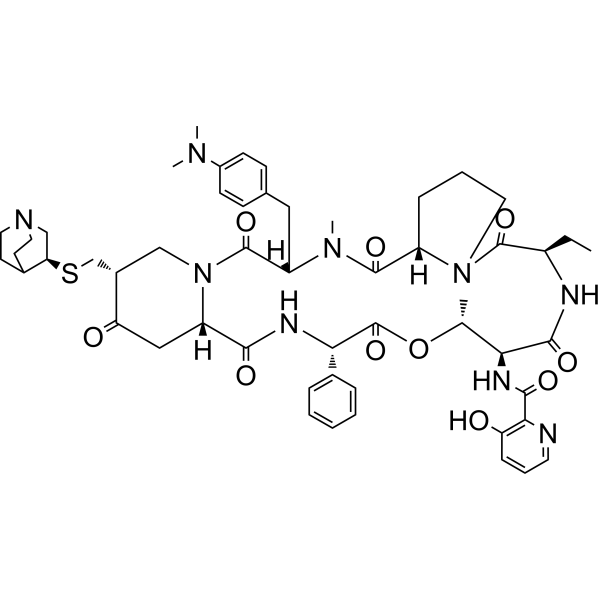
    Quinupristin is a streptogramin antibiotic. Quinupristin blocks peptide bond synthesis to prevent the extension of polypeptide chains and promote the detachment of incomplete protein chains in the bacterial ribosomal subunits .
    Quinupristin
  • HY-P2213

    MMP Apoptosis Cancer
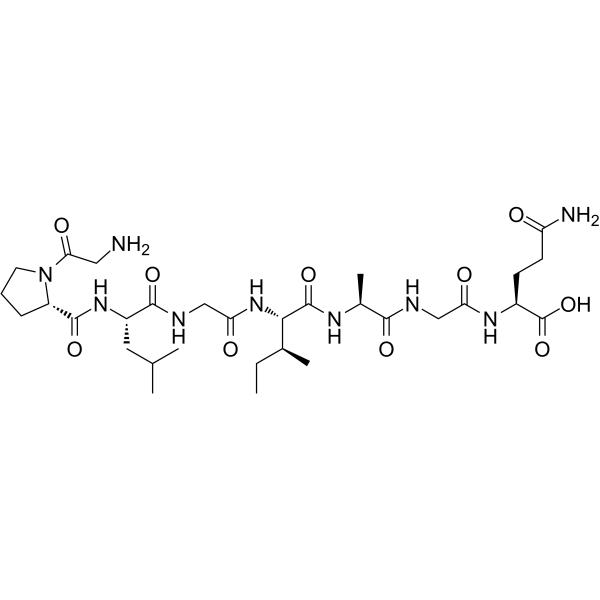
    GPLGIAGQ, a MMP2-cleavable polypeptide, is used as a stimulus-sensitive linker in both liposomal and micellar nanocarriers for MMP2-triggered tumor targeting. GPLGIAGQ can be used to synthesis unique MMP2-targeted photosensitizer in photodynamic therapy (PDT) .
    GPLGIAGQ
  • HY-P990047

    AMG133 antibody

    ADC Antibody GLP Receptor Metabolic Disease
    Maridebart (AMG133 antibody) is a human immunoglobulin G1-kappa, anti-GIPR (gastric inhibitory polypeptide receptor) monoclonal antibody. Maridebart is the antibody portion of Maridebart cafraglutide (HY-164535) and can be used for the synthesis of antibody-drug conjugates (ADC). Maridebart can be used for the reserrch of obesity and type 2 diabetes .
    Maridebart
  • HY-W007599

    Drug Derivative Cancer
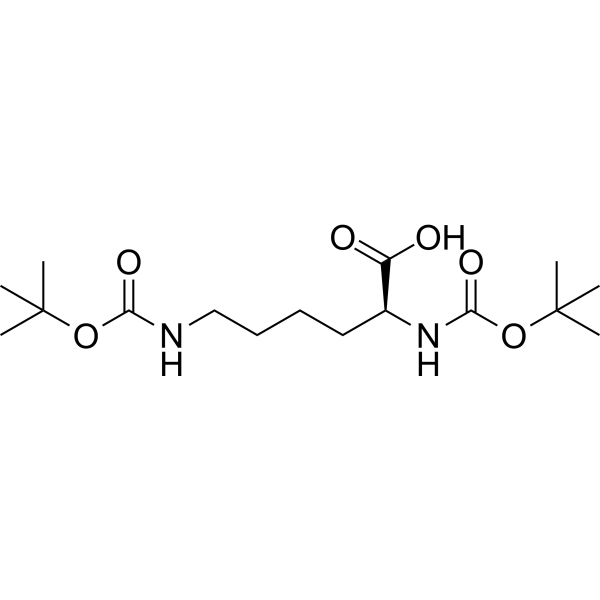
    (S)-2,6-Bis((tert-butoxycarbonyl)amino)hexanoic acid is a polypeptide derivative, can be used to synthesis multifunctional amphiphilic peptide dendrimer for non-viral gene delivery in cancer research. (S)-2,6-Bis((tert-butoxycarbonyl)amino)hexanoic acid can be used in the preparation of organic substances that enhance the luminescence intensity of alkaline phosphatase substrates .
    (S)-2,6-Bis((tert-butoxycarbonyl)amino)hexanoic acid
  • HY-W018004

    Amino Acid Derivatives Endogenous Metabolite Inflammation/Immunology
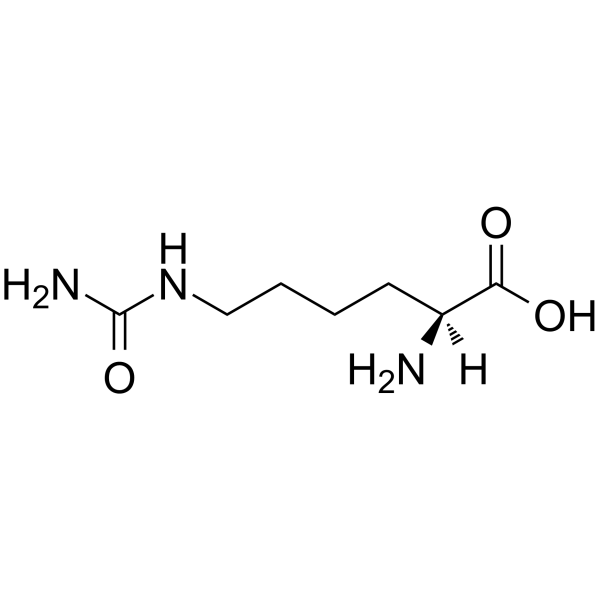
    L-Homocitrulline is a carbamoylated derivative amino acid and a structural analog of L-citrulline. L-Homocitrulline serves not only as an intermediate in polypeptide synthesis but also converts into a variety of cyclic derivatives under enzymatic or acidic conditions. The level of L-Homocitrulline is significantly elevated in the serum of patients with non-alcoholic fatty liver disease (NAFLD), with high diagnostic accuracy. L-Homocitrulline also exists in patients with related diseases such as hypercitrullinemia. L-Homocitrulline is a key biomarker for monitoring abnormal liver metabolism and is widely used in NAFLD research .
    L-Homocitrulline
  • HY-W004864

    Amino Acid Derivatives Others
    Fmoc-(S)-2-(4-pentenyl) Ala-OH is an Fmoc-protected unnatural amino acid. Fmoc-(S)-2-(4-pentenyl) Ala-OH can be used for polypeptide synthesis, such as NYAD-13 (HY-P10834) .
    Fmoc-(S)-2-(4-pentenyl)Ala-OH
  • HY-Y0973

    Biochemical Assay Reagents Drug Intermediate Others
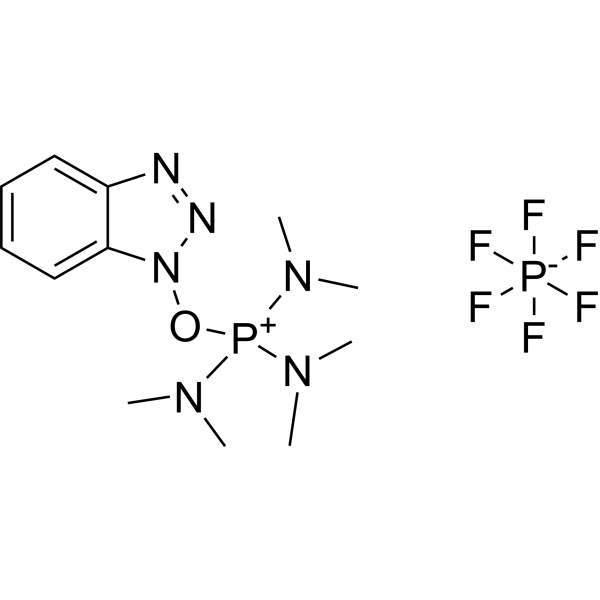
    BOP hexafluorophosphate is a phosphonium-type condensing agent. BOP hexafluorophosphate activates the carboxylic acid component to form a highly reactive O-benzotriazole ester (active ester) intermediate, which then reacts with the amino component to form an amide bond (peptide bond). BOP hexafluorophosphate is applicable to solid-phase polypeptide synthesis and nucleoside modification .
    BOP hexafluorophosphate
  • HY-P11287A

    Interleukin Related Radionuclide-Drug Conjugates (RDCs) Cancer
    DOTA-Pep-1L TFA is a polypeptide formed by the conjugation of DOTA and Pep-1L. DOTA-Pep-1L TFA specifically binds to IL13RA2 and can be used for the synthesis of targeted polypeptides. DOTA-Pep-1L TFA yields the isotopically labeled product [ 225Ac]DOTA-Pep-1L, which exerts α-radiation killing effects on orthotopic glioma cells and extends the median survival time of mice bearing orthotopic glioma models after stereotactic injection. DOTA-Pep-1L TFA can be used for PET imaging, tumor targeting and glioma research .
    DOTA-Pep-1L TFA
  • HY-164166

    Biochemical Assay Reagents Drug Intermediate Amino Acid Derivatives Others
    Fmoc-Sar-Sar-Sar-OH is a small molecule polypeptide composed of sarcosine residues, in which the N-terminus of the peptide chain is protected by Fmoc. Fmoc-Sar-Sar-Sar-OH can be used for peptide synthesis or synthesis of agent-peptide ligand conjugates .
    Fmoc-Sar-Sar-Sar-OH
  • HY-W016042

    Drug Intermediate Others
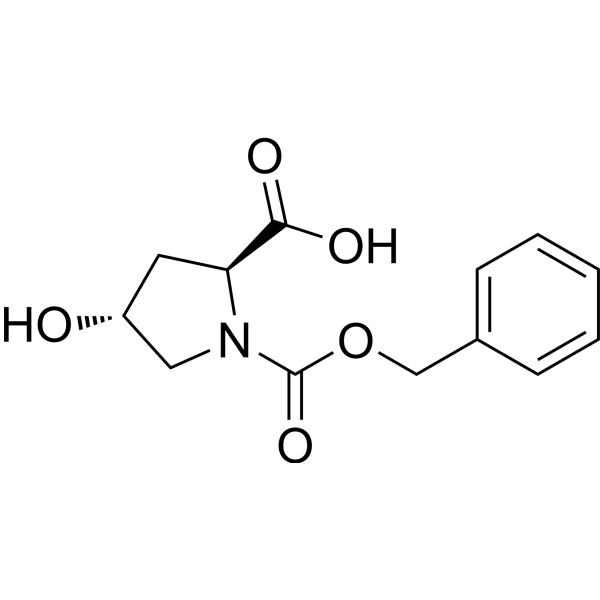
    N-Cbz-Hydroxy-L-proline is a chiral N-Cbz-protected amino acid derivative. N-Cbz-Hydroxy-L-proline is commonly used in the synthesis of polypeptides and pharmaceutical intermediates. N-Cbz-Hydroxy-L-proline undergoes decarboxylation under AlCl3/HFIP conditions .
    N-Cbz-Hydroxy-L-proline
  • HY-P5542

    SB-01; Peniel 2000

    Factor Xa TGF-beta/Smad Inflammation/Immunology
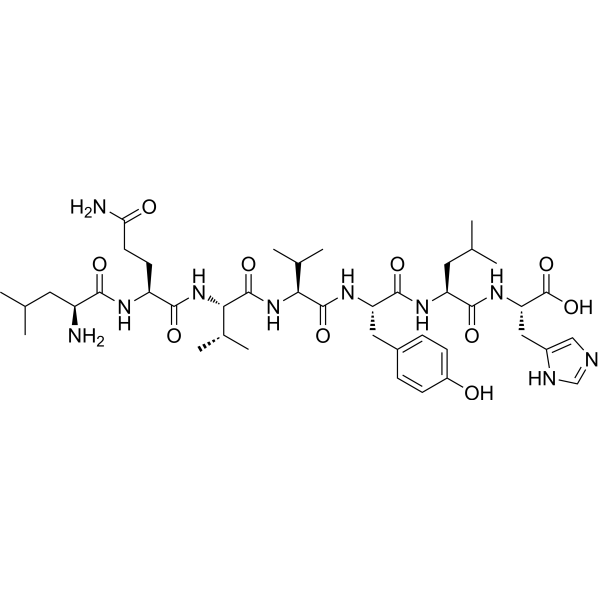
    Vicatertide (SB-01, Peniel 2000) is a polypeptide with both competitive inhibitory activity against TGF-β1 and selective inhibitory activity against human factor XIa (hFXIa, with a Ka of 80 nM for hFXIa). Vicatertide binds allosterically to the two binding sites of dimeric hFXI/hFXIa, while directly binding to activated TGF-β1, selectively blocking the Smad1/5/8 pathway and maintaining low-level activation of the Smad2 pathway to enhance the synthesis of type Ⅱ collagen and aggrecan. Vicatertide inhibits thrombus formation in arteriovenous thrombosis models, and also reduces thrombus weight and thrombus incidence in mouse lung cancer models. Vicatertide can be used for research on degenerative disc disease and thrombosis-related diseases .
    Vicatertide
  • HY-135700

    Calcineurin Ras HMG-CoA Reductase (HMGCR) Metabolic Disease Inflammation/Immunology
    Mevalonolactone is an intermediate metabolite in the eukaryotic mevalonate pathway, serving as the stable δ-lactone form of mevalonate with oral activity. Mevalonolactone exhibits binding affinity for ZNF384 (Ka = 12.6 μM) and inhibitory activity against aconitase (aconitase). Mevalonolactone promotes the nuclear localization of ZNF384 and enhances its binding to the GGPPS promoter. Mevalonolactone induces insulin resistance, disrupts glucose and lipid metabolism, enhances the isoprenylation of K-Ras, and inhibits the activation of the insulin signaling pathway. Mevalonolactone inhibits polypeptide synthesis of HMG-CoA reductase in isolated rat hepatocytes, promotes its degradation, and reduces its enzymatic activity. Mevalonolactone impairs mitochondrial function in rat brains. Mevalonolactone promotes the development of metabolically unhealthy obesity. Mevalonolactone can be used in research related to metabolically abnormal obesity, mevalonic aciduria, HMGCR-related limb-girdle myopathy, and statin-induced myopathy .
    Mevalonolactone
  • HY-P4560

    Pro-Phe

    Angiotensin-converting Enzyme (ACE) Cardiovascular Disease
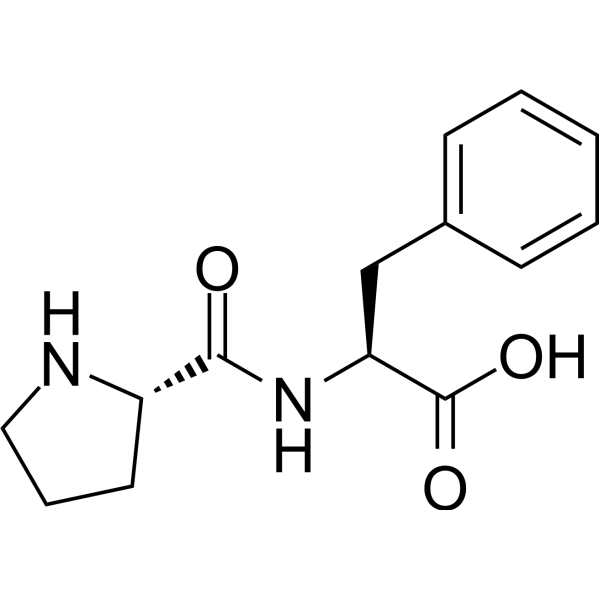
    H-Pro-Phe-OH is a dipeptide containing proline and phenylalanine, which can serve as a substrate for prolinase. H-Pro-Phe-OH can also be used for polypeptide synthesis, where phenylalanine is an aromatic amino acid that can inhibit the activity of Angiotensin-converting enzyme (ACE, HY-P2983) .
    H-Pro-Phe-OH
  • HY-W048673

    Amino Acid Derivatives Others
    Fmoc-Phe (4-CONH2)-OH is a protected phenylalanine derivative commonly used in peptide synthesis, and it can be applied in polypeptide research .
    Fmoc-Phe(4-CONH2)-OH
  • HY-P4294

    Gly-Pro-Gly

    Amino Acid Derivatives Others
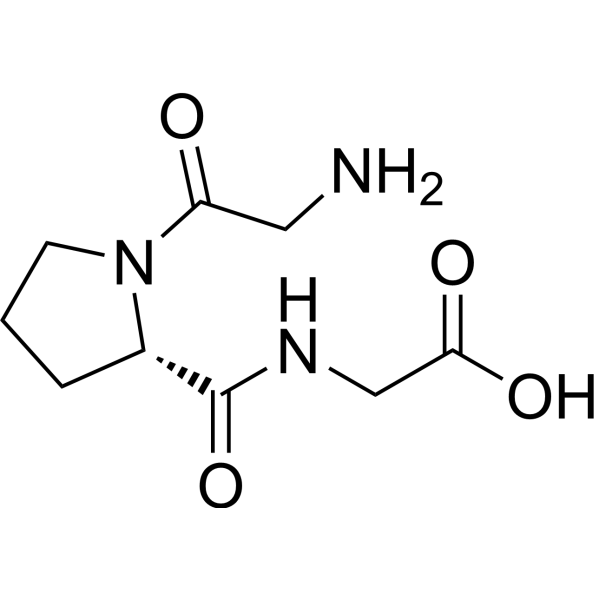
    H-Gly-Pro-Gly-OH is a tripeptide containing glycine and proline. H-Gly-Pro-Gly-OH can be used for the synthesis of other polypeptides, such as (Pro Gly Gly)n .
    H-Gly-Pro-Gly-OH
  • HY-A0155

    Antibiotic Bacterial Infection
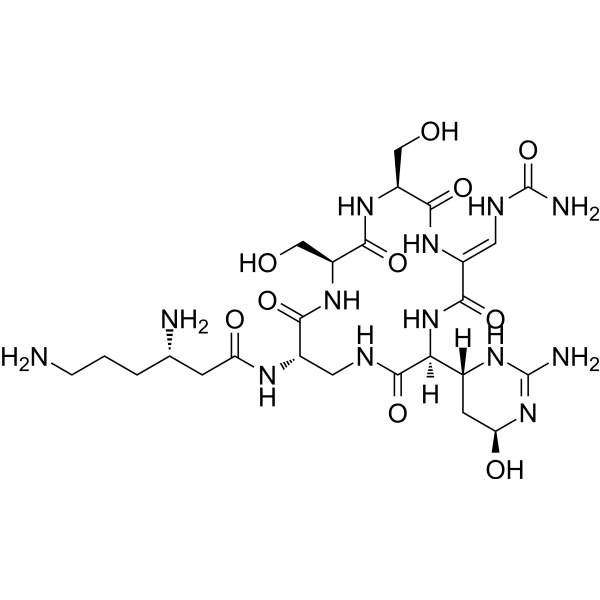
    Viomycin is a potent antibiotic against Mycobacteria. Viomycin rapidly inhibits polypeptide chain elongation when added to purified endogenous Escherichia coli polysomes actively engaged in polypeptide synthesis .
    Viomycin
  • HY-131092A

    Asn-Arg diTFA

    Drug Intermediate Others
    H-Asn-Arg-OH diTFA is a dipeptide formed by the connection of asparagine and arginine via a peptide bond, which can be used in polypeptide synthesis.
    H-Asn-Arg-OH diTFA
  • HY-P5723A

    Bacterial Infection
    Api137 TFA is an antimicrobial peptide that interferes with bacterial growth by inhibiting translation. Api137 TFA inhibits protein synthesis by trapping of release factors on the 70S ribosome following hydrolysis of the nascent polypeptide chain .
    Api137 TFA
  • HY-P2876

    Bacterial Others
    Tryptophanase is a zymogen-converting enzyme and inducible enzyme that can convert its inactive precursor form into an active enzyme without additional polypeptide synthesis. In Escherichia coli K12, tryptophanase functions as an inducible enzyme, and its induction kinetics are similar to those of β-galactosidase. Tryptophanase catalyzes the conversion of L-tryptophan to indole .
    Tryptophanase
  • HY-P11287

    Interleukin Related Radionuclide-Drug Conjugates (RDCs) Cancer
    DOTA-Pep-1L is a polypeptide formed by the conjugation of DOTA and Pep-1L. DOTA-Pep-1L specifically binds to IL13RA2 and can be used for the synthesis of targeted polypeptides. DOTA-Pep-1L yields the isotopically labeled product [ 225Ac]DOTA-Pep-1L, which exerts α-radiation killing effects on orthotopic glioma cells and extends the median survival time of mice bearing orthotopic glioma models after stereotactic injection. DOTA-Pep-1L can be used for PET imaging, tumor targeting and glioma research .
    DOTA-Pep-1L
  • HY-P4431

    Amino Acid Derivatives Others
    H-Met-Asp-OH is a dipeptide containing methionine and aspartic acid, which can be used for the synthesis of polypeptides .
    H-Met-Asp-OH
  • HY-P4558

    Dipeptidyl Peptidase Others
    H-Pro-Lys-OH is a dipeptide containing proline and lysine, which can serve as a substrate for iminodipeptidase (prolinase). H-Pro-Lys-OH can also be used for the synthesis of polypeptides .
    H-Pro-Lys-OH
  • HY-113736

    Amino Acid Derivatives Others
    Glycyllysine is a polypeptide that can be used in the synthesis of antibodies and amino acid type gemini surfactants. Glycyllysine has potential applications in modifying plasmid/gemini/lipid (P/G/L) nanoparticles transport carriers .
    Glycyllysine
  • HY-P4558A

    Dipeptidyl Peptidase Others
    H-Pro-Lys-OH TFA is a dipeptide containing proline and lysine, which can serve as a substrate for iminodipeptidase (prolinase). H-Pro-Lys-OH TFA can also be used for the synthesis of polypeptides .
    H-Pro-Lys-OH TFA
  • HY-P4569

    Dipeptidyl Peptidase Others
    H-Ser-Pro-OH is a dipeptide containing serine and proline, which can serve as a substrate for prolinase I (PD I) and PD II. H-Ser-Pro-OH can also be used for the synthesis of polypeptide .
    H-Ser-Pro-OH
  • HY-A0155B

    Antibiotic Bacterial Infection
    Viomycin sulfate hydrate is a potent antibiotic against Mycobacteria. Viomycin sulfate hydrate rapidly inhibits polypeptide chain elongation when added to purified endogenous Escherichia coli polysomes actively engaged in polypeptide synthesis .
    Viomycin sulfate hydrate
  • HY-P5723

    Bacterial Infection
    Api137 is an antimicrobial peptide that interferes with bacterial growth by inhibiting translation. Api137 inhibits protein synthesis by trapping of release factors on the 70S ribosome following hydrolysis of the nascent polypeptide chain .
    Api137
  • HY-P5025

    Azido-c(RGDyK)

    Drug Intermediate Others
    Cyclo(Arg-Gly-Asp-D-Tyr-ε-azido-Nle) (Azido-c(RGDyK)) is a polypeptide composed of arginine, glycine, aspartic acid, and tyrosine that can be used for Synthesis of [ 18F]FPyKYNE-c(RGDyK) .
    Cyclo(Arg-Gly-Asp-D-Tyr-ε-azido-Nle)
  • HY-P2213A

    MMP Apoptosis Cancer
    GPLGIAGQ TFA, a MMP2-cleavable polypeptide, is used as a stimulus-sensitive linker in both liposomal and micellar nanocarriers for MMP2-triggered tumor targeting. GPLGIAGQ TFA can be used to synthesis unique MMP2-targeted photosensitizer in photodynamic therapy (PDT) .
    GPLGIAGQ TFA
  • HY-128478

    Fungal Infection
    Sordarin (Compound 1) is an antifungal agent targeting Elongation factor 2 (EF2) with a tetracyclic diterpene core including a norbornene system. Sordarin can be isolated from the fungus Sordaria araneosa. Sordarin has potent antifungal activity against Saccharomyces cerevisiae and Candida albicans. Sordarin prevents the translocation of the ribosome along mRNA during elongation of the emerging polypeptide chain, inhibiting protein synthesis in fungi by stabilizing the ribosome/EF2 complex .
    Sordarin
  • HY-113225B

    GTP tritris

    Endogenous Metabolite Exosomes Cancer
    Guanosine triphosphate tritris (GTP tritris) serves as a vital enhancer of myogenic cell differentiation and plays a critical role in modulating miRNA-myogenic regulator factors. It also facilitates the release of exosomes enriched with guanosine and guanosine-derived molecules, and is regarded as an activated precursor for RNA synthesis. In mitochondrial function, GTP participates in the import of proteins into the matrix, which is essential for various regulated pathways, and is involved in initiating peptide synthesis through the binding of formylmethionyl-tRNA to the ribosome, as well as polypeptide chain elongation. Additionally, GTP acts as a phosphate and pyrophosphate carrier that channels chemical energy into specific biosynthetic pathways. It activates signal transducing G proteins that regulate cellular processes such as proliferation and differentiation, and its hydrolysis by small GTPases, including Ras and Rho, is integral to both proliferation and apoptosis. Furthermore, the small GTPase Rab is instrumental in vesicle docking, fusion, and formation. Beyond signal transduction, GTP is an energy-rich precursor in the enzymatic biosynthesis of DNA and RNA.
    Guanosine triphosphate tritris
  • HY-W825985

    Drug Intermediate DNA/RNA Synthesis Others
    Cbz-TRIS-OtBu is an important compound that can be used in the organic synthesis of polypeptides, nucleic acids, etc.
    Cbz-TRIS-OtBu
  • HY-131092

    Asn-Arg

    Drug Intermediate Others
    H-Asn-Arg-OH is a dipeptide formed by the connection of asparagine and arginine via a peptide bond, which can be used in polypeptide synthesis.
    H-Asn-Arg-OH
  • HY-W1119944

    Drug Intermediate DNA/RNA Synthesis Others
    N-Fmoc-5-DMT-methyl-3-hydroxypyrrolidine is an important compound that can be used in the organic synthesis of polypeptides, nucleic acids, etc.
    N-Fmoc-5-DMT-methyl-3-hydroxypyrrolidine
  • HY-A0162A

    Bacterial Infection
    Quinupristin mesylate is a streptogramin antibiotic. Quinupristin mesylate blocks peptide bond synthesis to prevent the extension of polypeptide chains and promote the detachment of incomplete protein chains in the bacterial ribosomal subunits .
    Quinupristin mesylate
  • HY-E70080

    Biochemical Assay Reagents Others
    Vaccinia virus capping enzyme is a transcription initiation factor. Vaccinia virus capping enzyme is a heterodimer of D1 (844 aa) and D12 (287 aa) polypeptides that executes all three steps in m7GpppRNA synthesis. Vaccinia virus capping enzyme has been used widely as a reagent for capping and cap-labeling RNAs in vitro .
    Vaccinia virus capping enzyme
  • HY-138169

    Drug Derivative Biochemical Assay Reagents Others
    Fmoc-Dap (Mtt)-OH is an Fmoc-protected derivative of 2,3-diaminopropionic acid (HY-113379). Fmoc-Dap (Mtt)-OH is applicable for polypeptide synthesis .
    Fmoc-Dap(Mtt)-OH
  • HY-P3343
    hFSH-β-(33-53)
    1 Publications Verification

    Estrogen Receptor/ERR Endocrinology
    hFSH-β-(33-53) is a polypeptide corresponding to residues 33-53 of hFSH-β, and also a follicle-stimulating hormone (FSH) antagonist. hFSH-β-(33-53) stimulates basal estradiol synthesis in cells. hFSH-β-(33-53) prolongs vaginal estrus in mice with normal estrous cycles .
    hFSH-β-(33-53)
  • HY-186185

    Drug-Linker Conjugates for ADC Topoisomerase Others
    OSu-Val-Cit-PAB-Exa (compound D) is a cleavable linker-payload conjugate (usable for ADC synthesis). OSu-Val-Cit-PAB-Exa bears an N-terminal N-hydroxysuccinimide (OSu) ester group, and comprises Val-Cit, p-aminobenzyl alcohol (PAB) and Exatecan (HY-13631). OSu-Val-Cit-PAB-Exa serves as a payload-linker intermediate for polypeptide conjugation .
    OSu-Val-Cit-PAB-Exa
  • HY-125188

    Parasite DNA/RNA Synthesis AMPK Clathrin Infection
    NEU-4438 is an antimalarial agent. NEU-4438 inhibits DNA synthesis, reduces AMPK-γ, and increases Clathrin heavy chain. NEU-4438 exhibits antiparasitic activity against Trypanosoma brucei. NEU-4438 reduces trypanosome tissue burden in a chronic HAT mouse model .
    NEU-4438

Inquiry Online

Your information is safe with us. * Required Fields.

Salutation


Country or Region *

Applicant Name *


Organization Name *

Department *


Email Address *


Product Name *

Cat. No.


Requested quantity *

Phone Number *


Remarks

Inquiry Online

Inquiry Information

Product Name:
Cat. No.:
Quantity:
MCE Japan Authorized Agent:

