
1. Search Result
Search Result
Results for "

prolongation

" in MedChemExpress (MCE) Product Catalog:

20

Inhibitors & Agonists

3

Natural
Products

1

Isotope-Labeled Compounds

1

Oligonucleotides

Cat. No. Product Name Target Research Areas Chemical Structure
  • HY-17429
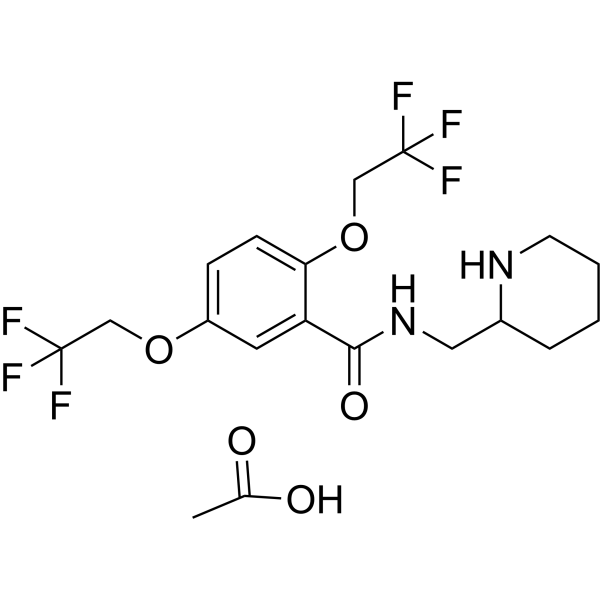
    Flecainide acetate
    3 Publications Verification

    R-818

    Sodium Channel Cardiovascular Disease
    Flecainide acetate (R-818) is a class 1C antiarrhythmic agent especially used for the management of supraventricular arrhythmia; works by blocking the Nav1.5 sodium channel in the heart, causing prolongation of the cardiac action potential.
    Flecainide acetate
  • HY-103175
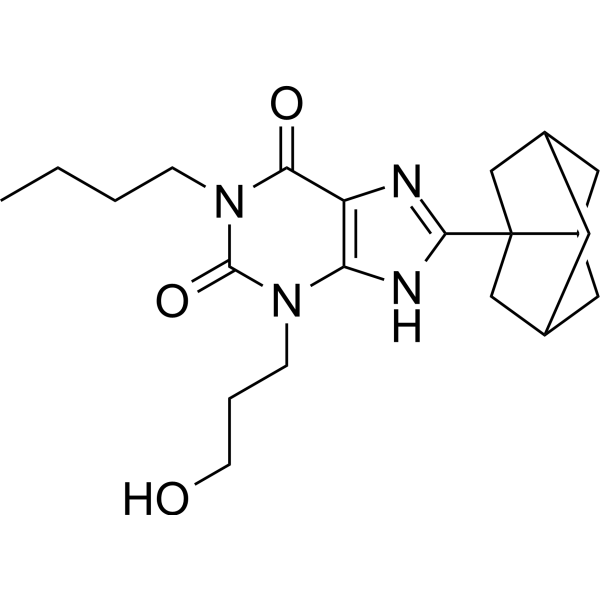
    PSB36
    1 Publications Verification

    Adenosine Receptor Cardiovascular Disease Neurological Disease Inflammation/Immunology
    PSB36 is a highly selective A1 adenosine receptor antagonist, with a Ki of 0.12 nM and a Kd of 0.7 nM. Systemic administration of PSB36 reduces formalin- and Carrageenan (HY-125474)-induced edema in mice and decreases pain-related behaviors, with no local paw activity. PSB36 prolongs the APD90 of rat and human atria, produces a frequency-dependent prolongation of rat atrial ERP, increases the diastolic threshold of rat atria, and shortens the duration of atrial fibrillation episodes. PSB36 can be used in research related to inflammatory pain, inflammatory hyperalgesia, edema and atrial fibrillation .
    PSB36
  • HY-156794

    DSP-5336

    Epigenetic Reader Domain FLT3 Cancer
    Enzomenib (DSP-5336) is an orally active Menin inhibitor (IC50=1.4 nM, Kd=6.0 nM). Enzomenib disrupts the interaction between Menin and KMT2A/MLL fusion proteins, specifically inhibits the expression of leukemia driver genes such as HOX/MEIS1, and upregulates ITGAM. Enzomenib effectively induces cell differentiation, inhibits tumor cell proliferation, and suppresses primitive cell colony formation. Enzomenib reduces disease burden and prolongs survival, but causes adverse reactions including differentiation syndrome and QTc interval prolongation. Enzomenib is used for research on relapsed/refractory acute myeloid leukemia, acute lymphoblastic leukemia, and other hematologic malignancies with mixed lineage leukemia (MLL) rearrangements or NPM1 mutations .
    Enzomenib
  • HY-112075

    Potassium Channel Calcium Channel Cardiovascular Disease
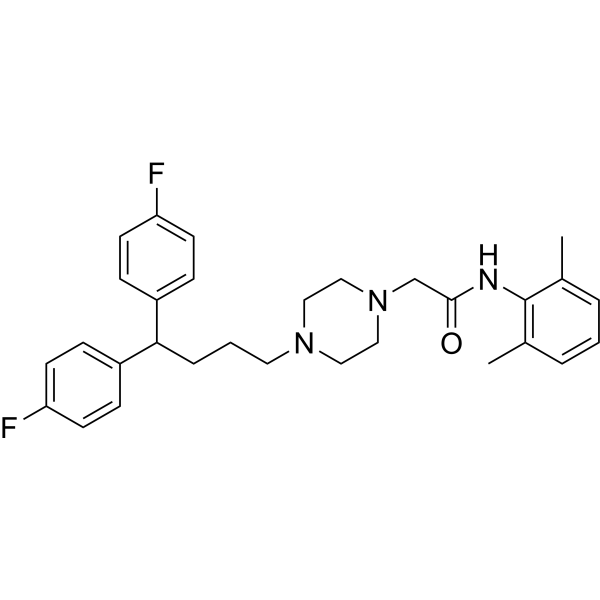
    Lidoflazine is a high affinity blocker of the HERG (human ether-a-go-go-related gene) K + channel. Lidoflazine is an antianginal calcium channel blocker that carries a significant risk of QT interval prolongation and ventricular arrhythmia .
    Lidoflazine
  • HY-N9371

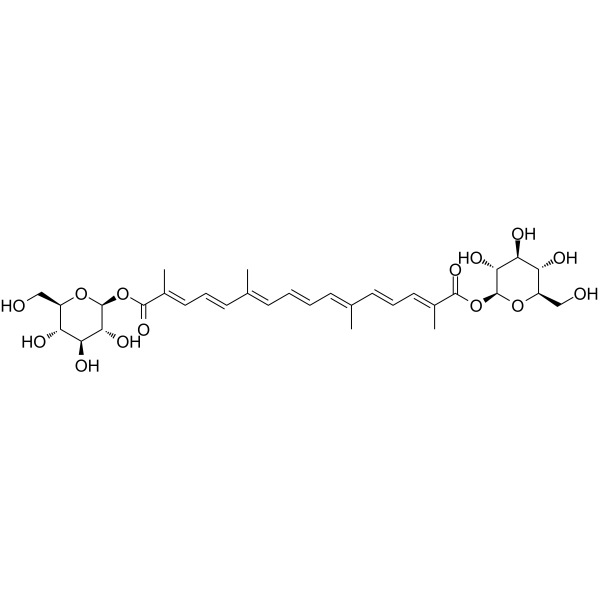
    Dicrocin

    Endogenous Metabolite Others
    Crocin IV (Dicrocin), a crocetin glycoside, is a carotenoid pigment. Crocin IV has potent antioxidant activity .
    Crocin IV
  • HY-149906

    GEM91

    HIV Infection
    Trecovirsen is an antiviral agent targeting HIV gag mRNA, which hybridizes with complementary HIV gag mRNA at the initiation site. Trecovirsen induces a reversible, dose-dependent prolongation of activated partial thromboplastin time via its polyanionic properties. Trecovirsen is applicable to research related to HIV infection .
    Trecovirsen
  • HY-113421

    Linoleic acid monoethanolamide

    Cannabinoid Receptor Neurological Disease
    Linoleoyl ethanolamide (Linoleic acid monoethanolamide) is classified as a fatty acid ethanolamide. Linoleoyl ethanolamide only weakly binds G-protein-coupled cannabinoid receptors of type-1(CB1)and CB2 receptors, and inhibits the binding of [3H]CP-55,940 with Kis of 10 and 25 μM, respectively. Linoleoyl ethanolamide is 4-fold less potent than anandamide at causing catalepsy in mice and it does not prolong sleep time .
    Linoleoyl ethanolamide
  • HY-108579

    Potassium Channel Cardiovascular Disease
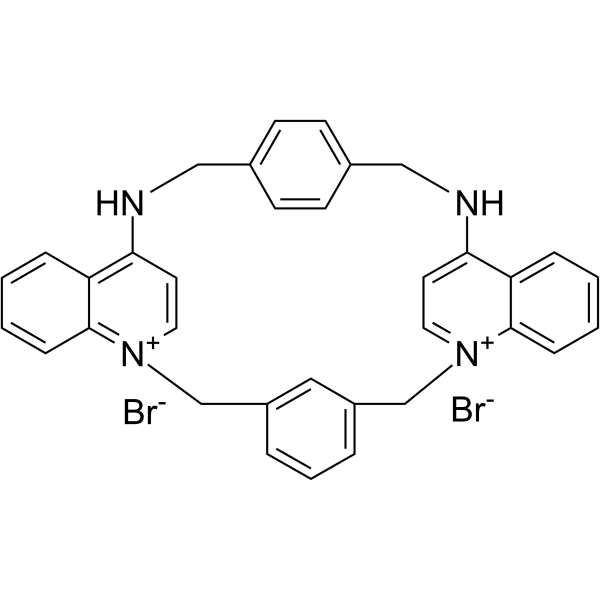
    UCL 1684 (dibromide) is a first nanomolar, non-peptidic small conductance calcium-activated potassium (SK) channel blocker. UCL 1684 (dibromide) is effective in preventing the development of atrial fibrillation due to potent atrial-selective inhibition of INa. UCL 1684 (dibromide) causes atrial-selective prolongation of ERP secondary to induction of postrepolarization refractoriness .
    UCL 1684 dibromide
  • HY-159953

    IRAK FLT3 Cancer
    IRAK1/4/pan-FLT3 Kinase-IN-1 (Compound 31) is a potent inhibitor of IRAK1, IRAK4, and FLT3 kinases, with an IC50 of 5 nM for IRAK1, 0.6 nM for IRAK4, and less than 0.5 nM for FLT3. IRAK1/4/pan-FLT3 Kinase-IN-1 has good pharmacokinetic properties and shows promising potential for research in acute myeloid leukemia, with a survival prolongation effect comparable to that of Gilteritinib (HY-12432) .
    IRAK1/4/pan-FLT3 Kinase-IN-1
  • HY-17429S

    R-818-d4

    Sodium Channel Cardiovascular Disease
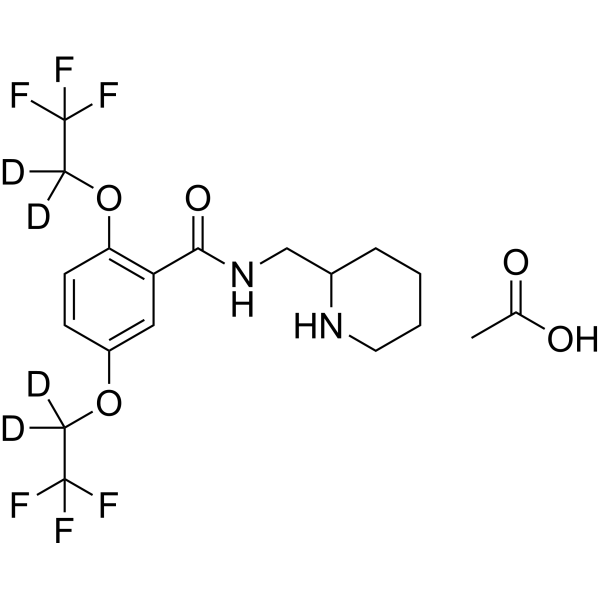
    Flecainide-d4 (acetate) is the deuterium labeled Flecainide acetate. Flecainide acetate (R-818) is a class 1C antiarrhythmic agent especially used for the management of supraventricular arrhythmia; works by blocking the Nav1.5 sodium channel in the heart, causing prolongation of the cardiac action potential .
    Flecainide-d4 acetate
  • HY-106682

    AQ-A 39

    Calcium Channel Cardiovascular Disease
    Falipamil (AQ-A 39), a calcium channel blocker, is a bradycardic agent. The bradycardic effect results from a reduction in the diastolic depolarization rate and a prolongation of the action potential duration .
    Falipamil
  • HY-19229

    Integrin Cardiovascular Disease
    TAK-029 is a potent GP IIb/IIIa antagonist. TAK-029 has potent antithrombotic effects with bleeding time (BT) prolongation in arterial thrombosis models. TAK-029 can be used for the research of various arterial thrombotic diseases .
    TAK-029
  • HY-N9371R

    Dicrocin (Standard)

    Reference Standards Endogenous Metabolite Others
    Crocin IV (Standard) is the analytical standard of Crocin IV. This product is intended for research and analytical applications. Crocin IV (Dicrocin), a crocetin glycoside, is a carotenoid pigment. Crocin IV has potent antioxidant activity .
    Crocin IV (Standard)
  • HY-111245

    Potassium Channel Calcium Channel Sodium Channel Cardiovascular Disease Neurological Disease
    AZD-1305 is an antiarrhythmic agent and atrial selective sodium channel/potassium channel blocker, which can significantly prolongs action potential duration and reduces excitability, cause atrial selective ERP prolongation and acute termination of atrial fibrillation. AZD1305 can be used for atrial fibrillation research .
    AZD-1305
  • HY-17429R

    R-818 (Standard)

    Reference Standards Sodium Channel Cardiovascular Disease
    Flecainide (acetate) (Standard) is the analytical standard of Flecainide (acetate). This product is intended for research and analytical applications. Flecainide acetate (R-818) is a class 1C antiarrhythmic agent especially used for the management of supraventricular arrhythmia; works by blocking the Nav1.5 sodium channel in the heart, causing prolongation of the cardiac action potential.
    Flecainide acetate (Standard)
  • HY-171008

    Drug Intermediate Metabolic Disease
    Linoleoyl ethanolamide phosphate is an intermediate in the biosynthesis of Linoleoyl ethanolamide (HY-113421). Linoleoyl ethanolamide phosphate combined with other endogenous N-acylethanolamines plays a role in the regulation of food intake by selective prolongation of feeding latency and post-meal interval .
    Linoleoyl ethanolamide phosphate
  • HY-136995

    Sodium Channel Cardiovascular Disease
    AFD-21 maleate is a drug with antiarrhythmic activity. AFD-21 maleate inhibits sodium channels by binding to sodium channels in an inactive state, with both use-dependent and voltage-dependent effects. The unbinding rate of AFD-21 maleate is similar to that of Class I antiarrhythmic drugs with moderate kinetics. AFD-21 maleate can cause a slight prolongation of the action potential duration and significantly reduce the maximum rise rate of the action potential at certain concentrations. AFD-21 maleate also showed use-dependent blocking effects as stimulation frequency increased .
    AFD-21 maleate
  • HY-179356

    PTHR Endocrinology
    Octadecyl β-D-glucopyranosiduronic acid (Compound 9) is a parathyroid hormone 1 receptor (PTH1R) activator, with a pEC50 value > 9. Octadecyl β-D-glucopyranosiduronic acid can be used for research on hypoparathyroidism .
    Octadecyl β-D-glucopyranosiduronic acid
  • HY-124940

    Calcium Channel Potassium Channel Cardiovascular Disease
    CPU-228 is a complex class III antiarrhythmic agent. CPU-228 concentration-dependently blocks the activities of the rapid component 50 of the delayed rectifier potassium channel (IKr) and the L-type calcium channel (ICa,L), with an IC50 value of 0.909 μM for ICa,L current. CPU-228 produces negative inotropic effects and induces mild, non-frequency-dependent prolongation of the effective refractory period (ERP) in isolated left atria. CPU-228 reduces the incidence of torsades de pointes (TDP) in anesthetized rabbits and inhibits ischemia/reperfusion-induced arrhythmias in rats. CPU-228 can be used in studies related to torsades de pointes .
    CPU-228
  • HY-156794A

    DSP-5336 enantiomer

    Drug Isomer FLT3 Epigenetic Reader Domain Cardiovascular Disease Cancer
    Enzomenib enantiomer (DSP-5336 enantiomer) is an enantiomer of Enzomenib (HY-156794). Enzomenib (DSP-5336) is an orally active Menin inhibitor (IC50=1.4 nM, Kd=6.0 nM). Enzomenib disrupts the interaction between Menin and KMT2A/MLL fusion proteins, specifically inhibits the expression of leukemia driver genes such as HOX/MEIS1, and upregulates ITGAM. Enzomenib effectively induces cell differentiation, inhibits tumor cell proliferation, and suppresses primitive cell colony formation. Enzomenib reduces disease burden and prolongs survival, but causes adverse reactions including differentiation syndrome and QTc interval prolongation. Enzomenib is used for research on relapsed/refractory acute myeloid leukemia, acute lymphoblastic leukemia, and other hematologic malignancies with mixed lineage leukemia (MLL) rearrangements or NPM1 mutations .
    Enzomenib enantiomer

Inquiry Online

Your information is safe with us. * Required Fields.

Salutation


Country or Region *

Applicant Name *


Organization Name *

Department *


Email Address *


Product Name *

Cat. No.


Requested quantity *

Phone Number *


Remarks

Inquiry Online

Inquiry Information

Product Name:
Cat. No.:
Quantity:
MCE Japan Authorized Agent:

