1. Search Result
Search Result
Results for "

proteasome-mediated

" in MedChemExpress (MCE) Product Catalog:

19

Inhibitors & Agonists

2

Screening Libraries

2

Natural
Products

1

Isotope-Labeled Compounds

2

Click Chemistry

Cat. No. Product Name Target Research Areas Chemical Structure
  • HY-130800
    Eragidomide
    5+ Cited Publications

    CC-90009

    Ligands for E3 Ligase Molecular Glues Apoptosis Inflammation/Immunology Cancer
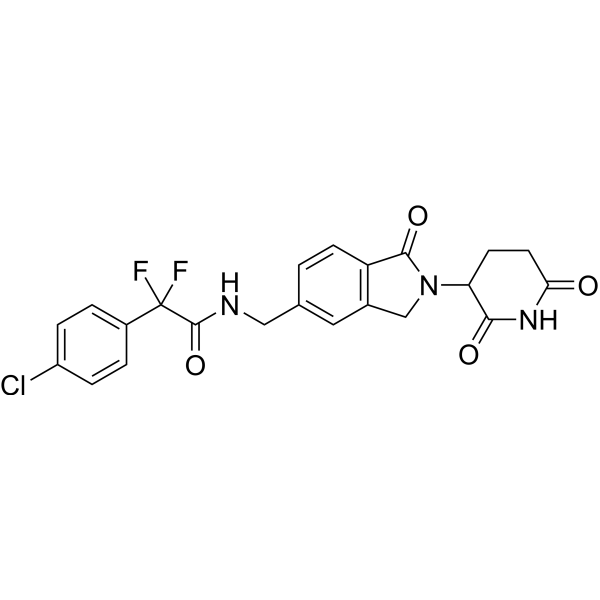
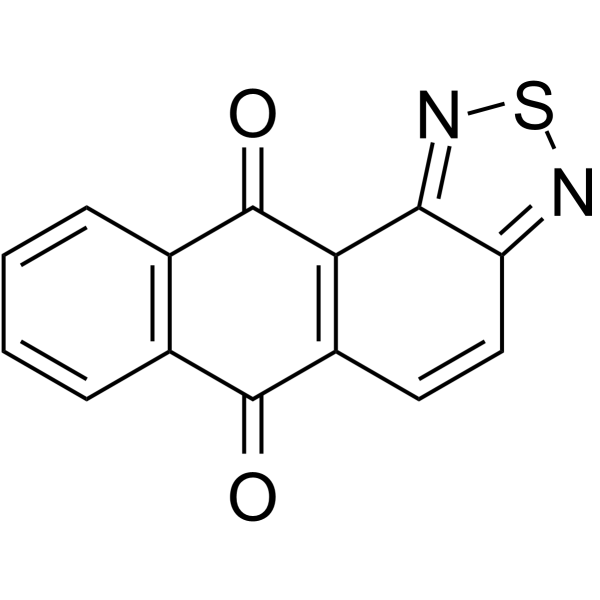
    Eragidomide (CC-90009) is a first-in-class GSPT1-selective cereblon (CRBN) E3 ligase modulator, acts as a molecular glue. Eragidomide coopts the CRL4 CRBN to selectively target GSPT1 for ubiquitination and proteasomal degradation .
    Eragidomide
  • HY-103710
    IBR2
    5+ Cited Publications

    RAD51 Apoptosis Cancer
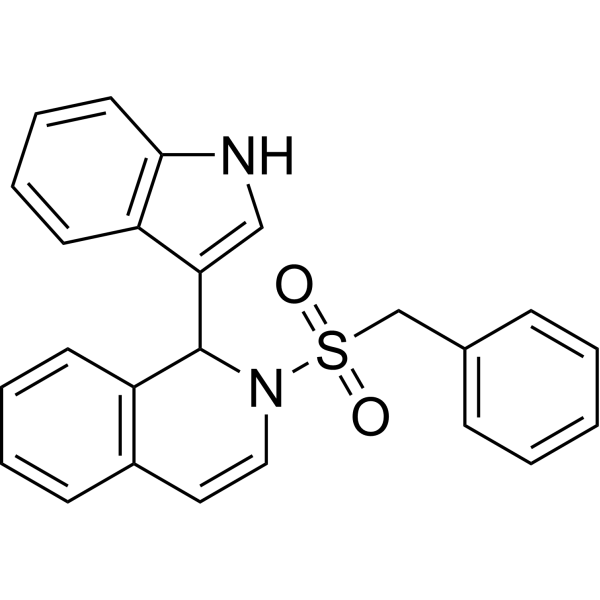
    IBR2 is a potent and specific RAD51 inhibitor and inhibits RAD51-mediated DNA double-strand break repair. IBR2 disrupts RAD51 multimerization, accelerates proteasome-mediated RAD51 protein degradation, inhibits cancer cell growth and induces apoptosis .
    IBR2
  • HY-W010041

    α-synuclein Amyloid-β Neurological Disease
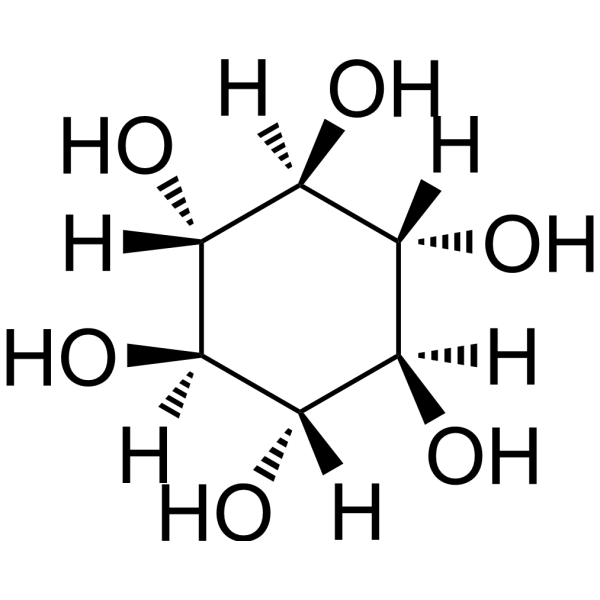
    Scyllo-Inositol is an inhibitor that targets the aggregation of misfolded proteins (such as α-synuclein and Amyloid-β), is orally effective, and can cross the blood-brain barrier. Scyllo-Inositol can selectively bind to and stabilize non-toxic oligomers, preventing them from converting into toxic fibers, exerting protein homeostasis regulation and neuroprotective activity. Scyllo-Inositol binds to the hydrophobic region of pathogenic proteins, inhibits protein aggregation, and promotes lysosome- and proteasome-mediated degradation pathways, thereby reducing neurotoxicity. Scyllo-Inositol can be used in the study of neurodegenerative diseases such as Parkinson's disease, Alzheimer's disease, and Huntington's disease .
    Scyllo-Inositol
  • HY-158684

    PROTACs MDM-2/p53 Apoptosis Cancer
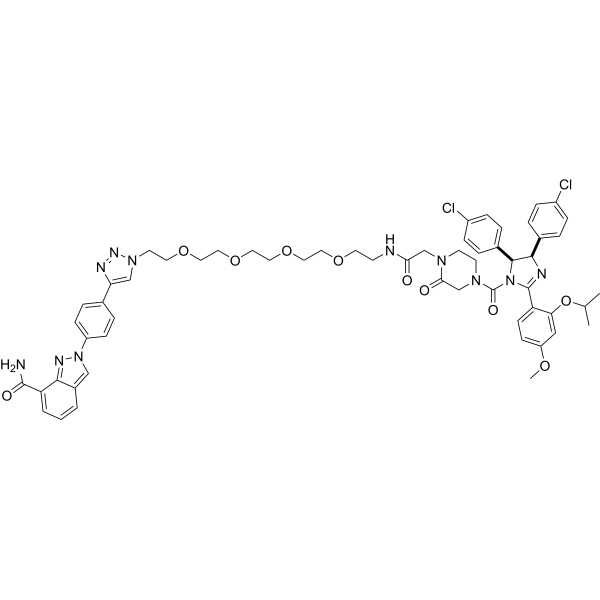
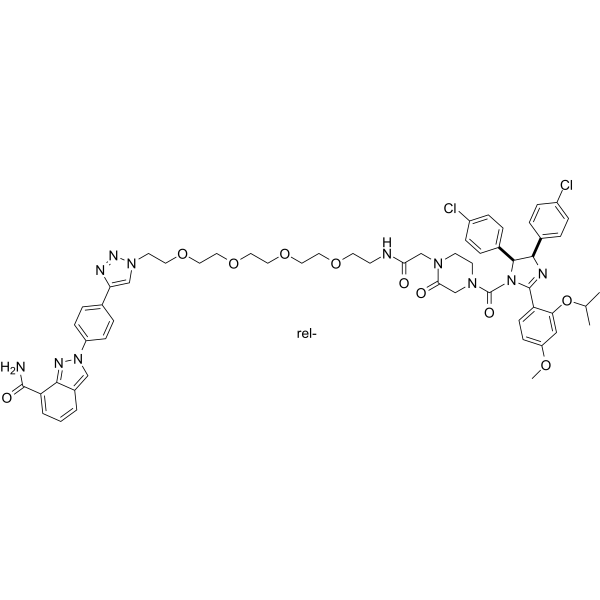
    YX-02-030 is a VHL-dependent MDM2 PROTAC degrader with a Kd of 35 nM. YX-02-030 recruits the VHL E3 ligase to form a ternary complex, leading to ubiquitination and proteasome-mediated degradation of MDM2. YX-02-030 inhibits MDM2-p53 and VHL-HIF1α binding with IC50 values of 63 and 1350 nM. YX-02-030 activates TAp73, upregulates p53 family target genes and induces apoptosis. YX-02-030 demonstrates on-target efficacy in TNBC xenograft-bearing mice, extending survival without normal cell toxicity .
    YX-02-030
  • HY-119198

    Apoptosis Histone Methyltransferase Cancer
    NSC745885 an effective anti-tumor agent, shows selective toxicity against multiple cancer cell lines but not normal cells. NSC745885 is an effective down-regulator of EZH2 via proteasome-mediated degradation. NSC745885 provides possibilities for the study of advanced bladder and oral squamous cell carcinoma (OSCC) cancers .
    NSC745885
  • HY-172208

    PROTACs Cyclic GMP-AMP Synthase Inflammation/Immunology
    PROTAC cGAS degrader-1 is a potent and selective cGAS PROTAC degrader, with DC50 values of 0.9 μM and 4.6 μM in THP-1 and RAW 264.7 cells, respectively. PROTAC cGAS degrader-1 induces proteasome-mediated degradation of cGAS, inhibits the cGAS signaling pathway, and attenuates double-stranded DNA-induced activation of cGAS in human and mouse cells. PROTAC cGAS degrader-1 is applicable to research related to ulcerative colitis .
    PROTAC cGAS degrader-1
  • HY-146231

    PROTACs MAP4K Inflammation/Immunology Cancer
    SS47, a PROTAC-based HPK1 degrader, exerts proteasome-mediated HPK1 degradation. The degradation of HPK1 via SS47 also significantly enhances the antitumor efficacy .
    SS47
  • HY-146231A

    MAP4K PROTACs Inflammation/Immunology Cancer
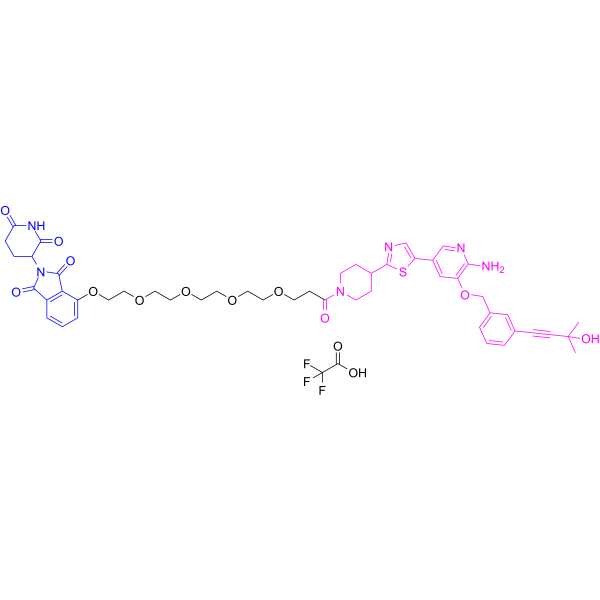
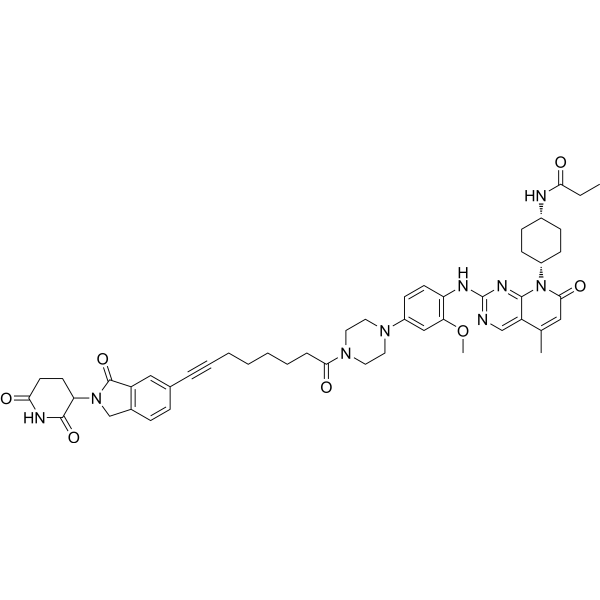
    SS47 TFA, a PROTAC-based HPK1 degrader, exerts proteasome-mediated HPK1 degradation. The degradation of HPK1 via SS47 also significantly enhances the in vivo antitumor efficacy of BCMA CAR-T cell research. HPK1, an immunosuppressive regulatory kinase, is a promising target for cancer immunotherapies . SS47 (TFA) is a click chemistry reagent, it contains an Alkyne group and can undergo copper-catalyzed azide-alkyne cycloaddition (CuAAc) with molecules containing Azide groups.
    SS47 TFA
  • HY-162240

    PROTACs Epigenetic Reader Domain Cancer
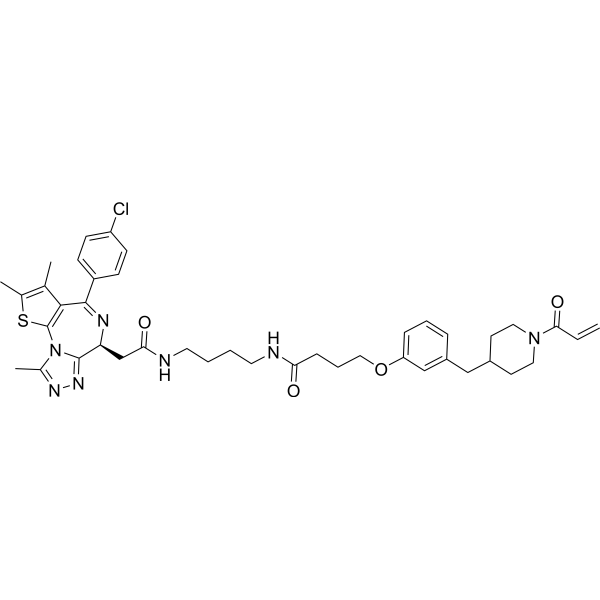
    SJH1-51B is a SKP1-recruiting BRD4 PROTAC degrader. SJH1-51B binds to SKP1 in the SKP1-FBXO7-CUL1-RBX1 complex, but shows no or weak binding to monomeric SKP1. SJH1-51B induces proteasome- and SKP1-dependent degradation of BRD4, and this degradation process relies on the neddylation modification of Cullin-RING E3 ligase. SJH1-51B induces proteasome-mediated degradation of the short isoform of BRD4 in non-cancer cells, while it induces proteasome-mediated degradation of both the long and short isoforms of BRD4 in breast cancer cells. SJH1-51B can be used for breast cancer research .
    SJH1-51B
  • HY-103710A

    RAD51 Cancer
    (R)-IBR2 is the isomer of IBR2 (HY-103710). IBR2 is a potent and specific RAD51 inhibitor and inhibits RAD51-mediated DNA double-strand break repair. IBR2 disrupts RAD51 multimerization, accelerates proteasome-mediated RAD51 protein degradation, inhibits cancer cell growth and induces apoptosis .
    (R)-IBR2
  • HY-W010041R

    Reference Standards α-synuclein Amyloid-β Neurological Disease
    Scyllo-Inositol is an inhibitor that targets the aggregation of misfolded proteins (such as α-synuclein and Amyloid-β), is orally effective, and can cross the blood-brain barrier. Scyllo-Inositol can selectively bind to and stabilize non-toxic oligomers, preventing them from converting into toxic fibers, exerting protein homeostasis regulation and neuroprotective activity. Scyllo-Inositol binds to the hydrophobic region of pathogenic proteins, inhibits protein aggregation, and promotes lysosome- and proteasome-mediated degradation pathways, thereby reducing neurotoxicity. Scyllo-Inositol can be used in the study of neurodegenerative diseases such as Parkinson's disease, Alzheimer's disease, and Huntington's disease .
    Scyllo-Inositol (Standard)
  • HY-W707693

    Isotope-Labeled Compounds Amyloid-β α-synuclein Neurological Disease
    Scyllo-Inositol-d6 is the deuterium labeled Scyllo-Inositol (HY-W010041). Scyllo-Inositol is an inhibitor that targets the aggregation of misfolded proteins (such as α-synuclein and Amyloid-β), is orally effective, and can cross the blood-brain barrier. Scyllo-Inositol can selectively bind to and stabilize non-toxic oligomers, preventing them from converting into toxic fibers, exerting protein homeostasis regulation and neuroprotective activity. Scyllo-Inositol binds to the hydrophobic region of pathogenic proteins, inhibits protein aggregation, and promotes lysosome- and proteasome-mediated degradation pathways, thereby reducing neurotoxicity. Scyllo-Inositol can be used in the study of neurodegenerative diseases such as Parkinson's disease, Alzheimer's disease, and Huntington's disease .
    Scyllo-Inositol-d6
  • HY-168099

    Estrogen Receptor/ERR Cancer
    ERα degrader 10 is a selective and orally active estrogen receptor α (ERα) degrader. ERα degrader 10 exhibits potent ERα binding affinity (IC50 of 24.0 nM) and degradation ability (EC50 of 5.3 nM). ERα degrader 10 degrades ERα through the proteasome-mediated pathway. ERα degrader 10 can be used for the study of breast cancer .
    ERα degrader 10
  • HY-181052

    PROTACs Trk Receptor Cancer
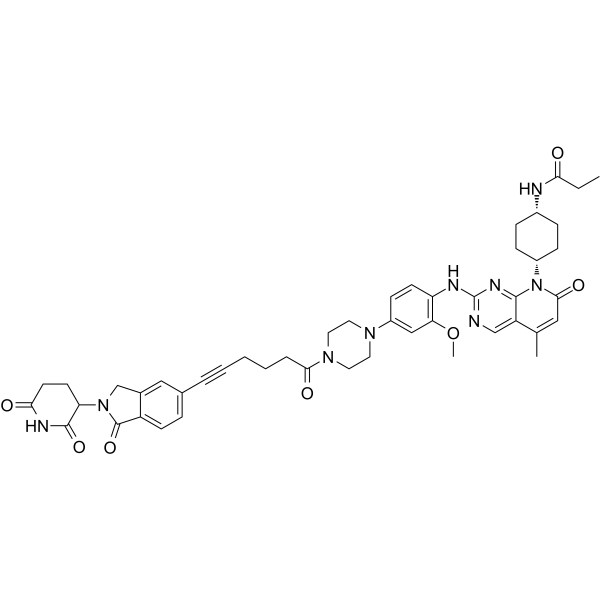
    PROTAC NTRK1 degrader-1 is a wild-type and mutant NTRK1 PROTAC degrader with IC50 values of 4 nM (wild-type), 2 nM (G595R), 5 nM (G667C), and <0.5 nM (F598L). PROTAC NTRK1 degrader-1 catalyzes ubiquitination and subsequent proteasome-mediated degradation of wild-type and mutant (G595R, G667C, F598L) NTRK1. PROTAC NTRK1 degrader-1 can be used for the research of solid tumors .
    PROTAC NTRK1 degrader-1
  • HY-103710R

    Reference Standards RAD51 Apoptosis Cancer
    IBR2 (Standard) is the analytical standard of IBR2 (HY-103710). This product is intended for research and analytical applications. IBR2 is a potent and specific RAD51 inhibitor and inhibits RAD51-mediated DNA double-strand break repair. IBR2 disrupts RAD51 multimerization, accelerates proteasome-mediated RAD51 protein degradation, inhibits cancer cell growth and induces apoptosis .
    IBR2 (Standard)
  • HY-181405

    Molecular Glues CDK Cancer
    SR-5037 is an orally active CDK12 (IC50 = 31 nM)/CDK13 inhibitor and CycK (DC50 = 30 nM;
    Dmax > 98%) molecular glue degrader. SR-5037 inhibits the enzymatic activity of CDK12/CycK and CDK13/CycK complexes. SR-5037 promotes the recruitment of DDB1 to the CDK12/CycK complex, thereby triggering proteasome-mediated CycK degradation. SR-5037 degrades active CycK in mouse models of triple-negative breast cancer. SR-5037 can be used in the research of cancers such as triple-negative breast cancer .
    SR-5037
  • HY-183007

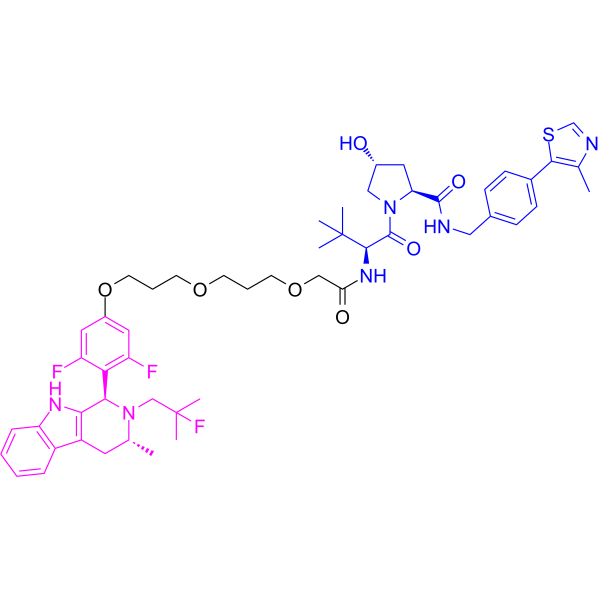
    PROTACs SWI/SNF Complex Cancer
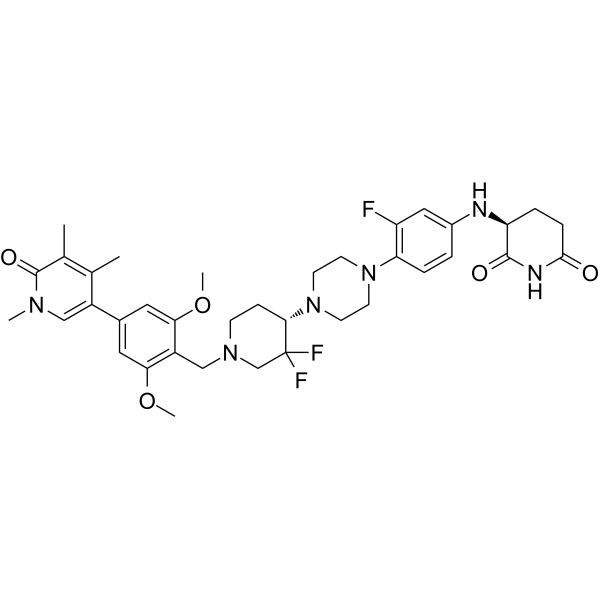
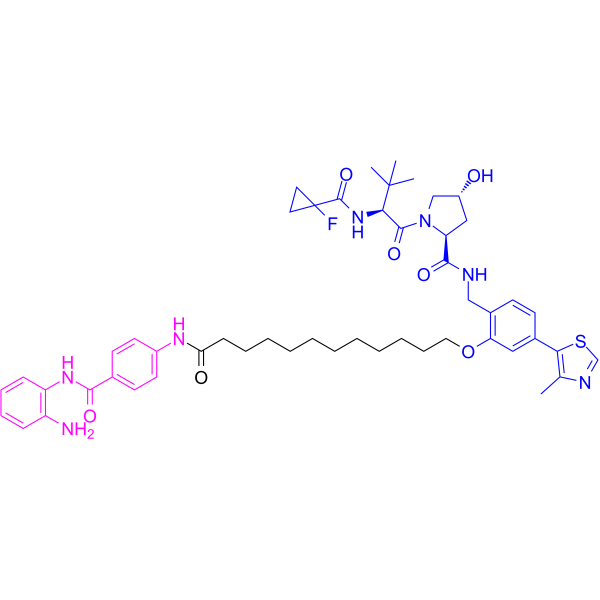
    LJM133 is a SMARCA2/PBRM1/SMARCA4 PROTAC degrader with DC50 values of 3.5 nM, 7 nM, and 6.4 nM. LJM133 induces ternary complex formation with VHL E3 ligase to drive proteasome-mediated degradation of target proteins. LJM133 suppresses cell proliferation and exhibits significant antitumor efficacy in a SMARCA4 mutant cancer xenograft model. LJM133 can be used for the research of cancer, such as SMARCA4 mutant non-small cell lung cancer . (Pink: SMARCA2/PBRM1/SMARCA4 ligand (HY-182987); E3 ubiquitin ligase ligand-linker conjugate (HY-183619)).
    LJM133
  • HY-180262

    PROTACs CDK Cancer
    PROTAC CDK6 Degrader 2 (compound 48b), the active form of PROTAC CDK6 Degrader 1 (HY-180277), is a potent and selective PROTAC CDK6 degrader that binds strongly to KLHDC2 (KD = 0.005 μM). PROTAC CDK6 Degrader 2 functions through a KLHDC2-dependent and ubiquitin-proteasome-mediated mechanism. PROTAC CDK6 Degrader 2 can be used for cancer research .
    PROTAC CDK6 Degrader 2
  • HY-W1115186

    Ligands for E3 Ligase Others
    CRBN ligand-900 is an E3 ligase ligand that can be used in the recruitment of CRBN protein. CRBN ligand-900 can be connected to the NTRK1 ligand (HY-185545) by a linker to synthesis of PROTAC NTRK1 degrader-1 (HY-181052) .
    CRBN ligand-900

Inquiry Online

Your information is safe with us. * Required Fields.

Salutation


Country or Region *

Applicant Name *


Organization Name *

Department *


Email Address *


Product Name *

Cat. No.


Requested quantity *

Phone Number *


Remarks

Inquiry Online

Inquiry Information

Product Name:
Cat. No.:
Quantity:
MCE Japan Authorized Agent:

