20 Results for "

proteome

" in MedChemExpress (MCE) Product Catalog:
Products (20)

20 Results for "proteome" in MCE Product Catalog:

1
1 Cited Publications
Cat. No.: HY-D2186
CAS No.: 2095485-22-4
BTD probe-1 is a benzothiazine-based chemoproteomic probe and selective protein S-sulfenic acid (Cys-SOH) labeling agent. BTD probe-1 labels protein S-sulfenic acids in vitro in cell and tissue samples, and in situ in intact cells, enabling detection or enrichment of modified proteins/peptides. BTD probe-1 exhibits no cytotoxicity in cells at concentrations ≤1 mM. BTD probe-1 enables global, site-specific mapping and quantification of cysteine S-sulfenylation in complex proteomes with lower input material .
loading...
    loading...
Cat. No.: HY-117570
CAS No.: 2226201-97-2
Purity:  98.03%
Target:  

PDI

Research Areas:  

Neurological Disease

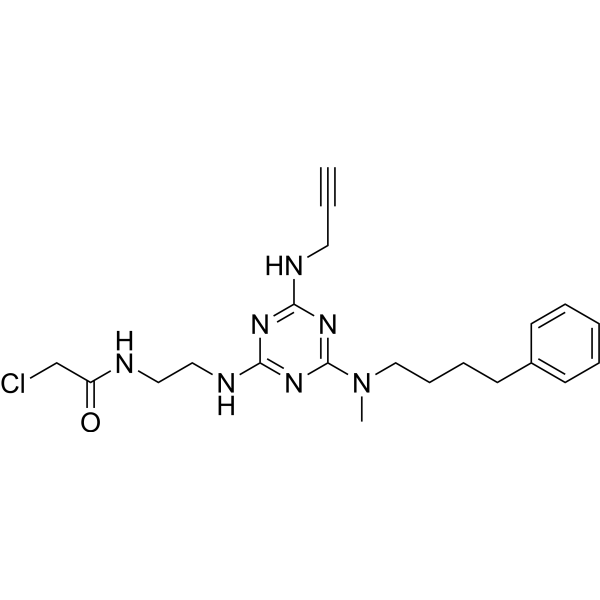
KSC-34, a covalent modifier of protein disulfide isomerase A1 (PDIA1), is also a selective and potent a-site inhibitor of PDIA1 with an IC50 of 3.5 μM. KSC-34 displays a 30-fold selectivity for a domain over a′ domain and displays high selectivity for PDIA1 in complex proteomes with minimal engagement of other members of the PDI family . KSC-34 is a click chemistry reagent, it contains an Alkyne group and can undergo copper-catalyzed azide-alkyne cycloaddition (CuAAc) with molecules containing Azide groups.
loading...
    loading...
Cat. No.: HY-44157
CAS No.: 308818-13-5
Research Areas:  

Neurological Disease

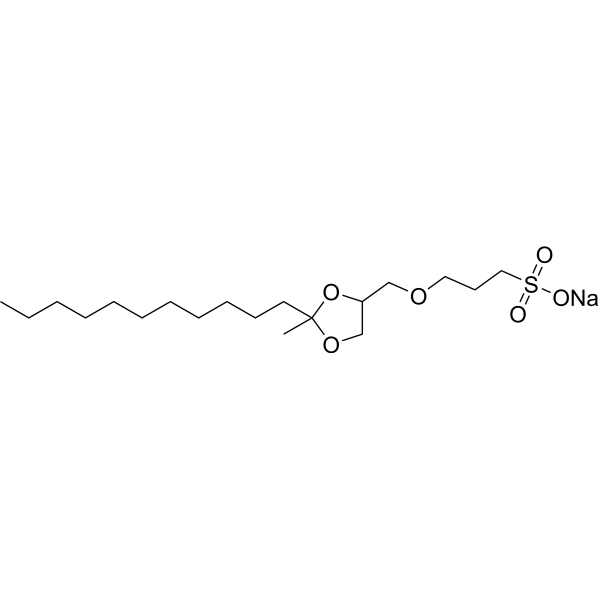
ALS-I, an acid-Liable surfactant, is adopted for in-solution enzymatic digestions, can help to solubilize hydrophobic proteins. ALS-I is significantly enhanced peptide recovery for mass spectrometry (MS) mapping in the study of the proteomes of regenerating rat retina and mouse brain .
loading...
    loading...
Cat. No.: HY-138065
CAS No.: 93285-75-7
Purity:  99.15%
Target:  

Apoptosis

Research Areas:  

Others

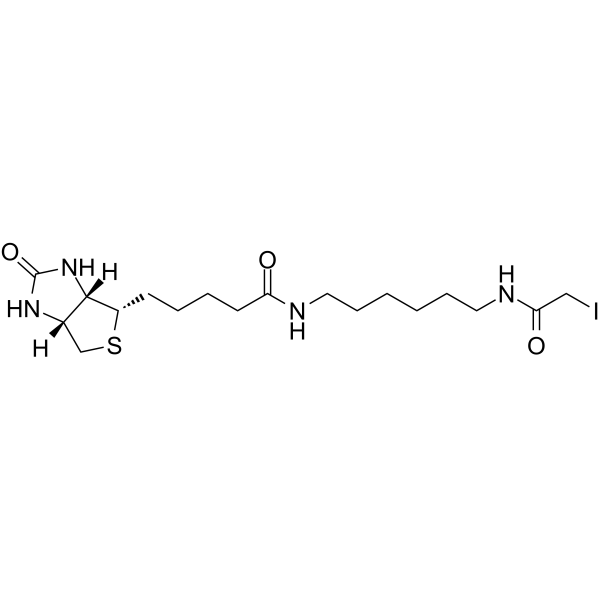
Iodoacetyl-LC-biotin is a biotinylated electrophile probe that can be used to investigate the scope and characteristics of protein covalent binding to subcellular proteomes .
loading...
    loading...
Cat. No.: HY-D2910
CAS No.: 2089058-15-9
Ox4 is a selective covalent modifier targeting Methionine residues. Ox4 is promising for research of protein functionalization, antibody-drug conjugate (ADC) synthesis, and proteome-wide identification of reactive methionine sites .
loading...
    loading...
Cat. No.: HY-D2912
Cys-shift probe-1 (compound 13) is a potent Cys-shift probe. Cys-shift probe-1 can improve the ion mobility of labeled peptides and be used in protein analysis .
loading...
    loading...
Cat. No.: HY-126031
CAS No.: 2055172-60-4
Target:  

DAGL

Research Areas:  

Inflammation/Immunology

(R)-KT109 is a peripherally restricted serine hydrolase inhibitor that cannot cross the blood-brain barrier. (R)-KT109 irreversibly inhibits ABHD6, DAGLα and DAGLβ via carbamoylation of the active-site serine. (R)-KT109 exerts selective inhibitory effects on serine hydrolases in mouse brains, with pIC50 values of 8.6, 9.1 and 8.2 against human ABHD6, DAGLα and DAGLβ, respectively. (R)-KT109 effectively reduces the levels of 2-arachidonoylglycerol, arachidonic acid, eicosanoids and TNF-α. (R)-KT109 is widely used in studies of metabolic syndrome-related diseases and neuroinflammation .
loading...
    loading...
Cat. No.: HY-D2575
CAS No.: 3052492-38-0
WYneN (compound 10) is a functionalized Wittig-alkyne probe. WYneN exhibits strong reactivity with sulfinic acid dipeptide models, similar to the parent Wittig reagent. WYneN can be used to reveal the function of oxidative modifications on a proteome-wide scale .
loading...
    loading...
Cat. No.: HY-132975
CAS No.: 2231405-64-2
Target:  

Bacterial

Research Areas:  

Others

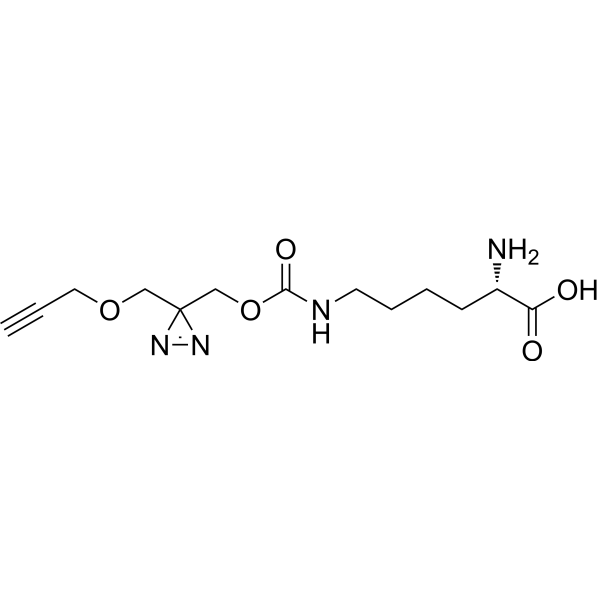
PrDiAzK is a bifunctional amino acid. PrDiAzK can be site-selectively incorporated into proteins in both bacterial and mammalian cell culture. PrDiAzK can be used for proteome-wide incorporation via stochastic orthogonal recoding of translation (SORT) . PrDiAzK is a click chemistry reagent, it contains an Alkyne group and can undergo copper-catalyzed azide-alkyne cycloaddition (CuAAc) with molecules containing Azide groups.
loading...
    loading...
Cat. No.: HY-179512
CAS No.: 2414478-45-6
Target:  

PROTACs FAK

Research Areas:  

Cancer

BSJ-04-146 is a highly efficient and selective PROTAC targeting focal adhesion kinase (FAK) inhibitor(IC50 = 26 nM). BSJ-04-146 achieves rapid and potent FAK degradation with high proteome-wide specificity in cancer cells and induces durable degradation in mice. BSJ-04-146 binds FAK and requires the ubiquitin-proteasome machinery to achieve FAK degradation. BSJ-04-146 can be used for the study of pancreatic cancer and triple-negative breast cancer .
loading...
    loading...
Cat. No.: HY-159591
CAS No.: 3060515-08-1
Target:  

Ras Akt ERK

Research Areas:  

Cancer

YK-8S is a dual-targeted K-Ras (G12D/G12C) covalent inhibitor. YK-8S shows no significant binding to wild-type K-Ras and other mutants (G12R, G13D, Q61R/K). YK-8S exhibits anti-proliferative activity against H358 (G12C) and AGS (G12D) cells. YK-8S inhibits the phosphorylation of p-AKT/p-ERK in BaF3/G12D and G12C cells. YK-8S can be used for pancreatic cancer, colorectal cancer and other tumors with high incidence of G12D .
loading...
    loading...
Cat. No.: HY-158104
Target:  

ATF6

Research Areas:  

Others

LPPM-8 is a ligand of Med25 and an inhibitor of Med25 protein-protein interactions (PPIs). LPPM-8 engages Med25 through interaction with the H2 face of its Activator Interaction Domain and stabilizes full-length protein in the cellular proteome. LPPM-8 is an orthosteric inhibitor of H2-binding transcriptional activators (such as ATF6a). LPPM-8 can be used for studying Med25 and Mediator complex biology .
loading...
    loading...
Cat. No.: HY-161796
CAS No.: 2929304-05-0
Research Areas:  

Cancer

UNC8732 is an NSD2 degrader with a Kd value of 76 nM for NSD2, and achieves highly selective degradation of NSD2 across the detectable proteome. UNC8732 acts as a prodrug; its primary amine is metabolized to an aldehyde, which forms a reversible covalent interaction with Cys326 in the FIST_C domain of FBXO22, recruiting the SCFFBXO22 ubiquitin ligase complex to mediate polyubiquitination and proteasomal degradation of NSD2. UNC8732 serves as a chemical probe to investigate NSD2-associated disease phenotypes and study the functions of NSD2 in nuclear signaling and epigenetics. UNC8732 can be used in studies of acute lymphoblastic leukemia .
loading...
    loading...
Cat. No.: HY-183740
CAS No.: 3020685-33-7
Synonyms: N-Acryloylindole-alkyne
Research Areas:  

Others

NAIA (N-Acryloylindole-alkyne) is a cysteine-reactive probe. NAIA can be used as an imaging agent, proteome profiling agent, and covalent ligand screening tool .
loading...
    loading...
Cat. No.: HY-182766
CAS No.: 3102636-19-8
Research Areas:  

Cancer

AMX-883 a selective and orally active BRD9 molecular glue degrader that drives differentiation in acute myeloid leukaemia. AMX-883 shows selectivity over all other bromodomain containing proteins and proteome wide. AMX-883 does not employ the commonly used E3 ligases (cereblon, VHL) but instead drives degradation via DCAF16 as a targeted glue. AMX-883 can be used for the study of acute myeloid leukaemia (AML) .
loading...
    loading...
Cat. No.: HY-186281
CAS No.: 2231747-83-2
Research Areas:  

Others

MAUra-DTB is a 1-methyl-4-arylurazole (MAUra) chemical probe conjugated with desthiobiotin, which preferentially labels tyrosine residues exposed on protein surfaces under photocatalytic or laccase-catalyzed conditions (). The desthiobiotin moiety of MAUra-DTB supports affinity enrichment based on streptavidin or NeutrAvidin. MAUra-DTB enables proteome-wide labeling in cell lysates, and after enrichment of labeled peptides by NeutrAvidin, the labeling sites can be identified via nanoLC-MS/MS. MAUra-DTB can be used for photocatalytic proximity labeling, target protein identification and proteomic studies .
loading...
    loading...
Cat. No.: HY-L030
779 compounds

The composition of endogenous metabolite compounds is affected by the upstream influence of the proteome and genome as well as environmental factors, lifestyle factors, medication, and underlying disease. Therefore, metabolites have been described as proximal reporters of disease because their abundances in biological specimens are often directly related to pathogenic mechanisms. In more recent years, metabolomics approach has been adopted or suggested to be used in various research areas including drug discovery, neurosciences, agriculture, food and nutrition, and environmental sciences.

MCE owns a unique collection of 779 human endogenous metabolites, all of which are derived from human issues. This library is a powerful tool for metabonomics research and metabolism-related drug discovery.

Cat. No.: HY-182636
CAS No.: 1895049-73-6
MT16-001 is a cell-permeable UCHL1 inhibitor with an IC50 value of 580 nM. MT16-001 also exhibits considerable inhibitory activity against USP30, and shows selectivity for other UCH family deubiquitinases (DUBs) as well as the broader proteome. MT16-001 binds covalently to the cysteine residue at the active site of UCHL1, and forms covalent interactions with ALDH2, ALDH9A1 and GATD3A in intact cells. Meanwhile, as a cytotoxic agent, it displays a steep dose-response curve in human embryonic kidney cells. MT16-001 can be used for research on various cancers, liver fibrosis and pulmonary fibrosis .
loading...
    loading...
Cat. No.: HY-P6300
CAS No.: 169062-92-4
Target:  

Bacterial Parasite

Research Areas:  

Infection

Cyclomarin A is an antibacterial agent with a Kd of 2.3 nM against Mycobacterium tuberculosis ClpC1, a Kd of 2.2 nM against ClpC2, and an IC50 of 0.004 μM against Plasmodium falciparum PfAp3Aase. Cyclomarin A binds to the N-terminal domain of ClpC1, stimulates ATPase and proteolytic activities, dysregulates proteolysis, and induces proteome imbalance; it also binds to ClpC2 and upregulates its transcription level. Cyclomarin A binds to PfAp3Aase in dimeric form, blocks the substrate-binding pathway, inhibits the growth of Plasmodium falciparum in the erythrocytic stage, and shows no activity against human cells. Cyclomarin A exhibits moderate cytotoxicity against a variety of cancer cell lines. Cyclomarin A can serve as a lead compound for the development of Homo-BacPROTAC. Cyclomarin A is applicable to research related to tuberculosis and malaria .
loading...
    loading...
Cat. No.: HY-D3111
CAS No.: 1240465-12-6
Target:  

Fluorescent Dye

Research Areas:  

Neurological Disease

DBHA is a long-wavelength polarity-sensitive fluorescent probe based on Nile Red. Under the catalysis of Pd (OAc)2/TPPTS, DBHA site-selectively labels protein tyrosine residues via a π-allyl palladium complex intermediate. Utilizing the property that its maximum emission wavelength blue-shifts with decreasing local polarity (650 nm in aqueous solution → 584-608 nm in hydrophobic domains), it detects changes in local polarity and conformation of protein tyrosine domains under acid/thermal denaturation conditions. DBHA can be used in studies related to SOD1-associated oxidative stress neurodegenerative diseases .
loading...
    loading...
  • 1

