





50 Results for "

settings

" in MedChemExpress (MCE) Product Catalog:
Products (50)

50 Results for "settings" in MCE Product Catalog:

25
25 Publications Verification
Cat. No.: HY-W018746
CAS No.: 139-33-3
Synonyms: Ethylenediaminetetraacetic acid disodium
EDTA disodium salt, also known as ethylenediaminetetraacetic acid disodium, belongs to the chelating agent category, which is formed by chelating a central metal ion with four carboxylate groups and two amine groups. This compound, with its ability to bind and chelate metal ions such as calcium, magnesium and iron, is commonly used in a variety of applications, including industrial, medical and research settings. It is used as a preservative in food and beverage, as a stabilizer in medicine, as a chelating agent in water treatment, and as a reagent in biochemical and biomedical research. In addition, EDTA disodium salt has been studied for potential research effects such as improving heavy metal poisoning and cardiovascular disease.
24
24 Cited Publications
Cat. No.: HY-108434
CAS No.: 2323027-38-7
Purity:  99.68%
Target:  

ATF6

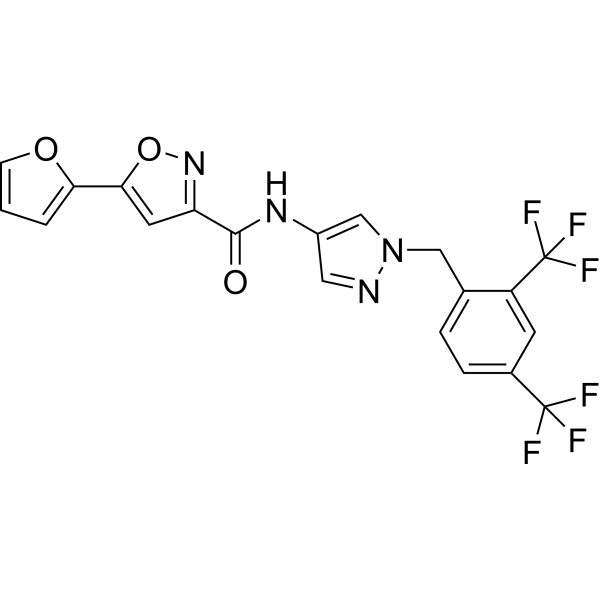
Ceapin-A7 is a selective blocker of ATF6α signaling in response to ER stress, with an IC50 of 0.59 μM. Ceapin-A7 can be used to explore both the mechanism of activation of ATF6α and its role in pathological settings .
1
1 Cited Publications
Cat. No.: HY-141749B
CAS No.: 144750-42-5
Purity:  99.50%
Synonyms: CLPM hydrochloride; SR 26334 hydrochloride
Target:  

Drug Metabolite

Research Areas:  

Cardiovascular Disease

Clopidogrel carboxylic acid (CLPM) hydrochloride is an inactive metabolite of the widely used antiplatelet medication clopidogrel, which serves as a reference standard for quantitative analysis of clopidogrel metabolism. Clopidogrel carboxylic acid hydrochloride has been shown to represent approximately 85% of circulating clopidogrel, hydrolyzed from the active form by esterases. Clopidogrel carboxylic acid hydrochloride plays a crucial role in assessing the pharmacokinetics and bioavailability of clopidogrel in various clinical and research settings.
Cat. No.: HY-P991015
CAS No.: 2921676-04-0
Synonyms: JNJ-78278343; KLCB-245

Target:  

CD3

Research Areas:  

Cancer

Pasritamig (JNJ-78278343; KLCB-245) is a bispecific T-cell engager (BiTE) that targets the complex of human kallikrein KLK2 and CD3 receptor. Pasritamig redirects the cytotoxicity of T cells to KLK2-expressing tumor cells and induces T cell-mediated lysis of KLK2-expressing prostate cancer cells. Administered via subcutaneous injection, subcutaneous infusion or intravenous infusion, Pasritamig exhibits antitumor activity against metastatic castration-resistant prostate cancer. Pasritamig has a safety profile with an extremely low incidence of cytokine release syndrome and can be safely administered in an outpatient setting. Pasritamig is applicable to the research of metastatic castration-resistant prostate cancer .
Cat. No.: HY-19621
CAS No.: 62054-67-5
Research Areas:  

Cancer

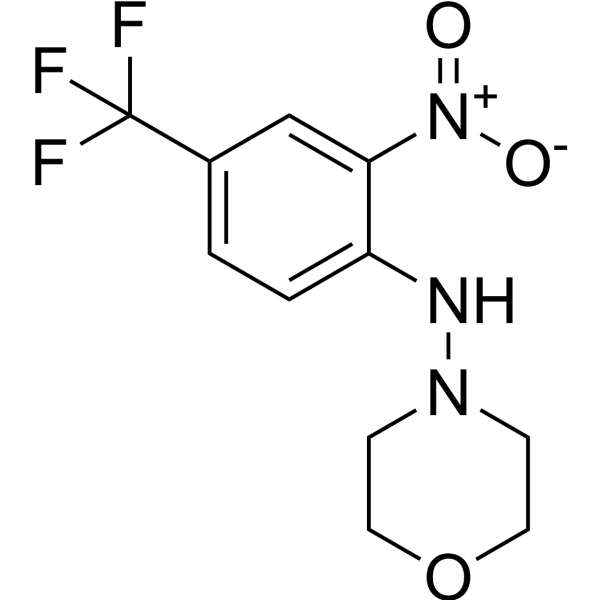
THS-044 is a modulator of the formation of the HIF2α/ARNT heterodimer. THS-044 binding stabilizes the HIF2α PAS-B folded state (KD = 2 μM), for regulating HIF2 activity in endogenous and pathological settings, and does not bind to HIF1α or ARNT PAS-B. THS-044 can be used for the study of diseases related to hypoxia .
Cat. No.: HY-W127534
CAS No.: 621-70-5
Synonyms: Trihexanoin
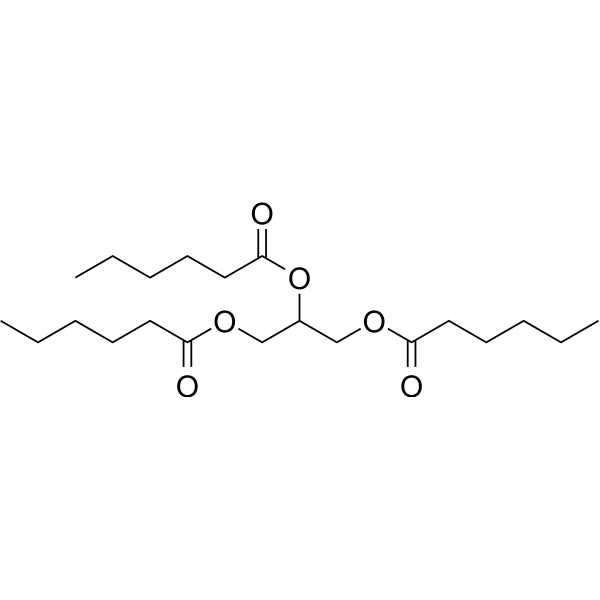
TricaproinIt is an organic compound belonging to the class of triacylglycerols. It consists of three molecules of caproic acid esterified to the glycerin backbone, with a mild fatty smell. TricaproinIt has a variety of applications in the cosmetic and personal care industries, especially as an emollient and conditioning agent in skin and hair care products. Additionally, it is used as a lubricant and surfactant in industrial settings.
Cat. No.: HY-W013809
CAS No.: 111-61-5
Synonyms: Stearic acid ethyl ester
Ethyl stearate is an ester compound produced by the reaction of ethanol and stearic acid. It is commonly used as a flavoring agent in various foods such as baked goods, beverages and desserts. Ethyl stearate is also used as a fragrance ingredient in the manufacture of perfume, cologne and personal care products. Additionally, it has applications in industrial settings such as the production of lubricants and plasticizers.
Cat. No.: HY-E70015
CAS No.: 9067-77-0
Synonyms: PEPC
Target:  

Others

Research Areas:  

Others

Phosphoenolpyruvate carboxylase, Microorganism (PEPC) is a carbon dioxide fixing enzyme that in an irreversible manner and in the presence of Mg 2+, converts phosphoenolpyruvate and bicarbonate into oxaloacetate and inorganic phosphorus. Phosphoenolpyruvate carboxylase catalyses the primary assimilation of CO(2) in Crassulacean acid metabolism plants. Phosphoenolpyruvate carboxylase plays a major role in setting the day-night pattern of metabolism in plants .
Cat. No.: HY-W018746R
CAS No.: 139-33-3
Synonyms: Ethylenediaminetetraacetic acid disodium (Standard)
EDTA (disodium) (Standard) is the analytical standard of EDTA (disodium). This product is intended for research and analytical applications. EDTA disodium salt, also known as ethylenediaminetetraacetic acid disodium, belongs to the chelating agent category, which is formed by chelating a central metal ion with four carboxylate groups and two amine groups. This compound, with its ability to bind and chelate metal ions such as calcium, magnesium and iron, is commonly used in a variety of applications, including industrial, medical and research settings. It is used as a preservative in food and beverage, as a stabilizer in medicine, as a chelating agent in water treatment, and as a reagent in biochemical and biomedical research. In addition, EDTA disodium salt has been studied for potential research effects such as improving heavy metal poisoning and cardiovascular disease.
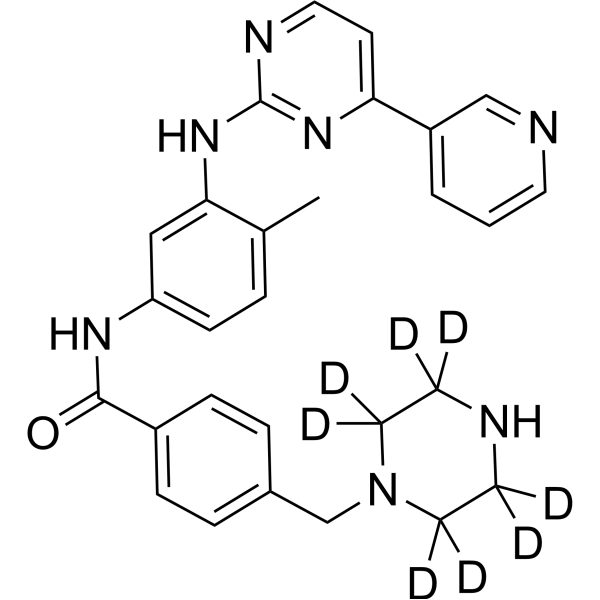
Cat. No.: HY-G0017S
CAS No.: 1185103-28-9
Synonyms: Norimatinib-d8; Imatinib metabolite N-Desmethyl imatinib-d8; CGP 74588-d8
N-Desmethyl imatinib-d8 is a deuterium labeled Imatinib metabolite N-Desmethyl Imatinib (HY-G0017). N‑Desmethyl imatinib (Norimatinib) is an active metabolite of Imatinib (HY-15463), a selective c‑Abl inhibitor, and a substrate of P‑glycoprotein. N-Desmethyl imatinib binds to the c-Abl catalytic domain to prevent substrate phosphorylation, inhibits c-Abl-mediated α-synuclein activation and downstream inflammatory signaling pathways. N-Desmethyl imatinib induces apoptosis in K562 human leukemia cells. N-Desmethyl imatinib exhibits significantly elevated plasma levels in gastrointestinal stromal tumor (GIST) settings following mild SARS CoV 2 infection. N-Desmethyl imatinib can be used for the research of Parkinson’s disease, gastrointestinal stromal tumor, and chronic myeloid leukemia .
Cat. No.: HY-W015308
CAS No.: 1731-84-6
Synonyms: Pelargonic acid methyl ester
Methyl nonanoate is an ester compound obtained by the reaction of methanol and nonanoic acid. It has a fruity aroma and is commonly used as a flavoring agent in a variety of foods such as baked goods, confectionary and beverages. Methyl nonanoate is also used as a fragrance ingredient in the manufacture of perfume, cologne and personal care products. Furthermore, it has applications in industrial settings, for example in the production of solvents, resins and plasticizers.
Cat. No.: HY-P10581A
Target:  

MHC

Research Areas:  

Inflammation/Immunology

SIIVFEKL TFA is a variant of the major MHC class I-restricted epitope SIINFEKL. SIIVFEKL TFA is an antigenic peptide, that can stimulate specific T cells in experimental settings to study the competitive interaction between T cells. SIIVFEKL TFA exhibits low affinity for the OT-I T cell receptor (TCR), and can be used for detection of CD8+ T cells .
Cat. No.: HY-P10582A
Target:  

MHC

Research Areas:  

Inflammation/Immunology

SIYNFEKL TFA is a variant of major MHC class I-restricted epitope SIINFEKL. SIYNFEKL TFA is an antigenic peptide, that can stimulate specific T cells in experimental settings to study the competitive interaction between T cell. SIYNFEKL TFA exhibits low affinity for the OT-I T cell receptor (TCR), and can be used for detection of CD8+ T cells .
Cat. No.: HY-107928A
CAS No.: 9004-66-4
Iron-Dextran is an injectable complex of iron and dextran, a complex carbohydrate. It is often used to improve iron deficiency anemia, a condition characterized by low levels of iron in the blood due to insufficient dietary intake or malabsorption. Iron-glucan works by providing a source of supplemental iron that the body can use to produce hemoglobin, the protein responsible for carrying oxygen in the blood. However, caution should be exercised when taking iron dextran because it may cause hypersensitivity reactions, including anaphylaxis, and may also increase the risk of infection or other adverse reactions. Therefore, it should only be administered under the supervision of a qualified healthcare provider in a clinical setting.
Cat. No.: HY-W127465
CAS No.: 36781-75-6
Oleyl RicinoleateIt is an organic compound belonging to esters. It is formed from the reaction between oleyl alcohol and ricinoleic acid and has a mild fatty odor. Oleyl RicinoleateIt has a variety of applications in the cosmetic and personal care industries, especially as an emollient and conditioning agent in skin and hair care products. Additionally, it is used as a lubricant and plasticizer in industrial settings.
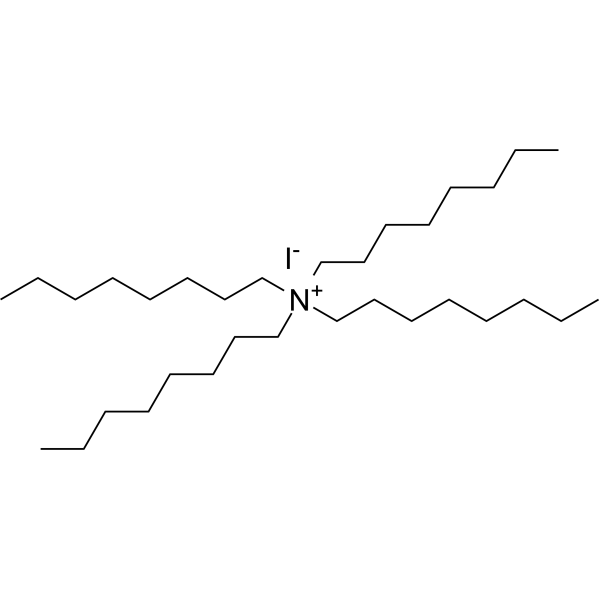
Cat. No.: HY-W099640
CAS No.: 16829-91-7
Synonyms: Tetra-n-octylammonium iodide
Tetraoctylammonium iodideIt is an organic compound and belongs to the category of quaternary ammonium salts. It is often used as a phase transfer catalyst, meaning it facilitates a reaction between two immiscible phases, such as an aqueous phase and an organic phase. Tetraoctylammonium iodideIt has a variety of applications in organic synthesis, especially in reactions involving nucleophilic substitution, oxidation, and reduction. Additionally, it is used as a surfactant and emulsifier in industrial and laboratory settings.
Cat. No.: HY-W013809R
CAS No.: 111-61-5
Synonyms: Stearic acid ethyl ester (Standard)
Ethyl stearate (Standard) is the analytical standard of Ethyl stearate. This product is intended for research and analytical applications. Ethyl stearate is an ester compound produced by the reaction of ethanol and stearic acid. It is commonly used as a flavoring agent in various foods such as baked goods, beverages and desserts. Ethyl stearate is also used as a fragrance ingredient in the manufacture of perfume, cologne and personal care products. Additionally, it has applications in industrial settings such as the production of lubricants and plasticizers.
Cat. No.: HY-W105686
CAS No.: 117961-20-3
MOPS hemisodium salt, 98% is a buffer commonly used in molecular biology and biochemical research, providing precise pH control in various experimental settings.
Cat. No.: HY-W127377
CAS No.: 142-77-8
Butyl oleateIt is an organic compound belonging to esters. It is formed from the reaction of butanol and oleic acid and has a mild fruity smell. Butyl oleateIt has a variety of applications in the cosmetic and personal care industries, especially as an emollient and conditioning agent in skin and hair care products. Additionally, it is used as a lubricant and solvent in industrial settings.
Cat. No.: HY-W127437
CAS No.: 2778-96-3
Synonyms: Octadecanoic acid, octadecyl ester
Stearyl StearateIt is an organic compound belonging to esters. It is formed from the reaction between stearyl alcohol and stearic acid and has a mild fatty odor. Stearyl stearate has several applications in the cosmetic and personal care industries, especially as an emollient and conditioning agent in skin and hair care products. Additionally, it is used as a lubricant and surfactant in industrial settings.

