1. Search Result
Search Result
Results for "

sigma 1

" in MedChemExpress (MCE) Product Catalog:

120

Inhibitors & Agonists

1

Peptides

6

Natural
Products

4

Isotope-Labeled Compounds

Targets Recommended:
Cat. No. Product Name Target Research Areas Chemical Structure
  • HY-101864
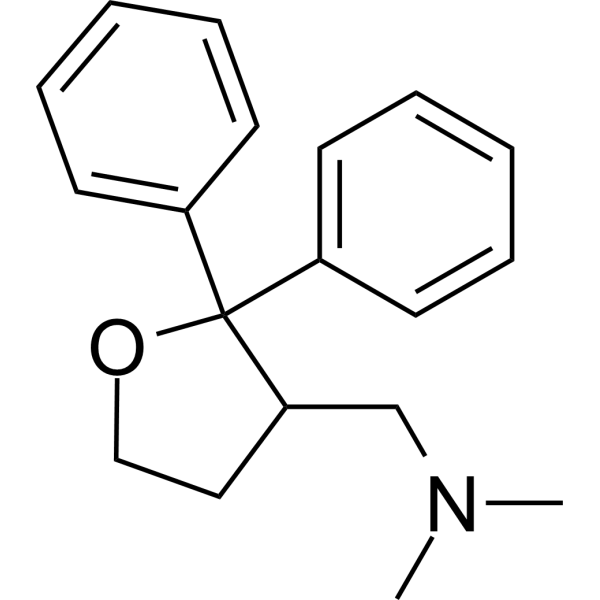
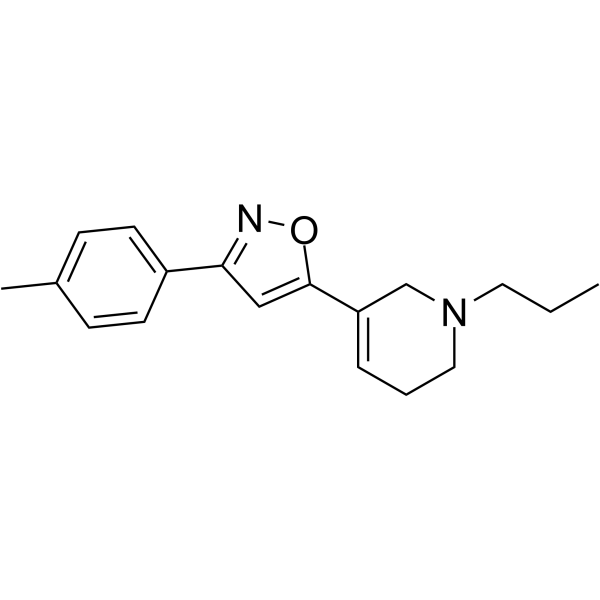
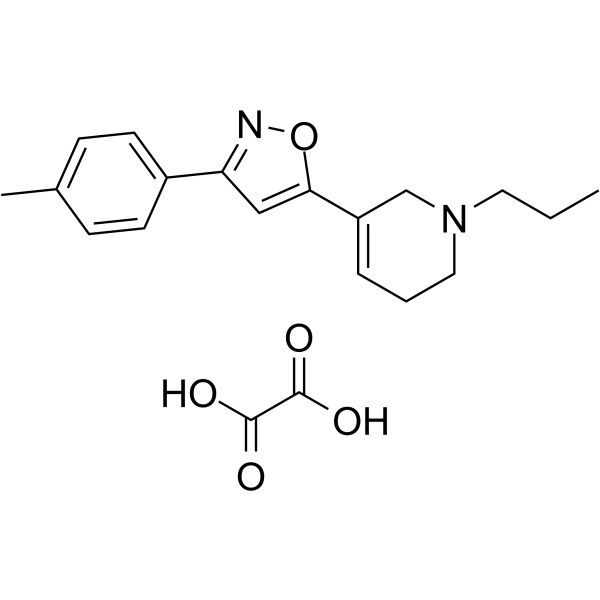
    Blarcamesine hydrochloride
    3 Publications Verification

    Anavex 2-73

    Sigma Receptor Neurological Disease Cancer
    Blarcamesine hydrochloride (Anavex 2-73) is a Sigma-1 Receptor agonist with an IC50 of 860 nM.
    Blarcamesine hydrochloride
  • HY-105296
    Blarcamesine
    3 Publications Verification

    Sigma Receptor mAChR Cancer
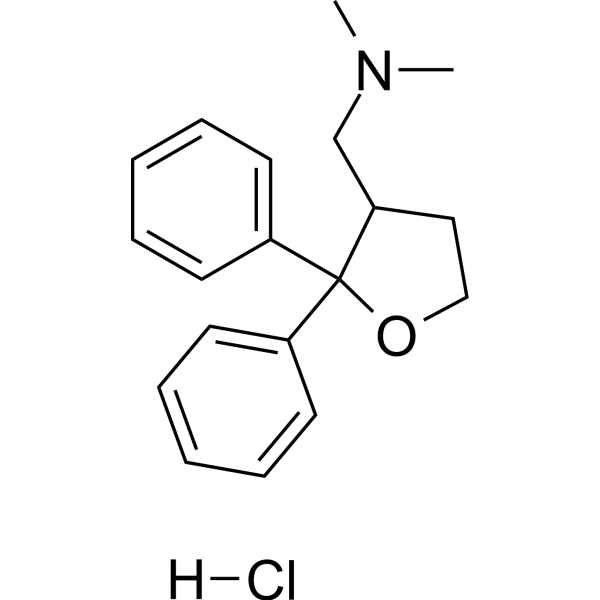
    Blarcamesine is an orally bioavailable Sigma-1 receptor agonist and muscarinic receptor modulator, with anticonvulsant, anti-amnesic, neuroprotective and antidepressant properties. Blarcamesine ameliorates neurologic impairments in a mouse model of Rett syndrome .
    Blarcamesine
  • HY-101484A
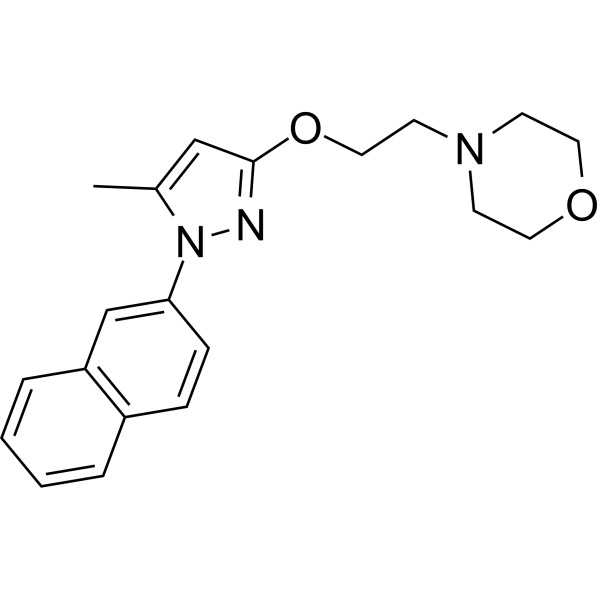
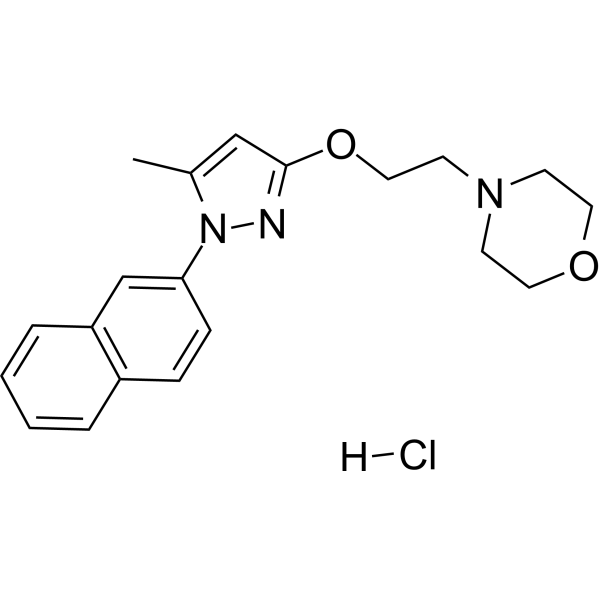
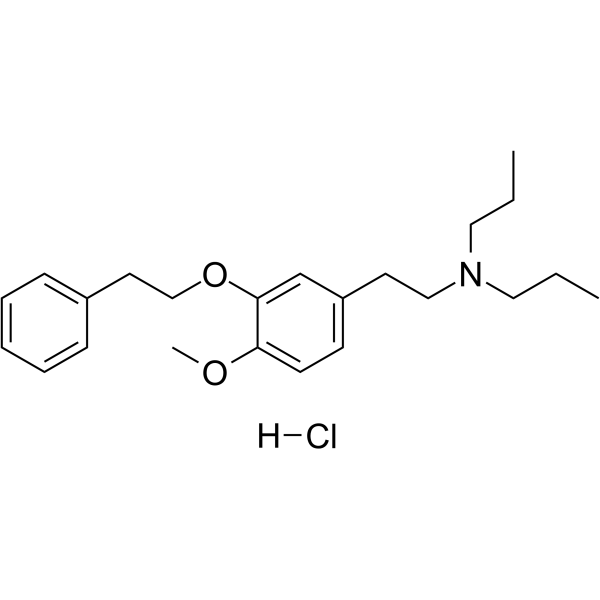
    NE-100 hydrochloride
    1 Publications Verification

    Sigma Receptor ATF6 Neurological Disease
    NE-100 hydrochloride is an orally active and selective sigma-1 receptor antagonist with an IC50 of 4.16 nM. NE-100 hydrochloride can improve cognitive impairment and has neuroprotective and antipsychotic activities. NE-100 hydrochloride can be used for research on nervous system diseases .
    NE-100 hydrochloride
  • HY-14221A
    Siramesine hydrochloride
    5 Publications Verification

    Lu 28-179 hydrochloride

    Sigma Receptor Ferroptosis Cancer
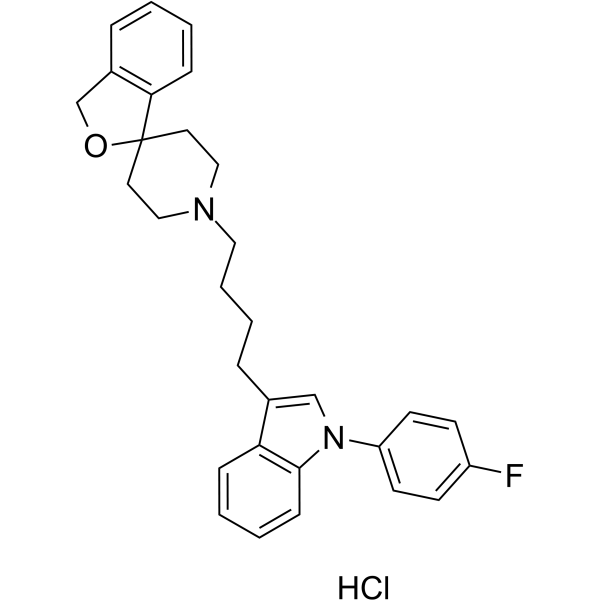
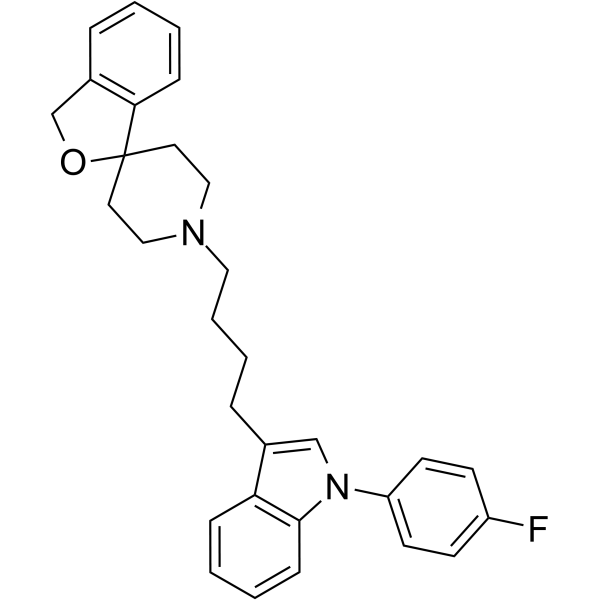
    Siramesine (Lu 28-179) hydrochloride is a potent sigma-2 receptor agonist. Siramesine hydrochloride has a subnanomolar affinity for sigma-2 receptors (IC50=0.12 nM) and exhibits a 140-fold selectivity for sigma-2 receptors over sigma-1 receptors (IC50=17 nM). Siramesine hydrochloride triggers cell death through destabilisation of mitochondria, but not lysosomes. Anti-cancer activity .
    Siramesine hydrochloride
  • HY-125821

    Sigma Receptor Neurological Disease
    Sigma‑1 receptor antagonist 1 (compound 137) is a potent and selective sigma-1 receptor (σ1R) antagonist, with a high binding affinity to σ1R receptor (Ki = 1.06 nM). Sigma‑1 receptor antagonist 1 exhibits antineuropathic pain activity and acts as a promising agent for the treatment of neuropathic pain .
    Sigma-1 receptor antagonist 1
  • HY-18099
    S1RA
    3 Publications Verification

    E-52862

    Sigma Receptor 5-HT Receptor Neurological Disease
    S1RA (E-52862) is a highly selective σ1 receptor (σ1R) antagonist with Kis of 17 nM and 23.5 nM for human σ1R and guinea pig σ1R, respectively. S1RA has Moderate antagonistic activity for human 5-HT2B receptor (Ki= 328 nM). S1RA has antinociceptive effects in neuropathic pain models. S1RA prevents mechanical and cold hypersensitivity in Oxaliplatin (HY-17371)-treated mice .
    S1RA
  • HY-18101A
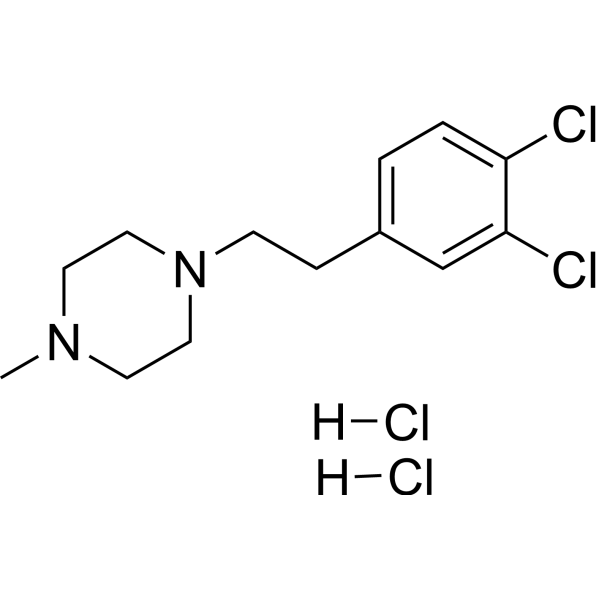
    BD-1063 dihydrochloride
    3 Publications Verification

    Sigma Receptor TRP Channel Neurological Disease
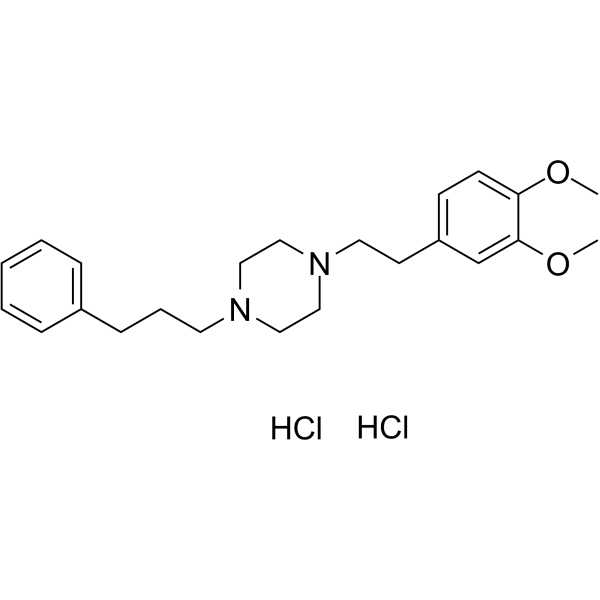
    BD-1063 dihydrochloride is a selective σ-1 receptor antagonist with inhibitory activity against TRPC5 and TRPM3. BD-1063 dihydrochloride exerts anti-hyperalgesic and anti-allodynic effects by inhibiting sustained calcium influx mediated by TRPC5 and TRPM3, and reverses the effects of Carrageenan (HY-125474). BD-1063 dihydrochloride also significantly reduces excessive ethanol self-administration behavior. BD-1063 dihydrochloride is widely used in studies on the mechanisms underlying neuropathic pain, inflammatory hyperalgesia, and alcohol abuse and dependence .
    BD-1063 dihydrochloride
  • HY-134004

    Carbetapentane

    Sigma Receptor mAChR Neurological Disease Inflammation/Immunology
    Pentoxyverine (Carbetapentane) is an orally active sigma-1 receptor agonist, with Kis of 41 nM, 894 nM and 75 nM for σ1, σ2 and guinea-pig brain membran σ1, respectively. Pentoxyverine is a muscarinic antagonist. Pentoxyverine is a potent antitussive, anticonvulsant, and spasmolytic agent. Pentoxyverine can be used for inhibiting bronchial interceptor, weakening of cough reflex, bronchial smooth muscle relaxation and reduction of airway resistance .
    Pentoxyverine
  • HY-B1055

    Carbetapentane citrate

    Sigma Receptor mAChR Neurological Disease Inflammation/Immunology
    Pentoxyverine (Carbetapentane) citrate is an orally active and blood-brain barrier permeability sigma-1 receptor agonist, with Kis of 41 nM, 894 nM and 75 nM for σ1, σ2 and guinea-pig brain membrane σ1, respectively. Pentoxyverine citrate is a muscarinic antagonist. Pentoxyverine citrate is a potent antitussive, anticonvulsant, and spasmolytic agent. Pentoxyverine citrate can be used for inhibiting bronchial interceptor, weakening of cough reflex, bronchial smooth muscle relaxation and reduction of airway resistance .
    Pentoxyverine citrate
  • HY-14221
    Siramesine
    5 Publications Verification

    Lu 28-179

    Sigma Receptor Cancer
    Siramesine (Lu 28-179) is a potent sigma-2 receptor agonist. Siramesine has a subnanomolar affinity for sigma-2 receptors (IC50=0.12 nM) and exhibits a 140-fold selectivity for sigma-2 receptors over sigma-1 receptors (IC50=17 nM). Siramesine triggers cell death through destabilisation of mitochondria, but not lysosomes. Anti-cancer activity .
    Siramesine
  • HY-18099A
    S1RA hydrochloride
    3 Publications Verification

    E-52862 hydrochloride

    Sigma Receptor 5-HT Receptor Neurological Disease
    S1RA (E-52862) hydrochloride is an orally active and selective sigma-1 receptor (σ1R) antagonist with a Ki value of 17 nM. S1RA hydrochloride shows good selectivity against σ2R (Ki >1000 nM). S1RA hydrochloride is a human 5-HT2B receptor antagonist with an IC50 value of 4.7 μM. S1RA hydrochloride inhibits neuropathic pain and activity-induced spinal sensitization .
    S1RA hydrochloride
  • HY-B2215
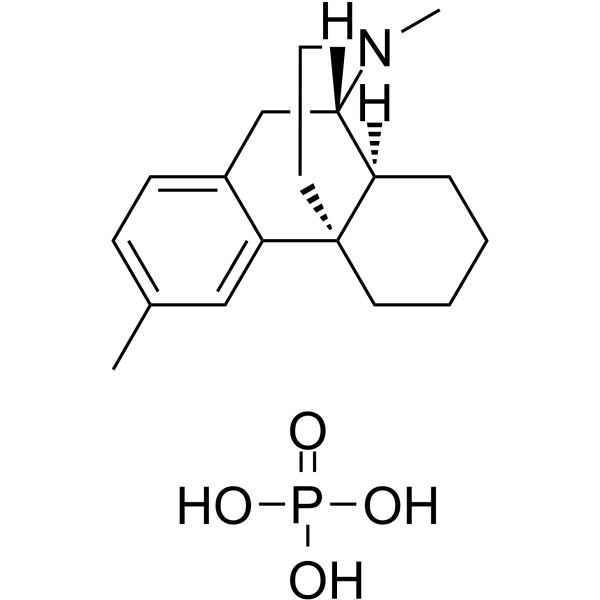
    Dimemorfan phosphate
    3 Publications Verification

    Sigma Receptor Neurological Disease Inflammation/Immunology
    Dimemorfan phosphate is a sigma 1 receptor agonist, used as a potent antitussive.
    Dimemorfan phosphate
  • HY-B1813A
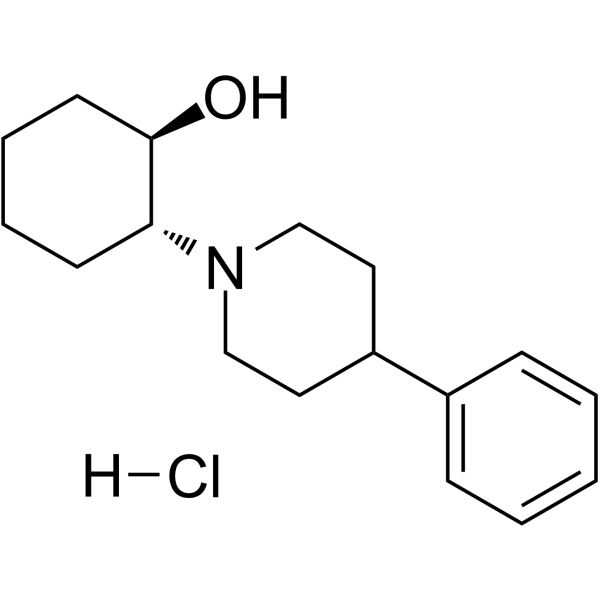
    (±)-Vesamicol hydrochloride
    1 Publications Verification

    (±)-AH5183 hydrochloride

    Sigma Receptor Neurological Disease
    (±)-Vesamicol hydrochloride ((±)-AH5183 hydrochloride) is a potent vesicular acetylcholine transport inhibitor with a Ki of 2 nM. (±)-Vesamicol hydrochloride also displays high affinity for σ1 and σ2 receptors with Kis of 26 nM and 34 nM, respectively .
    (±)-Vesamicol hydrochloride
  • HY-13510
    Cutamesine dihydrochloride
    5+ Cited Publications

    SA4503 dihydrochloride; AGY94806 dihydrochloride

    Sigma Receptor Neurological Disease
    Cutamesine (SA4503) dihydrochloride is a potent and selective sigma 1 receptor agonist with an IC50 of 17.4 nM in guinea pig brain membranes. Cutamesine dihydrochloride shows >100-fold less affinity for the sigma 2 receptor (IC50 of 1784 nM). Cutamesine dihydrochloride has antidepressant effects .
    Cutamesine dihydrochloride
  • HY-135608

    Sigma Receptor Neurological Disease
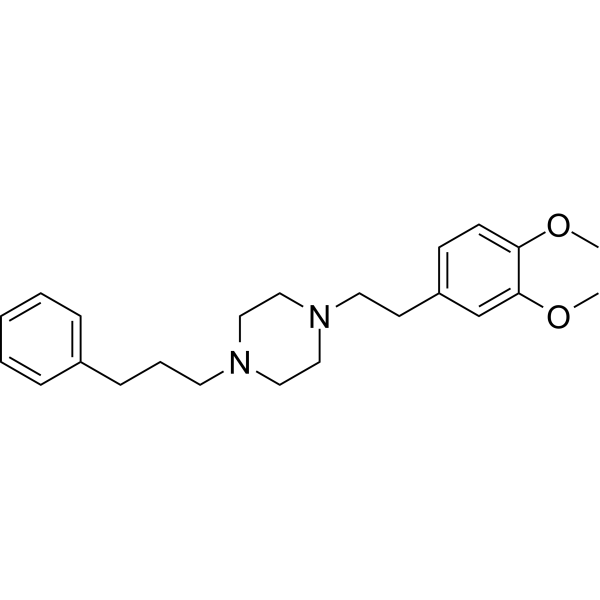
    BD-1008 is a nonselective σ receptor antagonist with Kis against σ1 receptor and σ2 receptor of 2 nM and 8 nM. The BD-1008 has an extremely low affinity for the D2 receptor (Ki = 1112 nM) and dopamine transporter (DAT) (Ki > 10,000 nM). BD-1008 significantly antagonizes dopamine release in the shell region of the nucleus accumbens via the σ₂ receptor. BD-1008 blocks the self-administration behavior of σ agonists.BD-1008 can be used for the study of addiction therapy that target the σ receptor .
    BD-1008
  • HY-B1216

    Sigma Receptor Cardiovascular Disease Others Neurological Disease
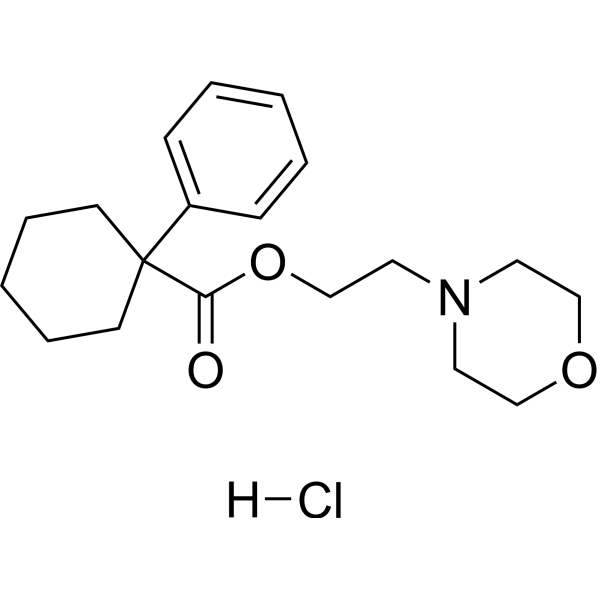
    Oxeladin citrate is an orally active and brain-penetrant cough suppressant as well as a selective sigma 1 receptor agonist (Ki = 25 nM). Oxeladin can be used for pulmonary diseases and stroke research .
    Oxeladin citrate
  • HY-10815
    σ1 Receptor antagonist-1
    1 Publications Verification

    Sigma Receptor Apoptosis Neurological Disease Cancer
    σ1 Receptor antagonist-1 is a highly potent and selective sigma 1 receptor antagonist (pKi=10.28). σ1 Receptor antagonist-1 inhibits cell growth, arrests cell cycle at G0/G1 phase and induces apoptosis of MCF-7/ADR cells .
    σ1 Receptor antagonist-1
  • HY-14218
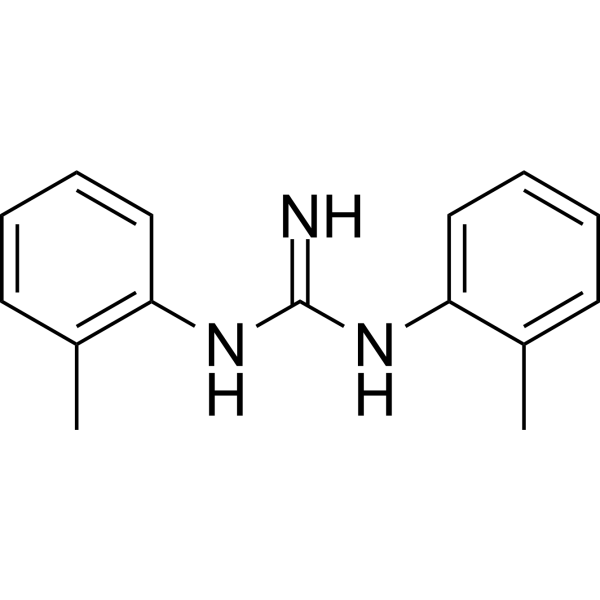
    Ditolylguanidine
    2 Publications Verification

    1,3-Di-o-tolylguanidine; DTG

    Sigma Receptor Neurological Disease
    Ditolylguanidine (1,3-Di-o-tolylguanidine) is an agonist of sigma receptor (σ1/σ2 receptor) with Ki values of 69 and 21 nM for σ1 and σ2 receptors, respectively. Ditolylguanidine effectively inhibits the growth of small cell lung cancer cells. Ditolylguanidine can be used for the research of lung cancer .
    Ditolylguanidine
  • HY-125820

    Sigma Receptor Potassium Channel Neurological Disease
    Sigma-1 receptor antagonist 3 (compound135) is a potent and selective Sigma-1 (σ1) receptor antagonist with a Ki of 1.14 nM. Sigma-1 receptor antagonist 3 inhibits Human Ether-a-go-go-Related Gene (hERG) with an IC50 of 1.54 μM. Sigma-1 receptor antagonist 3 has the potential for the neuropathic pain .
    Sigma-1 receptor antagonist 3
  • HY-125819

    Sigma Receptor Neurological Disease
    Sigma-1 receptor antagonist 2 is a potent and selective sigma 1 receptor (σ1 R) antagonist with Kis of 3.88 and 1288 nM for σ1 and σ2 receptor, respectively .
    Sigma-1 receptor antagonist 2
  • HY-130344
    SKF 83959
    1 Publications Verification

    Dopamine Receptor Sigma Receptor Neurological Disease
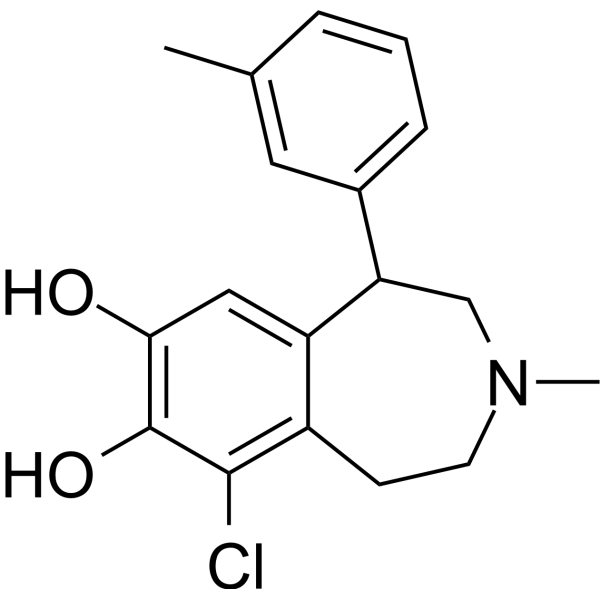
    SKF83959 is a potent and selective dopamine D1-like receptor partial agonist. SKF83959 Ki values for rat D1, D5, D2 and D3 receptors are 1.18, 7.56, 920 and 399 nM, respectively. SKF83959 is a potent allosteric modulator of sigma (σ)-1 receptor. SKF83959 belongs to benzazepine family and has improvements on cognitive dysfunction. SKF83959 can be used for the research of Alzheimer's disease and depression .
    SKF 83959
  • HY-14813
    Cutamesine
    5+ Cited Publications

    SA4503; AGY 94806

    Sigma Receptor Neurological Disease
    Cutamesine (SA4503) is a potent and selective sigma 1 receptor agonist with an IC50 of 17.4 nM in guinea pig brain membranes. Cutamesine shows >100-fold less affinity for the sigma 2 receptor (IC50 of 1784 nM). Cutamesine has antidepressant effects .
    Cutamesine
  • HY-101376

    (+)-SKF 10047 hydrochloride; (+)-N-Allyl-N-normetazocine hydrochloride

    Opioid Receptor Neurological Disease
    (+)-N-Allylnormetazocine ((+)-SKF 10047) hydrochloride is a benzomorphan opioid with psychotomi metic effects. (+)-N-Allylnormetazocine hydrochloride is an opioid receptor antagonist with Ki values of 300 nM and 27 μM for σ1 and σ2 opioid receptors, respectively. (+)-N-Allylnormetazocine hydrochloride can be used for the research of neurological disease .
    (+)-N-Allylnormetazocine hydrochloride
  • HY-108512
    PD 144418
    1 Publications Verification

    Sigma Receptor Neurological Disease
    PD 144418 is a highly affinity, potent and selective sigma 1 (σ1) receptor ligand (Ki values of 0.08 nM and 1377 nM for σ1 and σ2 respectively). PD 144418 devoids of any significant affinity for other receptors, ion channels and enzymes. PD 144418 shows potential antipsychotic activity .
    PD 144418
  • HY-P1341

    Orexin A (17-33) (human, mouse, rat, bovine)

    Orexin Receptor (OX Receptor) Sigma Receptor Phospholipase Neurological Disease
    OXA (17-33) (Orexin A (17-33) (human, mouse, rat, bovine)) is the shortest active orexin peptide that selectively targets OX1 (EC50=8.29 nM), with 23-fold selectivity for the OX1 receptor over the OX2 receptor. The activity of OXA (17-33) depends on the Tyr17, Leu20, Asn25, His26 residues and the spatial conformation of the α-helix. OXA (17-33) activates signaling pathways involving inositol-1,4,5-trisphosphate receptor (IP3R), phospholipase D (PL-D) and choline-Sigma-1R, thereby increasing the cytoplasmic Ca 2+ level in nucleus accumbens neurons, an effect that is blocked by Sigma-1R antagonists. OXA (17-33) serves as an important biological probe for investigating the function of the OX1 receptor. OXA (17-33) can be modified via incorporation of mixed disulfide bonds of homocysteine and cysteamine, and is widely used in studies related to insomnia and narcolepsy .
    OXA(17-33)
  • HY-100985

    Sigma Receptor Cancer
    IPAG is a potent sigma-1 receptor antagonist with a pKi of 4.3 . IPAG induces apoptosis .
    IPAG
  • HY-101043

    Sigma Receptor iGluR Neurological Disease
    4-PPBP maleate is a potent σ 1 receptor ligand and agonist. 4-PPBP maleate is a non-competitive, selective NR1a/2B NMDA receptors (expressed in Xenopus oocytes) antagonist. 4-PPBP maleate provides neuroprotection .
    4-PPBP maleate
  • HY-108511

    Sigma Receptor Apoptosis SARS-CoV Infection Cancer
    PB28 dihydrochloride, a cyclohexylpiperazine derivative, is a high affinity and selective sigma 2 (σ2) receptor agonist with a Ki of 0.68 nM. PB28 dihydrochloride is also a σ1 antagonist with a Ki of 0.38 nM. PB28 dihydrochloride is less affinity for other receptors. PB28 dihydrochloride inhibits electrically evoked twitch in guinea pig bladder and ileum with EC50 values of 2.62 μM and 3.96 μM, respectively. PB28 dihydrochloride can modulate SARS-CoV-2-human protein-protein interaction. PB28 dihydrochloride induces caspase-independent apoptosis and has antitumor activity .
    PB28 dihydrochloride
  • HY-117731

    Sigma Receptor Neurological Disease
    UKH-1114 is a selective TMEM97 (a sigma-2 receptor) agonist with a Ki values of 1279 and 46 nM for σ1R and σ2R/TMEM97, respectively. UKH-1114 exhibits exceptional selectivity with negligible affinity for over 50 other receptors and channels. UKH-1114 effectively relieves spared nerve injury (SNI)-induced mechanical hypersensitivity with a long-lasting duration and without motor impairment. UKH-1114 can be used for neuropathic pain research .
    UKH-1114
  • HY-124462

    R 2498

    Sigma Receptor Neurological Disease
    Trifluperidol hydrochloride is a Sigma-1 receptor antagonist with a Ki value of 3.3 nM. Trifluperidol hydrochloride is used in the study of psychosis .
    Trifluperidol hydrochloride
  • HY-116463

    Sigma Receptor Neurological Disease
    E1R is a positive allosteric modulator of sigma-1 receptors (Sig1R PAM) with cognition-enhancing activity .
    E1R
  • HY-N15339

    Sigma Receptor Neurological Disease
    Convolamine is an alkaloid found in Convolvulus pluricaulis and an effective positive modulator of the sigma-1 receptor (IC50 = 289 nM), exhibiting cognitive and neuroprotective properties .
    Convolamine
  • HY-B1733

    Bistrimin; Histionex

    Histamine Receptor Sigma Receptor Cytochrome P450 Neurological Disease Inflammation/Immunology
    Phenyltoloxamine (Bistrimin) is an antihistamine agent with sedative and analgesic effects. Phenyltoloxamine also has potent Sigma-1 receptor binding affinity (Ki: 160 nM) .
    Phenyltoloxamine
  • HY-162759

    Sigma Receptor Neurological Disease
    Sigma-1 receptor antagonist 6 (Compound 12) is an antagonist of the Sigma-1 receptor (σ1R). Sigma-1 receptor antagonist 6 exerts a robust antiallodynic effect by antagonizing σ1R. Sigma-1 receptor antagonist 6 can be used in neuropathic pain animal models to alleviate mechanical allodynia induced by paclitaxel (HY-B0015) .
    Sigma-1 receptor antagonist 6
  • HY-108512A
    PD 144418 oxalate
    1 Publications Verification

    Sigma Receptor Neurological Disease
    PD 144418 oxalate is a highly affinity, potent and selective sigma 1 (σ1) receptor ligand (Ki values of 0.08 nM and 1377 nM for σ1 and σ2 respectively). PD 144418 oxalate devoids of any significant affinity for other receptors, ion channels and enzymes. PD 144418 oxalate shows potential antipsychotic activity .
    PD 144418 oxalate
  • HY-103412
    SKF 83959 hydrobromide
    1 Publications Verification

    Dopamine Receptor Sigma Receptor Neurological Disease
    SKF83959 hydrobromide is a potent and selective dopamine D1-like receptor partial agonist. SKF83959 hydrobromide Ki values for rat D1, D5, D2 and D3 receptors are 1.18, 7.56, 920 and 399 nM, respectively. SKF83959 hydrobromide is a potent allosteric modulator of sigma (σ)-1 receptor. SKF83959 hydrobromide belongs to benzazepine family and has improvements on cognitive dysfunction. SKF83959 hydrobromide can be used for the research of Alzheimer's disease and depression .
    SKF 83959 hydrobromide
  • HY-149335

    Sigma Receptor Histamine Receptor Neurological Disease
    Sigma-1 receptor antagonist 5 (compound 12),a 4-pyridylpiperidine derivative with analgesic activity,is an antagonist of sigma receptor (Ki=4.5 nM (σ1R),10 nM (σ2R)) and histamine H3 (hH3R,Ki=7.7 nM,IC50=215 nM). Sigma-1 receptor antagonist 5 suppresses Capsaicin-induced nociception with antinociceptive activity and shows potent efficacy in nociceptive and neuropathic pain models .
    Sigma-1 receptor antagonist 5
  • HY-116594A

    Sigma Receptor 5-HT Receptor Neurological Disease
    OPC-14523 hydrochloride is an orally active sigma and 5-HT1A receptor agonist, with high affinity for sigma receptors (σ1/2 IC50=47/56 nM), the 5-HT1A receptor (IC50=2.3 nM), and the 5-HT transporter (IC50=80 nM). OPC-14523 hydrochloride shows antidepressant-like activity .
    OPC-14523 hydrochloride
  • HY-149274

    Sigma Receptor Neurological Disease
    Sigma-1 receptor antagonist 4 (Compound 32) is a potent σ1R antagonist that significantly enhances the analgesic effect of morphine and rescues morphine-induced analgesic tolerance, with potential to prevent morphine tolerance .
    Sigma-1 receptor antagonist 4
  • HY-116586A

    mAChR Sigma Receptor Neurological Disease
    (Rac)-AF710B is the racemate of AF710B (HY-116586). AF710B is a highly potent and selective allosteric M1 muscarinic and σ1 receptor agonist. AF710B can be used for the research of Alzheimer’s disease .
    (Rac)-AF710B
  • HY-151562

    Cholinesterase (ChE) Monoamine Oxidase Neurological Disease
    AChE/BuChE/MAO-B-IN-1 (compound 19) is an inhibitor of human acetyl- (hAChE), butyrylcholinesterase (hBuChE) and monoamine oxidase-B (hMAO-B) with IC50s of 4.8 μM, 13.7 μM, and 1.11 μM, respectively. AChE/BuChE/MAO-B-IN-1 also exhibits high affinity to both the σ1 and σ2 receptors with Ki values of 42.8 nM (human σ1 receptor) and 191 nM (rat σ2 receptor), respectively. AChE/BuChE/MAO-B-IN-1 can be used for Alzheimer’s disease research .
    AChE/BuChE/MAO-B-IN-1
  • HY-155484

    Sigma Receptor Neurological Disease
    SOMCL-668 is a selective and potent sigma-1 receptor allosteric modulator. ?SOMCL-668 shows positive modulation of improvement in social deficits and cognitive impairment induced by the selective sigma-1 agonist PRE084.?SOMCL-668 displays anti-seizure activities and can be used for psychotic illness research .
    SOMCL-668
  • HY-108513

    Sigma Receptor Neurological Disease
    σ1 Receptor antagonist 4 (compound TC1) is a selective sigma1 (σ1) receptor antagonist with a Ki of 10 nM. σ1 Receptor antagonist 4 is weakly active at σ2 receptor (Ki of 370 nM) and has no activity at dopamine (DAT), serotonin (SERT), and norepinephrine (NET) transporters .
    σ1 Receptor antagonist 4
  • HY-131914A

    Sigma Receptor Neurological Disease
    EST64454 hydrochloride is a selective and orally active sigma-1 receptor antagonist with a Ki of 22 nM. EST64454 hydrochloride has the potential for the research of the pain .
    EST64454 hydrochloride
  • HY-A0172

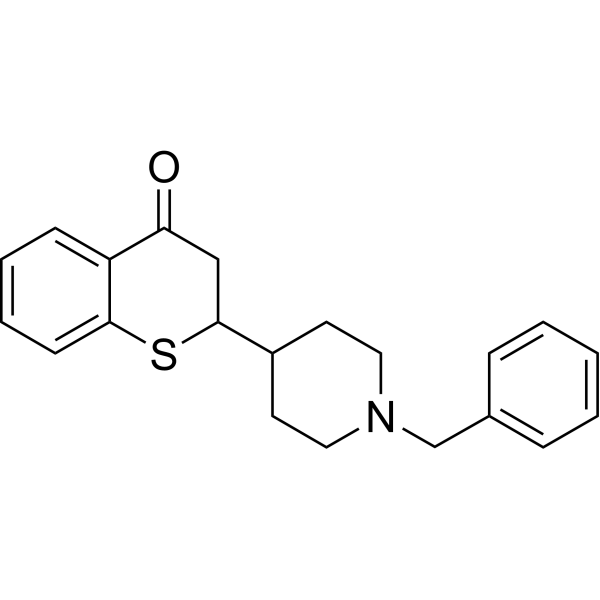
    Captodiamine

    5-HT Receptor Dopamine Receptor Sigma Receptor Neurological Disease
    Captodiame (Captodiamine) is a 5-HT2c receptor antagonist and sigma-1 and D3 dopamine receptor agonist. Captodiame shows antidepressant effect .
    Captodiame
  • HY-153091

    Adrenergic Receptor 5-HT Receptor Sigma Receptor Neurological Disease
    BMY 14802 is a sigma-1 receptor (σ1R) antagonist, as well as an agonist at serotonin (5-HT) 1A and adrenergic alpha-1 receptors. BMY 14802 inhibits abnormal involuntary movement (AIM) in rat Parkinson's disease (PD) model, with down-regulating the expression of AIM .
    BMY 14802
  • HY-176405

    Sigma Receptor Neurological Disease
    σ1R-IN-1 ((R,R)-1a) is a potent σ-1R inhibitor with an IC50 of 110 nM. σ1R-IN-1 is promising for research of neuropsychiatric disorders .
    σ1R-IN-1
  • HY-120155

    Sigma Receptor iGluR Neurological Disease
    MS-377 is a selective and orally active sigma-1 receptor ligand (Ki=73 nM) with weak affinity for sigma-2 receptor (Ki=6900 nM) and no affinity for any other receptors including dopamine, serotonin, PCP site, glutamate, γ-aminobutylic acid, adenosine, adrenergic receptors, etc. (Ki: >10 μM). MS-377 indirectly modulates the NMDA receptor ion-channel complex. MS-377 is a antipsychotic agent. MS-377 inhibits PCP-induced behaviors by inhibition of the increase in dopamine and serotonin release in the rat medial prefrontal cortex. MS-377 can be used for research of schizophrenia .
    MS-377
  • HY-168562

    Sigma Receptor Neurological Disease Cancer
    σ1 Receptor ligand 1 (compound 5I) is a σ1 receptor ligand with a Ki of 3.9 nM. σ1 Receptor ligand 1 has a high plasma protein binding (89%) and promising metabolic stability in the presence of mouse liver microsomes and NADPH. σ1 Receptor ligand 1 can be utilized in neurological and cancer research .
    σ1 Receptor ligand 1
  • HY-147560

    Sigma Receptor Opioid Receptor Neurological Disease
    σ1 Receptor/μ Opioid receptor modulator 1 (Compound 44) is a potent σ1 receptor antagonist and μ opioid receptor agonist with Kis of 1.86 nM and 2.1 nM, respectively.σ1 Receptor/μ Opioid receptor modulator 1 exhibits potent analgesic activity. σ1 Receptor/μ Opioid receptor modulator 1 can be used for the research of neuropathic pain .
    σ1 Receptor/μ Opioid receptor modulator 1

Inquiry Online

Your information is safe with us. * Required Fields.

Salutation


Country or Region *

Applicant Name *


Organization Name *

Department *


Email Address *


Product Name *

Cat. No.


Requested quantity *

Phone Number *


Remarks

Inquiry Online

Inquiry Information

Product Name:
Cat. No.:
Quantity:
MCE Japan Authorized Agent:

