
Search Result
Results for "
solid phase peptide
" in MedChemExpress (MCE) Product Catalog:
6
Biochemical Assay Reagents
5
Isotope-Labeled Compounds
| Cat. No. |
Product Name |
Target |
Research Areas |
Chemical Structure |
-
- HY-Y1703
-
|
|
Biochemical Assay Reagents
|
Others
|
|
HATU is a third-generation uronium salt peptide coupling reagent. HATU increases the rate of peptide coupling reactions, activates amino acids, promotes peptide bond formation in both solution-phase and solid-phase synthesis, and also facilitates peptide assembly, fragment coupling, and linear peptide cyclization. HATU can promote the N-acylation of chitosan to generate amide-linked cationic derivatives with a controllable degree of substitution. HATU is commonly used in amine acylation reactions .
|
-
-
- HY-Y1636
-
-
-
- HY-142104
-
|
2-Chlorotrityl Chloride Resin (100-200 mesh,1% DVB,0.4-3.0mmol/g)
|
Drug Intermediate
|
Cancer
|
|
2-CTC Resin (100-200 mesh,1% DVB,0.4-3.0mmol/g) is a solid-phase synthesis carrier that has been used to study metabolic disorders in prostate cancer cells. 2-CTC Resin (100-200 mesh,1% DVB,0.4-3.0mmol/g) can be used as a reaction solution of terminal residues and adenine nucleotides to form cyclic peptides. 2-CTC Resin (100-200 mesh,1% DVB,0.4-3.0mmol/g) can prevent racemization during the incorporation of the first protected amino acid and minimized diketopiperazine formation. 2-CTC Resin (100-200 mesh,1% DVB,0.4-3.0mmol/g) is one of the most commonly used and versatile resins available for large-scale production of peptides .
|
-
-
- HY-W010712
-
|
|
Amino Acid Derivatives
|
Others
|
|
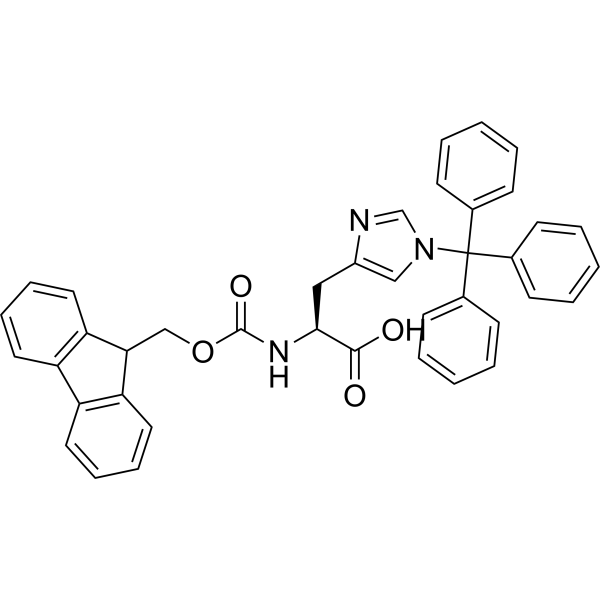
Fmoc-His(Trt)-OH is a histidine derivative with a trityl (Trt) group protecting the His side chain. Fmoc-His(Trt)-OH also has an Fmoc group protecting the α-NH2 group. Fmoc-His(Trt)-OH can be used in solid-phase peptide synthesis to prevent racemization and byproduct formation. Fmoc-His(Trt)-OH acts as a protected histidine precursor in solid-phase peptide synthesis (SPPS), participating in peptide chain construction through amide bond formation. Fmoc-His(Trt)-OH can be precisely incorporated into the target peptide sequence, ensuring correct peptide chain synthesis and reducing impurity formation. Fmoc-His(Trt)-OH is mainly used in the solid-phase synthesis research of pharmaceutical peptides and bioactive peptides, and is particularly suitable for the preparation of peptide drugs requiring precise control of histidine configuration .
|
-
-
- HY-W002327
-
-
-
- HY-41456
-
|
|
Biochemical Assay Reagents
|
Others
|
|
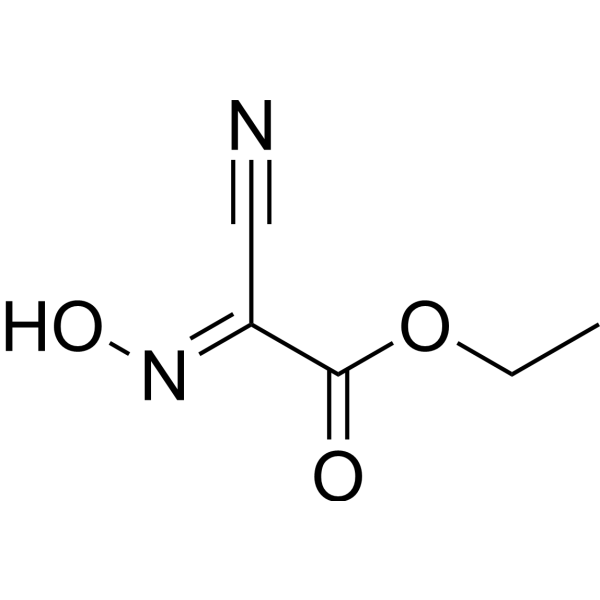
Ethyl 2-cyano-2-(hydroxyimino) acetate (Oxyma) is a peptide coupling additive. Ethyl 2-cyano-2-(hydroxyimino) acetate suppresses racemization during peptide coupling and improves the coupling efficiency of both solution-phase and solid-phase peptide synthesis .
|
-
-
- HY-W013081
-
|
|
Amino Acid Derivatives
|
Others
|
|
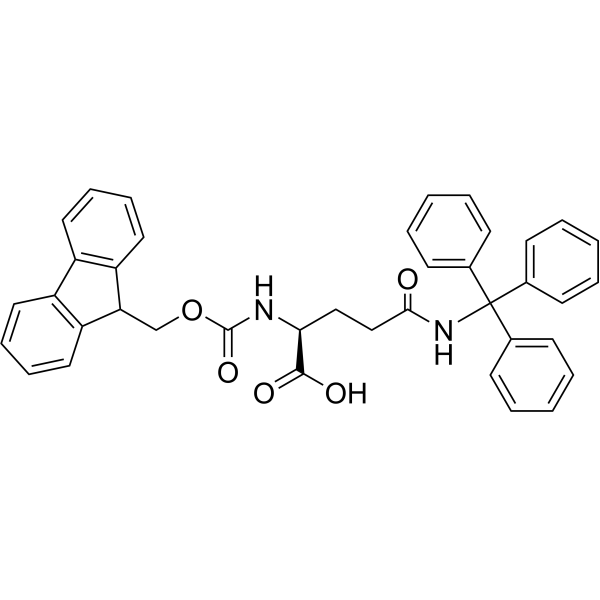
Fmoc-Gln(Trt)-OH is a glutamine derivative containing amine protecting group Fmoc. Fmoc-Gln(Trt)-OH can be used in solid-phase peptide synthesis .
|
-
-
- HY-W008558
-
|
|
Amino Acid Derivatives
|
Others
|
|
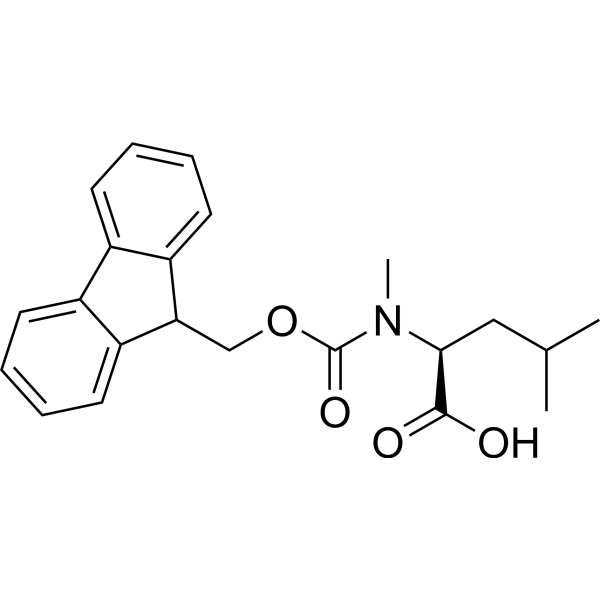
Fmoc-N-Me-Leu-OH is an N-Fmoc-N-methyl amino acid that can be used in peptide coupling reactions. Fmoc-N-Me-Leu-OH is primarily used as a standard building block in solid-phase peptide synthesis (SPPS) to introduce N-methylleucine residues into peptide chains, thereby enhancing the enzymatic stability, altering conformational flexibility, and modifying the biological activity of the target peptide .
|
-
-
- HY-126437A
-
|
|
Bacterial
|
Infection
Inflammation/Immunology
|
|
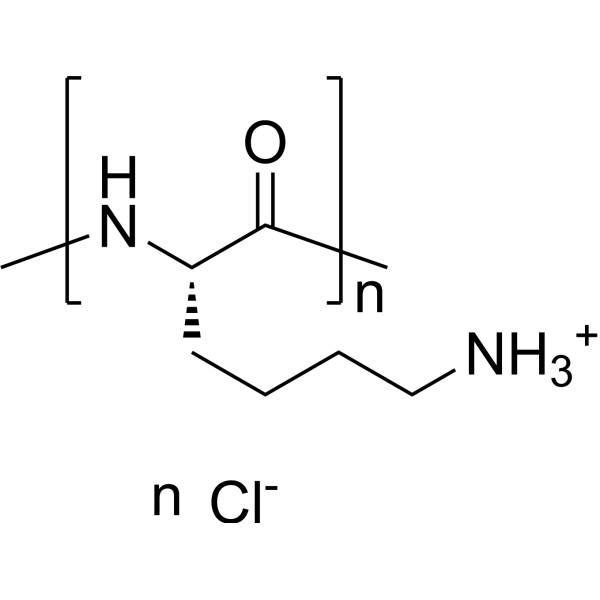
Poly-L-lysine hydrochloride is a nonspecific attachment factor for cells useful in promoting cell adhesion to solid substrates by enhancing electrostatic interaction between negatively charged ions of the cell membrane and the culture surface. Poly-L-lysine hydrochloride is a strong-attraction regulator that promotes liquid-liquid phase separation (LLPS) at low concentrations but suppresses LLPS at high concentrations. Antibacterial cationic peptide. .
|
-
-
- HY-Y0912
-
|
N-HBTU
|
Biochemical Assay Reagents
|
Inflammation/Immunology
|
|
HBTU (N-HBTU) is a guanidinium-based peptide coupling reagent and immunological sensitizer. HBTU can be used in combination with bases such as DIPEA (HY-130142) to complete coupling reactions, with HOBt and TMU as by-products. HBTU is a standard reagent in automated solid-phase peptide synthesis, particularly for the Fmoc/tBu strategy, which effectively promotes coupling steps, but it is not suitable for sterically hindered amino acids or dipeptide derivatives. HBTU can induce rhinitis, dermatitis, bronchial asthma and severe allergic reactions. HBTU can be used to study the pathogenesis of allergic reactions, occupational rhinitis, allergic contact dermatitis and bronchial asthma .
|
-
-
- HY-104004
-
|
Fmoc-Ser-(GalNAc(Ac)3-alpha-D)-OH; Fmoc-Ser[GalNAc(Ac)3-α-D]-OH; Fmoc-Ser(Ac3AcNH-α-Gal)-OH
|
Amino Acid Derivatives
Drug Intermediate
|
Cancer
|
|
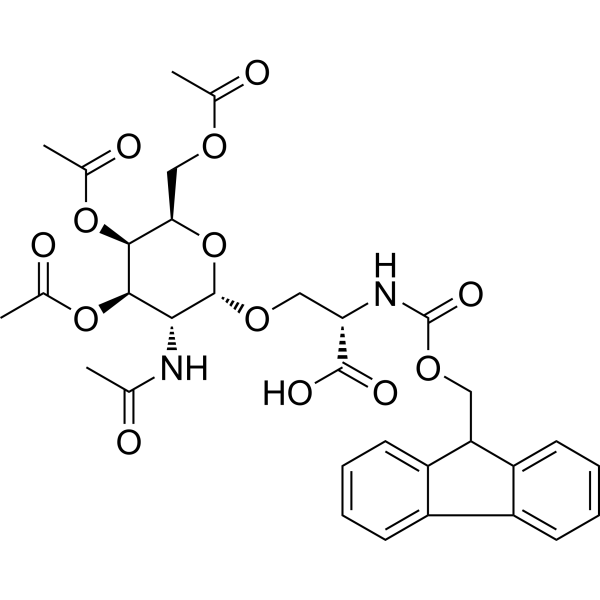
Fmoc-Ser (O-α-D-GalNAc (OAc) 3)-OH (Fmoc-Ser-(GalNAc(Ac)3-alpha-D)-OH) is a protected glycosylated amino acid and Tn antigen. Fmoc-Ser (O-α-D-GalNAc (OAc) 3)-OH serves as a building block in the solid-phase synthesis of Tn-based cancer vaccine constructs. Fmoc-Ser (O-α-D-GalNAc (OAc) 3)-OH supports solid-phase peptide synthesis .
|
-
-
- HY-D0177
-
|
Benzotriazole-1-yl-oxytripyrrolidinophosphonium hexafluorophosphate
|
Biochemical Assay Reagents
|
Others
|
|
(Benzotriazol-1-yloxy)tripyrrolidinophosphonium hexafluorophosphate (Benzotriazole-1-yl-oxytripyrrolidinophosphonium hexafluorophosphate) is a peptide coupling reagent and BOP analog. (Benzotriazol-1-yloxy)tripyrrolidinophosphonium hexafluorophosphate promotes the reaction of amino and carboxyl groups to form peptide bonds. (Benzotriazol-1-yloxy)tripyrrolidinophosphonium hexafluorophosphate can be used in the synthesis of peptide compounds .
|
-
-
- HY-Y0973
-
|
|
Biochemical Assay Reagents
Drug Intermediate
|
Others
|
|
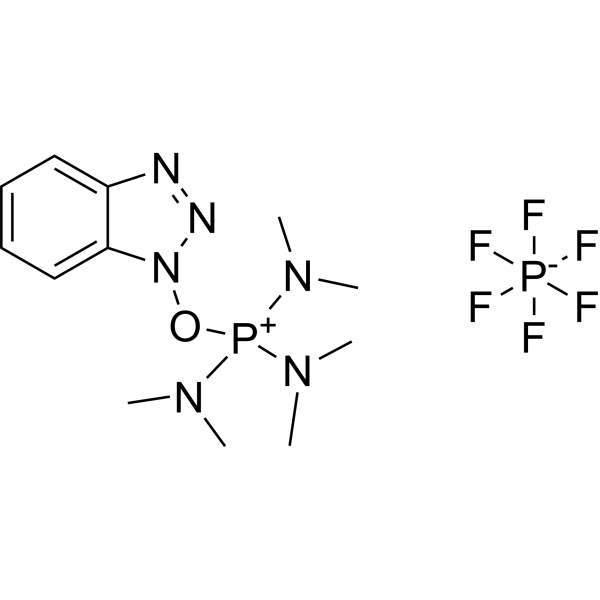
BOP hexafluorophosphate is a phosphonium-type condensing agent. BOP hexafluorophosphate activates the carboxylic acid component to form a highly reactive O-benzotriazole ester (active ester) intermediate, which then reacts with the amino component to form an amide bond (peptide bond). BOP hexafluorophosphate is applicable to solid-phase polypeptide synthesis and nucleoside modification .
|
-
-
- HY-W072147
-
|
Fmoc-L-Ser-OMe
|
Amino Acid Derivatives
Drug Intermediate
|
Others
|
|
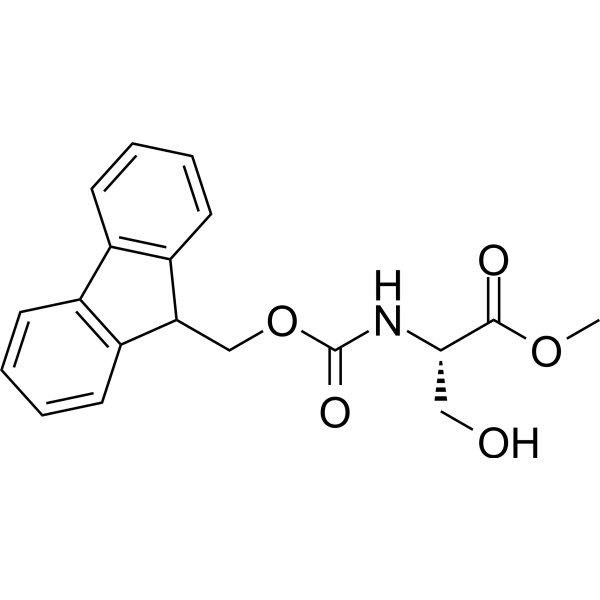
Fmoc-Ser-OMe (Fmoc-L-Ser-OMe) is an Fmoc-protected L-serine methyl ester and also a solid-phase peptide synthesis intermediate. Fmoc-Ser-OMe is linked to Ellman resin via its hydroxyl side chain. Fmoc-Ser-OMe is used in peptide synthesis .
|
-
-
- HY-W008235
-
|
|
Amino Acid Derivatives
Drug Intermediate
|
Cancer
|
|
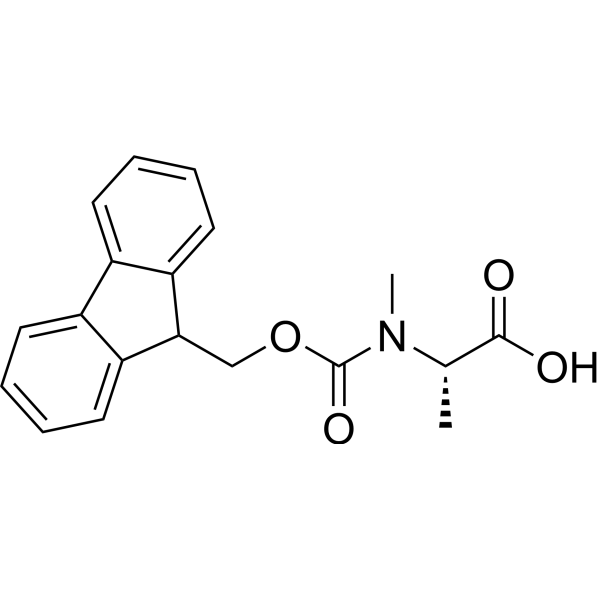
Fmoc-N-Me-Ala-OH is an Fmoc-protected N-methyl-L-alanine and also a building block for solid-phase peptide synthesis. As a building block, Fmoc-N-Me-Ala-OH is used to synthesize peptidomimetic antagonists of XIAP BIR3 derived from Smac/DIABLO .
|
-
-
- HY-W111226
-
|
|
Amyloid-β
Amino Acid Derivatives
|
Cardiovascular Disease
Neurological Disease
|
|
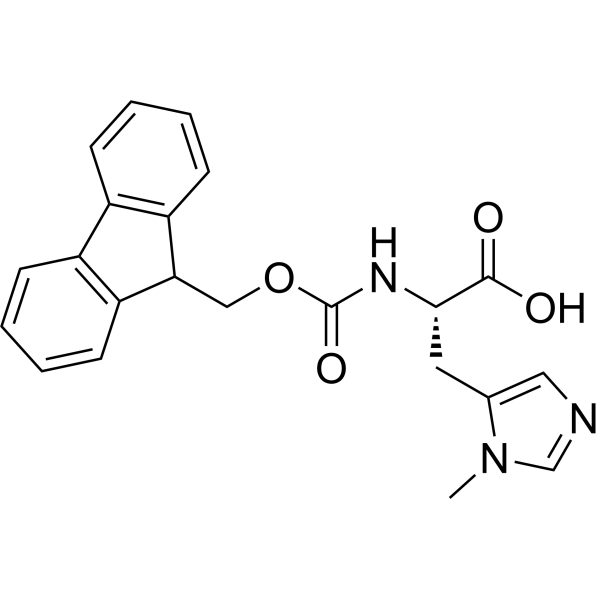
Fmoc-His (3-Me)-OH is a histidine derivative with a methylated imidazole group. Fmoc-His (3-Me)-OH can be used for the synthesis of the chemically modified tripeptide His (3-methyl)-Arg-Trp (H (3-Me)-RW). Fmoc-His (3-Me)-OH serves as a resin in Fmoc solid-phase synthesis for the generation of the His-(3-Me)-Gly-Lys peptide. Fmoc-His (3-Me)-OH is a building block for the synthesis of NAHIS02-(p-Met). Fmoc-His (3-Me)-OH can be applied in research related to Alzheimer's disease .
|
-
-
- HY-W024615
-
|
3-(3-Methyl-3H-diazirin-3-yl)propanoic acid
|
Drug Intermediate
Biochemical Assay Reagents
|
Others
|
|
Me-diazirine-cooh (3-(3-Methyl-3H-diazirin-3-yl) propanoic acid) is a molecular building block containing an aliphatic diazirine ring. Me-diazirine-cooh undergoes orthogonal coupling in solid-phase peptide synthesis to introduce the Diazirine group into collagen-mimetic peptides. Me-diazirine-cooh is used to construct the photoaffinity probe P1 .
|
-
-
- HY-164732
-
|
|
Amino Acid Derivatives
Biochemical Assay Reagents
|
Others
|
|
Fmoc-Lys (DOTA)-OH is an Fmoc-protected Lysine derivative with metal-chelating properties, containing the macrocyclic chelator DOTA. Fmoc-Lys (DOTA)-OH undergoes metallation with Tb or Lu. Fmoc-Lys (DOTA)-OH utilizes metal coordination to protect the carboxyl groups of DOTA. Fmoc-Lys (DOTA)-OH can be used in solid-phase peptide synthesis research .
|
-
-
- HY-W140465
-
|
|
Drug Derivative
|
Others
|
|
L-Homotyrosine is a tyrosine derivative that can be used for solid-phase peptide synthesis .
|
-
-
- HY-179477
-
|
|
Amino Acid Derivatives
Drug Intermediate
|
Others
|
|
Fmoc-β-Ala-Asp(OMpe)-OH is a specialized amino acid derivative used in solid-phase peptide synthesis (SPPS). Fmoc-β-Ala-Asp(OMpe)-OH consists of a beta-alanine spacer linked to an aspartic acid residue, where the beta-carboxyl group is protected with a 3-methylpentyl ester (OMpe) to prevent aspartimide formation during synthesis. Fmoc-β-Ala-Asp(OMpe)-OH a useful building block for creating peptides that contain aspartic acid, as the OMpe group is designed to minimize unwanted side reactions .
|
-
-
- HY-Y1636S
-
-
-
- HY-W010756
-
|
|
Biochemical Assay Reagents
|
Others
|
|
FMOC-AM is a derivative of aminomethyl resin. FMOC-AM provides a solid-phase carrier basis for peptide chain synthesis and can be used in solid-phase peptide synthesis .
|
-
-
- HY-W013081S
-
|
|
Isotope-Labeled Compounds
Amino Acid Derivatives
|
Others
|
|
Fmoc-Gln(Trt)-OH- 13C5, 15N2 is the 13C-labeled and 15N-labeled Fmoc-Gln(Trt)-OH (HY-W013081). Fmoc-Gln(Trt)-OH is a glutamine derivative containing amine protecting group Fmoc. Fmoc-Gln(Trt)-OH can be used in solid-phase peptide synthesis .
|
-
-
- HY-W016413
-
-
-
- HY-134517
-
|
|
Amino Acid Derivatives
|
Others
|
|
Fmoc-HoCys(ACM)-OH, a homolog of cysteine, is synthesized from L-methionine. Fmoc-HoCys(ACM)-OH also can be used for the synthesis of solid phase peptide .
|
-
-
- HY-W142064
-
|
|
Antibiotic
|
Others
|
|
Fmoc-L-photo-proline is a photo-crosslinking amino acid which can be incorporated into synthetic peptides using solid-phase Fmoc chemistry. Fmoc-L-photo-proline can synthesis of cyclic peptidomimetic antibiotic and be used for preparation of diverse peptide-based photoaffinity probes research .
|
-
-
- HY-131094
-
|
|
Others
|
Others
|
|
H-Gly-D-Tyr-OH is used for the the solid-phase peptide synthesis.
|
-
-
- HY-131091
-
|
|
Amino Acid Derivatives
|
Others
|
|
Boc-Glu(OBzl)-OSu can be used for the solid-phase peptide synthesis containing glutamate benzyl ester residues.
|
-
-
- HY-151825
-
|
|
ADC Linker
|
Others
|
|
Fmoc-L-Phe(4-NH-Poc)-OH is a click chemistry reagent containing an azide group. Used as an orthogonally protected building block in solid-phase peptide synthesis. Poc-group can be further modified using Click-chemistry .
|
-
-
- HY-171341
-
|
|
Biochemical Assay Reagents
|
Others
|
|
H-Pro-2-ClTrt resin is an acid-sensitive resin for solid-phase peptide synthesis. H-Pro-2-ClTrt resin binds to amino acids through an acid-labile chlorotrityl linker. H-Pro-2-ClTrt resin is promising for research of peptide drug development .
|
-
-
- HY-Y1636S1
-
-
-
- HY-W002327S
-
|
|
Isotope-Labeled Compounds
|
Others
|
|
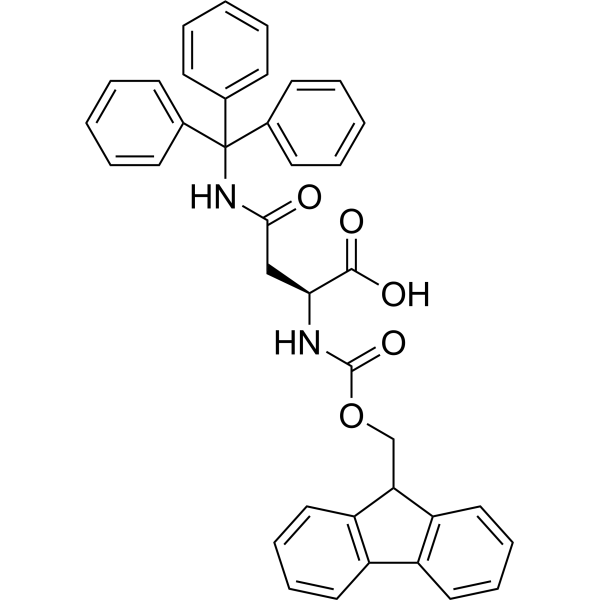
Fmoc-Asn(Trt)-OH- 13C4, 15N2 is a 15N-labeled and 13C-labled Fmoc-Asn(Trt)-OH (HY-W002327). Fmoc-Asn (Trt)-OH is an Fmoc-protected asparagine derivative. Fmoc-Asn (Trt)-OH supports solid-phase peptide synthesis .
|
-
-
- HY-118161
-
|
beta-1-Adamantylaspartic acid
|
Biochemical Assay Reagents
|
Others
|
|
1-Adamantylaspartate is a newly developed β-β-1-imidopropionic acid used to synthesize the C-terminal octapeptide of the β subunit of human chorionic gonadotropin (hCG) and the hexadecapeptide of the α subunit of the insulin receptor (30-55) by conventional solution methods and solid phase methods, aiming to inhibit the formation of asparagine during the synthesis of asparagyl peptides. Studies have shown that β-β-1-imidopropionic acid is an effective protector of the β-carboxyl function of aspartic acid residues.
|
-
-
- HY-W010712S1
-
|
|
Isotope-Labeled Compounds
Amino Acid Derivatives
|
Others
|
|
Fmoc-His(Trt)-OH- 15N3 is the 15N labeled Fmoc-His(Trt)-OH (HY-W010712). Fmoc-His (Trt)-OH is a histidine derivative. Fmoc-His(Trt)-OH has trityl (Trt) group to protect the side-chain of His. Fmoc-His(Trt)-OH has Fmoc group to protect -αNH2. Fmoc-His(Trt)-OH can be used for solid phase synthesis of peptides, providing protection against racemization and by-product formation .
|
-
-
- HY-177894
-
|
|
Drug Intermediate
|
Others
|
|
Fmoc-Asp(OMpe)-Cbz is a drug intermediate that can be used for the synthesis of Fmoc-Asp(OMpe)-OH.
|
-
-
- HY-D2747
-
|
|
Fluorescent Dye
|
Others
|
|
BP Fluor 405 acid is a water-soluble, blue-fluorescent dye that is often used in multi-color applications, including flow cytometry and super-resolution microscopy using STORM. Its excitation is ideally suited for the 407 nm spectral line of the krypton laser or the 408 nm violet laser diode. BP Fluor 405 conjugates are pH-insensitive from pH 4 to pH 10.
The carboxylic acid of BP Fluor 405 is a reagent of choice for the preparation of custom activated esters that often are not commercially available. Examples of such activated esters include sulfo-NHS, TFP (2,3,5,6-Tetrafluorophenol), and STP (4-Sulfo-2,3,5,6-Tetrafluorophenol, Sodium Salt). Another common application for the non-activated carboxylic acid is peptide modification during solid phase synthesis, which usually requires in-situ activation with peptide coupling regents, e.g. HATU. BP Fluor 405 acid is also often used for control experiments, and for calibration.
|
-
-
- HY-W784626
-
|
|
Drug Intermediate
|
Others
|
|
Boc-PNA-T-OH is a thymine-containing peptide nucleic acid monomer and solid-phase synthesis building block .
|
-
-
- HY-P11692
-
|
|
Drug Intermediate
|
Others
|
|
Fmoc-Aeg-OtBu is an intermediate in solid-phase peptide synthesis, and serves as a building block for introducing pseudoproline motifs or backbone modifications .
|
-
-
- HY-P4613
-
|
|
Drug Derivative
Drug Intermediate
|
Others
|
|
Fmoc-D-allo-Thr-OH is a derivative of D-allothreonine (HY-W001959), which is commonly used as a building block in solid-phase peptide synthesis (SPPS) .
|
-
-
- HY-P11679
-
|
|
DNA/RNA Synthesis
|
Others
|
|
Boc-PNA-U-OH is a protected peptide nucleic acid (PNA) monomer containing a uracil base, designed for solid-phase peptide synthesis (SPPS) using the Boc/Z protection strategy. Boc-PNA-U-OH acts as a building block in creating PNA oligomers that are neutral, stable, and used for antisense/antigene applications.
|
-
-
- HY-P11682
-
|
|
DNA/RNA Synthesis
|
Others
|
|
Boc-PNA-M(Z)-OH is a protected peptide nucleic acid (PNA) monomer used in solid-phase peptide synthesis (SPPS). Boc-PNA-M(Z)-OH consists of an adenyl base protected with a benzyloxycarbonyl (Z) group and a backbone protected with a tert-butyloxycarbonyl (Boc) group, typically used for creating PNA oligomers.
|
-
-
- HY-P11683
-
|
|
DNA/RNA Synthesis
|
Others
|
|
Boc-PNA-D(tetraZ)-OH is a specialized Peptide Nucleic Acid (PNA) monomer used in solid-phase peptide synthesis, featuring a N-tert-butoxycarbonyl (Boc) protected backbone and a 2,6-diaminopurine nucleobase. Boc-PNA-D(tetraZ)-OH helps increase PNA solubility and binding affinity, often used in molecular diagnostics.
|
-
-
- HY-P11691
-
|
|
Biochemical Assay Reagents
|
Others
|
|
Fmoc-PNA-D (tetraBoc)-OH is an Fmoc/Boc-protected diaminopurine peptide nucleic acid (PNA) monomer suitable for standard Fmoc solid-phase synthesis. Fmoc-PNA-D (tetraBoc)-OH carries Boc-protected exocyclic amino groups and can be incorporated into pseudo-complementary PNA oligomers for applications in antigenic peptide nucleic acid and DNA nanotechnology research .
|
-
-
- HY-P11689
-
|
|
Biochemical Assay Reagents
|
Others
|
|
Fmoc-PNA-J (Bhoc)-OH is a protected peptide nucleic acid (PNA) monomer building block used for solid-phase synthesis of PNA oligomers. Fmoc-PNA-J (Bhoc)-OH carries Fmoc/Bhoc protecting groups and functions as a standard Fmoc-protected PNA monomer .
|
-
-
- HY-P11685
-
|
|
DNA/RNA Synthesis
|
Others
|
|
Fmoc-PNA-thioU(PMB)-OH is a nucleobase-modified peptide nucleic acid (PNA) monomer used in solid-phase synthesis. Fmoc-PNA-thioU(PMB)-OH features a thiouracil base protected with a p-methoxybenzyl (PMB) group on an Fmoc-protected backbone, designed for incorporating modified PNA bases into oligonucleotides to study binding properties.
|
-
-
- HY-P11695
-
|
|
Biochemical Assay Reagents
|
Others
|
|
Fmoc-Aeg (Dde) is a protected aminoethylglycine (AEG) monomer used for solid-phase synthesis of peptide nucleic acids (PNAs). Fmoc-Aeg (Dde) contains the fluorenylmethoxycarbonyl (Fmoc) and 1-(4,4-dimethyl-2,6-dioxocyclohex-1-ylidene) ethyl (Dde) protecting groups .
|
-
-
- HY-P11681
-
|
|
DNA/RNA Synthesis
|
Others
|
|
Boc-PNA-J(Z)-OH is a protected peptide nucleic acid (PNA) monomer used in solid-phase synthesis. Boc-PNA-J(Z)-OH features a 2,6-diaminopurine (J) base, protected by a carboxybenzyl (Z) group, attached to a Boc-protected aminoethylglycinate backbone. Boc-PNA-J(Z)-OH allows for the synthesis of PNA sequences with enhanced binding affinity and stability.
|
-
-
- HY-P11684
-
|
|
DNA/RNA Synthesis
|
Others
|
|
Fmoc-PNA-C(Boc)-OH is a protected peptide nucleic acid (PNA) monomer for solid-phase synthesis. Fmoc-PNA-C(Boc)-OH possesses Fmoc-protected skeletal amino groups and Boc-protected cytosine bases, designed to construct stable synthetic DNA analogs. Fmoc-PNA-C(Boc)-OH can be used to prepare highly specific, enzyme-stable antisense probes and diagnostic probes.
|
-
-
- HY-104004R
-
|
Fmoc-Ser-(GalNAc(Ac)3-alpha-D)-OH (Standard); Fmoc-Ser[GalNAc(Ac)3-α-D]-OH (Standard); Fmoc-Ser(Ac3AcNH-α-Gal)-OH (Standard)
|
Amino Acid Derivatives
Reference Standards
Drug Intermediate
|
Cancer
|
|
Fmoc-Ser(O-α-D-GalNAc(OAc)3)-OH (Standard) is the analytical standard of Fmoc-Ser(O-α-D-GalNAc(OAc)3)-OH (HY-104004). This product is intended for research and analytical applications. Fmoc-Ser (O-α-D-GalNAc (OAc) 3)-OH (Fmoc-Ser-(GalNAc(Ac)3-alpha-D)-OH) is a protected glycosylated amino acid and Tn antigen. Fmoc-Ser (O-α-D-GalNAc (OAc) 3)-OH serves as a building block in the solid-phase synthesis of Tn-based cancer vaccine constructs. Fmoc-Ser (O-α-D-GalNAc (OAc) 3)-OH supports solid-phase peptide synthesis .
|
-
-
- HY-P11688
-
|
|
Biochemical Assay Reagents
|
Others
|
Fmoc-PNA-M (Bhoc)-OH is a standard peptide nucleic acid (PNA) monomer building block. Fmoc-PNA-M (Bhoc)-OH carries two protecting groups, Fmoc and Bhoc, and is specifically designed for solid-phase and automated PNA synthesis. Fmoc-PNA-M (Bhoc)-OH efficiently participates in the construction of sequence-specific PNA probes. Through its protecting group strategy, Fmoc-PNA-M (Bhoc)-OH ensures the accuracy and efficiency of PNA synthesis, and is one of the important raw materials for PNA synthesis at present .
|
-
- HY-W540123
-
|
|
Biochemical Assay Reagents
|
Cancer
|
Fmoc-PNA-A(Bhoc)-OH is a protected peptide nucleic acid (PNA) monomer carrying an adenine base. Fmoc-PNA-A(Bhoc)-OH contains Fmoc and benzhydryloxycarbonyl (Bhoc) protecting groups, and serves as a standard building block designed specifically for solid-phase PNA synthesis. Fmoc-PNA-A(Bhoc)-OH can be efficiently used to synthesize PNA-based sequence-specific hybridization probes. These probes have broad applications in molecular biology research; for example, they can be used in HER2-expressing tumor-related studies, providing tools for disease diagnosis and mechanism exploration .
|
-
- HY-P11694
-
|
|
Biochemical Assay Reagents
|
Neurological Disease
|
|
Alloc-Aeg (Fmoc)-OH is a protected serine triphosphate building block and an Nα-Fmoc protected amino acid. Alloc-Aeg (Fmoc)-OH contains serine protected by α-N-allyloxycarbonyl (Alloc) and bis (allyl) phosphate groups, and it can be used in the synthesis of peptide nucleic acids (PNAs). Alloc-Aeg (Fmoc)-OH is applicable to research related to Alzheimer's disease .
|
-
| Cat. No. |
Product Name |
Type |
-
- HY-D2747
-
|
|
Fluorescent Dyes
|
|
BP Fluor 405 acid is a water-soluble, blue-fluorescent dye that is often used in multi-color applications, including flow cytometry and super-resolution microscopy using STORM. Its excitation is ideally suited for the 407 nm spectral line of the krypton laser or the 408 nm violet laser diode. BP Fluor 405 conjugates are pH-insensitive from pH 4 to pH 10.
The carboxylic acid of BP Fluor 405 is a reagent of choice for the preparation of custom activated esters that often are not commercially available. Examples of such activated esters include sulfo-NHS, TFP (2,3,5,6-Tetrafluorophenol), and STP (4-Sulfo-2,3,5,6-Tetrafluorophenol, Sodium Salt). Another common application for the non-activated carboxylic acid is peptide modification during solid phase synthesis, which usually requires in-situ activation with peptide coupling regents, e.g. HATU. BP Fluor 405 acid is also often used for control experiments, and for calibration.
|
| Cat. No. |
Product Name |
Type |
-
- HY-W002327
-
|
|
Biochemical Assay Reagents
|
|
Fmoc-Asn (Trt)-OH is an Fmoc-protected asparagine derivative. Fmoc-Asn (Trt)-OH supports solid-phase peptide synthesis .
|
-
- HY-41456
-
|
|
Biochemical Assay Reagents
|
|
Ethyl 2-cyano-2-(hydroxyimino) acetate (Oxyma) is a peptide coupling additive. Ethyl 2-cyano-2-(hydroxyimino) acetate suppresses racemization during peptide coupling and improves the coupling efficiency of both solution-phase and solid-phase peptide synthesis .
|
-
- HY-W013081
-
|
|
Biochemical Assay Reagents
|
|
Fmoc-Gln(Trt)-OH is a glutamine derivative containing amine protecting group Fmoc. Fmoc-Gln(Trt)-OH can be used in solid-phase peptide synthesis .
|
-
- HY-126437A
-
|
|
Biochemical Assay Reagents
|
|
Poly-L-lysine hydrochloride is a nonspecific attachment factor for cells useful in promoting cell adhesion to solid substrates by enhancing electrostatic interaction between negatively charged ions of the cell membrane and the culture surface. Poly-L-lysine hydrochloride is a strong-attraction regulator that promotes liquid-liquid phase separation (LLPS) at low concentrations but suppresses LLPS at high concentrations. Antibacterial cationic peptide. .
|
-
- HY-D0177
-
|
Benzotriazole-1-yl-oxytripyrrolidinophosphonium hexafluorophosphate
|
Biochemical Assay Reagents
|
|
(Benzotriazol-1-yloxy)tripyrrolidinophosphonium hexafluorophosphate (Benzotriazole-1-yl-oxytripyrrolidinophosphonium hexafluorophosphate) is a peptide coupling reagent and BOP analog. (Benzotriazol-1-yloxy)tripyrrolidinophosphonium hexafluorophosphate promotes the reaction of amino and carboxyl groups to form peptide bonds. (Benzotriazol-1-yloxy)tripyrrolidinophosphonium hexafluorophosphate can be used in the synthesis of peptide compounds .
|
-
- HY-Y0973
-
|
|
Biochemical Assay Reagents
|
|
BOP hexafluorophosphate is a phosphonium-type condensing agent. BOP hexafluorophosphate activates the carboxylic acid component to form a highly reactive O-benzotriazole ester (active ester) intermediate, which then reacts with the amino component to form an amide bond (peptide bond). BOP hexafluorophosphate is applicable to solid-phase polypeptide synthesis and nucleoside modification .
|
| Cat. No. |
Product Name |
Target |
Research Area |
-
- HY-Y1636
-
-
- HY-W010712
-
|
|
Amino Acid Derivatives
|
Others
|
|
Fmoc-His(Trt)-OH is a histidine derivative with a trityl (Trt) group protecting the His side chain. Fmoc-His(Trt)-OH also has an Fmoc group protecting the α-NH2 group. Fmoc-His(Trt)-OH can be used in solid-phase peptide synthesis to prevent racemization and byproduct formation. Fmoc-His(Trt)-OH acts as a protected histidine precursor in solid-phase peptide synthesis (SPPS), participating in peptide chain construction through amide bond formation. Fmoc-His(Trt)-OH can be precisely incorporated into the target peptide sequence, ensuring correct peptide chain synthesis and reducing impurity formation. Fmoc-His(Trt)-OH is mainly used in the solid-phase synthesis research of pharmaceutical peptides and bioactive peptides, and is particularly suitable for the preparation of peptide drugs requiring precise control of histidine configuration .
|
-
- HY-W072147
-
|
Fmoc-L-Ser-OMe
|
Amino Acid Derivatives
Drug Intermediate
|
Others
|
|
Fmoc-Ser-OMe (Fmoc-L-Ser-OMe) is an Fmoc-protected L-serine methyl ester and also a solid-phase peptide synthesis intermediate. Fmoc-Ser-OMe is linked to Ellman resin via its hydroxyl side chain. Fmoc-Ser-OMe is used in peptide synthesis .
|
-
- HY-W111226
-
|
|
Amyloid-β
Amino Acid Derivatives
|
Cardiovascular Disease
Neurological Disease
|
|
Fmoc-His (3-Me)-OH is a histidine derivative with a methylated imidazole group. Fmoc-His (3-Me)-OH can be used for the synthesis of the chemically modified tripeptide His (3-methyl)-Arg-Trp (H (3-Me)-RW). Fmoc-His (3-Me)-OH serves as a resin in Fmoc solid-phase synthesis for the generation of the His-(3-Me)-Gly-Lys peptide. Fmoc-His (3-Me)-OH is a building block for the synthesis of NAHIS02-(p-Met). Fmoc-His (3-Me)-OH can be applied in research related to Alzheimer's disease .
|
-
- HY-W784626
-
|
|
Drug Intermediate
|
Others
|
|
Boc-PNA-T-OH is a thymine-containing peptide nucleic acid monomer and solid-phase synthesis building block .
|
-
- HY-P11692
-
|
|
Drug Intermediate
|
Others
|
|
Fmoc-Aeg-OtBu is an intermediate in solid-phase peptide synthesis, and serves as a building block for introducing pseudoproline motifs or backbone modifications .
|
-
- HY-P4613
-
|
|
Drug Derivative
Drug Intermediate
|
Others
|
|
Fmoc-D-allo-Thr-OH is a derivative of D-allothreonine (HY-W001959), which is commonly used as a building block in solid-phase peptide synthesis (SPPS) .
|
-
- HY-P11679
-
|
|
DNA/RNA Synthesis
|
Others
|
|
Boc-PNA-U-OH is a protected peptide nucleic acid (PNA) monomer containing a uracil base, designed for solid-phase peptide synthesis (SPPS) using the Boc/Z protection strategy. Boc-PNA-U-OH acts as a building block in creating PNA oligomers that are neutral, stable, and used for antisense/antigene applications.
|
-
- HY-P11682
-
|
|
DNA/RNA Synthesis
|
Others
|
|
Boc-PNA-M(Z)-OH is a protected peptide nucleic acid (PNA) monomer used in solid-phase peptide synthesis (SPPS). Boc-PNA-M(Z)-OH consists of an adenyl base protected with a benzyloxycarbonyl (Z) group and a backbone protected with a tert-butyloxycarbonyl (Boc) group, typically used for creating PNA oligomers.
|
-
- HY-P11683
-
|
|
DNA/RNA Synthesis
|
Others
|
|
Boc-PNA-D(tetraZ)-OH is a specialized Peptide Nucleic Acid (PNA) monomer used in solid-phase peptide synthesis, featuring a N-tert-butoxycarbonyl (Boc) protected backbone and a 2,6-diaminopurine nucleobase. Boc-PNA-D(tetraZ)-OH helps increase PNA solubility and binding affinity, often used in molecular diagnostics.
|
-
- HY-P11691
-
|
|
Biochemical Assay Reagents
|
Others
|
|
Fmoc-PNA-D (tetraBoc)-OH is an Fmoc/Boc-protected diaminopurine peptide nucleic acid (PNA) monomer suitable for standard Fmoc solid-phase synthesis. Fmoc-PNA-D (tetraBoc)-OH carries Boc-protected exocyclic amino groups and can be incorporated into pseudo-complementary PNA oligomers for applications in antigenic peptide nucleic acid and DNA nanotechnology research .
|
-
- HY-P11689
-
|
|
Biochemical Assay Reagents
|
Others
|
|
Fmoc-PNA-J (Bhoc)-OH is a protected peptide nucleic acid (PNA) monomer building block used for solid-phase synthesis of PNA oligomers. Fmoc-PNA-J (Bhoc)-OH carries Fmoc/Bhoc protecting groups and functions as a standard Fmoc-protected PNA monomer .
|
-
- HY-P11685
-
|
|
DNA/RNA Synthesis
|
Others
|
|
Fmoc-PNA-thioU(PMB)-OH is a nucleobase-modified peptide nucleic acid (PNA) monomer used in solid-phase synthesis. Fmoc-PNA-thioU(PMB)-OH features a thiouracil base protected with a p-methoxybenzyl (PMB) group on an Fmoc-protected backbone, designed for incorporating modified PNA bases into oligonucleotides to study binding properties.
|
-
- HY-P11695
-
|
|
Biochemical Assay Reagents
|
Others
|
|
Fmoc-Aeg (Dde) is a protected aminoethylglycine (AEG) monomer used for solid-phase synthesis of peptide nucleic acids (PNAs). Fmoc-Aeg (Dde) contains the fluorenylmethoxycarbonyl (Fmoc) and 1-(4,4-dimethyl-2,6-dioxocyclohex-1-ylidene) ethyl (Dde) protecting groups .
|
-
- HY-P11681
-
|
|
DNA/RNA Synthesis
|
Others
|
|
Boc-PNA-J(Z)-OH is a protected peptide nucleic acid (PNA) monomer used in solid-phase synthesis. Boc-PNA-J(Z)-OH features a 2,6-diaminopurine (J) base, protected by a carboxybenzyl (Z) group, attached to a Boc-protected aminoethylglycinate backbone. Boc-PNA-J(Z)-OH allows for the synthesis of PNA sequences with enhanced binding affinity and stability.
|
-
- HY-P11684
-
|
|
DNA/RNA Synthesis
|
Others
|
|
Fmoc-PNA-C(Boc)-OH is a protected peptide nucleic acid (PNA) monomer for solid-phase synthesis. Fmoc-PNA-C(Boc)-OH possesses Fmoc-protected skeletal amino groups and Boc-protected cytosine bases, designed to construct stable synthetic DNA analogs. Fmoc-PNA-C(Boc)-OH can be used to prepare highly specific, enzyme-stable antisense probes and diagnostic probes.
|
-
- HY-P11688
-
|
|
Biochemical Assay Reagents
|
Others
|
Fmoc-PNA-M (Bhoc)-OH is a standard peptide nucleic acid (PNA) monomer building block. Fmoc-PNA-M (Bhoc)-OH carries two protecting groups, Fmoc and Bhoc, and is specifically designed for solid-phase and automated PNA synthesis. Fmoc-PNA-M (Bhoc)-OH efficiently participates in the construction of sequence-specific PNA probes. Through its protecting group strategy, Fmoc-PNA-M (Bhoc)-OH ensures the accuracy and efficiency of PNA synthesis, and is one of the important raw materials for PNA synthesis at present .
|
-
- HY-W540123
-
|
|
Biochemical Assay Reagents
|
Cancer
|
Fmoc-PNA-A(Bhoc)-OH is a protected peptide nucleic acid (PNA) monomer carrying an adenine base. Fmoc-PNA-A(Bhoc)-OH contains Fmoc and benzhydryloxycarbonyl (Bhoc) protecting groups, and serves as a standard building block designed specifically for solid-phase PNA synthesis. Fmoc-PNA-A(Bhoc)-OH can be efficiently used to synthesize PNA-based sequence-specific hybridization probes. These probes have broad applications in molecular biology research; for example, they can be used in HER2-expressing tumor-related studies, providing tools for disease diagnosis and mechanism exploration .
|
-
- HY-P11694
-
|
|
Biochemical Assay Reagents
|
Neurological Disease
|
|
Alloc-Aeg (Fmoc)-OH is a protected serine triphosphate building block and an Nα-Fmoc protected amino acid. Alloc-Aeg (Fmoc)-OH contains serine protected by α-N-allyloxycarbonyl (Alloc) and bis (allyl) phosphate groups, and it can be used in the synthesis of peptide nucleic acids (PNAs). Alloc-Aeg (Fmoc)-OH is applicable to research related to Alzheimer's disease .
|
| Cat. No. |
Product Name |
Chemical Structure |
-
- HY-Y1636S
-
|
|
|
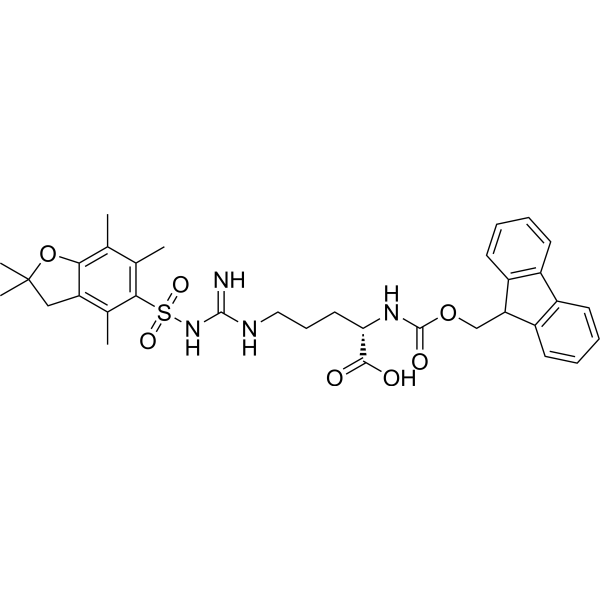
Fmoc-Arg(Pbf)-OH- 13C6, 15N4 is the 13C-labeled and 15N-labeled Fmoc-Arg(Pbf)-OH (HY-Y1636). Fmoc-Arg(Pbf)-OH is an arginine derivative containing amine protecting group Fmoc. Fmoc-Arg(Pbf)-OH is a building block for the introduction of Arg into SPPS (Solid-Phase Peptide Synthesis) .
|
-
-
- HY-W013081S
-
|
|
|
Fmoc-Gln(Trt)-OH- 13C5, 15N2 is the 13C-labeled and 15N-labeled Fmoc-Gln(Trt)-OH (HY-W013081). Fmoc-Gln(Trt)-OH is a glutamine derivative containing amine protecting group Fmoc. Fmoc-Gln(Trt)-OH can be used in solid-phase peptide synthesis .
|
-
-
- HY-Y1636S1
-
|
|
|
Fmoc-Arg(Pbf)-OH- 13C6 is the 13C labeled Fmoc-Arg(Pbf)-OH . Fmoc-Arg(Pbf)-OH is an arginine derivative containing amine protecting group Fmoc. Fmoc-Arg(Pbf)-OH is a building block for the introduction of Arg into SPPS (Solid-Phase Peptide Synthesis) .
|
-
-
- HY-W002327S
-
|
|
|
Fmoc-Asn(Trt)-OH- 13C4, 15N2 is a 15N-labeled and 13C-labled Fmoc-Asn(Trt)-OH (HY-W002327). Fmoc-Asn (Trt)-OH is an Fmoc-protected asparagine derivative. Fmoc-Asn (Trt)-OH supports solid-phase peptide synthesis .
|
-
-
- HY-W010712S1
-
|
|
|
Fmoc-His(Trt)-OH- 15N3 is the 15N labeled Fmoc-His(Trt)-OH (HY-W010712). Fmoc-His (Trt)-OH is a histidine derivative. Fmoc-His(Trt)-OH has trityl (Trt) group to protect the side-chain of His. Fmoc-His(Trt)-OH has Fmoc group to protect -αNH2. Fmoc-His(Trt)-OH can be used for solid phase synthesis of peptides, providing protection against racemization and by-product formation .
|
-
| Cat. No. |
Product Name |
|
Classification |
-
- HY-151825
-
|
|
|
Alkynes
|
|
Fmoc-L-Phe(4-NH-Poc)-OH is a click chemistry reagent containing an azide group. Used as an orthogonally protected building block in solid-phase peptide synthesis. Poc-group can be further modified using Click-chemistry .
|
| Cat. No. |
Product Name |
|
Classification |
-
- HY-126437A
-
|
|
|
Polymers
|
|
Poly-L-lysine hydrochloride is a nonspecific attachment factor for cells useful in promoting cell adhesion to solid substrates by enhancing electrostatic interaction between negatively charged ions of the cell membrane and the culture surface. Poly-L-lysine hydrochloride is a strong-attraction regulator that promotes liquid-liquid phase separation (LLPS) at low concentrations but suppresses LLPS at high concentrations. Antibacterial cationic peptide. .
|
Your information is safe with us. * Required Fields.
Inquiry Information
- Product Name:
- Cat. No.:
- Quantity:
- MCE Japan Authorized Agent:

