
1. Search Result
Search Result
Results for "

soybean oil

" in MedChemExpress (MCE) Product Catalog:

15

Inhibitors & Agonists

2

Biochemical Assay Reagents

3

Natural
Products

2

Isotope-Labeled Compounds

1

Oligonucleotides

Cat. No. Product Name Target Research Areas Chemical Structure
  • HY-N7148
    γ-Tocopherol
    1 Publications Verification

    D-γ-Tocopherol; (+)-γ-Tocopherol

    COX Endogenous Metabolite Inflammation/Immunology Cancer
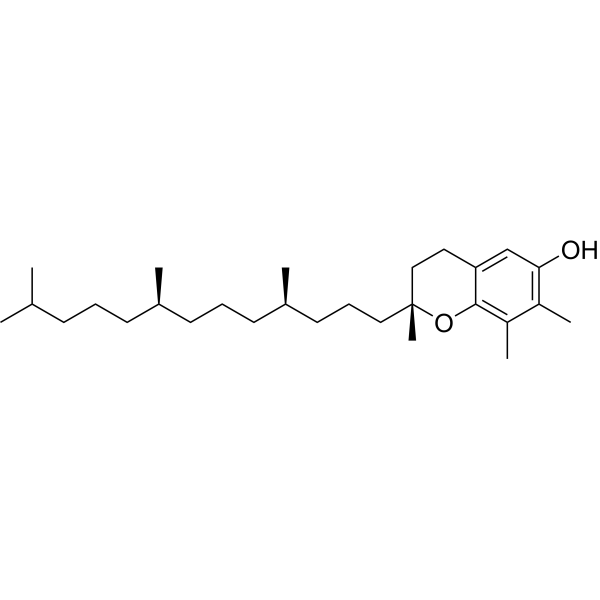
    γ-Tocopherol (D-γ-Tocopherol) is a potent cyclooxygenase (COX) inhibitor. γ-Tocopherol is a naturally occurring form of Vitamin E in many plant seeds, such as corn oil and soybeans. γ-Tocopherol possesses antiinflammatory properties and anti-cancer activity .
    γ-Tocopherol
  • HY-108750
    Soybean oil
    1 Publications Verification

    VT 18 (oil); Vegetoil; Wesson

    Environmental Pollutants Cardiovascular Disease
    Soybean oil (VT 18 (oil); Vegetoil; Wesson) is an edible vegetable oil. Soybean oil reduces circulating blood cholesterol levels when it replaces dietary saturated fats. Soybean oil does not affect inflammatory biomarkers or increase oxidative stress. Soybean oil contains γ-tocopherol and δ-tocopherol, which possess antioxidant properties. Soybean oil can be used in research related to coronary heart disease .
    Soybean oil
  • HY-Y1422I

    Environmental Pollutants Biochemical Assay Reagents Lipase Others
    Lipase, Pseudomonas fluorescens (Immobilized) is an immobilized biocatalyst derived from Pseudomonas fluorescens. Lipase, Pseudomonas fluorescens (Immobilized) efficiently catalyzes the hydrolysis, esterification and transesterification of triacylglycerols in solvent-free systems, and is particularly suitable for biodiesel production from soybean oil and selective modification of oils rich in EPA and DHA. Lipase, Pseudomonas fluorescens (Immobilized) exhibits optimal activity at pH 8.5 and 45°C, and retains residual activity after repeated cycles of use. Lipase, Pseudomonas fluorescens (Immobilized) is activated by Ca 2+, but inhibited by Co 2+, Ni 2+, Fe 3+, Fe 2+ and EDTA .
    Lipase,Pseudomonas fluorescens (Immobilized)
  • HY-W093282

    soybean oil epoxide

    Environmental Pollutants Biochemical Assay Reagents Others
    Epoxidized soya bean oil (ESBO) is a vegetable oil-derived organic compound used as a plasticizer and stabilizer in various applications. It is produced by epoxidation of soybean oil, which introduces epoxy groups into the fatty acid chains of the oil. ESBO is a viscous, pale yellow liquid that is soluble in many organic solvents, such as chloroform and ethanol, but insoluble in water. It is commonly used as a plasticizer in polyvinyl chloride (PVC) products, including toys, food packaging materials and medical devices. In addition to its plasticizing properties, ESBO acts as an antioxidant and UV stabilizer, helping to prevent degradation and discoloration of PVC products over time. ESBOs have been investigated for their potential use in biodegradable plastics and as bio-based alternatives to traditional petroleum-derived plasticizers.
    Epoxidized soya bean oil
  • HY-157739

    Drug Derivative Others
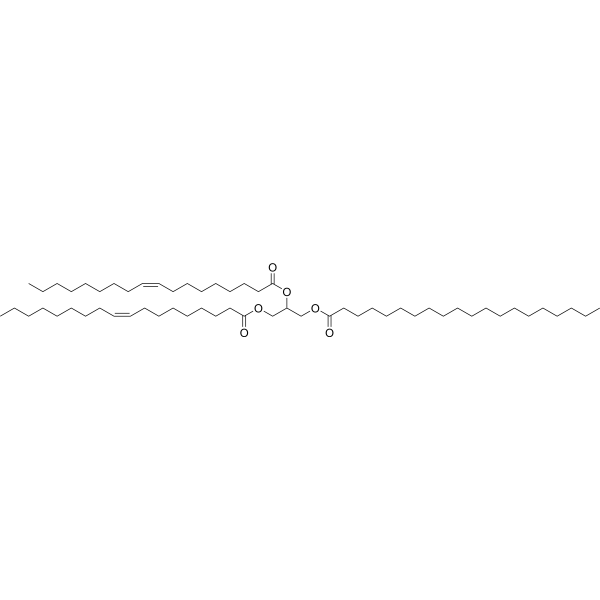
    1,2-Dioleoyl-3-arachidoylglycerol (AOO) is a triacylglycerol that can be isolated from soybean oil .
    1,2-Dioleoyl-3-arachidoylglycerol
  • HY-N7148S1

    Isotope-Labeled Compounds COX Inflammation/Immunology Cancer
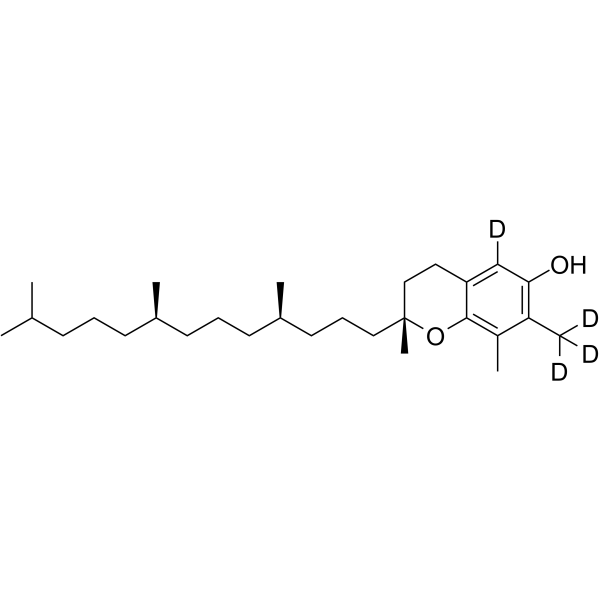
    γ-Tocopherol-d4 is the deuterium labeled γ-Tocopherol. γ-Tocopherol (D-γ-Tocopherol) is a potent cyclooxygenase (COX) inhibitor. γ-Tocopherol is a naturally occurring form of Vitamin E in many plant seeds, such as corn oil and soybeans. γ-Tocopherol possesses antiinflammatory properties and anti-cancer activity .
    γ-Tocopherol-d4
  • HY-N7148R

    D-γ-Tocopherol (Standard); (+)-γ-Tocopherol (Standard)

    Reference Standards COX Endogenous Metabolite Inflammation/Immunology Cancer
    γ-Tocopherol (Standard) is the analytical standard of γ-Tocopherol. This product is intended for research and analytical applications. γ-Tocopherol (D-γ-Tocopherol) is a potent cyclooxygenase (COX) inhibitor. γ-Tocopherol is a naturally occurring form of Vitamin E in many plant seeds, such as corn oil and soybeans. γ-Tocopherol possesses antiinflammatory properties and anti-cancer activity .
    γ-Tocopherol (Standard)
  • HY-B0828

    Parasite Cholinesterase (ChE) Others
    Triazophos, a non-systemic insecticide and acaricide that acts as an acetylcholinesterase (AChE) inhibitor, covalently and irreversibly binds to the acetylcholine binding site, thus blocking the hydrolysis of acetylcholine and leading to hyperexcitability; it is effective against a variety of soil insects and mites, including aphids, thrips, midges, beetles, Lepidoptera larvae, cutworms, and spider mites in crops such as ornamentals, cotton, rice, maize, soybeans, oil palms, olives, and coffee.
    Triazophos
  • HY-W123053

    Acrylated epoxidized soybean oil

    Others Others
    Soybean oil, epoxidized acrylate (acrylated epoxidized soybean oil) can be used as plasticizers and food packaging materials. Soybean oil, epoxidized acrylate can also be used to prepare novel nanocomposite biomaterials for bone tissue repair.
    Soybean oil, epoxidized acrylate
  • HY-179361

    Biochemical Assay Reagents Others
    Hydrogenated soybean oil is a suppository thickener and hardener that can be used as a pharmaceutical excipient.
    Hydrogenated soybean oil
  • HY-W704603

    1,2-Olein-3-Stearin; TG(18:1/18:1/18:0)

    Endogenous Metabolite Metabolic Disease
    1,2-Dioleoyl-3-stearoyl-rac-glycerol is a triacylglycerol that contains oleic acid (HY-N1446) at the sn-1 and sn-2 positions and stearic acid (HY-B2219) at the sn-3 position. It has been found in sunflower, corn, and soybean oils, as well as ostrich oil.
    3-Stearoyloxypropane-1,2-diyl dioleate
  • HY-100196AR

    PQQ disodium salt (Standard); Methoxatin disodium salt (Standard)

    Reference Standards Endogenous Metabolite Inflammation/Immunology
    Triazophos (Standard) is the analytical standard of Triazophos. This product is intended for research and analytical applications. Triazophos, a non-systemic insecticide and acaricide that acts as an acetylcholinesterase (AChE) inhibitor, covalently and irreversibly binds to the acetylcholine binding site, thus blocking the hydrolysis of acetylcholine and leading to hyperexcitability; it is effective against a variety of soil insects and mites, including aphids, thrips, midges, beetles, Lepidoptera larvae, cutworms, and spider mites in crops such as ornamentals, cotton, rice, maize, soybeans, oil palms, olives, and coffee.
    Pyrroloquinoline quinone disodium salt (Standard)
  • HY-B0828R

    Parasite Reference Standards Others
    Triazophos (Standard) is the analytical standard of Triazophos. This product is intended for research and analytical applications. Triazophos, a non-systemic insecticide and acaricide that acts as an acetylcholinesterase (AChE) inhibitor, covalently and irreversibly binds to the acetylcholine binding site, thus blocking the hydrolysis of acetylcholine and leading to hyperexcitability; it is effective against a variety of soil insects and mites, including aphids, thrips, midges, beetles, Lepidoptera larvae, cutworms, and spider mites in crops such as ornamentals, cotton, rice, maize, soybeans, oil palms, olives, and coffee.
    Triazophos (Standard)
  • HY-B0828S

    Hostathion 40EC-d5; Hostathion-d5; Hostation-d5

    Isotope-Labeled Compounds Parasite Cholinesterase (ChE) Others
    Triazophos-d5 (Hostathion 40EC-d5) is the deuterium labeled Triazophos(HY-B0828) . Triazophos, a non-systemic insecticide and acaricide that acts as an acetylcholinesterase (AChE) inhibitor, covalently and irreversibly binds to the acetylcholine binding site, thus blocking the hydrolysis of acetylcholine and leading to hyperexcitability; it is effective against a variety of soil insects and mites, including aphids, thrips, midges, beetles, Lepidoptera larvae, cutworms, and spider mites in crops such as ornamentals, cotton, rice, maize, soybeans, oil palms, olives, and coffee.
    Triazophos-d5
  • HY-W111403

    Environmental Pollutants Biochemical Assay Reagents Others
    Calcium oxide (CaO) acts as a heterogeneous base catalyst. Calcium oxide can be extracted not only from waste materials such as oyster shells, eggshells and crab shells, but also exhibits tolerance to low to moderate oil quality, free fatty acid and water content in raw materials. Calcium oxide can be used in biodiesel production, where it effectively catalyzes the transesterification of vegetable oils or animal fats to produce alkyl esters .
    Calcium oxide

Inquiry Online

Your information is safe with us. * Required Fields.

Salutation


Country or Region *

Applicant Name *


Organization Name *

Department *


Email Address *


Product Name *

Cat. No.


Requested quantity *

Phone Number *


Remarks

Inquiry Online

Inquiry Information

Product Name:
Cat. No.:
Quantity:
MCE Japan Authorized Agent:

