




58 Results for "

stem tissue

" in MedChemExpress (MCE) Product Catalog:
Products (58)

58 Results for "stem tissue" in MCE Product Catalog:

192
192 Publications Verification
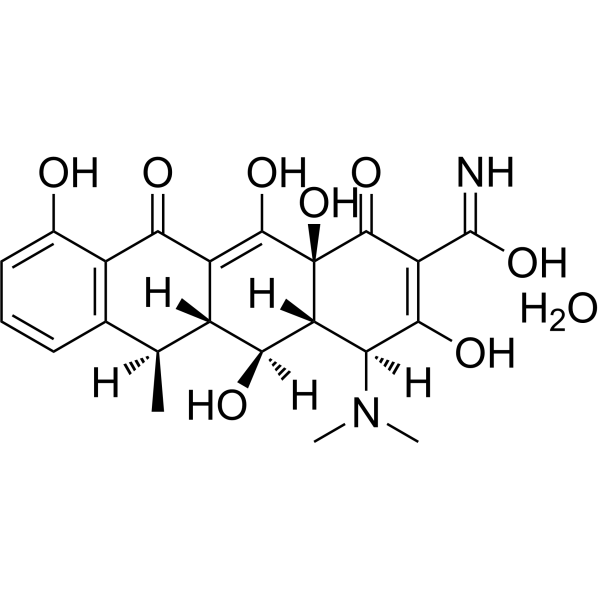
Cat. No.: HY-W008923
CAS No.: 17086-28-1
Doxycycline monohydrate is an orally active highly lipophilic, tissue-permeable MMP inhibitor with broad-spectrum antibacterial activity. Doxycycline monohydrate is also a semi-synthetic antibiotic with chelating properties, which blocks bacterial protein synthesis and inhibits extracellular matrix degradation through interactions with zinc and calcium atoms. Doxycycline monohydrate also inhibits mitochondrial biogenesis, translation, and the expression of respiratory chain proteins. Doxycycline monohydrate induces apoptosis, inhibits autophagy and EMT, downregulates stem cell markers, and activates the PI3K-AKT pathway, thereby effectively inhibiting the viability and proliferation of cancer cells such as breast cancer cells. Doxycycline monohydrate also promotes the survival and self-renewal of embryonic stem cells and neural stem cells, and reduces the frequency of medium changes in culture. Doxycycline monohydrate has been applied in studies related to breast cancer, prostate cancer, bladder cancer, and other cancers .
loading...
    loading...
136
136 Cited Publications
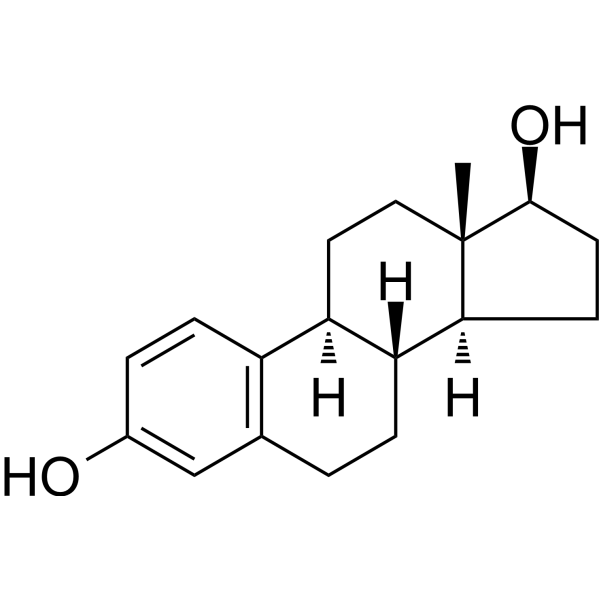
Cat. No.: HY-B0141
CAS No.: 50-28-2
Synonyms: β-Estradiol; E2; 17β-Estradiol; 17β-Oestradiol
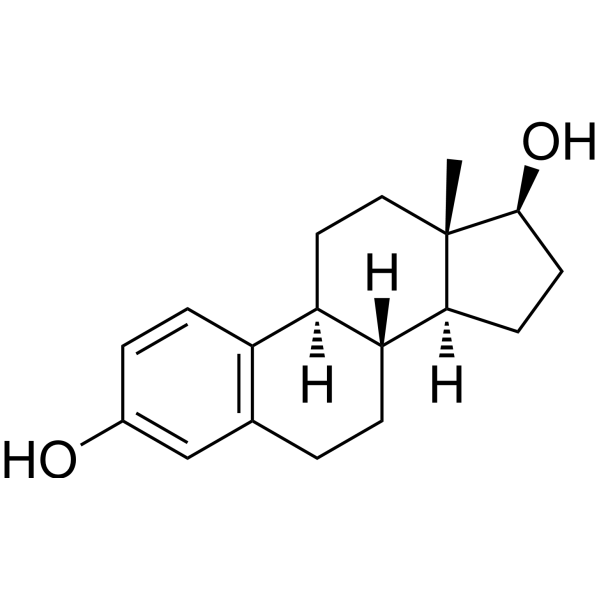
Estradiol (β-Estradiol) is a steroid hormone and the major female sex hormone. Estradiol can up-regulate the expression of neural markers of human endometrial stem cells (hEnSCs) and promote their neural differentiation. Estradiol can be used for the research of cancers, neurodegenerative diseases and neural tissue engineering .
loading...
    loading...
136
136 Cited Publications
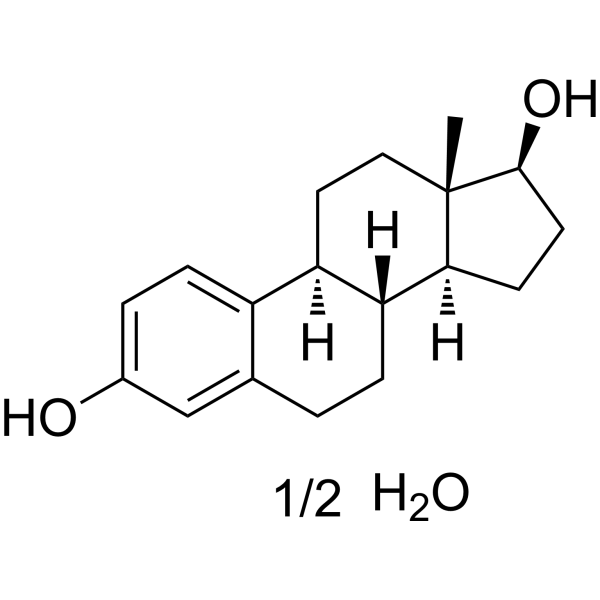
Cat. No.: HY-B0141C
CAS No.: 35380-71-3
Synonyms: β-Estradiol hemihydrate; 17β-Estradiol hemihydrate; 17β-Oestradiol hemihydrate
Estradiol (β-Estradiol) hemihydrate is a steroid hormone and the major female sex hormone. Estradiol (β-Estradiol) hemihydrate can up-regulate the expression of neural markers of human endometrial stem cells (hEnSCs) and promote their neural differentiation. Estradiol (β-Estradiol) hemihydrate can be used for the research of cancers, neurodegenerative diseases and neural tissue engineering .
loading...
    loading...
57
57 Cited Publications
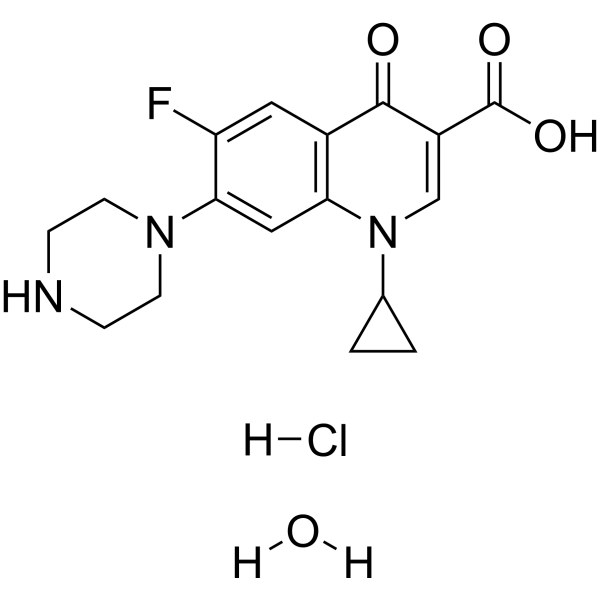
Cat. No.: HY-B0356B
CAS No.: 86393-32-0
Synonyms: Bay-09867 hydrochloride monohydrate
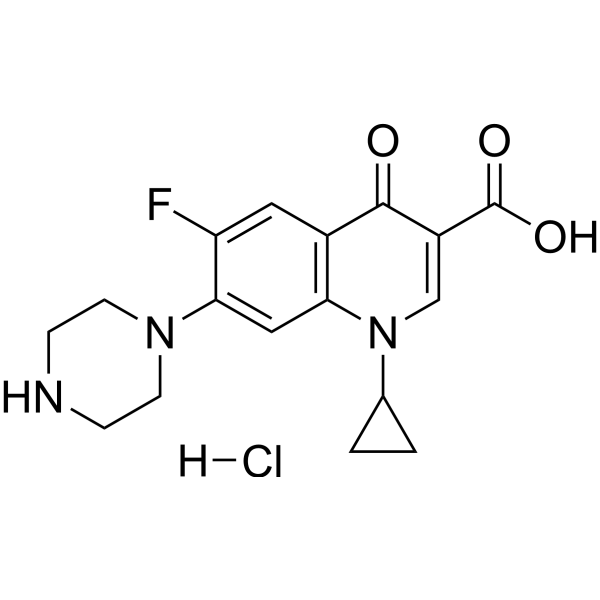
Ciprofloxacin (Bay-09867) hydrochloride monohydrate is an orally active, blood-brain barrier permeable fluoroquinolone antibacterial agent. Ciprofloxacin hydrochloride monohydrate exerts bactericidal effects primarily by inhibiting topoisomerase II and IV. Ciprofloxacin hydrochloride monohydrate inhibits the proliferation of human dental pulp stem cells and chondrocytes from young rats, and also activates the Akt signaling pathway and upregulates markers such as β-catenin and Nanog to maintain the morphological characteristics of stem cells. Ciprofloxacin hydrochloride monohydrate induces significant neurotoxicity and tissue damage, including reducing serotonin and glutathione levels in the brain, inducing oxidative stress and depression-like behaviors, and causing articular cartilage damage. Ciprofloxacin hydrochloride monohydrate can be applied to research related to infections of necrotic young permanent teeth and neurotoxicity .
loading...
    loading...
57
57 Cited Publications
Cat. No.: HY-B0356A
CAS No.: 93107-08-5
Synonyms: Bay-09867 monohydrochloride
Ciprofloxacin (Bay-09867) monohydrochloride is an orally active, blood-brain barrier permeable fluoroquinolone antibacterial agent. Ciprofloxacin monohydrochloride exerts bactericidal effects primarily by inhibiting topoisomerase II and IV. Ciprofloxacin monohydrochloride inhibits the proliferation of human dental pulp stem cells and chondrocytes from young rats, and also activates the Akt signaling pathway and upregulates markers such as β-catenin and Nanog to maintain the morphological characteristics of stem cells. Ciprofloxacin monohydrochloride induces significant neurotoxicity and tissue damage, including reducing serotonin and glutathione levels in the brain, inducing oxidative stress and depression-like behaviors, and causing articular cartilage damage. Ciprofloxacin monohydrochloride can be applied to research related to infections of necrotic young permanent teeth and neurotoxicity .
loading...
    loading...
1
1 Cited Publications
Cat. No.: HY-B0141R
CAS No.: 50-28-2
Synonyms: β-Estradiol (Standard); E2 (Standard); 17β-Estradiol (Standard); 17β-Oestradiol (Standard)
Estradiol (Standard) is the analytical standard of Estradiol. This product is intended for research and analytical applications. Estradiol (β-Estradiol) is a steroid hormone and the major female sex hormone. Estradiol can up-regulate the expression of neural markers of human endometrial stem cells (hEnSCs) and promote their neural differentiation. Estradiol can be used for the research of cancers, neurodegenerative diseases and neural tissue engineering .
loading...
    loading...
1
1 Cited Publications
Cat. No.: HY-124757
CAS No.: 932359-76-7
Purity:  99.87%
Target:  

Proteasome Mitosis

Research Areas:  

Cancer

FiVe1 is a vimentin (VIM) inhibitor. FiVe1 binds to the rod domain of VIM, causing metaphase VIM disassembly and hyperphosphorylation at Ser56, ultimately leading to mitotic catastrophe, multinucleation, and loss of stemness. FiVe1 has anticancer activity against soft tissue sarcomas. FiVe1 increases the sensitivity of ovarian cancer to Cisplatin (HY-17394). FiVe1 can be used for researches of mesenchymal cancers (including breast cancer and soft tissue sarcoma) and ovarian cancers .
loading...
    loading...
1
1 Cited Publications
Cat. No.: HY-13973A
CAS No.: 603272-51-1
Purity:  99.16%
Target:  

GSK-3

Research Areas:  

Metabolic Disease

GSK-3 inhibitor 1 (compound core 3) is a GSK-3 inhibitor that induces stem/progenitor cell self-renewal (e.g. induces stem/progenitor cell proliferation while maintaining the ability to differentiate into tissue cells in the progeny) .
loading...
    loading...
1
1 Cited Publications
Cat. No.: HY-K6010

MCE Tissue Storage Solution is designed for the short-term storage or transportation of primary tissue samples. It effectively prevents cell apoptosis, necrosis, and other detrimental processes during storage or transport, thereby preserving the functionality and vitality of stem cells.

loading...
    loading...
Cat. No.: HY-Y0332B
CAS No.: 7778-77-0
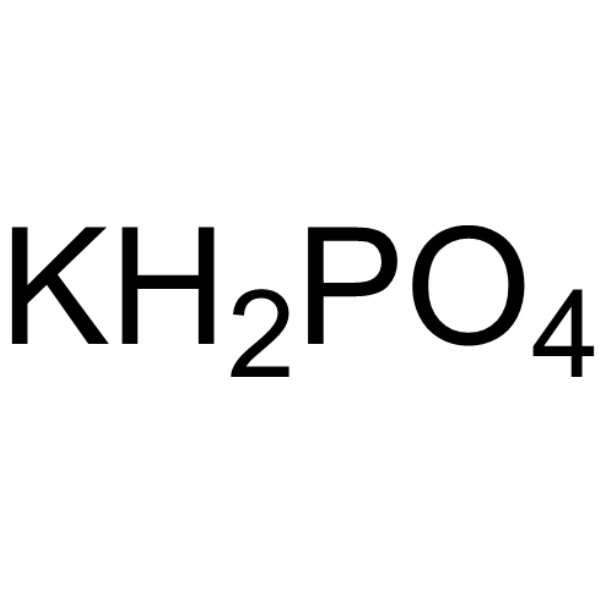
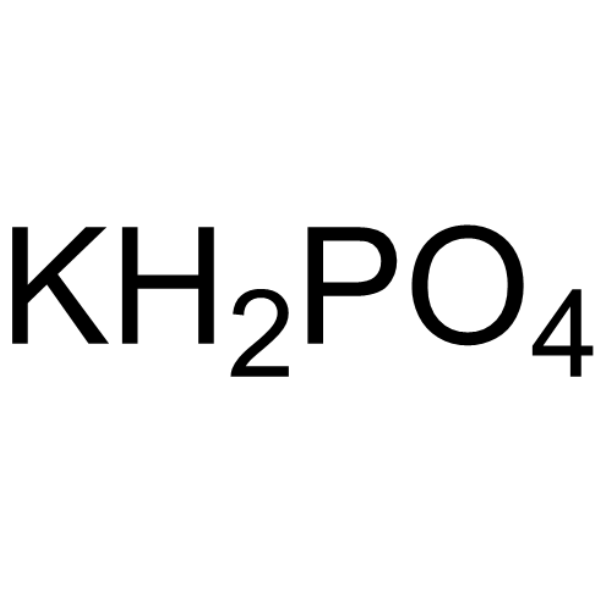
Potassium dihydrogen phosphate, AR,99.5% is a potassium salt. Potassium dihydrogen phosphate, AR,99.5% activates NF-κB. Potassium dihydrogen phosphate, AR,99.5% upregulates the expression of dental/osteogenic markers (OCN, DSP/DSPP, OSX, RUNX2, ALP) and enhances the mineralization capacity of human periodontal ligament stem cells. Potassium dihydrogen phosphate, AR,99.5% promotes the proliferation of human periodontal ligament stem cells in logarithmic growth phase. Potassium dihydrogen phosphate, AR,99.5% promotes the growth of somatic embryos of Dendrobium Sonia, increases leaf number, leaf length and fresh weight of tissue-cultured seedlings. Potassium dihydrogen phosphate, AR,99.5% is applicable to periodontal disease-related research .
loading...
    loading...
Cat. No.: HY-Y0332K
CAS No.: 7778-77-0
Synonyms: Potassium phosphate monobasic, for cell culture
Potassium dihydrogen phosphate, for cell culture (Potassium phosphate monobasic, for cell culture) is a cell culture reagent. Potassium dihydrogen phosphate, for cell culture activates NF-κB. Potassium dihydrogen phosphate, for cell culture upregulates the expression of dental/osteogenic markers (OCN, DSP/DSPP, OSX, RUNX2, ALP) and enhances the mineralization capacity of human periodontal ligament stem cells. Potassium dihydrogen phosphate, for cell culture promotes the proliferation of human periodontal ligament stem cells in logarithmic growth phase. Potassium dihydrogen phosphate, for cell culture promotes the growth of somatic embryos of Dendrobium Sonia, increases leaf number, leaf length and fresh weight of tissue-cultured seedlings. Potassium dihydrogen phosphate, for cell culture is applicable to periodontal disease-related research .
loading...
    loading...
Cat. No.: HY-129047B
CAS No.: 9002-07-7
Research Areas:  

Others

Recombinant Trypsin Solution is an animal-free trypsin solution used to digest cells or tissues. Recombinant Trypsin Solution has high stability at room temperature and gentle digestion, and can be used to digest weakly adherent cells or stem cells under low serum or serum-free culture conditions. Compared with traditional trypsin digestion solution, Recombinant Trypsin Solution does not contain any animal-derived ingredients, is gentle and effective, and can replace the application of animal-derived trypsin in cell digestion .
loading...
    loading...
Cat. No.: HY-P99488
CAS No.: 2574591-89-0
Synonyms: JSP-191; AMG-191

Target:  

c-Kit

Research Areas:  

Inflammation/Immunology Cancer

Briquilimab (JSP-191 or AMG-191) is a humanized IgG1 monoclonal antibody that binds human CD117 (c-Kit). Briquilimab blocks the interaction between CD117 receptor and stem cell factor on various CD117 expressing tissues. Briquilimab can lead to inhibition of SCF/c-Kit signaling and MC apoptosis. Briquilimab is a non-toxic approach to target and deplete HSC, enabling blood and immune reconstitution with minimal toxicity with the other agents being used for transient immune suppression to prevent immunologic rejection. Briquilimab can be used in various disease research such as severe combined immunodeficiency (SCID), myelodyplastic syndromes (MDS), acute myeloid leukemia (AML), chronic spontaneous urticarial (CSU), chronic inducible urticarial (CIndU) and asthema .
loading...
    loading...
Cat. No.: HY-158231
Synonyms: F127DA
Polyether F127 Diacrylate (F127DA) is an acrylated polyethylene glycol-polypropylene glycol-polyethylene glycol triblock copolymer. Polyether F127 Diacrylate rapidly crosslinks and cures into a gel under ultraviolet or visible light with the action of a photoinitiator. Polyether F127 Diacrylate exhibits excellent thermogelation properties and favorable biosafety. Polyether F127 Diacrylate can upregulate the Integrin-FAK pathway, enhance collagen production, increase the protein and gene expression levels of COL-1/SCX, and promote fibroblastic differentiation of periodontal ligament stem cells. Polyether F127 Diacrylate promotes periodontal ligament regeneration and reduces abnormal healing in a rat model of delayed replanted teeth . Polyether F127 Diacrylate promotes functional osteochondral regeneration in a rat model of osteoarthritis. Polyether F127 Diacrylate supports adipose tissue survival, rendering it suitable for breast reconstruction applications. Polyether F127 Diacrylate can be used in studies related to periodontal ligament injury, breast defect and osteoarthritis .
loading...
    loading...
Cat. No.: HY-P99750
CAS No.: 1443004-16-7
Synonyms: CT-P23

Target:  

Influenza Virus

Research Areas:  

Infection

Navivumab (CT-P23) is a monoclonal antibody targeting the hemagglutinin (HA) of influenza A virus. Navivumab binds to the HA2 stem fusion domain and the low-variability HA2 region of influenza viruses. Navivumab neutralizes influenza A viruses of subtypes H1, H2, H5, and H9. Navivumab is applicable to research related to influenza and influenza A .
loading...
    loading...
Cat. No.: HY-P991446

Target:  

Influenza Virus

Research Areas:  

Infection

MEDI-8852 is a human IgG1 monoclonal antibody against influenza A virus hemagglutinin (HA). MEDI-8852 binds to the conserved HA stalk epitope and neutralizes viral infectivity. MEDI-8852 reduces viral titers in mouse lung tissues. MEDI-8852 is applicable to research related to pandemic influenza . Recommended isotype control: Human IgG1 kappa, Isotype Control (HY-P99001).
loading...
    loading...
Cat. No.: HY-N0565S1
Doxycycline-d3 hyclate (major) is the deuterium labeled Doxycycline hyclate (HY-N0565B). Doxycycline hyclate is an orally active highly lipophilic, tissue-permeable MMP inhibitor with broad-spectrum antibacterial activity. Doxycycline hyclate is also a semi-synthetic antibiotic with chelating properties, which blocks bacterial protein synthesis and inhibits extracellular matrix degradation through interactions with zinc and calcium atoms. Doxycycline hyclate also inhibits mitochondrial biogenesis, translation, and the expression of respiratory chain proteins. Doxycycline hyclate induces apoptosis, inhibits autophagy and EMT, downregulates stem cell markers, and activates the PI3K-AKT pathway, thereby effectively inhibiting the viability and proliferation of cancer cells such as breast cancer cells. Doxycycline hyclate also promotes the survival and self-renewal of embryonic stem cells and neural stem cells, and reduces the frequency of medium changes in culture. Doxycycline hyclate has been applied in studies related to breast cancer, prostate cancer, bladder cancer, and other cancers .
loading...
    loading...
Cat. No.: HY-P3436
CAS No.: 771479-86-8
Target:  

Exosomes

Research Areas:  

Cardiovascular Disease

WLSEAGPVVTVRALRGTGSW is a cardiomyocyte-targeting peptide that specifically recognizes tenascin X on the surface of cardiomyocytes. WLSEAGPVVTVRALRGTGSW can serve as a targeting ligand to conjugate with various therapeutic carriers (drugs, genes, exosomes, nanoparticles, etc.) for research on cardiovascular diseases (such as myocardial infarction, heart failure) .
loading...
    loading...
Cat. No.: HY-N0565AR
CAS No.: 10592-13-9
Doxycycline hydrochloride (Standard) is the analytical standard of Doxycycline hydrochloride (HY-N0565A). This product is intended for research and analytical applications. Doxycycline hydrochloride is an orally active highly lipophilic, tissue-permeable MMP inhibitor with broad-spectrum antibacterial activity. Doxycycline hydrochloride is also a semi-synthetic antibiotic with chelating properties, which blocks bacterial protein synthesis and inhibits extracellular matrix degradation through interactions with zinc and calcium atoms. Doxycycline hydrochloride also inhibits mitochondrial biogenesis, translation, and the expression of respiratory chain proteins. Doxycycline hydrochloride induces apoptosis, inhibits autophagy and EMT, downregulates stem cell markers, and activates the PI3K-AKT pathway, thereby effectively inhibiting the viability and proliferation of cancer cells such as breast cancer cells. Doxycycline hydrochloride also promotes the survival and self-renewal of embryonic stem cells and neural stem cells, and reduces the frequency of medium changes in culture. Doxycycline hydrochloride has been applied in studies related to breast cancer, prostate cancer, bladder cancer, and other cancers .
loading...
    loading...
Cat. No.: HY-N0565R
CAS No.: 564-25-0
Doxycycline (Standard) is the analytical standard of Doxycycline (HY-N0565). This product is intended for research and analytical applications. Doxycycline is an orally active highly lipophilic, tissue-permeable MMP inhibitor with broad-spectrum antibacterial activity. Doxycycline is also a semi-synthetic antibiotic with chelating properties, which blocks bacterial protein synthesis and inhibits extracellular matrix degradation through interactions with zinc and calcium atoms. Doxycycline also inhibits mitochondrial biogenesis, translation, and the expression of respiratory chain proteins. Doxycycline induces apoptosis, inhibits autophagy and EMT, downregulates stem cell markers, and activates the PI3K-AKT pathway, thereby effectively inhibiting the viability and proliferation of cancer cells such as breast cancer cells. Doxycycline also promotes the survival and self-renewal of embryonic stem cells and neural stem cells, and reduces the frequency of medium changes in culture. Doxycycline has been applied in studies related to breast cancer, prostate cancer, bladder cancer, and other cancers .
loading...
    loading...

