



Doxycycline hydrochloride (Standard)

Based on 1 Customer Validation
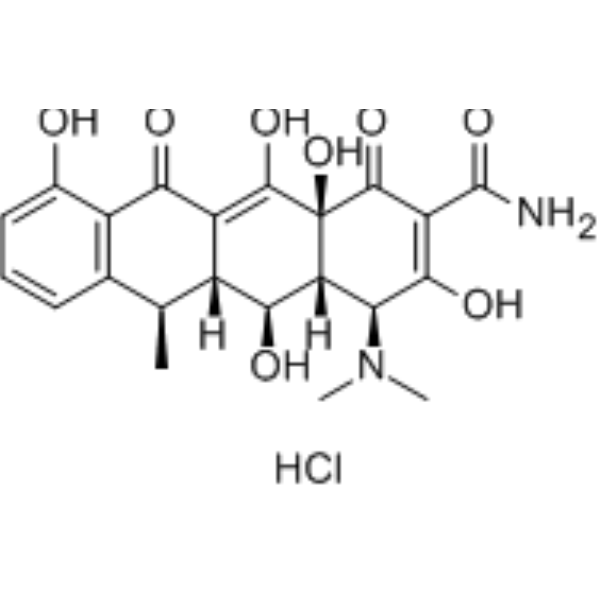
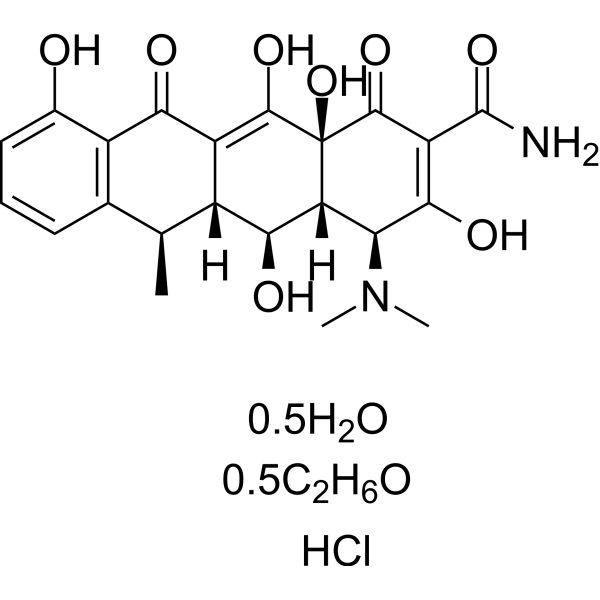
Doxycycline hydrochloride (Standard) is the analytical standard of Doxycycline hydrochloride (HY-N0565A). This product is intended for research and analytical applications. Doxycycline hydrochloride is an orally active highly lipophilic, tissue-permeable MMP inhibitor with broad-spectrum antibacterial activity. Doxycycline hydrochloride is also a semi-synthetic antibiotic with chelating properties, which blocks bacterial protein synthesis and inhibits extracellular matrix degradation through interactions with zinc and calcium atoms. Doxycycline hydrochloride also inhibits mitochondrial biogenesis, translation, and the expression of respiratory chain proteins. Doxycycline hydrochloride induces apoptosis, inhibits autophagy and EMT, downregulates stem cell markers, and activates the PI3K-AKT pathway, thereby effectively inhibiting the viability and proliferation of cancer cells such as breast cancer cells. Doxycycline hydrochloride also promotes the survival and self-renewal of embryonic stem cells and neural stem cells, and reduces the frequency of medium changes in culture. Doxycycline hydrochloride has been applied in studies related to breast cancer, prostate cancer, bladder cancer, and other cancers.
For research use only. We do not sell to patients.
- Purity : 99.97%
- CAS No.: 10592-13-9
- Formula: C22H25ClN2O8
- Molecular Weight:480.90
-
Storage:
Please store the product under the recommended conditions in the Certificate of Analysis.


To place orders, for customer services and technical support, please contact: MedChemExpress USA
Tel: 609-228-6898 E-mail: [email protected] [email protected]


-
 Product Information
-
Chemical Information
- Purity & Documentation
-
 Help & FAQs


-
HY-N0565A
Doxycycline hydrochloride -
HY-15768
Ilomastat -
HY-12169
Marimastat -
HY-13564
Batimastat -
HY-N0565B
Doxycycline hyclate -

HY-N0565AG
Doxycycline (hydrochloride) (GMP) -
HY-15827
NSC 405020 -
HY-100359
CL-82198 -
HY-N0262
Cordycepin -
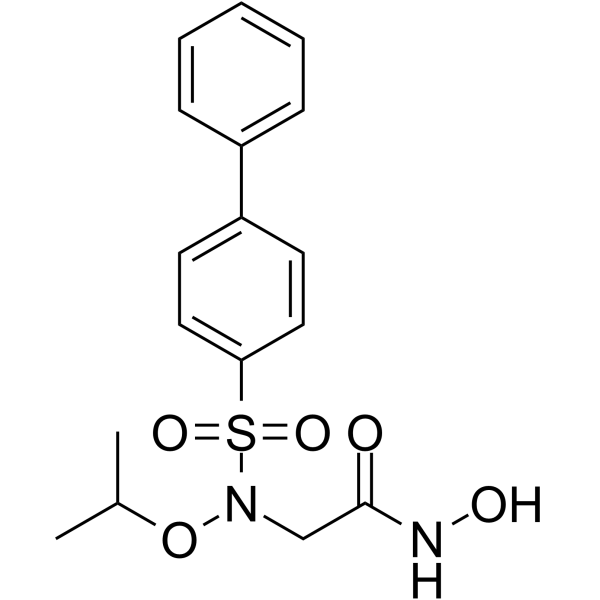
HY-103444
ARP-100 -
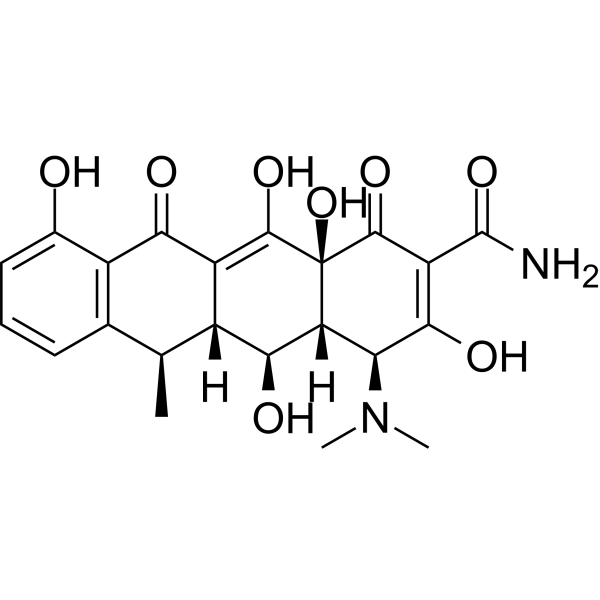
HY-N0565
Doxycycline -

HY-N0565BR
Doxycycline hyclate (Standard)


Product Information
Information
Application
The compound is the grade of analytical standard, which is the reference standard supplied assay. It is commonly used in qualitative, quantitative and methodological research experiments in HPLC, GC and MS.


Chemical Information
-
CAS No. 10592-13-9
-
Appearance Solid
-
Molecular Weight 480.90
-
Formula C22H25ClN2O8
-
Color Light yellow to yellow
-
SMILES
O=C(C(C1=O)=C(O)[C@@H](N(C)C)[C@]2([H])[C@@H](O)[C@]3([H])[C@@H](C)C4=C(C(C3=C(O)[C@@]21O)=O)C(O)=CC=C4)N.Cl
-
Shipping
Room temperature in continental US; may vary elsewhere.
-
Storage
Please store the product under the recommended conditions in the Certificate of Analysis.


Purity & Documentation
-
SDS (394 KB)
- English - EN (394 KB)
- Français - FR (394 KB)
- Deutsch - DE (394 KB)
- Norwegian - NO (394 KB)
- Español - ES (394 KB)
- Swedish - SV (394 KB)
- Italian - IT (394 KB)
- Korean - KR (394 KB)
- Portuguese - PT (394 KB)
-
Handling Instructions (2659 KB)
References
[1]. El-Neweshy MS, et al. Experimental doxycycline overdose in rats causes cardiomyopathy. Int J Exp Pathol. 2013;94(2):109-114. [Content Brief]
[2]. Zhang L, et al. Doxycycline inhibits the cancer stem cell phenotype and epithelial-to-mesenchymal transition in breast cancer. Cell Cycle. 2017;16(8):737-745. [Content Brief]
[5]. Chang MY, et al. Doxycycline supplementation allows for the culture of human ESCs/iPSCs with media changes at 3-day intervals. Stem Cell Res. 2015;15(3):608-613. [Content Brief]
[6]. Manfredsson FP, et al. Tight Long-term dynamic doxycycline responsive nigrostriatal GDNF using a single rAAV vector. Mol Ther. 2009 Nov;17(11):1857-67. [Content Brief] [Content Brief]
[7]. Kistner A, et al. Doxycycline-mediated quantitative and tissue-specific control of gene expression in transgenic mice. Proc Natl Acad Sci U S A. 1996 Oct 1;93(20):10933-8. [Content Brief]
[8]. Niv Y. Doxycycline in Eradication Therapy of Helicobacter pylori--a Systematic Review and Meta-Analysis. Digestion. 2016;93(2):167-73. [Content Brief]

Calculators
Concentration (start) × Volume (start) = Concentration (final) × Volume (final)


Doxycycline hydrochloride (Standard) Related Classifications
HY-N0565AR Related Classifications
 Powered by Bioz