Search Result
Results for "
substitute
" in MedChemExpress (MCE) Product Catalog:
55
Biochemical Assay Reagents
40
Isotope-Labeled Compounds
| Cat. No. |
Product Name |
Target |
Research Areas |
Chemical Structure |
-
- HY-N0614
-
|
E955; Trichlorosucrose
|
Endogenous Metabolite
|
Cancer
|
|
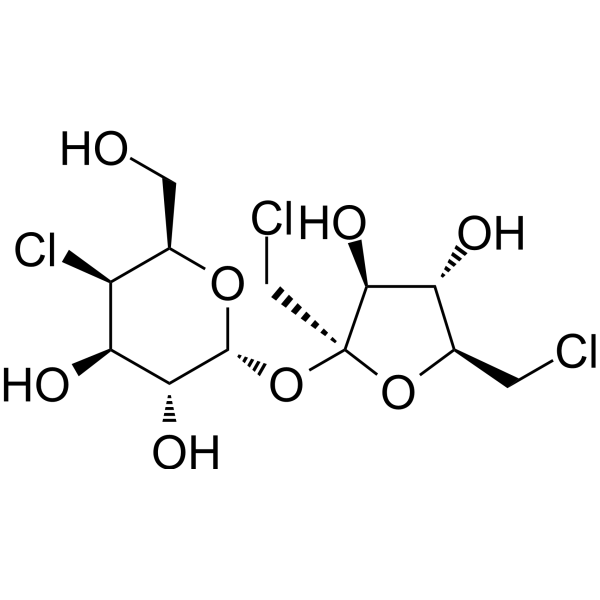
Sucralose (E955; Trichlorosucrose) is a non-nutritive artificial sweetener and sugar substitute. Sucralose can activate a conserved neural fasting response and thereby exerts an appetite-stimulating effect in rodents .
|
-
-
- HY-W002072
-
-
-
- HY-N0160
-
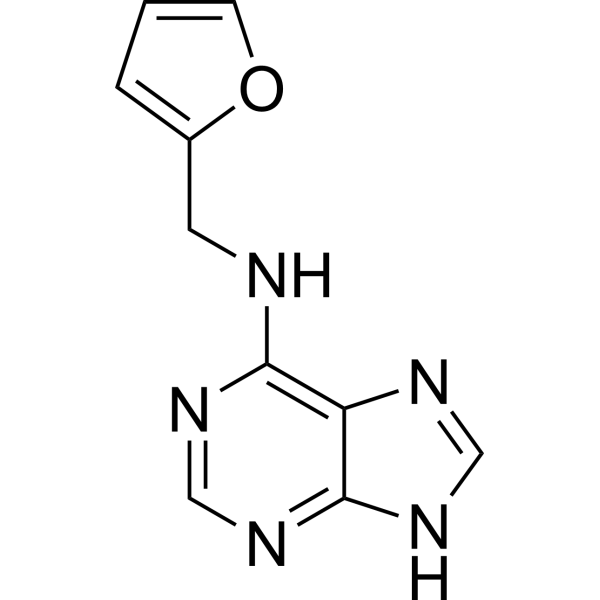
Kinetin
Maximum Cited Publications
7 Publications Verification
6-Furfuryladenine; N6-Furfuryladenine
|
Environmental Pollutants
SOD
|
Neurological Disease
|
|
Kinetin (N6-furfuryladenine) belongs to the family of N6-substituted adenine derivatives known as cytokinins, which are plant hormones involved in cell division, differentiation and other physiological processes. Kinetin has anti-aging effects .
|
-
-
- HY-W011834
-
|
|
HCV
DNA/RNA Synthesis
|
Infection
|
|
2'-O-Methylcytidine is an orally active 2'-substituted nucleoside as a inhibitor of HCV replication with antiviral activity. 2'-O-Methylcytidine inhibits RNA-dependent RNA polymerase (NS5B)-catalyzed RNA synthesis in vitro, in a manner that is competitive with substrate nucleoside triphosphate .
|
-
-
- HY-100557
-
|
|
Environmental Pollutants
Biochemical Assay Reagents
Interleukin Related
|
Metabolic Disease
Inflammation/Immunology
|
|
Hydroxypropyl Cellulose is an orally active cellulose ether and surfactant. Hydroxypropyl cellulose is divided into high-substituted HPC (HHPC) and low-substituted HPC (LHPC). Hydroxypropyl Cellulose reduces inflammatory mediators (IL-6, IL-1β). Hydroxypropyl Cellulose improves colitis and obesity. Hydroxypropyl Cellulose can be used as a pharmaceutical excipient, such as coating agent, emulsifier, suspension, tablet, thickener, viscosifier .
|
-
-
- HY-P3581
-
|
|
Potassium Channel
|
Neurological Disease
|
|
PE 22-28 is a TREK-1 inhibitor with IC50 value of 0.12 nM. PE 22-28 also is a 7 amino-acid peptide that is used as a core sequence for preparing analogs by chemical modifications and also by substitution of amino-acids. PE 22-28 can be used for the research of depression .
|
-
-
- HY-125870
-
|
Agar substitute gelling agent, for cell culture
|
Environmental Pollutants
Biochemical Assay Reagents
|
Inflammation/Immunology
|
|
Gellan gum is a linear microbial exopolysaccharide that can be used as a cell scaffold for both soft tissue and load bearing applications. Gellan gum has many advantages such as biocompatibility, biodegradability, nontoxic in nature, and physical stability in the presence of cations .
|
-
-
- HY-B1908
-
|
SF-837; Antibiotic SF-837
|
Bacterial
Antibiotic
|
Infection
|
|
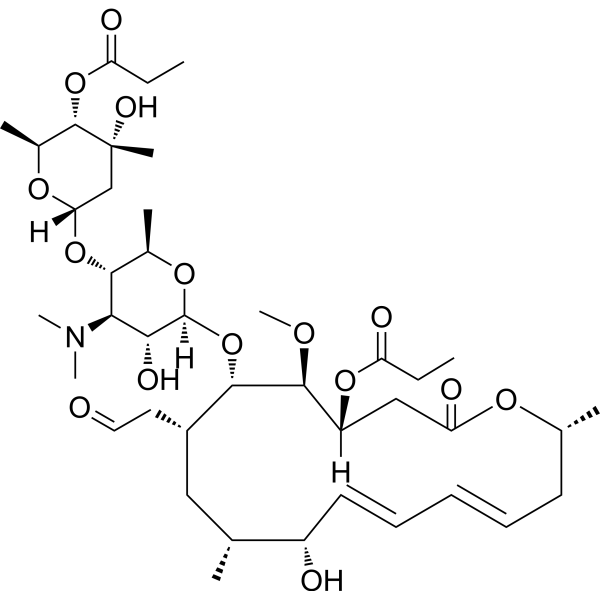
Midecamycin, an acetoxy-substituted macrolide antibiotic, is tested against gram-positive and gram-negative bacteria.
|
-
-
- HY-103656
-
|
TPP; Tetraphenylporphine; meso-Tetraphenylporphyrin
|
MOFs
|
Cancer
|
|
Tetraphenylporphyrin (TPP) is a symmetrically substituted porphyrin-based heterocyclic compound and used as a structural block for supramolecular synthesis. Tetraphenylporphyrin derivatives can be used for cancer research .
|
-
-
- HY-W093017
-
|
|
Amine N-methyltransferase
|
Others
|
|
4-Chloropyridine is a NNMT (Nicotinamide N-methyltransferase) substrate and suicide inhibition-based protein labeling scaffold precursor.4-Chloropyridine undergoes NNMT-catalyzed pyridine nitrogen methylation to increase C4 electrophilicity, enabling aromatic nucleophilic substitution by NNMT cysteine C159 for covalent NNMT modification and inactivation.4-Chloropyridine can be used for the research of various cancers .
|
-
-
- HY-32876
-
|
|
Biochemical Assay Reagents
|
Others
|
|
Pyridine-3-sulfonyl chloride belongs to the substituted sulfonyl chloride class. Due to its high proton affinity, it can be used as a derivatizing agent .
|
-
-
- HY-167887
-
|
|
Endogenous Metabolite
|
Infection
|
|
7PPD-Q is a substituted p-phenylenediamine antioxidants derivatives. 7PPD-Q has toxic to the bacterium V. fischeri (EC50 = 14.9 mg/L) .
|
-
-
- HY-D1299
-
|
CF3-substituted Tetramethyl BODIPY
|
Fluorescent Dye
|
Cancer
|
|
meso-CF3-BODIPY 2 (CF3-substituted Tetramethyl BODIPY) is a fluorescent dye with the absorption wavelength (λabs) of 553 nm and emission wavelength (λem) of 622 nm. meso-CF3-BODIPY 2 can be used in labeling reagents and photodynamic therapy .
|
-
-
- HY-59243
-
|
|
Drug Intermediate
|
Others
|
|
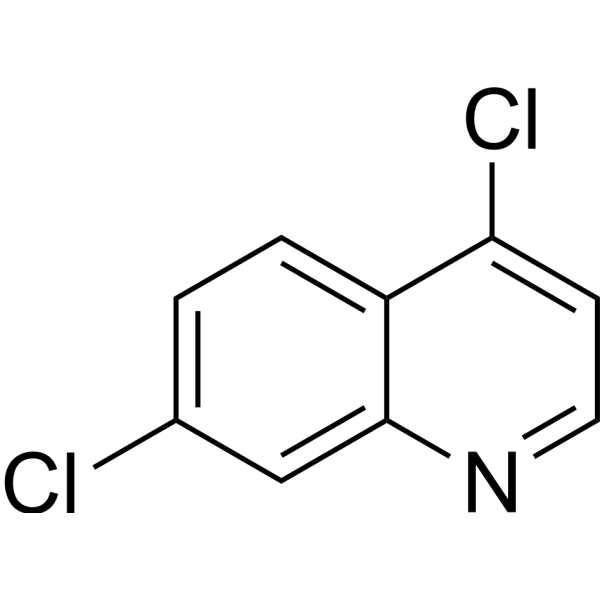
4,7-Dichloroquinoline is a dichloro-substituted quinoline that can be used for the synthesis of other active compounds .
|
-
-
- HY-P0070
-
-
-
- HY-W035138
-
|
|
Fluorescent Dye
MOFs
|
Others
|
|
Tetra(p-bromophenyl)porphyrin (compound 5c) is a fluorescent dye. Tetra(p-bromophenyl)porphyrin can be used for the synthesis of perfuoroalkyl-substituted tetrakisphenylporphyrins .
|
-
-
- HY-N0614R
-
|
E955 (Standard); Trichlorosucrose (Standard)
|
Reference Standards
Endogenous Metabolite
|
Cancer
|
|
Sucralose (Standard) is the analytical standard of Sucralose. This product is intended for research and analytical applications. Sucralose?(E955; Trichlorosucrose) is a?non-nutritive?artificial?sweetener and sugar substitute. Sucralose can activate a conserved neural fasting response and thereby exerts an appetite-stimulating effect in rodents .
|
-
-
- HY-128407
-
|
Phenylglyoxal hydrate
|
Drug Intermediate
|
Others
|
|
2,2-Dihydroxy-1-phenylethan-1-one (Phenylglyoxal hydrate) is a phenylglyoxal-based, antioxidant drug synthesis intermediate. 2,2-Dihydroxy-1-phenylethan-1-one serves as a starting material for the synthesis of aromatic amines or aliphatic amines. It can be used to synthesize polysubstituted pyrrolo[3,2-c]pyridin-4-one derivatives, and also acts as a key structural unit in the microwave-assisted cascade synthesis of substituted 2-methyl-7-aryl-6H-thiazoloindole compounds .
|
-
-
- HY-103033
-
|
|
Parasite
|
Infection
|
|
T.cruzi-IN-1 is a potent Trypanosoma cruzi inhibitor with an IC50 of 8 nM. T.cruzi-IN-1, a 4-trifluoromethyl substituted analog, has the potential for both the acute and chronic stages of Chagas disease .
|
-
-
- HY-D1029A
-
-
-
- HY-W015472
-
|
|
Drug Intermediate
|
Others
|
|
3,4-Difluoronitrobenzene is a drug intermediate that can be used for the synthesis of oxazolidone antibiotics .
|
-
-
- HY-175428
-
|
|
Antifolate
|
Cancer
|
|
Antifolate agent 1 is a 6-substituted pyrrolopyrimidine antifolate with a 1-carbon bridge. Antifolate agent 1 shows no activity against cells expressing FRα and FRβ, and has no GARFTase inhibitory activity. Antifolate agent 1 can be used as a negative control in the development of folate receptor-targeted antifolates .
|
-
-
- HY-N0160R
-
|
6-Furfuryladenine (Standard); N6-Furfuryladenine (Standard)
|
SOD
Reference Standards
|
Neurological Disease
|
|
Kinetin (Standard) is the analytical standard of Kinetin. This product is intended for research and analytical applications. Kinetin (N6-furfuryladenine) belongs to the family of N6-substituted adenine derivatives known as cytokinins, which are plant hormones involved in cell division, differentiation and other physiological processes. Kinetin has anti-aging effects .
|
-
-
- HY-W014895
-
|
Ethyl p-toluenesulfonate; Ethyl tosylate
|
Drug Intermediate
|
Others
|
|
Ethyl 4-methylbenzenesulfonate (Ethyl p-toluenesulfonate) is a drug intermediate that can be used for the synthesis of alkyl and substituted alkyl fluorides .
|
-
-
- HY-W032015
-
|
n-Octyl Bromide
|
Biochemical Assay Reagents
|
Others
|
|
1-Bromooctane (n-Octyl Bromide) posesses a terminal bromine. The bromine is a very good leaving group for nucleophilic substitution reactions.
|
-
-
- HY-W011834S
-
|
|
Isotope-Labeled Compounds
HCV
|
Infection
|
|
2'-O-Methylcytidine-d3 is deuterium labeled 2'-O-Methylcytidine (HY-W011834). 2'-O-Methylcytidine is a 2'-substituted nucleoside as a inhibitor of HCV replication. 2'-O-Methylcytidine inhibits RNA-dependent RNA polymerase (NS5B)-catalyzed RNA synthesis in vitro, in a manner that is competitive with substrate nucleoside triphosphate.
|
-
-
- HY-116706
-
|
|
Environmental Pollutants
Herbicide
|
Others
|
|
Lenacil is a selective uracil substituted herbicide used for control of both annual grasses, broad leafed weeds and some perennial weeds in sugarcane, apples, alfalfa, peaches, peacans, peppermints (Mentha piperita) and sugar beets. Lenacil can inhibit photosynthesis .
|
-
-
- HY-107133
-
|
|
Topoisomerase
Cytochrome P450
|
Cancer
|
|
Simmitecan hydrochloride, a 9-substituted lipophilic Camptothecin (HY-16560) derivative, is a potent topoisomerase I inhibitor. Simmitecan hydrochloride is an anticancer agent .
|
-
-
- HY-117289
-
-
-
- HY-Y0188
-
|
|
Biochemical Assay Reagents
Drug Intermediate
|
Others
|
|
3-Bromobenzoic acid is an important intermediate that can be used in the synthesis of other active compounds. 3-Bromobenzoic acid can react with a variety of electrophiles to generate a variety of 2-substituted-3-bromobenzoic acid derivatives. 3-Bromobenzoic acid is also an effective corrosion inhibitor for aluminum in alkalized Persian Gulf seawater and NaOH solution .
|
-
-
- HY-W099859
-
|
|
Fungal
|
Infection
|
|
2-Ethylnaphthalene is an alkyl-substituted polyaromatic. 2-Ethylnaphthalene has a negative correlation with Glomus relative abundance in arbuscular mycorrhizal fungi community .
|
-
-
- HY-108299
-
|
Perfluorotripropylamine; FTPA; Tris(perfluoropropyl)amine
|
Biochemical Assay Reagents
|
Others
|
|
Perfluamine (Perfluorotripropylamine), a hydrophobic carrier fluid, is used in the surface modification of droplet polymeric microfluidic devices. Perfluamine has a role as a blood substitute .
|
-
-
- HY-120188
-
|
|
PPAR
|
Others
|
|
CC618 is a selective PPARβ/δ antagonist. CC618 covalently modifies conserved Cys249 in the PPARβ/δ ligand-binding pocket via nucleophilic aromatic substitution, converting its thiol moiety to a 5-trifluoromethyl-2-pyridylthioether .
|
-
-
- HY-172228
-
|
|
PDGFR
|
Cardiovascular Disease
|
|
RPR-101511 is a 3-substituted quinoline derivative. RPR-101511 is a PDGF receptor tyrosine kinase inhibitor (IC50: 0.001-0.02 μM) .
|
-
-
- HY-W411332
-
-
-
- HY-W016474A
-
|
1-(4-Fluorophenyl)piperazinediium hydrochloride
|
Drug Derivative
|
Neurological Disease
|
|
1-(4-Fluorophenyl)piperazine (1-(4-Fluorophenyl)piperazinediium) hydrochloride is a substituted phenylpiperazine .
|
-
-
- HY-176151
-
-
-
- HY-144128
-
|
|
Apoptosis
|
Cancer
|
|
hGGPPS-IN-1 (Compound 18b) is a potent inhibitor of the human geranylgeranyl pyrophosphate synthase (hGGPPS). hGGPPS-IN-1 is an analogue of C-2-substituted thienopyrimidine-based bisphosphonates (C2-ThP-BPs). hGGPPS-IN-1 induces target-selective apoptosis of multiple myeloma (MM) cells and exhibits antimyeloma activity in vivo .
|
-
-
- HY-116654
-
|
Caccure 907; photoinitiator907
|
Drug Derivative
|
Neurological Disease
|
|
2-Methyl-4'-(methylthio)-2-morpholinopropiophenone (Caccure 907) is structurally characterized as a substituted drug derivative.
|
-
-
- HY-145676E
-
|
|
ADC Linker
|
Others
|
|
Sodium phenyl ethylamido hyaluronate (10% substitution) is a chemical agent. Sodium phenyl ethylamido hyaluronate (10% substitution) has 10% phenethylamine substitution. The molecular weight is 40-60WD.
|
-
-
- HY-145676A
-
|
|
ADC Linker
|
Others
|
|
Sodium phenyl ethylamido hyaluronate (30% substitution) is a chemical agent. Sodium phenyl ethylamido hyaluronate (30% substitution) has 30% phenethylamine substitution. The molecular weight is 40 WD – 60WD.
|
-
-
- HY-145676
-
|
|
ADC Linker
|
Others
|
|
Sodium phenyl ethylamido hyaluronate (20% substitution) is a chemical agent. Sodium phenyl ethylamido hyaluronate (20% substitution) has 20% phenethylamine substitution. The molecular weight is 40-60WD.
|
-
-
- HY-116212
-
|
|
MAGL
|
Cancer
|
|
JCP-170, a substituted chloroisocoumarin, is an ABHD6 inhibitor. JCP-170 robustly and reproducibly inhibits metastatic seeding of the murine cell line 0688M and both human pancreatic ductal adenocarcinoma (PDAC) cell lines .
|
-
-
- HY-116706R
-
|
|
Herbicide
Reference Standards
|
Others
|
|
Lenacil (Standard) is the analytical standard of Lenacil. This product is intended for research and analytical applications. Lenacil is a selective uracil substituted herbicide used for control of both annual grasses, broad leafed weeds and some perennial weeds in sugarcane, apples, alfalfa, peaches, peacans, peppermints (Mentha piperita) and sugar beets. Lenacil can inhibit photosynthesis .
|
-
-
- HY-167135
-
|
|
HIV
Reverse Transcriptase
|
Infection
|
|
DPC-082 is a potent non-nucleoside reverse transcriptase inhibitor (NNRTI) of HIV-1. DPC-082 inhibits wild-type RF virus with an IC90 of 2.0 nM. DPC-082 inhibits various single and many multiple amino acid substituted HIV-1 mutant viruses .
|
-
-
- HY-142919
-
|
|
Opioid Receptor
|
Neurological Disease
|
|
μ opioid receptor agonist 2 (Compound H-3)is an optically pure oxaspiro ring substituted pyrrolopyrazole derivative, acts as a MOR receptor agonist and can be used for the research of pain and pain related diseases .
|
-
-
- HY-142918
-
|
|
Opioid Receptor
|
Neurological Disease
|
|
μ opioid receptor agonist 1 (Compound H-1a)is an optically pure oxaspiro ring substituted pyrrolopyrazole derivative, acts as a MOR receptor agonist and can be used for the research of pain and pain related diseases .
|
-
-
- HY-103168
-
-
-
- HY-B0256S
-
|
BW 57-322-d3
|
Isotope-Labeled Compounds
|
Others
|
|
Azathioprine-d3 (BW 57-322-d3) is the deuterium labeled Azathioprine (HY-B0256). Azathioprine (BW 57-322) is an orally active immunosuppressive agent. Azathioprine can be converted in vivo to the active metabolite 6-mercaptopurine (6-MP). Azathioprine has myelosuppressive effects and induces apoptosis .
|
-
-
- HY-156079
-
|
|
Monoamine Oxidase
|
Neurological Disease
|
|
Antidepressant agent 5 (Compound 3i) is a 7-substituted tetrahydroisoquinolines derivatives. Antidepressant agent 5 exhibits almost equal antidepressant activity compared with magnoflorine. ntidepressant agent 5 can be used for depressive disorder research .
|
-
- HY-D1029
-
-
- HY-133933
-
-
- HY-135022
-
-
- HY-U00131S
-
|
N 3517-d4; Sulfabromomethazine-d4
|
Isotope-Labeled Compounds
|
Others
|
|
Sulfabrom-d4 (N 3517-d4) is is the deuterium labeled Sulfabrom (HY-U00131). Sulfabrom is a long-acting Sulfonamide that is used for the treatment of coccidiosis and various bacterial infections in the poultry, swine and cattle .
|
-
- HY-128413
-
|
|
Drug Derivative
|
Others
|
|
1-Iodoadamantane is a 1-substituted adamantane derivative. On a silver electrode in aprotic solvents, 1-Iodoadamantane can be reduced to form a mixture of adamantane and 1,1'-biadamantane without insonation, while only adamantane is formed under the action of 10 kHz insonation .
|
-
- HY-100305
-
-
- HY-B1209R
-
|
7-(β-Hydroxyethyl)theophylline (Standard)
|
Phosphodiesterase (PDE)
Reference Standards
|
Cardiovascular Disease
|
|
Etofylline (Standard) is the analytical standard of Etofylline. This product is intended for research and analytical applications. Etofylline (7-(β-Hydroxyethyl)theophylline) is a N-7-substituted derivative of Theophylline. Etofylline is a bronchodilator which can be used for the research of asthma. Etofylline is also an anticholesteremic and reduces total cholesterol level in the blood .
|
-
- HY-15422
-
|
|
Fluorescent Dye
|
Others
|
|
Dye 937, substituted unsymmetrical cyanine dyes with selected permeability, useful in the detection of DNA in electrophoretic gels.
|
-
- HY-144229
-
-
- HY-P5461
-
|
|
Bacterial
|
Others
|
|
CHRG01 is a biological active peptide. (CHRG01 is derived from human b-defensin 3 (hBD3) C-terminal amino acids 54 to 67, with all Cys residues substituted with Ser. This substitution removes all disulfide bond linkages within the sequence. CHRG01, like hBD3, displays electrostatic-dependent antimicrobial properties.)
|
-
- HY-W586331
-
|
|
Ligands for E3 Ligase
|
Cancer
|
|
Thalidomide-iodo is an iodinated E3 ligase activator. Thalidomide-iodo can be used for further derivitization by substitution of iodine.
|
-
- HY-131787A
-
-
- HY-W009301
-
|
|
Drug Intermediate
|
Others
|
|
6-Ketoestradiol can be used to synthesize re-containing 7α-substituted estradiol complexes .
|
-
- HY-144130
-
|
|
Apoptosis
|
Cancer
|
|
hGGPPS-IN-3 (Compound 13h) is a potent inhibitor of the human geranylgeranyl pyrophosphate synthase (hGGPPS). hGGPPS-IN-3 is an analogue of C-2-substituted thienopyrimidine-based bisphosphonates (C2-ThP-BPs). hGGPPS-IN-3 induces target-selective apoptosis of multiple myeloma (MM) cells and exhibits antimyeloma activity in vivo .
|
-
- HY-144129
-
|
|
Apoptosis
|
Cancer
|
|
hGGPPS-IN-2 (Compound 16g) is a potent inhibitor of the human geranylgeranyl pyrophosphate synthase (hGGPPS). hGGPPS-IN-2 is an analogue of C-2-substituted thienopyrimidine-based bisphosphonates (C2-ThP-BPs). hGGPPS-IN-2 induces target-selective apoptosis of multiple myeloma (MM) cells and exhibits antimyeloma activity in vivo .
|
-
- HY-W104304
-
|
|
Vasopressin Receptor
|
Cardiovascular Disease
|
|
2-(3-Trifluoromethylphenyl)glycine hydrochloride is a precursor of substituted 2-acetamido-5-aryl-l, 2,4-triazolones. Substituted 2-acetamido-5-aryl-l, 2,4-triazolones are dual V1a/V2 receptor antagonists and can be used in cardiovascular disease research .
|
-
- HY-P2361
-
|
|
Ras
|
Others
|
|
S12 is a mutant RAS peptide containing the Gly (G) to Ser (S12) substitution. The sequence of the peptide is KLVVVGASGVGKS .
|
-
- HY-127008
-
|
|
Fluorescent Dye
|
Others
|
|
N-Butylfluorescein is an alkyl-substituted fluorescein, can be used for synthesis of fluorogenic substrates for assaying phosphatidylinositol-specific phospholipase C .
|
-
- HY-155043
-
|
|
Microtubule/Tubulin
|
Cancer
|
|
Tubulin polymerization-IN-42 (compound 10j), an indole-substituted furanone, is an inhibitor of tubulin polymerization with anti-cancer activity .
|
-
- HY-131801A
-
-
- HY-153566
-
|
|
JAK
|
Cancer
|
|
JAK1-IN-10 (compound 9), a cyano-substituted cyclic hydrazine derivative, is a potent and selective JAK1 inhibitor .
|
-
- HY-P10471B
-
|
|
MARCKS
PKC
|
Others
|
|
Ala-MPSD is a control peptide for MPSD (HY-P10471). In Ala-MPSD, the four serine residues of MPSD are substituted by alanines .
|
-
- HY-W460141
-
|
|
Ligands for E3 Ligase
|
Cancer
|
|
Thalidomide 4-chloro is a chlorinated E3 ligase activator. Thalidomide 4-chloro may be used for further derivitization by substitution of chlorine.
|
-
- HY-121856
-
|
|
Others
|
Inflammation/Immunology
|
|
Flumizole, a derivative of substituted 5,6-diaryl-2,3-dihydroimidazo[2,1-b]thiazoles, was synthesized and evaluated for its immunoregulatory and anti-inflammatory properties in animal models such as rat adjuvant-induced arthritis and mouse oxazolone-induced contact sensitivity assays. This compound class combines structural elements from flumizole and levamisole, aiming to enhance therapeutic efficacy. Symmetrically substituted 5,6-diaryl compounds with specific alkyl heteroatom or halogen substitutions showed optimal potency in the arthritis model. However, variations in activity were less consistent in the contact sensitivity assay. Flumizole and related compounds demonstrate potential as dual-action agents, targeting inflammation and immune modulation, offering promise for therapeutic development in immune-related disorders .
|
-
- HY-N1018
-
|
|
Others
|
Others
|
|
11-Hydroxygelsenicine is a 11-hydroxy-substituted gelsedine-type indole alkaloid compound isolated from the EtOH extract of the stems of Gelsemium elegans .
|
-
- HY-N1635
-
|
|
Others
|
Others
|
|
1-Methoxyindole-3-carboxylic acid (compound 5) is synthetic from a phytoalexin nucleophilic substitution reaction selectively at the 2-position .
|
-
- HY-108299R
-
|
Perfluorotripropylamine (Standard); FTPA (Standard); Tris(perfluoropropyl)amine (Standard)
|
Biochemical Assay Reagents
Reference Standards
|
Others
|
|
Perfluamine (Standard) is the analytical standard of Perfluamine (HY-108299). This product is intended for research and analytical applications. Perfluamine (Perfluorotripropylamine), a hydrophobic carrier fluid, is used in the surface modification of droplet polymeric microfluidic devices. Perfluamine has a role as a blood substitute .
|
-
- HY-180339
-
|
|
|
Infection
|
|
Antiparasitic agent-36 is a Schistosoma mansoni-targeting antischistosomal agent that exhibits antischistosomal activity in mice with oral effectiveness, and is a nuclear substituted monoaminophenoxyalkane. Antiparasitic agent-36 can be used for the research of schistosomiasis .
|
-
- HY-W726070
-
|
|
Drug Intermediate
Endogenous Metabolite
|
Others
|
|
Sedoheptulose is a heptulose. Sedoheptulose, in the form of phosphate esters, functions as a metabolic intermediate in the pentose phosphate pathway. Sedoheptulose serves as a starting material for the chemical synthesis of pseudoaminosugars and chiral substituted furans .
|
-
- HY-W016882
-
-
- HY-N18160
-
|
|
Others
|
Others
|
|
Omphalocarpin is a 5,7-dimethoxy-8-substituted coumarin found in the flowers of Murraya paniculata var. omphalocarpa .
|
-
- HY-185069C
-
|
|
Phosphoramidites
DNA/RNA Synthesis
|
Others
|
|
Unylinker-OH Resin (Substitution:300±25 µmol/g) is a macroporous polystyrene resin functionalized with Unylinker active groups with uniform particle size and uniform active groups. It is used for oligonucleotides synthesis.
|
-
- HY-185069B
-
|
|
DNA/RNA Synthesis
|
Others
|
|
Unylinker-OH Resin (Substitution:250±25 µmol/g) is a macroporous polystyrene resin functionalized with Unylinker active groups with uniform particle size and uniform active groups. It is used for oligonucleotides synthesis.
|
-
- HY-185069
-
|
|
DNA/RNA Synthesis
|
Others
|
|
Unylinker-OH Resin (Substitution:150±25 mmol/g) is a macroporous polystyrene resin functionalized with Unylinker active groups with uniform particle size and uniform active groups. It is used for oligonucleotides synthesis.
|
-
- HY-185069A
-
|
|
DNA/RNA Synthesis
|
Others
|
|
Unylinker-OH Resin (Substitution:200±25 µmol/g) is a macroporous polystyrene resin functionalized with Unylinker active groups with uniform particle size and uniform active groups. It is used for oligonucleotides synthesis.
|
-
- HY-185069D
-
|
|
DNA/RNA Synthesis
|
Others
|
|
Unylinker-OH Resin (Substitution:350±25 µmol/g) is a macroporous polystyrene resin functionalized with Unylinker active groups with uniform particle size and uniform active groups. It is used for oligonucleotides synthesis.
|
-
- HY-185069E
-
|
|
DNA/RNA Synthesis
|
Others
|
|
Unylinker-NH Resin (Substitution:150±25 mmol/g) is a macroporous polystyrene resin functionalized with Unylinker active groups with uniform particle size and uniform active groups. It is used for synthesis of oligonucleotides with 30-80 base sequences distribution.
|
-
- HY-179072
-
-
- HY-113593
-
-
- HY-W040802
-
|
|
Herbicide
|
Others
|
|
AC-94149 is a substituted nitro compound used as an intermediate in several herbicides .
|
-
- HY-123685
-
|
|
PAI-1
|
Cancer
|
|
UCD74A (compound 18) hydrochloride is a 5-substituted amiloride analog and urokinase-type plasminogen activator (uPA) inhibitor with an IC50 of 110 μM.UCD74A (hydrochloride) modulates plasminogen activation cascades linked to extracellular matrix remodeling.UCD74A (hydrochloride) can be used for the research of tumor metastasis .
|
-
- HY-W454678
-
|
|
Ligands for E3 Ligase
|
Cancer
|
|
5-Bromomethylthalidomide is an E3 ligase activator which may be further derivatized by substitution at bromide.
|
-
- HY-W706595
-
|
|
Drug Derivative
|
Neurological Disease
|
|
N,α-Diethylphenethylamine hydrochloride is an N-substituted amphetamine with an ethyl group attached to the amine. N,α-Diethylphenethylamine hydrochloride is an anorectic.
|
-
- HY-179067
-
|
|
Biochemical Assay Reagents
|
Others
|
|
CM-Polysucrose 70 consists of polysucrose substituted with carboxymethyl groups, which imparts polyanionic properties to the product .
|
-
- HY-116079
-
|
|
Drug Derivative
|
Others
|
|
Diplopterol is a hopane compound that can be purified from Rhodopseudomonas palustris TIE-1. Diplopterol acts as a sterol substitute .
|
-
- HY-W357093
-
|
|
Parasite
|
Infection
|
|
2-Chloro-2-deoxy-D-glucose is a 2-substituted glucose analog. 2-Chloro-2-deoxy-D-glucose inhibits the in vitro growth of P. falciparum. 2-Chloro-2-deoxy-D-glucose against a CQR strain with an IC50 value of 8.5 nM at the glucose concentration 5 mM .
|
-
- HY-180387
-
|
|
SARS-CoV
Virus Protease
|
Infection
|
|
UAWJ246 is a covalent reversible inhibitor of the SARS-CoV-2 main protease (Mpro), with an IC50 of 0.045 μM and a Ki of 0.036 μM. UAWJ246 exhibits potent antiviral activity by inhibiting SARS-CoV-2 viral replication and shows low cytotoxicity. UAWJ246 can be used in research related to SARS-CoV-2 infection, such as studies on COVID-19 [1][2].
|
-
- HY-79019
-
|
|
Biochemical Assay Reagents
|
Others
|
|
N-Benzylsulfamide is a benzyl-substituted sulfamide reagent. N-Benzylsulfamide can be used as a synthetic precursor to generate dioxides of bicyclic thiadiazines .
|
-
- HY-183687
-
|
|
Bacterial
|
Infection
|
|
(rel)-Bedaquinoline impurity 12 is a substituted quinoline derivative and anti-mycobacterial inhibitor. (rel)-Bedaquinoline impurity 12 can be used for the research of tuberculosis .
|
-
- HY-172578
-
|
|
Drug Derivative
|
Others
|
|
8-AHT-GTP tetrasodium is a aminohexylthiol-substituted derivative of Guanosine triphosphate (GTP) (HY-113225). Guanosine triphosphate is a native nucleotide .
|
-
- HY-42680R
-
|
D-(-)-Tagatose (Standard)
|
Reference Standards
Endogenous Metabolite
|
Cardiovascular Disease
Metabolic Disease
Cancer
|
|
D-Tagatose (Standard) is the analytical standard of D-Tagatose (HY-42680). This product is intended for research and analytical applications. D-Tagatose (D-(-)-Tagatose) is a natural low-calorie rare sugar. D-Tagatose inhibits the activities of sucrase, maltase and intestinal disaccharidases, reduces the digestion of sucrose and starch, and blocks the absorption of sucrose, maltose and glucose. D-Tagatose promotes glucokinase activity and inhibits glycogen phosphorylase activity via tagatose-1-phosphate, regulates the synthesis and decomposition of hepatic glycogen, reduces postprandial and fasting blood glucose levels, and improves hyperinsulinemia. D-Tagatose regulates lipid profiles, stimulates GLP-1 secretion, and exhibits prebiotic effects. D-Tagatose is a bulking sweetener. D-Tagatose can be used in research related to diabetes, hyperlipidemia, dental caries, atherosclerosis and type 2 diabetes.
|
-
- HY-W080687
-
|
2,4,5,6-Tetrafluorobenzene-1,3-diamine
|
Biochemical Assay Reagents
|
Cancer
|
|
1,3-Diaminotetrafluorobenzene (2,4,5,6-Tetrafluorobenzene-1,3-diamine) (Compound 48) is a carcinogenic aniline with carcinogenic activity .
|
-
- HY-N9637
-
|
|
Others
|
Others
|
|
Swietenocoumarin I (Compound 5) is a coumarin compound that can be found in the combined stem bark and roots of Clausena anisata .
|
-
- HY-W011834R
-
|
|
Reference Standards
HCV
DNA/RNA Synthesis
|
Infection
|
|
2'-O-Methylcytidine (Standard) is the analytical standard of 2'-O-Methylcytidine. This product is intended for research and analytical applications. 2'-O-Methylcytidine is an orally active 2'-substituted nucleoside as a inhibitor of HCV replication with antiviral activity. 2'-O-Methylcytidine inhibits RNA-dependent RNA polymerase (NS5B)-catalyzed RNA synthesis in vitro, in a manner that is competitive with substrate nucleoside triphosphate .
|
-
- HY-169917
-
|
|
Drug Derivative
|
Cancer
|
|
THP-1/MV-4-11 against-1 (compound 12k) is an anticancer agent with potency inhibitory against THP-1/MV/4 cells (IC50=29 nM and 98 nM, respectively). THP-1/MV-4-11 against-1 is one of 5-substituted thiazolyl urea derivatives, can be used in leukemic diseases research .
|
-
- HY-W576868
-
|
|
Ligands for E3 Ligase
|
Cancer
|
|
Thalidomide-4,5-F is a fluorinated Thalidomide analogue. Thalidomide promotes the ubiquitinylation of proteins. The structure may be further derivatized via substitution at its fluorines.
|
-
- HY-108795B
-
-
- HY-112484
-
|
|
Organoid
|
Cancer
|
|
RS-246204 is a R-spondin-1 substitute compound that is able initiate small intestinal organoids without the use of the R-spondin-1 protein.
|
-
- HY-W094511
-
|
Gold chloride sodium dihydrate
|
Biochemical Assay Reagents
|
Others
|
|
Tetrachloroaurate III sodium dihydrate (Gold chloride sodium dihydrate) is utilized as catalyst in reactions like nucleophilic addition to multiple bonds, nucleophilic substitution of propargylic alcohols, and nonsymmetrical etherization .
|
-
- HY-W012725
-
-
- HY-B0847
-
-
- HY-117966
-
|
|
mAChR
|
Cardiovascular Disease
|
|
Bibn 140 is a pyridine derivative substituted with a benzene ring, which has high affinity (Ki: 12 nM) and selectivity for M2 mAChR receptors over M1 receptors .
|
-
- HY-34005
-
|
|
Glyoxalase (GLO)
|
Others
|
|
2-Dimethylaminophenol is an inhibitor of human glyoxalase 1 (GLO1). 2-Dimethylaminophenol disrupts metal binding by substituting the pyridine nitrogen donor with a dimethylamino group .
|
-
- HY-B1401
-
|
Quinine ethyl carbonate
|
Parasite
|
Infection
|
|
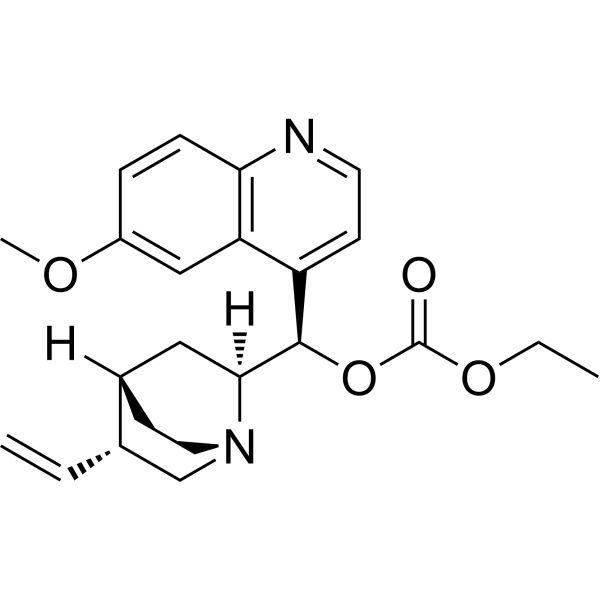
Euquinine is an odorless salt that can be used as
a substitute for quinine. Euquinine has anti-Plasmodium falciparum activity.
Euquinine can be used for the study of multidrug resistance and bioavailability
of Plasmodium falciparum .
|
-
- HY-W023757
-
|
|
Drug Intermediate
|
Others
|
|
N-Hydroxyisonicotinamidine is an amidoxime-based collector. N-Hydroxyisonicotinamidine can be used in the synthesis of substituted α-1,2,4-oxadiazolo esters .
|
-
- HY-134001
-
|
|
Keap1-Nrf2
|
Metabolic Disease
|
|
CBR-470-2, a glycine-substituted analog, can activate NRF2 signaling. CBR-470-2 can be used for the research of modulation glycolysis .
|
-
- HY-W396413
-
|
|
Biochemical Assay Reagents
|
Others
|
|
4-Chlorobutoxy(trimethyl)silane is a silane compound with a terminal cholorine. The cholorine (Cl) is a good leaving group for nucleophilic substitution reactions. The trimethylsilane is commonly used for surface modifications.
|
-
- HY-W344044
-
-
- HY-Z9099
-
|
|
Drug Intermediate
|
Neurological Disease
|
|
Isopromethazine hydrochloride is an impurity in the pharmaceutical preparations of Promethazine (HY-B1296). Promethazine is an N-substituted phenothiazine with the actions and the uses of the antihistamines (H1-receptor antagonists) .
|
-
- HY-106796
-
|
CBM 11
|
Biochemical Assay Reagents
|
Cancer
|
|
(-)-(S)-Bromofosfamide (CBM 11) is an anti-cancer agent and a bromine-substituted IFO analog. (-)-(S)-Bromofosfamide can be studied in research on non-small cell lung cancer .
|
-
- HY-137750
-
-
- HY-W142374
-
|
|
Biochemical Assay Reagents
|
Others
|
|
5-Bromogramine is an indole skeleton substituted with Br and CH3 at certain positions. 5-Bromogramine shows antifouling activity, with IC99 of 0.25 ppm .
|
-
- HY-B2023S
-
|
|
Isotope-Labeled Compounds
Environmental Pollutants
|
Others
|
|
Chlorotoluron-d6 is the deuterium labeled Chlorotoluron . Chlorotoluron (Chlortoluron) is a substituted phenylurea herbicide, is widely used for selective weed control in cereals crops and is an environmental pollutant .
|
-
- HY-W046071
-
|
|
Drug Intermediate
|
Others
|
|
N-Boc-trans-4-fluoro-L-proline is a non-natural amino acid substitute used to construct monoclonal antibodies that specifically target the seed conformation of tau protein .
|
-
- HY-75578
-
-
- HY-32884
-
|
|
Drug Intermediate
|
Others
|
|
2,5-Difluorophenylboronic acid is a phenylboronic acid substituted with 2,5-difluorine groups. 2,5-Difluorophenylboronic acid serves as an organic synthesis intermediate belonging to the fluorinated phenylboronic acid class .
|
-
- HY-129661
-
|
|
Opioid Receptor
|
Neurological Disease
|
|
AH 7959 is an orally active N-substituted cyclohexyl methyl benzamide compound that has analgesic effects, the oral and subcutaneous ED50 of AH 7959 in mice is greater than 100 mg/kg .
|
-
- HY-W100681
-
|
|
Drug Intermediate
|
Others
|
|
2'-Hydroxy-5'-methylacetophenone belongs to the class of organic compounds known as alkyl-phenylketones. These are aromatic compounds containing a ketone substituted by one alkyl group, and a phenyl group.
|
-
- HY-117817
-
|
|
Endogenous Metabolite
|
Metabolic Disease
|
|
Ranelic acid is an organic acid with metal cation chelating activity. Ranelic acid can be used to inhibit osteoporosis and increase bone mineral density. Ranelic acid derivatives exhibit highly substituted thiophene ring structures .
|
-
- HY-172295
-
|
|
Ligands for E3 Ligase
|
Cancer
|
|
Tetrafluoro-thalidomide is a fluorinated Thalidomide analogue. Tetrafluoro-thalidomide is an activator of E3 ligase, which ubiquitinylates proteins for later proteolysis. The structure may be further derivatized via substitution at its fluorines.
|
-
- HY-N9573
-
|
|
Fungal
|
Infection
|
|
Zinniol is a penta-substituted benzene phytotoxin that can be produced by a variety of phytopathogenic fungi. Zinniol can be detected in sunflower tissues in the early stage of infection and may be involved in the occurrence of sunflower diseases .
|
-
- HY-W076794
-
|
|
Bacterial
|
Infection
|
|
3-Bromo-1H-pyrrole-2,5-dione (compound 2c) is a 3-substituted pyrrole-2,5-dione compound with antibacterial activity. 3-Bromo-1H-pyrrole-2,5-dione inhibits pathogenic strains of S. aureus ATCC 25923, E. coli ATCC 25922, P. aeruginosa ATCC 27853, with MIC values of 32 μg/mL, 32 μg/mL, and 64 μg/mL, respectively .
|
-
- HY-155146
-
|
|
Necroptosis
|
Cancer
|
|
Anticancer agent 146 (compound 1.19) is a necroptosis inducer. Anticancer agent 146 has anti-tumor efficacy in the mouse MDA-MB-231 xenograft model .
|
-
- HY-15592S2
-
|
GSK-1265744-d3-1; S/GSK1265744-d3-1
|
Isotope-Labeled Compounds
HIV Integrase
|
Infection
|
|
Cabotegravir d3-1 (GSK-1265744-d3-1) is a deuterium substitute of Cabotegravir. Cabotegravir is a potent HIV integrase inhibitor used in AIDS research
|
-
- HY-P5923
-
|
|
CXCR
|
Inflammation/Immunology
|
|
E70K is a CXCL8 C-terminal peptide with a substitution of glutamic acid (E) 70 with lysine (K). E70K can reduce neutrophil adhesion and migration during inflammation .
|
-
- HY-B2023R
-
|
Chlortoluron (Standard)
|
Herbicide
Reference Standards
Environmental Pollutants
|
Others
|
|
Chlorotoluron (Standard) is the analytical standard of Chlorotoluron. This product is intended for research and analytical applications. Chlorotoluron (Chlortoluron) is a substituted phenylurea herbicide, is widely used for selective weed control in cereals crops and is an environmental pollutant .
|
-
- HY-B0161D
-
|
LY248686 hydrochloride
|
Serotonin Transporter
|
Others
|
|
(R)-Duloxetine (LY248686) Hydrochloride is a napthalenyloxy-substituted amine utilized in binding studies with human serum albumin, and unlike its enantiomer (S)-Duloxetine, it exhibits limited efficacy as a dual serotonin and norepinephrine reuptake inhibitor (SNRI).
|
-
- HY-W009970
-
|
|
Cholinesterase (ChE)
|
Neurological Disease
|
|
N-Benzylglycine ethyl ester is an N-substituted glycine derivative. N-Benzylglycine ethyl ester is bound to PDB code: 1B41. N-Benzylglycine ethyl ester can be used in Alzheimer's disease research .
|
-
- HY-Y0760
-
|
3-Anisic acid; NSC 27014; m-Methoxybenzoic acid
|
Drug Intermediate
|
Infection
|
|
3-Methoxybenzoic acid (3-Anisic acid; NSC 27014; m-Methoxybenzoic acid) is a substituted benzoic acid and precursor for synthesis of hydrazide-hydrazone derivatives active against Gram-positive bacteria, including Bacillus spp .
|
-
- HY-B0400
-
|
Sorbitol; D-Glucitol
|
Environmental Pollutants
Endogenous Metabolite
Bacterial
|
Others
|
|
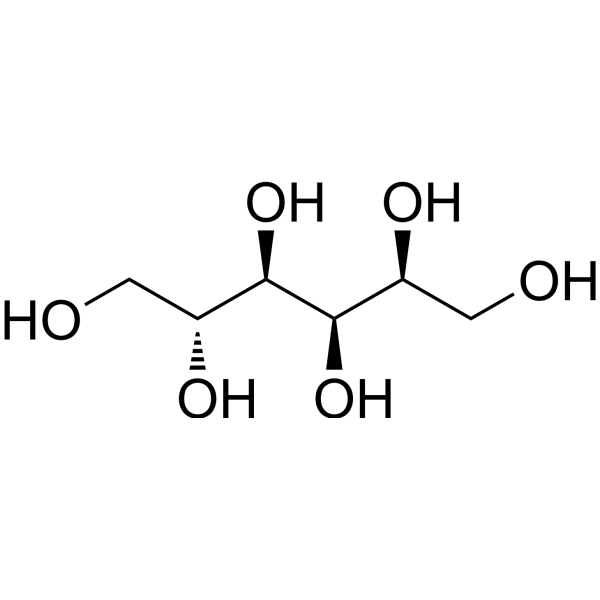
D-Sorbitol (Sorbitol) is a six-carbon sugar alcohol and can used as a sugar substitute. D-Sorbitol can be used as a stabilizing excipient and/or isotonicity agent, sweetener, humectant, thickener and dietary supplement .
|
-
- HY-41494
-
|
2-Methylbenzoic acid
|
Endogenous Metabolite
|
Others
|
|
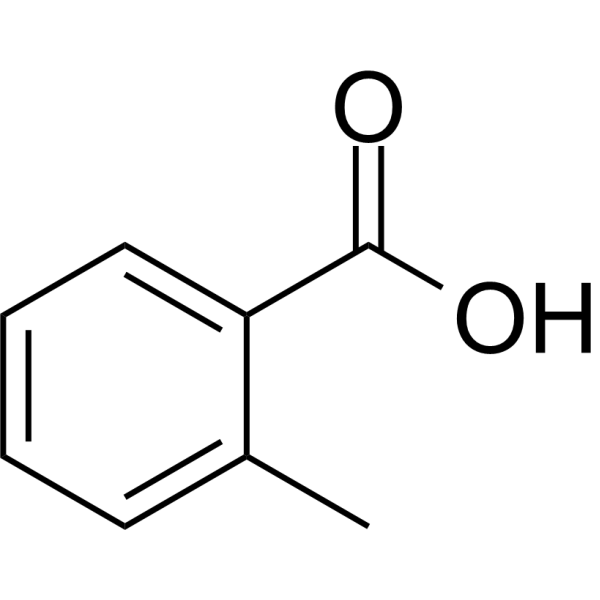
O-toluic acid (2-Methylbenzoic acid) is an organic compound that is benzoic acid with a methyl group substituted at the 2-position. O-toluic acid can act as an exogenous metabolite and holds some chemical research value .
|
-
- HY-47176
-
|
|
Fluorescent Dye
|
Others
|
|
QTZ is a bioluminescence agent for in vivo imaging. QTZ has red-shifted emission and yields very little background. QTZ is a coelenterazine analog with the 4-quinolinyl substitution at the C8 position of the imidazopyrazinone core .
|
-
- HY-106825
-
|
|
Microtubule/Tubulin
|
Cancer
|
|
Clanfenur is a substituted benzoylphenylurea, an analogue of the pesticide fenfluramide, with potential antineoplastic activity. Clanfenur can bind to the colchicine-binding site on β-tubulin, inhibit microtubule polymerization, and thus prevent tumor cell replication .
|
-
- HY-132248
-
-
- HY-146082
-
|
|
Biochemical Assay Reagents
|
Cancer
|
|
(Z)-α-Cyanostilbene (compound 8), a dicyano substituted acrylonitrile, shows selective antiproliferative activity against HeLa and HepG2 cells, with IC50s of 0.33 and 0.52 μM, respectively .
|
-
- HY-113123
-
|
14:0 Lyso PC; 1-myristoyl-sn-glycero-3-phosphatidylcholine
|
Endogenous Metabolite
|
Neurological Disease
Metabolic Disease
|
|
LysoPC(14:0/0:0) is a lysophospholipid (LyP). It is a monoglycerophospholipid in which a phosphorylcholine moiety occupies a glycerol substitution site. LysoPC(14:0/0:0) has potent antispasmodic effect .
|
-
- HY-W348170
-
|
|
Biochemical Assay Reagents
|
Others
|
|
tert-Butyl((5-iodopentyl)oxy)dimethylsilane is a silane compound with a terminal iodine group. The trimethylsilane is commonly used for surface modifications. The iodine (I) is a very good leaving group for nucleophilic substitution reactions.
|
-
- HY-W800806
-
|
|
Biochemical Assay Reagents
|
Others
|
|
Heptyl 8-bromooctanoate is an ester compound that has a terminal bromine. Heptyl 8-bromooctanoate is formed by coupling 8-Bromooctanoic acid to Heptanol. The bromine (Br) is a very good leaving group for nucleophilic substitution reactions.
|
-
- HY-Y1366R
-
|
|
Reference Standards
Endogenous Metabolite
|
Others
|
|
Hydroxyacetone is a dehydration product of glycerol. Hydroxyacetone is a platform for the electrocatalytic synthesis of acetone, 1,2-propanediol and 2-propanol. Hydroxyacetone can also be used as a glycerol substitute for electrocatalytic hydrogenation and hydrodeoxygenation processes .
|
-
- HY-115418
-
|
U-68553B
|
Dopamine Receptor
|
Neurological Disease
|
|
Alentemol (hydrobromide) is a dopamine antagonist and dihydrophenalene analog with dimethylamino substitution and an orthophenolic hydroxy group relative to the amino nitrogen. Alentemol (hydrobromide) does not impair escape response at a dose that completely suppresses conditioned avoidance in rats .
|
-
- HY-41494S1
-
|
|
Isotope-Labeled Compounds
Endogenous Metabolite
|
Others
|
|
o-Toluic acid- 13C is the 13C labeled o-Toluic acid . o-Toluic acid (2-Methylbenzoic acid) is a benzoic acid substituted by a methyl group at position 2. O-Toluic acid plays a role as a xenobiotic metabolite.
|
-
- HY-76547S
-
|
4-Methylbenzoic acid-d4
|
Endogenous Metabolite
|
Others
|
|
p-Toluic acid-d4 is the deuterium labeled p-Toluic acid . p-Toluic acid (4-Methylbenzoic acid) is a substituted benzoic acid and can be used as an intermediate for the synthesis of para-aminomethylbenzoic acid (PAMBA), p-tolunitrile, etc.
|
-
- HY-Y1298
-
|
Acetoacetate methyl ester; Methyl 3-oxobutanoate; Methyl acetoacetate
|
Endogenous Metabolite
|
Metabolic Disease
Inflammation/Immunology
|
|
Methyl acetylacetate is a chemical reagent used in the synthesis of pharmaceuticals for the synthesis of α-substituted acetoacetate and cyclic compounds such as pyrazole, pyrimidine, and coumarin derivatives. Methyl acetoacetate can be used in the study of inflammatory diseases .
|
-
- HY-W800678
-
|
|
Biochemical Assay Reagents
|
Others
|
|
Bromoacetamido-PEG2-AZD is a PEG linker containing an AZD group and a bromide group which is a very good leaving group for nucleophilic substitution reactions. The hydrophilic PEG spacer increases solubility in aqueous media.
|
-
- HY-41494S
-
|
2-Methylbenzoic acid-d7
|
Isotope-Labeled Compounds
Endogenous Metabolite
|
Others
|
|
O-Toluic acid-d7 is the deuterium labeled o-Toluic acid . o-Toluic acid (2-Methylbenzoic acid) is a benzoic acid substituted by a methyl group at position 2. O-Toluic acid plays a role as a xenobiotic metabolite.
|
-
- HY-W399914
-
|
|
Biochemical Assay Reagents
|
Others
|
|
tert-Butyl methyl adipate is a linker with an methyl ester group and a t-butyl ester. The methyl ester groups can be hydrolyzed, reduced, or substituted under different conditions. The t-butyl protected carboxyl group can be deprotected under acidic conditions.
|
-
- HY-W878813
-
|
|
Biochemical Assay Reagents
|
Others
|
|
Tos-PEG22-Tos is a PEG linker containing two tosyl groups. The hydrophilic PEG spacer increases solubility in aqueous media. The tosyl group is a very good leaving group for nucleophilic substitution reactions.
|
-
- HY-76547S2
-
|
4-Methylbenzoic acid-d3
|
Endogenous Metabolite
|
Others
|
|
p-Toluic acid-d3 is the deuterium labeled p-Toluic acid . p-Toluic acid (4-Methylbenzoic acid) is a substituted benzoic acid and can be used as an intermediate for the synthesis of para-aminomethylbenzoic acid (PAMBA), p-tolunitrile, etc.
|
-
- HY-W019358
-
|
|
Biochemical Assay Reagents
Drug Intermediate
|
Others
|
|
2-Hydroxymethyl benzoic acid serves as an effective water substitute in the Passerini reaction. 2-Hydroxymethyl benzoic acid can be used for the synthesis of α-hydroxyamides, which are molecular building blocks for the synthesis of bioactive compounds .
|
-
- HY-W453715
-
|
|
Ligands for E3 Ligase
|
Cancer
|
|
Thalidomide-4-F,5-Br is a Thalidomide analogue. Thalidomide recruits E3 ligase for the ubiquitinylation and subsequent proteolysis of a target protein. This molecule may be derivatized through substitution at fluorine or bromine.
|
-
- HY-76547S1
-
|
4-Methylbenzoic acid-d7
|
Endogenous Metabolite
|
Others
|
|
p-Toluic acid-d7 is the deuterium labeled p-Toluic acid . p-Toluic acid (4-Methylbenzoic acid) is a substituted benzoic acid and can be used as an intermediate for the synthesis of para-aminomethylbenzoic acid (PAMBA), p-tolunitrile, etc.
|
-
- HY-116240
-
|
ddEtUrd
|
HIV
|
Infection
|
|
2′,3′-Dideoxy-5-ethyluridine (ddEtUrd) is an antiretroviral compound with weak anti-HIV activity. The 3'-substituted derivatives of 2′,3′-Dideoxy-5-ethyluridine did not show significant antiviral effects. 2′,3′-Dideoxy-5-ethyluridine was less potent in inhibiting HIV replication in human MT4 lymphocytes. Although phosphorylation induced by 2′,3′-Dideoxy-5-ethyluridine is essential for antiviral activity, there is no strong correlation between its affinity for human dThd kinase or dCyd kinase .
|
-
- HY-W015915R
-
|
Thiourea dioxide (Standard)
|
Reference Standards
Biochemical Assay Reagents
|
Others
|
|
Aminoiminomethanesulphinic acid (Thiourea dioxide) (Standard) is the analytical standard of Aminoiminomethanesulphinic acid. This product is intended for research and analytical applications. Aminoiminomethanesulphinic acid is a solid formaldehyde substitute with both electrophilic and reductive properties. Aminoiminomethanesulphinic acid is commonly used in bleaching processes in the textile industry .
|
-
- HY-W017590
-
|
1-Fluoro-3-nitrobenzene; 3-Fluoronitrobenzene; m-FNBZ
|
Drug Derivative
|
Others
|
|
m-Fluoronitrobenzene (1-Fluoro-3-nitrobenzene) is a meta-substituted benzene derivative bearing fluoro and nitro functional groups. m-Fluoronitrobenzene finds applications in the fields of pharmaceuticals, dyes, pesticides, and synthetic rubber .
|
-
- HY-WAA0142R
-
|
|
Reference Standards
Endogenous Metabolite
|
Metabolic Disease
|
|
6-Ketoestradiol (Standard) is the analytical standard of 6-Ketoestradiol. This product is intended for research and analytical applications. 6-Ketoestradiol can be used to synthesize re-containing 7α-substituted estradiol complexes .
|
-
- HY-155459
-
|
|
Microtubule/Tubulin
Mitosis
|
Cancer
|
|
Tubulin polymerization-IN-57 (compound 5a) is a tubulin inhibitor and is an α-naphthoxy-substituted carbendazim (HY-13582) derivative. Tubulin polymerization-IN-57 induces mitotic arrest and inhibits cancer cell proliferation .
|
-
- HY-131328A
-
|
(R)-LOXO-305
|
Btk
|
Others
|
|
(R)-Pirtobrutinib ((R)-LOXO-305) is a less active enantiomer of Pirtobrutinib. Pirtobrutinib (LOXO-305), a highly selective and non-covalent next generation BTK inhibitor, inhibits diverse BTK C481 substitution mutations .
|
-
- HY-W800842
-
|
|
Biochemical Assay Reagents
|
Others
|
|
1-Ethylnonyl 8-bromooctanoate is a lipid featuring a bromide along an octanoate chain linking to a C11 chain. 1-Ethylnonyl 8-bromooctanoate can be derivatized via substitution at the bromide leaving group.
|
-
- HY-W009301R
-
|
|
Estrogen Receptor/ERR
Reference Standards
|
Others
|
|
6-Ketoestradiol (Standard) is the analytical standard of 6-Ketoestradiol. This product is intended for research and analytical applications. 6-Ketoestradiol can be used to synthesize re-containing 7α-substituted estradiol complexes .
|
-
- HY-W052066
-
|
|
Biochemical Assay Reagents
|
Others
|
|
tert-Butyl (3-chloropropyl)carbamate is a compound with a t-butyl and a terminal choloride. The cholorine (Cl) is a good leaving group for nucleophilic substitution reactions. The Boc group can be deprotected under mild acidic conditions to form the free amine.
|
-
- HY-P2890D
-
|
|
Biochemical Assay Reagents
|
Metabolic Disease
|
|
Laccase, Agaricus bisporus (EC 1.10.3.2) is a blue copper oxidase that reduces molecular oxygen to water. Laccase oxidizes polyphenols, methoxy-substituted phenols and diamines, but not tyrosine. Oxidation by laccase is an one-electron reaction that generates a free radical.
|
-
- HY-W190786
-
|
|
Biochemical Assay Reagents
|
Others
|
|
Bromoacetamido-PEG2-azide is a heterobifunctional PEG linker containing a reactive bromoacetamido and a terminal azide.The bromoacetamidogroup is a very reactive group for nucleophilic substitution. The azide group can react with alkyne, BCN, DBCO via Click Chemistry.
|
-
- HY-W053842
-
|
|
Biochemical Assay Reagents
|
Others
|
|
tert-Butyl 3-iodopropylcarbamate is a compound with a t-butyl and a terminal iodine. The iodine (I) is a very good leaving group for nucleophilic substitution reactions. The Boc group can be deprotected under mild acidic conditions to form the free amine.
|
-
- HY-114983
-
|
(S)-9-Allyl-10-Hydroxycamptothecin
|
Topoisomerase
|
Cancer
|
|
Chimmitecan ((S)-9-Allyl-10-Hydroxycamptothecin), a novel 9-small-alkyl-substituted lipophilic Camptothecin (HY-16560), is a potent inhibitor of topoisomerase I. Chimmitecan exhibits anticancer activity .
|
-
- HY-W190913
-
|
|
ADC Linker
|
Cancer
|
|
DBCO-PEG4-Val-Cit-PAB-PNP is a cleavable ADC linker. The Val-Cit will specifically be cleaved by Cathepsin B. PNP can be substituted by amine-containing payload. DBCO enable click chemistry with azide molecules.
|
-
- HY-165101
-
|
10-Methyl dodecanoic acid; FA 13:0
|
Bacterial
|
Others
|
|
10-Methyl lauric acid (10-Methyl dodecanoic acid) is a alkyl-substituted fatty acid. 10-Methyl lauric acid can be found in the Gram-positive bacteria B. acetylicum, as well as the mandibular gland secretions of carpenter ant species .
|
-
- HY-W016455
-
|
|
Biochemical Assay Reagents
|
Others
|
|
6-Bromo-1-hexanol posesses a terminal bromine and hydroxylic group. The bromine is a very good leaving group for nucleophilic substitution reactions. The hydroxyl group enables further derivatization or replacement with other reactive functional groups.
|
-
- HY-111168
-
|
|
GSK-3
|
Cancer
|
|
MLS-2064 is a 3'-substituted 7-haloindirubin with antitumor activity. MLS-2064 induces caspase-independent cell death. MLS-2064 induces dose-dependent cell death in various human cancer cell lines. MLS-2064 shows no significant inhibitory activity against CDK1 and CDK5 kinases, and only weak inhibitory activity against GSK-3 kinase (IC50: 5 μM). MLS-2064 can be used in research related to colon cancer, breast cancer, lung cancer, prostate cancer, liver cancer, and neuroblastoma .
|
-
- HY-172720
-
|
|
Biochemical Assay Reagents
|
Others
|
|
Azide-PEG5-Ms serves as a PEG linker containing an azide that reacts with BCN, DBCO, alkyne via Click Chemistry and mesyl group that is a good leaving group for nucleophilic substitution reactions. The PEG spacer imparts water solubility.
|
-
- HY-E70984
-
|
|
Biochemical Assay Reagents
|
Metabolic Disease
|
|
Apotryptophanase, Escherichia coli (EC 4.1.99.1) hydrolizes tryptophan and is capable of catalyzing α,β-elimination reactions with a number of substituted amino acids, including S-methyl-, S-ethyl-and S-benzyl-L-cysteine. DTNB inactivates tryptophanase.
|
-
- HY-P3980
-
|
|
HIV Protease
|
Infection
|
|
HIV-1, HIV-2 Protease Substrate is the substrate of HIV-1, HIV-2 protease. And there are 4 residues for conservative substitutions of the substrate binding residues of HIV-1 and HIV-2 protease .
|
-
- HY-109101AS2
-
|
|
Isotope-Labeled Compounds
DNA/RNA Synthesis
|
Neurological Disease
|
|
Risdiplam-hydroxylate-d6 is a Risdiplam-hydroxylate tritium substitute. Risdiplam (RG7916) is an orally administered, centrally and peripherally distributed SMN2 pre-mRNA splicing modifier that increases survival motor neuron (SMN) protein levels .
|
-
- HY-109101AS1
-
|
|
Isotope-Labeled Compounds
DNA/RNA Synthesis
|
Neurological Disease
|
|
Risdiplam-hydroxylate-d3 is a Risdiplam-hydroxylate tritium substitute. Risdiplam (RG7916) is an orally administered, centrally and peripherally distributed SMN2 pre-mRNA splicing modifier that increases survival motor neuron (SMN) protein levels .
|
-
- HY-W591352
-
|
|
Ligands for E3 Ligase
|
Cancer
|
|
Thalidomide-5-(C6-amine) is a PROTAC building block that contains an E3 ligase ligand substituted with a terminal amine group. The amine group can react with NHS ester group or carboxylic acid in the presence of EDC or HATU.
|
-
- HY-41494R
-
|
2-Methylbenzoic acid (Standard)
|
Reference Standards
Endogenous Metabolite
|
Others
|
|
o-Toluic acid (Standard) is the analytical standard of o-Toluic acid. This product is intended for research and analytical applications. o-Toluic acid (2-Methylbenzoic acid) is a benzoic acid substituted by a methyl group at position 2. O-Toluic acid plays a role as a xenobiotic metabolite.
|
-
- HY-B0400B
-
|
Sorbito, for cell culture; D-Glucitol, for cell culture
|
Environmental Pollutants
Biochemical Assay Reagents
|
Others
|
|
D-Sorbitol (D-Glucitol), for cell culture is a six-carbon sugar alcohol that can be used as a sugar substitute. D-Sorbitol, for cell culture serves as an osmotic regulator, cryoprotectant and carbon source in various plant and microbial cell culture media .
|
-
- HY-W075603
-
|
2,6-Diiodo-Pyrromethene 546
|
Fluorescent Dye
|
Others
|
|
2,6-Diiodo-BODIPY 493/503 is an F-Bodipy fluorescent dye with diiodo substitution at the (pyrrole) 2,6 position. 2,6-Diiodo-BODIPY 493/503 has a pyrrole iodine substituent that turns it red .
|
-
- HY-P2890H
-
|
|
Biochemical Assay Reagents
|
Metabolic Disease
|
|
Laccase, Pleurotus ostreatus (mushroom) (EC 1.10.3.2) is a blue copper oxidase that reduces molecular oxygen to water. Laccase oxidizes polyphenols, methoxy-substituted phenols and diamines, but not tyrosine. Oxidation by laccase is an one-electron reaction that generates a free radical.
|
-
- HY-145554
-
|
|
Drug Derivative
|
Others
|
|
Bafrekalant is a diazabicyclic substituted imidazo[l,2-a]pyrimidine-derivative. Bafrekalant has the potential for the research of breathing disorders, including sleep-related breathing disorders such as obstructive and central sleep apnea and snoring (extracted from patent WO2018228907A1).
|
-
- HY-13600S1
-
-
- HY-P2890I
-
|
|
Biochemical Assay Reagents
|
Metabolic Disease
|
|
Laccase, White rot fungi (EC 1.10.3.2) is a blue copper oxidase that reduces molecular oxygen to water. Laccase oxidizes polyphenols, methoxy-substituted phenols and diamines, but not tyrosine. Oxidation by laccase is an one-electron reaction that generates a free radical.
|
-
- HY-W015451
-
|
2,7-DHN; Naphthalene-2,7-diol
|
Fungal
|
Others
|
|
2,7-Dihydroxynaphthalene (2,7-DHN) is a substrate of a new group of aromatic prenyltransferases in fungi and can be catalyzed to undergo a regiospecific prenylation reaction. 2,7-Dihydroxynaphthalene can undergo reactions such as oxidation and substitution .
|
-
- HY-N0216S
-
|
|
Bacterial
Fungal
Endogenous Metabolite
|
Infection
|
|
Benzoic acid-d5 is a deuterium substitute for Benzoic acid. Benzoic acid is an aromatic alcohol that occurs naturally in many plants and is a common additive in food, beverages, cosmetics and other products. Benzoic acid can act as a preservative by inhibiting bacteria and fungi .
|
-
- HY-W248726
-
|
|
Biochemical Assay Reagents
|
Others
|
|
tert-Butyl (6-iodohexyl)carbamate is a six carbon linker containing an iodine group and a t-butyl ester. The iodine (I) acts as a good leaving group for nucleophilic substitution reactions. The t-butyl ester groups can be deprotected under acidic conditions.
|
-
- HY-W251756
-
|
|
Biochemical Assay Reagents
|
Others
|
|
3-(2-Iodoethoxy)prop-1-yne is a crosslinker that can be used in copper catalyzed azide-alkyne Click Chemistry to form a stable triazole linkage with azides. The iodine (I) acts as a good leaving group for nucleophilic substitution reactions.
|
-
- HY-W110980
-
|
Anthracen-2-amine; 2-Anthramine
|
DNA/RNA Synthesis
|
Cancer
|
|
2-Aminoanthracene (Anthracen-2-amine) is a nitrogen substituted polycyclic aromatic hydrocarbon. 2-Aminoanthracene is mutagenic and carcinogenic. 2-Aminoanthracene acts by intercalating into DNA, causing structural distortion and interfering with DNA replication and transcription .
|
-
- HY-D2267
-
|
|
Fluorescent Dye
|
Others
|
|
JF646-Hoechst is a fluorescent red DNA probe that is an ideal substitute for large oligonucleotide-coupled antibodies used in PAINT experiments, especially for bacterial studies. JF646-Hoechst excitation/emission maximum =655/670 nm .
|
-
- HY-N16040
-
|
|
Liposome
|
Others
|
|
DMG-pSar25 is a double lipid-tailed polysarcosine lipid with 25 sarcosine moieties, serving as a PEG lipid substitute in lipid nanoparticle formulations for mRNA delivery. DMG-pSar25 supports mRNA delivery in lipid nanoparticle formulations .
|
-
- HY-131800A
-
|
|
Nucleoside Antimetabolite/Analog
|
Others
|
|
3'-NH2-ATP tetrasodium is an ATP substitute created by inserting an amino acid at the C3 position of ATP. 3'-NH2-ATP tetrasodium catalyzes RNA synthesis in the presence of RNA polymerase .
|
-
- HY-B0847R
-
|
|
Reference Standards
Fungal
Reactive Oxygen Species (ROS)
|
Infection
|
|
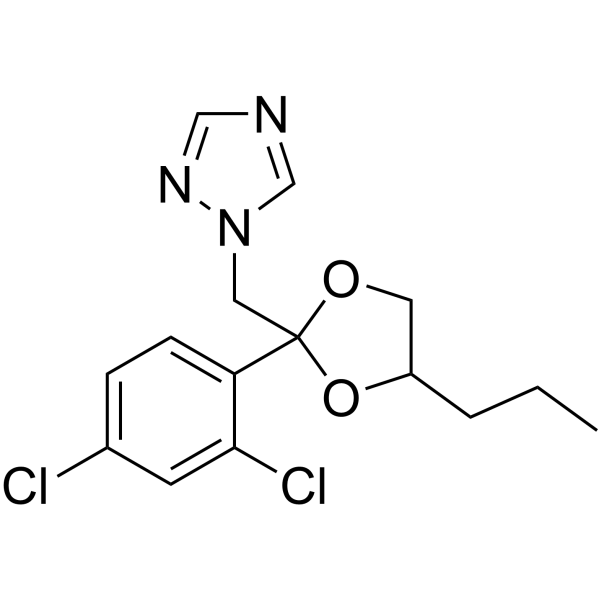
Propiconazole (Standard) is the analytical standard of Propiconazole. This product is intended for research and analytical applications. Propiconazole is an orally active N-substituted triazole used as a fungicide. Propiconazole is a mouse liver hepatotoxicant and a hepatocarcinogen that has adverse reproductive and developmental toxicities in experimental animals .
|
-
- HY-154971
-
|
|
Apoptosis
|
Cancer
|
|
Ara-SH is a Cytarabine mercaptopropionic acid-substituted derivative. Ara-SH is used as the trigger to fabricate a smart Cytarabine and Venetoclax-coloaded nanoparticle (AV-NP) through self-assembly. Ara-SH exhibits remarkable synergistic antileukemia effects in vitro and in vivo .
|
-
- HY-19842
-
|
CVT 3619
|
Adenosine Receptor
|
Cardiovascular Disease
Metabolic Disease
|
|
GS-9667 (CVT 3619), a novel N 6-5'-substituted adenosine analog, is a selective, partial agonist of the A1 adenosine receptor (A1AdoR). GS-9667 binds to adipocyte membranes with high (KH=14 nM) and low (KL=5.4 μM) affinities. GS-9667 reduces cyclic AMP content and release of nonesterified fatty acids from epididymal adipocytes with IC50 values of 6 nM and 44 nM, respectively. GS-9667 inhibits lipolysis and has the potential for Type 2 diabetes (T2DM) and dyslipidemia via lowering of free fatty acids (FFA) .
|
-
- HY-B0400S7
-
|
Sorbitol-d1-2; D-Glucitol-d1-2
|
Endogenous Metabolite
|
Others
|
|
D-Sorbitol-d-2 is the deuterium labeled D-Sorbitol. D-Sorbitol (Sorbitol) is a six-carbon sugar alcohol and can used as a sugar substitute. D-Sorbitol can be used as a stabilizing excipient and/or isotonicity agent, sweetener, humectant, thickener and di
|
-
- HY-B0400S10
-
|
Sorbitol-d4; D-Glucitol-d4
|
Endogenous Metabolite
|
Others
|
|
D-Sorbitol-d4 is the deuterium labeled D-Sorbitol. D-Sorbitol (Sorbitol) is a six-carbon sugar alcohol and can used as a sugar substitute. D-Sorbitol can be used as a stabilizing excipient and/or isotonicity agent, sweetener, humectant, thickener and diet
|
-
- HY-W014895R
-
|
Ethyl p-toluenesulfonate (Standard); Ethyl tosylate (Standard)
|
Reference Standards
Drug Intermediate
|
Others
|
|
Ethyl 4-methylbenzenesulfonate (Ethyl p-toluenesulfonate; Ethyl tosylate) (Standard) is the analytical standard of Ethyl 4-methylbenzenesulfonate. This product is intended for research and analytical applications. Ethyl 4-methylbenzenesulfonate is a drug intermediate that can be used for the synthesis of alkyl and substituted alkyl fluorides.
|
-
- HY-B0400S4
-
|
Sorbitol-d2; D-Glucitol-d2
|
Isotope-Labeled Compounds
Endogenous Metabolite
|
Others
|
|
D-Sorbitol-d2 is the deuterium labeled D-Sorbitol. D-Sorbitol (Sorbitol) is a six-carbon sugar alcohol and can used as a sugar substitute. D-Sorbitol can be used as a stabilizing excipient and/or isotonicity agent, sweetener, humectant, thickener and diet
|
-
- HY-120948
-
|
|
Fluorescent Dye
|
Others
|
|
RU 45196 is an 11 beta-substituted 19-norsteroid of the estra-4,9-diene series. RU 45196 displays fluorescence properties (excitation at 480 nm, emission at 525 nm) as well as high binding affinities for the glucocorticoid and progesterone receptors .
|
-
- HY-157742
-
|
|
Biochemical Assay Reagents
|
Others
|
|
1,3-Dioleoyl-2-elaidoyl glycerol (OEO) is a triacylglycerol. 1,3-Dioleoyl-2-elaidoyl glycerol can be used for the research of the effects of unsaturation and sn-2 substitution on the polymorphic behavior of triacylglycerols .
|
-
- HY-W591972
-
|
|
Biochemical Assay Reagents
|
Others
|
|
6-Hydroxyhexyl 4-methylbenzenesulfonate is a six carbon linker containing a hydroxyl group and a tosyl group. The hydroxyl group enables further derivatization or replacement with other reactive functional groups. The tosyl group is a very good leaving group for nucleophilic substitution reactions.
|
-
- HY-103656R
-
|
TPP (Standard); Tetraphenylporphine (Standard); meso-Tetraphenylporphyrin (Standard)
|
Reference Standards
Others
|
Cancer
|
|
Tetraphenylporphyrin (Standard) is the analytical standard of Tetraphenylporphyrin (HY-103656). This product is intended for research and analytical applications. Tetraphenylporphyrin (TPP) is a symmetrically substituted porphyrin-based heterocyclic compound and used as a structural block for supramolecular synthesis. Tetraphenylporphyrin derivatives can be used for cancer research .
|
-
- HY-W800743
-
|
|
Biochemical Assay Reagents
|
Others
|
|
Heptyl 6-bromohexanoate is a chemical reagent featuring a bromide linked to a larger ester chain consisting of a C6 ester coupled to a C7 alcohol. Bromide is easily displaced by nucleophiles in substitution reactions. Compounds such as this may be used as intermediates in building lipids for use in lipid nanoparticles.
|
-
- HY-D1549
-
|
|
Fluorescent Dye
|
Others
|
|
o-Pah is a BODIPY derivative with an -NH2 and -OH substituted meso-Ph group. o-Pah exhibits metal-induced J-aggregation in the presence of Cu 2+ and a specific fluorescence enhancement for Hg 2+ (Ex/Em=483/(495-600) nM) .
|
-
- HY-D1810
-
|
|
Fluorescent Dye
|
Others
|
|
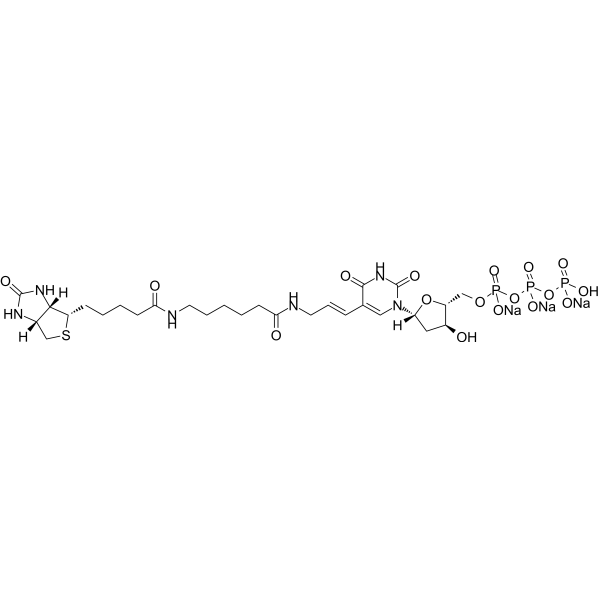
Sulfo-Cy3-E-dUTP is enzymatically incorporated into DNA/cDNA as a substitute for its natural counterpart, dTTP. Sulfo-Cy3-E-dUTP can be used to produce biotinylated DNA probes for various detection applications .
|
-
- HY-181564
-
|
|
Acyltransferase
|
Metabolic Disease
|
|
MGAT2-IN-7 (compound 27Q) is a substituted benzenesulfonamide compound and also a monoacylglycerol acyltransferase 2 (MGAT2) inhibitor. MGAT2-IN-7 is used for research on obesity and metabolic dysfunction-associated steatotic liver disease (MASLD) .
|
-
- HY-179080
-
|
|
Fluorescent Dye
|
Others
|
|
FITC-DEAE-Polysucrose 70 is FITC-labeled DEAE-Polysucrose 70 (HY-179072). DEAE-Polysucrose 70 is a polysucrose substituted with diethylaminoethyl (DEAE) groups. FITC-DEAE-Polysucrose 70 is mainly used for permeability and microcirculation studies (Ex/Em = 488/525 nm) .
|
-
- HY-B0400S9
-
|
Sorbitol-d2-2; D-Glucitol-d2-2
|
Endogenous Metabolite
|
Others
|
|
D-Sorbitol-d2-2 is the deuterium labeled D-Sorbitol. D-Sorbitol (Sorbitol) is a six-carbon sugar alcohol and can used as a sugar substitute. D-Sorbitol can be used as a stabilizing excipient and/or isotonicity agent, sweetener, humectant, thickener and di
|
-
- HY-B0400S8
-
|
Sorbitol-d2-1; D-Glucitol-d2-1
|
Endogenous Metabolite
|
Others
|
|
D-Sorbitol-d2-1 is the deuterium labeled D-Sorbitol. D-Sorbitol (Sorbitol) is a six-carbon sugar alcohol and can used as a sugar substitute. D-Sorbitol can be used as a stabilizing excipient and/or isotonicity agent, sweetener, humectant, thickener and di
|
-
- HY-N0614S
-
|
E955-d6; Trichlorosucrose-d6
|
Endogenous Metabolite
|
Cancer
|
|
Sucralose-d6 is deuterium labeled Sucralose. Sucralose?(E955; Trichlorosucrose) is a?non-nutritive?artificial?sweetener and sugar substitute. Sucralose can activate a conserved neural fasting response and thereby exerts an appetite-stimulating effect in rodents .
|
-
- HY-W458018
-
|
|
Ligands for E3 Ligase
|
Cancer
|
|
Thalidomide-4-Br,7-F is an E3 ligase activator featuring a bromine and a fluorine. E3 ligase is a protein that marks other proteins for proteolytic destruction by labeling them with ubiquitin. Both halogens may be substituted for further derivitization.
|
-
- HY-D2854E
-
|
|
Fluorescent Dye
|
Others
|
|
FITC-PEG10000-CL is a fluorescent dye composed of FITC (HY-66019), PEG and chlorine (-Cl). The chlorine group is an electrophilic active group that can be used for nucleophilic substitution reactions and facilitate subsequent chemical modification (Ex/Em = 488/525 nm).
|
-
- HY-U00287
-
|
|
Beta-secretase
|
Neurological Disease
|
|
BACE-IN-1 (Compound 13) is a substituted lmidazo[1 ,2-a]pyridine derivative which can inhibit β-site amyloid precursor protein-cleaving enzyme (BACE) and that may be useful in the treatment of diseases in which BACE is involved, such as Alzheimer's disease.
|
-
- HY-Y0603
-
|
m-Hydroxyacetophenone
|
Drug Intermediate
Fungal
|
Others
|
|
3-Hydroxyacetophenone (m-Hydroxyacetophenone) is a hydroxy-substituted alkyl phenyl ketone and also a plant defensin in carnations. 3-Hydroxyacetophenone has antifusarium activity. In addition, 3-Hydroxyacetophenone can be used to synthesize Rivastigmine (HY-17368) .
|
-
- HY-W777866
-
|
|
Biochemical Assay Reagents
|
Others
|
|
(Rac)-1-Linoleoyl-2-stearoyl-3-chloropropanediol is a diacylglycerol that contains Linoleic acid at the sn-1 position and stearic acid group at the sn-2 position. The chlorine is a good leaving group and can undergo substitution reactions.
|
-
- HY-W591971
-
|
|
Biochemical Assay Reagents
|
Others
|
|
5-((tert-Butoxycarbonyl)amino)pentyl 4-methylbenzenesulfonate is a PEG linker containing a Boc protected amine and a tosyl group. The protected amine can be deprotected under mild acidic conditions. The tosyl group is a very good leaving group for nucleophilic substitution reactions.
|
-
- HY-B0400S1
-
|
Sorbitol-13C; D-Glucitol-13C
|
Endogenous Metabolite
|
Others
|
|
D-Sorbitol- 13C is the 13C labeled D-Sorbitol. D-Sorbitol (Sorbitol) is a six-carbon sugar alcohol and can used as a sugar substitute. D-Sorbitol can be used as a stabilizing excipient and/or isotonicity agent, sweetener, humectant, thickener and dietary s
|
-
- HY-W800661
-
|
|
Biochemical Assay Reagents
|
Others
|
|
Tos-PEG3-methyl ester is a PEG linker with tosyl and methyl ester moieties. The tosyl group is a very good leaving group for nucleophilic substitution reactions. The hydrophilic PEG linker increases the water solubility of the compound. Methyl ester can be hydrolyzed under strong basic condition.
|
-
- HY-P11246
-
|
|
RXFP Receptor
|
Metabolic Disease
|
|
A13:B7-24-GG is an engineered analogue of insulin-like peptide 5 (INSL5), a selective RXFP4 agonist with a Ki value of 2.29 nM. A13:B7-24-GG has an extremely low binding affinity for RXFP3 (Ki = 602.56 nM) and an inhibitory effect on cAMP (EC50) of 1.17 nM. Activation of RXFP4 by A13:B7-24-GG leads to the recruitment of β-Arrestin2, with an EC50 of 22.39 nM. A13:B7-24-GG can be used for research on chronic constipation .
|
-
- HY-125313
-
|
|
Orphan GPCR
|
Cardiovascular Disease
Inflammation/Immunology
|
|
PSB-1737 is a human-selective GPR17 agonist with an EC50 for human GPR17 of 270 nM, and its activity on murine GPR17 is relatively weak (EC50 > 10 μM). PSB-1737 shows no significant inhibition at the glycine binding site of NMDA receptors, and has no significant agonistic or antagonistic activity on P2Y receptor subtypes. PSB-1737 can be used in demyelinating diseases (such as multiple sclerosis) or inflammatory-related anemia .
|
-
- HY-206852
-
|
|
Drug Intermediate
Phosphodiesterase (PDE)
|
Neurological Disease
|
|
PF-06445974 precursor (Compound 28) is a nitro precursor and synthetic intermediate. PF-06445974 precursor can be used for the synthesis of PF-06445974 (HY-119190). PF-06445974 is a positron emission tomography (PET) compound that acts potently on PDE4B .
|
-
- HY-W598199
-
|
|
Biochemical Assay Reagents
|
Others
|
|
Ethyl 4-azidobutyrate comprises an ethyl ester and a terminal azide group with a 3-carbon linker. The azide can react with alkyne, BCN, DBCO via Click Chemistry to yield a stable triazole linkage. The methyl ester groups can be hydrolyzed, reduced, or substituted under different conditions.
|
-
- HY-D2856
-
|
|
Fluorescent Dye
|
Others
|
|
FITC-PEG1000-Br is a fluorescent dye composed of FITC (HY-66019), PEG and chlorine (-Cl). The chlorine group is an electrophilic active group that can be used for nucleophilic substitution reactions and facilitate subsequent chemical modification (Ex/Em=488/525 nm).
|
-
- HY-W800662
-
|
|
Biochemical Assay Reagents
|
Others
|
|
Bromo-PEG2-methyl ester is a PEG linker containing a bromide moiety and a methyl ester. The bromide (Br) is a very good leaving group for nucleophilic substitution reactions. The hydrophilic PEG spacer increases solubility in aqueous media. Methyl ester can be hydrolyzed under strong basic condition.
|
-
- HY-B0400S
-
|
Sorbitol-d8; D-Glucitol-d8
|
Endogenous Metabolite
|
Others
|
|
D-Sorbitol-d8 is the deuterium labeled D-Sorbitol. D-Sorbitol (Sorbitol) is a six-carbon sugar alcohol and can used as a sugar substitute. D-Sorbitol can be used as a stabilizing excipient and/or isotonicity agent, sweetener, humectant, thickener and dietary supplement .
|
-
- HY-D2854B
-
|
|
Fluorescent Dye
|
Others
|
|
FITC-PEG2000-CL is a fluorescent dye composed of FITC (HY-66019), PEG and chlorine (-Cl). The chlorine group is an electrophilic active group that can be used for nucleophilic substitution reactions and facilitate subsequent chemical modification (Ex/Em=488/525 nm).
|
-
- HY-D2854D
-
|
|
Fluorescent Dye
|
Others
|
|
FITC-PEG5000-CL is a fluorescent dye composed of FITC (HY-66019), PEG and chlorine (-Cl). The chlorine group is an electrophilic active group that can be used for nucleophilic substitution reactions and facilitate subsequent chemical modification (Ex/Em=488/525 nm).
|
-
- HY-42680A
-
|
|
Biochemical Assay Reagents
|
Metabolic Disease
|
|
Tagatose is a low-calorie sugar substitute. Tagatose exhibits beneficial effects on postprandial hyperglycaemia and hyperinsulinaemia. Tagatose can induce weight loss and raise high-density lipoprotein cholesterol. Tagatose has antioxidant activity. Tagatose can be studied in research on type 2 diabetes and obesity .
|
-
- HY-D2856A
-
|
|
Fluorescent Dye
|
Others
|
|
FITC-PEG2000-Br is a fluorescent dye composed of FITC (HY-66019), PEG and chlorine (-Cl). The chlorine group is an electrophilic active group that can be used for nucleophilic substitution reactions and facilitate subsequent chemical modification (Ex/Em=488/525 nm).
|
-
- HY-W197430
-
|
|
Biochemical Assay Reagents
|
Others
|
|
Ethyl 6-azidohexanoate comprises an ethyl ester and a terminal azide group with a 5-carbon linker. The azide can react with alkyne, BCN, DBCO via Click Chemistry to yield a stable triazole linkage. The methyl ester groups can be hydrolyzed, reduced, or substituted under different conditions.
|
-
- HY-D2854A
-
|
|
Fluorescent Dye
|
Others
|
|
FITC-PEG1000-CL is a fluorescent dye composed of FITC (HY-66019), PEG and chlorine (-Cl). The chlorine group is an electrophilic active group that can be used for nucleophilic substitution reactions and facilitate subsequent chemical modification (Ex/Em=488/525 nm).
|
-
- HY-D2854C
-
|
|
Fluorescent Dye
|
Others
|
|
FITC-PEG3400-CL is a fluorescent dye composed of FITC (HY-66019), PEG and chlorine (-Cl). The chlorine group is an electrophilic active group that can be used for nucleophilic substitution reactions and facilitate subsequent chemical modification (Ex/Em=488/525 nm).
|
-
- HY-W598198
-
|
|
Biochemical Assay Reagents
|
Others
|
|
Ethyl 3-azidopropanoate comprises an ethyl ester and a terminal azide group with a 2-carbon linker. The azide can react with alkyne, BCN, DBCO via Click Chemistry to yield a stable triazole linkage. The methyl ester groups can be hydrolyzed, reduced, or substituted under different conditions.
|
-
- HY-D2856B
-
|
|
Fluorescent Dye
|
Others
|
|
FITC-PEG3400-Br is a fluorescent dye composed of FITC (HY-66019), PEG and chlorine (-Cl). The chlorine group is an electrophilic active group that can be used for nucleophilic substitution reactions and facilitate subsequent chemical modification (Ex/Em=488/525 nm).
|
-
- HY-D2854
-
|
|
Fluorescent Dye
|
Others
|
|
FITC-PEG400-CL is a fluorescent dye composed of FITC (HY-66019), PEG and chlorine (-Cl). The chlorine group is an electrophilic active group that can be used for nucleophilic substitution reactions and facilitate subsequent chemical modification (Ex/Em=488/525 nm).
|
-
- HY-D2856D
-
|
|
Fluorescent Dye
|
Others
|
|
FITC-PEG10000-Br is a fluorescent dye composed of FITC (HY-66019), PEG and chlorine (-Cl). The chlorine group is an electrophilic active group that can be used for nucleophilic substitution reactions and facilitate subsequent chemical modification (Ex/Em=488/525 nm).
|
-
- HY-D2856C
-
|
|
Fluorescent Dye
|
Others
|
|
FITC-PEG5000-Br is a fluorescent dye composed of FITC (HY-66019), PEG and chlorine (-Cl). The chlorine group is an electrophilic active group that can be used for nucleophilic substitution reactions and facilitate subsequent chemical modification (Ex/Em=488/525 nm).
|
-
- HY-B0400S2
-
|
Sorbitol-13C-1; D-Glucitol-13C-1
|
Isotope-Labeled Compounds
Endogenous Metabolite
|
Others
|
|
D-Sorbitol- 13C-1 is the 13C labeled D-Sorbitol. D-Sorbitol (Sorbitol) is a six-carbon sugar alcohol and can used as a sugar substitute. D-Sorbitol can be used as a stabilizing excipient and/or isotonicity agent, sweetener, humectant, thickener and dietary
|
-
- HY-W440809
-
|
|
Biochemical Assay Reagents
|
Others
|
|
Nonyl 8-bromooctanoate is a chemical reagent featuring a bromide linked to a larger ester chain consisting of a C8 ester coupled to a C9 chain. Bromide is easily displaced by nucleophiles in substitution reactions.Nonyl 8-bromooctanoate can be used as an intermediate in building lipids for use in lipid nanoparticles.
|
-
- HY-P5578
-
|
|
GCGR
|
Metabolic Disease
|
|
A8SGLP-1 is an orally active GLP-1 analogue that the alanine at position 8 substituted with serine. A8SGLP-1 reduces blood glucose in db/db mice without affecting its function .
|
-
- HY-B0400S15
-
|
Sorbitol-18O-1; D-Glucitol-18O-1
|
Endogenous Metabolite
|
Others
|
|
D-Sorbitol- 18O-1 is the 18O labeled D-Sorbitol. D-Sorbitol (Sorbitol) is a six-carbon sugar alcohol and can used as a sugar substitute. D-Sorbitol can be used as a stabilizing excipient and/or isotonicity agent, sweetener, humectant, thickener and dietary
|
-
- HY-W591353
-
|
|
E3 Ligase Ligand-Linker Conjugates
|
Cancer
|
|
Thalidomide-5-(PEG2-amine) is a PROTAC building block that contains an E3 ligase ligand substituted with a terminal amine group. The amine group can react with NHS ester group or carboxylic acid in the presence of EDC or HATU. The PEG spacer improves water solubility.
|
-
- HY-W586320
-
|
|
Ligands for E3 Ligase
|
Cancer
|
|
Thalidomide-5-Br,6-F is a Thalidomide analogue. Thalidomide-5-Br,6-F is an activator of E3 ligase, which ubiquitinylates proteins for proteolysis. The structure may be further derivatized via substitution at fluorine or bromine.
|
-
- HY-W590574
-
|
|
Biochemical Assay Reagents
|
Others
|
|
Propargyl-PEG4-Ms has an alkyne group and a mesylate group. The mesylate group is a sulfonate ester for nucleophilic substitution reactions (SN2). The alkyne group can react with azides via copper catalyzed Click Chemistry reactions. The PEG units help increase the solubility of the molecule in aqueous environments.
|
-
- HY-W591973
-
|
|
Biochemical Assay Reagents
|
Others
|
|
OTs-C6-NHBoc is a six carbon linker containing a tosyl group and Boc-protected amine group. The tosyl group is a very good leaving group for nucleophilic substitution reactions. The Boc group can be deprotected under mild acidic conditions to form a free amine.
|
-
- HY-W092078
-
|
|
Biochemical Assay Reagents
|
Others
|
|
tert-Butyl (4-iodobutyl)carbamate is a four carbon linker containing a Boc-protected amino group and an iodine group. The Boc group can be deprotected under mild acidic conditions to form the free amine. Iodine (I) is a very good leaving group for nucleophilic substitution reactions.
|
-
- HY-W131404
-
|
|
Biochemical Assay Reagents
|
Others
|
|
Boc-Aeg-OEt is an aminoethylglycine monomer based on a Boc- and ethyl ester-protected AEG backbone, with substitution by a pyridine ligand. Boc-Aeg-OEt reduces steric hindrance in a series of dipeptide synthesis reactions, and has higher solubility in common solvents than the Fmoc-aeg-OtBu backbone .
|
-
- HY-124296
-
|
|
5-HT Receptor
|
Neurological Disease
|
|
2C-TFM hydrochloride is a ,5-dimethoxyphenethylamines compound with a para-trifluoromethyl substitution. 2C-TFM hydrochloride is a potent agonist of the 5-HT receptor subtypes 5-HT2A and 5-HT2C .
|
-
- HY-B0400S3
-
|
Sorbitol-13C-2; D-Glucitol-13C-2
|
Isotope-Labeled Compounds
Endogenous Metabolite
|
Others
|
|
D-Sorbitol- 13C-2 is the 13C labeled D-Sorbitol. D-Sorbitol (Sorbitol) is a six-carbon sugar alcohol and can used as a sugar substitute. D-Sorbitol can be used as a stabilizing excipient and/or isotonicity agent, sweetener, humectant, thickener and dietary
|
-
- HY-19997
-
|
TATM
|
Biochemical Assay Reagents
|
Cancer
|
|
Mannose triflate is a glucose analog. Mannose triflate is a precursor for 18F-FDG synthesis for PET applications. Mannose triflate binds to 18F via SN2 nucleophilic substitution reaction. Mannose triflate can be used for an imaging technique in detection of cancer .
|
-
- HY-W013754
-
|
|
Glutathione S-transferase
|
Others
|
|
S-Hexylglutathione is an S-substituted glutathione in which the hydrogen of the thiol has been replaced by a hexyl group. S-Hexylglutathione is also an competitive inhibitor against glutathione-S-transferase. S-Hexylglutathione can be used as an affinity chromatographic ligand for glutathione-S-transferase and glutathione peroxidase .
|
-
- HY-Y0678
-
|
TRIMETHYL PHLOROGLUCINOL
|
Biochemical Assay Reagents
|
Others
|
|
1,3,5-Trimethoxybenzene (TRIMETHYL PHLOROGLUCINOL) is an electrophilic substitution reaction substrate targeting free chlorine (Cl +) and free bromine (Br +). 1,3,5-Trimethoxybenzene has highly selective electrophilic addition characteristics. By capturing halogens, it undergoes specific substitution reactions to generate stable halogenated products. 1,3,5-Trimethoxybenzene can not only quench residual oxidants, but also quantify the halogen concentration by detecting the product without affecting the stability of redox-sensitive disinfection byproducts (DBPs). 1,3,5-Trimethoxybenzene is mainly used in water quality testing and quantitative analysis of free chlorine/bromine in water. At the same time, in phytochemistry, it is a key component of rose fragrance and participates in the study of pollination attraction mechanism .
|
-
- HY-177787A
-
|
|
Nucleoside Antimetabolite/Analog
|
Others
|
2'-Deoxy-N-methyl-AMP ammonium is an N6-substituted adenine nucleotide derivative and a glycosyl donor. On one hand, 2'-Deoxy-N-methyl-AMP ammonium acts as a specific substrate for N6-methyl-AMP aminohydrolase, and it is catalytically converted to dIMP to participate in the nucleotide metabolic cycle. On the other hand, 2'-Deoxy-N-methyl-AMP ammonium also serves as a guanosine diphosphate (GDP)-linked fucose derivative donor, driving site-specific glycoconjugation of proteins under the mediation of α-1,3-fucosyltransferase. 2'-Deoxy-N-methyl-AMP ammonium is an important molecular tool for investigating the mechanisms of nucleotide modification and protein glycosylation .
|
-
- HY-Y0678R
-
|
|
Reference Standards
Biochemical Assay Reagents
|
Others
|
|
1,3,5-Trimethoxybenzene (TRIMETHYL PHLOROGLUCINOL) is an electrophilic substitution reaction substrate targeting free chlorine (Cl+) and free bromine (Br+). 1,3,5-Trimethoxybenzene has highly selective electrophilic addition characteristics. By capturing halogens, it undergoes specific substitution reactions to generate stable halogenated products. 1,3,5-Trimethoxybenzene can not only quench residual oxidants, but also quantify the halogen concentration by detecting the product without affecting the stability of redox-sensitive disinfection byproducts (DBPs). 1,3,5-Trimethoxybenzene is mainly used in water quality testing and quantitative analysis of free chlorine/bromine in water. At the same time, in phytochemistry, it is a key component of rose fragrance and participates in the study of pollination attraction mechanism .
|
-
- HY-59299
-
|
|
Biochemical Assay Reagents
Drug Intermediate
|
Others
|
|
3-Bromothiophene is a bromine atom-substituted 3-halogenated thiophene. Polymers of 3-Bromothiophene are conductive polymers and have potential optoelectronic application value. Additionally, 3-Bromothiophene serves as a key intermediate for the synthesis of a variety of important pharmaceuticals, agrochemicals, and cosmetics .
|
-
- HY-W008003
-
|
|
Cytochrome P450
|
Others
|
|
2-Hydroxybenzimidazole is an inactive compound targeting CYP1A1 and is mainly used as a control compound in the structure-activity relationship study of benzimidazole derivatives. 2-Hydroxybenzimidazole does not have the ability to induce CYP1A1 expression like its thiol or amino substituted derivatives .
|
-
- HY-W591963
-
|
Tos-pentane-azide
|
Biochemical Assay Reagents
|
Others
|
|
5-Azidopentyl 4-methylbenzenesulfonate (Tos-pentane-azide) is a linker containing an azide group and a tosyl group. The azide group can react with alkyne, BCN, DBCO via Click Chemistry to yield a stable triazole linkage. The tosyl group is a good leaving group for nucleophilic substitution reactions.
|
-
- HY-120870
-
|
|
Myosin
|
Metabolic Disease
|
|
para-Nitroblebbistatin is a derivative of Blebbistatin (HY-13813) and an inhibitor of myosin II. para-Nitroblebbistatin is photostable, non-cytotoxic, and non-phototoxic. para-Nitroblebbistatin can serve as an ideal substitute for Blebbistatin (HY-13813) to study the role of myosin II in physiology, development, and cell biology .
|
-
- HY-B0400S16
-
|
Sorbitol-13C6; D-Glucitol-13C6
|
Bacterial
Endogenous Metabolite
|
Others
|
|
D-Sorbitol- 13C6 is the 13C labeled D-Sorbitol . D-Sorbitol (Sorbitol) is a six-carbon sugar alcohol and can used as a sugar substitute. D-Sorbitol can be used as a stabilizing excipient and/or isotonicity agent, sweetener, humectant, thickener and dietary supplement .
|
-
- HY-W702728
-
|
|
Biochemical Assay Reagents
|
Others
|
|
rac 1-Palmitoyl-2-chloropropanediol is a monoacylglycerol of palmitic acid at the sn-1 position and a chloride group at the sn-2 position. The hydroxyl group enables further derivatization or replacement with other reactive functional groups. The chlorine is a good leaving group and can undergo substitution reactions.
|
-
- HY-P10039
-
|
|
Amyloid-β
|
Neurological Disease
|
|
β-Amyloid (1-16) rat is a β-amyloid peptide (Abeta), a metal-binding domain fragment of amyloid. Three amino acid substitutions in β-Amyloid (1-16) rat that differ from humans render rats and mice less susceptible to AD-like neurodegeneration .
|
-
- HY-B0400R
-
|
Sorbitol (Standard); D-Glucitol (Standard)
|
Reference Standards
Endogenous Metabolite
Bacterial
|
Others
|
|
D-Sorbitol (Standard) is the analytical standard of D-Sorbitol. This product is intended for research and analytical applications. D-Sorbitol (Sorbitol) is a six-carbon sugar alcohol and can used as a sugar substitute. D-Sorbitol can be used as a stabilizing excipient and/or isotonicity agent, sweetener, humectant, thickener and dietary supplement .
|
-
- HY-163617
-
|
|
HIV
|
Infection
|
|
c-PB2(OH)2 is a 4-carboxyphenyl / 4-hydroxyphenyl meso-substituted porphyrin compound. c-PB2(OH)2 shows anti HIV-1 activity under non-photodynamic and photodynamic conditions .
|
-
- HY-Y1080
-
|
N-Acetyl-D-leucine
|
Amino Acid Derivatives
Monocarboxylate Transporter
|
Endocrinology
|
|
N-Acetyl-R-leucine is an amino-protecting group N-substituted chiral amino acid. N-Acetyl-R-leucine is a PepT1 and MCT1 inhibitor with IC50 of 0.74 and 11 mM, respectively. N-Acetyl-R-leucine can be used for LysoTracker signaling studies .
|
-
- HY-117953
-
|
|
Prostaglandin Receptor
|
Endocrinology
|
|
RU 59063 is an N-substituted arylthiohydantoin compound with antiandrogenic activity and high relative binding affinity for the rat androgen receptor. RU 59063 is a nonsteroidal androgen receptor that functions as a radioactive AR radioprobe (Ki: 0.71 nM, rAR) when its trifluoromethyl group is replaced by a similar hydrophobic iodine atom .
|
-
- HY-P5578A
-
|
|
GCGR
|
Metabolic Disease
|
|
A8SGLP-1 TFA is an orally active GLP-1 analogue that the alanine at position 8 substituted with serine. A8SGLP-1 TFA reduces blood glucose in db/db mice without affecting its function .
|
-
- HY-185048
-
|
|
Drug Intermediate
|
Neurological Disease
|
|
PCB-OAA is a biocompatible multivinyl polycarboxybetaine macromonomer and that exhibits anti-fouling activity. PCB-OAA can form a hydrogel in vitreous cavity and shows an appealing ability to prevent significantly inflammatory response, fibrosis and complications such as raised intraocular pressure, and cataract formation. PCB-OAA can be used for the research of vitreous substitution .
|
-
- HY-W800742
-
|
|
Biochemical Assay Reagents
|
Others
|
|
Heptadecan-9-yl 6-bromohexanoate is a chemical reagent featuring a bromide linked to a larger ester chain consisting of a C6 ester coupled to the central position of a C17 chain. Bromide is easily displaced by nucleophiles in substitution reactions. Compounds such as this may be used as intermediates in building lipids for use in lipid nanoparticles.
|
-
- HY-179068
-
|
|
Fluorescent Dye
|
Others
|
|
FITC-CM-Polysucrose 70 is FITC-labeled CM-Polysucrose 70 (HY-179067). CM-Polysucrose 70 consists of polysucrose substituted with carboxymethyl groups, which imparts polyanionic properties to the product. FITC-CM-Polysucrose 70 is primarily used in permeability and microcirculatory studies (Ex/Em = 488/525 nm) .
|
-
- HY-175413
-
|
|
Biochemical Assay Reagents
|
Others
|
|
FTAC6 (C6F-TAC) is a lipophobic surfactant. FTAC6 does not solubilize biological membranes as a non-detergent and can substitute for detergents to keep membrane proteins soluble and improves stability after conventional solubilization. FTAC6 can be utilized in in vitro synthesis of membrane proteins .
|
-
- HY-W014352
-
|
|
Drug Derivative
|
Infection
|
|
trans-4-Bromocinnamaldehyde (Compound 6d) is an (E)-α,β-unsaturated aldehyde and cinnamaldehyde derivative. trans-4-Bromocinnamaldehyde serves as a starting material for the synthesis of α-aryl substituted phosphinomycin analogs. trans-4-Bromocinnamaldehyde can be used in the research of tuberculosis .
|
-
- HY-E71159
-
|
|
Biochemical Assay Reagents
|
Others
|
|
1,4-Lactonase (EC 3.1.1.25) is specific for 1,4-lactones with 4-8 carbon atoms. It does not hydrolyse simple aliphatic esters, acetylcholine, sugar lactones or substituted aliphatic lactones, e.g. 3-hydroxy-4-butyrolactone; requires Ca2+.
|
-
- HY-156031
-
|
|
Cholinesterase (ChE)
|
Neurological Disease
|
|
BChE-IN-19 (Compound 7b) is a para-substituted derivative of indone (7b) with inhibitory activity of butyryl cholinesterase (BChE) (IC50=0.04 μM). BChE-IN-19 improves cholinergic scheduling in the nervous system. BChE-IN-19 can be used against Alzheimer's disease .
|
-
- HY-W190808
-
|
|
Biochemical Assay Reagents
|
Others
|
|
Tos-PEG11-t-butyl ester is a PEG linker containing a t-butyl ester and a tosyl group. The hydrophilic PEG spacer increases solubility in aqueous media. The t-butyl protected carboxyl group can be deprotected under acidic conditions. The tosyl group is a very good leaving group for nucleophilic substitution reactions.
|
-
- HY-W007593
-
|
|
Drug Intermediate
Bacterial
|
Infection
|
|
5-Bromo-1H-indole-2-carboxylic acid is an indole-derived organic compound substituted with bromine and carboxyl groups. 5-Bromo-1H-indole-2-carboxylic serves as an important intermediate for the synthesis of other active compounds .
|
-
- HY-Y0760R
-
|
3-Anisic acid (Standard); NSC 27014 (Standard); m-Methoxybenzoic acid (Standard)
|
Reference Standards
Drug Intermediate
|
Infection
|
|
3-Methoxybenzoic acid (3-Anisic acid; NSC 27014; m-Methoxybenzoic acid) (Standard) is the analytical standard of 3-Methoxybenzoic acid. This product is intended for research and analytical applications. 3-Methoxybenzoic acid is a substituted benzoic acid and precursor for synthesis of hydrazide-hydrazone derivatives active against Gram-positive bacteria, including Bacillus spp .
|
-
- HY-W014895S
-
|
Ethyl p-toluenesulfonate-d5; Ethyl tosylate-d5
|
Isotope-Labeled Compounds
Drug Intermediate
|
Others
|
|
Ethyl 4-methylbenzenesulfonate-d5 (Ethyl p-toluenesulfonate-d5; Ethyl tosylate-d5) is deuterium labeled Ethyl 4-methylbenzenesulfonate (HY-W014895). Ethyl 4-methylbenzenesulfonate is a drug intermediate that can be used for the synthesis of alkyl and substituted alkyl fluorides.
|
-
- HY-174496
-
|
|
mRNA
|
Others
|
|
eGFP mRNA (5moU) expresses a green fluorescent protein, originally isolated from the jellyfish, Aequorea victoria. EGFP is a commonly used direct detection reporter in mammalian cell culture, yielding bright green fluorescence. The substitution with 5’-Methoxyuridine (5moU) improves protein expression and reduces innate immune response.
|
-
- HY-76547
-
|
4-Methylbenzoic acid
|
Endogenous Metabolite
|
Metabolic Disease
|
|
p-Toluic acid (4-Methylbenzoic acid), coumarin, is a substituted benzoic acid. p-Toluic acidis synthetic p-aminomethylbenzoic acid (PAMBA), intermediates such as p-toluonitrile. p-Toluic acidMay have potential reproductive toxicity, press 1g/kgRepeated administration of doses can produce a variety of adverse effects on the epididymis .
|
-
- HY-W800753
-
|
|
Biochemical Assay Reagents
|
Others
|
|
2,5-Dioxopyrrolidin-1-yl 6-bromohexanoate is an alkane linker with a terminal bromide and an NHS ester. The bromide is a very good leaving group for nucleophilic substitution reactions. The NHS ester can be used to label the primary amines (-NH2) of proteins, amine-modified oligonucleotides, and other amine-containing molecules.
|
-
- HY-W025838
-
|
|
Drug Intermediate
|
Others
|
|
4,5-Dimethylbenzene-1,2-diamine is a substitute for aromatic diamine compound. 4,5-Dimethylbenzene-1,2-diamine act as a bidentate nucleophilic reagent and participates in the palladium (II)-mediated isocyanate addition reaction to construct a diaminocarbene palladium complex with potential catalytic activity .
|
-
- HY-14147
-
|
BRL 24924
|
5-HT Receptor
|
Metabolic Disease
|
|
Renzapride (BRL 24924), a substituted benzamide, is a full 5-HT4 receptor agonist with a Ki value of 115 nM. Renzapride (BRL 24924) is also a 5HT2b and 5HT3 receptor antagonist . Renzapride could be used for constipation predominant irritable bowel syndrome (C-IBS) study .
|
-
- HY-B0400EGL
-
|
|
Endogenous Metabolite
|
Others
|
|
D-Sorbitol, M400 (GMP Like) is the GMP Like class D-Sorbitol, M400 that can be used as pharmaceutical excipients. D-Sorbitol (Sorbitol) is a six-carbon sugar alcohol and can used as a sugar substitute. D-Sorbitol can be used as a stabilizing excipient and/or isotonicity agent, sweetener, humectant, thickener and dietary supplement .
|
-
- HY-149549
-
|
|
Biochemical Assay Reagents
|
Others
|
|
1-Stearoyl-3-Oleoyl-rac-glycerol (Compound 2) is a diacylglycerol with a stearic acid and an oleic acid at sn-1 and sn-3 position. 1-Stearoyl-3-Oleoyl-rac-glycerol can be used as the food additive, such as the substitute for cocoa butter, the ingredient in shortening, or candy coating .
|
-
- HY-W451433
-
|
|
Biochemical Assay Reagents
|
Others
|
|
OTs-PEG1-NHCbz is a PEG linker containing a tosyl group and benzyl (Cbz) protecting group. The hydrophilic PEG spacer increases the water solubility of the compound in aqueous media. The tosyl group is a very good leaving group for nucleophilic substitution reactions. The benzyl protecting group can be removed via hydrogenolysis to form a free amine.
|
-
- HY-W023557
-
|
3-Methylmaleimide; 2-Methylmaleimide
|
Drug Intermediate
|
Others
|
|
Citraconimide is a 3-methylmaleimide derivative. Citraconimide has thiol affinity and can undergo highly regioselective addition with a variety of alkyl thiols. Citraconimide derivatives show growth inhibitory activity against HeLa cells. Citraconimide can be modified by N-substitution, halogenation and other reactions for use in bioactive molecule design and drug development research .
|
-
- HY-137756
-
|
|
JAK
|
Cancer
|
|
JAK2-IN-6, a multiple-substituted aminothiazole derivative, is a potent and selective JAK2 inhibitor with an IC50 of 22.86 μg/mL. JAK2-IN-6 shows no activity against JAK1 and JAK3. JAK2-IN-6 has anti-proliferative effect against cancer cells .
|
-
- HY-34596R
-
|
|
Biochemical Assay Reagents
Reference Standards
|
Others
|
|
4-Hydroxyindole (Standard) is the analytical standard of 4-Hydroxyindole. This product is intended for research and analytical applications. 4-Hydroxyindole is a member of the class of hydroxyindoles that is 1H-indole substituted by a hydroxy group at position 4. 4-Hydroxyindole is an important raw material or intermediate in the synthesis of pharmaceutical products and industrial polymers .
|
-
- HY-128947
-
|
|
ADC Linker
|
Cancer
|
|
CL2 Linker is a cleavableADC linker. CL2-SN-38 and CL2A-SN-38 are equivalent in agent substitution (~6), cell binding (Kd ~1.2 nM), cytotoxicity (IC50 ~2.2 nM), and serum stability in vitro (t1/2 ~20 hours) .
|
-
- HY-P992152
-
|
|
Factor VIIa
Drug Derivative
|
Cardiovascular Disease
|
|
Vatreptacog alfa is a recombinant hFVIIa analog, differing from native FVIIa by three amino acid substitutions (V158D, E296V and M298Q) in the protease domain. Vatreptacog alfa exhibits enhanced tissue factor-independent enzymatic activity toward activated platelets. Vatreptacog alfa can be used in the research of hemophilia .
|
-
- HY-B0400CGL
-
|
Sorbitol, M150 (GMP Like); D-Glucitol, M150 (GMP Like)
|
Endogenous Metabolite
|
Others
|
|
D-Sorbitol, M150 (GMP Like) is the GMP Like class D-Sorbitol, M150 that can be used as pharmaceutical excipients. D-Sorbitol (Sorbitol) is a six-carbon sugar alcohol and can used as a sugar substitute. D-Sorbitol can be used as a stabilizing excipient and/or isotonicity agent, sweetener, humectant, thickener and dietary supplement .
|
-
- HY-W800754
-
|
|
Biochemical Assay Reagents
|
Others
|
|
8-Bromo-octanoic acid 2,5-dioxo-pyrrolidin-1-yl ester is an alkane linker with a terminal bromide and an NHS ester. The bromide is a very good leaving group for nucleophilic substitution reactions. The NHS ester can be used to label the primary amines (-NH2) of proteins, amine-modified oligonucleotides, and other amine-containing molecules.
|
-
- HY-B0400DGL
-
|
|
Endogenous Metabolite
|
Others
|
|
D-Sorbitol, M200 (GMP Like) is the GMP Like class D-Sorbitol, M200 that can be used as pharmaceutical excipients. D-Sorbitol (Sorbitol) is a six-carbon sugar alcohol and can used as a sugar substitute. D-Sorbitol can be used as a stabilizing excipient and/or isotonicity agent, sweetener, humectant, thickener and dietary supplement .
|
-
- HY-W403732
-
|
|
Biochemical Assay Reagents
|
Others
|
|
8-Iodooct-7-yn-1-ol comprises an iodo-propargyl group attached to a 6-carbon tail with a terminal hydroxyl group. The iodine (I) acts as a good leaving group for nucleophilic substitution reactions. The hydroxyl group enables further derivatization or replacement with other reactive functional groups.
|
-
- HY-W460133
-
|
|
Biochemical Assay Reagents
|
Others
|
|
tert-Butyl (2-(2-(2-iodoethoxy)ethoxy)ethyl)carbamate is a PEG linker containing a Boc protected amine and an iodine group. The protected amine can be deprotected under mild acidic conditions. Iodine (I) is a very good leaving group for nucleophilic substitution reactions. The hydrophilic PEG spacer increases solubility in aqueous media.
|
-
- HY-W800760
-
|
|
E3 Ligase Ligand-Linker Conjugates
|
Cancer
|
|
(S, R, S)-AHPC-PEG6-Tos is a combination of a von Hippel-Lindau (VHL)-recruiting ligand and PEGylated crosslinker with a tosyl group. The tosyl group is a good leaving group for nucleophilic substitution reactions. (S, R, S)-AHPC-PEG2-Tos is useful for synthesis of PROTAC compounds and molecules for targeted protein degradation.
|
-
- HY-W400574
-
|
6-Iodo-1-Hexanol
|
Biochemical Assay Reagents
|
Others
|
|
6-Iodohexan-1-ol (6-Iodo-1-Hexanol) comprises an Iodo group attached to a 6-carbon tail with a terminal hydroxyl group. The hydroxyl group enables further derivatization or replacement with other reactive functional groups. The iodine (I) acts as a good leaving group for nucleophilic substitution reactions.
|
-
- HY-W014277
-
|
|
Environmental Pollutants
Drug Metabolite
|
Others
|
|
2,6-Diisopropylnaphthalene is a substituted naphthalene compound and metabolite precursor. 2,6-Diisopropylnaphthalene undergoes metabolism exclusively via oxidation of its isopropyl chain in Rattus norvegicus (rats), producing five major unconjugated urinary metabolites. 2,6-Diisopropylnaphthalene forms glucuronide conjugates of these metabolites, and a small amount of unchanged compound is excreted in urine .
|
-
- HY-W002105
-
|
|
Endogenous Metabolite
Biochemical Assay Reagents
|
Others
|
|
2,5-Furandicarboxylic acid, detected in human urine, is an important renewable biotechnological building block because it serves as an environmentally friendly substitute for terephthalic acid in the production of polyesters. 2,5-Furandicarboxylic acid can be used as the raw material for various chemical intermediates to synthesize polymers, polyurethanes, thermosetting resins, plasticizers, fungicides, macrocyclic ligands and other products .
|
-
- HY-W572763
-
|
|
Biochemical Assay Reagents
|
Others
|
|
Tos-PEG6-acid is a PEG linker containing a tosyl group and a terminal carboxylic acid. The hydrophilic PEG spacer increases solubility in aqueous media. The tosyl group is a very good leaving group for nucleophilic substitution reactions. The terminal carboxylic acid can react with primary amine groups in the presence of activators (e.g. HATU) to form a stable amide bond.
|
-
- HY-N0614GL
-
|
E955 (GMP Like); Trichlorosucrose (GMP Like)
|
Endogenous Metabolite
|
Cancer
|
|
Sucralose (GMP Like) (E955 (GMP Like)) is the GMP Like class Sucralose (HY-N0614) that can be used as pharmaceutical excipients. Sucralose (E955; Trichlorosucrose) is a non-nutritive artificial sweetener and sugar substitute. Sucralose can activate a conserved neural fasting response and thereby exerts an appetite-stimulating effect in rodents .
|
-
- HY-120550
-
|
|
Parasite
|
Infection
|
|
RS 49676 is an N-substituted imidazole compound that exhibits strong in vitro activity against endogenous amoebae (ED50 < 0.1 ng/mL), but is ineffective against exogenous amoebae (epimastigotes). In vivo, RS 49676 (100 mg/kg/d, sc, 2 times) can prolong the average survival time of mice infected with Trypanosoma cruzi to more than 11 weeks.
|
-
- HY-W325356
-
|
|
Fluorescent Dye
|
Cancer
|
|
Tert-butyl 3,5-dinitrobenzoate is an intermediate or reactant in organic synthesis and can also play a role in drug synthesis, dye preparation and other chemical fields.The nitro functional group of Tert-butyl 3,5-dinitrobenzoate has certain reactivity in organic chemistry and can participate in various reactions, such as electrophilic substitution, aromatic amine reaction, etc .
|
-
- HY-W591402
-
|
|
ADC Linker
|
Cancer
|
|
3,4-Dibromo-Mal-PEG4-acid is a site specific ADC linker with a dibromomaleimide group and an acid group. The dibromomaleimide group allows for two points of substitution due to the two bromine atoms. The carboxylic acid can react with primary amines in the presence of EDC and HATU to form a stable amide bond. The hydrophilic PEG linker increases the water solubility of compounds in aqueous media.
|
-
- HY-145275
-
|
|
Glycosidase
|
Infection
|
|
EB-0176 is a potent inhibitor of ER α-glucosidases (α-Glu) Iand II with IC50s of 0.6439 and 0.0011 μM, respectively. EB-0176 is a N-substituted derivative of valiolamine with broad-spectrum antiviral. EB-0176 has the potential for the reseach of broad-spectrum agent against the existing and emerging viruses .
|
-
- HY-17507
-
|
BY1023; SKF96022
|
Proton Pump
Autophagy
Apoptosis
Bacterial
|
Inflammation/Immunology
Cancer
|
|
Pantoprazole (BY10232) is an orally active and potent proton pump inhibitor (PPI) . Pantoprazole, a substituted benzimidazole, is a potent H +/K +-ATPase inhibitor with an IC50 of 6.8 μM. Pantoprazole improves pH stability and has anti-secretory, anti-ulcer activities. Pantoprazole significantly increased tumor growth delay combined with Doxorubicin (HY-15142) .
|
-
- HY-108309R
-
|
Methylenediphosphonic acid (Standard)
|
Biochemical Assay Reagents
Reference Standards
|
Others
|
|
Medronic acid (Standard) is the analytical standard of Medronic acid. This product is intended for research and analytical applications. Medronic acid (Methylenediphosphonic acid) is a methylene-substituted bisphosphonate. Medronic acid has affinity for and adheres to the surface of hydroxyapatite crystals in the bone matrix. Medronic acid can be used in bone imaging, while being complexed with radioisotopes. Due to its strong metal-chelating ability, Medronic acid can also be used as a water treatment chemical .
|
-
- HY-W800712
-
|
|
Biochemical Assay Reagents
|
Others
|
|
t-Boc-N-Amido-PEG11-Tos is a PEG linker containing a tosyl group and Boc-protected amine group. The hydrophilic PEG spacer increases the water solubility of a compound in aqueous media. The tosyl group is a very good leaving group for nucleophilic substitution reactions. The Boc group can be deprotected under mild acidic conditions to form a free amine.
|
-
- HY-W460275
-
|
|
Biochemical Assay Reagents
|
Others
|
|
t-Boc-N-Amido-PEG5-Tos is a PEG linker containing a tosyl group and Boc-protected amine group. The hydrophilic PEG spacer increases the water solubility of a compound in aqueous media. The tosyl group is a very good leaving group for nucleophilic substitution reactions. The Boc group can be deprotected under mild acidic conditions to form a free amine.
|
-
- HY-W454989
-
|
|
Biochemical Assay Reagents
|
Others
|
|
Hept-6-yn-1-yl 4-methylbenzenesulfonate is a linker containing a tosyl group and a propargyl group. The tosyl group is a very good leaving group for nucleophilic substitution reactions. The propargyl group can react with azide-bearing compounds or biomolecules via copper catalyzed azide-alkyne Click Chemistry to yield a stable triazole linkage.
|
-
- HY-17507B
-
|
BY1023 sodium hydrate; SKF96022 sodium hydrate
|
Proton Pump
Autophagy
Apoptosis
Bacterial
|
Inflammation/Immunology
Cancer
|
|
Pantoprazole sodium hydrate (BY10232 sodium hydrate) is an orally active and potent proton pump inhibitor (PPI) . Pantoprazole sodium hydrate, a substituted benzimidazole, is a potent H +/K +-ATPase inhibitor with an IC50 of 6.8 μM. Pantoprazole sodium hydrate improves pH stability and has anti-secretory, anti-ulcer activities. Pantoprazole sodium hydrate significantly increased tumor growth delay combined with Doxorubicin (HY-15142) .
|
-
- HY-E70018
-
|
|
Endogenous Metabolite
|
Infection
Metabolic Disease
|
|
Picornain 3C is a protease found in picornaviruses, which cleaves peptide bonds of non-terminal sequences. Picornain 3C is an intermediate between the serine peptidase chymotrypsin and the cysteine peptidase papain. Picornain 3C shows endopeptidase activity by selectively cleaving Gln-Gly bonds in the polyprotein of poliovirus and with substitution of Glu for Gln, and Ser or Thr for Gly in other picornaviruses .
|
-
- HY-P10499
-
|
|
CaMK
|
Others
|
|
[Ala286]-Calmodulin-Dependent Protein Kinase II (281-302) is a modified fragment of calcium/calmodulin-dependent protein kinase II that contains the active domain of CaMKII and has an alanine substitution at position 286. [Ala286]-Calmodulin-Dependent Protein Kinase II (281-302) can be used to develop more potent CaMKII inhibitors .
|
-
- HY-W099640
-
|
Tetra-n-octylammonium iodide
|
Biochemical Assay Reagents
|
Others
|
|
Tetraoctylammonium iodideIt is an organic compound and belongs to the category of quaternary ammonium salts. It is often used as a phase transfer catalyst, meaning it facilitates a reaction between two immiscible phases, such as an aqueous phase and an organic phase. Tetraoctylammonium iodideIt has a variety of applications in organic synthesis, especially in reactions involving nucleophilic substitution, oxidation, and reduction. Additionally, it is used as a surfactant and emulsifier in industrial and laboratory settings.
|
-
- HY-17507A
-
|
BY1023 sodium; SKF96022 sodium
|
Proton Pump
Autophagy
Apoptosis
Bacterial
|
Inflammation/Immunology
Cancer
|
|
Pantoprazole sodium (BY10232 sodium) is an orally active and potent proton pump inhibitor (PPI) . Pantoprazole sodium, a substituted benzimidazole, is a potent H +/K +-ATPase inhibitor with an IC50 of 6.8 μM. Pantoprazole sodium improves pH stability and has anti-secretory, anti-ulcer activities. Pantoprazole sodium significantly increased tumor growth delay combined with Doxorubicin (HY-15142) .
|
-
- HY-D3448
-
|
|
Fluorescent Dye
|
Others
|
|
8-Anthracene-BODIPY 505/515-di iodine (BDP-1) is an iodine-substituted BODIPY derivative and monomer for synthesis of conjugated porous polymer CPP-1. BODIPY dye is a small molecule dye with strong ultraviolet absorption ability, its fluorescence peak is relatively sharp, and the quantum yield is high (Ex/Em = 505/515 nm) .
|
-
- HY-16505
-
|
|
Endogenous Metabolite
|
Neurological Disease
|
|
Triclofos sodium is a drug used to suppress insomnia and for sedation and has sedative activity. Triclofos sodium is used in children for sedation during painless medical procedures, particularly in children with neurocognitive disorders. Triclofos sodium has similar physiological and pharmacological properties to chloral and therefore can be used as a substitute when necessary. The safety and efficacy of Triclofos sodium have been demonstrated in pediatric populations with high rates of neurocognitive disorders .
|
-
- HY-158937
-
|
15(R)-Methyl carboprost; 15(R)-15-Methyl PGF2α methyl ester
|
Prostaglandin Receptor
|
Others
|
|
15(R)-15-Methyl prostaglandin F2α methyl ester (15(R)-Methyl carboprost) (compound 15R) is a 15-methyl substituted prostaglandin analog, a member of the prostaglandin family, with potential biological activities in a variety of biological systems, but its specific activity mechanism and application details are not described in detail from the existing information.
|
-
- HY-W042557
-
|
|
Biochemical Assay Reagents
|
Others
|
|
Tetrabutylammonium trifluoromethanesulfonate, commonly known as TBAOTf. TBAOTf is widely used as a strong acid catalyst and phase transfer agent in organic synthesis, especially for reactions involving nucleophilic substitution, elimination, and rearrangement, in addition, it is also used as an electrolyte additive for rechargeable batteries and a stabilizer of supercritical fluids Due to its high stability, solubility and selectivity, TBAOTf is considered to be a highly efficient and multifunctional reagent in various applications.
|
-
- HY-W010023
-
|
3-Bromo-5-fluoro-2-pyridinamine
|
Drug Intermediate
|
Others
|
|
2-Amino-3-bromo-5-fluoropyridine (3-Bromo-5-fluoro-2-pyridinamine) is a drug intermediate that can be used for the synthesis fluorinated pyridines .
|
-
- HY-145274
-
|
|
Glycosidase
|
Infection
|
|
EB-0156 is a potent inhibitor of ER α-glucosidases (α-Glu) Iand II with IC50s of 0.0479 and less than 0.001 μM, respectively. EB-0156 is a N-substituted derivative of valiolamine with broad-spectrum antiviral. EB-0156 has the potential for the reseach of broad-spectrum agent against the existing and emerging viruses .
|
-
- HY-Y0141
-
|
|
Drug Intermediate
|
Others
|
|
3-Amino-6-chloropyridazine is a nitrogen-containing heterocyclic organic compound belonging to the pyridazine derivatives. 3-Amino-6-chloropyridazine has the basicity of amino groups and the nucleophilic substitution activity of chlorine atoms. 3-Amino-6-chloropyridazine can serve as an important intermediate for synthesizing some active compounds .
|
-
- HY-141581
-
-
- HY-N2108
-
|
|
Drug Derivative
Drug Intermediate
Topoisomerase
|
Cancer
|
|
7-Ethylcamptothecin is a derivative of Camptothecin (HY-16560) and a DNA topoisomerase I inhibitor that exhibits significant antitumor activity against tumor cells. 7-Ethylcamptothecin serves as a key precursor for the synthesis of 20 (S)-O-substituted benzoyl-7-ethylcamptothecin compounds. 7-Ethylcamptothecin is widely used in various tumor-related scientific studies .
|
-
- HY-E71140
-
|
|
Biochemical Assay Reagents
|
Others
|
|
1,2-Diacylglycerol 3-α-glucosyltransferase (EC 2.4.1.337) functions under phosphate-deficient conditions, generating glycolipids as substitutes for phospholipids. 1,2-Diacylglycerol 3-α-glucosyltransferase (EC 2.4.1.337) belongs to the GT4 family of conformation-retaining glycosyltransferases. Many diacylglycerols with long-chain acyl groups can act as acceptors.
|
-
- HY-77785R
-
|
5-Chloro-2-aminobenzophenone (Standard)
|
Biochemical Assay Reagents
Reference Standards
|
Others
|
|
2-Amino-5-chlorobenzophenone (Standard) is the analytical standard of 2-Amino-5-chlorobenzophenone. This product is intended for research and analytical applications. 2-Amino-5-chlorobenzophenone is a substituted benzophenone and can be used in the synthesis of benzodiazepines. The 2-Amino-5-chlorobenzophenone derivative has skeletal muscle relaxation activity.
|
-
- HY-W128798
-
|
|
5-HT Receptor
|
Neurological Disease
|
|
Sulfabenz (Compound 9) is an amine-substituted N1-phenylsulfonyl indole derivative. Sulfabenz has binding activity to human 5-HT6 serotonin receptor (Ki: 200 nM). Sulfabenz can be used to study the ligand binding mechanism of 5-HT6 receptor and 5-HT6 receptor-related neurological diseases .
|
-
- HY-P5311
-
|
GSK-716155
|
GLP Receptor
|
Metabolic Disease
|
|
Albiglutide is a long acting GLP-1 receptor agonist. Albiglutide is a recombinant fusion protein consisting of two copies of a 30-amino-acid sequence of modified human GLP-1 (fragment 7-36), modified with a glycine substituted for the naturally occurring alanine at position 8 in order to augment resistance to DPP-4. Albiglutide can be used for research of Type 2 diabetes .
|
-
- HY-D2448
-
|
|
Fluorescent Dye
|
Cancer
|
|
Cy3-PEG-Thiol (Cy3-PEG-SH) is a near infrared fluorescent labeling reagent that combines Cy3 fluorescent dye, polyethylene glycol (PEG) and sulfhydryl (SH) polyethylene glycol derivatives, and is suitable for molecular coupling. Cy3-PEG-Thiol is absorbed at 550nm and has high solubility and end-group substitution rate .
|
-
- HY-W587839
-
|
|
Pregnane X Receptor (PXR)
|
Endocrinology
|
|
4,8-Dioxa-3H-perfluorononanoic acid is an ether-substituted polyfluoroalkyl compound and also a ligand of human pregnane X receptor (hPXR), which binds to the ligand-binding domain of hPXR. 4,8-Dioxa-3H-perfluorononanoic acid targets Arg-410, Lys-210, Lys-226, Met-323 and His-327 residues. Its binding process relies on long-range electrostatic interactions, and no significant hydrogen bonds form with hPXR residues. 4,8-Dioxa-3H-perfluorononanoic acid is used as a substitute for PFOA in Germany. 4,8-Dioxa-3H-perfluorononanoic acid is detectable in environmental matrices such as river water near fluoride production plants, accumulates in organisms including grass, deer liver and locusts, and is present in plasma samples of populations in southern Germany .
|
-
- HY-153079
-
|
|
mRNA
|
Others
|
|
eGFP mRNA (N1-Me-Pseudo UTP) will express green fluorescent protein, originally isolated from the jellyfish, Aequorea victoria. The eGFP is a commonly used direct detection reporter in mammalian cell culture, yielding bright green fluorescence. The substitution with N1-Me-Pseudo UTP (m1Ψ) improves protein expression and reduces innate immune response.
|
-
- HY-181555
-
|
|
Ras
|
Endocrinology
Cancer
|
|
IACS-56676 is a selective NRAS G12D inhibitor with a target Kd of 0.031 μM. IACS-56676 stabilizes the p-loop, maintains key interactions with Asp12, Gly60 and Asp69, and achieves selectivity over wild-type KRAS through substitution targeting Leu95. IACS-56676 can be used for research on melanoma, hematologic malignancies and thyroid cancer .
|
-
- HY-P3571
-
|
|
Endothelin Receptor
|
Cancer
|
|
[Ala2] Endothelin-3, human is a linear analog of endothelin-3 (ET-3) where substitution of Ala for Cys residues. TE-3 is a vasoactive peptide, produced by human rhabdomyosarcoma cell lines, whereas it is not expressed by human sarcoma cell lines of non-muscle origin. ET-3 acts as a paracrine factor, since it promotes migration of endothelial cells .
|
-
- HY-108309
-
|
Methylenediphosphonic acid
|
Biochemical Assay Reagents
|
Others
|
|
Medronic acid (Methylenediphosphonic acid) is a methylene-substituted bisphosphonate. Medronic acid has an affinity for the surface of hydroxyapatite crystals in the bone matrix and adheres to them. Medronic acid can be used in complex with radioisotopes in bone imaging. Due to its strong metal chelating ability, medronic acid is also used as a water treatment chemical. In addition, medronic acid is used as a solvent additive to improve peak shape and signal of metal-sensitive metabolites in LC/MS analysis .
|
-
- HY-17507S
-
|
BY1023-d6; SKF96022-d6
|
Isotope-Labeled Compounds
Proton Pump
Autophagy
Apoptosis
|
Inflammation/Immunology
Cancer
|
|
Pantoprazole-d6 is deuterium labeled Pantoprazole. Pantoprazole (BY10232) is an orally active and potent proton pump inhibitor (PPI) . Pantoprazole, a substituted benzimidazole, is a potent H+/K+-ATPase inhibitor with an IC50 of 6.8 μM. Pantoprazole improves pH stability and has anti-secretory, anti-ulcer activities. Pantoprazole significantly increased tumor growth delay combined with Doxorubicin (HY-15142) .
|
-
- HY-134495
-
|
N-Acetylcysteine ethyl ester; NACET
|
Reactive Oxygen Species (ROS)
|
Metabolic Disease
|
|
N-Acetyl-L-cysteine ethyl ester is an esterified form of N-acetyl-L-cysteine (NAC). N-Acetyl-L-cysteine ethyl ester exhibits enhanced cell permeability, and produce NAC and cysteine. N-Acetyl-L-cysteine ethyl ester increases circulating hydrogen sulfide (H2S) and can be used as an H2S producer. N-Acetyl-L-cysteine ethyl ester has the potential to substitute NAC as a mucolytic agent, and as a GSH-related antioxidant .
|
-
- HY-D1636
-
|
|
Fluorescent Dye
|
Others
|
|
5-Nitro BAPTA is a calcium chelator, combinded with 2-Me-substituted TM ( as a fluorescent moiety), can be used to form a red fluorescent probe (CaTM-2 AM), for imaging of cytoplasmic Ca 2+ in cultured living cells. 5-Nitro BAPTA is a building block used in the synthesis of Ca 2+ specific chelators, Ca 2+ buffers, and fluorescent Ca 2+ indicators .
|
-
- HY-W140555
-
|
|
Biochemical Assay Reagents
Bacterial
|
Infection
|
|
5,7-Dimethoxyphthalide, a dimethoxy derivative of phthalide, can undergo nucleophilic substitution reactions with functionalized long-chain alkyl iodides. 5,7-Dimethoxyphthalide acts as a synthetic building block to prepare anti-Helicobacter pylori products including CJ molecule and sporotricale methyl ether. 5,7-Dimethoxyphthalide can be utilized for relevant researches on Helicobacter pylori infection and structure-activity relationship (SAR) .
|
-
- HY-17507S1
-
|
BY1023-d3; SKF96022-d3
|
Isotope-Labeled Compounds
Proton Pump
Autophagy
Apoptosis
|
Inflammation/Immunology
Cancer
|
|
Pantoprazole-d3 is deuterium labeled Pantoprazole. Pantoprazole (BY10232) is an orally active and potent proton pump inhibitor (PPI) . Pantoprazole, a substituted benzimidazole, is a potent H+/K+-ATPase inhibitor with an IC50 of 6.8 μM. Pantoprazole improves pH stability and has anti-secretory, anti-ulcer activities. Pantoprazole significantly increased tumor growth delay combined with Doxorubicin (HY-15142) .
|
-
- HY-20556
-
|
1,8-Diazabicyclo[5.4.0]undec-7-ene
|
Biochemical Assay Reagents
Drug Intermediate
|
Others
|
|
DBU (1,8-diazabicyclo[5.4.0]undec-7-ene) is a bicyclic sterically hindered amidine with strong basicity, which possesses multiple properties such as nucleophilicity and coordination ability. DBU is prone to hydrolysis and can undergo addition, substitution, cyclization and other reactions with various substrates to form derivatives containing its scaffold. DBU can also be used as a catalyst .
|
-
- HY-112453
-
|
|
Parasite
|
Infection
|
|
IMDNQ1 is a Trypanosoma cruzi inhibitor derived from 1,4-naphthoquinone substituted with cyclic imide. IMDNQ1 effectively inhibits the proliferation of Trypanosoma cruzi epimastigotes, while also reducing the viability of mouse fibroblasts. The selectivity index between the antiproliferative activity and cytotoxicity of IMDNQ1 is 60.25, indicating a certain level of safety. IMDNQ1 can be widely used in studies related to Chagas disease .
|
-
- HY-D1840
-
|
|
Biochemical Assay Reagents
|
Others
|
|
Tyramide Amplification Buffer is a ready-to-use buffer primarily intended for immunostaining of cells and tissues by the technique of tyramide signal amplification (TSA). Tyramide Amplification Buffer enables the reaction between tyramide-labeled antibodies and fluorescently labeled tyramide substitutes (tyramide) using peroxidase, resulting in a highly amplified fluorescent signal. Tyramide Amplification Buffer can be used for signal enhancement in detection methods such as immunofluorescence (IF), immunohistochemistry (IHC), or in situ hybridization (FISH) .
|
-
- HY-Y0603R
-
|
|
Drug Intermediate
Fungal
Reference Standards
|
Others
|
|
3-Hydroxyacetophenone (Standard) is the analytical standard of 3-Hydroxyacetophenone (HY-Y0603). This product is intended for research and analytical applications. 3-Hydroxyacetophenone (m-Hydroxyacetophenone) is a hydroxy-substituted alkyl phenyl ketone and also a plant defensin in carnations. 3-Hydroxyacetophenone has antifusarium activity. In addition, 3-Hydroxyacetophenone can be used to synthesize Rivastigmine (HY-17368) .
|
-
- HY-P5525
-
|
Autocamtide-3 Derived Inhibitory Peptide
|
CaMK
|
Others
|
|
AC3-I, myristoylated is a biological active peptide. (This is a myristoylated form of Autocamtide-3-Derived Inhibitory Peptide (AC3-I), a highly specific inhibitor of Calmodulin-Dependent Protein Kinase ll (CaMKII) that is resistant to proteolysis. AC3-I is derived from Autocamtide-3, a substrate for CaMKII, with the Thr-9 phosphorylation site substituted with Ala.)
|
-
- HY-113123S1
-
|
14:0 Lyso PC-d7; 1-myristoyl-sn-glycero-3-phosphatidylcholine-d7
|
Isotope-Labeled Compounds
Endogenous Metabolite
|
Neurological Disease
Metabolic Disease
|
|
LysoPC(14:0/0:0)-d7 (14:0 Lyso PC-d7) is deuterium labeled LysoPC(14:0/0:0). LysoPC(14:0/0:0) is a lysophospholipid (LyP). It is a monoglycerophospholipid in which a phosphorylcholine moiety occupies a glycerol substitution site. LysoPC(14:0/0:0) has potent antispasmodic effect .
|
-
- HY-121682
-
|
|
Drug Derivative
|
Neurological Disease
Inflammation/Immunology
|
|
N-(2-Chlorophenyl)-1H-indole-3-carboxamide (Compound 60) is a substituted derivative of the pyrazolo[1,5-a]pyridine core. N-(2-Chlorophenyl)-1H-indole-3-carboxamide does not exhibit EphB3 kinase inhibitory activity and can be used as a negative control compound .
|
-
- HY-W190881
-
|
|
Biochemical Assay Reagents
|
Others
|
|
N3-PEG11-CH2CH2Br is a PEG linker containing a bromine and an azide group. The hydrophilic PEG spacer increases solubility in aqueous media. The azide group can react with alkyne, BCN, DBCO via Click Chemistry to yield a stable triazole linkage. The bromine (Br) is a very good leaving group for nucleophilic substitution reactions.
|
-
- HY-131328
-
|
LOXO-305
|
Btk
|
Cancer
|
|
Pirtobrutinib (LOXO-305), a highly selective and non-covalent next generation BTK inhibitor, inhibits diverse BTK C481 substitution mutations. Pirtobrutinib causes regression of BTK-dependent lymphoma tumors in mouse xenograft models. Pirtobrutinib is also more than 300-fold selective for BTK versus 370 other kinases tested and shows no significant inhibition of non-kinase off-targets at 1 μM .
|
-
- HY-76547R
-
|
4-Methylbenzoic acid (Standard)
|
Endogenous Metabolite
Reference Standards
|
Metabolic Disease
|
|
p-Toluic acid (Standard) is the analytical standard of p-Toluic acid. This product is intended for research and analytical applications. p-Toluic acid (4-Methylbenzoic acid), coumarin, is a substituted benzoic acid. p-Toluic acidis synthetic p-aminomethylbenzoic acid (PAMBA), intermediates such as p-toluonitrile. p-Toluic acidMay have potential reproductive toxicity, press 1g/kgRepeated administration of doses can produce a variety of adverse effects on the epididymis .
|
-
- HY-137411
-
|
(E/Z)-Linoleoyl Coenzyme A; (E/Z)-9,12-Octadecadienoyl Coenzyme A
|
Endogenous Metabolite
|
Others
|
|
(E/Z)-Linoleoyl-CoA is a substrate used to study the specificity and kinetics of acyl-CoA. (E/Z)-Linoleoyl-CoA has the ability to replace substrates, and its specificity can be changed by amino acid substitution, thereby affecting the reaction with different desaturases. The study of (E/Z)-Linoleoyl-CoA helps to understand the substrate specificity of mammalian front-end fatty acid desaturases and provides support for the efficient production of value-added fatty acids .
|
-
- HY-D2510
-
|
|
Fluorescent Dye
|
Cancer
|
|
Cy3-PEG2000-SH (Cy3-PEG-Thiol) is a near infrared fluorescent labeling reagent that combines Cy3 fluorescent dye, polyethylene glycol (PEG) and sulfhydryl (SH) polyethylene glycol derivatives, and is suitable for molecular coupling. Cy3-PEG2000-SH is absorbed at 550nm and has high solubility and end-group substitution rate .
|
-
- HY-D2513
-
|
|
Fluorescent Dye
|
Cancer
|
|
Cy3-PEG10000-SH (Cy3-PEG-Thiol) is a near infrared fluorescent labeling reagent that combines Cy3 fluorescent dye, polyethylene glycol (PEG) and sulfhydryl (SH) polyethylene glycol derivatives, and is suitable for molecular coupling. Cy3-PEG10000-SH is absorbed at 550nm and has high solubility and end-group substitution rate .
|
-
- HY-P10058
-
|
|
Biochemical Assay Reagents
|
Cancer
|
|
cpm-1285m is a cell-permeable mutated peptide analogue of cpm-1285 (Bcl-2 inhibitory peptide). cpm-1285m contains a single substitution of alanine for Leu-151, and exhibits a decrease in Bcl-2 binding affinity with a reduction in IC50 of ∼15-fold. cpm-1285m can be used as a control of cpm-1285 .
|
-
- HY-W017241
-
|
1-Hydroxymethylnaphthalene
|
Bacterial
Biochemical Assay Reagents
|
Infection
|
|
1-Naphthalenemethanol is a hydroxyl-substituted naphthalene derivative. 1-Naphthalenemethanol can be extracted from the root of Annona senegalensis. 1-Naphthalenemethanol is a photolysis product of 1-napthaleneacetic acid. 1-Naphthalenemethanol, together with PAPS, provides some protection against the irreversible inactivation of AST IV caused by N-OH-2AF. 1-Naphthalenemethanol can be used in antibacterial research .
|
-
- HY-P2775A
-
|
|
Glycosidase
|
Metabolic Disease
|
|
β-Glucosidase(thermostable) is a glucosidase enzyme located in on the brush border of the small intestine that acts upon β1->4 bonds linking two glucose or glucose-substituted molecules (i.e., the disaccharide cellobiose). β-Glucosidase(thermostable) is an exocellulase with specificity for a variety of beta-D-glycoside substrates. It catalyzes the hydrolysis of terminal non-reducing residues in beta-D-glucosides with release of glucose.
|
-
- HY-W015451R
-
|
2,7-DHN (Standard); Naphthalene-2,7-diol (Standard)
|
Reference Standards
Fungal
|
Others
|
|
2,7-Dihydroxynaphthalene (Standard) (2,7-DHN (Standard)) is the analytical standard of 2,7-Dihydroxynaphthalene (HY-W015451). This product is intended for research and analytical applications. 2,7-Dihydroxynaphthalene (2,7-DHN) is a substrate of a new group of aromatic prenyltransferases in fungi and can be catalyzed to undergo a regiospecific prenylation reaction. 2,7-Dihydroxynaphthalene can undergo reactions such as oxidation and substitution .
|
-
- HY-126584
-
|
Val-Val
|
Drug Intermediate
Oligopeptide Cotransporter
|
Others
|
|
H-Val-Val-OH (Val-Val) is a stereochemistry-dependent substrate and inhibitor of apical oligopeptide transporters. H-Val-Val-OH undergoes apical intracellular accumulation in human intestinal cells via carrier-mediated transport, and inhibits the uptake of Cephalexin (HY-B0200) through interaction with transporters. Substitution of L-valine with D-valine in H-Val-Val-OH abolishes its binding ability to apical oligopeptide transporters .
|
-
- HY-D2511
-
|
|
Fluorescent Dye
|
Cancer
|
|
Cy3-PEG3400-SH (Cy3-PEG-Thiol) is a near infrared fluorescent labeling reagent that combines Cy3 fluorescent dye, polyethylene glycol (PEG) and sulfhydryl (SH) polyethylene glycol derivatives, and is suitable for molecular coupling. Cy3-PEG3400-SH is absorbed at 550nm and has high solubility and end-group substitution rate .
|
-
- HY-E70997
-
|
|
Biochemical Assay Reagents
|
Metabolic Disease
|
|
Glycopeptidase A, Almonds (EC 3.5.1.52) is an enzyme that catalyzes a chemical reaction that cleaves a N4-(acetyl-beta-D-glucosaminyl)asparagine residue in which the glucosamine residue may be further glycosylated, to yield a (substituted) N-acetyl-beta-D-glucosaminylamine and a peptide containing an aspartate residue. Glycopeptidase A, Almonds (EC 3.5.1.52) belongs to the family of hydrolases, specifically those acting on carbon-nitrogen bonds other than peptide bonds in linear amides.
|
-
- HY-P2763A
-
|
|
Glycosidase
|
Metabolic Disease
|
|
β-Glucanase 2(thermostable) is a glucosidase enzyme located in on the brush border of the small intestine that acts upon β1->4 bonds linking two glucose or glucose-substituted molecules (i.e., the disaccharide cellobiose). β-Glucanase 2 (thermostable) is an exocellulase with specificity for a variety of beta-D-glycoside substrates. It catalyzes the hydrolysis of terminal non-reducing residues in beta-D-glucosides with release of glucose.
|
-
- HY-P2763B
-
|
|
Glycosidase
|
Metabolic Disease
|
|
β-Glucanase 1(thermostable) is a glucosidase enzyme located in on the brush border of the small intestine that acts upon β1->4 bonds linking two glucose or glucose-substituted molecules (i.e., the disaccharide cellobiose). β-Glucanase 1 (thermostable) is an exocellulase with specificity for a variety of beta-D-glycoside substrates. It catalyzes the hydrolysis of terminal non-reducing residues in beta-D-glucosides with release of glucose.
|
-
- HY-P2775B
-
|
|
Glycosidase
|
Metabolic Disease
|
|
β-Glucosidase, Rhizobium etli (EC 3.2.1.21), is a glucosidase that acts on the β1→4 glycosidic bond connecting two glucose molecules or glucose-substituted molecules (e.g., disaccharide cellobiose). β-Glucosidase is an exonuclease specific for a variety of β-D-glycosidic substrates. β-Glucosidase catalyzes the hydrolysis of the terminal non-reducing residues of β-D-glucosides, releasing glucose.
|
-
- HY-Y1703
-
|
|
Biochemical Assay Reagents
|
Others
|
|
HATU is a third-generation uronium salt peptide coupling reagent. HATU increases the rate of peptide coupling reactions, activates amino acids, promotes peptide bond formation in both solution-phase and solid-phase synthesis, and also facilitates peptide assembly, fragment coupling, and linear peptide cyclization. HATU can promote the N-acylation of chitosan to generate amide-linked cationic derivatives with a controllable degree of substitution. HATU is commonly used in amine acylation reactions .
|
-
- HY-17507R
-
|
BY1023 (Standard); SKF96022 (Standard)
|
Reference Standards
Proton Pump
Autophagy
Apoptosis
Bacterial
|
Inflammation/Immunology
Cancer
|
|
Pantoprazole (Standard) is the analytical standard of Pantoprazole. This product is intended for research and analytical applications. Pantoprazole (BY10232) is an orally active and potent proton pump inhibitor (PPI) . Pantoprazole, a substituted benzimidazole, is a potent H +/K +-ATPase inhibitor with an IC50 of 6.8 μM. Pantoprazole improves pH stability and has anti-secretory, anti-ulcer activities. Pantoprazole significantly increased tumor growth delay combined with Doxorubicin (HY-15142) .
|
-
- HY-P2775C
-
|
|
Glycosidase
|
Metabolic Disease
|
|
β-Glucosidase, Clostridium thermocellum (EC 3.2.1.21), is a glucosidase that acts on the β1→4 glycosidic bond connecting two glucose molecules or glucose-substituted molecules (e.g., disaccharide cellobiose). β-Glucosidase is an exonuclease specific for a variety of β-D-glycosidic substrates. β-Glucosidase catalyzes the hydrolysis of the terminal non-reducing residues of β-D-glucosides, releasing glucose.
|
-
- HY-151637
-
|
|
Amino Acid Derivatives
|
Others
|
|
Fmoc-N-propargyl-MPBA is a propargyl-substituted MPBA linker derived from 4-hydroxy-3-methoxybenzaldehyde. Fmoc-N-propargyl-MPBA can be elongated using standard Fmoc-based solid phase chemistry and linked to supports by standard coupling procedures . Fmoc-N-propargyl-MPBA is a click chemistry reagent, it contains an Alkyne group and can undergo copper-catalyzed azide-alkyne cycloaddition (CuAAc) with molecules containing Azide groups.
|
-
- HY-158616
-
|
|
Fluorescent Dye
|
Others
|
|
4-Methyl-7-(2-nitrophenoxy)-2H-chromen-2-one (compound 2f) is a selenol fluorescent probe designed based on a nucleophilic aromatic substitution mechanism. It can selectively recognize selenols in neutral aqueous solution without significant interference from biological thiols, amines or alcohols. It can be used to quantify the selenium content in selenoenzymes and to image the activity of endogenous selenols in living cells.
|
-
- HY-34596
-
|
|
Biochemical Assay Reagents
Amyloid-β
|
Neurological Disease
Metabolic Disease
|
|
4-Hydroxyindole is a type of hydroxyindole in which the 1H-indole at position 4 is substituted by a hydroxyl group.
4-Hydroxyindole serves as an important raw material or intermediate in the synthesis of pharmaceutical products and industrial polymers.
4-Hydroxyindole inhibits amyloid fibrillization and induces liver function impairment, thyroid abnormalities, and blood glucose fluctuations in mice.
4-Hydroxyindole holds potential for research in neurodegenerative diseases and metabolic disorders .
|
-
- HY-17507AR
-
|
BY1023 sodium (Standard); SKF96022 sodium (Standard)
|
Reference Standards
Proton Pump
Autophagy
Apoptosis
Bacterial
|
Inflammation/Immunology
Cancer
|
|
Pantoprazole (sodium) (Standard) is the analytical standard of Pantoprazole (sodium). This product is intended for research and analytical applications. Pantoprazole sodium (BY10232 sodium) is an orally active and potent proton pump inhibitor (PPI) . Pantoprazole sodium, a substituted benzimidazole, is a potent H +/K +-ATPase inhibitor with an IC50 of 6.8 μM. Pantoprazole sodium improves pH stability and has anti-secretory, anti-ulcer activities. Pantoprazole sodium significantly increased tumor growth delay combined with Doxorubicin (HY-15142) .
|
-
- HY-P2775D
-
|
|
Glycosidase
|
Metabolic Disease
|
|
β-Glucosidase, Bacteroides fragilis (EC 3.2.1.21), is a glucosidase that acts on the β1→4 glycosidic bond connecting two glucose molecules or glucose-substituted molecules (e.g., disaccharide cellobiose). β-Glucosidase is an exonuclease specific for a variety of β-D-glycosidic substrates. β-Glucosidase catalyzes the hydrolysis of the terminal non-reducing residues of β-D-glucosides, releasing glucose.
|
-
- HY-17507BR
-
|
BY1023 sodium hydrate (Standard); SKF96022 sodium hydrate (Standard)
|
Reference Standards
Proton Pump
Autophagy
Apoptosis
Bacterial
|
Inflammation/Immunology
Cancer
|
|
Pantoprazole (sodium hydrate) (Standard) is the analytical standard of Pantoprazole (sodium hydrate). This product is intended for research and analytical applications. Pantoprazole sodium hydrate (BY10232 sodium hydrate) is an orally active and potent proton pump inhibitor (PPI) . Pantoprazole sodium hydrate, a substituted benzimidazole, is a potent H+/K+-ATPase inhibitor with an IC50 of 6.8 μM. Pantoprazole sodium hydrate improves pH stability and has anti-secretory, anti-ulcer activities. Pantoprazole sodium hydrate significantly increased tumor growth delay combined with Doxorubicin (HY-15142) .
|
-
- HY-111297
-
|
|
Biochemical Assay Reagents
|
Cancer
|
|
BMVC4 is a G-quadruplex (G4) stabilizer of the human telomeric sequence d[AG3(T2AG3)3]. Screening by circular dichroism (CD) spectroscopy revealed that BMVC4 is more suitable as the core molecule of G4 stabilizers than BMVC. The results showed that BMVC4-12C and BMVC4-8C3O are better candidates for G4 stabilizers and are worthy of further study. A simple and rapid screening method based on Cu2+-induced G4 unfolding can be used to find better G4 stabilizers for potential anticancer applications. CD results showed that the trivalent cations of 9-substituted BMVC derivatives are more suitable as G4 stabilizers than the divalent cations of BMVC. In addition, by monitoring the disappearance of the 291 nm CD band of human telomeres after Cu2+ addition, it was found that the core molecule of G4 stabilizer BMVC4 has better stability.
|
-
- HY-163032
-
|
|
FABP
|
Cardiovascular Disease
Metabolic Disease
Inflammation/Immunology
|
|
FABP4-IN-3 (compound C3) is a highly selective FABP4 inhibitor (FABP4 Ki = 25 ± 3 a nM, FABP3 Ki = 15.03 μM) which exhibits a 601-fold selectivity over FABP3. FABP4-IN-3 also shows metabolic stability and potent cellular anti-inflammatory activity, making it promising to get involved in the research of metabolic disease, cardiac dysfunction and inflammation-related disease .
|
-
- HY-186190
-
|
|
Drug Intermediate
FAP
|
Cancer
|
|
I-FAPI-04 prodrug-1 is a prodrug of I-FAPI-04, which is an inhibitor targeting fibroblast activation protein (FAP). I-FAPI-04 prodrug-1 can be used as a radioactive tracer in cancer .
|
-
- HY-W739793
-
|
BY1023-d8 sodium; SKF96022-d8 sodium
|
Isotope-Labeled Compounds
Proton Pump
Autophagy
Apoptosis
Bacterial
|
Inflammation/Immunology
Cancer
|
|
Pantoprazole-d8 (BY1023-d8) sodium is a deuterium labeled Pantoprazole (HY-17507). Pantoprazole (BY10232) is an orally active and potent proton pump inhibitor (PPI) . Pantoprazole, a substituted benzimidazole, is a potent H +/K +-ATPase inhibitor with an IC50 of 6.8 μM. Pantoprazole improves pH stability and has anti-secretory, anti-ulcer activities. Pantoprazole significantly increased tumor growth delay combined with Doxorubicin (HY-15142) .
|
-
- HY-17507S2
-
|
BY1023-d8; SKF96022-d8
|
Isotope-Labeled Compounds
Bacterial
Autophagy
Apoptosis
Proton Pump
|
Inflammation/Immunology
Cancer
|
|
Pantoprazole-d8 (BY1023-d8) is deuterium labeled Pantoprazole. Pantoprazole (BY10232) is an orally active and potent proton pump inhibitor (PPI) . Pantoprazole, a substituted benzimidazole, is a potent H +/K +-ATPase inhibitor with an IC50 of 6.8 μM. Pantoprazole improves pH stability and has anti-secretory, anti-ulcer activities. Pantoprazole significantly increased tumor growth delay combined with Doxorubicin (HY-15142) .
|
-
- HY-W098021
-
|
Photoinitiator-651
|
Biochemical Assay Reagents
|
Others
|
|
2,2-Dimethoxy-2-phenylacetophenone is a hydrophobic benzoin ether-based free radical photoinitiator. 2,2-Dimethoxy-2-phenylacetophenone undergoes α-cleavage upon UV irradiation to generate benzoyl and substituted benzyl free radicals, thereby initiating photopolymerization reactions. 2,2-Dimethoxy-2-phenylacetophenone serves as a hydrophobic free radical photoinitiator for the photopolymerization of acrylamide and trimethylolpropane triacrylate in specific systems .
|
-
- HY-100557A
-
|
|
Biochemical Assay Reagents
|
Others
|
|
Low-Substituted Hydroxypropyl Cellulose can be used as an excipient, such as Coating agents, emulsifiers, suspensions, tablets, thickeners, thickeners, etc. Pharmaceutical excipients, or pharmaceutical auxiliaries, refer to other chemical substances used in the pharmaceutical process other than pharmaceutical ingredients. Pharmaceutical excipients generally refer to inactive ingredients in pharmaceutical preparations, which can improve the stability, solubility and processability of pharmaceutical preparations. Pharmaceutical excipients also affect the absorption, distribution, metabolism, and elimination (ADME) processes of co-administered drugs .
|
-
- HY-17507S4
-
|
BY1023-d4; SKF96022-d4
|
Isotope-Labeled Compounds
|
Inflammation/Immunology
Cancer
|
|
Pantoprazole-d4 (BY1023-d4) is deuterium labeled Pantoprazole. Pantoprazole (BY10232) is an orally active and potent proton pump inhibitor (PPI) . Pantoprazole, a substituted benzimidazole, is a potent H +/K +-ATPase inhibitor with an IC50 of 6.8 μM. Pantoprazole improves pH stability and has anti-secretory, anti-ulcer activities. Pantoprazole significantly increased tumor growth delay combined with Doxorubicin (HY-15142) .
|
-
- HY-P2459
-
|
|
MHC
|
Neurological Disease
|
|
MOG (35-55), human is a component of CNS myelin. MOG (35-55), human is different from mMOG (35-55) by a proline for serine substitution at position 42. MOG (35-55), human is also immunogenic via bind to H-2b class II MHC and recognized by T cells, but not encephalitogenic, and is only partially cross-reactive with mMOG35–55. MOG (35-55), human induces minimal clinical signs of EAE relative to the rodent peptide .
|
-
- HY-D1637
-
|
|
Fluorescent Dye
|
Others
|
|
5-Nitro BAPTA tetramethyl ester is a calcium chelator. 5-Nitro BAPTA tetramethyl ester involves in the two-photon probe synthesis, and is used for real-time imaging of intracellular calcium ions, calcium waves monitoring at a depth of 100-300 μm in liver tissues for 1100-4000 s. 5-Nitro BAPTA tetramethyl ester, together with fluorescent compound 2-Me-substituted TM, can be used to form a red fluorescent probe (CaTM-2 AM) .
|
-
- HY-32746
-
|
|
Biochemical Assay Reagents
|
Others
|
|
5-Bromo-2-fluoropyridine is a biochemical reagent that can be used as a biological material or organic compound for life science related research. 5-Bromo-2-fluoropyridine easily reacts with amines to synthesize halogenated pyridine and pyrimidine. 5-Bromo-2-fluoropyridine can be used as a model substrate to explore their efficiency and selectivity through successive SNAr substitution reactions and transition-metal-catalyzed cross-coupling reaction without an intervening purification step .
|
-
- HY-148629
-
|
|
JNK
|
Neurological Disease
|
|
GDC-0134 (RG6000) is a modulator targeting dual leucine zipper kinase (DLK) that can cross the blood-brain barrier. By inhibiting the kinase activity of DLK, GDC-0134 blocks the activation of the downstream JNK signaling pathway, suppresses DLK-dependent retrograde signal transduction of axon-to-soma degeneration, and exerts neuroprotective activity. GDC-0134 reduces TDP-43 protein aggregation and decreases the degree of neuromuscular junction denervation in motor neurons. GDC-0134 can be used in the research of amyotrophic lateral sclerosis (ALS), Alzheimer's disease and other DLK-related neurodegenerative diseases .
|
-
- HY-E71305H
-
|
|
Glycosidase
|
Others
|
|
β-Glucosidase 1A, Saccharophagus degradans (EC 3.2.1.21) is a glucosidase enzyme that acts upon β1->4 bonds linking two glucose or glucose-substituted molecules (i.e., the disaccharide cellobiose) . β-Glucosidase is one of the cellulases, enzymes involved in the decomposition of cellulose and related polysaccharides; more specifically, an exocellulase with specificity for a variety of beta-D-glycoside substrates. It catalyzes the hydrolysis of terminal non-reducing residues in beta-D-glucosides with release of glucose.
|
-
- HY-W095635
-
|
|
Biochemical Assay Reagents
|
Others
|
|
Tetramethylammonium fluoride tetrahydrate (TMAF) is a quaternary ammonium salt. TMAF is commonly used as a weak base and a source of fluoride ions in various organic reactions, including nucleophilic substitution, functional group deprotection, and ring-opening polymerization. Unlike other fluoride sources, TMAF is compatible with many functional groups, making it a versatile tool in synthetic chemistry. Functional reagents, In addition, TMAF has been used as a fluorinating agent in medicinal chemistry, for the preparation of radiotracers and protein modification in biochemistry, and the tetrahydrate form of TMAF is more stable and easier to handle than the anhydrous form.
|
-
- HY-19109
-
|
|
Leukotriene Receptor
|
Others
|
|
RG-7152 is a tetrazolyl-substituted leukotriene D4 receptor antagonist that can induce peroxisomal β-oxidation and peroxisome bifunctional enzymes (PBEs) in hepatocytes in various animal models. It has been shown to significantly increase PBE levels and β-oxidation activity in rat and mouse liver homogenates, while smaller effects were observed in guinea pigs and monkeys and no effect in dogs. In vitro studies have also shown that it can induce PBEs comparable to clofibric acid, indicating its potential as a peroxisome proliferator .
|
-
- HY-W584515
-
|
|
E3 Ligase Ligand-Linker Conjugates
Autophagy
Apoptosis
|
Cancer
|
|
Thalidomide-NH-(CH2)3-NH-Boc is a Boc-modified Thalidomide (HY-14658), which acts as a Cereblon ligand to recruit CRBN protein. The Boc protecting group at the end of Thalidomide-NH-(CH2)3-NH-Boc can be removed under acidic conditions to participate in the synthesis of PROTAC molecules. Thalidomide-NH-(CH2)3-NH-Boc is a key intermediate in the synthesis of CRBN-based designed PROTAC molecules targeting 11β-substituted estradiol.
|
-
- HY-E71305K
-
|
|
Glycosidase
|
Others
|
|
β-Glucosidase 1A, Thermus thermophilus (EC 3.2.1.21) is a glucosidase enzyme that acts upon β1->4 bonds linking two glucose or glucose-substituted molecules (i.e., the disaccharide cellobiose) . β-Glucosidase is one of the cellulases, enzymes involved in the decomposition of cellulose and related polysaccharides; more specifically, an exocellulase with specificity for a variety of beta-D-glycoside substrates. It catalyzes the hydrolysis of terminal non-reducing residues in beta-D-glucosides with release of glucose.
|
-
- HY-Y1365C
-
|
|
Biochemical Assay Reagents
|
Others
|
|
Fish Gelatin,suitable for cell culture is an essential natural biopolymer. Fish Gelatin,suitable for cell culture can be isolated from fish processing by-products, such as fish skin, scales, bones and fish maw. Fish Gelatin,suitable for cell culture has been considered as a feasible substitute for mammalian gelatin. Modified Fish gelatin shows significant promise across various industries, including nanomaterials, 3D printing, thin films, coatings, and biopharmaceuticals. Fish Gelatin,suitable for cell culture can be used for cell culture .
|
-
- HY-E71305A
-
|
|
Glycosidase
|
Others
|
|
β-Glucosidase 1A, Caldicellulosiruptor saccharolyticus (EC 3.2.1.21) is a glucosidase enzyme that acts upon β1->4 bonds linking two glucose or glucose-substituted molecules (i.e., the disaccharide cellobiose) . β-Glucosidase is one of the cellulases, enzymes involved in the decomposition of cellulose and related polysaccharides; more specifically, an exocellulase with specificity for a variety of beta-D-glycoside substrates. It catalyzes the hydrolysis of terminal non-reducing residues in beta-D-glucosides with release of glucose.
|
-
- HY-B1119
-
|
|
Environmental Pollutants
Antibiotic
Apoptosis
Bacterial
Fungal
|
Infection
Cancer
|
|
Triclosan is a broad-spectrum antibacterial agent that inhibits bacterial fatty acid synthesis at the enoyl-acyl carrier protein reductase (FabI) step. Triclosan inhibits E. coli enoyl-acyl carrier protein reductase (FabI) and FabI containing a glycine-to-valine substitution at position 93 (FabIG93V) with IC50s of 2 µM and 10 µM, respectively. Triclosan causes apoptotic effect in cultured rat neural stem cells (NSC). Triclosan exacerbates colitis and colitis-associated colorectal tumorigenesis in animal models .
|
-
- HY-E71305I
-
|
|
Glycosidase
|
Others
|
|
β-Glucosidase 1A, Thermobifida fusca (EC 3.2.1.21) is a glucosidase enzyme that acts upon β1->4 bonds linking two glucose or glucose-substituted molecules (i.e., the disaccharide cellobiose) . β-Glucosidase is one of the cellulases, enzymes involved in the decomposition of cellulose and related polysaccharides; more specifically, an exocellulase with specificity for a variety of beta-D-glycoside substrates. It catalyzes the hydrolysis of terminal non-reducing residues in beta-D-glucosides with release of glucose.
|
-
- HY-E71305B
-
|
|
Glycosidase
|
Others
|
|
β-Glucosidase 1A, Clostridium cellulovorans (EC 3.2.1.21) is a glucosidase enzyme that acts upon β1->4 bonds linking two glucose or glucose-substituted molecules (i.e., the disaccharide cellobiose) . β-Glucosidase is one of the cellulases, enzymes involved in the decomposition of cellulose and related polysaccharides; more specifically, an exocellulase with specificity for a variety of beta-D-glycoside substrates. It catalyzes the hydrolysis of terminal non-reducing residues in beta-D-glucosides with release of glucose.
|
-
- HY-E71305D
-
|
|
Glycosidase
|
Others
|
|
β-Glucosidase 1A, Bacillus halodurans (EC 3.2.1.21) is a glucosidase enzyme that acts upon β1->4 bonds linking two glucose or glucose-substituted molecules (i.e., the disaccharide cellobiose) . β-Glucosidase is one of the cellulases, enzymes involved in the decomposition of cellulose and related polysaccharides; more specifically, an exocellulase with specificity for a variety of beta-D-glycoside substrates. It catalyzes the hydrolysis of terminal non-reducing residues in beta-D-glucosides with release of glucose.
|
-
- HY-117783
-
|
|
Antibiotic
|
Infection
|
|
Y-05460M-A is a substituted isocoumarin antibiotic. Y-05460M-A exhibits inhibitory activity against Gram-positive and Gram-negative bacteria. Y-05460M-A is cytotoxic against P388 lymphatic leukemia. Y-05460M-A also has antiulcer activity. Y-05460M-A is a one-carbon lower homologue of PM-04128. Y-05460M-A can be achieved from N-Boc-L-valine .
|
-
- HY-E71305
-
|
|
Glycosidase
|
Others
|
|
β-Glucosidase 1A, Bacillus halodurans (EC 3.2.1.21) is a glucosidase enzyme that acts upon β1->4 bonds linking two glucose or glucose-substituted molecules (i.e., the disaccharide cellobiose) . β-Glucosidase is one of the cellulases, enzymes involved in the decomposition of cellulose and related polysaccharides; more specifically, an exocellulase with specificity for a variety of beta-D-glycoside substrates. It catalyzes the hydrolysis of terminal non-reducing residues in beta-D-glucosides with release of glucose.
|
-
- HY-W014901
-
|
BPF; 4,4'-Dihydroxydiphenylmethane
|
Reactive Oxygen Species (ROS)
Akt
GSK-3
Apoptosis
|
Cardiovascular Disease
Neurological Disease
Metabolic Disease
Endocrinology
|
|
Bisphenol F is an orally active endocrine disruptor. Bisphenol F promotes ROS generation, upregulates p-AKT/p-GSK3β, and induces Apoptosis. Bisphenol F interferes with glucose metabolism, affects neurodevelopment and reproductive function. Bisphenol F reduces social novelty preference in mouse offspring. Bisphenol F can be used in bone, blood, and fat-related studies. Bisphenol F is used as a substitute for Bisphenol A (HY-18260) .
|
-
- HY-183100
-
|
|
PROTACs
IKK
Apoptosis
|
Cancer
|
|
UNC8461 is a PROTAC and is negative control CRBN-recruiting PROTAC analog of UNC8209 (HY-183098). UNC8461 features a methyl group substitution on its CRBN ligand to disrupt CRBN binding. UNC8461 fails to reduce TBK1, AAK1, GAK, and AURKA protein levels in renal cancer cells. UNC8461 does not suppress 3-D soft agar colony formation in renal cancer cells, and exerts modest, partial inhibition on colony formation in some renal cancer cells .
|
-
- HY-E71305J
-
|
|
Glycosidase
|
Others
|
|
β-Glucosidase 1A, Thermotoga petrophila (EC 3.2.1.21) is a glucosidase enzyme that acts upon β1->4 bonds linking two glucose or glucose-substituted molecules (i.e., the disaccharide cellobiose) . β-Glucosidase is one of the cellulases, enzymes involved in the decomposition of cellulose and related polysaccharides; more specifically, an exocellulase with specificity for a variety of beta-D-glycoside substrates. It catalyzes the hydrolysis of terminal non-reducing residues in beta-D-glucosides with release of glucose.
|
-
- HY-E71305E
-
|
|
Glycosidase
|
Others
|
|
β-Glucosidase 1A, Pectobacterium carotovorum (EC 3.2.1.21) is a glucosidase enzyme that acts upon β1->4 bonds linking two glucose or glucose-substituted molecules (i.e., the disaccharide cellobiose) . β-Glucosidase is one of the cellulases, enzymes involved in the decomposition of cellulose and related polysaccharides; more specifically, an exocellulase with specificity for a variety of beta-D-glycoside substrates. It catalyzes the hydrolysis of terminal non-reducing residues in beta-D-glucosides with release of glucose.
|
-
- HY-124987
-
|
|
Endogenous Metabolite
|
Inflammation/Immunology
|
|
MRS4458 is a P2Y14 receptor antagonist with anti-inflammatory activity. MRS4458 mediates inflammatory activity by activating the motility of neutrophils. The design of MRS4458 is based on the interaction with the P2Y14 receptor and optimized by molecular dynamic simulation. MRS4458 performs well in terms of shape and complementarity with the receptor. The prediction that the 5-phenyl group of MRS4458 is substituted with thiophene is generally consistent with empirical results. The biological activity of MRS4458 was verified by fluorescence assay, showing its potent antagonistic effect .
|
-
- HY-P5395
-
|
|
HIV
|
Others
|
|
TAT-GluR23A Fusion Peptide is a biological active peptide. (This is the GluR23A sequence, a control inactive peptide used as a mutant counterpart to glutamate receptor endocytosis inhibitor (GluR23Y), connected to an 11 amino acid cell permeable HIV Trans-Activator of Transcription (TAT) protein transduction domain (PTD). GluR23A is derived from GluR23Y amino acids 869 to 877, with Ala substituted for Tyr, and thus lacking essential phosphorylation sites.Control peptide of HY-P2259)
|
-
- HY-E71305C
-
|
|
Glycosidase
|
Others
|
|
β-Glucosidase 1A, Paenibacillus polymyxa (EC 3.2.1.21) is a glucosidase enzyme that acts upon β1->4 bonds linking two glucose or glucose-substituted molecules (i.e., the disaccharide cellobiose) . β-Glucosidase is one of the cellulases, enzymes involved in the decomposition of cellulose and related polysaccharides; more specifically, an exocellulase with specificity for a variety of beta-D-glycoside substrates. It catalyzes the hydrolysis of terminal non-reducing residues in beta-D-glucosides with release of glucose.
|
-
- HY-E71306
-
|
|
Glycosidase
|
Others
|
|
β-Glucosidase 3A, Bacteroides ovatus (EC 3.2.1.21) is a glucosidase enzyme that acts upon β1->4 bonds linking two glucose or glucose-substituted molecules (i.e., the disaccharide cellobiose) . β-Glucosidase is one of the cellulases, enzymes involved in the decomposition of cellulose and related polysaccharides; more specifically, an exocellulase with specificity for a variety of beta-D-glycoside substrates. It catalyzes the hydrolysis of terminal non-reducing residues in beta-D-glucosides with release of glucose.
|
-
- HY-129481
-
|
|
5-HT Receptor
|
Neurological Disease
|
|
LY 178210 (Compound 24) is a selective partial agonist of the 5-HT1A receptor, with Ki values of 0.67 and 380 nM for the 5-HT1A and 5-HT1D receptors, respectively. LY 178210 has almost no activity against α₂-adrenergic receptors, 5-HT₂, and other neurotransmitter receptors. LY 178210 inhibits Foscolin-stimulated cyclase activity, but its maximum potency is lower than that of the full agonist 8-OH-DPAT (HY-112061). LY 178210 significantly reduces 5-hydroxyindoleacetic acid (5-HIAA) levels in the greater hypothalamus and increases serum corticosterone concentrations .
|
-
- HY-24366
-
|
|
Bacterial
DNA/RNA Synthesis
|
Infection
|
|
Quindoxin is an antibacterial and growth promoter, commonly used in the livestock industry. Quindoxin exhibits clear dose-dependent mutagenic activity against Salmonella typhimurium TA98 and TA100 strains. Quindoxin can cause DNA damage and has potential genotoxicity and carcinogenic risks .
|
-
- HY-P11411
-
|
|
Neuropeptide Y Receptor
Histamine Receptor
|
Cardiovascular Disease
|
|
[D-Tyr27,36, D-Thr32]-Neuropeptide Y (27-36), rat is a fragment analogue of a neuropeptide Y (NPY) with cardiovascular activity. [D-Tyr27,36, D-Thr32]-Neuropeptide Y (27-36), rat can induce profound and sustained hypotension in both hypertensive and normotensive rats and its antihypertensive effect is partly attributed to its activity on histamine receptor. [D-Tyr27,36, D-Thr32]-Neuropeptide Y (27-36), rat can be used for studying antihypertensive effects .
|
-
- HY-160109
-
|
|
Mucin
|
Inflammation/Immunology
Cancer
|
|
Ac5GalNTGc is a potent, peracetylated C-2 thioglycolyl-substituted GalNAc analog that efficiently inhibits mucin-type O-glycan biosynthesis. Ac5GalNTGc reduces leukocyte sialyl-Lewis-X expression and inhibits L-/P-selectin mediated rolling under flow, as well as P-selectin dependent leukocyte-platelet adhesion. Ac5GalNTGc exhibits anti-inflammatory activity in a thioglycollate-induced acute peritonitis model. Ac5GalNTGc can be used for studies of O-glycan/mucin biology, inflammation, and related translational research .
|
-
- HY-134058
-
|
|
Biochemical Assay Reagents
|
Others
|
|
3-Heptanol is a biotransformation product of n-heptane. 3-Heptanol can act as the building block in the synthesis of 4-(3-adamantan-1-yl-ureido)-butyric acid and cyclohexanecarboxylic acid derivatives as sEH inhibitors. 3-Heptanol can be used as a solvent to form microenvironments around single-walled carbon nanotubes. 3-Heptanol can be used in the preperation of substituted pyrimidine derivatives as C1 domain-targeted isophthalate analogs to study their binding affinities towards PKCα isoform .
|
-
- HY-W008598
-
|
p-Fluorophenacyl bromide
|
DNA/RNA Synthesis
|
Cancer
|
|
2-Bromo-4'-fluoroacetophenone (p-Fluorophenacyl bromide) is a photoinducible DNA cleavage inducer.2-Bromo-4'-fluoroacetophenone generates fluorine-substituted phenyl radicals upon excitation and irradiation to cleave DNA, converting circular supercoiled DNA to circular relaxed and linear DNA forms.2-Bromo-4'-fluoroacetophenone exhibits concentration-dependent DNA cleaving activity.2-Bromo-4'-fluoroacetophenone can be used for the research of cancer .
|
-
- HY-W007690
-
-
- HY-W017241R
-
|
1-Hydroxymethylnaphthalene (Standard)
|
Reference Standards
Bacterial
Biochemical Assay Reagents
|
Infection
|
|
1-Naphthalenemethanol (Standard) is the analytical standard of 1-Naphthalenemethanol (HY-W017241). This product is intended for research and analytical applications. 1-Naphthalenemethanol is a hydroxyl-substituted naphthalene derivative. 1-Naphthalenemethanol can be extracted from the root of Annona senegalensis. 1-Naphthalenemethanol is a photolysis product of 1-napthaleneacetic acid. 1-Naphthalenemethanol, together with PAPS, provides some protection against the irreversible inactivation of AST IV caused by N-OH-2AF. 1-Naphthalenemethanol can be used in antibacterial research .
|
-
- HY-150172A
-
|
ITP lithium salt; Inosine triphosphate lithium salt
|
Endogenous Metabolite
|
Metabolic Disease
|
|
Inosine-5'-triphosphate (ITP) lithium salt is a nucleotide analogue that acts on multiple G proteins. Inosine-5'-triphosphate lithium salt can bind to the α -subunit of G proteins and participate in G protein-mediated signal transduction as a substitute for GTP. Inosine-5'-triphosphate lithium salt interacts with the nucleotide-binding site of the G protein α -subunit, affecting the activity and function of G proteins. Inosine-5'-triphosphate lithium salt is used to explore the role of the G protein signaling pathway in cellular physiological and pathological processes .
|
-
- HY-W653962
-
|
|
Isotope-Labeled Compounds
Apoptosis
Antibiotic
Fungal
Bacterial
|
Infection
Cancer
|
|
Triclosan- 13C6 is 13C labeled Triclosan. Triclosan is a broad-spectrum antibacterial agent that inhibits bacterial fatty acid synthesis at the enoyl-acyl carrier protein reductase (FabI) step. Triclosan inhibits E. coli enoyl-acyl carrier protein reductase (FabI) and FabI containing a glycine-to-valine substitution at position 93 (FabIG93V) with IC50s of 2 μM and 10 μM, respectively. Triclosan causes apoptotic effect in cultured rat neural stem cells (NSC). Triclosan exacerbates colitis and colitis-associated colorectal tumorigenesis in animal models .
|
-
- HY-122351A
-
|
|
Taste Receptor
|
Others
|
|
Advantame is an N-substituted derivative of aspartame. Advantame is a high-intensity, low calorie sweetener. Advantame can interact with plasma protein. Advantame has the potential to produce hypotension and inhibit hERG K + channel to produce carditoxicity. Advantame binds to T1R2/T1R3 taste GPCR to form an oligomeric functional selectivity of biased heteromers with NMBR to induce a significant sialidase activity in vitro. Advantame has maternal toxicity (gastrointestinal disturbances) in the prenatal developmental toxicity study in rabbits .
|
-
- HY-151431
-
|
|
Keap1-Nrf2
Reactive Oxygen Species (ROS)
ERK
Akt
JNK
|
Neurological Disease
|
|
Nrf2/HO-1 activator 2 (compound 13m), difluoro-substituted derivative, is a potent Nrf2/HO-1 activator. Nrf2/HO-1 activator 2 has neuroprotective and antioxidant effects through the Nrf2/HO-1 pathway mediated by phosphorylation of ERK1/2, JNK, or Akt in PC12 cells. Nrf2/HO-1 activator 2 can be used in the research of Parkinson's disease (PD) .
|
-
- HY-W002006
-
|
|
Biochemical Assay Reagents
|
Others
|
|
6-Amino-1,3-dimethyluracil is a 6-aminouracil derivative and also functions as an organic thermal stabilizer for polyvinyl chloride (PVC). Its compatibility with PVC is lower than that of Ca 2+/Zn 2+ stabilizers and alkyl-substituted bis(6-amino-1,3-dimethyluracil-5-yl)methane derivatives. 6-Amino-1,3-dimethyluracil can be used to prepare PVC films, which exhibit lower transparency compared to PVC films stabilized by its derived bis-uracil compounds .
|
-
- HY-79647
-
|
N-(Fmoc-oxy)succinimide
|
Biochemical Assay Reagents
|
Others
|
|
Fmoc-OSu (N-(Fmoc-oxy)succinimide) is an acylating agent that targets amino groups (-NH2). It can selectively protect the amino groups of amino acids by covalently binding with primary or secondary amines through nucleophilic substitution reactions. Fmoc-OSu forms a stable amide bond with the amino group to avoid side reactions of the amino group in peptide synthesis. It can also be used as a fluorescent labeling reagent to react with glycosylamines for efficient labeling of N-sugar chains. Fmoc-OSu can be used as an Fmoc protection strategy in peptide synthesis, and as a fluorescent labeling and analysis method for N-sugar chains .
|
-
- HY-122351
-
|
|
Drug Derivative
Taste Receptor
|
Others
|
|
Advantame is an N-substituted derivative of aspartame. Advantame is a high-intensity, low calorie sweetener. Advantame can interact with plasma protein. Advantame has the potential to produce hypotension and inhibit hERG K + channel to produce carditoxicity. Advantame binds to T1R2/T1R3 taste GPCR to form an oligomeric functional selectivity of biased heteromers with NMBR to induce a significant sialidase activity in vitro. Advantame has maternal toxicity (gastrointestinal disturbances) in the prenatal developmental toxicity study in rabbits .
|
-
- HY-B1119R
-
|
|
Reference Standards
Bacterial
Fungal
Antibiotic
Apoptosis
|
Infection
Cancer
|
|
Triclosan (Standard) is the analytical standard of Triclosan. This product is intended for research and analytical applications. Triclosan is a broad-spectrum antibacterial agent that inhibits bacterial fatty acid synthesis at the enoyl-acyl carrier protein reductase (FabI) step. Triclosan inhibits E. coli enoyl-acyl carrier protein reductase (FabI) and FabI containing a glycine-to-valine substitution at position 93 (FabIG93V) with IC50s of 2 µM and 10 µM, respectively. Triclosan causes apoptotic effect in cultured rat neural stem cells (NSC). Triclosan exacerbates colitis and colitis-associated colorectal tumorigenesis in animal models .
|
-
- HY-W014159
-
|
|
Biochemical Assay Reagents
|
Others
|
|
1-Bromo-2-methyl-3-nitrobenzene is an organic synthesis intermediate. 1-Bromo-2-methyl-3-nitrobenzene participates in chemical reactions such as electrophilic substitution and coupling through the bromine atom and nitro group in the molecule, and acts as a synthetic precursor. 1-Bromo-2-methyl-3-nitrobenzene can construct complex molecular structures by relying on the leaving property of bromine and the electron-withdrawing property of nitro group, and can be used in the synthesis of benzimidazole VISTA inhibitors in medicinal chemistry .
|
-
- HY-34054
-
|
|
Drug Intermediate
|
Others
|
|
2,4-Dichloro-5-nitropyridine is a pyridine derivative, which can be used as a precursor to synthesize polyfluorinated pyrrolidine derivatives [3][4].
|
-
- HY-W002251
-
|
|
Biochemical Assay Reagents
|
Others
|
|
Benzo[b]thiophene-3-carbaldehyde is a 3-formyl-substituted benzo[b]thiophene derivative that acts as an oxidizable substrate to convert to benzo[b]thiophene-3-carboxylic acid under liquid-phase conditions. Compared with analogs such as benzaldehyde and thiophene-2-carbaldehyde, Benzo[b]thiophene-3-carbaldehyde has lower oxidation difficulty, and can significantly increase the reaction rate in the presence of initiators (such as Na +Br - or DBA). Benzo[b]thiophene-3-carbaldehyde also serves as a key starting material for the synthesis of compounds including heteroaryl chalcones .
|
-
- HY-W014901S1
-
-
- HY-160250
-
|
|
Fluorescent Dye
UGT
|
Metabolic Disease
|
|
UGT1A1-IN-1 is a UGT1A1 inhibitor and fluorescent probe (Ex=370 nm, Em=520 nm), with an IC50 of 1.33 μM and a Ki of 5.02 μM. UGT1A1-IN-1 is selectively glucuronidated by UGT1A1 at the bilirubin homologous binding site, and its PET effect is blocked along with this reaction, triggering fluorescence changes. UGT1A1-IN-1 can serve as a substitute for bilirubin to detect UGT1A1 activity and perform high-throughput screening of UGT1A1 modulators .
|
-
- HY-W747491
-
|
|
Isotope-Labeled Compounds
Antibiotic
Apoptosis
Bacterial
Fungal
|
Infection
Cancer
|
|
Triclosan- 13C12 is 13C labeled Triclosan (HY-B1119). Triclosan is a broad-spectrum antibacterial agent that inhibits bacterial fatty acid synthesis at the enoyl-acyl carrier protein reductase (FabI) step. Triclosan inhibits E. coli enoyl-acyl carrier protein reductase (FabI) and FabI containing a glycine-to-valine substitution at position 93 (FabIG93V) with IC50s of 2 μM and 10 μM, respectively. Triclosan causes apoptotic effect in cultured rat neural stem cells (NSC). Triclosan exacerbates colitis and colitis-associated colorectal tumorigenesis in animal models .
|
-
- HY-W014901S
-
-
- HY-D2956
-
|
CLIP-GLA-NHS
|
Biochemical Assay Reagents
|
Others
|
|
BC-GLA-NHS (CLIP-GLA-NHS) is a NHS-labeled CLIP tag, which is an amine-reactive crosslinker and can achieve site-specific protein labeling. The NHS ester of BC-GLA-NHS reacts with the primary amine of the target molecule (such as antibodies, quantum dots) in a pH 7.5-8.5 buffer solution to form a stable amide bond. After coupling, the BC molecule undergoes a nucleophilic substitution reaction with the active site (Cys) of the CLIP-tagged fusion protein, releasing benzylcytosine and forming an irreversible thioether bond, achieving covalent labeling. BC-GLA-NHS can be used for click chemistry labeling .
|
-
- HY-W775362
-
|
77PD; DHPPD
|
Biochemical Assay Reagents
|
Others
|
|
N,N'-Bis(1,4-dimethylpentyl)-p-phenylenediamine is a substituted p-phenylenediamine. N,N'-Bis(1,4-dimethylpentyl)-p-phenylenediamine scavenges ozone and forms nitroxyl radical. N,N'-Bis(1,4-dimethylpentyl)-p-phenylenediamine xhibits toxicity towards the aqatic bacterium V. fischeri (EC50 = 0.41 mg/L). N,N'-Bis(1,4-dimethylpentyl)-p-phenylenediamine can be used as an antiozonant. N,N'-Bis(1,4-dimethylpentyl)-p-phenylenediamine can be found in river water and sediment .
|
-
- HY-160109A
-
|
|
Mucin
|
Inflammation/Immunology
|
|
Ac5GalNTGc epimer is an analogue of hexosamine and the racemate of Ac5GalNTGc (HY-160109). Ac5GalNTGc is a potent, peracetylated C-2 thioglycolyl-substituted GalNAc analog that efficiently inhibits mucin-type O-glycan biosynthesis. Ac5GalNTGc reduces leukocyte sialyl-Lewis-X expression and inhibits L-/P-selectin mediated rolling under flow, as well as P-selectin dependent leukocyte-platelet adhesion. Ac5GalNTGc exhibits anti-inflammatory activity in a thioglycollate-induced acute peritonitis model. Ac5GalNTGc can be used for studies of O-glycan/mucin biology, inflammation, and related translational research .
|
-
- HY-151687
-
|
|
ADC Linker
|
Others
|
|
Fmoc-L-Tyr(2-azidoethyl)-OH is a click chemistry reagent containing an azide group. Fmoc-L-Tyr(2-azidoethyl)-OH is unnatural Fmoc-protected Tyrosine derivative bears an azidoethyl substitution as reactive handle e.g. for biorthogonal conjugations, via a Cu(I)-catalyzed 1,3-dipolar Click cycloaddition with alkynes. And azido-UAAs can be employed as IR reporters . It contains an azide group and can undergo copper-catalyzed azide-alkyne cycloaddition (CuAAc) with molecules containing alkyne groups. It can also undergo ring strain-promoted alkyne-azide cycloaddition (SPAAC) with molecules containing DBCO or BCN groups.
|
-
- HY-W014901R
-
|
BPF (Standard); 4,4'-Dihydroxydiphenylmethane (Standard)
|
Reference Standards
Reactive Oxygen Species (ROS)
Akt
GSK-3
Apoptosis
|
Neurological Disease
Metabolic Disease
Endocrinology
|
|
Bisphenol F (Standard) is the analytical standard of Bisphenol F (HY-W014901). This product is intended for research and analytical applications. Bisphenol F is an orally active endocrine disruptor. Bisphenol F promotes ROS generation, upregulates p-AKT/p-GSK3β, and induces Apoptosis. Bisphenol F interferes with glucose metabolism, affects neurodevelopment and reproductive function. Bisphenol F reduces social novelty preference in mouse offspring. Bisphenol F can be used in bone, blood, and fat-related studies. Bisphenol F is used as a substitute for Bisphenol A (HY-18260) .
|
-
- HY-W013706
-
|
ITP trisodium salt; Inosine triphosphate trisodium salt
|
Endogenous Metabolite
|
Metabolic Disease
|
|
Inosine-5'-triphosphate trisodium salt is a nucleotide analogue that acts on multiple G proteins and is widely used in G protein-related research. It can bind to the α -subunit of G proteins and participate in G protein-mediated signal transduction as a substitute for GTP. Its mechanism of action is to interact with the nucleotide-binding site of the G protein α -subunit, affecting the activity and function of G proteins. In the research field, it is mainly used to explore the role of the G protein signaling pathway in cellular physiological and pathological processes. For example, in HL-60 leukemia cells, its impact on G protein-mediated signal transduction can be studied .
|
-
- HY-122351AR
-
|
|
Reference Standards
Taste Receptor
|
Others
|
|
Advantame (Standard) is the analytical standard of Advantame. This product is intended for research and analytical applications. Advantame is an N-substituted derivative of aspartame. Advantame is a high-intensity, low calorie sweetener. Advantame can interact with plasma protein. Advantame has the potential to produce hypotension and inhibit hERG K + channel to produce carditoxicity. Advantame binds to T1R2/T1R3 taste GPCR to form an oligomeric functional selectivity of biased heteromers with NMBR to induce a significant sialidase activity in vitro. Advantame has maternal toxicity (gastrointestinal disturbances) in the prenatal developmental toxicity study in rabbits .
|
-
- HY-W008150
-
|
α-Hydroxyisovaleric acid
|
Endogenous Metabolite
|
Metabolic Disease
|
|
2-Hydroxy-3-methylbutanoic acid (α-Hydroxyisovaleric acid) is an α-hydroxy analogue of valine and a valine precursor that reduces urea excretion. 2-Hydroxy-3-methylbutanoic acid can promote the growth of chickens and rats, and is converted into valine in the body, participating in protein synthesis and maintaining nitrogen balance, thereby supporting animal growth and development. 2-Hydroxy-3-methylbutanoic acid has a more significant effect on the valine-deficient dietary model. 2-Hydroxy-3-methylbutanoic acid is mainly used in animal nutrition research to evaluate its potential application as a nitrogen source substitute in feed .
|
-
- HY-134058S
-
|
Butylethylcarbinol-d4
|
Isotope-Labeled Compounds
Biochemical Assay Reagents
|
Others
|
|
3-Heptanol-d4 (Butylethylcarbinol-d4) is the deuterium labeled 3-Heptanol (HY-134058). 3-Heptanol is a biotransformation product of n-heptane. 3-Heptanol can act as the building block in the synthesis of 4-(3-adamantan-1-yl-ureido)-butyric acid and cyclohexanecarboxylic acid derivatives as sEH inhibitors. 3-Heptanol can be used as a solvent to form microenvironments around single-walled carbon nanotubes. 3-Heptanol can be used in the preperation of substituted pyrimidine derivatives as C1 domain-targeted isophthalate analogs to study their binding affinities towards PKCα isoform .
|
-
- HY-145273
-
|
|
Glycosidase
|
Infection
|
|
EB-0150 is a potent inhibitor of ER α-glucosidases (α-Glu) Iand II with IC50s of 0.73 and 0.0337 μM, respectively. EB-0150 is a N-substituted derivative of valiolamine with broad-spectrum antiviral. EB-0150 has the potential for the reseach of broad-spectrum agent against the existing and emerging viruses . EB-0150 is a click chemistry reagent, it contains an Azide group and can undergo copper-catalyzed azide-alkyne cycloaddition reaction (CuAAc) with molecules containing Alkyne groups. It can also undergo strain-promoted alkyne-azide cycloaddition (SPAAC) reactions with molecules containing DBCO or BCN groups.
|
-
- HY-116679
-
|
17-Trifluoromethylphenyl trinor PGF2α
|
Prostaglandin Receptor
|
Endocrinology
|
|
A number of 17-phenyl trinor prostaglandin F2α (17-phenyl trinor PGF2α) derivatives have been approved for glaucoma. Of these, the unsubstituted or meta-substituted aromatic derivatives are the most potent FP receptor agonists.4 17-trifluoromethylphenyl trinor PGF2α bears an aromatic ring which is reminiscent of the trifluoromethyl-phenoxy ring of travoprost ((+)-fluprostenol isopropyl ester). As an ocular hypotensive agent, it would be expected that 17-trifluoromethylphenyl trinor PGF2α would act very much like the free acid of travoprost. 17-phenyl trinor PGF2α is a potent luteolytic, with a potency equal to or greater than fluprostenol and cloprostenol.
|
-
- HY-W050162
-
|
TMCA
|
GABA Receptor
5-HT Receptor
|
Neurological Disease
|
|
(E)-3,4,5-Trimethoxycinnamic acid (TMCA) is a cinnamic acid substituted by multi-methoxy groups. (E)-3,4,5-Trimethoxycinnamic acid is an orally active and potent GABAA/BZ receptor agonist. (E)-3,4,5-Trimethoxycinnamic exhibits favourable binding affinity to 5-HT2C and 5-HT1A receptor, with IC50 values of 2.5 and 7.6 μM, respectively. (E)-3,4,5-Trimethoxycinnamic acid shows anticonvulsant and sedative activity. (E)-3,4,5-Trimethoxycinnamic acid can be used for the research of insomnia, headache and epilepsy .
|
-
- HY-16622A
-
|
|
LPL Receptor
|
Others
|
|
GSK1842799, an alkyl-substituted biaryl amino alcohol, is a selective S1P1 modulator developed for multiple sclerosis (MS). Upon phosphorylation, GSK1842799-P exhibited subnanomolar S1P1 agonist activity with over 1000-fold selectivity over S1P3. The compound showed good oral bioavailability, rapid in vivo conversion to GSK1842799-P, and significant lymphocyte count reduction at 0.1 mg/kg. It matched FTY720 efficacy at 3 mg/kg in the mouse EAE model and achieved comparable plasma levels to FTY-720 phosphate in cynomolgus monkeys. With favorable ADME, PK/PD properties, and toxicology, GSK1842799 advanced to further clinical development .
|
-
- HY-136797
-
|
|
Dengue Virus
|
Infection
|
|
BP13944 is a potential small molecule inhibitor discovered by high-throughput screening. It can effectively inhibit the expression of dengue virus (DENV) replicons with an EC50 value of 1.03±0.09 μM. BP13944 can inhibit the replication or viral RNA synthesis of all four serotypes of DENV, but is ineffective against Japanese encephalitis virus. BP13944 may target the DENV NS3 protease, and the E66G amino acid substitution in the NS3 protease region will cause the virus to become resistant to BP13944. BP13944 has no obvious cytotoxicity. As there is currently no effective dengue vaccine and treatment, BP13944, as an effective small molecule inhibitor, may become a potential agent for the treatment of dengue in the future.
|
-
- HY-P11661
-
|
|
Epigenetic Reader Domain
|
Inflammation/Immunology
|
DC-peptoid-1 is a specific binder and crosslinker targeting the phosphorylated Brd4 PDID domain, with a dissociation constant (Kd) of approximately 50-100 μM for human-derived targets. DC-peptoid-1 only binds to phosphorylated PDID and fails to recognize the non-phosphorylated form or other domains (such as Brd4 598-785). DC-peptoid-1 effectively crosslinks with the target protein both in solution and cell lysates. It can successfully capture phosphorylated PDID from complex systems via immobilization, without binding to bacterial-derived non-phosphorylated proteins or other non-specific phosphoproteins. DC-peptoid-1 has the potential to serve as a phosphoprotein-specific antibody substitute for applications such as immunoaffinity purification .
|
-
- HY-400882
-
|
|
Drug Derivative
Drug Intermediate
TSPO
|
Neurological Disease
Inflammation/Immunology
|
|
Tosylate-DPA-714 is a GMP-grade precursor for the radiosynthesis of DPA-714 (HY-122607). It crosses the blood-brain barrier and exhibits steroidogenic activity. DPA-714 is a specific ligand for the 18 kDa translocator protein (TSPO) with a Ki of 7.0 nM. Tosylate-DPA-714 is safe and does not bind to central benzodiazepine receptors (benzodiazepine receptor). As a radiolabeling precursor, Tosylate-DPA-714 reacts with 18F via nucleophilic aliphatic substitution to form 18F-DPA-714, enabling specific targeted binding to TSPO. 18F-DPA-714 accurately reflects the level of neuroinflammation mediated by microglial activation, and is used for PET molecular imaging of neurological diseases such as Alzheimer's disease and multiple sclerosis .
|
-
- HY-174499
-
|
|
mRNA
|
Others
|
|
Cas9 Nickase D10A mRNA expresses a version of the Streptococcus pyogenes SF370 Cas9 protein (CRISPR Associated Protein 9) that contains a D10A amino acid substitution. This mRNA also contains a C-terminal nuclear localization signal followed by a HA tag.Cas9 functions as part of the CRISPR (clustered regularly interspaced short palindromic repeats) genome editing system. In the CRISPR system, an RNA guide sequence targets the site of interest and the Cas9 protein is employed to perform the DNA cleavage. While wild-type Cas9 creates a double-stranded break at the target site, Cas9 nickase creates a single-stranded break. This favors homology-directed repair and decreases the occurrence of non-homologous end joining.
|
-
- HY-123115
-
|
5-O-α-D-Glucopyranosyl-D-fructose
|
JAK
STAT
TNF Receptor
Interleukin Related
|
Metabolic Disease
Inflammation/Immunology
|
|
Leucrose (5-O-α-D-Glucopyranosyl-D-fructose) is an orally active Sucrose (HY-B1779) isomer naturally found in pollen and honey. Leucrose promotes phosphorylation of JAK1 and STAT6, reduces pro-inflammatory mediators and cytokinesas (TNFα, and IL-1β), increases M2 macrophage polarization and suppresses DSS (HY-116282C)-induced colitis. Leucrose suppresses hepatic triglyceride accumulation, improves fasting blood glucose levels, and regulates hepatic lipogenesis and fatty acid β-oxidation in high-fat diet-induced obese mice. Leucrose is slowly hydrolyzed into glucose and fructose by α-glucosidase and acts as as a sugar substitute in diet .
|
-
- HY-130178
-
|
|
Endogenous Metabolite
|
Infection
|
|
CL-385319 is an N-substituted piperidine compound with inhibitory activity against H5N1 avian influenza A virus infection. CL-385319 exhibited an IC50 of 27.03±2.54 μM against infection of highly pathogenic H5N1 virus in Madin-Darby canine kidney cells (MDCK). CL-385319 had low cytotoxicity with a CC50 of 1.48 mM and was able to inhibit the entry of pseudoviruses carrying H5N1 strains from different sources, but had no inhibitory effect on the entry of VSV-G pseudotyped particles. Pseudoviruses with the M24A mutation in HA1 or the F110S mutation in HA2 were resistant to CL-385319, indicating that these two residues in the cavity region may be critical for the binding of CL-385319 .
|
-
- HY-151852
-
|
|
Endogenous Metabolite
|
Cardiovascular Disease
|
|
9AzNue5Ac, 9-azido-9-deoxy-N-acetylneuraminic acid, is a click chemistry reagent and a Neu5Ac analogue with the substitution of 9-hydroxyl group with an azide. 9AzNue5Ac could be metabolized and incorporated into sialoglycans in living cells and mice. Click chemistry has great potential for use in binding between nucleic acids, lipids, proteins, and other molecules, and has been used in many research fields because of its beneficial characteristics, including high yield, high specificity, and simplicity . It contains an azide group and can undergo copper-catalyzed azide-alkyne cycloaddition (CuAAc) with molecules containing alkyne groups. It can also undergo ring strain-promoted alkyne-azide cycloaddition (SPAAC) with molecules containing DBCO or BCN groups.
|
-
- HY-W012166
-
|
NHS-Bromoacetate
|
Biochemical Assay Reagents
|
Infection
|
|
N-Succinimidyl bromoacetate (NHS-Bromoacetate) is a heterobifunctional crosslinking reagent, mainly used to modify the ɛ-amino group of lysine side chains. By covalently linking its bromoacetyl moiety to the ɛ-amino group of lysine in peptidomimetics, N-Succinimidyl bromoacetate enables their conjugation with thiol-modified nanoparticles via thioether bonds. N-Succinimidyl bromoacetate also performs bromoacetylation modification on carrier proteins, which then forms stable thioether bonds with the thiol groups of cysteine in peptides, thus efficiently preparing soluble peptide-protein conjugates with high substitution ratios. N-Succinimidyl bromoacetate can be used to prepare activated Sepharose derivatives for affinity chromatography, protein affinity labeling reagents, and peptide-protein immunogen conjugates with non-immunogenic linkages. N-Succinimidyl bromoacetate is applicable to studies related to HIV-1 infection and glioblastoma multiforme .
|
-
- HY-W013706R
-
|
ITP trisodium salt (Standard); Inosine triphosphate trisodium salt (Standard)
|
Endogenous Metabolite
Reference Standards
|
Metabolic Disease
|
|
Inosine-5'-triphosphate (trisodium salt) (Standard) is the analytical standard of Inosine-5'-triphosphate (trisodium salt) (HY-W013706). This product is intended for research and analytical applications. Inosine-5'-triphosphate trisodium salt is a nucleotide analogue that acts on multiple G proteins and is widely used in G protein-related research. It can bind to the α -subunit of G proteins and participate in G protein-mediated signal transduction as a substitute for GTP. Its mechanism of action is to interact with the nucleotide-binding site of the G protein α -subunit, affecting the activity and function of G proteins. In the research field, it is mainly used to explore the role of the G protein signaling pathway in cellular physiological and pathological processes. For example, in HL-60 leukemia cells, its impact on G protein-mediated signal transduction can be studied .
|
-
- HY-W008150R
-
|
α-Hydroxyisovaleric acid (Standard)
|
Reference Standards
Endogenous Metabolite
|
Metabolic Disease
|
|
2-Hydroxy-3-methylbutanoic acid (α-Hydroxyisovaleric acid) (Standard) is the analytical standard of 2-Hydroxy-3-methylbutanoic acid (HY-W008150). This product is intended for research and analytical applications. 2-Hydroxy-3-methylbutanoic acid is an α-hydroxy analogue of valine and a valine precursor that reduces urea excretion. 2-Hydroxy-3-methylbutanoic acid can promote the growth of chickens and rats, and is converted into valine in the body, participating in protein synthesis and maintaining nitrogen balance, thereby supporting animal growth and development. 2-Hydroxy-3-methylbutanoic acid has a more significant effect on the valine-deficient dietary model. 2-Hydroxy-3-methylbutanoic acid is mainly used in animal nutrition research to evaluate its potential application as a nitrogen source substitute in feed.
|
-
- HY-15334
-
|
|
VEGFR
|
Cancer
|
|
CEP-5214, derived from a new indenopyrrolocarbazole template, is a potent inhibitor of vascular endothelial growth factor R2 (VEGF-R2) tyrosine kinase. Structurally, it features optimal substitutions at positions 9 (ethoxymethyl) and 12 (hydroxypropyl) on the indeno[2,1-a]pyrrolo[3,4-c]carbazole-5-one scaffold, leading to high potency against VEGF-R2 (IC50 8 nM). Compound 21 (CEP-5214) exhibits low-nanomolar inhibition of human VEGF-R tyrosine kinases (IC50 4 nM for VEGF-R2/KDR), with good selectivity over other kinases. The compound demonstrated significant cellular and in vivo antitumor activity across various models and advanced into phase I clinical trials as a water-soluble prodrug (CEP-7055) to enhance oral bioavailability .
|
-
- HY-W725504
-
|
|
Isotope-Labeled Compounds
Endogenous Metabolite
|
Metabolic Disease
|
|
2-Hydroxy-3-methylbutanoic acid-d7 is the deuterium labeled 2-Hydroxy-3-methylbutanoic acid (HY-W008150). 2-Hydroxy-3-methylbutanoic acid is an α-hydroxy analogue of valine and a valine precursor that reduces urea excretion. 2-Hydroxy-3-methylbutanoic acid can promote the growth of chickens and rats, and is converted into valine in the body, participating in protein synthesis and maintaining nitrogen balance, thereby supporting animal growth and development. 2-Hydroxy-3-methylbutanoic acid has a more significant effect on the valine-deficient dietary model. 2-Hydroxy-3-methylbutanoic acid is mainly used in animal nutrition research to evaluate its potential application as a nitrogen source substitute in feed .
|
-
- HY-P11405
-
|
|
Neurotensin Receptor
|
Neurological Disease
Cancer
|
|
[D-Arg1, D-Trp5, 7, 9, Leu11]-Substance P is a potent inhibitor of cell growth in small cell lung cancer (SCLC). [D-Arg1, D-Trp5, 7, 9, Leu11]-Substance P is also a neuropeptide antagonist, capable of blocking colony formation stimulated by various neuropeptides (including vasopressin and bradykinin). [D-Arg1, D-Trp5, 7, 9, Leu11]-Substance P inhibits the mobilization of Ca 2+ and the activation of mitogen-activated protein kinases induced by vasopressin or bradykinin. [D-Arg1, D-Trp5, 7, 9, Leu11]-Substance P inhibits the growth of H-69 xenograft tumors in nude mice .
|
-
- HY-W680886
-
|
|
Monoamine Transporter
Serotonin Transporter
Dopamine Transporter
5-HT Receptor
|
Neurological Disease
|
|
6-APDB is a class of monoamine neurotransmitter releaser and Monoamine Transporter modulator that exerts selective effects on human monoamine transporters and acts as a partial agonist at 5-HT2 family receptors. For NET, 6-APDB has an IC50 of 0.56 μM and a Ki of 18 μM; for SERT, it has an IC50 of 2.3 μM and a Ki of 23 μM; for DAT, it has an IC50 of 33 μM and a Ki of >30 μM, and affinity for rat and mouse TAAR1, with Ki values of 1.0 μM and 0.21 μM, respectively. 6-APDB inhibits norepinephrine and 5-HT reuptake, mediates the release of three types of monoamine neurotransmitters, shows a dose-dependent biphasic locomotor effect in mice, and fully substitutes the discriminative stimulus effect of MDMA. 6-APDB shows no significant cytotoxicity at high concentrations, and possesses empathogenic psychoactivity, potential hallucinogenic effects, and behavioral effects associated with intermittent abuse .
|
-
- HY-14988
-
|
|
Bacterial
|
Infection
|
|
I-A09 and its derivatives, specifically 1,2,3-triazole-adamantylacetamide hybrids (5a–u), exhibit significant antitubercular activity. These hybrids were synthesized using copper-catalyzed click chemistry, combining bioactive fragments from antitubercular I-A09 and substituted adamantyl urea. The compound N-(1-adamantyl)-2-azido acetamide was reacted with various alkyl/aryl acetylenes to produce new analogues. Among them, N-(1-adamantan-1-yl)-2-(4-(phenanthren-2-yl)-1H-1,2,3-triazol-1-yl)acetamide (5t) showed the most promise with a minimum inhibitory concentration (MIC) of 3.12 μg/mL against Mycobacterium tuberculosis H37Rv, and a selectivity index greater than 15 .
|
-
- HY-112624J
-
|
Dextran 4; Dextran D4; Dextran T4(MW 3200-4800)
|
Bacterial
|
Others
|
|
Dextran 4,000 is a mucus rheology modifier. The dextran molecules in Dextran 4,000 can reduce the cross-link density of mucus through osmotic effects and hydrogen bond substitution, and reduce viscoelasticity and improve the mucociliary/cough clearance index by destroying the DNA-mucin network structure in mucus. Dextran 4,000 has the ability to improve the rheological properties and clearance ability of cystic fibrosis (CF) sputum, and can be used in the study of inhalation therapy or aerosol delivery of mucostatic respiratory diseases. The Dextran series of compounds are also natural polysaccharide drug carriers that can be connected to drugs through covalent bonding methods such as ester bonds, amide bonds or click chemistry, or self-assembled to form carriers such as nanoparticles and hydrogels. Dextran is biodegradable and biocompatible, and can achieve targeted delivery and controlled release of drugs. Dextran derivatives can prolong the half-life of drugs, increase local concentrations, and reduce the activity of immune clearance .
|
-
- HY-W011927
-
|
Bisphenol S; Bis(4-hydroxyphenyl) sulfone
|
Estrogen Receptor/ERR
Histone Methyltransferase
Thyroid Hormone Receptor
PI3K
Akt
mTOR
Androgen Receptor
Drug Derivative
|
Cardiovascular Disease
Neurological Disease
Metabolic Disease
Inflammation/Immunology
Cancer
|
|
4,4'-Sulfonyldiphenol (Bisphenol S; Bis(4-hydroxyphenyl) sulfone), a substitute for Bisphenol A (HY-18260), is widely used in industrial and consumer products. 4,4'-Sulfonyldiphenol is an oally ative estrogen receptor (ER) agonist and can competitively bind to thyroid hormone receptors (TR) with IC50 values for TRα and TRβ are 2650 μM and 2294 μM respectively, thereby affecting breast development and reducing the expression of androgen receptor (AR) in fetal testes. 4,4'-Sulfonyldiphenol promotes the progression of glioblastoma by upregulating the EZH2 mediated PI3K/AKT/mTOR pathway. Under chronic exposure, 4,4'-Sulfonyldiphenol can cause significant lipid deposition and dyslipidemia in the mouse liver by upregulating JunB and Atf3, and has a role in causing obesity at low doses. 4,4'-Sulfonyldiphenol induces intestinal inflammation by altering the intestinal microbiome. 4,4'-Sulfonyldiphenol accelerates the progression of atherosclerosis in zebrafish embryo larvae .
|
-
- HY-114773
-
|
|
Biochemical Assay Reagents
|
Others
|
|
Quorum sensing is a regulatory system used by bacteria to control gene expression in response to increased cell density. This regulatory process manifests itself in a variety of phenotypes, including biofilm formation and virulence factor production. Coordinated gene expression is achieved through the production, release and detection of small diffusible signaling molecules called autoinducers. N-acylated homoserine lactones (AHLs) comprise a class of such autoinducers, each of which generally consists of a fatty acid coupled to a homoserine lactone (HSL). Modulation of bacterial quorum-sensing signaling systems to suppress pathogenesis represents a new approach to antimicrobial research for infectious diseases. AHLs differ in acyl length (C4-C18), C3 substitution (hydrogen, hydroxyl, or oxo group), and the presence or absence of one or more carbon-carbon double bonds in the fatty acid chain. These differences confer signaling specificity through the affinity of the LuxR family of transcriptional regulators. C11-HSL has a rare odd-numbered acyl carbon chain and may be a minor quorum-sensing signaling molecule in Pseudomonas aeruginosa strains.
|
-
- HY-W127393
-
|
|
Biochemical Assay Reagents
|
Others
|
|
Quorum sensing is a regulatory system used by bacteria to control gene expression in response to increased cell density. This regulatory process manifests itself in a variety of phenotypes, including biofilm formation and virulence factor production. Coordinated gene expression is achieved through the production, release and detection of small diffusible signaling molecules called autoinducers. N-acylated homoserine lactones (AHLs) comprise a class of such autoinducers, each of which generally consists of a fatty acid coupled to a homoserine lactone (HSL). Modulation of bacterial quorum-sensing signaling systems to suppress pathogenesis represents a new approach to antimicrobial research for infectious diseases. AHLs differ in acyl length (C4-C18), C3 substitution (hydrogen, hydroxyl, or oxo group), and the presence or absence of one or more carbon-carbon double bonds in the fatty acid chain. These differences confer signaling specificity through the affinity of the LuxR family of transcriptional regulators. C9-HSL is a rare odd-numbered acyl carbon chain produced by wild-type Erwinia carotovora strain SCC 3193 grown in nutrient-rich Luria-Bertani broth (LB) medium.
|
-
- HY-W011927R
-
|
Bisphenol S (Standard); Bis(4-hydroxyphenyl) sulfone (Standard)
|
Reference Standards
Estrogen Receptor/ERR
Histone Methyltransferase
Thyroid Hormone Receptor
PI3K
Akt
mTOR
Androgen Receptor
Drug Derivative
|
Cardiovascular Disease
Metabolic Disease
Inflammation/Immunology
Endocrinology
Cancer
|
|
4,4'-Sulfonyldiphenol (Bisphenol S; Bis(4-hydroxyphenyl) sulfone) (Standard) is the analytical standard of 4,4'-Sulfonyldiphenol (HY-W011927). This product is intended for research and analytical applications. 4,4'-Sulfonyldiphenol, a substitute for Bisphenol A (HY-18260), is widely used in industrial and consumer products. 4,4'-Sulfonyldiphenol is an estrogen receptor (ER) agonist and can competitively bind to thyroid hormone receptors (TR) with IC50 values for TRα and TRβ are 2650 μM and 2294 μM respectively, thereby affecting breast development and reducing the expression of androgen receptor (AR) in fetal testes. 4,4'-Sulfonyldiphenol promotes the progression of glioblastoma by upregulating the EZH2 mediated PI3K/AKT/mTOR pathway. Under chronic exposure, 4,4'-Sulfonyldiphenol can cause significant lipid deposition and dyslipidemia in the mouse liver by upregulating JunB and Atf3, and has a role in causing obesity at low doses. 4,4'-Sulfonyldiphenol induces intestinal inflammation by altering the intestinal microbiome. 4,4'-Sulfonyldiphenol accelerates the progression of atherosclerosis in zebrafish embryo larvae.
|
-
- HY-W011927S
-
|
Bisphenol S (4,4'-Sulfonyldiphenol)-d8
|
Isotope-Labeled Compounds
Estrogen Receptor/ERR
Histone Methyltransferase
Thyroid Hormone Receptor
PI3K
Akt
mTOR
Androgen Receptor
|
Cardiovascular Disease
Metabolic Disease
Inflammation/Immunology
Endocrinology
Cancer
|
|
4,4'-Sulfonyldiphenol-d8 (Bisphenol S (4,4'-Sulfonyldiphenol)-d8) is the deuterium labeled 4,4'-Sulfonyldiphenol (HY-W011927).4,4'-Sulfonyldiphenol (Bisphenol S; Bis(4-hydroxyphenyl) sulfone), a substitute for Bisphenol A (HY-18260), is widely used in industrial and consumer products. 4,4'-Sulfonyldiphenol is an estrogen receptor (ER) agonist and can competitively bind to thyroid hormone receptors (TR) with IC50 values for TRα and TRβ are 2650 μM and 2294 μM respectively, thereby affecting breast development and reducing the expression of androgen receptor (AR) in fetal testes. 4,4'-Sulfonyldiphenol promotes the progression of glioblastoma by upregulating the EZH2 mediated PI3K/AKT/mTOR pathway. Under chronic exposure, 4,4'-Sulfonyldiphenol can cause significant lipid deposition and dyslipidemia in the mouse liver by upregulating JunB and Atf3, and has a role in causing obesity at low doses. 4,4'-Sulfonyldiphenol induces intestinal inflammation by altering the intestinal microbiome. 4,4'-Sulfonyldiphenol accelerates the progression of atherosclerosis in zebrafish embryo larvae.
|
-
- HY-W127487
-
|
|
Biochemical Assay Reagents
|
Others
|
|
Quorum sensing is a regulatory system used by bacteria to control gene expression in response to increased cell density. This regulatory process manifests itself in a variety of phenotypes, including biofilm formation and virulence factor production. Coordinated gene expression is achieved through the production, release and detection of small diffusible signaling molecules called autoinducers. N-acylated homoserine lactones (AHLs) comprise a class of such autoinducers, each of which generally consists of a fatty acid coupled to a homoserine lactone (HSL). Modulation of bacterial quorum-sensing signaling systems to suppress pathogenesis represents a new approach to antimicrobial research for infectious diseases. AHLs differ in acyl length (C4-C18), C3 substitution (hydrogen, hydroxyl, or oxo group), and the presence or absence of one or more carbon-carbon double bonds in the fatty acid chain. These differences confer signaling specificity through the affinity of the LuxR family of transcriptional regulators. C18-HSL, one of four lipophilic long acyl side chain AHLs produced by the LuxI AHL synthase homolog SinI, is involved in quorum-sensing signaling in strains of Rhizobium meliloti (a nitrogen-fixing bacterial symbiont of the legume M. sativa) . C18-HSL and other hydrophobic AHLs tend to localize in the relatively lipophilic environment of bacterial cells and cannot diffuse freely across the cell membrane. Long-chain N-acyl homoserine lactones can be exported from cells by efflux pumps, or can be transported between communicating cells by extracellular outer membrane vesicles.
|
-
-
-
HY-L0094V
-
|
|
1,398,968 compounds
|
|
The Chinese National Compound Library (CNCL) composes 1.4 million compounds possessing diversified structures. Coupled with this library will be advanced sample handling, information management and quality control systems. Most compounds in the library are drug-like, conforming to “Lipinski’s Rule of Five”, such as MW < 500, logP < 5, Hydrogen Bond Donors < 5.
|
-
-
HY-L033
-
|
|
370 compounds
|
|
Peptidomimetics are compounds whose essential elements (pharmacophore) mimic a natural peptide or protein in 3D space and which retain the ability to interact with the biological target and produce the same biological effect. Peptidomimetics are designed to circumvent some of the problems associated with a natural peptide: e.g. stability against proteolysis (duration of activity) and poor bioavailability. Certain other properties, such as receptor selectivity or potency, often can be substantially improved. The design and synthesis of peptidomimetics are most important because of the dominant position peptide and protein-protein interactions play in molecular recognition and signaling, especially in living systems. Hence mimics have great potential in drug discovery.
MCE Peptidomimetic Library contains 370 compounds including peptoid, α-helix mimetics, β-turn/sheets mimetics, etc. This library is an indispensable tool of structure-activity relationships in drug discovery.
|
-
-
HY-L0119V
-
|
|
3,253 compounds
|
|
Protein protein interactions (PPI) have pivotal roles in life processes. The studies showed that aberrant PPI are associated with various diseases. However, the design of modulators targeting PPI still faces tremendous challenges, such the difficult PPI interfaces for the drug design, lack of ligands reference, lack of guidance rules for the PPI modulators development and high-resolution PPI proteins structures.
The PPI Library comprises molecules of various sizes, frameworks, and shapes ranging from fragment-like entities to macrocyclic derivatives designed as secondary structure mimetics or as epitope mimetics. The designs cover β-turn / loop mimetics and α-helix mimetics. Since helices present at the interface in 62% of all protein-protein interactions. This library focused on designs including mimics with the substitution geometry of an a-helices, as well as designs that mimic the location of “hot-spot” side chains in helix-mediated PPIs.
|
| Cat. No. |
Product Name |
Type |
-
- HY-D1840
-
|
|
Fluorescent Dye
|
|
Tyramide Amplification Buffer is a ready-to-use buffer primarily intended for immunostaining of cells and tissues by the technique of tyramide signal amplification (TSA). Tyramide Amplification Buffer enables the reaction between tyramide-labeled antibodies and fluorescently labeled tyramide substitutes (tyramide) using peroxidase, resulting in a highly amplified fluorescent signal. Tyramide Amplification Buffer can be used for signal enhancement in detection methods such as immunofluorescence (IF), immunohistochemistry (IHC), or in situ hybridization (FISH) .
|
-
- HY-W075603
-
|
2,6-Diiodo-Pyrromethene 546
|
Fluorescent Dye
|
|
2,6-Diiodo-BODIPY 493/503 is an F-Bodipy fluorescent dye with diiodo substitution at the (pyrrole) 2,6 position. 2,6-Diiodo-BODIPY 493/503 has a pyrrole iodine substituent that turns it red .
|
-
- HY-D1299
-
|
CF3-substituted Tetramethyl BODIPY
|
Fluorescent Dye
|
|
meso-CF3-BODIPY 2 (CF3-substituted Tetramethyl BODIPY) is a fluorescent dye with the absorption wavelength (λabs) of 553 nm and emission wavelength (λem) of 622 nm. meso-CF3-BODIPY 2 can be used in labeling reagents and photodynamic therapy .
|
-
- HY-W035138
-
|
|
Fluorescent Dye
|
|
Tetra(p-bromophenyl)porphyrin (compound 5c) is a fluorescent dye. Tetra(p-bromophenyl)porphyrin can be used for the synthesis of perfuoroalkyl-substituted tetrakisphenylporphyrins .
|
-
- HY-D1029A
-
|
|
Fluorescent Dye
|
|
Biotin-11-dUTP trisodium is a fluorescent substitute for dTTP.
|
-
- HY-D2267
-
|
|
Fluorescent Dye
|
|
JF646-Hoechst is a fluorescent red DNA probe that is an ideal substitute for large oligonucleotide-coupled antibodies used in PAINT experiments, especially for bacterial studies. JF646-Hoechst excitation/emission maximum =655/670 nm .
|
-
- HY-D2448
-
|
|
Fluorescent Dye
|
|
Cy3-PEG-Thiol (Cy3-PEG-SH) is a near infrared fluorescent labeling reagent that combines Cy3 fluorescent dye, polyethylene glycol (PEG) and sulfhydryl (SH) polyethylene glycol derivatives, and is suitable for molecular coupling. Cy3-PEG-Thiol is absorbed at 550nm and has high solubility and end-group substitution rate .
|
-
- HY-D2956
-
|
CLIP-GLA-NHS
|
Fluorescent Dye
|
|
BC-GLA-NHS (CLIP-GLA-NHS) is a NHS-labeled CLIP tag, which is an amine-reactive crosslinker and can achieve site-specific protein labeling. The NHS ester of BC-GLA-NHS reacts with the primary amine of the target molecule (such as antibodies, quantum dots) in a pH 7.5-8.5 buffer solution to form a stable amide bond. After coupling, the BC molecule undergoes a nucleophilic substitution reaction with the active site (Cys) of the CLIP-tagged fusion protein, releasing benzylcytosine and forming an irreversible thioether bond, achieving covalent labeling. BC-GLA-NHS can be used for click chemistry labeling .
|
-
- HY-D2510
-
|
|
Fluorescent Dye
|
|
Cy3-PEG2000-SH (Cy3-PEG-Thiol) is a near infrared fluorescent labeling reagent that combines Cy3 fluorescent dye, polyethylene glycol (PEG) and sulfhydryl (SH) polyethylene glycol derivatives, and is suitable for molecular coupling. Cy3-PEG2000-SH is absorbed at 550nm and has high solubility and end-group substitution rate .
|
-
- HY-D1029
-
-
- HY-15422
-
|
|
Fluorescent Dye
|
|
Dye 937, substituted unsymmetrical cyanine dyes with selected permeability, useful in the detection of DNA in electrophoretic gels.
|
-
- HY-D1549
-
|
|
Fluorescent Dye
|
|
o-Pah is a BODIPY derivative with an -NH2 and -OH substituted meso-Ph group. o-Pah exhibits metal-induced J-aggregation in the presence of Cu 2+ and a specific fluorescence enhancement for Hg 2+ (Ex/Em=483/(495-600) nM) .
|
-
- HY-D1810
-
|
|
Fluorescent Dye
|
|
Sulfo-Cy3-E-dUTP is enzymatically incorporated into DNA/cDNA as a substitute for its natural counterpart, dTTP. Sulfo-Cy3-E-dUTP can be used to produce biotinylated DNA probes for various detection applications .
|
-
- HY-D2854E
-
|
|
Fluorescent Dye
|
|
FITC-PEG10000-CL is a fluorescent dye composed of FITC (HY-66019), PEG and chlorine (-Cl). The chlorine group is an electrophilic active group that can be used for nucleophilic substitution reactions and facilitate subsequent chemical modification (Ex/Em = 488/525 nm).
|
-
- HY-D2856
-
|
|
Fluorescent Dye
|
|
FITC-PEG1000-Br is a fluorescent dye composed of FITC (HY-66019), PEG and chlorine (-Cl). The chlorine group is an electrophilic active group that can be used for nucleophilic substitution reactions and facilitate subsequent chemical modification (Ex/Em=488/525 nm).
|
-
- HY-D2854B
-
|
|
Fluorescent Dye
|
|
FITC-PEG2000-CL is a fluorescent dye composed of FITC (HY-66019), PEG and chlorine (-Cl). The chlorine group is an electrophilic active group that can be used for nucleophilic substitution reactions and facilitate subsequent chemical modification (Ex/Em=488/525 nm).
|
-
- HY-D2854D
-
|
|
Fluorescent Dye
|
|
FITC-PEG5000-CL is a fluorescent dye composed of FITC (HY-66019), PEG and chlorine (-Cl). The chlorine group is an electrophilic active group that can be used for nucleophilic substitution reactions and facilitate subsequent chemical modification (Ex/Em=488/525 nm).
|
-
- HY-D2856A
-
|
|
Fluorescent Dye
|
|
FITC-PEG2000-Br is a fluorescent dye composed of FITC (HY-66019), PEG and chlorine (-Cl). The chlorine group is an electrophilic active group that can be used for nucleophilic substitution reactions and facilitate subsequent chemical modification (Ex/Em=488/525 nm).
|
-
- HY-D2854C
-
|
|
Fluorescent Dye
|
|
FITC-PEG3400-CL is a fluorescent dye composed of FITC (HY-66019), PEG and chlorine (-Cl). The chlorine group is an electrophilic active group that can be used for nucleophilic substitution reactions and facilitate subsequent chemical modification (Ex/Em=488/525 nm).
|
-
- HY-D2856B
-
|
|
Fluorescent Dye
|
|
FITC-PEG3400-Br is a fluorescent dye composed of FITC (HY-66019), PEG and chlorine (-Cl). The chlorine group is an electrophilic active group that can be used for nucleophilic substitution reactions and facilitate subsequent chemical modification (Ex/Em=488/525 nm).
|
-
- HY-B0400EGL
-
|
|
Fluorescent Dye
|
|
D-Sorbitol, M400 (GMP Like) is the GMP Like class D-Sorbitol, M400 that can be used as pharmaceutical excipients. D-Sorbitol (Sorbitol) is a six-carbon sugar alcohol and can used as a sugar substitute. D-Sorbitol can be used as a stabilizing excipient and/or isotonicity agent, sweetener, humectant, thickener and dietary supplement .
|
-
- HY-B0400CGL
-
|
Sorbitol, M150 (GMP Like); D-Glucitol, M150 (GMP Like)
|
Fluorescent Dye
|
|
D-Sorbitol, M150 (GMP Like) is the GMP Like class D-Sorbitol, M150 that can be used as pharmaceutical excipients. D-Sorbitol (Sorbitol) is a six-carbon sugar alcohol and can used as a sugar substitute. D-Sorbitol can be used as a stabilizing excipient and/or isotonicity agent, sweetener, humectant, thickener and dietary supplement .
|
-
- HY-B0400DGL
-
|
|
Fluorescent Dye
|
|
D-Sorbitol, M200 (GMP Like) is the GMP Like class D-Sorbitol, M200 that can be used as pharmaceutical excipients. D-Sorbitol (Sorbitol) is a six-carbon sugar alcohol and can used as a sugar substitute. D-Sorbitol can be used as a stabilizing excipient and/or isotonicity agent, sweetener, humectant, thickener and dietary supplement .
|
-
- HY-N0614GL
-
|
E955 (GMP Like); Trichlorosucrose (GMP Like)
|
Fluorescent Dye
|
|
Sucralose (GMP Like) (E955 (GMP Like)) is the GMP Like class Sucralose (HY-N0614) that can be used as pharmaceutical excipients. Sucralose (E955; Trichlorosucrose) is a non-nutritive artificial sweetener and sugar substitute. Sucralose can activate a conserved neural fasting response and thereby exerts an appetite-stimulating effect in rodents .
|
-
- HY-D2513
-
|
|
Fluorescent Dye
|
|
Cy3-PEG10000-SH (Cy3-PEG-Thiol) is a near infrared fluorescent labeling reagent that combines Cy3 fluorescent dye, polyethylene glycol (PEG) and sulfhydryl (SH) polyethylene glycol derivatives, and is suitable for molecular coupling. Cy3-PEG10000-SH is absorbed at 550nm and has high solubility and end-group substitution rate .
|
-
- HY-D2511
-
|
|
Fluorescent Dye
|
|
Cy3-PEG3400-SH (Cy3-PEG-Thiol) is a near infrared fluorescent labeling reagent that combines Cy3 fluorescent dye, polyethylene glycol (PEG) and sulfhydryl (SH) polyethylene glycol derivatives, and is suitable for molecular coupling. Cy3-PEG3400-SH is absorbed at 550nm and has high solubility and end-group substitution rate .
|
-
- HY-D2854A
-
|
|
Fluorescent Dye
|
|
FITC-PEG1000-CL is a fluorescent dye composed of FITC (HY-66019), PEG and chlorine (-Cl). The chlorine group is an electrophilic active group that can be used for nucleophilic substitution reactions and facilitate subsequent chemical modification (Ex/Em=488/525 nm).
|
-
- HY-D2854
-
|
|
Fluorescent Dye
|
|
FITC-PEG400-CL is a fluorescent dye composed of FITC (HY-66019), PEG and chlorine (-Cl). The chlorine group is an electrophilic active group that can be used for nucleophilic substitution reactions and facilitate subsequent chemical modification (Ex/Em=488/525 nm).
|
-
- HY-D2856C
-
|
|
Fluorescent Dye
|
|
FITC-PEG5000-Br is a fluorescent dye composed of FITC (HY-66019), PEG and chlorine (-Cl). The chlorine group is an electrophilic active group that can be used for nucleophilic substitution reactions and facilitate subsequent chemical modification (Ex/Em=488/525 nm).
|
-
- HY-D3448
-
|
|
Fluorescent Dye
|
|
8-Anthracene-BODIPY 505/515-di iodine (BDP-1) is an iodine-substituted BODIPY derivative and monomer for synthesis of conjugated porous polymer CPP-1. BODIPY dye is a small molecule dye with strong ultraviolet absorption ability, its fluorescence peak is relatively sharp, and the quantum yield is high (Ex/Em = 505/515 nm) .
|
-
- HY-158616
-
|
|
Fluorescent Dye
|
|
4-Methyl-7-(2-nitrophenoxy)-2H-chromen-2-one (compound 2f) is a selenol fluorescent probe designed based on a nucleophilic aromatic substitution mechanism. It can selectively recognize selenols in neutral aqueous solution without significant interference from biological thiols, amines or alcohols. It can be used to quantify the selenium content in selenoenzymes and to image the activity of endogenous selenols in living cells.
|
| Cat. No. |
Product Name |
Type |
-
- HY-W002072
-
-
- HY-79647
-
|
N-(Fmoc-oxy)succinimide
|
Biochemical Assay Reagents
|
|
Fmoc-OSu (N-(Fmoc-oxy)succinimide) is an acylating agent that targets amino groups (-NH2). It can selectively protect the amino groups of amino acids by covalently binding with primary or secondary amines through nucleophilic substitution reactions. Fmoc-OSu forms a stable amide bond with the amino group to avoid side reactions of the amino group in peptide synthesis. It can also be used as a fluorescent labeling reagent to react with glycosylamines for efficient labeling of N-sugar chains. Fmoc-OSu can be used as an Fmoc protection strategy in peptide synthesis, and as a fluorescent labeling and analysis method for N-sugar chains .
|
-
- HY-W011927
-
|
Bisphenol S; Bis(4-hydroxyphenyl) sulfone
|
Biochemical Assay Reagents
|
|
4,4'-Sulfonyldiphenol (Bisphenol S; Bis(4-hydroxyphenyl) sulfone), a substitute for Bisphenol A (HY-18260), is widely used in industrial and consumer products. 4,4'-Sulfonyldiphenol is an oally ative estrogen receptor (ER) agonist and can competitively bind to thyroid hormone receptors (TR) with IC50 values for TRα and TRβ are 2650 μM and 2294 μM respectively, thereby affecting breast development and reducing the expression of androgen receptor (AR) in fetal testes. 4,4'-Sulfonyldiphenol promotes the progression of glioblastoma by upregulating the EZH2 mediated PI3K/AKT/mTOR pathway. Under chronic exposure, 4,4'-Sulfonyldiphenol can cause significant lipid deposition and dyslipidemia in the mouse liver by upregulating JunB and Atf3, and has a role in causing obesity at low doses. 4,4'-Sulfonyldiphenol induces intestinal inflammation by altering the intestinal microbiome. 4,4'-Sulfonyldiphenol accelerates the progression of atherosclerosis in zebrafish embryo larvae .
|
-
- HY-112624J
-
|
Dextran 4; Dextran D4; Dextran T4(MW 3200-4800)
|
Biochemical Assay Reagents
|
|
Dextran 4,000 is a mucus rheology modifier. The dextran molecules in Dextran 4,000 can reduce the cross-link density of mucus through osmotic effects and hydrogen bond substitution, and reduce viscoelasticity and improve the mucociliary/cough clearance index by destroying the DNA-mucin network structure in mucus. Dextran 4,000 has the ability to improve the rheological properties and clearance ability of cystic fibrosis (CF) sputum, and can be used in the study of inhalation therapy or aerosol delivery of mucostatic respiratory diseases. The Dextran series of compounds are also natural polysaccharide drug carriers that can be connected to drugs through covalent bonding methods such as ester bonds, amide bonds or click chemistry, or self-assembled to form carriers such as nanoparticles and hydrogels. Dextran is biodegradable and biocompatible, and can achieve targeted delivery and controlled release of drugs. Dextran derivatives can prolong the half-life of drugs, increase local concentrations, and reduce the activity of immune clearance .
|
-
- HY-125870
-
|
Agar substitute gelling agent, for cell culture
|
Biochemical Assay Reagents
|
|
Gellan gum is a linear microbial exopolysaccharide that can be used as a cell scaffold for both soft tissue and load bearing applications. Gellan gum has many advantages such as biocompatibility, biodegradability, nontoxic in nature, and physical stability in the presence of cations .
|
-
- HY-W012725
-
|
|
Biochemical Assay Reagents
|
|
2,4-Difluorophenol is a difluoro-substituted phenol that serves as a starting material for the synthesis of 4,6-difluoro-5,7-dihydroxytryptamine .
|
-
- HY-19997
-
|
TATM
|
Biochemical Assay Reagents
|
|
Mannose triflate is a glucose analog. Mannose triflate is a precursor for 18F-FDG synthesis for PET applications. Mannose triflate binds to 18F via SN2 nucleophilic substitution reaction. Mannose triflate can be used for an imaging technique in detection of cancer .
|
-
- HY-Y1365C
-
|
|
Biochemical Assay Reagents
|
|
Fish Gelatin,suitable for cell culture is an essential natural biopolymer. Fish Gelatin,suitable for cell culture can be isolated from fish processing by-products, such as fish skin, scales, bones and fish maw. Fish Gelatin,suitable for cell culture has been considered as a feasible substitute for mammalian gelatin. Modified Fish gelatin shows significant promise across various industries, including nanomaterials, 3D printing, thin films, coatings, and biopharmaceuticals. Fish Gelatin,suitable for cell culture can be used for cell culture .
|
-
- HY-32876
-
|
|
Biochemical Assay Reagents
|
|
Pyridine-3-sulfonyl chloride belongs to the substituted sulfonyl chloride class. Due to its high proton affinity, it can be used as a derivatizing agent .
|
-
- HY-B0400B
-
|
Sorbito, for cell culture; D-Glucitol, for cell culture
|
Biochemical Assay Reagents
|
|
D-Sorbitol (D-Glucitol), for cell culture is a six-carbon sugar alcohol that can be used as a sugar substitute. D-Sorbitol, for cell culture serves as an osmotic regulator, cryoprotectant and carbon source in various plant and microbial cell culture media .
|
-
- HY-W042557
-
|
|
Biochemical Assay Reagents
|
|
Tetrabutylammonium trifluoromethanesulfonate, commonly known as TBAOTf. TBAOTf is widely used as a strong acid catalyst and phase transfer agent in organic synthesis, especially for reactions involving nucleophilic substitution, elimination, and rearrangement, in addition, it is also used as an electrolyte additive for rechargeable batteries and a stabilizer of supercritical fluids Due to its high stability, solubility and selectivity, TBAOTf is considered to be a highly efficient and multifunctional reagent in various applications.
|
-
- HY-W002251
-
|
|
Biochemical Assay Reagents
|
|
Benzo[b]thiophene-3-carbaldehyde is a 3-formyl-substituted benzo[b]thiophene derivative that acts as an oxidizable substrate to convert to benzo[b]thiophene-3-carboxylic acid under liquid-phase conditions. Compared with analogs such as benzaldehyde and thiophene-2-carbaldehyde, Benzo[b]thiophene-3-carbaldehyde has lower oxidation difficulty, and can significantly increase the reaction rate in the presence of initiators (such as Na +Br - or DBA). Benzo[b]thiophene-3-carbaldehyde also serves as a key starting material for the synthesis of compounds including heteroaryl chalcones .
|
-
- HY-59243
-
|
|
Biochemical Assay Reagents
|
|
4,7-Dichloroquinoline is a dichloro-substituted quinoline that can be used for the synthesis of other active compounds .
|
-
- HY-W035138
-
|
|
Biochemical Assay Reagents
|
|
Tetra(p-bromophenyl)porphyrin (compound 5c) is a fluorescent dye. Tetra(p-bromophenyl)porphyrin can be used for the synthesis of perfuoroalkyl-substituted tetrakisphenylporphyrins .
|
-
- HY-32884
-
|
|
Biochemical Assay Reagents
|
|
2,5-Difluorophenylboronic acid is a phenylboronic acid substituted with 2,5-difluorine groups. 2,5-Difluorophenylboronic acid serves as an organic synthesis intermediate belonging to the fluorinated phenylboronic acid class .
|
-
- HY-W015451
-
|
2,7-DHN; Naphthalene-2,7-diol
|
Biochemical Assay Reagents
|
|
2,7-Dihydroxynaphthalene (2,7-DHN) is a substrate of a new group of aromatic prenyltransferases in fungi and can be catalyzed to undergo a regiospecific prenylation reaction. 2,7-Dihydroxynaphthalene can undergo reactions such as oxidation and substitution .
|
-
- HY-W007690
-
-
- HY-34054
-
|
|
Biochemical Assay Reagents
|
|
2,4-Dichloro-5-nitropyridine is a pyridine derivative, which can be used as a precursor to synthesize polyfluorinated pyrrolidine derivatives [3][4].
|
-
- HY-W015472
-
|
|
Biochemical Assay Reagents
|
|
3,4-Difluoronitrobenzene is a drug intermediate that can be used for the synthesis of oxazolidone antibiotics .
|
-
- HY-W014895
-
|
Ethyl p-toluenesulfonate; Ethyl tosylate
|
Biochemical Assay Reagents
|
|
Ethyl 4-methylbenzenesulfonate (Ethyl p-toluenesulfonate) is a drug intermediate that can be used for the synthesis of alkyl and substituted alkyl fluorides .
|
-
- HY-W094511
-
|
Gold chloride sodium dihydrate
|
Biochemical Assay Reagents
|
|
Tetrachloroaurate III sodium dihydrate (Gold chloride sodium dihydrate) is utilized as catalyst in reactions like nucleophilic addition to multiple bonds, nucleophilic substitution of propargylic alcohols, and nonsymmetrical etherization .
|
-
- HY-W110980
-
|
Anthracen-2-amine; 2-Anthramine
|
Biochemical Assay Reagents
|
|
2-Aminoanthracene (Anthracen-2-amine) is a nitrogen substituted polycyclic aromatic hydrocarbon. 2-Aminoanthracene is mutagenic and carcinogenic. 2-Aminoanthracene acts by intercalating into DNA, causing structural distortion and interfering with DNA replication and transcription .
|
-
- HY-59299
-
|
|
Biochemical Assay Reagents
|
|
3-Bromothiophene is a bromine atom-substituted 3-halogenated thiophene. Polymers of 3-Bromothiophene are conductive polymers and have potential optoelectronic application value. Additionally, 3-Bromothiophene serves as a key intermediate for the synthesis of a variety of important pharmaceuticals, agrochemicals, and cosmetics .
|
-
- HY-W008003
-
|
|
Biochemical Assay Reagents
|
|
2-Hydroxybenzimidazole is an inactive compound targeting CYP1A1 and is mainly used as a control compound in the structure-activity relationship study of benzimidazole derivatives. 2-Hydroxybenzimidazole does not have the ability to induce CYP1A1 expression like its thiol or amino substituted derivatives .
|
-
- HY-W010023
-
|
3-Bromo-5-fluoro-2-pyridinamine
|
Biochemical Assay Reagents
|
|
2-Amino-3-bromo-5-fluoropyridine (3-Bromo-5-fluoro-2-pyridinamine) is a drug intermediate that can be used for the synthesis fluorinated pyridines .
|
-
- HY-Y0141
-
|
|
Biochemical Assay Reagents
|
|
3-Amino-6-chloropyridazine is a nitrogen-containing heterocyclic organic compound belonging to the pyridazine derivatives. 3-Amino-6-chloropyridazine has the basicity of amino groups and the nucleophilic substitution activity of chlorine atoms. 3-Amino-6-chloropyridazine can serve as an important intermediate for synthesizing some active compounds .
|
-
- HY-32746
-
|
|
Biochemical Assay Reagents
|
|
5-Bromo-2-fluoropyridine is a biochemical reagent that can be used as a biological material or organic compound for life science related research. 5-Bromo-2-fluoropyridine easily reacts with amines to synthesize halogenated pyridine and pyrimidine. 5-Bromo-2-fluoropyridine can be used as a model substrate to explore their efficiency and selectivity through successive SNAr substitution reactions and transition-metal-catalyzed cross-coupling reaction without an intervening purification step .
|
-
- HY-W014159
-
|
|
Biochemical Assay Reagents
|
|
1-Bromo-2-methyl-3-nitrobenzene is an organic synthesis intermediate. 1-Bromo-2-methyl-3-nitrobenzene participates in chemical reactions such as electrophilic substitution and coupling through the bromine atom and nitro group in the molecule, and acts as a synthetic precursor. 1-Bromo-2-methyl-3-nitrobenzene can construct complex molecular structures by relying on the leaving property of bromine and the electron-withdrawing property of nitro group, and can be used in the synthesis of benzimidazole VISTA inhibitors in medicinal chemistry .
|
-
- HY-W011927R
-
|
Bisphenol S (Standard); Bis(4-hydroxyphenyl) sulfone (Standard)
|
Biochemical Assay Reagents
|
|
4,4'-Sulfonyldiphenol (Bisphenol S; Bis(4-hydroxyphenyl) sulfone) (Standard) is the analytical standard of 4,4'-Sulfonyldiphenol (HY-W011927). This product is intended for research and analytical applications. 4,4'-Sulfonyldiphenol, a substitute for Bisphenol A (HY-18260), is widely used in industrial and consumer products. 4,4'-Sulfonyldiphenol is an estrogen receptor (ER) agonist and can competitively bind to thyroid hormone receptors (TR) with IC50 values for TRα and TRβ are 2650 μM and 2294 μM respectively, thereby affecting breast development and reducing the expression of androgen receptor (AR) in fetal testes. 4,4'-Sulfonyldiphenol promotes the progression of glioblastoma by upregulating the EZH2 mediated PI3K/AKT/mTOR pathway. Under chronic exposure, 4,4'-Sulfonyldiphenol can cause significant lipid deposition and dyslipidemia in the mouse liver by upregulating JunB and Atf3, and has a role in causing obesity at low doses. 4,4'-Sulfonyldiphenol induces intestinal inflammation by altering the intestinal microbiome. 4,4'-Sulfonyldiphenol accelerates the progression of atherosclerosis in zebrafish embryo larvae.
|
-
- HY-Y0188
-
|
|
Biochemical Assay Reagents
|
|
3-Bromobenzoic acid is an important intermediate that can be used in the synthesis of other active compounds. 3-Bromobenzoic acid can react with a variety of electrophiles to generate a variety of 2-substituted-3-bromobenzoic acid derivatives. 3-Bromobenzoic acid is also an effective corrosion inhibitor for aluminum in alkalized Persian Gulf seawater and NaOH solution .
|
-
- HY-131800A
-
|
|
Biochemical Assay Reagents
|
|
3'-NH2-ATP tetrasodium is an ATP substitute created by inserting an amino acid at the C3 position of ATP. 3'-NH2-ATP tetrasodium catalyzes RNA synthesis in the presence of RNA polymerase .
|
-
- HY-W007593
-
|
|
Biochemical Assay Reagents
|
|
5-Bromo-1H-indole-2-carboxylic acid is an indole-derived organic compound substituted with bromine and carboxyl groups. 5-Bromo-1H-indole-2-carboxylic serves as an important intermediate for the synthesis of other active compounds .
|
-
- HY-W099640
-
|
Tetra-n-octylammonium iodide
|
Biochemical Assay Reagents
|
|
Tetraoctylammonium iodideIt is an organic compound and belongs to the category of quaternary ammonium salts. It is often used as a phase transfer catalyst, meaning it facilitates a reaction between two immiscible phases, such as an aqueous phase and an organic phase. Tetraoctylammonium iodideIt has a variety of applications in organic synthesis, especially in reactions involving nucleophilic substitution, oxidation, and reduction. Additionally, it is used as a surfactant and emulsifier in industrial and laboratory settings.
|
-
- HY-W095635
-
|
|
Biochemical Assay Reagents
|
|
Tetramethylammonium fluoride tetrahydrate (TMAF) is a quaternary ammonium salt. TMAF is commonly used as a weak base and a source of fluoride ions in various organic reactions, including nucleophilic substitution, functional group deprotection, and ring-opening polymerization. Unlike other fluoride sources, TMAF is compatible with many functional groups, making it a versatile tool in synthetic chemistry. Functional reagents, In addition, TMAF has been used as a fluorinating agent in medicinal chemistry, for the preparation of radiotracers and protein modification in biochemistry, and the tetrahydrate form of TMAF is more stable and easier to handle than the anhydrous form.
|
-
- HY-123115
-
|
5-O-α-D-Glucopyranosyl-D-fructose
|
Biochemical Assay Reagents
|
|
Leucrose (5-O-α-D-Glucopyranosyl-D-fructose) is an orally active Sucrose (HY-B1779) isomer naturally found in pollen and honey. Leucrose promotes phosphorylation of JAK1 and STAT6, reduces pro-inflammatory mediators and cytokinesas (TNFα, and IL-1β), increases M2 macrophage polarization and suppresses DSS (HY-116282C)-induced colitis. Leucrose suppresses hepatic triglyceride accumulation, improves fasting blood glucose levels, and regulates hepatic lipogenesis and fatty acid β-oxidation in high-fat diet-induced obese mice. Leucrose is slowly hydrolyzed into glucose and fructose by α-glucosidase and acts as as a sugar substitute in diet .
|
-
- HY-W127393
-
|
|
Biochemical Assay Reagents
|
|
Quorum sensing is a regulatory system used by bacteria to control gene expression in response to increased cell density. This regulatory process manifests itself in a variety of phenotypes, including biofilm formation and virulence factor production. Coordinated gene expression is achieved through the production, release and detection of small diffusible signaling molecules called autoinducers. N-acylated homoserine lactones (AHLs) comprise a class of such autoinducers, each of which generally consists of a fatty acid coupled to a homoserine lactone (HSL). Modulation of bacterial quorum-sensing signaling systems to suppress pathogenesis represents a new approach to antimicrobial research for infectious diseases. AHLs differ in acyl length (C4-C18), C3 substitution (hydrogen, hydroxyl, or oxo group), and the presence or absence of one or more carbon-carbon double bonds in the fatty acid chain. These differences confer signaling specificity through the affinity of the LuxR family of transcriptional regulators. C9-HSL is a rare odd-numbered acyl carbon chain produced by wild-type Erwinia carotovora strain SCC 3193 grown in nutrient-rich Luria-Bertani broth (LB) medium.
|
-
- HY-108299
-
|
Perfluorotripropylamine; FTPA; Tris(perfluoropropyl)amine
|
Biochemical Assay Reagents
|
|
Perfluamine (Perfluorotripropylamine), a hydrophobic carrier fluid, is used in the surface modification of droplet polymeric microfluidic devices. Perfluamine has a role as a blood substitute .
|
-
- HY-185048
-
|
|
Biochemical Assay Reagents
|
|
PCB-OAA is a biocompatible multivinyl polycarboxybetaine macromonomer and that exhibits anti-fouling activity. PCB-OAA can form a hydrogel in vitreous cavity and shows an appealing ability to prevent significantly inflammatory response, fibrosis and complications such as raised intraocular pressure, and cataract formation. PCB-OAA can be used for the research of vitreous substitution .
|
-
- HY-131787A
-
|
|
Biochemical Assay Reagents
|
|
2-Amino-ATP tetrasodium is an ATP substitute produced by inserting an amino acid at the C2 position of ATP .
|
-
- HY-131801A
-
|
|
Biochemical Assay Reagents
|
|
3'-NH2-GTP tetrasodium is a substitute for GTP, produced by inserting an amino acid into the C3 position of GTP .
|
-
- HY-W015915R
-
|
Thiourea dioxide (Standard)
|
Biochemical Assay Reagents
|
|
Aminoiminomethanesulphinic acid (Thiourea dioxide) (Standard) is the analytical standard of Aminoiminomethanesulphinic acid. This product is intended for research and analytical applications. Aminoiminomethanesulphinic acid is a solid formaldehyde substitute with both electrophilic and reductive properties. Aminoiminomethanesulphinic acid is commonly used in bleaching processes in the textile industry .
|
-
- HY-W014895R
-
|
Ethyl p-toluenesulfonate (Standard); Ethyl tosylate (Standard)
|
Biochemical Assay Reagents
|
|
Ethyl 4-methylbenzenesulfonate (Ethyl p-toluenesulfonate; Ethyl tosylate) (Standard) is the analytical standard of Ethyl 4-methylbenzenesulfonate. This product is intended for research and analytical applications. Ethyl 4-methylbenzenesulfonate is a drug intermediate that can be used for the synthesis of alkyl and substituted alkyl fluorides.
|
-
- HY-B0400EGL
-
|
|
Biochemical Assay Reagents
|
|
D-Sorbitol, M400 (GMP Like) is the GMP Like class D-Sorbitol, M400 that can be used as pharmaceutical excipients. D-Sorbitol (Sorbitol) is a six-carbon sugar alcohol and can used as a sugar substitute. D-Sorbitol can be used as a stabilizing excipient and/or isotonicity agent, sweetener, humectant, thickener and dietary supplement .
|
-
- HY-B0400CGL
-
|
Sorbitol, M150 (GMP Like); D-Glucitol, M150 (GMP Like)
|
Biochemical Assay Reagents
|
|
D-Sorbitol, M150 (GMP Like) is the GMP Like class D-Sorbitol, M150 that can be used as pharmaceutical excipients. D-Sorbitol (Sorbitol) is a six-carbon sugar alcohol and can used as a sugar substitute. D-Sorbitol can be used as a stabilizing excipient and/or isotonicity agent, sweetener, humectant, thickener and dietary supplement .
|
-
- HY-B0400DGL
-
|
|
Biochemical Assay Reagents
|
|
D-Sorbitol, M200 (GMP Like) is the GMP Like class D-Sorbitol, M200 that can be used as pharmaceutical excipients. D-Sorbitol (Sorbitol) is a six-carbon sugar alcohol and can used as a sugar substitute. D-Sorbitol can be used as a stabilizing excipient and/or isotonicity agent, sweetener, humectant, thickener and dietary supplement .
|
-
- HY-N0614GL
-
|
E955 (GMP Like); Trichlorosucrose (GMP Like)
|
Biochemical Assay Reagents
|
|
Sucralose (GMP Like) (E955 (GMP Like)) is the GMP Like class Sucralose (HY-N0614) that can be used as pharmaceutical excipients. Sucralose (E955; Trichlorosucrose) is a non-nutritive artificial sweetener and sugar substitute. Sucralose can activate a conserved neural fasting response and thereby exerts an appetite-stimulating effect in rodents .
|
-
- HY-77785R
-
|
5-Chloro-2-aminobenzophenone (Standard)
|
Biochemical Assay Reagents
|
|
2-Amino-5-chlorobenzophenone (Standard) is the analytical standard of 2-Amino-5-chlorobenzophenone. This product is intended for research and analytical applications. 2-Amino-5-chlorobenzophenone is a substituted benzophenone and can be used in the synthesis of benzodiazepines. The 2-Amino-5-chlorobenzophenone derivative has skeletal muscle relaxation activity.
|
-
- HY-W015451R
-
|
2,7-DHN (Standard); Naphthalene-2,7-diol (Standard)
|
Biochemical Assay Reagents
|
|
2,7-Dihydroxynaphthalene (Standard) (2,7-DHN (Standard)) is the analytical standard of 2,7-Dihydroxynaphthalene (HY-W015451). This product is intended for research and analytical applications. 2,7-Dihydroxynaphthalene (2,7-DHN) is a substrate of a new group of aromatic prenyltransferases in fungi and can be catalyzed to undergo a regiospecific prenylation reaction. 2,7-Dihydroxynaphthalene can undergo reactions such as oxidation and substitution .
|
-
- HY-114773
-
|
|
Biochemical Assay Reagents
|
|
Quorum sensing is a regulatory system used by bacteria to control gene expression in response to increased cell density. This regulatory process manifests itself in a variety of phenotypes, including biofilm formation and virulence factor production. Coordinated gene expression is achieved through the production, release and detection of small diffusible signaling molecules called autoinducers. N-acylated homoserine lactones (AHLs) comprise a class of such autoinducers, each of which generally consists of a fatty acid coupled to a homoserine lactone (HSL). Modulation of bacterial quorum-sensing signaling systems to suppress pathogenesis represents a new approach to antimicrobial research for infectious diseases. AHLs differ in acyl length (C4-C18), C3 substitution (hydrogen, hydroxyl, or oxo group), and the presence or absence of one or more carbon-carbon double bonds in the fatty acid chain. These differences confer signaling specificity through the affinity of the LuxR family of transcriptional regulators. C11-HSL has a rare odd-numbered acyl carbon chain and may be a minor quorum-sensing signaling molecule in Pseudomonas aeruginosa strains.
|
-
- HY-W127487
-
|
|
Biochemical Assay Reagents
|
|
Quorum sensing is a regulatory system used by bacteria to control gene expression in response to increased cell density. This regulatory process manifests itself in a variety of phenotypes, including biofilm formation and virulence factor production. Coordinated gene expression is achieved through the production, release and detection of small diffusible signaling molecules called autoinducers. N-acylated homoserine lactones (AHLs) comprise a class of such autoinducers, each of which generally consists of a fatty acid coupled to a homoserine lactone (HSL). Modulation of bacterial quorum-sensing signaling systems to suppress pathogenesis represents a new approach to antimicrobial research for infectious diseases. AHLs differ in acyl length (C4-C18), C3 substitution (hydrogen, hydroxyl, or oxo group), and the presence or absence of one or more carbon-carbon double bonds in the fatty acid chain. These differences confer signaling specificity through the affinity of the LuxR family of transcriptional regulators. C18-HSL, one of four lipophilic long acyl side chain AHLs produced by the LuxI AHL synthase homolog SinI, is involved in quorum-sensing signaling in strains of Rhizobium meliloti (a nitrogen-fixing bacterial symbiont of the legume M. sativa) . C18-HSL and other hydrophobic AHLs tend to localize in the relatively lipophilic environment of bacterial cells and cannot diffuse freely across the cell membrane. Long-chain N-acyl homoserine lactones can be exported from cells by efflux pumps, or can be transported between communicating cells by extracellular outer membrane vesicles.
|
- HY-108299R
-
|
Perfluorotripropylamine (Standard); FTPA (Standard); Tris(perfluoropropyl)amine (Standard)
|
Biochemical Assay Reagents
|
|
Perfluamine (Standard) is the analytical standard of Perfluamine (HY-108299). This product is intended for research and analytical applications. Perfluamine (Perfluorotripropylamine), a hydrophobic carrier fluid, is used in the surface modification of droplet polymeric microfluidic devices. Perfluamine has a role as a blood substitute .
|
- HY-179072
-
- HY-179067
-
|
|
Biochemical Assay Reagents
|
|
CM-Polysucrose 70 consists of polysucrose substituted with carboxymethyl groups, which imparts polyanionic properties to the product .
|
- HY-179080
-
|
|
Biochemical Assay Reagents
|
|
FITC-DEAE-Polysucrose 70 is FITC-labeled DEAE-Polysucrose 70 (HY-179072). DEAE-Polysucrose 70 is a polysucrose substituted with diethylaminoethyl (DEAE) groups. FITC-DEAE-Polysucrose 70 is mainly used for permeability and microcirculation studies (Ex/Em = 488/525 nm) .
|
- HY-179068
-
|
|
Biochemical Assay Reagents
|
|
FITC-CM-Polysucrose 70 is FITC-labeled CM-Polysucrose 70 (HY-179067). CM-Polysucrose 70 consists of polysucrose substituted with carboxymethyl groups, which imparts polyanionic properties to the product. FITC-CM-Polysucrose 70 is primarily used in permeability and microcirculatory studies (Ex/Em = 488/525 nm) .
|
| Cat. No. |
Product Name |
Target |
Research Area |
-
- HY-P3581
-
|
|
Potassium Channel
|
Neurological Disease
|
|
PE 22-28 is a TREK-1 inhibitor with IC50 value of 0.12 nM. PE 22-28 also is a 7 amino-acid peptide that is used as a core sequence for preparing analogs by chemical modifications and also by substitution of amino-acids. PE 22-28 can be used for the research of depression .
|
-
- HY-Y1080
-
|
N-Acetyl-D-leucine
|
Amino Acid Derivatives
Monocarboxylate Transporter
|
Endocrinology
|
|
N-Acetyl-R-leucine is an amino-protecting group N-substituted chiral amino acid. N-Acetyl-R-leucine is a PepT1 and MCT1 inhibitor with IC50 of 0.74 and 11 mM, respectively. N-Acetyl-R-leucine can be used for LysoTracker signaling studies .
|
-
- HY-P2459
-
|
|
MHC
|
Neurological Disease
|
|
MOG (35-55), human is a component of CNS myelin. MOG (35-55), human is different from mMOG (35-55) by a proline for serine substitution at position 42. MOG (35-55), human is also immunogenic via bind to H-2b class II MHC and recognized by T cells, but not encephalitogenic, and is only partially cross-reactive with mMOG35–55. MOG (35-55), human induces minimal clinical signs of EAE relative to the rodent peptide .
|
-
- HY-P0070
-
-
- HY-126584
-
|
Val-Val
|
Drug Intermediate
Oligopeptide Cotransporter
|
Others
|
|
H-Val-Val-OH (Val-Val) is a stereochemistry-dependent substrate and inhibitor of apical oligopeptide transporters. H-Val-Val-OH undergoes apical intracellular accumulation in human intestinal cells via carrier-mediated transport, and inhibits the uptake of Cephalexin (HY-B0200) through interaction with transporters. Substitution of L-valine with D-valine in H-Val-Val-OH abolishes its binding ability to apical oligopeptide transporters .
|
-
- HY-W046071
-
|
|
Drug Intermediate
|
Others
|
|
N-Boc-trans-4-fluoro-L-proline is a non-natural amino acid substitute used to construct monoclonal antibodies that specifically target the seed conformation of tau protein .
|
-
- HY-W009970
-
|
|
Cholinesterase (ChE)
|
Neurological Disease
|
|
N-Benzylglycine ethyl ester is an N-substituted glycine derivative. N-Benzylglycine ethyl ester is bound to PDB code: 1B41. N-Benzylglycine ethyl ester can be used in Alzheimer's disease research .
|
-
- HY-P10471C
-
|
|
Peptides
|
Others
|
|
Ala-MPSD TFA is a control peptide for MPSD (HY-P10471). In Ala-MPSD TFA, the four serine residues of MPSD are substituted by alanines .
|
-
- HY-108795B
-
-
- HY-P3980
-
|
|
HIV Protease
|
Infection
|
|
HIV-1, HIV-2 Protease Substrate is the substrate of HIV-1, HIV-2 protease. And there are 4 residues for conservative substitutions of the substrate binding residues of HIV-1 and HIV-2 protease .
|
-
- HY-P11246
-
|
|
RXFP Receptor
|
Metabolic Disease
|
|
A13:B7-24-GG is an engineered analogue of insulin-like peptide 5 (INSL5), a selective RXFP4 agonist with a Ki value of 2.29 nM. A13:B7-24-GG has an extremely low binding affinity for RXFP3 (Ki = 602.56 nM) and an inhibitory effect on cAMP (EC50) of 1.17 nM. Activation of RXFP4 by A13:B7-24-GG leads to the recruitment of β-Arrestin2, with an EC50 of 22.39 nM. A13:B7-24-GG can be used for research on chronic constipation .
|
-
- HY-P3571
-
|
|
Endothelin Receptor
|
Cancer
|
|
[Ala2] Endothelin-3, human is a linear analog of endothelin-3 (ET-3) where substitution of Ala for Cys residues. TE-3 is a vasoactive peptide, produced by human rhabdomyosarcoma cell lines, whereas it is not expressed by human sarcoma cell lines of non-muscle origin. ET-3 acts as a paracrine factor, since it promotes migration of endothelial cells .
|
-
- HY-P5525
-
|
Autocamtide-3 Derived Inhibitory Peptide
|
CaMK
|
Others
|
|
AC3-I, myristoylated is a biological active peptide. (This is a myristoylated form of Autocamtide-3-Derived Inhibitory Peptide (AC3-I), a highly specific inhibitor of Calmodulin-Dependent Protein Kinase ll (CaMKII) that is resistant to proteolysis. AC3-I is derived from Autocamtide-3, a substrate for CaMKII, with the Thr-9 phosphorylation site substituted with Ala.)
|
-
- HY-P11405
-
|
|
Neurotensin Receptor
|
Neurological Disease
Cancer
|
|
[D-Arg1, D-Trp5, 7, 9, Leu11]-Substance P is a potent inhibitor of cell growth in small cell lung cancer (SCLC). [D-Arg1, D-Trp5, 7, 9, Leu11]-Substance P is also a neuropeptide antagonist, capable of blocking colony formation stimulated by various neuropeptides (including vasopressin and bradykinin). [D-Arg1, D-Trp5, 7, 9, Leu11]-Substance P inhibits the mobilization of Ca 2+ and the activation of mitogen-activated protein kinases induced by vasopressin or bradykinin. [D-Arg1, D-Trp5, 7, 9, Leu11]-Substance P inhibits the growth of H-69 xenograft tumors in nude mice .
|
-
- HY-P5461
-
|
|
Bacterial
|
Others
|
|
CHRG01 is a biological active peptide. (CHRG01 is derived from human b-defensin 3 (hBD3) C-terminal amino acids 54 to 67, with all Cys residues substituted with Ser. This substitution removes all disulfide bond linkages within the sequence. CHRG01, like hBD3, displays electrostatic-dependent antimicrobial properties.)
|
-
- HY-W104304
-
|
|
Vasopressin Receptor
|
Cardiovascular Disease
|
|
2-(3-Trifluoromethylphenyl)glycine hydrochloride is a precursor of substituted 2-acetamido-5-aryl-l, 2,4-triazolones. Substituted 2-acetamido-5-aryl-l, 2,4-triazolones are dual V1a/V2 receptor antagonists and can be used in cardiovascular disease research .
|
-
- HY-P2361
-
|
|
Ras
|
Others
|
|
S12 is a mutant RAS peptide containing the Gly (G) to Ser (S12) substitution. The sequence of the peptide is KLVVVGASGVGKS .
|
-
- HY-P10471B
-
|
|
MARCKS
PKC
|
Others
|
|
Ala-MPSD is a control peptide for MPSD (HY-P10471). In Ala-MPSD, the four serine residues of MPSD are substituted by alanines .
|
-
- HY-P5923
-
|
|
CXCR
|
Inflammation/Immunology
|
|
E70K is a CXCL8 C-terminal peptide with a substitution of glutamic acid (E) 70 with lysine (K). E70K can reduce neutrophil adhesion and migration during inflammation .
|
-
- HY-P5578
-
|
|
GCGR
|
Metabolic Disease
|
|
A8SGLP-1 is an orally active GLP-1 analogue that the alanine at position 8 substituted with serine. A8SGLP-1 reduces blood glucose in db/db mice without affecting its function .
|
-
- HY-P10039
-
|
|
Amyloid-β
|
Neurological Disease
|
|
β-Amyloid (1-16) rat is a β-amyloid peptide (Abeta), a metal-binding domain fragment of amyloid. Three amino acid substitutions in β-Amyloid (1-16) rat that differ from humans render rats and mice less susceptible to AD-like neurodegeneration .
|
-
- HY-P5578A
-
|
|
GCGR
|
Metabolic Disease
|
|
A8SGLP-1 TFA is an orally active GLP-1 analogue that the alanine at position 8 substituted with serine. A8SGLP-1 TFA reduces blood glucose in db/db mice without affecting its function .
|
-
- HY-P10499
-
|
|
CaMK
|
Others
|
|
[Ala286]-Calmodulin-Dependent Protein Kinase II (281-302) is a modified fragment of calcium/calmodulin-dependent protein kinase II that contains the active domain of CaMKII and has an alanine substitution at position 286. [Ala286]-Calmodulin-Dependent Protein Kinase II (281-302) can be used to develop more potent CaMKII inhibitors .
|
-
- HY-P10058
-
|
|
Biochemical Assay Reagents
|
Cancer
|
|
cpm-1285m is a cell-permeable mutated peptide analogue of cpm-1285 (Bcl-2 inhibitory peptide). cpm-1285m contains a single substitution of alanine for Leu-151, and exhibits a decrease in Bcl-2 binding affinity with a reduction in IC50 of ∼15-fold. cpm-1285m can be used as a control of cpm-1285 .
|
-
- HY-P5395
-
|
|
HIV
|
Others
|
|
TAT-GluR23A Fusion Peptide is a biological active peptide. (This is the GluR23A sequence, a control inactive peptide used as a mutant counterpart to glutamate receptor endocytosis inhibitor (GluR23Y), connected to an 11 amino acid cell permeable HIV Trans-Activator of Transcription (TAT) protein transduction domain (PTD). GluR23A is derived from GluR23Y amino acids 869 to 877, with Ala substituted for Tyr, and thus lacking essential phosphorylation sites.Control peptide of HY-P2259)
|
-
- HY-P5471
-
|
[Leu27]-Melan-A, MART-1 (26-35)
|
Peptides
|
Others
|
|
Melan-A/MART-1 analog ([Leu27]-Melan-A, MART-1 (26-35)) is a biological active peptide. (This Melan-A (26-35) analog, Leu substituted for Ala at position 27, shows better HLA-A*0201 binding properties as well as better immunogenicity and antigenicity than the natural Melan-A (26-35).Pyroglutamyl (pGlu) peptides may spontaneously form when either Glutamine (Q) or Glutamic acid (E) is located at the sequence N-terminus. The conversion of Q or E to pGlu is a natural occurrence and in general it is believed that the hydrophobic γ-lactam ring of pGlu may play a role in peptide stability against gastrointestinal proteases. Pyroglutamyl peptides are therefore considered a normal subset of such peptides and are included as part of the peptide purity during HPLC analysis.)
|
-
- HY-P5339
-
|
|
Peptides
|
Others
|
|
Humanin C8A-HN is a biological active peptide. (Protection activity of humanin (HN) against neuronal cell death is abrogated in this peptide, where Cys8 is substituted by Ala.)
|
-
- HY-W131404
-
|
|
Biochemical Assay Reagents
|
Others
|
|
Boc-Aeg-OEt is an aminoethylglycine monomer based on a Boc- and ethyl ester-protected AEG backbone, with substitution by a pyridine ligand. Boc-Aeg-OEt reduces steric hindrance in a series of dipeptide synthesis reactions, and has higher solubility in common solvents than the Fmoc-aeg-OtBu backbone .
|
-
- HY-P11411
-
|
|
Neuropeptide Y Receptor
Histamine Receptor
|
Cardiovascular Disease
|
|
[D-Tyr27,36, D-Thr32]-Neuropeptide Y (27-36), rat is a fragment analogue of a neuropeptide Y (NPY) with cardiovascular activity. [D-Tyr27,36, D-Thr32]-Neuropeptide Y (27-36), rat can induce profound and sustained hypotension in both hypertensive and normotensive rats and its antihypertensive effect is partly attributed to its activity on histamine receptor. [D-Tyr27,36, D-Thr32]-Neuropeptide Y (27-36), rat can be used for studying antihypertensive effects .
|
-
- HY-P5519
-
|
|
Peptides
|
Others
|
|
[Thr28, Nle31]-Cholecystokinin (25-33) is a biological active peptide. (Cholecystokinin (CCK) acts both as a hormone and a neurotransmitter and is found in the GI system and the central nervous system. It is a satiety peptide that inhibits food intake.This Cholecystokinin (CCK) analog retains all the bioactivities of CCK8, but was found to be remarkably more stable in acidic media and unaffected by air oxidation due to Met replacements (Thr 28 and Nle31 were substituted for Methionine). The predominant conformation contains a gamma-turn centered on Thr4, separated by Gly5 from a helical segment that comprises the C-terminal residues.)
|
-
- HY-P11661
-
|
|
Epigenetic Reader Domain
|
Inflammation/Immunology
|
DC-peptoid-1 is a specific binder and crosslinker targeting the phosphorylated Brd4 PDID domain, with a dissociation constant (Kd) of approximately 50-100 μM for human-derived targets. DC-peptoid-1 only binds to phosphorylated PDID and fails to recognize the non-phosphorylated form or other domains (such as Brd4 598-785). DC-peptoid-1 effectively crosslinks with the target protein both in solution and cell lysates. It can successfully capture phosphorylated PDID from complex systems via immobilization, without binding to bacterial-derived non-phosphorylated proteins or other non-specific phosphoproteins. DC-peptoid-1 has the potential to serve as a phosphoprotein-specific antibody substitute for applications such as immunoaffinity purification .
|
-
- HY-K0268
-
|
|
|
MCE Phenyl Agarose (Low Sub) 6FF is a low-substitution hydrophobic chromatography medium formed by covalently coupling phenyl ligands to agarose. It is suitable for laboratory-scale and industrial-scale purification of biomolecules with relatively weak hydrophobicity.
|
-
- HY-K0269
-
|
|
|
MCE Phenyl Agarose (High Sub) 6FF is a high-substitution hydrophobic chromatography medium formed by covalently coupling phenyl ligands to agarose. It is suitable for laboratory-scale and industrial-scale purification of biomolecules with relatively weak hydrophobicity.
|
-
- HY-K1046P
-
|
|
|
MCE L-Alanyl-L-Glutamine (100×) contains 200 mM L-alanyl-L-glutamine and is formulated in 0.85% NaCl. It serves as a stable dipeptide substitute for L-glutamine. Compared with free L-glutamine, it exhibits superior stability and significantly reduces the accumulation of toxic ammonia during culture, thereby improving cell viability and growth performance.
|
| Cat. No. |
Product Name |
Target |
Research Area |
Image |
-
- HY-P99995
-
|
|
Inhibitory Antibodies
|
Inflammation/Immunology
|
|
Human IgG1 (K214R) kappa, Isotype Control is a human IgG1 kappa monoclonal antibody mutant with a lysine-to-arginine substitution at position 214. Human IgG1 (K214R) kappa, Isotype Control is mainly used as an isotype control in experiments such as immunoprecipitation. Human IgG1 (K214R) kappa, Isotype Control binds to proteins non-specifically, thereby helping researchers verify the interactions of specific antibodies and ensure the accuracy of experimental results .
|
-
(5)
-
- HY-P992152
-
|
|
Factor VIIa
Drug Derivative
|
Cardiovascular Disease
|
|
Vatreptacog alfa is a recombinant hFVIIa analog, differing from native FVIIa by three amino acid substitutions (V158D, E296V and M298Q) in the protease domain. Vatreptacog alfa exhibits enhanced tissue factor-independent enzymatic activity toward activated platelets. Vatreptacog alfa can be used in the research of hemophilia .
|
-
(5)
-
- HY-P5311
-
|
GSK-716155
|
GLP Receptor
|
Metabolic Disease
|
|
Albiglutide is a long acting GLP-1 receptor agonist. Albiglutide is a recombinant fusion protein consisting of two copies of a 30-amino-acid sequence of modified human GLP-1 (fragment 7-36), modified with a glycine substituted for the naturally occurring alanine at position 8 in order to augment resistance to DPP-4. Albiglutide can be used for research of Type 2 diabetes .
|
-
(5)
| Cat. No. |
Product Name |
Category |
Target |
Chemical Structure |
-
- HY-B0400
-
-
-
- HY-N0160
-
-
-
- HY-W013706
-
|
ITP trisodium salt; Inosine triphosphate trisodium salt
|
Classification of Application Fields
Ketones, Aldehydes, Acids
Metabolic Disease
Endogenous metabolite
Disease Research Fields
Source Classification
|
Endogenous Metabolite
|
|
Inosine-5'-triphosphate trisodium salt is a nucleotide analogue that acts on multiple G proteins and is widely used in G protein-related research. It can bind to the α -subunit of G proteins and participate in G protein-mediated signal transduction as a substitute for GTP. Its mechanism of action is to interact with the nucleotide-binding site of the G protein α -subunit, affecting the activity and function of G proteins. In the research field, it is mainly used to explore the role of the G protein signaling pathway in cellular physiological and pathological processes. For example, in HL-60 leukemia cells, its impact on G protein-mediated signal transduction can be studied .
|
-
-
- HY-113123
-
-
-
- HY-Y0678
-
|
TRIMETHYL PHLOROGLUCINOL
|
Structural Classification
Natural Products
Rosaceae
Plants
Rosa rugosa Thunb.
Source Classification
|
Biochemical Assay Reagents
|
|
1,3,5-Trimethoxybenzene (TRIMETHYL PHLOROGLUCINOL) is an electrophilic substitution reaction substrate targeting free chlorine (Cl +) and free bromine (Br +). 1,3,5-Trimethoxybenzene has highly selective electrophilic addition characteristics. By capturing halogens, it undergoes specific substitution reactions to generate stable halogenated products. 1,3,5-Trimethoxybenzene can not only quench residual oxidants, but also quantify the halogen concentration by detecting the product without affecting the stability of redox-sensitive disinfection byproducts (DBPs). 1,3,5-Trimethoxybenzene is mainly used in water quality testing and quantitative analysis of free chlorine/bromine in water. At the same time, in phytochemistry, it is a key component of rose fragrance and participates in the study of pollination attraction mechanism .
|
-
-
- HY-W014901
-
-
-
- HY-W008150
-
-
-
- HY-41494
-
-
-
- HY-76547
-
-
-
- HY-W002105
-
|
|
Structural Classification
Classification of Application Fields
Ketones, Aldehydes, Acids
Other Diseases
Endogenous metabolite
Disease Research Fields
Source Classification
|
Endogenous Metabolite
Biochemical Assay Reagents
|
|
2,5-Furandicarboxylic acid, detected in human urine, is an important renewable biotechnological building block because it serves as an environmentally friendly substitute for terephthalic acid in the production of polyesters. 2,5-Furandicarboxylic acid can be used as the raw material for various chemical intermediates to synthesize polymers, polyurethanes, thermosetting resins, plasticizers, fungicides, macrocyclic ligands and other products .
|
-
-
- HY-N2108
-
-
-
- HY-B1908
-
-
-
- HY-Y0760
-
-
-
- HY-Y1298
-
-
-
- HY-N16040
-
|
|
Structural Classification
Lipid
|
Liposome
|
|
DMG-pSar25 is a double lipid-tailed polysarcosine lipid with 25 sarcosine moieties, serving as a PEG lipid substitute in lipid nanoparticle formulations for mRNA delivery. DMG-pSar25 supports mRNA delivery in lipid nanoparticle formulations .
|
-
-
- HY-Y1080
-
-
-
- HY-151852
-
|
|
Cardiovascular Disease
Natural Products
Classification of Application Fields
Endogenous metabolite
Disease Research Fields
Source Classification
|
Endogenous Metabolite
|
|
9AzNue5Ac, 9-azido-9-deoxy-N-acetylneuraminic acid, is a click chemistry reagent and a Neu5Ac analogue with the substitution of 9-hydroxyl group with an azide. 9AzNue5Ac could be metabolized and incorporated into sialoglycans in living cells and mice. Click chemistry has great potential for use in binding between nucleic acids, lipids, proteins, and other molecules, and has been used in many research fields because of its beneficial characteristics, including high yield, high specificity, and simplicity . It contains an azide group and can undergo copper-catalyzed azide-alkyne cycloaddition (CuAAc) with molecules containing alkyne groups. It can also undergo ring strain-promoted alkyne-azide cycloaddition (SPAAC) with molecules containing DBCO or BCN groups.
|
-
-
- HY-W019358
-
-
-
- HY-Y0603
-
-
-
- HY-141581
-
-
-
- HY-N0160R
-
|
6-Furfuryladenine (Standard); N6-Furfuryladenine (Standard)
|
Structural Classification
Natural Products
other families
Plants
Source Classification
|
SOD
Reference Standards
|
|
Kinetin (Standard) is the analytical standard of Kinetin. This product is intended for research and analytical applications. Kinetin (N6-furfuryladenine) belongs to the family of N6-substituted adenine derivatives known as cytokinins, which are plant hormones involved in cell division, differentiation and other physiological processes. Kinetin has anti-aging effects .
|
-
-
- HY-B0400R
-
-
-
- HY-Y0678R
-
|
|
Structural Classification
Natural Products
Rosaceae
Plants
Rosa rugosa Thunb.
Source Classification
|
Reference Standards
Biochemical Assay Reagents
|
|
1,3,5-Trimethoxybenzene (TRIMETHYL PHLOROGLUCINOL) is an electrophilic substitution reaction substrate targeting free chlorine (Cl+) and free bromine (Br+). 1,3,5-Trimethoxybenzene has highly selective electrophilic addition characteristics. By capturing halogens, it undergoes specific substitution reactions to generate stable halogenated products. 1,3,5-Trimethoxybenzene can not only quench residual oxidants, but also quantify the halogen concentration by detecting the product without affecting the stability of redox-sensitive disinfection byproducts (DBPs). 1,3,5-Trimethoxybenzene is mainly used in water quality testing and quantitative analysis of free chlorine/bromine in water. At the same time, in phytochemistry, it is a key component of rose fragrance and participates in the study of pollination attraction mechanism .
|
-
-
- HY-W017241
-
-
-
- HY-W008150R
-
|
α-Hydroxyisovaleric acid (Standard)
|
Structural Classification
Ketones, Aldehydes, Acids
Disease markers
Endocrine diseases
Nervous System Disorder
Endogenous metabolite
Source Classification
|
Reference Standards
Endogenous Metabolite
|
|
2-Hydroxy-3-methylbutanoic acid (α-Hydroxyisovaleric acid) (Standard) is the analytical standard of 2-Hydroxy-3-methylbutanoic acid (HY-W008150). This product is intended for research and analytical applications. 2-Hydroxy-3-methylbutanoic acid is an α-hydroxy analogue of valine and a valine precursor that reduces urea excretion. 2-Hydroxy-3-methylbutanoic acid can promote the growth of chickens and rats, and is converted into valine in the body, participating in protein synthesis and maintaining nitrogen balance, thereby supporting animal growth and development. 2-Hydroxy-3-methylbutanoic acid has a more significant effect on the valine-deficient dietary model. 2-Hydroxy-3-methylbutanoic acid is mainly used in animal nutrition research to evaluate its potential application as a nitrogen source substitute in feed.
|
-
-
- HY-N9573
-
-
-
- HY-N1635
-
-
-
- HY-42680R
-
|
D-(-)-Tagatose (Standard)
|
Structural Classification
Microorganisms
Endogenous metabolite
Saccharides
Monosaccharides
Source Classification
|
Reference Standards
Endogenous Metabolite
|
|
D-Tagatose (Standard) is the analytical standard of D-Tagatose (HY-42680). This product is intended for research and analytical applications. D-Tagatose (D-(-)-Tagatose) is a natural low-calorie rare sugar. D-Tagatose inhibits the activities of sucrase, maltase and intestinal disaccharidases, reduces the digestion of sucrose and starch, and blocks the absorption of sucrose, maltose and glucose. D-Tagatose promotes glucokinase activity and inhibits glycogen phosphorylase activity via tagatose-1-phosphate, regulates the synthesis and decomposition of hepatic glycogen, reduces postprandial and fasting blood glucose levels, and improves hyperinsulinemia. D-Tagatose regulates lipid profiles, stimulates GLP-1 secretion, and exhibits prebiotic effects. D-Tagatose is a bulking sweetener. D-Tagatose can be used in research related to diabetes, hyperlipidemia, dental caries, atherosclerosis and type 2 diabetes.
|
-
-
- HY-Y1366R
-
-
-
- HY-41494R
-
-
-
- HY-Y0760R
-
-
-
- HY-76547R
-
-
-
- HY-W017241R
-
|
1-Hydroxymethylnaphthalene (Standard)
|
Structural Classification
Natural Products
Microorganisms
other families
Plants
Source Classification
|
Reference Standards
Bacterial
Biochemical Assay Reagents
|
|
1-Naphthalenemethanol (Standard) is the analytical standard of 1-Naphthalenemethanol (HY-W017241). This product is intended for research and analytical applications. 1-Naphthalenemethanol is a hydroxyl-substituted naphthalene derivative. 1-Naphthalenemethanol can be extracted from the root of Annona senegalensis. 1-Naphthalenemethanol is a photolysis product of 1-napthaleneacetic acid. 1-Naphthalenemethanol, together with PAPS, provides some protection against the irreversible inactivation of AST IV caused by N-OH-2AF. 1-Naphthalenemethanol can be used in antibacterial research .
|
-
-
- HY-W014901R
-
|
BPF (Standard); 4,4'-Dihydroxydiphenylmethane (Standard)
|
Orchidaceae
Galeola faberi Rolfe
Phenols
Polyphenols
Plants
Source Classification
|
Reference Standards
Reactive Oxygen Species (ROS)
Akt
GSK-3
Apoptosis
|
|
Bisphenol F (Standard) is the analytical standard of Bisphenol F (HY-W014901). This product is intended for research and analytical applications. Bisphenol F is an orally active endocrine disruptor. Bisphenol F promotes ROS generation, upregulates p-AKT/p-GSK3β, and induces Apoptosis. Bisphenol F interferes with glucose metabolism, affects neurodevelopment and reproductive function. Bisphenol F reduces social novelty preference in mouse offspring. Bisphenol F can be used in bone, blood, and fat-related studies. Bisphenol F is used as a substitute for Bisphenol A (HY-18260) .
|
-
-
- HY-W726070
-
-
-
- HY-N18160
-
-
-
- HY-113593
-
-
-
- HY-116079
-
-
-
- HY-N9637
-
-
-
- HY-WAA0142R
-
-
-
- HY-Y0603R
-
-
-
- HY-W013706R
-
|
ITP trisodium salt (Standard); Inosine triphosphate trisodium salt (Standard)
|
Structural Classification
Ketones, Aldehydes, Acids
Endogenous metabolite
Source Classification
|
Endogenous Metabolite
Reference Standards
|
|
Inosine-5'-triphosphate (trisodium salt) (Standard) is the analytical standard of Inosine-5'-triphosphate (trisodium salt) (HY-W013706). This product is intended for research and analytical applications. Inosine-5'-triphosphate trisodium salt is a nucleotide analogue that acts on multiple G proteins and is widely used in G protein-related research. It can bind to the α -subunit of G proteins and participate in G protein-mediated signal transduction as a substitute for GTP. Its mechanism of action is to interact with the nucleotide-binding site of the G protein α -subunit, affecting the activity and function of G proteins. In the research field, it is mainly used to explore the role of the G protein signaling pathway in cellular physiological and pathological processes. For example, in HL-60 leukemia cells, its impact on G protein-mediated signal transduction can be studied .
|
-
| Cat. No. |
Product Name |
Chemical Structure |
-
- HY-N0614S
-
|
|
|
Sucralose-d6 is deuterium labeled Sucralose. Sucralose?(E955; Trichlorosucrose) is a?non-nutritive?artificial?sweetener and sugar substitute. Sucralose can activate a conserved neural fasting response and thereby exerts an appetite-stimulating effect in rodents .
|
-
-
- HY-N0216S
-
1 Publications Verification
|
|
Benzoic acid-d5 is a deuterium substitute for Benzoic acid. Benzoic acid is an aromatic alcohol that occurs naturally in many plants and is a common additive in food, beverages, cosmetics and other products. Benzoic acid can act as a preservative by inhibiting bacteria and fungi .
|
-
-
- HY-B0400S1
-
|
|
|
D-Sorbitol- 13C is the 13C labeled D-Sorbitol. D-Sorbitol (Sorbitol) is a six-carbon sugar alcohol and can used as a sugar substitute. D-Sorbitol can be used as a stabilizing excipient and/or isotonicity agent, sweetener, humectant, thickener and dietary s
|
-
-
- HY-W011927S
-
1 Publications Verification
|
|
4,4'-Sulfonyldiphenol-d8 (Bisphenol S (4,4'-Sulfonyldiphenol)-d8) is the deuterium labeled 4,4'-Sulfonyldiphenol (HY-W011927).4,4'-Sulfonyldiphenol (Bisphenol S; Bis(4-hydroxyphenyl) sulfone), a substitute for Bisphenol A (HY-18260), is widely used in industrial and consumer products. 4,4'-Sulfonyldiphenol is an estrogen receptor (ER) agonist and can competitively bind to thyroid hormone receptors (TR) with IC50 values for TRα and TRβ are 2650 μM and 2294 μM respectively, thereby affecting breast development and reducing the expression of androgen receptor (AR) in fetal testes. 4,4'-Sulfonyldiphenol promotes the progression of glioblastoma by upregulating the EZH2 mediated PI3K/AKT/mTOR pathway. Under chronic exposure, 4,4'-Sulfonyldiphenol can cause significant lipid deposition and dyslipidemia in the mouse liver by upregulating JunB and Atf3, and has a role in causing obesity at low doses. 4,4'-Sulfonyldiphenol induces intestinal inflammation by altering the intestinal microbiome. 4,4'-Sulfonyldiphenol accelerates the progression of atherosclerosis in zebrafish embryo larvae.
|
-
-
- HY-B0400S16
-
|
|
|
D-Sorbitol- 13C6 is the 13C labeled D-Sorbitol . D-Sorbitol (Sorbitol) is a six-carbon sugar alcohol and can used as a sugar substitute. D-Sorbitol can be used as a stabilizing excipient and/or isotonicity agent, sweetener, humectant, thickener and dietary supplement .
|
-
-
- HY-W011834S
-
|
|
|
2'-O-Methylcytidine-d3 is deuterium labeled 2'-O-Methylcytidine (HY-W011834). 2'-O-Methylcytidine is a 2'-substituted nucleoside as a inhibitor of HCV replication. 2'-O-Methylcytidine inhibits RNA-dependent RNA polymerase (NS5B)-catalyzed RNA synthesis in vitro, in a manner that is competitive with substrate nucleoside triphosphate.
|
-
-
- HY-B0400S
-
|
|
|
D-Sorbitol-d8 is the deuterium labeled D-Sorbitol. D-Sorbitol (Sorbitol) is a six-carbon sugar alcohol and can used as a sugar substitute. D-Sorbitol can be used as a stabilizing excipient and/or isotonicity agent, sweetener, humectant, thickener and dietary supplement .
|
-
-
- HY-113123S1
-
|
|
|
LysoPC(14:0/0:0)-d7 (14:0 Lyso PC-d7) is deuterium labeled LysoPC(14:0/0:0). LysoPC(14:0/0:0) is a lysophospholipid (LyP). It is a monoglycerophospholipid in which a phosphorylcholine moiety occupies a glycerol substitution site. LysoPC(14:0/0:0) has potent antispasmodic effect .
|
-
-
- HY-W747491
-
|
|
|
Triclosan- 13C12 is 13C labeled Triclosan (HY-B1119). Triclosan is a broad-spectrum antibacterial agent that inhibits bacterial fatty acid synthesis at the enoyl-acyl carrier protein reductase (FabI) step. Triclosan inhibits E. coli enoyl-acyl carrier protein reductase (FabI) and FabI containing a glycine-to-valine substitution at position 93 (FabIG93V) with IC50s of 2 μM and 10 μM, respectively. Triclosan causes apoptotic effect in cultured rat neural stem cells (NSC). Triclosan exacerbates colitis and colitis-associated colorectal tumorigenesis in animal models .
|
-
-
- HY-41494S1
-
|
|
|
o-Toluic acid- 13C is the 13C labeled o-Toluic acid . o-Toluic acid (2-Methylbenzoic acid) is a benzoic acid substituted by a methyl group at position 2. O-Toluic acid plays a role as a xenobiotic metabolite.
|
-
-
- HY-41494S
-
|
|
|
O-Toluic acid-d7 is the deuterium labeled o-Toluic acid . o-Toluic acid (2-Methylbenzoic acid) is a benzoic acid substituted by a methyl group at position 2. O-Toluic acid plays a role as a xenobiotic metabolite.
|
-
-
- HY-76547S2
-
|
|
|
p-Toluic acid-d3 is the deuterium labeled p-Toluic acid . p-Toluic acid (4-Methylbenzoic acid) is a substituted benzoic acid and can be used as an intermediate for the synthesis of para-aminomethylbenzoic acid (PAMBA), p-tolunitrile, etc.
|
-
-
- HY-76547S1
-
|
|
|
p-Toluic acid-d7 is the deuterium labeled p-Toluic acid . p-Toluic acid (4-Methylbenzoic acid) is a substituted benzoic acid and can be used as an intermediate for the synthesis of para-aminomethylbenzoic acid (PAMBA), p-tolunitrile, etc.
|
-
-
- HY-W653962
-
|
|
|
Triclosan- 13C6 is 13C labeled Triclosan. Triclosan is a broad-spectrum antibacterial agent that inhibits bacterial fatty acid synthesis at the enoyl-acyl carrier protein reductase (FabI) step. Triclosan inhibits E. coli enoyl-acyl carrier protein reductase (FabI) and FabI containing a glycine-to-valine substitution at position 93 (FabIG93V) with IC50s of 2 μM and 10 μM, respectively. Triclosan causes apoptotic effect in cultured rat neural stem cells (NSC). Triclosan exacerbates colitis and colitis-associated colorectal tumorigenesis in animal models .
|
-
-
- HY-W014901S
-
|
|
|
Bisphenol F- 13C6 is the 13C labeled Bisphenol F (HY-W014901). Bisphenol F is an orally active endocrine disruptor. Bisphenol F promotes ROS generation, upregulates p-AKT/p-GSK3β, and induces Apoptosis. Bisphenol F interferes with glucose metabolism, affects neurodevelopment and reproductive function. Bisphenol F reduces social novelty preference in mouse offspring. Bisphenol F can be used in bone, blood, and fat-related studies. Bisphenol F is used as a substitute for Bisphenol A (HY-18260) .
|
-
-
- HY-17507S
-
|
|
|
Pantoprazole-d6 is deuterium labeled Pantoprazole. Pantoprazole (BY10232) is an orally active and potent proton pump inhibitor (PPI) . Pantoprazole, a substituted benzimidazole, is a potent H+/K+-ATPase inhibitor with an IC50 of 6.8 μM. Pantoprazole improves pH stability and has anti-secretory, anti-ulcer activities. Pantoprazole significantly increased tumor growth delay combined with Doxorubicin (HY-15142) .
|
-
-
- HY-W014901S1
-
|
|
|
Bisphenol F- 13C12 is the 13C labeled Bisphenol F (HY-W014901). Bisphenol F is an orally active endocrine disruptor. Bisphenol F promotes ROS generation, upregulates p-AKT/p-GSK3β, and induces Apoptosis. Bisphenol F interferes with glucose metabolism, affects neurodevelopment and reproductive function. Bisphenol F reduces social novelty preference in mouse offspring. Bisphenol F can be used in bone, blood, and fat-related studies. Bisphenol F is used as a substitute for Bisphenol A (HY-18260) .
|
-
-
- HY-B0256S
-
|
|
|
Azathioprine-d3 (BW 57-322-d3) is the deuterium labeled Azathioprine (HY-B0256). Azathioprine (BW 57-322) is an orally active immunosuppressive agent. Azathioprine can be converted in vivo to the active metabolite 6-mercaptopurine (6-MP). Azathioprine has myelosuppressive effects and induces apoptosis .
|
-
-
- HY-U00131S
-
|
|
|
Sulfabrom-d4 (N 3517-d4) is is the deuterium labeled Sulfabrom (HY-U00131). Sulfabrom is a long-acting Sulfonamide that is used for the treatment of coccidiosis and various bacterial infections in the poultry, swine and cattle .
|
-
-
- HY-B2023S
-
|
|
|
Chlorotoluron-d6 is the deuterium labeled Chlorotoluron . Chlorotoluron (Chlortoluron) is a substituted phenylurea herbicide, is widely used for selective weed control in cereals crops and is an environmental pollutant .
|
-
-
- HY-15592S2
-
|
|
|
Cabotegravir d3-1 (GSK-1265744-d3-1) is a deuterium substitute of Cabotegravir. Cabotegravir is a potent HIV integrase inhibitor used in AIDS research
|
-
-
- HY-76547S
-
|
|
|
p-Toluic acid-d4 is the deuterium labeled p-Toluic acid . p-Toluic acid (4-Methylbenzoic acid) is a substituted benzoic acid and can be used as an intermediate for the synthesis of para-aminomethylbenzoic acid (PAMBA), p-tolunitrile, etc.
|
-
-
- HY-109101AS2
-
|
|
|
Risdiplam-hydroxylate-d6 is a Risdiplam-hydroxylate tritium substitute. Risdiplam (RG7916) is an orally administered, centrally and peripherally distributed SMN2 pre-mRNA splicing modifier that increases survival motor neuron (SMN) protein levels .
|
-
-
- HY-109101AS1
-
|
|
|
Risdiplam-hydroxylate-d3 is a Risdiplam-hydroxylate tritium substitute. Risdiplam (RG7916) is an orally administered, centrally and peripherally distributed SMN2 pre-mRNA splicing modifier that increases survival motor neuron (SMN) protein levels .
|
-
-
- HY-13600S1
-
|
|
|
Clobetasol propionate-d5 is a deuterium substitute of Clobetasol propionate. Clobetasol propionate is a potent, selective CYP3A5 inhibitor with a IC50 of 0.206 μM and has potential for use in the study of psoriasis and other skin diseases .
|
-
-
- HY-B0400S7
-
|
|
|
D-Sorbitol-d-2 is the deuterium labeled D-Sorbitol. D-Sorbitol (Sorbitol) is a six-carbon sugar alcohol and can used as a sugar substitute. D-Sorbitol can be used as a stabilizing excipient and/or isotonicity agent, sweetener, humectant, thickener and di
|
-
-
- HY-B0400S10
-
|
|
|
D-Sorbitol-d4 is the deuterium labeled D-Sorbitol. D-Sorbitol (Sorbitol) is a six-carbon sugar alcohol and can used as a sugar substitute. D-Sorbitol can be used as a stabilizing excipient and/or isotonicity agent, sweetener, humectant, thickener and diet
|
-
-
- HY-B0400S4
-
|
|
|
D-Sorbitol-d2 is the deuterium labeled D-Sorbitol. D-Sorbitol (Sorbitol) is a six-carbon sugar alcohol and can used as a sugar substitute. D-Sorbitol can be used as a stabilizing excipient and/or isotonicity agent, sweetener, humectant, thickener and diet
|
-
-
- HY-B0400S9
-
|
|
|
D-Sorbitol-d2-2 is the deuterium labeled D-Sorbitol. D-Sorbitol (Sorbitol) is a six-carbon sugar alcohol and can used as a sugar substitute. D-Sorbitol can be used as a stabilizing excipient and/or isotonicity agent, sweetener, humectant, thickener and di
|
-
-
- HY-B0400S8
-
|
|
|
D-Sorbitol-d2-1 is the deuterium labeled D-Sorbitol. D-Sorbitol (Sorbitol) is a six-carbon sugar alcohol and can used as a sugar substitute. D-Sorbitol can be used as a stabilizing excipient and/or isotonicity agent, sweetener, humectant, thickener and di
|
-
-
- HY-B0400S2
-
|
|
|
D-Sorbitol- 13C-1 is the 13C labeled D-Sorbitol. D-Sorbitol (Sorbitol) is a six-carbon sugar alcohol and can used as a sugar substitute. D-Sorbitol can be used as a stabilizing excipient and/or isotonicity agent, sweetener, humectant, thickener and dietary
|
-
-
- HY-B0400S15
-
|
|
|
D-Sorbitol- 18O-1 is the 18O labeled D-Sorbitol. D-Sorbitol (Sorbitol) is a six-carbon sugar alcohol and can used as a sugar substitute. D-Sorbitol can be used as a stabilizing excipient and/or isotonicity agent, sweetener, humectant, thickener and dietary
|
-
-
- HY-B0400S3
-
|
|
|
D-Sorbitol- 13C-2 is the 13C labeled D-Sorbitol. D-Sorbitol (Sorbitol) is a six-carbon sugar alcohol and can used as a sugar substitute. D-Sorbitol can be used as a stabilizing excipient and/or isotonicity agent, sweetener, humectant, thickener and dietary
|
-
-
- HY-W014895S
-
|
|
|
Ethyl 4-methylbenzenesulfonate-d5 (Ethyl p-toluenesulfonate-d5; Ethyl tosylate-d5) is deuterium labeled Ethyl 4-methylbenzenesulfonate (HY-W014895). Ethyl 4-methylbenzenesulfonate is a drug intermediate that can be used for the synthesis of alkyl and substituted alkyl fluorides.
|
-
-
- HY-17507S1
-
|
|
|
Pantoprazole-d3 is deuterium labeled Pantoprazole. Pantoprazole (BY10232) is an orally active and potent proton pump inhibitor (PPI) . Pantoprazole, a substituted benzimidazole, is a potent H+/K+-ATPase inhibitor with an IC50 of 6.8 μM. Pantoprazole improves pH stability and has anti-secretory, anti-ulcer activities. Pantoprazole significantly increased tumor growth delay combined with Doxorubicin (HY-15142) .
|
-
-
- HY-W739793
-
|
|
|
Pantoprazole-d8 (BY1023-d8) sodium is a deuterium labeled Pantoprazole (HY-17507). Pantoprazole (BY10232) is an orally active and potent proton pump inhibitor (PPI) . Pantoprazole, a substituted benzimidazole, is a potent H +/K +-ATPase inhibitor with an IC50 of 6.8 μM. Pantoprazole improves pH stability and has anti-secretory, anti-ulcer activities. Pantoprazole significantly increased tumor growth delay combined with Doxorubicin (HY-15142) .
|
-
-
- HY-17507S2
-
|
|
|
Pantoprazole-d8 (BY1023-d8) is deuterium labeled Pantoprazole. Pantoprazole (BY10232) is an orally active and potent proton pump inhibitor (PPI) . Pantoprazole, a substituted benzimidazole, is a potent H +/K +-ATPase inhibitor with an IC50 of 6.8 μM. Pantoprazole improves pH stability and has anti-secretory, anti-ulcer activities. Pantoprazole significantly increased tumor growth delay combined with Doxorubicin (HY-15142) .
|
-
-
- HY-17507S4
-
|
|
|
Pantoprazole-d4 (BY1023-d4) is deuterium labeled Pantoprazole. Pantoprazole (BY10232) is an orally active and potent proton pump inhibitor (PPI) . Pantoprazole, a substituted benzimidazole, is a potent H +/K +-ATPase inhibitor with an IC50 of 6.8 μM. Pantoprazole improves pH stability and has anti-secretory, anti-ulcer activities. Pantoprazole significantly increased tumor growth delay combined with Doxorubicin (HY-15142) .
|
-
-
- HY-W725504
-
|
|
|
2-Hydroxy-3-methylbutanoic acid-d7 is the deuterium labeled 2-Hydroxy-3-methylbutanoic acid (HY-W008150). 2-Hydroxy-3-methylbutanoic acid is an α-hydroxy analogue of valine and a valine precursor that reduces urea excretion. 2-Hydroxy-3-methylbutanoic acid can promote the growth of chickens and rats, and is converted into valine in the body, participating in protein synthesis and maintaining nitrogen balance, thereby supporting animal growth and development. 2-Hydroxy-3-methylbutanoic acid has a more significant effect on the valine-deficient dietary model. 2-Hydroxy-3-methylbutanoic acid is mainly used in animal nutrition research to evaluate its potential application as a nitrogen source substitute in feed .
|
-
-
- HY-134058S
-
|
|
|
3-Heptanol-d4 (Butylethylcarbinol-d4) is the deuterium labeled 3-Heptanol (HY-134058). 3-Heptanol is a biotransformation product of n-heptane. 3-Heptanol can act as the building block in the synthesis of 4-(3-adamantan-1-yl-ureido)-butyric acid and cyclohexanecarboxylic acid derivatives as sEH inhibitors. 3-Heptanol can be used as a solvent to form microenvironments around single-walled carbon nanotubes. 3-Heptanol can be used in the preperation of substituted pyrimidine derivatives as C1 domain-targeted isophthalate analogs to study their binding affinities towards PKCα isoform .
|
-
| Cat. No. |
Product Name |
|
Classification |
-
- HY-151852
-
|
|
|
Labeling and Fluorescence Imaging
Azide
|
|
9AzNue5Ac, 9-azido-9-deoxy-N-acetylneuraminic acid, is a click chemistry reagent and a Neu5Ac analogue with the substitution of 9-hydroxyl group with an azide. 9AzNue5Ac could be metabolized and incorporated into sialoglycans in living cells and mice. Click chemistry has great potential for use in binding between nucleic acids, lipids, proteins, and other molecules, and has been used in many research fields because of its beneficial characteristics, including high yield, high specificity, and simplicity . It contains an azide group and can undergo copper-catalyzed azide-alkyne cycloaddition (CuAAc) with molecules containing alkyne groups. It can also undergo ring strain-promoted alkyne-azide cycloaddition (SPAAC) with molecules containing DBCO or BCN groups.
|
-
- HY-W190913
-
|
|
|
DBCO
|
|
DBCO-PEG4-Val-Cit-PAB-PNP is a cleavable ADC linker. The Val-Cit will specifically be cleaved by Cathepsin B. PNP can be substituted by amine-containing payload. DBCO enable click chemistry with azide molecules.
|
-
- HY-W190881
-
|
|
|
Azide
|
|
N3-PEG11-CH2CH2Br is a PEG linker containing a bromine and an azide group. The hydrophilic PEG spacer increases solubility in aqueous media. The azide group can react with alkyne, BCN, DBCO via Click Chemistry to yield a stable triazole linkage. The bromine (Br) is a very good leaving group for nucleophilic substitution reactions.
|
-
- HY-151637
-
|
|
|
Alkynes
|
|
Fmoc-N-propargyl-MPBA is a propargyl-substituted MPBA linker derived from 4-hydroxy-3-methoxybenzaldehyde. Fmoc-N-propargyl-MPBA can be elongated using standard Fmoc-based solid phase chemistry and linked to supports by standard coupling procedures . Fmoc-N-propargyl-MPBA is a click chemistry reagent, it contains an Alkyne group and can undergo copper-catalyzed azide-alkyne cycloaddition (CuAAc) with molecules containing Azide groups.
|
-
- HY-151687
-
|
|
|
Azide
|
|
Fmoc-L-Tyr(2-azidoethyl)-OH is a click chemistry reagent containing an azide group. Fmoc-L-Tyr(2-azidoethyl)-OH is unnatural Fmoc-protected Tyrosine derivative bears an azidoethyl substitution as reactive handle e.g. for biorthogonal conjugations, via a Cu(I)-catalyzed 1,3-dipolar Click cycloaddition with alkynes. And azido-UAAs can be employed as IR reporters . It contains an azide group and can undergo copper-catalyzed azide-alkyne cycloaddition (CuAAc) with molecules containing alkyne groups. It can also undergo ring strain-promoted alkyne-azide cycloaddition (SPAAC) with molecules containing DBCO or BCN groups.
|
-
- HY-145273
-
|
|
|
Azide
|
|
EB-0150 is a potent inhibitor of ER α-glucosidases (α-Glu) Iand II with IC50s of 0.73 and 0.0337 μM, respectively. EB-0150 is a N-substituted derivative of valiolamine with broad-spectrum antiviral. EB-0150 has the potential for the reseach of broad-spectrum agent against the existing and emerging viruses . EB-0150 is a click chemistry reagent, it contains an Azide group and can undergo copper-catalyzed azide-alkyne cycloaddition reaction (CuAAc) with molecules containing Alkyne groups. It can also undergo strain-promoted alkyne-azide cycloaddition (SPAAC) reactions with molecules containing DBCO or BCN groups.
|
| Cat. No. |
Product Name |
|
Classification |
-
- HY-N0614
-
|
E955; Trichlorosucrose
|
|
Sweetening Agents
|
|
Sucralose (E955; Trichlorosucrose) is a non-nutritive artificial sweetener and sugar substitute. Sucralose can activate a conserved neural fasting response and thereby exerts an appetite-stimulating effect in rodents .
|
-
- HY-W013706
-
|
ITP trisodium salt; Inosine triphosphate trisodium salt
|
|
Nucleotide Analogs
|
|
Inosine-5'-triphosphate trisodium salt is a nucleotide analogue that acts on multiple G proteins and is widely used in G protein-related research. It can bind to the α -subunit of G proteins and participate in G protein-mediated signal transduction as a substitute for GTP. Its mechanism of action is to interact with the nucleotide-binding site of the G protein α -subunit, affecting the activity and function of G proteins. In the research field, it is mainly used to explore the role of the G protein signaling pathway in cellular physiological and pathological processes. For example, in HL-60 leukemia cells, its impact on G protein-mediated signal transduction can be studied .
|
-
- HY-W011834
-
|
|
|
Nucleoside Analogs
Cytidine
|
|
2'-O-Methylcytidine is an orally active 2'-substituted nucleoside as a inhibitor of HCV replication with antiviral activity. 2'-O-Methylcytidine inhibits RNA-dependent RNA polymerase (NS5B)-catalyzed RNA synthesis in vitro, in a manner that is competitive with substrate nucleoside triphosphate .
|
-
- HY-113123
-
|
14:0 Lyso PC; 1-myristoyl-sn-glycero-3-phosphatidylcholine
|
|
Phospholipids
|
|
LysoPC(14:0/0:0) is a lysophospholipid (LyP). It is a monoglycerophospholipid in which a phosphorylcholine moiety occupies a glycerol substitution site. LysoPC(14:0/0:0) has potent antispasmodic effect .
|
-
- HY-153079
-
|
|
|
mRNA
|
|
eGFP mRNA (N1-Me-Pseudo UTP) will express green fluorescent protein, originally isolated from the jellyfish, Aequorea victoria. The eGFP is a commonly used direct detection reporter in mammalian cell culture, yielding bright green fluorescence. The substitution with N1-Me-Pseudo UTP (m1Ψ) improves protein expression and reduces innate immune response.
|
-
- HY-100557
-
|
|
|
Emulsifiers
Thickeners
|
|
Hydroxypropyl Cellulose is an orally active cellulose ether and surfactant. Hydroxypropyl cellulose is divided into high-substituted HPC (HHPC) and low-substituted HPC (LHPC). Hydroxypropyl Cellulose reduces inflammatory mediators (IL-6, IL-1β). Hydroxypropyl Cellulose improves colitis and obesity. Hydroxypropyl Cellulose can be used as a pharmaceutical excipient, such as coating agent, emulsifier, suspension, tablet, thickener, viscosifier .
|
-
- HY-174496
-
|
|
|
mRNA
Reporter Genes
|
|
eGFP mRNA (5moU) expresses a green fluorescent protein, originally isolated from the jellyfish, Aequorea victoria. EGFP is a commonly used direct detection reporter in mammalian cell culture, yielding bright green fluorescence. The substitution with 5’-Methoxyuridine (5moU) improves protein expression and reduces innate immune response.
|
-
- HY-100557A
-
|
|
|
Disintegrants
|
|
Low-Substituted Hydroxypropyl Cellulose can be used as an excipient, such as Coating agents, emulsifiers, suspensions, tablets, thickeners, thickeners, etc. Pharmaceutical excipients, or pharmaceutical auxiliaries, refer to other chemical substances used in the pharmaceutical process other than pharmaceutical ingredients. Pharmaceutical excipients generally refer to inactive ingredients in pharmaceutical preparations, which can improve the stability, solubility and processability of pharmaceutical preparations. Pharmaceutical excipients also affect the absorption, distribution, metabolism, and elimination (ADME) processes of co-administered drugs .
|
-
- HY-177787A
-
|
|
|
Nucleotide Analogs
|
2'-Deoxy-N-methyl-AMP ammonium is an N6-substituted adenine nucleotide derivative and a glycosyl donor. On one hand, 2'-Deoxy-N-methyl-AMP ammonium acts as a specific substrate for N6-methyl-AMP aminohydrolase, and it is catalytically converted to dIMP to participate in the nucleotide metabolic cycle. On the other hand, 2'-Deoxy-N-methyl-AMP ammonium also serves as a guanosine diphosphate (GDP)-linked fucose derivative donor, driving site-specific glycoconjugation of proteins under the mediation of α-1,3-fucosyltransferase. 2'-Deoxy-N-methyl-AMP ammonium is an important molecular tool for investigating the mechanisms of nucleotide modification and protein glycosylation .
|
-
- HY-174499
-
|
|
|
mRNA
Gene Editing
|
|
Cas9 Nickase D10A mRNA expresses a version of the Streptococcus pyogenes SF370 Cas9 protein (CRISPR Associated Protein 9) that contains a D10A amino acid substitution. This mRNA also contains a C-terminal nuclear localization signal followed by a HA tag.Cas9 functions as part of the CRISPR (clustered regularly interspaced short palindromic repeats) genome editing system. In the CRISPR system, an RNA guide sequence targets the site of interest and the Cas9 protein is employed to perform the DNA cleavage. While wild-type Cas9 creates a double-stranded break at the target site, Cas9 nickase creates a single-stranded break. This favors homology-directed repair and decreases the occurrence of non-homologous end joining.
|
-
- HY-185069C
-
|
|
|
Phosphoramidites
Uracil
|
|
Unylinker-OH Resin (Substitution:300±25 µmol/g) is a macroporous polystyrene resin functionalized with Unylinker active groups with uniform particle size and uniform active groups. It is used for oligonucleotides synthesis.
|
| Cat. No. |
Product Name |
Target |
Research Areas |
Chemical Structure |
-
- HY-B0400EGL
-
|
|
Endogenous Metabolite
|
Others
|
|
D-Sorbitol, M400 (GMP Like) is the GMP Like class D-Sorbitol, M400 that can be used as pharmaceutical excipients. D-Sorbitol (Sorbitol) is a six-carbon sugar alcohol and can used as a sugar substitute. D-Sorbitol can be used as a stabilizing excipient and/or isotonicity agent, sweetener, humectant, thickener and dietary supplement .
|
-
-
- HY-B0400CGL
-
|
Sorbitol, M150 (GMP Like); D-Glucitol, M150 (GMP Like)
|
Endogenous Metabolite
|
Others
|
|
D-Sorbitol, M150 (GMP Like) is the GMP Like class D-Sorbitol, M150 that can be used as pharmaceutical excipients. D-Sorbitol (Sorbitol) is a six-carbon sugar alcohol and can used as a sugar substitute. D-Sorbitol can be used as a stabilizing excipient and/or isotonicity agent, sweetener, humectant, thickener and dietary supplement .
|
-
-
- HY-B0400DGL
-
|
|
Endogenous Metabolite
|
Others
|
|
D-Sorbitol, M200 (GMP Like) is the GMP Like class D-Sorbitol, M200 that can be used as pharmaceutical excipients. D-Sorbitol (Sorbitol) is a six-carbon sugar alcohol and can used as a sugar substitute. D-Sorbitol can be used as a stabilizing excipient and/or isotonicity agent, sweetener, humectant, thickener and dietary supplement .
|
-
-
- HY-N0614GL
-
|
E955 (GMP Like); Trichlorosucrose (GMP Like)
|
Endogenous Metabolite
|
Cancer
|
|
Sucralose (GMP Like) (E955 (GMP Like)) is the GMP Like class Sucralose (HY-N0614) that can be used as pharmaceutical excipients. Sucralose (E955; Trichlorosucrose) is a non-nutritive artificial sweetener and sugar substitute. Sucralose can activate a conserved neural fasting response and thereby exerts an appetite-stimulating effect in rodents .
|
-
Your information is safe with us. * Required Fields.
Inquiry Information
- Product Name:
- Cat. No.:
- Quantity:
- MCE Japan Authorized Agent:

