Search Result
Results for "
synaptic transmission
" in MedChemExpress (MCE) Product Catalog:
4
Isotope-Labeled Compounds
| Cat. No. |
Product Name |
Target |
Research Areas |
Chemical Structure |
-
- HY-B0649
-
-
-
- HY-B0815
-
|
|
Environmental Pollutants
Cholinesterase (ChE)
|
Neurological Disease
|
|
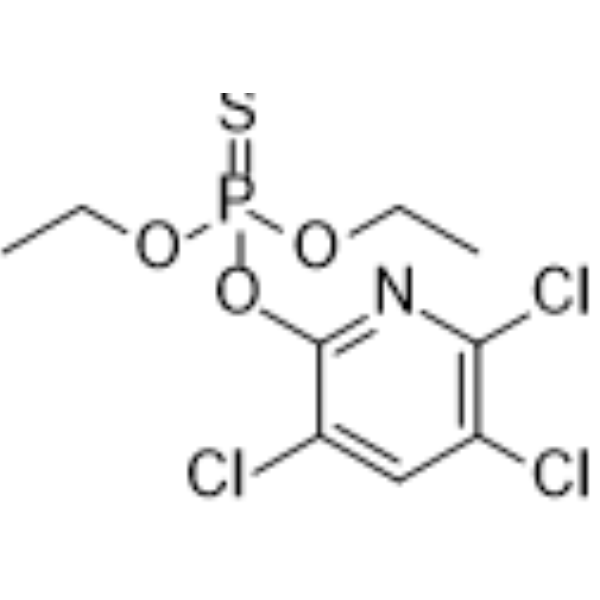
Chlorpyrifos is a neurotoxic insecticide that belongs to the class of thionite esters. Chlorpyrifos is also a AChE inhibitor that affects neurological function in insects, humans and other animals. Chlorpyrifos interferes with cell replication and differentiation, ultimately altering synaptic transmission in neurons .
|
-
-
- HY-103259
-
-
-
- HY-P0062B
-
-
-
- HY-12546
-
-
-
- HY-14399
-
|
CHF5074; CSP-1103
|
γ-secretase
Apoptosis
|
Neurological Disease
|
|
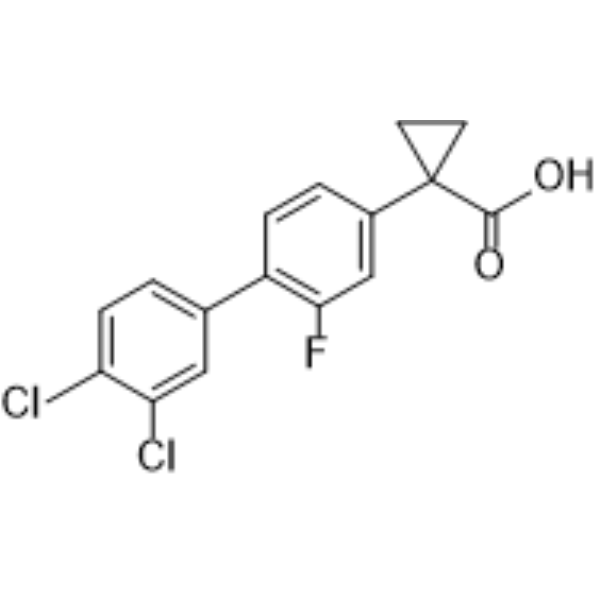
Itanapraced (CHF5074) is an orally active γ-secretase modulator and a non-steroidal anti-inflammatory derivative. Itanapraced reduces Aβ42 and Aβ40 secretion with IC50 values of 3.6 and 18.4 μM, respectively. Itanapraced inhibits cell apoptosis of hippocampal neurons induced by oxygen and glucose deprivation (OGD). Itanapraced can be used for the research of Alzheimer's disease .
|
-
-
- HY-100834
-
|
5,7-DCKA
|
iGluR
|
Neurological Disease
|
|
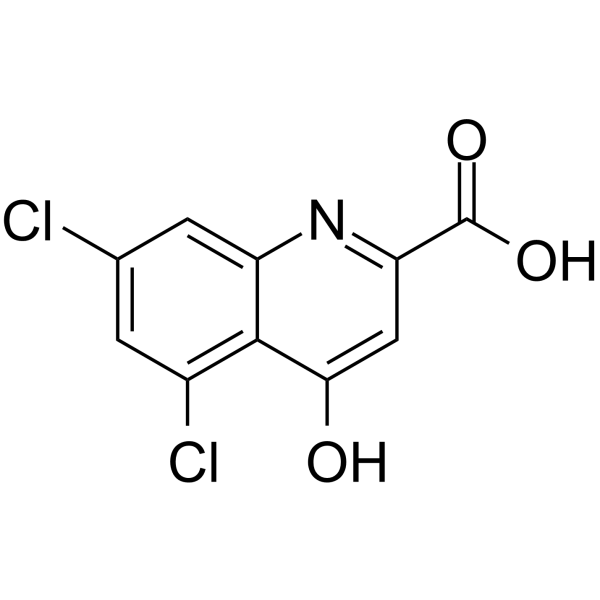
5,7-Dichlorokynurenic acid (5,7-DCKA) is a selective and competitive antagonist of the glycine site on NMDA receptor with a KB of 65 nM. 5,7-Dichlorokynurenic acid reduces NMDA-induced neuron injury. 5,7-Dichlorokynurenic acid increases social interaction time, increases open arm exploration time, disinhibits suppressed conflict responding in rodent models. 5,7-Dichlorokynurenic acid exhibits anxiolytic-like activity in rodent models and supports exploration of glycine’s role in NMDA receptor-mediated synaptic transmission .
|
-
-
- HY-16689
-
|
|
Potassium Channel
|
Others
|
|
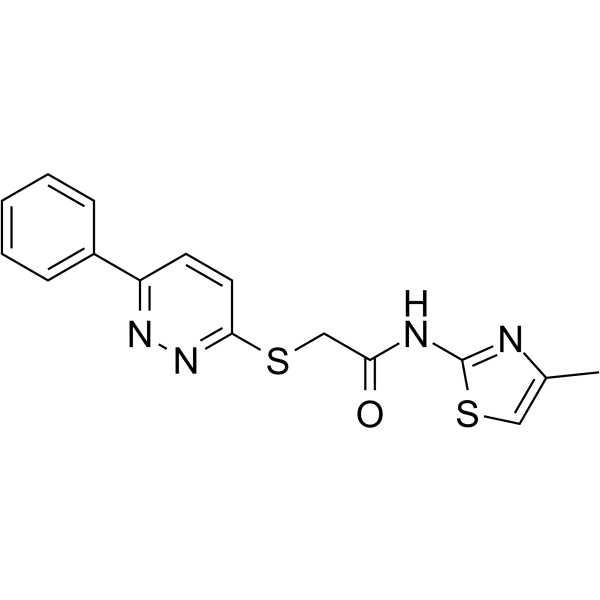
VU 0240551 is a potent neuronal K-Cl cotransporter KCC2 inhibitor (IC50=560 nM) and is selective versus NKCC1. VU 0240551 also inhibits hERG and L-type Ca 2+ channels. VU 0240551 attenuates GABA-induced hyperpolarization of P cells, produces a positive shift in the P cell GABA reversal potential and enhances P cell synaptic transmission .
|
-
-
- HY-134356
-
|
AICAR-5'-MP
|
Endogenous Metabolite
|
Others
|
|
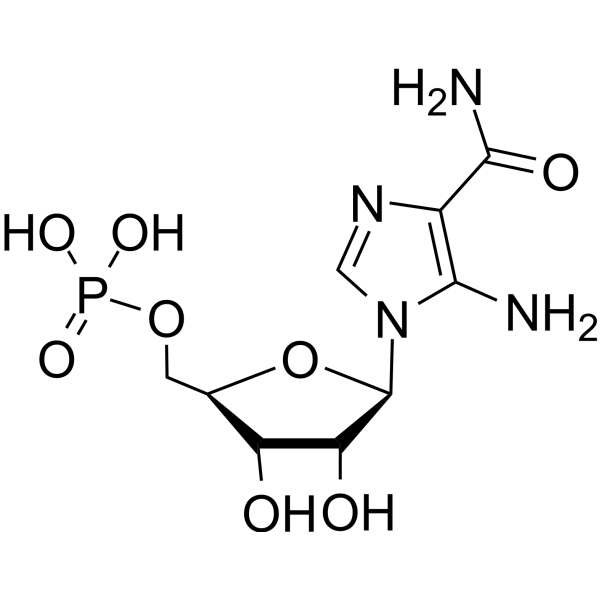
AICA-riboside, 5′-phosphate is AICA riboside with a phosphate group. The functions of AICA riboside include: 1) conversion into AMP mimetic to selectively activate AMPK; 2) competition with adenosine for the uptake of nucleoside transporters, reversible blocking of adenosine reuptake, increasing extracellular adenosine concentration, and indirectly activating adenosine A1 receptors. AICA riboside is involved in metabolic regulation (promoting catabolism and inhibiting anabolism) and adenosine-dependent neuroprotection (inhibiting excitatory synaptic transmission). AICA riboside can be used in the study of metabolic diseases (such as diabetes and obesity) and neurological diseases (such as ischemia and epilepsy), and has central nervous system protective activity .
|
-
-
- HY-P0062
-
-
-
- HY-Y0378
-
|
(R)-Leucine
|
Endogenous Metabolite
|
Neurological Disease
|
|
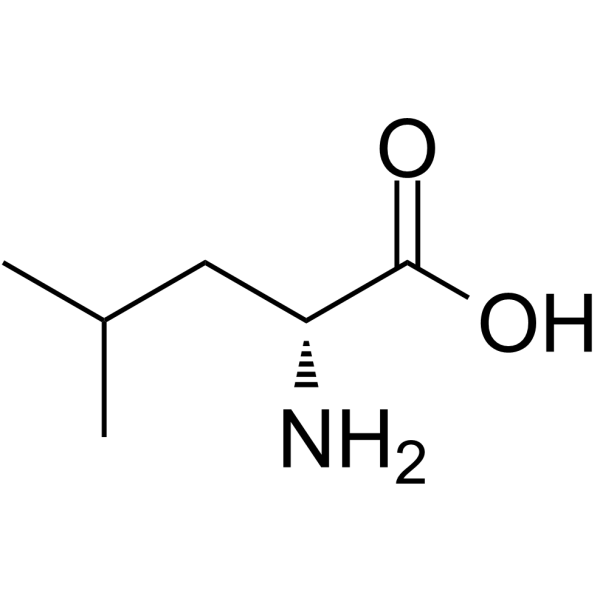
D-Leucine is a more potent anti-seizure agent than L-leucine. D-leucine potently terminates seizures even after the onset of seizure activity. D-leucine, but not L-leucine, reduces long-term potentiation but had no effect on basal synaptic transmission in vitro .
|
-
-
- HY-125931
-
|
DM232
|
iGluR
|
Neurological Disease
Inflammation/Immunology
|
|
Unifiram (DM232) is a AMPA receptor activator and cognitive enhancer. Unifiram activates the AMPA-mediated neurotransmission system. Unifiram reverses NBQX-induced amnesia in the passive avoidance test in mice. Unifiram reverses the antagonistic effect of kynurenic acid on NMDA-mediated [ 3H]NA release in rat hippocampal slices. Unifiram enhances excitatory synaptic transmission in the rat hippocampus in vitro. Unifiram can be used in studies related to amnesia and cognitive dysfunction, including age-related memory decline, neurodegenerative diseases such as Alzheimer's disease or Parkinson's disease, multiple sclerosis, schizophrenia, and attention deficit hyperactivity disorder .
|
-
-
- HY-164795
-
|
|
Neurotensin Receptor
Arrestin
iGluR
ERK
Sodium Channel
|
Neurological Disease
|
|
SBI-810 is a blood-brain barrier-permeable NTSR1 modulator. SBI-810 promotes the recruitment of β-arrestin-2 to NTSR1 and antagonizes NTSR1-mediated Gq activation. SBI-810 inhibits excitatory synaptic transmission, NMDA receptor and extracellular signal-regulated kinase (ERK) signaling in spinal nociceptive neurons, reduces surface expression of Nav1.7 and action potential firing in primary sensory neurons, and attenuates C-fiber responses. SBI-810 effectively alleviates acute and chronic pain in various rodent models through peripheral and central modulation. SBI-810 is applicable to research related to multiple pain disorders .
|
-
-
- HY-164795A
-
|
|
Neurotensin Receptor
Arrestin
iGluR
ERK
Sodium Channel
|
Neurological Disease
|
|
SBI-810 hydrochloride is a blood-brain barrier-permeable NTSR1 modulator. SBI-810 hydrochloride promotes the recruitment of β-arrestin-2 to NTSR1 and antagonizes NTSR1-mediated Gq activation. SBI-810 hydrochloride inhibits excitatory synaptic transmission, NMDA receptor and extracellular signal-regulated kinase (ERK) signaling in spinal nociceptive neurons, reduces surface expression of Nav1.7 and action potential firing in primary sensory neurons, and attenuates C-fiber responses. SBI-810 hydrochloride effectively alleviates acute and chronic pain in various rodent models through peripheral and central modulation. SBI-810 hydrochloride is applicable to research related to multiple pain disorders .
|
-
-
- HY-B0649S
-
|
|
GABA Receptor
Endogenous Metabolite
|
Neurological Disease
|
|
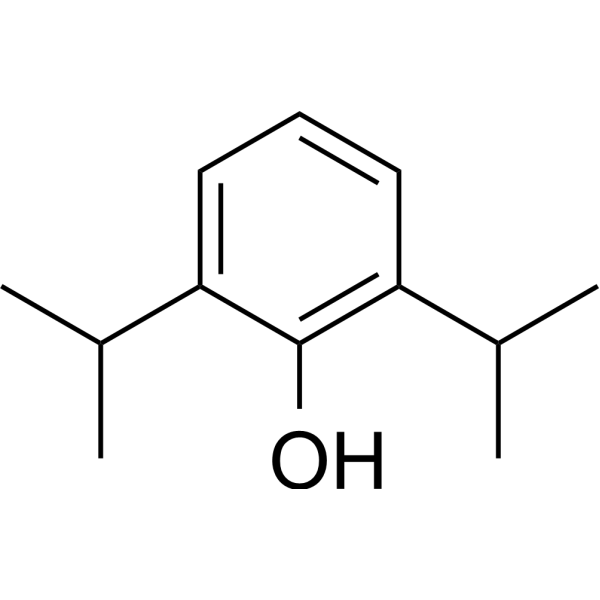
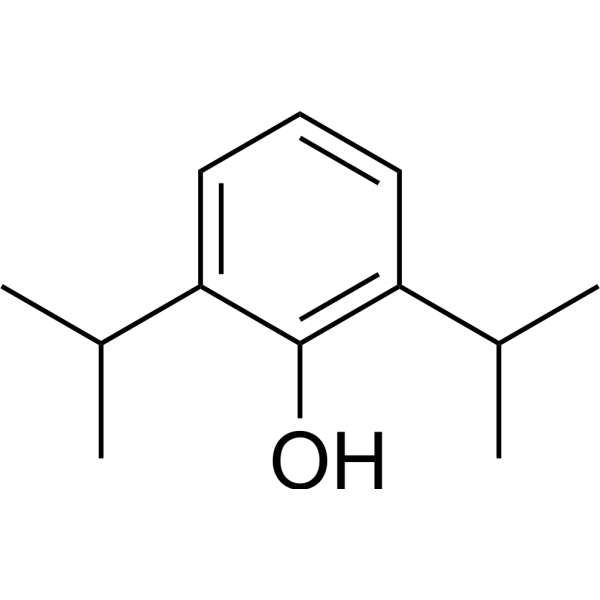
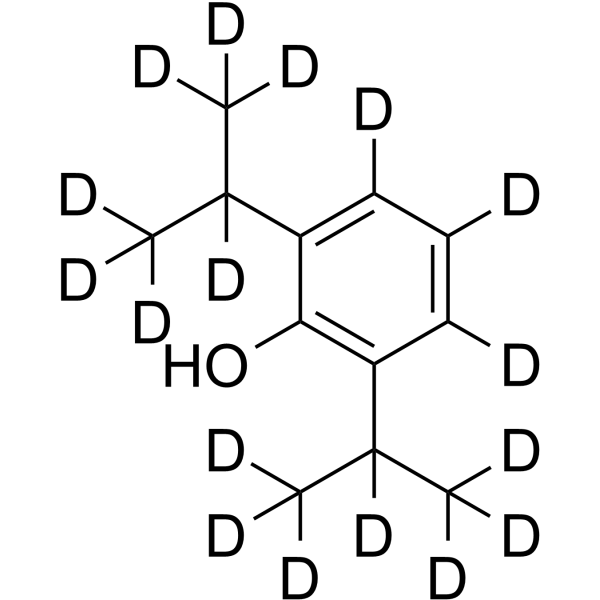
Propofol-d17 is the deuterium labeled Propofol. Propofol potently and directly activates GABAA receptor and inhibits glutamate receptor mediated excitatory synaptic transmission. Propofol has antinociceptive properties .
|
-
-
- HY-121964
-
|
|
iGluR
|
Neurological Disease
|
|
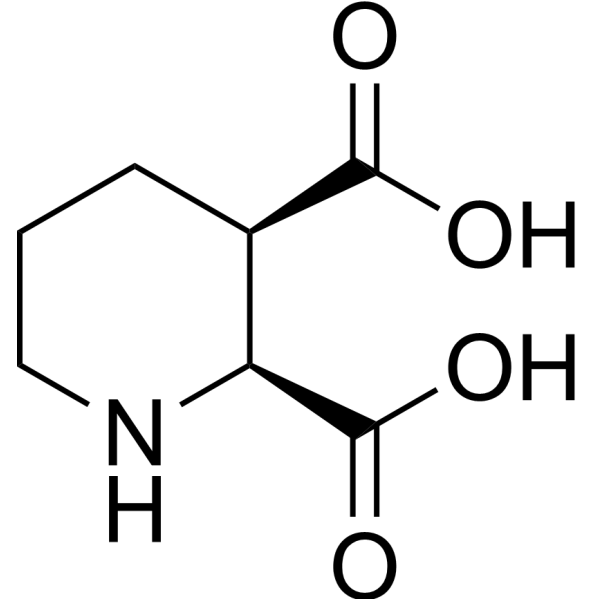
Cis-piperidine-2,3-dicarboxylic acid is a non-specific antagonist of NMDA, AMPA and kainate ionotropic receptors and a partial agonist for NMDA receptors. Cis-piperidine-2,3-dicarboxylic acid can be used in blocking general excitatory synaptic transmissions .
|
-
-
- HY-E70074
-
|
|
Monoamine Oxidase
|
Neurological Disease
|
|
Monoamine oxidase (EC 1.4.3.4) is an enzyme composed of different polypeptides. Monoamine oxidation catalyzes the oxidative deamination of various biological amines in brain and peripheral tissues by producing hydrogen peroxide. Monoamine oxidase plays an important role in maintaining the regulation of synaptic transmission, emotional behavior and other brain functions .
|
-
-
- HY-B0815R
-
|
|
Reference Standards
Cholinesterase (ChE)
|
Neurological Disease
|
|
Chlorpyrifos (Standard) is the analytical standard of Chlorpyrifos. This product is intended for research and analytical applications. Chlorpyrifos is a neurotoxic insecticide that belongs to the class of thionite esters. Chlorpyrifos is also a AChE inhibitor that affects neurological function in insects, humans and other animals. Chlorpyrifos interferes with cell replication and differentiation, ultimately altering synaptic transmission in neurons .
|
-
-
- HY-Y0378S
-
|
(R)-Leucine-d10
|
Isotope-Labeled Compounds
Endogenous Metabolite
|
Neurological Disease
|
|
D-Leucine-d10 is the deuterium labeled D-Leucine. D-Leucine is a more potent anti-seizure agent than L-leucine. D-leucine potently terminates seizures even after the onset of seizure activity. D-leucine, but not L-leucine, reduces long-term potentiation but had no effect on basal synaptic transmission in vitro .
|
-
-
- HY-155811
-
|
|
iGluR
|
Neurological Disease
|
|
DQP-997-74 (compound 2i) is a selective negative allosteric modulator of N-methyl-d-aspartate receptor (NMDAR), specifically targeting GluN2C/D (IC50: 0.069 μM and 0.035 μM), with blood-brain barrier penetrability. Where DQP refers to dihydroquinoline-pyrazoline. DQP-997-74 acts synergistically with the agonist glutamate to exhibit time-dependent enhanced potency in inhibiting hypersynchronous activity driven by high-frequency excitatory synaptic transmission. DQP-997-74 reduces the number of epileptogenesis in a murine model of tuberous sclerosis complex (TSC)-induced epilepsy. DQP-997-74 can be used for research on NMDAR-related neurological diseases .
|
-
-
- HY-B0649S1
-
-
-
- HY-B0649R
-
|
2,6-Diisopropylphenol (Standard)
|
Reference Standards
GABA Receptor
Endogenous Metabolite
|
Neurological Disease
Cancer
|
|
Propofol (Standard) is the analytical standard of Propofol. This product is intended for research and analytical applications. Propofol potently and directly activates GABAA receptor and inhibits glutamate receptor mediated excitatory synaptic transmission. Propofol has antinociceptive properties and is used for sedation and hypnotic .
|
-
-
- HY-137108
-
|
|
PKA
PKG
|
Neurological Disease
|
|
Sp-8-pCPT-cGMPS is a potent cyclic guanosine monophosphate-gated channel agonist and a lipophilic activator of protein kinase G (types I α, I β, and II) and protein kinase A type II with excellent cell membrane permeability and phosphodiesterase stability. Sp-8-pCPT-cGMPS can be used to study the role of cGMP in neural plasticity and synaptic transmission .
|
-
-
- HY-145761
-
|
|
iGluR
|
Neurological Disease
|
|
AMPA-IN-1 is a potent inhibitor of AMPA receptor. AMPA receptors are receptors that are widely expressed in the brain, and play a central role in the regulation of fast excitatory synaptic transmission and synaptic plasticity. AMPA-IN-1 has the potential for the research of various central diseases including epilepsy (extracted from patent WO2017082288A1, compound 14) .
|
-
-
- HY-B0718
-
|
DA-759
|
Potassium Channel
|
Neurological Disease
|
|
Methoxyflurane disrupts neuronal transmission by interfering with the release and re-uptake of neurotransmitters at post-synaptic terminals, or altering ionic conductance following receptor activation . Methoxyflurane is an analgesic agent that provides rapid short-term analgesia. Methoxyflurane may shows a effective non-opioid treatment option for trauma pain .
|
-
-
- HY-P0062A
-
-
-
- HY-107605
-
|
|
iGluR
|
Neurological Disease
|
|
UBP296 is a potent and selective antagonist of GLUK5-containing kainate receptor in the spinal cord. UBP296 reversibly blocks ATPA-induced depressions of synaptic transmission, and affects AMPA receptor-mediated synaptic transmission directly in rat hippocampal slices .
|
-
-
- HY-100842A
-
|
|
GABA Receptor
|
Neurological Disease
|
|
(S)-3C4HPG is a metabotropic glutamate receptor antagonist, demonstrating significant potential in modulating neuronal excitability and influencing synaptic transmission.
|
-
-
- HY-169871
-
|
|
iGluR
|
Neurological Disease
|
|
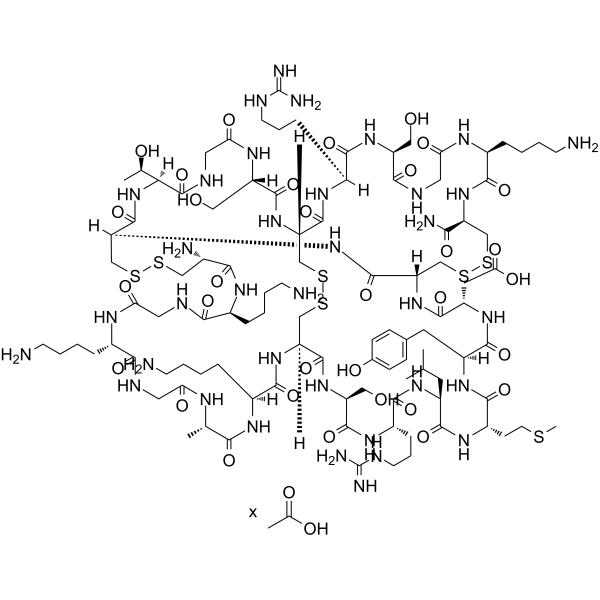
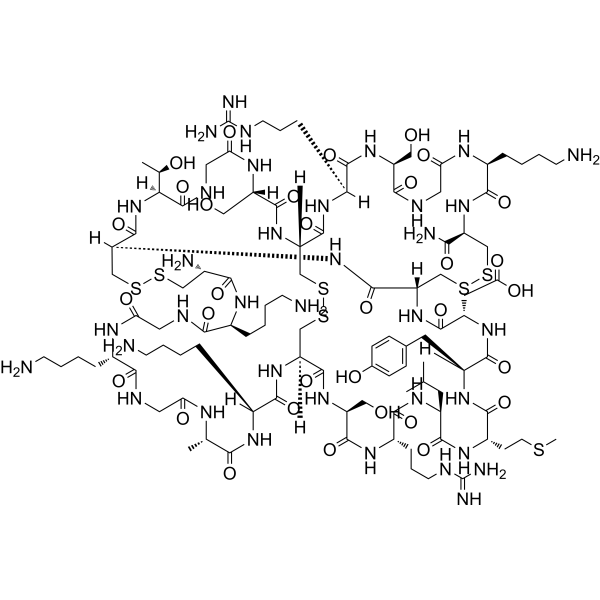
Argiotoxin 636 is a toxin and the non-specific, non-competitive, and potent ionotropic glutamate receptor (iGluR) antagonist. Argiotoxin 636 blocks excitatory synaptic transmission in neurons and has paralysis and muscle relaxation effects. Argiotoxin 636 can be used in the study of nervous system diseases .
|
-
-
- HY-W707528
-
|
2,6-Diisopropylphenol-d14
|
Isotope-Labeled Compounds
GABA Receptor
Endogenous Metabolite
|
Neurological Disease
|
|
Propofol-d14 (2,6-Diisopropylphenol-d14) is the deuterium labeled Propofol (HY-B0649). Propofol potently and directly activates GABAA receptor and inhibits glutamate receptor mediated excitatory synaptic transmission. Propofol has antinociceptive properties and is used for sedation and hypnotic .
|
-
-
- HY-123904
-
|
|
iGluR
|
Neurological Disease
|
|
UoS12258 is a selective positive allosteric modulator of AMPA receptor. UoS12258 enhances AMPA receptor‐mediated synaptic transmission. UoS12258 improves performance in cognition rat models, including Scopolamine (HY-N0296)‐impaired rats and water maze learning and retention in aged rats .
|
-
-
- HY-103298
-
|
|
Endogenous Metabolite
|
Neurological Disease
|
|
MNI-caged kainate is a photoprotected neuroactive amino acid with the activity to generate large inward currents. MNI-caged kainate can be released at the resting membrane potential of Purkinje cells and generate significant inward currents. The release of MNI-caged kainate results in approximately 40% of the current being generated through AMPA receptor activation. MNI-caged kainate is used to study fast synaptic receptor mechanisms. The photorelease time of MNI-caged kainate is in the sub-microsecond range, making it suitable for investigating the mechanisms of fast synaptic transmission .
|
-
-
- HY-B1789
-
|
|
mAChR
|
Neurological Disease
|
|
Telenzepine is an antimuscarinic agent with Kis of 0.94 nM (M1 mAChR) and 17.8 nM (M2 mAChR) binding to muscarinic receptors. Telenzepine effectively blocks synaptic transmission promoted by muscarinic or M1 receptor agonists. Thus, Telenzepine can reduce the amplitude of extracellular slow excitatory postsynaptic potentials (EC50=38 nM) and slow inhibitory postsynaptic potentials (EC50=253 nM) .
|
-
-
- HY-108578
-
|
|
Potassium Channel
|
Neurological Disease
|
|
RuBi-4AP, a derivative of 4-aminopyridine (4AP; HY-B0604), is a caged Kv channel blocker. RuBi-4AP contains a photolabile protecting group, allowing its effect to be controlled precisely in both space and time with light. RuBi-4AP can be used for the research of neuronal excitability, synaptic transmission, and signal propagation .
|
-
-
- HY-14399R
-
|
CHF5074 (Standard); CSP-1103 (Standard)
|
γ-secretase
Apoptosis
Reference Standards
|
Neurological Disease
|
|
Itanapraced (Standard) is the analytical standard of Itanapraced. This product is intended for research and analytical applications. Itanapraced (CHF5074) is an orally active γ-secretase modulator and a non-steroidal anti-inflammatory derivative. Itanapraced reduces Aβ42 and Aβ40 secretion with IC50 values of 3.6 and 18.4 μM, respectively. Itanapraced inhibits cell apoptosis of hippocampal neurons induced by oxygen and glucose deprivation (OGD). Itanapraced can be used for the research of Alzheimer's disease .
|
-
-
- HY-116143
-
|
|
MAGL
|
Metabolic Disease
|
|
SAR127303 is an orally active, selective, competitive monoacylglycerol lipase (MAGL) covalent inhibitor with IC50s of 3.8 nM and 29 nM for mouse and human MAGL, respectively. SAR127303 potently elevates hippocampal levels of 2-AG in mice. SAR127303 decreased long term potentiation (LTP) of CA1 synaptic transmission and acetylcholine release in the hippocampus. SAR127303 produces antinociceptive effects in assays of inflammatory and visceral pain. SAR127303 slows down epileptogenesis .
|
-
-
- HY-100834A
-
|
5,7-DCKA sodium
|
iGluR
|
Neurological Disease
|
|
5,7-Dichlorokynurenic acid (5,7-DCKA) sodium is a selective and competitive antagonist of the glycine site on NMDA receptor with a KB of 65 nM. 5,7-Dichlorokynurenic acid sodium reduces NMDA-induced neuron injury. 5,7-Dichlorokynurenic acid sodium increases social interaction time, increases open arm exploration time, disinhibits suppressed conflict responding in rodent models. 5,7-Dichlorokynurenic acid sodium exhibits anxiolytic-like activity in rodent models and supports exploration of glycine’s role in NMDA receptor-mediated synaptic transmission .
|
-
-
- HY-100834R
-
|
5,7-DCKA (Standard)
|
Reference Standards
iGluR
|
Neurological Disease
|
|
5,7-Dichlorokynurenic acid (Standard) is the analytical standard of 5,7-Dichlorokynurenic acid (HY-100834). This product is intended for research and analytical applications. 5,7-Dichlorokynurenic acid (5,7-DCKA) is a selective and competitive antagonist of the glycine site on NMDA receptor with a KB of 65 nM. 5,7-Dichlorokynurenic acid reduces NMDA-induced neuron injury. 5,7-Dichlorokynurenic acid increases social interaction time, increases open arm exploration time, disinhibits suppressed conflict responding in rodent models. 5,7-Dichlorokynurenic acid exhibits anxiolytic-like activity in rodent models and supports exploration of glycine’s role in NMDA receptor-mediated synaptic transmission .
|
-
-
- HY-183101
-
|
|
iGluR
NADPH Oxidase
|
Neurological Disease
|
|
AMPAR modulator-12 is a blood-brain barrier-permeable AMPAR positive allosteric modulator. AMPAR modulator-12 reduces NOX-1 expression, enhances AMPAR-mediated currents, promotes excitatory postsynaptic transmission and restores AMPAR function. AMPAR modulator-12 enhances excitatory and inhibitory synaptic transmission, reduces burst firing in the lateral habenula after withdrawal, and produces rapid and sustained antidepressant-like effects. AMPAR modulator-12 is applicable for the research of depression .
|
-
-
- HY-Y0378R
-
|
(R)-Leucine (Standard)
|
Reference Standards
Endogenous Metabolite
|
Neurological Disease
|
|
D-Leucine (Standard) is the analytical standard of D-Leucine. This product is intended for research and analytical applications. D-Leucine is a more potent anti-seizure agent than L-leucine. D-leucine potently terminates seizures even after the onset of seizure activity. D-leucine, but not L-leucine, reduces long-term potentiation but had no effect on basal synaptic transmission in vitro .
|
-
-
- HY-165475
-
|
|
iGluR
|
Neurological Disease
|
|
TDPAM02 is a positive allosteric modulator of AMPA receptor GluA2. TDPAM02 can specifically bind to the ligand-binding domain (LBD) of GluA2 and shows an IC50 of 1.4 nM for the GluA2 flop subtype. TDPAM02 can stabilize the activated conformation of GluA2 receptors, delay the receptor deactivation or desensitization process, maintaining the rapid excitatory synaptic transmission in the central nervous system .
|
-
-
- HY-165474
-
|
|
iGluR
|
Neurological Disease
|
|
TDPAM01 is a positive allosteric modulator of AMPA receptor GluA2. TDPAM01 can specifically bind to the ligand-binding domain (LBD) of GluA2 and shows an IC50 of 13.4 nM for the GluA2 flop subtype. TDPAM01 can stabilize the activated conformation of GluA2 receptors, delay the receptor deactivation or desensitization process, maintaining the rapid excitatory synaptic transmission in the central nervous system .
|
-
-
- HY-182631
-
|
|
iGluR
|
Neurological Disease
|
|
CX1763 is an AMPAR allosteric modulator. CX1763 allosterically potentiates glutamate-evoked currents, accelerates channel opening, and increases the surface levels of AMPAR containing Glur2 (R). CX1763 enhances synaptic transmission in the rat hippocampus. CX1763 improves attention in rats and attenuates amphetamine-induced hyperactivity in mice. CX1763 can be used in studies related to attention deficit hyperactivity disorder and opioid-induced respiratory depression .
|
-
-
- HY-124057
-
|
|
nAChR
|
Neurological Disease
|
|
RO5126946 is a selective, orally active α7 nAChR allosteric potentiator with EC50 values of 0.06 μM (hα7 nAChR) and 770 nM (α7 nAChR), and it crosses the blood-brain barrier. RO5126946 enhances synaptic transmission and positively modulates GABA-ergic responses by increasing peak current, slowing current decay, and elevating the frequency of spontaneous inhibitory postsynaptic currents, without affecting the recovery of receptors from the desensitized state. RO5126946 not only enhances subthreshold nicotine effects and improves associative learning, but also does not interfere with the original pro-cognitive effects of nicotine. RO5126946 can be used to study cognitive impairments associated with diseases such as Alzheimer's disease and schizophrenia .
|
-
-
- HY-182707
-
|
|
nAChR
Interleukin Related
TNF Receptor
NF-κB
|
Neurological Disease
|
|
JWX-A0108 is a selective human α7 nAChR positive allosteric modulator with an EC50 of 4.35 μM. JWX-A0108 potentiates α7 nAChR currents only in the presence of acetylcholine, with no direct activating effect or alteration of desensitization. JWX-A0108 enhances hippocampal GABAergic synaptic transmission by increasing spontaneous inhibitory postsynaptic currents. JWX-A0108 reduces the brain expression levels of IL-1β, TNF-α, and IL-6 by blocking the NF-κB signaling pathway, and reduces microglial activation by downregulating Iba1. JWX-A0108 effectively improves cognitive deficits, neuroinflammation, and hippocampal neuronal damage in mouse models of schizophrenia and Alzheimer's disease. JWX-A0108 can be used for research related to schizophrenia and Alzheimer's disease .
|
-
| Cat. No. |
Product Name |
Target |
Research Area |
| Cat. No. |
Product Name |
Category |
Target |
Chemical Structure |
| Cat. No. |
Product Name |
Chemical Structure |
-
- HY-B0649S
-
|
|
|
Propofol-d17 is the deuterium labeled Propofol. Propofol potently and directly activates GABAA receptor and inhibits glutamate receptor mediated excitatory synaptic transmission. Propofol has antinociceptive properties .
|
-
-
- HY-Y0378S
-
|
|
|
D-Leucine-d10 is the deuterium labeled D-Leucine. D-Leucine is a more potent anti-seizure agent than L-leucine. D-leucine potently terminates seizures even after the onset of seizure activity. D-leucine, but not L-leucine, reduces long-term potentiation but had no effect on basal synaptic transmission in vitro .
|
-
-
- HY-B0649S1
-
|
|
|
Propofol-d18 is the deuterium labeled Propofol. Propofol potently and directly activates GABAA receptor and inhibits glutamate receptor mediated excitatory synaptic transmission .
|
-
-
- HY-W707528
-
|
|
|
Propofol-d14 (2,6-Diisopropylphenol-d14) is the deuterium labeled Propofol (HY-B0649). Propofol potently and directly activates GABAA receptor and inhibits glutamate receptor mediated excitatory synaptic transmission. Propofol has antinociceptive properties and is used for sedation and hypnotic .
|
-
Your information is safe with us. * Required Fields.
Inquiry Information
- Product Name:
- Cat. No.:
- Quantity:
- MCE Japan Authorized Agent:

