






1. Search Result
Search Result
Results for "

target tissues

" in MedChemExpress (MCE) Product Catalog:

247

Inhibitors & Agonists

9

Screening Libraries

13

Fluorescent Dyes

50

Biochemical Assay Reagents

39

Peptides

1

MCE Kits

22

Inhibitory Antibodies

18

Natural
Products

17

Isotope-Labeled Compounds

9

Click Chemistry

26

Oligonucleotides

Cat. No. Product Name Target Research Areas Chemical Structure
  • HY-N0666
    L-Aspartic acid
    4 Publications Verification

    Endogenous Metabolite Neurological Disease Inflammation/Immunology
    L-Aspartic aicd is an amino acid. L-Aspartic aicd is commonly used for preparing prodrugs to target colon and cecal tissues. L-Aspartic aicd commonly used in the study of inflammatory conditions .
    L-Aspartic acid
  • HY-112641A
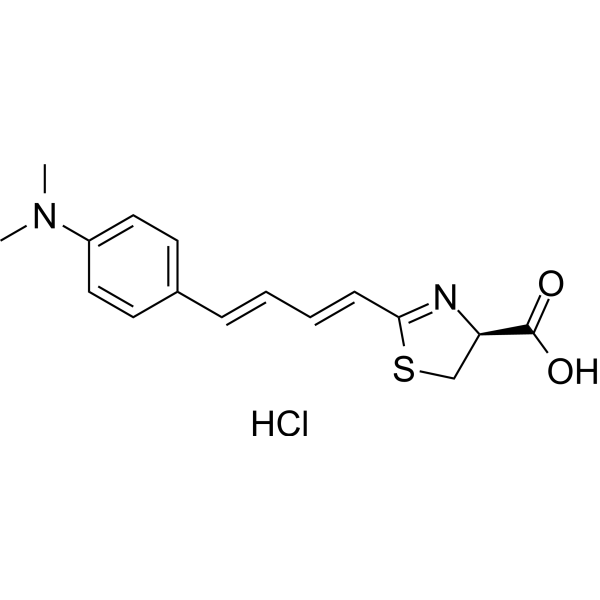
    AkaLumine hydrochloride
    5 Publications Verification

    Fluorescent Dye Cancer
    AkaLumine hydrochloride is a D-luciferin (HY-12591A) analogue with a Km of 2.06 μM for recombinant firefly luciferase (Fluc) protein. AkaLumine hydrochloride emits near-infrared (NIR) light (λmax=677 nm) in reactions with native Fluc. AkaLumine hydrochloride has high tissue-penetration and increases detection sensitivity from deep-tissue targets .
    AkaLumine hydrochloride
  • HY-P0122
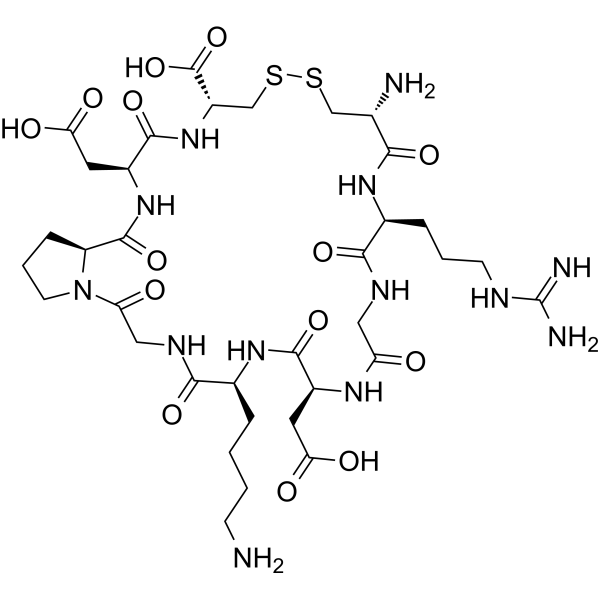
    iRGD peptide
    5+ Cited Publications

    c(CRGDKGPDC)

    Integrin Cancer
    iRGD peptide is a 9-amino acid cyclic peptide, triggers tissue penetration of agents by first binding to αv-integrins, then proteolytically cleaved in the tumor to produce CRGDK/R to interact with neuropilin-1, and has tumor-targeting and tumor-penetrating properties.
    iRGD peptide
  • HY-P99006
    Amatuximab
    3 Publications Verification

    MORab-009

    Mesothelin Cancer
    Amatuximab (MORab-009) is a chimeric, humanized IgG1/k MAb that targets the cell surface mesothelin (MSLN). Mesothelin is a glycosylphosphatidyl inositol (GPI)-anchored membrane glycoprotein, which is present in a restricted set of normal adult tissues such as the mesothelium .
    Amatuximab
  • HY-NP002D

    Biochemical Assay Reagents Others
    Bovine Serum Albumin (Biotinylated) is a biotinylated bovine serum albumin that selectively binds to different vascular subsets in lymphoid tissue. Bovine Serum Albumin (Biotinylated) can be used as a histochemical probe, and a targeting ligand for drug delivery .
    Bovine Serum Albumin (Biotinylated)
  • HY-P5623A

    RVG29-Cys; RDP-Cys; Rabies Virus Glycoprotein-29-Cys

    RABV Others
    RVG-Cys (RVG29-Cys) is a peptide derived from rabies virus glycoprotein (RVG29) with Cys attached to facilitate subsequent conjugation. RVG-Cys enhances the specific targeted delivery of proteins in brain tissue and neurons .
    RVG-Cys
  • HY-P4154

    ALM-488

    Fluorescent Dye Neurological Disease Cancer
    Bevonescein (ALM-488) is a fluorescein-conjugated peptide that facilitates the targeted delivery of a fluorescent moiety (5-FAM (HY-66022)) to nerves after intravenous (IV) administration. Bevonescein binds nerve-associated connective tissue, labels peripheral nerves under real-time fluorescence imaging (FL) in living mice and human ex vivo nerve tissue. Bevonescein is a peptide-linked tracer which fluorescently labeled both intact and degenerated nerves (Ex/Em = 480/530 nm) .
    Bevonescein
  • HY-P10709

    Collagen Cardiovascular Disease Cancer
    CREKA peptide is a selective non-covalent binding agent targeting fibrin, type IV collagen, and fibronectin, often used as a targeting ligand to modify delivery carriers. CREKA peptide specifically recognizes fibrin, fibronectin, and type IV collagen that are excessively deposited in the tumor microenvironment or fibrotic tissue, mediating the targeted accumulation of the carrier at the lesion site and promoting drug internalization into target cells (such as cancer cells and activated hepatic stellate cells). CREKA peptide can enhance targeted delivery efficiency, increase drug concentration at the lesion site, and reduce systemic side effects .
    CREKA peptide
  • HY-P99271

    Anti-Human F3 Recombinant Antibody

    ADC Antibody Cancer
    Tisotumab (Anti-Human F3 Recombinant Antibody) is a human IgG1 monoclonal antibody and ADC antibody. Tisotumab targets tissue factor (TF). Tisotumab can be used to synthesize antibody-drug conjugates (ADCs) targeting tissue factor (TF), Tisotumab vedotin (HY-152963). Tisotumab can be used for the research of solid tumors .
    Tisotumab
  • HY-P5225

    PGC-1α Others
    Acetyl hexapeptide-38 is a tissue repair promoter that targets fibroblasts in the dermis of the skin. It works by promoting collagen synthesis in the dermis and thickening of subcutaneous fat. Acetyl hexapeptide-38 can activate the skin repair mechanism, increase the collagen content in the dermis, improve the skin tissue structure, and has the activity of promoting local tissue repair. Acetyl hexapeptide-38 can be used in the field of cosmetic medicine to repair congenital soft tissue defects, reduce tear grooves and nasolabial folds, eliminate postoperative scars, and conduct micro-plastic surgery of skin tissue .
    Acetyl hexapeptide-38
  • HY-139401

    FAP Cancer
    FAPI-34 is a SPECT imaging agent targeting FAP. FAPI-34 specifically binds to FAP, is highly internalized by FAP-expressing cells, accumulates in FAP-expressing tumor lesions, and shows low uptake in normal tissues except the kidneys. FAPI-34 is applicable for tumor-related research .
    FAPI-34
  • HY-P99650

    WT1

    Transmembrane Glycoprotein Cancer
    Grisnilimab (WT1) is an IgG2a monoclonal antibody targeting CD7. Grisnilimab only binds to lymphoid tissues and T lymphocytes, with no off-target binding to normal tissues. Grisnilimab can be used to synthesize the immunotoxin WT1-SMPT-dgRTA, which exerts cytotoxic effects on T-lymphoblastic leukemia cells. Grisnilimab is applicable to relevant research on leukemia .
    Grisnilimab
  • HY-N0666A
    L-Aspartic acid potassium
    4 Publications Verification

    Endogenous Metabolite Neurological Disease Inflammation/Immunology
    Aspartic acid potassium is an amino acid. L-Aspartic aicd potassium is commonly used for preparing prodrugs to target colon and cecal tissues. L-Aspartic aicd potassium commonly used in the study of inflammatory conditions .
    L-Aspartic acid potassium
  • HY-P10216

    Biochemical Assay Reagents Neurological Disease
    CAQK peptide selectively binds to injured mouse brain. CAQK peptide selectively targets demyelinating areas and it is absent from healthy tissue. The CAQK peptide target is a proteoglycan complex upregulated in brain injuries and is used for drug delivery. CAQK peptide can penetrate the blood-brain barrier .
    CAQK peptide
  • HY-P5623A1

    RVG29-Cys acetate; RDP-Cys acetate; Rabies Virus Glycoprotein-29-Cys acetate

    RABV Others
    RVG-Cys (RVG29-Cys) acetate is a peptide derived from rabies virus glycoprotein (RVG29) with Cys attached to facilitate subsequent conjugation. RVG-Cys acetate enhances the specific targeted delivery of proteins in brain tissue and neurons .
    RVG-Cys acetate
  • HY-W440917

    Liposome Others
    DSPE-PEG5000-FITC is a fluorescein attached PEG lipid. It can be used to prepare liposomes as drug carrier in targeted drug delivery. The polymer is modified with fluorescein (green) dye which can be used for staining cells, tissues, biomarkers, or nanoparticles.
    DSPE-PEG5000-FITC
  • HY-126395

    Fluorescent Dye Others
    Patent Blue V calcium salt is a triarylmethane dye used for tissue staining and lymphatic tracing, mainly applied by topical injection or eye drops. Patent Blue V calcium salt has affinity for specific tissues (such as corneal endothelium, lymphatic system), and stains the target structure by adsorption or binding, assisting in precise operation during surgery. Patent Blue V calcium salt is mainly used in ophthalmic surgery (such as graft staining for Descemet's membrane endothelial keratoplasty) and lymphatic drainage localization for sentinel lymph node biopsy of tumors .
    Patent Blue V calcium salt
  • HY-158229

    HepMA

    Biochemical Assay Reagents Others
    Heparin Methacrylate (HepMA) is methacrylated heparin and is an ideal tissue engineering scaffold material and 3D printing bioink . Heparin Methacrylate needs to self-assemble into fibrous hydrogel under the action of photoinitiator LAP (HY-44076), and target bioactive adhesion sites, play an inherent supporting role for tissue cells and biodegradable activity.
    Application: cell culture, biological 3D printing, tissue engineering, etc.
    Heparin Methacrylate
  • HY-119433

    J867

    Progesterone Receptor Endocrinology
    Asoprisnil (J867), a selective progesterone receptor modulator, exhibits mixed progesterone agonist and antagonist effects on various progesterone targeted tissues in animal and human .
    Asoprisnil
  • HY-158222A

    AlgMA (MW 300000)

    Biochemical Assay Reagents Others
    Alginate Methacryloyl (MW 300000) is a methacryloyl alginate with potential for use as a tissue engineering scaffold and 3D printing ink. Alginate Methacryloyl (MW 300000) is biocompatible, non-immunogenic, has low toxicity and is capable of physical cross-linking with divalent cations such as calcium . Alginate Methacryloyl (MW 300000) needs to self-assemble into fibrous hydrogel under the action of photoinitiator LAP (HY-44076), and target bioactive adhesion sites, play an inherent supporting role for tissue cells and biodegradable activity.
    Application: cell culture, biological 3D printing, tissue engineering, etc.
    Alginate Methacryloyl (MW 300000)
  • HY-N0666C
    L-Aspartic aicd sodium
    4 Publications Verification

    Sodium L-aspartate

    Endogenous Metabolite Neurological Disease Inflammation/Immunology
    L-Aspartic aicd sodium is an amino acid. L-Aspartic aicd sodium is commonly used for preparing prodrugs to target colon and cecal tissues. L-Aspartic aicd sodium commonly used in the study of inflammatory conditions .
    L-Aspartic aicd sodium
  • HY-W440916

    Liposome Others
    DSPE-PEG3400-FITC is a fluorescein attached PEG lipid. It can be used to prepare liposomes as drug carrier in targeted drug delivery. The polymer is modified with fluorescein (green) dye which can be used for staining cells, tissues, biomarkers, or nanoparticles.
    DSPE-PEG3400-FITC
  • HY-N0666R
    L-Aspartic acid (Standard)
    1 Publications Verification

    Reference Standards Endogenous Metabolite Inflammation/Immunology
    L-Aspartic acid (Standard) is the analytical standard of L-Aspartic acid. This product is intended for research and analytical applications. L-Aspartic aicd is an amino acid. L-Aspartic aicd is commonly used for preparing prodrugs to target colon and cecal tissues. L-Aspartic aicd commonly used in the study of inflammatory conditions .
    L-Aspartic acid (Standard)
  • HY-148152A

    PSMA Cancer
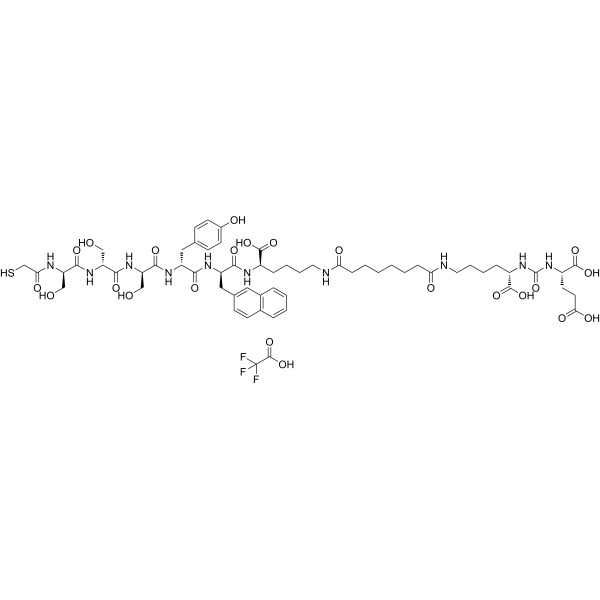
    PSMA I&S TFA is a PSMA-targeted imaging agent. PSMA I&S TFA undergoes PSMA-mediated internalization into PSMA-expressing cells, with uptake into PSMA-positive tissues competitively inhibited by a potent PSMA inhibitor. PSMA I&S TFA can be used for the research of prostate cancer .
    PSMA I&S TFA
  • HY-N0666S

    Endogenous Metabolite Inflammation/Immunology
    L-Aspartic acid- 13C is a 13C labeled L-Aspartic acid. L-Aspartic aicd is an amino acid that can penetrate the blood-brain barrier. L-Aspartic aicd is commonly used for preparing prodrugs to target colon and cecal tissues. L-Aspartic aicd commonly used in the study of inflammatory conditions .
    L-Aspartic acid-13C
  • HY-158225

    Col1MA

    MMP Others
    Methacrylated Type I collagen (Col1MA) is a methacrylated tissue engineering scaffold material that retains the basic properties of natural collagen . Methacrylated Type I collagen needs to self-assemble into fibrous hydrogel under the action of photoinitiator LAP (HY-44076), and target bioactive adhesion sites, play an inherent supporting role for tissue cells and biodegradable activity.
    Application: cell culture, biological 3D printing, tissue engineering, etc.
    Methacrylated Type I collagen
  • HY-158222

    AlgMA (MW 50000)

    Biochemical Assay Reagents Others
    Alginate Methacryloyl (MW 50000) is a methacryloyl alginate with potential for use as a tissue engineering scaffold and 3D printing ink. Alginate Methacryloyl (MW 50000) is biocompatible, non-immunogenic, has low toxicity and is capable of physical cross-linking with divalent cations such as calcium . Alginate Methacryloyl (MW 50000) needs to self-assemble into fibrous hydrogel under the action of photoinitiator LAP (HY-44076), and target bioactive adhesion sites, play an inherent supporting role for tissue cells and biodegradable activity.
    Application: cell culture, biological 3D printing, tissue engineering, etc.
    Alginate Methacryloyl (MW 50000)
  • HY-P10641

    Exosomes STAT ERK Akt Cardiovascular Disease
    Heart-homing peptide is a heart-targeting peptide with the sequence CRPPR that mediates cardiac endothelial targeting and accumulates in cardiac tissues. Heart-homing peptide mediates the translocation of liposomal and exosomal cargos across cardiac endothelium into interstitial tissues, enhances the accumulation of exosomes in the heart, and inhibits the GP130-STAT3/ERK1/2/AKT pathway. Heart-homing peptide accumulates at sites of ischemia/reperfusion, myocardial infarction and hypertrophy in mice. Heart-homing peptide can be used for the research of cardiovascular diseases .
    Heart-homing peptide
  • HY-N0666D
    L-Aspartic aicd disodium
    4 Publications Verification

    Disodium L-aspartate

    Endogenous Metabolite Neurological Disease Inflammation/Immunology
    L-Aspartic acid disodium is an amino acid. L-Aspartic aicd disodium is commonly used for preparing prodrugs to target colon and cecal tissues. L-Aspartic aicd disodium commonly used in the study of inflammatory conditions .
    L-Aspartic aicd disodium
  • HY-158218

    Gelatin Methacryloyl, 30% methacrylation, Red Fluorescent

    Biochemical Assay Reagents Others
    Red Fluorescent Gelatin Methacryloyl (Red Fluorescent GelMA) is methacryloyl gelatin (GelMA) with red fluorescence, which is obtained by "grafting" fluorescent molecules on GelMA. Red Fluorescent Gelatin Methacryloyl acts as a scaffold and can be used to engineer tissue analogs from the vasculature to cartilage and bone, allowing cells to proliferate and spread . GelMA, 30% methacrylation, Red Fluorescent needs to self-assemble into fibrous hydrogel under the action of photoinitiator LAP (HY-44076), and target bioactive adhesion sites, play an inherent supporting role for tissue cells and biodegradable activity.
    Application: cell culture, biological 3D printing, tissue engineering, etc.
    GelMA, 30% methacrylation, Red Fluorescent
  • HY-P4091

    Biochemical Assay Reagents Cancer
    LSD is a peptide. LSD can specifically recognize the lymphatics of C8161 melanoma, but it does not bind to the lymphatics of normal tissues or tumor blood vessels. When conjugated with a proapoptotic peptide, LSD can reduce the number of tumor lymphatics. LSD can be used in the research of targeted therapy and diagnosis of tumor lymphatics .
    LSD
  • HY-N0666S3

    Endogenous Metabolite Inflammation/Immunology
    L-Aspartic acid- 15N is the 15N-labeled L-Aspartic acid. L-Aspartic aicd is an amino acid that can penetrate the blood-brain barrier. L-Aspartic aicd is commonly used for preparing prodrugs to target colon and cecal tissues. L-Aspartic aicd commonly used in the study of inflammatory conditions .
    L-Aspartic acid-15N
  • HY-164577

    Radionuclide-Drug Conjugates (RDCs) Cancer
    BCN-DOTA-GA is a cyclooctyne-linked DOTA chelator that can be labeled with radioactive zirconium-89 and used as a radionuclide-labeled drug conjugate (RDC) to target specific biomolecules, cells or tissues.
    BCN-DOTA-GA
  • HY-W154341

    Biochemical Assay Reagents Others
    3-Indolyl-β-D-glucuronide cyclohexanamine is the glucose component of X-Gluc staining buffer. 3-Indolyl-β-D-glucuronide cyclohexanamine can be used to detect gene expression. The active ingredient of the stain, β-Glucuronidase (GUS), reacts with the enzyme, causing the target gene to appear blue-purple in tissues or cells, so that the expression level and tissue distribution of the gene can be visually observed .
    3-Indolyl-β-D-glucuronide cyclohexanamine
  • HY-158217

    Gelatin Methacryloyl, 30% methacrylation, Green Fluorescent

    Biochemical Assay Reagents Others
    Green Fluorescent Gelatin Methacryloyl (Green Fluorescent GelMA) is methacryloyl gelatin (GelMA) with green fluorescence, which is obtained by "grafting" fluorescent molecules on GelMA. Green Fluorescent Gelatin Methacryloyl acts as a scaffold and can be used to engineer tissue analogs from the vasculature to cartilage and bone, allowing cells to proliferate and spread . GelMA, 30% methacrylation, Green Fluorescent needs to self-assemble into fibrous hydrogel under the action of photoinitiator LAP (HY-44076), and target bioactive adhesion sites, play an inherent supporting role for tissue cells and biodegradable activity.
    Application: cell culture, biological 3D printing, tissue engineering, etc.
    GelMA, 30% methacrylation, Green Fluorescent
  • HY-158217A

    Gelatin Methacryloyl, 60% methacrylation, Green Fluorescent

    Biochemical Assay Reagents Others
    Green Fluorescent Gelatin Methacryloyl (Green Fluorescent GelMA) is methacryloyl gelatin (GelMA) with green fluorescence, which is obtained by "grafting" fluorescent molecules on GelMA. Green Fluorescent Gelatin Methacryloyl acts as a scaffold and can be used to engineer tissue analogs from the vasculature to cartilage and bone, allowing cells to proliferate and spread . GelMA, 60% methacrylation, Green Fluorescent needs to self-assemble into fibrous hydrogel under the action of photoinitiator LAP (HY-44076), and target bioactive adhesion sites, play an inherent supporting role for tissue cells and biodegradable activity.
    Application: cell culture, biological 3D printing, tissue engineering, etc.
    GelMA, 60% methacrylation, Green Fluorescent
  • HY-158228

    PLMA

    Biochemical Assay Reagents Others
    Poly-L-lysine Methacryloyl (PLMA) is methacrylated polylysine. When Poly-L-lysine Methacryloyl is cross-linked on polyetheretherketone (PEEK) through UV-induced cross-linking, it can improve the hydrophilicity of PEEK and retain its own degradation bioinertness . Poly-L-lysine Methacryloyl needs to self-assemble into fibrous hydrogel under the action of photoinitiator LAP (HY-44076), and target bioactive adhesion sites, play an inherent supporting role for tissue cells and biodegradable activity.
    Application: cell culture, biological 3D printing, tissue engineering, etc.
    Poly-L-lysine Methacryloyl
  • HY-158218A

    Gelatin Methacryloyl, 60% methacrylation, red fluorescent

    Biochemical Assay Reagents Others
    Red Fluorescent Gelatin Methacryloyl (Red Fluorescent GelMA) is methacryloyl gelatin (GelMA) with red fluorescence, which is obtained by "grafting" fluorescent molecules on GelMA. Red Fluorescent Gelatin Methacryloyl acts as a scaffold and can be used to engineer tissue analogs from the vasculature to cartilage and bone, allowing cells to proliferate and spread . GelMA, 60% methacrylation, Red Fluorescent needs to self-assemble into fibrous hydrogel under the action of photoinitiator LAP (HY-44076), and target bioactive adhesion sites, play an inherent supporting role for tissue cells and biodegradable activity.
    Application: cell culture, biological 3D printing, tissue engineering, etc.
    GelMA, 60% methacrylation, red fluorescent
  • HY-158218B

    Gelatin Methacryloyl, 90% methacrylation, red fluorescent

    Biochemical Assay Reagents Others
    Red Fluorescent Gelatin Methacryloyl (Red Fluorescent GelMA) is methacryloyl gelatin (GelMA) with red fluorescence, which is obtained by "grafting" fluorescent molecules on GelMA. Red Fluorescent Gelatin Methacryloyl acts as a scaffold and can be used to engineer tissue analogs from the vasculature to cartilage and bone, allowing cells to proliferate and spread . GelMA, 90% methacrylation, Red Fluorescent needs to self-assemble into fibrous hydrogel under the action of photoinitiator LAP (HY-44076), and target bioactive adhesion sites, play an inherent supporting role for tissue cells and biodegradable activity.
    Application: cell culture, biological 3D printing, tissue engineering, etc.
    GelMA, 90% methacrylation, red fluorescent
  • HY-177921

    Liposome Others
    PL53 is a kind of cycloalkylamine lipid nanoparticles. PL53 exhibits outstanding transfection efficiency both in vitro and in vivo, especially showing strong protein expression ability and potential tissue targeting after intramuscular injection. PL53 can be used for the study of nucleic acid delivery .
    PL53
  • HY-P99271A

    Anti-Human F3 Recombinant Antibody (powder)

    ADC Antibody Cancer
    Tisotumab (Anti-Human F3 Recombinant Antibody) (powder) is a human IgG1 monoclonal antibody and ADC antibody. Tisotumab (powder) targets tissue factor (TF). Tisotumab (powder) can be used to synthesize antibody-drug conjugates (ADCs) targeting tissue factor (TF), Tisotumab vedotin (HY-152963). Tisotumab (powder) can be used for the research of solid tumors .
    Tisotumab (powder)
  • HY-P11174

    Exosomes Transmembrane Glycoprotein Others
    CP05 is a peptide that specifically recognizes an exosome surface marker (CD63). CP05 anchors exosomes to target tissues for in vivo delivery of exosomes .
    CP05
  • HY-112636

    Amyloid-β Others
    Astrophloxine is a fluorescent imaging probe capable of targeting antiparallel dimers. Astrophloxine can be used to detect aggregated Aβ in brain tissue and cerebrospinal fluid samples of Alzheimer's disease (AD) mice .
    Astrophloxine
  • HY-P990411

    Transmembrane Glycoprotein Inflammation/Immunology
    Anti-F3/Factor III/Tissue Factor/CD142 Antibody is a CHO-expressed human antibody targeting F3/Factor III/Tissue Factor/CD142. The Anti-F3/Factor III/Tissue Factor/CD142 Antibody has a huIgG4SP type heavy chain and a huκ type light chain, with a predicted molecular weight (MW) of 150 kDa. The isotype control for the Anti-F3/Factor III/Tissue Factor/CD142 Antibody can be referred to as Human IgG4 kappa, Isotype Control (HY-P99003).
    Anti-F3/Factor III/Tissue Factor/CD142 Antibody
  • HY-155643

    PROTACs Glutaminase Cancer
    PROTAC TG2 degrader-1 (compound 11) is a von Hippel-Lindau (VHL)-based PROTAC targeting tissue transglutaminase (TG2) with a KD of 68.9 μM. PROTAC TG2 degrader-1 reduces TG2 in ovarian cancer cells in a proteasome-dependent manner .
    PROTAC TG2 degrader-1
  • HY-P991210

    ALXN-1850

    Phosphatase Cardiovascular Disease
    Efzimfotase alfa (ALXN-1850) is enzyme replacement therapy agent targeting the deficiency of tissue-nonspecific alkaline phosphatase (TNSALP). Efzimfotase alfa functions by hydrolyzing the substrates of TNSALP, reducing the concentrations of substrates such as inorganic pyrophosphate (PPi) and pyridoxal 5′-phosphate (PLP). Efzimfotase alfa is promising for research of hypophosphatasia (HPP) .
    Efzimfotase alfa
  • HY-171954

    Liposome Cancer
    9C-SCC-10 is a crown-like biodegradable ionizable lipid. 9C-SCC-10 an be used to prepare lipid nanoparticles for delivering mRNA and targeting lung tissue. 9C-SCC-10 can be used for early detection and diagnosis of lung cancer .
    9C-SCC-10
  • HY-177809

    TNF Receptor Inflammation/Immunology
    aptTNF-α sodium is a TNF-α-targeting aptamer that has tissue protective effect and systemic anti-inflammatory effect upon acute tissue injury using the mouse acute lung injury (ALI) and acute liver failure (ALF) models.
    aptTNF-α sodium
  • HY-160049

    Nucleoside Antimetabolite/Analog Biochemical Assay Reagents Cancer
    BC15 aptamer sodium is an ssDNA aptamer targeting the intracellular protein hnRNP A1, which is highly expressed in cancerous liver tissue. BC15 aptamer sodium specifically recognizes breast cancer cells and can be used to detect cancer cells in other pathological types of breast cancer tissue .
    BC15 aptamer sodium
  • HY-112641

    Fluorescent Dye Cancer
    AkaLumine is a D-luciferin (HY-12591A) analogue with a Km of 2.06 μM for recombinant firefly luciferase (Fluc) protein. AkaLumine emits near-infrared (NIR) light (λmax=677 nm) in reactions with native Fluc. AkaLumine has high tissue-penetration and increases detection sensitivity from deep-tissue targets .
    AkaLumine

Inquiry Online

Your information is safe with us. * Required Fields.

Salutation


Country or Region *

Applicant Name *


Organization Name *

Department *


Email Address *


Product Name *

Cat. No.


Requested quantity *

Phone Number *


Remarks

Inquiry Online

Inquiry Information

Product Name:
Cat. No.:
Quantity:
MCE Japan Authorized Agent:

